ORIGINAL ARTICLE
Presurgical evaluation of refractory temporal lobe epilepsy:
Comparison of MR imaging, PET and ictal SPECT
in localization of the epileptogenic substrate
q
Hassan Kassem
a, Fahd El Shiekh
b, Ahmed Wafaie
c,*
, Sherif Abdelfattah
c,
Hussein Farghaly
d, Lamia Afifi
ea
Department of Radiology, Benha University, Egypt
b
Department of Radiology, Prince Sultan Military Medical City, Riyadh, Saudi Arabia
c
Department of Radiology, Cairo University, Egypt
d
Nuclear Medicine Unit, Assiut University, Egypt
e
Clinical Neurophysiology Unit, Cairo University, Egypt Received 23 February 2013; accepted 8 April 2013 Available online 9 May 2013
KEYWORDS
Refractory temporal lobe epilepsy;
MRI; FDG-PET; Ictal SPECT
Abstract Purpose: To compare the sensitivities of MRI, FDG-PET and ictal/SPECT in localiza-tion of the epileptogenic substrate in patients with refractory temporal lobe epilepsy.
Patients and methods: This study included 137 patients who received surgical treatment for intrac-table epilepsy. MRI, FDGPET and ictal 99mTc-HMPAO SPECT were retrospectively reviewed
regarding their sensitivity in lateralization of the epileptogenic zone compared to video/EEG, path-ological results and surgical outcome.
Results: 104 MR-positive and 33 MR-negative patients were enrolled. In the MR-positive group, MRI, PET and ictal/SPECT were concordant to video/EEG in 72%, 83% and 73%, respectively. When compared to pathological diagnosis, they correctly lateralized the epileptogenic zone in 70%, 87%, and 73%, respectively. In patients with good surgical outcome, they correctly localized the epileptogenic zone in 79%, 88%, and 78%, respectively. In the MR-negative group, PET and
q
Presented as an educational exhibit in the 98th Scientific Assembly and Annual Meeting of the Radiological Society of North America (LL-NRE2566), November 25–30, 2012, McCormick Place, Chicago, USA.
* Corresponding author.
E-mail address:[email protected](A. Wafaie).
Peer review under responsibility of Egyptian Society of Radiology and Nuclear Medicine.
Production and hosting by Elsevier
Egyptian Society of Radiology and Nuclear Medicine
The Egyptian Journal of Radiology and Nuclear Medicine
www.elsevier.com/locate/ejrnm
www.sciencedirect.com
0378-603X2013 Production and hosting by Elsevier B.V. on behalf of Egyptian Society of Radiology and Nuclear Medicine.
http://dx.doi.org/10.1016/j.ejrnm.2013.04.003
ictal/SPECT were concordant with video/EEG in 82% and 58%, respectively and matching with pathological diagnosis in 85% and 56%, respectively.
Conclusion: PET is the most sensitive method in lateralization of the epileptogenic substrate. The use of MRI, PET and ictal/SPECT as a multimodality approach improves lateralization of the affected zone particularly in cases with negative MR findings and distinguishes patients who will benefit from surgery.
2013 Production and hosting by Elsevier B.V. on behalf of Egyptian Society of Radiology and Nuclear Medicine.
1. Introduction
Surgery for treatment of epilepsy has emerged as a worldwide established option for treatment of patients with seizure that is refractory to antiepileptic drug management. In patients with refractory epilepsy, neuroimaging is crucial for precisely iden-tifying epileptogenic foci that are potentially amenable to sur-gical resection for possible cure (1). Electroencephalogram (EEG) remains the most powerful tool for delineating the epi-leptogenic zone and is the primary tool in the selection and evaluation of presurgical candidates at most institutions(2). In the clinical setting, structural MR imaging remains the fun-damental neuroimaging technique for identifying a lesion that could be responsible for the epilepsy(3). Functional radionu-clide imaging including PET and ictal SPECT or advanced magnetic resonance imaging techniques can provide comple-mentary information when an epileptogenic substrate is not identified or in the presence of non-concordant clinical and structural findings(4).
The objective of this study is to compare the sensitivity of MR imaging, FDG-PET, and ictal 99mTc-HMPAO SPECT in pre-operative localization of the epileptogenic zone in patients with refractory temporal lobe epilepsy in both pediatric and adult patient groups using video/EEG and pathological findings as standards of reference. We also compared the relationship between the concordance rates of these imaging modalities with the post-surgical outcome. 2. Patients and methods
Our study included 137 patients who received surgical treat-ment for their medically intractable epilepsy during the period from September 2006 through February 2011. The presurgical diagnosis of temporal lobe epilepsy was made by clinical his-tory, seizure semiology and video/EEG monitoring and was pathologically confirmed after surgery. The patients were 86 males and 51 females with an age range at the time of surgery of 2 to 67 years (mean, 29 years).
Video EEG was recorded in the special epilepsy ward using a 24 hour video-monitoring system. Scalp EEG was recorded using an EEG cap utilizing the 10–20 electrode placement system. Data were recorded using a Nihon Kohden EEG machine. Ictal EEG changes, MRI, FDG-PET, and ictal
99m
Tc-HMPAO SPECT were retrospectively reviewed regarding their sensitivity in localization of the affected zone. 2.1. Structural high-resolution MR imaging
Structural high-resolution MR imaging was performed using G.E signa LX 1.5T and GE signa HDxc 3.0T machines with standard head coil. Our protocol started with the examination
of the whole brain using conventional spin-echo T1-weighted sagittal and axial images with axial FLAIR, DWI and T2-weighted images using 3 mm section thickness and 1 mm gap. Then dedicated sequences for the temporal lobes were ob-tained including coronal T1 3D SPGR, T2 IR, FLAIR and T2-weighted images perpendicular to the long axis of the hippo-campus using 1.5 mm slice thickness sections. T1-weighted gadolinium-enhanced images were performed in selected cases such as tumors.
2.2. Positron emission tomography
PET was performed with an injection of 2–10 mCi of18F fluo-rodeoxyglucose (FDG) during the interictal period on a Gem-ini Philips time of flight scanner. Patients were either sedated if uncooperative or if cooperative asked to lie still with their eyes closed in a quiet dimly lit room. The patients were examined 30–40 min after injection. The acquisition time was 10– 20 min. Axial and coronal images were reconstructed with a Shepp–Legon filter. The criterion of abnormality was the pres-ence of asymmetrical temporal lobe decrease in FDG uptake (15% or more).
2.3. Ictal single photon emission CT
Ictal Technetium (99mTc) Hexamethyl propyleneamine oxime (HMPAO) was performed using a dual-head Infinia Gamma camera GE Healthcare equipped with low-energy ultra high-resolution (LEUHR) collimator. The radiopharmaceutical was injected intravenously within 30 s after the onset of seizure in a dose of 7.4–11.1 MBq/kg for children and 740 Mbq for adults. Data acquisition was started 30–90 min after the sei-zure activity ceased. Sixty-four views, each registered over 40 s were recorded in a 128·128 matrix with pixel size of 2.9·2.9 mm. Transaxial tomograms were reconstructed using a Butterworth filter generating coronal and sagittal slices. The in-plane resolution of the reconstructed images was 11 mm FWHM and section thickness was approximately 5–8 mm. For the ictal SPECT, the area of hyperperfusion relative to the remaining regions was considered as the epileptogenic zone.
2.4. Criteria for correct localization
Correct localization of the epileptogenic substrate was consid-ered when the abnormal finding in MR imaging, PET or ictal SPECT matched the video/EEG results, the operative site and the location of histopathological abnormality. Correct lateral-ization by PET or ictal SPECT was also interpreted when the diffuse abnormality detected by these imaging methods was overlapped with the operative site.
Concordance was considered when MRI, PET, or ictal SPECT localized the epileptogenic zone in the same area of abnormality compared to each other and compared to video/ EEG, and histopathological findings. Non-concordance was considered when the abnormal finding detected by the imaging method was not matching compared with one another and with pathological findings.
All the patients were followed up for 12 months or more after surgery to assess the relationship between the concor-dance rates of each imaging modality and the post-surgical outcome. The concordance or non-concordance was deter-mined according to whether the preoperative localization was matching the operative site or not. The Engel’s four cate-gories system was used to assess the post-surgical outcome(5). It includes; Class I (seizure-free) indicates an absence of seizure activity since surgery, regardless of medication. Class II indi-cates rare seizures; that is, a few in a year. Class III indiindi-cates worthwhile improvement, meaning at least a 75% improve-ment in seizure frequency compared with preoperative status. Class IV denotes no worthwhile improvement. In our study, good post-surgical outcome was considered in patients who re-mained seizure-free or with few seizures for 12 months or more after surgery (Engel’s class I and II).
3. Results
From the total 137 patients with temporal lobe epilepsy in-cluded in this study, 104 patients showed positive findings on MR-imaging (MR-positive group) and 33 cases showed no definite lesions on MR imaging (MR-negative group). 3.1. MR-positive group
This group included patients in whom preoperative MRI de-tected an apparent temporal lobe lesion whether the lesion is unilateral or bilateral and whether involving the mesial (hippo-campus, parahippocampal gyrus and amygdala) or lateral (neocortex or lateral cortex) temporal lobe structures. The most numerous pathology was hippocampal sclerosis (65%). Developmental malformations including microdysgenesis and focal cortical dysplasia were the second most frequent pathol-ogy (16%). Epileptogenic tumors were found in 12% of cases of this group (dysembryoplastic neuroepithelial tumor (DNET), 5%, ganglioglioma, 4%, low grade astrocytoma, 3%). Gliosis (post-ischemic or post-traumatic) was the least frequent lesions (7%) found in this group.
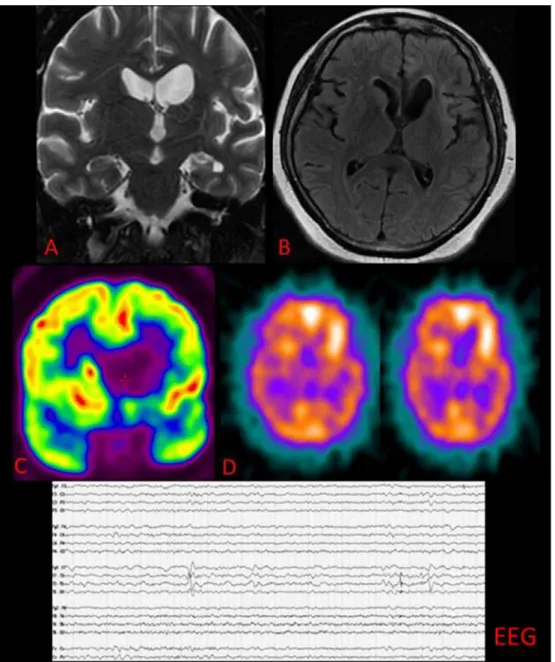
Compared to video/EEG as a first standard of reference, MR imaging, PET and ictal SPECT were concordant in 72%, 85% and 73% of cases, respectively. The three modali-ties were concordant to each other and matching the abnormal video/EEG findings in 58% of cases (Figs. 1 and 2). The non-concordance among the three imaging methods was found in 42% of cases (Figs. 3 and 4). When using the pathological find-ings as a second standard of reference, MR imaging, PET and ictal SPECT correctly localized the epileptogenic substrate in 70%, 87% and 73% of cases, respectively.
The post-surgical outcome was considered the third stan-dard of reference using the Engel’s outcome classification sys-tem (5). Engel’s class I (seizure-free for 12 months or more regardless of the medication) and class II (rare seizure; that is, few seizures in a year) were considered as a good outcome.
Of the MR-positive group, 78 patients (75%) had good out-come. MR imaging, PET and ictal SPECT correctly localized the lesions in 79%, 88% and 78% of cases, respectively. MRI, PET and ictal SPECT were concordant together in 60% of the cases of this subgroup (Table 1).
Fig. 1 Concordance among the MRI, ictal SPECT and PET in a 57 year old female with refractory right temporal lobe epilepsy. (A) Ictal SPECT showed hyperperfusion of the right temporal lobe. (B) Interictal FDG-PET showed significant hypo metabolism in the right temporal lobe. (C) and (D) Coronal FLAIR and T2-weighted MR image showed small sized right hippocampus compared to the left one with hyperintensity and loss of the normal alternating gray and white matter internal architecture (arrows). After anterior temporal lobectomy, the pathological diagnosis was right hippocampal sclerosis. Engel’s outcome was class I.
3.2. MR-negative group
This group included 33 patients (non-lesional group). The MR imaging was apparently normal reported by two
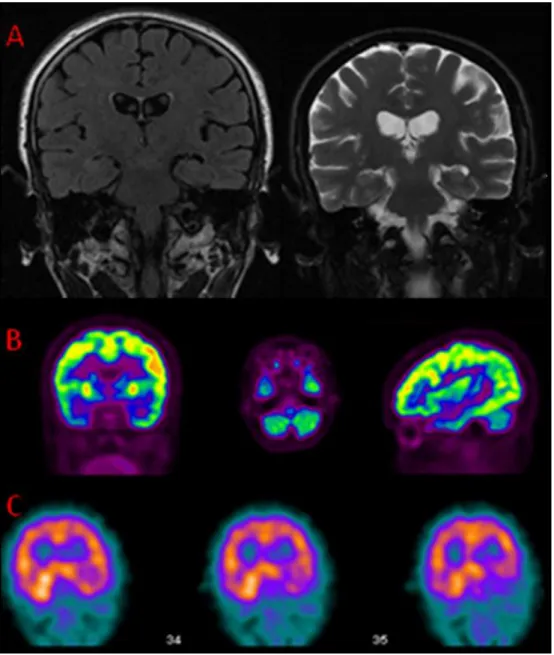
neuroradiol-ogists (Fig. 5). The sensitivity of PET and ictal SPECT in localization of the epileptogenic zone was 82% and 58%, respectively compared to video/EEG whereas the two modali-ties were concordant to pathological diagnosis in 85% and Fig. 2 Concordance among the MRI, ictal SPECT and PET in a 15 year old female with right TLE. (A) Ictal SPECT showed hyperperfusion of the right temporal lobe. (B) Interictal FDG-PET showed significant hypometabolism in the right temporal lobe. (C) Coronal IR MR image showed right mesial temporal lobe cortically-based hypointense lesion with solid and cystic components (arrow). The lesion was not enhancing in postcontrast images (not included). Histopathological examination after surgical resection revealed right temporal ganglioglioma with associated FCD. The three modalities were concordant with pathology in lateralization of the epileptogenic zone.
Fig. 3 Non-concordance among the MRI, ictal SPECT and PET in a 3 year-old boy. Ictal activity was shown in the left temporal area on video/EEG. (A) CoronalT2-weighted MR images showed abnormal high signal intensity involving the left parahippocampal and fusiform gyri, with T2 hyperintense area in the white matter and focal blurring of the gray-white matter junction (arrow). (B) Ictal SPECT showed hyper-perfusion in the right temporo-parietal region and in the medio-inferior aspect of the left temporal lobe. (C) Interictal FDG-PET showed hypometabolism in the left temporal lobe. Pathological evaluation after operation demonstrated type IIB left Focal Cortical Dysplasia (FCD). Engel’s outcome was class II. This case showed concordance of MRI and PET with video/EEG and pathology and failure of ictal SPECT to lateralize the epileptogenic substrate.
56% of cases, respectively. Twenty patients (60%) of this group had good surgical outcome. PET correctly lateralized the abnormality in 80% of the cases of this group versus 75% by ictal SPECT. The combination of both modalities in-creased sensitivity to 100% (Table 2). The abnormalities apparently missed by MR imaging and their zone correctly de-picted by PET and ictal SPECT were as follows: cortical dys-plasia (n= 8), microdysgenesis (n= 19), hippocampal sclerosis (n= 3), and focal neuronal loss (n= 3).
4. Discussion
In the management of temporal lobe epilepsy, exact lateraliza-tion/localization of seizure focus with a noninvasive study is crucial, because surgical resection of the epileptogenic lesion results in good outcome (Engel class I or II) and a failure to lateralize the focus with noninvasive examination may lead to an invasive study or to additional surgery for placement of intracranial electrodes, which may have potential risks(6). Fig. 4 Non-concordance among the MRI, PET and ictal SPECT in a female patient, 48 years old with intractable left complex partial seizures. Video/EEG lateralized the ictal activity in the left temporal lobe. (A) Coronal T2-weighted image showed dilatation of the left temporal horn with questionable hyperintensity of the left hippocampus. Left mesial temporal sclerosis was suspected. (B) Axial FLAIR showed left insular cortex hyperintense signal with atrophy of the left caudate nucleus together with ex vacuo dilatation of the left frontal horn (arrow). (C) Interictal FDG-PET showed left basal ganglia hypometabolism. (D) Ictal SPECT showed hyperperfusion on the left frontal and temporal lobes. Because the localization was inconclusive and not adequate for precise surgery, invasive EEG was performed showing ictal activity on the left insular cortex. After operation, the pathological diagnosis was left insular gliosis. Engel’s outcome was class III.
Electroencephalogram (EEG) remains after 80 years since its first conception by Hans Berger, the most powerful tool in our arsenal for delineating the epilepsy and is the primary tool in the selection and evaluation of presurgical candidates at most institutions(2). However clear focus localization, espe-cially in temporomesial structures of patients with TLE, is still a difficult task in which extensive video EEG monitoring is successful in 60–90% of cases(7).
Functional and structural neuroimaging techniques are increasingly indispensable in the evaluation of epileptic pa-tients for localization of the epileptic area as well as for under-standing pathophysiology, propagation, and neurochemical correlates of chronic epilepsy(8).
MR imaging remains the method of choice for depicting gross structural lesions in the brain. However in our study even when using state-of-the-art protocols and using high resolution 3.0T machine in some cases, 24% of cases (33/137) remained without apparent lesion on MRI (MR-negative group). Although this ratio is less than other previous studies(9), it is still significant. In the cases where MRI shows no obvious lesions, PET and SPECT play a complementary role in the localization or lateralization of the epileptogenic focus and minimize the need for invasive EEG monitoring.
Only few studies comparing MRI, PET, and ictal SPECT in localizing the epileptogenic foci have been reported(8,10,11), presumably due to the limited availability of these techniques. To our knowledge, no recent study has been published com-paring these modalities in the temporal lobe substrate detec-tion after the technical advancement of the three modalities and no recent reports available compared the 3.0T MR images with PET and ictal SPECT as regards the epileptogenic tempo-ral zone detection.
Spencer(8)in his review of temporal lobe epilepsy found that the highest sensitivity was obtained with ictal SPECT (90%), the lowest sensitivity with MR imaging (55%) and intermediate sensitivity with PET (84%) when he used EEG as a standard of reference. However the technical advancement since the study conducted by Spencer has improved the detec-tion rate of pathological lesions. In our study, the overall cor-rect localization rate of the epileptogenic substrate was 72% with MR imaging, 85% with PET, and 73% by ictal SPECT. This means that the highest sensitivity was achieved by PET whereas ictal SPECT and MRI were nearly comparable. This was also reported by Hyung et al.(10) who found that PET showed the highest sensitivity for detection of both temporal and extratemporal epileptogenic lesions.
Good outcomes (Engel’s class I and II) after surgery for temporal lobe epilepsy have been reported in approximately 70% to 90% of cases(12,13). In the present study, the correct localization rate of MR imaging in patients with good post-surgical outcome (79%) was higher than that for the total
pa-tients compared to video/EEG (72%). In those papa-tients with favorable postsurgical outcome, PET detected the hypometab-olism zone in 88% of cases compared to the area of hyperper-fusion correctly localized by ictal SPECT in 87% of cases. In patients with normal MRI (MR-negative group) who had good surgical outcomes, the correct localization rates of the seizure focus by PET (80%) and ictal SPECT (75%) remained good. These findings indicated that PET and ictal SPECT in temporal lobe epilepsy show relatively comparable correct localization rates regardless the lesion detected by MRI or not. However detection of the lesion by MR imaging is associ-ated with a better surgical outcome. This reflects that focal abnormalities, such as tumors, are well revealed by MR imag-ing and can be completely removed. Therefore, outcomes asso-ciated with focal abnormalities such as tumors will be better than those associated with diffuse or multifocal abnormalities, such as neuronal migration disorder or gliosis, which cannot be resected entirely.
In our study, when MRI was compared to video/EEG in localization of the epileptogenic substrate, 72% concordance rate was found whereas the non-concordance rate was about 28%. The latter rate is considered significant and showed the necessity of using multiple imaging techniques in order to ob-tain accurate pre-surgical evaluation. The concordance rate of PET and ictal SPECT was 85%, and 73% of cases, respec-tively. The three modalities were concordant to each other and matching the abnormal video/EEG findings in 58% of cases. This means that on using the different imaging modali-ties in our study, the non-concordance rate remained high (42%). This ratio coincides with what has been reported by Hyung et. al (10) who found the non-concordance rate as much as 30–40% of their patients.
The discrepancies among the different imaging techniques may be explained by the fact that they measure different as-pects of the epileptic process; that is, MR imaging depicts only gross anatomic alterations associated with epilepsy whereas PET displays the cerebral metabolism and ictal SPECT mea-sures the cerebral perfusion(14). MR imaging and PET have an advantage in visualizing the whole brain; they not only de-pict the lesion in the medial temporal lobe but can also show abnormalities in other regions, such as an asymmetric, small, ipsilateral mamillary body and fornix on MR images in a pa-tient with hippocampal sclerosis(15)and an asymmetric hypo-metabolism of the thalamus on PET scans in a patient with mesial temporal lobe epilepsy(16).
In seizure-onset focus detection, the anatomical/pathologi-cal definition of the organic lesion is the most obvious on MR images. PET has the unique ability to image cerebral metabo-lism but is virtually limited to the interictal state, because it takes approximately 1 hour for the radiotracer to enter the cells to be metabolized and to be distributed throughout the Table 1 MR-positive group (n= 104): Concordance rates compared to the three standards of reference.
Imaging method Concordance rates 1st Standard of reference (Video/EEG) (%) 2nd Standard of reference (pathological results) (%) 3rd standard of reference (surgical outcome) (%) MR imaging 72 70 79 FDG-PET 85 87 88 Ictal SPECT 73 73 78
brain tissue. This time is too long to image the relatively short ictal state(10). SPECT, on the other hand, is used to assess the cerebral blood flow changes not only in the interictal state but also during the ictal period, as the radiotracer injected during the ictal state is distributed throughout the brain tissue within
1 min and remains radioactive in the brain tissue after cessa-tion of seizure activity without significant redistribucessa-tion(17).
In patients with normal MR imaging, PET was superior to ictal SPECT in lateralizing the epileptogenic substrate (85% versus 58%) when video/EEG was used as a standard of refer-Fig. 5 Concordance between PET and ictal SPECT in patient with normal MRI. Male patient, 67 years old with right temporal lobe epilepsy lateralized by EEG. (A) Oblique coronal FLAIR and spin-echo T2-weighted MR image showed no obvious abnormality. (B) Interictal FDG-PET showed hypometabolism in the right temporal lobe. (C) Ictal SPECT shows hyperperfusion in right temporal lobe. Pre-operative subdural invasive EEG was performed showing the epileptogenic focus in the right temporal lobe. After right anterior temporal lobectomy, pathological diagnosis was right hippocampal sclerosis. The patient remained seizure-free on 12 month follow-up.
Table 2 MR-negative group (n= 33): Concordance rates compared to the three standards of reference. Imaging method Concordance rates
1st Standard of reference (Video/EEG) (%) 2nd Standard of reference (pathological results) (%) 3rd standard of reference (surgical outcome) (%) FDG-PET 82 85 80 Ictal SPECT 58 56 75
ence. The sensitivity of ictal SPECT in this group of patients is considered relatively low. This could be explained in our study by the relatively late injection of the radiotracer. The timing of injection of the radiotracer is very critical in ictal SPECT to de-tect the seizure-onset zone. If the radiotracer is injected late during the seizure or after the seizure is over, isoperfusion or even hypoperfusion may be seen in the responsible area(18). Because the spread of ictal discharges to other areas of the brain may occur within seconds of seizure onset, the SPECT scan, even with injection approximately 1 min after the onset of a seizure, may not indicate the site of onset(10).
The sensitivity of MRI, PET and ictal SPECT in epilepto-genic zone detection (72%, 85%, and 73%, respectively) com-pared to video/EEG was relatively high in our study comcom-pared with some of the previous studies. In the series of Sung et al,
(19)MR imaging, PET, and ictal SPECT localized the epilep-togenic foci correctly in 60%, 78%, and 70% of patients, respectively. In Hyung et al. series(10) the sensitivity of the three modalities was 58%, 68%, and 58%.of cases, respec-tively. This discrepancy in sensitivity between those previous studies and our study is likely due to the technical advances of the imaging methods since these studies have been published particularly the technical maturation of using the 3.0T ma-chine in cases of epilepsy which certainly improves the locali-zation ability of MRI to the epileptogenic substrate.
Despite the use of high resolution MRI protocols and using the 3.0T machine, 24% of cases (33/137) showed no abnormal findings on MRI. Cortical dysplasia and microdysgenesis rep-resented the majority of the pathological substrates missed by MRI in our study. These results reflect a relative insensitivity of MR imaging to neuronal migration disorder, especially in cases of mild dysplasia. Patients with mild to moderate dyspla-sia have a tendency to show subtle or unremarkable findings on MRI(20). In these mild degree lesions, PET was more sen-sitive than ictal SPECT in localizing the seizure-onset zone (85% versus 56% compared to pathology). These results are also consistent with a previous review of literature describing that half the patients with normal MR imaging in cases of neu-ronal migration disorder had abnormal PET and SPECT find-ings (21). These findings suggest the role of PET and ictal SPECT as complementary tools to MR imaging in cases with negative MR imaging findings.
Precise localization and removal of the epileptogenic focus is the ultimate treatment goal in patients with refractory tem-poral lobe epilepsy. Ideally, the probability of cutting the pri-mary seizure focus out of the brain must approach 100% before an irreversible lobectomy is performed. However, until now, no single diagnostic test has proved sufficient in localiz-ing the site to be surgically resected(19).
So far, no single technique appears clearly superior overall to any of the others. Combination of localizing tests support-ing clinical and scalp EEG findsupport-ings should allow more patients to skip, for example, invasive intracranial EEG(22).
In our opinion, if the MRI detects definite unilateral epilep-togenic abnormality, PET and ictal SPECT will be further complementary diagnostic options for correct localization. If the three modalities are concordant to each other and match-ing with video EEG, our data suggest that no invasive sub-dural EEG is needed as it usually provides no additional information and at the same time carries the risk of an invasive procedure. On the other hand, if the MR imaging is normal (MR-non-lesional group) or if there is non-concordance
be-tween MRI and video/EEG, complementary functional studies by PET and ictal SPECT are indicated for the localization pro-cess. If the two imaging methods (PET and ictal SPECT) are concordant to each other and matching with video/EEG, no invasive intracranial EEG might be needed for localization information. But if the localization is still inconclusive and not adequate for precise surgery, or if there is still some dis-crepancy among the multiple techniques, an invasive study, usually with subdural electrodes, should be performed. 5. Conclusion
PET is the most sensitive method in lateralization of the epi-leptogenic zone. Although PET and ictal SPECT are more sen-sitive than MRI in lateralization of the epileptogenic lesions, the detection of abnormality by MRI is associated with good post-surgical outcome. The use of MRI, PET and ictal SPECT as a multimodality approach improves lateralization of the af-fected zone particularly in cases of negative MR finding and distinguish patients who will benefit from surgery.
References
(1)Rastogi Sachin, Lee Christopher, Salamon Noriko. Neuroimag-ing in pediatric epilepsy: a multimodality approach. Radiograph-ics 2008;28:1079–95.
(2)Jeong TK, Sung JB, Keum OC, Yoon JL, Hae JP, et al. Comparison of various imaging modalities in localization of epileptogenic lesion using epilepsy surgery outcome in pediatric patients.. Seizure: European J Epilepsy 2009;18:504–10. (3)Winjaja Elysa, Raybaud Charles. Advances in neuroimaging in
patients with epilepsy. Neurosurg Focus 2008;25(3):1–11. (4)Lai Vincent, Mak Henry, Yung Ada, Ho WY, Hung KN.
Neuroimaging techniques in epilepsy. Hong Kong Med J 2010;16:292–8.
(5)Engel Jr J. Outcome with respect to seizures. In: Surgical treatment of the epilepsies. New York: Raven; 1987.
(6)Anderson F. Identification of candidates for surgical treatment of epilepsies. New York: Raven; 1987, pp. 51–70.
(7)Pataraia E, Lurger S, Series W, et al. Ictal scalp EEG in unilateral mesial temporal lobe epilepsy. Epilepsia 1998;39:608–14.
(8)Spencer SS. The relative contributions of MRI SPECT and PET imaging in epilepsy. Epilepsia 1994;35(Suppl. 6):S27–89. (9)Van PW, Connelly A, Johnson CL, et al. The amygdale and
intractable temporal lobe epilepsy: a quantitative magnetic resonance imaging study. Neurology 1996;47:1021–31.
(10)Won Hyung Jin, Chang Kee-Hyun, Cheon Jung-Eun, et al. Comparison of MR imaging with PET and ictal SPECT in 118 patients with intractable epilepsy. AJNR 1999;20:593–9. (11)Coubes P, Awad IA, Antar M, et al. Comparison and spatial
correlation of interictal HMPAO-SPECT and FDG-PET in intractable temporal lobe epilepsy. Neurol Res 1993;15:160–7. (12)Hardiman O, Burke T, Phillips J, et al. Microdysgenesis in
resected temporal neocortex: incidence and clinical significance in focal epilepsy. Neurology 1988;38:1041–7.
(13)Feindel W, Rasmussen T. Temporal lobectomy with amygdalec-tomy and minimal hippocampal resection: review of 100 cases. Can J Neurol Sci 1991;18(Suppl. 4):603–5.
(14)Park Un-Won, Chang Kee-Hyun, Kim Hong-Dae, et al. Later-alizing ability of single-voxel proton MR spectroscopy in hippo-campal sclerosis: comparison with MR imaging and positron emission tomography. AJNR 2001;22:625–31.
(15)Kim JH, Tien RD, Felsberg GJ, Osumi AK, Lee N. Clinical significance of asymmetry of the fornix and mamillary body on
MR in hippocampal sclerosis. AJNR Am J Neuroradiol 1995;16:509–15.
(16)Rausch R, Henry TR, Ary CM, et al. Asymmetric interictal glucose hypometabolism and cognitive performance in epileptic patients. Arch Neurol 1994;51:139–44.
(17)Nagata T, Tanaka F, Yonekura Y, et al. Limited value of interictal brain perfusion SPECT for detection of epileptic foci: high resolution SPECT studies in comparison with FDG-PET. Ann Nucl Med 1995;9:59–63.
(18)Berkovic SF, Mcintodh AM, Kainins RM, et al. Preoperative MRI predicts the outcome of temporal lobectomy: an actuarial analysis. Neurology 1995;44:1358–63.
(19)Hwanga Sung-IL, Kima Jae Hyoung, Parka Sun Won. Compar-ative analysis of MR imaging, positron emission tomography, and
ictal single-photon emission CT in patients with neocortical epilepsy. AJNR 2001;22:937–46.
(20)Mischel PS, Nguyen LP, Vinters HV. Cerebral cortical dysplasia associated with pediatric epilepsy. Review of neuropathologic features and proposal for a grading system. J Neuropathol Exp Neurol 1995;54:137–53.
(21)Spencer SS, Theodore WH, Berkovic SF. Clinical applications: MRI, SPECT, and PET. Magn Reson Imaging 1995;13: 1119–24.
(22)Doelken MT, Richter G, Stefan H, et al. Multimodal coregis-tration in patients with temporal lobe epilepsy––results of different imaging modalities in lateralization of the affected hemisphere in MR imaging positive and negative subgroups. AJNR March 2007;28:449–54.