i
The Relationship between teacher-learner interaction and the laboratory learning environment during Chemistry practicals in Namibia.
by
TUAUNDU COLEN
Submitted in accordance with the requirements of the degree of
Doctor of Education
in the subject
Didactics of Education
at the
University of South Africa
Supervisor: Dr. A.T. Motlhabane
i
DEDICATION
This study is dedicated to my grandmother Alexaderine Kwazikwa Katuaundu and my late mother Constancia Inaamwari Katuaundu, for all the sacrifices that they have made to raise me up and send me to school, even though they themselves never went to school in their life.
ii
ACKNOWLEDGEMENT
First and foremost I want to acknowledge the support, assistance, wisdom and perseverance I received from God the father through Jesus Christ, my Lord and saviour. I humbly acknowledge the support and inspirations that I got from the Holy Spirit.
I am also grateful to the advice and guidelines I received from my supervisor Dr AT Motlhabane. Many thanks go to the entire Ministry of Education starting with the Permanent Secretary, Directors of Education in the visited regions, Principals of Secondary Schools visited, the parents who allowed me to interview and do research by using their children and most importantly the school learners and science teachers who took time to complete the questionnaire and answer the interview questions.
I am indebted to thank the following people for their help and support through the difficult time of my studies, Prof Adolf Lewis, Prof F. Opali, Prof G. E. Kiangi, Esther Nuuyoma, Cecilia Hafeni and Rosemary /Uises.
iii
DECLARATION
I Colen Tuaundu (33584303) declare that “The relationship between teacher-learner interaction and the laboratory learning environment during Chemistry practicals in Namibia” is my own work and that all sources that I have used or quoted have been indicated and acknowledged by means of complete reference.
Signature Date
--- --- Student number: 33584303
iv ABSTRACT
The purpose of this study was to find out if there is a relationship between teacher-learner interactions and laboratory learning environment in Chemistry practicals in Namibia. Literatures and questionnaires from 1383 learners and 12 teachers have proven that the interactions between teacher and learners have great impact on the performance, understanding and the environment that prevail in the laboratory.
The main data collection methods used was the mixed method research through the use of questionnaires and interviews. The results from the study show that good teacher-learner interactions have contributed to the positive learning environment that prevails in Namibian schools. Although the majority of the learners especially the girls have negative connotations towards Chemistry in terms of content, calculations and assessment generally learners look forward and are excited to do experiments in practical work. The impact of the excitement and willingness of learners to do practical investigations has not proven to improve learners‘ performance in Chemistry practical work in Namibia. The majority of the learners rated their teachers as good in subject knowledge, good leaders, helpful and friendly during practical investigations. The shortage of chemicals, equipments in laboratory activities that should have inspired involvement of learners in handling equipments is one of the factors that contributed negatively to the learning environment and teacher-learners interactions. Teachers mostly resolve to demonstrations due to lack of chemicals and equipment. Some schools show low/poor level of learner-learner interactions because some learners tease, laugh and discourage others during practical investigations. Chemistry laboratories in Namibia are characterised by lack of equipment, chemicals, poorly behave learners while on the other hand there are good behaviours from the teachers‘ side with most learners showing that their teachers always try to make the best out of the prevailing situations in the laboratories.
The laboratory environment in Namibia closely resemble laboratory environment in other studies in Asia, Africa and Europe. From empirical evidence it can be therefore concluded that there is a relationship between teacher-learner interactions and laboratory learning environment in Chemistry practicals in Namibia. Although the
v
relationship is not as harmonious or congruent as it ought to be, the government of Namibia can play a greater role in creating positive, productive and enjoyable learning environment by supplying secondary schools‘ laboratories with the needed equipment and chemicals to support the practical work as stated in the Physical Science syllabi.
The three questionnaire used were rated by learners and teacher as effective; easy to understand; covering most areas of the Chemistry environment; not time consuming, statistically valid and consistent. The changes made to the questionnaire fit well to the Namibia Chemistry environment and it produced nearly the same reliability and validity when compared to the pilot study questionnaire and other similar questionnaires used in other country.
vi KEY TERMS
Practical work, Chemistry laboratory, Teacher-Learners Interactions, Learning Environment, Mixed Method Research, Experiments, Achievement, Chemistry Practical work, Namibia.
vii
LIST OF ABBREVIATIONS AND ACRONYMS
ACPQ Attitudes to Chemistry Practical Questionnaire AIDS Acquired Immune Deficiency Centrum
CA Continuous Assessment
ETSIP Education Sector and Training Improvement Programme HIV Human Immunodeficiency Virus
INSTANT In-service Training and Assistant for Namibian Teacher IT Information Technology
QTI Questionnaire of Teacher Interactions
MASTEP Mathematics and Science Teacher Diploma MCA Millennium Challenge Account
MHEVTST Ministry of Higher Education Vocational Training Science NAMCOL Namibia College of Open Learning
NSSCH Namibia Senior Secondary Certificate Higher Level NJSC Namibia Junior Secondary Certificate
NTSC EU European Union
NSSC Namibia Senior Secondary Certificate NIET Namibia Institute of Education and Training LCE Learners Centred Education
TOSRA Test On Science Related Attitudes TEFA Towards Education For ALL
SLEI Science Laboratory Learning Environment Inventory USA United States of America
UNICEF United Nation Children Fund
viii
TABLE OF CONTENTS
Chapter 1
1. 1. Introduction...1
1.2. Background to the study ...2
1.3. The research problem...4
1.4. Aims of the study...5
1.5. Research questions...5
1.6. Significance of the study………..6
1.7. What is Chemistry Education……….….…7
1.8. The relationship between Chemistry and practical work………….…………...9
1.9. The two main philosophy of teaching Chemistry...9
1.10. Positivism and practical work...10
1.11. Constructivism and practical work...12
1.12. Investigations as a process of learning Chemistry...14
1.13. Definitions of key terms and concepts...15
1.14. Chapter division...18
1.15. Conclusion...18
Chapter 2 2.1 Literature review on Chemistry Laboratory………..………...20
2.1.1 Introduction……….………....20
2.1.2. Link between laboratory environment and teaching………...………....24
2.1.3. How school environment relate to classroom environment?... 24
2.1.4. How is classroom environment related to laboratory environment?.. ..25
2.1.5. How are the three valuables related: School environment, classroom environment and laboratory environment?...26
2.2. Classroom environment………..……….…...…26
2.2.1. What classroom environment entails.….………..…....26
2.2.2. Classroom environment in Science education………...29
2.2.3. Types of laboratories in Namibia……….……..….30 2.2.4. The link between learners‘ outcomes and their learning environment.31
ix
2.3. Laboratory, the skills it provide and the situation in Namibia………...33
2.4. The nature of practical work ………..………...38
2.4.1. Curriculum requirements……….……….…....38
2.4.2. Practical work as an important skill developer………..39
2.4.3. Practical work can change learners‘ attitudes towards Chemistry…....41
2.4.4. Practical work help learners to understand Chemistry………....42
2.4.5. Problems of Chemistry practical work………....42
2.4.6. Other thoughts from the literature on Chemistry practical work…….…44
2.5. Teacher-Learner interaction………..…...46
2.5.1. Definitions of interactions……….…...46
2.5.2. Background of teacher learners interactions………..…..46
2.5.3. Teachers behaviours and its influence on interactions………...47
2.5.4. Gender and teacher-learner interactions………..…48
2.5.5. Questionnaire on teacher interactions……….……..49
2.6. The background on the Science Laboratory Environment Inventory (SLEI)……….…49
2.7. The underlying theoretical framework……….…...51
2.8. Conclusion……….…..58
Chapter 3 3.1. Education system in Namibia………59
3.1.1. Introduction………..………..59
3.2. Chemistry education……….…..…...60
3.2.1. Chemistry at school level..……….…...…...61
3.2.2. Physical Science Subject Policy………..….…..…62
3.3. Roles of Namibian government in providing education………..……..64
3.3.1. Namibian Science curriculum/ syllabi……….….68
3.4. Learner Centred Education (LCE)….………...71
3.4.1 The need for Chemistry teachers to use LCE in teaching…………..……...73
3.5. Teaching and learning………....76
3.5.1. Science Teaching in Namibia………..………….78
3.5.2. Textbooks in Namibian Schools……….….…….81
x
3.6. Conclusion……….….……82
Chapter 4 4.1. Research Methodology……….…84
4.1.1. Introduction……….………..84
4.1.2. Definition and purpose of research……….…….….85
4.1.3. Quantitative method……….….…..85
4.1.4. Qualitative method………...86
4.1.5. The chosen methods (Mixed methods research)………...87
4.1.6. Why use mixed methods research..………..88
4.2. Preparation phase………..…..…90
4.2.1. Permission to conduct research……….………..…90
4.2.2. Voluntary participation………...91
4.2.3. Ethical consideration……….……….……91
4.2.4. Confidentiality……….………..…..91
4.2.5. Inform consent………....92
4.3. Data collection phase………..92
4.3.1. Selection of instrument and sampling procedure…………..…………92
4.3.2. Sampling techniques...………..93
4.3.3. Validity, reliability and pilot study……….94
4.3.4. The Questionnaire on Teacher Interactions (QTI)……….…...95
4.3.5. Attitudes on Chemistry Practical Questionnaire (ACPQ)………...…101
4.3.6. Science Laboratory Environment Inventory (SLEI)………....103
4.3.7. Interview……….106
4.4. Implementation phase……….……..…108
4.4.1. Data Collected……….…..108
4.4.2. Nature of schools visited………..109
4.5. Preparation and data analysis phase………....111
4.5.1. Descriptive statistics……….….111
4.5.2. Inferential statistics……….…...112
xi Chapter 5
5.1. Introduction……….………..115
5.2. Attitudes to Chemistry practicals Questionnaire (ACPQ) data analysis…..115
5.3. Science Laboratory Environment Inventory (SLEI)……….154
5.4. Questionnaire on teacher Interaction (QTI)………..186
5.5 Integration of qualitative research in to quantitative research……….229
5.6 Conclusion………...230
Chapter 6 6.1. Introduction……….…233
6.2. Research question one……….………233
6.3. Research question two………..………235
6.4. Research question three………..……….236
6.5. Research question four………..……….……..238
6.6. Research question five………..……….…..…239
6.7. Research question six……….……….….…241
6.8. Research question seven……….……….………….…..…243
6.9. Research question eight……….……….…….…245
6.10. Recommendation for further studies………..…..247
6.11. Research limitations……….…250 6.12. Conclusions………...250 6.13. Reference………..252 Appendix A SLEI…….………..……....291 Appendix B ACPQ……….………..….….294 Appendix C QTI……….….…..….296 Appendix D Interview……….….….….299
xii List of Tables and Figures
A: Tables
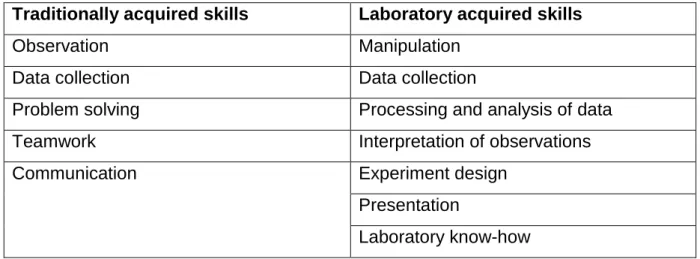
Table 2.1 Skills to be acquired………..….…...35
Table 2.2 Science Laboratory environment inventory………...50
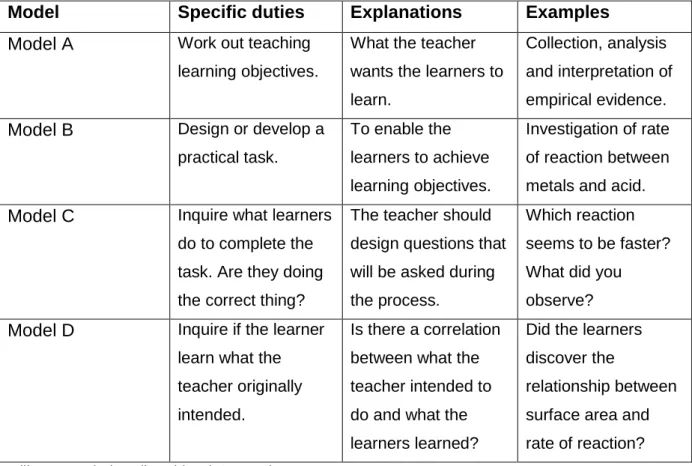
Table 2.3 Model for designing and evaluating practical task………....…53
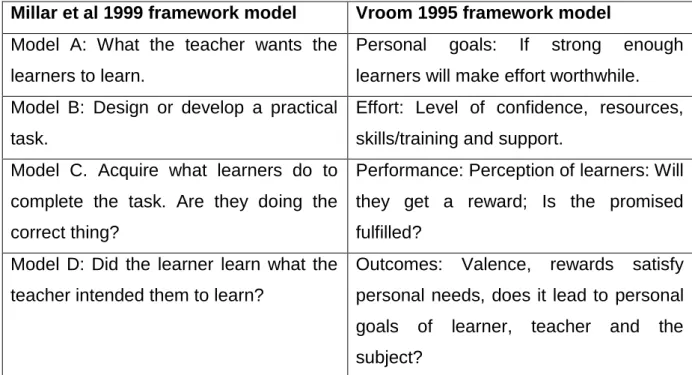
Table 2.4 Millar, et al 1999 and Vroom 1995 frameworks model………...56
Table 4.1 Number of participants per region in terms male and females……...94
Table 4.2 QTI items change and reasons for change……….……97
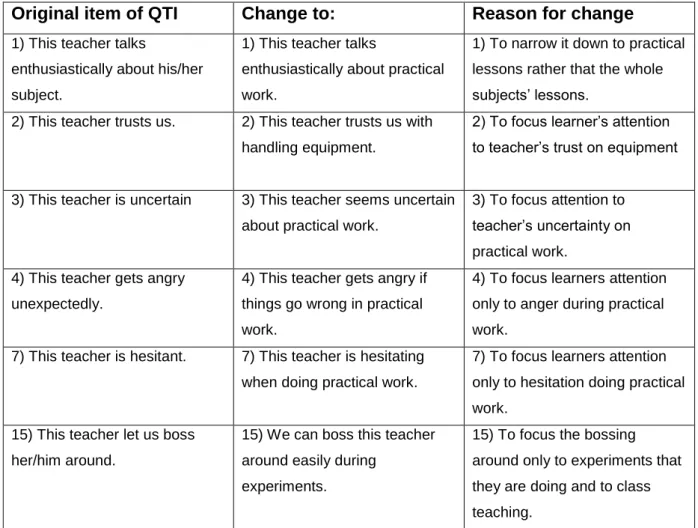
Table 4.3 Descriptions and Examples items for each scale in the QTI…..……100
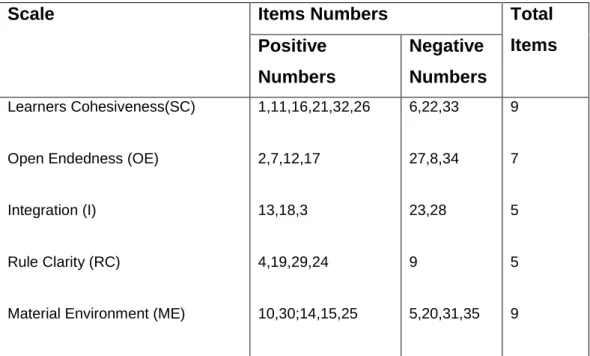
Table 4.4 SLEI Items and scales………..…106
Table 5.1 Descriptive statistics………...117
Table 5.2 Answer for ―Looking forward to doing experiments‖………...119
Table 5.3 Practical work is fun………..…..…..121
Table 5.4 Results for item 3……….…….…..…..123
Table 5.5 Results per region for item 5……….……….…..…125
Table 5.6 Results for item 6……….…...…129
Table 5.7 Answer for item 8……….….….…132
Table 5.8 Results for item 9……….….….…133
Table 5.9 Results for item 11………..……..135
Table 5.10 Results for item 12………..…..…..136
Table 5.11 Result for item 15………..…..140
Table 5.12 Results for item 16………..….…...142
Table 5.13 Results for item 17………...…...143
Table 5.14 Results for item 19………...…...145
Table 5.15 Results for item 20………147
Table 5.16 Results for item 21………...………148
Table 5.17 Results for item 23……….………..…...150
Table 5.18 Five categories of the questionnaire……….…153
Table 5.19 SLEI Table for all items……….……..154
Table 5.20 Reliability Coefficient for the scale of SLEI……….…...157
Table 5.21 Learners cohesiveness………...….157
xiii
Table 5.23 Integration………...169
Table 5.24 Rule clarity……….….…....176
Table 5.25 Material environment……….…...…181
Table 5.26 Results of the QTI from SPSS……….….…...187
Table 5.27 Correlation between Scales of the QTI final version………....190
Table 5.28 Leadership (DC)……….…..….191
Table 5.29 Helping friendly (CD)……….………196
Table 5.30 Understanding (CS)……….…..201
Table 5.31 Responsibility/Freedom (SC)………..….…207
Table 5.32 Uncertain (SO)………213
Table 5.33 Dissatisfaction……….………...218
Table 5.34 Admonishing……….……..221
Table 5.35 Strict……….225
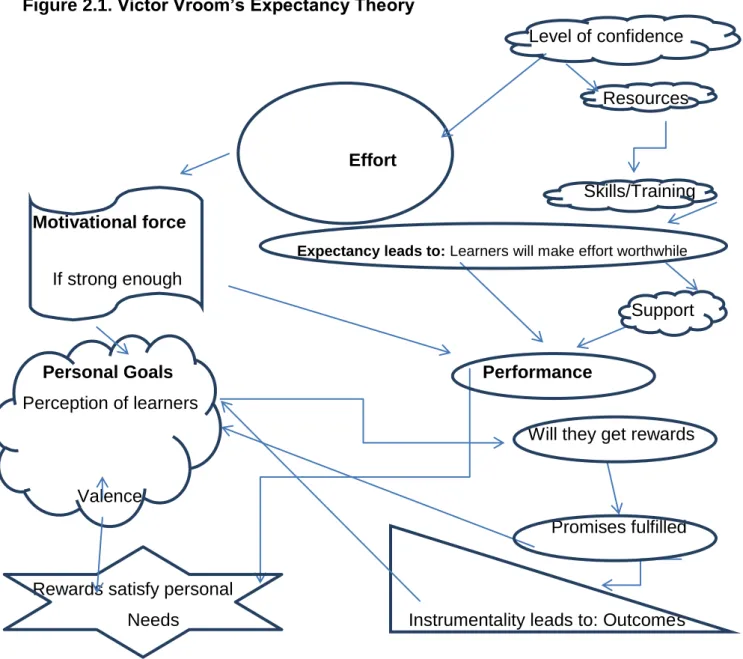
B: Figures Figure 2.1 Victor Vroom‘s Expectancy Theory………....55
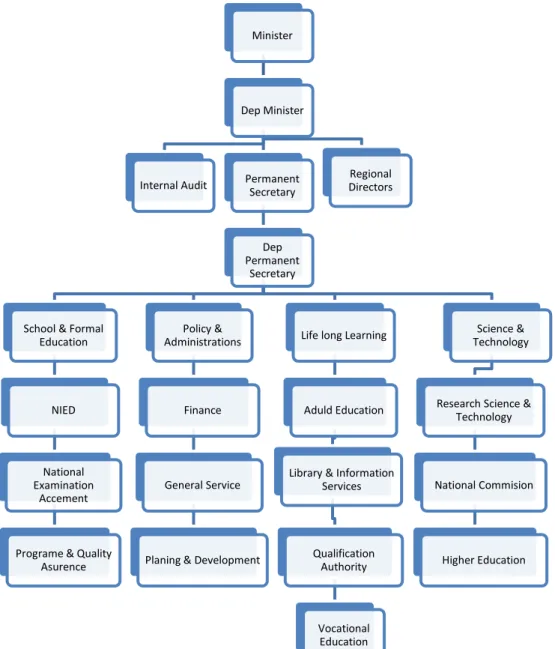
Figure 3.1 The organogram of the Ministry of Education (Namibia)……...….66
Figure 3.2 Kolb‘s Learning theory………...77
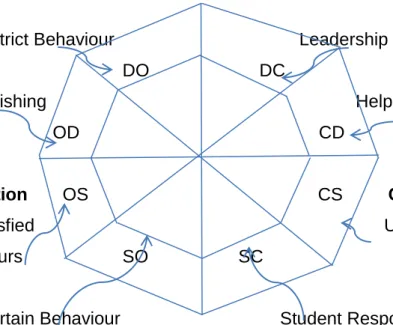
Figure 4.1 The Leary Model and Coordinate System………..….100
Figure 5.1 Looking forward doing experiments………..121
Figure 5.2 Results for Item 4……….124
Figure 5.3 Results for Erongo Region……….….127
Figure 5.4 Results from Khomas Region……….…127
Figure 5.5 Results from Item 6………..128
Figure 5.6 Results from Item 7……….….131
Figure 5.7 Results from Item 10………134
Figure 5.8 Results from Item 11………..….136
Figure 5.9 Answer for Item 13………138
Figure 5.10 Results for Item 14……….139
Figure 5.11 Results for Item 18……….144
Figure 5.12 Results for Item 19……….146
Figure 5.13 Results for Item 22……….149
xiv
Figure 5.15 Results for Item 25……….…152
Figure 5.16 Average percentage of learners responds to ―Learners‘ cohesiveness‖………..158
Figure 5.17 Open ended laboratory activities……….164
Figure 5.18 Average percentages for integration (between laboratory activities and Non-laboratory activities)………...170
Figure 5.19 Behaviours is guided by rules……….176
Figure 5.20 Adequate laboratory materials……….182
Figure 5.21 Leadership (DC)……….191
Figure 5.22 Helping friendly………..197
Figure 5.23 Understanding………201
Figure 5.24 Khomas Region………..203
Figure 5.25 Responsibility/Freedom (SC)……….…..208
Figure 5.26 Uncertain teacher……….…..213
Figure 5.27 Dissatisfaction………....218
Figure 5.28 Admonishing………...222
1
Chapter 1
1.1 Introduction
Namibia is one of the countries in Southern Africa where little research in Mathematics, Science and Technology has been conducted. Very few postgraduate students enrol for Master‘s and Doctoral degrees in Science at the University of Namibia. Between 2004 and 2011,the University of Namibia produced 31 graduates with Masters in education and 8 graduates with Doctorates in education (Hangula, Mwandemele, Kangira, Tjiramba & Fledersbacher 2011:21; Hangula, Mwandemele, Tjiramba & Fledersbacher 2010:19; Hangula, Mwandemele, Tjiramba & Fledersbacher 2009:18; Hangula, Mwandemele, Tjiramba, Fledersbacher, Aucamus, Murray, & Smit 2008:12; Mwendemele, Tyson, & Classen 2007:16; Mwendemelo, Malamba & Otaala 2006:17; Mostert, Tjiramba, Vale & Claassen 2005:14 and Kiangi 2004:15). From these figures, it is clear that only 3 Master‘s students focused their studies in the field of Science Education with no specific reference to practical work in Chemistry. Most developed countries attribute their development to advancement in the knowledge of science and technology, which is regarded as crucial to the growth of any economy (Khan 2004: 64). Khan further indicates that due to the tremendous contribution that Science and Technology bring in terms of job creation, industry development and technological knowhow, it helps to make life easier for the people. On the other hand, poor enrolment and graduation rates at tertiary levels in these crucial fields of studies (Mathematics, Science and Technology) can be attributed to various factors like lack of interest and poor pass rates in Mathematics and Science at the secondary school level in Namibia.
In addition to poor performance at school level in Mathematics, Science and Technology, there is poor research in the field of Mathematics, Science and Technology both at school and tertiary levels in Namibia. There has been a trend over the past few years in Namibia, of poor performance in Grade 12 Physical Science, a subject which comprises of Physics and Chemistry, especially in Paper 3, which is the practical paper (Poolman, 2009:3). According to Olivier and Poolman (2009:3), Physical Science is one of the subjects that shows the worst performance
2
in Namibia with less than 40, 4 % of the candidates obtaining a Grade 3 or better symbols at Higher Level and less than 35% of Ordinary level candidates obtaining 40% required to pass. This has prompted this study to focus on what is happening in Chemistry classes in terms of practical work in schools as a contribution to the efforts needed to improve the knowledge of Chemistry practical work in Namibian schools.
1.2 Background to the study
When Namibia received independence in 1990 from the then colonial South Africa, the country changed from the Cape Town administered education system to the Cambridge education system. As a result, standard eight and ten examinations were no more set in Cape Town, South Africa, but in London, England. Under the Cape education system, examinations were racially based and administered under different departments (Bantu, Indian, Coloured and White), Shilongo (2004:3). Namibia adopted the Cambridge education system for 15 years after which the Namibian government introduced the Namibian Junior Secondary Certificate (NJSC) and the Namibian Senior Secondary Certificate (NSSC) in 2005, (Fischer, 2010:1).
Namibia is a small nation with about 2 million people (NAMIBIA 2011 POPULATION AND HOUSING CENSUS 2011:41), of which the majority live in rural areas. The country is divided into 13 regions, each with a Governor as a political leader. Each region has its own educational head office run by a regional education director. In total, Namibia has about 180 secondary schools, over 1550 primary schools and 300 pre-primary schools (Fischer, 2010:1).
The Ministry of Education is responsible for maintaining high educational standards in schools through bodies like the Namibian Institute of Education and Training (NIET), Namibia Qualifications Authority (NQA); and initiatives like the Education and Training Sector Improvement Programme (ETSIP).
The Namibian school system is divided into phases organised as follows: Grades 1-4 (lower primary) and 5-7 (upper primary) and these two phases are free and compulsory, and then Grades 8-10 (junior secondary) and 11-12 (senior secondary)
3
Fischer (2010:1). The first two phases of education in Namibia are free and compulsory for all Namibian children (Heita in New Era, 20 Dec 2012:4). The major exit point from the system occurs at Grade 10 level, where the majority of the learners fail to proceed to Grade 11. One of the requirements of the system is that learners should not fail twice in one phase; if he/she fails the second time, he/she is automatically transferred to the next grade. For the senior phase, however, learners have to pass Grade 10 with at least 23 points or else they are not allowed to repeat the grade but rather, have to register with Namibian College of Open Learning (NAMCOL) to improve their subjects before returning to Grade 11.
With regards to Physical Science there is a prescribed curriculum in each grade which includes both Physics and Chemistry sections. Apart from preparing learners for direct employment and participation in community life, the Junior Secondary Certificate, (Grades 8-10), aims at preparing learners for post-secondary training like vocational training, Grades 11 and 12. The Grades 11-12 syllabi aim at preparing learners for commencement of university studies and other college training.
Each year the Namibian government publishes a report on grades 10 and 12 results. This report ranks scores for each school, subject and region with comments on the learners‘ performance. According to Olivier and Poolman (2009:1), despite efforts by the Ministry of Education to improve the pass rate of 51.3% and the billions of money allocated to education, little progress has been made and the results have, throughout, been very disappointing compared to other countries like South Africa which has a pass rate of 73.9%. During the year 2009, only 53, 3% of the Grade 10 learners managed to obtain the 23 points required for entry to Grade 11. This is regarded as the highest performance since the attainment of Namibian independence in 1990 (Maletsky, 2010:5). The results for 2011 grade 12 have shown a slight improvement of 0, 5% to 93.6 compared to the year 2010 which was 93.1% of the students graded (Ikela, 2012:1). This, however, does not mean that these students passed their grade 12 or they qualified for entry to tertiary institutions, but simply means they are graded in one or more subjects.
In terms of the teaching and learning of Chemistry in Namibia, there are several challenges experienced by both learners and teachers which result in such high
4
failure rates. Firstly, laboratories in Namibian schools are not up to standard to meet the curriculum requirements. Secondly, there are low budget allocations for schools to buy chemicals and equipment and to upgrade laboratories. Thirdly, there is a lack of support from the Ministry of Education in terms of subject advice, text book supply, in-service training and logistics (Shipanga, 2010: 3). The above mentioned reasons are in consonance with Sjoberg‘s and Schreiner‘s (2006: 2) observation thus:
“The falling recruitment to most science and technology educations is seen as a large problem in most European countries. The same tendencies are noted in the United States and in most other countries within the Organisation for Economic Co-operation and Development.” This is mainly due to declining enthusiasm among learners for the science fields.
During the past few years, many efforts have been made to improve the situation. These include: the introduction of the Education and Training Sector Improvement Programme (ETSIP); workshops, and the use of performance indicators. The other hampering factor is the high number of learners per teacher in laboratories, ranging around 40:1. This huge number hinders learner-centred education and has contributed to teachers to turn to demonstrations rather than learners engaging in practical work (Shipanga, 2010: 3). Some schools in remote areas lack teachers that are qualified in Science as most teachers prefer schools in urban areas. Lack of electricity and running water in these remote schools has contributed to difficulties in conducting Chemistry practical work and demonstrations (Ekongo, 2010:3). It is not clear how all these factors affect teacher-learner interactions in Namibian Science laboratories and what role the learning environment plays in the performance of learners in paper 3 of Physical Science paper.
1.3 The research problem
This study investigated Chemistry laboratories in Namibian schools and how the interaction between teachers and learners in Chemistry classes affects the learning environment in Chemistry practicals.
5
The understanding of the relationship between learners‘ perceptions and teacher-learners interaction; learning environments and teacher-learners‘ attitudes; as well as learner-learner interaction during their Chemistry practicals will help in providing primary information that will improve these classes in future practical work. According to Smith (2010:1), the perceptions and attitudes of learners in class have an effect on their performance but the relationship between perceptions and attitudes towards practical work is not clear. The next section provides a brief description of the aim of the study.
1. 4 Aim of the study
The aim of this study is to determine the relationship between teacher-learner interaction and laboratory learning environment during Chemistry practicals in Namibia. The study aims at elucidating the area of Chemistry practical work by providing new conceptual insight through the use of three internationally recognised questionnaires (Questionnaire on Teacher Interaction; Attitudes to Chemistry Practical Questionnaire and the Science Laboratory Environment Inventory) modified to fit the Namibian situation. The central focus of this study is to describe the relationship between teacher-learner interaction and Chemistry practicals in school laboratories in Namibian. In order to do this, a questionnaire on teacher-learner interaction and the laboratory learning environment was used to determine the relationship between learners‘ perceptions and their attitudes to Chemistry practical work, to determine the learners‘ attitudes to Chemistry practicals, the Attitudes to Chemistry Practical Questionnaire was used while the Science Laboratory Environment Inventory was used to determine the learning environment in Chemistry classes in Namibia.
1.5 Research questions
The following research questions were addressed:
I. What underlying relationship exists between the laboratory learning environment and learners‘ attitudes to Chemistry practicals? (Theoretical framework on classroom environment was investigated).
6
II. How do learners perceive their learning environment in Chemistry laboratory?
III. How does teacher-learner interaction influence the learners‘ attitudes in Chemistry practicals? (Theoretical framework on teacher-learner interaction was investigated).
IV. How does the learner-learner interaction influence the learners‘ attitudes to Chemistry practicals?
V. How do learners perceive the interaction between them and their teachers during Chemistry practical work?
VI. What are the characteristics of Chemistry practicals in Namibia? (Theoretical framework on characteristic of practical work was investigated).
VII. What is the nature of the current laboratories in Namibian schools? VIII. Is the QTI and SLEI as implemented in Namibia suitable and valid
instruments for use in Namibia? (Comparability with results in developed countries).
IX. Is there a relationship between learners‘ perceptions of Chemistry learning environment and their attitudes to Chemistry practicals?
1.6 Significance of the study
This study provides a significant contribution to the research already conducted on teacher-learners interaction, laboratory learning environment and learner-learner interaction in Chemistry practicals all over the world. The greatest contribution of this study was to the Namibian education system that faces a lot of challenges in terms of Chemistry practical work. The need for this type of study at a time when the Namibia education system is faced with challenges like poor allocation of resources, for example, time, equipment, laboratories, chemicals and specialised science educators is of crucial effect. From past research in Chemistry education there are clear comparability short-comings in previous research between first world countries studies and third world countries studies especially in terms of cultural, social and environmental differences. Namibia calls for the importance of research in this area.
7
Due to the fact that little research has been conducted in the Namibian Chemistry classroom, it was imperative for this study not only to examine the current state of teaching and learning in the country‘s Chemistry classrooms, but also the correlation between: the learners‘ academic and practical achievement in Chemistry class tests or examinations and learners‘ attitudes towards Chemistry; and the Chemistry laboratory environment. Chemistry is regarded as an ‗enabling science‘ because its core concepts are essential to almost all areas of science (White, O‘Connor, Mousley, Cole & MacGillivray, 2003:17). Therefore, the Namibian science sectors will benefit considerably from research in the science classroom environment; means of evaluating and improving Chemistry teaching and learning in this area.
The study adds to the body of knowledge by introducing two newly localised versions of QTI and SLEI that can be used in future to gather further information on Chemistry teaching in Namibia. The study also sheds light on the reality of Chemistry laboratories as a teaching facility for schools in Namibian. The information gathered is helpful to Chemistry teaching and learning especially in practical activities and teacher training programmes at universities and colleges in the country. Science teachers and curriculum developers in Namibia will benefit from the result of this study by expanding their knowledge on how their learners actually perceive the laboratory as well as what they prefer the laboratory to be like, and how they perceive the totality of the Chemistry classroom environment. This information will assist in identifying factors relevant to the improvement of teaching and learning in the Chemistry classroom in particular, and science in general.
1.7 What is Chemistry Education?
This question was answered in three ways. First, by explaining what Chemistry is, and then explaining what education is, and lastly, by giving a definition of Chemistry education.
Chemistry and Physics are specialisations in the field of Physical Science. Chemistry refers to the study of matter and energy and the interaction and relationship between them, including their properties and the interactions that involve electrons transfer (Chiechi, 2012:1). Chemistry is one of the most important
8
branches of science; it helps learners to make sense of the natural phenomena of things happening around them. Chemistry is often regarded as a difficult subject by students simply because it relates to matter whose characteristics involve some mathematical calculations that often repel learners (Sirhan, 2007:1). According to Sirhan (2007:1), one of the essential characteristics of Chemistry is the constant interplay between macroscopic and microscopic levels of thoughts, and it is this aspect of Chemistry learning that present a significant challenge the novice.
Generally, education occurs through any experience that has a formative effect to the way individuals think. It is a formal and informal process by which society or a generation deliberately transmits its accumulated knowledge, skills, customs and values from one generation to another (Akintunde, 2007:130). This transmission of knowledge can take place at home, school, church or university in a formal or non-formal way. Education in itself requires instruction and guidance of some sort, from knowledgeable individual or composed literature, e.g., books or articles. Although the most common forms of education result from years of schooling that incorporates studies of various subjects, knowledge can also be acquired through life experiences that provide an understanding of something. School and tertiary knowledge is assessed at school and university level through the writing of Chemistry examinations.
Chemistry education in general, refers to the teaching and learning of Chemistry as a subject in schools and universities, this includes the pedagogical methods of teaching and learning using Chemistry content intended to be taught at varies levels of education. These issues are mostly determined by the curriculum and for this reason it has become imperative for curriculum developers to focus on both high and ordinary levels of Chemistry education. Chemistry, by its nature, is highly conceptual and requires abstract intellectual capabilities to master its content (Wu, Krajcik and Soloway, 2000:1). Although much of Chemistry learning at school is acquired through rote learning (this is evident by factual narration or recall in examination papers) real understanding of Chemistry in the education setup of a school is achieved through conceptual understanding that is strengthened by continuous studies and practical investigations (Sirhan, 2007:3). It is therefore imperative to understand how practical work complements the teaching and learning of Chemistry.
9
1.8 The relationship between Chemistry and Practical work
Most Chemistry education literatures are littered with statements like ―Science is an experimental subject, science goes hand-in-and with practical work, and science without practical work is meaningless.‖ In the early 90s, Hanson, Hoppѐ and Pritchard (1993: 29) alluded to something very interesting in Chemistry today when they stated that ―Chemistry is an experimental science and its development and application demand a high standard of experimental work.‖ This brings the onus on the teacher to be able to train learners to be practitioners in the subject. Learning Chemistry is all about finding out what is not known and also learning what others have discovered. Most of these discoveries have taken place in the confines of a laboratory through practical work, interlinking practical work and Chemistry as a subject (Lunetta, Hofstein & Clough, 2007:402).
This means that for learners to master some complicated Chemistry concepts, they should ideally do practical experiments on a regular basis. Practical work in Chemistry helps learners, to engage in accurate observation; make Chemistry phenomenon more real to the learner, maintain interest in the subject; and to develop logical thinking and reasoning, and develop problem solving skills and critical thinking; and advance learner‘s sense of ownership of Chemistry (Dillon, 2008:3). Although it appears as if practical work benefits Chemistry more than Chemistry benefiting practical work, the relationship and benefits are symbiotic. Learners need to study or investigate the Chemistry topic and through that, gain practical skills to reinforce what they learnt theoretically and to explore further the concepts not yet learnt.
1.9 The two main philosophies of teaching Chemistry
Chemistry, just like any science, has its own philosophical peculiarities that have been the focus of much investigation since the rebirth of the philosophy of Chemistry in the early 1990s. Although many philosophies of Chemistry education are developed and published, it is still the responsibility of Chemistry educators and researchers to make use of these divergent philosophies and draw from them new ideas and findings that fit their circumstances.
10
Chemistry is partly a liberal subject, and is as much about thinking as it is about synthesis, experimentation, and understanding of the laws. It is unfortunate that philosophy in Chemistry, which provides the most systematic analysis of ways of thinking, has been traditionally neglected by Chemists.
The philosophy of Chemistry education as an established discipline has reached a level that allows no room for mediocre or unscientific thinking. It is worth mentioning that the role of philosophy in Chemistry education on a naturalistic playground is somehow limited. This is mainly due to the fact that philosophy in Chemistry education describes the structures of scientific theories; analyses theories for logical consistency; and it elucidates semantic and pragmatic aspects of scientific terms. On the other hand, it cannot give any normative explanations in cases of terminological ambivalence or in cases where it is desirable to know in advance if a proposed statement is worth to be put under experimental scrutiny or not. Philosophy in Chemistry elucidates the provenance of objects and the methods of Chemistry as a cultural achievement by means of a methodical reconstruction of its language and its norms (Leipzig, 2012: 5). Erduran (2005: 162) argues that Chemistry education theory and practice can benefit from the application and understanding of the philosophy of Chemistry. There are two main philosophical beliefs in Chemistry education, namely, positivism and constructivism. In the next section the two philosophies are discussed briefly.
1.10 Positivism and practical work
Positivism is a concept that emphasises that only scientific knowledge is the true knowledge of the world perceived through senses (the observable phenomenon). It is a scientific way of doing research especially if it is used with quantitative methods of research. The reason science works so well with positivism is because positivism tests out its theories by devising and carrying out repeatable experimental work to ascertain consistency. Nevertheless, it is a difficult path to tread and it offers slow progress because most hypotheses are wrong and practical work is regarded as expensive. Current school science curricula present contemporary positivist epistemological related beliefs that force learners to an irrefutable right answer (Allen, 2008:319).
11
Although Allen argues that a positivist mind-set in school science practical work produces unwelcome attitudes among learners, e.g. bias, confusion and the belief that there is only one correct answer, it remains one of the most accurate mind-sets of arriving at truth through experiments. Many sociologists reject this approach and would rather live in their own little dream world where they can make up any theory they like and never have to go to the extent of bothering and testing it
experimentally.
Auguste Comte (1798-1857), a nineteenth century philosopher, is regarded today as the architect of positivism although its origin is further back to ‗the father of modern science‘ Francis Bacon (1561-1626) (Bosman, 2006:23). Auguste Comte rejected meta-physics and he was a strong advocator of the fact that only scientific knowledge could reveal the truth about reality. Positivism adopted David Hume‘s theory of the nature of reality (i.e., philosophical ontology). Hume believed that reality consists of atomistic (micro-level) and independent events. He believed in the use of the senses to generate knowledge about reality (i.e., scientific method). He thought that philosophical and logical reasoning could lead us to ―see‖ non-existing links between events occurring simultaneously.
However, positivism also adopted René Descartes‘s epistemology (i.e., theory of knowledge). Descartes believed that reason was the best way to generate knowledge about reality. His deductive method implies that events are ordered and interconnected, and therefore reality is ordered and deducible. These internal beliefs eventually undermined the validity of positivism. There are mainly five basic characteristics that entail the philosophy of positivism.
A single, tangible reality exists which can be divided into parts and which can be studied independently, in other words a whole is made out of the parts.
The known phenomenon can be separated from the unknown.
Observation is independent of the time and context, in other words; what is true in a given time and place will hold true in another time and place.
Casualty is linear; in other words, there is no effect without cause and no cause without effect.
12
Objectivities are possible; methodology guarantees that the result of an inquiry can be free from the influence of any system, (Lincoln and Guba 1985, in Bentley, Ebert & Ebert, 2000:16).
Positivism exerted an important influence on scientific practice in the natural sciences for decades in the early 20th century. This was especially true in the natural sciences where laboratory experiments can closely approximate the real world environment, thus allowing for accurate predictions. Unfortunately, in Chemistry and physics, human volition, poor training on the part of researcher and uncertainty make the laboratory experiment less reliable. This is mainly due to a certain degree of human error that can occur in the laboratory. Ultimately, its internal inconsistency resulted in the abandonment of positivism in favour of scientific approaches such as
critical multiplism, which is based on the belief that no one approach is ever sufficient for developing a valid understanding of a phenomenon.
1.11 Constructivism and practical work
Constructivist views of learning in science practical work suggest that learners can only make sense of new situations in reference to their existing knowledge. What they know (ontological) influences what they learn and how they learn new concepts. This means that teachers should encourage learners to use active techniques
(experiments, real-world problem solving) to create more knowledge and then to reflect on and talk about what they are doing and how their understanding is changed by what they do. The teacher should make sure that he/she understands the learners' pre-existing conceptions and knowledge, guides the activity to address the current problem and then builds on them. Constructivism fits well with practical work in that it makes the teachers‘ role that of a facilitators in a bid to help learners construct knowledge rather than reproduce a series of facts (Lee, 2006: 8).
Constructivism is a theory that helps to explain how knowledge is constructed in the human being when information comes into contact with existing knowledge that had been developed by experiences or learning theories. For this reason, the
constructivist approach to learning and teaching in Chemistry engages learners and teachers in the active construction of knowledge through practical activities
13
(experiments) that relate to the curriculum. This allows learners to make sense of new ideas, phenomena and concepts in terms of their existing ideas as they apply understanding to fresh situations especially in Namibia where there learner-cantered approach of teaching is encouraged.
In 1954, Albert Einstein stated, that it was difficult to attach a precise meaning to the term scientific truth (Rosenthal-Schneider, 1980: 261). Every scientist today is striving to get to the truth about science and how it evolved. The way we perceive the truth, and how we might discover it, represents part of our individual beliefs. Indeed, to infer that we can uncover truth suggests a particular belief system, that is, belief in an objective reality (Street, 2009:8). Currently, one particular belief system, known as the constructivist paradigm, is dominant in science education and there have been numerous reports in the education and science education literature supporting constructivist-based teaching (Wing-Mui, 2002:1). There is profound influence on teachers teaching Chemistry using constructivist approaches. A constructivist approach simply employs this phenomenon, ―instead of seeking proof, scientist work to convince their peers that what they propose is reasonably fit to the available data, aids understanding, and is useful in making predictions and decisions‖, (Bentley, Bert and Bert, 2000: 17).
At this juncture, it is worth mentioning that constructivism rests primarily on two principle theories. The first principle theory states that: knowledge is not passively received, but it is actively built up by the cognizing of subject. Ideas and thoughts cannot be communicated in the sense that meaning is packaged into words and sent to another who unpacks the meaning from the sentences. That is, much as we would like to, we cannot put ideas in learners‘ heads, they will and must construct their own meanings. Our attempts at communication do not result in conveying meaning, but rather our expressions evoke meaning in another; thus creating different meanings for each person. When we teach, we need to remember that the new facts and ideas that we propound do not become incorporated directly into the minds of the learner without processing; they have to be fitted into the existing structures, old subject knowledge and schemes already in the mind of the learners (Bodner, 1986: 837).
14
The second principle states that: function of cognition is adaptive and serves the organization of the experiential world, not the discovery of ontological reality. This means that we do not find truth but construct viable explanations of our experiences (Bentley et al, 2000:20).
The understanding of thesis philosophical systems and how they relate to the teaching and learning of Chemistry will help both the teacher and the learner in formulating a strong philosophical foundation that will help them in the subject matter. Finally, although, it is essential that teachers and learners develop an understanding of Chemistry as a subject in the science field, this understanding would be linked to philosophy, culture, society and every day‘s life that Namibian learners encounter in their Chemistry laboratory. This will help them to become critical and analytical thinkers, a much needed skill in Chemistry practical activities in Namibia.
1.12 Investigation as a process of learning Chemistry
Generally, there is no one clear scientific method that is all encompassing or that is regarded as the best above others. Scientists believe that most scientific methods can coexist and be used in various situations to answer different phenomena. This is why the scientific process called, investigation, is still relevant and useful in Chemistry processes today (Carpi and Egger, 2008).
Investigation is a complex and dynamic process of thinking, creating theories, conceptualising ideas, observing phenomenon, experimenting and interpreting ideas. For teachers and learners to do investigations, they need adequate evidence after investigation. The authenticity of investigation in Chemistry is supported by cross reference of clues, the illumination of irrelevance, confirming scientific laws and principles, and the use of evidence to explain events. Practical investigations enable learners to experience for themselves the way in which knowledge and facts are discovered, bringing a greater understanding of scientific principles and concepts. It develops practical skills that are valuable for their own sake as well as for the learners' future careers and it causes the subjects to become animated, engaging learners in ways that are impossible to achieve with purely theoretical learning. In
15
this study, some elements from both philosophies were used where they were considered fit.
1.13. Definitions of key terms and concepts
Science education is a way of learning to know the physical aspects of the norms and culture of man and his environment in its fundamental laws of nature therefore education as a process of learning aimed at equipping people with knowledge and skills
“Practical Work”: Practical work in the context of this study means the teaching and learning activities in Physical Science that involve learners at some point handling or simply observing the teacher handling or manipulating tools or materials (Ogilvie, 2007:105-107).
The most recent published review of the literature on learning and teaching in the school science laboratory gives what it calls a classical definition of practical work as: „learning experiences in which learners interact with materials or with secondary
sources of data to observe and understand the natural world (for example: aerial photographs to examine lunar and earth geographic features; spectra to examine the nature of stars and atmospheres; sonar images to examine living systems)‟
(Lunetta et al., 2007: 332). The quality of practical work varies considerably but there is strong evidence, from literature, that: „When well-planned and effectively
implemented, science education laboratory and simulation experiences situate learners‟ learning in varying levels of inquiry, requiring students to be both mentally and physically engaged in ways that are not possible in other science education experiences‟ (Lunetta et al., 2007, p. 405). Willington (1998: 12) highlighted different types of activities at school level that will be regarded as practical work:
Teacher demonstrations;
Class practicals with all learners or in small groups;
Circus of experiments in small groups engaged in different activities or rotating in carousel;
Investigation and
16
“Interactions”: This refers to the continuous exchange of information between the teacher and the learner.
“Inquiry”: The word inquiry refers to the quest for knowledge, data or truth. Several studies have argued that inquiry has been one of the co-founding terms in Science education (Settlag, 2003:34; Barrow, 2006: 267 & Anderson, 2007: 812). There is an idiosyncratic difference between inquiry science teaching and teaching science through inquiry. Inquiry science teaching refers to teaching science as an inquiry, meaning helping learners understand how scientific knowledge is developed; while teaching science through inquiry refers to having students take part in inquiry investigations to help them acquire more meaningful conceptual science knowledge, (Lunetta et al, 2007: 396).
“Investigation”: It refers to the process of inquiring for ascertaining facts through careful examinations. Watson and Wood-Robinson (1998:84) found that teachers preferred the following two characteristics of investigations:
Learner investigations: In investigative work, learners have to make their own decisions either individually or in groups; they are given some autonomy in deciding how the investigation is carried out and how it goes;
Variety of investigation procedures: An investigation must involve learners in using procedures such as planning, measuring, observing, analysing data and evaluating methods. Not all investigations will allow learners to use every kind of investigational procedure and investigations may vary in the amount of autonomy given to learners at different stages of the investigative process and at different levels of education.
―Science”: The word science comes from the Latin "scientia," meaning knowledge. Therefore we can say science is "knowledge attained through study or practice," or "knowledge covering general truths of the operation of general laws, especially as obtained and tested through scientific method [and] concerned with the physical world‖ (Oluwatelure and Duyilemi, 2013: 43).
17
Science is the concerted, collaborated, dynamic human effort to understand, the history of the natural world and how it works, with observable physical evidence as the basis of that understanding (Oluwatelure and Duyilemi, 2013: 43). (It is done through observation of natural phenomena, and/or through experimentation that tries to simulate natural processes under controlled conditions
“Chemistry” In the context of this study is defined as a section of Physical Science taught at Senior Secondary School. Chemistry and physics are specializations of Physical Science. Chemistry is regarded as the study of matter and energy and the interactions between them. It tends to focus on the properties of substances and the interactions between different types of matter, particularly reactions that involve electrons (Russell, 2001:1). Chemistry is a basic science whose central concerns are:
the structure and behaviour of atoms (elements);
the composition and properties of compounds;
the reactions between substances with their accompanying energy exchange; and
the laws that unite these phenomena into a comprehensive system.
“Attitudes”: This refers to the feelings that a person has about an object, based on their belief about the object. The 10 scientific attitudes learners should possess are beliefs, curiosity, objectivity, critical mindedness, open mindedness, inventiveness, risk-taking, intellectual honesty, humility and responsibility (National Academic of Science, 2008:2). Some of these attitudes are helpful in terms of Chemistry practical work especially curiosity, because they help learners to explore and ask questions. Learners‘ curiosity is at first immature, impulsive, spontaneous, easily stimulated by new things but just as easily distracted also (Lindt, 2000:57). It is worth mentioning that some attitudes can be negative and distractive in the teaching and learning of Chemistry especially in practical work. Negative attitudes have also been singled out as a reason for learners to fail science. Attitudes influence behaviours and behaviours in tern influence conduct and performance.
“Science process skills”: Skills refer to the correct application of knowledge to the practical task, therefore science process skills refer to the process whereby science knowledge is applied with congruent skills to a practical task. The science practical
18
skills that are needed by learners are observing, inferring, measuring, communication, classifying and predicting.
1.14. Chapter division
The study consists of six chapters as outlined below.
Chapter 1 presents the introduction; the rationale of the study; research questions; significance of the study; two philosophies of teaching Chemistry and background of the study. In the end it presents the definition of terms.
Chapter 2 describes the literature that relates to Chemistry laboratories with emphasis on how it relates to the research problem.
Chapter 3 discusses the education system in Namibia, focusing on Chemistry and its practical work.
Chapter 4 describes the research methodology, the instruments used to gather data, the approach used in this study and the methods used to statistically analyse data.
Chapter 5 presents data analysis and discussion.
Chapter 6 presents the conclusion and recommendations derived from data, analysis and comparative literature studies.
1.15 Conclusion
The education and training in the field of Mathematics, Science and Technology in Namibia remain a challenge, yet that is what is needed for the country to realise its much talk about Vision 2030. The core focus of Vision 2030 is to have a country that is developed, prosperous, healthy and resilient in an atmosphere of interpersonal harmony, peace and political stability; and as such, Namibia aims at becoming a developed country to be reckoned with as a high achiever, in the community of nations by the year 2030 (Heita, 2012: 2).
In summary, this chapter has dealt with the introduction, aims and objectives of the study. It explains further, the significance of the study and the need to address the short coming in Chemistry practical work. The two philosophies of Chemistry education were discussed and explained within the Namibian situation. The chapter
19
ends with the definitions of relevant terms used in the study to provide clarity in the terms used. Chapter 2 will cover the literature study on Chemistry laboratories and how it relates to the research problem.
20
Chapter 2
2.1. Literature review on Chemistry laboratories
2.1.1. Introduction
Chapter 2 describes literature about Chemistry laboratory teaching and how it relates to the research problem. The literature is reviewed under the following sections: Introduction (Section 2.1.1); Classroom environment (Section 2.2); Laboratory and the skills they provide (Section 2.3); the nature of practical work and the curriculum (Section 2.4); and the background to teacher-learners interaction (Section 2.5). It continues with the background on science laboratory environment inventory (Section 2.6); the theoretical framework (Section 2.7) and ends with the Conclusion (Section 2.8).
The literature review in this study aims at finding out what has been researched on teacher-learner interaction and laboratory learning environment globally and in Namibia in particular. This provides justification for the proposed research on how it is different to that which has been published. The literature further provides a rationale for doing the proposed study and is used to form a theoretical framework that will inform the design and methodology of the proposed study. Finally, the review of literature will identify gaps, in the respective knowledge they exist today, (Creswell, 2003:30).
Earlier studies by Mucherah, (2008: 66) and Myint & Goh, (2001: 22) reported that if classroom environment was perceived by learners as being conducive, it tended to enhance and develop a positive attitude in the subject matter and enhances better achievement in the subject. However, it is unfortunate that most classroom environment studies have been carried out in developed countries like Australia, United States of America, New Zealand and in some Asian nations like Turkey, Singapore and Taiwan (Fraser, 2001: 4). There is very little research on how classroom environment in Africa influences performance (Mucherah, 2008: 62), although, Ampiah (2006: 142) studied, how Ghanaian Senior Secondary School learners perceived their science laboratory learning environments in Biology classes,
21
but this study did not focus on Chemistry learning environment and laboratory practical work and it provided limited information on the research topic. The findings suggest that there is a relationship between learning environments and learners‘ attitudes to Biology lessons.
The situation in Namibia with regards to science learning environment research is even worse (Olivier & Poolman, 2009:1). The study done by Adeyoke (2007: 8) focused on learner-centred education in Physical Science teaching in Namibia. Adeyoke (2007:6) mentioned that practical activities in science lessons presented a good opportunity for learner centred education without going into details regarding practical work. Chemistry practical work in schools in Namibia is a subject that has not been researched.
There is need for improvement in Chemistry laboratory work in Namibia. During science workshops that are organised by the Ministry of Education, some educators in Namibia argue that laboratory work is expensive and time consuming and the cost involved is not justified by the technical skills developed. Hawkes (2004:1257) shares the same view. This position has been criticised by Baker, 2005:12; Morton, 2005:998; Sacks, 2005:999; and Stephens, 2005:998. These authors argue that Chemistry educators should provide compelling evidence that laboratory classes achieve more than what Hawkes implies. On the other hand, Hofstein (2004:252) argues that practical experiments should be a fundamental teaching source. This is why laboratory activities have had a distinctive and central role in the science curriculum. As a result, science educators have suggested that many benefits accrue from engaging learners in science laboratory activities (Hofstein & Lunetta, 2004:62; Hofstein, 2004:251; Lunetta et al, 2007:402). Due to the overwhelming benefit in terms of knowledge, understanding and experience by learners doing practical work compares to the cost associated with running practical activities in schools, it is highly recommended that practical work should be part of the school curriculum as explained in sections below.
The following studies by (Knight & Sabot, 1990:307; Roberts, 2002:66; and, Gott & Duggan, 2007:272), have argued that science cannot be meaningful to learners without worthwhile practical experiences in the school laboratory. Unfortunately, the
22
terms school laboratory or lab and practical have been used too often without precise definitions to embrace a wide array of activities. Typically, the terms have meant experiences in school settings where learners interact with materials to observe and understand the natural world. Some laboratory activities have been designed and conducted to engage learners individually, while others have sought to engage learners in small groups and in large-group demonstration settings.
Teachers‘ guidance and instructions over the years have ranged from teacher-centred to learner-teacher-centred in practical investigations. Ogilvie (2007:105-107) and Tobin (1990:404) write: ―Laboratory activities appeal as a way to learn with understanding and, at the same time, engage in a process of constructing knowledge by doing science practical‖. They also suggest that meaningful learning is possible in the laboratory if learners are given opportunities to manipulate equipment and materials in order to be able to construct their knowledge of phenomena and related scientific concepts. According to Lunetta et al., (2007:425) meaningful learning is effective if the following variables are considered:
Learning objectives should be practically obtainable;
Clear instructions provided by the teacher and the laboratory guide;
Availability of materials and equipment for use in the laboratory investigation;
Harmonious learner–learner and teacher–learner interactions during the laboratory work;
A good understanding by teachers and learners of how the learners‘ performance is to be assessed;
Compilation of learners‘ laboratory reports and
Adequate preparation, appropriate attitudes, knowledge, and behaviours of the teachers should be adequate.
The above mentioned variables become even more important in laboratory-based teaching if they are linked to appropriate techniques of teaching. They are referred to as variables because they are subject to change under different circumstances. Domin (1999:545) identifies four techniques that can be applied to the different kinds of laboratory teaching, depending on the expected outcome of the laboratory session. They are the expository, inquiry, discovery and problem-based methods.
23
He notes that impact will be enhanced if the following factors that promote learning are considered:
I. Allow the learners to think about the larger purpose of their investigation and the sequence of tasks they need to pursue to achieve those tasks;
II. Assessment and feedback should be done in order for learners to take practical work seriously;
III. Educators should be informed on what is best practice; and
IV. Resources for more appropriate laboratory practical work should not be limited (Hofstein & Lunetta, 2004:31).
Finally, the variables and factors referred to above should provide a learning environment where learners can link theoretical concepts and experimental observations (Hegarty-Hazel, 1990:12). According to Moore (2006:519), the following factors create a learning environment that is beneficial:
understanding subject-matter,
improved scientific reasoning,
an appreciation that experimental work is complex and can be ambiguous, and
a good understanding of how science works.
Skills that can be developed in good laboratory exercises include:
manipulation of equipment;
experimental design;
observation and interpretation;
problem solving and critical thinking;
communication and presentation;
data collection, processing and analysis;
laboratory ‗know-how‘, including developing safe working practice and risk assessment skills;
time management; ethical and professional behaviour;
application of new technologies; and
team work (Boud D., Dunn, J. & Hegarty-Hazel, E. 1986:17 and Bennett & O‘Neale, 1998:26).