Online Learning Community with Open Dialogue
Interaction: Strategies and Application
Li Wei
Liaoning Police Acade my, Dalian, China
Abstract—Online learning community has become the prevalent unit to achieve the goal of emotional support and academic improvement. In terms of social communication, online community can not only support interpersonal communication, but also promote the creation of positive learning environment and community culture. The article mainly adopts the method of theoretical analysis and practical reflection, introducing some concrete strategies for establishing and operating online learning communities with open dialogue according to the author’s real practice on three learning platforms. The article follows the principle of real learning starting from dialogue teaching. As a result, the design and guidance strategy, the organization and feedback strategy are proposed to create the framework of online dialogue teaching, to inspire the participation of every community member, and to enhance the quality of multi-sided dialogue interaction. These strategies applied into online teaching activities have actually achieved something and online dialogue teaching is going on enthusiastically and skilfully. All these above teaching practices turn out that dialogue teaching can be regarded as the principal online teaching method, and it is of great value to explore this pioneering method unceasingly.
Index Terms—grou p collaborative learning, online community, dialogue teaching, strategy
I. INT RODUCTION
The Group Collaborative Lea rning is a unit of students who ma ximize their learning products under some encouragement mechanism with the common lea rning goals, which includes all the relat ive activit ies in the process of collaborative lea rning. (Huang, 2001) At present, with the rising-up of network technology and the innovation of teaching concept, Web-based Collaborative Lea rning has increasingly attracted universal attention, and more and more teachers have attempted to put it into their teaching practice. Under this new situation, the combination of network technology with the Group Co llaborative Learning will turn into the ma in trend; the building of mu ltimed ia learn ing platform with the characters of active interaction, open dia logue, and co mmon sharing will dominate online learn ing space. VPIE (Virtual Po licing in English) Network Tra ining Platform, Cross-cultural commun ication and English professional and practical tra ining platfo rm, Growing -up English QQ Group, as three online learn ing commun ities for English learning and cultural nurturing in Liaoning Police Acade my, have been established, undergoing smooth operation and obtaining fruitful results. These online lea rning co mmunit ies revolutionized the tradit ional teacher -centred pattern, introducing collaborative and interactive online teaching and learning model. Th is innovative strategy ma inly follows the princip les of cooperation, equality, and encouragement, which strongly advocates open dialogue interaction among commun ity me mbers regardless of their status or attainment. In the process of online learning, however, we met with a series of problems, such as how to nurture the students’ cultural values under network environment, how to fulfil equal and open dia logue a mong all the group me mbe rs, and how to set adjustable and appropriate strategies to ensure the quality and continuity of online dia logue teaching. The artic le a ims to e xplore the answers and solutions for these problems in order to construct effective and rewardin g online learn ing commun ities benefiting every commun ity me mber e motionally and academically.
II. THEORETICAL UNDERPINNING OF ONLINE LEARNING COMMUNITY WITH OPEN DIALOGUE A. The Teaching Concept Innovation: From Knowledge Transmission to Knowledge Construction
The informat ion society prompts transformat ion of living environment and life styles; the speed of knowledge renewal is increasing so fast that the knowledge structure system has to be modified accordingly; the informat ion technology, especially the rapid covering of informat ion network, a re changing the ways of cultural transmission. All these e xternal a lterations constitute the impetus to transform the tradit ional teaching concept and thus imple ment the principles of Constructivism. The newly-e me rged lea rning theory of Constructivism is main ly re flected in learn ing goals to realize the transformation fro m teacher’s knowledge transmission to students’ active construction. From the perspective of Constructivism, the purpose of learnin g is to construct the individual mean ings rather than the repetition of others’ meanings in order to find the correct answers through individual exp loration and effort. Meanwhile, this theory underlines the learner’s function as the learning subject. Th is conceptual change enables the students to enhance their lea rning motivation and mo mentum, gradually developing their subjective awareness in learn ing.
B. Online Community: Definition and Function
Online Co mmun ity refers to a new liv ing space in which a group of people with similar interests and demands take advantage of the peculiarity of network to acco mplish mutual co mmunicat ion and interaction, thereby forming the close and identified re lationship. (Gan, 2005) Apart fro m some common features of ord inary co mmunity, for instance, a certain numbe r of people, co mmunicat ion space, similar interests and ideals, Online Co mmunity owns its ke rnel ele ments including similarity, interaction, trust, and culture. It is a learn ing and communicat ion space filled with cultural and re liant at mosphere; the community me mbers can seek the sense of belonging and obtain the emotional support and academic imp rovement through online interactive act ivities.
In this special Co mmun ity, every me mber equally takes part in different a ctivit ies and shares abundant resources; everyone can express his unique opinions and discuss with other divergence. Th is mechanism of free e xp ression and equal discussion will pro mote mutua l understanding and common improve ment, building up friendship simu ltaneously. Online Co mmun ity helps the learners construct their indiv idual identities, overcoming anxiety and isolation resulted fro m online learn ing process. This interpersonal commun ication and emotional interaction can make one’s learn ing e xperience accepted, encouraged, and supported by other community me mbers. Therefore , the sense of belonging, identification, and the community cohesion are greatly reinfo rced, wh ich, in turn, propels all the commun ity me mbers to play active role in its routine interactions. In terms of social co mmunication, Online Co mmun ity can not only support interpersonal commun ication, but also fac ilitate the creat ion of positive learning environment and d iverse commun ity culture. After a ll, online social interaction in the learn in g commun ity is the vital means to fulfil e motional communicat ion and form the sense of social belonging and identification. (Ma, 2009)
C. The Network Cultural Educaiton: An Indispensable Part of Education
According to Stoddard, culture is co mposed of three parts: art ifacts, mentifacts and sociofacts. (Stoddard, 1986) Artifacts refe r to the physical matters, such as tools, houses, and production. Mentifacts refer to the ideological ma rk of culture, such as belie f, world vie ws, values. Sociofacts re fer to va rious structures to ma intain interpersonal re lations, such as political, legal, educational, and re ligious organizat ions or institutions. Cu lture can penetrate into every segment of social network, and Internet culture is one of its parts. Internet culture is the product of the Internet, and the extension of the previous culture. It norma lly refers to the culture of virtual co mmun ity formed through med ia of informat ion and communicat ion technology (ICT). In the virtual commun ity, people apply special softwa re, or utilize the mass network platform to co mmunicate with each other limit lessly on the information highway. The fast development of ICT is changing the people’s language styles, cognition, aesthetics, values, cultural identification, and identity distinction. The ma in feature of Internet culture is globalization. (Pala iologou, 2007) Fro m the perspective of social biology, culture is similar to language, for both of them have the creatural attributes. (Laponce, 1993)
D. Teaching and Learning with Dialogue: Significance and Values
Whether the online dialogue a mong the community me mbers is conducted effectively is the prominent symbol of beginning the genuine online learning. Why is it so important for online learn ing? According to the modern concept and longstanding practice, education is not monologue, but dialogue; education isn’t the teacher’s monodrama, but a liv ing drama played by a ll the partic ipants in the classroom; the rea l education is the dialogue education. Dia logue, as a norma l living phenomenon, and its functions and effects in interpersonal communicat ion, information trans mission, ideas exchange, contradiction and conflict resolution, and harmony of cooperation, are ra ising the public concern and attention. It has been regarded as a new philosophy of life, the life c riteria, and the value pursuit. The QQ group software and ca mpus network platfo rm on the basis of the informat ion and network technology create unprecedented platforms, conditions and convenience to accomplish dia logue instruction . However, the main partic ipant of educational activities must establish the educational concept to trust, respect, and control dialogue. In a broad sense, the dialogue teaching under the network environ ment by means of multid imensional interactions reflec ts four characteristics including the adjustment to the relat ive separation of t ime and space between teacher and student, the best use of distance online means, the emphasis on teacher-to-student dialogue interaction, and the student’s self-study guided by the teacher. The students learning online can not only acquire the rich knowledge, the updated informat ion and the learning skills to broaden their horizon and catch up with the pace of development, but also reflect on, appreciate and critic ize the new inputs to improve their creative and critica l thin king.
III. ST RATEGIES AND APPLICATION IN ONLINE DIALOGUE TEACHING
A. The Design and Guidance Strategy: The First Step to Build Dialogue Platform and Plan Dialogue Activities The design strategies of main lea rning points: (1) The author designed three preparatory courses to introduce dialogue teaching. Before having online dialogue teaching, the instructor should have the first course titled dialogue navigation class introducing the nature, the goals, the fra mework o f this course, as we ll as the dia logue arrangement. The second one is “three-point” tutorial class requiring the teacher to determine the key points, the difficult points and hot points of the course as the main body of dialogue t utorial. The third one is homework instruction and hints review focusing on homework require ment, d irect ion, and analysis. As to each type of course, its concrete course is co mposed
of learn ing hints, “three-point” core, extending materials, deep thinking and online points for discussion. (2) Three types of dialogue teaching activities with mult iple involvements are arranged by the author. To expla in and discuss the key points, to question and discriminate the difficult points, and to rethink and e xplo re t he hot points constitute the basic fra me work of d ialogue interactions. Figure 1 clea rly presents us the design of three preparatory courses for beginning dialogue teaching and three learning act ivities in it. These three types of teaching activity through online d ialogue c lass are collectively conducted by teacher, students and texts. These all-round dialogues occur effective ly in the following forms of interaction according to the concept of student -centered education: student-to-teacher, student-to-student, student-to-text, and student-to-himself.
Figure 1: The design of three main courses and three learning activities in dialogue teaching.
The guiding strategies to take part in dia logue teaching: (1) To build the cultura l a wareness of dialogue teachin g. The teacher should firstly develop a cultural habit of dia logue teaching in which the teacher functions as the interactive guide and plays the pivotal role of guide. As a result, the teacher has to be proactive to comprehend, to feel and to imple ment the cultura l concept of d ialogue teaching, leading the students to take part in, e xperience and practice the dialogue teaching process. (2) To carry out dialogue teaching in a live ly style. The teacher should adopt various methods to guide the students to develop the tendency to dialogue teaching. To have the wonderful first class to stress the significance of dialogue interaction, to put forward the problem, to re late the story, to state the case, and to release the news, all these appealing lead-in can be put to use to start the dialogue teaching. It is just because these creative activities are relevant to deep thinking and unique dialogue design that the students are filled with curiosity and interests to enter into dialogue with other participant in this learning community. According to a previous research results in Maine, a mong seven teaching methods to learn the new materials, the methods of Discussing Group, Pract ical Exerc ise, and Teaching Others or Apply Now can help students improve the rate of lea rned material retention fro m 50 percent, 70 percent to 90 percent. Ho wever, other tradit ional methods, such as Expository method, Reading method, Audio -visual method, De monstration method, can only make students keep the rate of retention no higher than 30 percent. (Han, 2012) Table 1 shows the detailed retention rate for these methods in a co mparat ive way. Through co mparative study and clear data, we’ll be confirmed that discussion, timely practical use of the knowledge after learning, mutual teaching are advantageous means to understand and memo rize the learned materials, especially the foreign language. In view of this research results, the author ma inly adopts dialogue teaching method in her English class to make her students me mo rize the vocabulary and s entence structures as many as possible after teaching. And most of dia logue teaching occurs online through three learning platforms.
TABLE 1:
THE COMPARATIVE STUDY OF RETENTION RATE FOR SEVEN TEACHING METHODS
Teaching Methods Rate of Learned Material Retention
Expository method 5 percent
Reading method 10 percent
Audio-visual method 20 percent Demonstration method 30 percent Discussing Group method 50 percent Practical Exercise method 70 percent Teaching Others or Apply Now method 90 percent
Obviously, if the teacher main ly uses the following teaching techniques in his class: question lead -in, cooperative discussion, dialogue interaction, and mental practice , he will correspond to the principles of those three teaching methods with higher retention rates, and thus the students’ dominant role in learn ing can be confirmed; their learn ing init iative can be brought into full p lay.
B. The Organization and Feedback Strategies: The Concrete Steps to Achieve Dialogue Teaching
Organization strategy: The teacher can adopt the following strategies to practice and control online d ialogue teaching. (1) To regard the students as the principal e le ment in d ialogue teaching, and to improve teaching by learning fro m students and prompting teacher-to-student dialogue interaction. At present, it is the in formation and network era, and diverse cultures interact with each other. Online learning co mmunity advocates the concept of Person who knows the first serves as the teacher; The teacher isn’t the authority; The teacher learn together with students and grow up together;
Dia logue teaching benefits teachers as well as students. In Gro wing -up English Group, there are 7 learn ing assistants, and one of them is a student whose net name is Criterion. He is a music and movie fun, so he uploads abundant entertaining resources as shown in Fig. 2 and the detailed introduction of Life of Pie. The co mbination with the student in d ialogue teaching is the strong proof of respecting the student and learning fro m the m and growing up wit h the m together.
Figure 2: The Angel’s material uploaded by learning assistant Criterion in Growing-up QQ Group. Criterion assistant(2606717112) 20:06:57
Ang Lee's "Life o f Pi" is a miraculous achievement of storytelling and a landmark of visual mastery. Inspired by a wo rldwide bestseller that many readers must have assumed was unfilmable, it is a triumph over its difficulties. It is also a moving spiritual achievement, a movie whose title could have been shortened to "life."
The story involves the 227 days that its teenage hero spends drifting across the Pacific in a lifeboat with a Bengal tig er. They find themselves in the same boat after an amusing and colorful prologue, which in itself could have been enlar ged into an exciting family film.
The story begins in a small family zoo in Pondichery, India, where the boy christened Piscine is raised. Piscine transl ates from French to English as "swimming pool," but in an India where many more speak English than French, his play mates of course nick name him "pee." Determined to put an end to this, he adopts the name "Pi," demonstrating an unca nny ability to write down that mathematical constant that begins with 3.14 and never ends. If Pi is a limitless number, th at is the perfect name for a boy who seems to accept no limitations.
Criterion assistant(2606717112) 20:07:57
The heart of the film focuses on the sea journey, during which the human demonstrates that he can think with great in genuity and the tiger shows that it can learn. I won't spoil for you how those things happen.
The possibilities are surprising.
Criterion assistant(2606717112) 20:08:58
The writer W.G. Sebold once wrote, "Men and animals regard each other across a gulf of mutual incomprehension." This is the case here, but during the course of 227 days, they come to a form of recognition. The tiger, in particular, becomes aware that he sees the boy not merely as victim or prey, or even as master, but as another being.
The movie quietly combines various religious traditions to enfold its story in the wonder of life. How re mark able that these two mammals, and the fish beneath them and birds above them, are all here. And when they come to a floating is land populated by countless meerk ats, what an incredible sequence Lee creates there.
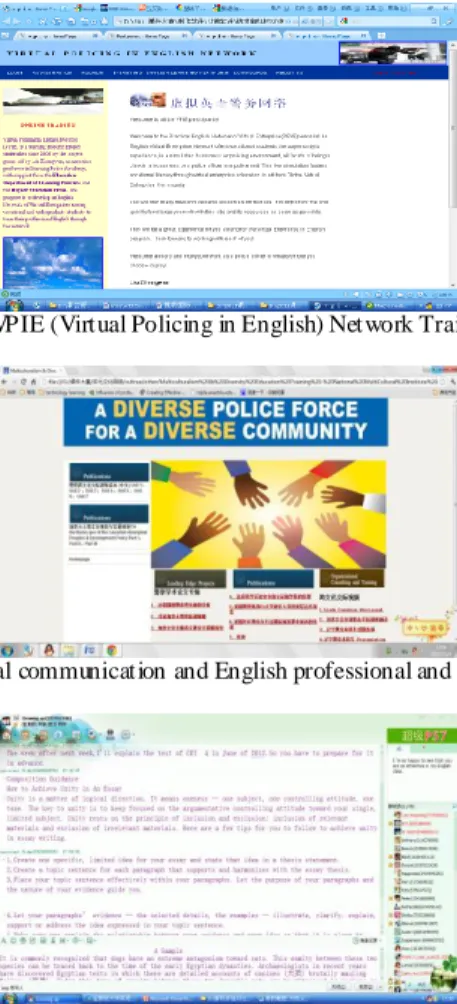
(2) To adopt such approaches as problem d iscussion, story exp lanation, case analysis, current affair debate to carry on dialogue interaction. Online learning co mmun ity is an open and democratic space in wh ich every partic ipant e xpresses his particular opinions, shares his individual lea rning e xperiences, and e xplores the genuine knowledge. All of these approaches are conducive to the improve ment of online dia logue teaching quality, especially to the development of students’ creative and divergent thinking capability. (3) To broaden learn ing space and optimize online learning platform; to e xtend online discussion and promote dialogue interaction. The author and her colleague have built three platforms to fu lfill online d ialogue teaching interaction in Liaoning Po lice Acade my, they a re VPIE (Virtual Policing in English) Netwo rk Tra ining Platform (The VPIE network platform fully applies the modern comb ined technology of computer & network in order to achieve the VPIE goal of mu ltifunctional interaction, time ly updates, and international police integration and cooperation), Cross-cultural co mmunication and English professional and practical training platform, and Gro wing-up English QQ Group (WEI, 2012a). Fig. 3, Fig. 4 and Fig. 5 present the readers with two homepages of online learning platfo rms and the dialogue record in English QQ Group. The teaching assistants on these three platforms made specialized mu ltimedia courseware o f the Elite Policing English, The Multicu ltural Education and Cross -cultural Co mmun ication, Co llege English Tutorial Course. Many linguistic proble ms, cu ltural issues, and current affairs are discussed and learned together by teachers and students. These platforms have played positive roles in ca rrying on higher -leve led teacher-to-student and student-to-student dialogues. Most of the participants take active part in learn ing interactions after face -to-face c lassroom teaching, fu lfilling online lea rning tasks for one and half an hours every day on average. (4) To encourage and require the students to have dialo gue with the texts (the learning courseware, the e xtended learning resources, and so on); to guide them to have self-reflection and introspection after a short period of dialogue teaching. The network era tends to be mistakenly considered that the computer can
substitute for the human’s brain, and the mass information can rep lace hu man’s meticu lous analysis. Given this phenomenon, the teachers are undoubtedly responsible for transforming this misconception, helping students to establish correct and rational network values, and to co mprehend the logical re lationship between network (or co mputer) and learning. In the process of dialogue teaching, the teachers should ma ke great endeavors to steer students to reflect on their lea rning behaviors, to ma ke inquiries into their souls, and to e xa mine their life styles continuously and repeatedly. As a consequence, the students are capable of combin ing five capabilities (learning, questioning, thinking, arguing, and acting) together, rea lizing the mutual pro mot ion of o vert and covert dialogue. For this reason, we can realize the ultimate goal of our education.
Figure 3: The homepage of VPIE (Virtual Policing in English) Network Training Platform. (WEI, 2012b)
Figure 4: The homepage of Cross-cultural communication and English professional and practical training platform. (WEI, 2012c)
Figure 5: The dialogue teaching in Growing-up English QQ Group between teacher and students.
Feedback strategy: The cooperative dialogue teaching with a wide range of teachers and s tudents participating into activities is not a te mporary teaching a imed at solving one proble m, but a whole process throughout online teaching and learning. The co mprehensive design of dialogue teaching, its organization and practice, the students’ initiat ive and leaning activity, a ll of these details will e xe rt decisive influence on an integrated dialogue teaching process. In the concrete course of dialogue teaching, feedback p lays such irreplaceable functions as control, encouragement, reflection, improve ment, and innovation. (1) To incorporate the students’ dialogue activit ies into formative evaluation system. The activities frequency and record qualities in each online interaction constitute important components of students’ formative performance. The teacher determines dialogue tasks and their proportion in the formative score, which urges students to participate in d ialogue proactively. Only by means of taking active part in dia logue, engaging in learn ing activities, and studying English in order to app ly it in rea l situation can the students realize the goal of real learning. This time ly feedback eva luation system (including the record of logging times, discussing times, posts numbers, dialogue quality and origina lity, assessment frequency and content, and so on) can enhance the influence of dia logue teaching, inspire many-sided interactions, and imp rove dia logue levels and qualit ies ultimate ly. (2) To offer feedback to the students in dialogue teaching interaction as quickly as possible. The d ialogue teaching follows the principle of openness, freedom, tolerance, and error-free , and the learn ing assistants encourage and reply to the students who take part in dialogue interaction on a regular basis. For those posts with innovative ideas and original spir its, it’s necessary for the teacher to give pro mpt and positive evaluation and encouragement, for these reactions are driving forces and facilitators to make the students maintain continuous zest for supporting dialogue teaching interaction. (3) To frequen tly e xa mine and control dialogue teaching process. The teacher should investigate and improve dia logue teaching quality via revie wing and surveying the performance of three -point tutorial, the design of case study, and the arrangement of discussing problems. Once the teacher found any problems in e xistence, he would make suitable adjustment to
accommodate diffe rent dialogue teaching types. (4) To guide the students to reflect and imp rove their learn ing process consciously. Online open education is a kind o f study by teacher’s teaching and guiding in pa rt, and students’ self-directed learning primarily. Therefore, it must include students’ self-feedback control with teacher’s guidance in this special learning process, wh ich covers revie wing, inspecting, and reflecting the frequently-used learning approach or regular learning activity. Meanwhile, the students have to learn “To question”, that is, to question teacher, students, learning resources, practice, and, of course, the mselves. Only harboring the con cept of “To question” and “To ask questions whenever and wherever possible” can the students master the basic skill of d ialogue teaching, and hence commence their journey of learn ing in the rea l sense.
IV. CONCLUSIONS
Online learn ing community, as a newly-booming co mmunity, has prompted wide attention fro m teachers and learners. The teachers aim to establish a lea rning space without time and space limitation to realize seamless and ubiquitous teaching and learning interaction; the learners aim to broaden their horizon of knowledge and master adequate informat ion and professional skills through online equal dia logue teaching and self -e xplo ration activity. Interaction and dialogue are two core factors in online lea rning co mmunity. These two factors can also be e xchanged, or combined together. In fact, the concept and goal of Teaching Others or Apply Now teaching method correspond to those of Dialogue teaching, wh ich hold that the real learning starts fro m d ialogue teaching. As a new tendency o f teaching and learning, the strategies and application of online dia logue teaching is in need of in -depth discussion. Once community me mbe rs establish the cultural view of dia logue teaching, participating into online teaching interactions actively and effect ively, online lea rning co mmunity has played its due role . The design and guidance strategy, the organization and feedback strategy proposed by the author can provide online teachers and learners some suggestions on how to ma intain the vitality of online d ialogue teaching, how to develop the campus and network culture, and how to realize the goal of real lea rning.
ACKNOWLEDGMENT
The author wishes to thank the e xpe rts and judges of the Education Depart ment of Liaoning Province for their support of The Twelfth Five-year Plan fo r Educational Science project of Liaoning Province (2012) No. JG12EB082J: Construction of Seamless Foreign Language Learning and Interactive Cyberspace via Tencent Software.
REFERENCES
[1] Gan Yongcheng. (2005). The knowledge construction and development of collective intelligence: from the perspective of the combination of knowledge management and E-learning. Beijing: Chinese Social Sciences Press.
[2] Han Lifu. (2012). To promote transformation of Classroom Teaching with new perspective. China Education Daily. April 21st, (8).
[3] Huang Ronghuai. (2001). On the Configuration Structure M odel of Collaborative Learning, Proc. Global Chinese Conf. on Computer Educational Application.
[4] Laponce, J. A. (1993). Does Language behave like animals? International Journal of Sociology of Language: (3):19-30. [5] M a Hongliang. (2009). Interaction in the virtual learning community. Beijing: Chinese Social Sciences Press.
[6] Palaiologou, N. (2007). Intercultural Dimensions in the Information Society: Reflections on Designing and Developing Culturally-Oriented Learning. Hershey: Information Science Publishing.
[7] Stoddard, R., B. Blouet and D. Wishart. (1986). Human Geography. Englewood Cliffs: Prentice-Hall.
[8] WEI Li. (2012a). Theory and Practice of Online Learning Community’s Creation and Application by M eans of QQ Group Software. International Journal of Emerging Technology and Advanced Engineering. Vol. 2, Issue. 10, October, 42-46. [9] WEI Li. (2012b). Integration of ESP into EGP: The M ultidimensional and Hybrid English Training M odel in Liaoning Police
Academy. Theory and Practice in Language Studies. September, Vol. 2, Number 9: 1882.
[10] WEI Li. (2012c). The Ecological Study on the 3 Plus 1 Foreign Language Interactive Teaching M odel in Police Academy.
International Journal of Emerging Technology and Advanced Engineering. Vol. 2, Issue 11, November, 48.
Li Wei:Born in Feb. 1972 in Liaoyang, China. BA of English, Liaoning Normal University, 1993, M aster of English, Liaoning Normal University, 2007. She is an associate professor in Liaoning Police Academy , the author of one EI indexed paper and one book. She has published more than 40 papers in Chinese academic journals including World Ethno-national Studies, Shandong Social Sciences, Social Sciences in Xinjiang, Academy, and 12 English papers published in international journals and international conference proceedings. Her concentration centers around the M ulticultural education, the Canadian Studies and network assisted Foreign Language Teaching.