66 Aoyagi Y, Ikenaka T, Ichida F (1979) Alpha-fetoprotein as a carrier protein in plasma and its bilirubin-binding ability. Cancer Res39, 3571–3574.
67 Korpela J (1984) Avidin, a high affinity biotin-binding protein, as a tool and subject of biological research. Med Biol62, 5–26.
68 Giurgea N, Constantinescu MI, Stanciu Ret al.(2005) Ceruloplasmin – acute-phase reactant or endogenous antioxidant? The case of cardio-vascular disease. Med Sci Monit11, RA48–51.
69 Breuner CW, Orchinik M (2002) Plasma binding proteins as medi-ators of corticosteroid action in vertebrates. J Endocrinol175, 99– 112.
70 Flower DR (1996) The lipocalin protein family: structure and func-tion. Biochem J318 (Pt 1), 1–14.
71 Stein O, Stein Y (2005) Lipid transfer proteins (LTP) and atherosclero-sis. Atherosclerosis178, 217–230.
72 van Tol A (2002) Phospholipid transfer protein. Curr Opin Lipidol13, 135–139.
73 Raghu P, Sivakumar B (2004) Interactions amongst plasma retinol-binding protein, transthyretin and their ligands: implications in vitamin A homeostasis and transthyretin amyloidosis. Biochim Bio-phys Acta1703, 1–9.
74 Zanotti G, Berni R (2004) Plasma retinol-binding protein: structure and interactions with retinol, retinoids, and transthyretin. Vitam Horm69, 271–295.
75 Rosner W, Hryb DJ, Khan MSet al.(1991) Sex hormone-binding globulin: anatomy and physiology of a new regulatory system. J Steroid Biochem Mol Biol40, 813–820.
76 Palha JA (2002) Transthyretin as a thyroid hormone carrier: function revisited. Clin Chem Lab Med40, 1292–1300.
77 Fernandes-Costa F, Metz J (1982) Vitamin B12 binders (transcobal-amins) in serum. Crit Rev Clin Lab Sci18, 1–30.
78 von Castel-Dunwoody KM, Kauwell GP, Shelnutt KP et al.(2005) Transcobalamin 776C→G polymorphism negatively affects vitamin B-12 metabolism. Am J Clin Nutr81, 1436–1441.
79 Yamamoto M, Ariyoshi Y, Matsui N (1982) The serum concentrations of unbound, transcortin bound and albumin bound cortisol in patients with dysproteinemia. Endocrinol Jpn29, 639–646.
80 Bowmer CJ, Lindup WE (1978) Binding of phenytoin, L-tryptophan and O-methyl red to albumin. Unexpected effect of albumin concen-tration on the binding of phenytoin and L-tryptophan. Biochem Pharmacol27, 937–942.
81 Zucker SD, Goessling W, Zeidel MLet al.(1994) Membrane lipid composition and vesicle size modulate bilirubin intermembrane transfer. Evidence for membrane-directed trafficking of bilirubin in the hepatocyte. J Biol Chem269, 19262–19270.
82 Kragh-Hansen U, Vorum H (1993) Quantitative analyses of the inter-action between calcium ions and human serum albumin. Clin Chem 39, 202–208.
83 Lovstad RA (2004) A kinetic study on the distribution of Cu(II)-ions between albumin and transferrin. Biometals17, 111–113.
84 Spector AA (1975) Fatty acid binding to plasma albumin. J Lipid Res 16, 165 –179.
85 Takikawa H, Sugiyama Y, Hanano Met al.(1987) A novel binding site for bile acids on human serum albumin. Biochim Biophys Acta926, 145–153.
86 Hoshikawa S, Mori K, Kaise Net al.(2004) Artifactually elevated serum-free thyroxine levels measured by equilibrium dialysis in a pregnant woman with familial dysalbuminemic hyperthyroxinemia. Thyroid14, 155 –160.
2.4.2
The liver and coagulation
Maria T. DeSancho and Stephen M. Pastores
Introduction
The liver plays a major role in haemostasis, as most of the coagu-lation factors, anticoagulant proteins and components of the fibrinolytic system are synthesized by hepatic parenchymal cells. Additionally, the reticuloendothelial system of the liver helps to regulate coagulation and fibrinolysis by clearing these coagula-tion factors from the circulacoagula-tion. Finally, because the liver is a highly vascularized organ with vital venous systems draining through the parenchyma, liver diseases can affect abdominal blood flow and predispose patients to significant bleeding problems.
The aetiology of impaired haemostasis resulting from abnor-mal liver function is often multifactorial and may include impaired coagulation factor synthesis, synthesis of dysfunc-tional coagulation factors, increased consumption of coagula-tion factors, altered clearance of activated coagulacoagula-tion factors and quantitative and qualitative platelet disorders. In this chapter, we will review the normal physiology of haemostasis, describe the role of the liver in the haemostatic system and dis-cuss the coagulation abnormalities that may occur in patients with liver disease and during liver transplantation.
Physiology of haemostasis
Normal haemostatic balance is dependent on a complex inter-play between procoagulant, anticoagulant and fibrinolytic pro-teins. Initiation of coagulation begins when tissue factor (TF) is exposed after an injury to the vessel wall (Fig. 1). TF forms a
Fig. 1 Tissue factor (TF) is the major initiator of coagulation. Tissue factor-bearing cells include stimulated monocytes, endothelial cells and vascular smooth muscle cells. Exposure of TF to blood is rapidly followed by the formation of a complex between TF and factor VIIa that activates both factor IX and X, leading to generation of thrombin. Thrombin also activates factor V, VIII, XI and platelets.
Initiation
Tissue factor-bearing cell IX
IXa Va-Xa
X
V Prothcombin (II)
Thrombin (IIa) Prothrombin (II) X IX IX Prothrombin (II) Prothrombin (II) V Platelet
Amplification Activated platelet
V VIIIa XIa VWF VIII XI Xa Va VIII VI TF-VIIa
complex with activated factor VII (factor VIIa) present in the plasma. The TF/factor VIIa complex converts factor X to factor Xa, which, in turn, along with a cofactor, factor Va, converts pro-thrombin (factor II) to pro-thrombin (factor IIa) [1]. Although this process generates a small amount of thrombin, this thrombin serves to prime the coagulation cascade by increasing the enzy-matic activity of factor VIIa, making it 100-fold more active. In addition, thrombin activates factor V, VIII, XI and platelets, which form the infrastructure to amplify the enzymatic reac-tions of the coagulation cascade. Ultimately, thrombin is formed directly by the TF/VIIa complex activating factor X to Xa or indirectly by converting factor IX to factor IXa, which in turn complexes with its cofactor, factor VIIIa, to convert factor X to factor Xa. The large amount of thrombin that is generated cleaves fibrinogen to fibrin monomers, which in turn spontan-eously polymerize and are cross-linked by factor XIIIa (which itself is activated by thrombin) to produce a stable clot. At this time, thrombin-activatable fibrinolysis inhibitor (TAFI) becomes fully active and serves to diminish the incorporation and activa-tion of plasminogen, leading to delayed clot lysis (Fig. 2).
TF-dependent generation of thrombin is rapidly inhibited by TF pathway inhibitor (TFPI), which binds TF/VIIa/Xa forming the quaternary complex TFPI/Xa/TF/VIIa, which is internalized by the TF-bearing cell. The main endogenous anticoagulant system is the protein C-dependent system. Protein C and its cofactor protein S are both vitamin K-dependent factors synthesized by the liver. Protein C binds to an endothelial cell protein C receptor (ECPR) and is activated by thrombin bound to thrombomodulin, another endothelial cell membrane-based protein [2]. The activated protein C complex inactivates factors VIIIa and Va (Fig. 2). Another important endogenous anticoag-ulant system involves antithrombin (AT), also primarily pro-duced in the liver, which inactivates thrombin (IIa), factors Xa,
IXa, XIa and XIIa. The anticoagulant activity of AT can be increased by up to 1000-fold in the presence of heparin. Another vitamin K-dependent anticoagulant is protein Z, whose structure is similar to coagulation factors VII, IX, X, protein C and protein S. However, in contrast to these other vitamin K-dependent factors, protein Z is not a serine protease and plays an important role in inhibiting coagulation by serving as a cofactor for the inactivation of factor Xa by forming a com-plex with the plasma protein Z-dependent protease inhibitor. The role of alterations in the protein Z levels has been evaluated in different disease states, with conflicting findings [3]. Finally, to prevent excess clotting, fibrin is digested by the fibrinolytic system, the major components of which are plasminogen and tissue-type plasminogen activator (tPA) (Fig. 2). Both these proteins are incorporated into polymerizing fibrin, where they interact to generate plasmin, which in turn acts on fibrin to dissolve the preformed clot. Plasminogen binds to fibrin at specific lysine binding sites and to tPA. The binding of plas-minogen to tPA converts the proenzyme plasplas-minogen to active proteolytic plasmin. Plasmin cleaves polymerized fibrin strands at multiple sites and releases fibrin degradation products (FDPs) [3].
The fibrinolytic system is regulated by three serine proteinase inhibitors: alpha2-antiplasmin (α2-PI), plasminogen activator
inhibitor-1 (PAI-1) and plasminogen activator inhibitor-2 (PAI-2) (Fig. 2). α2-PI is secreted by the liver, is present within
platelets and serves to immediately inactivate free plasmin, whereas PAI-1 is the most important and most rapidly acting physiological inhibitor of both tPA and urokinase-type plas-minogen activator (uPA). PAI-2, originally purified from human placenta, inhibits both two-chain tPA and two-chain uPA with comparable efficiency, but it is less effective towards single-chain tPA [4].
Fig. 2 The fibrinolytic and natural anticoagulant pathways.
XIa
IXa+VIIIa
Activated protein C+protein S
Thrombin (IIa) D-dimer Fibrin-degradation products Fibrin Fibrinolysis – – – – – – – – Fibrinogen Plasminogen Xa+Va TF–VIIa Antithrombin Tissue factor pathway inhibitor (TFPI) Thrombin activatable fibrinolysis inhibitor (TAFI) Plasmin t PA u PA PAI-1 PAI-2 a2-antiplasmin Thrombomodulin –
Role of the liver in the haemostatic
system
The liver is the primary site of synthesis of most of the clotting factors and the proteins involved in the fibrinolytic system. These include all the vitamin K-dependent coagulation proteins (factors II, VII, IX, X, protein C, protein S and protein Z), as well as factor V, XIII, fibrinogen, antithrombin, α2-PI and
plasmino-gen. The notable exceptions are von Willebrand factor (VWF), tPA, thrombomodulin, TPFI and uPA. The VWF, tPA, throm-bomodulin and TFPI are synthesized in endothelial cells, while uPA is expressed by endothelial cells, macrophages, renal epi-thelial cells and some tumour cells [4].
Vitamin K, a fat-soluble vitamin, is required to achieve proper levels of procoagulant factors (II, VII, IX and X) and anticoagu-lant factors (proteins C, S and Z). These factors require vitamin K as a cofactor for post-ribosomal modification to render them physiologically active. All the vitamin K-dependent factors have in their amino-terminal several glutamic acid residues that must be converted to gamma-carboxyglutamic acid residues. This process is crucial to allow these proteins to bind calcium ions to form bridges to phospholipid surfaces, which are essential for the formation of activation complexes [5]. Finally, the liver plays a vital role in the regulation of anticoagula-tion. Removal of activated clotting and fibrinolytic factors, espe-cially tPA, is mediated through the hepatic reticuloendothelial system [6].
Haemostatic abnormalities in liver
disease
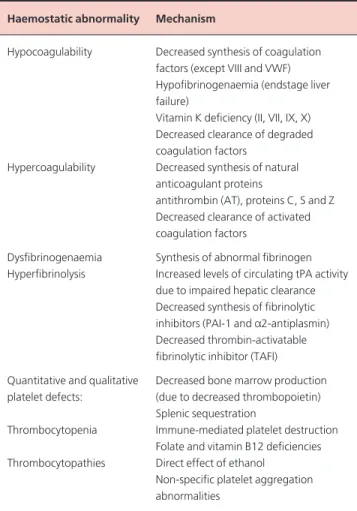
Various haemostatic abnormalities can occur in patients with liver disease and, in general, the severity of these abnormalities is dependent on the degree of hepatic dysfunction (Table 1). Coagulation defects in acute liver disease Liver disease can cause both quantitative and qualitative abnormalities in coagulation factors. Commonly, the vitamin K-dependent factors decrease first, starting with factor VII and protein C owing to their short half-life (6 h), followed by reduc-tions in factor II and X levels. Factor V levels are decreased in both acute and chronic liver disease [7]. Factor IX levels are usually only modestly reduced until advanced stages of liver disease. In contrast, VWF (synthesized by the endothelial cells) and factor VIII levels may be normal even in the presence of advanced liver disease because there is an increased production of factor VIII by the sinusoidal endothelial cells when the liver is damaged, combined with decreased clearance of the VWF/ factor VIII complex.
Fibrinogen levels are rarely decreased and may even be elevated because of abnormal non-functional fibrinogen (dysfibrinogenaemia) related to defective polymerization. A decrease in fibrinogen levels may indicate the presence of
disseminated intravascular coagulation (DIC) or progression to fulminant hepatitis with hepatic failure.
In a study of patients with significant liver injury and associated coagulopathy, factors II, V, VII and X were reduced to a similar degree and were significantly lower than factors IX and XI [8]. Factor VIII, however, was increased as well as interleukin 6 (IL-6), tumour necrosis factor-alpha (TNFα), thrombin–antithrombin (TAT) and soluble TF levels [9]. Of note, all the decreased factor levels were directly activated by TF. In patients with acute fulminant hepatic failure, the haemostatic alterations are attributed to quantitative and qualitative platelet defects, impaired synthesis and clearance of the coagulation factors and related inhibitory proteins and enhanced fibrinolysis. DIC may also play a role; however, DIC is difficult to distinguish from changes resulting from impaired hepatic synthesis and clearance alone [10]. In a study of 42 patients with acute fulminant hepatic failure, the activities of plasminogen and its inhibitor α2-PI were reduced while tPA
activity was normal. PAI-1, however, was greatly increased, indi-cating a shift towards inhibition of fibrinolysis in these patients. TAT complex levels and d-dimer, a fragment of cross-linked
Table 1Hemostatic changes in patients with liver disease.
Haemostatic abnormality Mechanism
Hypocoagulability Decreased synthesis of coagulation factors (except VIII and VWF) Hypofibrinogenaemia (endstage liver failure)
Vitamin K deficiency (II, VII, IX, X) Decreased clearance of degraded coagulation factors
Hypercoagulability Decreased synthesis of natural anticoagulant proteins
antithrombin (AT), proteins C, S and Z Decreased clearance of activated coagulation factors
Dysfibrinogenaemia Synthesis of abnormal fibrinogen Hyperfibrinolysis Increased levels of circulating tPA activity
due to impaired hepatic clearance Decreased synthesis of fibrinolytic inhibitors (PAI-1 and a2-antiplasmin) Decreased thrombin-activatable fibrinolytic inhibitor (TAFI) Quantitative and qualitative Decreased bone marrow production platelet defects: (due to decreased thrombopoietin)
Splenic sequestration
Thrombocytopenia Immune-mediated platelet destruction Folate and vitamin B12 deficiencies Thrombocytopathies Direct effect of ethanol
Non-specific platelet aggregation abnormalities
combination with its cofactor protein S, downregulates throm-bin generation in vivoby inhibiting the action of the cofactors factors Va and VIIIa. AT complexed to endothelial heparin-like substances inhibits thrombin (factor IIa) directly through the formation of an equimolar complex and indirectly through the inhibition of the serine proteases (factors IX, X, XI and XII). Thrombin formation is also downregulated by the TFPI, which specifically inhibits the complex of TF and VIIa [1].
Recent studies have indicated that standard coagulation tests such as prothrombin time (PT) and activated partial thrombo-plastin time (aPTT) may not reflect the true coagulation status of patients with liver cirrhosis. This is because these tests do not take into account the activation of the primary endogenous anti-coagulant protein C, levels of which are considerably reduced in cirrhosis. Tripodiet al.[19] reported impairment of thrombin generation measured without thrombomodulin, consistent with the reduced levels of procoagulant factors typically seen in cir-rhosis. However, when the test was modified by adding throm-bomodulin, patients generated as much thrombin as control subjects. The authors concluded that thrombin generation is normal in cirrhosis and that the reduction in procoagulant fac-tors in these patients is compensated for by the reduction in anticoagulant factors, thus leaving the coagulation balance unal-tered. Furthermore, their findings suggest that measurement of thrombin generation in the presence of thrombomodulin may be more suitable for the evaluation of bleeding risk [19]. Thrombocytopenia
Patients with liver disease may develop quantitative cytopenia) and/or qualitative platelet abnormalities (thrombo-cytopathies) such as impaired platelet adhesion and aggregation. The aetiology of thrombocytopenia in these patients is often attributed to splenic sequestration (hypersplenism), but may also occur as a result of platelet destruction mediated by platelet-associated immunoglobulins (PAIgG) [20] and impaired hep-atic synthesis and/or increased degradation of thrombopoietin (TPO) by platelets sequestered in the congested spleen [21].
Mild to moderate thrombocytopenia occurs in 16–52% of patients with acute hepatitis with or without cirrhosis. Severe thrombocytopenia can occur as a consequence of aplastic anaemia, a rare complication of acute hepatitis [22]. Idiopathic immune thrombocytopenia (ITP) has also been reported in patients with hepatitis C [23]. Cocaine may cause thrombotic thrombocytopenic purpura associated with toxic acute hepati-tis [24]. Ethanol directly suppresses platelet formation and decreases the lifespan of platelets, both of which contribute to thrombocytopenia commonly seen with alcohol-related liver disease [25]. Other aetiologies including medications, folate and vitamin B12 deficiencies, severe infections and DIC should also be considered in evaluating thrombocytopenia in patients with liver disease within the appropriate clinical setting.
Thrombocytopenia is a more common feature of chronic liver disease and has been reported in 49–64% of cirrhotic fibrin in plasma, were also significantly increased, indicating
activation of coagulation and fibrinolysis respectively. Thus, gross abnormalities of the fibrinolytic system occur in fulminant liver failure but, because inhibitory activity appears to be present in adequate quantities, this limits the incidence of bleeding due to fibrinolysis [11].
Coagulation defects in chronic liver disease In patients with liver cirrhosis, most coagulation factors and inhibitors of the coagulation and fibrinolytic systems are markedly reduced because of impaired protein synthesis, except for factor VIII and fibrinogen levels, which may be nor-mal or increased. Possible explanations for the increased factor VIII levels are the increased hepatic biosynthesis of VWF and decreased expression of low-density lipoprotein receptor-related protein, both of which modulate the level of factor VIII in plasma, rather than increase factor VIII synthesis [12]. Because fibrinogen is an acute-phase reactant, its synthesis tends to be preserved in patients with stable cirrhosis.
The deficiencies in vitamin K-dependent factors in cirrhosis may occur by several mechanisms, including reduced hepatic synthesis and reduced absorption of bile salts required for absorption of vitamin K-dependent factors, which may occur in the setting of cholestatic liver disease. Other contributing factors include poor oral intake and treatment with antibiotics that destroy the intestinal bacteria that synthesize vitamin K. As with acute liver disease, the reductions in coagulation factors parallel the degree of progression of liver disease.
In addition to impaired synthesis of clotting factors, excessive fibrinolysis, DIC, thrombocytopenia and platelet dysfunction account for the diverse spectrum of haemostatic defects in chronic or endstage liver disease [13] (Table 1).
The abnormalities of the fibrinolytic system are complex and result from impaired synthesis and altered clearance of the fibrinolytic factors. One of the most striking mechanisms is an imbalance between tPA and its specific inhibitor (PAI-1), which results in an increase in free tPA in the plasma and a reduction in
α2-PI. TAFI plays an important regulatory role in fibrinolysis.
TAFI is a procarboxypeptidase synthesized by the liver and, upon activation by thrombin or plasmin, TAFI is converted into TAFIa. TAFIa inhibits fibrinolysis by removing C-terminal lysines from partially degraded fibrin, causing a decrease in the cofactor function of fibrin in the plasminogen activation cata-lysed by tPA, resulting in decreased plasmin generation [14,15]. Thrombin is the most likely activator of TAFI and, when thrombin is complexed to thrombomodulin, TAFI activation is increased by more than 1000-fold [16]. The levels of TAFI are markedly reduced in cirrhotic patients and correlate with the severity of disease [16,17].
In addition to the reduced hepatic synthesis of clotting fac-tors, cirrhotic patients also have a significant deficit of natural anticoagulants, particularly protein C and antithrombin [18]. Activated protein C (APC), is the main anticoagulant that, in
patients [26]. The primary mechanism for thrombocytopenia is thought to be due to hypersplenism secondary to portal hyper-tension, which results in increased platelet sequestration and destruction. There is also increased destruction of platelets by immunological mechanisms that result from increased PAIgG. Increased levels of PAIgG have been reported in 55– 88% of patients with chronic liver disease [20,27]. The elevated levels of PAIgG correlate inversely with the platelet count in some [20,28], but not all studies [27]. Recently, diminished protein synthesis in the liver has been reported to cause inadequate synthesis of TPO [29]. TPO is a glycoprotein produced prim-arily in the liver that acts to increase the basal production rate of megakaryocytes and platelets. TPO levels are significantly lower in cirrhotic patients with thrombocytopenia than in those with normal platelet counts. Serum TPO levels correlate inversely with the severity of liver disease [30,31]. Finally, platelet counts post liver transplantation also correlate with TPO levels, regard-less of splenic size [32].
Intravascular activation and increased consumption of platelets in the diseased liver as a result of low-grade DIC is also a possible but controversial mechanism of thrombocytopenia. In patients with alcohol-induced cirrhosis, the thrombocytopenia may result from folate deficiency, direct toxic effects of ethanol on megakaryocytopoiesis [33,34] and increased platelet activa-tion [35].
Platelet function abnormalities
In patients with chronic liver disease, impaired platelet aggrega-tion with different agonists including adenosine diphosphate (ADP), thrombin, epinephrine and ristocetin has been de-scribed [36]. The abnormal platelet aggregation is thought to be caused by circulating platelet inhibitors (fibrin degradation products and d-dimers), plasmin degradation of platelet recep-tors, dysfibrinogenaemia and excess nitric oxide synthesis [13,37]. Conversely, hyper-responsiveness rather than a defec-tive platelet/VWF interaction is observed in cirrhosis, which may compensate for other haemostatic problems; this appears to be mediated primarily by increased VWF levels [38]. The platelet function defects may account for the prolongation of the bleeding time in 40% of patients with cirrhosis and correlates with disease severity [39,40]. Erythropoietin is the primary stimulus to erythrocyte production and also induces megakary-ocyte formation. Treatment with erythropoietin significantly increases platelet counts and platelet function in patients with alcoholic liver cirrhosis [41].
Disseminated intravascular coagulation
Low-grade DIC is commonly found in patients with endstage liver disease (ESLD). This syndrome is typically characterized by thrombocytopenia, prolongation of the PT and aPTT, decreased fibrinogen and elevated levels of fibrin degradation products (FDPs). Additionally, elevated levels of prothrombin activation
fragment F1 +2, fibrinopeptide A, d-dimer and TAT complexes are also observed in varying degrees [42–44]. The frequency and severity of DIC tends to correlate with the stage of liver disease [13,42,44,45].
The aetiology of DIC in chronic liver disease is multifactorial and includes release of procoagulants from injured hepatocytes, impaired clearance of activated clotting factors, decreased syn-thesis of coagulation inhibitors and endotoxin entry into the portal circulation [13].
The diagnosis of DIC in patients with chronic or endstage liver disease is often difficult and challenging, as the coagulation defects in both disorders are quite similar. Typically, an elevated d-dimer is more specific for DIC as it indicates activation of both coagulation and fibrinolysis, whereas high levels of fibrino-gen degradation products (FDP) or dysfunctional fibrinofibrino-gen are more common in ESLD [46]. Importantly, decreasing levels of factor VIII and fibrinogen with an increased d-dimer level on serial testing is more characteristic of DIC.
Clinically significant DIC is uncommon in patients with liver disease, usually complicates severe bacterial infections or severe sepsis and can also develop in patients with peritoneovenous shunts [47].
Haemostatic changes in liver
transplant
Complex coagulation disorders may occur during liver trans-plantation including preoperative coagulation abnormalities due to the underlying liver disease and haemostatic changes related to the transplantation, all of which may contribute to severe bleeding. Prior to the anhepatic phase, there are usually no serious haemostatic alterations. Bleeding during transplanta-tion is greatly influenced by the activatransplanta-tion of the fibrinolytic system, which occurs during the anhepatic and reperfusion phases. The hyperfibrinolysis is mediated by an intense release of tPA and a lack of hepatic clearance during the neohepatic period. A second fibrinolytic burst results from release of tPA by the endothelial cells of the revascularized graft [48]. Conversely, PAI-1 decreases during the anhepatic period and increases dur-ing the neohepatic period [49]. A preserved capacity to generate thrombin and less fibrinolytic activation during the anhepatic phase occurs in primary biliary cirrhosis compared with other types of cirrhosis [50].
Factors that influence the risk of bleeding during liver surgery also include the presence of cirrhosis, portal hypertension, high levels of central venous pressure, renal dysfunction and the length of graft preservation [49]. A hypercoagulable state has occasionally been reported in some patients with neoplasm or Budd–Chiari syndrome [45,51]. Platelet count decreases during liver transplantation with a nadir at the time of reperfusion, and may worsen in the case of a damaged organ graft. It has been suggested that the transplanted liver has a major role in the thrombocytopenia with intrahepatic platelet sequestration, local thrombin generation on the damaged graft endothelium,
platelet extravasation and increased phagocytosis by the Kupffer cells as potential mechanisms. Platelet function abnormalities have also been described after revascularization, whereby hypothermia enhances splanchnic platelet dysfunction and pro-longs coagulation reaction time by reducing enzymatic activity [52]. Release of exogenous heparin from the harvested graft after donor heparinization or endogenous heparin-like substances from the damaged ischaemic graft endothelium may also play a role in the coagulopathy at reperfusion [53]. Haemodilution secondary to fluid replacement and the preservation solution from the donor liver can additionally reduce plasma levels of coagulation factors at reperfusion [54].
Laboratory testing for coagulation
defects in liver disease
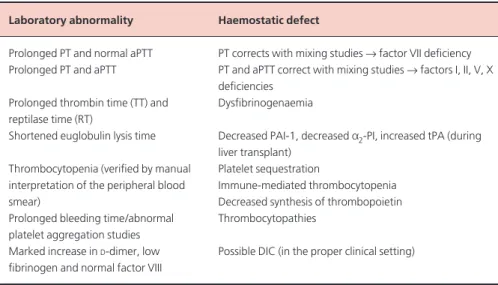
Initial standard screening tests in patients with liver disease should include a PT, aPTT, complete blood count with exami-nation of the peripheral blood smear and a fibrinogen level. In selected patients, additional testing should include a d-dimer test, thrombin time (TT), reptilase time (RT), euglobulin clot lysis time and a bleeding time (Table 2).
Often, the clotting tests remain normal until clotting factor levels fall to less than 30–40% of normal. In mild liver disease, the PT is prolonged, but the aPTT is usually normal. As the liver disease progresses, both PT and aPTT levels are prolonged, although in compensated cirrhosis, the high factor VIII level may blunt the prolongation of the aPTT. It is important to note, however, that international normalized ratio (INR) values may not be accurately reflective of the coagulopathy in patients with ESLD [55].
Fibrinogen levels are either normal or increased in patients with stable chronic liver disease.
In decompensated cirrhosis or DIC, severe
hypofibrino-genaemia (<100 mg/dL) is present, resulting in marked prolon-gation of the PT, aPTT and TT. Functional abnormalities of fibrinogen or dysfibrinogenaemias are diagnosed by a prolonga-tion of the TT and RT.
Therapy for haemostatic abnormalities
in liver disease
The management of haemostatic abnormalities in patients with liver disease is often difficult and challenging. Therapy is directed at correction of haemostatic defects in patients who are actively bleeding or who require surgery or other invasive pro-cedures. Additionally, therapy should be targeted to the type of procedure and site and severity of bleeding. The bleeding risk appears to be higher in patients with multiple haemostatic defects, renal failure or a previous history of bleeding.
Vitamin K
Vitamin K deficiency in patients with severe acute liver disease may be treated with one dose of 10 mg of vitamin K adminis-tered intravenously (i.v.) [56]. In patients whose prolonged PT does not completely correct with vitamin K therapy, impaired hepatic synthesis of coagulation factors from parenchymal liver disease must be suspected as the cause of the coagulopathy. Other patient subgroups in whom vitamin K may be useful include patients with primary biliary cirrhosis and those with chronic liver disease who are receiving broad-spectrum anti-biotics and have poor nutritional intake [57].
Plasma
Fresh frozen plasma (FFP) is prepared from units of whole blood and from plasmapheresis. Plasma contains all the coagulation Laboratory abnormality Haemostatic defect
Prolonged PT and normal aPTT PT corrects with mixing studies →factor VII deficiency Prolonged PT and aPTT PT and aPTT correct with mixing studies →factors I, II, V, X
deficiencies Prolonged thrombin time (TT) and Dysfibrinogenaemia reptilase time (RT)
Shortened euglobulin lysis time Decreased PAI-1, decreased a2-PI, increased tPA (during liver transplant)
Thrombocytopenia (verified by manual Platelet sequestration
interpretation of the peripheral blood Immune-mediated thrombocytopenia
smear) Decreased synthesis of thrombopoietin
Prolonged bleeding time/abnormal Thrombocytopathies platelet aggregation studies
Marked increase in D-dimer, low Possible DIC (in the proper clinical setting) fibrinogen and normal factor VIII
Table 2 Laboratory features of coagulopathy of liver disease.
platelet counts <50 000/µL [64]. A 1-h post-transfusion platelet count is commonly used to determine the efficacy of platelet transfusion and to guide subsequent therapy. Patients with marked splenomegaly, however, may not respond with an increase in platelet count after transfusion because of increased sequestration of the transfused platelets. Failure to increase the platelet count after transfusion may also be observed in patients with DIC, severe infection and alloimmunization due to platelet-specific and/or human leukocyte antigen (HLA) antibodies [13]. Antifibrinolytic agents
Epsilon aminocaproic acid, tranexamic acid and aprotinin are antifibrinolytic agents that inhibit plasmin generation and have been demonstrated to decrease bleeding associated with fibrinolysis in chronic liver disease [65] and intraoperative blood loss and transfusion requirements during liver transplan-tation [66–68]. These agents are contraindicated in patients with DIC and must only be used in selected patients with bleed-ing caused by excessive fibrinolysis.
Recombinant factor VIIa (rFVIIa)
Recombinant activated factor VII (rFVIIa) is a genetically engineered concentrate of human coagulation factor VIIa, which is structurally similar to native human plasma-derived factor VIIa. By enhancing thrombin generation on activated platelets, rFVIIa promotes the formation of a stable fibrin clot that is resistant to premature lysis [69]. This agent is Food and Drug Administration (FDA) approved for the treatment of haemophilia A and B patients with inhibitors against factors VIII and IX. Limited studies have shown correction of coagu-lopathy and decreased bleeding with the use of rFVIIa in patients with acute and chronic hepatic failure [70]. In these studies, rFVIIa was administered at doses ranging from 5 to 80 mg/kg i.v. for at least two doses [71–73]. Further studies are needed to identify the optimal dosing and confirm the safety, efficacy and cost–benefit of rFVIIa in patients with liver disease. Similarly, rFVIIa has been used to control bleeding associated with coagu-lopathy in patients undergoing orthotopic liver transplantation, including Jehovah’s Witness patients [74]. Caution should be undertaken in administering rFVIIa to patients with DIC, coro-nary artery disease and severe sepsis because of their higher risk of thrombosis [75,76].
Thrombopoietin
TPO is a relatively lineage-specific cytokine that stimulates megakaryocyte growth and maturation in vitroand is a potent
in vivo thrombopoietic growth factor. This cytokine may be potentially useful for reducing bleeding in patients with throm-bocytopenia due to liver disease or preparing these patients for liver transplantation [77], although it is not FDA approved to date.
factors except VWF. Transfusion of FFP is the main therapy for patients with liver disease and coagulopathy who are actively bleeding [58]. However, the response to FFP is unpredictable. The use of FFP for the correction of moderate to severe coagu-lopathy prior to invasive procedures, e.g. percutaneous liver biopsy, is controversial and more studies are needed [59]. In general, it is recommended that, if the PT is prolonged by < 4 seconds, percutaneous biopsy can be undertaken safely. If the PT is prolonged by 4–6 seconds, FFP transfusion may allow the PT to decrease to the desired range. However, if the PT is pro-longed by >6 seconds, other biopsy techniques may need to be considered [60]. The recommended dose of FFP is 10–15 mL/kg. In the majority of patients with chronic liver disease, repeated transfusions of FFP every 12 h may be required for complete correction of the PT. There is currently no consensus on the volume of FFP or type of infusion regimens required to prevent or treat bleeding [13,59]. If FFP is given, repeat coagulation tests should be performed as soon as the infusion is completed to guide further management [59]. Potential adverse effects of FFP include volume overload, transmission of bloodborne infections, transfusion-related acute lung injury (TRALI) and allergic, feb-rile or haemolytic reactions.
Cryoprecipitate
Cryoprecipitate is prepared from FFP and is rich in fibrinogen, factor VIII, VWF, factor XIII and fibronectin. Each bag of cryoprecipitate contains 80–100 IU/mL factor VIII and at least 140 mg of fibrinogen [59]. Cryoprecipitate is indicated in patients with severe coagulopathy and hypofibrinogenaemia (<100 mg/dL) or dysfibrinogenaemia.
DDAVP
Deamino-8-d-arginine vasopressin (desmopressin acetate or DDAVP) is a synthetic analogue of antidiuretic hormone, which raises the plasma levels of factor VIII and VWF and enhances platelet adhesion to the vessel wall. The agent is usually adminis-tered at a dose of 0.3 µg/kg by i.v. infusion over 20–30 min. In patients with liver cirrhosis, DDAVP may be used to shorten or normalize the prolonged bleeding time in those who need invasive procedures [61]. However, in two randomized trials, DDAVP did not reduce intraoperative blood loss and trans-fusion requirements in patients undergoing hepatectomy or control bleeding in cirrhotic patients with acute variceal bleed-ing [62,63].
Platelets
Platelet transfusions are indicated in patients with liver disease who are actively bleeding and have a platelet count below 50 000/µL or known history of platelet dysfunction. Prop-hylactic platelet transfusions may be necessary before invasive procedures (e.g. percutaneous liver biopsy) in patients with
15 Nesheim M, Bajzar L (2005) The discovery of TAFI. J Thromb Haemost 3(10), 2139–2146.
16 Colucci M, Binetti BM, Branca MGet al.(2003) Deficiency of throm-bin activatable fibrinolysis inhibitor in cirrhosis is associated with increased plasma fibrinolysis. Hepatology38(1), 230–237.
17 Van Thiel DH, George M, Fareed J (2001) Low levels of thrombin activatable fibrinolysis inhibitor (TAFI) in patients with chronic liver disease. Thromb Haemost85(4), 667–670.
18 Castelino DJ, Salem HH (1997) Natural anticoagulants and the liver. J Gastroenterol Hepatol12(1), 77–83.
19 Tripodi A, Salerno F, Chantarangkul V et al. (2005) Evidence of normal thrombin generation in cirrhosis despite abnormal conven-tional coagulation tests. Hepatology41(3), 553–558.
20 Sanjo A, Satoi J, Ohnishi Aet al.(2003) Role of elevated platelet-associated immunoglobulin G and hypersplenism in thrombocyto-penia of chronic liver diseases. J Gastroenterol Hepatol18(6), 638–644. 21 Rios R, Sangro B, Herrero Iet al.(2005) The role of thrombopoietin
in the thrombocytopenia of patients with liver cirrhosis. Am J Gastroenterol100(6), 1311–1316.
22 Zeldis JB, Dienstag JL, Gale RP (1983) Aplastic anemia and non-A, non-B hepatitis. Am J Med74(1), 64 – 68.
23 Narita R, Asaumi H, Abe Set al.(2003) Idiopathic thrombocytopenic purpura with acute hepatitis C viral infection. J Gastroenterol Hepatol 18(4), 462– 463.
24 Balaguer F, Fernandez J, Lozano Met al.(2005) Cocaine-induced acute hepatitis and thrombotic microangiopathy. JAMA 293(7), 797–798.
25 Scharf RE, Aul C (1988) Alcohol-induced disorders of the hematopoi-etic system. Z Gastroenterol26 (Suppl 3), 75–83.
26 Bashour FN, Teran JC, Mullen KD (2000) Prevalence of peripheral blood cytopenias (hypersplenism) in patients with nonalcoholic chronic liver disease. Am J Gastroenterol95(10), 2936–2939.
27 Pereira J, Accatino L, Alfaro Jet al.(1995) Platelet autoantibodies in patients with chronic liver disease. Am J Hematol50(3), 173–178. 28 Nagamine T, Ohtuka T, Takehara Ket al.(1996) Thrombocytopenia
associated with hepatitis C viral infection. J Hepatol24(2), 135–140. 29 Panasiuk A, Prokopowicz D, Zak Jet al.(2004) Reticulated platelets as
a marker of megakaryopoiesis in liver cirrhosis; relation to throm-bopoietin and hepatocyte growth factor serum concentration. Hepatogastroenterology51(58), 1124 –1128.
30 Ishikawa T, Ichida T, Sugahara Set al.(2002) Thrombopoietin recep-tor (c-mpl) is constitutively expressed on platelets of patients with liver cirrhosis, and correlates with its disease progression. Hepatol Res 23(2), 115 –121.
31 Giannini E, Botta F, Borro Pet al.(2003) Relationship between throm-bopoietin serum levels and liver function in patients with chronic liver disease related to hepatitis C virus infection. Am J Gastroenterol 98(11), 2516 –2520.
32 Goulis J, Chau TN, Jordan Set al.(1999) Thrombopoietin concentra-tions are low in patients with cirrhosis and thrombocytopenia and are restored after orthotopic liver transplantation. Gut44(5), 754– 758.
33 Peltz S (1991) Severe thrombocytopenia secondary to alcohol use. Postgrad Med89(6), 75 –76, 85.
34 Levine RF, Spivak JL, Meagher RCet al.(1986) Effect of ethanol on thrombopoiesis. Br J Haematol62(2), 345–354.
35 Ogasawara F, Fusegawa H, Haruki Yet al.(2005) Platelet activation in patients with alcoholic liver disease. Tokai J Exp Clin Med 30(1), 41– 48.
36 Thomas DP, Ream VJ, Stuart RK (1967) Platelet aggregation in
Conclusions
The liver plays a crucial role in haemostasis as it is responsible for the synthesis of most of the clotting and fibrinolytic proteins and the clearance of these coagulation factors from the circula-tion. Acute and chronic liver diseases are associated with a spectrum of haemostatic defects, and their severity tends to parallel the degree of hepatic injury. The aetiology of impaired haemostasis due to liver disease is multifactorial and includes impaired synthesis of coagulation factors, vitamin K deficiency, altered clearance of activated coagulation factors, excessive fibrinolysis, DIC and quantitative and qualitative platelet dis-orders. Standard laboratory testing should be supplemented with more specific tests of activation of the coagulation and fibrinolytic systems. The management of symptomatic haemo-static changes in patients with liver disease requires a multi-disciplinary approach directed at correction of the haemostatic defects in patients who are actively bleeding or who require surgery or other invasive procedures.
References
1 Rosenberg RD, Aird WC (1999) Vascular-bed-specific hemostasis and hypercoagulable states. N Engl J Med340(20), 1555–1564.
2 Esmon CT (2003) The protein C pathway. Chest124(3 Suppl), 26S–32S. 3 Sofi F, Cesari F, Fedi Set al.(2004) Protein Z: ‘light and shade’ of a new
thrombotic factor. Clin Lab50(11–12), 647–652.
4 Cesarman-Maus G, Hajjar KA (2005) Molecular mechanisms of fibrinolysis. Br J Haematol129(3), 307–321.
5 Borowski M, Furie BC, Bauminger S et al. (1986) Prothrombin requires two sequential metal-dependent conformational transitions to bind phospholipid. conformation-specific antibodies directed against the phospholipid-binding site on prothrombin. J Biol Chem 261(32), 14969 –14975.
6 Greenberg DL, Davie EW (2001) Blood coagulation factors: their complinentary DNA, geues and akpression. In: Coluan RW, Hiroh J, Marder VJ, Clower AW, George JN (eds) Hemostasis and Thrombosis: Basic Principles and Clinical Practice. Philadelphia, PA: Lippincott Williams and Wilkins, pp. 21–57.
7 Mammen EF (1994) Coagulation defects in liver disease. Med Clin North Am78(3), 545–554.
8 Kerr R (2003) New insights into haemostasis in liver failure. Blood Coagul Fibrinolysis14(Suppl 1), S43– 45.
9 Kerr R, Newsome P, Germain Let al.(2003) Effects of acute liver injury on blood coagulation. J Thromb Haemost1(4), 754 –759. 10 Pereira SP, Langley PG, Williams R (1996) The management of
abnormalities of hemostasis in acute liver failure. Semin Liver Dis 16(4), 403–414.
11 Pernambuco JR, Langley PG, Hughes RDet al.(1993) Activation of the fibrinolytic system in patients with fulminant liver failure. Hepatology18(6), 1350–1356.
12 Hollestelle MJ, Geertzen HG, Straatsburg IHet al.(2004) Factor VIII expression in liver disease. Thromb Haemost91(2), 267–275. 13 Kujovich JL (2005) Hemostatic defects in end stage liver disease. Crit
Care Clin21(3), 563–587.
14 Wang W, Boffa MB, Bajzar Let al.(1998) A study of the mechanism of inhibition of fibrinolysis by activated thrombin-activatable fibrinolysis inhibitor. J Biol Chem273(42), 27176–27181.
patients with Laennec’s cirrhosis of the liver. N Engl J Med276(24), 1344 –1348.
37 Albornoz L, Bandi JC, Otaso JCet al.(1999) Prolonged bleeding time in experimental cirrhosis: role of nitric oxide. J Hepatol 30(3), 456– 460.
38 Beer JH, Clerici N, Baillod Pet al.(1995) Quantitative and qualitative analysis of platelet GPIb and von Willebrand factor in liver cirrhosis. Thromb Haemost73(4), 601– 609.
39 Blake JC, Sprengers D, Grech Pet al.(1990) Bleeding time in patients with hepatic cirrhosis. Br Med J301(6742), 12–15.
40 Hsu WC, Lee FY, Lee SDet al.(1994) Prolonged bleeding time in cirrhotic patients: relationship to peripheral vasodilation and severity of cirrhosis. J Gastroenterol Hepatol9(5), 437– 441.
41 Homoncik M, Jilma-Stohlawetz P, Schmid M et al. (2004) Erythropoietin increases platelet reactivity and platelet counts in patients with alcoholic liver cirrhosis: a randomized, double-blind, placebo-controlled study. Aliment Pharmacol Ther20(4), 437– 443. 42 Vukovich T, Teufelsbauer H, Fritzer Met al.(1995) Hemostasis
acti-vation in patients with liver cirrhosis. Thromb Res77(3), 271–278. 43 Bakker CM, Knot EA, Stibbe Jet al.(1992) Disseminated intravascular
coagulation in liver cirrhosis. J Hepatol15(3), 330–335.
44 Violi F, Ferro D, Basili Set al.(1995) Prognostic value of clotting and fibrinolytic systems in a follow-up of 165 liver cirrhotic patients. CALC group. Hepatology22(1), 96 –100.
45 Kemkes-Matthes B, Bleyl H, Matthes KJ (1991) Coagulation activa-tion in liver diseases. Thromb Res64(2), 253 –261.
46 Carr JM (1989) Disseminated intravascular coagulation in cirrhosis. Hepatology10(1), 103–110.
47 Harmon DC, Demirjian Z, Ellman L et al. (1979) Disseminated intravascular coagulation with the peritoneovenous shunt. Ann Intern Med90(5), 774 –776.
48 Porte RJ, Knot EA, Bontempo FA (1989) Hemostasis in liver trans-plantation. Gastroenterology97(2), 488 –501.
49 Ozier Y, Steib A, Ickx Bet al.(2001) Haemostatic disorders during liver transplantation. Eur J Anaesthesiol18(4), 208 –218.
50 Segal H, Cottam S, Potter Det al.(1997) Coagulation and fibrinolysis in primary biliary cirrhosis compared with other liver disease and during orthotopic liver transplantation. Hepatology25(3), 683 – 688. 51 Lewis JH, Bontempo FA, Awad SAet al.(1989) Liver transplantation:
intraoperative changes in coagulation factors in 100 first transplants. Hepatology9(5), 710–714.
52 Himmelreich G, Hundt K, Neuhaus Pet al.(1992) Decreased platelet aggregation after reperfusion in orthotopic liver transplantation. Transplantation53(3), 582–586.
53 Bayly PJ, Thick M (1994) Reversal of post-reperfusion coagulopathy by protamine sulphate in orthotopic liver transplantation. Br J Anaesth 73(6), 840–842.
54 Rohrer MJ, Natale AM (1992) Effect of hypothermia on the coagula-tion cascade. Crit Care Med20(10), 1402–1405.
55 Robert A, Chazouilleres O (1996) Prothrombin time in liver failure: time, ratio, activity percentage, or international normalized ratio? Hepatology24(6), 1392–1394.
56 Pereira SP, Rowbotham D, Fitt Set al.(2005) Pharmacokinetics and efficacy of oral versus intravenous mixed-micellar phylloquinone (vitamin K1) in severe acute liver disease. J Hepatol42(3), 365–370. 57 Sallah S, Bobzien W (1999) Bleeding problems in patients with liver
disease. Ways to manage the many hepatic effects on coagulation. Postgrad Med106(4), 187–190, 193–195.
58 Kaul VV, Munoz SJ (2000) Coagulopathy of liver disease. Curr Treat Options Gastroenterol3(6), 433– 438.
59 O’Shaughnessy DF, Atterbury C, Bolton Maggs P et al. (2004) Guidelines for the use of fresh-frozen plasma, cryoprecipitate and cryosupernatant. Br J Haematol126(1), 11–28.
60 Grant A, Neuberger J (1999) Guidelines on the use of liver biopsy in clinical practice. British Society of Gastroenterology. Gut45(Suppl 4), IV1–IV11.
61 Mannucci PM (2000) Desmopressin (DDAVP) in the treatment of bleeding disorders: the first twenty years. Haemophilia6(Suppl 1), 60–67.
62 de Franchis R, Arcidiacono PG, Carpinelli Let al.(1993) Randomized controlled trial of desmopressin plus terlipressin vs. terlipressin alone for the treatment of acute variceal hemorrhage in cirrhotic patients: a multicenter, double-blind study, new Italian endoscopic club. Hepatology18(5), 1102–1107.
63 Wong AY, Irwin MG, Hui TWet al.(2003) Desmopressin does not decrease blood loss and transfusion requirements in patients undergo-ing hepatectomy. Can J Anaesth50(1), 14 –20.
64 Sue M, Caldwell SH, Dickson RCet al. (1996) Variation between centers in technique and guidelines for liver biopsy. Liver 16(4), 267–270.
65 Hu KQ, Yu AS, Tiyyagura Let al.(2001) Hyperfibrinolytic activity in hospitalized cirrhotic patients in a referral liver unit. Am J Gastroenterol96(5), 1581–1586.
66 Kahl BS, Schwartz BS, Mosher DF (2003) Profound imbalance of pro-fibrinolytic and anti-fibrinolytic factors (tissue plasminogen activ-ator and plasminogen activactiv-ator inhibitor type 1) and severe bleeding diathesis in a patient with cirrhosis: correction by liver transplanta-tion. Blood Coagul Fibrinolysis14(8), 741–744.
67 Boylan JF, Klinck JR, Sandler AN et al. (1996) Tranexamic acid reduces blood loss, transfusion requirements, and coagulation factor use in primary orthotopic liver transplantation. Anesthesiology85(5), 1043–1048; discussion 30A–31A.
68 Neuhaus P, Bechstein WO, Lefebre Bet al.(1989) Effect of aprotinin on intraoperative bleeding and fibrinolysis in liver transplantation. Lancet2(8668), 924 –925.
69 Hedner U (2004) Dosing with recombinant factor VIIa based on current evidence. Semin Hematol41(1 Suppl 1), 35–39.
70 Ejlersen E, Melsen T, Ingerslev Jet al.(2001) Recombinant activated factor VII (rFVIIa) acutely normalizes prothrombin time in patients with cirrhosis during bleeding from oesophageal varices. Scand J Gastroenterol36(10), 1081–1085.
71 Shami VM, Caldwell SH, Hespenheide EEet al.(2003) Recombinant activated factor VII for coagulopathy in fulminant hepatic failure compared with conventional therapy. Liver Transpl9(2), 138 –143. 72 Pavese P, Bonadona A, Beaubien Jet al.(2005) FVIIa corrects the
coagulopathy of fulminant hepatic failure but may be associated with thrombosis: a report of four cases. Can J Anaesth52(1), 26 –29. 73 Bosch J, Thabut D, Bendtsen F et al.(2004) Recombinant factor
VIIa for upper gastrointestinal bleeding in patients with cirrhosis: a randomized, double-blind trial. Gastroenterology 127(4), 1123 – 1130.
74 Jabbour N, Gagandeep S, Peilin ACet al.(2005) Recombinant human coagulation factor VIIa in Jehovah’s Witness patients undergoing liver transplantation. Am Surg71(2), 175 –179.
75 O’Connell KA, Wood JJ, Wise RP et al.(2006) Thromboembolic adverse events after use of recombinant human coagulation factor VIIa. JAMA295(3), 293 –298.
76 Ramsey G (2006) Treating coagulopathy in liver disease with plasma transfusions or recombinant factor VIIa: an evidence-based review. Best Pract Res Clin Haematol19(1), 113–126.