Seed Testing
INTERNATIONAL
ISTA News Bulletin No. 133 April 2007
COVER ARTICLE
5 The fi nal Congress Programme
14 Overview of documents related to the current Situation and the future Development of the International Seed Testing Association (ISTA)
18 Project to amalgamate the ISTA Rules and Annexes nears completion
19 Revision of Chapter 17 – Background information
ASSOCIATION NEWS
25 ISTA Introduces Seed Analyst Training Programme
RULES DEVELOPMENT
39 ISTA Method Validation
ACCREDITATION
48 10 years of ISTA Accreditation Programme 5 The 28th ISTA Congress 2007, Iguaçu Falls, Brazil
Dear Reader,
I think it will not surprise you, that the cover article of this issue again is focusing on the 28th ISTA Congress in Iguaçu Falls, Brazil. Please
fi nd herein a fi nal overview of all documents that will be dealt with at the Ordinary Meeting on May 11, 2007, the abstracts of the pres-entations to be given by the lead speakers at the Seed Symposium, as well as a number of important documents itself. This will allow you to transparently follow all the important issues that will be decided at the Congress, even if you do not have the possibility to come to Brazil. However, not coming to Brazil will mean that you are missing an outstanding event. Already today we know that nearly 1000 seed analysts and scientists from around 40 different countries of the world will meet at this important gathering to discuss about developments in seed science and technology and make important decisions for the further development of our Association and on modifi cations to the ISTA International Rules for Seed Testing.
Training and education was, is and always will be one of the most important tasks for mankind and not only for seed analysts. In this issue of Seed Testing International you will fi nd a fi rst set of informa-tion on a new business activity of the Associainforma-tion – the ISTA Seed Analyst Training Programme. This programme is focusing on the ba-sic and advanced education of persons determined to become seed analysts and should be another tool towards uniformity in seed test-ing, harmonising the performance of seed analysts world wide. More than this you will also fi nd an overview of ISTA training workshops offered in different parts of the world, where you can en-large your technical skills and meet interesting seed analysts from other countries or even other parts of the world.
As usual we try to give you a more detailed insight view on our member countries. This issue provides you with interesting informa-tion on Ghana and Thailand, describing the situainforma-tion of the seed in-dustry in these countries. We hope that we can awake your interest for these countries and maybe not only from the aspect of seed.
In closing allow me to come back to the 28th ISTA Congress. With
the Congress another triennium ends and with this also a new Ex-ecutive Committee will be elected during the Ordinary Meeting held at the Congress. Following the ISTA Constitution, the current fi rst Vice-President of ISTA takes over presidency then and becomes ISTA President for the upcoming three year period. For the fi rst time in the history of ISTA we will have a female President and we wholeheart-edly welcome Dr. Katalin Ertsey from Hungary as new President, and wish her all the best for her presidency. On the other hand, this is also the right time to say thank to our outgoing President, Pieter Oost-erveld, who has directed the affairs of the Association in an excellent way over the last three years and has brought ISTA forward. Pieter has been very active and vigorous in so many different areas, but the Memorandum of Understanding with FAO, enhancing the reputation of our Association tremendously, was clearly one of the highlights during his presidency. This issue is publishing the last President’s Report of Pieter and a fi rst interview with our incoming President Katalin.
I fi nally wish you an interesting reading of this issue of Seed Testing International and hope to welcome you personally at the 28th ISTA
Congress in Iguaçu Falls, Brazil.
Yours sincerely, Michael Muschick
Seed Testing INTERNATIONAL
No. 133, April 2007 EDITOR-IN-CHIEF Dr. Michael Muschick CO-EDITOR Ms. Patricia Raubo ADMINISTRATION
Dr. Bettina Kahlert (Technical Committees) Ms. Martina Rösch (Accreditation) ADDRESS
International Seed Testing Association (ISTA) ISTA Secretariat Zürichstrasse 50 P.O. Box 308 8303 Bassersdorf CH-Switzerland Phone: +41 44 838 60 00 Fax: +41 44 838 60 01 E-mail: [email protected] Internet: www.seedtest.org NEXT ISSUE
Deadline for article submission: Juli 15, 2007 Publication date, No. 134: October 2007 No of copies: 2500
OTHER ISTA PUBLICATIONS For information and orders of other ISTA Publications, please contact the ISTA Secretariat at the above address, or visit our website at www.seedtest.org
3
Interview with incoming President
5
Find all relevant documents and the fi nal programme for the ISTA Congress 2007 in Iguaçu Falls, Brazil
25
The ISTA Seed Analyst Training Programme
40
Conductivity testing for oilseed rape seeds
61
Workshop Reports
PRESIDENT’S REPORT
2 (My last) President’s Report 3 Interview with incoming President
COVER ARTICLE
5 The fi nal Congress Programme
14 Overview of documents related to the current Situation and the future Development of the International Seed Testing Association (ISTA)
15 Abstracts of presentations to be given by lead speakers at the 28th ISTA Seed Symposium
17 Draft ISTA Strategy
18 Project to amalgamate the ISTA Rules and Annexes nears completion
19 Revision of Chapter 17 – Background information 23 Draft Rules of Order for the Ordinary Meeting
ASSOCIATION NEWS
25 ISTA Introduces Seed Analyst Training Programme 27 Seed Industry Situation in Thailand
28 The Ghana Seed Industrie
29 In Memory of Dr. Friedrich Keding 30 Tragic Death of Deon Erdey
RULES DEVELOPMENT
33 Report on Tropical Species Method Validation 35 Rape seed validation study
39 ISTA Method Validation
40 Conductivity testing for oilseed rape seeds
42 Five Year Review of Official Methods Introduced in 2001 to Chapter 7, ISTA International Rules for Seed Testing
ACCREDITATION
48 10 years of ISTA Accreditation Programme 50 News from the ISTA Profi ciency Test Committee 52 100th accredited laboratory of ISTA
SEED SCIENCE
53 Seed size, shape and colour as computer imaging markers of germination quality TRAINING AND EDUCATION
58 Workshop Announcements
61 ISTA Workshop Reports
65 Calendar
I
n 1979 NAK, the Dutch General In-spection for agricultural seeds and seed potatoes became member of ISTA. For NAK as well as for me personally this was a historical event. Before that time, the governmental institute RPVZ at Wageningen performed the seed test-ing of all the seed lots to be exported from the Netherlands for which an ISTA Cer-tificate was required. By decision of the Minister, a reorganisation of RPVZ took place including the transfer of the routine testing of agricultural seeds to NAK. My fi rst ISTA Congress was the one held 1989 in Edinburgh, the capital of Scot-land. Already the fi rst congress touched me. I met many people with a real passion and dedication for seeds and seed testing. ‘Uniformity in seed testing’ was not just a slogan, but reality, as it is today. Dur-ing the congress in Buenos Aires in 1992, some ISTA members invited me to be can-didate for the Executive Committee. I was elected as member-at-large and a fascinat-ing period of my life started.As a member of the Executive Com-mittee I participated in a number of in-teresting and quite tough discussions. In the mid nineties of the past century, ISTA struggled with its position and image. ISTA was founded by governmental insti-tutes for seed testing. The majority of the ISTA membership felt that only seed
test-cations. These activities still are the ‘core business’ of the Association. As a member of the Executive Committee, I personally focussed mainly on the general policy of the Association. This for the benefi t of the overall Association and to facilitate the work of the Technical Committees and the development of ISTA International Rules for Seed Testing. I am proud of the As-sociation for which so many people work on a voluntary basis, but in the meantime in a very professional way. I just want to summarise ISTA’s successes:
• the ISTA International Rules for Seed Testing are famous and widely applied, • the ISTA Certifi cate is worldwide
ac-cepted,
• the accreditation programme is a great success,
• the profi ciency testing programme is unique,
• the scientifi c journal Seed Science and Technology is much appreciated
• the magazine Seed Testing International
demonstrates a professional Association • the ISTA workshops are famous
I thank the members of the Executive Committee for all the work and enthusi-asm. We had long and intensive meetings. We made clear decisions and we agreed upon proposals to be presented to the Or-dinary Meeting. In this report, I will not go into detail on the proposals that have been sent out to the ISTA membership for discussion and decision during the up-coming Ordinary Meeting in Brazil, May 2007. However, once again I thank the colleagues in the Executive Committee for the tremendous work and the pleasant and friendly way of co-operation. The work of the Secretariat has become more and more important over the past decades. ISTA has improved the deci-sion making process by organising An-nual Meetings. The meetings need to be well documented. Volunteers that actively contribute to ISTA activities work at their home institutes more and more under time pressure. Therefore, support of the ISTA ing performed by governmental institutes
could be the basis for the issuance of ISTA Certifi cates. The seed industry expressed the wish not only to be acknowledged by ISTA, but also to get a better position in the structure of the Association. ISTA recognised that laboratories of seed com-panies had developed and achieved a high level of technical competence. However, the technical competence was not the key item of the discussion. Moreover the word ‘independency’ formed the threshold for decisions.
Nowadays, the results of the discussion of that period are clear. ISTA successfully found a good balance between ‘govern-ment and seed industry’. The input of the technicians of seed company laboratories is signifi cant, the accreditation of seed company laboratories is possible and a success and all accredited laboratories are authorised to issuing ISTA Certifi cates. Equal in quality and qualifi cation. The role of ISTA for governments as well as for the global seed industry is still an important one. Seed testing laborato-ries worldwide can rely on ISTA methods, laboratories do not need to invest in their own methodology. Combined in ISTA, our work is much more effi cient. Commu-nication about quality between account managers of seed companies is easy go-ing, just referring to the fact that ‘the seed has been tested according to ISTA Rules’, simply understandable for everybody. ISTA was and is recognised by inter-national organisations such as FAO, ISF (International Seed Federation), OECD, UPOV and many others. Good relations with these organisations remain very im-portant for the further development of our Association. ISTA is more interna-tional than it has ever been. Many new countries joined the Association recently and many more showed their interest in doing so. Today 76 countries are member of ISTA. ISTA has 176 member laborato-ries and 102 of these laboratolaborato-ries are ac-credited by ISTA.
ISTA started making rules and
publi-(My last) President’s Report
Secretariat is more than welcome and needed. ISTA members, and also non-members, have a lot of questions to be an-swered. The accreditation and profi ciency testing programme need a professional organisation. And not to forget the rep-resentation at international organisations which is very important for us. During my time as President of the Association, I closely observed the work of the Secre-tariat and I am really impressed about all the work that is done in a professional and dedicated way. I thank the ISTA staff, un-der the leaun-dership of the Secretary Gen-eral Michael Muschick, for this.
I know that ISTA members prefer not to increase membership fees. However, when ISTA wants this Association to continue its excellent work for the sake of govern-ments and seed industry, we must realise that a professional staff is required. And such good things do cost money. A good alternative for increasing fees is to extend ISTA membership, countries, laboratories and persons. We all can contribute to that by telling everybody what ISTA stands for: Uniformity in seed testing, worldwide more than ever!
In Brazil, Mrs. Dr. Katalin Ertsey will take over the presidency of ISTA for the next triennium. Katalin has a long time experience in seed testing and in ISTA as well. Since 1992 she is member of the Ex-ecutive Committee and active as member of a number of Technical Committees. I am confi dent that she will lead the Associ-ation in a dedicated and professional way. I thank the ISTA members for the confi -dence I received as President of ISTA. It has been a real pleasure for me to serve this Association.
I hope to meet you all in Brazil.
Thank you all for the kind co-operation and friendship!
Your President, Pieter Oosterveld
You are working actively in the seed sector since 30 years. Did you choose this profes-sion consciously or it came by chance? The correct answer for this question is; both. After graduating from the Univer-sity of Horticulture in Budapest – one of the oldest universities with horticultural faculty in Europe – I was looking for a job which is specifi ed enough. It was important for me that the location would be relatively close by and had an effective importance in Hungarian agriculture. So I engaged my-self in work in the National Seed Inspec-tion. At the beginning I worked as a seed analyst in the purity lab. After I had been working in the laboratory for two years I decided to leave the Institution for anoth-er possibility with highanoth-er latitude. At that time – as fate would have it – unfortunate-ly, my boss A. Barthodeisky, Chair of the ISTA Flower Seed Committee and mem-ber of the ISTA Executive Committee suf-fered a heart attack. So I had to take over his responsibilities at the ISTA Germina-tion Workshop to be held in Wageningen. It was a signifi cant experience for me and I immediately saw seed testing becoming an absolutely exciting aspect for me. At the ISTA Workshop I met experts such as Bernard Schmidt from Germany or at the time the young Hans Arne Jensen etc. With this new experience and after a very impressive study tour in Enkhuizen I realised new opportunities lies in seed technology and research.
How did your career continue after this period?
The next 8–10 years was a time of hard work for me and I gained vast experience. I became the leader of the central Ger-mination Laboratory. There were more than 30 000 seed samples yearly. Among the samples there were all kind of crops from cereals to fl ower as well as forest seeds too. In the 1980’s Hungary was the largest hybrid seed corn producer in Eu-rope (the production area of hybrid seed corn was 80 000 ha). So we introduced the cold test as a compulsory vigour test in our national system. Due to this work I met two excellent representatives of seed science from the previous generation such as Maria Kietreiber and Franz Fiala from Vienna and also started my corre-spondence with John Hampton. I did a post-graduation on Seed Production and Technology and I visited a lot of countries in Europe to study their seed testing sys-tems/procedures. During this period my daughter was born and my son later. When did your connection
with ISTA become closer?
In 1989 there were two important events in my life. I fulfi lled the requirements of a World Bank project and got a scholar-ship to Iowa State University, US for two months. In the frame of this programme I got acquainted with the work of the Iowa State University’s Seed Centre. There I discovered new technologies and the
pos-D
r. Katalin Ertsey will be the 23rd President of the International Seed Testing As-sociation when she takes over the ISTA presidency from Pieter Oosterveld at the upcoming ISTA Congress in Brazil this May. For that reason – although she is not at all an unfamiliar figure in the Association’s circle – we would like to introduce our next President, her goals and aspirations. We will talk about her objectives and plans for the upcoming triennium.sibility of computerization in seed testing including the use of informatics in seed schemes. I gained much knowledge about maize and soy been seed production and its testing procedures. In the same year I took part in my fi rst ISTA Congress, which was held in Edinburgh. In the next year 1990 I presented my fi rst lecture at an ISTA Workshop in No vosibirsk (the former Soviet Union).
And in Scotland you already participated as a designated voting member
of Hungary. Is this correct?
That is right. In the meantime I became the head of the Seed Testing Department of our Institution. I was responsible for all seed sampling and testing activities of the ISTA Laboratory and the nine National Seed Testing Laboratories working in Hungary as well.
Tell us about your role and activities as a member in the Executive Committee of ISTA?
I am a member of the ISTA Executive Committee since the 23rd Congress which
was held in Buenos Aires in 1992. Who-ever follows up the developments of ISTA in the last 15 years will know that a new period has started then for our Associa-tion. The need of unavoidable changes oc-curred. Generational changes came to pass. At this congress the need of introducing a quality assurance system raised up at fi rst on offi cial level. Moreover the question of harmonization between state and private labs had occurred too. One other signifi cant arose “How the Association – established in 1924 – would sustain in the globaliza-tion process?” In case of the above men-tioned question the Executive Committee – newly elected at that congress – took the fi rst steps. Among the members of the new Executive Committee were the two reformer Presidents Norbert Leist and Pieter Oost-erveld. All of us decided that the new trend had to be the line of the development. We have committed ourselves to progress. I was proud to be member of this kind of progres-sive team. The results had certifi ed our ef-forts. We have developed our accreditation system. Nowadays this system is an existing valuable model. Furthermore there are 100 laboratories that work according to this sys-tem today. After a very serious preparatory work we have let to introduce the company labs accredited according to the ISTA
meth-• Finding those motivation tools to help raising the participation in our work. • Help to follow that process that started
with Chapter 8. Due to the new structure the ISTA Rules are able to incorporate the newest results of the seed science and methodology.
• Realising the previous initiative in ac-cordance to yearly scientifi c meetings. It would be useful that not only in the year of a Congress colleagues would be dis-cussing appearing scientifi c questions; continuity would be very desireable. • Increasing our activity both in the
Cen-tral African and the Asian areas. I hope I will be able to support all this work with my experiences.
To achieve these goals you will need a lot of energy! As I know your number of tasks at home are increasing too.
Yes you are right but as I have mentioned earlier I can work only in teams. I have excellent colleagues whom I can share my tasks. During the last years the ISTA Sec-retariat has worked on a very high level under the leadership of the ISTA Secre-tary General Michael Muschick, who is pre paring his work very well. All Execu-tive Committee members have respecExecu-tive professional calling. So we can share the tasks. It is true that my present job at home is wider than before. In 2006 I became an EOQ Quality Manager and Auditor (Eu-ropean Organization for Quality) too. Nowadays in the newly organized Hungar-ian Central Agricultural Offi ce I am the head of the Directorate of Plant Produc-tion and Horticulture. Our tasks are the following; the Variety Registration includ-ing DUS and VCU tests, the Certifi cation and Marketing Control of Seed and Re-productive Propagating Material. We are responsible for the UPOV, CPVO, OECD, ISTA and EU relations too. The team of the Directorate is highly educated and ex-perienced. Of course everybody has its own responsibility. I have some free energy as well as my children are grown up. My daughter who follows my profession is as-sistant at the university and has her own family. My son will pass the university in the next semester and my husband sup-ports me as he did it before all the time. So I think I will be strong enough to achieve my goals and I hope that my renewable re-sources will remain really renewable in the future. Thank you.
ods. In these days the numbers of these labs are increasing permanently. With the intro-ducing of the new Chapter 8 into the ISTA Rules we took the fi rst steps because of our seed testing system and – our most valuable ‘product’– the ISTA Rules could involve the new results of scientifi c and technological researches.
According to your opinion what is your most important result during in the last 15 years? I have not only personal results. All achieved goals are based on teamwork in ISTA and at home as well. But of course there are some results which make me proud. It was a very busy time for me not only in my ISTA life but in my home job as well. I graduated in 1985 and in 1995 I completed my PhD. In 1994 I took over the responsibility on the Hungar-ian Seed Certifi cation Scheme including fi eld inspection, post control and OECD relations. It was the preparation time for my country to enter the EU. During my leadership the sector prepared to the EU joining I was delegated more times as an expert into the Hungarian Delegation to Brussels. As an expert I worked in the legal harmonization of professional ques-tions. In 2004 when Hungary was jointed to the EU we – I mean Hungary – organ-ized the 27th ISTA Congress in Budapest
with a very high number of participants. This congress will be important in the history of ISTA because of the members accepted here the full member participa-tion of private/company laboratories in our Association. My colleagues organized three times (in the years 1997, 2003 and 2004.) successful workshops in Budapest too. I hope that in my new role I did sup-port the work of the Executive Committee with my knowledge and experience. What goals do you want to achieve during your presidency?
As I mentioned earlier we live in a refor-mation period nowadays. Most of its ele-ment is over but there are some unfi nished questions. First I would like to settle these open processes. These topics are the fol-lowing:
• Modernizing the presidency in shorten-ing the number of offi cers.
• Simplifi cation of the use of the different ISTA Certifi cates.
• Better coordination of Technical Com-mittees.
May 5–11, 2007
Iguassu Falls, Brazil
SATURDAY, MAY 5, 2007
Technical Committee Meetings ( Day 1) Meeting Room
07:30 – 21:00 Registration at Rafain Palace Hotel
08:00 - 09:00 Bulking and Sampling Committee Meeting Iguaçu I
09:00 - 10:00 Flower Seed Committee Meeting Iguaçu II
10:00 - 10:30 Coffee Break
10:30 - 11:30 Forest Tree and Shrub Seed Committee Meeting Itanhegá I 10:30 - 11:30 Advanced Technologies Committee Meeting Itaguá I
11:30 - 12:30 Germination Committee Meeting Iguaçu I
12:30 - 13:30 Lunch
13:30 – 14:30 Moisture Committee Meeting Iguaçu II
14:30 – 15:30 Nomenclature Committee Meeting Itaguá I
15:30 – 16:00 Coffee Break
16:00 – 17:00 Profi ciency Test Committee Meeting Iguaçu I
SUNDAY, MAY 6, 2007
Technical Committee Meetings (Day 2 ) Meeting Room
07:30 – 21:00 Registration at Rafain Palace Hotel
08:00 - 09:00 Purity Committee Meeting Iguaçu I
09:00 – 10:00 Seed Health Committee Meeting Iguaçu II
10:00 - 10:20 Coffee Break
10:20 - 11:10 Statistics Committee Meeting Itaguá I
11:10 – 12:10 Seed Storage Committee Meeting Iguaçu I
12:10 – 13:10 Lunch
13:10 – 14:10 Tetrazolium Committee Meeting Iguaçu II
14:10 – 15:10 Seed Vigour Committee Meeting Itaguá I
15:10 – 15:30 Coffee Break
15:30 – 16:30 Variety Committee Meeting Iguaçu I
16:30 – 17:30 GMO Task Force Meeting Iguaçu II
18:30 – 20:00 Opening Ceremony
• Opening address by the President of ISTA, Ir. Pieter Oosterveld and the Secretary General of ISTA, Dr. Michael Muschick • Opening address by the President ABRATES, Dr. Silmar Peske • Offi ciation of opening of the Congress by the Ministry
of Agriculture of Brazil
• Presentation of the global seed industry by the Secretary General of ISF, Dr. Bernard Le Buanec
Expocenter
MONDAY, MAY 7, 2007
Seed Symposium (Day 1) Meeting Room
07:00 – 21:00 Registration at Rafain Palace Hotel
08:00 – 08:20 Welcome and Presentation of ISTA
by the President of ISTA, Ir. Pieter Oosterveld
Expocenter (ALL DAY) 08:20 – 08:30 Opening Seed Symposium
by the ISTA Seed Symposium Convenor, Dr. Alison Powell 08:30 – 10:00 SESSION 1
DIVERSITY WITHIN AND AMONG SEED LOTS AND SPECIES
Chair and lead speaker: Michael Kruse, University of Hohenheim, Stuttgart, Germany
A Bayesian approach for adventitious presence (AP) semiquantitative testing in conventional seed lots
by Jean Louis Laffont, and Kirk Remund, Pioneer Génétique, Aussonne, France
Physiological quality evaluation of annual ryegrass seeds from the soil seed bank
by Ana Laura Pereira Amato, Manoel de Souza Maia, Leandro Sebastião Caetano, Silvia Bristotti Simeoni and
Leandro de Conto, Universidade Federal de Pelotas, Pelotas, Brazil
The impact of provenance, season and seed differences on the seed longevity of nine Australian native species
by Jitka Kochanek, Kathryn J. Steadman, Robin J. Probert and Steve W. Adkins; University of Queensland, Brisbane, Australia
10:00 - 10:30 Coffee Break
10:30 – 11:30 SESSION 1 continuation
Oil content a factor in seed moisture testing?
by Harry Nijënstein, Innoseeds BV, Vlijmen, The Netherlands
Removal of green seeded soybean from seed lots by processing
by Jose Franca-Neto, Francisco Krzyzanowski, Patricia Brumatti, Gilda Padua & Costa Nilton, Embrapa Soybean, Londrina, Brazil
Testing moisture content of nut-enclosed tropical seeds
by Joseph Ahenda, KEPHIS-NSQCS, Nakuru, Kenya
11:30 – 12:30 POSTER SESSION 1
MONDAY, MAY 7, 2007
Seed Symposium (Day 1) Meeting Room
13:30 – 15:00 SESSION 2
PROBLEMS ASSOCIATED WITH THE DOMESTICATION AND USE OF NON-CROP SPECIES
Chair and lead speaker: Mirian Eira, Embrapa, Brasilia, Brazil
Desiccation tolerance and germination behaviour of nikau (Rhopalostylis sapida Wendl. et Drude) an endemic New Zealand palm
by Craig McGill, Heather Outred, Chris Wood, Kay Kitchen & David Fountain, Institute of Natural Resources, PN433, Palmerston North, New Zeeland
Development of dormancy breaking treatments to enable germination testing of seeds of medicinal plants grown in Iran
by Mohammad Khajeh-Hosseini, L. Tabrizi, G. Aziz & M. Jahan, University of Ferdowsi, Mashhad, Iran
Seed longevity of Hosta sieboldiana and H. albomarginata
by Kojiri Suzuki, Tokyo University of Agriculture, Tokyo, Japan
EXPOCENTER (ALL DAY)
15:00 – 15:30 Coffee Break
15:30 – 16:30 SESSION 2 continuation
Pattern of radiographic images of Ginko biloba (L.) seeds
by Adriana R. Salinas, Roque Mario Craviotto, Carina del Valle Gallo, Sabina Andrea Feerrari & Miriam Raquel Arango, Faculty of Agri-cultural Sciences, Zavall, Argentina
Standardization of seed testing procedures in four medicinal plants
by Kota Meena Kumari, Rohini, R. Ankaiah, Vilas A. Tonapi & K. Rajeswari, ANGRAU, Andhra Pradesh, India
16:30 – 18:00 SESSION 3 – DIVERSITY IN CONTAMINATING ORGANISMS
Chair and lead speaker: Gary Harman, Cornell University, Geneva NY, United States
Development of immunochemical and PCR Methods for qualitative detection of Tilletia species in organic seeds
by Thomas Kellerer, Monika Sedlmeier, Frank Rabenstein and Berta Killermann, Bayerische Landesanstalt für Landwirtschaft, Freising, Germany
Inoculum thresholds for Dreschlera in organic barley and oat seed
by Guro Brodal & Birgitte Henriksen, Norwegian Institute for Agricultural and Environmental Research, Ås, Norway
Soft electron treatment for the management of pulse beetle,
Callosobruchus maculates F. and its effect on seed DNA
and germination of Adzuki bean, Vigna angularis
by Venkatarami P. Reddy, Setsuko Todoriki, Akihiro Miyanoshita, Taro Imamura and Toru Hayashi, Indian Institute of Horticultural Research, Bangalore, India
TUESDAY, MAY 8, 2007
Seed Symposium (Day 2) Meeting Room
08:00 – 08:30 Presentation about the Brazilian Seed Industry
by the Executive Director of COODETEC, Dr. Ivo Marcos
08:30 – 09:30 SESSION 3 continuation
Healthy and vigorous seeds for sustainable farming
by Steven P.C. Groot, Ruud W. van den Bulk, W. Joost van den Burg, Henk Jalink & Jan M. van der Wolf, Plant Research International, Wageningen, The Netherlands
Potential of Bacillus amyloliquefaciens for control of seed-borne pathogens on yellow cosmos and French marigold
by Wen-Shi Wu, Y. L. Li and H. C. Wu, Dept. of Horticulture,
Taipei, ROC, Taiwan
Effect of fungicide seed treatments on germination and vigour of maize seed during storage
by Veloshinie V. Govender, Delphin D.S. Kandolo, Terry T.A.S. Aveling and
Quenton Q. Kritzinger, University of Pretoria, Pretoria, South Africa
EXPOCENTER (ALL DAY)
09:30 – 10:00 SESSION 4
SEED DEVELOPMENT, DORMANCY AND GERMINATION: PHYSIOLOGY AND METHODS (ISSS collaborative session)
Chair and lead speaker: Roberto Benech-Arnold, University of Buenos Aires, Buenos Aires, Argentina 10:00 – 10:30 Coffee Break
10:30 – 12:30 SESSION 4 continuation
The awakening of the quiescent seed during germination as revealed by proteomics
by Julie Catusse, Juliane Meinhard, Claudette Job, Uwe Fischer & Dominique Job, CNRS/Bayer CropScience Joint Laboratory, Lyon, France
Physiological quality assessment using biochemical tests involving biotinylated proteins
by Marie-Hélène Wagner, Claudette Job, Sylvie Ducournau, Marie-Claire Gatineau & Dominique Job, GEVES-SNES, Beaucouzé Cedex, France
Genomic regions associated to rice seed germination and vigour
by Gaspar Malone, Silmar T. Peske, Paulo Dejalma Zimmer, Guilherme Fiss and Patricia Vinholes, Laboratorio de Biosementes, Pelotas, Brazil
Dormancy breaking improvement for cereal seed germination testing
by Sylvie Ducournau, Benoit Mériaux, Günther Müller, Philippe Garreau & Joël Léchappé, GEVES-SNES, Beaucouzé Cedex, France
Screening for physical dormancy in Millennium Seed Bank Project collections
by Natasha S. Ali, Darren P.M. McCabe, Katie Lowe & Robin J. Probert, Seed Conservation Department, West Sussex, United Kingdom
Seedling emergence of tucumã (Astrocaryum aculeatum G.
Meyer-Arecace-ae) as a function of moisture content of the seeds and heat pretreatment by Patrícia Nazário and Sidney Alberto do Nascimento Ferreira,
Instituto Nacional de Pesquisas da Amazônia, Manaus/AM, Brazil 12:30 – 13:30 Lunch
TUESDAY, MAY 8, 2007
Seed Symposium (Day 2) Meeting Room
13:30 – 15:00 SESSION 5
VIGOUR AND INVIGORATION
Chair and lead speaker: Kent Bradford, Seed Biotechnology Center, Davis CA, United States
Controlled deterioration test predicts vigour and fi eld emergence in pepper seed lots
by Hulya Ilbi, Suleyman Kavak & Benian Eser, Ege University, Izmir, Turkey
A trait-led investigation of seed vigour using natural genetic variation in Brassica oleracea
by William Finch-Savage, Katharine Dent & Guy Barker, Warwick HRI, Warwick, United Kingdom
Length of the lag period of germination and metabolic repair explain vigour differences in seed lots of maize (Zea mays)
by Stan Matthews and Mohammad Khajeh-Hosseini, University of Aberdeen, Aberdeen, United Kingdom
EXPOCENTER (ALL DAY)
15:00 – 15:30 Coffee Break
15:30 – 16:30 SESSION 5 continuation
Conductivity testing of Brassica seed lots: does seed moisture content affect results?
by Conrad Leeks, Bruce McKenzie and John Hampton, Lincoln University, Canterbury, New Zealand
Radish seed vigour and plant fi eld performance
by Julio Marcos-Filho and Ana Lucia Pereira Kikuti, USP/ESALQ, Piracicaba/SP, Brazil
Mean germination time of seed lots of pepper (Capsicum annuum L) predicts size and uniformity of seedlings in germination tests and transplant modules
by Ibrahim Demir, Sýtký Ermis and Kazým Mavi, University of Ankara, Ankara, Turkey
WEDNESDAY, MAY 9, 2007
Seed Symposium (Day 3) Meeting Room
08:30 – 10:00 SESSION 6
SEED STORAGE AND GENETIC CONSERVATION
Chair and lead speaker: Hugh W. Pritchard, Seed Conservation Department, Royal Botanic Gardens Kew, United Kingdom
The impact of maternal vegetative stress on seed longevity
by Jitka Kochanek, Kathryn J. Steadman, Robin J. Probert and Steve W. Adkins, University of Queensland, Brisbane, Australia
Desiccation and low temperature sensitivity in seeds of Garcinia
gummi-gutta, a tropical dormant recalcitrant species
by Geeta Pandey and Arun A.N. Kumar, Institute of Wood Science and Technology, Bangalore, India
Desiccation-sensitive seeds and possibilities for seed storage of a tropical tree species from the Amazon
by Yêda M.B.C. Arruda & Isolde D.K. Ferraz, Instituto Nacional de Pesquisas da Amazônia, Manaus, Brazil
EXPOCENTER (ALL DAY)
10:00 – 10:30 Coffee Break
10:30 – 11:30 SESSION 6 continuation
Thermal and moisture content effects on storability and seed dormancy releasing of Brachiaria brizantha (Hochst. ex A. Rich.) Stapf
by Francisco Nahum Cavalcante Filho & Roberto Usberti, Plant Protection Agency, Campinas, Brazil
Evaluating maize seed deterioration and longevity during storage under various relative humidity conditions at simulated tropical storage temperature
by Isaac Oludayo Daniel, University of Agriculture, Abeokuta, Nigeria
Stationary drying of soybean seeds using drying air with variations in relative humidity
by Alexandre Levien, Leopoldo Baudet & Silmar T. Peske, UFPEL, Pelotas, Brazil
11:30 – 12:00 Symposium Conclusion
12:00 – 13:00 Lunch
13:00 – 13:30 Editorial Board Meeting (Seed Science and Technology) 13:30 – 14:00 Audit Programme Session
14:00 – 15:00 Ordinary Meeting Preparation Strategy
• Document 08/2007/OM Draft ISTA Strategy 15:00 – 15:30 Coffee break
15:30 – 18:00 Rules Committee Session
(Rules Proposals 2007 discussion)
• Document 05/2007/OM Proposed Changes to the ISTA International Rules for Seed Testing
• Document 05A/2007/OM Proposed Changes to the ISTA List of Stabilized Plant Names
• Document 06/2007/OM Method Validation Reports on Proposed Changes to the ISTA International Rules for Seed Testing
THURSDAY, MAY 10, 2007
Technical Committee Presentations Meeting Room
07:30 – 18:00 Registration at Rafain Palace Hotel
08:30 – 08:45 Opening Technical Committee Presentations EXPOCENTER (ALL DAY) 08:45 – 09:15 Bulking and Sampling Committee Presentation
09:15 – 09:45 Purity Committee Presentation 09:45 – 10:15 Germination Committee Presentation
10:15 – 10:45 Coffee Break
10:45 – 11:15 Tetrazolium Committee Presentation 11:15 – 11:45 Vigour Committee Presentation 11:45 – 12:15 Moisture Committee Presentation 12:15 – 12:30 Editorial Board Presentation
12:30 – 13:30 Lunch
13:30 – 14:00 Statistics Committee Presentation 14:00 – 14:30 Seed Health Committee Presentation 14:30 – 15:00 Profi ciency Test Committee Presentation 15:00 – 15:30 Variety Committee Presentation
15:30 – 16:00 Coffee Break
16:00 – 17:00 GMO Task Force Presentation 17:00 – 17:30 Flower Seed Committee Presentation
17:30 – 18:00 Forest Tree and Shrub Seed Committee Presentation 18:00 – 18:15 Nomenclature Committee Presentation
18:15 – 18:45 Seed Storage Committee Presentation
FRIDAY, MAY 11, 2007
Ordinary Meeting Meeting Room
08:30 – 10:00 1. Call to order
Document 10/2007/OM Draft Rules of Order for the Ordinary Meeting
2. President’s address
3. Roll call of Designated Members entitled to vote
4. Reading and acceptance of Minutes
Document 02/2007/OM Draft Minutes of the Ordinary Meeting 2006
5. Report of the Executive Committee
Document 03/2007/OM Activity Reports 2006 of all ISTA Bodies (page 4–7)
6. Report of the Secretary General
Document 03/2007/OM Activity Reports 2006 of all ISTA Bodies (page 8–11 and 20–34)
EXPOCENTER (ALL DAY)
10:00 – 10:30 Coffee Break
10:30 – 12:30 7. Election of Offi cers and Members-at-large of the Executive Committee
8. Fixation of Annual Subscriptions
Document 04/2007/OM Proposal for the Membership Fees 2008 12:30 – 13:30 Lunch
13:30 – 15:00 9. Constitution changes
Document 07/2007/OM Proposed Changes to the ISTA Constitution
10. Consideration and Adoption of the proposed Rules Changes 2007
• Document 05/2007/OM Proposed Changes to the ISTA International Rules for Seed Testing
• Document 05A/2007/OM Proposed Changes to the ISTA List of Stabilized Plant Names
• Document 06/2007/OM Method Validation Reports on Proposed Changes to the ISTA International Rules for Seed Testing
11. Consideration and Adoption of Reports
Document 03/2007/OM Activity Reports 2006 of all ISTA Bodies (page 12–16, 17–20 and 35–91)
15:00 – 15:30 Coffee Break
15:30 – 18:00 12. Announcement of the place and the date of the next Ordinary Meeting
13. Any other business raised by a Member, of which notice in writing has been received by the Secretary General two month prior to the date of the of the meeting
14. Any other business raised by consent of the Executive Committee
• Document 08/2007/OM Draft ISTA Strategy
• Document 11/2007/OM Discussion paper on the price of the ISTA Certifi cates
• Document 09/2007/OM Draft ISTA Position Paper on Quantifying and Reporting Uncertainty of Measurement in Seed Testing
15. Discharge of the Executive Committee
16. Installation of new Offi cers
17. President’s closing address
These documents are
Document 01/2007/OM Agenda of the Ordinary Meeting 2007 Document 02/2007/OM Draft Minutes of the Ordinary Meeting 2006 Document 03/2007/OM Activity Report 2006 of all ISTA Bodies
In this report information regarding the development of the Association, the fi nancial situation and the activities of each single ISTA Committee and Task Force can be found. Document 04/2007/OM Proposal for the Membership Fees 2008
Document 05/2007/OM Proposed Changes to the ISTA International Rules for Seed Testing In this document you will fi nd all proposed enlargements and changes to the ISTA International Rules for Seed Testing which have been approved by the corresponding ISTA Technical Committee, endorsed by ISTA Executive Committee and to be presented to the Government representatives for a fi nal vote.
Document 05A/2007/OM Proposed changes to the Stabilised List of Plant Names. Document 06/2007/OM Method Validation Reports on Proposed Changes to the ISTA
International Rules for Seed Testing
In this document you will fi nd validation data regarding the pro-posed rules changes in a scientifi c paper style.
Document 07/2007/OM Proposed Changes to the ISTA Constitution Document 08/2007/OM Draft ISTA Strategy
This document lays down the ISTA Strategy for the coming years. It is also published in this issue of Seed Testing International. Document 09/2007/OM Draft ISTA Position Paper on Quantifying and Reporting
Uncertainty of Measurement in Seed Testing Document 10/2007/OM Draft Rules of Order for the Ordinary Meeting Document 11/2007/OM Discussion Paper on the price of the ISTA Certifi cates
Overview of documents related to the current
Situation and the future Development of the
International Seed Testing Association (ISTA)
For the Ordinary Meeting to be held at the 28th ISTA Congress in Iguaçu Falls, Brazil,during which decisions regarding the further development of the International Seed Testing Association will be made, 12 Documents have been prepared providing full information on the development in areas of the International Seed Testing Association and all main motions that will be discussed and decided on during the Ordinary Meet-ing. All these documents are publicly available and can be downloaded free of charge from the ISTA Website (http://www.seedtest.org/en/content---1--1245.html).
Abstracts of presentations to be given by
lead speakers at the 28th ISTA Seed Symposium
Iguassu Falls, Brazil, 7– 9 May 2007
Session 1 D I V E R S I T Y W I T H I N A N D A M O N G S E E D L O T S A N D S PE C I E S
M. Kruse
Institute of Plant Breeding, Seed Science and Population Genetics, University of Hohenheim, Stuttgart 70593, Germany
Biological diversity is a characteristic trait of nature and as such indispensable for its future. However, diversity in seed lots is an ambivalent trait. Without diversity there would be no need for seed testing, but since seed lots are diverse, there are consequent problems and efforts in seed testing. Particularly relevant for seed sampling is that we still do not know how diverse seed lots in general really are. Thus, our sampling rules refl ect our assump-tions or apprehensions and not scientifi c evidence. By
including GM testing into the seed testing portfolio we restarted investigating the varietal diversity in seed lots and its origins. The discussion about the traits for vari-etal purity assessments lead into a splendid diversity of opinions. The aim of the key note will be, to highlight recent scientifi c results in these areas and to introduce in a stimulating manner the diversity of presentations of this session.
Session 2 S E E D S O F D I V E R S E N O N - C RO P S PE C I E S I N B R A Z I L
Mirian T. S. Eira
Embrapa, Brasilia, Distrito Federal, Brazil.
More than ten thousand years ago, when man shifted his lifestyle from hunting and gathering to agriculture, societies began the process of domesticating and select-ing varieties of plants to meet their food, clothselect-ing and health needs. For a long period of time, these needs were met by a small variety of species. In the 20th Century,
agriculture underwent major transformations and new species are now being studied which have great potential for exploitation. With more than 50,000 species, Brazil
has one of the richest fl oras in the world – nearly 19% of the world fl ora. Brazil’s forests and other ecosystems are also an invaluable source of medicinal plants for many human diseases. Several problems that can arise while producing and dealing with seeds of non-crop species will be discussed, including the importance of some knowledge of the biology of the species and how to deal with those seeds in seed testing laboratories.
Session 3 PL A N T PRO DUC T I V I T Y E N H A NC E M E N T BY B I OL O G ICA L S E E D T R E AT M E N T S
Gary E. Harman
Cornell University, Geneva, New York 14456, USA Biological seed treatments are becoming used increas-ingly frequently. Among the most commonly used or-ganisms are nitrogen-fi xing bacteria such as Rhizobium
and related genera, Bacillus species and fungi in the ge-nus Trichoderma. All of these, especially the most effec-tive ones, must be considered as obligate (Rhizobium and related spp.) or opportunistic (Bacillus and Trichodema
spp.) plant symbionts. The most effective strains of all of these organisms are excellent root colonists—in many cases seed treatments are delivery systems to roots, and enhanced plant performance frequently occurs for the life of at least annual crops due to the symbiosis estab-lished between the plant and the root. While the largest (but by no means only) effects of Rhizobium spp. are due to nitrogen fi xation, Bacillus and Trichoderma spp. have other modes of action. In general, as seed protectants
these organisms are less effective than chemical pesti-cides but their benefi cial effects last for months, and not just days or weeks. They have direct effects upon other microorganisms through antibiosis and parasitic modes of action. However, they also have dramatic effects upon plant growth and development and upon induced systemic resistance. The biocontrol effects of these mi-crobes probably occur more as consequence of induced resistance than the direct effects upon other microbes. The same organisms also may directly increase plant growth and nutrient use effi ciency, especially nitrogen. They now have been shown to dramatically affect the plant proteome and to alter plant gene expression. The summation of all these effects result in improved plant performance and can be utilized to understand basic plant physiology and crop yield. Beyond this, biocontrol
Session 3
agents can be used to reduce seed-borne pathogens and to protect planted seeds from soilborne pathogens. For the former, chemical fungicides may be more effective than biologicals. However, biocontrol agents do have activity and may be useful in organic agriculture. Ad-ditionally, fungi in the genus Muscodor produce an-timicrobial volatiles that may be useful in seedborne or soilborne pathogen control. There also are indirect
effects. For example, Trichoderma spp. can enhance germination and vigor of poor quality seeds, perhaps by scavenging volatiles produced during germination.
Trichoderma spp. thus can partially alleviate the effects of hot water seed treatment used to eradicate soilborne bacteria, and thus can provide an important component of seed-borne pathogen control.
Session 4 P H Y S I OL O G ICA L , M OL E C U L A R A N D E N V I RO N M E N TA L A S PE C T S O F T H E C O N T ROL O F S E E D D OR M A N C Y I N G R A I N C RO P S
Roberto L. Benech-Arnold
IFEVA-Cátedra de Cerealicultura, Facultad de Agronomía.
University of Buenos Aires, Av. San Martín 4453, Buenos Aires, Argentina. In this paper we comment on some aspects of the
envi-ronmental and hormonal control of dormancy in grain crops, using sorghum and barley as model systems. The relationship between the temperature experienced by the crop during grain development, and velocity of dormancy release after physiological maturity, has been quantifi ed and is discussed in terms of its predic-tive value. The antagonism ABA/GAs in the imposition and expression of dormancy is especially dealt with. We investigated the nature of the differential sensitivity to
ABA displayed by embryos from sorghum varieties with contrasting dormancy and concluded that a disruption in the ABA signalling pathway is most likely behind the reduced sensitivity to ABA displayed by embryos from varieties with low dormancy. Regulation of GA de novo
synthesis upon imbibition in grains with different dor-mancy has been investigated through expression analy-sis of the genes that codify for all the enzymes involved in GA biosynthesis. The signifi cance of these fi ndings to seed production and testing will be discussed
Session 5 D I V E R S I T Y I N S E E D V IG OU R A N D I N V I G OR AT I O N
Kent J. Bradford
Seed Biotechnology Center, One Shields Ave., University of California, Davis, CA 95616-8087, USA. Of the types of diversity among seeds, both within
and between seed lots, variation in vigour is perhaps the most ubiquitous. It is virtually inevitable that even among seeds that are all viable, there will be differences in their rates of germination, in their sensitivity to envi-ronmental stresses and in their susceptibility to patho-gens. Among the causes of such variation are genetic and developmental factors, level of dormancy, and seed age. A consequence of the inherent diversity in vigour
has been the development of technologies that attempt to both improve seed vigour and reduce the variation in performance among seeds in a seed lot. Such invigora-tion techniques, including seed priming, can have both positive and negative effects on the uniformity of seed performance, and the effects can differ in the short term versus after storage. Approaches to quantifying the ef-fects of seed invigoration on seed diversity will be dis-cussed.
Session 6 S E E D S T O R AG E : F RO M F I R S T PR I NC I P L E S T O A PP L ICAT I O N
Hugh W. Pritchard
Seed Conservation Departmen, Royal Botanic Gardens Kew, Wakehurst Place, UK Globally, millions of seed accessions are stored
longer-term for genetic resources conservation and each year thousands of collections are processed for shorter-term storage, primarily for use in the seed trade. Such dispa-rate end uses determine which conditions are selected for storage. However, whilst international recommenda-tions exist for seed vigour assessment using ageing tests at high moisture content (e.g. ISTA) and for long-term seed banking (e.g. FAO), only general storage guidelines are available for species that constitute the bulk of the
seed trade. Consequently, it is likely that seed quality is being lost, and ‘capital’ depreciating, faster than neces-sary. There are general ‘rules’ for seed responses to stor-age conditions spanning > 100°C and >200 MPa that have been developed from studies on > 50 species. I will show how these ‘fi rst principles’ can be applied to most of our seed storage needs and provide some insight into the relations between controlled deterioration, acceler-ated ageing, seed banking and cryopreservation.
ISTA is the independent international association for seed testing
Vision
Uniformity in Seed Testing world wide
Mission
ISTA achieves its vision by producing in-ternationally agreed rules for seed sam-pling and testing, accrediting laboratories, and providing international seed analysis certifi cates, training and dissemination of seed science and technology knowledge to facilitate seed trading nationally and in-ternationally.
Some headlines in the development of ISTA over the past ten years
• ISTA continued its role as the interna-tional association for seed science and technology and seed testing;
• ISTA membership increased from 64 countries (April 1994) to 76 countries and from 136 laboratories to 171 labo-ratories;
• ISTA opened its membership for seed company and private seed testing labo-ratories;
• ISTA has added method validation as an important part of method develop-ment;
• ISTA reviewed the referee tests system and transformed it into a profi ciency test system, including clear and trans-parent standards for the required per-formance;
• ISTA introduced an accreditation standard for seed testing laboratories that meets the standards of internation-ally accepted accreditation, including an audit procedure that guarantees a worldwide uniform application of the standard;
• ISTA decided to open the accreditation system for seed company laboratories, including the issuance of the ISTA in-ternational certifi cates;
• ISTA has enhanced the decision-mak-ing process by introducdecision-mak-ing annual meetings;
• ISTA professionalised its internal or-ganisation, including the introduction of modern offi ce tools and techniques for communication;
• ISTA strengthened the relation and col-laboration with international operating organisations and associations;
• ISTA and FAO concluded upon a Mem-orandum of Understanding for future co-operation.
Considerations
The increasing interest in ISTA and its ac-tivities indicates the importance of ISTA as a service provider for governments, international organisations, and the na-tional and internana-tional seed trade. In a time of globalisation, seed industries in many countries have entered into the in-ternational market. Governments want to support the seed industry and seek for co-operation with internationally operat-ing associations such as ISTA. The ISTA Rules and the accreditation standard, are of increasing value for the goal of uni-formity in seed testing. More and more, companies are doing business on the basis of bilateral agreements, including refer-ence to the ISTA Rules and methods.
In conclusion
The work of ISTA is very much appreci-ated and valuable for governments, in-ternational organisations and the seed industry. ISTA should continue its work and the development of the association.
ISTA will help its members to make sub-stantial and lasting improvements in their performance and to build an association that can attract, excite and retain excellent people and laboratories.
To achieve this, the following Strategy has been developed:
1. Method development
Method development is an important ac-tivity for ISTA. The respective technical committees play a leading role in these activities. ISTA will make a study of the process of method development in order to examine whether the current structure needs changes. Important issues for the study are: the adjustment of the work to market demands, the availability of ex-perts, fi nancial aspects, etc.
The association will continue to organ-ise annual meetings in order to facilitate contacts between the experts. Contacts between experts, either as members of committees or as individuals, are impor-tant for the exchange of information and ideas.
The association will continue to give support to the activities of the commit-tees by supplying assistance from the sec-retariat.
2. Method validation
Method validation is an important ele-ment of method developele-ment and recog-nition. ISTA is restructuring its method validation system to increase effi ciency and better meet today’s market needs. Methods developed by any person or laboratory can be submitted to ISTA for validation. A business plan will be elabo-rated.
3. Certifi cates
The ISTA certifi cate is a valuable docu-ment, providing a lot of information about quality of the seed involved. The association will examine how to increase the usefulness of ISTA certifi cates. Ad-vantages and disadAd-vantages of changing the wording from ‘ISTA Certifi cates’ to ‘ISTA Seed Testing Reports’ will be ex-plored.
4. Accreditation
The accreditation programme of ISTA
Draft ISTA Strategy
This document was prepared by the ISTA Executive Committee to be submitted as proposal to the ISTA Ordinary Meeting 2007 for voting by the nominated ISTA Designated Members voting on behalf of their re-spective Government. It is submitted to all ISTA Designated Authorities, ISTA Members and ISTA Observer Organisations for information two months prior to the ISTA Ordinary Meeting. It will be discussed and voted on at the Ordinary Meeting 2007 to be held on Friday, May 11, 2007 at the Rafain Hotel, Iguaçu Falls, Parana, Brazil under the Agenda point 14. Any other business raised by consent of the Executive Committee.
is very well accepted. Worldwide around 100 laboratories have been accredited. The performance of the laboratories has improved. The ISTA audits are very well received by most of the laboratories. The association sees the accreditation stand-ard as an important part of the ISTA work. The basic principles of the audit procedures will remain untouched. How-ever as before, comments and advice of auditees will be continuously subject to discussion and consideration in order to remain as effective and effi cient as pos-sible. The audits on the recently agreed performance based approach for testing on specifi ed traits will continuously be reviewed, in order to fi nd the best way to assure the quality of the laboratory.
5. Training
ISTA will continue to organise work-shops. ISTA wants to extend the collab-oration with other organisations,
espe-sia. Nevertheless, part of the core busi-ness of ISTA is seed science. Therefore, the association will redefi ne the aim and structure of its symposia. The executive committee will seek cooperation with other associations that are active in the fi eld of seed science. Furthermore the executive committee is considering other avenues for expanding seed science.
8. International recognition and cooperate governance
ISTA is a well-known international asso-ciation. However, the association feels that not all governments, institutes, or-ganisations and seed companies are aware of the benefi ts and possibilities ISTA can offer them. ISTA wants to show its value to all those who are working in the seed science and seed testing area. ISTA will start a campaign to enhance international recognition.
cially for workshops in areas where seed testing is still in an early stage of devel-opment. ISTA realises that a professional approach to training programmes and workshops is needed.
In response to the expressed wish for ISTA training, the association is develop-ing a seed analyst traindevelop-ing system. The association will explore the possi-bilities of distance learning programmes.
6. Publications and Products
ISTA’s publications and products are of great value to members to improve their performance and are also sold to non-members. The association is investigating ways to increase sales and reduce costs. Electronic publishing and distribution will be investigated.
7. Seed Science
ISTA seed symposia have to compete with more specialised congresses and
sympo-Project to amalgamate the ISTA Rules
and Annexes nears completion
Update from Steve Jones and John Hampton,
Chair and Vice-Chair of the ISTA Rules Committee
T
he 2007 ISTA meeting is a major milestone for the project to amal-gamate the rules with the annexes. The process of editorially merging the brown (Rules) and white (Annexes) sections of the ISTA Rules started in 2004 and will be completed at the 2007 meeting. Anoth-er seven editorially mAnoth-erged chaptAnoth-ers have become available, namely Chapters 3, 5, 10, 11, 12, 13 and 14. In addition there is a major revision of Chapter 9 which will require a vote. That only leaves a revised introduction to be presented in 2008 and then the renumbering of two chapters. The final process should be completed during 2008 so that by January 2009 a fully revised and updated version of the ISTA Rules can be re-issued.The aim of this project was to merge the Rules and Annexes to avoid duplica-tion and improve clarity. It was also an opportunity to adopt a generic style for the chapters and to check, review and im-prove the text.
• Equally, there is nothing to vote on if the changes are ‘editorial only’.
Stage two (if required)
• Major changes, amendments, altera-tions. These require a rules change and voting proposal.
• Chapters with major changes are only re-printed once the changes have been accepted at a voting meeting.
The table gives an overview of the project with both planned and completed actions. We would like to thank all the people who have made this project a success, especially the scrutiny team and TCOM chairs, who have managed to fi t this extra work into their already busy committee workloads. For any information about the Rules merg-ers or suggestions for Rules proposals please contact Steve Jones at steve.jones@ niab.com
The format of each revised Chapter will be: • Object
• Defi nitions • General principles • Apparatus (equipment)
• Procedures (including retesting) • Calculation and expression of results Followed by any:
• Tables, maintaining current numbers, e.g. Table 2A, 5A
• Detailed methods, e.g. 7-001a, 7-001b, 8.6.A.1, 8.6.A.2
• Tolerance tables
Reminder of the overall process
The process was divided into two stages:
Stage one
• Editorial merger
• Verifi cation by the ISTA scrutiny team of ex-ISTA Executive Members (Doug Ashton and Simon Cooper) that ‘edito-rial only’ changes were made.
• Any major changes, amendments, alter-ations still required a voting proposal.
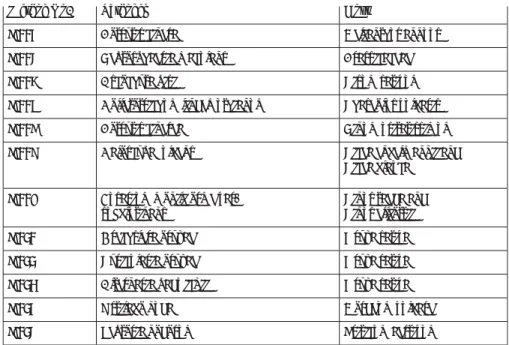
Project overview with planned and completed actions
OLD Chapter Actions Committee Responsible
for progress
NEW Chapter Target voting meeting
– – Rules and Executive Introduction and methods for Rules Changes
By 2008 1: Introduction Editorial and revision,
separate out and no longer a Chapter
Rules and Accreditation 1: Certifi cates Move from 17 to become Chapter 1 by 2008 2: Sampling Editorial and revision Sampling 2: Sampling Completed in 2005 3: Purity Editorial and revision Purity 3: Purity 2007
4: Other Seeds by Number No changes Paper colour only
Rules 4: Other Seeds by Number Completed in 2006 5: Germination Editorial and revision Germination 5: Germination 2007
6: Tetrazolium Editorial and revision TZ 6: Tetrazolium Completed in 2006 7: Seed Health Editorial only Seed Health 7: Seed Health Completed in 2006 8: Verifi cation of Species
and Cultivars
Editorial and revision Varieties 8: Verifi cation of Species and Cultivars
Completed in 2005 9: Moisture Content Editorial and revision Moisture 9: Moisture Content 2007 10: Weight Determination Editorial only Rules 10: Weight Determination 2007 11: Coated Seed Revision and split between
Chapters 2, 3, 4 and 5
Sampling, Purity and Germination
11: Coated Seed 2007 12: Excised Embryo Editorial only Forest Trees and Shrubs 12: Excised Embryo 2007 13: Weighed Replicate Editorial only Germination 13: Weighed Replicate 2007 14: X-ray Editorial only Rules 14: X-ray 2007
15: Seed Vigour Editorial only Vigour 15: Seed Vigour Completed in 2006 16: Tolerances Editorial only Rules 16: Tolerances By 2008
17: Certifi cates Move to Chapter 1. Edito-rial and revision by 2008
Rules Revised Chapter 17 becomes Chapter 1
By 2008 Appendix A: Make into Chapter 17.
Editorial only
Rules 17: Size Grading By 2008 Appendix B:
Bulk Containers
Make into Chapter 18. Editorial only
Rules 18: Bulk Containers By 2008
Appendix C: Seed Cleaning Remove from rules Rules Completed in 2004 Appendix D: Heterogeneity Moved to Chapter 2 Sampling Completed in 2005
Introduction
As part of the amalgamation of the ISTA Rules brown and white pages, a project which is planned to be fi nalised by 2008, the ISTA Executive Committee has worked on a Rules proposal for the revision of Chapter 17. The ISTA ECOM focused its work on two items: The editorial merger of the two current parts, and change to the types of ISTA Certifi cates (currently Orange, Green and Blue) to fi t better with
Certifi cate and to continue with only one ISTA Seed Lot Certifi cate, i.e. the ISTA Orange Certifi cate was discussed. The comments of the participants at this meet-ing have been taken into account when drafting the proposal for the new Chap-ter 17, which is to be voted on at the ISTA Ordinary Meeting 2007. The background and the proposed solutions are presented and discussed.
the needs of the seed industry. The edito-rial merger was performed by Steve Jones, Chair of the Rules Committee and John Hampton, Vice-Chair of the Rules Com-mittee. The scrutiny team, Doug Ashton and Simon Cooper, confi rmed that the changes were editorial only. An impor-tant question is whether ISTA needs to re-tain both the Orange and Green Seed Lot Certifi cates. In 2006 at the ISTA Annual Meeting, a proposal to delete the Green
Revision of Chapter 17 – Background information
By Joël Léchappé
, GEVES-SNES,
Martina Rösch
, ISTA Accreditation Department
ISTA ECOM Working Group on Revision of Chapter 17: Joël Léchappé (WG Leader), José Manuel Chávez Bravo, Susan Maxon, Michael Muschick, Rita Zecchinelli ISTA Rules Committee: Steve Jones (Chair), John Hampton (Vice-Chair)
ISTA Certifi cates
There are currently three types of ISTA Seed Analysis Certifi cates, the ISTA
Orange International Seed Lot Certifi -cate (OIC), the ISTA Green International Seed Lot Certifi cate (GIC) and the ISTA
Blue International Seed Sample Certifi -cate (BIC). The ISTA Orange and Green Certifi cate both refer to the seed lot. This means that the laboratory which analyses the sample is also responsible for sam-pling. The results of the tested sample refl ect the quality of the entire seed lot at the time of sampling. In contrast, the ISTA Blue Certifi cate refers only to the sample as submitted by the applicant. The testing laboratory does not assume any responsi-bility for the sampling, and the test results refl ect the quality only of that sample. The difference between the Orange and the Green Certifi cate is that for the Orange Certifi cate, sampling and testing is under
ries must be in different countries and one laboratory is in charge of sampling the lot and the other laboratory is in charge of analysing the sample. Both need to be ISTA accredited for the part of work they are performing. Under these circum-stances, several scenarios are possible:
ISTA Rules Proposal
In order to simplify the procedure of is-suing ISTA Certifi cates and to remove inconsistencies between the ISTA Rules and the ISTA Accreditation Standard, the ISTA ECOM proposes that there will be only one kind of seed lot certifi cate which would cover all seed trade situations. As a consequence, the ISTA Green Certifi cate would be deleted, and the results that are based on analyses on samples tested and sampled according to the ISTA Rules be reported on Orange Certifi cates.
Also it proposes to delete the require-the responsibility of require-the same laboratory.
For the Green Certifi cate, sampling is un-der the responsibility of a different labora-tory in another country. The ISTA Rules consider the Orange Certifi cate and the Green Certifi cate are equivalent.
Current situation
The ISTA Accreditation Standard allows laboratories to subcontract part of their work to other laboratories. Subcontract-ing may include samplSubcontract-ing and/or test-ing. Responsibility for the subcontracted work rests with the laboratory which is-sues the ISTA Certifi cate. Upon the next revision of the Accreditation Standard, the laboratory will need to select a sub-contractor which must hold a valid ISTA accreditation for the test in question. The ISTA Green Certifi cate is a special form of subcontracting where several precondi-tions must be fulfi lled. The two
laborato-Until 2004, the average number of Green Certificates purchased by the ISTA member laboratories was around 1000 copies per year. In 2005 and 2006 the number increased considerably as some laboratories issued Green Certificates on behalf of a laboratory in another country instead of the laboratory which sampled the lot issuing an Orange Certificate. In fact the Green Certificate substituted for the Orange Certificate.
Over 90% of the Green Certificates were issued in Europe, less than 10% were issued in Africa. The Green Certificate seems to have no relevance in Asia, the Pacific and the Americas.
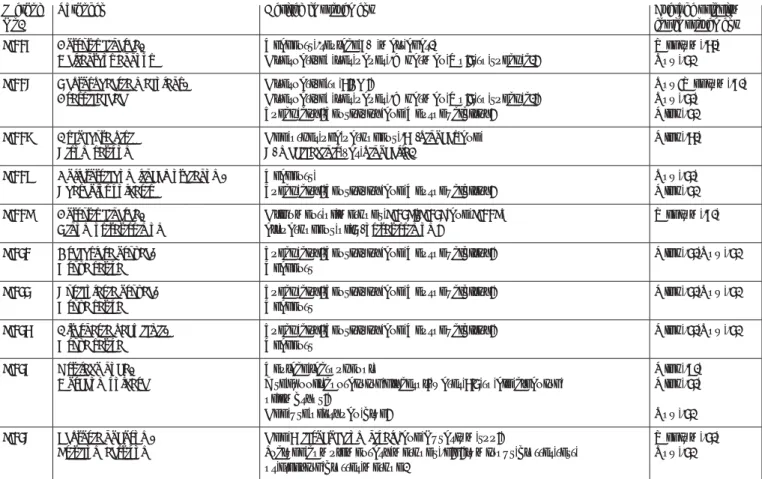
Sales of Green International Certificates
Situation 1 – Sampling and testing by two different laboratories within the same country
Lab 2 subcontracts sampling to Lab 1. Lab 2 issues an Orange Certificate. A Green Certificate cannot be issued because the two laboratories are in the same country.
Situation 2 – Sampling and testing by two different laboratories in different countries
Situation 3 – Subcontracting within the same country
Lab 1 draws the sample and sends it to Lab 2. Lab 1 receives the results from Lab 2 and issues an Orange Certificate.
Situation 4 – Subcontracting across borders
Lab 1 draws a sample and sends it to Lab 2. Lab 2 reports the results to Lab 1 so that Lab 1 reports the results on an ISTA Certificate. Currently there is no possibility for such a case for two reasons. An Orange Certificate cannot be issued as testing does not occur in the country where the lot is locat-ed. Lab 1 cannot issue a Green Certificate as it would have to be issued by Lab 2 which analysed the sample. This situation is not addressed by the ISTA Rules and the ISTA Accreditation Standard. Lab 1 sends the sample to Lab 2 which performs the analyses and issues a GIC. Issuance of an Orange Certificate is not possible as the analysing laboratory is not in the country where the lot is located (ISTA Rules 17.4.2). Across borders a Green Certificate must be issued though the situation is basically the same as if the two laboratories were in the same country.