
INTERACTIONS3: LANGUAGE, DEMOGRAPHICS, AND PERSONALITY; AN IN-DEPTH ANALYSIS OF GERMAN TWEETS
A DISSERTATION
SUBMITTED TO THE GRADUATE SCHOOL IN PARTIAL FULFILLMENT OF THE REQUIREMENTS
FOR THE DEGREE DOCTOR OF PHILOSOPHY
BY
MATTHIAS LUDWIG RAESS
DISSERTATION ADVISOR: DR. CAROLYN MACKAY
BALL STATE UNIVERSITY MUNCIE, INDIANA
INTERACTIONS3: LANGUAGE, DEMOGRAPHICS, AND PERSONALITY; AN IN-DEPTH ANALYSIS OF GERMAN TWEETS
A DISSERTATION
SUBMITTED TO THE GRADUATE SCHOOL IN PARTIAL FULFILLMENT OF THE REQUIREMENTS
FOR THE DEGREE DOCTOR OF PHILOSOPHY
BY
MATTHIAS LUDWIG RAESS
APPROVED BY:
________________________________________ _______________
Committee Chairperson Date
________________________________________ _______________
Committee Member Date
________________________________________ _______________
Committee Member Date
________________________________________ _______________
Committee Member Date
________________________________________ _______________
Dean of Graduate School Date
BALL STATE UNIVERSITY MUNCIE, INDIANA
ACKNOWLEDGEMENTS
Overcoming challenges throughout an intellectually taxing endeavor, such as writing a dissertation, certainly required me to self-reflect, and to adapt to new trials frequently. It also challenged me to keep an open mind in the face of opposing views and findings. While this dissertation was an exercise in self-discipline, the entire process was an enjoyable journey, during which I tremendously improved and honed my data science skills, my statistical and programming skillset in R, my linguistics skills, and, with deadlines always looming, also my time and project management skills.
I am delighted to report that this dissertation was completed in its entirety without the help of any form of higher being or deity, imagined or otherwise. However, it goes without saying that the completion of a project of this size is, directly and indirectly, the result of the help and support of many very real people.
Accordingly, I would like to express my gratitude to my wonderful advisor and committee chair, Dr. Carolyn MacKay, who encouraged this project from the beginning with unwavering support. She also played an integral part in forging me into the researcher I am today, by not only critically challenging my ideas, but also making many valuable and detailed suggestions for improvements along the way. Carolyn’s motivation, interest, confidence in my capabilities, and shared excitement helped tremendously throughout the thorny road to
completion. I’m also very grateful for the support of my other incredible committee members. Dr. Elizabeth Riddle, who read my dissertation drafts with painstaking attention to detail, providing valuable feedback along the way, and Dr. Frank Trechsel for engaging with me in insightful and inspiring conversations throughout the years and for critically challenging my
project, especially during the proposal stage. I would also like to express my gratitude and appreciation to Dr. Holmes Finch, who not only taught me the intricacies of multivariate
statistics, but also played an integral role in vastly expanding my overall statistics skills. Through many great conversations, Holmes provided critical feedback to statistical analyses and methods and helped me navigate the minefield that is frequentist statistical analysis.
I would also like to express my gratitude to Dr. James Pennebaker (UT Austin) for having a personal sit-down with me to talk about the intricacies of LIWC and Dr. Markus Wolf (University of Zurich, former University of Heidelberg), co-author of the German LIWC dictionary, for many insightful comments and hints pertaining to LIWC usage and analysis. In addition, I would like to thank Meik Michalke, author or the koRpus-R-package, for his help, Dr. Bodo Winter (University of Birmingham) for critical comments, suggestions, and feedback, especially during the developmental stages of this project, and Dr. Tatjana Scheffler (University of Potsdam) for providing insightful information on German Twitter. I would also like to thank Prof. Dr. Volker Depkat (University of Regensburg), Dr. Alexander Kautzsch (University of Regensburg), and Prof. Dr. Thomas Hoffmann (University of Osnabrück) for helping to pave the way to this endeavor with their recommendation letters.
To Wendy, thank you for keeping me sane throughout this research roller-coaster, always lending an ear when I needed to vent or complain about things, for being understanding of my needs, the obstacles I faced along the way, and for never doubting me. To my best friend, Philipp, thank you for your wit, intellect, and inquisitiveness, and for challenging my ideas, providing critical feedback, and thought-provoking suggestions from a non-linguist angle. Thank you also for your continued support, and for always being there for me. To all my other friends, near and far, especially Maximilian H., Maximilian Z., Wendelin, Christian, Matt, and Gene,
thank you for encouraging words, support, and great conversations. Thank you also for being there, keeping in touch, and helping me through this journey. Last but certainly not least, thank you to my family, for always encouraging my endeavors however crazy they may be. To my sisters, Veronika and Barbara, thank you for being there across the pond, lending a shoulder to lean on when I was frustrated and for many happy moments when I travelled home. You’re the best sisters a person could ask for.
I accept responsibility for all the ideas in this dissertation. All remaining errors, gaps, and omissions are my own.
***
I would also like to acknowledge Ball State University for funding this research and the preceding studies through a graduate assistantship with the Intensive English Institute and various research assistantships, as well as the Honor Society of Phi Kappa Phi for funding through a Love of Learning Award. Further, I would like to acknowledge the Intensive English Institute, the Ball State English Department, and the BSU Aspire Internal Grant Program for financial support for conference travel throughout the years.
DEDICATION
There are only two lasting bequests we can hope to give our children. One of these is roots, the other, wings. – Johann Wolfgang von Goethe
Zwei Dinge sollen Kinder von ihren Eltern bekommen: Wurzeln und Flügel. – Johann Wolfgang von Goethe
I would like to express my sincerest gratitude and appreciation to my parents, not only for giving me both roots and wings, but also for making this endeavor possible. I remain forever in your debt and I know that this dissertation, and the preceding studies would not have been possible
without your numerous sacrifices, continued and unwavering support, understanding, and personal investment in my success.
I ACCORDINGLY DEDICATE THIS DISSERTATION, THE PINNACLE OF MY INTELLECTUAL ACCOMPLISHMENTS, TO MY PARENTS
TABLE OF CONTENTS
ACKNOWLEDGEMENTS ... 2
DEDICATION ... 5
ABSTRACT ... 14
CHAPTER ONE: INTRODUCTION ... 17
1.1 Introduction ... 17
1.2 Rationale of the Study ... 21
1.3 Significance of the Study ... 22
1.4 Operationalizations of Important Key Terms ... 24
1.4.1 Word Categories from the 2001 German LIWC Dictionary ... 24
1.4.2 Sentiment Scores ... 27
1.4.3 Big Five Scores ... 27
1.4.4 Hashtag Types ... 28
1.5 Hypotheses ... 29
1.5.1 Personality and Linguistic Features ... 29
1.5.2 Gender Effects and Twitter Measures ... 30
1.5.3 Gender Effects and LIWC Categories ... 31
1.5.4 Gender Effects and Word-Based Measures ... 32
1.6 Organization of the Dissertation ... 32
CHAPTER TWO: LITERATURE REVIEW ... 34
2.1 Introduction ... 34
2.2.1 Gender Prediction and Computational Linguistics ... 37
2.2.2 Language and Gender Analysis at the Word Level ... 40
2.2.3 Gender Stereotypes ... 43
2.2.4 Gender and Informational vs. Involved Language ... 45
2.3 Twitter ... 46
2.3.1 Twitter: Past and Present ... 46
2.3.2 Germans on Twitter ... 48
2.3.3 Twitter: (Early) Research ... 50
2.3.4 Multilingual Twitter ... 53
2.3.5 Hashtags ... 55
2.3.5.1 Hashtag What art Thou? ... 55
2.3.5.2 Hashtag (Linguistic) Functions in a Tweet ... 56
2.3.5.3 Further Research on Hashtags ... 57
2.3.5.4 Tag Hashtags ... 58
2.3.5.5 Comment(ary) Hashtags ... 59
2.3.5.6 Hashtags and Gender. ... 60
2.3.5.7 German Twitter Users and Hashtags. ... 61
2.3.6 Emojis ... 61
2.3.6.1 Emoji Origins ... 62
2.3.6.2 Emoji-Related Research ... 63
2.3.6.3 Emojis in This Study ... 66
2.4 Language and Personality ... 68
2.4.2 Research Related to Language and Personality ... 70
2.4.2.1 Early Research ... 70
2.4.2.2 Recent Studies on Language and Personality ... 72
2.5 The Big Five Inventory ... 73
2.5.1 Early Development ... 73
2.5.2 Modern Versions of the Big Five ... 75
2.5.3 Modern Applications of the Big Five ... 76
2.6 Feature Selection ... 77
CHAPTER THREE: METHODOLOGY ... 80
3.1 Introduction ... 80
3.2 Research Hypotheses ... 80
3.2.1 Effects of Personality on LIWC Categories ... 80
3.1.2 Gender Effects and Twitter Measures ... 81
3.1.3 Gender Effects and LIWC Categories ... 82
3.1.4 Gender Effects and Word-Based Measures ... 83
3.2 Independent (Predictor/Covariates) and Dependent (Outcome) Variables: ... 84
3.2.1 Independent Variables ... 84
3.2.1.1 Demographic Variables ... 84
3.2.1.2 Social Media Variables ... 85
3.2.1.3 Personality: The Big Five Factor Model (BFI-10) ... 85
3.2.2 Dependent Variables ... 87
3.3 Language Processing Under a Psychological Lens ... 90
3.3.2 The German LIWC Dictionary. ... 92
3.4 Sample ... 93
3.5 Participants ... 95
3.6 Recruitment ... 96
3.7 Data Collection ... 97
3.7.1 Ethical and Legal Considerations ... 97
3.7.2 Questionnaire ... 98
3.7.3 Twitter Data Collection ... 99
3.8 Procedures ... 100
3.8.1 Questionnaires ... 100
3.8.2 Twitter Data Processing ... 101
3.8.3 Twitter Text Normalization ... 102
3.8.4 Hashtag Hand-Coding ... 107
3.8.5 Emojis ... 111
3.9 Statistical Considerations ... 112
3.9.1 Generalized Additive Models ... 114
3.9.1.1 The Linear Framework: Linear Models and Generalized Linear Models ... 114
3.9.1.2 The Generalized Additive Model (GAM) ... 115
3.10 Software ... 119
3.10.1 R/RStudio ... 119
3.10.2 Language Processing ... 120
3.10.3 Version Control ... 121
CHAPTER FOUR: FINDINGS AND DISCUSSION ... 124
4.1 Introduction ... 124
4.2 Participant Demographics ... 124
4.2.1 Participant Gender and Age ... 125
4.2.2 Participants’ Relationship Status ... 127
4.2.3 Participants’ Geographical Distribution across Germany ... 128
4.2.4 Participants’ Education and Employment ... 131
4.3 Participants’ Twitter Habits ... 134
4.4 Overview of Participants’ Personality Scores ... 137
4.5 Summary Participants ... 140
4.6 Overview of the Tweet-Corpus ... 141
4.6.1 Participants’ Tweets across Time ... 144
4.6.2 Participants’ Twitter Measures Used in Hypothesis Testing ... 148
4.7 Hand-coded Hashtag Subset of Tweets ... 160
4.8 Summary of Tweet Corpus and Statistics ... 167
4.8 Hypothesis Testing ... 168
4.8.1 Effects of Personality on LIWC Categories ... 168
4.8.2 Summary/Discussion of First Set of Hypotheses ... 182
4.8.3 Gender Effects and Twitter Measures ... 183
4.8.4 Gender Effects and LIWC Categories ... 193
4.8.5 Summary of Gender Effects and LIWC categories ... 205
CHAPTER FIVE: CONCLUSION ... 211
5.1 Conclusion ... 211
5.2 Summary of Important Contributions ... 217
5.3 Implications ... 220
5.3.1 Business (Marketing) ... 220
5.3.2 Theoretical Linguistic Research ... 220
5.3.3 Cultural Implications ... 221
5.4 Limitations ... 222
5.5 Recommendations for Future Research ... 224
REFERENCES ... 226
APPENDICES ... 249
Appendix A: Questionnaire – German Version ... 249
Appendix B: Questionnaire – English Version ... 254
LIST OF FIGURES
Figure 1. Emoji Sentiment Map (Novak, Smailović, Sluban, & Mozetič, 2016). ... 67
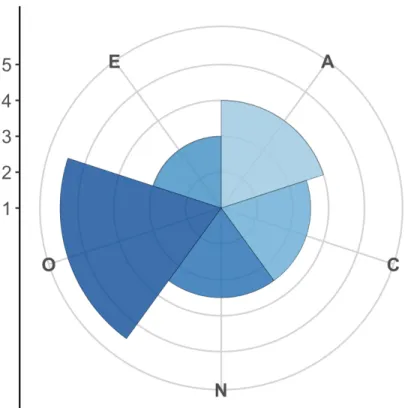
Figure 2. Big Five Personality Profile. ... 86
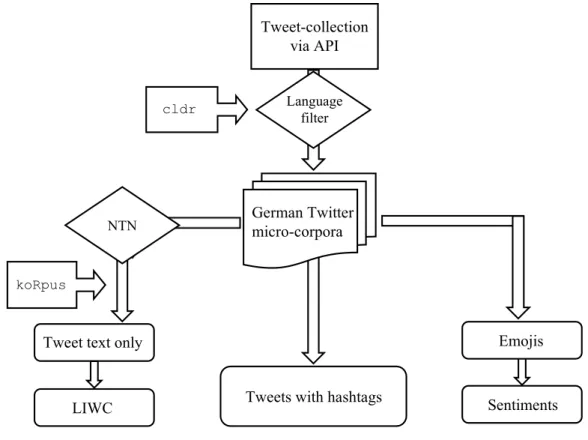
Figure 3. Tweet Processing Pipeline. ... 107
Figure 4. Graphical Representation of Possible GAM Structure (Larsen, 2015, July 30, p. 2). 116 Figure 5. Participants by Gender and Age. ... 125
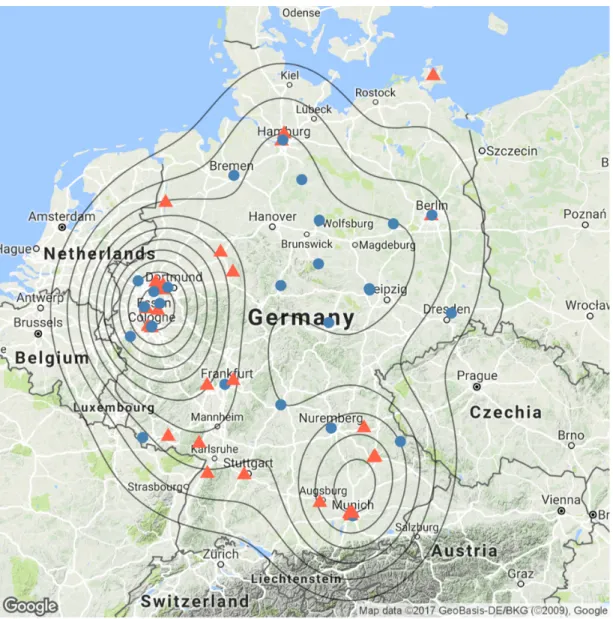
Figure 6. Participant Distribution across Germany with Densities. ... 128
Figure 7. Participants’ Origins and Residences (Default Locus of Tweets). ... 130
Figure 8. Alluvial Diagram: Participants’ Educational Paths to Employment by Gender. ... 133
Figure 9. Amount of Time [min] Spent on Twitter per Day. ... 136
Figure 10. Participants’ BFI-10 Big Five Scores. ... 137
Figure 11. Differences in Number of Tweets by Gender and Age Group. ... 142
Figure 12. Participants’ Overall Tweet Numbers by Age Group and Gender. ... 143
Figure 13. Participants’ Tweets throughout the Year by Age Group and Gender. ... 144
Figure 14. Participants’ Tweets throughout the Week by Age Group and Gender. ... 145
Figure 15. Participants’ Tweets throughout the Day by Age Group and Gender. ... 147
Figure 16. Participants’ Mean Sentiment Scores throughout the Year. ... 154
Figure 17. Participants’ Mean Sentiment Scores throughout the Year by Gender. ... 155
Figure 18. Participants’ Mean Sentiment Scores throughout the Year by Gender and Age. ... 156
Figure 19. Participants’ Use of Punctuation Marks [%] across all Tweets. ... 157
Figure 20. Participants’ Hashtag Types and Position by Age and Gender. ... 161
Figure 21. Participants’ Hashtag Types and Position by Gender and Language. ... 163
Figure 22. Participants’ Hashtag Types and Position by Age and Language. ... 165
Figure 23. GAM-Plot: Positive Feeling ~ Predictors. ... 177
Figure 24. GAM-Plot: Emoji Density ~ Predictors. ... 191
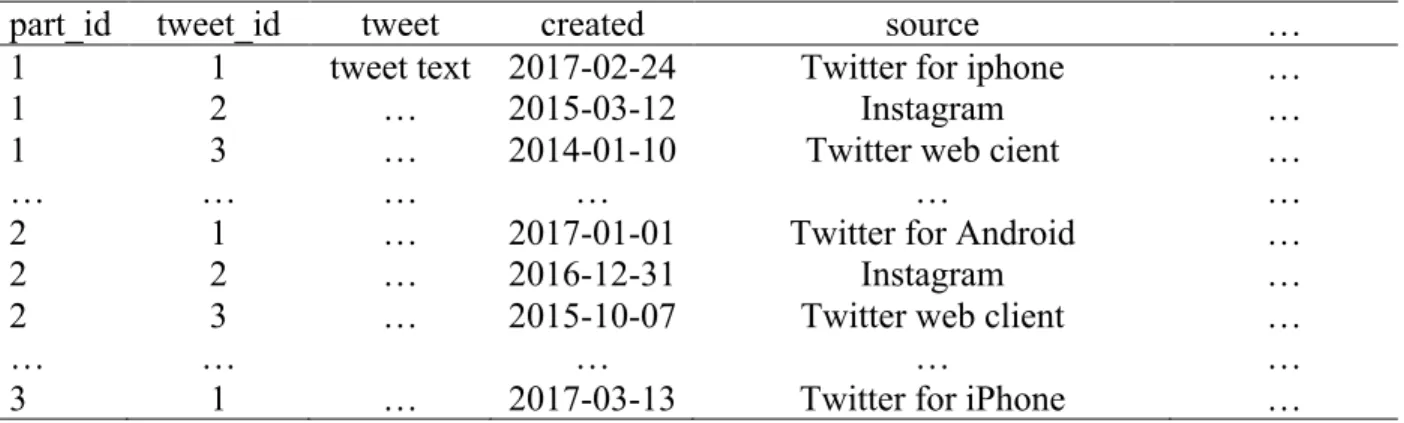
LIST OF TABLES Table 1: Hashtag Template Data-Frame for the Tweet-Subset ... 109
Table 2: Participant Template Data-Frame for demographic/personality information ... 122
Table 3: Tweet Template Data-Frame for the Entire Tweet-Data Set ... 123
Table 4: Participants’ Relationship Status ... 127
Table 5: Participants’ Education and Employment by Gender ... 131
Table 6: Participants’ Twitter Metrics ... 134
Table 7: ANOVA Results for the Effect of Gender and Personality Factor on BFI-10 Scores .. 140
Table 8: Participants’ Total Number of Tweets by Gender and Age Group ... 141
Table 9: Participants’ Twitter Measures for Analysis ... 148
Table 10: Participants’ Top 15 Emojis by Gender ... 151
Table 11: Multivariate Multiple Regression Results: Punctuation ... 158
Table 12: Univariate Regression Follow-ups (Betas) ... 158
Table 13: Average Hashtag Length (Char.) by Type, Gender, Age, and Language ... 167
Table 14: Summary of Correlations of Big Five Personality Scores and LIWC Categories ... 169
Table 16: Generalized Additive Model Results: Dependent Variable: Positive Feeling Words 174
Table 17: Linear Model: Dependent Variable: Hashtag Density ... 184
Table 18: Generalized Linear Mixed Effects Model: Dependent Variable: Hashtag Type ... 187
Table 19: Negative Binomial Model: Dependent Variable: Number of Hashtags ... 188
Table 20: Generalized Additive Model Results: Dependent Variable: Emoji Density ... 190
Table 21: Linear Model Results: Dependent Variable: Positive Emotion Words ... 194
Table 22: Linear Model Results: Dependent Variable: Positive Feeling Words ... 195
Table 23: Linear Model Results: Dependent Variable: Anger Words ... 196
Table 24: Linear Model Results: Dependent Variable: Swear Words ... 197
Table 25: Linear Model Results: Dependent Variable: Tentative Words ... 198
Table 26: Linear Model Results: Dependent Variable: Social Words ... 199
Table 27: Linear Model Results: Dependent Variable: Friends Words ... 201
Table 28: Linear Model Results: Dependent Variable: Occupation Words ... 202
Table 29: Linear Model Results: Dependent Variable: Money Words ... 204
Table 30: Summary of LIWC Categories and Gender-Age Regression Results (Betas) ... 205
Table 31: ANCOVA Results for the Effect of Gender and Age on CTTR Scores ... 208
ABSTRACT
DISSERTATION: Interactions3: Language, Demographics, and Personality; an In-Depth Analysis of German Tweets
STUDENT: Matthias Ludwig Raess DEGREE: Doctor of Philosophy COLLEGE: Sciences and Humanities DATE: May 2018
PAGES: 260
This study examines the interactions between German Twitter users’ personalities, the specific features of their tweets, including the emoji density, types of hashtags and their density, and the percentage of various LIWC word categories, such as emotion words (e.g.
positive/negative), and how these variables interact with gender. This tripartite analysis in
conjunction with questionnaire data and online Twitter data not only advances our understanding of how gendered-language, and thus perceived stereotypes, and personality in conjunction with linguistic cues behaves on Twitter, but also how an out-of-the-lab sample contributes to the generalizability of results and insights gleaned from these analyses. The significance, therefore, not only lies in the combination of research areas (linguistics and psychology) and the analysis approach, but also the fact that Twitter studies focusing on German, incorporating personality measures are far and few between.
The broad research design of this study is quantitative and interdisciplinary in nature, encompassing both linguistics and psychology. Participants, N = 62, filled out an online questionnaire providing demographic information and information on their personality traits through the German short version of the Big Five Inventory, the BFI-10 (Gosling, Rentfrow, &
Swann, 2003; Rammstedt & John, 2007; Rammstedt, Kemper, Klein, Beierlein, & Kovaleva, 2012). In addition, participants’ tweets, N = 19,772, were collected using the Twitter API and then combined with their demographic information, including their Big5 scores. The tweets were then analyzed with the software, Linguistic Inquiry and Word Count (LIWC) (Pennebaker & King, 1999), which made it possible to quantify linguistic features, such as percentage of emotion words, or anger words, for example. In addition, quantitative measures of users’
frequencies of hashtags, including a hand-coded hashtag subset, n = 2,666, and emojis, including sentiment scores were used for quantitative analyses.
The study furnishes new confirmatory evidence for previous findings regarding
significant positive correlations between positive feeling words and extraversion, agreeableness, and neuroticism. A significant positive correlation between neuroticism and anxiety words was also confirmed. In addition, extraversion turned out to be a significant predictor for sentiment scores on Twitter, indicating that extroverts benefit more from being active online. In terms of LIWC categories, gender was a significant predictor for both positive emotion words, and positive feeling words, with females using more in both categories. Gender also turned out to be a significant predictor for anger words, swear words, occupation words, and words related to money, with women using higher percentages in these categories, which contradicts previous research in an English-language context, and contrary to my own expectations.
The study thus offers new insights into the differences in relationship to gender and context-dependent language use, adding support for some of the key arguments. Specifically, female German Twitter users turned out to use language differently compared to previous findings, e.g. lower percentage of words related to tentativtiy. In addition, German female
thus addresses contentious previous findings by adding new information to the perceptions of gender-dichotomous language use, indicating that it does not necessarily follow the same patterns across genres, i.e. different social media, prompting a re-thinking of some previous findings. The statistical significance of the findings allows us to make conservative and careful generalizations to the larger German Twitter user base.
CHAPTER ONE: INTRODUCTION
The saddest aspect of life right now is that it gathers knowledge faster than society gathers wisdom. - Isaac Asimov
Nothing in life is to be feared, it is only to be understood. Now is the time to understand more, so that we may fear less. - Marie Curie
1.1 Introduction
It has been well established that individual personality traits are closely linked to a person’s use of language (Klages, 1926). Allport and Odbert’s (1936) finding that language encodes individual differences in humans laid the groundwork for long-standing research into the relationship of personality traits with language use and linguistic cues. Researchers such as Gottschalk and Gleser (1969) and Weintraub (1989) built on these early studies by investigating how psychological states can be assessed through content analysis and how verbal behavior relates to personality. While recent studies have addressed these issues with offline language data (e.g. Hirsh & Peterson, 2009; Weisberg, DeYoung, & Hirsh, 2011), only a few studies have looked into how personality and language are related on social media (e.g. Back et al., 2010; Qui, Lin, Ramsay, & Yang, 2012). Moreover, Twitter has been left out of the equation as its own hybrid-genre almost altogether.
It has also been well established that perceived gender stereotypes about language use abound. While considered highly contextual by many sociolinguists, recent studies that revolve around automated gender prediction from text have tied some of these perceived stereotypes to the word level: For example, females have been shown to use more modal verbs and other words
expressing tentativity (Biber, 1989; Mulac, Bradac, & Gibbons, 2001; Newman, Groom, Handelman, & Pennebaker, 2008), which can make any statement more indirect. Women are also said to discuss people more and communicate internal processes, thoughts, emotions, senses, and use more past and present tense verbs. Overall, women are perceived to use more emotional language than men, which can make their language more involved, i.e. higher use of pronouns, adverbs, and verbs, and, thus a preference for topics revolving around people, relationships, and internal states can be attributed to those stereotypes (Argamon, Koppel, Fine, & Shimoni, 2003; Aries & Fern, 1983). Men, on the other hand, are said to use more swear words, and longer words. They discuss external events, objects and processes pertaining to occupation, money, and sports more, which is evidenced in a higher use of numbers, prepositions, and longer words — their language is less emotional overall and their style is more informational, i.e. more nouns, adjectives, and prepositions. Men’s topics stereotypically revolve around objects such as cars and computers, and political events (Coates, 1993; Johnson, 1994).
Further, research has established a connection between Twitter usage behavior and the language that is being used. The importance of users’ languages was confirmed in one of the first studies on this issue by Hong, Convertino, and Chi (2011), who found that users do indeed use Twitter, and different languages on it, for different purposes with varying online behavior. For example, Germans tend to use hashtags quite a bit with, 18% of German tweets containing hashtags, as compared to only 5% in Japanese tweets (Hong et al., 2011). Overall, Germans, on average, seem to be more likely to include URLs and hashtags than users of other languages, which could be indicative of more content-related tweet behavior (Hong et al., 2011). This could also indicate user behavior that diverges from the canonically intended use of the hashtag as a tag
to create a meta-datum, i.e. a tag hashtag, versus one that adds a comment or additional information tag, i.e. a commentary hashtag (Shapp, 2014; Twitter Inc., 2017g).
According to Statista.com (2016), English (34%), Japanese (16%), Spanish (12%), Malay (8%), and Portuguese (6%) make up the top-five Twitter languages. What has not changed is the fact that German does not appear in the top five, not even makes it into the top ten (Hong et al., 2011; Scheffler, 2014). It is time to answer the call for further research into German as a Twitter language (Hong et al., 2011; Scheffler, 2014; Weerkamp, Carter, & Tsagkias, 2011).
To achieve this goal, I implemented a two-fold data-collection approach consisting of a questionnaire in conjunction with Twitter data. Sixty-Two German participants, residing in Germany, filled out a questionnaire on demographic information, including the German short version of the Big Five trait assessment (BFI-10). Based on the lexical hypothesis (Allport & Odbert, 1936), psychologists developed what is now known as the Big Five personality inventory (John, Donahue, & Kentle, 1991). The Big Five now comprise conscientiousness, agreeableness, neuroticism, openness, and extraversion (Goldberg, 1992; John & Srivastava, 2001). Although the entire inventory comprises 240 questions (NEO-PI-R), short 10-item versions have also been developed for the US (TIPI) and Germany (BFI-10) (Gosling et al., 2003; Rammstedt & John, 2007). Today, the Big Five inventory is the gold standard for
assessing personality traits (Mairesse, Walker, Mehl, & Moore, 2007), with the model’s general consistency across age, gender, and cultural lines (John, 1990; R. McCrae & Costa, 1990), as well as its validity across different languages having been established (Digman, 1990; John, 1990; R. McCrae & John, 1992; R. R. McCrae, 1989). This allowed me to investigate interactions between participants’ demographic information and personalities, i.e. their measurements on the Big Five traits.
In addition, every participant’s tweets were collected via Twitter’s open API.1 Twitter’s limit for the collection of individual user’s tweets is 3,240. Thus, a unique situation, in which I could analyze Twitter data beyond previous limitations, by bridging the gap between missing or sparse demographic information and users’ tweets, was created. This way, demographic
information could be directly and precisely linked to users’ tweet behavior and their personality profiles, which made it possible to analyze the data quantitatively. In addition, linking
participants’ questionnaires to their respective Twitter accounts, allowed me to circumvent the problem of not having geo-tagged tweets, which were limited to Germany, and not all German speaking countries. Most importantly, by collecting participants’ tweets, I gained access to users’ natural language on Twitter. While most tweets today are written in English, estimates now project that half of all daily tweets are not English, and only thirty percent of tweets originate in the U.S., with Japanese and Portuguese tweets coming in second and third respectively
(Semiocast, 2010, 2010, February 24). Scheffler (2014) pointed out that only roughly one percent of tweets are written in German, including tweets from Austria and Switzerland.
The question that arises is how we even begin to analyze large amounts of language data and their linguistic features. Utilizing the word-count approach (Pennebaker, Booth, & Francis, 2007; Pennebaker & King, 1999), Pennebaker and King (1999) built the software tool, Linguistic Inquiry and Word Count (LIWC), to tackle this very problem. Mehl (2006) referred to LIWC as currently being the most-used, and best-validated software in psychological research for
automated text analysis. As a dictionary based analysis tool, LIWC utilizes a dictionary (~6,400 words in the 2015 version) with different categories (74) as a baseline, against which text input is compared and percentages for individual word and content categories are computed. With
1Twitter’s application programming interface (API) lets developers or users automatically access Twitter to collect tweets, post updates, etc. via a registered application (Twitter Inc., 2017c).
correlations ranging from .20 to .81., Pennebaker and Francis (1996) (also see Back et al., 2010; Golbeck, Robles, Edmondson, & Turner, 2011; Golbeck, Robles, & Turner, 2011; Mairesse et al., 2007; Pennebaker & King, 1999; Qui et al., 2012; Schwartz et al., 2013; Tausczik &
Pennebaker, 2010; Vazire & Mehl, 2008; M. Wolf et al., 2008; Yarkoni, 2010) demonstrated the external validity of word categories to be included in LIWC. Since the software is dictionary based, usage in a language other than English requires a dictionary in said language, which has to be tested for equivalence to the English dictionary and for robustness in terms of errors. In a twofold approach, Wolf et al. (2008) did just that: they tested the equivalence of a German dictionary for LIWC and the robustness of that dictionary in terms of spelling errors (the German 2001 LIWC-dictionary contains 7,598 words). Since the data set in this study is relatively large, LIWC was used to get the percentages for LIWC word categories, such as emotion words, words pertaining to occupation, social processes, and overall word frequencies.
1.2 Rationale of the Study
Most research on Twitter has been on English, and predominantly U.S. English, with German as a social media language remaining understudied. Furthermore, much high-caliber sociolinguistic research comes out of North America (among others, Eckert, 2011a, 2012; Labov, 1972, 1990; Tagliamonte, 2006a; Tagliamonte, 2014; Tagliamonte & D'Arcy, 2007; Tannen, 1990a, 1990b), which makes many investigations rather North-America-centric. Thus there is a need for further sociolinguistic research in German, and in particular, research using up-to-date, social media data from a representative, off-campus, out-of-the-lab participant sample.
1.3 Significance of the Study
Even though there are now numerous studies revolving around the issue of gendered-language use on social media, and the interactions of gender and LIWC word categories, German has only received a small amount of scholarly attention and continues to be neglected. Scheffler (2014) has offered a snapshot of German Twitter, but her study barely scratches the surface of what still warrants investigation. Further, LIWC has not been used extensively, if at all, in a German language environment, and especially for interdisciplinary research that bridges the gap between linguistics and psychology. In addition, while previous studies have revolved around similar questions pertaining to social media and language use in conjunction with demographic variables, few use the same social medium, which reduces their comparability, if only to some extent.
There is long-standing research on personality, and personality linked to online behavior, especially using the Big Five inventory (e.g. Qui et al., 2012; Schwartz et al., 2013), as well as extensive research on sociological variables, such as gender, race, age, and education in relationship to language (e.g. Eckert, 2011a; Holmes, 2001). There are also a few studies that link personality to language use and linguistic cues (e.g. Pennebaker, Mehl, & Niederhoffer, 2003; Tausczik & Pennebaker, 2010), and research that links personality traits to sociological variables (e.g. Weisberg et al., 2011). Finally, there is no lack of research on English tweets in general (e.g. Rehbein & Ruppendorfer, 2013). However, at this time, to the best of my
knowledge, no study has been carried out that focuses on the tripartite interaction(s) between language (linguistic cues), sociological/demographic data, personality, with these variables being looked at against a German Twitter backdrop.
Accordingly, this study answers the call for further research into Twitter related linguistic research in general, and research on German in particular (e.g. Hong et al., 2011; Scheffler, 2014; Weerkamp et al., 2011). By using questionnaires, it includes more reliable and accurate demographic information, compared to studies, which used gender prediction algorithms (e.g. Deitrick et al., 2012; Kokkos & Tzouramanis, 2014; Miller, Dickinson, & Hu, 2012), for example. As a result, the limitations of using a sample of tweets as the only data source are surpassed by linking demographic and personality information to it. Further significance lies in this study’s methodology. Using snowball sampling, thus going beyond convenience sampling in a campus environment used in previous studies, the data come from a relatively representative sample of participants, including representative natural language data with good geographical spread across Germany, extending similar prior work, some of which exclusively relied on lab-based data. In addition, I used generalized additive models, where appropriate, to reveal non-linear relationships between predictor and outcome variables. GAMs are still somewhat
underused as statistical analysis tools. Thus, this study also contributes to the area of frequentist applied statistical research.
Overall, the number of linguistic studies investigating social media is still relatively low, compared to other genres and registers. Since there is only little previous research on Twitter in Germany, studying this genre and register fills in gaps in this area and provides a new analysis for comparison with other researchers’ findings.
1.4 Operationalizations of Important Key Terms
1.4.1 Word Categories from the 2001 German LIWC Dictionary
Linguistic Inquiry and Word Count (LIWC) uses a dictionary based approach to calculate percentages for different word categories. LWIC comprises 74 word categories, some of which encompass emotions, another includes swear words, and still another includes words related to occupation, for example. The specific word categories used in this study are presented below. The German 2001-LIWC dictionary currently comprises 7,598 words. Thus, the words listed here for expository purposes are only a subset of the words included in each category. Emotion words. Emotion words are generally subsumed under the category of affect words, which encompass positive emotion words, negative emotion words, and words related to anxiety, anger, and sadness. Semantically, all of these words invoke imagery that is highly related to a person’s mental state, and how they feel. Just like many other words, affect words are understood along semantic axes, e.g. “good-bad,” or “horrible-glorious” (Grefenstette, Qu, Evans, &
Shanahan, 2008). In linguistics, this “linguistic scale” was defined by Levinson (1983) as a set of alternate or contrastive expressions that can be arranged on an axis by degree of semantic
strength, which relates to the idea of semantic fields (Berlin & Kay, 1969; Lehrer, 1974). For example, words such as good, nice, excellent, positive, fortunate, correct, and superior fall into the positive emotion words category, while words such as bad, nasty, poor, negative,
unfortunate, wrong, and inferior fall into negative emotion words category (Grefenstette et al., 2008).
Positive emotion words. The category of positive emotion words from the German LIWC dictionary includes, but is not limited to, the following: aktiv ‘active,’ angenehm ‘pleasurable,’
angeregt ‘aroused,’ anhänglich ‘attached,’ anlächeln ‘smile at,’ beeindruckt ‘impressed,’ and beliebt ‘popular.’
Positive feeling words. The category of positive feeling words from the German LIWC
dictionary includes, but is not limited to, the following: Freude ‘joy,’ fröhlich ‘happy,’ Gefühle ‘emotions,’ lächeln ‘smile,’ Leidenschaft ‘passion,’ Liebe ‘love,’ Wohlwollen ‘benevolence.’ Due to their semantic similarity, both positive emotion words and positive feeling words were conflated into a single category in newer English versions of LIWC, starting with the 2007 version (Pennebaker, Chung, Ireland, Gonzales, & Booth, 2007, p. 8). Markus Wolf, one of the co-authors of the German LIWC dictionary, confirmed that there are no substantial differences between both categories, which is why they inherently correlate highly with each other. Positive feeling is a subcategory of positive emotion, which means that almost all positive feeling words are contained in the positive emotion category (Wolf, M., personal communication, September 11, 2017).
Negative emotion words. The category of negative emotion words from the German LIWC dictionary includes, but is not limited to, the following: bedroht ‘threatened,’ bedrückend ‘depressing,’ benachteiligt ‘disadvantaged,’ Beschwerde ‘complaint,’ besorgt ‘worried,’ and eingeschüchtert ‘intimidated.’
Anger words. The category of anger words from the German LIWC dictionary includes, but is not limited to, the following: Beschwerde ‘complaint,’ böse ‘evil,’ eingeschüchtert ‘intimidated,’ gedroht ‘threatened,’ habgier ‘greed,’ missbrauchen ‘abuse,’ Rache ‘revenge.’
Swear words. Swear words belong to a class of taboo words commonly avoided in formal speech. The category of swear words from the German LIWC dictionary includes, but is not
limited to, the following: abschaum ‘scum’, fuck, ärsche ‘asses,’ bastard ‘bastard,’ bauerntölpel ‘redneck,’ bekloppt ‘retarded,’ bescheuert ‘crazy,’ and depp ‘idiot.’
Modal verbs and words that express tentativeness. The category of modal verbs and other words that express tentativeness from the German LIWC dictionary includes, but is not limited to, the following: könnte ‘could,’ sollte ‘should,’ würde ‘would,’ vielleicht ‘maybe,’ vorsichtig ‘careful,’ and wahrscheinlich ‘probably’ (see Appendix C, p. 258 for full list).
Social concerns. The category of words pertaining to social concerns from the German LIWC dictionary includes, but is not limited to, the following: Vorschlag ‘suggestion,’ Vorwurf ‘accusation,’ widersprechen ‘contradict,’ zugeben ‘admit,’ and zulassen ‘allow.’
Family and friends. The category of words pertaining to family and friends from the German LIWC dictionary includes, but is not limited to, the following: Bruder ‘brother,’ Ehefrau ‘wife,’ Ehemann ‘husband,’ Eltern ‘parents,’ Familie ‘family,’ Geschwister ‘siblings,’ Gesellschaft ‘society,’ Kollege ‘colleague,’ Freundin ‘girlfriend,’ and Gast ‘guest.’
Occupation. The category of words pertaining to occupation from the German LIWC dictionary includes, but is not limited to, the following: gefeuert ‘fired,’ Gehalt ‘salary,’ Gehalterhöhung ‘raise,’ Geschäft ‘business,’ Gewinner ‘winner,’ and Herausforderung ‘challenge.’
Job. The category of words pertaining to job from the German LIWC dictionary includes, but is not limited to, the following: Abfindung ‘settlement,’ Abteilung ‘department,’ Beruf ‘job,’ Besitz ‘possessions,’ Chef ‘boss,’ and Fähigkeit ‘skills.’ Like the positive emotion and positive feeling categories above, the occupation and job categories are semantically very similar with extensive overlap between the categories. Thus, they were also conflated into a new work-category starting with the 2007 English version of LIWC (Pennebaker, Chung, et al., 2007, pp. 5-12).
Achievements. The category of words pertaining to achievements from the German LIWC dictionary includes, but is not limited to, the following: Fleiß ‘diligence,’ fortgeschritten ‘advanced,’ geleistet ‘achieved,’ and Kämpfer ‘fighter.’
Sports. The category of words pertaining to sports from the German LIWC dictionary includes, but is not limited to, the following: Lauf ‘run,’ Mannschaft ‘team,’ Spiel ‘game,’ Leistung ‘performance,’ and Workout ‘work out.’
Money. The category of words pertaining to money from the German LIWC dictionary includes, but is not limited to, the following: Aktie ‘stock,’ Lohn ‘wages,’ Armut ‘poverty,’ bezahlen ‘pay,’ leihen ‘borrow,’ Darlehen ‘loan,’ Ersparnisse ‘savings,’ and Geiz ‘stinginess.’
1.4.2 Sentiment Scores
Sentiment scores are based on a -1, 0, +1 range following Novak, Smailović, Sluban, and Mozetič (2015b). Calculating sentiment scores for 751 emojis, Novak et al. (2015b) found a mean sentiment score of +0.365 for tweets containing emojis. In this study, the sentiment score per tweet is based on the emojis present in a given tweet, using Novak et al.’s (2015b) sentiment scores to match the emoji. If there are two or more emojis present in a single tweet, the sentiment score for this tweet is the mean of those emojis’ sentiment scores.
1.4.3 Big Five Scores
The Big Five factor model comprises Extraversion ‘extraversion,’ Verträglichkeit ‘agreeableness,’ Gewissenhaftigkeit ‘conscientiousness,’ Neurotizismus ‘neuroticism,’ and Offenheit ‘openness.’ These factors are usually measured with Likert-scales, ranging from one (strongly disagree) to five (strongly agree). Participants’ Likert-scale answers to statements (ten
for the BFI-10) for each factor were averaged to obtain individual scores for each factor. Jointly, the resulting five scores represent an individual’s personality (John & Srivastava, 2001). A high score on extraversion means that an individual is sociable, outgoing, talkative, and assertive, while a high score on agreeableness indicates that an individual is cooperative, helpful, and nurturing. People scoring high on conscientiousness are responsible, organized, hard-working, and reliable. Individuals, who have high scores on the neuroticism trait are anxious, insecure, and sensitive, while people, who score high on openness are curious, intelligent, and imaginative (Golbeck, Robles, & Turner, 2011).
1.4.4 Hashtag Types
Tag hashtags are canonically used to tag topics, which is done by naming a concrete entity such as a person (#Obama, #Hillary), a place (#Paris, #TheHaven), a company (#Apple, #AMC), or an event (#Thanksgiving, #SummerOlympics). While these tags can be directed at different levels of the public ranging from tags relevant to tweets for the general public all over the world, or country, they also tag entities that are only relevant to certain individuals or a select group of Twitter users/followers. For example, #Paris is a hashtag that speaks to a large audience while #BSU has a much more focused local use and addresses students, faculty, alumni, and staff at Ball State University (Shapp, 2014).
Commentary hashtags serve to “add additional meaning to the main semantic content of the tweet, and are not intended to practically connect the tweet to others that use the same
hashtag” (Shapp, 2014, p. 7). Usually, commentary hashtags add an evaluation to what the author of the tweet just said. Routinely, this process adopts the following syntactic pattern: “Text
body of the tweet in a sentence. #evaluation.” For example, “When someone tells u its not safe to travel to a foreign place alone just cause ur female. #ridiculous #wearenotincapable.”
1.5 Hypotheses
This study seeks to show how interactions between language, gender, and personality interact in German tweets. As the data-collection approach is twofold and includes Twitter data in addition to questionnaires with demographic information and personality profiles, the
following hypotheses, which fall into four categories were tested: personality and linguistic features, Twitter measures in relationship to gender, gender effects and LIWC categories, and word-based measures as related to gender, were tested.
1.5.1 Personality and Linguistic Features
(1a) There will be a significant positive correlation between an extraverted personality (as measured by the score for extraversion in the Big Five factor model) and the percentage of positive emotion words.
(1b) There will be a significant positive correlation between an agreeable personality (as measured by the score for openness in the Big Five factor model) and the percentage of positive emotion words.
(1c) There will be a significant negative correlation between an agreeable personality (as measured by the score for openness in the Big Five factor model) and the percentage of swear words.
(1d) There will be a significant positive correlation between a neurotic personality (as measured by the score for openness in the Big Five factor model) and the percentage of words in the anxiety category.
(1e) There will be a significant prediction of the sentiment score (sentiment scores for emojis range from -1 to +1, with 0 being neutral (Novak et al., 2015b)) by extraversion (as measured by the score for extraversion in the Big Five factor model).
(1f) There will be a significant prediction of the sentiment score (sentiment scores for emojis range from -1 to +1, with 0 being neutral (Novak et al., 2015b)) by neuroticism (as measured by the score for neuroticism in the Big Five factor model).
1.5.2 Gender Effects and Twitter Measures
(2a) There will be a significant prediction of hashtag density (percentage of tweets containing hashtags) by gender.
(2b) There will be a significant prediction of hashtag type (tag vs. commentary – as measured by individual hashtag densities in the hashtag subset) by gender.
(2c) There will be a significant prediction of hashtag type (tag vs. commentary – as measured by individual hashtag densities in the hashtag subset) by language (German vs. English).
(2d) There will be a significant prediction of emoji density (as measured by the percentage of tweets that contain at least one emoji) by gender.
1.5.3 Gender Effects and LIWC Categories
(3a) There will be a significant prediction of positive emotion words (as measured by the percentage of words in the positive emotion word category) by gender.
(3b) There will be a significant prediction of positive feeling words (as measured by the percentage of words in the positive feeling word category) by gender.
(3c) There will be a significant prediction of negative emotion words (as measured by the percentage of words in the negative emotion word category) by gender.
(3d) There will be a significant prediction of swear words (as measured by the percentage of words in the swear word category) by gender.
(3e) There will be a significant prediction of tentative words (as measured by the
percentage of words in the tentative word category (see Appendix C, p. 258)) by gender. (3f) There will be a significant prediction of words related to social concerns (as
measured by the percentage of words in the social concerns category) by gender.
(3g) There will be a significant prediction of words related to family (as measured by the percentage of words in the family category) by gender.
(3h) There will be a significant prediction of percentage of words related to friends (as measured by the percentage of words in the friends category) by gender.
(3i) There will be a significant prediction of words related to occupation (as measured by the percentage of words in the occupation word category) by gender.
(3j) There will be a significant prediction of words related to job (as measured by the percentage of words in the job category) by gender.
(3k) There will be a significant prediction of words related to achievements (as measured by the percentage of words in the achievement category) by gender.
(3l) There will be a significant prediction of words related to money (as measured by the percentage of words in the money category) by gender.
(3m) There will be a significant prediction of words related to sports (as measured by the percentage of words in the sports category) by gender.
1.5.4 Gender Effects and Word-Based Measures
(4a) There will not be a significant difference between the lexical diversity of men and women as measured by Carroll’s CTTR.
(4b) There will not be a significant difference between the vocabulary richness of men and women as measured by Yule’s K.
(4c) German tweets will show a more ‘oral-like’ style despite Twitter being a hybrid, mostly written, genre (as measured by the percentages of the two conjunctions weil and denn ‘because,’ the former being used in a more informal genre and the latter almost exclusively being used in formal language (Wegener, 1999)).
1.6 Organization of the Dissertation
Chapter 1 presents a brief introduction to the topic of the study along with a current state of affairs, highlights the significance to the field, gives important operationalizations of linguistic key terms, and lists all the hypotheses to be tested. Chapter 2 offers a detailed literature review on the issue of language and gender variation, the perceived stereotypes that are attached to it, computational gender prediction, and language and gender analysis at the word level. Twitter is discussed as a social medium, and past and present research revolving around it, including Germans as Twitter users. Hashtags, their history, and their functions within a tweet are
addressed, as well as two different types of hashtags are also introduced. In addition, the origin of emojis is reviewed and tied to sentiment scores. Finally, research on language and personality as well as the Big Five Inventory’s history and development, and its modern applications are discussed. Chapter 3 details the methodology implemented in this dissertation. The hypotheses are listed together with dependent and independent variables to be used in hypothesis testing. Also, data collection, as well as the Twitter-corpus construction, in addition to statistical analysis procedures are discussed. Chapter 4 includes detailed descriptive statistics on the participants and the tweet corpus, as well as the hand-coded hashtag corpus, and participants’ hashtag usage patterns. Chapter 4 also includes all the hypothesis testing and the discussion of the results. Finally, Chapter 5 includes an overview of the most important findings and contributions, together with a conclusion, implications, limitations of the study, and recommendations for future research.
CHAPTER TWO: LITERATURE REVIEW 2.1 Introduction
An underlying problem for (variationist) sociolinguistic and online/social media research has been one of obtaining reliable demographic information, and metadata in general. Labov (1972) gauged some demographic information by talking directly to his participants and estimating their age in his seminal New York-study.2 Then the online data boom took off with Internet Relay Chats (IRC), online messengers, message boards and, most recently, social media, such as Facebook, Reddit, and Twitter. Especially the latter presents a problem: there is usually not much demographic information that can be accessed readily without applying natural language processing to obtain it (gender, age, geographic area, social class, etc.), for instance from tweets (Rao et al., 2010). According to Androutsopoulos (2006), this is mainly due to the fact that demographic information from computer mediated communication (CMC) is often unreliable and incomplete and that there is no phonological/phonetic information, which would let us extrapolate gender from it.
However, the strong upside of social media data, and especially Twitter, is that they abound, which is why the United States Library of Congress started a process in April 2010 to curate all tweets from Twitter’s inception until now and into the future (Raymond, 2010, April 14). Apart from the sheer volume of data, the observer’s paradox (Labov, 1972) is minimized, as publicly available tweets constitute natural language data (in its broadest sense), which is exactly what sociolinguists look for.
2 While this ‘took care of’ the observer’s paradox, Labov’s (1972) approach would probably be considered too crude
today (especially guesstimating participants’ age) in addition to being in stark contrast to modern research ethics and IRB standards pertaining to, most prominently, informed consent (see for example the American Psychological Association's code of conduct: APA, 2017).
Recently, researchers have employed Twitter to investigate the propagation of dialectal variation (Russ, 2012). Doyle (2014), for example, used a Bayesian method to estimate the conditional distribution of dialect variants given a specific location. He showed that Bayesian inversion is a viable tool to estimate the probability distribution of dialectal variation, such as ‘needs done’ vs. ‘needs doing’ vs. ‘needs to be done.’ His results are reflected in gold-standard corpora such as the Atlas of North American English (Labov, Ash, & Boberg, 2008, ANAE) and the Harvard Dialect Survey (Vaux & Golder, 2003, HDS). An approach like this, he (Doyle, 2014) claimed, can save money, time, and effort. In the same vein, Eisenstein, O’Conner, Smith, and Xing (2010) applied a Bayesian computational topic model that estimates and identifies words with regional affinity, linguistic regions (Boston, Northern California, New York, Los Angeles, and Lake Erie), and the relationship between regional variation and topic variation that ensues. They thus provided a first step for modelling linguistic variation under an unsupervised methodology paradigm with raw text.
Similarly, Eisenstein, O'Connor, Smith, and Xing (2014) illustrated the diffusion of lexical change, which is driven by social media and the ensuing informality of conversations. They analyzed a dataset of 107 million tweets (from 2.7 million distinct users) to get to the bottom of how emoticons, abbreviations, phonetic spellings, and other neologism are propagated online (Eisenstein et al., 2014). Their findings show that although computer mediated
communication on Twitter makes it easy to overcome great distances, it is a good mirror of the existing linguistic regions of spoken American English (cf. Johnstone, 2010; Kurath, 1949; Labov et al., 2008; Tagliamonte, 2006b) because “the adoption of new written forms is often sharply delineated by geography and demographics” (Eisenstein et al., 2014, p. 1). They also show that cities with similar racial make-up are more prone to share linguistic influence, as racial
demographics play a more pronounced role compared to geography when it comes to the diffusion of lexical change (Labov, 1972).
In a related strand of research, Eisenstein (2013) investigated why ‘bad language’ (i.e. misspellings, abbreviations, etc.) is so prevalent in Twitter data (and how lexical diversity online compares in relationship to other established corpora (see also Dresner & Herring, 2010;
Herring, 2008, 2010; Herring & Androutsopoulos, 2015). There have also been attempts to realize morphological studies on Twitter and clippings in American English (Reddy & Stanford, 2015).
Bamman, Eisenstein, and Schnoebelen (2014) looked at gender identity and lexical variation on Twitter, gender has long been an important topic in sociolinguistics, especially pertaining to differences in the use of language between males and females (cf. Coates, 1997; Eckert & McConnell-Ginet, 1992; Holmes, 2001, 2006; Lakoff, 1975; Maltz & Borker, 1982). Before computational linguistics gained any real momentum, sociolinguists routinely looked at corpora with latent variables (e.g. socioeconomic status) in mind. Thanks to new computational methods (e.g. Rao et al., 2010), the traditional approach can be reversed and predictions about gender can now be made with raw text input (Bamman et al., 2014).
2.2 Language and Gender
Long standing research on language and gender has suggested that the earliest paradigms built on a clear-cut, dichotomous explanation of how males and females use language differently was flawed at best, e.g. the female deficit approach (Lakoff, 1975); see also the seminal works of Coates (1997), Eckert and McConnell-Ginet (1992), Eckert (2011a), Goodwin (1988), Holmes (1984), Maltz and Borker (1982), and Tannen (1990a, 1991).
While we know that gender, as a social construct, is enacted, i.e. one that allows men and women alike to adjust to various social situations rather than being a fixed state, a quantitative analysis of German Twitter data along with demographic information will shed new light on just how many of the previous stereotypes hold true (or don’t) and what new patterns of interactions between language and sociological variables emerge (especially also when factoring in emotion words, and emojis). As extensive, previous research has shown, gender stereotypes do not always hold true and/or are highly situational (e.g. Eckert, 1989; Holmes, 1995). Our new understanding of the gender dichotomy and language notwithstanding, if we want to use gender for new ways of analyzing language, i.e. online data, we have to rely on gender-specific features to get the best results. Myriad studies have used a number of select linguistic features to
automatically detect gender in online data with tremendous success: As early as (2007), Argamon et al. built a predictive model of gender, which was 80.5% accurate.
2.2.1 Gender Prediction and Computational Linguistics
As the relationship between language and gender is highly situational (Eckert, 2011a, 2011b; Holmes, 1984, 2001, 2006; Lakoff, 1975), Hastie, Tibshirani, and Friedman (2009) clustered authors who used similar sets of words together. By clustering users who were
linguistically similar, they were able to confirm previously known/assumed features of male vs. female use of language. The clusters were formed with the Expectation Maximization algorithm, which groups users by similarities in their word usage. Some stereotypes about male and female use of words were confirmed: taboo words, for example, are used more by male dominated clusters (T. Hastie, Tibshirani, & Friedman, 2009).
Cheng, Chandramouli, and Subbalakshmi (2011) predicted gender with an accuracy of 85.1%, using a feature space consisting of 545 psycho-linguistic, and gender-preferential cues in conjunction with stylometric features. Among these features were 68 categories from LIWC, along with statistical metrics such as Yule’s K. They used the Reuters newsgroup dataset, as well as the Enron email dataset to build and test their prediction algorithm. Peersman, Daelmans, and van Vaerenbergh (2011) predicted gender and age in chat text from NetLog with an accuracy of 88.8% based only on tokens and character-based features. Filippova (2012) achieved prediction accuracy of gender of YouTube users on the basis of comments of around 90%, depending on participants’ age. Burger et al. (2011), who linked 184,000 Twitter accounts to blog profiles with demographic information, reached 76% accuracy (based on a single tweet!!), which, compared to human prediction performance (68.7%), shows that automatic prediction of gender is more accurate than human judgment. Miller, Dickinson, and Hu (2012) landed an unprecedented accuracy rating of 99.3% using N-gram3 features in tweets (if the tweet had at least 75 characters) — even at 25 characters, the prediction accuracy was still 97.6%. Deitrick et al. (2012) were not too far off either scoring a 98.5% accuracy, using only a limited dataset of 1,484 tweets and a list of 53 N-gram features. Fink, Kopecky, and Morawski (2012) achieved 80% accuracy using only unigrams, LIWC categories, and hashtags with Support Vector Machines.4 Finally, Kokkos and Tzouramanis (2014) achieved gender-prediction accuracies of 92.2% for Twitter and 98.4% for LinkedIn data also using SVMs. Like Cheng et al. (2011), they included function words and content-based features, i.e. words related to positive and negative emotional states from LIWC, to train their classifier. Naturally, no model is perfect, which is why 100%
3 According to Jurafsky and Martin (2009), “an N-gram is an N-token sequence of words” (p. 85). Thus, a unigram
is a single word, and a bigram is a sequence of two words, such as “I will,” or “will go,” for example.
4 Support Vector Machines (SVMs) are supervised machine learning models often used for text classification (Tong
accuracy is hard to achieve. There will always be a small percentage of unexplained variance, which is not captured by the predictors included in the model. Bamman et al. (2014) use the 10,000 most frequent lexical items as independent variables (predictor) and gender as the dependent categorical variable (outcome). The traditional approach of using gender as an
independent variable in a logistic regression model was therefore reversed. Gender is not known and can therefore be predicted using text (lexical items) as predictors. The authors achieved 88.0% accuracy, which, compared to previous work (e.g. Burger et al., 2011) was an
improvement by almost 8%. In a second step, they used a statistical hypothesis test to determine the fraction of men and women who use a specific lexical item compared to all people who use it. Even then, they found that more than 500 items are significantly associated with gender (Bamman et al., 2014). In addition, Bamman et al. (2014) cluster authors together to get a picture of which authors use similar sets of words (they use a probabilistic cluster algorithm based on the Expectation Maximization framework (T. Hastie et al., 2009)). They found that gender is
correlated both with linguistic resources and the composition of the social network (cluster). Since they used probabilistic clustering and not hierarchical, or k-means clustering, they were able to show that over 1,200 men were part of female dominated clusters and over 1,000 women were part of male-dominated clusters. They do this in keeping with previous and long-standing empirical research and the assumption that situated meanings characterize gender and language (Crawford, 1995; Eckert, 2011a; Mulac et al., 2001).
Taking into consideration the levels of accuracy when inferring gender from online data, it makes sense to use similar linguistic features (LIWC categories) in this study to investigate how gender patterns in respect to language, given the success and validity they had in the automatic detection of gender in previous studies. Since, the above studies looked at gender-discriminating
linguistic features at the word level, these features are important here as well. However, the goal here is not to predict gender automatically by using the same categories used in the studies mentioned above as predictors in a binary classification algorithm, but rather to take a reverse approach to see whether gender is a significant predictor of classification features, such as Yule’s K, or specific LIWC categories included in the hypotheses.
2.2.2 Language and Gender Analysis at the Word Level
Many studies have successfully analyzed language, including male/female differences, not only at a broader contextual sentence level, but also at the phrase and word level. While a word-based approach can be fraught with problems due to the lack of context and the inability to recognize sarcasm for example (a feat that, even today, can only be accomplished automatically through visual semantics and neural networks (Schifanella, Juan, Tetreault, & Cao, 2016)), a solid strand of research now suggests that we are, in fact, able to glean insights about
individuals’ underlying emotions, thoughts, and motives and their language use in great detail by using a categorized word-counting approach online and elsewhere (see for example the works of Correa, Hinsley, & de Zúñiga, 2010; Golbeck, Robles, Edmondson, et al., 2011; Gottschalk, Stein, & Shapiro, 1997; Iacobelli, Gill, Nowson, & Oberlander, 2011; Mairesse et al., 2007; Misersky et al., 2014; Pennebaker, Booth, et al., 2007; Pennebaker & Francis, 1996; Pennebaker & King, 1999; Pennebaker et al., 2003; Schwartz et al., 2013; Tausczik & Pennebaker, 2010; M. Wolf et al., 2008; Yarkoni, 2010) and that men and women do “adopt different and almost unique gender-based behavioral patterns in communication” (Kokkos & Tzouramanis, 2014, p. 3). Studies looking into specific words/word categories were able to confirm some of the
stereotypes about female language use at the phrase-level such as tentativeness (Newman et al., 2008).
In English, women used more intensive adverbs (e.g very, extremely), more conjunctions (e.g. but), and more modal auxiliaries (could, may, might), which could indicate a question mark in the statement (Biber, Conrad, & Reppen, 1998; McMillan, Clifton, McGrath, & Gale, 1977; Mehl & Pennebaker, 2003; Mulac et al., 2001). Male speech, on the other hand, has been associated with a higher frequency of swear words, longer words (> 6 letters), higher use of articles, and overall more references to location (Mehl & Pennebaker, 2003; Mulac, Lundell, & Bradac, 1986). Koppel, Argamon, and Shimoni (2003) discriminately separated male and female authors in a sample from the British National Corpus (BNC), encompassing fiction and non-fiction; their prediction algorithm achieved roughly 80% accuracy. In a similar vein, Biber et al. (1998) used parts of speech to investigate if a given text sample was more involved (more pronouns, present-tense verbs) or more informative (more nouns, long(er) words). They found that the language of females was more involved compared to the language of males (Newman et al., 2008). Newman et al. (2008) directed their focus to gender differences in language use and the word categories included in the English LIWC dictionary.5 Their findings showed “small but consistent gender differences in language use” (Newman et al., 2008, p. 229). The women in their study used language more to discuss people, what they were doing, and to communicate internal processes to others (including doubts). Further, the list of words that women use more than men also comprised thoughts, emotions, senses, negations, as well as present and past tense verbs (Newman et al., 2008). Men, on the other hand, used language predominantly to label external events, objects, and processes. They also discussed occupation, money, and sports more
than women. On the word level, they used numbers, articles, prepositions, and long words more in addition to more swear words. Interestingly, Newman et al. (2008) did not find discriminate differences in male and female use of references to sexuality, anger, time, use of first-person plural, overall number of words, and qualifiers (exclusion words such as but, although) looking at an archive of electronic text samples from 70 studies from 22 laboratories in the United States, New Zealand, and England. As mentioned above, further studies in cognitive psychology,
computational linguistics, and computer forensics show that women and men do adopt different, almost unique gender-based behavioral patterns in communication (Kokkos & Tzouramanis, 2014). Kokkos and Tzouramanis (2014) used content-based features and traditional linguistic features to analyze potential gender differences and found that men showed distinct patterns of more marked expressions of independence and hierarchical power while women used more emotional language, intensive adverbs, and affective adjectives (quite, adorable, charming, lovely).
Finally, Schwartz et al. (2013) used Facebook data to investigate topic and word use based on sociological variables, such as age, and gender. They were able to corroborate many previous findings on gender-related word use (also using LIWC): Females used more emotion words in general (e.g. ‘excited’) and first-person singular pronouns (‘I’) as well as making more references to psychological and social processes (e.g. ‘love you’). Males, on the other hand, used more swear words and made more object references (e.g. ‘xbox’). In terms of age, the youngest participants used significantly more slang, emoticons, and Internet speak (e.g. ‘idk,’ ‘lol’). Topics also progressed with age (school-related topics for 13-18-year olds, college-related topics for 19-22-year olds) (Schwartz et al., 2013). However, the emotion-word category has produced contentious findings in research. While Mulac, Studley, and Blau (1990) as well as Thomson and
Muracher (2001) showed that women did use more emotion words, Mulac, Seibold, and Farris (2000) showed the opposite investigating male and female managers in a work environment. In light of these conflicting findings, it seems important to sort out what kind of emotion words were used: Mehl and Pennebaker (2003) suggested that women do use more positive emotion words, while men used more words related to anger distinguishing the kinds of emotion words in question.
2.2.3 Gender Stereotypes
What makes the studies above so interesting is that they achieved accurate results, without factoring in context and pragmatics, two important aspects that have guided gender-related, linguistic research for decades. Linguists have tried to debunk a clear-cut gender
dichotomy in terms of language use, but, in these studies, the outcome variable was exactly that: dichotomous. The rationale for the above-mentioned researchers was that they wanted to predict gender with as much accuracy as possible. To do that, they needed to find categories and
linguistic features that discriminately divided the two genders into two classes. Previous research has focused much of its attention on language features that are easily associated with gender stereotypes and the broader context in which such language occurs, e.g. males have been shown to use more words related to sports (Newman et al., 2008), while women have been shown to use more positive emotion words (Schwartz et al., 2013). Conversely, language categories, which are less obviously related to gender issues, such as pronouns, and other function words, have gone unnoticed (Newman et al., 2008; Pennebaker & Stone, 2003).
It needs to be mentioned that the dichotomies found in these newer studies are not 100% absolute and include an error term, which is most likely the human being itself. This means that



![Figure 9. Amount of Time [min] Spent on Twitter per Day.](https://thumb-us.123doks.com/thumbv2/123dok_us/9064909.2804628/137.918.115.669.236.564/figure-time-min-spent-twitter-day.webp)


