ii
AN-AHP BASED LOAD SHEDDING ALGORITHM TO MITIGATE POWER SYSTEM BLACKOUT
NORZARIRA BINTI MOHD SALLEH
A project report submitted in
partial fulfillment of the requirement for the award of the Degree Master of Electrical Engineering
Faculty of Electrical and Electronic Engineering Universiti Tun Hussein Onn Malaysia
ABSTRACT
vi
ABSTRAK
Kerja ini mengkaji salah satu kaedah menumpahkan beban, iaitu Proses Analisis
Hierarki (AHP) pada sistem kuasa sebenar di Universiti Malaysia Pahang (UMP) di
Pekan, Pahang untuk meningkatkan kebolehpercayaan dan kestabilannya. Objektif
memilih dan melaksanakan teknik ini untuk sistem kuasa ini adalah untuk
mendapatkan strategi penumpahan beban yang optimum untuk UMP , Kampus Pekan
yang pada masa ini tidak mempunyai sistem yang tertentu tetapi bergantung kepada
orang-orang yang bertanggungjawab untuk melakukan penumpahan beban
berdasarkan kepakaran mereka sendiri dan pengalaman kepada sistem tersebut tanpa
sebarang garis panduan yang betul . Dengan menggunakan AHP, keutamaan
menumpahkan beban akan dicapai berdasarkan kriteria yang dipilih dan alternatif yang
telah diekstrak daripada pengagihan elektrik UMP, Kampus Pekan. Semua data beban berkaitan dimasukkan ke dalam Microsoft Excel dan algoritma AHP yang
dibangunkan kemudian digunakan untuk menganalisis beban yang akan disingkirkan
dahulu dan sebagainya . Keputusan yang diperolehi menunjukkan bahawa kaedah
AHP memilih beban dengan bacaan yang paling tinggi sebagai beban yang terdahulu
untuk disingkirkan. Beban dengan bacaan tertinggi dari segi kuasa yang dibekalkan
CONTENTS
TITLE i
DECLARATION ii
DEDICATION iii
ACKNOWLEDGEMENT iv
ABSTRACT v
CONTENTS vii
LIST OF TABLES ix
LIST OF FIGURES x
LIST OF SYMBOLS AND ABBREVIATIONS xii CHAPTER 1 1
1.1 Project background 1
1.2 Problem statement 2
1.5 Project objectives 3
1.4 Project scope 3
1.5 Thesis overview 4
1.6 Summary 5
CHAPTER 2 Error! Bookmark not defined. 2.1 What is load shedding? 6
2.2 The National Grid 7
viii
2.4 Previous method of load shedding 10
2.5 Why Analytical Hierarchy Process (AHP) is selected 13
2.6 Analytical Hierarchy Process (AHP) 14
2.7 Summary 15
CHAPTER 3 Error! Bookmark not defined. 3.1 Background of the system 16
3.2 Does the system need a properly planned load shedding procedure? 19
3.3 AHP process 19
3.4 Summary 31
CHAPTER 4 Error! Bookmark not defined. 4.1 UMP, Pekan Campus electrical distribution system 31
4.2 Analysis of the results 35
4.3 Discussion 49
CHAPTER 5 Error! Bookmark not defined. 5.1 Conclusion 51
5.2 Recommendations for further work 51
LIST OF TABLES
Table 3.1: Table of Random Index 24
Table 4.1: Power supplied (Total Connected Load) 33
Table 4.2: Operating load (Maximum Demand) 33
Table 4.3: Pair-wise comparison table matrix 36
Table 4.4: Product of pair-wise comparison matrix and root of the
product for criteria 36
Table 4.5: Random Consistency Index 38
Table 4.6: Final score of the load shedding 47
x
LIST OF FIGURES
Figure 2.1: Electrical power transmission and distribution system 8
Figure 3.1: Location of UMP, Pekan Campus 17
Figure 3.2: Single Line Diagram of UMP, Pekan Campus 19
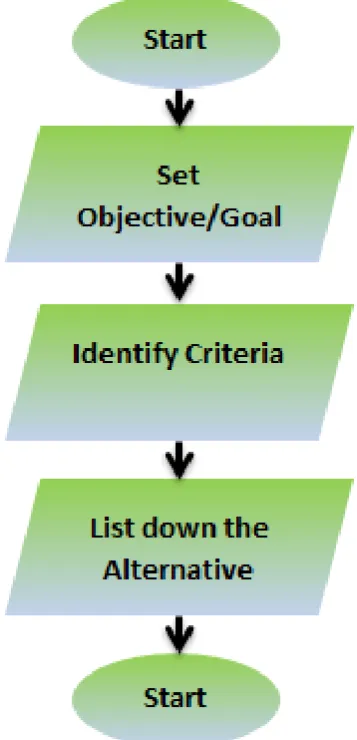
Figure 3.3: Flow chart of the hierarchy structure 21
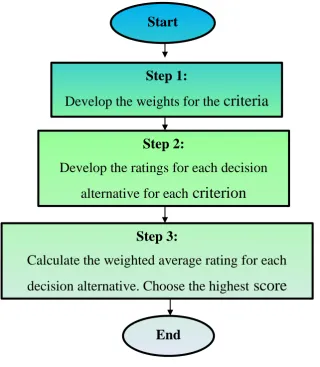
Figure 3.4: Flow chart of AHP method 22
Figure 3.5: Step 1 in AHP 25
Figure 3.6: Step 2 in AHP 28
Figure 3.7: Step 3 in AHP 30
Figure 4.1: Relationship between the parameter 34
Figure 4.2: Single Line Diagram of UMP, Pekan Campus 35
Figure 4.3: Graph for Weight of criteria 38
Figure 4.4: Weight of criteria in Microsoft Excel 39 Figure 4.5: The 7th root of product for alternatives 40
Figure 4.6: Weight of criteria 41
Figure 4.7: Graph for ‘Weight of Alternatives in Power Supplied’ 43 Figure 4.8: Pie chart of ‘Percentage of Weight of Alternatives in Power
Supplied 43
Figure 4.9: Graph for ‘Weight of Alternatives in Operating Load’ 45 Figure 4.10: Pie chart of ‘Percentage of Weight of Alternatives in
Operating Load 45
Figure 4.14: Graph for percentage of final score for each of the
alternatives 48
Figure 4.15: Flow chart for load shedding using AHP method for UMP,
Pekan Campus 49
LIST OF SYMBOLS AND ABBREVIATIONS
AHP Analytical Hierarchy Process
Alt Alternatives
SS Substation
HV High voltage
LV Low voltage
CI Consistency index
RI Random index
CR Consistency ratio
MW Mega-watt
CHAPTER 1
INTRODUCTION
1.1 Project background
A blackout is a total loss of power to an area and is the most serious form of power outage that can occur. Blackout is a cutoff of electrical power, especially as a result of a shortage and power stations tripping, a mechanical failure, or overuse by consumers. Outages may last from a few minutes to a few days depending on the nature of the blackout and the configuration of the electrical network.
The process of extracting or removing low priority loads from the system to prevent it from collapsing and keep the remaining portion operational is known as Load Shedding [1]. Hence, a key step for preventing blackout is conducting a proper and effective control action in an emergency state to halt system deterioration and restore it to normality [2]. Load shedding is now considered as a powerful tool to avoid system wide blackout [2].
in the event of an emergency an optimal load-shedding strategy could be quickly executed.
Thereby, in this hypothetical study situation worked with Analytic Hierarchy Process (AHP) to remove load by ranking them according to their priority. AHP is a decision making tool based on expert judgements that has been successfully applied in design and operation for the power system [3]. By earning the first rank means that the priority is less as the load shedding module aims is to ensure power continuity to only vital and most critical loads in the power system. The module begins with non-vital loads and follows by semi-vital loads removal. The vital loadscan only be removed if the system is disturbed by large disturbances such as major generation outages.
1.2 Problem statements
The main attentiveness of this study is to rank the load in hierarchy according to their priority as the option to assist the system operator to decide which load to be curtailed or removed first and next during the disturbances to the power system using one of the load shedding methods called Analytical Hierarchy Process (AHP).
3 1.5 Project objectives
In order to ensure the developed load shedding scheme is ideal for the selected electrical power system. The objectives of this project are as follows:
a) To implement the AHP in the load shedding scheme
b) To propose the AHP load shedding scheme to the UMP, Pekan Campus c) To illustrate the load shedding flow for UMP, Pekan Campus electrical
distribution system
1.4 Project scopes
The hypothetical study system is executed using Microsoft Excel Software application and only focus on Analytic Hierarchy Process (AHP) method for load shedding scheme. The performance of the AHP method will be evaluated by using the actual relevant input data. Due to the constraint of getting the latest input data, the following important points will be taken into consideration:
a) The hypothetical study system is executed to rank load priority for load shedding scheme as one of the protection system for the power system infrastructure in UMP, Pekan Campus
b) For this analysis, only power supplied and load operating demands were taken into consideration
1.5 Thesis overview
The report was layout as follows:
Chapter 1 – Introduction
This chapter is briefly an introduction to load shedding and the importance of the load shedding to the power system. The interest of the research is towards Analytical Hierarchy Process (AHP) and salient points which taken into consideration had also clearly stated at the end of the chapter.
Chapter 2 – Literature Review
This chapter discussed on past researches on several load shedding method and why Analytical Hierarchy Process (AHP) is the most suitable method for this study case compared to the others method. It was properly structured for future reference purposes.
Chapter 3 - Methodology
In this chapter discussed on background of the power system in UMP, Pekan Campus and why the system need load shedding to ensure the smoothness of the supplied if any disturbance occurs. Illustration of the system also attached in this chapter to provide clear introduction of the system studied.
Chapter 4 – Result, Analysis and Discussion
5 Chapter 5 – Conclusion and Recommendation Works
The final parts of the report discussed and concluded the importance of the finding which definitely is very helpful as a guide to the person in charge for better protection for the power system network during major contingencies. It also focused on the future proposal to improve the findings as the system may change due to the surrounding needs. And why the findings decision should be that way as the best load shedding scheme to the system approached.
1.6 Summary
CHAPTER 2
LITERATURE REVIEW
2.1What is load shedding?
Load shedding is an emergency control action to ensure system stability by shedding system load. The emergency load shedding would only be used if the frequency or voltage falls below a specified frequency or voltage threshold. Typically, the load shedding protects against excessive frequency or voltage decline by attempting to balance real and reactive power supply and demand in the system.
The load shedding scheme sheds amount of load in the power system until the available generation could supply the balance of the loads. If the power system is unable to supply its active and reactive load demands, the frequency and under-voltage condition will be intense.
To prevent the post-load shedding problems and over loading, the location bus for the load shedding will be determined based on the load importance, cost and distance to the contingency location. Coordination between amount of spinning reserve allocation and load shedding can reduce total costs that generation companies should pay in the emergency conditions [7].
7 frequency or voltage threshold, amount of load and delay before tripping. The objective of an effective load shedding scheme is to curtail a minimum amount of load and provide a quick, smooth and safe transition of the system from an emergency to a normal equilibrium state [8].
2.2 The National Grid
In every country in the world, there is a standard system known as The National Grid system used to transmit electricity to all over the country. The national grid system is the network of cables which transport electricity from the power stations to homes, factories and other places that require it. National Grid Malaysia is the high-voltage electric power transmission network in Peninsular Malaysia. It is operated and owned by Tenaga Nasional Berhad (TNB) while the two other electrical grids in Sabah and Sarawak operated by Sarawakand Sabah Electricity Sdn Bhd (SESB). The system expanses the whole of Peninsular Malaysia, connecting electricity generation stations owned by TNB and Independent Power Producers (IPPs) to energy consumers.
TNB is the largest utility company whom owned, managed and operated the National Grid which links the TNB power station and IPPs to the distribution network. The grid is connected to Thailand’s transmission system in the north and Singapore’s transmission system in the south. More than 420 substations in Peninsular Malaysia are linked together by the extensive network of transmission lines operating at 132kV, 275kV and 500kV voltage levels.
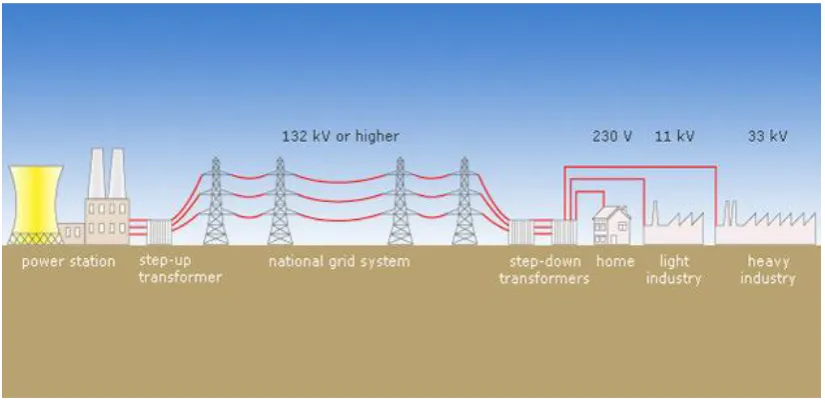
reduced in several stages making before reaching the end user. The voltage reduction is made in step down transformers as per shown in Figure 2.1 below:
Figure 2.1: Electrical power transmission and distribution system
The generated output at 11kV/ 20kV is stepped up by the transformer to 132kV, 275kV and 500kV to be transmitted via transmission line and distributed to the substation. Some of the co-generator will have direct connection to the transmission line and distribute to the customers within specific area such as industrial complexes. Most of the factories received 11kV electricity from the substation to be stepped down with their own built infrastructure for more power reliability. The electricity will be stepped down via transformer to 415 V and 240 V for small factories, individual houses and residential premises.
2.3 Electrical power outage events in Malaysia
9 i. In July 31, 1992, a bolt of lightning during a thunderstorm had strike a grid comprising four power lines between Paka and Teluk Kalong in Terengganu which caused massive power failure in the peninsular Malaysia at 3 pm. Fifteen of power stations on the west coast were put out of action. The grid was one of the two network supplying power to the west coast and due to this failure affected the Paka power station to trip. The power blackout happened for almost six to ten hours in the most affected states.
The corrective measures taken by TNB was to build an alternative transmission line between Terengganu and the south of the peninsular to improve its protection system in the power transmission system and TNB has allocated 30% spare capacity at any one time in its power generation system. A portable power station also provided by TNB in densely populated areas to ensure supply is enough.
ii. A transmission line near Paka power station tripped causing all power stations in Peninsular Malaysia to collapse resulting in a massive power failure in August 3, 1996. The cascading effect of the trip shut down supply in sequence at all power stations. Supply was black to normal by 11pm at Paka and Dungun in Terengganu, Kalumpang and Rawang in Selangor, Cheras in Kuala Lumpur and Damansara in Petaling Jaya.
TNB recommended that dependence on power generated from these stations to be reduced to lower the risk of major system failure and TNB was expected to spend between RM50mil to RM100mil per year in the next five years to improve reliability and security of nation’s electricity distribution.
Throughout the contingencies, one of the solutions to control the huge losses to the industry affected is by having load shedding scheme and the scheme must be effective to ensure the smoothness of the operation during the trip.
.
2.4 Previous method of load shedding
Load shedding has been practiced by many and through various techniques and approach such as:
2.4.1 Under Frequency Load Shedding (UFLS)
UFLS is one of the methods to avoid blackout from happen. The conventional UFLS system is designed to recover the balance of generation and consumption following a generator outage or sudden load increase. The loads to be shed by this system are constant load feeders and are not selected adaptively. In other words always the same loads are dropped from the system, regardless of the location of disturbance. In this method loads are classified in three groups of non-vital, semi-vital and vital loads [6]. The trend is to shed non-vital loads. However in severe conditions, semi-vital loads may also be shed.
The outage of a major generating unit in the power system may cause transfer of high amount of power in long distances which can reduce voltage stability margin of the system. In this situation occurrence of another contingency may cause voltage instability, though the system is stable in terms of frequency. After occurrence of the system disturbance, frequency initially decreases and then it might become unstable due to voltage problem. The return of frequency is due to load dependency on voltage and frequency.
11
2.4.2 Breaker Interlock Scheme
The simplest method in load shedding scheme which signals are automatically sent to load breakers to open when a generator breaker or a grid connection is lost for any reason. It acts very fast since there is no processing required and decisions about the amount of load to be shed were made long before the fault occurred.
2.4.3 Under Voltage Load Shedding (UVLS)
UVLS has been successfully deployed in many systems throughout the world to protect local systems from voltage collapse. Alternatives to improve reactive margin and voltage profile in a voltage sensitive area include new generation, new transmission facilities, and shunt compensation. For low probability events and extreme contingencies, UVLS may be the most economical solution in preventing voltage collapse.
For systems that implement UVLS, it is recommended that UVLS should be automatic. If a system has an existing manual UVLS scheme, it should be replaced or supplemented with an automatic UVLS scheme. The two schemes should then be properly coordinated in terms of voltage pick-up, time delay, and the amount of load to be shed. The load to be manually shed should not be part of the automatic scheme. UVLS schemes should also be properly coordinated with other load shedding schemes within the same system and in neighboring systems.
operating philosophies is for the system to function reliably, and failing that, to contain the impacts of disturbances to localized areas. UVLS can be useful tool to protect the system from voltage collapse, or uncontrolled loss of load or cascading.
2.4.4 Programmable Logic Controller-Based Load Shedding
The use of Programmable Logic Controllers (PLCs) for automatic sequencing of load has become an important part of substation automation in recent years. The application of PLCs in industrial load management and curtailment schemes started in the early 1980s. However, it wasn’t until power management systems were combined with microprocessor based PLCs that distributed fast load shedding systems became a reality. With a common type of PLC-based load shedding scheme, load shedding is initiated based on the system frequency deviations and/or other triggers. The circuit breaker tripping can be programmed based on the system loading, available generation, and other specific logics. Each subsystem is equipped with a PLC that is programmed to shed a preset sequence of loads. This static sequence is continued until the frequency returns to a normal condition. Modification of the logic requires changing of the latter-logics that are programmed in the PLCs.
13 load shedding systems response time (time period for which the load shedding trigger is detected by the PLC or relay up to the time when the trip signal is received by the circuit breaker) during transient disturbances is often too long requiring for even more load to be dropped. The state-of-the-art load shedding system uses real-time system-wide data acquisition that continually updates a computer based real-time system model. This system produces the optimum solution for system preservation by shedding only the necessary amount of load and is called Intelligent Load Shedding.
2.5 Why Analytical Hierarchy Process (AHP) is selected
Throughout the literature review stages, a few methods have been taken into consideration and finally the AHP method has been selected based on the following reasons:
a) AHP is unique in handling a situation with many criteria to consider making this technique the best method in offering an alternative to a load shedding scheme.
b) AHP is considered as a new method being practiced in a load shedding scheme for an islanded power system
c) This AHP-based load shedding algorithm is simpler in concept as the load shedding decision is determined based on the information such as criteria and alternatives. It is also considered to be much faster when it comes to compare alternatives as the previous methods are more difficult and complex.
2.6 Analytical Hierarchy Process (AHP)
The analytic hierarchy process (AHP) is a structured technique for organizing and analyzing complex decisions. Based on mathematics and psychology, it was developed by Thomas L. Saaty in the 1970s and has been extensively studied and refined since then. It has particular application in group decision making and is used around the world in a wide variety of decision situations, in fields such as government, business, industry, healthcare, and education.
Rather than prescribing a "correct" decision, the AHP helps decision makers find one that best suits their goal and their understanding of the problem. It provides a comprehensive and rational framework for structuring a decision problem, for representing and quantifying its elements, for relating those elements to overall goals, and for evaluating alternative solutions [2],[10].
Once the hierarchy is built, the decision makers systematically evaluate its various elements by comparing them to one another two at a time, with respect to their impact on an element above them in the hierarchy. In making the comparisons, the decision makers can use concrete data about the elements, but they typically use their judgments about the elements' relative meaning and importance. It is the essence of the AHP that human judgments, and not just the underlying information, can be used in performing the evaluations [2],[10].
15
The basic procedures of AHP as follows: [9] a) Develop the weights for the criteria by
• developing a pairwise comparison matrix for each criterion • normalizing the resulting matrix
• averaging the values in each row to get the corresponding rating • calculating and checking the consistency ratio
b) Develop the ratings for each decision alternative for each criterion by • developing a pair wise comparison matrix for each criterion
• normalizing the resulting matrix
• averaging the values in each row to get the corresponding rating • calculating and checking the consistency ratio
c) Calculate the weighted average rating for each decision alternative. Choose the one with the highest score.
2.7Summary
CHAPTER 3
METHODOLOGY
3.1 Background of the system
Universiti Malaysia Pahang (UMP) was established by the Government of Malaysia on February 16, 2002 and it was set up as a competency based technical university which specializes in the fields of engineering and technology. UMP is located on the east coast state of Pahang, the biggest state in Peninsular Malaysia with vast areas of rainforest endowed with a wide range of biodiversities and natural resources.
UMP, Pekan Campus is about 50 km away from Gambang Campus, is set to be the main campus of UMP after its full completion in 2015 tentatively. Upon its completion, the permanent campus will be able to accommodate a total number of 10,000 students and 2,000 staff. The location is in the vicinity of ever growing industrial zone especially automotive industry such as Mercedes-Benz, Suzuki, Volkswagen, Isuzu and DEFTECH which acts as a catalyst for research collaboration, academic proliferation and to foster collaboration and expertise.
17
Figure 3.1 : Location of UMP, Pekan Campus
UMP offers a wide range of skills-based tertiary education programmes and practical-based tertiary education in engineering and technology to produce competent engineers. Its application oriented curriculum integrates theory and practice in the concept of a teaching factory, emphasizing experiential and action learning, task oriented and problem solving.
As for research, UMP focuses on applied research and industrial projects to enrich the teaching and learning processes as well as to promote the commercialization of research products, thus exposing students to the latest research and development activities in the industries.
technology to fulfill the needs of industries as well as to contribute to the country’s overall development.
[image:26.595.120.535.265.601.2]The electrical infrastructure at UMP, Pekan Campus was fed by Tenaga Nasional Berhad (TNB) via single 11kV to a 11kV consumer HT panel copper busbar, 25kA, 630A or known main Busbar 1. This Busbar 1 is connected to the other five busbar which act as five alternatives out of seven alternatives in this study while the other two alternatives comes from one of the five busbar as per shown in Figure 3.2 below:
Figure 3.2 : Single Line Diagram of UMP, Pekan Campus
19 Centre. There are only two standby generator set to accommodate power supply to FKEE and FKM 1.
The power system in UMP is not properly arranged as each of the building is under different consultant. There are no such Ring System in this power system with each one of the substation is fed by different feeder.
3.2 Does the system need a properly planned load shedding procedure?
Since UMP, Pekan Campus does not have any power system protection scheme as been told by the person-in-charge, this hypothetical study situation was undertaken to help the person-in-charge remove the selected load systematically if any breakdown or contingency happen in future.
Curently, the person-in-charge just select the load to be shed manually based on their experienced without any proper guidelines. Thus, the Analytical Hierarchy Process (AHP) is the suitable method of doing selection during major similar shutdown in future as a reference to guide the person-in-charge.
3.3 AHP process
AHP is a framework for problem solving that organizes judgements into a hierarchy of criteria that influence decisions [4] and it was developed by Professor Thomas L. Saaty in the 1970s and has been extensively studied and refined since then [5]. The AHP is a kind of heuristic algorithm which is one that provides good approximate solutions to a given problem [6]. Often in employing such an algorithm one may be able to precisely measure the goodness of the approximation.
the values were within acceptable range, consistency Ratio (CR) is calculated and if the values were less than 0.1, it is then assumed to be consistent and the pair wise comparison matrix is within the acceptable tolerance. This AHP method is applied using Microsoft Excel Software to do all the calculation and it is applicable to all the users to solve their complex decision making process and will produce the desired results on a priority basis.
These days, there are various versions of AHP existed. Initially, AHP was designed to calculate the nth root of the product of the pair-wise comparison values in each row of the matrices and then normalizes the aforementioned nth root of products to get the corresponding weights [19]. Meanwhile the modified AHP version normalizes the pair-wise comparison values within each of the matrices and then averages the values in each row to get the corresponding weights and ratings [19].
21
Figure 3.4 : Flow Chart of the AHP method
Step 1:
Develop the weights for the
criteria
Start
Step 2:
Develop the ratings for each decision
alternative for each
criterion
Step 3:
Calculate the weighted average rating for each
decision alternative. Choose the highest
score
23 Step 1: Develop the weights for the criteria: [3],[8],[9]
a) First, develop a single pair-wise comparison matrix for the criteria as shown in the equation below:
where, C1, C2, …,Cn representing the criteria, aijrepresents the rating of Ci with respect to Cj
b) Then, multiply the values in each row together and calculates the nth root of the said product as shown in the equation below:
𝒏𝒕𝒉 𝒓𝒐𝒐𝒕 𝒐𝒇 𝒑𝒓𝒐𝒅𝒖𝒄𝒕 = √𝒑𝒓𝒐𝒅𝒖𝒄𝒕 𝒐𝒇 𝒆𝒂𝒄𝒉 𝒓𝒐𝒘𝒏
(3.2) where n = positive integer number
c) After that, normalizing the aforementioned nth root of products to get the appropriate weights by using the formula given in equation 3.3:
d) Lastly, perform the Consistency Ratio (CR) by using the formula as shown below:
The value of Random index (RI) can be found using Table 3.1 where Random Index (RI) is a constant and it is a standard for AHP analysis.
Table 3.1: Table of Random Index
n 1 2 3 4 5 6 7 8 9 10
RI 0 0 0.58 0.9 1.12 1.24 1.32 1.41 1.45 1.49
*Note: Value of C.R must be less than the allowable value of 0.10. Therefore, the consistency of the judgment matrix should be within an acceptable tolerance. But if the consistency ratio is greater than 0.10 then the subjective judgment needs to be revised.
While the value for Consistency Index (CI) can be found by using this equation:
𝑪𝑰 =𝑳𝒂𝒎𝒃𝒅𝒂𝒎𝒂𝒙− 𝒏 𝒏 − 𝟏
(3.5) and for Lambda_Max,
𝑳𝒂𝒎𝒃𝒅𝒂𝑴𝒂𝒙= ∑(∑ 𝒄𝒐𝒍𝒖𝒎𝒆𝒂𝒄𝒉 𝒂𝒍𝒕𝒆𝒓𝒏𝒂𝒕𝒊𝒗𝒆𝒙 𝒘𝒆𝒊𝒈𝒉𝒕𝒑𝒆𝒓 𝒓𝒐𝒘) (3.6)
53
REFERENCES
[1] Shokooh, F., Dai, J. J., Shokkoh, S., Tastet, J., Castro, H., Khandelwal, T. & Donner, G.. An Intelligent Load Shedding (ILS) System Application in a Large Industrial Facility. Industry Applications Conf, 2005. Fourtieth IAS Annual Meeting Conf. Record of the 2005, 1. 2005. pp. 417 - 425.
[2] Rad,B.F, Abedi, M. An Optimal Load-Shedding Scheme during Contingency Situations Using Meta-Heuristics Algorithms with Application of AHP Method. IEEE 11th International Conference in Brasov, 22-24 May 2008
[3] H.H.Goh, B.C.Kok. Application of Analytic Hierarchy Process (AHP) in
Load Shedding Scheme for Electrical Power System. Environment and
Electrical Engineering (EEEIC), 2010 9th International Conference on 16-19 May 2010.
[4] R. K. Rietz, S. Suryanarayanan. A Review of the Application of Analytic Hierarchy Process to the Planning and Operation of Electric Power Microgrids. Power Symposium, 2008. NAPS '08. 40th North American, 28-30 Sept. 2008.
[5] Hak-Man Kim, Tetsuo Kinoshita, Yujin Lim. Talmudic Approach to Load Shedding of Islanded Microgrid Operation Based on Multiagent System. Journal of Electrical Engineering & Technology Vol. 6, No. 2, pp. 284~292, 2011 DOI: 10.5370/JEET.2011.6.2.284
[6] Kunz, J. The Analytical Hierarchy Process (AHP). Eagle City Hall Location Options Task Force. February/March 2010.
[8] Thomas L. Saaty. Decision making with the analytic hierarchy process. Int. J. Services Sciences, Vol. 1, No. 1, 2008
[9] http://en.wikipedia.org/wiki/Analytic_hierarchy_process. [10] IEC 60354: Loading guide to oil immerse power transformer [11] IEC 60076-1: Power transformer part 1: General
[12] IEC 60076-8: Power transformer application guideline
[13] JKR Standard, LS12: Specification for 11kV High Voltage Ring Main Unit distribution switchgear.