Shaping the future for primary care
education and training project. Finding the
evidence for education & training to
deliver integrated health and social care:
the primary care workforce perspective
Warne, AR, King, M, Street, C and McAlonan, C
Title
Shaping the future for primary care education and training project. Finding
the evidence for education & training to deliver integrated health and
social care: the primary care workforce perspective
Authors
Warne, AR, King, M, Street, C and McAlonan, C
Type
Monograph
URL
This version is available at: http://usir.salford.ac.uk/17627/
Published Date
2006
USIR is a digital collection of the research output of the University of Salford. Where copyright
permits, full text material held in the repository is made freely available online and can be read,
downloaded and copied for noncommercial private study or research purposes. Please check the
manuscript for any further copyright restrictions.
www.pcet.org.uk
Shaping the Future for Primary
Care Education & Training Project
k
Funded by the NorthWest Development Agency
Authors:
Tony Warne
Martin King
Clare Street
Cath McAlonan
Institution:
Manchester Metropolitan University
Vol: 5
2006
Finding the evidence for Education & Training to deliver
Integrated Health and Social Care:
Contents
Page
Executive Summary 6
Chapter One: The Project Context 9
1.1 Introduction 9
1.2 Aim and Objectives 9
Chapter Two: The Primary Care Workforce Context 10
2.1 Introduction 10
2.2 Defining the workforce 11
2.3 Drivers for change in the workforce 13
2.4 Training the workforce 14
2.5 Policy/Practice Shifts 15
2.6 Summary 16
Chapter Three: A Literature Review 17
3.1 Introduction 17
3.2 Developing a Conceptual Framework 17
3.2.1 Organisational Relationships 17 3.2.2 Organisational Leadership 20 3.2.3 Communities of Practice 20 3.2.4 Organisational Rhetoric's and Realities 21
3.3 An Emergent Conceptual Framework 21
Chapter Four: Methodology 23
4.1 Introduction 23
4.1.1 Ways Forward 23
4.2 Research Aims and Objectives 23
4.3 Research Design 23
4.3.1 Survey 24
4.3.2 Semi-Structured Interviews 24 4.3.3 Workshop Case Studies 24
4.3.4 Parallel Processes 24
4.4 Sample 24
4.4.1 Participant Involvement in the various data collection processes 26
4.5 Gaining Ethical Approval 26
4.6 Summary 27
Chapter Five: Congruent Themes 28
5.1 Introduction 28
5.2 Presentation of Data 29
5.2.1 Team Working 29
5.2.2 Formal and informal Rules 29 5.2.3 Adding Value/agreed values/being valued 29 5.2.4 Problem Identification/problem solving 29
5.3 Communication 29
5.3.1 Meetings, meetings, meetings 29 5.3.2 Integrated partnership strategic plans 30 5.3.3 Transparency/availability of information 30 5.3.4 Feedback/fighting/friendships 30
5.4 Role Awareness 30
Page
5.4.3 Learning from Others 30
5.4.4 Generic and generalist working 30
5.5 Personal and Professional Development 31
5.5.1 Life Long Learning 31
5.5.2 National competence standards 31 5.5.3 Professional networking/development 31
5.5.4 New Workers 31
5.5.5 Education Training Needs Analysis 31
5.5.6 Ivory Towers 31
5.6 Practice Development and leadership 31
5.6.1 What worked and what didn't 31 5.6.2 The ubiquitous Personal Development Review 31 5.6.3 Some Essential/Desirable development activities 32 5.6.4 Being prepared for change 32
5.6.5 Drivers for change 32
5.7 Partnership Working 32
5.7.1 Keeping the vision in view 32 5.7.2 Service user involvement 32
5.8 Understanding the sub text 32
5.9 Team Working 33
5.9.1 Formal and informal Rules 33 5.9.2 Adding Value/agreed values/being valued 34 5.9.3 Problem Identification/problem solving 35
5.10 Communication 35
5.10.1 Meetings, meetings, meetings 35 5.10.2 Integrated partnership strategic plans 36 5.10.3 Transparency/availability of information 36 5.10.4 Feedback/fighting/friendships 37
5.11 Role Awareness 38
5.11.1 Shared understanding of roles 38 5.11.2 Generic and generalist working 39 5.11.3 Organisational politics 39 5.11.4 Learning from Others 40
5.12 Personal and Professional Development 41
5.12.1 Life Long Learning 41 5.12.2 National competence standards 42 5.12.3 Professional networking/development 43
5.12.4 New Workers 44
5.12.5 Education Training Needs Analysis 45
5.12.6 Ivory Towers 46
5.13 Practice Development and leadership 46
5.13.1 What worked and what didn't 47 5.13.2 The ubiquitous PDR 47 5.13.3 Some Essential/Desirable development activities 48 5.13.4 Being prepared for change 49 5.13.5 Drivers for change 49
5.14.1 Keeping the vision in view 50 5.14.2 Service user involvement 51
5.15 Summary 51
Chapter Six: The Evidence and Vision(s) for future education and training provision
to deliver Integrated primary health and social care 53
6.1 Introduction 53
6.2 Scope of the Evidence 53
6.3 The wider implications of the Vision(s) 55 6.3.1 Implications for Improving Team Working 56 6.3.2 Implications for Improving Communications 57 6.3.3 Implications for Improving Role Awareness 58 6.3.4 Implications for Improving Personal and Professional Development 59 6.3.5 Implications for Improving Practice Development and leadership 60 6.3.6 Implications for Improving Partnership Working 61
6.4 Parallel Processes II 61
6.4.1 Communication 62
6.4.2 Partnership Working 62
6.5 Conclusions 62
6.6 Recommendations 63
6.6.1 For Improving Team Working 63 6.6.2 For Improving Communication 63 6.6.3 For Improving Role Awareness 63 6.6.4 For Improving Personal and Professional Development 64 6.6.5 For Improving Practice Development and Leadership 64 6.6.6 For Improving Partnership Working 64
References 65
Appendices 68
Appendix 1 Vision of the future for Integrated Health & Social Care,
The Primary Care Workforce Perspective Questionnaire 68
[image:6.595.59.467.102.480.2]List of Tables and Figures
Table 1 Sample Frame 25
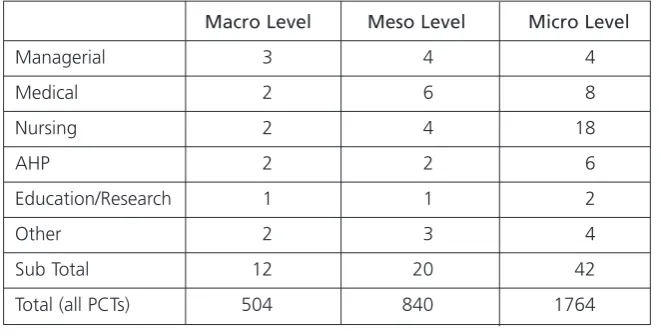
Table 2 Breakdown of participants by level and activity 26 Figure 1 Organisational levels of management and responsibility 18 Figure 2 Expanded organisational model of relationships 19 Figure 3 A Schematic View of the Conceptual framework 22
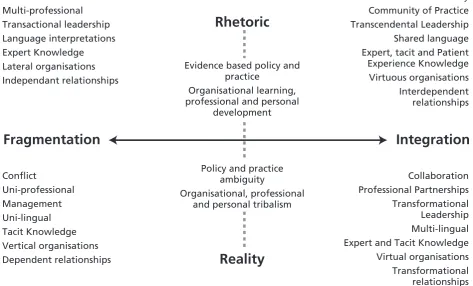
Figure 4 Rhetorical Visions 55
Executive Summary
Introduction
This report is one of a series of outputs from the Shaping the Future in Primary Care Education and Training project (www.pcet.org.uk) funded by the North West
Development Agency (NWDA). It is the result of a collaborative initiative between the NWDA, the North West Universities Association and seven Higher Education Institutions in the North West of England. The report presents an evidence base drawn from the analysis of the experiences and aspirations of integrated health and social care, as reported by members of the current primary health and social care workforce working in or with Primary Care Trusts (PCTs) in the North West region.
Methodology
A multi methods approach was used in the research design. This included the use of a survey questionnaire, semi-structured interviews, participant and non-participant observations and a series of workshop case studies. Data were collected largely from participants working at three different levels of organisational, managerial and professional responsibility within PCTs. A conceptual framework was used to explore where participants located themselves on a continuum of fragmentation or integration. A total of 333 participants were involved. In the main these participants worked in or with 18 PCTs. Data were analysed using a thematic approach, developed through a systematic review of the literature, triangulated with a critical rhetorical analysis developed as part of the work of this study.
Findings
No one vision of what primary integrated health and social care services might involve, or how this might be achieved emerged. The evidence base revealed a series of rhetorical justifications representing the gap between espoused theory and theory in use. However, the report notes that primary health and social care services have experienced a period of rapid and often
unpredictable change. These changes have resulted in turbulence within the PCTs, and this turbulence appears set to continue as the future role of PCTs is further developed through a movement away from being providers of services to becoming
commissioners of services. The turbulent nature of the emergent primary health and social care services that provided the focus for this study has resulted in disjunctions and tensions in and between managerial, educational, political and professional discourses, theories and practices. The rhetoric's were often used as
'smoothing' mechanisms by participants. These smoothing mechanisms belied what for many participants was a very chaotic and messy reality, and not only was an important but utopian vision created, but further gaps between policy, organisational education and professional practice emerged. The evidence base reflects what were often fragmented and contradictory beliefs and perceptions expressed by participants in their accounts of their experiences of integrated health and social care.
The findings stress the need to locate the health and social care workforce and educational preparation within a broad understanding, both of the changing nature of who makes up this workforce, and of the turbulent nature of the context. A number of
educational and organisational development implications arising from this evidence base are noted.
Recommendations
The following should be read as a related constellation of changes, rather than as single and specific items that might be separately implemented by those concerned with the provision of primary health and social care services, and the commissioning and provision of educational and training programmes aimed at developing the workforce.
For Improving Team Working
PCTs, future service providers and educationalists should:
■ Ensure that all educational and
training learning
objectives/outcomes reflect national competency frameworks standards;
■ Develop change management
knowledge and skills at all levels of the workforce, and ensure service users and carers are partners in these processes;
■ Undertake organisational culture
analysis aimed at promoting a culture which supports greater involvement of the wider workforce in decision-making processes;
■ Provide structured and regular
'timeout' sessions aimed at harnessing organisational learning;
■ Ensure that service managers and
educationalists work to develop learning opportunities focused on how to deal with the realities of team working across different professions and agencies;
■ Develop systematic organisational
For Improving Communication
PCTs, future service providers and educationalists should:
■ Promote and support the
development of a 'common language' for integrated health and social care, recognising the organisational and professional socialisation processes that militate against this;
■ Provide multi-professional and
inter-disciplinary Continuing Professional Development activities that aim to enable professionals to better learn to listen to each other in order to better assess what is acted upon or given credence to;
■ Ensure greater transparency in the
exchange and access to information through further development of new technologies;
■ Ensure the development of IT
systems that are multi-agency capable and fit for purpose;
■ Develop engagement processes
that support greater
organisational innovation and confidence in how IT systems are used;
■ Develop multi-professional and
inter-disciplinary CPD activities aimed at enhancing
understanding of how, what and why information might be communicated across all levels of the workforce.
For Improving Role Awareness
PCTs, future service providers and educationalists should:
■ Ensure that all pre-qualifying
educational programmes, Continuing Professional Development programmes and activities more effectively promote role awareness and
inter-professional working,
■ Ensure there is a explicit
requirement to demonstrate the involvement of service users in educational and training activities in commissioning agreements;
■ With service users and carers,
develop communication processes aimed at ensuring service users and carers better understand the different roles and responsibilities of the workforce;
■ Ensure that where possible, all
Continuing Professional
Development programmes aimed at increasing inter-professional working are planned, delivered and evaluated as joint enterprises (with health and social care, HEIs, and service users);
■ More effectively involve HEIs in
providing empirical approaches to support service developments;
■ Develop more structured
approaches to supporting and recognising the value of informal inter-professional and
organisational learning.
For Improving Personal and Professional Development
PCTs, future service providers and educationalists should:
■ Continue to develop meaningful
opportunities that promote life long learning and the systematic identification of training needs;
■ Regularly evaluate the impact and
use of new workers on the roles and functions of the existing workforce;
■ Increase the awareness within
PCTs and future service providers of the scholarship role universities can have in supporting individual practitioners and PCTs;
■ Ensure the development and
delivery of both educational and training programmes more effectively reflect practice needs as
well as those arising from academic interests;
■ Increase the opportunities to work
together in developing more effective learning environments capable of supporting flexible learning within PCTs and future service providers;
■ Agree a joint framework
agreement for Continuing Professional Development that supports in-house Continuing Professional Development activities being credit rated;
■ Work towards the creation and
deployment of new joint academic/practitioner roles at all levels of practice;
■ Ensure that the knowledge and
skill required to work in integrated health and social care services (including in education) form the basis of job descriptions and role specifications;
■ Ensure that integrated personal
and professional development strategies are explicitly linked to organisational change strategies and business planning processes;
■ Develop transparent and effective
decision making processes that are capable of handling the personal, professional and organisational tensions involved in determining what is seen as 'useful
knowledge'.
For Improving Practice Development and Leadership
PCTs, future service providers and educationalists should:
■ Develop multi-professional and
inter-disciplinary Continuing Professional Development activities that are aimed at strengthening the leadership capacity across all levels of the health and social care workforce;
■ Ensure that practice development
activities are facilitated by leaders skilled in cultural change
processes and that these activities are systematically evaluated
■ Ensure protected time is identified
specifically for multi-agency practice development Continuing Professional Development activities;
■ Ensure that PCTs, future service
providers, educational
commissioners and providers work collaboratively in developing new Continuing Professional
Development programmes which reflect the changing nature of health and social care practice and the changing environments where such practice is undertaken;
■ Continue to work collaboratively
in ensuring national quality assurance processes for
educational providers inform the development, delivery and evaluation of educational and training programmes;
■ Improve the opportunities for
greater service user and carer involvement in educational and training programmes in order to increase awareness and responses to drivers for practice
development.
For Improving Partnership Working
PCTs, future service providers and educationalists should:
■ With service users and carers,
work towards developing a shared definition of the criteria that can be used as a benchmark for systematic service evaluation of integrated health and social care services;
■ Develop specific roles to facilitate
inter-agency partnership working at the Micro and Meso levels of the workforce;
■ Ensure multi-professional and
inter-disciplinary CPD activities are developed that are aimed at increasing the understanding of organisational roles and responsibilities;
■ Develop curricula that explicitly
provide learning opportunities for partnership working;
■ Ensure that future education and
Chapter 1:
The Project Context
1.1 Introduction
Collaboration and partnership working between Higher Education and the NHS is an essential
requirement for effective delivery of care (Universities UK 2003). The North West Universities Association (NWUA) and the North West Development Agency (NWDA) are two
organisations at the forefront of creating such alliances. The research project, Shaping the Future for Primary Care Education and Training Project (StF)is a collaborative partnership between both these organisations and seven North West Higher Education Institutions. In addition, the project brings together for the first time all the key partners in the health, social care and
education sectors who are involved in supporting the delivery of integrated health and social care in the North West Region.
These include:
■ The North West Development
Agency who are funding the project as part of their key target areas;
■ The North West Universities
Association;
■ Three North West Strategic Health
Authorities;
■ Primary Care Trusts;
■ Social Services;
■ Higher Education Institutions and
Further Education Colleges.
The StF project has a project
management and development team and a participative Steering Group whose role included developing closer regional partnership intended to create real synergies at a regional level. For ease of implementation the project has been divided into a series of Work Packages, based on the key objectives, each led by one of the partner Higher Education Institutions.
These Work Packageswere developed to ensure that discrete pieces of the overall work of the project were undertaken and managed by the individual universities making up the research project team. Aims and objectives were agreed for each Work Package, and these were mapped against the wider aims and objectives of the overall StF project. This has helped ensure greater coherence and congruence of all the various aspects of the work, an outcome in itself, demonstrative of integrated working. Throughout this report, note is made of where the work of 'Work Package Five' connects with the outcomes of the other Work Packages.
1.2 Aim and objectives
The main aim of the project is to identify the evidence base for delivery of integrated health and social care; the skills and knowledge required to deliver this care, together with the current and future education and training needs of the North West of England Primary Care Workforce.
The key objectives of the project are:
i. To provide a comprehensive systematic review of the evidence base for integrated health and social care services within the regional, contexts;
ii. To develop a Benchmarking Tool for achieving best practice in collaborative working and delivery of integrated health and social care;
iii. To develop a course finder tool and map the Higher
Education/Further Education provision of education and training which can support the integrated health and social care services;
iv. To identify visions for the future, for both the health and social care workforce and service users, on
education and training
requirements needed to deliver integrated services;
v. To develop and pilot an Education and Training Needs Analysis Model (ETNA) for identifying the
education and training needs of the primary care workforce to meet the NHS and social care agendas.
Chapter 2:
The Primary Care Workforce Context
2.1 Introduction
Much of the international health care community has been involved in a sustained reform of its health care systems over the last two decades (Warne, 1999). In the United Kingdom (UK), the National Health Service (NHS) has undergone continuous structural changes in its organisation and orientation which have built upon those previously set in motion by the former Conservative administration during the early 1990s and are congruent with similar changes at an international level (Warne, 1999). These changes have reflected a paradigmatic shift in service focus and delivery away from the secondary care sector towards a primary and community care led NHS (Department of Health, 1997). The outcomes of this policy shift can be seen in the structural and functional changes to the organisation of primary and community health care providers. Current policy guidance locates primary care at the frontiers of health care modernisation
(Department of Health, 1997; 1998; 2000a, 2005). New organisational structures have brought General Practitioner (GP) practices together as Primary Care Trusts (PCTs) and these new organisational forms now respond to a much larger population group than the more traditional GP practice. PCTs are increasingly the driving force for change across the NHS, with much of the responsibility for commissioning and providing health care shifting to PCTs. These shifts in responsibilities appear set to continue, with future PCTs moving from positions of commissioners and providers of care, to commissioners only by 2008 (Department of Health, 2005).
The changes to primary health care organisations have been accompanied by a need to explore new ways of working and thinking (Department of
Health, 1997; 1998; 2000a) and establishing a shared understanding of the national and local strategic policy objectives (Warne, 1999). Greater collaboration and partnership working in the delivery of services, adoption of a lead role in the commissioning of services and the renaissance of a public health discourse underpinning service developments has emerged from these changes.
The first wave of the more
autonomous Primary Care Trusts in 2000 required significant changes to the way each of these organisational entities were developed and managed that reflected an emergent discourse from two polarised paradigms: public service values and the dynamism of external management experience (Robinson and Exworthy, 2000). One consequence of responding to the challenges posed by these changes has been a very turbulent
professional, organisational and practice environment. This turbulence, for the workforce is likely to continue as the changes to the professional, organisational and practice environment outlined Creating a Patient-led NHS(Department of Health, 2005) begin to be implemented (Ham, 2005)
Contributing to this turbulence has been the lack of clarity over how primary care, as a conceptual term, is defined (Howarth et al2004). For example, Summerton (1999:64) describes primary care as a concept:
"that can be viewed variously as a set of activities, a process, a level of care or even a strategy for organising the health care system as a whole".
One interpretation of this description that is most frequently and familiarly used in describing the functional divisions of health care provision is primary, secondary and tertiary care. Conversely, the more specific term,
primary health care, aids precision in defining how the concept is used in policy and practice. This is a much broader interpretation of the concept that encompasses primary medical services (largely provided by General Practitioners (GP) with other community health care services organised and provided by community nursing services, allied healthcare professions, and so on. In policy terms, this concept has also been extended to recognise the integrated contribution of those providing primary social care services. A new conceptual term has begun to emerge in policy guidance and critiques – this term, out-of-hospital health services – more closely links the integrated nature of health and social care services, and perhaps also reflects a paradigm shift in the locus of organisational and professional power.
It is this latter and broader interpretation that provided the conceptual boundaries for the study. The wider debate as to which professional groups in the primary care workforce could or should be included was reflected in the early discussions of the Work Package Five
2.2 Defining the Workforce
The following provides a summative overview of key policy documents that reflect the shifts and challenges facing the health sector workforce in the 21st century. Back in 1994, the UK Department of Health published a predictive report (now commonly referred to as the Heathrow Debate), which sought to examine the wider economic, professional and
organisational challenges facing the nursing workforce as it entered the new millennium. This report provided a vision of a future that has largely come to fruition as the StF study was being undertaken in 2005. This early attempt at identifying the driving forces for change amongst nurses (the largest group of health care workers) was further developed in the
Healthcare Futures 2010report (Warner et al, 1998). This latter report clearly identified a range of future scenarios for healthcare in the year 2010, which, although focused on the educational processes for nursing, resonated with issues facing the wider health and social care workforce. Whilst this report is not examined in detail here, the breadth of focus included1:
■ Economic and political context; ■ Demand factors for health care
(demographic and epidemiological trends);
■ The supply factors (workforce flexibility, boundary blurring, recruitment and retention issues and the informal care dimension); ■ Technology (information
technology, health care
technology, genetics and health service configurations).
Proving to be accurate in its predictions the various uncertainties
explored remain as unresolved now as they were then. Although not taken for granted, the key issues outlined in the conclusion section of this report, provide an implicit contribution to the wider backdrop to the focus, work and outcomes of this report. These key issues include:
■ There will be more older people as a percentage of the overall population;
■ It is likely there will be more diseases of old age;
■ Increasing levels of disability from mental illness;
■ New genetic approaches;
■ Increasing requirements for evidence-based practice;
■ More care provided outside of the acute secondary sector;
■ New forms of information transfer;
■ Changing professional roles (within and between professions); ■ Changing workforce expectations.
Although published after the
Heathrow Debate, the genesis of these key issues are perhaps better articulated in the outcomes of the more generic report The Future Healthcare Workforcepublished in 1996 by the Health Services Management Unit (HSMU) (see also 2.4 below). Many of these key issues still feature prominently in current health and social care policy within the UK and need to be considered alongside what is known about the healthcare workforce sector.
The Sector Skills Council for Health Work produced a Health Sector Workforce Market Assessment in 2003 – Skills for Health. Drawing on data from a wide range of sources
this assessment provides both a macro overview of the sector as well as data on specific areas and groups within this sector. The key
characteristics of the health sector as summarised by Skills for Health
(2003:3-4)2included:
■ It is a large and complex sector with a wide range of both employers and occupations. The size is reflected in the spending on health care – spending on health care is over £50 billion a year – (set to rise to £76 billion by 2005/06), investment in health care insurance and independent provision is estimated to be about £8 billion a year and there is a large, if uncosted, spend through voluntary organisations and carers;
■ There is steady growth in the workforce (c. 1% per annum) which is set to continue, but there is substantial change in the mix of skills employed at the point of delivery;
■ The sector has a predominantly female workforce;
■ There is a large number of part-time workers with the numbers (headcount) of the workforce 19% higher than the WTE. Part-time opportunities are steadily increasing;
■ Age structure: The majority of the workforce is concentrated between 25-54 years; ■ Ethnic mix: over 10% of the
English NHS Hospital and Community Health Service non-medical workforce is from ethnic minority groups. Proportions of ethnic minority staff in the other countries are lower – around 5% in Wales and less in Scotland.
1 Authors Note: It is suggested to readers of this report that the Health Care Futures 2010 report be revisited in order to gain a sense of the detail underpinning
these key challenges. Some of these challenges are highlighted in the data analysis and discussion chapters of this Work Package Five Report.
2
Ethnic minorities represent a much higher proportion of medical and dental staff and pharmacists, for example Asian staff account for over 8% of the total medical and dental workforce in England and 21% of pharmacists in the retail sector are of ethnic minority origin;
■ Supply problems: The sector is experiencing major supply problems [in certain groups of the workforce] and is implementing strategies to ensure the supply better matches demand;
■ Professional roles: The data in this section is presented in terms of conventional professional and other descriptions. This is the only form in which data is available. However, there is a rapid trend towards blurring and change to traditional role boundaries in many parts of the sector and traditional descriptions increasingly do not reflect the reality of what people do.
The health sector in the UK currently employs over 2 million people across a wide range of different
occupations. Over 75% of these people work within the NHS. The workforce is conventionally divided into four broad categories:
42% clinical practitioners and scientists;
37% work in clinical and technical support;
19% in management and administration;
3% in estates and maintenance functions.
Superimposed upon these categories is a further demarcation resulting from those who possess a
professional qualification to practice and the support workforce. Although it is difficult to discover what the
percentages of each might be, it has been estimated that support staff might account for up to 40% of the 'generic carer' workforce (HSMU, 1996). Many of these 'generic carer' roles are those most often referred to as support workers, that is,
unqualified health care workers). During the 1990s the split appeared to be weighted in favour of qualified staff, but since this time there has been a sustained movement towards a higher number of support staff within the workforce as a whole.
These categories reflect the NHS as a whole, and they are also reflected in the microcosm of primary health care services. Typically the primary health care team is made up of a wide range of professional groups including Medicine (including for example, GPs with a specialist interest), Nurses, (including for example, District Nurses, Health Visitors, Community Psychiatric Nurses, and General Practice Nurses), Midwives, and other Allied Health Professionals, (including for example, Podiatrists, Occupational Therapists, Audiologists). These groups often work in very close partnerships with Dental and Pharmacist services.
Currently all these different professions have their own
professional training and registration programmes despite the degree of similarity in many of the requirements of the various professions (Warner et al, 1998). There are some indications that more multi-professional training programmes are beginning to emerge in the UK, but these tend to be few and far between and are generally aimed at the very early stages of basic professional training. Howarth et al
(2004) provide a detailed analysis of how such polarised approaches inhibit team working, collaboration and promote a lack of role awareness and poor communication within and
across teams and agencies. Thus, while concepts such as
'collaboration', 'partnership working' and 'integration' pervade the policy rhetoric, these are often not embedded into the organisational, professional and practice translations of these policy drivers. This lack of conceptual embeddedness in itself reflects an interrelated conceptual paradox: of unintended histories and idealised futures. Although it cannot be said that there has previously been no collaboration and partnership working or that collaboration and partnership in themselves are a panacea for all the problems facing the provision of health and social care services. Collaboration, partnership working and the development of integrated approaches to health and social care have been generally seen as the most viable way of delivering quality health and social care now expected by health and social care commissioners, providers and consumers (Hutchings et al2003).
The importance of a
multi-professional approach to health and social care, predicated upon the concept that those professionals who provide care for individuals work together not just as professional collectives, but inter-professionally in providing seamless services, features in much of the recent literature in this area (Howarth et al, 2004). Likewise, recent guidance on the education and training of these professionals has been marked by a move to more shared learning between health and social care professions (Department of Health, 2002). There is an implied assumption in much of this guidance: that those who learn together might work together more effectively in practice. However, many authors (Leathard, 1994; Lacey, 1998; Zwarenstein et al, 1999) have noted, there is little research evidence to support this view. More recently,
Warne and Stark (2003) noted that even within the so called Family of Family Practitioners, the professional socialisation of individual professions that arises out of uni-professional training continues to influence the working relationships in the practice environment still characterised by effective if somewhat benign demarcations of power. These power demarcations can be pervasive and in some contexts, are actively engaged with by patients and carers as well as health and social care professionals (Warne and Stark, 2004; Warne and McAndrew, 2004a).
So whilst there have been many structural and functional changes to the current health and social care environments, the traditional workforce has often been slow in responding to these changes in a way that reflects what the wider drivers for change entail for a future health and social care workforce.
2.3 Drivers for change in the
workforce
Implicit in these structural and functional changes to the
organisation and delivery of health and social care is a reduction in the number of different health and social care professionals in contact with individuals at any one time. This has implications for the size and make up of the future health and social care workforce. Perhaps the most
significant of these implications is the need for the future workforce to have an improved working knowledge of other team members' roles and function, a theme that came out strongly in the Howarth's et al(2004) systematic review of the literature. This will become a crucial aspect of integrated health and social care working as individual members of the future workforce start to be
employed by other non-traditional
health or social care organisations (Department of Health, 2005).
There are a number of social, demographic, organisational and professional drivers that have and continue to exert pressure in shaping the future health and social care workforce. These include:
■ The rise of evidence based
approaches to care at both a national level (through the work of the National Institute for Clinical Effectiveness (NICE), and the production and
implementation of National Service Frameworks (NSF), and at a local level, through the
development of clinical protocols and care pathways. The use of these approaches requires effective co-ordination between health and social care
professionals and effective communication processes;
■ The rise of health and social care
consumerism supported through initiatives such as Clinical Governance, the Expert Patient Programmes, Patient and Public Involvement. These approaches serve to raise the awareness and expectations of quality
improvements, but can also help in challenging the relationship between the individual and health and social care professionals. Such challenges are beginning to emerge not only in the delivery and provision of services but in how many professionals are prepared for practice (Harrison and Pollit, 1994; Warne and McAndrew, 2004b; 2005a);
■ The need to address recruitment
and retention issues in the health and social care workforce has led to many initiatives aimed at developing the current professions and their roles in the workforce by for example, in the
implementation of the Knowledge and Skills Framework (KSF) (Department of Health, 2003). Concurrent initiatives have been aimed at widening the entry to health and social care professions through the creation of new workers (for example the Assistant Practitioner, and the Graduate Primary Mental Health Care Worker, Nurse Consultants). These initiatives have introduced the concept of the multi-skilled generic health and social care worker and have resulted in the substitution of some traditional professional groups for others (HSMU, 1996; Warne and McAndrew 2004c);
■ The need to respond to European
Union legislation and wider health and social care policy (HSMU, 1996). For example, changes resulting from the European Working Time Directive have impacted upon primary and community care services as well as the more familiar secondary care service provision. Likewise changes to public health and health protection guidance and regulations have resulted in new roles for PCTs;
■ New technologies, as a
consequence of developments in information and communication technology, as well as those arising from developments in genetics are already starting to have an impact upon more traditional ways of service provision (Kumar, 2000);
■ The emergence of new health
structures, once a bedrock of security, have for many public service employees (professions and non-professions) have resulted in many individuals being 'portfolio workers' living and working in so called Shamrock organisations
(Handy; 1989, Warner et al, 1998). Current, Department of Health policy guidance seems set to reinforce such movements in employment practices
(Department of Health, 2005). Against a backcloth of such fundamental drivers for change the importance of continuous
professional education and training, and personal development to ensure standards are maintained is brought to the fore. However, what was once seen as being straightforward has increasingly become more complicated and complex.
2.4 Training the workforce
It can be argued that every aspect of health and social care service provision ultimately depends on the knowledge and skills of individual staff. Warner et al(1998) noted that education and training for the workforce is a major industry in itself. The large scale of educational and training processes is matched by a corresponding complexity in the commissioning processes (Department of Health, 2002). It is likely that these commissioning processes will
continue to grow in complexity as primary health and social care services continue to develop. There has been a plethora of national guidance and policy proposals including: A Health Service of all the Talents(Department of Health, 2000b); Working together – Learning together(Department of Health, 2001a), The NHS Plan (Department of Health, 2000a), that set out different proposals from those traditionally associated with the education and development
opportunities for health care staff (See also Howarth et al 2004 for detailed analysis). The Funding Learning and Development of the Healthcare Workforcereport (Department of Health, 2002) explored the possible ways the NHS should use the £3 billion annual funding for learning and personal development more effectively to support the development of staff so that they had the necessary
knowledge and skills required for the changing provision of health care. This report argued that properly structured funding is required in order to promote and support an
environment in which learning can take place. Although published as a consultation document, the outcomes of the Department of Health project again have been reflected in recent educational and professional developments across the UK health care workforce.
What has emerged in these developments are responses to the drivers for change outlined above. These include:
■ Common core training where
future health care workers commence their training with a common training programme that not only includes aspects of the more traditional curriculum but also emphasises aspects such as management and leadership, team working, and other related organisational processes;
■ The evolving Scandinavian model
of generic care workers able to provide care in a broad health sectors (such as mental health, elderly care and so on);
■ Specific therapists able to provide
(often brief interventions) care and who are drawn from a wider workforce of related professions, and who are able to practice after a much shorter period of training
than that provided to the more traditional health care professions;
■ Continuing professional
development, linked to life long learning, and the skills escalator approach;
■ Widening access to both
pre-qualification programmes and also post qualification programmes;
■ The use of new information and
communication technology to underpin education and training programmes.
promote the identification and dissemination of good practice. However, we argue that such approaches will fuel the growing demand for educationalists to provide 'quick-fix' skills based training programmes rather than longer-term educational processes. Achieving a balance between meeting the needs of the here and now and those in the longer term will be a crucial
partnership task for commissioners and providers of education and training.
Additionally, part of the task facing those engaged in such organisational development, and educational and training activities will be to manage the changes in professional, and organisational culture resulting from the structural and functional changes to PCTs envisioned over the next five years. Partly this task requires a shared values base, and in the context of developing the workforce, the Department of Health (2002) set out a number of values that should underpin the use of Workforce Development Funding in supporting the delivery of high quality services. These included:
■ Transparency – Those responsible
for commissioning education should be able to account fully for their use of funding;
■ Equity of treatment – The main
driver should be the need to deliver particular healthcare skills. Different support mechanisms and processes for similar educational and training should be avoided;
■ Comprehensiveness – Learning
and development support for the delivery of necessary skills should be available for all staff, with or without professional
qualifications;
■ Responsiveness to new demands –
Learning and development should
be able to support the delivery of new skills quickly as requirements change, so that developing clinical and care approaches may be readily delivered by the workforce;
■ Integration – Effective service
delivery requires that staff should operate together in teams and learning together is an important precursor to working together;
■ Partnership working – The health
and educational sectors, social care and the private and voluntary sectors should work together to secure the effective delivery of learning and development;
■ Flexibility – The pattern of learning
and development increasingly includes the option to step on and off training programmes, with student accumulating credits. Systems of support should reflect this.
The values are to be revisited as part of the wider shift towards a patient-led NHS, but mention is made of these values here, as it is these values that should be reflected in the operational processes underpinning current and future educational and development opportunities for the PCTs workforce. Examples of how these values are translated into the experiences of individuals working in the PCTs will be sought as part of the data collection process.
2.5 Policy/Practice Shifts
The shifts in health care policy and practice over the last 10-15 years have placed primary health care centre stage for the delivery of services to meet the needs of a wider range of patients. This centre stage role is set to continue as the next phase of health and social care service modernisation is being unveiled. These policy/practice developments have occurred as this report was in its final stages of being
drafted. As a consequence, the participants involved in this project have not been able to have their views about these proposals included as part of the outcomes. However, given the focus of the study, we feel it is important that potential issues arising from this latest phase are at least noted here.
In this phase, greater emphasis is being placed upon the need to ensure greater choice is available to patients in terms of where they receive their health care, who provides this and when such care might be provided. Currently, PCTs both commission and provider services to a local population. In collaboration with local authorities, these services are aimed at meeting health and social care needs. Over the next three years, it is intended that PCTs will become fewer in number (with a anticipated cost saving of £250 million pounds) and that they will cease to be direct providers of services. The new role will be to ensure appropriate, high quality services are available to patients from a range of accredited service
providers and these services are provided at a NHS rate. The NHSlogo will become the kite mark equivalent of quality standards being assured. It is not clear who will provide services in the future, although it is
anticipated that for example, local authorities might want to employ District Nurses, nurse entrepreneurs will set up nurse led provider organisations, and that emergent new forms of service delivery (such as Independent Treatment Centres, Foundation Trusts and so on) will also want to be involved in providing community based services.
Fund-holders. The rhetoric of much of the current policy guidance is short on detail and risks being viewed by many managers and practitioners as being disingenuous at best and at least, a process akin to 're-inventing the wheel'. For example, the economic objectives of saving £250 million in management savings through the merger of PCTs appears obscured by the clamour of
governmental justifications of the need to promote even greater choice for patients. Likewise, if PCTs are not providing services in the future, they will not need to employ many of the clinical workforce currently on their payrolls. It is possible to envision a future that for individual primary health care practitioners and professions would appear more fragmented than integrated. There are implications also for
educationalists and those responsible for ensuring individuals are
competent and fit to practice. For example, given the difficulties that there will be (CPD, registration, personal and professional
development), the creation of a new primary health and social care worker would appear to be desirable
development. Additionally, developing a new primary care workforce would not entail having to deal with the transfer of employment of the current workforce to non-NHS organisations. For example, pension rights, and equality of national terms and conditions of employment.
Finally, the process of creating a patient-led NHS, which uses new commissioning approaches, payment by results and money following patients is likely to add to the already turbulent environment of the NHS. If individual practitioners increasingly feel at risk and vulnerable to such processes, they may chose to opt out of the health and social care
workforce completely. For example,
General Practice Nurses only really secured a future when they gained specialist practitioner recognition, but more importantly, when GPs stopped employing them directly. Up to that point, they were seen as a being the poor relation amongst the primary and community nursing team (Warne
et al, 1999).
There is a tight time frame for PCTs to develop strategic plans that meet the aims and objectives of the next phase. This in itself adds to the turbulence many members of the current primary health and social care workforce is experiencing (Ham, 2005).
2.6 Summary
Primary health and social care workers aim to provide services against a policy backdrop, which calls for an increasing focus on multi-disciplinary, collaborative team working to provide seamless and effective services to patients. This requires a more effective involvement of a wider workforce that now includes medical, nursing, allied health professionals and other health and social care support workers. Alongside these shifts, requiring greater diversity amongst primary care workers is the need for greater flexibility, in employment practices. Individuals with the workforce will increasingly face service and practice developments that challenge traditional many aspects of
professional practice. The emergent policy guidance on the development of a patient-led NHS, provides both challenges and concerns for the future health and social care workforce. These changes, in policy and practice, have significant implications for the education and training of future health and social care workers, necessitating equal measures of flexibility and innovation from educational institutions as will
Chapter 3:
A Literature Review
3.1 Introduction
This review built upon the systematic review of the literature undertaken by Howarth et al(2004), to provide a conceptual framework for different aspects of the Work Package Five project work. For example, it provided the basis for the first level of thematic analysis (see also Chapter Three and Four) of the survey data. In this way the literature review was used both to inform and influence the project team's approach to articulating the context within which we would operate, the development of initial data analysis and subsequent iterative modifications to the data collection processes. Thus it is not our intention here, to try and replicate this
literature review and in so doing further deconstruct the issues and concerns involved. Our intention is to 're-construct' the evidence base that more precisely illustrates our 'out of the box' thinking in relation to the Work Package Five's project approach which occurred as a concurrent process to that of the work of other Work Packages, and in particular
Work Package Two – the systematic review of the literature.
3.2 Developing a Conceptual
Framework
At one level, a theory is a discussion of related concepts, while a concept is a word or phrase that symbolises several interrelated ideas. Generally, unlike a theory, a concept does not necessarily need to be discussed in order to be understood (Botha, 1989). However, it has been argued that such terms as 'conceptual frame of reference' and 'theoretical framework' should be used as broad terms for conceptions of reality, reserving 'philosophy,' 'theory' and 'conceptual model' as more restricted terms for conceptions of reality (Adam, 1985). Whilst recognising, but not wanting to engage with the
epistemological and ontological concerns implicit within these
statements, we pragmatically adopted a middle ground in our approach. Our starting point in planning the work of the Work Package Five project was to develop an underpinning conceptual framework, upon which our eventual approach could be built. This
conceptual framework took as its primary focus the processes of integration, be these organisational, professional or educational. Of these we considered the organisational aspects to represent an overarching series of concerns most likely to influence the professional and educational aspects. For example, The NHS Plan (Department of Health, 2000a) makes an unambiguous assertion that more effective team working and collaboration must be reflected in all educational processes if the NHS is to have a workforce 'fit for purpose'. However, the
organisational demands made of staff (in meeting government targets) often result in a practice being characterised by a sustained sense of
busy-nesswhich works against collaborative practice being developed. Against these
organisational demands, education alone is unlikely to lead to better collaborative practice (Miller et al, 1999; Warne and Skidmore, 2004). Likewise, Glen and Leiba (2004) using the work of Pirrie et al(1998) have noted that within educational organisations a number of ' intra-institutional' (such as imbalances in student numbers; finding suitable accommodation for both large and small group teaching, timetabling problems across groups with discrete discipline-specific curricula) and 'extra-institutional' inhibitors (such as disparate professional bodies; unsynchronised validation cycles; separate funding streams) work against the successful implementation
of inter-professional education programmes. Thus, in the early stages of our thinking we came to see the organisation of health care and health care organisations as being pivotal to our conceptual framework.
3.2.1 Organisational Relationships
Indeed, as Ferlie and McGivern (2003) note, the UK health care field (and we would add social care field) is populated by large organisations rather than single entrepreneurs or small free-standing units. Although these various organisations have long been exhorted to work together in a more interrelated way, achieving this or even [sic] inter-organisation co-ordination remains difficult and problematic (Webb, 1991). Partly, the reason for this is a consequence of two different relationship concepts (1) vertical relationships (usually involving a top down approach to service development and management); and (2) lateral relationships (usually involving partnerships between agencies or across networks) resulting in countervailing processes of