Identifying higher capability maturity
KPAs of construction organisations;
Model refinement through expert
interviews
Keraminiyage, KP, Amaratunga, RDG and Haigh, RP
Title
Identifying higher capability maturity KPAs of construction organisations;
Model refinement through expert interviews
Authors
Keraminiyage, KP, Amaratunga, RDG and Haigh, RP
Type
Conference or Workshop Item
URL
This version is available at: http://usir.salford.ac.uk/9856/
Published Date
2007
USIR is a digital collection of the research output of the University of Salford. Where copyright
permits, full text material held in the repository is made freely available online and can be read,
downloaded and copied for noncommercial private study or research purposes. Please check the
manuscript for any further copyright restrictions.
For more information, including our policy and submission procedure, please
IDENTIFYING HIGHER CAPABILITY MATURITY KPAS OF
CONSTRUCTION ORGANISATIONS; MODEL REFINEMENT
THROUGH EXPERT INTERVIEWS
K. Keraminiyage, D. Amaratunga, R. Haigh
The Research Institute for the Built and Human Environment, University of Salford, Salford, M5 4WT, UK
E-mail: [email protected]
ABSTRACT: Process improvement has been identified as a mechanism of achieving the much needed performance improvements within the construction industry. Despite the concerns of being an industry with unique characteristics, construction has borrowed some process improvement principles from other industries such as software. However, while process capability maturity has been identified as an important aspect of process improvements in many disciplines construction shows a clear research gap in that area. Among the few capability maturity based process improvement initiatives within the construction industry, there is a clear necessity to investigate what are the higher capability maturity level dynamics of construction process improvements. Addressing this requirement, this paper discusses a model to identify construction higher capability maturity.
Keywords – Construction Process Improvements, Capability Maturity, Construction Performance Improvements.
1. INTRODUCTION
The need for performance improvement initiatives within the UK construction industry is widely admitted (Koskela et al, 2003; Santos and Powell, 2001; Love and Li, 1998). Despite the corporate interest and number of suggestions put forward (e.g. see: Egan, 2002, Egan, 1998, Latham, 1994) to address this issue, the industry has not achieved the desired level of improvements to date. Some investigations regarding this issue have revealed the fact that fragmentation and confrontational relationships within the construction industry are inhibiting the construction performance improvement (Egan, 1998; Love and Li, 1998). Fragmentation and confrontational relationships are sharpened due to the traditional functional view of construction projects, where the tasks are assigned to individuals based on their functions with minimum attention given to the integration issues (Samuelson, 2003, Holt et al, 2000). Within this context it has been identified that it is important to view construction projects through a process view should the construction industry improve its performances (Egan, 1998, Sarshar et al 2000).
1.1 The Process Concept
task. However, it should be noted that the process view is not just about a collection of ad-hoc activities. Rather, as Davenport (1993) states “a process is simply a structured, measured set of activities designed to produce a specified output for a particular customer or market”. As such, the process view integrates the product, procedures and the customer, making the big picture visible to the stakeholders they are contributing to and opening up the opportunities for improvements.
1.2 Process Improvements
The basic premise of the process view within organisational process improvement is to improve the performance of the organisation concerned by improving the underlying processes of its business activities. Process improvement is not a new concept; rather it has been researched and used extensively during last few decades, especially within the manufacturing sector. Accordingly literature covers a wide spectrum of terms related to process improvement. Business Process Improvement, Continuous Process Improvement, Business Process Re-design, Business Re-structuring, Business Process Re-engineering are some of those which appear frequently within literature (Cao et al, 2001; Bessant and Francis, 1999; Carr, 1993; Talwar, 1993; Harrington, 1991). All these concepts have the major objective of achieving performance improvements within organisations, but vary in the magnitude and the nature of the desired change point of view. It varies from continuously improving the processes to total re-structuring the organisation (Zairi and Sinclair, 1995). This determines the two extremes of the process improvement spectrum and defines the two major schools of thought in process improvement strategies, the evolutionary process improvement approach (incremental) and the revolutionary (radical) process improvement approach (Anderson et al, 1994). Within literature sometimes the term “process improvement” is used synonymously with the evolutionary approach and “process innovation” is used synonymously with revolutionary process improvement approach. However, this paper uses the term process improvement to denote both the above approaches and uses “evolutionary approach” and “revolutionary approach” to denote incremental and radical changes respectively.
The revolutionary approach aims at achieving dramatic performance improvements (Hammer and Champy, 1993). The concept of this approach is based on the idea that dramatic improvements can be achieved through a fundamental rethinking and radical redesign of business processes, as it provides the opportunity to eliminate inefficiencies of the existing practices. As it suggests this approach starts with a blank sheet to re-design the work processes focusing on the ultimate result. In comparison the evolutionary approach focuses on small incremental changes. The basic premise of this approach is not to accept the established knowledge as the ultimate truth and to explore opportunities for improvements continuously.
The ability to adopt the principles of process improvement initiatives at various levels differs from one organisation to another depending on its capabilities. For an example, one organisation may succeed in applying revolutionary process improvement due to the level of resources (e.g. Information and Communication Technological tools) it possesses at the time of the exercise, whereas another less resourceful organisation might not be able to achieve the desired level of improvements. In such an instance the less resourced organisation displays a lower process capability compared to the first organization. The level of process capabilities within an organisation changes when they mature.
1.3 Process Capability Maturity
The literal meaning of the word maturity is 'ripeness', conveying the notion of development from some initial state to a more advanced state (Fraser et al, 2002). The process capability maturity concept is increasingly being applied in a number of disciplines, either as a mean of assessment or as a part of a framework for improvement. These disciplines include quality management, software development, supplier relationships, R&D effectiveness, product development, innovation, product design, product development collaboration and product reliability (Fraser et al, 2002). The concept of process capability maturity within an organisation has often been presented as models, which comprise several maturity levels. Moreover, the process maturity concept has strong links with the field of quality management. The principal idea is that it describes the typical behaviour of an organization at a number of ‘maturity levels’ through its journey to achieve the excellence in quality. This provides the opportunity to codify what might be regarded as good practice (and bad practice), along with some intermediate or transitional stages (Fraser et al, 2002). In effect, the concept of process maturity suggests that the quality excellence of an organization evolves through several stages, adopting a set of good practices at each stage.
2. MATURITY MODELS AND CONSTRUCTION PROCESS IMPROVEMENTS
The construction industry has had few recognised initiatives of performance improvements in the last decade based on process improvement concepts (Sarshar et al, 2000). Since the process improvement concepts are originally intended for linear production scenarios, and most of the success stories of process improvements are evident from such industries, there are ongoing arguments about the applicability of this concept within the construction industry, due to its unique nature. While a complete evolutionary approach does not cater for the dramatic improvement needs of construction as highlighted by Latham (1994), the direct application of revolutionary approaches within the industry has also been criticised by the researchers due to unique characteristics of construction (see: Green, 2003; Love and Li, 1998). Unlike in a linear production situation, the project based nature of construction demands complex supply chains and complex relationships between internal team members. These complex relationships often influence the organizational capabilities which are visible in varying degrees. Moreover, there are no clear industry wide guidelines or benchmarks to evaluate the capabilities and performances of individual construction organisations. Thus, the absence of clear guidance at the macro level hinders the repeatability and benchmarking capabilities of individual performance improvements (if any) at industry level (Sarshar et al, 2000). Thus it is important to establish a structured, common approach to construction process assessment and improvement based on the current capabilities of the organization.
2.1 The Software Capability Maturity Model
purchaser (Sarshar et al 2000). The use of CMM includes the evaluation of software manufacturing organisations prior to awarding them contracts. CMM is based on a five level structure. Within this, organizations are ranged from level 1 to level 5 based on their maturity. Within this framework, a maturity level has been defined as “a well defined evolutionary plateau aimed towards achieving mature processes. Each maturity level provides a layer in the foundation for continuous process improvement” (Paulk, 1993). Level 1 organizations are the least mature organizations whereas level 5 organizations are the most mature organisations. In order to achieve a specified maturity level, organizations must satisfy all the key processes defined within the immediate below maturity level. The organisations are tested against “key enablers” to determine whether they have satisfied each key process. Through this framework, organizations are guided to adopt stepwise process improvements. This framework ensures that the organisation in question is ready for the next level of process improvement. This in turn initiates a process improvement culture within the organisation and guides the procedures and the people towards improvements, using the available and potential tools.
2.2 The SPICE project
Sarshar et al (2000) have conducted research to understand the applicability of the principles of this model within the construction industry. This project was entitled the Structured Process Improvement in Construction Enterprises (SPICE). The research was carried out in stages, and currently the dynamics up to the level 3 of the CMM were explored and customised to the UK construction industry. The initial SPICE project was aimed at improving processes on individual construction projects. In addition, it concentrated on the development of level 2 characteristics and key processes. Level 1 organizations have been identified as organizations which use ad-hoc processes during their day to day activities. Generally these organisations are surviving or performing due to the ability of some individual characteristics within the organisation. Further, these organizations are trying to survive today, rather than planning for the future. Within the SPICE framework, level 2 has been identified as planned and tracked. At this level there is a degree of project predictability. A level 2 organization has established policies and procedures for managing the major project-based processes (Sarshar et al, 2000). After publishing the first iteration in 2000, due to the increased interest of industrialists, the second phase of SPICE was commissioned in 2002 focusing on process improvement across the construction organization. During this phase the third level parameters and key processes were evaluated. Level 3 is identified as “well defined”. Within this level practices are well defined and institutionalized. Knowledge capturing and sharing mechanisms are established within these organizations to institutionalize the good practices and processes. After this institutionalization, a high level of predictability can be expected towards future projects of an organisation.
maximum possible performance improvements through maturity model approach based process improvement initiatives.
2.3 Higher Capability Maturity Dynamics
Addressing the identified gap Keraminiyage et al (2006) have presented a conceptual framework for the construction higher capability maturity level dynamics. Within this study higher capability maturity levels were defined as corresponding to the level 4 and 5 of the CMM. Moreover, level 4 carries a “quantitatively controlled” theme, where the performance improvement monitoring aspects are considered, whereas level 5 carries an “optimised” theme, where the organisations are looking for more drastic improvements on a continuous basis. Within this conceptual framework, five key process areas (KPAs) have been identified as key steps towards achieving higher capability maturity. These are;
• Quantitative process management in construction
• Construction product quality management
• Quantitative Defect Management in Construction
• Construction Defect Prevention
• Construction Process Change Management
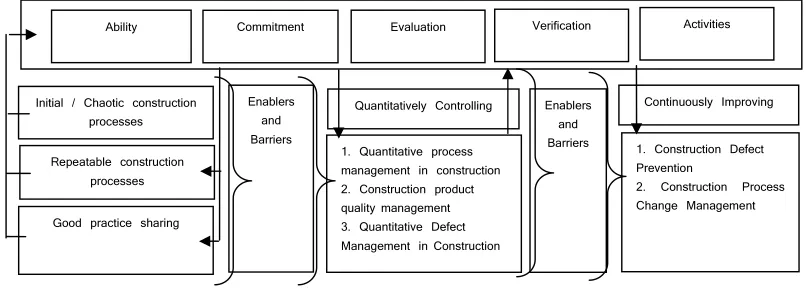
[image:6.612.101.504.396.543.2]More details and the rationale behind these KPAs have been discussed at length within the papers (Keraminiyage et al, 2006 and Keraminiyage et al, 2005b). However, figure 1 below shows the concept of the initial model to enable discussion of this model further within this paper.
Fig. 1. The Initial Model
3. METHODOLOGY
As discussed within those papers, this framework development is designed to be carried out in three stages. The first stage develops a conceptual framework based on existing work to identify what are the likely characteristics of higher capability maturity level dynamics. The second stage refines the initial framework by using appropriate knowledge through empirical investigations. The third stage validates the framework through case studies.
The above papers (Keraminiyage et al, 2006 and Keraminiyage et al 2005b) discuss and present the initial model developed based on the existing work. The primary methodology
Enablers and Barriers
1. Quantitative process management in construction 2. Construction product qualitymanagement 3. Quantitative Defect Management inConstruction Initial / Chaotic construction
processes
Repeatable construction processes
Good practice sharing
Enablers and
Barriers 1. Construction Defect Prevention
2. Construction Process Change Management
Ability Commitment Evaluation Verification Activities
used during this stage was an extensive literature review funnelled through three filtering stages.
1. The first stage of the review included general process improvement related literature without limiting any specific discipline or technique. During this stage, general process improvement concepts and theories were studied with specific emphasis given to understanding their limitations and critical success factors. 2. The second stage of the review started with a narrowed down scope to identify the
role of capability maturity concepts for process improvements. In addition, the review was extended in another direction to understand the theories and concepts behind the capability maturity approaches. More than seven different maturity models were studied from various disciplines during this stage. Special emphasis was also given to exploring the dynamics of higher capability maturity levels of the models studied.
3. The third stage was focused on studying construction industry specific process improvement initiatives with special emphasis given to identifying any maturity model based approaches. During this stage, construction industry characteristics were also closely examined to identify how the construction can adopt the higher capability maturity dynamics of the models studied during the stage 2 of the review.
By following the above methodology, the initial model was developed and presented in the above papers. The second stage of the framework development is the refinement stage. During this the intention was to refine the literature based foundation of the developed model by using empirical evidence collected through expert interviews. These expert interviews were planned to catch two different perspectives; the academic process expert’s perspective (multi disciplinary) and the construction industry expert’s perspective. The rest of this paper discusses the outcome of this empirical investigation.
The last stage of this model development is in progress, as the validation stage. This model is planned to be validated through case studies. The rationale behind this approach is presented and discussed in Keraminiyage et al (2005a). The final outcome of the validation stage is beyond the scope of this paper and is planned to be presented elsewhere.
4. MODEL REFINEMENT THROUGH EXPERT INTERVIEWS
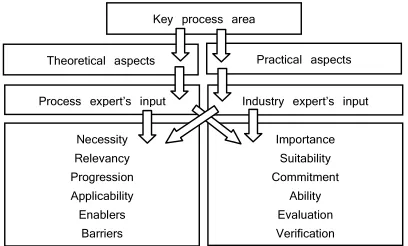
Fig. 2. Main focuses of the expert interviews
As figure 2 shows, the interviews with process experts were designed to capture any theoretical gaps visible within the developed initial model, based on each key process area. The main areas tested were indicated within the bottom left hand box of figure 2. The interviews with the industry experts were designed to capture the practical aspects of the initial model based on each key process area. The focal points are indicated within the bottom right hand box of figure 2.
The outcome of the refinement stage is presented below for each Key Process Area.
4.1 Quantitative Process Management in Construction
Quantitative Process Management aims at establishing mechanisms to measure the performance of the construction processes quantitatively in terms of time, cost and quality, checking the measurements against the desired levels of performance and taking remedial actions if there are deviations. The major emphasis is on the ability to take quantitative measurements of these parameters to establish “goals” for construction processes based on which of the process performances can be evaluated for improvements. Considering the necessity of this key process area, all the experts have commented that this is a core necessity of process improvement initiatives in general. Moreover with specific reference to capability maturity model based approaches, all the process experts have agreed that this key process area (KPA) shows a clear progress point from lower capability maturity levels to higher capability maturity levels. With reference to relevancy, all the experts have agreed that this KPA is relevant to process improvement initiatives in general, but one expert has argued that this may not be relevant within the construction context due to the unique nature of the industry. In support of her view, the expert has pointed out the fact that quantitative measurements are highly appropriate within manufacturing and linear production line environments, where the performance of the process is often proportionate to the quantifiable output, whereas the performance of the construction process is not proportionate to the output quantity as often each of the outputs is unique. Moreover, all the other process experts have identified the above issue as a barrier to implement this KPA within the construction setting. However, in contrast , some experts have pointed out the practices such as Construction Key Performance Indicators (KPIs) are examples of existing practices which use the principle of quantitative process management. In terms of enablers, most of the experts have pointed out the fact that there is a necessity from the relevant authority’s point of view to implement regulations to push the industry to take up this KPA. Often the Software Capability Maturity Model has been used as an example to stress the point that to overcome natural resistance to change an external push is needed. They have pointed out that the regulatory requirements
Key process area
Theoretical aspects Practical aspects
Process expert’s input
Necessity Relevancy Progression Applicability Enablers
Barriers
Industry expert’s input
Importance Suitability Commitment
imposed by the United States Department of Defense as one of the major success factors and one of the key enablers. Moreover, the availability of modern ICT tools have also been highlighted as potential enablers for this KPA.
From the practical aspect’s point of view all of the industry experts are under the impression that this key process area is of high importance. With regard to its implementation most of the industry experts are of the view that this KPA is not in practice within the today’s construction industry as a structured process improvement methodology. However, one process expert who has also been a working in the industry as a consultant has highlighted the fact that the underlying principle of this KPA is being used by existing mechanisms such as Key Performance Indicators.
4.2 Construction Product Quality Management
The second key process area identified within the initial model is Construction Product Quality Management. Construction Product Quality Management aims at managing the quality of the final construction product quantitatively. This involves measuring the quality of the final construction product quantitatively based on parameters such as sustainability, energy efficiency, etc. Further, this key process area also evaluates the measurements against the “quality goals” and takes remedial actions against any deviations. Some of the process experts commented that this KPA is an un-orthodox KPA due to the fact that it aims to evaluate the performance of the product quality against factors not directly influencing the success of the business (environment). However, often this view is followed by a statement to acknowledge the link between construction and the environment. However, one industry practitioner has commented this KPA is one of the timely KPAs considering that environmental issues have become a major concern of modern built environment and a number of regulatory measures (e.g. compulsory energy rating on residential buildings) are proposed to be introduced within the UK in the very near future. Moreover, all the process experts have agreed that this KPA shows a clear progress path from lower maturity levels to higher maturity levels. In terms of enablers and barriers the major highlight was again on the resistance to change and external pressures to change. However, as mentioned above, one expert has highlighted that there will be future regulatory pressures, at least within UK that will act as a strong enabler for this KPA. Another industry practitioner, who is also providing ICT based consultancy service to construction organisations, has highlighted that there are existing modern technological tools which enable quantitative measurements to be taken of factors such as energy efficiency which acts as a strong enabler for this KPA. He further pointed out that there are ongoing arrangements in Australia to implement building regulations to safeguard the environment. However, all the industry and the process experts interviewed are under the impression that the industry is still too immature to give indications as to how this KPA will be taken up in terms of parameters such as commitment and ability.
4.3 Quantitative Defect Management in Construction
construction occupancy. While both the process experts and industry practitioners have agreed that a mechanism is needed to capture post completion product quality as an area for performance improvements, a number have raised the issue of whether the “post construction defects” is a total representation of the post construction product quality. At this moment it appears that the definition and the title presented for the Quantitative Defect Management invades the area of the quantitative process management in construction KPA. As such it has been decided to refine this key process area to include a more definitive and clear definition. At the same time, some process experts have raised concerns about the necessity of this KPA within a construction setting due to its significance. However, some industry practitioners have pointed out that the post construction defects may not appear as a significant problem area within construction due to the fact that the affected parties are limited largely to the client (the occupant) and on occasions to the contractor (if within the defect liability period). Most of the industry practitioners have agreed that this KPA will improve the construction industry performance. Whether it has business significance to construction organisations is a different matter. Moreover this issue has been pointed out by most of the industry practitioners as a key barrier to implement this KPA within the construction industry. Additionally, all the practitioners have indicated they were not aware of any existing practices related to the aims of this KPA and therefore couldn’t comment on parameters such as commitment and ability.
4.4 Construction Defect Prevention
today which correspond to the aims of this KPA. As such they were unable to comment on factors such as commitment and ability.
4.5 Construction Process Change Management
As with the previous KPA, Construction Process Change Management KPA also falls within the “continuously improving” theme. Construction Process Change Management aims at innovating mechanisms to improve the performances of current construction processes in place continuously by establishing and achieving new benchmarks. It involves the analysis of performance of the existing processes to identify visible “wastes”. The ultimate aim is to set and achieve improved performance goals by innovating new processes to eliminate identified “wastes”. All the process experts interviewed agreed that this is an essential element of a process improvement initiative. Some experts have commented this as a highly theoretical element with very little evidence of actual examples. Another interviewee identified this as the organisation achieving the “Nirvana” in terms of process improvements and doubted whether this should be treated under a separate maturity level. Despite its theoretical requirement, all the practitioners have stated they are not aware of any construction industry related practices or examples at present that maps the aim of this KPA. One practitioner commented that “today’s construction industry is far from achieving what you have explained as the aim of this KPA, but I believe the reason being the construction industry has not matured to understand its importance. I would leave this KPA within the model as I can see without it the path is not complete”. As all the interviewees felt that this KPA does not exist within the current construction industry, none could comment on parameters such as commitment and ability.
5. CONCLUSION
Process improvement has been identified as a mechanism for achieving the much needed performance improvements within the construction industry. Despite concerns of being an industry with unique characteristics, construction has borrowed some process improvement principles from other industries such as software. However, while process capability maturity has been identified as an important aspect of process improvement in many disciplines construction shows a clear research gap in this area. Among the few capability maturity based process improvement initiatives within the construction industry, there is a clear necessity to investigate what are the higher capability maturity level dynamics of construction process improvements. Addressing this requirement, this paper discusses a model to identify construction higher capability maturity dynamics. The initial model was developed through a literature review and this paper focuses on refining the initial model through series of expert interviews.
6. THE WAY FORWARD
This paper is presented as a part of an ongoing PhD which aims at establishing a conceptual framework to identify the higher capability maturity dynamics and ICT-Process co-maturation characteristics of construction organisations. The overall research is based on the grounded theory approach and it is intended to validate the refined model presented here through a case study approach which is in progress.
7. REFERENCES
Koskela, L. Ballard, G. and Howell, G. (2003) Achieving Change in Construction. Virginia: International Group of Lean Construction.
Santos, A. and Powell, J. (2001) Assessing the Level of Teamwork in Brazilian and English Construction Sites. Leadership and Organization Development Journal, 22(4), pp. 166-174.
Love, D. and Li, H. (1998) From BPR to CPR – Conceptualising Re-Engineering in Construction. Business Process Management Journal, 4(4), pp. 291-305.
Egan, J. (1998) Rethinking Construction, Department of Environment. Transport and the Regions
Latham, M. (1994), Constructing the Team, HMSO.
Samuelsson, P. (2003) Improvement Processes in Construction Companies IN: Atkin, B. Borgbrant, J. and Josephson, P. (eds.) Construction Process Improvement, Oxford: Blackwell Science Ltd, pp. 225-238.
Holt, D. Love, D. and Nesan, F. (2000) Employee Empowerment in Construction: An Implementation Model for Process Improvement. Team Performance Management: An International Journal, 6 (3/4), pp. 47-51.
Sarshar, M. Haigh, R. Finnemore, M. Aouad, G. Barrett, P. Baldry, D. and Sexton, M. (2000) SPICE: A Business Process Diagnostics Tool for Construction Projects. Engineering Construction & Architectural Management, 7(3), pp. 241-250.
Amaratunga, D. Sarshar, M. Baldry, D. (2002) Process Improvement in Facilities
Management: The SPICE Approach. Business Process Management Journal, 4(8), pp. 318-337.
Hammer, M. and Champy, J. (1993) Re-engineering the Corporation: a Manifesto for Business Revolution. London: Brealey Publishing.
Davenport, T. (1993) Process Innovation, Re-engineering Work through Information Technology. Boston: Harvard Business School Press.
Cao, G. Clarke, S. and Lehaney, B. (2001) A Critique of BPR from a Holistic Perspective. Business Process Management Journal, 7(4), pp. 332-339.
Bessant, J. and Francis, D. (1999) Developing Strategic Continuous Improvement Capability. International Journal of Operations and Production Management, 19(11), pp. 1106-1119.
Zairi, M. and Sinclair, D. (1995) Business Process Re-Engineering and Process Management: A Survey of Current Practice and Future Trends in Integrated Management.
Management Decision, 33(3), pp. 3-16.
Green, D. and May, C. (2003) Re-engineering Construction: Going Against Grain. Building Research and Information, 31(2), pp. 97-106.
Crosby, P. B (1979) Quality is Free, McGraw-Hill: New York
Paulk, M., Weber C.V., Garcia S. M., Chrissis M. B., Bush M ( 1993) Key Practices of the Capability Maturity Model. Pittsburgh: Software Engineering Institute.
Keraminiyage, K.P. Amaratunga, D. and Haigh, R., (2006), Higher capability maturity dynamics of UK construction organisations, 6th International Postgraduate Conference , 3-7 April, Salford, UK
Keraminiyage, K.P. Amaratunga, D. and Haigh, R., (2005a), Higher capability maturity dynamics of UK construction organisations, 4th International Postgraduate Conference, 14-15 April, Lowry Centre, Salford, UK
Keraminiyage, K.P. Amaratunga, D. and Haigh, R., (2005b), Achieving higher capability maturity in construction process improvement, The Second Scottish Conference for Postgraduate Researchers of the Built & Natural Environment (PRoBE), 16-17 November, Glasgow, UK
O’Conner, T. and Yang, L. (2004) Project Performance verses Use of Technologies at Project and Phase Levels. Journal of Construction Engineering and Management, 130(3), pp. 322-329.
Aouad, G. Kagioglou, M. Cooper, R. Hinks, J. and Sexton, M. (1999) Technology Management of IT in Construction: A Driver or Enabler? Logistics Information Management, 12(1-2), pp. 130-137.
Clark, A. Atkin, B. Betts, M. Smith, D.(1999) Benchmarking the Use of IT to Support Supplier Management in Construction. IT con, 4, pp. 1- 16.