International Journal of Emerging Technology and Advanced Engineering
Website: www.ijetae.com (ISSN 2250-2459, Volume 2, Issue 2, February 2012)198
Simulating Motion Artifact In ECG Using Wiener And
Adaptive Filter Structures
Mohan M. Khambalkar
Department of Electronics, Birla Vishwakarma Mahavidyalaya, Vallabh Vidyanagar, GUJARAT - 388120. INDIA.
Abstract: Wiener filter structures are proposed for Interference cancellation i.e. Wiener filtering structures are proposed for noise cancellation example Motion Artifact and also to be useful in many biomedical applications. Wiener filtering for the detection and removal of motion artifact in ECG data, Wiener filtering has been widely used in many different application areas including biomedical signals, speech, etc. Our new approach overcomes the problem of using additional sensors and extra wiring requirement of the adaptive filtering since in many real life applications it is unsolicited. Wiener filtering is also an optimal filtering technique in the mean squares sense as the adaptive filtering; however, it uses the statistics of the signals involved to estimate the filter coefficients without the need for additional sensor information.
Several adaptive filter structures are proposed for noise cancellation, minimizes the mean-square error between a primary input, which is noisy ECG, and a reference input and also improve signal to noise ratio. The adaptive filter was developed to cancel motion artifacts and other noises in the ECG signal to detect diagnostically significant waves in ECG signal. The new filter exploits a repetitively of ECG signal for optimal removing of the non stationary noise. It uses a vector variable- step-size LMS algorithm to adjust filter weights according to non stationary properties of processed signal.
We discuss our results obtained by Wiener filtering in comparison with adaptive filtering results and show that the results obtained by the proposed approach provides better signal to noise ratios (SNRs) than the adaptive filtering even without the additional sensor information. I have performing Mat lab Code program for the removal of motion artifacts from the ECG signal using Wiener and Adaptive filter structure and find performance parameters. Finally the scope of this work is “Modeling of ECG signal and motion artifact”.
Keywords: Electrocardiogram, Motion Artifact, Auto Regressive Model, Intensive Coronary Care Unit, Least Mean Square, Normalized Least Mean Square, Recursive Least Square, Finite Impulse Response, Signal Noise Ratio, Mean Square Error.
I.
INTRODUCTION
ECG is an electrical signal generated by the heart and has a regular rhythm. ECG cycle, however, change depending on the person‟s activities and heart related disorders. Therefore, waveform of the ECG signal can be analyzed to assess cardiac abnormalities and lesion of the heart, infer into pathological and biological mechanisms of the heart, and diagnose for various cardiac disorders.
For ubiquitous healthcare system, it is very important to measure a bio-signal without any discomfort. The electro-conductive fabric can be a good application for biomedical sensor. However, it is difficult to measure the bio-signal because of its sensitivity variation caused by contact impedance change, especially by motion of the subject. In this paper, AR modeling of biomedical signals using AR Model noise reduction algorithm on motion artifacts is described to measure electro-cardiogram. Nowadays, ubiquitous environment is a popular topic among researchers. Digital convergence enables people to connect to any device with ease, any-where and anytime. Particularly, in bio-medical engineering, new trend using „e‟ of electronic and „u‟ of ubiquitous, called e-Health or u-Health is emerging. Novel systems and applications using information and communication technology (ICT) are required to measure bio-signals without any discomforts or time-space limitation.
Researchers are interested in wearable devices for ubiquitous healthcare environment on the ground of its portability, flexibility and connectivity. This type of sensor has an advantage for the patient who is in rehabilitation therapy, or for a person who needs all-day nursing, to monitor one‟s health status with relatively less cost and without any or little limitation in space and time.
International Journal of Emerging Technology and Advanced Engineering
Website: www.ijetae.com (ISSN 2250-2459, Volume 2, Issue 2, February 2012)199
This can lead to a wrong diagnosis result and improper follow-up. For the further studies we conclude that motion artifact is the most prevalent and difficult type of noise to filter in ECG that corrupts the intelligibility of the desired signal thus reducing the reliability of test.
Wiener filter structures are proposed for Interference cancellation i.e. Wiener filtering structures are proposed for noise cancellation example motion artifact and also to be useful in many biomedical applications. The Wiener filter essentially minimizes the error between primary input and a reference input and also improvesthe SNR.
Also Adaptive filter structure is proposed for noise cancellation and many biomedical applications. We develop specialized filter structures for cancellation of noise arising from diverse sources. Aim is minimize the root mean square error (RMSE) and improve the signal to noise ratio (SNR) using an adaptive recurrent filter structure.
Filters like high pass filter, a low pass filter is most commonly used method of cancelling noise elements embedded in the ECG signal. Assume an artificial 0.8 Hz frequency was created to overlap with the ECG signal‟s ST segment. In order to eliminate the 0.8Hz motion artifact signal, the most common method is to increase the blocking frequency of the high pass filter. However, doing so can lead to distortion of not only motion artifact elements but the ST segment as well so that why we are using Adaptive filter algorithms for cancelling motion artifact in the ECG.
Finally the scope of this work is “Modeling of ECG signal and motion artifact” and use AR coefficient for generating synthesis ECG data for particular movements.
II.
WIENER FILTER STRUCTURE
Assumption: signal and noise are stationary linear stochastic processes, causal filter, MMSE.
Where:
t g t * [s(t) + n(t) ]
s(t) is the original signal , n(t) is the noise
t is the estimated signal the intention is to equal s t+α
g(t) is the Wiener filter's impulse response
e t s t+α _ t
α is the delay of the Wiener filter since it is causal)
In other words, the error is the difference between the estimated signal and the true signal shifted by α.
The squared error is
e2(t) = s2 t+α _ 2s t+α t + 2(t)
Where: - s t+α is the desired output of the filter and e(t) is the error .
III.
WIENER ALGORITHMS
Wiener Hopf Equation is
R.w0 = p
w0 = Inv(R).p
R is Autocorrelation between u1 and u1
RM×M=E {u1[n].u1T[n]}
p is cross correlation vector between input and desired signal i.e. u1 and d
p = E [u1[n].d[n]]
p = [p (0), p (-1), p (-2) - - - p (1-M)] T
AR Coefficient is [ 1 , -w0 ]T
IV.
ADAPTIVE FILTER STRUCTURE
u(n)=[u(n) u n_1 …..u n_M+1 ]T
is an input vector and this is represent the elements of the time series.
w(n)= [w0(n),w1 n ,….,wM-1(n)]T
is weight vector and this is represent the filter weights or filter coefficients.
International Journal of Emerging Technology and Advanced Engineering
Website: www.ijetae.com (ISSN 2250-2459, Volume 2, Issue 2, February 2012)200
The error signal
e(n) = d(n) – y(n)
y(n) is the adaptive filter output signal
y(n ) = u(n ). wT(n)
Weights update equation is: w[n+1]=w[n]+µu[n](d[n]_u(n).wT(n))
e(n ) =(d(n) – u(n ).
wT(n) ) = (d[n] – y[n]) and hence w[n+1] we can write
w[n+1]=w[n]+µu[n]e[n]
MSE=E{e2(n)}
The adaptive filtering technique is the most commonly used algorithm for motion artifact removal.
V.
TESTS AND CONCLUSION
Consider Different ECG Signals and Analysis the Results on AR Model.Here Generating the Auto Regressive [AR] coefficient of ECG Signal and minimize the error and for Generating the Auto Regressive [AR] coefficient of ECG Signal.
[image:3.612.347.558.301.534.2]AR coefficient is in vector form i.e. AR Coefficient is [1, -Wo ]T .Specialty of Wiener filter is minimize the error But Error is minimized only then output of the transversal filter and the desired signal both are almost same then and then cost function of the Wiener filter is minimized. The error is almost zero as shown in followings figures. Wiener filtering is also an optimal filtering technique in the mean squares sense.
Simulating ECG as well as Motion Artifact from
“Noisy ECG” using Wiener filter structure:
Case I: ECG File load ('4.txt')
Enter the number of samples, NO=1200
Order of filter, M=15
Noise Added = Motion Artifact (MA)
Wo = [1.1213 , -0.0448 , -0.0318 , -0.0375 , -0.0453 ,-0.2309 , -0.0932 , 0.0656 , 0.1589 , 0.1938 , -0.0543 , -0.1193 , -0.1688 , 0.1306]T
AR Coefficient is [1, -Wo ]T
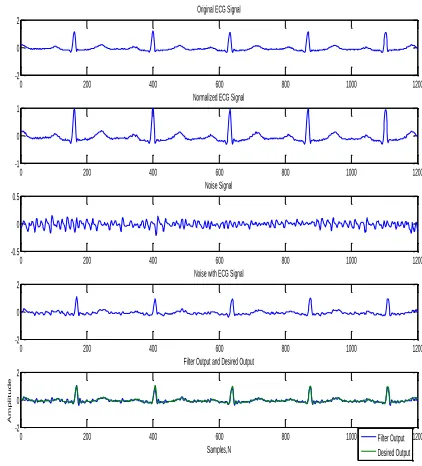
Figure 01: ECG File load ('4.txt') with “Motion Artifact” Noise.
(a) ECG signal without Noise. (b) ECG signal in Normalized form. (c) Noise: Motion Artifact Noise. (d) ECG signal with Noise Added. (e) Output of Wiener Filter Compared Filter Output and Desired Output and Noise [MA] completely removed from Ambulatory ECG also minimize the error.
0 200 400 600 800 1000 1200 -2
0 2
Original ECG Signal
0 200 400 600 800 1000 1200 -1
0 1
Normalized ECG Signal
0 200 400 600 800 1000 1200 -0.5
0 0.5
Noise Signal
0 200 400 600 800 1000 1200 -2
0 2
Noise with ECG Signal
0 200 400 600 800 1000 1200 -2
0 2
Filter Output and Desired Output
Samples,N
A
m
p
l
i
t
u
d
e
International Journal of Emerging Technology and Advanced Engineering
Website: www.ijetae.com (ISSN 2250-2459, Volume 2, Issue 2, February 2012)201
CASE II: ECG File load ('4.txt')
Enter the number of samples, NO=4000
Order of filter, M=9
Wo = [0.9425 ,-0.0456 , -0.1353 , -0.1803 , -0.0533 , 0.1163 , 0.0325 , -0.0548]T
[image:4.612.345.559.158.381.2]AR Coefficient is [1, -Wo ]T
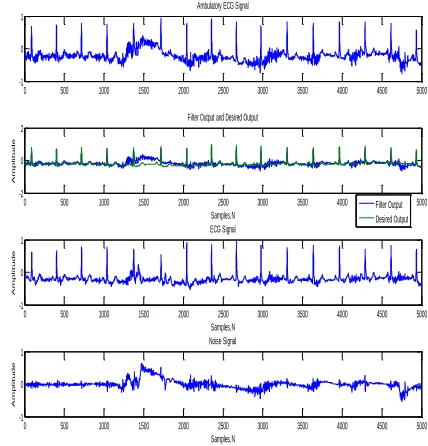
Figure 02: Simulating ECG as well as Motion Artifact for given physical activity CASE II.
(a) Ambulatory ECG signal. (b) Output of Wiener Filter Compared Filter Output and Desired Output. (c) Simulating ECG signal From Ambulatory ECG signal. (d) Simulating Noise signal From Ambulatory ECG signal.
CASE III: ECG File load ('101.txt')
Enter the number of samples, NO=5000
Order of filter, M=10
Wo = [ 1.0748 , 0.1736 , 0.0046 , 0.0693 , 0.1933 , -0.0694 , 0.1813 , 0.0645 ,-0.1222]T
AR Coefficient is [1, -Wo ]T
Figure 03: Simulating ECG as well as Motion Artifact for given physical activity CASE III.
(a) Ambulatory ECG signal. (b) Output of Wiener Filter Compared Filter Output and Desired Output. (c) Simulating ECG signal From Ambulatory ECG signal. (d) Simulating Noise signal From Ambulatory ECG signal.
Simulating ECG as well as Motion Artifact from
Noisy ECG” using Adaptive filter structure:
Adaptive Filter Algorithm used for preprocessing and analysis of ECG signals, This ECG signal as well as Motion Artifact Signal Taken from Net. Then normalized this signal up to some order and mixed up Motion Artifact signal and ECG signal. Using Adaptive Filter we can remove this Motion Artifact as well as Noise signal from the Noisy ECG signal and finally we compare the Original ECG and Estimate ECG signal, this one is getting almost same. The adaptive filter was developed to cancel motion artifacts to detect diagnostically significant waves in ECG signal.
Hear assuming a small value of µ the adaptive process is made to progress slowly, and the effects of noise are largely filtered out and finally the results are described. 0 500 1000 1500 2000 2500 3000 3500 4000
-2 0 2
Ambulatory ECG Signal
0 500 1000 1500 2000 2500 3000 3500 4000 -1
0 1
Filter Output and Desired Output
Samples,N A m p l it u d e Filter Output Desired Output
0 500 1000 1500 2000 2500 3000 3500 4000 -2 0 2 ECG Signal Samples,N A m p l it u d e
0 500 1000 1500 2000 2500 3000 3500 4000 -1 0 1 Noise Signal Samples,N A m p l i t u d e
0 500 1000 1500 2000 2500 3000 3500 4000 4500 5000 -1
0 1
Ambulatory ECG Signal
0 500 1000 1500 2000 2500 3000 3500 4000 4500 5000 -2
0 2
Filter Output and Desired Output
Samples,N A m p li t u d e Filter Output Desired Output
0 500 1000 1500 2000 2500 3000 3500 4000 4500 5000 -1 0 1 ECG Signal Samples,N A m p li t u d e
[image:4.612.71.283.282.512.2]International Journal of Emerging Technology and Advanced Engineering
Website: www.ijetae.com (ISSN 2250-2459, Volume 2, Issue 2, February 2012)202
Case I:
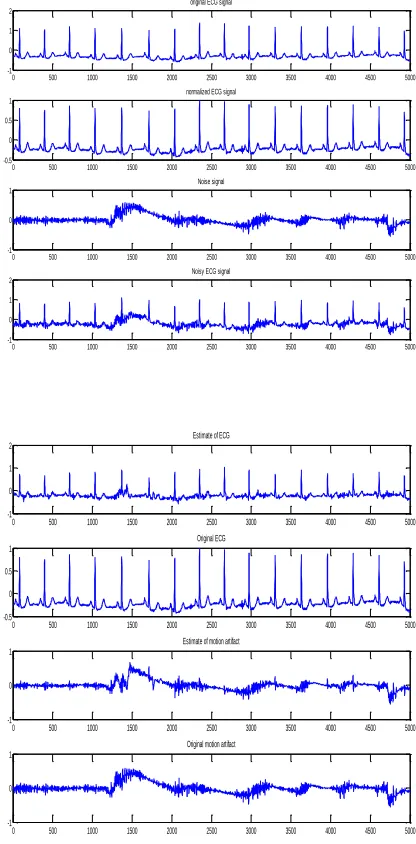
[image:5.612.350.558.179.580.2]RMSE = 0.0020 , SNRbefore =10.0213 , SNRafter = 22.9274
Figure 04: ECG File load ('101.txt'), Noise Added = “MA” using Adaptive Filter
(a) Simulating ECG Signal from Noisy ECG Signal (b) Compared Simulating ECG Signal to Original ECG Signal (c) Simulating Motion Artifact Signal from Noisy ECG Signal (d) Compared Simulating Motion Artifact Signal to Original Motion Artifact Signal
CaseII:
[image:5.612.75.283.191.613.2]RMSE=0.0020, SNRbefore =4.8854, SNRafter = 19.9040
Figure 05: ECG File load ('4.txt'), Noise Added = “MA” using Adaptive Filter
(a) Simulating ECG Signal from Noisy ECG Signal (b) Compared Simulating ECG Signal to Original ECG Signal (c) Simulating Motion Artifact Signal from Noisy ECG Signal (d) Compared Simulating Motion Artifact Signal to Original Motion Artifact Signal
0 500 1000 1500 2000 2500 3000 3500 4000 4500 5000 -1
0 1 2
original ECG signal
0 500 1000 1500 2000 2500 3000 3500 4000 4500 5000 -0.5
0 0.5 1
normalized ECG signal
0 500 1000 1500 2000 2500 3000 3500 4000 4500 5000 -1
0 1
Noise signal
0 500 1000 1500 2000 2500 3000 3500 4000 4500 5000 -1
0 1 2
Noisy ECG signal
0 500 1000 1500 2000 2500 3000 3500 4000 4500 5000 -1
0 1 2
Estimate of ECG
0 500 1000 1500 2000 2500 3000 3500 4000 4500 5000 -0.5
0 0.5 1
Original ECG
0 500 1000 1500 2000 2500 3000 3500 4000 4500 5000 -1
0 1
Estimate of motion artifact
0 500 1000 1500 2000 2500 3000 3500 4000 4500 5000 -1
0 1
Original motion artifact
0 500 1000 1500 2000 2500 3000 3500 4000 4500 5000 -1
0 1 2
original ECG signal
0 500 1000 1500 2000 2500 3000 3500 4000 4500 5000 -0.5
0 0.5 1
normalized ECG signal
0 500 1000 1500 2000 2500 3000 3500 4000 4500 5000 -1
0 1
Noise signal
0 500 1000 1500 2000 2500 3000 3500 4000 4500 5000 -1
0 1 2
Noisy ECG signal
0 500 1000 1500 2000 2500 3000 3500 4000 4500 5000 -1
0 1 2
Estimate of ECG
0 500 1000 1500 2000 2500 3000 3500 4000 4500 5000 -0.5
0 0.5 1
Original ECG
0 500 1000 1500 2000 2500 3000 3500 4000 4500 5000 -1
0 1
Estimate of motion artifact
0 500 1000 1500 2000 2500 3000 3500 4000 4500 5000 -1
0 1
International Journal of Emerging Technology and Advanced Engineering
Website: www.ijetae.com (ISSN 2250-2459, Volume 2, Issue 2, February 2012)203
References
[1] Nitish V. Thkor, Yi-Sheng Zhu “Application of Adaptive Filtering to ECG Analysis: Noise Cancellation and Arrhythmia Detection” IEEE Transactions On Biomedical Engineering. Vol.38, No.8, Augest-1991.
[2] Tanmay Pawar , N.S.Anantakrishnan , Subhasis Chaudhuri “Transition Detection in Body Movement Activity for Wearable ECG” @ June 2007 IEEE.
[3] Tanmay Pawar, N.S.Anantakrishnan , Subhasis Chaudhuri “Impact Analysis of Body Movement in Ambulatory ECG” @ Augest 23-26, 2007 IEEE.
[4] Tanmay Pawar “An Introduction to Ambulatory Study of ECG in Wearable Devices” @ 2007 IEEE.
[5] Tanmay Pawar, Subhasis Chaudhuri and Siddhartha P.Duttagupta “Analysis of Ambulatory ECG Signal” @ 2007 IEEE
[6]Biomedical Digital Signal Processing by Willis J. Tompkins.
[7] Digital Signal Processing by J.G.Prokis and D.G.Manolakis: prentice-Hall, 3rd Edition, 2000.
[8] Discrete Random Signals and Statistical Signal Processing by A.V.Oppenheim, 3rd Edition.
[9] Adaptive Filter Theory by Symon Haykin: 4th Edition, 2004.