2017 International Conference on Electronic and Information Technology (ICEIT 2017) ISBN: 978-1-60595-526-1
Vehicle Recognition Based on Deep Convolution
Neural Networks
Qian LEI
a, Cun-ming HAO*
and Wei-ping ZHANG
Institute of Applied Mathematics, Hebei Academy of Sciences, Shijiazhuang 050081, China
a
*Corresponding author
Keywords: Deep learning, Deep convolution neural network (DCNN), Vehicle recognition, Super-resolution (SR), Illumination compensation.
Abstract. This paper realized the automatic recognition of vehicle with the deep convolution neural network (DCNN) based on deep learning framework CAFFE and GPU which has the strong computing power. And we training the DCNN with 240 class vehicle images of various environments which are obtained at all junctions in a city. After repeated tests, a deep neural network with 13 layers was selected as the feature extraction model. we introduced the super-resolution(SR) algorithm based on deep learning and the illumination compensation algorithm to preprocess the vehicle images so as to improve the quality of the images and extract more robust features. Finally, the experimental results show that the features of the vehicle are more obvious after adding the algorithm of super-resolution reconstruction and light compensation, and the recognition accuracy has been significantly improved.
Introduction
Video surveillance system is an important means of traffic supervision, and the recognition of vehicle type is the key technology in traffic video images. Because of the complexity and diversity of the vehicle appearance, and the influence of the background, illumination, visual angle and other factors, it is difficult to find the stable and effective visual features for accurate recognition in the practical application. The traditional recognition algorithm can only recognize the vehicle type in the coarse-grained (large, medium and small) category. With the continuous increase in vehicle type, the recognition only in the coarse-grained has been unable to meet the high accuracy and high efficiency analysis requirements in the age of big data.
Vehicle Recognition System based on DCNN
Vehicle Recognition System
In this paper, DCNN-based vehicle recognition algorithm is proposed, compared with the traditional vehicle recognition algorithm, it has the following three advantages:
1. Avoid artificial selection of features. Traditional feature extraction methods rely on manual labor, such as HOG [5], SIFT [6,7], LBP[8,9]; or extract the texture features, license plate, vehicle logo, headlights and other regional characteristics. The artificial selection of features may lose some important information and has large calculation. DCNN-based method takes the original picture as input directly, so does not need to make strenuous use of manual.
2. Image super resolution (SR)[10] processing. The images collected in the real environment can be blurred due to the speed, distance, weather and other factors. The introduction of the super-resolution technique can recover the blurred part of the image, which will make the later feature extraction more accurate and effective.
[image:2.612.127.486.340.470.2]3. MARCR [11, 12, 13] illumination compensation processing. The real environment of collecting images is complex; there are various angles of occlusion and various lighting conditions. Poor light conditions will have a great impact on the recognition of the images, so the paper introduces the MSRCR illumination compensation method to reduce the impact of light, improving the recognition rate.
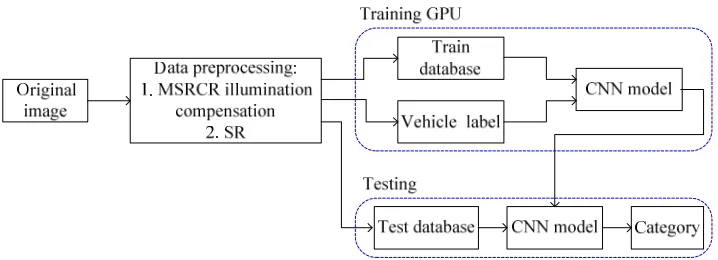
Figure 1 shows the vehicle recognition system.
Figure 1. The vehicle recognition system.
DCNN Feature Extraction Model
Inspired by the structure of the visual system, CNN truly realizes the learning and training of multi-layer network structure. It is composed of multiple convolution layers and pool layers, and the unit nodes between layer and layer are locally connected. The overall architecture of CNN is shown in figure 2.
The purpose of the convolution layer is to extract the local features and perform convolution operation for each position of the input image with multiple filters. The
result of convolution constitutes the feature maps c of the input image. The filters used
in each convolution are parameters sharing and with the same weight matrix and bias, which greatly reduces the parameters of the model and improves the efficiency of learning.
CNN aims to obtain more discriminative and significant features in images, this paper uses the advanced deep learning framework CAFFE[14] and GPU of great computational power. After repeated tests, a deep neural network with 13 layers is choosed, consisting of 4 convolution layers, 3 poolings, 3 fully connected layers, and the output of the last fully connected layer as the input of the softmax. Convolutional layers and the full connection layers adopt the relu activation function, which can shorten the convergence time, and the full connection layer adopts the dropout technique to avoid overfitting.
Figure 2. The overall architecture of CNN.
Data Preprocessing
Image Super Resolution
This paper proposes an image super resolution method based on deep learning and sparse representation [15], which is used to deal with the details of vehicle images, so as to improve the recognition of vehicles. RBM [16] is a typical deep learning structure model with two layers, symmetrical connection between nodes, no connection in layers, and full connection between layers. The model structure is shown in figure 3.
vis the visible layer, used to represent the input data; the hidden layer h, can be
regarded as a feature extractor, W is the connection weight matrix between the visible
layer and the hidden layer.
n
v
1v
2
v
m
h
3
h
2h
1h
W
v
h
Figure 3. RBM model structure.
[image:3.612.187.414.471.578.2]After completing the joint learning of the high and low resolution dictionaries Dh
andDl, we can combine the sparse representation model to realize the super-resolution
reconstruction of the image. The super-resolution reconstruction of the whole image can be divided into the following two steps:
(1) Reconstruction of high resolution image sub-blocks based on sparse representation.
For low resolution image sub-blocky, the sparse representation vector q is first
obtained according to the sparse representation model:
1
min y Dq q
q
λ +
− l , in which
1
q is the 1- norm of q. Then the corresponding high resolution image sub-block xis
obtained: x=Dhq.
[image:4.612.119.488.259.341.2](2) Image mosaic of reconstructed high resolution sub-blocks
Figure 4 shows the results before and after super-resolution processing, the details of the images have been significantly enhanced after super-resolution processing.
Figure 4. The results after super-resolution processing.
MARCR Illumination Compensation
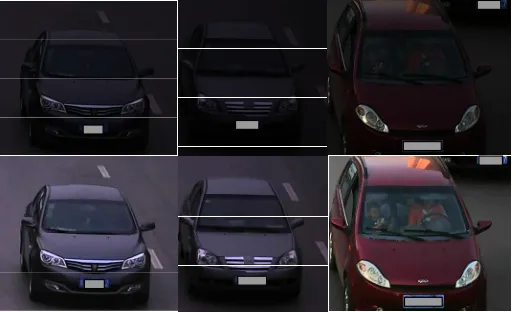
[image:4.612.178.436.474.630.2]In this paper, we study the bayonet images and the bayonet monitoring equipment works in an outdoor environment, easily affected by light conditions. So in order to improve the effect of vehicle recognition, MSRCR illumination compensation is applied to the images with poor illumination. Figure 5 shows the results after MSRCR illumination compensation. Top are the original images and bottom are the images after MSRCR illumination compensation processing. The results show that the luminance of the images has been significantly improved.
Experiment
Data Set
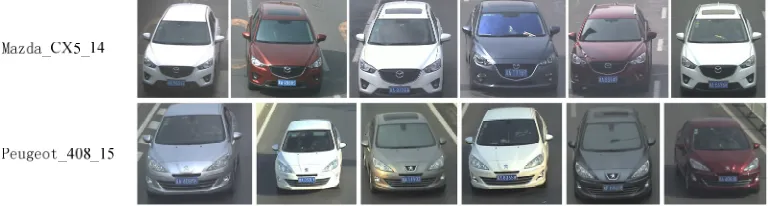
[image:5.612.114.499.315.418.2]This paper takes the vehicle images in the highway surveillance video of a city as the recognition object. All the original data are collected in real environment and have application value. The captured images include vehicles of various scales, lights, angles, and various object shelters. Yolo is used to locate and extract vehicles in the original images, and the non-vehicle samples are removed by manual screening. The vehicle samples are manually annotated, which of that same logo but type less will be classified as the same category, or grouped into several categories by similar types. Finally, 46620 vehicle samples of 240 different categories are obtained. The training set contains 22634 images, verification set contains 10000 images, and test set contains 13986 images. Some annotated vehicle samples are shown in figure 6. In the image preprocessing step, MSRCR illumination compensation and super resolution are adopted to improve the quality of the images, so that the model can achieve high recognition rate for poor illumination conditions and small scale and blurred images. As the size of each image is different, in order to meet the requirements of the DCNN, the image size should be normalized. All the images are normalized to 256 ×256 size, and each pixel of all images subtracts the average value of all the training set.
Figure 6. Some annotated vehicle samples.
Experimental Results
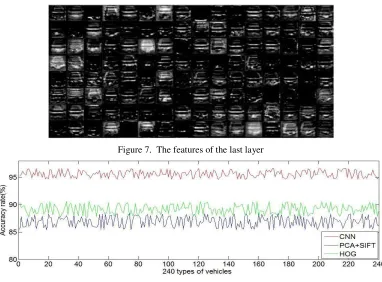
Figure 7. The features of the last layer
Figure 8. The accuracy rate comparison of three feature recognition methods.
Table 1. The results (accuracy rate) after the addition of SR and MSRCR illumination compensation on three vehicles.
Model Audi _A6L_07 Honda _CR-V_07 Buick_Lacrosse _12
DCNN 94.61 94.99 93.8
DCNN+SR 95.22 95.81 94.79
DCNN+MSRCR 94.98 95.42 94.19
DCNN+MSRCR+SR 95.3 96.71 94.9
Table 2. The comparison of features HOG and PCA+SIFT with our features on three vehicles.
Feature Audi _A6L_07 Honda _CR-V_07 Buick_Lacrosse _12
PCA+SIFT 85.42 87.6 86.54
HOG 87.78 90.90 87.45
DCNN+MSRCR+SR 95.3 96.71 94.9
Conclusions
References
[1] Zhi-Jun Sun, Lei Xue, Yang-Ming Xu, Zheng Wang. In Chinese: Overview on deep learning[J]. Application Research of Computers, 2012, 29(8): 2805–2810.
[2] G E Hinton, P R Salakhutdinov. Reducing the dimensionality of data with neural networks[J]. Science, 2006(313): 504–507.
[3] Y LeCun, B Boser, J S Denker, D Henderson, et al. Backpropagation applied to handwritten zip code recognition[J]. Neural Computation, 1989, 1(4): 541–551.
[4] A Krizhevsky, I Sutskever, G E Hinton. ImageNet classification with deep convolutional neural networks[C]. International Conference on Neural Information Processing Systems, 2012, 25(2): 1097–1105.
[5] N Dalal, B Triggs, C Schmid. Human detection using oriented histograms of flow and appearance[C]. European Conference on Computer Vision, 2006, 3952: 428–441.
[6] D G Lowe. Distinctive image features from scale-invariant keypoints. Kluwer Academic Publishers [J], 2004, 60 (2): 91–110.
[7] X Ma, W E L Grimson. Edge-based rich representation for vehicle classification[C]. Tenth IEEE International Conference on Computer Vision, 2005, 2(2): 1185–1192.
[8] T Ojala, M Pietikainen, T Maenpaa. Multiresolution gray-scale and rotation invariant texture classification with local binary patterns[C]. IEEE Transactions on Pattern Analysis and Machine Intelligence, 2002, 24(7): 971–987.
[9] L Zhang, S Z Li, X Yuan, S Xiang. Real-time object classification in video surveillance based on appearance learning[C]. IEEE Conference on Computer Vision & Pattern Recognition, 2007: 1–8.
[10] Q Lei, Z H Zhang, C M Hao. Image Super-resolution Reconstruction based on Deep Learning and Sparse Representation[C]. CNCT2016, 2016.
[11] R Zia-Ur, W Glenn A, J Daniel J. A Comparison of the Multiscale Retinex with Other Image Enhancement Techniques[C]. Is&ts Conference: A Celebration of All Imaging, 1997: 426–431.
[12] D J Jobson, Z Rahman, G A Woodell. A multiscale retinex for bridging the gap between color images and the human observation of scenes[J]. IEEE Transactions on Image Processing, 1997, 6 (7): 965–76.
[13] W Wang, B Li, J Zheng, et. al. A fast Multi-Scale Retinex algorithm for color image enhancement[C]. International Conference on Wavelet Analysis & Pattern Recognition, 2008(1): 80–85.
[14] Y Q Jia, E Shelhamer, J Donahue, et al. Caffe: Convolutional Architecture for Fast Feature Embedding [J]. Eprint Arxiv, 2014: 675–678.
[15] J C Yang, Wright J, T Huang, Y Ma. Image super-resolution as sparse representation of raw image patches [J]. IEEE Conference of Computer Vision and Pattern Recognition (CVPR), 2008: 1–8.