The London School of Economics and Political
Science
Risen from Chaos:
the development of modern
education in China, 1905-1948
Pei Gao
A thesis submitted to the Department of Economic
History of the London School of Economics for the
degree of Doctor of Philosophy
Declaration
I certify that the thesis I have presented for examination for
the MPhil/PhD degree of the London School of Economics
and Political Science is solely my own work other than
where I have clearly indicated that it is the work of others
(in which case the extent of any work carried out jointly by
me and any other person is clearly identified in it).
The copyright of this thesis rests with the author. Quotation
from it is permitted, provided that full acknowledgement is
made. This thesis may not be reproduced without my prior
written consent.
I warrant that this authorisation does not, to the best of my
belief, infringe the rights of any third party.
I declare that my thesis consists of 72182 words.
Abstract
My PhD thesis studies the rise of modern education in China and its underlying driving forces from the turn of the 20th century. It is motivated by one sweeping educational movement in Chinese history: the traditional Confucius teaching came to an abrupt end, and was replaced by a modern and national education model at the turn of the 20th century. This thesis provides the first systematic quantitative studies that examine the rise of education through the initial stage of its development.
Acknowledgement
Obtaining a doctoral degree is not solely an intellectual challenge, but also a physiological task. Luckily enough, along my journey towards a PhD, I have been surrounded by a group of intelligent, loving and generous people, with whose help and support, I cannot ask for a better five years in London.
First and foremost,I am extremely grateful to my supervisors, Dr. Chris Minns and Dr. Debin Ma, whose encouragement and guidance enabled me to complete this thesis. I am also thankful for Professor Peter Lindert who offered generous help and guidance on my thesis at its last stage. I am equally grateful for the head of Economic History Department, Professor Max Schulze, the director of PhD programme, Professor Oliver Volckart and Professor Joan Roses, their solid support at some critical moments gives me the chance to finish this thesis.
Table of Contents
Tables and Figures ... 7
Introduction ... 1
Chapter 1 : Setting the scene: political and economic background of a modern education system ... 5
1. Starting Point: why does the state support schooling? ... 5
2. Economic and political foundation of educational development in the early 20th century 9 2.1 Historical Background: The awakening Empire ... 9
2.2 Understanding the political domain ... 11
2.3 Understanding key features of the Chinese economy ... 22
3. Concluding Remarks ... 28
Chapter 2 : The journey: towards a modern education system in China ... 29
1. The burdens and legacy of the past ... 29
2. Key elements of the modern education system ... 32
2.1 Educational Organisation ... 34
2.2 Access to education: Increasing importance of public schools ... 37
2.3 Decentralised Structure of the new education system ... 40
3. Other benefits of the new education system ... 43
3.1 Formal schooling ... 43
3.2 Education quality: academic and practical learning ... 48
3.3 Equal access to schooling: gender neutrality ... 49
4. Funding modern schools ... 51
4.1 Weak fiscal capacity and the implicit fiscal relationship in China ... 52
4.2 Educational Finance ... 53
5. Concluding Remarks ... 57
Chapter 3 : Long-term Trends in Schooling: Measuring educational development ... 59
1. Measuring Literacy Rates in early 20th century China ... 60
2. Measuring gross enrolment ratios for 20th century China ... 64
2.1 Expansion of primary schooling ... 66
2.2 The limited rise of secondary education ... 74
2.3 The shaping of higher education ... 81
2.4 Summary ... 83
3. Measuring the Chinese Human Capital stock ... 83
3.1 Methodology and Data ... 85
3.2 China’s catching-up in educational stock ... 87
4. Concluding remarks ... 99
Chapter 4 : Risen from Chaos: What drove the spread of Modern Primary Schooling in China in the early 20th century ... 101
1. Conceptual framework: what are the driving forces of education? ... 103
1.1 Explaining supply ... 103
1.2 China’s exogenous education supply shock in the early 20th century ... 106
2. Historical Background: the new primary schooling system ... 107
2.1. Primary education in context ... 108
2.2 Financing primary schools ... 110
3. Was the prosperity the main determinant of the rising mass schooling in China? ... 115
4. Interest groups on education provision ... 119
4.1 Was the commitment from govern the driving force? ... 119
4.2 The real decision maker: local gentry ... 125
5. Data ... 133
5.1 Measuring the rise of primary schooling ... 135
5.2 Measuring the strength of local gentry ... 137
5.3 Measuring political stability ... 139
5.4 County characteristics ... 141
6. Empirical results ... 147
6.1 Local gentry and the expansion of schooling ... 147
6.2 Instrumented evidence: the gentry’s effect on primary schooling ... 153
6.3 Political instability and the role of the gentry... 159
6.4 Economic outcomes and schooling development ... 161
6.5 Alternative influencing mechanisms of the gentry: scholar culture? ... 165
7 Concluding Remarks ... 167
Conclusion ... 170
1. Main findings ... 170
2. Contributions and implications ... 173
3. Future research ... 174
Bibliography ... 176
Appendix A: ... 187
Appendix B: ... 190
Tables and Figures
Tables:
Table 1.1: Timeline of Chinese history & educational progress ... 10
Table 1.2: The formal government structure of China (both late Qing and Republican) ... 12
Table 1.3: Labour force and GDP composition of China, in 1933 ... 25
Table 2.1: Education Acts passed through the first part of the 20th century ... 34
Table 2.2: School by management, 1910s-1940s... 41
Table 2.3: The difference between traditional and modern education ... 43
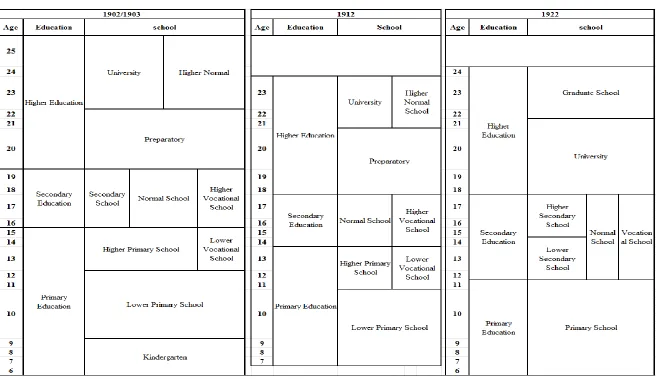
Table 2.4: Structure of Education ... 46
Table 2.5: Educational background of primary school teachers, 1946 ... 47
Table 2.6: Regulatory models for primary school curricula (%) ... 49
Table 2.7: Male/Female student ratio in secondary schools (1912-1946) ... 51
Table 2.8: Education and military expenditure in central government expenditure .. 54
Table 2.9: Sources of the revenue for primary education (county)... 56
Table 3.1: Modern Primary Enrolment Ratios, per 1000 population (5-14) ... 69
Table 3.2: Secondary Enrolment Ratios per 1000 population ... 77
Table 3.3: Composition of Secondary school (general/normal/vocational)... 79
Table 3.4: Regression results for the projection approach ... 90
Table 3.5: Human capital accumulation in China (1920 -2000) ... 91
Table 3.6: Average schooling at different levels of education in China, 1950 – 2000 ... 92
Table 4.1: Composition of public primary schools (%) ... 108
Table 4.2: Composition of public primary schools by province in 1933 (%) ... 109
Table 4.3: The difference between provincial, local and private schools ... 110
Table 4.4: The revenue composition for primary education at county level (Yuan) 112 Table 4.5: Statistical summary for primary schooling level by group ... 118
Table 4.6: Turnover of county magistrates ... 123
Table 4.7: Summary statistics for dependent variables: schooling variables... 136
Table 4.8: Summary statistics for the numbers of the gentry ... 139
Table 4.9: Summary statistics for the turnover of county magistrates ... 140
Table 4.10: Statistical summary of control variables ... 146
Table 4.11: Correlation between primary schooling provision and gentry ... 149
Table 4.12: Correlation between primary schooling level and gentry ... 150
Table 4.13: Dynamic effects of local gentry on primary education ... 152
Table 4.14: Falsification tests: the effect of instrument on other variables ... 155
Table 4.15: Estimation results from IV strategy ... 156
Table 4.16: Dynamic effect of the local gentry on primary education ... 158
Table 4.17: Robustness check using Shanxi Province ... 159
Table 4.18: Dependent variable: primary enrolment ratios ... 160
Table 4.19: Economic characteristics and primary enrolment ratios ... 163
Figures:
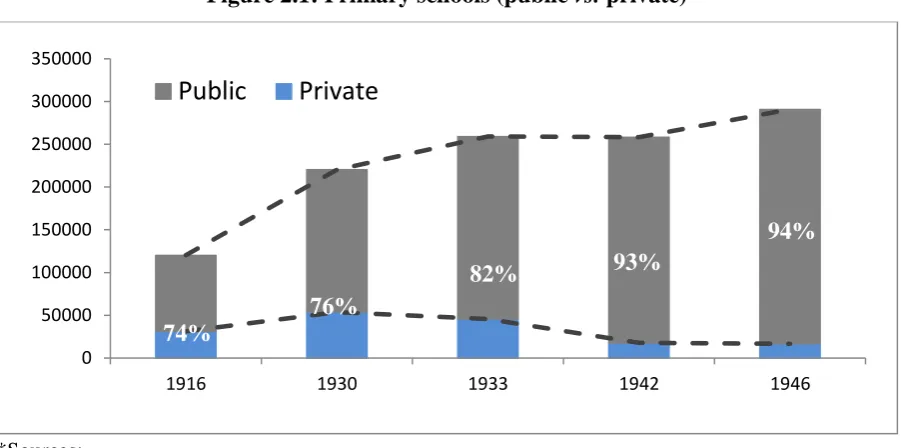
Figure 2.1: Primary schools (public vs. private) ... 38
Figure 2.2: Secondary schools (public vs. private) ... 39
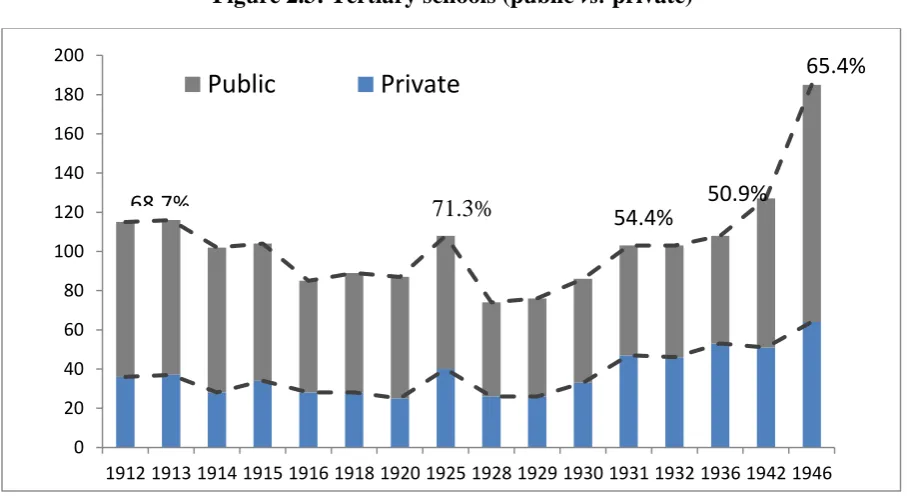
Figure 2.3: Tertiary schools (public vs. private) ... 39
Figure 3.1: Gross enrolment rates in modern primary education, 1900-2005 ... 67
Figure3.2: Relationship between modern primary schools and Sishu ... 72
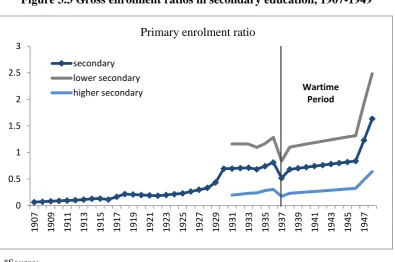
Figure 3.3 Gross enrolment ratios in secondary education, 1907-1949 ... 76
Figure 3.4: Gross enrolment ratios in secondary schooling, 1949-2005 ... 78
Figure 3.5: Gross enrolment ratios (normal school vs. vocational school) ... 80
Figure 3.6: Gross enrolment ratio in tertiary education, 1912-1946 ... 81
Figure 3.7: Enrolment proportions in China (primary/secondary/tertiary) ... 83
Figure 3.8: Years of schooling by birth cohorts at age 30 years ... 88
Figure 3.9: International comparison of educational attainment 1920- 2000) ... 93
Figure 3.10: The China/Japan ratio in educational attainment by level of education 94 Figure 3.11: Years of schooling by birth cohort and gender... 96
Figure 3.12 : Years of schooling by birth cohort and urban-rural divide ... 97
Figure 3.13: AYS stemming from enrolment data vs CHIP ... 98
Figure 4.1: Primary Schools by Management ... 107
Figure 4.2: The structure of gentry & levels of the Civil Service Exam ... 127
Figure 4.3: Distribution of Shengyuan quota, for both early and late Qing... 138
Figure 4.4: change of quota vs. economic factors ... 154
Maps:
Map 1.1: Map of China ... 11Map 1.2: Regional political and military tensions (1911-1928) ... 18
Map 4.1: The ‘open and rich’ regions vs. the rest of China ... 117
Map 4.2: The Geographical Data Covered ... 134
1
Introduction
On a freezing afternoon in late January, 1913, my great grandfather assembled the Gao family in the grand hall of his courtyard home. He was about to tell the whole family that the Sishu1, which he had run for decades in Qi County of Shanxi
province and which people travelled far to attend, had to be closed. The future was as unimaginable as the past. He had reasons to be worried: the world he used to live in, understand and be good at had been turned up-side down. The Emperor was gone; the queue hanging behind men’s backs for more than 200 years had been cut off,2 and he was deluged with new terms, such as ‘democracy’, ‘republic’ and ‘science’. The same day, my great grandfather, the last gentry member of the Gao family, who had obtained the title of Gongsheng3 and had long been one of the most respected persons in the county, walked for about an hour along the dusty road to the county seat. A little reluctant and probably terrified, he knew that a new era was coming, and he refused to not be part of it. From then on, he became a teacher and one member of the school board of the first modern secondary school in this remote county.
This thesis is indeed not about one person or one family’s vicissitudes. Since the last decades of the crisis-ridden late Qing era, China as a whole was under unprecedentedly far-reaching and comprehensive transformations. The old order was abandoned, and great emphasis was placed on intellectual, economic and social Westernization; the advent of a modern educational system consisted in great part of this. Traditional Confucian teaching was practised in China for more than a thousand years. It was abruptly discontinued in 1905, and was replaced by a modern national
1Sishu is the Chinese traditional educational institute, where people attend to receive basic education and prepare for the civil service examination. We will elaborate on the function of Sishu in later chapters.
2 The queue was the compulsory hairstyle for all males in the Qing era (1644- 1912). In the early 1910s, after the fall of the Qing dynasty, the Chinese no longer had to wear it, and most of them abandoned it after the last Emperor, Xuantong (1909-1912), cut his queue in 1922.
2 education system that approximated to a Western education model. Such an educational movement completely altered the why, how and what of education that Chinese people received.
Systematic study on the Chinese experience with modern education remains wanting. How quickly and widely did the new education system spread? Did the birth of the new education model increase the level of human capital level in the country? Was solely the state promoted, contributed and responsible for the progress of modern schooling through this period? Among different vested interest groups, who actually implemented the reforms and carried them out? Who benefited from the educational reform and who lost out? How did the increasing demand for modern education generated by economic development fit into this story? Unfortunately, the existing literature provides too few answers to too many questions, and this thesis therefore aims to study the origin of the modern education system in China, measure its progress and assess its underlying driving forces.
3 Before addressing these puzzles, the phrase ‘modern education system’ in this study requires clear definition. The purpose of the term ‘modern education system’ is to contrast with the traditional and indigenous system that provided classic education in Imperial China (221BC – AD1911). From historical accounts, the formation of a system of formal schooling at least partly funded and supervised by the state which provided universal education for all children of school age in Europe and North America from the early 19th century onward marks the beginning of global modern education It is sometimes also referred to as a ‘national education system’ (Green, 1990, p. 297). 4 Two major achievements emerged regarding this global education model. For one, schooling is at least partly provided, and funded by the state (Goldin, 2015; Goldin & Katz, 2008; Green, 1990; Lindert, 2004a; Mitch, 2013; Remick, 2004). It is true that in the history of education, there are times when the private sector has delivered more than at present, but public schooling has apparently increased in relative importance as the private sector has shrunk. Additionally, another critical feature consists in the emphasis of the education system on secular, practical and academic areas of learning (Goldin & Katz, 2008, pp. 149-152; Green, 1990). Thus, the phrase ‘modern education system’ in the following chapters can be understood as the Chinese version of the school systems developed in Europe, the US and Japan from the early 19th century onwards. These education systems are distinct in many ways, but fundamentally they are similar with several core characteristics: they are universal, mandatory,5 secular and academic, providing what is widely considered to be an institutionalised model of national development around the globe. In a nutshell, the ‘modern education system’ in this study refers to an education system which possesses the above critical features.
To describe the journey towards the modern education system and uncover the determinants of its expansion, this thesis is laid out in four parts. Chapter One sets the historical, political and economic foundation for the advent of the modern education system in China. Then, Chapter Two provides a general roadmap for this modern education system, revealing its origins, structure, evolution and virtues. The
4 There were numerous attempts at a blueprint for a modern education system from the late 17th century and 18th century pioneered by monarchs in Europe. Unfortunately, due to lack of resources, such attempts were not implemented effectively until the early 19th century.
5
Chapter 1
: Setting the scene: political and economic background of a
modern education system
The purpose of this research is to study the rise of modern education in China and its underlying driving forces. To be sure, these cannot be understood without context; for example, what was the political environment where the new education system was implemented? What kind of economic foundation generated the increasing demand, if any, for modern education? The first chapter provides a general answer to these essential questions, and sets the scene for subsequent analytical chapters. Not only will the history of modern Chinese education since the late 19th century be told, but the chapter will also set out the economic and political foundations of educational reform.
At the dawn of the 20th century, China experienced one startlingly sweeping educational movement: the traditional education model came to an abrupt end, and was replaced by a brand new system. In order to provide a clear roadmap for the journey of transforming a long-lasting traditional education system, this chapter will be organised as follows. First, the literature on why states intend to intervene and support education will be summarised. Then, the political and economic conditions in China at the time, which provide a historical context to the rise of modern education, are analysed separately.
1. Starting Point: why does the state support schooling?
The main focus of this chapter is to lay the foundation for later discussions; hence, we start our analysis with the origin of modern education systems and try to answer one basic question which has yet to be confronted: why does government become involved, invest in and support education?6
The principal reason why a government provides schooling is because increasingly, people consider education as an overall benefit to a society as a whole (Freire, 1976; West, 1965;
6 Wiseman & Peacock, 1962, pp. 29-39). As the broad range of positive external effects of education is proved by scholars, the intrinsic tension over whether governments should provide education or leave it to the private sector lies between the private demand for education and externalities brought about by the accumulation of human capital (Mitch, 2013).
An education system reflects a nation’s values, customs, languages and collective priorities. The foremost among many purposes of education include: transmitting knowledge and cultivating common values between people and across generations. As education generates positive externalities of many types for a society, in the following section, various externalities of education will be discussed under one or other of the two chief purposes of education.
To begin with, regarding the principal function of education – the transmission of knowledge, the government intervenes and encourages education to create a literate, skilled and educated populace, which is widely believed to contribute positive effects to the economy, political institutions (in democratic countries in particular) and social utilities. The first obvious positive externality of higher human capital in the population is apparent from the economic perspective. The public provision of education, which prominently reduces the cost of education, allows knowledge to spread to more people to match the rich variety of needs of a prosperous economy (Lange, 2006; West, 1965, pp. 87-110). Politically speaking, as suggested by Lipset, education leads to more informed and engaged citizens. This is exceptionally important for societies which grant political participation to the population; because mass education stands as a basic and essential requirement to keep the election procedure functioning, to encourage the poor to be more politically active and to enhance the capacity of citizens to make good ‘electoral decisions’ (Castelló-Climent, 2008; Freire, 1976; Gallego, 2010; Lindert & Go, 2010, pp. 40-49; West, 1965, pp. 40-49).7 Last, from a social point of view, education can generate for society a handful of further positive externalities; for instance, a lower crime rate and lower mortality (Goldin, 2015; Lange, 2006; West, 1965, pp. 70-86). In the scenario seen in China through the early 20th century, the principal impetus
7 for the state to establish a new national educational system consisted more in its urgent ambition to become an economically strong nation, and less in the pursuit of social and political objectives.
Furthermore, a government’s involvement in education is intended not only to encourage quantity in schooling; in many cases, it is an action to ensure that the ‘right’ quality of knowledge and skills will be transferred to the population. Different types of educational content may lead to very different economic developments, political institutions and state capacity in any given country. Therefore, the state has a large stake in guiding the design of the content of schooling (Jones, 2008; Yuchtman & Cantoni, 2013). For instance, in a small country with limited natural resources, Singapore’s government regarded the economy as driven by high technology, and as underpinning the right national development strategy; consequently, education in science and technology has long been vigorously promoted and encouraged in Singapore as the ‘right’ kind of knowledge. In short, only the government could take the initiative in shaping the incentives to acquire different forms of human capital, because the cost of changing incentives and moving towards a new type of education is simply too great for any individual to bear. Going back to China specifically, the introduction of Western subjects, or what was called ‘useful knowledge’ in the modern education system in place of the long-standing classic Confucian teaching at the dawn of the 20th century clearly demonstrates the single-minded ambition of the Qing Court to deliver the new type of education to its population as a national survival strategy.
In addition, education not only transmits knowledge; another of its primary functions is to cultivate a set of common values to shape people’s beliefs, preferences and ideology (West, 1965, pp. 70-86). Therefore, a state's compelling interests in education also lie in its urge to forge a indoctrinatory, political, or religious uniformity as a modern state and to cement ideological hegemony (Green, 1990, p. 298; Lott, 1990b; Melton, 1988; Ramirez, O, & Boli, 1987).8 Education has a long history of engaging in the process of state-building, or in some particular cases, of specifically enhancing a regional, tribal, ethnic or religious identity and set of values. From historical accounts, the formation of a national education system began across Europe in the 19th century, initiated by thriving ‘national sentiment’ (F. O. Ramirez &
8 Boli, 1987). Later, the mass education movement in American between the 19th and 20th centuries is also argued to have been largely a political outcome of the surge of independence and democracy (Bowles & Gintis, 1976; Dewey, 1916). Similarly, the Communist and Socialist educational ‘brainwashing’ in the Soviet Union, Eastern Bloc and later China between the 1950s and 1980s, is said to have pursued one single goal – forging the communist indoctrination of the populace (John R. Lott, 1999). Accordingly, the birth of an education system was securely incorporated within the compacted process of state-building in the global context, and three historical factors have been proved to be largely relevant: external military threats, internal revolution and programmes seeking to escape economic underdevelopment (Green, 1990).9 At the turn of the 20th century, China possessed all three of the above factors, which was why the state-led educational reform was rigorously pursued at the time,. Through it, both Western subjects and certain new doctrines, such as the “Three Principles of the People”, namely nationalism, democracy, and livelihood, were generally emphasised and promoted. 10
However, this does not mean that the education system is solely a product of government that can only be imposed from top-down. On the contrary, significant educational progress in human history has often been initiated by increasing demands from civil societies.11 However, this scenario is more likely to be witnessed in democratic nations or societies with good political institutions through which demands from the masses can be heard, and their needs considered, by the government. To tell the truth, the rise of modern education in China was not like this.
In conclusion, historical and global experiences suggest that the formation of a modern education system is deeply integrated with both the political environment and economic development; and the fundamental impetus for the government to establish a national education system comes from the economic and political externalities generated by education. Therefore, in the following sections, these two aspects of the Chinese context will be further explored.
9 This study has no intention of discussing the difference between state-building and nation-building.
10 The ‘Three Principles of the People’ is a political philosophy developed by the founder of the Republic of China – Sun Yat-Sen. These three principles are often translated and summarised as nationalism, democracy, and economic security (民主,民生,民权)(Lary, 2007, p. 21).
9 2. Economic and political foundation of educational development in the early 20th century
The advent of the modern education system in China occurred during the final days of the 19th century. Summarising this historical course is beyond the possible; as Fairbank remarks: ‘The history of modern China12 cannot be characterised in a few words, however well chosen’ (Rankin, Fairbank, & Feuerwerker, 1986). Too many events occurred; too many hopes soared; too many wars were fought; too many reforms were explored; and the outcome can only be described as mixed. Seeking to understand the establishment of the modern education system, which took place through such a transformative, dynamic and turbulent time, this section focuses on its origin, and reveals the economic and political foundation on which was built the educational transformation; this altered the trajectory of Chinese development in the remaining decades of the 20th century.
2.1 Historical Background: The awakening Empire
China's modern history began with one great and dramatic event, namely the confrontation between the persistent and agrarian-bureaucratic Chinese civilisation, and the expanding, if not aggressive, Western powers (Fairbank, 1978). From the middle of the 19th century, facing both the urge for openness from European Imperialism and the internal appeal for modernisation, the Qing throne (AD 1644 – 1911) adopted a defensive posture, leading to a series of enormous humiliations suffered on the battlefield, with consequent loss of sovereignty.
The Qing state did not await its downfall without exploring resolutions, and an this ancient country did to an extent awaken. The first initiative by the Qing Court was referred to as the Self-strengthening Movement.13 In order to encourage the adoption of Western technology, arsenals, shipyards and military schools were built, translators were trained in universities, and young talent were sent abroad under the rubric of ‘Chinese learning is for the sake of the
12 This outbreak of the First Opium War in 1839 is considered by many historians the beginning of modern Chinese history, suggesting its profound influence on Chinese society.
10 essence, Western learning is for the sake of utility’ (中学为体,西学为用) (Lary, 2007, pp. 15-16). Unfortunately, such efforts were too little and too late. The last straw on the Qing dynasty’s back was the bitter blow of the battles in the first Sino-Japanese War,14 where a disastrous defeat clearly revealed the weakness of the Qing state, and the perception of China was sweepingly altered, leading to the extensive diffusion of anti-Qing sentiment within society. In the immediate aftermath, the Empress Dowager Cixi finally agreed to full-scale political reforms in 1901 as an inevitable development,15 which included experiments in constitutional practice at the national level, as well as representative governments at the local level (Chien, 1950, pp. 52-55; Ichiko, 1980). Such drastic political and bureaucratic reforms required brand new talents and ideologies to support them, which paved the way for the educational movement of 1905. Ironically, the late Qing reform, which was originally designed to save this ancient empire, partly contributed to its downfall in 1911. Fortunately, through the following chaotic and turbulent ages, the great aspiration of forming a new and modern China was shared by successive regimes. Therefore, reforms aimed at modernising China, including an expanded modern education system, continued through the years of the Republic.
Table 1.1: Timeline of Chinese history & educational progress
Timeline Major consequence
Late Qing ( 1840 -1911)
The first Opium war (1840) Forced opening-up of China: Western influence flourished
Self-strengthening Movement(1861-1895) A wave of adoption of Western military technology
The first Sino-Japanese war (1895) The weakness of the Qing was revealed anti-Qing sentiment Late-Qing Reform (1901-1911) Full-scale reforms the abolition of the civil service exam
Republic of China (1912 – 1949)
Early Republican (1912-1916) Reform and modernisation of the education system continued
Warlord Era (1916-1928) Central power was largely undermined by ‘regional regimes’ Nanjing Decade (1928-1937) Attempts to nationalize everything including education
14 In 1895, Japan triumphed in the first Sino-Japanese war, and China signed the Treaty of Shimonoseki. Although Qing China had been defeated by European powers in the 19th century, defeat at the hands of an Asian power and a former political and cultural subordinate was a bitter blow.
11 2.2 Understanding the political domain
As discussed, the formation of a new national education system was inherently political and therefore required extensive cooperation and coordination among various tiers of government. In order to understand how the spread of modern schooling can be executed, this section looks at the political environment where the new education system would function. To do so, we introduce the formal political and administrative institutions – the nominal government structure throughout this historical course. Equally important, the underlying tensions in the landscape of politics are further uncovered, which probably played an even more definitive role in the way in which China was ruled in practice.
Map 1.1: Map of China
*Note: The shaded regions refer to the area of China Proper16
12 2.2.1 Formal government structure
How central and local governments are structured within a political framework is vital for our understanding of the way that responsibility for promoting modern education was allocated to various tiers of government. Hence, this section sets out the general government structure of China, and briefly outlines the corresponding responsibilities.
Table 1.2: The formal government structure of China (both late Qing and Republican)
Unit chief
administrators
Number
Size (𝑘𝑚2)
Average Population 17 Late Qing18 Republic19 Late Qing Republic
Era
Province governor 22 28 1.40E+07 18990338 23384838
Prefecture prefect 302 319 14279 1308720 1422432
County Magistrate 1303 212220 2297 251733 260598
Village Village head 8658 - - - -
*Sources:
(i). The number of administrative units: for the late Qing period: (Qu, 2003, p. 43); for the Republican period: (Chien, 1950, p. 418); specifically for China proper: (Bol & Ge, 2007)
(ii). Territory size: (Bol & Ge, 2007) (iii). Population: (Hou, 2001; Stauffer, 1922)
Overall, both the central state and local government in Chinese history strove to restrain the scope of their responsibility in most of the public sector and presented very limited functions in terms of governance.21 Owing to the limited size of the bureaucracy, 22 a large population and the sheer scale of the territory, one essential challenge of the Chinese state lay in the extraordinary high agency cost of its administration (Brandt, Ma, & Rawski, 2014; K. G. Deng, 2011, pp. 25-36; Remick, 2004, pp. 29-39; Sng, 2014). Such an institutional set-up
17 Due to lack of data on the population of peripheral provinces, the population numbers only cover China proper.
18 The number presented in Table 1.2 for the late Qing period draws data from records under the Guangxu Emperor (1871 – 1908).
19 The number presented in Table 1.2 for the Republican era derives from the Ministry of the Interior under the Nationalist government in 1947.
20 The number 2122 includes 100 municipalities sharing the same administrative rank as the counties.
21 From the 8th century, bureaucratic recruitment became standardized and impersonal. Officials were selected from a small amount of successful candidate of civil service examination. For these degree holders (gentry), their prestigious status as social elites and the chances to be chosen as bureaucrats were all tightly connected to the Imperial regime(B. A. Elman, 2013). The structure and social functions of degree holders will be further explained in Chapter Four.
13 caused the Imperial Chinese state to voluntarily withdraw from many of its public duties, resulting in low formal taxation and also limited state activities (Brandt et al., 2014; K. G. Deng, 2011, p. 36).
The structure of government had considerable continuity in terms of administrative organizations and functions. As presented in Table 1.2, the Qing Empire inherited from its predecessors a four-tier government structure comprising provinces (sheng 省), circuits (dao 道), prefectures (fu 府), and counties (xian 县), i.e. four tiers beneath that of central government. Even though some revisions were proposed and undertaken after 1911, the core of the government structure stayed intact. In theory, all levels of local government acted only as agents of the central administration within a strict hierarchical structure, where the chief administrators formed a political ladder, and were responsible to the grade immediately above and for the grade immediately below (S. Cheng, 1919, pp. 136-138; Chien, 1950, pp. 43-44).
The province (sheng 省) was the largest administrative unit, and was administered by a governor (xunfu 巡撫), who possessed the main administrative power within his territory; 23 while as a power balance, the provincial governor was subordinate to a viceroy (zongdu 总), who was especially entrusted with military tasks throughout one of the nine macro-regions (Qu, 2003, p. 13).24 However, in many cases through the Republican era, the provincial governors were also the viceroys who controlled all provincial affairs, both civil and military, making them extraordinarily powerful regional leaders. 25 Politically, the provincial government was directly subject to the central government, and the appointment and evaluation of provincial governors was strictly controlled by central government (S. Cheng, 1919, pp. 136-137). Nonetheless, economically speaking, given that even the smallest province in China, Zhejiang, was larger than Portugal; with limited access to modern
23 For the governor of a province, his power varied significantly, depending upon circumstances.
24 Under the rule of Qing, there were nine viceroys in total: the Viceroy of Zhili, Viceroy of Liangjiang, Viceroy of Min-Zhe, Viceroy of Huguang, Viceroy of Shaan-Gan, Viceroy of Liangguang, Viceroy of Yun-Gui, Viceroy of Sichuan, and Viceroy of Northeast provinces. Exceptionally,Shanxi, Shandong and Henan were not included in any of the nine regions; therefore, they were not governed by any regional viceroys. Historians usually rank the viceroyalty of Zhili as the most powerful post; Yuan Shikai, the first president of the Republic of China, was the last Viceroy of Zhili in the late Qing period.
14 transport and communications, most provinces were self-sustaining and independent (Chi, 1936, p. 4).
Regarding the two intermediate layers of local government – the circuit (dao 道) and the prefecture (fu 府), they were not administrative units and held very restricted functions.26 The circuit was administered by circuit intendants (daotai 道臺), who were specially responsible for transportation issues, for instance, waterways and food transportation (C. S. Li, 1922, pp. 33-34); while prefectures, which were governed by prefects (zhifu 知府), functioned largely as a channel of communication between province and county (C. S. Li, 1922, p. 34). The average size of a prefecture was about that of Belgium; hence, daily administration was too challenging to carry out effectively; consequently, it was later divided into counties.
The single most vital unit of Chinese local government was the county (Xian 县). The county government was responsible for an exceedingly rich variety of duties: legislative, judicial, executive and tax-collecting functions were all in the hands of its magistrate (zhixian 知县) (S.-G. Cheng, 1919., pp. 135-136; C. S. Li, 1922, p. 34; Qu, 2003, pp. 29-34; Zhong, 2003, pp. 18-26). Interestingly, except for a few very basic and vague regulations on its standard responsibilities, there were no further protocols to specify the activities that a county magistrate should undertake; therefore the county magistrate could go as far in these local affairs as his interests led him (Chien, 1950, pp. 43-45; Qu, 2003, pp. 29-34). Such a high level of flexibility in the scope of the county government’s functions was propitious for self-government at the level of the local community.
In the end, since direct state administration stopped at county level, the county in theory was the lowest state organ under both the Qing Empire and the later Republican rule (K. G. Deng, 2011, p. 26). However, with an average county population of 250,000, the county unit was always further divided into townships and villages.27 Even though these numberless grass-
26 To streamline the levels of Chinese administration, the circuit and prefecture were abolished as distinctive units of local government in a row after the founding of the Republic of China in 1911 (S. Cheng, 1919, p. 138). This change resulted in the corresponding provincial governor’s direct supervision of the county magistrates. However, it was soon realised that it was not feasible for the provincial government to directly manage dozens of counties; as a result, the prefectural layer was restored between province and county (S.-G. Cheng, 1919., pp. 135-146).
15 roots governing organs did not obtain legitimate status as administrative sub-divisions, their daily governance was carried on by various state agents via non-bureaucratic means (Hsiao, 1960, p. 5).28 In the same vein, village chiefs were not government officials either; instead, they were respectable native gentry,29 who were selected by the residents of the locality (C. S. Li, 1922, p. 37; Qu, 2003, p. 41). 30 In a nutshell, direct state control never penetrated below the county level; on the contrary, the management of local communities rested upon informal institutions, including guild, gentry, clan and lineage (S. Cheng, 1919, pp. 8-12; Duara, 1988; Schoppa, 1982).31 As a bridge between state and populace, the grass-roots governing bodies served two major duties. Village self-governance issues were their foremost responsibility, including the provision of public goods, mediating disputes and maintaining public order. At the same time, sub-county governing bodies were made subject to the control of the county magistrate; consequently they were also subject to the obligation to carry out state policies.
In summary, the political-administrative environment in China was formulated in a four-layer structure: the hierarchical division of central government, provincial, county, and the self-governing local community. In the following sections, the term ‘local government’ refers to both county and sub-county governing bodies.
2.2.2 Underlying tensions in the political landscape
Aside from the key political institutions and formal political-administrative structure, there were several critical themes in the realm of polity that probably played a more influential role in the ruling of China from the late 19th century to the early decades of the 20th century. Traditionally, state power under Imperial China was largely monopolised by the emperor, the mentioned previously. This police control system is beyond the scope of this study, and is not included in the following analysis.
28 The administrative township and village (Xiang 乡) had its origins in earl imperial time, By the Qing, it developed from a formal administrative unit to extra-bureaucratic status(Hsiao, 1960, p. 12)..
29 The term ‘gentry’ (士绅 or 缙绅) has no complete equivalent in English. It possesses a distinct meaning unlike that in a European context. The gentry in Europe are usually associated with substantial land-holding and the aristocracy, both of which are inheritable. In China, the scope of the term is vaguer. It refers to people who have obtained high prestige via success in the imperial examination system, and are therefore office-holders, but this role cannot be inherited. The role of gentry in modern education development in China will be analysed in greater depth in Chapter 4.
30 The first attempt to extend political administration beyond the county level was in 1928, when the Nationalist government tried to establish official township government. (Chauncey, 1992, p. 42)
16 literati-bureaucrats and the local gentry (Yamada, 1987b, p. 187). After the 1840s, the old equilibrium of power structures was destroyed, leading to many new developments and changing order in the political landscape. The foremost changes were in three areas, namely: (i) a decline in central control; (ii).fierce tension, if not conflict, among provincial regimes; and (iii).a power vacuum at the local level.
The withering Central state and regional devolution
At the outset, the single most important change in politics after the late 19th century was that central control was evidently undermined by provincial powers, most of which carried strong elements of military government.
The Taiping Rebellion (1850-1864), which was crushed by provincial armies and not the Imperial Army, not only severely diminished the capacity of the Qing court, but more importantly, gave the power to train personal armies paid from provincial revenues to the increasingly powerful regional forces (S. Cheng, 1919, pp. 121-135; H. Chi, 1976, pp. 10-33; K. G. Deng, 2011, p. 70).32 In the same vein, the 1911 revolution was also led by provincial governments under the control of military viceroys. The historical legacy of these events paved the way in the next few decades for a weak central government to oppose powerful provincial powers under the new Republican regime (H. Chi, 1976, pp. 10-35; Chien, 1950, pp. 178-181; Mccord, 1993). The weakness of the central state persisted even after Chiang Kai-Shek reconciled the regional warlords and re-unified China in 1927;33 the new central government seated in Nanjing still struggled to keep its allies under its control (Eastman, Fairbank, & Feuerwerker, 1986; Yamada, 1987a).34
32 The irreplaceable contribution to suppressing the Taiping Rebellion was mad by a provincial army, the Xiang Army (its soldiers were all from Hunan province), led by a provincial leader, Guofan Zeng. The Army was financed through local revenues and support from local gentry, it therefore was firmly based on personal and regional loyalties (S. Cheng, 1919, p. 123). Another important provincial military force was the Huai Army (named after the Huai River and mainly based in Anhui province), led by Hongzhang Li; it later became the Beiyang Army. This devolution of centralized military control contributed to the eventual downfall of the Qing and the emergence of the ‘warlord era’ in China.
33 From 1926 to 1928, the Kuomingtong (KMT) launched a massive military campaign, led by Chiang Kai-shek to unify China under its own control. The KMT successfully reconciled a number of regional warlords under its control, and therefore started to form an effective central government based in Nanjing.
17 The decline of central control can be observed in many military, fiscal and personnel areas. Taking tax revenue as an example, provincial governments appropriated most of the revenue without remitting any to the central budget; especially intent on doing so when money was needed for provincial military expenses (C. S. Li, 1922, pp. 83-84).35 In fact, from the late Qing to the early Republican period, the few guaranteed tax revenues for the central treasury were the Maritime Customs tax and the Salt Tax; ironically, they were exempt only because they were collected by international organisations (Remick, 2004, pp. 37-39; Sheridan, 1977, p. 199).36
In a nutshell, civilian elites normally acquiesced to military government as a wartime necessity (Lary, 2007, pp. 39-40; Mccord, 1993, pp. 81-118). 37 The seizure of power from the central state by military provincial forces occurred during the final stages of the Qing dynasty; it led to a weakening of central government, and the withering of central control, as a result of more powerful provincial ‘regimes’, in a self-intensifying vicious circle.
Political and military tensions among regional powers
As eloquently portrayed in many historical narratives, the decline of central control plus the rise of provincial military powers naturally created between the various regional military cliques a state of political and military tension, which led to mushrooming regional conflicts. By some calculations, in a period of merely 16 years (1912-1928), often referred to as the warlord era, over 140 militarists fought more than 1,300 provincial and inter-provincial wars (Billingsley, 1988, p. 24; J. Chen, 1968).38 In the same vein, it was wildly belived that at least 1.4 millions solders or armed men serving in military unites(Lary, 2007, pp. 61-62). The exact figure depends on the definition of an ‘independent warlord’; however, these estimates provide a general picture of the fierce tensions between the provincial powers.
35 In the late Qing, around 20%-30% of the total tax revenue collected at provincial level would be sent to the Imperial Treasury in the capital, known as the ‘capital revenue’, while the rest remained in the provinces for local use(Shi, 2009, pp. 25-33). The situation became much worse after the Republican era: many provinces refused to remit the tax revenue to the central authority.
36 The Maritime Customs House was managed and supervised under the control of the British, while the salt tax was collected by the Sino-Foreign Salt Inspectorate(Remick, 2004, pp. 37-39).
37 Consequently, the top provincial executive changed from being a civil official, with a certain degree of supervisory authority over military forces, to a military official with even greater control over both military and civil administrations, usually documented as a warlord in Chinese history.
18 Map 1.2: Regional political and military tensions (1911-1928)
19 One point that should be borne in mind when interpreting this historical course is that not all regions experienced chaos to the same extent. As displayed in Graph 1.2, some regions were ruled with an iron fist by either a single military strong man or a single military clique.In these cases, warlords could hold on to power for some considerable time, and these regions thus enjoyed a certain level of political stability. 39 In contrast, other regions, owing to their strategically important location, became hotly contested areas for different warlords.
The cliques fighting against each other during this period were very complicated and changed over time. However, put simply, the country could be roughly divided into two major parts, North and South. As illustrated in Graph 1.2, the warfare zone was the buffer belt, which truly divided north from south, running from Shaanxi, Sichuan, West Hubei, north Hunan, Jiangxi to Fujian (J. Chen, 1968). 40 This area suffered from endless battles between northern and southern forces, leading to frequent changes of military control, and the exploitation of tax revenues from the local economy. Besides strategic considerations, military conflicts were also centred on key economic areas, such as the Canton Delta, the Chengdu Plain in Sichuan, and the Lower Yangtze Delta (J. Chen, 1968). The infamous example of Sichuan province as the most chaotic and turbulent region through this period may be cited.41 In 1916, the regular armies in Sichuan numbered around 8 divisions, rising to more than 24 between 1920 and 1929. Xin claims that 467 wars were fought (Xin, 1932). While this figure may not
39 In fact, there were several autonomous provinces, legitimized the regional dominance of the major warlord groupings. Yuhsiang Feng controlled Gansu, Shanxi, and Henan. Xishan Yan controlled Shanxi. The so-called Guangxi clique dominated the councils at Hankou, Beijng and Canton, which were headed by Renzong Li and Chongxi Bai. Another branch political council arose under Xueliang Zhang in Manchuria (H.-S. Chi, 1976). Among these relatively stable regions, the most famous warlord was Xishan Yan who governed Shanxi province for almost 40 years. Similarly, in the cases of Yunnan, Zhili and Shandong, even though they all experienced changes of regional warlords, the controlling military factions in each province held tight to power, keeping the transitions significantly smooth.
40 The establishment of the Beijing-Hankou Railway and Tianjin-Pukou line formed the A shape of the strategic region, which secured control of Beijing. In order to guarantee the defence of the A shape, the peripheral provinces, which formed a buffer belt, had to be controlled (J. Chen, 1968).
41The Sichuan warlords had rarely been involved in national political activities. Sichuan itself, as a large isolated and rich region, was the great prize for most Sichuan warlords. From 1919, Sichuan was cut up into several garrison areas (fangqu), each of which was ruled by one military division and enjoyed politically autonomy, independent of each other, of the provincial government, and of central government. In order to enrich and sustain their control of their own garrison areas, the local military regimes exploited the masses mercilessly. In some extreme cases; local governments even collected taxes 50 years in advance (Gunde, 1976). For instance, the surcharges could sometimes be 30 times higher than the land tax proper (Sun, 1935, pp. 213-217).
Table: sky-high surtax vs bas tax in sample counties in Sichuan in 1920s
County Ba
20 be accurate, it is illustrative and allows the conclusion to be drawn that the political situation in Sichuan was anything but orderly. 42
Facing such intense and competitive political and military tensions, most provincial governments strove to fully sustain their military rivalry with others, and sought to secure control over their territories; consequently, for the period under discussion the level of political stability across provinces differed widely.
Power vacuum at the local level:
The increasing strength of the provincial powers not only changed the balance between them and central government; it also altered the relationship between local government (county and sub-county) and higher levels.
On the one hand, with the decline of central power, local governments came more under the rule of the provincial ‘regimes’. The undermining of central power over local affairs can be observed in many ways. For instance, in the control of personnel, under the Qing rule, provincial governors had only the right to appoint county magistrates from a list of candidates passed down by central government. In contrast, under the Republican regime, provincial governments often seized authority over personnel and assumed the power to appoint county magistrates themselves(Q. Wang, 2000; Y. Zhang, 1999). In the same vein, the traditional prohibition against officials holding posts in their home provinces was abandoned, though it had once been an essential method of preventing excessive patronage at the provincial level (Qu, 2003, p. 294).43 On the other hand, powerful provincial governments were busy fighting against each other, resulting in noticeably less management and supervision over local governments. To sum up, county governments faced an incapable central authority and an indifferent, if not predatory, provincial government.
In such a hostile and chaotic political environment, was local daily governance drastically affected? Fortunately, the answer is no. Many historians claim that the late Qing chaos, the 1911 revolution and the subsequent warlord era had remarkably less disruptive effect on local
42 Because of the extremely turbulent situation in Sichuan province, we exclude Sichuan from our later empirical chapters.
21 governments than people might have expected, because the daily operation of governance rested upon the grounded foundation of the local gentry, who had shaped the political fabric and social ruling in local communities for centuries (Keenan, 1994; Lary, 2007, pp. 50-51; Mccord, 1993, pp. 81-118; Sheridan, 1977).
Through the period under discussion, there were abundant new needs regarding public facilities and services, created by rising urbanisation, commercialisation and modernisation. Unfortunately, governments had little capacity to meet these demands. Therefore, collaboration between government and local elites, including merchants and educated gentry, wassanctioned by the state, with elite groups increasingly engaged in providing local public services,44 mostly in such economically developed regions as lower Yangzi. 45 In other words, a total administrative collapse at local level was prevented via the assumption of power by local political figures (Chauncey, 1992; Mccord, 1993, pp. 81-118; McDonald, 1978; Remick, 2004; Sheridan, 1977) One may wonder why these grass-roots governing bodies, led by local elites, but not necessarily local government officials, would carry out and support a new educational model that was seemingly introduced from above. We raise this question here but answer it later more fully in Chapter 4.
In conclusion, the tension between political demands and educational development was so intense that it largely shaped the direction of educational reform and its evolution in this period. From the late Qing to the Republican period, the formal political structure remained more or less the same, and functioned as a four-level division: central, provincial, county and sub-county. However, the devolution of central power, conflicts between provincial regimes and the power vacuum at the local level profoundly impacted on the functioning of the political structure in the event.
22 2.3 Understanding key features of the Chinese economy
A more challenging task than understanding Chinese politics is to sketch the outline of economic development in China through the late Qing and the Republican eras, simply because we know so little about so many issues. This section, based on the sparse literature, aims to provide some definitive answers to the key questions about the Chinese economy as the background for the educational movement through this period.
How does the economic foundation influence the modern schooling system?Increasing household income generated by economic growth and changing jobs thanks to changes in economic structure are the two factors that are closely associated with the increasing demand for education. In the following section, the main focus is on two questions. First, was there obvious economic development through the period under discussion? Second, did job markets start to require different skills from the labour force?
2.3.1 The onset of the economic growth?
There are few valid estimates of a GDP series or other measures of the size of China‘s economy before 1949, apart from several benchmark years in the 1930s conducted by contemporary Chinese economists (T. C. Liu, 1946; Wu, 1947). Without benchmark years in late Qing or through the early Republican period, it is challenging to claim that there was economic growth during the first half of the 20th century.
Nonetheless, some clues can be identified from other crude indicators. First, China’s population grew from approximately 400 million in 1850 to 439 million in 1911 (Cao, 2000, pp. 703-704), and remained at 450 million around 1930 (T.-C. Liu & Yeh, 1965, pp. 34-36).46 The increasing population density and sustained living standards suggest a certain level of economic development in this period (Brandt et al., 2014). In addition, Maddison’s work shows a growth in GDP per capita from 1870 to 1913, and a drop in 1950, probably due to the effects of warfare in the 1940s (Maddison, 2006, pp. 241, 261). Furthermore, Rawski reports a promising growth rate in terms of the national industrial output index, with total output rising by two-fifths between the 1910s and 1930, reflecting an increase of 20-25 percent in output per capita (T. Rawski, 1989, pp. 329-343).
23 In short, without a series of GDP per capita through this period, scattered pieces of evidence suggest that there was a sustained expansion of the Chinese economy through the late Qing and Republican eras, albeit not as rapid as in other rising nations. In the late Republican period, the only standardized national income estimate, adjusted by PPP, shows that the Chinese per capita income still only accounted for 35 percent of the Japanese level in the 1930s (Fukao, Ma, & Yuan, 2007).
2.3.2 Were there changes in economic structure?
The demand for education is related not only to the absolute growth figure, but also closely associated with changes in economic structure – from an agrarian to an industrial economy. Before the 1840s, China had been a closed and agrarian economy. How much did the economic developments alter the demand for skills in the labour market? Unfortunately, detailed data on the composition of employment and GDP by industry only became available in 1930s; hence no changing trends can be observed here to illustrate whether there was a changing demand for skills caused by any structural economic upgrade.
However, substantial historical details suggest that the onset of modern industrial expansion occurred from the late Qing to the first few decades of the 20th century. Several programmes were launched by the late Qing court, modelled on Japan’s Meiji Restoration.47 This wave of industrialisation was further accelerated by the tremendous growth in international trade.48 The nominal value of Chinese exports sextupled, while, in real terms, the figure tripled (Mitchener & Yan, forthcoming), stimulated by the growth of the most important modern industry – manufacturing, including cotton textiles, cigarettes, matches, and rubber goods, proceeded steadily before 1937 (T. Rawski, 1989, pp. 65-119). In addition, a wide range of other modern industries flourished in several important economic sectors, namely, modern
47 The first wave of industrialisation was largely stimulated by military demand, which can be traced back to the Tong-zhi Restoration (1862–1874) and the Self-strengthening Movement (1861–1895). Due to resistance from conservative Manchu elites, the scope of these programmes remained limited, but through the process, a batch of modern industrial enterprises was set up, including the pioneers in modern industry – government-supervised merchant companies. They were operated by merchants, but were controlled and directed by government officials; a few of them were extremely influential companies throughout China’s business history, including the China Merchants' Steamship Navigation Company, Kaiping Coal Mines, the Imperial Telegraph Administration, the Hua-sheng Spinning and Weaving Mill and the Imperial Bank of China.
24 transportation, money and finance, and communication (Brandt et al., 2014; Y. Chang, 1989; T. Rawski, 1975, 1989; J. Wang, 1955; Wright, 1992). These developments remarkably reduced transportation costs, communication speed and financing difficulties; as a consequence it largely eased and supported economic growth in other sectors, such as manufacturing. Foreign investors and Chinese-owned companies shared these achievements in the booming industrial sector; the best illustration comes from Bergère, who identified this period as the ‘golden age of the Chinese bourgeoisies’ (Bergère, 1986). Echoing these historical narratives, estimates of industrial development indicate a similar picture of promise. The national industrial output index constructed by Chang shows a respectable double-digit annual real growth rate, while Rawski estimates the growth rate as 8.1 for the modern industrial sector before 1937 (J. Chang, 1955; T. Rawski, 1989).
Unfortunately, even though the modern industrial sector grew so rapidly, it had started in the late 19th century from a small base, and after a few decades of substantial growth, it was still small in the context of the Chinese economy as a whole, accounting for less than 3 percent of GDP (T. Rawski, 1989, p. 9), and 13 percent of the aggregate industrial output figure in 1933 (T.-C. Liu & Yeh, 1965, p. 89). Rising industrialisation was not only limited in scope, but its geographic coverage also remained regional and not national, in that 80 percent of modern industry was concentrated in the Yangzi delta49 and Manchuria50 (Ma, 2008). For instance, 50 to 60 percent of cotton spindles, which were among the most important exports from China through the early 20th century, were located in Shanghai; more illustratively, half the national electricity in the 1920s was generated in Shanghai (Ma, 2008). Similar patterns can be observed in Manchuria as well; a region with 8 percent of China’s population contributed almost a third to its factory production and over 43 per cent to the value added by modern transport (Eckstein, Chao, & Chang, 1974).51 In a nutshell, such a small and regionally concentrated modern industrial sector barely skimmed the country’s ocean of labour.
49 The Lower Yangzi Delta used to be known as Jiangnan, which is part of Jiangsu and Zhejiang province. Many historical studies suggest that this region had a long history of commercialisation and economic activities, making it the largest economic centre in China since the Song period. The lower Yangzi Delta also occupies a central place in recent revisionist literature, but this is beyond the scope of this thesis.
50 Manchuria in the northeast of China is now known as the three Northeastern provinces. The rapid industrialisation in Manchuria since the late 19th century was based on the development of an open frontier, and, more importantly, it was dominated by Japanese activities. After 1932, Manchuria was fully controlled by Japan and functioned as an essential source of raw materials for Japan’s military expansion in Asia.
25 The overwhelming majority of the population were still rooted in agriculture (Chien, 1950, pp. 11-12). In 1933, Liu and Yeh estimate that about 80 percent of the workforce still engaged in agricultural production; but, unlike modern industries, the agricultural sector experienced much modest growth in both productivity and output.52 In the same vein, scattered small-scale historical evidence confirms similar results. For instance, data from 7 counties in Zhili province indicate that more than 80 percent of households engaged in agricultural production between 1928 and 1934 (T. Perkins, 2002, pp. 25-26). 53 Putting this figure into international perspective indicates how far China’s economic structure lagged behind. For instance, in the 1870s the share of employment in the agricultural sector in the UK was only 20 percent, and in the 1930s this number fell to 7.6 percent. Even the strong agricultural sector of the US took up only 50 percent of the country’s labour in the late 19th century, and the number dropped to 20 percent in the 1930s (Broadberry, 2004).
Table 1.3: Labour force and GDP composition of China, in 1933
Employment
(million) Domestic product 54
number percentage number percentage
Agriculture sector 204.91 79.05% 18.76 62.78%
Non-agricultural sector 54.3 20.95% 11.12 37.22%
Handicrafts 15.74 6.07% 2.04 6.83%
Factories, mining, modern transportation 2.38 0.92% 1.41 4.72%
Finance 0.14 0.05% 0.21 0.70%
Trade 14.88 5.74% 2.71 9.07%
Government 5.12 1.98% 0.82 2.74%
*Source: (T.-C. Liu & Yeh, 1965, pp. 37-70)
To summarize, there is no denying that the modern industrial sector expanded rapidly, but, because of its small share in total and the geographic concentration of its location, the
52 Due to inadequate data including acreage, yield or productivity, and because of the remarkable diversity in agriculture across China, scholars hold quite different interpretations of how much agriculture output and productivity increased in the course of this period. Rawski holds a very positive view, with extensive spill-over from modern industry pushing the exceptionally rapid economic growth into traditional sectors (Brandt et al., 2014; T. Rawski, 1989). However, there is no solid data to suggest that there was a 'take-off' towards sustained growth in the aggregate output in agriculture before 1949, because no significant technological breakthrough occurred in agricultural production in this period. (Feuerwerker, 1986).
53 It is true that a proportion of peasants also produced handicrafts to supplement their income, but the way the industrial operation was organised can only be referred to as proto-industrialisation, and not modern industry. The proportion of people who reported that they engaged in handicraft production varied significantly, from 2% to 60%; therefore, it is very difficult to give a definitive conclusion on this point.
26 booming industrial development did not alter the composition of labour force on any large scale; in other words, the demand for skilled labour increased to only a limited extent throughout this period.
2.3.3 Child labour in booming industrialization
One of the potential outcomes of expanding the modern industrial sector that is relevant to education is a prevalence of child labour, a matter which cannot be neglected. Global evidence shows that the rise of modern industry, the silk and cotton industries in particular, hold back improvements in educational outcomes, because the opportunity cost for children in such contexts tends to be higher (Goldin, 1998). Can a similar pattern be found in China in the early stages of its industrial development? First, given the size of modern industry through this period, child labour cannot have been as prevalent as in the comparable period in the UK and US. In addition, given the large reserve of adult unskilled labour in China; children were not a leading choice for manufacturers.
It is true that many observers at that time vividly recorded tragic scenes of children aged between 7 and 12 years working outside factories (J. Wang, 1955, pp. 1281-1286).55 But the number of child workers has not been fully estimated. We infer from a wide range of small-scale surveys targeting working class households a glimpse of life for workers in China during the Republican period. They provide us with important information – the structure of workers’ age in its modern factories. The variety of modern industries was limited, including only manufacturing, railway, mining, shipping and banking (Wright, 1992, p. 32); and we find that the composition of under-age workers largely depends on the nature of