University of Huddersfield Repository
Robinson, Alex James
ICTs and poverty reduction in rural Java: information, access and markets
Original Citation
Robinson, Alex James (2009) ICTs and poverty reduction in rural Java: information, access and
markets. Doctoral thesis, University of Huddersfield.
This version is available at http://eprints.hud.ac.uk/id/eprint/9098/
The University Repository is a digital collection of the research output of the
University, available on Open Access. Copyright and Moral Rights for the items
on this site are retained by the individual author and/or other copyright owners.
Users may access full items free of charge; copies of full text items generally
can be reproduced, displayed or performed and given to third parties in any
format or medium for personal research or study, educational or notforprofit
purposes without prior permission or charge, provided:
•
The authors, title and full bibliographic details is credited in any copy;
•
A hyperlink and/or URL is included for the original metadata page; and
•
The content is not changed in any way.
For more information, including our policy and submission procedure, please
contact the Repository Team at: [email protected].
ICTs AND POVERTY REDUCTION IN RURAL
JAVA: INFORMATION, ACCESS AND MARKETS
ALEX JAMES ROBINSON
A thesis submitted to the University of Huddersfield in partial fulfilment of the requirements for the degree of Doctor of Philosophy
The University of Huddersfield
Copyright statement
i. The author of this thesis (including any appendices and/or schedules to this thesis) owns any copyright in it (the “Copyright”) and s/he has given The University of Huddersfield the right to use such copyright for any administrative, promotional, educational and/or teaching purposes.
ii. Copies of this thesis, either in full or in extracts, may be made only in accordance with the regulations of the University Library. Details of these regulations may be obtained from the Librarian. This page must form part of any such copies made.
ICTs and
poverty
reduction
in rural
Java
Information, access
and markets
2
ABSTRACT
ICTs and poverty reduction in rural Java: Information, access and markets
Towards the end of the twentieth century there was a furore of activity and interest regarding the potential of information communication technologies (ICTs) to contribute towards a process of development. The growing interest in ICT for development (ICT4D) resulted in a World Summit held over two stages in 2003 and 2005 and a plethora of initiatives and interventions. However to date, the mechanisms and ways in which ICTs may best be applied to development, and in particular poverty reduction, remain unclear. The study described herein contributes to this debate. The study is concerned with the analysis of a single ICT based intervention in rural Java in the Republic of Indonesia; the e-Pabelan telecentre project. The objective of e-Pabelan was to overcome information asymmetries and improve the market participation of poor rural farmers. The objective of this study is to analyse the impacts of this intervention and its underlying conceptual basis.
In order to facilitate the research a conceptual framework is presented that draws on Richard Heeks’ (1999b) concept of the information chain and Stuart Plattner’s (1985) concept of equilibrating markets. After Heeks, the conceptual framework emphasises that the assimilation and application of information towards a desired development outcome is a staged process. In order to better contextualise and understand such a process the research presents an analysis of actors, goods and transactions in relation to the market relations of poor farmers after Plattner. The research consists of an extended case study. Two key survey instruments are also employed. One is a survey of 216 poor households and the other is a survey of 70 poor farmers. These survey instruments are employed within a broader research context that utilises participant observation, informal interviews and occasional participatory rural appraisal (PRA) instruments. The research emphasises the importance of contextualisation in seeking to better understand the application of ICT based intervention towards poverty reduction.
The research highlights issues of access within ICT4D and challenges approaches that see ICT4D as universally applicable and relevant. Instead, the research demonstrates that the institutional context that ICT4D initiatives are placed into and implemented through can have significant bearings on the perceived utility of the intervention by the intended beneficiaries. The research shows that a failure to engage with local contexts during the establishing of access to ICTs can result in such initiatives being disempowering rather than empowering. The research also questions conceptualisations of poverty within ICT4D that emphasise the widening of opportunities over and above the increasing of security. With regard to markets the research demonstrates that the received view not uncommon within ICT4D literature of the farmer as a passive victim of impersonal markets is flawed. The research shows that the way in which poor farmer in Java manage risk through their selection of differing crops and the manner in which these farmers play the market is central to understanding how ICT4D interventions are assessed in terms of utility and relevance.
3
Table of contents
List of figures, tables and boxes p. 7
List of Abbreviations p. 8
Acknowledgements p. 9
1 Introduction p. 11
1.1 Information communication technologies and development p. 11
1.2 Rationale for the research p. 13
1.3 Research aims and objectives p. 15
1.3.1 Primary research aim p. 15
1.3.2 Secondary research objectives p. 15
1.4 Contribution of the research to knowledge p. 16
1.5 Structure of the thesis p. 17
1.6 The researcher in relation to the researched p. 18
2 Development, poverty and ICT4D at the turn of the millennium p. 20
2.1 Chapter introduction p. 20
2.2 Some qualifications and initial positioning of the research p. 20
2.3 The nature of development and points of departure p. 21
2.3.1 Development’s uneasy relationship with poverty p. 25
2.4 Information communication technologies and poverty reduction p. 27
2.5 Situating ICT4D p. 29
2.6 An alternative contextualisation for positioning ICT4D p. 33
2.7 Chapter summary p. 35
3 ICTs and development in practice p. 37
3.1 Chapter introduction p. 37
3.2 Upgrading with the multi-laterals p. 37
3.3 Challenging ICT4D p. 39
3.3.1 Critiques of ICT4D in relation to development studies p. 42
3.4 The application of ICTs in development p. 45
3.4.1 ICT4D Case studies p. 46
3.4.2 Lessons learned and critiquing practice within ICT4D p. 52
3.5 Markets, producers and traders p. 54
3.5.1 ICT4D and ‘the market’ p. 54
3.5.2 Alternative understandings of markets p. 56
3.5.3 Traders and markets p. 57
3.5.6 Trading as networked social interactions p. 59
3.6 Chapter summary p. 61
4 The research project p. 62
4.1 Chapter introduction p. 62
4.2 Conceptual framework p. 62
4.2.1 Equilibrating markets p. 63
4
4.2.3 The conceptual framework p. 66
4.3 Methodological considerations p. 68
4.4 Field research and method p. 71
4.5 Data collection phase 1: Background, access and the telecentre p. 73
4.5.1 Establishing background and research parameters p. 73
4.5.2 Research activities at the telecentre p. 76
4.5.3 Initial assessments of community perceptions of the telecentre p. 78
4.6 Data collection phase 2: Primary research tools p. 80
4.7 The use of qualitative data collection within the research p. 84
4.7.1 Participant observation p. 86
4.7.2 Participatory rural appraisal and informal discussions p. 88
4.8 Poverty and the poor within the research p. 90
4.9 Analysis of data p. 92
4.10 Research issues and ethical considerations p. 94
4.11 Research location p. 95
4.12 Chapter summary p. 96
5 The background to e-Pabelan p. 98
5.1 Background: Indonesia p. 98
5.1.1 Indonesia: geography and politics p. 98
5.1.2 Poverty and development in Indonesia p. 100
5.1.3 ICTs and usage in Indonesia p. 102
5.2 PePP and e-Pabelan: background p. 103
5.3 e-Pabelan telecentre: a brief introduction p. 106
5.4 Chapter summary p. 107
6 Access: Technology, ICTs and information p. 108
6.1 Chapter introduction p. 108
6.2. Pabelan background p. 108
6.2.1 Location p. 108
6.2.2 The village of Pabelan p. 110
6.2.3 Pesantren Pabelan and the BPPM p. 112
6.3 Pre-existing ICTs and the accessing of information in Pabelan p. 113
6.3.1 Access to digital and traditional ICTs p. 113
6.3.2 The function of community groups as organic ICTs p. 115
6.4 Seeking to widen access to digital ICTs: The telecentre p. 118
6.4.1 The establishment, and the justifying, of the telecentre as a point of access p. 118
6.4.2 The local partner p. 120
6.4.3 Seeking to transform access to technology to access to information at
e-Pabelan p. 121
6.4.4 Understanding and responding to access at the partner level p. 127
6.4.5 Access in terms of users and usage p. 130
6.4.6 Community participation and issues of access to information p. 131
6.5 Conclusion to chapter p. 136
5
7.1 Chapter introduction p. 139
7.2 Securing capital and security in Pabelan p. 140
7.2.1 Livelihoods introduction p. 140
7.2.2 Being poor in Pabelan p. 141
7.3 Alternative capital resources p. 145
7.3.1 Remittances p. 145
7.3.2 Credit p. 146
7.3.3 Government social services p. 147
7.4 Existing socio-economic relations: Actors, goods and transactions p. 148
7.4.1 Agriculture in Pabelan: An introduction p. 148
7.4.2 Market actors: Farmers p. 150
7.4.3 Market actors: Traders p. 154
7.4.4 Agricultural goods in Pabelan p. 155
7.4.5 Market transactions: Personal and impersonal exchange p. 159
7.4.6 Market transactions: Price p. 164
7.7 Conclusion to chapter p. 167
8 Conclusion: Evaluation and reflection p. 170
8.1 Chapter introduction p. 170
8.2 Summary of findings relating to the research aims and objectives p. 170
8.2.1 Primary research aim p. 170
8.2.2 Secondary research objectives p. 171
8.3 Contribution to knowledge and development of the conceptual framework p. 172
8.3.1 Poverty reduction as the desired development act p. 172
8.3.2 Capital resources and the adaptation and application of information p. 174 8.3.3 Assessment in relation to existing socio-economic relations p. 174
8.3.4 Access to technology and information p. 178
8.3.5 The conceptual framework revisited in relation to the research findings p. 179
8.3.6 Summary of contribution to knowledge p. 181
8.4 Contribution to knowledge and transferability of findings p. 181
8.5 The research findings in relation to contemporary ICT4D literature p. 184 8.5.1 The contribution of the research in relation to contemporary literature p. 184 8.5.2 Limitations of the research in relation to contemporary literature p. 188
8.6 Recommendations for further research, theory and practice p. 190
8.7 Concluding remarks p. 192
Appendices
Appendix A: Field research Gantt chart p. 194
Appendix B: Summary table of overlap of research instruments and triangulation p. 196 Appendix C: Poverty categories by village sub-unit for selection of poorest sub-units p. 197
Appendix D: Telecentre users’ questionnaire p. 198
Appendix E: Communication with outside areas by young telecentre users p. 216 Appendix F: Persons already attended telecentre training. Semi-structured interview
questions p. 217
Appendix G: Household Questionnaire p. 221
Appendix H: Farmer interview Stage 1 questionnaire p. 252
6
Appendix J: Primary agricultural occupation per household by sub-unit p. 288
Appendix K: PRA output mapping of farmers’ information sources p. 289
Appendix L: Impromptu PRA output example used to explore access to information and
perceived closeness of key village institutions p. 290
Appendix M: Informal interview topics by respondent p. 291
Appendix N: 12-month statistics on participation at e-Pabelan p. 292
7
Lists of figures, tables and boxes
List of figures
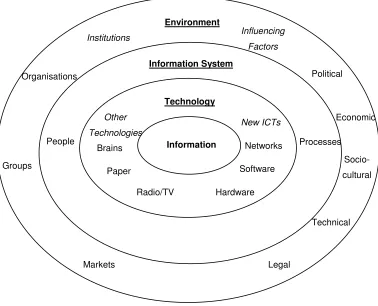
Figure 4.1 A systematic view of information and communication technologies p. 65
Figure 4.2 The information chain p. 66
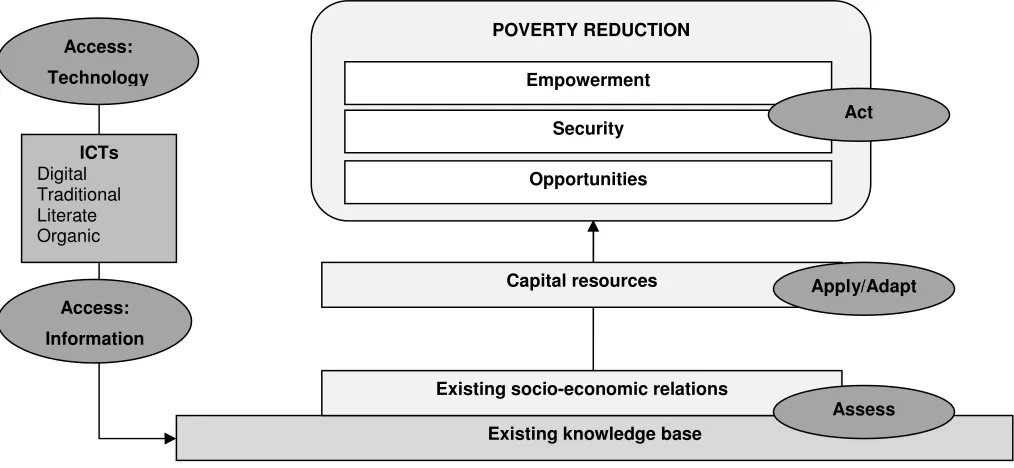
Figure 4.3 A conceptual framework for the analysis of ICT based interventions aimed at
poverty reduction p. 67
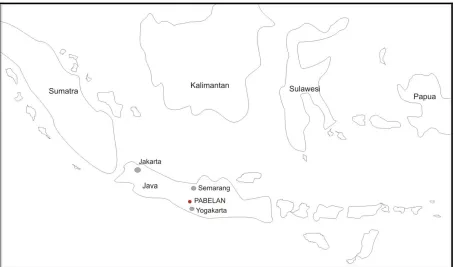
Figure 6.1 Map of Indonesia indicating study site p. 109
Figure 6.2 Map of Pabelan village p. 111
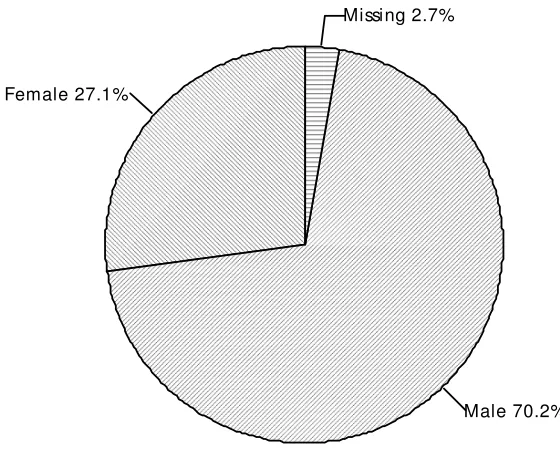
Figure 6.3 Overall participation at e-Pabelan from July 2004 to January 2005 p. 124 Figure 6.4 Overall participation at e-Pabelan by gender from July 2004 to January 2005 p. 124 Figure 6.5 Overall participation at e-Pabelan by age from July 2004 to January 2005 p. 125 Figure 6.6 Overall participation at e-Pabelan by employment, July 2004 to January 2005 p. 126 Figure 8.1 A framework for the analysis of market based ICT4PR interventions targeting
poor rural farmers p. 180
List of tables
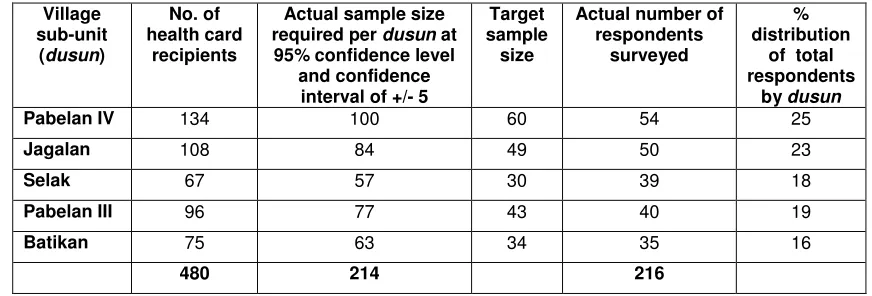
Table 4.1 Household survey sampling summary p. 81
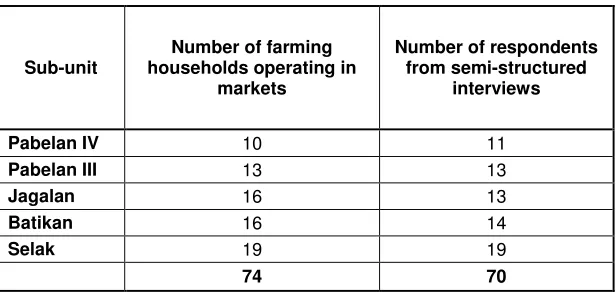
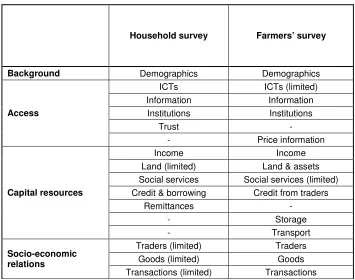
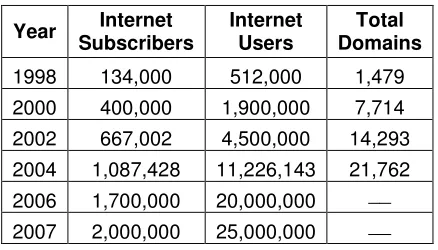
Table 4.2 Semi-structured interviews completed with farmers who sold produce p. 83 Table 4.3 Survey topics in relation to conceptual framework by key survey instrument p. 85 Table 5.1 Internet subscribers and users in Indonesia from 1998 to 2007 p. 102
List of boxes
Table 4.1 Household survey sampling summary p. 152
8
Abbreviations
ADOC- APEC Digital Opportunity Centre APEC- Asia-Pacific Economic Cooperation
APJII- Asosiasi Penyelenggara Jasa Internet Indonesia (Indonesian Internet Service Provider
Association)
ARPA- Advanced Research Projects Agency
BAPPENAS- Badan Perencanaan Pembangunan Nasional (Indonesian National Development
Planning Agency)
BBC- British Broadcasting Corporation
BPS- Badan Pusat Statistik (Indonesian Statistical Bureau)
CSR- Corporate Social Responsibility DAI- Digital Access Index
DfID- Department for International Development (UK) EAR- Ethnographic Action Research
ECOSOC- United Nations Economic and Social Council FAO- Food and Agriculture Organisation
GAD- Gender and Development GDP- Gross Domestic Product GII- Global Information Infrastructure HDI- Human Development Index (UNDP) HDR- Human Development Report (UN)
HIV/AIDs- Human Immunodeficiency Virus / Acquired Immune Deficiency Syndrome ICT- Information Communication Technologies
ICT4D- Information Communication Technologies for Development ICT4PR- Information Communication Technologies for Poverty Reduction IDR- Indonesian Rupiah
IMF- International Monetary Fund IS- Information System
ITC- Indian Tobacco Company
ITU- International Telecommunications Union
LIPI- Lembaga Ilmu Pengetahuan Indonesia (Indonesian Institute of Sciences)
MDGs- Millennium Development Goals MSME- Micro, Small and Medium Enterprise MYFF- Multi-Year Funding Framework NGO- Non-Governmental Organisation NHDR- National Human Development Report ODI- Overseas Development Institute
PePP- Partnerships for e-Prosperity for the Poor PRA- Participatory Rural Appraisal
PWC- Post-Washington Consensus RRA- Rapid Rural Appraisal
SLA- Sustainable Livelihoods Approach UGM- Gadjah Mada University, Yogyakarta
UK- United Kingdom of Britain and Northern Ireland UN- United Nations
UNDP- United Nations Development programme
UNESCO- United Nations Educational, Scientific and Cultural Organisation
UNESCAP- United Nations Economic and Social Commission for Asia and the Pacific UNICEF- United Nations Children’s Fund
UNPF- United Nations Population Fund
UNRISD- United Nations Research Institute for Social Development UNV- United Nations Volunteer
US- United States of America
WDR- World Development Report (World Bank) WEF- World Economic Forum
WID- Women in Development
9
Acknowledgments
Evidently this research would not have been possible without the support and encouragement from a range of individuals and institutions. These are too numerous to mention individually; however, particular thanks goes to Dr Julia Meaton and Dr John Anchor at Huddersfield. A special thank you goes to the Indonesian Institute of Science (LIPI) and also to the Indonesian Development Planning Agency (BAPPENAS)- without whom this research would not have been possible. Naturally, and most importantly, I am deeply grateful to the people of Pabelan for their hospitality and generosity in suffering the shortcomings of the bumbling bule in their midst.
10
Science was giving birth to more miracles. The legends of my ancestors were being put to shame. No longer was it necessary to meditate in the mountains for years in order to be able to speak to somebody across the seas. The Germans had laid a cable reaching from England to India! And these cables were multiplying and spreading all over the face of the earth. The whole world could now observe the behaviour of any person. And people could now observe the behaviour of the whole world.
11
Chapter 1
Introduction
1.1 Information communication technologies and development
Information has long been at the heart of development. Throughout history, in order to move forward and to improve our material and social condition it has been necessary to access, and then harness, information. For the few, access to new information has been realised through innovation and discovery. For the many, access to information has been dependent on receiving secondary information through pre-existing channels, networks and media. Towards the end of the 1990s there appeared the potential to widen access to information on an unprecedented scale. This potential was driven by the accelerating technological advances and falling costs of ownership of emerging information communication technologies (ICTs). The technological advances associated with these technologies were accompanied by the establishment of a range of initiatives seeking to apply ICTs towards some of the most pressing developmental concerns of our time. Accordingly, towards the end of the twentieth century providing access to information became a key development priority for many and the information poor gained prominence as a legitimate target group for development actions. Within the development community such activities, interests and ideals have come together under the umbrella term of information communication technologies for development (ICT4D). The emerging academic field and development practice of ICT4D during the early 2000s provides the context for this thesis.
ICT4D is a field influenced by the new. There are new technologies, within a new digital age, creating new opportunities, new threats and new development applications and challenges. For the proponents of ICT4D these developments have leant urgency to the need to seek new, or alternative, ways to promote inclusion, limit marginalisation and foster democratic processes of development. The potential of ICTs is so great for some that they represent nothing less than a new developmental dawn. However, the mechanisms involved and how exactly the utilisation of ICTs may benefit the poor and the marginalised remain unclear. A 1999 workshop on ICTs and sustainable livelihoods concluded that ‘[t]here is a significant amount of literature now circulating regarding the necessary ingredients for successful ICT projects. What we lack is sufficient examples that have pulled this off.’ (O’Farrell et al, 1999:6). In a related vein, and seven years, later Robin Mansell notes:
Many of those involved in considering what knowledge societies are, or will become, seem to believe that the very existence of technology will create the conditions for equitable human development. They hold fast to this belief even in the face of accumulating evidence demonstrating that the presence of information and communication technologies is not a sufficient condition to make a difference to poverty reduction.
12
At the turn of the millennium ICT4D exhibited promise, but had yet to demonstrate its potential. While significant documentation circulated regarding various ICT4D initiatives, the successes described remained largely anecdotal with limited disaggregation of data with respect to reported beneficiaries and were poorly situated in respect of context.
From a theoretical perspective, there is also a concern that ICT4D has not been overly inclined to engage with theory. Richard Heeks (2001) calls for greater engagement between social science theory and information systems (IS) literature in order to better inform both theory and practice. For Heeks, the few IS writers who are engaging with theory are more concerned with the application of a particular theory to IS rather than with theory building itself. In comparison, Geoff Walsham and Sundeep Sahay (2006), in a review of contemporary IS writings (2000 onwards) on developing countries, find improvement from their earlier survey, on which Heeks draws, a decade earlier. The authors cite a range of theories in use including those of Anthony Giddens (n.d.), Arturo Escobar
(1995) and Amartya Sen (1999). However, the authors note that within much of ‘the existing literature, the precise notion of what development means, and how ICTs can promote it, is implicit or underemphasized. There are clearly opportunities here for future work.’ (Walsham & Sahay, 2006:15). Similar concerns are expressed by Maung Sein and Gopalakrishnan Harindranath (2004) at the macro level who note ‘that we do not have conceptual clarity on the role of ICT in national development’ and stress concern over the largely atheoretical stance adopted within ICT4D (Sein & Harindranath, 2004:15). In this regard the following example is illustrative.
A 2009 edition of the journal Information Technologies and International Development (ITID)selected
for publication the best papers from the 2nd International Conference on Information and Communication Technologies and Development (ICTD2007), Bangalore, December 2007. The criteria for selection included the position of being ‘opposed’ to ‘primarily theoretical’ papers (Parthasarathy & Ramamritham, 2009:iii). Instead, selected papers were expected to show a clear link between ICTs and development. That is, the link was made a priori and the subordination of theory to application was clear. The notion that both theory and praxis better inform each other was shunned. The ITID editorial also illustrates well the concern that ICT4D appears, at times, detached from the wider body of work and experience within development studies. For example, the editors speak favourably of how one paper demonstrates the ‘limits of thinking about ICT use in terms of women, a biological category’ and instead consider that ‘gender’ and ‘class’ may be more appropriate (Ibid: v). The lack of engagement with development thinking and the efforts to mainstream gender
issues over the last 30 years is immediately apparent.1 ICT4D, as captured within this example, seems to be embarked on its own voyage of (re)discovery. Such reinventing of the wheel casts considerable doubt on the wisdom of being opposed to considering theoretical underpinnings and the
1
13
contribution such understandings may contribute to praxis. Within ICT4D this view does not appear uncommon. It is this detachment and, almost active, disengagement by some members of the ICT4D community that is of initial concern and informs the point of departure of this work.
1.2 Rationale for the research
The underlying rationale for the research stems from two key observations. Firstly, that there are a lack of contextualised examples of how ICTs may actually be applied within a process of, what may be termed, community based development. Specifically, the research is concerned with ICT based initiatives that seek to reduce poverty through improving the market participation of poor farmers. Secondly, the thesis is concerned with the theoretical foundations that inform and underpin such initiatives. It is argued that a preoccupation with the new within ICT4D has contributed to a distancing from the broader body of development studies and, in turn, the contributions that development studies may make to ICT4D. This distancing, it is argued, is apparent within ICT4D’s conceptualisation of the market, which appeared at odds with evolving understandings within development studies at the turn of the millennium. In particular, the shift away from the free market rhetoric of the Washington consensus increasingly emphasises both the role of information and the importance of regulation within markets. This development appears to have been largely missed by ICT4D. Instead within ICT4D the view presented is that poor producers are excluded from effective market participation by what are considered artificial barriers. These barriers are presented as stemming from asymmetrical access to information, which are held to discriminate against producers in favour of traders. The argument follows that by providing more equitable access to information such asymmetries may be overcome and market participation for poor producers may be improved. The research described within takes issue with this view.
14
The thesis is informed by field research conducted in the Republic of Indonesia between October 2004 and September 2005. A follow-up visit was conducted in early 2006; however, this was not in an official research capacity. Fieldwork was conducted at the e-Pabelan project in the village of Pabelan in Central Java. The United Nations Development Programme (UNDP) in partnership with the Indonesian Development Planning Board (BAPPENAS) established the e-Pabelan project as the initial pilot within their Partnerships for e-Prosperity for the Poor (PePP) programme.2 The project followed a community telecentre based approach. The telecentre provided a physical space with the necessary resources and equipment (ICTs) to enable the community to access new information. One of the stated aims of the project was to improve market access for poor farmers. Indonesia made significant progress in shaking off the impacts of the economic crisis of 1997, which plunged millions of Indonesians into poverty, and has also made the successful transition to democracy. Indonesia ranks as medium on the Human Development Index (HDI). While poverty remains a key concern and national priority the HDI ranking provides some indication that Indonesia has a moderately well established infrastructure and socio-economic basis upon which the uptake of ICTs may be expected to take root. Indonesia, therefore, provides a potentially fruitful area of exploration for ICT4D. It should also be noted that small-scale producers are considered to be critical development actors, in terms of possessing untapped economic potential, in rural development strategies for Indonesia. It is also widely noted by observers and policy makers alike that a lack of market access is a major limiting factor for many small-scale rural producers in Indonesia.
The research conducted utilised a mixed methods approach that employed both quantitative and qualitative data collection with an emphasis placed on the latter. Two key surveys were conducted; one of 216 poor households and one of 70 poor farmers drawn from the household survey. These surveys were underpinned by participant observation within the community and direct observation at the telecentre itself. Informal interviews were integral to the participant observation conducted. Supplementary participatory rural appraisal instruments were occasionally used. A questionnaire survey of the ICT4D project users was also completed. The above data collection instruments were combined within an extended case study in order to better situate the research. The analysis of data collected during the fieldwork was guided by grounded theory (Glaser & Strauss, 1967). The research method and data collection instruments were chosen with the aim of emphasising and better engaging with context within the study. This approach was guided by the fact that although there are numerous anecdotal reports of ICT4D initiatives within the literature there are few contextualised studies.
It should also be noted that many of the reports emerging from ICT4D at the turn of the millennium were better classified as success stories rather than case studies. These stories were, therefore, promotional by definition. A further justification for the research approach outlined is that there is a lack of extended independent field research analysing the impacts of ICT4D interventions. It is also
2
15
becoming increasingly evident that many of the earlier ICT4D success stories were largely driven by enthusiasm and were in fact far from successful (Heeks, 2002a; 2005). This situation is discussed further in chapter three. The geographical spread of case studies is also relatively thin. Within Asia most are clustered in South Asia. There are few in Southeast Asia and no extended studies to date in Indonesia. By way of example, Sankaran Ramanathan and Jörg Becker’s (2001) compilation the
Internet in Asia draws examples from the region with chapters dedicated to Vietnam, Malaysia and
Singapore, but Indonesia is conspicuously absent. It should be noted, however, that within the Indonesian context there are a number of studies of Internet usage and uptake (Hill & Sen, 1997; Lim, 1999, 2003; Purbo 2004).
1.3 Research aims and objectives
In light of the above and in order to assess and examine the contribution of an ICT based poverty reduction initiative seeking to improve the market participation of poor farmers in rural Java the following research aims and objectives are presented:
1.3.1 Primary research aim
• Explore the contribution of an ICT based development intervention to poverty reduction among poor farmers in rural Java.
This aim is formulated within the context of ICT based interventions that seek to improve poor farmers’ ability to participate in markets. The overall aim gives rise to further considerations that are described in the following research objectives.
1.3.2 Secondary research objectives
• Identify how the introduction of new information/communication channels may affect extant relations and power structures within communities.
The above refers to the observation that development is synonymous with change. It is how changes are manifested within communities that will determine the success of an intervention and its relevance to individuals within that community.
• Identify who may benefit from, and who may be disadvantaged by, participation in new ICT facilitated networks.
16
• Identify if, and why, some may prefer (or are disadvantaged by) ongoing participation in extant networks.
There are risks inherent within any change and, as such, there are risks associated with choosing to participate in external, or non-personal, networks. It is assumed these risks may be greater for the poor. As such, it is important to establish why some may choose not to participate in such networks.
1.4 Contribution of the research to knowledge
The research constitutes a unique and contextualised case study of an ICT based poverty reduction initiative from the Javanese context. There have, to the author’s knowledge, been no such similar studies to date. The application of the concept of the information chain as utilised within the research project’s conceptual framework is the first to date in Indonesia and, as far as the author is aware, Asia. There have been no attempts to apply the concept of equilibrating markets to an analysis of ICT based initiatives (Plattner, 1985). As noted above, both the information chain and the concept of equilibrating markets inform the research project’s conceptual framework. This conceptual framework is developed through the research to contribute a framework for the analysis of market based ICT for poverty reduction interventions targeting poor rural farmers. This framework is presented in chapter eight. The framework stresses the centrality of the role of assessment to the adoption of ICTs as opposed to seeing the assessment of information as an independent stage within the information chain. The research illustrates how the utility and relevance of an ICT based poverty reduction intervention seeking to improve the market participation of poor farmers is assessed in relation to risk, which in turn is dictated by the way in which farmers exercise agency, choose goods and play the market. This active engagement with risk and assessing of perceived utility stands in contrast to the popular ICT4D image of the hapless farmer as a victim of an impersonal market.
17
Plattner’s thesis with regard to the benefits of personal exchange. The research describes how farmers mitigate risk within transactions by dealing with traders from a known pool of traders. Again the decision of who to trade with would often be guided by the type of good that was being taken to market.
Findings from the research presented herein (primarily chapter six) have been published as a book chapter (Robinson, 2007). The research findings have also contributed to a World Bank study on ICTs in Indonesia (World Bank, 2005). Upon invite, research findings were also presented to a United Nations Education, Scientific and Cultural Organisation (UNESCO) policy study conference on ‘Grassroots Technology and Gender Mainstreaming’ (Robinson, 2005a). A further paper was submitted and presented to the Development Studies Association conference in 2005 (Robinson, 2005b).
Note: The research contained herein is concerned with the emerging field of ICT4D and its application at the turn of the millennium. As such, the discussion of ICT4D within chapters two and three are to be read in the context of ICT4D at this point in time extending to the first half of the 2000s. The relationship of the research to subsequent developments in the field since 2005 is discussed in chapter eight.
1.5 Structure of the thesis
The thesis is structured and proceeds as follows:
Chapter two sets the scene for the research and establishes the background to information communication technologies for development (ICT4D). The chapter reviews ICT4D’s relationship and positioning in respect to development studies. The chapter also provides working definitions and clarifies positions with regard to contested terms and concepts. The chapter also addresses the concept of the information age and emphasises the difference between immanent and intentional development in this regard.
Chapter three outlines responses to the information age thesis. This begins with a review of initiatives at the multi-lateral level. The chapter then turns to critiques of ICT4D and responses at the macro or broader conceptual level. A review of case studies is then presented. Lessons learned and recommendations from the literature are then addressed. A review and introduction to the significance of alternative understandings of markets is also presented in relation to ICT4D.
18
Chapter five provides an introduction to Indonesia and the study location. This is considered essential for initially establishing context. The background to and the aims of the e-Pabelan project are also reviewed and discussed.
Chapter six and chapter seven present the research findings. Chapter six provides a detailed case study and analysis of the implementation of the ICT4D intervention in relation to the establishment of access to technology and access to information. The chapter highlights the significance of local institutions in relation to the project.
Chapter seven is primarily concerned with exploring existing socio-economic relations. The chapter explore how poor farmers secure their livelihoods and manage risk through an examination of actors, goods and transactions. The chapter demonstrates the need for better contextualisation within ICT4D.
Chapter eight concludes the research and details the contributions to knowledge outlined above. The chapter also reviews the research project’s conceptual framework and analysis of market-based ICT4PR interventions targeting poor farmers. Findings from the research are related back to key contemporary ICT4D literature published since 2005.
1.6 The researcher in relation to the researched
Finally, in the interests of transparency, and in light of the fact that the shackles of subjectivity may not altogether be shaken off, it seems prudent to situate the researcher in relation to the research. This is all the more important in discussions of access, poverty, opportunities and marginalisation. I am a white western male and a product of a European educational system. I am not a technophile. I have acquired, mostly self-taught with occasional advice from friends and colleagues, the ICT skills that I require to function effectively in my work and social life. This is probably a minimum and like many others, to borrow an analogy, I am grateful that my television works and am interested in what it does and its content and impact; however, I have limited interest in wavelengths, cathode ray tubes, liquid crystal displays or similar. In this sense, I may be representative of many. My educational background and interest is development studies and I approach the topic from a desire to understand social relations, differences and conditions.
19
practicalities and constraints of implementation within development have broadened my knowledge and, perhaps, tempered my critique through first-hand experiences of the difficulties inherent within project implementation. While I have sought to separate the two for the basis of this work, my more recent experiences of working within development as a practitioner have undoubtedly influenced the analysis that follows. What I write now is clearly different from what might have been at the time I concluded my fieldwork. I hope this change is for the better. It is, of course, for the reader to ultimately decide.
20
Chapter 2
Development, poverty and ICT4D at the turn of the millennium
2.1 Chapter introduction
The following chapter sets the scene for the research and establishes the background to information communication technologies for development (ICT4D). The chapter is primarily concerned with ICT4D as an academic pursuit and how the body of work that constitutes ICT4D relates to the wider study of development. The chapter draws on a preliminary literature review and argues that, in the main, the relationship between ICT4D and development studies is poorly conceptualised. It is further suggested that there is a lack of engagement between ICT4D and development studies; a theme that is expanded upon in chapter three. This lack of engagement is viewed as limiting and is considered particularly acute from the position of ICT4D towards development studies. The lion’s share of ICT4D literature remains focused on promoting and justifying the use of ICTs towards development ends rather than on an analysis of the actual function and purpose of ICTs within development interventions. Similarly, there appears to be limited efforts to better establish and reinforce ICT4D’s conceptual validity as a discipline of study. In this regard, development studies may be considered a polar opposite and actively contested field of study.
Alongside sketching out the ICT4D landscape, the chapter will introduce some general working definitions and key concepts that will be key points of reference throughout. While later chapters are more concerned with understandings from the micro-level this initial chapter takes broader brushstrokes and addresses ICT4D and the study of development from a historical and largely macro viewpoint.
2.2 Some qualifications and initial positioning of the research
21
[T]he study of society and of history cannot be pursued separately. The subject matter of the specialized domains of social science- ‘the’ economic, ‘the’ political, ‘the’ sociological and ‘the’ psychological- are inextricably related to reality.
Bernstein, 1973:18 3
Development studies, therefore, casts its net wide in its attempt to understand the processes and impacts of socio-economic change. It is how such understandings are framed, presented and justified in relationship to lived human realities that is this work’s concern.
The term ICT4D used herein refers to the body of work including books, academic articles, donor and implementer documents and reports, and media articles and stories as well as practical actions and initiatives concerned with the application of ICTs towards development ends. In this sense ICT4D is seen as a collective grouping with common characteristics and a shared vision and purpose. These characteristics may be summarised as follows:
a. A shared view that the use of ICTs can initiate and/or improve a process of development. b. A common concern that ICTs can and should be actively applied towards development ends. c. An understanding that ‘a’ and ‘b’ have a universal relevance and are globally applicable.
The adoption of this position towards ICT4D leaves an opening for charges of homogenisation and a possible disregard for difference within ICT4D. Such charges may well have some validity. However, this analytical device of convenience is chosen to reflect what is viewed as the persisting and dominant discourse within ICT4D at this time.
Within what follows development studies is viewed as the senior partner and point of conceptual reference. This is justified by the historical longevity of development studies in terms of contested academic discipline and practice. It is also supported by ICT4D’s references and referrals back to the field of development studies. It is also evident that development studies benefits from the more substantive body of work accumulated over time. This body of work, therefore, also presents the advantage of a wider range of contexts and experiences. This breadth should also warn the reader that this account cannot claim to be exhaustive.
2.3 The nature of development and points of departure
The intention to begin with development as the contextual point of reference is somewhat problematic. Development is open to a wide range of interpretations that can hinder the establishment of a concrete point of reference. An initial position is to recognise development as being a process of
3
22
change.4 This position may be expanded to note the teleological nature of development and the way development seeks to influence, and is in turn influenced by, events over time. This results in development as both concept and practice constantly in need of adjustment and re-positioning. For some commentators this flux results in an ‘amoeba-like’ quality that renders the task of defining development futile (Sachs, 1992:4). However if one chooses to persist, it is clear that development is at least identifiable. It is also the case that development is very much a loaded term that has been, and remains, unavoidably and intrinsically linked to dominant conceptualisations of progress and improvement. This idea of progressive betterment indicates the normative nature of development in striving for how things ‘ought to be’ (Bernstein, 1973; Schuurman, 2000). This generalised ideal (however, it may be imagined) highlights the inescapably political nature of development as both concept and praxis. Development is both the imagining of a future and the allocation of means and resources towards the realisation of that image.
The politics of development are clearly captured through Dhirubhai Sheth’s (1993) compilation of opinions from the Southin which development is linked to turmoil, oppression, the annexing of states and the hosting of foreign troops, increasing female abortion rates due to advancements in technology allowing the sex of unborn children to be identified, and environmental degradation to name but a few.5 In these commentaries development arrives from the outside and is not always a welcome guest. For others, the normative and prescriptive nature of the type of development that has been thrust onto the developing world is little more than a continuation of colonialism (Kothari, 1988). The moral destitution that this is taken to imply alongside what is the perceived failure of development, as seen in persisting poverty and rising inequality, have led for searches for alternatives (Schumacher, 1975; Norberg-Hodge, 1991; Shiva, 1991). Nevertheless, for some the failure of development is so profound that there is a need to abandon it, as both concept and practice, urgently and altogether (Escobar, 1995).
In contrast, it may be noted that such extreme opinions are selective and ignore changes and responses that have occurred within development over time. These include paradigmatic shifts within key development institutions (Cornia et al, 1987; Stiglitz, 1998, 2003), the evolving nature and
function of non-governmental organisations (Korten, 1990), Japan’s rapid industrialisation (Sugiyama, 1988) or even the eradication of smallpox (Hopkins, 1983).6 All fall squarely under the remit of development and may be read as rendering the call for abandonment as fulfilling little other purpose that promoting ‘resistance rather than transformation or emancipation.’ (Nederveen Pieterse, 2000:187). A more sympathetic reading of development’s troubles may suggest that we may learn
4
Robert Chambers offers perhaps the most succinct definition with development simply being ‘good change’ (Chambers 1997:xiv). Post-development and (some) alternative development writers would beg to differ.
5
Sheth uses the term ‘South’ as an alternative to developing or less developed areas in order to remind that the point of reference for such comparisons is the state of development that has been achieved in Western Europe and the United States. Sheth questions if this is either correct or desirable. However, the examples of Singapore and Australia among others illustrate the problems with this particular choice of terminology.
6
23
from these critiques without dismissing them (Brigg, 2002). Although problematic, contested and, at times, ambiguous it is evident that development can be addressed, reflected upon and challenged. It is not beyond the pale of recognition.
While one may flounder in providing a suitably definitive answer to what development is, it is possible to identify tendencies and contributory factors. In this regard, Frans Schuurman (2000) argues that development may be characterised by persisting shared paradigms. These, Schuurman argues, are a constant in spite of historical trends and passing theoretical fashions within development and its study. These paradigms are:
• The essentialisation of the Third World and its inhabitants as homogeneous entities. • The unconditional belief in the concept of progress and in the makeability of society.
• The importance of the (nation)state as an analytical frame of reference and a political and scientific confidence in the role of the state to realise progress.
Schuurman, 2000:8
Schuurman’s paradigms assist in building an understanding of the nature of development. Schuurman, much like Edward Said (1978) before him, reminds us how the West has shaped and defined the object of its intent.7 In development terms our collective other and analytical point of reference are the ‘underdeveloped’, the ‘less-developed’ and the ‘poor’. It is against the hegemonic experience of the West that development is ultimately positioned and defined. It is towards this end that all should move. This conceptualisation is reflected, and at times amplified, within ICT4D. The second of Schuurman’s paradigms concerns progress and clearly here ICT4D and development share much in common. The third is perhaps less clear. Schuurman maintains that the decline of the nation state, as heralded by the onset of globalisation, has not occurred. This perhaps offers a warning to ICT4D that not all is new. However, for the purposes herein it is sufficient to note that the state remains a major player with respect to the promotion and adoption of ICT4D (the e-Pabelan project was established by a state agency) and that it is at the state level that much developmental indexing, analysis and comparison still resides. ICT4D with its global indices is no different in this regard. Schuurman’s paradigms, therefore, prove helpful in noting parallels and firmly situating ICT4D within the broader field of development. From this perspective, any persistence in trying to establish ICT4D as entirely new or as an alternative to development appears misplaced.
Without further dwelling on trying to grasp the essential nature of development, and equipped with an overview of development’s general condition and purpose, it will prove productive to note the leanings of this research. This research is influenced by what is commonly referred to as community development. It is in this sense concerned with localised development interventions of a limited scale. The research project is primarily concerned with such interventions in rural settings within a developing country context. Understandings of development in this sense stem from an early
7
24
dissatisfaction with conflating economic growth, as measured by national income data, with development. This narrow view of development led to increasing critique and the publishing of Dudley Seers’ (1969) now classic article The Meaning of Development. By critiquing the monolithic notion of
development as economic growth and through suggesting alternative measures of development such as localised poverty incidences, rates of child mortality and income inequality Seers paved the way for more complex and contextualised understandings of development.8 Such understandings question and draw attention to the welfare, capabilities and quality of life of individuals and communities. These understandings are representative of a human development approach.
With regard to the nature of human development Amartya Sen (1999) argues that ‘[h]uman development is first and foremost an ally of the poor, rather than of the rich and the affluent.’ (Sen, 1999:144). As such, human development seeks to provide a counter to hegemonic conceptualisations of development and aims to reposition development in alternative contexts. Correspondingly, development’s remit is broadened and is expanded beyond the economic sphere to include the social, cultural and political vagaries of life. Importantly, this understanding strives to position the poor, or beneficiaries, or even clients in today’s development vernacular, as central to the development process. For Robert Chambers (1997) such a shift requires conscious and radical political action (a fact overlooked today in many ‘participatory’ approaches) that centres on the active participation and prioritisation of the poor and their understandings in development processes (Chambers, 1997).9 As such, the political nature of development is rendered more explicit and the contextual complexity of development is brought to the fore.
The broader contextualisation that human development offers urges engagement with so-called ‘soft’ development issues including voice, representation and agency. The acknowledgement of agency, that is ‘[t]he actions of individuals or groups, and their capacities to influence events’ is particularly relevant to community based development (Thomas & Alan, 2000:189). Agency is critical in understanding how development interventions may be received, accepted or disrupted at the local level as James Scott’s (1985) work in rural Malaysia during the Green Revolution illustrates. Addressing agency urges engagement with emic (insider) understandings of development, and to contrast and compare these with etic (outsider) conceptualisations (Sheth, 1993; Turner, 2003). Although challenging, failure to incorporate local understandings and rationalities risks patronisation, misrepresentation and the abuse of privileged positions of power as writers such as Frantz Fanon (1961) and Edward Said (1978) have demonstrated. A greater awareness of how outside interventions may be received further highlights development’s contested nature and the existence of localised and multiple sites of resistance. Viewed in this light, the dangers and risks inherent in approaching development as a universally benevolent or neutral act become apparent.
8
Seers (1969) also notes that national income statistics are particularly ill-suited to developing countries due to a lack of data from predominantly rural areas.
9
25
Today human development, and the broader understandings the concept suggests, is institutionalised. The approach has become well ensconced within development parlance and objectives. It is also notable that the concept constitutes the basis for the UNDP’s Human Development Index (HDI) as initiated by Mahbub Al Haq in 1990. The index is the global point of reference for development status and progress (or decline). Human development also laid the groundwork for the establishment of the United Nations Millennium Development Goals in 2000.10 While one may bemoan human development’s drift from radicalism that such institutionalisation unavoidably implies it is hard on balance to not feel some sense of relief that human development is positioned where it is today.11 Human development provides us with an improved, if flawed, point of reference. This is important, for development continues to embody value judgements that, one hopes, are based on ‘the awareness that only with a universal morality of justice is there a future for humanity’ (Schuurman, 2000:19).
In summary, it is clear that development is diverse, disputed and political. Development’s normative nature has also been highlighted. It has also been suggested that there are advantages in adopting a broader understanding, although such an approach unavoidably increases complexity. While one may disagree with how development is best done, if it should be embarked on at all, one may concur that ‘[t]he purpose of development is to create an environment in which all people can expand their capabilities, and opportunities can be enlarged for both present and future generations.’ (UNDP, 1994:13). It is within this context that the merits of ICT based interventions for rural development are to be assessed.
2.3.1 Development’s uneasy relationship with poverty
It almost seems counter-intuitive to consider that development and poverty have not always been explicitly linked. Nevertheless, this has not always been the case. While it is clear that poverty is an age-old concern, and to suggest that it has not been a constant concern for many would be fallacious, it is only relatively recently that the reduction of poverty has become a specific aim within the global development policy arena. In order to better understand this relationship it is helpful to briefly review the Bretton Woods institutions.
The formal institutionalisation of development is generally traced to the end of the Second World War with the establishment of the International Bank for Reconstruction and Development (World Bank) and the International Monetary Fund (IMF) at Bretton Woods, New Hampshire, United States (US) in
10 United Nations Millennium Declaration September 8th 2000 adopted under General Assembly resolution 55/2. Eight goals
and 21 targets to be achieved by 2015: reduce poverty, achieve universal primary education, promote gender equality, reduce child mortality, combat HIV/AIDS (plus other diseases including malaria), ensure environmental sustainability, and develop global partnership for development. http://www.un.org/millenniumgoals/index.shtml
11
26
1945.12 The idea that development was born with the establishment of the Bretton Woods institutions is not accepted by all (Cowten & Shenton, 1996; Thomas, 2000). Nevertheless, it is as Bernstein notes:
In the period since the Second World War [that] development has become a global aspiration and effort. […] A strategic contrast with many earlier conceptions is the emphasis on conscious action to effect large-scale change in a desired direction, utilizing in a centralised or at least co-ordinated way the resources available to given political units.
Bernstein, 1973:13
Within development, the dominant policies of the day are still set by the Bretton Woods Institutions with the World Bank taking the lead with, as Jean-Pierre Cling and colleagues (2003) note, the International Monetary Fund (IMF) and then the national aid ministries, with varying enthusiasm, following suit. Following the Second World War development policy focused on growth maximisation. The battery of policy tools applied included ‘[i]mport substitution, five-year plans, government ownership and control of strategic industries, regulation of the labour market and state controls over the flows of savings and investments.’ (Fine et al, 2003:xv). Within the corresponding
conceptualisation of development as economic growth (as critiqued by Seers), poverty was not a targeted concern. The understanding being that the benefits of economic growth would ‘trickle-down’ through all layers of society of their own accord.
During the 1970s, however, these interventions seemed less effective at delivering growth and there was growing concern over rising inequality. Such observations resulted in widespread adoption of the ‘basic needs’ approach to development. This approach stressed the need for intervention in alleviating poverty and the provision of basic needs and services (Cornia et al, 1987). Within the
World Bank under Robert McNamara’s stewardship (1968 to 1981), tackling extreme poverty was highlighted as being a priority (Marshall, 2008). Concerned with extreme rural poverty McNamara directed the World Bank’s attention towards agriculture in developing countries with a focus on small-scale farms as opposed to earlier large-small-scale sectoral interventions (Pincus, 2001).
During the 1980s such focuses became overshadowed by a new political and economic agenda. Mirroring the developed country policies of Margaret Thatcher and Ronald Reagan structural adjustment became the clarion call for development. The structural adjustment programmes (SAPs) of the World Bank and IMF focused on macro-economic stabilisation, trade liberalisation and, in sharp contrast to earlier approaches, the rolling back of the state in favour of a liberalised and globalised market. This was very much a one size fits all strategy and, as Ben Fine and colleagues (2003) explain, the view was simply that ‘[f]ree-market economics [...] would take care of the problems of the
12
27
developing countries.’ (Fine et al, 2003: xiv). These policies were promulgated globally by the World
Bank and IMF, by both carrot and stick, and are commonly referred to as the Washington consensus. Poverty, meanwhile, at the policy level dropped off the agenda. Unwavering faith in the reified (and altruistic) powers of the liberalised market deemed further consideration unnecessary. Thatcher’s reported musings summarise this enthusiasm well: ‘I knew from my father’s accounts that the free market was like a vast, sensitive nervous system, responding to events and signals all over the world to meet the ever-changing needs of people in other countries’ (in Adams, 5.4.09).13
By the turn of the millennium it became clear to all but the most hard-headed that these policies had failed (Stiglitz, 1998). The failure of the Washington consensus was nowhere more clear than in the inescapable fact that by the World Bank’s own reckoning of poverty almost half of the world’s population were living on less than two dollars a day and a fifth were living in extreme poverty at under a dollar a day (World Bank, 2001). The fiercely contested notion that poverty reduction would simply be a by-product of development was finally laid to rest. Poverty was rediscovered to require effective policy and targeted action at all levels. While the discussion here has focused on the World Bank, due to its uniquely influential position as the largest development funder, it should be noted that other institutions had taken an earlier lead. In 1987, for example, UNICEF published Adjustment with a human face (Cornia et al, 1987) and poverty reduction as a global development priority was
formalised at the World Summit for Human Development in Copenhagen in 1995 (Cling et al, 2003).
Importantly, it was towards the turn of the millennium that there was a convergence that allowed the adoption of a working definition of poverty that linked clearly with a humanistic understanding of development. This is rendered all the more important as it was against this backdrop that ICT4D emerged and sought, in varying degrees of clarity, to position itself. As such, the working definition and conceptual point of reference used herein sees poverty as ‘the denial of choices and opportunities for living a tolerable life’ (UNDP, 1997:2). This definition dovetails with the understanding of human development presented above.
2.4 Information communication technologies and poverty reduction
With respect to ICTs this study is primarily concerned with the Internet. According to Manuel Castells (2002) ‘[t]he Internet is a communication medium that allows, for the first time, the communication of many to many, in chosen time, on a global scale.’(Castells, 2002:2). For Ramanathan and Becker (2001) the defining feature of the Internet lies in its potential and the ‘degree to which it permits individual as well as mass interaction, providing new possibilities for creativity, expression and provision of personal services while raising new dangers of exploitation of citizens.’ (Ramanathan & Becker, 2001:x). Heeks (1999a) defines ICTs in general as being ‘“electronic means of capturing, processing, storing and communicating information.” ICTs are based on digital information held as 1s
13
28
and 0s, and comprise computer hardware, software and networks.’ (Heeks, 1999a:2). Heeks also notes the importance of not overlooking ‘organic’ (based on a person’s body; sound and brain waves) and ‘literate’ (information held in texts) technologies in development interventions (Ibid:3). More
pertinently Heeks asks ‘“What do [digital] ICTs do?” They handle information in digital format. That’s all.’ (Heeks, 2002b:2).
With regard to the utilisation of ICTs towards poverty alleviation the research draws upon the outline of development and poverty presented above. In this respect the analytical point of reference is based on the assumption that ICTs may be utilised to contribute towards poverty reduction through bringing about improvements in three related areas; empowerment, opportunities and security (World Bank, 2001). This reflects broader understandings of poverty in line with the human development approach adopted. Poverty is also recognised as being a relative and/or absolute condition. Peter Townsend (1979) describes the relative nature of poverty as follows:
Individuals, families and groups in the population can be said to be in poverty when they lack the resources to obtain the types of diet, participate in the activities and have the living conditions and amenities which are customary, or at least widely encouraged or approved, in the societies to which they belong. Their resources are so seriously below those commanded by the average individual or family that they are in effect, excluded from ordinary living patterns, customs and activities.
Townsend, 1979:31
Although rarely specified this is the contextualisation of poverty that is frequently used within ICT4D. The benchmark provided is that of a global and interlinked society and the ability of individuals to participate in that global society. The questioning of what marks the point against which others should be judged is clearly open; however, it is worth noting that a clearer distinction regarding poverty may be beneficial within ICT4D. A more explicit acknowledgement of the relative nature of poverty may also prove helpful in diffusing some more vigorous criticisms. One such memorable offering is suggested by NuimuddinChowdhury (2000) who notes the cynics as complaining that: ‘ICTs do not have any more to do with poverty and food security in the developing countries than rain dances have to do with rain’ (Chowdhury, 2000:3). An approach that conceptualises ICTs as potentially contributing to poverty reduction through enhancing opportunities and participation in relation to changing social norms and standards within particular communities may be more helpful.
29
poverty in comparison with others (Norberg-Hodge, 1991).14 Finally, it requires clarification that the project is concerned with ‘intensive’ applications of ICTs, that is, their application to pre-existing development processes and concerns (Narasimhan, 1983). The project is not concerned with their ‘extensive’ use in creating new products and services (Ibid).
2.5 Situating ICT4D
In situating ICT4D it is customary to trace interest to the late to mid 1990s depending, as Marianne Franklin (2004) drily points out, ‘on where the point of reference is’ (Franklin, 2004:3). This is not to exclude earlier interest in communication technologies (and in bridging technological divides) such as the Maitland Commission’s (1985) Missing Link report on access to telephones in rural areas. It is
simply to reflect the speed and breadth of the diffusion of new digital technologies at this time. It was this acceleration in uptake that sparked heightened interest in the elaboration of a thesis that stresses the emergence of a new age or dawn. This information age thesis is outlined below. From this outline it will be argued that the information age thesis does little to explain the actual application of ICTs within development beyond establishing a vague and general need. The influence of the information age thesis within ICT4D is best seen as establishing and sustaining a broad conceptual backdrop that emphasises the provision of technology. Such an understanding is best encapsulated within attempts to bridge the so-called ‘digital divide’.
While the notion of an information age or society precedes the popularisation of the Internet, it is worth briefly reviewing the Internet’s birth and subsequent rise. It is, after all, the development of the Internet, the World Wide Web and related ICTs that have brought the concept of the information age to the fore. The roots of the Internet may be traced back to the development of the US government’s ARPANET programme during the Cold War.15 ARPANET focused on establishing a decentralised and networked communications system that could continue to operate in adverse conditions such as in the event of a nuclear attack. The solution was a network of decentralised nodes. If one node was incapacitated, it could be bypassed and information could still flow through the overall network. To achieve this information was broken up into packets that could be transmitted via varied routes. The packets would then be reassembled at the receiving end.16 In 1969 four US universities were connected and the first message transmitted 26.10.09. (Thomas & Wyatt, 2000; Castells, 2002).17
Alternative dates of conception, such as 1971 (the introduction of the Internet protocols used today) and 1972 (the connection of ARPANET to ALOHAnet in Hawaii), are debated (Thomas & Wyatt,
14
Norberg-Hodge (1991) describes how the arrival of television made Ladakhis acutely aware of their (relative) poverty. While there is an element of romanticism to some of the writing, and some notable omissions such as the impact of road building for the Indian military to better access the troubled Indian state of Jammu and Kashmir (of which Ladakh is a part), the point is illustrative.
15 ARPA: Advanced Research Projects Agency, US Defense Department 16
The process known as packet switching.
17
30
2000). By 1971, ARPANET had grown to cover around 24 computers at 15 sites with accelerated growth marked by the development of a high-speed bac