MAY-JUNE, 2015, VOL. 3/18 www.srjis.com Page 114
IMPACT OF TEACHERS BEHAVIOUR ON THE ACADEMIC ACHIEVEMENT OF
THE STUDENTS AT COLLEGE LEVEL WITH SPECIAL REFERENCE TO JAMMU
DIVISION OF J&K STATE
Mohd Zubair Kales, Ph.D
Associate Professor (Education)
Jyoti Parihar, Ph.D
Sr. Assistant Professor (Botany), Govt. College of Education, Canal Road-JAMMU
The major purpose of the study is to investigate the impact of teacher’s behaviour on the academic achievement of the college students in Jammu. The main objectives of the study were (i) to highlight the present status of colleges in Jammu, (ii) to investigate the behaviour of the college teachers in Jammu (iii) to examine the academic achievement of the college students as a result of teacher’s behaviour (iv) to highlight the causes which affect academic achievement of the college students (v) to sort out the relationship between the teacher’s behaviour and academic achievement (vi) to recommend strategies for the improvement of teachers behaviour. All the working college teachers along with the students of colleges were the population of this study. A random sampling technique was used for selection of the sample. Public colleges were included in the sample, further teachers and students from each college were also randomly selected as the sample of the study. Two questionnaires, one for college teachers and other for college students were developed for the collection of data. Collected data were tabulated analyzed and interpreted in the light of objectives of the study by applying statistical tools of chi-square and Pearson’s Product – Moment coefficient of correlation(r). The level of significance
MAY-JUNE, 2015, VOL. 3/18 www.srjis.com Page 115 was 0.05. Main conclusions of the study were, expansion of the colleges was financed properly; highly qualified teachers ratio was very low. at the time of their recruitment.
Introduction: Behaviour is a description of observable outcome of teacher and student
performance in different activities of institutions. Behaviour may be positive or negative and
effective or ineffective. Effective behaviour produces the requisite results. Behaviour is an
action, which is different at different time. There are three types of behaviour, thinking, feeling
and doing. Mostly behaviour is also known as cognitive, affective and psychomotor. Cognitive
behaviour involves the learner in thinking process, remembering, evaluating and problem
solving. Affective behaviour values the learner’s feelings and attitudes. Psychomotor behaviour
is those involving the learner, in some kind of muscular activity. The way in which the teacher
allocates time to spend on academic content affects student achievement. Good classroom
management is a skill that can lead to high student achievement. It involves planning effectively,
establishing rules that are reasonable and not excessive in number, and arranging the classroom
so that instruction goes smoothly. Skills that are necessary for maintaining a well-managed
classroom include group alerting, wittiness, overlapping, using the principle of least intervention,
and creating smooth transitions. A good teacher is expected to be committed to his work, would
have the ability to take the initiative. Teacher’s personality in the attitudinal sense is a significant factor in teacher’s behaviour and it has great impact on student’s achievement. The teachers as a
professional must know the art of communication, understanding others and ability to learn from
the experiences. They should be able to facilitate learning effectively. The main purpose of this
study is to investigate the impact of teacher’s behaviour on the academic achievement of college
students. Therefore, it is very important to find the characteristics of teacher’s behaviour,
attitudes, knowledge, skills and its impact on the academic achievement of the college students
in Jammu. Therefore, at college level teacher’s positive behaviour, interaction with students,
professional competencies, teaching skills, parental involvement, students own capabilities and
college environment, all play critical role for strengthening the potential required for better
academic achievement of college students.
MAY-JUNE, 2015, VOL. 3/18 www.srjis.com Page 116 So present study was designed to sort out the relationship between teacher’s behaviour and
academic achievement of college students, the study has significance for both future professional
practice and further research for other levels. The results of this study explore information that
would enable college administrators and helping the teachers to achieve skills, needed to succeed
in colleges. College students may use the results to increase their understanding of what types of
study habits and organizational skills are important for college academic achievement
Objectives Of The Study:
To highlight the present status of colleges in Jammu.
To investigate the behaviour of college teachers in Jammu.
To find out the causes which affect on the academic achievement of college students
To sort out the relationship between the teacher’s behaviour and academic achievement.
Research Methodology: Following procedure was adopted for this study. The study was
descriptive in nature.
Population: Population of the study was comprised of all the teachers and students of different
colleges. The teachers and students of these colleges were the target population.
Sample: The sample of the study was 1875, consisted of 375 teachers and 1500 students from
colleges randomly selected and cluster sampling type was used for sampling. The sampling
procedure used as follows:
i) Fifteen colleges with five departments from each were selected through simple random
sampling
ii) From each cluster, 25 teachers and 100 students were randomly chosen.
iii) A sample of 375 teachers and 1500 students was drawn in such a way that five teachers and
twenty students from each department of sample Colleges were selected randomly for collection
of data.
Research Instruments: As the study was descriptive in nature therefore two questionnaires
were used to collect data, one questionnaire for teachers and the other for students. Researcherss
developed these questionnaires by using five-point Likert scale on the basis of literature, related
studies and under the guidance of supervisor.
Table: 1a. Reliability of teacher’s behaviour scale viewed by teachers themselves
MAY-JUNE, 2015, VOL. 3/18 www.srjis.com Page 117
Table: 1b. Reliability of teacher’s behaviour scale viewed by students
No. of items Alpha
38 0.847
On the basis of pilot testing of questionnaires, 49 items of teacher’s questionnaire and 38 items
of student’s questionnaire were finalized. Moreover, three open-ended items in teacher’s
questionnaire and two open-ended items in student’s questionnaire were included.
Data Collection: In order to get data from the respondents through the above instruments, the
researchers visited the sample colleges personally and administered the questionnaires to the
sample teachers and students. They were thoroughly briefed about the procedure of filling the
questionnaire. Those statements that were responded disagree and strongly disagree by majority
of the respondents were considered as negatively accepted, although these were accepted. There
was another type of statements that were accepted but these were considered reverse or negative
due to negative meaning hidden in it (see statements of Tables 14, 27, 28, 40, 42, 58, 72, 76, 80,
83 and 97).
Scoring: Rating the responses on the basis of following scoring procedure items of the
questionnaires were scored Strongly Agree as 5, Agree as 4, Un-decided as 3, Disagree as 2,
Strongly Disagree as 1. However, the scoring was reversed for the negatively stated teacher
questionnaire items nos. 2, 15, 16, 28, 30 and 46 and student’s questionnaires items nos. 8, 12,
16, 19 and 33 by using following scoring procedure: Strongly Agree as 1, Agree as 2, Undecided
as 3, Disagree as 4, Strongly Disagree as 5. After scoring the items, the scores of the individual
items were added to get the teacher’s behaviour scores.
Data Analysis: Data collected through the above-mentioned research instruments were tabulated
analyzed and interpreted in the light of the objectives of the study. All negatively accepted
statements were elaborated and discussed under the tables 14, 27, 28, 40, 42, 58, 72, 76, 80, 83
and 97 to draw the item wise conclusions. Open comments of both the teachers and students
were prioritized from 1 to 6 or 1 to 7 stages. The first priority was included in the conclusion.
The most suitable statistical tools like chi-square and Pearson’s Product- Moment Coefficient of
MAY-JUNE, 2015, VOL. 3/18 www.srjis.com Page 118
Responses Of Teachers
Table 3: Teachers feel proud to be called as teacher.
SA A UD DA SDA Total X2
Responses 313 62 - - - 375
982.5*
Percentage 83.46 16.53 100
* Significant df = 4 Table value x2 at 0.05 level = 9.488
Table 3 shows that the calculated x2 value was found to be 982.5, which is greater than the table
value at 0.05 level. Hence, the statement, “Teachers feel proud to be called as teacher,” is
accepted.
Table 4: Teachers consider that teaching job is their last choice.
SA A UD DA SDA Total X2
Responses 19 81 - 153 122 375
227.86*
Percentage 5.06 21.6 - 40.8 32.53 100
* Significant df = 4 Table value x2 at 0.05 level = 9.488
Table 4 shows that the calculated x2 value was found to be 227.86, which is greater than the
table value at 0.05 level. Since the trend of responses was found towards negative, the statement,
“Teachers consider that teaching job is the last choice,” is negatively accepted
Table 5: Teachers prefer this profession for their children and other family members
SA A UD DA SDA Total X2
Responses 28 254 47 46 - 282
553.32*
Percentage 7.46 67.73 12.53 12.26 - 100
* Significant df = 4 Table value x2 at 0.05 level = 9.488
Table 5 shows that the calculated x2 value was found to be 553.32, which is greater than the
table value at 0.05 level. Hence, the statement, “Teachers prefer this profession for their children and other family members,” is accepted.
Table 6: Teachers adjust him/her self with the prevailing situation and circumstances of
the college.
SA A UD DA SDA Total X2
Responses 156 194 25 - - 375
459.62*
Percentage 41.6 51.73 6.66 - - 100
* Significant df = 4 Table value x2 at 0.05 level = 9.488
Table 6 shows that the calculated x2 value was found to be 459.62, which is greater than the
table value at 0.05 level. Hence, the statement, “Teachers adjust him/her self with the prevailing
MAY-JUNE, 2015, VOL. 3/18 www.srjis.com Page 119
Table 7: Teachers strive for continuous improvement in their knowledge and skills
SA A UD DA SDA Total X2
Responses 233 142 - - - 375
617.7*
Percentage 62.1 37.86 - - - 100
* Significant df = 4 Table value x2 at 0.05 level = 9.488
Table 7 shows that the calculated x2 value was found to be 617.7, which is greater than the table
value at 0.05 level. Hence, the statement, “Teachers strive for continuous improvement in their knowledge and skills, ” is accepted.
Table 8: Teachers adequately prepare their lesson before going to class daily.
SA A UD DA SDA Total X2
Responses 185 190 - - - 375
562.66*
Percentage 49.33 50.66 - - - 100
* Significant df = 4 Table value x2 at 0.05 level = 9.488
Table 8 shows that the calculated x2 value was found to be 562.66, which is greater than the
table value at 0.05 level. Hence, the statement, “Teachers adequately prepare their lesson before going to class daily, ” is accepted.
Table 9: Teachers use different teaching aids other than white/ Black -board properly
SA A UD DA SDA Total X2
Responses 129 246 - - - 375
653.76*
Percentage 34.4 65.6 - - - 100
* Significant df = 4 Table value x2 at 0.05 level = 9.488
Table 9 shows that the calculated x2 value was found to be 653.76, which is greater than the
table value at 0.05 level. Hence, the statement, “Teachers use different teaching aids other than
white/ Black -board properly,” is accepted.
Table 10: Teachers make the teaching effective with different teaching techniques.
SA A UD DA SDA Total X2
Responses 171 204 - - - 375
569.76*
Percentage 45.6 54.4 - - - 100
* Significant df = 4 Table value x2 at 0.05 level = 9.488
Table 10 shows that the calculated x2 value was found to be 569.76, which is greater than the
MAY-JUNE, 2015, VOL. 3/18 www.srjis.com Page 120
Table 11: Teachers consult latest researches in relevant field of teaching.
SA A UD DA SDA Total X2
Responses 99 184 - 32 60 375
268.74*
Percentage 26.6 49.06 - 8.53 16 100
* Significant df = 4 Table value x2 at 0.05 level = 9.488
Table 11 shows that the calculated x2 value was found to be 268.74, which is greater than
the table value at 0.05 level. Hence, the statement, “Teachers consult latest researches in relevant
field of teaching,” is accepted.
Table 12: Teachers listen to the students with patience and tolerance and guide students in
spare time.
SA A UD DA SDA Total X2
Responses 269 106 - - - 375
739.62*
Percentage 71.73 28.26 - - - 100
* Significant df = 4 Table value x2 at 0.05 level = 9.488
Table 12 shows that the calculated x2 value was found to be 739.62, which is greater than the
table value at 0.05 level. Hence, the statement, “Teachers listen to the students with patience and
tolerance and guide students in spare time,” is accepted.
Table 13: Teachers enjoy friendly relation with students.
SA A UD DA SDA Total X2
Responses 251 124 - - - 375
670.06*
Percentage 66.93 33.06 - - - 100
* Significant df = 4 Table value x2 at 0.05 level = 9.488
Table 13 shows that the calculated x2 value was found to be 670.06, which is greater than the
table value at 0.05 level. Hence, the statement, “Teachers enjoy friendly relation with students,”
is accepted.
Table 14: Teachers use the library and also encourage to the students.
SA A UD DA SDA Total X2
Responses 222 120 - 33 - 375
540.12*
Percentage 59.2 32 - 8.8 - 100
* Significant df = 4 Table value x2 at 0.05 level = 9.488
Table 14 shows that the calculated x2 value was found to be 540.12, which is greater than the
table value at 0.05 level. Hence, the statement, “Teachers use the library and also encourage to
MAY-JUNE, 2015, VOL. 3/18 www.srjis.com Page 121
Table 15: Teachers solve teaching learning problems through action research.
SA A UD DA SDA Total X2
Responses 100 143 36 82 14 375
140.52*
Percentage 26.67 38.13 9.6 21.86 3.73 100
* Significant df = 4 Table value x2 at 0.05 level = 9.488
Table 15 shows that the calculated x2 value was found to be 140.52, which is greater than the
table value at 0.05 level. Hence, the statement, “Teachers solve teaching learning problems
through action research,” is accepted.
Table 16: Teachers use question answer technique properly.
SA A UD DA SDA Total X2
Responses 188 187 - - - 375
337.5*
Percentage 50.13 49.86 - - - 100
* Significant df = 4 Table value x2 at 0.05 level = 9.488
Table 16 shows that the calculated x2 value was found to be 337.5, which is greater than the
table value at 0.05 level. Hence, the statement, “Teachers use question answer technique properly,” is accepted.
Table 17: It’s easy for teachers to make effective eye contact and pass smile to students in
the class.
SA A UD DA SDA Total X2
Responses - - 5 207 163 375
550.91*
Percentage - - 1.33 55.2 43.46 100
* Significant df = 4 Table value x2 at 0.05 level = 9.488
Table 17 shows that the calculated x2 value was found to be 550.91, which is greater than the
table value at 0.05 level. Since the trend of responses was found towards negative, the statement,
“It’s easy for teachers to make effective eye contact and pass smile to students in the class,” is
negatively accepted.
Table 18: White–board left unclean by the previous teacher upset teaching mood.
SA A UD DA SDA Total X2
Responses 70 160 23 21 101 375
181.30*
Percentage 18.66 42.66 6.13 5.6 26.93 100
* Significant df = 4 Table value x2 at 0.05 level = 9.488
Table 18 shows that the calculated x2 value was found to be 181.30, which is greater than the
table value at 0.05 level. Hence, the statement, “White–board left unclean by the previous
MAY-JUNE, 2015, VOL. 3/18 www.srjis.com Page 122
Table 19: Teachers show interest and respect to all the students.
SA A UD DA SDA Total X2
Responses 221 154 - - - 375
592.42*
Percentage 58.93 41.06 - - - 100
* Significant df = 4 Table value x2 at 0.05 level = 9.488
Table 19 shows that the calculated x2 value was found to be 592.42, which is greater than the
table value at 0.05 level. Hence, the statement, “Teachers show interest and respect to all the students,” is accepted.
Table 20: Teachers use different evaluation techniques during teaching.
SA A UD DA SDA Total X2
Responses 188 150 - 37 - 375 414.5*
Percentage 50.13 40 - 9.86 - 100
* Significant df = 4 Table value x2 at 0.05 level = 9.488
Table 20 shows that the calculated x2 value was found to be 414.5, which is greater than the
table value at 0.05 level. Hence, the statement, “Teachers use different evaluation techniques during teaching,” is accepted.
Table 21: Teachers maintain freedom and security in the classroom.
SA A UD DA SDA Total X2
Responses 102 273 - - - 375
757.47*
Percentage 27.2 72.8 - - - 100
* Significant df = 4 Table value x2 at 0.05 level = 9.488
Table 21 shows that the calculated x2 value was found to be 757.47, which is greater than the
table value at 0.05 level. Hence, the statement, “Teachers maintain freedom and security in the
classroom,” is accepted.
Table 22: Teachers maintain student’s attention and interest during the lesson.
SA A UD DA SDA Total X2
Responses 129 246 - - - 375
653.76*
Percentage 34.4 65.6 - - - 100
* Significant df = 4 Table value x2 at 0.05 level = 9.488
Table 22 shows that the calculated x2 value was found to be 653.76, which is greater than the
MAY-JUNE, 2015, VOL. 3/18 www.srjis.com Page 123
Table 23: Teachers use different motivational techniques.
SA A UD DA SDA Total X2
Responses 125 210 - 34 6 375
396.3*
Percentage 33.33 56 - 9.06 1.6 100
* Significant df = 4 Table value x2 at 0.05 level = 9.488
Table 23 shows that the calculated x2 value was found to be 396.3, which is greater than the 71
table value at 0.05 level. Hence, the statement, “Teachers use different motivational techniques,”
is accepted.
Table 24: Teachers value the facial and bodily postures of students to judge whether they
are interested in learning or not.
SA A UD DA SDA Total X2
Responses 133 195 47 - - 375
397.3*
Percentage 35.46 52 12.53 - - 100
* Significant df = 4 Table value x2 at 0.05 level = 9.488
Table 24 shows that the calculated x2 value was found to be 397.3, which is greater than the
table value at 0.05 level. Hence, the statement, “Teachers value the facial and bodily postures of students to judge whether they are interested in learning or not,” is accepted.
Table 25: Teachers award marks in the examination fairly to all the students.
SA A UD DA SDA Total X2
Responses 248 127 - - - 375
660.1*
Percentage 66.13 33.86 - - - 100
* Significant df = 4 Table value x2 at 0.05 level = 9.488
Table 25 shows that the calculated x2 value was found to be 660.1, which is greater than the
table value at 0.05 level. Hence, the statement, “Teachers award marks in the examination fairly to all the students,” is accepted.
Table 26: Teachers like to engage their income-generating activities after duty timing.
SA A UD DA SDA Total X2
Responses 77 123 81 94 - 375
111.063*
Percentage 20.53 32.8 21.6 25.06 - 100
* Significant df = 4 Table value x2 at 0.05 level = 9.488
Table 26 shows that the calculated x2 value was found to be 111.063, which is greater than the
MAY-JUNE, 2015, VOL. 3/18 www.srjis.com Page 124
Table 27: The results of the students are most important factor in deterring the competence
of teachers.
SA A UD DA SDA Total X2
Responses 73 144 77 58 23 375
103.486*
Percentage 19.46 38.4 20.53 15.46 6.13 100
* Significant df = 4 Table value x2 at 0.05 level = 9.488
Table 27 shows that the calculated x2 value was found to be 103.486, which is greater than the
table value at 0.05 level. Hence, the statement, “The result of the students are most important factor in determining the competence of teachers,” is accepted.
Table 28: Teachers participate in co-curricular activities of the college.
SA A UD DA SDA Total X2
Responses 53 297 25 - - 375
813.57*
Percentage 14.13 79.2 6.66 - - 100
* Significant df = 4 Table value x2 at 0.05 level = 9.488
Table 28 shows that the calculated x2 value was found to be 813.57, which is greater than the
table value at 0.05 level. Hence, the statement, “Teachers participate in co-curricular activities of
the college,” is accepted.
Table 29: Teachers relate the subject matter with lives of the students.
SA A UD DA SDA Total X2
Responses 141 193 41 - - 375
409.14*
Percentage 37.6 51.46 10.93 - - 100
* Significant df = 4 Table value x2 at 0.05 level = 9.488
Table 29 shows that the calculated x2 value was found to be 409.14, which is greater than the
table value at 0.05 levels. Hence, the statement, “Teachers relate the subject matter with lives of
the students,” is accepted.
Table 30: Private tuition is professional dishonesty.
SA A UD DA SDA Total X2
Responses 97 143 - 110 25 375
192.76*
Percentage 25.86 38.13 - 29.33 6.66 100
* Significant df = 4 Table value x2 at 0.05 level = 9.488
Table 30 shows that the calculated x2 value was found to be 192.76, which is greater than the
table value at 0.05 level. Hence, the statement, “Private tuition is professional dishonesty,” is
MAY-JUNE, 2015, VOL. 3/18 www.srjis.com Page 125
Table 31: Teachers are respected more than others.
SA A UD DA SDA Total X2
Responses 49 144 - 153 29 375
256.82*
Percentage 13.06 38.4 - 40.8 7.73 100
* Significant df = 4 Table value x2 at 0.05 level = 9.488
Table 31 shows that the calculated x2 value was found to be 256.82, which is greater than the
table value at 0.05 level. Hence, the statement, “Teachers are respected more than others,” is
accepted.
Table 32: Teachers are responsible for the declining standard of education.
SA A UD DA SDA Total X2
Responses 33 142 41 104 55 375
115.32*
Percentage 8.8 37.86 10.93 27.73 14.66 100
* Significant df = 4 Table value x2 at 0.05 level = 9.488
Table 32 shows that the calculated x2 value was found to be 115.32, which is greater than the
table value at 0.05 level. Hence, the statement, “Teachers are responsible for the declining
standard of education,” is negatively accepted.
Table 33: Teachers stick to the time table.
SA A UD DA SDA Total X2
Responses 99 237 39 - - 375
524.88*
Percentage 26.4 63.2 10.4 - - 100
* Significant df = 4 Table value x2 at 0.05 level = 9.488
Table 33 shows that the calculated x2 value was found to be 524.88, which is greater than the
table value at 0.05 level. Hence, the statement, “Teachers stick to the time table,” is accepted.
Table 34: Teachers insist on cleanliness and orderliness in the classroom.
SA A UD DA SDA Total X2
Responses 120 229 26 - - 375
554.55*
Percentage 32 61.06 6.93 - - 100
* Significant df = 4 Table value x2 at 0.05 level = 9.488
Table 34 shows that the calculated x2 value was found to be 554.55, which is greater than the
table value at 0.05 level. Hence, the statement, “Teachers insist on cleanlines and orderliness in the classroom,” is accepted.
Table 35: Teachers treat students without discrimination.
SA A UD DA SDA Total X2
Responses 175 127 45 28 - 375
285.83*
Percentage 46.66 33.86 12 7.46 - 100
MAY-JUNE, 2015, VOL. 3/18 www.srjis.com Page 126 Table 35 shows that the calculated x2 value was found to be 285.83, which is greater than the
table value at 0.05 level. Hence, the statement, “Teachers treat students without discrimination,”
is accepted.
Table 36: Teachers guide and appreciate the students to develop sense of humour.
SA A UD DA SDA Total X2
Responses 126 211 38 - - 375 449.54*
Percentage 33.6 56.26 10.13 - - 100
* Significant df = 4 Table value x2 at 0.05 level = 9.488
Table 36 shows that the calculated x2 value was found to be 449.54, which is greater than
the table value at 0.05 level. Hence, the statement, “Teachers guide and appreciate the students to
develop sense of humour,” is accepted.
Table 37: Teachers help students to acquire good manners and habits.
SA A UD DA SDA Total X2
Responses 149 226 - - - 375
602.02*
Percentage 39.73 60.26 - - - 100
* Significant df = 4 Table value x2 at 0.05 level = 9.488
Table 37 shows that the calculated x2 value was found to be 602.02, which is greater than the
table value at 0.05 level. Hence, the statement, “Teachers help students to acquire good manners and habits,” is accepted.
Table 38: Teachers write articles / books on topic related to their subjects.
SA A UD DA SDA Total X2
Responses 122 169 9 75 - 375
280.34*
Percentage 32.53 45.06 2.4 20 - 100
* Significant df = 4 Table value x2 at 0.05 level = 9.488
Table 38 shows that the calculated x2 value was found to be 280.34, which is greater than the
table value at 0.05 level. Hence, the statement, “Teachers write articles / books on topic related to their subjects,” is accepted.
Table 39: Teachers participate in professional development activities provided by different
organizations.
SA A UD DA SDA Total X2
Responses 119 223 19 14 - 375 484.27*
Percentage 31.73 59.46 5.06 3.73 - 100
MAY-JUNE, 2015, VOL. 3/18 www.srjis.com Page 127 Table 39 shows that the calculated x2 value was found to be 484.27, which is greater than the
table value at 0.05 level. Hence, the statement, “Teachers participate in professional development
activities provided by different organizations,” is accepted.
Table 40: Teachers establish healthy relationship with parents of the students.
SA A UD DA SDA Total X2
Responses 47 191 27 110 - 375
311.91*
Percentage 12.53 50.93 7.2 29.33 - 100
* Significant df = 4 Table value x2 at 0.05 level = 9.488
Table 40 shows that the calculated x2 value was found to be 311.91, which is greater than the
table value at 0.05 level. Hence, the statement, “Teachers establish healthy relationship with parents of the students,” is accepted.
Table 41: Teachers perform their duty regularly and punctually.
SA A UD DA SDA Total X2
Responses 225 150 - - - 375
600*
Percentage 60 40 - - - 100
* Significant df = 4 Table value x2 at 0.05 level = 9.488
Table 41 shows that the calculated x2 value was found to be 600, which is greater than the table
value at 0.05 level. Hence, the statement, “Teachers perform their duty regularly and
punctually,” is accepted.
Table 42: Teachers give feedback to the students with constructive criticism.
SA A UD DA SDA Total X2
Responses 117 216 24 18 - 375
441.16*
Percentage 31.2 57.6 6.4 4.8 - 100
* Significant df = 4 Table value x2 at 0.05 level = 9.488
Table 42 shows that the calculated x2 value was found to be 441.16, which is greater than the
table value at 0.05 level. Hence, the statement, “Teachers give feedback to the students with
constructive criticism,” is accepted.
Table 43: Teachers give individual attention to the students, in spare time, and suggest
something nice to them.
SA A UD DA SDA Total X2
Responses 167 190 18 - - 375
482.25*
Percentage 44.53 50.66 4.8 - - 100
* Significant df = 4 Table value x2 at 0.05 level = 9.488
Table 43 shows that the calculated x2 value was found to be 482.25, which is greater than the
table value at 0.05 level. Hence, the statement, “Teachers give individual attention to the
MAY-JUNE, 2015, VOL. 3/18 www.srjis.com Page 128
Table 44: Teachers focus on character building of the students.
SA A UD DA SDA Total X2
Responses 141 215 19 - - 375
511.22*
Percentage 37.6 57.33 5.06 - - 100
* Significant df = 4 Table value x2 at 0.05 level = 9.488
Table 44 shows that the calculated x2 value was found to be 511.22, which is greater than the
table value at 0.05 level. Hence, the statement, “Teachers focus on character building of the
students,” is accepted.
Table 45: Teachers use different techniques such as observation, rating scale, peer
appraisal and check list for assessing the students.
SA A UD DA SDA Total X2
Responses 110 131 74 60 - 375
136.153*
Percentage 29.33 34.93 19.73 16 - 100
* Significant df = 4 Table value x2 at 0.05 level = 9.488
Table 45 shows that the calculated x2 value was found to be 136.153, which is greater than the
table value at 0.05 level. Hence, the statement, “Teachers use different techniques such as observation, rating scale, peer appraisal and check list for assessing the students,” is accepted.
Table 46: Teachers use tests only for promoting the students.
SA A UD DA SDA Total X2
Responses 42 144 25 131 33 375
176.66*
Percentage 11.2 38.4 6.66 34.93 8.8 100
* Significant df = 4 Table value x2 at 0.05 level = 9.488
Table 46 shows that the calculated x2 value was found to be 176.66, which is greater than the
table value at 0.05 level. Hence, the statement, “Teachers use tests only for promoting the students,” is accepted.
Table 47: Teachers give proper time to get reply from students.
SA A UD DA SDA Total X2
Responses 161 163 23 - 28 375 342.36*
Percentage 42.93 43.46 6.13 - 7.46 100
* Significant df = 4 Table value x2 at 0.05 level = 9.488
Table 47 shows that the calculated x2 value was found to be 342.36, which is greater than the
table value at 0.05 level. Hence, the statement, “Teachers give proper time to get reply from
MAY-JUNE, 2015, VOL. 3/18 www.srjis.com Page 129
Table 48 Students make complaints against teachers to the head of the institutions.
SA A UD DA SDA Total X2
Responses - 74 69 123 109 375 121.62*
Percentage - 19.73 18.4 32.8 29.06 100
* Significant df = 4 Table value x2 at 0.05 level = 9.488
Table 48 shows that the calculated x2 value was found to be 121.62, which is greater than the
table value at 0.05 level. Since the trend of responses was found towards negative, thus the
statement, “Students make complaints against teachers to the head of the institutions,” is
negatively accepted.
Table 49 Teachers provide opportunity to students to increase participation through asking
questions.
SA A UD DA SDA Total X2
Responses 200 149 10 16 - 375 459.08*
Percentage 53.33 39.73 2.66 4.26 - 100
* Significant df = 4 Table value x2 at 0.05 level = 9.488
Table 49 shows that the calculated x2 value was found to be 459.08, which is greater than the
table value at 0.05 level. Hence, the statement, “Teachers provide opportunity to students to increase participation through asking questions,” is accepted.
Table 50: Teachers summarize, establishing link between present learning with earlier as
well as future learning, creating a sense of achievement in students.
SA A UD DA SDA Total X2
Responses 93 252 6 24 - 375
595.2*
Percentage 24.8 67.2 1.6 6.4 - 100
* Significant df = 4 Table value x2 at 0.05 level = 9.488
Table 50 shows that the calculated x2 value was found to be 595.2, which is greater than the
table value at 0.05 level. Hence, the statement, “Teachers summarize, establishing link between
present learning with earlier as well as future learning, creating a sense of achievement in
students,” is accepted.
Table 51: Teachers check the given assignments of the students in time.
SA A UD DA SDA Total X2
Responses 99 246 22 8 - 375
569.86*
Percentage 26.4 65.6 5.86 2.13 - 100
* Significant df = 4 Table value x2 at 0.05 level = 9.488
Table 51 shows that the calculated x2 value was found to be 569.86, which is greater than the
MAY-JUNE, 2015, VOL. 3/18 www.srjis.com Page 130
Table 52: Important qualities of teacher’s behavior, three most important qualities of
teachers behavior.
Qualities of teacher’s Responses Percentage
Punctuality, Honesty, Hardworking 180 48.00
Friendly, Sympathetic, Committed 98 26.13
Cooperative, Kind, Caring. 40 10.66
Polite, Patience, dedication 36 9.60
Frank questioning from students,
Facilitating Students in their learning process,
Disciplining the students in their normal and
[image:17.612.90.525.345.441.2]academic life. 21 5.60
Table 53: Causes, which affect the academic achievement of the college students causes
which affect the academic achievement.
Causes Responses Percentage
Frankness with students, helping students at any rate disorganized
in record keeping 189 50.40
Lenient, Little tolerance, No undue submission 85 22.66
Strict, Moody, Aggressive Not punctual, 65 17.33
Lack of will power, Lack of confidence 20 5.33
[image:17.612.85.534.506.704.2]Anger, confusion, Lack of communication 16 4.26
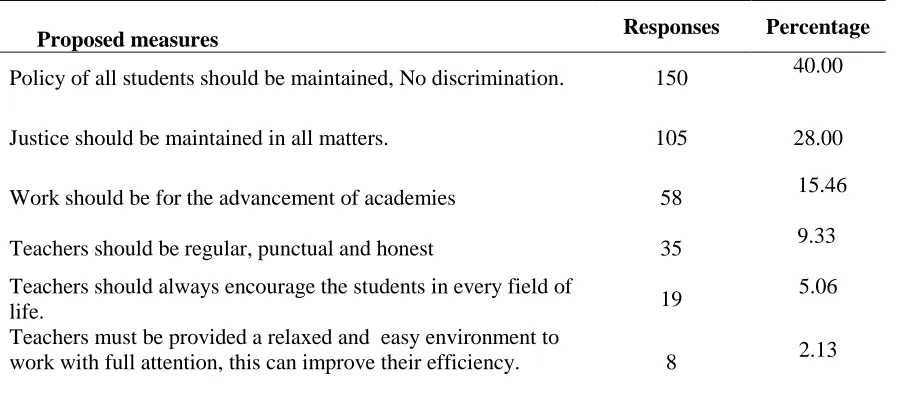
Table 54: Measures to improve the impact of teachers’ behaviour on the academic
achievement of the college s students
Proposed measures Responses Percentage
Policy of all students should be maintained, No discrimination. 150 40.00
Justice should be maintained in all matters. 105 28.00
Work should be for the advancement of academies 58 15.46
Teachers should be regular, punctual and honest 35 9.33
Teachers should always encourage the students in every field of
life. 19
5.06
Teachers must be provided a relaxed and easy environment to
MAY-JUNE, 2015, VOL. 3/18 www.srjis.com Page 131
Responses Of Students
Table 55: Teachers have command on their subjects.
SA A UD DA SDA Total x2
Responses 560 850 40 40 10 1500
1964.65*
Percentage 37.33 56.66 2.66 2.66 0.66 100
* Significant df = 4 Table value x2 at 0.05 level = 9.488
Table 55 shows that the calculated x2 value was found to be 1964.65, which is greater than the
table value at 0.05 level. Hence, the statement, “Teachers have command on their subjects,” is
accepted.
Table 56: Teachers come and leave the class on time.
SA A UD DA SDA Total x2
Responses 730 620 40 100 10 1500
1596.65*
Percentage 48.66 41.33 2.66 6.66 0.66 100
* Significant df = 4 Table value x2 at 0.05 level = 9.488
Table 56 shows that the calculated x2 value was found to be 1596.65, which is greater than the
table value at 0.05 level. Hence, the statement, “Teachers come and leave the class on time,” is
accepted.
Table 57: Teachers are friendly and approachable for you.
SA A UD DA SDA Total x2
Responses 450 940 35 67 08 1500 2139.58*
Percentage 30 62.66 2.33 4.46 0.53 100
* Significant df = 4 Table value x2 at 0.05 level = 9.488
Table 57 shows that the calculated x2 value was found to be 2139.58, which is greater than the
table value at 0.05 level. Hence, the statement, “Teachers are friendly and approachable for you,”
is accepted.
Table 58: Teachers come in class well prepared for teaching.
SA A UD DA SDA Total x2
Responses 480 753 157 20 90 1500 1268.52* Percentage 32 50.2 10.46 1.33 6 100
* Significant df = 4 Table value x2 at 0.05 level = 9.488
Table 58 shows that the calculated x2 value was found to be 1268.52, which is greater than the
MAY-JUNE, 2015, VOL. 3/18 www.srjis.com Page 132
Table 59: Teachers start the lesson in an appropriate manner and finish it in a planned
way.
SA A UD DA SDA Total x2
Responses 375 900 225 0 0 1500 1837.5*
Percentage 25 60 15 - - 100
* Significant df = 4 Table value x2 at 0.05 level = 9.488
Table 59 shows that the calculated x2 value was found to be 1837.5, which is greater than the
table value at 0.05 level. Hence, the statement, “Teachers start the lesson in an appropriate manner and finish it in a planned way,” is accepted.
Table 60: Teachers check student’s assignments in time.
SA A UD DA SDA Total x2
Responses 825 600 - 75 - 1500 1987.5*
Percentage 55 40 - 5 - 100
* Significant df = 4 Table value x2 at 0.05 level = 9.488
Table 60 shows that the calculated x2 value was found to be 1987.5, which is greater than the
table value at 0.05 level. Hence, the statement, “Teachers check students assignments in time,” is
accepted.
Table 61: Teachers share their personal experience with students.
SA A UD DA SDA Total x2
Responses 409 693 130 225 43 1500 889.51* Percentage 27.26 46.2 8.66 15 2.86 100
* Significant df = 4 Table value x2 at 0.05 level = 9.488
Table 61 shows that the calculated x2 value was found to be 889.51, which is greater than the
table value at 0.05 level. Hence, the statement, “Teachers share their personal experience with
students,” is accepted.
Table 62: Teachers discourage and insult students in front of the whole class.
SA A UD DA SDA Total x2
Responses 221 451 72 377 379 1500 310.64* Percentage 14.73 30.06 4.8 25.13 25.26 100
* Significant df = 4 Table value x2 at 0.05 level = 9.488
Table 62 shows that the calculated x2 value was found to be 310.64, which is greater than the
table value at 0.05 level. Since, the trend of responses was found towards negative, thus the
statement, “Teachers discourage and insult students in front of the whole class,” is negatively
MAY-JUNE, 2015, VOL. 3/18 www.srjis.com Page 133
Table 63: Teachers give students individual attention in their spare time, and suggest
something nice.
SA A UD DA SDA Total x2
Responses 408 691 130 09 262 1500 931.89*
Percentage 27.2 46.06 8.66 0.6 17.46 100
* Significant df = 4 Table value x2 at 0.05 level = 9.488
Table 63 shows that the calculated x2 value was found to be 931.89, which is greater than the
table value at 0.05 level. Hence, the statement, “Teachers give students individual attention in their spare time, and suggest something nice,” is accepted.
Table 64: Students enjoy friendly and mutual trust with teachers.
SA A UD DA SDA Total x2
Responses 525 820 63 92 - 1500 1701.52*
Percentage 35 54.66 4.2 6.13 - 100
* Significant df = 4 Table value x2 at 0.05 level = 9.488
Table 64 shows that the calculated x2 value was found to be 1701.52, which is greater than the
table value at 0.05 level. Hence, the statement, “Students enjoy friendly and mutual trust with teachers,” is accepted.
Table 65: Teachers provide relevant information to explain the points of subject matter to
the students.
SA A UD DA SDA Total x2
Responses 333 984 59 36 88 1500 2194.21*
Percentage 22.2 65.6 3.93 2.4 5.86 100
* Significant df = 4 Table value x2 at 0.05 level = 9.488
Table 65 shows that the calculated x2 value was found to be 2194.21, which is greater than the
table value at 0.05 level. Hence, the statement, “Teachers provides relevant information to explain the points of subjects matter to the students,” is accepted.
Table 66: Teachers behave more nicely to some students.
SA A UD DA SDA Total x2
Responses 299 447 450 78 226 1500 329.56*
Percentage 19.93 29.8 30 5.2 15.06 100
* Significant df = 4 Table value x2 at 0.05 level = 9.488
Table 66 shows that the calculated x2 value was found to be 329.56, which is greater than the
table value at 0.05 level. Hence, the statement, “Teachers behave more nicely to some students,”
MAY-JUNE, 2015, VOL. 3/18 www.srjis.com Page 134
Table 67: Teachers give emphases on completion of course in time.
SA A UD DA SDA Total x2
Responses 391 740 179 69 121 1500 10064.4*
Percentage 26.06 49.33 11.93 4.6 8.06 100
* Significant df = 4 Table value x2 at 0.05 level = 9.488
Table 67 shows that the calculated x2 value was found to be 10064.4, which is greater than the
table value at 0.05 level. Hence, the statement, “Teachers give emphases on completion of course
in time,” is accepted.
Table 68: Teachers appreciate students with good words, when they perform well in the
class.
SA A UD DA SDA Total x2
Responses 739 528 78 122 33 1500 1323.2*
Percentage 49.22 35.2 5.2 8.13 2.2 100
* Significant df = 4 Table value x2 at 0.05 level = 9.488
Table 68 shows that the calculated x2 value was found to be 1323.2, which is greater than the
table value at 0.05 level. Hence, the statement, “Teachers appreciate students with good words,
when they perform well in the class,” is accepted.
Table 69: Teachers appear confident and competent during lecture
SA A UD DA SDA Total x2
Responses 639 642 95 124 - 1500 1316.28* Percentage 42.6 42.8 6.33 8.26 - 100
* Significant df = 4 Table value x2 at 0.05 level = 9.488
Table 69 shows that the calculated x2 value was found to be 1316.28, which is greater than the
table value at 0.05 level. Hence, the statement, “Teachers appear confident and competent during lecture,” is accepted.
Table 70: Teachers like some students and favour them unduly.
SA A UD DA SDA Total x2
Responses 330 510 283 225 152 1500 298.97* Percentage 22 34 18.86 15 10.13 100
* Significant df = 4 Table value x2 at 0.05 level = 9.488
Table 70 shows that the calculated x2 value was found to be 298.97, which is greater than the
MAY-JUNE, 2015, VOL. 3/18 www.srjis.com Page 135
Table 71: Teachers dress-up formally, neatly and soberly.
SA A UD DA SDA Total x2
Responses 688 606 56 42 108 1500 1357.14* Percentage 45.86 40.4 3.73 2.8 7.2 100
* Significant df = 4 Table value x2 at 0.05 level = 9.488
Table 71 shows that the calculated x2 value was found to be 1357.14, which is greater than the
table value at 0.05 level. Hence, the statement, “Teachers dress-up formally, neatly and soberly,”
is accepted.
Table 72: During teaching teachers use reference books and prepared notes.
SA A UD DA SDA Total x2
Responses 305 794 151 143 107 1500 1093.853* Percentage 20.33 52.93 10.06 9.53 7.13 100
* Significant df = 4 Table value x2 at 0.05 level = 9.488
Table 72 shows that the calculated x2 value was found to be 1093.853, which is greater than the
table value at 0.05 level. Hence, the statement, “During teaching teachers use reference 87 books and prepared notes,” is accepted.
Table 73: Teachers become nervous on asking questions during teaching
SA A UD DA SDA Total x2
Responses 97 102 301 700 300 1500 801.373* Percentage 6.46 6.8 2.06 46.66 20 100
* Significant df = 4 Table value x2 at 0.05 level = 9.488
Table 73 shows that the calculated x2 value was found to be 801.373, which is greater than the
table value at 0.05 level. Since the trend of responses was found to give negative, the statement,
“Teachers become nervous on asking questions during teaching,” is negatively accepted.
Table 74: Teachers encourage students for co- curricular activities.
SA A UD DA SDA Total x2
Responses 543 407 197 153 200 1500 651.71* Percentage 36.2 27.13 13.13 10.2 13.33 100
* Significant df = 4 Table value x2 at 0.05 level = 9.488
Table 74 shows that the calculated x2 value was found to be 651.71, which is greater than the
MAY-JUNE, 2015, VOL. 3/18 www.srjis.com Page 136
Table 75: Students are satisfied with teacher’s methodology.
SA A UD DA SDA Total x2
Responses 450 588 300 162 - 1500 714.96* Percentage 30 39.2 20 10.8 - 100
* Significant df = 4 Table value x2 at 0.05 level = 9.488
Table 75 shows that the calculated x2 value was found to be 714.96, which is greater than the
table value at 0.05 level. Hence, the statement, “Students are satisfied with teacher’s methodology,” is accepted.
Table 76: Teachers take extra time to explain difficult points.
SA A UD DA SDA Total x2
Responses 600 549 101 250 - 1500 947*
Percentage 40 36.6 6.73 16.66 - 100
* Significant df = 4 Table value x2 at 0.05 level = 9.488
Table 76 shows that the calculated x2 value was found to be 947, which is greater than the table
value at 0.05 level. Hence, the statement, “Teachers take extra time to explain difficult points,” is
accepted.
Table 77: Teachers relate the topic with real life through different examples.
SA A UD DA SDA Total x2
Responses 486 864 78 72 - 1500 1813.2*
Percentage 32.4 57.6 5.2 4.8 - 100
* Significant df = 4 Table value x2 at 0.05 level = 9.488
Table 77 shows that the calculated x2 value was found to be 1813.2, which is greater than the
table value at 0.05 level. Hence, the statement, “Teachers relate the topic with real life through different examples,” is accepted.
Table 78: Teachers use different teaching techniques.
SA A UD DA SDA Total x2
Responses 411 695 289 - 105 1500 988.3*
Percentage 27.4 46.33 19.26 - 7 100
* Significant df = 4 Table value x2 at 0.05 level = 9.488
Table 78 shows that the calculated x2 value was found to be 988.3, which is greater than the
table value at 0.05 level. Hence, the statement, “Teachers use different teaching techniques,” is
MAY-JUNE, 2015, VOL. 3/18 www.srjis.com Page 137
Table 79: Teachers listened patiently responses of the students.
SA A UD DA SDA Total x2
Responses 243 857 180 100 120 1500 1334.32*
Percentage 16.2 57.13 12 6.66 8 100
* Significant df = 4 Table value x2 at 0.05 level = 9.488
Table 79 shows that the calculated x2 value was found to be 1334.32, which is greater than the
table value at 0.05 level. Hence, the statement, “Teachers listened patiently responses of the students,” is accepted.
Table 80: Teachers are punctual in their duties.
SA A UD DA SDA Total x2
Responses 638 512 183 50 117 1500 896.21*
Percentage 42.53 34.13 12.2 3.33 7.8 100
* Significant df = 4 Table value x2 at 0.05 level = 9.488
Table 80 shows that the calculated x2 value was found to be 896.21, which is greater than the
table value at 0.05 level. Hence, the statement, “Teachers are punctual in their duties,” is
accepted.
Table 81: Teachers use their voice effectively, during teaching.
SA A UD DA SDA Total x2
Responses 500 680 300 20 - 1500 1175.9*
Percentage 33.33 45.33 20 1.33 - 100
* Significant df = 4 Table value x2 at 0.05 level = 9.488
Table 81 shows that the calculated x2 value was found to be 1175.9, which is greater than the
table value at 0.05 level. Hence, the statement, “Teachers use their voice effectively during the
teaching,” is accepted.
Table 82: Teachers motivate the students through different techniques.
SA A UD DA SDA Total x2
Responses 445 749 144 112 50 1500 1149.26*
Percentage 29.66 49.93 9.6 7.46 3.33 100
* Significant df = 4 Table value x2 at 0.05 level = 9.488
MAY-JUNE, 2015, VOL. 3/18 www.srjis.com Page 138
Table 83: Teachers come in class with happy mood.
SA A UD DA SDA Total x2
Responses 450 633 227 117 73 1500 745.78*
Percentage 30 42.2 15.13 7.8 4.86 100
* Significant df = 4 Table value x2 at 0.05 level = 9.488
Table 83 shows that the calculated x2 value was found to be 745.78, which is greater than the
table value at 0.05 level. Hence, the statement, “Teachers come in class with happy mood,” is
accepted.
Table 84: Teachers make classroom environment conducive for the learning.
SA A UD DA SDA Total x2
Responses 200 813 437 26 24 1500 1477.29*
Percentage 13.33 54.2 29.13 1.73 1.6 100
* Significant df = 4 Table value x2 at 0.05 level = 9.488
Table 84 shows that the calculated x2 value was found to be 1477.29, which is greater than the
table value at 0.05 level. Hence, the statement, “Teachers make classroom environment conducive for the learning,” is accepted.
Table 85: Teachers focus on character building of the students.
SA A UD DA SDA Total x2
Responses 296 509 418 221 56 1500 411.313*
Percentage 19.73 33.93 27.86 14.73 3.73 100
* Significant df = 4 Table value x2 at 0.05 level = 9.488
Table 85 shows that the calculated x2 value was found to be 411.313, which is greater than the
table value at 0.05 level. Hence, the statement, “Teachers focus on character building of the students,” is accepted.
Table 86: Teachers create democratic environment for over all developments of students.
SA A UD DA SDA Total x2
Responses 44 606 290 303 257 1500 537.09*
Percentage 2..93 40.4 19.33 20.2 17.3 100
* Significant df = 4 Table value x2 at 0.05 level = 9.488
Table 86 shows that the calculated x2 value was found to be 537.09, which is greater than the
MAY-JUNE, 2015, VOL. 3/18 www.srjis.com Page 139
Table 87: Teachers are involved in different indiscipline activities in institutions
SA A UD DA SDA Total x2
Responses 33 415 202 434 416 1500 418.42*
Percentage 2.2 27.66 13.46 28.93 27.73 100
* Significant df = 4 Table value x2 at 0.05 level = 9.488
Table 87 shows that the calculated x2 value was found to be 418.42, which is greater than the
table value at 0.05 level. Since the trend of responses was found toward negative, the statement,
“Teachers are involved in different indiscipline activities in institutions,” is negatively accepted.
Table 88: Teachers give feed back to the students with constructive criticism
SA A UD DA SDA Total x2
Responses 209 540 501 250 - 1500 662.6*
Percentage 13.93 36 33.4 16.66 - 100
* Significant df = 4 Table value x2 at 0.05 level = 9.488
Table 88 shows that the calculated x2 value was found to be 662.6, which is greater than the
table value at 0.05 level. Hence, the statement, “Teachers give feed back to the students with constructive criticism,” is accepted.
Table 89: Different assessment techniques such as observation, rating scale, peer appraisal
and checklist are used for assessing the students.
SA A UD DA SDA Total x2
Responses 223 777 350 56 94 1500 1126.42*
Percentage 14.86 51.8 23.33 3.73 6.26 100
* Significant df = 4 Table value x2 at 0.05 level = 9.488
Table 89 shows that the calculated x2 value was found to be 1126.42, which is greater than the
table value at 0.05 level. Hence, the statement, “Different assessment techniques such as
observation, rating scale, peer appraisal and checklist are used for assessing the students,” is
accepted.
Table 90: Only tests are used for promoting the students.
SA A UD DA SDA Total x2
Responses 147 753 150 244 206 1500 976.96*
Percentage 9.8 50.2 10 16.26 13.33 100
* Significant df = 4 Table value x2 at 0.05 level = 9.488
Table 90 shows that the calculated x2 value was found to be 976.96, which is greater than the
table value at 0.05 level. Hence, the statement, “Only tests are used for promoting the students,”
MAY-JUNE, 2015, VOL. 3/18 www.srjis.com Page 140
Table 91: Teachers provide opportunity to increase participation through asking questions.
SA A UD DA SDA Total x2
Responses 755 544 101 58 52 1500 1437.22*
Percentage 50.33 36.26 6.73 3.2 3.46 100
* Significant df = 4 Table value x2 at 0.05 level = 9.488
Table 91 shows that the calculated x2 value was found to be 1437.22, which is greater than the
table value at 0.05 level. Hence, the statement, “Teachers provide opportunity to increase
[image:27.612.83.522.262.306.2]participation through asking questions,” is accepted.
Table 92: Teachers summarize establishing link between the present learning with earlier
as well as future learning, creating a sense of achievement
SA A UD DA SDA Total x2
Responses 290 810 300 100 - 1500 1300.66*
Percentage 19.33 54 20 6.66 - 100
* Significant df = 4 Table value x2 at 0.05 level = 9.488
Table 92 shows that the calculated x2 value was found to be 1300.66, which is greater than the
table value at 0.05 level. Hence, the statement, “Teachers summarize establishing link between the present learning with earlier as well as future learning, creating a sense of achievement,” is
[image:27.612.120.513.450.659.2]accepted.
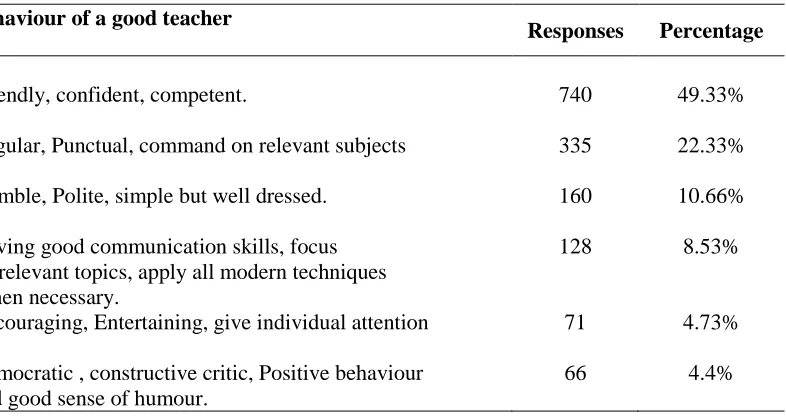
Table 93: Suggestions and important qualities in the behaviour of a good teacher
Suggestions and important qualities in the
behaviour of a good teacher
Responses Percentage
Friendly, confident, competent. 740 49.33%
Regular, Punctual, command on relevant subjects 335 22.33%
Humble, Polite, simple but well dressed. 160 10.66%
Having good communication skills, focus on relevant topics, apply all modern techniques When necessary.
128 8.53%
Encouraging, Entertaining, give individual attention 71 4.73%
Democratic , constructive critic, Positive behaviour and good sense of humour.
66 4.4%
MAY-JUNE, 2015, VOL. 3/18 www.srjis.com Page 141
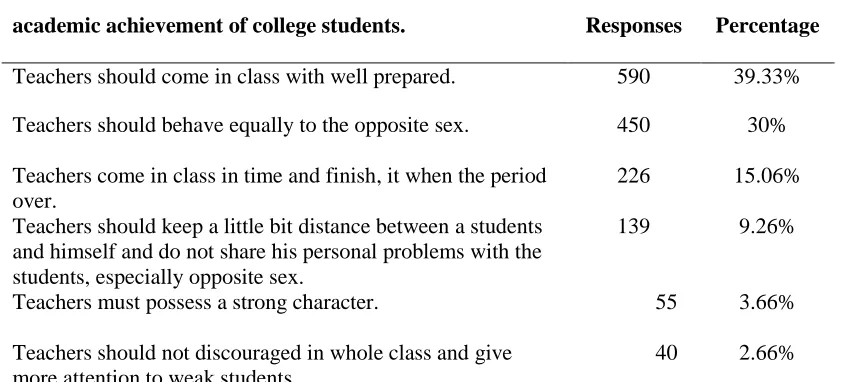
Table 94: Suggestions to improve the impact of teacher’s behaviour on the academic
achievement of college students
Steps for improvement of teacher’s behaviour on the
academic achievement of college students. Responses Percentage
Teachers should come in class with well prepared. 590 39.33%
Teachers should behave equally to the opposite sex. 450 30%
Teachers come in class in time and finish, it when the period over.
226 15.06%
Teachers should keep a little bit distance between a students and himself and do not share his personal problems with the students, especially opposite sex.
139 9.26%
Teachers must possess a strong character. 55 3.66%
Teachers should not discouraged in whole class and give more attention to weak students.
40 2.66%
The results shows that 43 items were accepted out of 49 and only six items were rejected. It
means that the generally behaviour of teachers was positive and its impact on the students was
also noted as positive. Only 6 items were rejected which showed that teaching job was not the
last choice of the teachers and majority of the teachers opined against private tuition. Majority of
teachers responded that the college teachers feel difficulties to make eye contact and passing of
smile to each and every student due to large size of class and mood of teacher. A majority of
teachers opined that white board left unclean by the previous teacher upset their teaching mood.
Majority of teachers opined that they are responsible for declining the standard of education and
a majority of teachers also opined that their students did not complain their teachers to the heads
of the institution. The above results shows that in the opinions of students 33 items were
accepted out of 38 and only 5 items were rejected. It means that the generally behaviour of
teachers was positive and its impact on the academic achievement of college students was also
noted as positive. Only 5 items were rejected which showed that fifty percent teachers did not
insult and discourage the students in front of the whole class but forty five percent teachers
discourage and insult the students in front of whole class. Majority of the students opined that
MAY-JUNE, 2015, VOL. 3/18 www.srjis.com Page 142 majority of the students opined that their teachers did not become nervous on asking questions
during teaching. Majority of the students opined that their teachers were not involved in different
indiscipline activities in institutions.
Conclusions: In the light of objectives of the study the statistical analysis and findings of the
study, the following conclusions were drawn: Majority of teachers opined that they felt proud
and preferred teaching profession than any other profession, for themselves, their children and
for their family members. They adjusted themselves within prevailing situation and
circumstances by striving for continuous improvement of knowledge and skills. They prepared
their lesson adequately by using different teaching aids. Majority of the both teachers and
students held that teachers used different motivational techniques such as observation, rating
scale, peer appraisal and check list for assessing the students. They consulted latest researches,
guided students’ friendly, used library and also encouraged the students to use it. Majority of the
teachers expressed that they solved their teaching learning problems through action research,
they used question answer technique properly and different evaluating techniques and awarded
marks in examinations fairly. They also opined that they showed interest and respect for the
students, maintained freedom, security, attention in the classroom during the lesson and valued
the facial and bodily postures of students to judge the interest of the students in learning.
Majority of teacher respondents viewed that they liked to increase their income after duty time.
They considered that private tuition as a professional dishonesty. They also expressed that the
results of the students determined the competency of teacher. They also admitted that teachers
were responsible for declining standard of education. They related the subject matter with real
lives of the students. Majority of the teachers’ attitude showed that they were respected more
than others. They viewed that students were treated without discrimination, students were guided
and appreciated to develop the sense of humour, and students were helped to acquire good
manners and habits. Majority of the teachers expressed that they wrote articles/books related to
their subjects. They participated in professional development activities. They established healthy
relationship with parents of the students. They gave feedback to the students with constructive
criticisms, suggested students to use spare time nicely and focused on character building of the
students. Majority of the both teachers and students opined that teachers followed time table
strictly and performed their duty regularly. They established link between previous learning with
co-MAY-JUNE, 2015, VOL. 3/18 www.srjis.com Page 143 curricular activities and encouraged the students and they used tests only for promoting students.
They gave proper time to get answer from students to increase their participation. Majority of the
teachers expressed that their students did not complaint against them to the head of the
institution. Majority of the students expressed that their teachers had command on their subjects,
they come and left the class on time they were friendly and approachable, they came in class well
prepared by starting lesson in an appropriate manner and finishing it in a planned way. Majority
of the students opined that their teachers provided relevant information, but behaved more nicely
to some students and favoured unduly. Majority of the students held that their teachers were
confident, competent and well dressed. They viewed that their teachers used reference books to
prepare notes, used satisfactory teaching methodology. The students also expressed that their
teachers listened them patiently, used their voice effectively, came in class with happy mood and
made classroom environment conducive for learning. Majority of the teachers expressed that it
was easy for teachers to make eye contact and passed smile in the class. They held that white
board left unclean by the previous teacher upset their teaching mood. Majority of the students
opined that their teachers did not discourage and insult students in front of whole class. They did
not become nervous on asking questions during teaching, students also viewed that their teachers
were not involved in different indiscipline activities. The study revealed that teacher’s behaviour towards their students affects’ the academic achievement. Higher positive teacher behaviour
towards the students led to higher students’ academic achievement. Majority of the both teachers
and students indicated that important qualities of teacher’s behaviour were punctuality, honesty,
hardworking, friendly, confident and competency. Majority of the teachers indicated that
frankness with students, helping students at any rate, lenient treatment, little tolerance, strict,
moody, aggressive attitude, non punctuality, lack of will power, lack of confidence, anger
confusion and lack of communications were causes which affected academic achievement of
college students. Majority of the respondents expressed that for improving the impact of
teacher’s behaviour on the academic achievement of the college students, no discrimination in
students should be maintained.
Recommendations: In the light of findings and conclusions of the study, following
recommendations were made: The study result found that students do not complaint against their
teachers to the heads of institution. It is therefore recommended that students be encouraged to