D
E
V
E
LO
P
M
E
N
T
INTRODUCTION
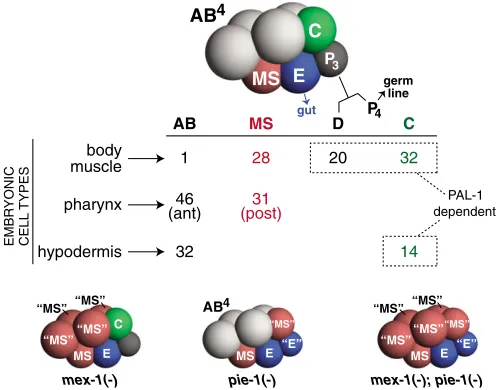
The invention of mesoderm marked the defining event in the emergence of triploblastic bilaterally symmetrical animals ~600 million years ago (Chen et al., 2004). Mesoderm in vertebrates includes such tissues as heart, blood, muscles and bone. In the nematode C. elegans, the mesodermal cell MS is one of six founder cells that generate the major tissues of the embryo (Fig. 1). MS gives rise to many mesodermal cell types, including cells of the posterior half of the pharynx, one-third of the body muscle cells and four embryonically derived coelomocytes (primitive blood-like cells) (Sulston et al., 1983). MS also signals descendants of the AB lineage, enabling them to make the remaining, largely anterior, half of the pharynx (Priess et al., 1987). Early events that specify MS are tied to the specification of its sister E through a common gene regulatory network that intersects with Wnt/MAPK signaling (Maduro and Rothman, 2002).
The bZIP/homeodomain protein SKN-1, at the top of this pathway, is crucial to the specification of MS and E (Bowerman et al., 1992). skn-1(–)embryos fail to specify MS all the time, and E most of the time, and the mis-specified cells adopt the fate of their lineal cousin C, which makes body muscle and hypodermal cells. Ectopic accumulation of SKN-1 results in production of supernumerary MS and E cell types at the expense of others (Bowerman et al., 1993; Bowerman et al., 1992; Mello et al., 1992). At least two activities restrict SKN-1 activity to EMS. In four-cell embryos, SKN-1 protein is detected at high levels in EMS and in its sister cell P2,but at low levels in the two AB daughters ABa and ABp, owing to activity of the CCCH zinc-finger protein MEX-1 (Bowerman et al., 1993). In
P2, PIE-1, also a CCCH zinc finger protein, blocks transcription and, hence, activation of SKN-1 target genes (Batchelder et al., 1999). As shown in Fig. 1, mex-1(–)embryos show a transformation of the AB4 cells into MS-like precursors, while in pie-1(–)embryos, P2adopts an EMS-like fate, resulting in a transformation of C to MS and P3to E (Mello et al., 1992).
To promote specification of MS, SKN-1 activates transcription of the divergent GATA factors med-1,2 in EMS (Coroian et al., 2005; Maduro et al., 2001). With respect to MS fate, loss of med-1,2leads to a similar phenotype as loss of skn-1(transformation of MS to C), but although skn-1mutant embryos lack pharynx entirely, med-1,2(–)embryos still make AB-derived anterior pharynx (Coroian et al., 2005; Maduro et al., 2001). The targets of MED-1,2 in MS that specify a mesoderm fate are not known, although several candidate genes have been identified by bioinformatics and transcriptome analysis (Broitman-Maduro et al., 2005; Robertson et al., 2004).
In the E cell, the MEDs contribute to the activation of the E-specifying genes end-1,3, but are dispensable for E specification much of the time (Broitman-Maduro et al., 2005; Goszczynski and McGhee, 2005; Maduro et al., 2001). We have previously reported that 50% of med-1,2(RNAi)embryos lack endoderm (Maduro et al., 2001). However, a recent study has shown that zygotic loss of med-1and med-2 results in a weak or undetectable endoderm defect (Goszczynski and McGhee, 2005). We have since found that a significant maternal contribution of the MED genes exists, explaining this discrepancy (M.F.M., G.B.-M., I. Mengarelli and J. Rothman, unpublished). In addition to MED-1,2, we and others have further shown that Caudal/PAL-1 and the Wnt effector TCF/POP-1 also contribute to E specification (Maduro et al., 2005b; Shetty et al., 2005).
The MS and E cells are made different from each other by a molecular switching system that functions in the MS/E decision as well as many other asymmetric cell divisions in C. elegans development (Kaletta et al., 1997; Lin et al., 1998). The posterior daughter of EMS is specified to become the endodermal precursor E as a result of a cell-cell interaction between EMS and its sister P2
Specification of the C. elegans
MS blastomere by the T-box
factor TBX-35
Gina Broitman-Maduro1, Katy Tan-Hui Lin1,2,*, Wendy W. K. Hung1,2,* and Morris F. Maduro1,†
In C. elegans, many mesodermal cell types are made by descendants of the progenitor MS, born at the seven-cell stage of embryonic development. Descendants of MS contribute to body wall muscle and to the posterior half of the pharynx. We have previously shown that MS is specified by the activity of the divergent MED-1,2 GATA factors. We report that the MED-1,2 target gene tbx-35, which encodes a T-box transcription factor, specifies the MS fate. Embryos homozygous for a putative tbx-35-null mutation fail to generate MS-derived pharynx and body muscle, and instead generate ectopic PAL-1-dependent muscle and hypodermis, tissues normally made by the C blastomere. Conversely, overexpression of tbx-35results in the generation of ectopic pharynx and muscle tissue. The MS and E sister cells are made different by transduction of a Wnt/MAPK/Src pathway signal through the nuclear effector TCF/POP-1. We show that in E, tbx-35is repressed in a Wnt-dependent manner that does not require activity of TCF/POP-1,
suggesting that an additional nuclear Wnt effector functions in E to repress MS development. Genes of the T-box family are known to function in protostomes and deuterostomes in the specification of mesodermal fates. Our results show that this role has been evolutionarily conserved in the early C. elegansembryo, and that a progenitor of multiple tissue types can be specified by a surprisingly simple gene cascade.
KEY WORDS: Mesoderm, C. elegans, tbx-35, Cell fate specification Development 133, 3097-3106 (2006) doi:10.1242/dev.02475
1Department of Biology, University of California, Riverside, Riverside, CA 92521,
USA. 2Graduate Program in Cell, Molecular and Developmental Biology, University of
California, Riverside, Riverside, CA 92521, USA.
*These authors contributed equally to this work
†Author for correspondence (e-mail: [email protected])
D
E
V
E
LO
P
M
E
N
T
(Goldstein, 1992). An ‘MS’ fate is the default state for an EMS daughter cell, as an isolated EMS cell will divide symmetrically to produce two MS-like cells. Depletion of the components of this signal, an overlapping Wnt/MAPK/Src pathway, results in a similar phenotype in which E adopts an MS-like fate (Bei et al., 2002; Rocheleau et al., 1997; Thorpe et al., 1997). In the MS cell, POP-1 is essential to repress end-1,3, as evidenced by the MS to E transformation displayed by pop-1(–)embryos (Lin et al., 1995). In the E cell, modification of POP-1 by the WRM-1/LIT-1 kinase blocks the repressive activity of POP-1, allowing POP-1 to become an activator of endoderm (Lo et al., 2004; Rocheleau et al., 1999; Shetty et al., 2005).
We report here that the MED-1,2 target gene tbx-35, which encodes a member of the T-box class of transcriptional regulators, specifies the MS fate. Restriction of MED-dependent activation of tbx-35 to MS results from Wnt-dependent POP-1-independent repression in E, implicating an unknown mechanism that blocks MS fate in the E cell. Our results identify an important regulator in the suite of blastomere-identity genes in the C. elegans embryo, and link the mesoderm-specifying activity of med-1,2with MS-specific activation of tbx-35.
MATERIALS AND METHODS
C. elegansstrains and genetics
Recombinant strains were made by standard crosses. The wild-type strain was N2. The following mutations were used: LG I, pop-1(zu189); LG II, tbx-35(tm618), tbx-35(tm1789); LG III, glp-1(or178), unc-119(ed4), lit-1(t1512). Chromosomally integrated transgenes were: LG V, cuIs2[ ceh-22::GFP], ccIs7963 [hlh-1::GFP], irIs21 [elt-2::YFP]; LG X, irIs42 [hs- tbx-35]. Unmapped integrants were qtIs12 [pal-1::YFP], irIs3 [tbx-35::GFP],
irIs31 [tbx-35::GFP] and mcIs17 [lin-26::GFP]. All strains were grown at 20°C with the exception of those containing glp-1(or178) or lit-1(t1512), which were propagated at 15°C and tested at 25°C.
The balanced tbx-35(tm1789) strain MS516 was made by injecting heterozygotes with a mixture of cosmid ZK177, an unc-119::CFP reporter (pMM809) and the rol-6D plasmid pRF4 (Mello et al., 1991). The phenotype of tbx-35(tm1789)embryos lacking the array persisted after three backcrosses of MS516 to N2. Rescue with a fragment containing only tbx-35was obtained by injecting MS516 with a 2.4 kb PCR product containing tbx-35(+)
and the unc-119::YFP::lacZ reporter pMM531, and obtaining lines that had lost the unc-119::CFP/Rol array in favor of the unc-119::YFP array. PCR was used to validate the genotypes of tm1789-derived strains and to confirm the absence of a wild-type copy of tbx-35 in the tm618and tm1789strains.
Microscopy and imaging
All micrographs were obtained on an Olympus BX-71 microscope equipped with a Canon Digital Rebel 350D and LMscope adapter (Micro Tech Lab, Austria). For fluorescence micrographs, images acquired from different focal planes were stacked with Adobe Photoshop 7.
Plasmids and cloning
A tbx-35::GFP reporter was constructed by cloning a 650 bp PCR product, containing 605 bp upstream of the tbx-35 start codon, into plasmid pPD95.67. A hs-tbx-35construct (pGB223) was built by cloning a PCR-amplified genomic fragment containing the coding region and introns into plasmid pPD49.83. A cDNA-derived heat shock construct (pWH95) contained a transversion resulting in an E42V substitution. Expression from this construct was confirmed by in situ hybridization. Oligonucleotide sequences and cloning details are available on request.
RNA interference (RNAi)
RNAi was performed at 20°C by either direct injection of dsRNA into both gonad arms as reported (Maduro et al., 2001) or by growth on E. coliHT115 bacteria engineered to accumulate dsRNA (Timmons and Fire, 1998). For RNAi by injection, embryos were collected starting at 24 hours after parental injection. For RNAi by ingestion, synchronized L2 animals were fed transgenic HT115 for a minimum of 2 days. In our hands, these treatments
produce >99% phenocopy embryos, consistent with published phenotypes. RNAi targeted to multiple genes was performed by injection, controlling for depletion of each targeted gene by parallel single RNAi experiments (Maduro et al., 2001). Control GFP dsRNA injections produced 4% arrested embryos (n=591) that did not resemble tbx-35(tm1789). The additional early-arrest embryos seen with tbx-35(RNAi)appear to be due to an off-target effect, rather than a maternal contribution: a smaller tbx-35dsRNA produced no lethality, no germline transcripts were observed by in situ hybridization and two germline mosaic MS516 mothers produced 100% arrested embryos with the same tbx-35(–)phenotypes described (data not shown).
In situ hybridization
Detection of endogenous mRNAs was performed as described (Coroian et al., 2005).
RESULTS
tbx-35encodes a divergent T-box gene
We sequenced multiple partial and complete open reading frame RT-PCR products to confirm the ZK177.10/tbx-35 gene model described in WormBase (release WS156). tbx-35encodes a 325 amino acid protein with a Tbx domain near its N-terminal end, and is one of 21 Tbx genes in C. elegans(Reece-Hoyes et al., 2005; Wilson and Conlon, 2002). TBX-35 shares 25-28% identity with other metazoan Tbx proteins within the DNA-binding domain (Fig. 2B). The Tbx domain of its closest C. elegans homolog, TBX-37, shows more relatedness with other Tbx proteins (32-37% identity), while the more canonical C. elegans Tbx protein MAB-9 shares 52% identity across the same region (Woollard and Hodgkin, 2000). Hence, TBX-35 is a fairly divergent Tbx factor.
tbx-35 is a direct target of MED-1
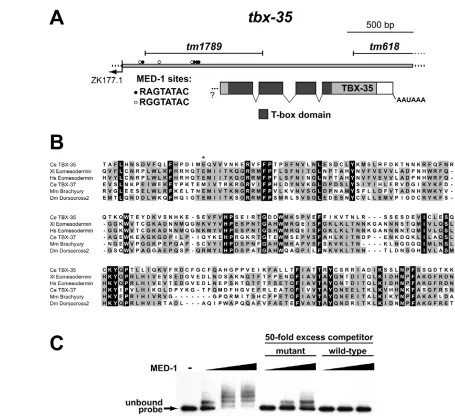
Our biochemical analysis of the MED-1 binding sites in end-1and end-3 identified the consensus site RAGTATAC, four of which occur in the tbx-35 promoter (Fig. 2A) (Broitman-Maduro et al., 2005). ) -( 1 -e i p ; ) -( 1 -x e m ) -( 1 -x e m pie-1(-) E C MS AB4 body muscle pharynx hypodermis PAL-1 dependent 1 46 28 32 32 14 20
(ant) (post)31 D MS AB C P4 gut germ line S M S M ” S M “ ” S M “
“MS”“MS” C
E E “E” E “E”
[image:2.612.314.563.61.256.2]“MS” “MS” MS “MS”“MS” “MS” “MS” CELL TYPES EMBR YONIC P3 AB4
Fig. 1. Positions and fates of eight-cell stage C. elegans
embryonic blastomeres in wild-type and mutant backgrounds.A diagram showing the relative positions of the wild-type AB
granddaughters (AB4) and the P
1granddaughters MS, E, C and P3is
D
E
V
E
LO
P
M
E
N
T
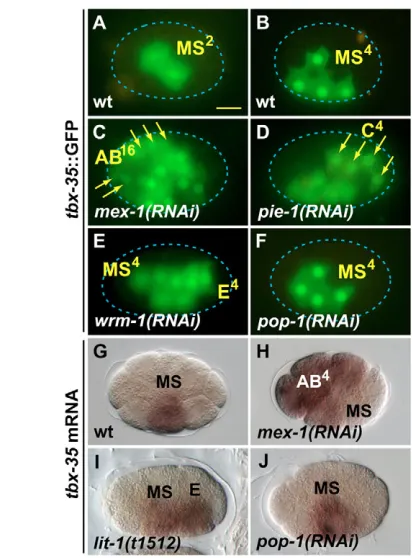
Three additional closely-related RGGTATAC sites, which can bind MED-1 at a lower affinity (our unpublished observations) are also found in close proximity. We and others have previously reported the early MS lineage expression of a tbx-35::GFP reporter, as shown in Fig. 3A,B (Broitman-Maduro et al., 2005; Robertson et al., 2004). Using whole-mount in situ hybridization, we confirmed activation
of endogenous tbx-35in the MS cell (Fig. 3G). Consistent with positive regulation of tbx-35, overexpression of MED-1 is sufficient to promote widespread activation of a tbx-35reporter (Broitman-Maduro et al., 2005). SKN-1 protein is also present in MS, but only a single site matching the SKN-1 RTCAT consensus is present in the tbx-35promoter, 31 bp upstream of the start codon (Blackwell et al.,
Fig. 2. The tbx-35gene encodes a T-box factor. (A) Gene structure of tbx-35 on LGII. The left end of the gene is preceded by the start codon of ZK177.1. The deleted regions in tm1789and tm618 are shown above the gene. The predicted mRNA is shown below. The coding region is shaded, with the T-box emphasized. The locations of MED-1 binding sites are shown as grey circles for the RAGTATAC site defined by MED-1 footprinting of the end-1and end-3 promoters (Broitman-Maduro et al., 2005), and white circles for three lower-affinity RGGTATAC sites based on in vitro competition assays (G.B.-M., K.L., W.H. and M.M., unpublished). No additional MED sites are found elsewhere in the gene. We were unable to amplify the 5⬘end of the transcript using primers to detect SL1 or SL2, suggesting that the tbx-35mRNA is not trans-spliced (Conrad et al., 1993); hence, the bona fide 5⬘end of the transcript is not known. A polyadenylation sequence (AATAAA) is found 115 bp downstream of the predicted stop codon, but we have not confirmed the precise 3⬘end of the transcript. (B) Alignment of the conserved T-box region of TBX-35 with those of other Tbx genes. TBX-35 is 25-28% identical (35-39% similar) to vertebrate eomesodermin, mouse brachyury, DrosophilaDorsocross2 and its closest homolog in C. elegans, TBX-37. The TBX-37 T-box is more closely related to the other T-box regions shown (e.g. 37% identical and 50% similar to brachyury). This alignment was generated with AlignX (within Vector NTI 6) using the default settings. An asterisk indicates a conserved glutamic acid residue that was mutated in a heat shock fusion construct (see text). Xl, Xenopus laevis; Hs, Homo sapiens; Mm, Mus musculus; Dm,
[image:3.612.55.510.142.558.2]D
E
V
E
LO
P
M
E
N
T
1994; Bowerman et al., 1993). As bona fide SKN-1 targets contain clusters of several overlapping sites in the 5⬘flanking region (An and Blackwell, 2003; Coroian et al., 2005; Maduro et al., 2001), it is unlikely that SKN-1 directly regulates tbx-35.
Transgenic GFP::MED-1 localizes to extrachromosomal arrays containing a tbx-35::lacZ reporter plasmid in vivo, suggesting that MED-1 directly activates tbx-35 (Broitman-Maduro et al., 2005). We confirmed a direct interaction of tbx-35with MED-1 in vitro by gel shift assay using the MED-1 DNA-binding domain (DBD) and
a 190 bp fragment of the tbx-35promoter (Fig. 2C). Competition with an oligonucleotide segment of the end-1 promoter containing a single MED site abolished this shift, whereas a competitor with a mutated MED site competed only weakly. As MED-1 and MED-2 are 98% identical and functionally redundant, as evidenced by the ability of either med-1or med-2to rescue the lethality of med-1,2(–) embryos (Coroian et al., 2005), we conclude that both MED-1 and MED-2 activate tbx-35.
tbx-35 is expressed in cells that have MS identity As embryonic activation of tbx-35is restricted to MS, we assessed association of tbx-35with ‘MS fate’ by evaluating its expression in mutant backgrounds that generate ectopic MS-like cells. A tbx-35::GFP reporter is activated ectopically in the AB lineage in mex-1(RNAi)embryos and in the C lineage in pie-1(RNAi)embryos (Fig. 3C,D), consistent with the position of ectopic MS-like cells made in these mutants (Mello et al., 1992). We confirmed by in situ hybridization that tbx-35mRNAs are found in the AB lineage in mex-1(RNAi) embryos (Fig. 3H). Depletion of the -catenin WRM-1 results in the ectopic activation of tbx-35::GFP in the early E lineage (Fig. 3E), as anticipated by the E to MS transformation in such animals (Rocheleau et al., 1997). Finally, tbx-35is activated in both E and MS in embryos mutant for lit-1 (Fig. 3I), which encodes a Nemo-like kinase required to transduce the Wnt/MAPK signal that distinguishes E from MS (Rocheleau et al., 1999). We conclude that tbx-35expression is associated with cells that adopt the MS fate.
Wnt/MAPK-dependent restriction of tbx-35 to MS
does not require POP-1
As the Wnt/MAPK effector TCF/POP-1 is an activator in E, and a repressor in MS, it is not known how Wnt/MAPK signaling might direct an inverse pattern for tbx-35regulation, namely repression in E and activation in MS. Indeed, in pop-1(RNAi) and pop-1(zu189) mutants, tbx-35::GFP persisted in the MS lineage alone (Fig. 3F; data not shown). By in situ hybridization, we observed the same MS-specific activation of endogenous tbx-35in pop-1(RNAi) embryos (Fig. 3J). We conclude that nuclear differences between MS and E exist in the absence of pop-1, showing that POP-1 is not required for at least one property of the MS cell (activation of tbx-35). We further conclude that an uncharacterized Wnt/MAPK-dependent mechanism must exist to repress tbx-35in E (see Discussion).
tbx-35 is an essential gene
[image:4.612.52.258.171.450.2]The foregoing studies establish that tbx-35is activated at the correct time and place to specify MS downstream of MED-1,2. To assess the developmental requirement for tbx-35, we attempted to obtain tbx-35(RNAi)embryos by gonadal injection of tbx-35dsRNA (Fire et al., 1998). Although 78% (107/138) of tbx-35(RNAi) embryos were viable, 22% (31/138) underwent developmental arrest. The majority had fewer than 100 cells, apparently caused by a non-specific effect (see Materials and methods), but three embryos completed morphogenesis and lacked the MS-derived region of the pharynx (not shown). As this proportion of mutants is impracticably small (2% of total), we were fortunate to obtain two tbx-35 chromosomal mutations (tm618and tm1789) from the laboratory of Shohei Mitani (Tokyo, Japan). The tm618 allele is a 1276 bp deletion/13 bp insertion that removes 59 C-terminal codons and the putative 3⬘UTR (Fig. 2A). tm1789is a 922 bp deletion that removes much of the 5⬘flanking region, including five out of seven MED-1 binding sites, and 91 N-terminal codons that include one-third of the conserved T-box domain. Hence, tm1789may be a null mutant. Fig. 3. Expression of tbx-35is specific for the early MS lineage.
(A,B) A reporter tbx-35::GFP transcriptional fusion shows GFP fluorescence in the two daughters of MS (MSa and MSp) and their descendants for several divisions. (C) Depletion of mex-1by RNAi results in ectopic expression (arrows) of tbx-35in AB descendants, consistent with a transformation of the AB granddaughters to MS (Mello et al., 1992). (D) Expression of tbx-35::GFP (arrows) in early C descendants, consistent with a C to MS transformation in pie-1(RNAi)
embryos (Mello et al., 1992). (E) Depletion of the divergent -catenin
D
E
V
E
LO
P
M
E
N
T
Indeed, although tm618homozygotes are viable and demonstrate no obvious phenotype, tm1789embryos either fail to hatch or hatch as inviable larvae.
To test whether the lethality of tm1789results from loss of tbx-35 function, we constructed a homozygous tm1789strain balanced with an extrachromosomal array consisting of cosmid ZK177 and an unc-119::CFP reporter (Maduro and Pilgrim, 1995). We obtained a line, MS516, in which all viable animals exhibit unc-119::CFP expression, and which segregates ~40% inviable animals that lack reporter expression, confirming rescue by ZK177. We were further able to rescue with a 2.4 kbp PCR product containing tbx-35with
734 bp of 5⬘flanking sequence and 374 bp downstream of the predicted polyA site, allowing us to conclude that the lethality of tm1789results from loss of tbx-35 function (see Materials and methods).
tbx-35(tm1789)embryos specifically lack MS-derived tissues
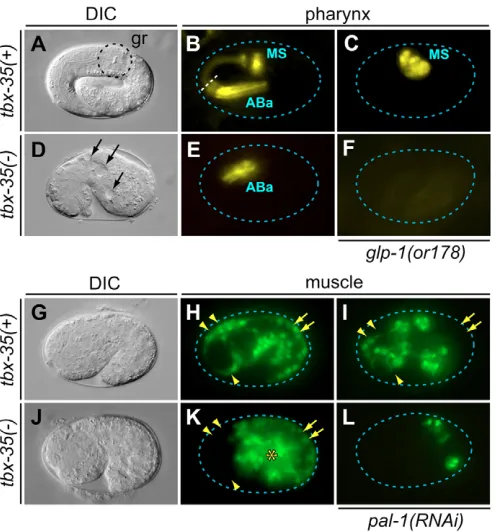
The vast majority of tm1789 homozygotes (>95%), hereafter referred to as ‘tbx-35(–)’, die as embryos. Although wild-type embryos elongate to greater than 3⫻the length of the eggshell before hatching (Fig. 4A), ~25% of tbx-35(–) embryos elongate to only 1.5-fold (Fig. 4D), 60% elongate to twofold and 15% elongate to threefold. The least-elongated embryos are similar to med-1,2(–) embryos in three respects: med-1,2(–)embryos arrest at between onefold and twofold; approximately one-third of med-1,2(–)and tbx-35(–)embryos contain internal cavities, similar to the hypodermis-lined cavities seen in skn-1(–) embryos; and the pharynx is abnormally small and lacks a grinder, a marker of MS-derived pharynx (Bowerman et al., 1992; Maduro et al., 2001). However, although some med-1,2(–)embryos lack endoderm (Coroian et al., 2005; Goszczynski and McGhee, 2005; Maduro et al., 2001), all tbx-35(–)homozygotes make endoderm (not shown).
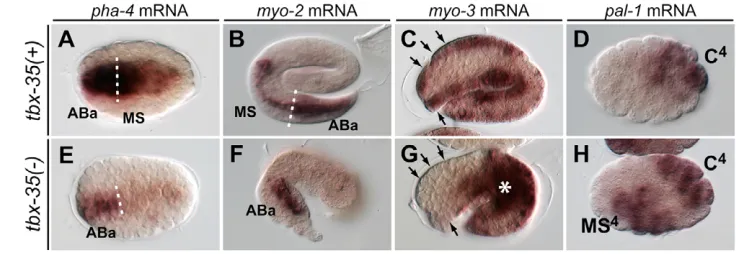
We examined pharynx production in tbx-35(–)embryos using a ceh-22 reporter to mark pharynx muscle (Table 1) (Okkema and Fire, 1994). Although wild-type embryos display a normal pharynx with ABa-derived and MS-derived regions, tbx-35(–)embryos appear to lack the posterior, MS-derived region (Fig. 4B,E). Indeed, in situ hybridization of the pharynx-specifying gene pha-4and the pharyngeal myosin gene myo-2revealed smaller, anterior-specific domains of expression in tbx-35(–) embryos when compared with wild type (Fig. 5A,B,E,F) (Gaudet and Mango, 2002; Okkema et al., 1993). Production of ABa-derived pharynx requires a Notch/GLP-1-mediated cell-cell interaction between MS and the AB lineage (Priess et al., 1987). To determine if the remaining pharynx in tbx-35(–) embryos is ABa derived, we combined the glp-1(or178) mutation with tbx-35(tm1789). Although tbx-35(+); glp-1(–) embryos contained an average of 5.7±0.2 (n=74) pharynx muscle cells (Fig. 4C),tbx-35(–); glp-1(–) embryos had a mean of 0.3±0.1 (n=74) (Fig. 4F). Therefore, loss of tbx-35greatly reduces, but does not completely eliminate, MS-derived pharynx. The slightly leaky nature of these tbx-35(–)defects contrasts with med-1,2(–)embryos, which never elongate past twofold and contain no MS-derived pharynx (Maduro et al., 2001).
[image:5.612.52.300.192.458.2]We next assessed whether production of body muscles is altered in tbx-35(–)embryos using a MyoD/hlh-1::GFP reporter (Krause et al., 1994). At ~1.5-fold elongation, MS-derived muscles are found at the anterior end of the embryo (arrowheads in Fig. 4H) (Sulston et al., 1983). Similarly staged tbx-35(–)embryos lack these muscles, and instead show an accumulation of extra muscle cells in the middle of the embryo (Fig. 4K). The same pattern is observed with expression of the body muscle myosin gene myo-3 by in situ hybridization (Fig. 5C,G). The occurrence of an apparent ectopic region of muscle cells suggests that MS still makes muscle in tbx-35(–)mutants. To test whether these are ‘MS type’ or ‘C type’ muscle cells, we depleted Caudal/PAL-1 by RNAi to specifically block formation of C- and D-type muscle (Hunter and Kenyon, 1996). Although pal-1(RNAi)blocks formation of C- and D-derived muscle, showing a lack of hlh-1expression where these muscles should be (arrows in Fig. 4I), nearly all muscle is absent in tbx-35(–); pal-1(RNAi)embryos (Fig. 4L). As MS-derived pharynx and body muscle are greatly reduced in tbx-35(–)embryos, we conclude that tbx-35is required to make the majority of the descendants of MS. Fig. 4. Deficiency of MS-derived cell types in tbx-35(tm1789)
embryos.(A) Differential interference contrast (DIC) image showing the grinder (gr), indicative of MS-derived pharynx, in a wild-type three-fold stage embryo. (B) A ceh-22::GFP reporter (pseudocolored yellow) shows the fully elongated pharynx with MS- and ABa-derived halves (Okkema and Fire, 1994). (C) Terminal glp-1(or178)embryo showing
ceh-22expression in only MS-derived pharynx. (D) Terminal tbx-35(tm1789)embryo arrested at 1.5-fold elongation, similar in appearance to med-1,2(–)embryos (Coroian et al., 2005). The grinder is absent, and internal cavities (arrows) are observed in 35% of such embryos, similar to the hypodermis-lined voids in skn-1(–)embryos (Bowerman et al., 1992). (E) ceh-22expression in only ABa-derived pharynx in tbx-35(–). (F) Absence of pharynx in a glp-1(–); tbx-35(–)
embryo. (G) Wild-type embryo at the 1.5-fold stage. (H) Expression of
hlh-1::GFP in the embryo shown in G indicates muscle precursors (Chen et al., 1994). In wild type, an average of 46.8±1.4 cells (n=10) were scored as expressing at this stage. (I) In terminal pal-1(RNAi)embryos, muscles made by C and D are not made, resulting in a loss of posterior
hlh-1 expression (arrows; compare arrows in H). Expression was seen in an average of 20±0.6 cells (n=33). (J) A 1.5-fold stage tbx-35(tm1789)
D
E
V
E
LO
P
M
E
N
T
The production of ectopic C-type muscle in tbx-35(–)mutants is anticipated from the observation that both skn-1(–) and med-1,2(–) embryos display a transformation of MS into a C-like cell (Bowerman et al., 1992; Hunter and Kenyon, 1996; Maduro et al., 2001). We examined early tbx-35(–) embryos for evidence of ectopic activation of zygotic pal-1, a marker for the early C lineage (Baugh et al., 2005). By in situ hybridization, we observed zygotic pal-1transcripts in only the early C lineage in wild-type (Fig. 5D) and in both the C and MS lineages in ~30% of tbx-35(–) embryos (Fig. 5H). We observed similar ectopic expression in tbx-35(–); pal-1::YFP embryos (data not shown). With both approaches, ectopic pal-1 signal in the MS lineage occurred slightly later than that of the C lineage, and with variable intensity. We conclude that the MS blastomere in tbx-35(–) embryos exhibits a transformation of MS to C of varying expressivity.
tbx-35is required for ectopic MS-like fates
[image:6.612.47.567.70.257.2]The results thus far suggest tbx-35 plays an important role in MS specification. We next evaluated the requirement for tbx-35in specification of abnormal MS-like cells that arise in specific mutant backgrounds. In pie-1(–) embryos, C adopts an MS-like fate, resulting in embryos in which nearly all muscle cells are derived from MS (Mello et al., 1992). As loss of tbx-35leads to apparent production of C-type muscle from MS, we simultaneously depleted pie-1 and pal-1by RNAi to ensure the generation of only MS-type muscle in these embryos. We found that although tbx-35(+); pie-1(RNAi); pal-1(RNAi) embryos generated an average of 29.4±0.9 (n=25) muscle cells, tbx-35(–); pie-1(RNAi); pal-1(RNAi)embryos made only 4.4±0.6 (n=25) muscle cells (Fig. 6A,D), consistent with a requirement for tbx-35 function in the mis-specification of the C cell as ‘MS’ in pie-1 mutants.
Table 1. Cell types made in mutant embryos
Number of Number of Number of pharynx muscle body muscle hypodermal Genotype cells (ceh-22::GFP) cells (hlh-1::GFP) cells (lin-26::GFP)
tbx-35(tm1789); Ex[tbx-35(+)] 13.1±0.2 (84) 46.8±1.4 (10) nd
tbx-35(tm1789) 4.7±0.2 (68)* 34.8±2.4 (10)* nd
glp-1(or178); tbx-35(tm1789); Ex[tbx-35(+)] at 25°C 5.7±0.2 (74) nd nd
glp-1(or178); tbx-35(tm1789)at 25°C 0.3±0.1 (74)* nd nd
glp-1(or178); wrm-1(RNAi); tbx-35(tm1789); Ex[tbx-35(+)] at 25°C 22.6±0.7 (42) nd nd
glp-1(or178); wrm-1(RNAi); tbx-35(tm1789)at 25°C 5.6±0.7 (49)* nd nd
mex-1(RNAi); pie-1(RNAi); tbx-35(tm1789); Ex[tbx-35(+)] 30.0±1.8 (26) >25 (54)† 6.5±2.1 (16) mex-1(RNAi); pie-1(RNAi); tbx-35(tm1789) 1.0±0.2 (38)* >25 (41)† 26.7±3.9 (11)* pal-1(RNAi); tbx-35(tm1789); Ex[tbx-35(+)] nd 20.2±0.6 (33) nd
pal-1(RNAi); tbx-35(tm1789) nd 5.7±0.5 (40)* nd
pie-1(RNAi); tbx-35(tm1789); Ex[tbx-35(+)] nd 30.4±0.8 (36) nd
pie-1(RNAi); tbx-35(tm1789) nd 20.8±1.3 (34)* nd
pie-1(RNAi); pal-1(RNAi); tbx-35(tm1789); Ex[tbx-35(+)] nd 29.4±0.9 (25) nd
pie-1(RNAi); pal-1(RNAi); tbx-35(tm1789) nd 4.4±0.6 (25)* nd
mex-1(RNAi); pie-1(RNAi); pal-1(RNAi); tbx-35(tm1789); Ex[tbx-35(+)] nd >25 (30)† 1.7±0.4 (31) mex-1(RNAi); pie-1(RNAi); pal-1(RNAi); tbx-35(tm1789) nd 4.9±0.8 (19)* 12.5±3.5 (13)* *Significant difference (P<0.01) compared with the experiment on the line immediately above.
†All embryos had at least 25 GFP-expressing cells, but the total number per embryo was not counted because of the difficulty of resolving individual cells in these
backgrounds. nd, not determined.
Fig. 5. MS lineage defects in tbx-35(–)embryos confirmed by in situ hybridization.(A) pha-4 transcripts in a wild-type onefold embryo have an intense pharynx component (with ABa-and MS-derived regions) ABa-and a weaker endoderm-specific component. All stained embryos (n=37) demonstrated this type of staining. (B) Expression of the pharyngeal myosin gene myo-2in a wild-type late-stage embryo. All (n=37) stained embryos displayed a pattern similar to the one shown. (C) Expression of the body muscle
[image:6.612.194.562.510.637.2]D
E
V
E
LO
P
M
E
N
T
We next examined production of ectopic MS-type tissues in mex-1(–); pie-1(–)embryos. In such mutants, the AB grand-daughters and C adopt MS-like fates, leading to production of six MS-like cells overall (Fig. 1), while eliminating sources of non-MS-type muscle and pharynx (Mello et al., 1992). Large numbers of pharynx cells (30.0±1.8, n=26) were seen in tbx-35(+); mex-1(RNAi); pie-1(RNAi) embryos (Fig. 6B), which were nearly eliminated (1.0±0.2 cells, n=38) when tbx-35was mutant (Fig. 6E). Production of MS-type muscle in a mex-1(–); pie-1(–)background was also found to be strongly dependent on tbx-35(Table 1). We further found that the number of cells expressing the hypodermal marker lin-26 (Labouesse et al., 1996) was increased in a tbx-35(–); mex-1(–); pie-1(–)background over tbx-35(+); mex-1(–); pie-1(–)(Fig. 6C,F). As C makes hypodermal cells, this result is consistent the transformation of at least some MS-like cells to C-like cells in the absence of tbx-35.
Last, we examined production of pharynx in a wrm-1(RNAi) background, in which E adopts an MS-like fate (Rocheleau et al., 1997). To block formation of AB-derived pharynx, we used a glp-1(or178)mutation. We found that although tbx-35(+); glp-1(or178); wrm-1(RNAi)embryos make 22.6±0.7 pharynx cells (n=42), tbx-35(–); glp-1(or178); wrm-1(RNAi)embryos make only 5.6±0.7 cells (n=49). We conclude that tbx-35 is crucial for specification of MS fate in both its normal context and in genetic backgrounds that result in production of ectopic MS-like cells.
tbx-35 overexpression is sufficient to specify MS-like fates
The expression of tbx-35in MS-like precursors, and the requirement for tbx-35to generate MS-derived fates, suggest that TBX-35 alone might be sufficient to specify the MS fate. As some Tbx proteins function as classical activators (Naiche et al., 2005), we tested whether TBX-35 can reprogram non-MS cells to become mesoderm precursors, similar to the ability of MED-1 to promote the generation of ectopic pharynx and endoderm (Maduro et al., 2001). A heat shock (hs) tbx-35transgene was constructed and introduced
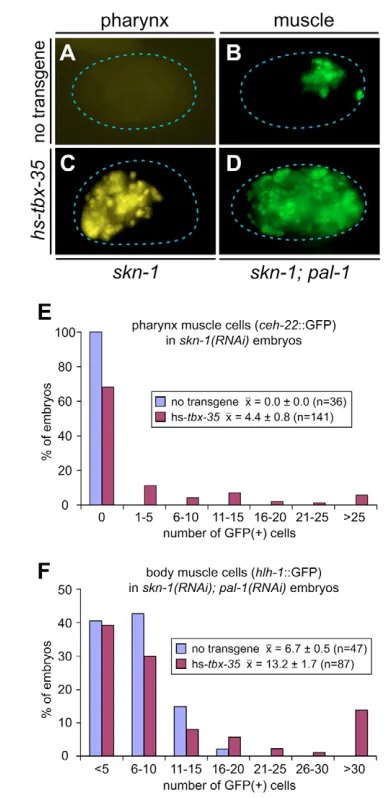
[image:7.612.332.528.57.456.2]into the ceh-22and hlh-1reporter strains. We used skn-1(RNAi) and skn-1(RNAi); pal-1(RNAi) backgrounds to block specification of pharynx and muscle precursors, respectively (Bowerman et al., 1992; Hunter and Kenyon, 1996). As shown in Fig. 7, expression of hs-tbx-35can promote development of pharynx and muscle in a significant proportion of embryos (30% in the case of pharynx). Heat shock of skn-1(RNAi) embryos carrying a hs-tbx-35[E42V] transgene, containing a missense change in a conserved amino acid (Fig. 2B), resulted in embryonic arrest without production of Fig. 6. tbx-35is required to specify ectopic MS-like cells.
(A) Ectopic MS-type muscle (hlh-1::GFP) in tbx-35(+); pie-1(RNAi); pal-1(RNAi)embryos. (B) Ectopic pharynx cells (ceh-22::GFP, pseudocolored yellow) in a tbx-35(+); mex-1(RNAi); pie-1(RNAi) embryo. (C) Very few hypodermal cells (lin-26::GFP, pseudocolored cyan) are made in a tbx-35(+); mex-1(RNAi); pie-1(RNAi) embryo (an average of 6.5±2.1 cells,
n=16). (D) Dramatic reduction in number of muscle cells in a tbx-35(–); pie-1(RNAi); pal-1(RNAi)embryo. (E) Near absence of pharynx in a tbx-35(–); mex-1(RNAi); pie-1(RNAi)embryo. (F) Production of hypodermal cells in a tbx-35(–); mex-1(RNAi); pie-1(RNAi)embryo (an average of 26.7±3.9 nuclei, n=11). Simultaneous depletion of pal-1greatly reduces the production of these extra hypodermal cells (Table 1).
Fig. 7. Overexpression of TBX-35 is sufficient to specify pharynx and muscle fates.Images depict terminal embryos that received a 30-minute heat shock at 33°C before the 100-cell stage. (A) Absence of pharynx muscle (ceh-22::GFP) in a skn-1(RNAi)embryo (0.0±0.0 cells,
n=36). (B) Small numbers of muscle cells (hlh-1::GFP) made in a skn-1(RNAi); pal-1(RNAi)background (6.7±0.5 cells, n=47). (C) Pharynx muscle cells are made when tbx-35 is overexpressed in a skn-1(RNAi)
background. Thirty-two percent of embryos (45/141) had an average of 13.8±1.8 cells per embryo, with 10 embryos containing at least 25 cells as shown here, or an overall average of 4.4±0.8 (n=141). (D) An increase in body muscle cells in a skn-1(RNAi); pal-1(RNAi)background following ectopic activation of tbx-35 (an average of 13.2±1.7 cells,
[image:7.612.52.302.61.194.2]D
E
V
E
LO
P
M
E
N
T
pharynx (n>50). We conclude that high levels of TBX-35 are sufficient to specify MS fates. As this activity requires a conserved amino acid in its predicted DNA-binding domain, TBX-35 appears to function as a classical transcriptional activator.
DISCUSSION
We have shown that the T-box gene tbx-35specifies the fate of the C. elegansMS blastomere. MED-1 directly activates tbx-35in MS, and a Wnt-dependent POP-1-independent mechanism blocks this activation in the E cell; loss of tbx-35function results in a drastic reduction in MS-derived cell types, both in the context of a normal MS blastomere and in mutants that make additional MS-like cells; and overexpression of tbx-35is sufficient to specify MS fates. As shown in Fig. 8, our data place tbx-35in the pathway for MS specification immediately downstream of med-1,2and upstream of tissue-specific regulators such as the pharynx identity gene FoxA/pha-4and the muscle identity gene MyoD/hlh-1(Fukushige and Krause, 2005; Gaudet and Mango, 2002).
TBX-35-independent MS fates
Our results suggest that skn-1(–)and med-1,2(–) embryos fail to make MS-derived cell types because they do not activate tbx-35. Although loss of med-1,2leads to an almost complete loss of MS-derived tissues and embryonic lethality, even in embryos that make a gut (Bowerman et al., 1992; Maduro et al., 2001), some tbx-35(tm1789)mutants elongate to threefold and even hatch before arresting. As no tbx-35(–)embryos escape lethality, there is probably no redundant activity that can completely compensate for the absence of TBX-35 function.
Do additional regulators specify at least some MS-like fates? Our observation that MS lineage activation of zygotic pal-1in tbx-35(–) embryos is of variable intensity is consistent with the existence of other MS fate-promoting, C-repressing regulators. At least two more genes, hlh-25and hlh-27, encoding homologs of the bHLH family of transcription factors, are activated in MS at the same time as tbx-35 (Broitman-Maduro et al., 2005).
Overexpression of hlh-25can specify some early cells as muscle progenitors, suggesting that HLH-25/27 may participate directly in muscle specification, or indirectly in other aspects of muscle inductions known to involve MS (Broitman-Maduro et al., 2005; Schnabel, 1995). Alternatively, targets of TBX-35 may be able to respond directly to residual MED-1,2, or other activators, present in the early MS lineage.
Mesoderm versus endoderm: a simpler network for a more complex lineage?
The embryonic MS and E lineages are remarkably different. The E lineage generates 20 cells of a single type (gut), while MS generates 80 cells of various types, including pharynx, muscle, coelomocytes and cells of the somatic gonad (Sulston et al., 1983). E specification requires an extrinsic induction, transduced through an overlapping Wnt/MAPK/Src pathway, while activity of TCF/POP-1, Caudal/PAL-1, SKN-1 and MED-1,2 all contribute to E specification (Bei et al., 2002; Goldstein, 1992; Maduro et al., 2005b; Rocheleau et al., 1997; Shetty et al., 2005; Thorpe et al., 1997). By contrast, MS identity is an intrinsic property of an EMS daughter (Goldstein, 1992), and our data show that MS may be specified by the relatively simple linear pathway, SKN-1r MED-1,2rTBX-35.
Although specification of the MS cell appears to be comparatively simple, the development of its descendants requires the deployment of multiple gene batteries. For one, a complex gene network is deployed by the regulator FoxA/PHA-4 to specify the developing pharynx, an organ that itself is composed of different cell types such as neurons and muscle (Gaudet and Mango, 2002; Sulston et al., 1983). As MS-derived pharynx cells arise from only two of the four granddaughters of MS (MSaa and MSpa), additional factors must restrict pharynx fate to these sublineages (Sulston et al., 1983). As TCF/POP-1 displays nuclear anteroposterior differences in these cells (Lin et al., 1998; Maduro et al., 2002), the Wnt/MAPK pathway is likely to be involved in differential activation of pharynx potential within the MS lineages. The most obvious conclusion from the differences between MS and E, then, is that the complexity of the lineage elaborated by an early embryonic cell is not necessarily correlated with the nature of the gene networks that specify the progenitor itself.
Wnt-dependent repression of mesoderm
We have found that tbx-35is repressed in E in a Wnt/MAPK-dependent manner, as depletion of -catenin/WRM-1 or Nemo/LIT-1 results in ectopic activation of tbx-35in E. In the absence of pop-1, activation of tbx-35persists in the MS cell, even though the endoderm genes end-1 and end-3become activated in both MS and E (Maduro et al., 2005a). The persistence of tbx-35expression in MS in pop-1(–)embryos, and the E to C transformation in end-1,3(–) embryos, suggest that repression of tbx-35 in E is not achieved by END-1,3. As MS (like E) adopts an endoderm fate in pop-1(–) embryos, END-1,3 outcompete TBX-35 when both are present together in MS. Hence, depletion of a Wnt-dependent repressor of tbx-35might not demonstrate loss of endoderm. In Xenopus, HMG proteins of the Sox family can directly interact with -catenin, blocking activation of Wnt target genes by depleting this necessary TCF co-activator (Zorn et al., 1999), although in the case of the MS-E decision, such a mechanism would probably block endoderm specification itself. The C. elegansgenome encodes at least three Sox-like genes (indexed in WormBase, release WS156), one of which (sox-1) we have shown to be expressed in the early MS and E lineages (Broitman-Maduro et al., 2005); however, the role of any
SKN-1 MED-1,2 TBX-35
PHA-4
HLH-1 POP-1
PAL-1
pharynx MS fate
E fate (endoderm)
C fate
(muscle, hypodermis)
muscle
maternal zygotic
blastomere specification tissue identity
[image:8.612.52.293.61.174.2]EMS MS
Fig. 8. A model for specification of the MS blastomere.A gene cascade that begins with maternal SKN-1 progresses through activation of med-1,2in EMS, which in turn activate tbx-35in MS. POP-1 represses endoderm specification in MS. In E, the sister of MS, a Wnt/MAPK-dependent mechanism represses tbx-35through an unknown effector (not shown). TBX-35 acts upstream of genes that specify pharynx and muscle fates, through regulators such as pha-4and
D
E
V
E
LO
P
M
E
N
T
of these in MS or E specification is not yet known, and as C. elegans continually surprises the development field with unexpected Wnt/MAPK features (Kidd, 3rd et al., 2005), we can make no reliable predictions. The identification of such an effector would provide an additional mechanism by which Wnt/MAPK-dependent nuclear differences could be established in C. elegansdevelopment (Kaletta et al., 1997; Rocheleau et al., 1999).
T-box genes in mesoderm development
The C. elegans pharynx appears to be an organ whose development requires the activity of multiple Tbx factors in different lineages. Although tbx-35specifies MS, the redundant genes tbx-37and tbx-38are required for the GLP-1-mediated induction that specifies the ABa-derived precursors of the largely anterior half of the pharynx (Good et al., 2004). More recently, yet another Tbx gene, tbx-2, was found to be required for development of ABa-derived pharynx muscles (Chowdhuri et al., 2006).
Tbx regulators are essential for heart development in vertebrates; in humans, mutations in Tbx genes lead to congenital cardiac defects (Plageman and Yutzey, 2005). Recently, Tbx genes have been found to be important for development of heart in Drosophila, in which the Tbx genes Dorsocross, midlineand H15function in the specification and formation of cardiac cells (Miskolczi-McCallum et al., 2005; Reim and Frasch, 2005). Although C. eleganslacks a circulatory system, its pharynx has some similarities to a heart, as it is a pumping organ containing contractile muscle that is distinct from body muscle (Avery and Shtonda, 2003; Okkema et al., 1993). Indeed, pharynx developmental defects in C. elegans ceh-22mutants can be rescued by expression of its vertebrate homolog, the heart specification gene Nkx2.5(Haun et al., 1998). As MS descendants produce most of the posterior pharynx (and MS induces the specification of the remainder from the AB lineage), is the specification of MS by a Tbx factor truly an example of homology? Primitive bilaterians are thought to have evolved regions of contractile mesoderm that functioned as a primordial heart (Bishopric, 2005). Specification of cells within such a tissue territory may have been controlled directly by Tbx regulators. Extant organisms such as C. elegans, in which cell fates are specified early, might possess Tbx gene cascades into which other layers of regulation have been intercalated (Erwin and Davidson, 2002). Hence, the use of tbx-35to specify MS may reflect its derivation from a more direct role for Tbx proteins in direct activation of genes in differentiated mesoderm.
The authors thank Wei Wu for screening for additional tbx-35::GFP integrants; Shohei Mitani for tbx-35mutants; Andrew Fire for reporter plasmids; and Jessica Smith and Craig Hunter for a pal-1::YFP strain. This work was funded by an NSF grant to M.M. (IBN#0416922).
References
An, J. H. and Blackwell, T. K.(2003). SKN-1 links C. elegans mesendodermal specification to a conserved oxidative stress response. Genes Dev.17, 1882-1893.
Avery, L. and Shtonda, B. B.(2003). Food transport in the C. elegans pharynx. J. Exp. Biol. 206, 2441-2457.
Batchelder, C., Dunn, M. A., Choy, B., Suh, Y., Cassie, C., Shim, E. Y., Shin, T. H., Mello, C., Seydoux, G. and Blackwell, T. K.(1999). Transcriptional repression by the Caenorhabditis elegans germ-line protein PIE-1. Genes Dev. 13, 202-212.
Baugh, L. R., Hill, A. A., Claggett, J. M., Hill-Harfe, K., Wen, J. C., Slonim, D. K., Brown, E. L. and Hunter, C. P.(2005). The homeodomain protein PAL-1 specifies a lineage-specific regulatory network in the C. elegans embryo. Development132, 1843-1854.
Bei, Y., Hogan, J., Berkowitz, L. A., Soto, M., Rocheleau, C. E., Pang, K. M., Collins, J. and Mello, C. C.(2002). SRC-1 and Wnt signaling act together to specify endoderm and to control cleavage orientation in early C. elegans embryos. Dev. Cell3, 113-125.
Bishopric, N. H.(2005). Evolution of the heart from bacteria to man. Ann. N. Y. Acad. Sci.1047, 13-29.
Blackwell, T. K., Bowerman, B., Priess, J. R. and Weintraub, H.(1994). Formation of a monomeric DNA binding domain by Skn-1 bZIP and homeodomain elements. Science266, 621-628.
Bowerman, B., Eaton, B. A. and Priess, J. R.(1992). skn-1, a maternally expressed gene required to specify the fate of ventral blastomeres in the early C. elegans embryo. Cell68, 1061-1075.
Bowerman, B., Draper, B. W., Mello, C. C. and Priess, J. R.(1993). The maternal gene skn-1 encodes a protein that is distributed unequally in early C. elegans embryos. Cell74, 443-452.
Broitman-Maduro, G., Maduro, M. F. and Rothman, J. H.(2005). The noncanonical binding site of the MED-1 GATA factor defines differentially regulated target genes in the C. elegans mesendoderm. Dev. Cell8, 427-433. Chen, J. Y., Bottjer, D. J., Oliveri, P., Dornbos, S. Q., Gao, F., Ruffins, S., Chi, H., Li, C. W. and Davidson, E. H.(2004). Small bilaterian fossils from 40 to 55 million years before the cambrian. Science305, 218-222.
Chen, L., Krause, M., Sepanski, M. and Fire, A.(1994). The Caenorhabditis elegans MYOD homologue HLH-1 is essential for proper muscle function and complete morphogenesis. Development120, 1631-1641.
Chowdhuri, S. R., Crum, T., Woollard, A., Aslam, S. and Okkema, P. G.(2006). The T-box factor TBX-2 and the SUMO conjugating enzyme UBC-9 are required for ABa-derived pharyngeal muscle in C. elegans. Dev. Biol.(in press). Conrad, R., Liou, R. F. and Blumenthal, T.(1993). Functional analysis of a C.
elegans trans-splice acceptor. Nucleic Acids Res. 21, 913-919.
Coroian, C., Broitman-Maduro, G. and Maduro, M. F.(2005). Med-type GATA factors and the evolution of mesendoderm specification in nematodes. Dev. Biol. 289, 444-455.
Erwin, D. H. and Davidson, E. H.(2002). The last common bilaterian ancestor. Development129, 3021-3032.
Fire, A., Xu, S., Montgomery, M. K., Kostas, S. A., Driver, S. E. and Mello, C. C.(1998). Potent and specific genetic interference by double-stranded RNA in Caenorhabditis elegans. Nature391, 806-811.
Fukushige, T. and Krause, M.(2005). The myogenic potency of HLH-1 reveals wide-spread developmental plasticity in early C. elegans embryos. Development 132, 1795-1805.
Gaudet, J. and Mango, S. E.(2002). Regulation of organogenesis by the Caenorhabditis elegans FoxA protein PHA-4. Science295, 821-825.
Goldstein, B.(1992). Induction of gut in Caenorhabditis elegans embryos. Nature 357, 255-257.
Good, K., Ciosk, R., Nance, J., Neves, A., Hill, R. J. and Priess, J. R.(2004). The T-box transcription factors TBX-37 and TBX-38 link GLP-1/Notch signaling to mesoderm induction in C. elegans embryos. Development131, 1967-1978. Goszczynski, B. and McGhee, J. D.(2005). Re-evaluation of the role of the
med-1 and med-2 genes in specifying the C. elegans endoderm. Genetics171, 545-555.
Haun, C., Alexander, J., Stainier, D. Y. and Okkema, P. G.(1998). Rescue of Caenorhabditis elegans pharyngeal development by a vertebrate heart specification gene. Proc. Natl. Acad. Sci. USA95, 5072-5075.
Hunter, C. P. and Kenyon, C.(1996). Spatial and temporal controls target pal-1 blastomere-specification activity to a single blastomere lineage in C. elegans embryos. Cell87, 217-226.
Kaletta, T., Schnabel, H. and Schnabel, R.(1997). Binary specification of the embryonic lineage in Caenorhabditis elegans. Nature390, 294-298. Kidd, A. R., 3rd, Miskowski, J. A., Siegfried, K. R., Sawa, H. and Kimble, J.
(2005). A beta-catenin identified by functional rather than sequence criteria and its role in Wnt/MAPK signaling. Cell121, 761-772.
Krause, M., Fire, A., Harrison, S. W., Priess, J. and Weintraub, H.(1990). CeMyoD accumulation defines the body wall muscle cell fate during C. elegans embryogenesis. Cell63, 907-919.
Krause, M., Harrison, S. W., Xu, S. Q., Chen, L. and Fire, A.(1994). Elements regulating cell- and stage-specific expression of the C. elegans MyoD family homolog hlh-1. Dev. Biol.166, 133-148.
Labouesse, M., Hartwieg, E. and Horvitz, H. R.(1996). The Caenorhabditis elegans LIN-26 protein is required to specify and/or maintain all non-neuronal ectodermal cell fates. Development122, 2579-2588.
Lin, R., Thompson, S. and Priess, J. R.(1995). pop-1 encodes an HMG box protein required for the specification of a mesoderm precursor in early C. elegans embryos. Cell83, 599-609.
Lin, R., Hill, R. J. and Priess, J. R.(1998). POP-1 and anterior-posterior fate decisions in C. elegans embryos. Cell92, 229-239.
Lo, M. C., Gay, F., Odom, R., Shi, Y. and Lin, R.(2004). Phosphorylation by the beta-catenin/MAPK complex promotes 14-3-3-mediated nuclear export of TCF/POP-1 in signal-responsive cells in C. elegans. Cell117, 95-106. Maduro, M. and Pilgrim, D.(1995). Identification and cloning of unc-119, a
gene expressed in the Caenorhabditis elegans nervous system. Genetics141, 977-988.
D
E
V
E
LO
P
M
E
N
T
Maduro, M. F., Meneghini, M. D., Bowerman, B., Broitman-Maduro, G. and Rothman, J. H.(2001). Restriction of mesendoderm to a single blastomere by the combined action of SKN-1 and a GSK-3beta homolog is mediated by MED-1 and –2 in C. elegans. Mol. Cell 7, 475-485.
Maduro, M. F., Lin, R. and Rothman, J. H.(2002). Dynamics of a developmental switch: recursive intracellular and intranuclear redistribution of Caenorhabditis elegans POP-1 parallels Wnt-inhibited transcriptional repression. Dev. Biol.248, 128-142.
Maduro, M. F., Hill, R. J., Heid, P. J., Newman-Smith, E. D., Zhu, J., Priess, J. and Rothman, J.(2005a). Genetic redundancy in endoderm specification within the genus Caenorhabditis. Dev. Biol.284, 509-522.
Maduro, M. F., Kasmir, J. J., Zhu, J. and Rothman, J. H.(2005b). The Wnt effector POP-1 and the PAL-1/Caudal homeoprotein collaborate with SKN-1 to activate C. elegans endoderm development. Dev. Biol.285, 510-523. Mello, C. C., Kramer, J. M., Stinchcomb, D. and Ambros, V.(1991). Efficient
gene transfer in C.elegans: extrachromosomal maintenance and integration of transforming sequences. EMBO J.10, 3959-3970.
Mello, C. C., Draper, B. W., Krause, M., Weintraub, H. and Priess, J. R.(1992). The pie-1 and mex-1 genes and maternal control of blastomere identity in early C. elegans embryos. Cell70, 163-176.
Miskolczi-McCallum, C. M., Scavetta, R. J., Svendsen, P. C., Soanes, K. H. and Brook, W. J.(2005). The Drosophila melanogaster T-box genes midline and H15 are conserved regulators of heart development. Dev. Biol.278, 459-472.
Naiche, L. A., Harrelson, Z., Kelly, R. G. and Papaioannou, V. E.(2005). T-Box Genes in vertebrate development. Annu. Rev. Genet. 39, 219-239.
Okkema, P. G. and Fire, A.(1994). The Caenorhabditis elegans NK-2 class homeoprotein CEH-22 is involved in combinatorial activation of gene expression in pharyngeal muscle. Development120, 2175-2186.
Okkema, P. G., Harrison, S. W., Plunger, V., Aryana, A. and Fire, A.(1993). Sequence requirements for myosin gene expression and regulation in Caenorhabditis elegans. Genetics135, 385-404.
Plageman, T. F., Jr and Yutzey, K. E.(2005). T-box genes and heart development: putting the “T” in heart. Dev. Dyn.232, 11-20.
Priess, J. R., Schnabel, H. and Schnabel, R.(1987). The glp-1 locus and cellular interactions in early C. elegans embryos. Cell51, 601-611.
Reece-Hoyes, J. S., Deplancke, B., Shingles, J., Grove, C. A., Hope, I. A. and Walhout, A. J.(2005). A compendium of Caenorhabditis elegans regulatory
transcription factors: a resource for mapping transcription regulatory networks. Genome Biol.6, R110.
Reim, I. and Frasch, M.(2005). The Dorsocross T-box genes are key components of the regulatory network controlling early cardiogenesis in Drosophila. Development132, 4911-4925.
Robertson, S. M., Shetty, P. and Lin, R.(2004). Identification of lineage-specific zygotic transcripts in early Caenorhabditis elegans embryos. Dev. Biol.276, 493-507.
Rocheleau, C. E., Downs, W. D., Lin, R., Wittmann, C., Bei, Y., Cha, Y. H., Ali, M., Priess, J. R. and Mello, C. C.(1997). Wnt signaling and an APC-related gene specify endoderm in early C. elegans embryos. Cell90, 707-716. Rocheleau, C. E., Yasuda, J., Shin, T. H., Lin, R., Sawa, H., Okano, H., Priess, J.
R., Davis, R. J. and Mello, C. C.(1999). WRM-1 activates the LIT-1 protein kinase to transduce anterior/posterior polarity signals in C. elegans. Cell97, 717-726.
Schnabel, R.(1995). Duels without obvious sense: counteracting inductions involved in body wall muscle development in the Caenorhabditis elegans embryo. Development121, 2219-2232.
Shetty, P., Lo, M. C., Robertson, S. M. and Lin, R.(2005). C. elegans TCF protein, POP-1, converts from repressor to activator as a result of Wnt-induced lowering of nuclear levels. Dev. Biol.285, 584-592.
Sulston, J. E., Schierenberg, E., White, J. G. and Thomson, J. N.(1983). The embryonic cell lineage of the nematode Caenorhabditis elegans. Dev. Biol.100, 64-119.
Thorpe, C. J., Schlesinger, A., Carter, J. C. and Bowerman, B.(1997). Wnt signaling polarizes an early C. elegans blastomere to distinguish endoderm from mesoderm. Cell90, 695-705.
Timmons, L. and Fire, A.(1998). Specific interference by ingested dsRNA. Nature 395, 854.
Wilson, V. and Conlon, F. L.(2002). The T-box family. Genome Biol.3, REVIEWS3008.
Woollard, A. and Hodgkin, J.(2000). The Caenorhabditis elegans fate-determining gene mab-9 encodes a T-box protein required to pattern the posterior hindgut. Genes Dev.14, 596-603.