Network theories for technologyenabled
learning and social change: Connectivism
and actor network theory
Bell, F
Title
Network theories for technologyenabled learning and social change:
Connectivism and actor network theory
Authors
Bell, F
Type
Conference or Workshop Item
URL
This version is available at: http://usir.salford.ac.uk/9270/
Published Date
2010
USIR is a digital collection of the research output of the University of Salford. Where copyright
permits, full text material held in the repository is made freely available online and can be read,
downloaded and copied for noncommercial private study or research purposes. Please check the
manuscript for any further copyright restrictions.
Network theories for technology-enabled learning and
social change: Connectivism and Actor Network theory
Frances Bell
Information Systems, Organisation and Society Research Centre, Salford Business School,
Abstract
Learning never was confined to classrooms. We all learn in, out of, before, during and after episodes of formal education. The changing sociotechnical context offers a promise of new opportunities, and the sense that somehow things may be different. Use of the Internet and other emerging technologies is spreading in frequency, time and space. People and organizations wish to use technology to support learning seek theories to frame their understanding and their innovations. In this article we explore Connectivism, that is positioned as a theory for the digital age, in use on a Massive Open Online Course (MOOC), Connectivism and Connective Knowledge, in 2008. We then compare Connectivism with another network theory, Actor Network Theory, to explore possible synergies. We found that Connectivism enables educators and learners to legitimise their use of technology to support teaching and learning. Connectivism, a relatively new theory, can benefit from a richer empirical base as it develops. Since the scope of educational change can vary from a specific learning setting through organisational and societal settings, we can develop theories through empirical exploration of cases across the range of settings to support our understanding and actions.
Actions in Keywords
Learning theory; Connectivism; Actor Network Theory.
Introduction
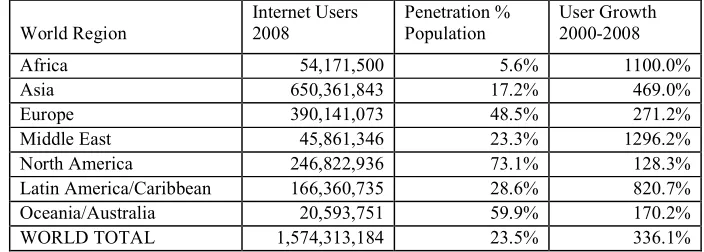
As costs of digital devices, storage and bandwidth have fallen, audio, video and text-processing has come to be used daily by people at home, at work and in formal education. Internet usage has became commonplace in the developed world and is growing fast in developing countries see Table 1 ("Internet Usage Statistics," 2009). There are still significant discrepancies in Internet penetration rates but Africa is enjoying the greatest growth rate in users 2000-2008 (from a low base), and Asia already has the largest number of Internet users. This widespread and growing number of Internet users offers the possibility of local and global dialogue and sharing of resources, subject to linguistic and socio-cultural constraints.
World Region
Internet Users 2008
Penetration % Population
User Growth 2000-2008
Africa 54,171,500 5.6% 1100.0%
Asia 650,361,843 17.2% 469.0%
Europe 390,141,073 48.5% 271.2%
Middle East 45,861,346 23.3% 1296.2%
North America 246,822,936 73.1% 128.3%
Latin America/Caribbean 166,360,735 28.6% 820.7%
Oceania/Australia 20,593,751 59.9% 170.2%
[image:2.612.128.480.473.599.2]WORLD TOTAL 1,574,313,184 23.5% 336.1%
Table 1 - Internet Users, Penetration and Growth Statistics, from (Internet usage statistics 2009)
There has been a shift in how people use the Internet from being primarily consumers to being producers of information, whether that information is their online presence, a read count, a comment, a remix of someone else’s content or some original content. The development of web and internetworked technologies has provoked a broad interest in the activities of knowledge creation and sharing. Learning is not only a human activity that is
escaping from the classroom but also one that is being recognized as happening more in sites such as the
independent informal learners). The web offers the possibility for many to ‘publish’ their ideas and creative works, although it is often still a small minority who participate by posting and commenting, as most only read. Knowledge is simultaneously seen as a commodity that can be managed and sold, and as a social activity, a commons within which knowledge flows as people share and refine ideas. Siemens (2006) recommends that a practical discussion of knowledge can be held if it is seen as:
something that a) describes some aspect of the world, and b) something on which we can act (Siemens, 2006, p. 150)
This flexible definition of knowledge includes our own sense-making of the world, ‘know how’, codified knowledge in texts, multimedia. It provides a basis for viewing knowledge as residing in networks of humans and non-human appliances, whilst leaving space for human agency.
Those concerned with education - teachers, learning technologists - want to understand learning in this changing
technological context and think about how education might be different. Theories of web-enabled learning have
grown out of the disciplines of education and what is called instructional design in USA, with competing and philosophically disjoint theories such as behaviorism, cognitivism and (social) constructivism holding sway in different quarters and at different times. Behaviourism offers laws to govern behaviour that can inform a teacher’s manipulation of the learning environment (including texts and activities) to promote learning, for example Gagne’s nine events of instruction. Cognitivism opens up the black box of the mind regarding the learner as information processor. Social constructivism is an interpretivist approach, based on phenomenology, that has an “ontology in which reality is subjective, a social product constructed and interpreted by humans as social actors according to their beliefs and value systems”, (Darke, Shanks, & Broadbent, 1998). Hence social constructivism places a greater emphasis on the importance of social interactions in affecting the individual's generation of knowledge or facts about the world. Such categorizations of theories can run counter to the practice of teachers who often adopt and adapt theories in a flexible manner to help them to understand and plan teaching and learning activities. It can be argued that theories of learning that were based on assumptions of students being taught by teachers, usually in a classroom, do not provide an adequate framework for us to think and act in the digitally saturated and connected world in which we live. Networked theories of learning (Goodyear, 2001) and of society (Castells, 2000) have been elaborated to explain the impact of ICTs across
education, commerce and society in general. Learners, teachers, managers and policy makers are trying to
integrate technology into learning in formal and informal settings, looking for theories that can usefully inform their actions.
George Siemens proposes Connectivism as a learning theory for the digital age as a successor to behaviourism, cognitivism and constructivism (Siemens, 2004). Within the broad church that is Connectivism is included work by Stephen Downes on connectionist knowledge (Downes, 2005). Learning is increasingly entwined with our use of technologies, and we strive to understand how changes take place in what we know and do. The setting for this study was Connectivism and Connective Knowledge (CCK08), a MOOC run by Downes and Siemens through the University of Manitoba. Since global participants were exploring ideas related to Connectivism and Connective Knowledge through multiple channels, technologies and web services, this course
can legitimately be seen as a reflexive enactment of the theory of Connectivism1. This paper explores two
questions:
• How does Connectivism behave as a knowledge network (in the CCK08 course and beyond)?
• Can Actor Network Theory (and Social Shaping Theories in general) inform the development of
Connectivism as a knowledge network?
Research Method
The literature review outlines actor-network theory and Connectivism, in the context of the broader development of theories of education and other social change, providing a conceptual framework for the analysis. The primary data for this research is obtained from three main sources: time-segmented google searches of blogs and Google Scholar; the author’s participation (including observation) in CK08 (supplemented
by searches of the CCK08 Moodle forums at http://ltc.umanitoba.ca/moodle/course/view.php?id=20 ); and
subsequent study of the archive of the CCK08 network resources. The analysis was done by the author on an
1
incremental basis, based on reading of the literature and CCK08 course interactions (punctuated and partially recorded by the reflective blog posts, and enriched by responses to these). The investigation of the Internet links between Actor-Network (Theory) (ANT) and Connectivism was done by Google blog and other searches, on successive occasions during and after the course. This data has been summarized and presented retrospectively, using MS Excel.
Theories of Learning and Social Action
A theory can be seen as a useful set of ideas that help us make sense of a phenomenon, something more formal such as a conceptualization or set of precepts, or something that can be proved/disproved. A learning theory can help us to think about how and why change (in learning) happens (Smith, 1999). Another way of seeing theory is as body of knowledge that relates to and emerges from our own grounded theorizing. There is an ongoing trend since to include both human agency and material/societal structures in our analysis of the world in general,
and in education in particular. Vygotsky’s work in the early 20th Century highlighted the mediating role of
language in learning. Since then, Activity Theory has been developed over three ‘generations’ and is now widely used in the interpretation of the use of Information and Communication Technologies (ICTs) in education and other domains. Its inclusion of cultural artifacts is an asset in the analysis of the development and use of technology, viewing human activity as being mediated by artifacts over time. Huamns engage in this mediated activity in networks, which can themselves be reconfigured through expansive transformation.
However the primary focus remains on human activity, whereas Actor Network Theory (ANT) includes human
and non-human material objects in its symmetric analysis,2 that is also reflected in Connectivism’s assertion that
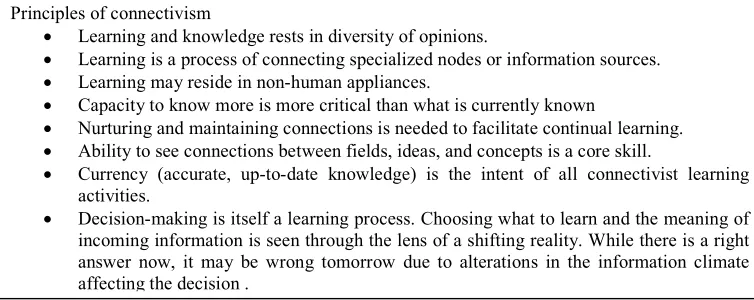
[image:4.612.96.473.320.470.2]learning resides in non-human appliances, see Figure 1.
Figure 1 - Principles of Connectivism (Siemens, 2004)
Connectivism
George Siemens identifies as limitations of behaviourism, cognitivism and constructivism: their intrapersonal view of learning; their failure to address the learning that is located within technology and organizations; and their lack of contribution to the value judgments that need to be made in knowledge-rich environments (Siemens, 2004). Prior to this, the term ‘Connectivism’ had been used when applying ideas from biological models of the brain to neural networks in machine learning, treating the neural network as part of a whole:
“The overall view that a strongly interconnected neural network and its firing patterns must be considered as part of a whole became an important principle of orientation in the study of the nervous system; it is referred to under the name of Connectivism” (Gestzi, 1990).
In machine learning, software neural networks that use network models to learn are applied to problems where it
is difficult to model a function but it can be inferred from observation3 e.g. image processing and data mining.
2
Material semiotics maps relations simultaneously between material objects and ideas, sets of which relations form networks.
3
http://en.wikipedia.org/wiki/Artificial_neural_network
Principles of connectivism
• Learning and knowledge rests in diversity of opinions.
• Learning is a process of connecting specialized nodes or information sources.
• Learning may reside in non-human appliances.
• Capacity to know more is more critical than what is currently known
• Nurturing and maintaining connections is needed to facilitate continual learning.
• Ability to see connections between fields, ideas, and concepts is a core skill.
• Currency (accurate, up-to-date knowledge) is the intent of all connectivist learning
activities.
• Decision-making is itself a learning process. Choosing what to learn and the meaning of
In the current and rapidly growing understanding of how the brain works, the network metaphor is applied to brain functions, including learning. Stephen Downes and George Siemens have brought together their ideas on the use of networks in understanding learning, on many levels, in a theory called Connectivism.
Siemens sets a bold research agenda around the sharing of cognitive tasks between people and technology; coping with rapid change in the ‘information ecology’; and the impact of theories of networks, complexity and chaos. He defines a network as connections between entities (nodes), where the nodes can be individuals, groups, systems, fields, ideas or communities, with a set of broad guiding statements, see
Figure 1. Downes gives a detailed account of connective knowledge, a form of distributed knowledge spread
across more than one entity, characterising it as “knowledge of the interaction” (Downes, 2005).
Knowledge in the network is seen as decentralized (Siemens, 2006, p. 92) where knowledge is too diverse and flows too rapidly to be held in the human mind. Connectivism draws on Snowden’s 4 ontologies of knowledge (simple, complicated, complex and chaotic) (Siemens, 2006, p. 97). and on ‘rhizomatic’ knowledge - negotiable community-based (Cormier, 2008). Connectivism appears to be based on a pluralist epistemology (acknowledging diversity of ‘opinions’) as in social constructivism, but a valid goal of a connectivist learning activity is to achieve accurate and up-to-date knowledge. Accuracy must then be determined within specific contexts. In 2006 Downes outlined a controversial distinction between groups and networks in a moving blog
post http://halfanhour.blogspot.com/2006/10/that-group-feeling.html , and presented this in a more formal way
in this presentation in New Zealand http://www.downes.ca/post/42521 . Downes characterises networks, in
comparison with groups as emphasising diversity, autonomy, openness and emergent knowledge. Kop and Hill(2008)’s comprehensive analysis concludes that Connectivism is influential in the development of pedagogies for the current shift in context accompanying emerging technologies but that it does not constitute a new learning theory distinct from ones that precede it. To summarise, Connectivism draws on a diverse set of theories from learning, education, philosophy of knowledge and knowledge management. It is situated within a discourse of change in education, related to the transformative possibilities offered by emerging technologies, and is available to inform changing pedagogies.
Actor-Network Theory
Under the general umbrella of Social Shaping Theories (SST), various theories have emerged, including Social Construction of Technology (SCOT) (Mackenzie & Wacjman, 1999), and Actor-Network Theory (J. Law & Hassard, 1999). These theories emerged from Science and Technology Studies as a response to the then prevailing view, technological determinism, characterised as the belief that
Technologies change, either because of scientific advance or following a logic of their own; and then they have effects on society. (Mackenzie & Wacjman, 1999)
Fox (2005) identifies three key aspects of Actor Network Theory: symmetrical analysis whereby material and
non-human elements are treated the same as social and human elements; ANT analyses are intended to illuminate how a network grows and decays rather than explain outcomes; and third that the process of
growth/decay is one of translation (Fox, 2005). Law (2007) tells us that ANT is not a theory but rather it is
descriptive, telling us stories of how things do or do not assemble, a sociology of translation, emphasizing the work of human and non-human actors in building a network, as they form alliances.
Connectivism and Connective Knowledge (CCK08)
CCK08 was an online course offered by the University of Manitoba over 12 weeks to “outline a connectivist understanding of educational systems of the future”. The course details stress the transformational aspects of
learning technologies and the need to explore the underlying reasons for change4. The course materials were
presented and participants contributed through a range of channels including wiki, forums on Moodle (an Open Source Virtual Learning Environment), blogs, Elluminate (an online classroom with video chat, and shared interactive board), a channel on UStream.tv, Second Life, and a variety of web resources. All of these were
4
integrated via a daily newsletter, and aggregation conducted via the CCK08 tag. Siemens and Downes have
provided their own analysis of technologies and other aspects56. 24 students took the course for credits with
University of Manitoba, 1 student was accredited by their home institution and around 2200 followed the course with varying levels of commitment and participation. There was a large volume of student interaction on the forums, with hundreds of postings in weekly forums on the CCK08 Moodle site. As a participant observer, I can say that I encountered creative dialogue and people strengthening their links with resources, but more importantly with each other, as they cited each other’s contributions and included fellow students on their blog rolls.
Discussion
Points of contact between Connectivism and ANT
Both Connectivism and ANT employ symmetrical analysis that includes human and non-human elements.
Connectivism characterizes learning as occurring within the network, whilst ANT concerns itself with how the
network forms and decays over time: both learning and network formation are dynamic processes. On the other hand, I observed that many of the CCK08 participants, whilst recognising the importance of resources and technologies, adopted a much more people-centric approach to networks in their dialogue. Siemen’s contention that the pipe is more important than the content within the pipe suggests a material semiotic approach, also reflected in rhizomatic knowledge.
Scholar.google search
0 200 400 600 800 1000 1200 1400 1600
1990 1992 1994 1996 1998 2000 2002 2004 2006 2008
Year
H
it
s
Connectivism Actor-Network
Google Blog Search
0 2000 4000 6000 8000 10000 12000 14000
2000 2001 2002 2003 2004 2005 2006 2007 2008 Year
H
it
s
Connectivism Actor-Network
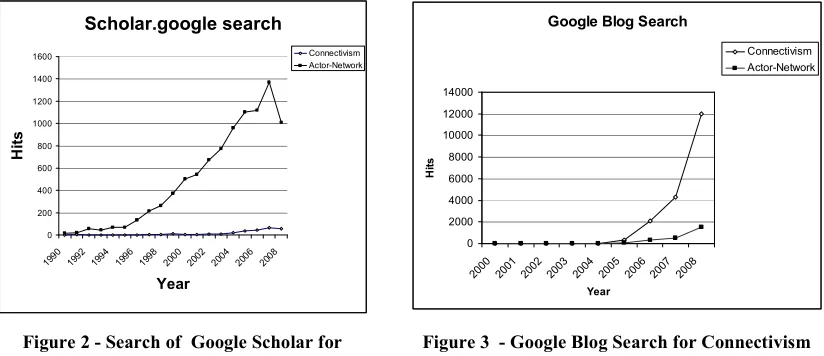
These points of contact between ANT and Connectivism have not, so far, been explored in dialogue and writings by the key writers on Connectivism. Figure 2 shows us that ANT has much more substantial body of writing associated (though Connectivism may just be at the point that ANT was 15 years ago). However, inasmuch as scholar.google.co.uk represents ‘scholarly’ literature, a search showed minimal contact between those writing about Connectivism and ANT. Of the 6 returns, 1 was not a scholarly text, 3 referred to Connectivism concepts prior to the ‘theory of Connectivism’ and only 2 referred to both. From this, we can infer that ANT had not been a significant influence on the development of Connectivism. ANT was taken up by a small minority of participants on CCK08, who recognized the points of contact and tried to bring the ideas together. Downes did pick up in the CCK08 Daily newsletter on comments from participants that ANT was a theory of social action rather than education; and about Connectivism’s bolder claims about learning as a
neurological phenomenon and its normative position on what could be
http://connect.downes.ca/cgi-bin/page.cgi?post=44375 . He also rejected the idea that network was used as a metaphor in Connectivism. These three points are worthy of further analysis, see next section.
5
http://www.elearnspace.org/blog/2009/02/23/cck08-wrapup-recording/
6
[image:6.612.105.517.282.460.2]http://halfanhour.blogspot.com/2009/02/access2oer-cck08-solution.html
Figure 2 - Search of Google Scholar for Connectivism and Actor network
Differences between ANT and Connectivism
A significant difference between ANT and Connectivism is in the latter’s connection with the transformational potential of learning technologies in education, which transformation may be considered to be a social action. ANT is concerned with social action but adopts a descriptive rather than a normative or even an emancipatory stance. The stories told in ANT accounts of some part of the world may help imagine, and even effect, a changed future but the nature of that changed future is not embedded within ANT. Connectivism is clearly ‘different’ from ANT in its concern with learning, and the role of technology in changing how people learn and how knowledge is shared. These differences are most clearly evident in Downes’ writing on the differences between groups and networks that he sees as an important element of Connectivism, though one on which
Siemens places less emphasis, seeing groups as type of network
http://elearnspace.org/media/CCK08_Wk5/player.html. Downes’ clear articulation of the difference between networks and groups is normative and provoked much debate on the Moodle forums in CCK08. Particularly controversial were his claims that “groups are based on passion while networks are based on reason”
http://halfanhour.blogspot.com/2006/10/that-group-feeling.html, and that socialization should not be a goal of
education http://ltc.umanitoba.ca/moodle/mod/forum/discuss.php?d=956. From my observation, there was
limited support for either of these claims from the CCK08 participants, but that may not be surprising given the preponderance of people who worked in formal and informal education roles. It seemed that they were more interested in how emerging technologies can help them to make incremental changes to practice in teaching and learning, rather than a radical overturning of education systems.
The second and third claims, the neural aspects of learning, and that network should not be considered as a metaphor for learning, can be dealt with together. Clearly, it makes sense to apply findings from brain research to the practice of teaching and learning. For example, it is very useful to know that the adolescent (and even older) brain is still very much under development rather than regard learners as beings with fixed abilities and attributes. What is less clear to me is that neural networks within the brain should operate in an equivalent way to networks of larger things like people and technologies. The difficulty lies in focusing on the attributes of networks as entities, rather than as ANT does, on their formation and decay. Downes presents reasoned arguments of different types of associationism but the elision of neural networks and knowledge networks (of human and non-human appliances) is presented fairly unproblematically as follows:
if a human mind can come to 'know', and if a human mind is, essentially, a network, then any network can come to 'know', and for that matter, so can a society. (Downes, 2005).
We find ourselves asking what does it mean for a network to know, when it may be more useful to think of how the network came to be at a moment in time. Another difference between ANT and Connectivism is that ANT is presented through rich empirical stories of networks and alliances building and fragmenting, whereas Connectivism is argued from referent work, and in distinction to previous theories. It may be that such rich Connectivism case studies are in progress but not yet evident.
Connectivism as a knowledge network
At an early stage of CCK08, George Siemens recognized that Connectivism is open to revision and that the
CCK08 might be a site for critique of Connectivism saying:
I hope we can make progress in this course [on critiquing Connectivism], but I don’t think we’ll achieve the task in only 12 weeks. Exploring, critiquing, extending, and revising a theory is a task
of generations.http://ltc.umanitoba.ca/moodle/mod/forum/discuss.php?d=808#p4369
Evidenced by the quantity and quality of participation on CCK08, Connectivism is clearly an attractive theory for practitioners wishing to change their practice to take advantages of the affordances of digital media and open publishing. What remains to be explored is its relevance and sustainability over time. One way to do that is to examine whether Connectivism constitutes a knowledge network in its own terms (within CCK08 and beyond).
Connectivism comprises a network of people (such as George Siemens, Stephen Downes and those who have
blogged about it – see Figure 3), things such as published papers, the blog posts themselves, and events such as
the CCK08 course and the 2007 Connectivism Conference. We can evaluate Connectivism against the
Learning and knowledge rests in diversity of opinions
Diversity is evident in sources that inform Connectivism, and diversity was present in the forums. However, CCK08 was a course where people could learn about Connectivism rather than a dialogue to refine and change it. As discussed earlier, there are few connections between ANT and Connectivism in the scholarly literature at time of writing. In developing as a knowledge network, Connectivism can benefit from discussion and comparison with ANT with which it bears some striking similarities.
Learning is a process of connecting specialized nodes or information sources
The knowledge network that is Connectivism was already well-connected in the blogosphere, prior to September 2008 (see Figure 3), much more so than ANT. This can be interpreted as Connectivism having broader reach than ANT. The agency of CCK08 participants in connecting themselves, their writings, and the sources provided has been impressive, and may help to explain the leap in Connectivism’s blog presence in 2008.
Learning may reside in non-human appliances
This aspect of Connectivism is attractive to those wishing to incorporate internetworked technologies (such as Web 2.0 products and services) into their teaching and learning practice but is currently under-theorised in Connectivism. Scholars and practitioners could benefit from bringing in ideas from ANT where the role of non-humans in networks has been thoroughly explored.
Capacity to know more is more critical than what is currently known
CCK08 has been an excellent model of this, with participants gaining skills in connection and finding information. I cannot comment on the networks of the other 2200 participants but I know that my own network and knowledge have increased significantly. The challenge for Connectivism as a knowledge network is to increase its capacity in related but unexplored areas, through boundary-crossing activities of researchers and practitioners.
Nurturing and maintaining connections is needed to facilitate continual learning.
The high number of CCK08 participants and their interactions suggests that they have increased connections but as many students dropped out not all will have learned to maintain them (in a CCK08 context at least). There is a tension between extending the network and nurturing connections. In a large scale network such as Connectivism, the legitimate practice of filtering to manage information overload can militate against finding new connections, and the nurturing of fragile connections. Haythornthwaite (2002) identifies the value of weak and latent ties in sustaining and strengthening networks. In the case of Connectivism as a knowledge network, this will enable knowledge propagation into and out of the network.
Ability to see connections between fields, ideas, and concepts is a core skill
Connectivism demonstrates its ability to use knowledge from a range of disciplinary areas. I hope that this critique indicates some additional avenues worthy of exploration. In ANT’s terms, the network’s enrolment of actors (writers, ANT, etc.) is a key moment of translation.
Currency (accurate, up-to-date knowledge) is the intent of all connectivist learning activities
Connectivism espouses this as a principle but in practice may experience it as a weakness. Both sources used (open access materials) and means of dissemination (blog posts and web links) are focused on the Open Web. In the interregnum before research and writing is universally open, this tends to exclude a significant amount of traditional scholarly publishing. However, services such as Google books and scholarly open access initiatives are beginning to address this gulf that is evident in the inverse relationships between Figure 2 and Figure 3.
Decision-making is itself a learning process.
It is easier to ascribe decision-making to people than to networks or non-humans but networks do reach crossroads in their formation. The question for Connectivism is where it goes from here. Will it connect to ideas from ANT and other promising and related theories and research? Will it inform radical change in education? Will it be widely adopted by those engaged in incremental change? Bigum and Rowan (2004) draw on ANT in developing a framework for technologies in education. They give excellent examples of how the symmetric analysis of ANT’s descriptive power of network formations that is very suggestive of how ANT could combine with Connectivism:
inscribing roles onto particular actors; for instance, configuring computers in student laboratories to load a particular web page on boot up or building a lecture theatre to accommodate fixed microphones and fixed cameras to support video conference-based teaching. In the former case, the computers in the laboratory can be relatively easily reinscribed, whereas in the latter instance the room is less easily reinscribed (Bigum & Rowan, 2004).
Conclusions
(working with learning technologies) to legitimize what they are doing. However, through membership of multiple communities and other boundary crossing activities, knowledge can be refined and spread more quickly (Cormier, 2008; Wenger & Snyder, 2000). If Connectivism is mutable knowledge as it extends its network, then it will behave like the knowledge and networks it describes in the theory. The current weak and latent ties to ANT and other descriptive theories of change that have been used successfully in sociotechnical contexts could be exploited and strengthened. Connectivism could learn from ANT in developing a richer empirical base to complement its theoretical principles and mitigate against the risk of normative stances, based on limited evidence. It seems likely that the theories of ANT could also be relevant to Connectivism, and would certainly help to emphasise network creation and decay. Studies of Connectivism in use in specific contexts, and of Connectivism itself will help to disclose its trajectory, as well as its possible contribution.
The scope and nature of technology-enable change that is possible and desirable in different educational sectors and societies across the world is an issue worthy of research. Rich studies of the performativity of learners and teachers, as well as cases of transformational change can contribute to micro- meso- and macro-levels of change. Learning theories have traditionally aimed at micro-levels (within the learner or within a learning situation) but large-scale applications of technology (e.g. mobile phone technologies) can have a transformational impact on educational organisations and society. ANT has been critiqued for its limited contribution to a critical theory of organisation (Whittle & Spicer., 2008), and I have identified Connectivism’s weak links to material semiotic approaches and lack of empirical underpinning. When education is undergoing transformational change at individual, organisational and societal levels, it needs to draw on existing theories and research to maximise the benefits and increase understanding of that change.
References
Bigum, C., & Rowan, L. (2004). Flexible learning in teacher education: Myths, muddles and models.
Asia-Pacific Journal of Teacher Education, 32(3).
Castells, M. (2000). The Rise of the Network Society (2nd Ed ed.): Blackwell Publishers.
Cormier, D. (2008). Rhizomatic education: Community as curriculum. Innovate, 4(5).
Darke, P., Shanks, G., & Broadbent, M. (1998). Successfully completing case study research: combining rigour,
relevance and pragmatism. Information Systems Journal, 8(4), 273-289.
Downes, S. (2005). An Introduction to Connective Knowledge. Retrieved from http://www.downes.ca/cgi-bin/page.cgi?post=33034
Fox, S. (2005). An actor-network critique of community in higher education: implications for networked
learning. Studies in Higher Education, 30(1), 95-110.
Gestzi, T. (1990). Physical Models of Neural Networks: World Scientific.
Goodyear, P. (2001). Effective networked learning in higher education: notes and guidelines: Centre for Studies
in Advanced Learning Technology, Lancaster University.
Haythornthwaite, C. (2002). Strong, weak, and latent ties and the impact of new media. Information Society,
18(5), 385-401.
Internet Usage Statistics. (2009). Retrieved from http://www.internetworldstats.com/stats.htm
Kop, R., & Hill, A. (2008). Connectivism: Learning theory of the future or vestige of the past? The International
Review of Research in Open and Distance Learning, 9(3).
Law, J. (2007). Actor Network Theory and Material Semiotics. Retrieved from
http://www.heterogeneities.net/publications/Law-ANTandMaterialSemiotics.pdf
Law, J., & Hassard, J. (1999). Actor Network Theory and After. Oxford and Malden, MA: Blackwell.
Mackenzie, D., & Wacjman, J. (Eds.). (1999). The Social Shaping of Technology. Milton Keynes, UK: Open
University Press.
Siemens, G. (2004). Connectivism: A Learning Theory for the Digital Age. Retrieved from http://www.elearnspace.org/Articles/connectivism.htm
Siemens, G. (2006). Knowing Knowledge: Lulu.com.
Smith, L. R. (1999). Intercultural network theory: a cross-paradigmatic approach to acculturation. International
Journal of Intercultural Relations, 23(4), 629-658.
Wenger, E. C., & Snyder, W. M. (2000). Communities of practice: The organizational frontier. Harvard
Business Review, 78(1), 139-+.