2515
MIGRATING APPLICATIONS TO CLOUDS WITH TOGAF
FRAMEWORK AT MERAKI DIGITAL INDONESIA
1INDRA RANGGADARA, 2NILO LEGOWO, 3SFENRIANTO
1Information Systems Management Department, BINUS Graduate Program – Master of Information
Systems Management, Bina Nusantara University, Jakarta, Indonesia 11480
2Information Systems Management Department, BINUS Graduate Program – Master of Information
Systems Management, Bina Nusantara University, Jakarta, Indonesia 11480
3Information Systems Management Department, BINUS Graduate Program – Master of Information
Systems Management, Bina Nusantara University, Jakarta, Indonesia 11480
E-mail: 1[email protected], 2[email protected], 3[email protected]
ABSTRACT
The main problem in this study is the problem of maintenance costs that must be spent on an annual basis by the company, so as to reduce costs incurred efficiently, migration with the TOGAF approach is needed in designing applications in the cloud system, and SWOT analysis is also performed to see strength, weakness, opportunities, and threats before and proposed migration carried out as a consideration in implementation. The design carried out illustrates the entire application that is designed and migrated in the cloud and mixes service design with SOA to support calling services at the function system, and in this study using data sources and instruments based on primary data and secondary data, as well as analysis techniques needed in this study. The results in this study of migration carried out using the steps in TOGAF and analyzed by SWOT which found advantages and disadvantages in this implementation.
Keywords: Application, Cloud, Migration, SWOT, TOGAF
1. INTRODUCTION
Meraki Digital Indonesia is one of the IT Consultant companies in Indonesia, currently the company has implemented Applications developed include HRIS applications, CRM, Incident Services, Payroll, Big Data, Corporate Social Media, and Project Management. Basically an information system is a system within an organization that brings together daily transaction processing needs that support a managerial organization's operational functions with strategic activities of an organization to be able to provide certain external parties with reports that are needed [1]. Migration in information technology facilitates acquisition, processing, storing, delivery, and information sharing and digital content [2]. In recent years, many industrial firms have adopted architectures called enterprise architecture (EA) [3], Enterprise Architecture is considered to be an efficient tool to overcome these challenges [4]. The number of applications that are owned for the creation of streamlining IT
2516 harmony between IS / IT and business needs. based on maintenance data on the company's infrastructure, at least around 500 million rupiahs that the company must spend every year to improve the system on the internal, so that it becomes a very large and sustainable obstacle, see in figure 1.
Figure 1:Maintenance Utilizations Cost
If seen in the graph figure 1, maintenance costs are very large for HW vendors and follow SW vendors, this is also very burdensome for companies, especially at annual maintenance. The maintenance costs of hardware and software that are handled by themselves are still quite high due to the large number of overtime operation teams to work on and develop sustainable systems in the company. Therefore they need an alternative solution to fix it, with migration to cloud of the application design approach in architecture and service oriented architecture applications. In the issue raised so that a design is needed to realize the migration of applications that have been applied locally into the cloud to answer the challenges faced and in visual data in figure 1. The major benefits for adopting the cloud for deploying new and existing systems are savings on the purchase of equipment and software, and reducing maintenance and administration costs of IT [11] and the goal of automated migration tooling is, therefore, to introduce standardization of the virtualized targets with minimal transformation risk and low cost [12]. This study only discusses design based on the TOGAF framework and case studies that were appointed to help complete the migration design needed by Meraki Digital Indonesia's stakeholders for documentation, and the limitations of this study do not discuss the specifications needed to implement it in the future. The design is done based on the needs of the service functions that are running at this time and all applications that interact with each other according to the function of the service being called.
2.1 Research Problem
Based on the background raised, below are some questions in this research:
1. How migrate applications to Clouds using the TOGAF Framework?
2. What are the Strengths, Weaknesses,
Opportunities, Threats to migrating applications to Clouds at Meraki Digital Indonesia?
2.2 Research Purpose
The objectives to be achieved in this study are as follows:
1. To support an effective migration of on premise applications into the clouds used TOGAF Framework.
2. As a reference company to implement applications migration
3. To make an enterprise architecture planning using the TOGAF ADM method based on the core business processes of the company that will produce an EAP report which can then be used as development guidelines
2. LITERATURE STUDY
2.1 Enterprise Architecture
Enterprise Architecture, which is one of the scientific disciplines in information technology . Enterprise Architecture domain exists, to provide guidance on how to better align Business and IT [10], then it has the following definition [2]: 1. A mechanism to guarantee technological
information resources from companies / organizations to be on the strategic path. 2. Another definition as a Tool to help executives
think about organizations as a whole and to assist 3. in other definition decision making as a
description of the mission of stakeholders includes parameters of information, functionality or usability, location, organization and performance. Enterprise architecture describes plans to build systems or systems.
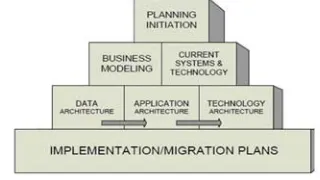
But to do the design there are steps based on Spewak [13] and illustrated in figure 2.
Figure 2: EAP Stages
0% 20% 40% 60% 80% 100%
Janu
ary
Feb
rua
ry
Marc
h
April May June July
Aug
u
st
Sep
tember October
Nove
mber
December
Hardware Software
[image:2.612.335.495.607.697.2]2517 The EAP stages are as follows:
1. Planning initiation: EAP begins by
determining the scope of the organization, determine who will be involved in the development of EAP and selection of tools to be used.
2. Business process modeling: Do modeling
business processes that are running based on business process data that occurs in the organization.
3. Current system and technology: Identify
current platform applications and technologies used in organizations based on data technology policies information taken by the organization.
4. Data architecture: Defines the main types
of data needed to support business from business process modeling.
5. Application architecture: Defines the
types of main applications needed form an age data that has been defined by the data architecture and support business functions.
6. Technology architecture: Defines the
technology platform required by the application environment and supports business functions based on the application architecture.
7. Implementation planning: Defines the
priority order of application development and provides steps / roadmap from aspects of organizational needs, costs incurred and activities of the organization's business processes to move towards desired future conditions based on application and technology.
2.2 TOGAF
TOGAF is a detailed framework and a set of supporting tools for developing an enterprise architecture. TOGAF provides steps in building information systems architecture, as it is designed as a generic framework and have a good alignment between business and technology [5]. TOGAF seems apt as an example of a meta-model for Enterprise [14], other theory suggested the importance of the four focus area which are unified view, architecture vison, architecture repository, and stakeholder management [15]. Used freely by any organization that develops to design, evaluate, and build enterprise architecture. There are four types of architecture for an entire enterprise architecture, TOGAF is designed to support :
1. Business Architecture: defining business
strategies, governance, organization and business processes.
2. Data architecture: describes the structure of one
logical data organization and physical asset management and resource data.
3. Application Architecture: provides a blue print
for individual system applications that are built, their interactions and relationships to the core business processes of the organization.
4. Technology Architecture: describes logical
software and hardware capabilities needed to support the deployment of business, data, and application services. This includes IT, middleware, network, communication, process, standard, etc.
2.3 Service Oriented Architecture
Service-oriented architecture is a set of principles and methodologies for designing and developing software in the form of interoperable services [16]. The SOA approach is considered best practice and is used by many organizations to improve their effectiveness and efficiency in the provision of IT services [17]. In order to improve the quality of the applications, the service oriented architecture provides a loosely tied collection of services that can be used in many domains [18]. The technology of web services offers convenience in bridging information islands without questioning the differences in technology used by each source [19]. There are a number of techniques and mechanisms for demonstrating dynamic interactions between services:
1. Service invocation: These are service request/
response messages that could be depicted through object interaction diagrams. The objects are actually the services that support inter- faces. The interfaces are captured in the signatures of the messages sent
2. Communication and interaction between
services: With interaction diagrams—also called communication or object diagrams in UML each service is depicted as an instance of the service in a particular context. The interactions between objects are numbered and labeled. So these diagrams illustrate the services as both service requestors and providers. The messages are numbered to indicate the order of the invocations
3. Sequence of service invocations: Sequence
diagrams are another effective way of illustrating messaging communication between services. The sequence diagramming incorporates the temporal axis and illustrates how messages are sent between services along a time axis
4. Service orchestration: Orchestration of services
2518 BPEL allow you to capture the sequencing and decisioning of activities and various interaction models between services in executable processes
5. Service choreography: Choreography takes a
bigger picture and focuses on the sequence of message exchanges between service requestors and providers. The differences between choreography and orchestration might not be that apparent. Orchestration services are typically executed by a process execution engine. For instance, BPEL is a process execution language, so programs written in BPEL12 will execute on an engine that supports BPEL.
2.4 Cloud Services
Cloud computing is a model for enabling ubiquitous, convenient, on-demand network access to a shared pool of configurable computing resources (e.g., networks, servers, storage, applications, and services) that can be rapidly provisioned and released with minimal management effort or service provider interaction [20]. There are three cloud service models explain on below [21]:
1. Infrastructure as a Service (IaaS) involves the
vendor providing physical computer hardware including CPU processing, memory, data storage and network connectivity. The vendor may share their hardware among multiple customers referred to as ‘multiple tenants’ using virtualization software. IaaS enables customers to run operating systems and software applications of their choice. Typically the vendor controls and maintains the physical computer hardware. Typically the customer controls and maintains the operating systems and software applications. An example IaaS vendor service is Amazon Elastic Compute Cloud (EC2).
2. Platform as a Service (PaaS) involves the
vendor providing Infrastructure as a Service plus operating systems and server applications such as web servers. PaaS enables customers to use the vendor’s cloud infrastructure to deploy web applications and other software developed by the customer using programming languages supported by the vendor. Typically the vendor controls and maintains the physical computer hardware, operating systems and server applications. Typically the customer only controls and maintains the software applications developed by the customer.
3. Software as a Service (SaaS) involves the
vendor using their cloud infrastructure and cloud platforms to provide customers with software applications. Example applications include email and an environment for users to collaboratively
develop and share files such as documents and spreadsheets. These end user applications are typically accessed by users via a web browser, eliminating the need for the user to install or maintain additional software. Typically the vendor controls and maintains the physical computer hardware, operating systems and software applications. Typically the customer only controls and maintains limited application configuration settings specific to users such as creating email address distribution lists. Example SaaS vendor services include Salesforce.com Customer Relationship Management (CRM), Google Docs, Google Gmail and Microsoft Office 365.
2.5 Previous Study
2519 results showed that the cloud migration process on a framework is a good guide that can be used effectively and efficiently to help cloud migration is commonly used by all types of companies or agencies. The sixth study explain [25] guide technology identification, classification, adoption, research and development processes for cloud native application and for vendor lock-in aware enterprise architecture engineering methodologies. The viewpoint in this study focuses on the application of Enterprise Architecture designs that are felt to be able to help application migration planning, as well as stakeholders' own desire to improve operational costs incurred, but the first step needed is planning and documentation in application migration from local to cloud.
3. METHOD
A qualitative approach according to Sugiyono [26] is a research method based on post positivism philosophy, used to research on the condition of natural objects. This means that the data collected is not in the form of numbers, but the data comes from interviews, field notes, personal documents, memo notes, and other official documents. So that the purpose of this qualitative research is to describe the empirical reality behind phenomena in depth, detail and completeness. Therefore the use of a qualitative approach in this study is to match empirical reality with the prevailing theory using descriptive types. Then the location of the research at PT. Meraki Digital Indonesia.
3.1 Instrument and Data source
According to Sugiyono [26] , in qualitative research which is a research instrument or research tool is the researcher himself. Therefore researchers as instruments must also be validated to what extent qualitative researchers are ready to carry out research which will then take to the field. In this study also the research instrument is stationery and documentation. Data to be retrieved are two types, namely primary and secondary. The primary data from this study are the results of interviews. Primary data is data obtained directly from the informant or object of research. To get the primary data in this study then The researcher has interviewed an informants, CFO as informant. The Secondary data is written data that is used as information support in primary data analysis. This data is generally in the form of written documents, photographs and others related to this research.
3.2 Data Collecting Technique
In this study the techniques used in data collection are as follows:
1. Observation: Observation is systematic
observation and recording of symptoms researched. Observation is one of the techniques of collecting data if it is in accordance with the objectives of the study, systematically planned and recorded, and can be controlled for reliability and validity
2. Interview: what was done in this study was
structured interviews. Interview structured is used as a data collection technique, if the researcher or data collectors know exactly what information will be obtained. Therefore, in conducting interviews, data collectors have prepared research instruments in the form of alternative written questions, the answers have been prepared. In collecting the required data, the researcher has conducted in-depth interviews conducted
3. To complete the required data, the researcher has also carried out data collection techniques with documentation.
3.3 Data Analysis Technique
There are several techniques for analyzing the data obtained in this research to support data processing as follows:
1. Data Reduction: Reducing data means
summarizing, choosing the main things, focusing on the important things, looking for themes and patterns. Thus the reduced data will provide a clearer picture and make it easier for researchers to carry out further data collection, and look for it if needed. Techniques in research are summarizing and sorting out the main things needed to facilitate researchers in describing patterns and relationships or coordination that is carried out
2. Presentation of Data (Data Display): Data
2520 containing the results of the interviews conducted
3. Verification (Conclusion drawing): Drawing
conclusions is only part of one activity of the configuration intact. Conclusions were also verified during the study. In this technical research conclusions were made during the study lasted until the research was completed, so researchers could know the essence of each activity carried out during conducting research
3.4 Design and Implementation Stages
For enterprise architecture design using TOGAF ADM. In this modeling, starting from applying TOGAF ADM is making preparations, namely identifying the architectural context to be developed. Next, define the strategy of the architecture and define the parts of the architecture to be designed, such as business architecture, data architecture, application architecture, and technology architecture [27]:
1. Preliminary Phase : This phase is about
defining how to do the design in the company concerned.
2. Requirement Management : In this phase, an
analysis of the needs of PT. Meraki Digital Indonesia and the needs of the user. The purpose of this phase is to analyze and manage architectural needs in all ADM phases.
3. Phase A Architecture Vision : In the stage of
architecture vision (architectural vision stage) aims to create uniformity of views regarding the importance of enterprise architecture to achieve the goals of PT. Meraki Digital Indonesia is formulated in the form of a strategy and determines the scope of the architecture to be developed based on the principles and identification that has been designed in the preliminary phase, and for that the author describes several stages to determine the architectural vision based on observations made on the company.
4. Phase B Business Architecture : This stage of
business architecture determines the activity model (company history, processes, and functions) desired to determine the direction of PT. Meraki Digital Indonesia in the future through an organizational perspective. Explanation of the scenario of business activities using one of the UML diagrams, namely Use Case Diagram.
5. Phase C Information Architecture : The
Information System Architecture stage will
discuss the data architecture and application architecture that will be used
6. Phase D Technology Architecture :
Technology architecture describes the technological structure needed by PT. Indonesian Digital Meraki to support application operations that have been modeled on the application architecture
7. Phase E Opportunities and Solutions : In the
phase of opportunities & solutions, there are several steps that will be described for evaluation and identification of the relationship between data architecture applications
8. Phase F Migration Planning : The main focus
of the migration planning phase or the appropriate phase of the transition and transition plan planning, in collaboration with project portfolios and plans. A list of project priorities will attempt to make a basic plan for planning detailed implementation and distribution plans
9. Phase G Implementation Governance : In
the implementation phase of governance or implementation management phase, the project is implemented as a work plan program and processed so that it can achieve the desired architecture
10. Phase H Architecture Change
Management : The phase architecture change management or management phase of architectural change will describe the drivers of change and how to manage these changes, from simple maintenance to architectural redesign.
For the simple way to implementation will be divided into two stages, namely the adoption stage and the migration phase which is the implementation of the design phase :
1. Adoption Stage : This stage prepares for the
integration of cloud computing-based applications with IT infrastructure in Meraki Digital Indonesia. Technically, this stage prepares the cloud infrastructure starting from installation, clustering, to routing to intranet networks. This integration is the first step before the application can operate.
2. Migration Phase : At this stage, start the
process of migrating applications and data to the cloud after making sure the adoption stage is complete. Support for users is provided during the migration process. In addition, the monitoring and control process of the migration project is carried out.
2521 4. RESULT AND DISSCUSSION
4.1 Current Process Analysis
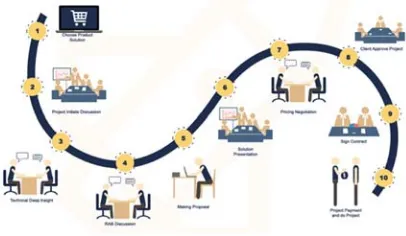
[image:7.612.94.297.206.324.2]Based on the interview with the resource person, there are some results of the current process that describes the work process that is in line with the application being developed, so it is illustrated in the figure 3:
Figure 3: Company Process based on Business Process
Basically the process in figure 3 describes the business process at the initiation of the project procurement, starting from the selection of solutions, initiating the project to discuss the initial desires to the desired project, then in-depth technical discussion with the user, if it is complete discussing the overall technique then discuss RAB and proceed to the proposal for the next presentation solution discussed earlier, if it is the next stage, discuss pricing negotiation. If the price and technical conditions are agreed upon, then proceed to the approval decision client, followed by a contract signature, and run and pay for the project with the agreed scope of work. In this process, generally applications are used in each division such as HRIS used for HR division, Financial System is used for finance division, incident service and project management is used for Project Management, CRM and Big data divisions used for Sales and Marketing divisions. As well as corporate social media use by all employees. Then after knowing the flow of the current process, a SWOT analysis of the migration will be carried out regarding the advantages and disadvantages of this migration, explained in the table 1:
Table 1: SWOT Analysis
SWOT Current Process
(Old system)
Proposed System (Clouds)
Strength In application
development, if a problem occurs, it can be fixed on
For system
maintenance contained in the company is very
a per-application basis
easy, because it
can be
maintained
through one
cloud system, as well as very low
costs to be
implemented and annual
maintenance costs
Weakness Very expensive
maintenance costs of hardware and software and
dependence on
vendors in
performing application maintenance.
System is
accommodated
with one
integrated system, so that system security
is very
vulnerable if not maintained regularly Opportunity Development can
be done focusing only on focused applications and
there is a
development
version to
indicate the
extent and
development of the release
Development can be done very large, fast, easy and can be done by scrum system development methods. As well as the integration of services that are called also very easy to do to
support a
sustainable business
Threat does not have
special security, only developed internally and not hosting on the web.
Data security is less guaranteed, because it was developed in the cloud party third
party vendor.
Data
confidentiality is very crucial for the company. But in Cloud system there are security system specially
for web to
accommodate security
management, for example HTTPS
4.2 Architecture Vision
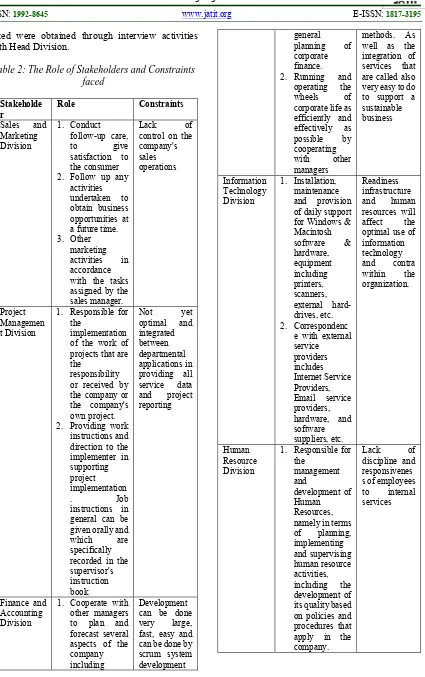
2522 faced were obtained through interview activities with Head Division.
Table 2: The Role of Stakeholders and Constraints faced
Stakeholde r
Role Constraints
Sales and
Marketing Division
1. Conduct
follow-up care,
to give
satisfaction to the consumer
2. Follow up any
activities undertaken to obtain business opportunities at a future time.
3. Other
marketing
activities in
accordance with the tasks assigned by the sales manager.
Lack of
control on the company's sales operations Project Managemen t Division
1. Responsible for the
implementation of the work of projects that are the
responsibility or received by the company or the company's own project.
2. Providing work
instructions and direction to the implementer in supporting project implementation
. Job
instructions in general can be given orally and
which are
specifically recorded in the supervisor's instruction book
Not yet
optimal and
integrated between departmental applications in providing all
service data
and project
reporting
Finance and Accounting Division
1. Cooperate with
other managers to plan and forecast several aspects of the company including
Development can be done
very large,
fast, easy and can be done by scrum system development
general
planning of
corporate finance.
2. Running and
operating the
wheels of
corporate life as efficiently and effectively as
possible by
cooperating
with other
managers
methods. As well as the integration of services that are called also very easy to do to support a sustainable business Information Technology Division 1. Installation, maintenance and provision of daily support for Windows & Macintosh
software &
hardware, equipment including printers, scanners, external hard-drives, etc.
2. Correspondenc
e with external service providers includes Internet Service Providers, Email service providers, hardware, and software suppliers, etc.
Readiness infrastructure
and human
resources will
affect the
optimal use of information technology
and contra
within the
organization.
Human Resource Division
1. Responsible for the
management and
development of Human Resources, namely in terms
of planning,
implementing and supervising human resource activities,
including the
development of its quality based on policies and procedures that apply in the company.
Lack of
discipline and responsivenes s of employees
to internal
2523
2. Responsible for matters relating to the activities of government and industrial development, and has the obligation
preserve and
maintain the
company image.
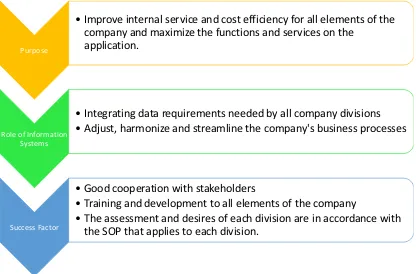
[image:9.612.315.526.236.425.2]The following are explained business vision diagrams related to the purpose of the application migration business as a determinant of success and the role of information systems that are expected to support the company's operations.
Figure 4:Business Vision Diagram
4.3 Technological Architecture
To support information technology, we need adequate cloud specifications to support the applications running, show on table 3.
Table 3: Cloud Specification
Website 1 Main Web +
Unlimited Add On Domain
Memory/RAM 10 Gb
SSD Storage 120Gb
CPU Core 8 Core
Bandwidth Unlimited
Traffic Limit Unlimited
Email POP3, IMAP, SMTP
Management cPanel
Programming PHP
Database MySQL, MariaDB,
PhpMyAdmin, Hadoop, Mango DB
Isolate Resource Yes
Domain Registration Yes
SSL Certificate Yes
Security Email Antivirus,
Website Antivirus
4.4 Application Architecture Design
Based on the description of the technology architecture plan, then made the application topology planned based on Table 3.
[image:9.612.92.300.299.436.2]Figure 5: Application Architecture in Cloud System
Figure 5 describe currently the implementation application migration developed has 7 applications that are integrated and standardized so that the development process in the future can be easily done. Applications developed include HRIS applications, CRM, Incident Services, Payroll, Big Data, Corporate Social Media, and Project Management show on application design architecture. The Service Oriented Architecture also functions as a service call on the application function to make it easier for users to search and analyze data. Using the Oracle platform as a basis for implementing SOA in the cloud. Future migration can be done in the cloud in general like IAAS, PAAS, SAAS. Migration carried out also needs to pay attention to application security in the cloud, given a special port on each application developed and HTTPS as a secure web protocol, which can be accessed in a special portal called single sign on. Purpose
• Improve internal service and cost efficiency for all elements of the company and maximize the functions and services on the application.
Role of Information Systems
• Integrating data requirements needed by all company divisions • Adjust, harmonize and streamline the company's business processes
Success Factor
• Good cooperation with stakeholders
• Training and development to all elements of the company • The assessment and desires of each division are in accordance with
2524
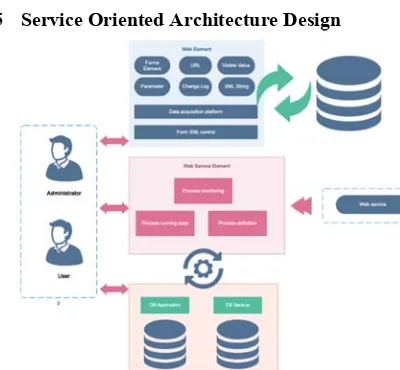
[image:10.612.101.301.90.275.2]4.5 Service Oriented Architecture Design
Figure 6:Service Collaboration in Cloud System
Collaborative services are described in the service oriented architecture in the cloud that is implemented, the basic basis for calling uses PHP as the language used in form elements in each application that is developed based on the parameters needed in each application, calling XML is also very important in the service called . The called web service has 3 main processes, process definition, running state process, and monitoring process. All services that are called are based on the database they have and mirror the database on the cloud that can be accessed by Users and Administrators.
Novelty this research was conducted by first assessing considerations for management by using the SWOT method in order to see the objectives raised for migration and after discussing it also needs to be seen from the alignment between business and information technology developed from local technology to cloud.
5. SUMMARY
In this study, migration can be done with stages in TOGAF, preferably the recommended steps are done in stages to be defined as a whole so there are no problems in migrating. As well as analytic considerations are also needed, in this study using SWOT in Strength, Weakness, Opportunity, and Threat. In general problems that occur in this study is the problem of maintenance costs incurred, with this migration to the cloud system is very low for annual costs and for development can be done very large, fast, easy and can be done by Scrum system development methods. But indeed a very basic disadvantage in the implementation of the
cloud is trust in the data stored in the cloud and the system is accommodated with one integrated system, so that the security system is very vulnerable if not maintained regularly. The fact in the field of Meraki Digital Indonesia has not been maximally utilized to help with activities carried out such as thinking about system backups needed to maintain data loss and technology that can automate systems that can integrate existing or new applications to be developed, and so far the investment costs incurred in the beginning there was also no investment cost planning in return on investment so that expenditure costs could be targeted and adapted to technological needs. For future work, it needs to be studied more deeply about the investment costs incurred and the actual implementation from the local technology to the cloud system.
ACKNOWLEDGMENTS
I would like to thank Virna Estriana as a Meraki Digital Indonesia as CFO for providing information and based on interview of all head division to designing the required architecture, and besides that, I also thank to Doctor Nilo Legowo and Doctor Sfenrianto as a lecture Information System Master of Management for helping with the creation of words in this research.
REFRENCES:
[1] T. Sutabri, Analisis Sistem Informasi. Yogyakarta: Andi Offset, 2012.
[2] P. Harmon, “Developing an enterprise architecture,” United States of America, 2003.
[3] M. Taleb and O. Cherkaoui, “Pattern-Oriented Approach for Enterprise Architecture: TOGAF Framework,” Journal of Software Engineering and Applications, vol. 05, no. 01, pp. 45–50, 2012.
[4] M. A. Mohamed, G. H. Galal-Edeen, H. A. Hassan, and E. E. Hasanien, “An evaluation of enterprise architecture frameworks for e-government,” in 2012 Seventh International Conference on Computer Engineering & Systems (ICCES), 2012, pp. 255–260. [5] O. Herdiana, “TOGAF ADM Planning
Framework for Enterprise Architecture Development Based on Health Minimum Services Standards (HMSS) at Cimahi City Health Office,” IOP Conference Series:
Materials Science and Engineering, vol.
2525 [6] J. Lin and C. Lin, “A TOGAF-based Method
for Migrating Applications to Clouds,” WSEAS TRANSACTIONS on INFORMATION SCIENCE and
APPLICATIONS, vol. 12, 2015.
[7] K. Ramchand, M. B. Chhetri, and R. Kowalczyk, “Towards a Flexible Cloud Architectural Decision Framework for Diverse Application Architectures,” in Australasian Conference on Information Systems, 2017, pp. 1–11.
[8] E. Amalia and H. Supriadi, “Development of enterprise architecture in university using TOGAF as framework,” 2017, p. 060004. [9] M. A. Chauhan and M. A. Babar, “Towards
Process Support for Migrating Applications to Cloud Computing,” in 2012 International Conference on Cloud and Service Computing, 2012, pp. 80–87.
[10] D. Proenca and J. Borbinha, “Enterprise Architecture: A Maturity Model Based on TOGAF ADM,” in 2017 IEEE 19th Conference on Business Informatics (CBI), 2017, pp. 257–266.
[11] R. Rai, S. Mehfuz, and G. Sahoo, “Efficient Migration of Application to Clouds: Analysis and Comparison,” GSTF Journal on Computing (JoC), vol. 3, no. 3, p. 23, Dec. 2013.
[12] C. Ward et al., “Workload Migration into Clouds Challenges, Experiences, Opportunities,” in 2010 IEEE 3rd International Conference on Cloud Computing, 2010, pp. 164–171.
[13] S. H. Spewak, S. C. Hill, and J. A. Zachman, Enterprise Architecture Planning: Developing a Blueprint for Data, Applications, and Technology. John Wiley & Sons, 1992.
[14] R. Feodoroff, “Intentional enterprise architecture,” in 2016 Annual IEEE Systems Conference (SysCon), 2016, pp. 1–8. [15] M. Hafsi and S. Assar, “What Enterprise
Architecture Can Bring for Digital Transformation: An Exploratory Study,” in 2016 IEEE 18th Conference on Business Informatics (CBI), 2016, pp. 83–89.
[16] D. Weld and M. Yang, Oracle® E-Business Suite Integrated SOA Gateway User’s
Guide, Release 12. United States of
America, 2018.
[17] O. Karimi, “Security Model For Service-Oriented Architecture,” Advanced Computing: An International Journal, vol. 2, no. 4, pp. 48–57, Jul. 2011.
[18] L. Cotfas, D. Palaghita, and B. Vintila, “Audit Techniques for Service Oriented Architecture Applications,” Informatica Economica, vol. 14, no. 1, pp. 128–136, 2010.
[19] G. I. Marthasari, Aminudin, and Y. Munarko, “Implementasi Web Service untuk Mendukung Interoperabilitas pada Aplikasi E-commerce,” in Industrial Electronics Seminar, 2010.
[20] P. Mell and T. Grance, “The NIST Definition of Cloud Computing,” United States of America, 2011.
[21] Australian Signals Directorate, “Cloud Computing Security Considerations,” 2019. [22] J. Lin, “Enhancing enterprise performance with social BPM and TOGAF framework,” in international conference on industrial
engineering and operations management,
2016, pp. 8–10.
[23] W. Abderrahim and Z. Choukair, “A framework architecture based model for cloud computing adaptive migration,” in 2014 Global Information Infrastructure and Networking Symposium (GIIS), 2014, pp. 1– 6.
[24] I. Santikarama and A. A. Arman, “Designing enterprise architecture framework for non-cloud to non-cloud migration using TOGAF, CCRM, and CRMM,” in 2016 International Conference on ICT For Smart Society (ICISS), 2016, pp. 32–37.
[25] N. Kratzke and R. Peinl, “ClouNS - a Cloud-Native Application Reference Model for Enterprise Architects,” in 2016 IEEE 20th International Enterprise Distributed Object
Computing Workshop (EDOCW), 2016, pp.
1–10.
[26] Sugiyono, Metode Penelitian Kuantitatif Kualitatif dan R&D. Bandung: Alfabeta, 2016.