Citation:
Simson, A (2018) Polycentric City Regions and the Role of Urban Forestry in Reviving the Concept
of Landscape Structure Planning. International Journal of Marine and Environmental Sciences.
Link to Leeds Beckett Repository record:
http://eprints.leedsbeckett.ac.uk/5818/
Document Version:
Article
Creative Commons: Attribution-Noncommercial 3.0
The aim of the Leeds Beckett Repository is to provide open access to our research, as required by
funder policies and permitted by publishers and copyright law.
The Leeds Beckett repository holds a wide range of publications, each of which has been
checked for copyright and the relevant embargo period has been applied by the Research Services
team.
We operate on a standard take-down policy.
If you are the author or publisher of an output
and you would like it removed from the repository, please
contact us
and we will investigate on a
case-by-case basis.
© 2017 Cosmos Scholars Publishing House
Polycentric City Regions and the Role of Urban Forestry in
Reviving the Concept of Landscape Structure Planning
Alan Simson
*Landscape Architecture and Urban Forestry. Leeds Beckett University, School of Art, Architecture + Design, B502 Broadcasting Place, Woodhouse Lane, Leeds LS2 9EN, UK
Abstract: The World is continuing to urbanise at an increasing and some would say alarming rate. Urban expansion is not uniform in all countries however but without a doubt, as cities continue to expand, the 21st century will become the
century of the City Region and even the Polycentric City Region. These terms emerged in the latter part of the 20t h
century, as urbanists strove to get to grips with dealing with the urban expansion of metropolitan areas in an environmentally acceptable way, and the concept of the “sustainable compact city” was advocated. There is now an increasing canon of research however that suggests that such cities do not always generate a high quality of human life, and therefore may not be quite as sustainable or resilient as they were made out to be. In an attempt to address this, the concept of “urban green infrastructure” [UGI], which includes the concept of urban forestry, has been promoted as being central to improving the quality of urban futures. To deliver its full potential however, UFI needs to be incorporated into new thinking around the landscape structure planning of such expanding cities and city regions, to ensure that they provide an acceptable quality of life for their inhabitants. The environmental, economic, social, human health and well-being and cultural benefits that can be promoted by adopting such an approach to resilient landscape structure planning are considerable. Reviving the concept of landscape structure planning would assist in restoring the beneficial relationships that people once had with their landscapes. Human beings have long had a deep, cultural relationship with their landscapes – a relationship which transcends national cultures – but this relationship that has arguably suffered as a result of the industrialisation and post-industrialisation of our planet. This paper will consider the benefits that can be achieved from developing a viable urban forest structure as the backbone of Polycentric City Region Landscape Structure Planning, and will focus upon the Leeds Polycentric City Region in the UK and its emerging Leeds City Region Green and Blue Infrastructure Strategy 2017 - 2036 as a case study.
Keywords: Polycentric city regions, Landscape structure planning, Urban forestry, Post-industrialisation.
INTRODUCTION
According to the United Nations (http://www.un.org/esa), only 14% of the world’s human inhabitants lived in urban areas at the turn of the 20th century. As late as 1960, only one-third of the world’s population resided in urban areas, and it wasn’t until 2007 that, for the first time in history, the world hosted more urban dwellers than rural. By 2016, 1.7 billion people, some 23% of the world’s population, lived in a city with at least one million inhabitants, and by 2030, it has been projected that at least 27% of people worldwide will be concentrated in cities of this size [1]. Interestingly, the European Environmental Agency has suggested that 60% of the urban areas that will exist in 2030 have still yet to be built [2].
Much thought will need to be given therefore to exactly what sort of urban areas we should be creating. In many countries, the calibre of the physical growth of towns and cities has led to an element of urban disenchantment setting in, as the reality of such expansion with its excessive air pollution, noise,
*
Address correspondence to this author at the Landscape Architecture and Urban Forestry. Leeds Beckett University, School of Art, Architecture + Design, B502 Broadcasting Place, Woodhouse Lane, Leeds LS2 9EN, UK;
Tel: +44 (0) 1138 124 064
E-mail: [email protected]
declining health and well-being and a lack of ‘green’ has failed to live up to the quality of life that was promised. A better quality of life can be found in the greener suburbs, and the fact that the registration of private motor vehicles in Western Europe currently exceeds the registration of births by a ratio of four to one suggests that those people who are able to are opting for better personal transportation to support their new suburban lifestyles [3].
30 International Journal of Marine and Environmental Sciences, 2017, Vol. 1, No. 1 Alan Simson
THE RATIONALE
The phenomenon of urban sprawl is not limited to the USA however. Similar developments can be found in Eastern Asia, in areas such as the Pearl River Delta and the Yangtze River Delta Regions of China for example [5], and urbanisation has been eating away at the countryside of Europe and many other parts of the world as well. This is partially due to direct building and construction activity of course, but also by the supporting extension of communication infrastructures such as new roads, road widening, new railways, more cell-phone masts, etc. As a result, the influence of urban values is increasing on us all. That said, all countries have a vested interest in maintaining or improving the quality of their urban areas for a whole host of political, social, economic, health and environmental reasons. But what constitutes an urban area? Clearly cities have some circumspection, whether material or symbolic, that separates those of us who belong in the city from those who do not. Once upon a time, this might have been the city wall, but nowadays it is perhaps the growing self-awareness and self-direction of a city or what towards the end of the 20th century Morris called the re-emergence of “the city state” [6].
Europe is in the process of undergoing profound change. Originally this was economically driven, but from a continent of competing countries, Europe has become a continent of competing cities and regions and as cities expand and grow closer together, it is the Polycentric City Region that is now beginning to emerge.
Arguably there is not a stable definition of a Polycentric City Region as different countries have different systems of land use regulation, resulting in different boundary definitions of “the city”. That said, the concept of Polycentric City Regions is included in the European Spatial Development Perspective [7] and a number of common features are beginning to emerge, such as:
• The rapid decentralisation of economic activities
• The fragmentation of the spatial distribution of activities
• Increased mobility as a result
• A multiplicity of travel patterns
• Complex cross-commuting, and
• Changes in household structure and lifestyle.
Not all Polycentric City Regions benefit from being held in high regard by investors or the people who live and work there however, as the environmental quality and the resulting quality of life is not always deemed to be as high as it should be [8]. It is in the interests of such regions therefore to have a creative, viable and resilient approach to the planning, design, construction and management of the expansion of their towns and cities as they merge into Poly-Centric City Regions. The use of the term “Master Planning” has fallen out of favour over recent years, as they have all too often been deemed to be too constrictive and unable to respond to rapid change. There is great merit however in re-establishing the concept of Landscape Structure Planning, including the concept of urban forestry, as a flexible means of providing the vision, leadership and coordination required to deliver a quality, resilient environment and resulting quality of health and well-being for the people who live, love, work and recreate in the increasing number of Polycentric City Regions that are emerging across the world.
Change is now the norm, and will be for the foreseeable future. Thus our towns and cities will continue to be subject to constant change and no urban area is likely to be immune from this. Indeed as the 21st century progresses, it is likely that this pace of change will accelerate considerably, and places that once boasted of prosperous, viable economies with a high percentage of employment may slip into decay and physically, commercially or visually decline, whilst other post-industrial areas that are currently deemed to be poor or run-down with high unemployment may well benefit from regeneration or revival. The reasons for this state of affairs are many and varied of course, and paradoxically can have as much to do with the “image” of an area – either real, imagined or invented – as with physical re- or de-generation [9].
static Polycentric City Region – they are either on the way up or on the way down.
Urban futures will differ however as urbanism is not uniform in all countries. Although there is still pressure to continue aiming for and developing “sustainable compact cities”, there is a growing canon of research that suggests that there might be a finite size for such cities, and that if this is exceeded, they are perhaps not likely to be as resilient and sustainable as they thought they might be, particularly in terms of human health and well-being [10]. It might be more viable therefore to plan for and include a number of such cities into a Polycentric City Region, a region articulated by a visionary Landscape Structure Plan that deploys the concept of urban forestry to articulate the public realm.
There are some who believe that the term “urban forest” is something of an oxymoron, in that how can you accommodate a forest in a city? However, although the words “forest” and “forestry” are now generally understood to be connected with trees, this used not always to be the case. It can be argued that the word “forest” stems from the Latin word “foris”, which means the “out of doors”, and so the urban forest is really the “urban out of doors”, which includes all the urban green space in and around our towns and cities. [11]
For Polycentric City Regions to succeed and flourish in the 21st century, they need to be able to attract and retain the best, the brightest and the most creative of the up-and-coming generations. To achieve this success however, the planning and design of these emerging Polycentric City Regions has to improve. A region where such improvements are being considered - the Leeds City Region, a Polycentric City Region in the north of the UK - will be explored as a case study. The study will specifically illustrate the contributions that urban forestry can make to a Landscape Structure Plan by promoting the public realm of the city region - the usable and special spaces that can be accessed by as many people as possible. Such spaces are the lifeblood of cities, and the contributions that both the macro and micro urban forest can make in articulating these spaces is increasingly being recognised by engaging in “evidence-based design”. This can be defined as an approach to design that blurs the boundaries between research and innovative practice, allowing the credible evidence required to support the promotion of urban forestry as one of the critical key elements of the successful Polycentric City Region of the future to be deployed [12].
CASE STUDY: THE LEEDS CITY REGION
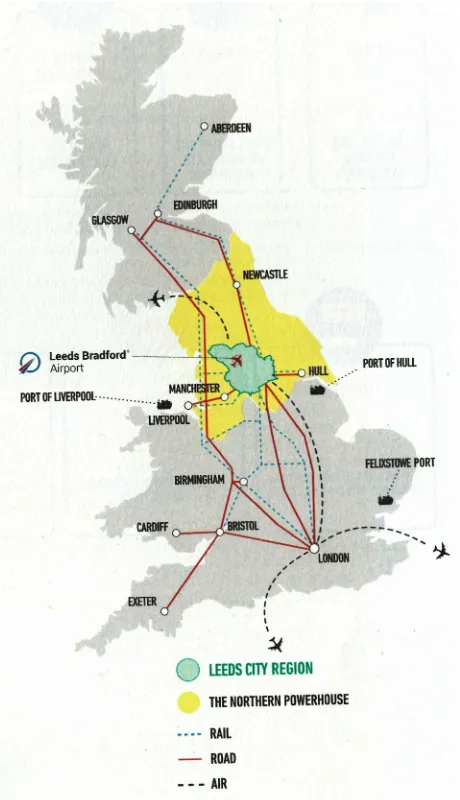
The Leeds City Region sits at the centre of a current UK Government initiative that was initially called the “Northern Powerhouse”, originally conceived to try to close the north – south divide that tends to blight economic investment in the UK (Figure 1). The City Region comprises 10 District Local Government Authorities, covers an area of over 5000 km², has a population of over 3 million people, a £63 billion economic output and is the largest Local Enterprise Partnership [LEP] outside London. Like many towns and cities in the UK however, the City Region deindustrialised long ago, and although it currently has a diverse and service-orientated economy and a larger manufacturing base than many contemporary UK city regions, it badly needs to attract and retain modern knowledge-intensive business services for its future economic success [13].
Figure 1: The Northern Powerhouse and the Leeds City
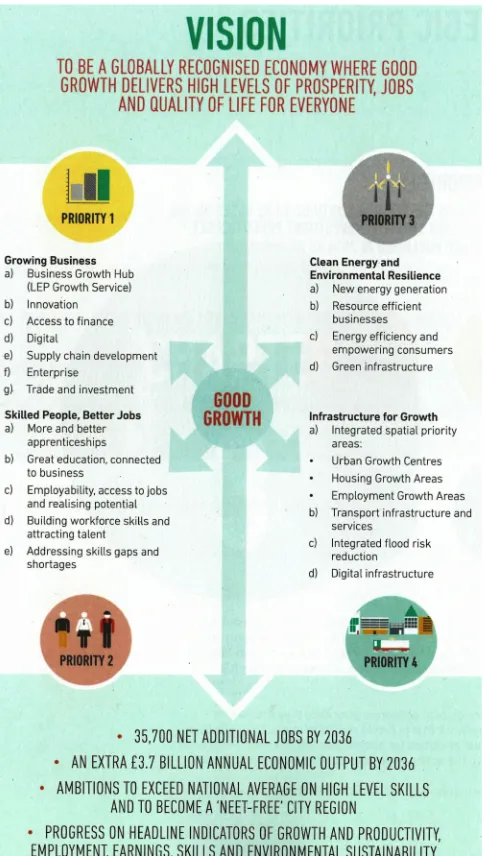
[image:4.612.340.570.305.705.2]32 International Journal of Marine and Environmental Sciences, 2017, Vol. 1, No. 1 Alan Simson Thus the Leeds City Region [LCR] has developed a
Strategic Economic Plan 2016-2036 [14] which identifies four key priorities:
• Priority 1 Growing Business;
• Priority 2 Skilled People, Better Jobs;
• Priority 3 Clean Energy and Environmental Resilience, and
• Priority 4 Infrastructure for Growth (Figure 2).
A key element of the Strategic Economic Plan was the development of a Green and Blue Infrastructure Strategy 2017-2036 with an accompanying Landscape Structure Plan, to assist in its implementation. This
Strategy is a “refreshed” version of the original Green Infrastructure Strategy that was hailed as a “Local Authority Trailblazer” in the UK’s Coalition Government’s Natural Choice White Paper (2011) [15]. The strategy has seven key priorities:
• Effective water management and flood risk reduction;
• The building of green and blue infrastructure into physical development and housing;
• The enhancement of green and blue corridors and networks;
[image:5.612.200.442.280.708.2]• Heightening community access to and enjoyment of green and blue infrastructure;
• The expansion of the urban forest by planting and managing many more trees and woodland;
• Restoring the uplands and managing them sustainably;
• Business growth, jobs, skills and education [16].
The key priority of planting more trees and woodland in and around the City Region is very much based upon the concept of urban forestry – the idea of planting trees in and around the communities where people live, love, work and have their being. This concept is wholly integrated within Priority 3 of the LCR’s Strategic Economic Plan, which together will deliver their collective vision of “good growth”, combining improvements in economic productivity and output, with social inclusion and a quality environment.
More recently, this urban forestry concept has been expanded significantly into developing a proposal for creating a new Northern Forest, which will stretch right across the North of England from the River Mersey in the west to the River Humber in the east, drawing together a number of poly-centric cities with the M62 motorway as its spine. The 25-year plan for the Northern Forest will complement planned investment and the new UK Industrial Strategy, the rationale being based upon the fact that;
• 13 million people live within the area covered by the proposed Forest, and it is projected that this population will increase by 9% over the next 20 years;
• Existing woodland cover of the area is only 6.5% - the EU average is over 30%;
• 1 million companies help the area to generate over £304 billion of GDP, about 18% of England’s GDP;
• Over £75 billion of built infrastructure investment is planned over the next 25 years – the Northern Forest will support this emerging Industrial Strategy;
• 650,000 new homes are planned for the Northern Forest area,
• The area is criss-crossed by transport infrastructure, with key gateways provided by two ports and seven airports.
• Although the estimated cost of £500 million for delivering the Northern Forest poses a significant
challenge, the benefit-cost ration has been established as 5: 1, the benefits thus far outweighing the costs [17].
Such long-term planning will require a series of larger-than-local Landscape Structure Plans to graphically articulate the vision, and establish the need, the scale, the role, the purpose and the broad locations of the components of the Green and Blue Strategy Plan and the new Northern Forest. Five specific design paradigms have been identified that will generate their own forestry design vocabulary. These are:
• Urban Domains
• Sub-Urban Domains
• Peri-Urban Domains
• Ex-Urban (Commuter) Domains
• Rural Domains
Public perception, attitudes and opinions can vary considerably in each of these domains, based on social, economic and psychological factors such as age, gender, education level, social and economic status, ethno-racial origin, etc.[18,19]. This is partially because the influence of urbanism has spread far out into what were once deemed to be rural areas. One of the reasons for this has been the increased length of commuting that is now experienced by workers in the UK’s city regions, who now have some of the longest commuting journeys in the EU. This is due partially to the lack of suitable accommodation and the resulting high cost of property in the central areas of the city regions, but also because the quality of lifestyle in many urban centres has declined over recent years. Thus the increasing numbers of such ‘ex-urban’ people influences their expectations of the design of new green and blue infrastructure as a result.
The provable benefits of such a green and blue infrastructure, including the urban forest, extend far beyond the intrinsic pleasures of an attractive environment. They include:
• Supporting good mental and physical health by improving the experiential quality of commuting;
• Tackling obesity and diabetes by increasing the quality of footpaths and cycle ways;
34 International Journal of Marine and Environmental Sciences, 2017, Vol. 1, No. 1 Alan Simson
• Bringing diverse and multi-ethnic communities together;
• Regenerating areas of need;
• Aiding biodiversity and providing a home for wildlife, and
• Acting on climate change and enriching human lives [20].
Fundamentally, the Green and Blue Infrastructure Strategy, as articulated by the Landscape Structure Plan, will support a strong and resilient economy. It enables and adds value to new developments, attracts tourism and investment, supports businesses, jobs and training and ensures the resilience of the City Region’s assets.
Such a Landscape Structure Plan also has the opportunity to meld the urban “critical infrastructure” (i.e. energy, food, water, transport, etc) with the emerging “urban green and blue infrastructure” (i.e.
ecological security, multi-functional green spaces, the urban forest, resilience, etc.) into a viable “Integrated Infrastructure” (Figure 3). This is the visionary vital backbone of a Landscape Structure Plan, and will help to deliver the poly-centric city region’s vision for “good growth”, which combines improvements in economic activity and output with social inclusion and a quality environment for all communities over the coming years. In developing this scenario, a similar methodology was
used as that that had been used in the Telford Green Infrastructure Framework document. Telford was one of the UK’s Third Generation New Towns, and the author worked on the original version of Telford’s Landscape Structure Plan. A survey in 1999 by KPMG on location costs in Europe found Telford to be the most cost-competitive location in Europe to establish and operate manufacturing business, due extensively to the “quality of the environment” in “Telford – the Forest City” [21]. Telford celebrates its 50th Anniversary in 2018.
CONCLUSIONS
It is known that the pace of urbanisation across the world will accelerate as Polycentric City Regions respond to change – changes in their population, in their economies, in their ethnic compositions, in climate change and in their people’s expectations and demands of the towns and cities they inhabit [22]. The planning and design of the urban landscapes of the late 20th and early 21st centuries has all too often not created the quality liveable places that their designers claimed they would, in spite of the high social and design ideals expressed by both politicians and design professionals. Thus urban design, landscape design and urban green infrastructures are at a crossroads in many countries, as the concept of globalism increases apace, post-industrialisation takes hold, the quality of city centre urban life continues to decline and the Polycentric City Region responds accordingly.
Many cities continue to expand, often with standardised, low-quality developments, which encourages those citizens who have the available resources and opportunities to seek safer, greener, more pleasant edge–of-town surroundings to inhabit, where there is an appreciably higher canopy cover of trees and available urban green space. Such peri-urban migration can compromise the resilience of urban areas, but viable landscape structure planning, as an integral part of expanding Polycentric City Regions, has a great opportunity to craft our urban futures, so as to ensure and secure quality outcomes for our urban populations. This requires us therefore to be confident and brave, and to seek to improve the ways in which we invest in our landscape structure planning, our integrated infrastructures and especially our urban forests, to regain the trust of our disenchanted populations, to support the quality regeneration of our failing existing urban communities, and to ensure the creation of viable, resilient new settlements worldwide. It could be argued that those who plant trees are exhibiting a confidence in the future, a confidence that is arguably badly needed at this moment in time.
REFERENCES
[1] UN, Department of Economic and Social Affairs, Population Division, The World’s Cities in 2016 Data Booklet ST/ESA/SER.A/392 (2016).
[2] European Environmental Agency. Secretariat of the Convention on Biological Diversity 2016.
[3] European Environment Agency. Urban Sprawl in Europe. EEA Report No 10/2006, EEA, Copenhagen 2006.
[4] Thomas JW. Urban Eco-systems and their Sustainability. Jordog Viden 1999; 24(144).
[5] Hall P and Pain K. From Metropolis to Polyopolis, in The Polycentric Metropolis – learning from mega-city regions in Europe. Earthscan London 2006; pp. 03-16.
[6] Morris D. The New City States. Institute for Local Self-Reliance, Washington DC, USA 1982.
[7] European Union. European Spatial Development Perspective – Towards Balanced and Sustainable Development of the Territory of the European Union, Potsdam 1999.
[8] Pain K and Hall P. People and Places: Interrelating the ‘Space of Flows’ and the ‘Space of Places’, in Hal, Pl & Pai, K, The Polycentric Metropolis – learning from mega-city regions in Europe. Earthscan London 2006; p.115.
[9] Shaw K and Robinson F. Learning from Experience? Town Planning Review 1998; 69(1).
[10] Neuman M. The Compact City Fallacy, in Journal of Planning Education Research 2005; 25: pp.11-26.
https://doi.org/10.1177/0739456X04270466
[11] Porteous A. The Forest in Folk Law and Mythology. New York. Macmillan 1928.
[12] Simson A and Ostoić S. Landscape Urbanism and the Building of Sustainable Futures, in Building Sustainable Futures, ed. by Dastbaz M, Strange I and Selkowitz S. New York Springer Chapter 2016; 11: pp.247-269.
[13] Cox E, Raikes L and Carella L. The State of the North 2016 – building northern resilience in an era of global uncertainty. Institute for Public Policy Research 2016; pp. 26-28.
[14] Leeds City Region Strategic Economic Plan 2016-2036. www.the-lep.com Accessed 06 November 2017.
[15] DEFRA [2001] the Natural Alternative – Securing the Value of Nature. HM Government. https://www.gov.uk/ government/organisations/department-for- environment-food-rural-affairs. Accessed 06 November 2017.
[16] Leeds City Region Green Infrastructure Strategy 2010. www.lda-design.co.uk/projects/leeds-city-region-green-infrastructure-strategy/ Accessed 06 November 2017. [17] Nolan P. Why a Northern Forest is worth the investment, in
the Town and Country Planning Journal 2017; 86(10): pp.407-414.
[18] Nauuauer JI, Wang Z and Dayrell E. What will the neighbours think? Cultural norms and ecological design. Landscape and Urban Planning 2009; 92: pp. 282-292.
https://doi.org/10.1016/j.landurbplan.2009.05.010
[19] Lo AY, Byrne JA and Jim CY. How climate change perception is reshaping attitudes towards the functional benefits of urban trees and green space – lessons from Hong Kong. Urban Forestry and Urban Greening 2017; 23: pp.74-83.
https://doi.org/10.1016/j.ufug.2017.03.007
[20] Simson A. A Landscape and Urbanism Perspective on Urban Forestry. Chapter 14 in The Routledge Handbook of Urban Forestry, ed. by Ferrini F, Konijnendijk van den Bosch C and Fini A. 2017.
[21] Wrekin Council, Economic Development Unit [1997-2000] Telford Workforce, Key Facts and Figures. Telford Development Agency.
[22] Brotchie J, Batty M, Blakeley E, Hall P and Newton P. Cities in Competition, Melbourne. Longman 1995.
Received on 01-12-2017 Accepted on 26-12-2017 Published on 15-01-2018
© 2017 Alan Simson; Licensee Cosmos Scholars Publishing House.
This is an open access article licensed under the terms of the Creative Commons Attribution Non-Commercial License