Munich Personal RePEc Archive
Early childhood development and social
mobility
Barnett, W. Steven and Belfield, Clive R.
The Brookings Institution
October 2006
Online at
https://mpra.ub.uni-muenchen.de/858/
Early Childhood Development
and Social Mobility
W. Steven Barnett and Clive R. Belfield
Summary
Steven Barnett and Clive Belfield examine the effects of preschool education on social mobility in the United States. They note that under current policy three- and four-year-old children from economically and educationally disadvantaged families have higher preschool attendance rates than other children. But current programs fail to enroll even half of poor three- and four-year-olds. Hispanics and children of mothers who drop out of school also participate at rela-tively low rates. The programs also do little to improve learning and development.
The most effective programs, they explain, are intensive interventions such as the model Abecedarian and Perry Preschool programs, which feature highly qualified teachers and small group sizes. State preschool programs with the highest standards rank next, followed by Head Start and the average state program, which produce effects ranging from tenth to one-quarter of those of the best programs. Typical child care and family support programs rank last.
Barnett and Belfield point out that preschool programs raise academic skills on average, but do not appear to have notably different effects for different groups of children, and so do not strongly enhance social mobility. In such areas as crime, welfare, and teen parenting, however, preschool seems more able to break links between parental behaviors and child outcomes.
Increased investment in preschool, conclude Barnett and Belfield, could raise social mobility. Program expansions targeted to disadvantaged children would help them move up the ladder, as would a more universal set of policies from which disadvantaged children gained dispropor-tionately. Increasing the educational effectiveness of early childhood programs would provide for greater gains in social mobility than increasing participation rates alone.
The authors observe that if future expansions of preschool programs end up serving all chil-dren, not just the poorest, society as a whole would gain. Benefits would exceed costs and there would be more economic growth, but relative gains for disadvantaged children would be smaller than absolute gains because there would be some (smaller) benefits to other children.
www.futureofchildren.org
I
nvestments in the skills of a nation’s citizens can affect both the general level of their productivity and income and disparities in incomes and living standards among them. In this article we examine how current public investments in preschool education for U.S. children are affecting the skills of those children gener-ally, as well as the extent to which those in-vestments are reducing income-related dis-parities among them—not only during childhood but also when they are adults. We also consider how new investments in those programs might affect children’s skills and in-crease social mobility.Much research on preschool education and children’s skills has been motivated by con-cerns about income-related disparities in young children’s language and cognitive abili-ties, as well as other measures of their devel-opment, including socioemotional skills. Such disparities become evident in children as young as age three and appear to persist— indeed, may even widen—through the school years.1 Researchers have examined various preschool education programs to learn which might best prevent or reduce these early dis-parities so that poor children can enter school with skills more nearly equal to those of more highly advantaged children. How-ever, in recent years at least, researchers have paid less attention to an important related question: how preschool education can en-hance social mobility by enabling disadvan-taged children to achieve as adults greater so-cioeconomic success than did their parents.
That poor children begin their lives with lower skills than those of more privileged children is clear. Figures 1 and 2 present esti-mates of the link between preschool chil-dren’s skills, both cognitive and social, and the income of their families; they suggest that
skills rise evenly with family income. At pres-ent federal, state, and local governmpres-ents in the United States fund a wide variety of early childhood education programs that serve many but not all children. Parents of more advantaged children often pay privately for various preschool programs for their chil-dren. Although existing publicly funded pro-grams are demonstrably raising the skills of the children who participate in them, they clearly have not—as figures 1 and 2 show— broken the link between children’s skills and family income. Would increased public in-vestment in preschool education provide ad-ditional benefits for children in poverty and help to improve social mobility? If so, what form of investment would be most effective? Some observers argue in favor of limiting in-creased spending to programs that serve only poor children. Others favor creating a new, universal preschool program that would serve all children alike. A key empirical question related to the latter proposal is whether a quality preschool education program for all children would shift the entire slopes of fig-ures 1 and 2 upward or would rotate the bot-tom of the slopes upward while the top re-mained anchored.
advantaged children. Third, to what extent do these early effects on children’s learning and development contribute to their abilities as they grow older, and what aspects of public policy contribute to sustained effects? Is it possible that these early effects may not only be sustained throughout a lifetime but even be passed on to later generations as they af-fect parents’ investments in children?
Participation in Early Childhood
Programs
[image:4.564.52.457.70.243.2]Early childhood programs fall into three broad types: early schooling for children from ages three to five, interventions and child care for children from birth to age two, and parenting education. The coverage of the lat-ter two is limited. Before age three, children participate in interventions and center-based
Figure 1. Abilities of Entering Kindergartners, by Family Income, National Data, Fall 1998 (reported by NIEER from ECLS-K)
Source: W. Steven Barnett, Kirsty Brown, and Rima Shore, “The Universal vs. Targeted Debate: Should the United States Have Preschool for All? Preschool Policy Matters 6 (New Brunswick, N.J.: NIEER, 2004).
Figure 2. Social Skills of Entering Kindergartners, by Family Income (NIEER Analysis of ECLS-K)
60
55
50
45
40
Lowest Second lowest
Middle Second highest
Highest
Family income quintile Abilities scores
Reading Math General knowledge School
readiness gap
Lowest Second lowest
Middle Second highest
Highest
Family income quintile 9.8
9.6 9.4 9.2 9.0 8.8 8.6 8.4 8.2 Social scores
School readiness gap
[image:4.564.44.461.300.501.2]care at quite low rates. The largest compre-hensive child development program for chil-dren under age three (other than early inter-ventions for children with disabilities) is the federal Early Head Start program, which served fewer than 62,000 children in 2003.2
Programs for parents also have quite limited participation. A few states—Minnesota, Mis-souri, and Arkansas—invest in these
pro-grams more than others, but even their fund-ing remains limited. Some programs target economically disadvantaged families, others do not. The Parents as Teachers program served more than 325,000 children in 261,000 families in 2003–04, far more than any other parent program.3 Our analyses of data from the National Household Education Survey (NHES) of 2001 found that just 12 percent of young children had parents who reported participating in a parenting educa-tion program or support group (9 percent for parenting education alone). Participation rates in parent programs did not differ signif-icantly by family characteristics such as in-come and parental education.
Among children nearing school age, on the other hand, participation in preschool educa-tion is increasing dramatically. In 1950 only 21 percent of five-year-olds were in school. By 1965, 70 percent of five-year-olds at-tended kindergarten, but only 16 percent of
four-year-olds and 5 percent of three-year-olds were in school. Today kindergarten at-tendance is nearly universal and 65 percent of four-year-olds and 42 percent of three-year-olds attend school.4These figures, how-ever, are based on parents’ reports and thus necessarily on parents’ views about what con-stitutes “school.”
For parents of five-year-olds, “school” is al-most entirely kindergarten, a preschool pro-gram that has some uniformity and is prima-rily provided in public schools. Three- and four-year-old children, however, attend a complex patchwork of public and private pro-grams that go by a variety of names, including preschool, pre-kindergarten (pre-K), four-year-old kindergarten (4K), Head Start, child care, day care, and nursery school. These programs vary widely in educational intent. Parents of three- and four-year-olds typically report private child care provided in class-rooms, but not child care in private homes, as school.
Kindergarten
Some children still do not attend kinder-garten, which is not compulsory in most states. There is little research on why they do not attend, though the fact that only half-day programs are available in some communities may be a factor for working families. Only in the past twenty years has full-day kinder-garten become common, with 63 percent of children who attend kindergarten participat-ing in a regular school day of about six hours. The others attend half-day for two and a half to three hours, frequently in double shifts, some in the morning and some in the after-noon. The distribution of full-day kinder-garten is uneven. Of the nine states that re-quire it, all are in the Southeast.5 Full-day attendance is much more common for African American children (76 percent) than
Participation rates in parent
programs did not differ
significantly by family
for white (56 percent), Hispanic (60 per-cent), or Asian children (57 percent).6 It is also more common among children in poverty (63 percent) than among others (55 percent).7
Public Preschool Education
At ages three and four children attend a vari-ety of public preschool programs. For chil-dren in poverty, the federal government pro-vides Head Start. State and local education agencies also provide preschool education programs. In addition, federal and state gov-ernments subsidize child care, and many children attend private child care centers with and without public subsidies. These pro-grams vary in their goals, resources, stan-dards and regulation, and length of day and year.
Head Start serves about 900,000 children, the vast majority at ages three and four. It serves 12 percent of children at age four, and serves just over half of those children for two years starting at age three. Although Head Start targets children in poverty, self-reported household income data on program participation indicate that by the second half of the school year about half the children served are not poor but “near poor.”8 The reasons why the targeting is less than exact include allowable exceptions to poverty in the eligibility rules, changes in families’ eco-nomic circumstances after enrollment, and probably some children enrolling who do not meet the eligibility criteria. It also seems likely that some of this apparent difference is due to Head Start’s use of family income rather than household income to determine eligibility. Although the overwhelming major-ity of Head Start children are from lower-income families, it is incorrect and mislead-ing to simply subtract Head Start enrollment from the total number of three- and
four-year-olds whose household income falls below the poverty line to determine how many poor children are not served. The fact that poverty is a moving target presents a se-rious challenge for education programs that aim to serve all poor children.9
State and local governments support two types of preschool education programs. First, every state serves young children with dis-abilities in the public schools, though the percentage served varies substantially.10 States can serve children with developmental delays in these programs, as well as those with identified disabilities. Second, the Dis-trict of Columbia and forty-one states also fund preschool education for other children (though in a few cases this is only through supplements to Head Start). Most of these programs target children in poverty or other-wise at elevated risk for poor achievement later. Oklahoma and Georgia have for several years sought to provide preschool education to all four-year-olds, and Oklahoma has es-sentially achieved that goal. Florida moved to join them in 2005, and other states have taken steps in that direction. While state pre-school special education programs serve chil-dren at ages three and four, most of the states’ general preschool education programs focus primarily or entirely on four-year-olds.
children attend preschool programs in local public schools using local or federal funds, but no one tracks their numbers nationally.11
Child Care and Private Preschool Education
Children also attend preschool programs paid for publicly through federal and state child care funds and privately by parents. State ed-ucational standards for these programs are minimal. The only reliable data on the num-ber of children enrolled in all public and pri-vate programs are provided by parental re-ports in national surveys and the decennial census. These data do not allow reliable breakdowns by type of program or funding source, because parents report virtually any classroom as educational regardless of teacher qualifications and educational practices, and many children attend multiple programs or programs that blend funding streams. Pub-licly funded child care programs generally do not enroll children for an entire school year because enrollment is contingent on family income and parental employment, which fluc-tuate over time. Thus, while an average of 1.73 million children receive services (57 per-cent in per-centers) subsidized by the Child Care Development Fund (CCDF) each month— roughly 225,000 at age three and 225,000 at age four in fiscal year 2004—this does not mean that all of them receive services contin-uously during the calendar or school year.12
At the national level one can roughly estimate the number of children in child care and local public or private preschool programs by sub-tracting from parent-reported total enroll-ment the number of children in major public education programs (Head Start, special edu-cation, and regular state preschool). At age four, about 66 percent of children attend a center-based program of some sort. The major public education programs account for
34 percent, leaving 32 percent in private grams or locally funded public school pro-grams. At age three, 39 percent attend a cen-ter-based program, and subtracting the 14 percent in major public education programs leaves about a quarter of the population (25 percent) in child care and local private or public preschool. Thus, most three- and four-year-old children in a classroom are not in one of the major public preschool education pro-grams and most of this residual group is not receiving a direct child care subsidy (13 per-cent of three- and four-year-olds receive a CCDF subsidy, but not all are in centers).13
Program Participation by Family Background
ment of the most disadvantaged children in preschool education programs. Moreover, the programs that do serve such children— child care and even some public education programs—do little to improve their learning and development. Public policies could also do much more to increase participation rates of children from families up to about the me-dian income. Smaller but still substantial in-creases in enrollment are possible for all but the wealthiest and best educated.
Influence of Early Childhood
Programs on Child Development
and Adult Outcomes
How do current programs affect children’s eventual educational attainment, earnings, family formation, and propensity to commit crime? And how much more effective might other policies be? Many researchers have ex-amined the effects of various early childhood education programs, with the vast majority focusing on short-term effects on learning and development.
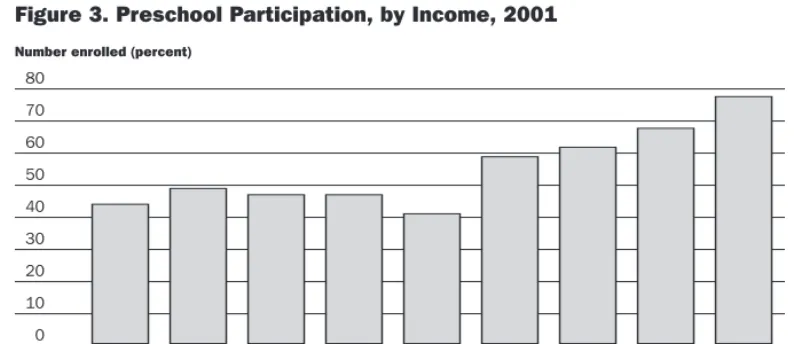
[image:8.564.48.445.64.236.2]There are literally hundreds of studies of the immediate and short-term effects of child
Figure 3. Preschool Participation, by Income, 2001
Source: W. Steven Barnett and Donald Yarosz, “Who Goes to Preschool and Why Does It Matter?” Preschool Policy Matters7 (New Brunswick, N.J.: NIEER, 2004).
80 70 60 50 40 30 20 10 0
>100 75–100 60–75
50–60 40–50
30–40 20–30
10–20 <10
Number enrolled (percent)
Family income (thousands of dollars)
Preschool participation rates also vary by eth-nicity. African American children have the highest rates, with rates for white non-Hispanic children and Asians only slightly lower. Hispanic children have by far the low-est rates. Rates vary by ethnicity partly be-cause the South provides many public pro-grams and the West provides few. Once family background characteristics and re-gions are taken into account, participation rates for Hispanic children are not signifi-cantly lower than for white non-Hispanic children. Rates for African American chil-dren remain somewhat higher even after such adjustments.16
enroll-care and early interventions, and their find-ings have been conveniently summarized in both quantitative meta-analyses and tradi-tional literature reviews.17Across these stud-ies, the average initial effect on cognitive abilities is about 0.50 standard deviations, roughly equivalent to 7 or 8 points on an IQ test with a 100-point scale and a standard de-viation of 15. Average effects on self-esteem, motivation, and social behavior are also posi-tive, though somewhat smaller. In what fol-lows, we review the best evidence to summa-rize what is known about how various programs—family support, child care, Head Start, public preschool, and several very in-tensive educational interventions (which have yet to be implemented on a large scale)—affect children’s skills.
Family Support Programs
Although some studies produce larger esti-mates, the most reliable research—random-ized experimental trials—estimates that fam-ily support programs improve both cognitive and social development by perhaps 0.10 stan-dard deviations.18Randomized trials of many home-visiting programs have failed to find consistent effects on child development, probably because very few of these programs are intensive enough to produce significant cognitive benefits for children.19 Similarly, randomized trials of comprehensive services delivered in “two-generation” models—so called because they serve both children and parents—have disappointing findings, again because they do not provide substantial di-rect services to children.20
These findings support two conclusions about program effectiveness, both of which are consistent with other reviews of the re-search.21 First, influencing child develop-ment indirectly through parents appears to be relatively ineffective. Second, a program’s
effect on child development varies with the frequency and duration of the intervention provided. Even the most intensive family support program devotes far fewer hours to parents than child-directed interventions de-vote to children. In addition, the costs of such programs, particularly those intensive enough to produce even modest benefits, are substantial, thus likely making them less cost-effective than other preschool programs.22
Despite the modest effects of most home-visiting programs on children’s cognitive de-velopment, one very intensive program has substantially improved the home environ-ment and developenviron-ment of young children. David Olds and colleagues found in a series of randomized trials that a program of home visits by nurses to economically disadvan-taged new mothers reduced the number and improved the timing of pregnancies and births after the first child and also reduced the children’s need for medical care for in-juries and ingestions.23 Other popular med-ically oriented programs with similar goals, however, have not been similarly effective in randomized trials.24 Olds’s nurse home-visiting program has also been found to im-prove modestly both the children’s cognitive development (effect size of 0.15 using the population standard deviations for the tests) and parents’ report of behavior problems.25
Child Care and Early Education
knowl-and cognitive abilities.30 This finding echoes that of an Early Head Start randomized trial in which cognitive and language effects were about 0.10 or smaller.31Randomized trials of both Head Start and Early Head Start find small decreases (about 0.10) in antisocial be-havior. They find no evidence of negative ef-fects on social and emotional development. (The Head Start study did not estimate the
effect of Head Start relative to no program, but over and above whatever experiences children received otherwise.)
The best short-term evidence on the effects of preschool programs sponsored by public schools comes from relatively rigorous studies of the Chicago Child-Parent Centers and the universal preschool program in Tulsa, Okla-homa. These studies have found initial effects on standardized tests of cognitive and lan-guage abilities ranging from 0.38 to 0.79, de-pending on the measure. The Chicago Child-Parent Center study found a positive effect on social adjustment in school; the Tulsa study did not look at social development.
The Tulsa study can be directly compared with the Head Start randomized trial on three tests; in each case, the Tulsa effects are edge of concepts and skills, problem-solving
abilities, self-regulation and other socio-emotional skills, attitudes, values, and disposi-tions. In the worst programs, where little is planned, children wander aimlessly, with few interesting and thought-provoking inter-actions, activities, or materials, and teachers are unresponsive to their interests or needs. To the surprise of no one, the better programs have the better outcomes.
Studies find that typical center-based child care (as opposed to home or other types of care) improves cognitive abilities by about 0.10–0.33 standard deviations. Most esti-mates are in the 0.10–0.15 range for cogni-tive and language development.26 Evidence is mixed on whether effects are larger when care begins before age three.27Some nonex-perimental studies have found that child care can increase antisocial behavior at school entry, with effect sizes of about 0.08–0.20. The evidence is mixed with respect to whether effects are larger for disadvantaged children than for those from more advan-taged homes.28Some studies have found that higher program quality, measured in various ways, may lead to small improvements (0.04–0.08) in cognitive and language ability and in behavior.29 Most child care programs, however, facing minimal government re-quirements and poor funding, are not de-signed to improve child development.
By contrast, Head Start, the federal govern-ment’s largest comprehensive child develop-ment intervention, is specifically designed to improve children’s cognitive, social, emo-tional, and physical development, as well as to support their parents in a variety of ways. An excellent recent randomized trial esti-mates, however, that one year of Head Start has fairly small effects, from less than 0.10 to 0.24 for standardized measures of language
several times as large.32 As with the Head Start study, the Tulsa study estimates effects over and above the experiences that children can get outside the state program, here in-cluding Head Start and child care. And the Tulsa study, like the Head Start study, lasted only one year; effects might be larger if the program lasted longer. But clearly, caution is warranted in comparing these two studies.
The Head Start study involves many more children in more diverse circumstances, and the comparison addresses only one program goal (children’s cognitive development). It is plausible that the Tulsa and Chicago pro-grams produced larger gains because their teachers were far more highly qualified than Head Start teachers and were also paid much higher salaries. Whereas Head Start requires only that half of its teachers have a two-year degree, Tulsa and Chicago required certified teachers with a four-year-college degree. The Tulsa findings were recently replicated in an evaluation of state-funded preschool pro-grams for four-year-olds in five states, all of which require certified teachers (Oklahoma, New Jersey, South Carolina, Michigan, and West Virginia).33
Researchers using data from the Early Child-hood Longitudinal Study–Kindergarten Co-hort (ECLS-K), a national sample of children
entering kindergarten in 1998, have found smaller effects for prekindergarten for disad-vantaged children—0.16 to 0.28—perhaps reflecting the poorer performance of state-funded preschool programs overall (many have weaker standards than the Chicago or Tulsa program). The ECLS-K data suggest even smaller effects for child care, where regulations typically require little more than a high school diploma for teachers.34
Randomized trials of North Carolina’s Abecedarian preschool program and Michi-gan’s Perry Preschool program find that these more intensive interventions involving disad-vantaged children up to the age of school entry improve cognitive and language abili-ties from 0.75 to 1.50 standard deviations— twice the effect of the better state preschool programs and eight times to ten times the ef-fect of Early Head Start and Head Start.35 These effects suggest a dose-response rela-tionship, in which high teacher quality, small class sizes and high teacher-pupil ratios, and the amount of education given are all implicated.36
The Perry Preschool study found positive ef-fects on social behaviors similar to most stud-ies of such effects in the first years of school. In contrast, the Abecedarian study, which ex-amined intensive education through full-day child care over five years, found negative, though transitory, effects on social behavior at school entry. Across studies of early educa-tion interveneduca-tion, intensive research pro-grams, and large-scale public propro-grams, in-cluding Head Start, short-term effects average 0.25 to 0.40 for self-esteem, problem behavior, and other social behaviors.37
There is relatively little basis for estimating the effects of intensive educational interven-tions on children from middle-income or
There is relatively little basis
for estimating the effects of
intensive educational
highly advantaged families. Few researchers have addressed the topic at all, and even fewer have done so in a rigorous way. The only randomized trial of a preschool program for a highly advantaged population (average IQ was 2 standard deviations above the mean) had a very small sample, limiting its ability to detect effects. Nevertheless it found modest improvements in early academic abil-ities, at least for boys.38The Tulsa study and the later five-state evaluation of preschool education provide some insights, as Okla-homa and West Virginia both serve the gen-eral population, not just disadvantaged chil-dren, and the other three states also serve populations with some socioeconomic varia-tion. Both studies find that effects are some-what larger for disadvantaged children.
Long-Term Effects
Though early child care and education have positive initial effects on cognitive abilities, those effects tend to decline over time and in many studies are negligible several years after children leave the programs.39 The fade-out is most salient for general cognitive abilities, or aptitude, as measured by IQ and similar measures. Only the longest-lasting, most intensive educational interventions (year round, full day over many years), like the Abecedarian program, seem able to pro-duce permanent gains in general cognitive abilities, and these appear considerably smaller than initial gains.40Gains on subject-specific cognitive abilities (reading, math, and so forth) seem to be longer lasting, and while these more enduring gains are smaller than the initial gains, they do not appear to fade as often or as much as IQ gains.
Although there is essentially no research on the very long-term effects of typical U.S. child care on educational achievement and attainment, there are many studies of the
long-term effects of large-scale public pre-school education programs and intensive ed-ucational interventions on eded-ucational achievement and school progress.41 Esti-mated effects on achievement have been highly variable because of differences in re-search methods and procedures.42 In the more rigorous studies, which tend to examine the more intensive educational programs, ef-fects on achievement ranged from 0.50 to 0.75 into the high school years. The Chicago Child-Parent Centers study suggests smaller than average long-term achievement gains from large-scale public programs. For Head Start, the initial gains would suggest even smaller long-term achievement gains. Al-though some studies have found long-term educational gains from Head Start, the ef-fects tend to vary by ethnicity. The lack of such variation in other studies raises ques-tions about these estimates.43
Full evidence on long-term effects is re-ported in tables 1 and 2. Studies that use cu-mulative school records data to look at grade repetition, special education placements, and high school graduation provide perhaps the strongest basis for comparing the long-term effects of different programs. They find uni-formly positive and statistically significant ef-fects on school progress and placement—ef-fects that have been causally linked to program effects on knowledge and skills.44
public school programs. Notably, many stud-ies that have looked at these strong indicators of school failure have very similar findings. Given the small size of several of the experi-mental studies, including Perry Preschool and Abecedarian, the frequent replication of their findings in these other studies strength-ens confidence in their results.
Although fewer studies have looked at effects on high school graduation, researchers con-sistently find positive effects for Head Start, public school programs, and more intensive interventions. It is difficult to feel comfort-able with generalizations from so few studies, though grade repetition and special educa-tion placement (which have been studied much more often) are strong predictors of dropping out of school. However, the esti-mated effects of the three intensive programs are quite consistent: a 15 to 20 percentage point increase in high school graduations (not GEDs or other substitutes), from around 50 percent to around 67 percent. The estimated effect on high school graduation in the Chicago study was about 10 percentage points, roughly half that of the Perry Preschool and Abecedarian programs. A few studies have focused on Head Start, with in-consistent results: one finds high school grad-uation rates increased for girls by 15 percent-age points, another finds a 20 percentpercent-age point increase for whites only. Such gains seem improbable, given the very small initial effects found in the national impact study.
[image:13.564.28.224.80.444.2]The Abecedarian study, but not the Perry Preschool study, found gains in college en-rollment. It is difficult to know how to inter-pret this finding. The Perry Preschool sample was much more educationally disadvantaged than the Abecedarian sample. It may have been that college was just too far beyond their reach, given their starting abilities,
Table 1. Effects of Early Childhood Interventions on Education
Change (percent except as indicated)
Intervention and educational outcome Effect
Special education placement
Abecedarian (ABC) –48 Perry Preschool –43 Chicago Child-Parent Centers –32
Head Start –28
Public School and Head Starta –29
Retained in grade
Abecedarian –47
Perry Preschool –13 Chicago Child-Parent Centers –33 Early Childhood Longitudinal
Study-Kindergarten Cohort Negative effect (reduces) Public School and Head Startb –30
High school dropout likelihood
Abecedarian –32
Perry Preschool –25 Chicago Child-Parent Centers –24 High school completion
Head Start: white children 20 percentage point increase Head Start: African American children No clear effect College progression
Abecedarian enrollment in four-year college 3 times as likely Perry Preschool No clear effect Head Start: white children 28 percentage
point increase Head Start: African American children No clear effect
Sources: Clive Belfield and others, “Cost-Benefit Analysis of the High/Scope Perry Preschool Program Using Age 40 Follow-Up Data,” Journal of Human Resources 41 (2006): 162–91; W. Steven Barnett, “Does Head Start Have Lasting Cognitive Effects? The Myth of Fade Out,” in The Head Start Debates, edited by Ed-ward Zigler and Sally Syfco (Baltimore, Md.: Brookes Publishing Co., 2004); W. Steven Barnett and Leonard Masse, “Comparative Benefit-Cost Analysis of the Abecedarian Program and Its Policy Implications,” Economics of Education Review(in press); Arthur Reynolds and others, “Age 21 Cost-Benefit Analysis of the Title I Chicago Child-Parent Centers,” Educational Evaluation and Policy Analysis 24, no. 4 (2002): 267–303; Eliana Garces, Duncan Thomas, and Janet Currie, “Longer-Term Effects of Head Start,”
American Economic Review92 (2002): 999–1012; Janet Currie, “Early Childhood Programs,” Journal of Economic Perspectives15 (2001): 213–38; Centers for Disease Control and Prevention, “Community Interventions to Promote Healthy Social Environ-ments. Early Childhood Development and Family Housing,” Mor-bidity and Mortality Weekly Report51 (2002); Judy Temple, Arthur Reynolds, and Wendy Miedel, “Can Early Intervention Prevent High School Drop-Out? Evidence from the Chicago Child-Parent Cen-ters,” Urban Education35 (2000): 31–56.
whereas the Abecedarian children were close enough that the boost they received made college possible for a significant share.
Although relatively few in number, most studies that assessed long-term effects on so-cial behavior found positive (though not al-ways statistically significant) effects, and no study reported increased aggression beyond first grade.46 Five studies of educational interventions that investigated long-term effects on social behavior found beneficial ef-fects on classroom behavior, social adjust-ment, and crime.47These include two of the three studies that linked elevated aggression with full-time child care that began in in-fancy.48 The third, the Abecedarian study, found no long-term effect on crime and
delinquency, though rates were relatively low for both groups.49 The strongest effects on crime were found in the Perry Preschool study, where baseline rates for the control group were quite high: the number of arrests was cut by 50 percent. In the Chicago study, the number of arrests by age eighteen was cut by 40 percent, while the share of people ever arrested was cut by a third (or 8 percent-age points), from 25 percent to 17 percent. Data on Head Start are limited to two stud-ies: one finds a 12 percentage point reduction in crime for African Americans only; the other, a 10 percentage point reduction for girls only.50
[image:14.564.48.460.68.363.2]There is little research on the effects of pre-school programs on later fertility behavior.
Table 2. Effects of Early Childhood Interventions on Adolescent and Adult Behaviors
Percent except as indicated
Intervention and behaviors Control or comparison group Group receiving early childhood program
Teenage parenting rates
Abecedarian 45 26
Perry Preschool 37 26
Chicago Child-Parent Centers 27 20
Well-being
Health problem (Perry Preschool) 29 20
Drug user (Abecedarian) 39 18
Needed treatment for addiction (Perry Preschool) 34 22
Abortion (Perry Preschool) 38 16
Abuse/neglect by age 17 (Chicago Child-Parent Centers) 9 6 Criminal activity
Number of felony violent assaults (Perry Preschool) 0.37 0.17 Juvenile court petitions (Chicago Child-Parent Centers) 25 16 Booked or charged with a crime (Head Start) 12 percentage points lower Net earnings gain from participating in early childhood programs
Abecedarian $35,531
Perry Preschool Program $38,892 Chicago Child-Parent Centers $30,638
Head Start No effect
The model programs show strong effects, and family support interventions have reported direct effects on fertility behavior of the mothers. Effects are reported in table 2.
Finally, direct effects have been found on employment and earnings. One study found that Head Start raised earnings, but only for white children whose parents were high school dropouts. The model program effects,
shown in table 2, may be considered upper bounds on the earnings gain from state-funded preschool.
Program Design and Effectiveness
From the evidence reviewed so far, it should be clear that some preschool programs are more effective than others. A rough ranking from least to most educationally effective under current policies is typical child care and family support programs, Head Start and many state preschool programs, state pre-school programs with high standards (far from all of them), and intensive educational interventions. On average, state preschool programs differ little from Head Start in their effects on child development, but states with lower standards likely have worse out-comes and those with higher standards, bet-ter outcomes. A reasonable conclusion is that auspices per se have little to do with program
effectiveness, once goals, standards, and re-sources are taken into account. The pattern is clearest for short-term outcomes, where the most data are available. It is less clear for long-term effects on educational attainment and adult social and economic outcomes, where fewer data are available. It does not seem plausible that programs with very weak initial effects would have proportionately larger effects on adult outcomes than on short- and medium-term outcomes.
Given the limits of the data, it appears best to produce a range of estimates of the programs’ effects on cognitive and social-emotional de-velopment. An upper bound would be effects of the size produced by the Perry Preschool and Abecedarian programs. One then might expect high-quality interventions in public preschool programs to produce effects of half that size. Less educationally intensive public programs, including Head Start under cur-rent policies, would be likely to produce ef-fects of one-quarter or less, and possibly only one-tenth, of those of Perry and Abecedarian. Regarding effects on children who are not disadvantaged, based on the meager evidence we consider two different scenarios. One is that effects are half those estimated for disad-vantaged children. The other is that effects on the educational attainment of advantaged children are essentially zero. Given the small effects of child care, if programs effectively target disadvantaged children, then effects on other children are irrelevant.
In designing policy proposals to improve pre-school programs, it should be kept in mind that the most effective educational interven-tions were more intensive in two senses. First, they had highly qualified, well-paid teachers and high ratios of teachers to chil-dren. Second, some provided a large number of hours of intervention over two to nearly
five years. The Perry program provided one teacher (not an assistant) for every six or seven students. Although it operated only half-day during the school year (and most, but not all, children attended for two years), teachers visited each child at home weekly. The Abecedarian program had a teacher and an aide for every twelve children and oper-ated for up to ten hours a day, fifty weeks a year, over almost five years. This pattern can hardly be considered surprising and is consis-tent with other evidence. It posits that more highly educated, better prepared, better su-pervised, and better compensated teachers are more effective.51 Smaller class sizes and better teacher-student ratios result in better teaching and more individual attention, which produce larger gains in achievement and school success.52 Finally, more hours of effective interventions produce larger effects.
The Effects of Early Childhood
Education on Social Mobility
The above evidence on access and outcomes suggests the following conclusions about the extent to which preschool, as it now stands, affects social mobility by breaking down the links between parental socioeconomic status and behaviors and children’s status and behaviors.
Although current public programs move in the direction of equalizing preschool oppor-tunities across races and income levels, they fall considerably short of their goal. Preschool opportunities are not close to equal for Hispanic children. Nor are pre-school opportunities equal when mother’s ed-ucation is considered, or when the quality of the different programs is accounted for, or when children aged three as well as four are included. Furthermore, Head Start funding is so limited that it precludes serving most of the eligible population, and public preschool
program coverage varies greatly from state to state. Thus many opportunities exist for panding preschool, but the form of that ex-pansion is critical, as we discuss below.
In addition, broader questions might be raised about the extent to which current pre-school programs integrate social groups. Given the separation of children in Head Start and other compensatory programs, preschool programs do not appear to be structured so as to allow disadvantaged chil-dren to benefit from long-term exposure to other children. And where preschool pro-grams are tied to local public schools, resi-dential patterns may also limit socioeco-nomic integration.
The effects of preschool in other domains, however, appear more conducive to social mobility. For example, disadvantaged chil-dren are more likely to engage in crime, be on welfare, and become teenage parents; they are also more likely to report ill health.54 Here there is more scope for preschool to break the link between family behaviors and child outcomes.
For welfare participation, children may be “scarred” by their parents’ receipt of welfare: family receipt of welfare may cause poorer labor market outcomes, break down social norms against welfare support, or increase awareness of welfare eligibility, all of which would perpetuate welfare dependency for in-dividuals and within families. Researchers cannot precisely identify welfare heritability, but they generally find that when parents, particularly African American women, re-ceive welfare, their children are more likely to receive welfare.55Preschool programs may therefore raise social mobility by reducing welfare reliance heritability, although the size of the effect is questionable (not least be-cause welfare is increasingly time limited).
Recent evidence also indicates reasonably strong “heritability” of criminal activity, par-ticularly for men. Among noncriminals, 6
percent have fathers who were arrested; among criminals the figure is 15 percent. In the specific case of partner violence, the Na-tional Youth Survey shows a strongly positive correlation between family violence and later partner violence.56A full meta-analysis, how-ever, finds that “violent origins have only a weak-to-moderate effect on the risk of later partner violence.”57Most families report zero crime by the parent and zero crime by the offspring. This means that the second-generational elasticity of crime is hard to esti-mate. Given the limited number of families that appear to transmit crime from one gen-eration to another, preschool’s overall effects on this link cannot but be small. But to the extent that crime rates are much higher in some communities than others, preschool programs might have more of an equalizing effect by reducing crime rates in higher-crime-rate communities.
Preschool may have its strongest differential effect on fertility. The first-generation effect is to reduce teenage parenting, which is cor-related with low economic well-being.58 Given that teenage parenting rates are higher for women with low education and low in-come and for African American and Hispanic women, preschool should have relatively greater benefits for poor and minority
chil-dren.59 (Women who participated in the
Perry Preschool program as children were also considerably less likely to have an abor-tion, suggesting that preschool enhances par-enthood planning.) There may also be sec-ond-generation effects.
Second-Generation Effects of Preschool In those areas where preschool may raise so-cial mobility the most—criminal tendency, welfare receipt, and fertility—it may also benefit the children of the preschoolers. Given the diffuse benefits of preschool, and
In those areas where
the reasonably strong heritability of behav-iors and circumstances, these second-genera-tion effects may be a key to social mobility.60
The effects on fertility and crime, in particu-lar, may spill over into the second generation. Research has documented that teenage par-enting and single parpar-enting adversely affect children’s attainment.61 Children of teenage parents are much less likely to graduate from high school, and a child in a two-parent fam-ily accumulates on average 0.43 more years of schooling than a child in a single-parent family.62Given conventional estimates of the returns to a year of education, the benefits from residing in a two-parent household are the equivalent of a 2–4 percent increase in annual earnings. Two-parent family status and smaller family size also reduce criminal activity, while children of teenage parents are more likely to engage in crimes such as as-sault.63The effects appear to be significant, if only because any reduction in criminal activ-ity conveys substantial economic benefits.
Other second-generation effects are probably weaker. There may be some effect on sec-ond-generation earnings, to the extent that preschool weakens the link between parents’ and children’s incomes.64 Finally, preschool may affect educational attainment across generations. Both mother’s and father’s edu-cation are statistically significant influences on a child’s graduation and years of school-ing.65One extra year of parental schooling is associated, on average, with 0.29 years of off-spring attainment.66
Although these arguments are plausible, there is no direct evidence on the benefits to subsequent generations from either state or model preschool programs. (Because the sample sizes in the model programs are so small, it is typically not possible to identify
second-generation effects.)67 Moreover, be-cause such benefits would be a long time in the future, they would need to be discounted (valued less relative to immediate benefits). Applying a social discount rate of 3.5 percent, we find that any monetary gain for a child is worth half that of a gain in the same domain to the actual participant. So, even with per-fect heritability, the efper-fects on social mobility are half as strong for the second generation.
In summary, there is some evidence that di-rect and indidi-rect heritability effects are sig-nificant, though there is insufficient research from which to generalize to an anticipated ef-fect of participation in early childhood educa-tion programs. A recent simulaeduca-tion model, however, suggests that these effects are meaningful.
low-income backgrounds. In the model, intergen-erational earnings and education correlations both fall as a result. Assuming an increase in public spending on early education of $90 billion—sufficient to fund preschool for all children for approximately two years—earn-ings correlations across generations should fall from 0.40 to 0.36 (a perfect correlation would be 1, no correlation at all would be 0)
and education correlations across generations should fall from 0.35 to 0.28.
Relative to other educational investments in the model, these effects are substantial. Spending on higher education in the model, for example, has zero or even a negative ef-fect on these earnings correlations: subsidies awarded to a college student do not greatly affect the student’s ability to graduate from college.69However, in this model the spend-ing on early education would do little to raise educational attainment (college enrollment and completion) for the lowest income quin-tile. Its main effect would be to equalize col-lege enrollment rates for the three middle quintiles of family income.
Targeted or Universal Preschooling? The above discussion assumes a trend toward universal preschooling, or at least that any
program expansion would be distributed in the same way as the present system. In part, that assumption reflects widespread political support for universal programs and the prac-tical challenges of more accurately targeting programs to the disadvantaged. A universal program should still reduce inequalities, be-cause it benefits low-income and minority children more than it does advantaged chil-dren, but the effects (especially at current quality levels) on relative socioeconomic po-sition may not be strong.
In theory, programs targeted at the most dis-advantaged children would increase social mobility the most. A targeted program would obviously generate benefits for those who en-rolled. Indeed, existing public preschool pro-grams do raise social mobility. But many chil-dren who would enroll in a new targeted program would either be white non-Hispanic or Hispanic or be in the lower-middle quar-tile of income distribution. Thus Hispanic children might gain more than African Amer-ican children (who have much higher pre-school participation rates), and children in poverty would not benefit much more than children in families with higher but still mod-est incomes. Moreover, it may not be easy to identify the enrollees who might benefit most from a targeted program (particularly chil-dren of mothers who are high school dropouts) and exhort them to participate.70 Screening, regulating, and monitoring eligi-bility would also raise unit costs. With imper-fect targeting, many disadvantaged children would miss out on programs. If the chal-lenges of targeting could be overcome, how-ever, social mobility effects might be greater.
Because many low-income and minority children are already enrolled in Head Start and other programs, another way to raise so-cial mobility would be to upgrade the
ing program. Janet Currie and Matthew Nei-dell have found that increased spending on Head Start does appear to enhance out-comes.71Also, state programs (most of which are funded at rates below Head Start) might be upgraded. Here the challenge is to get sufficient resources for high-quality targeted programs. Another option is to expand Head Start and state programs to serve all children for two years, which would generate stronger effects. At present most children attend such programs for only one year.
The dilemma is the old efficiency-equity trade-off. A targeted program would have a greater impact on social mobility, but it would not generate as high a public return on investment as a universal program.72If a pro-gram targeted to the lowest quintile is only 50 percent accurate—that is, if half of the participants are not from the lowest quin-tile—then it would generate smaller returns than a universal program (even as the average benefits from such a program would be sig-nificantly lower). Universal programs are also much more likely to garner political support, as well as generate spillover benefits such as better school discipline. And any fiscal sav-ings these programs yield will be passed on to taxpayers. Thus a useful strategy for increas-ing social mobility might be to target within a universal system by providing more intensive programs, with smaller classes and longer hours, to disadvantaged children. However,
the amount of extra resources needed to yield sufficient social mobility cannot be eas-ily specified.
Conclusions
U.S. preschool programs are effective across a wide set of outcomes. But participation rates are lower for children with lower incomes and low parental education, for Hispanics, and for those residing in the western states than for other children. Together, these facts suggest that increased investment in preschool could raise social mobility. Program expansions tar-geted to disadvantaged children would help them move up the ladder, as would a more universal set of policies from which disadvan-taged children gained disproportionately. In-creasing the educational effectiveness of these programs would provide for greater gains in social mobility than would increasing participation rates alone. At the same time, expectations of what can be accomplished on this front should be modest.
Notes
1. See Jack Shonkoff and Deborah Phillips, From Neurons to Neighborhoods: The Science of Early Childhood Development(Washington: National Academy Press, 2000); Donald Rock and A. Jackson Stenner, “Assess-ment Issues in the Testing of Children at School Entry,” Future of Children15, no. 1 (2005): 15–34. 2. Administration for Children and Families, “Head Start Program Fact Sheet: Fiscal Year 2006” (2006),
www.acf.hhs.gov/programs/hsb/research/2006.htm (accessed April 13, 2006).
3. Parents as Teachers, “2003–04 Parents as Teachers Born to Learn Annual Program Report Summary” (2004), www.parentsasteachers.org/atf/cf/%7B00812ECA-A71B-4C2C-8FF3-8F16A5742EEA%7D/PAT%20 NEWS%20FINAL%20VERSION%20-%20National%20Annual%20Program%20Report%20Summary.pdf (accessed April 13, 2006).
4. W. Steven Barnett and Donald J. Yarosz, “Who Goes to Preschool and Why Does It Matter?” Preschool Policy Matters 7 (New Brunswick, N.J.: National Institute for Early Education Research, 2004).
5. Debra J. Ackerman, W. Steven Barnett, and Kenneth Robin, “Making the Most of Kindergarten: Present Trends and Future Issues in the Provision of Full-Day Programs,”NIEER Policy Report (March 2005), http://nieer.org/docs/index.php?DocID=118 (accessed April 13, 2006).
6. John Wirt and others, The Condition of Education 2004: 111(U.S. Department of Education, 2004). 7. Jill Walston and Jerry West, Full-Day and Half-Day Kindergarten in the United States: Findings from the
Early Childhood Longitudinal Study, Kindergarten Class of 1998–99(Washington: National Center for Education Statistics, 2004), p. 73. There are some surprising differences between this study and the Cur-rent Population Survey in estimates of full-day kindergarten attendance by ethnicity and other background characteristics of the children.
8. We analyzed data from the 2001 National Household Education Survey for reported Head Start atten-dance by income. Although there appears to be substantial error in reported Head Start participation, those whose participation can be verified do not significantly differ in income from those whose participa-tion cannot be verified. Mary Hagedorn and others, National Household Education Surveys Program of 2001: Data Files and Electronic Codebook, NCES 2003078 (U.S. Department of Education, 2003). 9. W. Steven Barnett, Kirsty Brown, and Rima Shore, “The Universal vs. Targeted Debate: Should the United
States Have Preschool for All?” Preschool Policy Matters6 (New Brunswick, N.J.: National Institute for Early Education Research, 2003).
10. W. Steven Barnett and others, The State of Preschool: 2005 State Preschool Yearbook(New Brunswick, N.J.: NIEER, 2006).
11. Ibid.
12. Administration for Children and Families, “FFY 2004 CCDF Data Tables and Charts (Preliminary Esti-mates)” (2005), www.acf.hhs.gov/programs/ccb/research/04acf800/list.htm (accessed April 13, 2006).
13. Barnett and Yarosz, “Who Goes to Preschool?” (see note 4); Barnett and others, The State of Preschool(see note 10).
15. Barnett and Yarosz, “Who Goes to Preschool?” (see note 4).
16. Ibid.
17. Ruth McKey and others, The Impact of Head Start on Children, Families, and Communities(Washington: Head Start Evaluation Synthesis and Utilization Project, 1985); Craig Ramey, Donna Bryant, and Tanya Suarez, “Preschool Compensatory Education and the Modifiability of Intelligence: A Critical Review,” in
Current Topics in Human Intelligence, edited by Douglas Detterman (Norwood, N.J.: Ablex, 1985), pp. 247–96; Michael Guralnick and Forrest C. Bennett, The Effectiveness of Early Intervention for At-Risk and Handicapped Children(New York: Academy Press, 1987); Michael Guralnick, “Second Generation Re-search on the Effectiveness of Early Intervention,” Early Education and Development4, no. 4 (1993): 366–78; Jack Shonkoff and Samuel Meisels, Handbook of Early Childhood Intervention (Cambridge Uni-versity Press, 2000).
18. Deanna Gomby, Patti Culross, and Richard Behrman, “Home Visiting: Recent Program Evaluations— Analysis and Recommendations,” Future of Children9, no.1 (1999): 4–26.
19. Amy Baker, Chaya Piotrkowski, and Jeanne Brooks-Gunn, “The Home Instruction Program for Preschool Youngsters (HIPPY),” Future of Children9, no. 1 (1999): 116–33; Gloria Boutte, “The Effects of Home In-tervention on Rural Children’s Home Environments, Academic Self-Esteem, and Achievement Scores” (Ann Arbor, Mich.: UMI Dissertation Services, 1992); Mary Wagner and Serena Clayton, “The Parents as Teachers Program: Results from Two Demonstrations,” Future of Children9, no. 1 (1999): 91–116; Sandra Scarr and Kathleen McCartney, “Far from Home: An Experimental Evaluation of the Mother-Child Home
Program in Bermuda,” Child Development59 (1988): 531–43; Christine Powell and Sandra
Grantham-McGregor, “Home Visiting of Varying Frequency and Child Development,” Pediatrics84 (1989): 157–64. 20. Robert St. Pierre and Jean Layzer, “Using Home Visits for Multiple Purposes: The Comprehensive Child
Development Program,” Future of Children9, no.1 (1989): 134–51.
21. Glenn Casto and Anne Lewis, “Parent Involvement in Infant and Preschool Programs,” Journal of the Di-vision of Early Childhood9 (1984): 49–56; Donna Bryant and Craig Ramey, “Prevention-Oriented Infant Education Programs,” Journal of Children in Contemporary Society7 (1987): 17–35.
22. Robert St. Pierre, Jean Layzer, and Helen Barnes, “Regenerating Two-Generation Programs,” in Early Care and Education for Children in Poverty: Promises, Programs, and Long-Term Results, edited by W. Steven Barnett and Sarane Boocock (SUNY Press, 1998), pp. 99–121.
23. David Olds and others, “Prenatal and Infancy Home Visitation by Nurses: Recent Findings,”Future of Children9, no.1 (1999): 44–66.
24. Deanna Gomby, Home Visitation in 2005: Outcomes for Children and Parents (Washington: Committee for Economic Development, 2005), www.ced.org/projects/kids.shtml (accessed February 12, 2006).
25. David Olds and others, “Effects of Nurse Home-Visiting on Maternal Life Course and Child Development: Age 6 Follow-Up Results of a Randomized Trial,” Pediatrics114 (2004): 1550–59.
Magnu-son, Chris Ruhm, and Jane Waldfogel, “Does Prekindergarten Improve School Preparation and
Perfor-mance?” Economics of Education Review(2006, forthcoming); NICHD Early Child Care Research
Net-work and Greg Duncan, “Modeling the Impacts of Child Care Quality on Children’s Preschool Cognitive Development,” Child Development 74, no. 5 (2003): 1454–75.
27. Bengt-Erik Andersson, “Effects of Public Day Care—A Longitudinal Study,” Child Development 60
(1989): 857–66; Tiffany Field, “Quality Infant Day Care and Grade School Behavior and Performance,”
Child Development62 (1991): 863–70.
28. Sonalde Desai, P. Lindsay Chase-Lansdale, and Robert Michael, “Mother or Market? Effects of Maternal Employment on the Intellectual Ability of Four-Year-Old Children,” Demography26 (1989): 545–61; Nazli Baydar and Jeanne Brooks-Gunn, “Effects of Maternal Employment and Child-Care Arrangements on Preschoolers’ Cognitive and Behavioral Outcomes: Evidence from the Children of the National Longitudi-nal Survey of Youth,” Developmental Psychology27 (1991): 932–45.
29. NICHD Early Child Care Research Network, “Early Child Care and Children’s Development Prior to School Entry” and “Further Explorations of the Detected Effects of Quantity of Early Child Care on So-cioemotional Development,” both papers presented at the biennial meeting of the Society for Research in Child Development, Minneapolis, Minn., April 2001.
30. Eliana Garces, Duncan Thomas, and Janet Currie, “Longer-Term Effects of Head Start,” American Eco-nomic Review92 (2002): 999–1012.
31. John Love and others, Early Head Start Research—Building Their Futures: How Early Head Start Pro-grams Are Enhancing the Lives of Infants and Toddlers in Low-Income Families(Princeton, N.J.: Mathe-matica Policy Research, 2001).
32. William Gormley and others, “The Effects of Universal Pre-K on Cognitive Development,” Developmental Psychology41, no. 6 (2005): 533–58.
33. W. Steven Barnett, Cynthia Lamy, and Kwanghee Jung, “The Effects of State Prekindergarten Programs on Young Children’s School Readiness in Five States,” http://nieer.org/docs/index.php?DocID=129 (accessed February 13, 2006).
34. Studies relying on the ECLS-K, however, should be viewed cautiously as researchers must infer program types from parents’ descriptions (“prekindergarten” may include some ordinary child care) and have lim-ited means for adjusting for the reasons why parents select programs. The ECLS-K data also suffer from attrition of test score information over time.
35. Frances Campbell and others, “The Development of Cognitive and Academic Abilities: Growth Curves from an Early Childhood Educational Experiment,” Developmental Psychology37, no. 2 (2001): 231–42; Larry Schweinhart and others, Lifetime Effects: The High/Scope Perry Preschool Study through Age 40,
Monographs of the High/Scope Educational Research Foundation 14 (Ypsilanti, Mich.: High/Scope Edu-cational Research Foundation, 2005).
37. W. S. Barnett, “Early Childhood Education,” in School Reform Proposals: The Research Evidence,edited by Alex Molnar (Greenwich, Conn.: Information Age Publishing, 2002), pp. 1–26.
38. Jean Larsen and Clyde Robinson, “Later Effects of Preschool on Low-Risk Children,” Early Childhood Re-search Quarterly4 (1989): 133–44.
39. Ramey, Bryant, and Suarez, “Preschool Compensatory Education” (see note 17); Martin Woodhead, “When Psychology Informs Public Policy: The Case of Early Childhood Intervention,” American Psycholo-gist43 (1988): 443–54; Ron Haskins, “Beyond Metaphor: The Efficacy of Early Childhood Education,”
American Psychologist 44 (1989): 274–82; Charles Locurto, “Beyond IQ in Preschool Programs?” Intelli-gence15 (1991): 295–312; Herman Spitz, “Commentary on Locurto’s ‘Beyond IQ in Preschool Programs?’”
Intelligence15 (1991): 327–33.
40. Frances Campbell and Craig Ramey, “Cognitive and School Outcomes for High-Risk African American Students at Middle Adolescence: Positive Effects at Early Intervention,” American Educational Research Journal32 (1995): 743–72; Jeanne Brooks-Gunn, Jane Waldfogel, and Wen-Jui Han, “Maternal Employ-ment and Child Outcomes in the First Three Years of Life: The NICHD Study of Early Childcare,” Child Development 73 (2002): 1052–72.
41. W. Steven Barnett, “Long-Term Effects on Cognitive Development and School Success,” in Early Care and Education for Children in Poverty: Promises, Programs, and Long-Term Outcomes, edited by W. Steven Barnett and Sarane Boocock (SUNY Press, 1998), pp. 11–44; Janet Currie, “Early Childhood Pro-grams,” Journal of Economic Perspectives15 (2001): 213–38.
42. Anne McGill-Franzen and Richard Allington, “Flunk ’em or Get Them Classified: The Contamination of Primary Grade Accountability Data,” Educational Researcher22, no. 1 (1993): 19–22.
43. W. Steven Barnett and Greg Camilli, “Compensatory Preschool Education, Cognitive Development, and ‘Race,’ ” in Race and Intelligence: Separating Science from Myth, edited by Jeff Fish (Mahwah, N.J.: Lawrence Erlbaum Associates, 2002), pp. 368–406.
44. W. Steven Barnett, John Young, and Larry Schweinhart, “How Preschool Education Influences Long-Term Cognitive Development and School Success,” in Early Care and Education for Children in Poverty, edited by W. Steven Barnett and Sarane Boocock (SUNY Press, 1998).
45. W. Steven Barnett, “Preschool Education for Economically Disadvantaged Children: Effects on Reading Achievement and Related Outcomes,” in Handbook of Early Literacy Research, edited by Susan Neuman and David Dickinson (New York: Guilford Press, 2001), pp. 421–43.
46. W. Steven Barnett, “Long-Term Effects of Early Childhood Programs on Cognitive and School Outcomes,”
Future of Children5, no. 3 (1995): 25–50; Hiro Yoshikawa, “Prevention as Cumulative Protection: Effects of Early Family Support and Education on Chronic Delinquency and Its Risks,” Psychological Bulletin115 (1994): 27–54.
48. Victoria Seitz and Nancy Apfel, “Parent-Focused Intervention: Diffusion Effects on Siblings,” Child Devel-opment56 (1994): 376–91.
49. W. Steven Barnett and Leonard Masse, “Comparative Benefit-Cost Analysis of the Abecedarian Program and Its Policy Implications,” Economics of Education Review(2006, in press).
50. Garces, Thomas, and Currie, “Longer-Term Effects of Head Start” (see note 30).
51. Richard Murnane and Barbara Phillips, “What Do Effective Teachers of Inner-City Children Have in Common?” Social Science Research10 (1981): 83–100; Ronald Ferguson, “Can Schools Narrow the Black-White Test Score Gap?” in The Black-White Test Score Gap, edited by Christopher Jencks and Meredith Phillips (Brookings, 1998), pp. 318–74; Alison Clarke-Stewart, Christian Gruber, and Linda Fitzgerald,
Children at Home and in Day Care(Hillsdale, N.J.: Lawrence Erlbaum Associates, 1994); Carollee Howes and Michael Olenick, “Child Care and Family Influences on Toddlers’ Compliance,” Child Development
57 (1986): 202–16; Marcy Whitebook, Deborah Phillips, and Carollee Howes, National Child Care Staffing Study Revisited: Four Years in the Life of Center-Based Child Care (Oakland, Calif.: Child Care Employee Project, 1993); Carollee Howes, “Children’s Experiences in Center-Based Child Care as a Function of Teacher Background and Adult-Child Ratio,” Merrill-Palmer Quarterly43, no. 3 (1997): 404–25; Leslie Phillipsen and others, “The Prediction of Process Quality from Structural Features of Child Care,” Early Childhood Research Quarterly12 (1997): 281–304; Barbara Bowman, M. Suzanne Donovan, and Susan Burns, eds., Eager to Learn: Educating Our Preschoolers(Washington: National Academy Press, 2001). 52. Harry McGurk and others, Staff-Child Ratios in Care and Education Services for Young Children
(Lon-don: HMSO, 1995); Jean Layzer, Barbara Goodson, and Marc Moss, Life in Preschool—Volume One of an Observational Study of Early Childhood Programs for Disadvantaged Four-Year-Olds: Final Report (Cam-bridge, Mass.: Abt Associates, 1993); Susan Kontos, Carollee Howes, and Ellen Galinsky, “Does Training Make a Difference to Quality in Family Child Care?” Early Childhood Research Quarterly12 (1997): 351–72; Ann Smith, “Quality Child Care and Joint Attention,” International Journal of Early Years Educa-tion7, no. 1 (1999): 85–98; Charles Achilles, Patrick Harman, and Paula Egelson, “Using Research Results on Class Size to Improve Pupil Achievement Outcomes,” Research in the Schools2, no. 2 (1995): 23–30; Harold Wenglinsky, “How Money Matters: The Effect of School District Spending on Academic Achieve-ment,” Sociology of Education70, no. 3 (1997): 377–99; Fred Mosteller, “The Tennessee Study of Class Size in the Early School Grades,” Future of Children5, no. 2 (1995): 113–27; Jeremy Finn, Susan Gerber, and Jayne Boyd-Zaharias, “Small Classes in the Early Grades, Academic Achievement and Graduating from High School,” Journal of Educational Psychology97, no. 2 (2005): 214–23; Ellen Frede, “Preschool Program Quality for Children in Poverty,” in Early Care and Education for Children in Poverty: Promises, Programs, and Long-Term Outcomes, edited by W. Steven Barnett and Sarane Boocock (SUNY Press, 1998), pp. 77–98.
preschooling has no effect on gaps across ethnic groups; improving the quality of Head Start reduces racial gaps by at most 10 percent (8 percent) for black (Hispanic) children. Katherine Magnuson and Jane Wald-fogel, “Early Childhood Education: Effects on Ethnic and Racial Gaps in School Readiness,” Future of Children15, no. 1 (2005): 169–96.
54. Long-term health effects may be significant. Single motherhood is associated with higher rates of physical abuse and child neglect, and parental income has a strong impact on child health. See Christina Paxson and
Jane Waldfogel, “Parental Resources and Child Abuse and Neglect,” American Economic Review 89
(1999): 239–44; Anne Case, Darren Lubotsky, and Christina Paxson, “Economic Status and Health in Childhood: The Origins of the Gradient,” American Economic Review92 (2003): 1308–34.
55. Peter Gottschalk, “Is the Correlation in Welfare Participation across Generations Spurious?” Journal of Public Economics63 (2003): 1–25; David Green and William Warburton, “Tightening a Welfare System: The Effects of Benefit Denial on Future Welfare Receipt,” Journal of Public Economics 88 (2004): 1471–93. But the correlation may be muted, as the extent of welfare receipt scarring is debatable: scarring effects appear weak, and welfare payments are increasingly becoming time limited (most new EITC claimant families lose eligibility within two years).
56. Chris Lackey, “Violent Family Heritage, the Transition to Adulthood, and Later Partner Violence,” Journal of Family Issues24 (2003): 74–98.
57. Sandra Stith and others, “The Intergenerational Transmission of Spouse Abuse: A Meta-Analysis,” Journal of Marriage and the Family 62 (2000): 640–54; Jenny Williams and Robin Sickles, “An Analysis of the Crime as Work Model: Evidence from the 1958 Philadelphia Birth Cohort Study,” Journal of Human Re-sources37 (2002): 479–509.
58. Rebecca Maynard, “The Costs of Adolescent Childbearing,” in Kids Having Kids: Economic Costs and So-cial Consequences of Teen Pregnancy, edited by Rebecca Maynard (Washington: Urban Institute Press, 1996).
59. Preschooling does not have a strong effect on “steady-state” family size. It delays or reduces childbearing, by raising the opportunity cost of time spent on child care and lowering the probability of unplanned par-enthood; but it raises childbearing, because of its association with higher incomes. Typically, the opportu-nity cost and planning effects are slightly greater than the income effect.
60. Terrie Moffitt, “Adolescence-Limited and Life-Course-Persistent Antisocial Behavior—A Developmental Taxonomy,” Psychological Review 100 (1993): 674–701; Casey Mulligan, “Galton versus the Human Capi-tal Approach to Inheritance,” Journal of Political Economy107 (1999): S184–224.
61. They also adversely influence children’s test scores: being born to a teen mother reduces children’s test scores at age six by 0.07 effect sizes; independently, a two-parent family is associated with test scores that are 0.1 effect size higher. See Roland Fryer and Steven Levitt, “Understanding the Black–White Test Score Gap in the First Two Years of School,” Review of Economics and Statistics86 (2004): 447–64.