Basel II and bank lending behavior:
Some likely implications for monetary
policy in India
Nachane, Dilip and Ghosh, Saibal and Ray, Partha
Reserve Bank of India
18 March 2006
Online at
https://mpra.ub.uni-muenchen.de/3840/
D. M. NACHANE SAIBAL GHOSH PARTHA RAY1
The new Basel Accord is slated to be effective in India sometime around 2007. This raises the questions of how the revised standards will influence the bank behaviour. Using a simple theoretical model, it is shown that the revised Accord will result in asymmetric differences in the efficacy of monetary policy in influencing bank lending. This will, however, depend on a number of factors, including whether banks are constrained by the risk-based capital standards, the credit
quality of bank assets and the relative liquidity of banks’ balance sheets. The basic model is empirically explored using data on Indian commercial banks for the period 1996-2004. The analysis indicates that the effect of a contractionary monetary policy will be significantly mitigated provided the proportion of unconstrained to constrained banks in the system is
significantly high.
I
Introduction
Ever since its publication in June 1999, the New Capital Adequacy Framework (or Basel
II as it is popularly called) has generated intense debate among policymakers and academia alike.1 As is by now well known, the new Accord incorporated three major elements or “pillars”: (a)
minimum capital requirements, based on weights intended to be more closely aligned to economic
risks than the 1988 Accord; (b) supervisory review, which set basic standards for bank
supervision to minimise regulatory arbitrage; and, (c) market discipline, which envisages greater
levels of disclosure and standards of transparency for the banking system. The revised standards
are intended to be applicable to large, internationally active banks in both U.S. and elsewhere
(BIS, 2004; Caruana, 2004).
Recognising that the risk-based capital standards need to evolve along with changes in
financial markets and improvements in risk measurement and management by banks, one of the
primary purposes of the revised Accord is to align regulatory capital requirements more closely
with the underlying credit risks in the activities of banks, thereby reducing distortions existing in
the current Accord.2 This is sought to be accomplished, in part, by incorporating credit ratings
into the regulatory capital standards and allowing the risk-based capital requirements on certain
assets to vary as the credit ratings of the underlying borrowing entities change (Nachane and
Ghosh, 2004; Monfort and Mulder, 2000).
1
The likely impact of the Accord on the behaviour of banks has occasioned much
discussion. In particular, it has been argued that the behaviour of banks could be different
depending on whether they are capital-constrained or not – an issue fraught with significant
implications for monetary policy. This question forms the main focus of this paper. To this end,
we engage in an analytical exercise designed to capture certain basic features of the Indian
environment supplemented by a preliminary empirical analysis.
The rest of the paper is organised as follows. A brief discussion of the relevant literature
is contained in Section II. The basic framework of the model along with the implications of Basel
II for constrained and unconstrained banks is detailed in Section III. The subsequent section
presents some preliminary empirical results. Certain policy concerns and concluding observations
emanating from the study are addressed in Section V.
II
Received Literature
Existing theory suggests a number of ways in which regulatory capital may alter bank
lending behaviour and correspondingly, the efficacy of monetary policy, often with conflicting
results. Models such as those by Chami and Cosimano (2001) and Van den Heuvel (2002)
emphasize the relationship between monetary policy and bank capital, tracing the impact of
changes in monetary policy on bank capital and lending via the altering of bank profitability.
Alternately, under the bank lending channel hypothesis, monetary policy has a direct effect on the
supply of bank loans as banks fund loans, at least in part, with reservable deposits. Van den
Heuvel (2002) notes that a binding regulatory capital requirement, limits the ability of
capital-constrained banks to increase lending in response to an expansionary monetary policy, and
thereby, to an extent, reducing the potency of monetary policy. In contrast, Stein (1998) notes that
bank capital might mitigate adverse selection problems. In the event of a contractionary monetary
policy, capital-constrained banks are less likely to increase their issuance of reservable deposits
and more likely to decrease lending, thus making monetary policy more potent. One possible
explanation for these seemingly conflicting findings is that important cross-sectional differences
exist in how banks respond to monetary policy shocks (Kashyap and Stein, 1994; Peek and
Rosengren, 1995a; Kishan and Opiela, 2000). However, central to all these theories is the notion
that monetary policy affects, either directly or indirectly, the supply of bank loans, and that the
strength of this relationship can be influenced, at least in part, by regulatory capital standards.
An alternative way to address the issue of how regulatory capital standards influence bank
lending and monetary policy is to examine empirical studies of the 1988 Accord. Studies such as
those by Hall (1993), Haubrich and Watchel (1993), Wagster (1996), Jackson et al. (1999),
banks altered the composition of their balance sheets in response to the risk-based capital
standards, generally migrating to assets of higher credit risk. If the composition of banks’ assets
has an influence on the efficacy of monetary policy, as is subsumed under the credit view of
monetary policy, then asset substitution resulting from a revised Accord may impact the
transmission process. Other studies, such as those by Kashyap and Stein (1994) and Thakor
(1996) have demonstrated that risk-based capital standards alter the relationship between money
and bank lending, with implications for the effectiveness of monetary policy. In addition,
Hancock and Wilcox (1993), Berger and Udell (1994) and Peek and Rosengren (1995b) have
examined the role played by capital standards during the credit crunch of the 1990s. While prior
research is a pointer to the fact that the 1988 Accord had a significant influence on bank portfolio
composition and monetary policy, the existing research is limited in its applicability to the revised
Accord as some key elements of the forthcoming revised standards differ significantly from the
old Accord.
The present study contributes to the literature on bank capital regulation by examining
how the forthcoming revisions to the risk-based capital standards are likely to alter bank lending
and the efficacy of monetary policy. Resorting to a modification of recent work by Peek and
Rosengren (1995a) and Kishan and Opiela (2000), an asymmetric response is shown to emerge in
banks’ reaction to monetary policy under the revised Accord. Specifically, systematic differences
are shown to exist in the effectiveness of monetary policy, depending not only on whether banks
are constrained by the revised risk-based capital standards, but also on the credit quality and
relative liquidity of the assets held in the portfolio of the capital-constrained banks. In addition, it
is demonstrated that under a revised Basel Accord, changes in credit ratings is also a likely
influence on the efficacy of monetary policy.
III
A Theoretical Model
The preceding sections raise the issue of how the imposition of a revised risk-based
capital standards (i.e., one where capital requirements are based on credit rating and can migrate
as the credit ratings on asset change), will influence bank lending and the transmission
mechanism of monetary policy.
The model described is akin to Peek and Rosengren (1995a) and Kishan and Opiela
(2000), with one major exception: it explicitly recognises that banks are subject to a risk-based
capital requirement and as a result, includes, in addition, equations (11), (12) and (13). Peek and
Rosengren (1995a) examine the model under the assumption that the leverage ratio is binding,
while Kishan and Opiela (2000) assume that the regulatory capital standards are not binding.3
• In the spirit of Bernanke and Blinder (1988), reserve requirement are supposed to apply only to demand deposits.
• There is a mark-up interest rate pricing of deposits, loans and securities (with reference to the policy rate);
• Non-interest incomes/off-balance sheet incomes are ignored for analytical tractability;
and
• The risk-weights on loans and securities are specified in terms of a single security.
Banks are assumed to hold three assets: reserves (R)4, securities (S) and loans (L) and two
types of liabilities: demand deposits (DD) and time deposits (TD). They are subject to the
traditional balance sheet constraint:
(1) R+ S+L=DD+TD+K, where K denotes capital.
We first model the liability side and subsequently turn to the asset side. On the liability
side of the balance sheet, bank capital is assumed to be fixed in the short run, since both
theoretical considerations (Stein, 1998) and empirical evidence (Cornett and Tehranian, 1994)
suggests that raising capital can be costly for banks, more so, if they are constrained by risk-based
capital standards (Jacques and Nigro, 1997). Demand deposits are assumed to be related inversely
to the Bank Rate (rBK), and the amount of time deposits depends on the spread between the rate
banks pay on time deposits (rTD) and the mean rate on term deposits in the market (rTDM).
Therefore,
(2) DD = a0 – a1 rBK
(3) TD = f0 – f1(rTD-rTDM)
On the asset side, given the level of demand deposits, banks are required to hold reserves
(R), such that,
(4) R = α DD with α being the reserve requirement ratio.5
In addition, banks are assumed to hold securities in fixed proportion to the level of
demand deposits, netted for the quantum of reserves,
(5) S = h0 + h1 DD – R; h0>0, 1>h1>06
Furthermore, the loan market is assumed to be imperfectly competitive, with banks
possessing some market power. Thus, effectively an inverse relationship is postulated between the
demand for loans and the differential between the interest rate offered on loans (rL) relative to
some mean rate in the market (rLM).
Finally, interest rates on time deposits, loans and securities are assumed to be a mark-up
on the Bank Rate (the policy variable) as follows7:
(7) rTDM = b0+ϕ rBK
(8) rLM = c0+ϕ rBK
(9a) rS = e0+ϕ rBK
(9b) rSD =q0+ϕ rTD
Given (1) to (9b), banks are assumed to maximise profits, such that:
(10) π = (rL - θ) L + rS S – r DD DD –rTD TD
where the first term is the interest income on loans netted for loan losses, the second term
is the interest income on securities and the third and fourth terms are the interest expense on
demand and time deposits, respectively. In their attempt to maximise profits, banks face a
regulatory constraint:
(11) K ≥ γSS +γLL
Equation (11) recognises that banks are subject to risk-based capital requirements, where γi (i=S, L) measure the risk-based capital requirements for securities and loans, respectively.
In order to explicitly incorporate credit ratings, the risk-based capital requirements for
bank loans and securities can be written as:
(12a) γL = ρ ΩL
(12b) γS = ρ ΩS
where ρ is the specified regulatory minimum capital ratio.8 Furthermore, the risk-weights on loans and securities ΩL and ΩS are both variable and a function of the credit rating of the
underlying entity such that:
(12c) ΩL = ΩL(cL) such that ∂ΩL/∂cL<0
(12d) ΩS = ΩL(cS) such that ∂ΩS/∂cS<0
Under an external ratings approach, ΩL varies inversely with the credit rating of the
borrowing entity in the loan contract, cL and ΩS varies inversely with the credit rating of the
borrowing entity underlying the security, cS. 9, 10
Constrained and Unconstrained Banks
It is useful to distinguish between constrained and unconstrained banks in this set-up.
obtained is maximised with respect to loans (L). The first-order conditions are employed to solve
for L in the unconstrained case; by a similar method, other key variables are solved for.
Unconstrained Banks
Assuming banks are not constrained by the risk-based capital standards, a change in the
Bank Rate can be shown to influence banks’ portfolio composition such that:
(13) ∂L/∂rBK = [-g1a1 (1-h1)/(f1+g1)] < 0
(14) ∂S/∂rBK = [-a1 (h1 - α)] < = > 0
(15) ∂R/∂rBK = -a1 α < 0
(16) ∂TD/∂rBK = [f1 a1 (1-h1)/(f1+g1)] > 0
(17) ∂DD/∂rBK = -a1 < 0
(18) ∂(DD+TD)/∂rBK = [-a1 (g1+f1h1)/(f1+g1)] < 0
The results of (13) through (18) demonstrates that an increase in the policy rate will
increase banks’ issuance of time deposits, as banks seeks to replace funds lost as a result of a
decrease in demand deposits; the increase in the former however, being insufficient to offset the
fall in the latter, there would be an overall decrease in deposits (see 18). Given the contraction of
liabilities, banks will reduce assets in response to the increase in the Bank Rate. Specifically, the
decrease in demand deposits will lead to a contraction of reserves, with the impact on securities
being uncertain. Kishan and Opiela (2000) argue that for banks that are unconstrained by the
regulatory capital standards or alternately, hold large portfolio of securities relative to reserves,
(h1 - α) will be positive, resulting in a decline in securities holding in response to a rise in the
Bank Rate. Despite the changes in securities and the increase in time deposits, banks will reduce
loans in response to a contractionary monetary policy, the magnitude of the decline being
determined by the interest sensitivity of demand deposits (a1), time deposits (f1) and loans (g1).
Constrained Banks
Alternately, banks may be constrained by the revised risk-based capital standards. Under
this condition, differentiating the Lagrangian and using the first-order conditions to solve for the
key results yields:
(19) ∂L/∂rBK = [ρΩS a1 (h1 - α)]/ ρΩL < = > 0
(20) ∂S/∂rBK = [-a1 (h1 - α)] < = > 0
(21) ∂R/∂rBK = -a1 α < 0
(23) ∂DD/∂rBK = -a1 < 0
(24) ∂(DD+TD)/∂rBK = [a1 (h1 - α) ρΩS - a1 h1ρΩL]/ ρΩL < 011
The results are fundamentally different from the unconstrained case in that the risk-based
capital requirements on both loans and securities play a critical role in how assets and liabilities
respond to changes in monetary policy. Specifically, not only do ρΩL and ρΩS influence how
loans, time deposits and total deposits change as monetary policy changes, but the relative
magnitude of the risk weights (ρΩS/ρΩL) is an important factor. We refer to this as the relative
risk parameter.
As a point of comparison between the 1988 Accord and the new Accord, capital
requirements on loans and securities under the 1988 Accord were fixed (footnote 10). Under a
situation where bank portfolios are comprised on securities slotted in the 20% risk bucket
(ΩS=0.2) and commercial loans, which have 100% risk weight (ΩL=1.0), then the relative risk
parameter would be 0.2. In contrast, under the revised Basel Accord, owing to the dependence of
risk weights on credit ratings, the ‘relative risk’ parameter will be variable within a certain
magnitude.12 Given the greater granularity of risk-weights for commercial loans under the revised
Accord, the efficacy of monetary policy will vary depending on the credit quality of the
borrowing entities. Assuming (h1 - α)<0, if the relative risk parameter is 0.13, as would occur if
banks had portfolios comprised of commercial loans rated below BB-, then monetary policy
would be less effective under the revised Accord than under the 1988 Accord. Alternately, if the
relative risk parameter is unity, as would be the case if the portfolio is comprised of loans rated
AA- or better, then monetary policy would be more effective under the revised Accord vis-à-vis
the 1988 Accord.
From the preceding example, and the results obtained from (19) and (20), it can be seen
that (h1 - α) also differentiates the response of capital constrained banks to changes in monetary
policy. As such, three cases merit attention.
Case 1: (h1 - α) > 0 : In this case, banks have a large securities portfolio relative to their
holding of reserves (a more liquid balance sheet). This might be the case if securities are a
substitute for external debt financing, and in the event of a contractionary monetary policy, banks
cannot switch costlessly between demand and time deposits, thus making external debt financing
costly (Kashyap and Stein, 1997). In this case, a rise in Bank Rate increases time deposits but
lowers demand deposits, thereby leading to an overall decline in deposits. This view is in
consonance with the lending view of monetary policy which argues that banks do not fully
insulate their lending activities from shocks by switching between types of deposits (Kashyap and
Case II: (h1 - α) < 0 : In this case, banks do not hold a large securities portfolio relative to
their holding of reserves, thereby making their balance sheet less liquid. In this case, the impact of
a monetary policy shock on time deposits is indeterminate and depends on the relative magnitude
of certain parameters (h1,α, ΩS,ΩL). In the event of a contractionary monetary policy, while the
response of time deposits is not clear, a priori, the decline in total deposits is greater and less
deposit are available to support loans. This, in essence, is supportive of the bank lending channel
that the decrease in demand deposits is not fully offset by the rise in time deposits consequent
upon a contractionary monetary policy action. With shrinkage in liabilities, total assets decline as
well. Given the fact that these banks are constrained by the risk-based capital standards and have a
relatively small holding of securities portfolio, banks respond to the decline in total deposits by
liquidating some loans. Because the risk-based capital standards place a capital requirement on
both loans and securities, liquidating loans frees up some capital which banks can use to acquire
interest bearing securities.
Case III: (h1 - α) = 0 : In this case, banks holding of securities portfolio is evenly
matched by their holding of reserves. A contractionary monetary policy leads to an unambiguous
decline in deposits, shrinking overall asset base. Since these banks are constrained by the
risk-based capital standards, banks respond to the decline in total deposits by lowering their reserve
holding, whilst keeping their portfolio of securities unaltered.
Equations (19) to (24) provide an analysis of the impact of changes in Bank Rate on
various components of banks’ balance sheets under the assumption that securities have a non-zero
risk weight. In case the assumption is relaxed and it is assumed that securities have a zero risk
weight (ΩS=0), the results for time deposits, total deposits and loans change significantly. 13
To see
this, note that an expansionary monetary policy would lead banks to substitute demand deposits
for time deposits, with the change in total deposits being positive. On the asset side, part of the
increase in deposits would result in an increase in reserves, depending on the relative response of
securities vis-à-vis reserves (i.e., the sign of h1 – α). Regardless of what happens to securities,
banks keep their loan portfolio unaltered. This is the Kashyap and Stein (1994) result: monetary
policy is not effective in changing bank lending. In the case where h1 exceeds α, banks choose to
increase their securities holdings, but not their loans, because, at the margin, an increase in loans
would require already capital-constrained banks to add additional capital, while increasing
government securities (because of the zero risk-weight), entails no additional capital, but yet
allows banks to increase profits.
Collectively, the results for capital constrained banks concur with Kishan and Opiela
(2000) in finding that bank capitalisation is critical to explaining cross-sectional differences in the
response of banks to changes in monetary policy. Explicit incorporation of the risk-based capital
constrained banks’ balance sheets and the credit quality of the banks’ loans and securities are also
critical components towards understanding how banks respond to changes in monetary policy.
IV
Empirical Strategy
The theoretical model, while highly simplified, indicates that constrained and
unconstrained banks are likely to exhibit differential response to changes in monetary policy. The
loans, reserves and deposits of unconstrained banks would respond negatively to Bank Rate
changes, while the response of their time deposits would be in the same direction as the Bank
Rate changes. The response of constrained banks would be similar as far as reserves and deposits
were concerned, but neither the response of loans nor that of time deposits is clear cut a priori. Thus, the theoretical model indicates that a priori the response of securities, reserves and demand deposits is likely to be identical in both instances.
To explore the proposition, we employ annual data on commercial banks for the period
1993-2004. The data are culled from the yearly RBI publication, Statistical Tables Relating to Banks in India, which provides annual data under major heads of assets and liabilities as well as the income and expenditure profile of banks. Information on the monetary policy indicators viz.,
Bank Rate and yield on 364-day treasury bills is sourced from the Handbook of Statistics on
Indian Economy (RBI, 2004).
To test the validity of the comparative static results, following from the theoretical
exercise, we conduct a simple pooled regression to examine the response of the basic bank
balance sheet variables to a change in the Bank Rate, the monetary policy indicator. It may be
mentioned that the Bank Rate was activated as a signalling rate in April 1997, and was therefore
dormant for a major part of the sample period. Therefore, to judge the robustness of the results,
we also employ the primary market yield on 364-day treasury bills as the alternate monetary
policy indicator (Prasad and Ghosh, 2005).
We adopt two methodologies for classifying banks as unconstrained. First, we compute
the leverage ratio (defined as capital plus statutory reserves to total assets) and classify banks as
unconstrained (resp., constrained) depending on whether their leverage ratio exceeds (resp., falls
short of) the median leverage ratio of banks in the sample. This variable is computed across all the
banks (public, private and foreign banks) for the period 1993-2004.14 Given that the new private banks became operational in 1995 and 1996, this provides us with an unbalanced panel of banks
ranging from a low of 56 for the years 1993 and 1994 to a high of 64 banks for the period
An alternate way to classify banks as unconstrained is based on their risk-based capital
(RBC) standards. Specifically, if the RBC of a bank is equal to or above the regulatory capital
ratio, the bank is classified as unconstrained (otherwise it is constrained). Since the RBC
standards for banks are reported from the period beginning 1996 onwards, this sample
encompasses a balanced panel of 64 banks for a reduced time span beginning 1996 through 2004.
We therefore have four sets of panel observations comprising two sets of banks: the first
set of banks which comply with the regulatory minimum capital standards, defined in terms of
either their leverage ratio or their risk-based capital ratio (unconstrained banks) and the second set
of banks which did not comply with such standards (constrained banks). The primary purpose of
the empirical exercise is to examine the response of a change in the monetary policy indicator on
(a) loans, (b) investment, (c) reserves, (d) time deposits and (e) aggregate deposits, for the entire
sample as also for the unconstrained and constrained banks separately. Tables 1 and 2 report the
[image:11.612.110.523.346.642.2]relevant results.
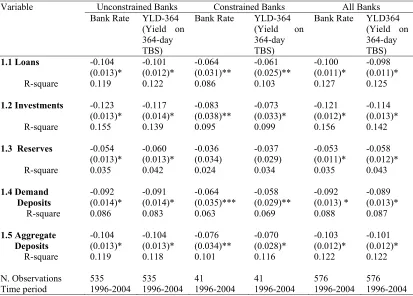
Table 1 : Effects of Monetary Policy on Constrained and Unconstrained Banks (Based on RBC Ratio)
Variable Unconstrained Banks Constrained Banks All Banks
Bank Rate YLD-364
(Yield on 364-day TBS)
Bank Rate YLD-364 (Yield on 364-day TBS)
Bank Rate YLD364 (Yield on 364-day TBS)
1.1 Loans -0.104
(0.013)* -0.101 (0.012)* -0.064 (0.031)** -0.061 (0.025)** -0.100 (0.011)* -0.098 (0.011)*
R-square 0.119 0.122 0.086 0.103 0.127 0.125
1.2 Investments -0.123 (0.013)* -0.117 (0.014)* -0.083 (0.038)** -0.073 (0.033)* -0.121 (0.012)* -0.114 (0.013)*
R-square 0.155 0.139 0.095 0.099 0.156 0.142
1.3 Reserves -0.054
(0.013)* -0.060 (0.013)* -0.036 (0.034) -0.037 (0.029) -0.053 (0.011)* -0.058 (0.012)*
R-square 0.035 0.042 0.024 0.034 0.035 0.043
1.4 Demand Deposits -0.092 (0.014)* -0.091 (0.014)* -0.064 (0.035)*** -0.058 (0.029)** -0.092 (0.013) * -0.089 (0.013)*
R-square 0.086 0.083 0.063 0.069 0.088 0.087
1.5 Aggregate Deposits -0.104 (0.013)* -0.104 (0.013)* -0.076 (0.034)** -0.070 (0.028)* -0.103 (0.012)* -0.101 (0.012)*
R-square 0.119 0.118 0.101 0.116 0.122 0.122
N. Observations 535 535 41 41 576 576
Time period 1996-2004 1996-2004 1996-2004 1996-2004 1996-2004 1996-2004
*, ** and *** indicates significance at 1, 5 and 10%, respectively Robust standard errors in parentheses
It is clear from Table 1 that the response of constrained and unconstrained banks to a
yield on 364 day T-bill rate. Specifically, as predicted by the theoretical model, constrained banks
exhibit a more pronounced (negative) response to the monetary shock vis-à-vis unconstrained banks. A bank experiencing a lack of equity is constrained to supply a volume of loans
determined by its regulatory capital; a monetary contraction drains demand deposits and to the
extent that such a loss is not offset by an increase in time deposits, the magnitude of the
contraction in loan supply is far higher than for unconstrained banks.
Table 1 also presents the response of all banks (aggregate of constrained and
unconstrained) to a contractionary monetary policy. What is interesting however is the fact that
the overall response of banks is more akin to the response of unconstrained banks. This finding is
a straightforward application of the Haltiwanger-Waldman (1991) proposition (number 6), which
observes that one group of agents (in this case, the unconstrained banks), which have a
disproportionate importance-relative to its own share over the total number of agents-is influential
[image:12.612.109.524.346.642.2]in shaping the aggregate equilibrium.
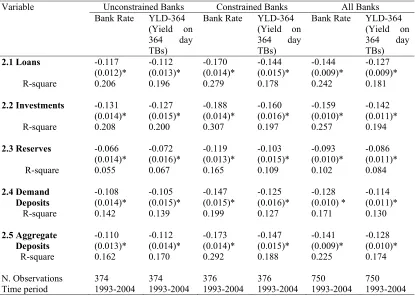
Table 2 : Effects of Monetary Policy on Constrained and Unconstrained Banks (Based on Leverage Ratio)
Variable Unconstrained Banks Constrained Banks All Banks
Bank Rate YLD-364
(Yield on 364 day TBs)
Bank Rate YLD-364 (Yield on 364 day TBs)
Bank Rate YLD-364 (Yield on 364 day TBs)
2.1 Loans -0.117
(0.012)* -0.112 (0.013)* -0.170 (0.014)* -0.144 (0.015)* -0.144 (0.009)* -0.127 (0.009)*
R-square 0.206 0.196 0.279 0.178 0.242 0.181
2.2 Investments -0.131 (0.014)* -0.127 (0.015)* -0.188 (0.014)* -0.160 (0.016)* -0.159 (0.010)* -0.142 (0.011)*
R-square 0.208 0.200 0.307 0.197 0.257 0.194
2.3 Reserves -0.066
(0.014)* -0.072 (0.016)* -0.119 (0.013)* -0.103 (0.015)* -0.093 (0.010)* -0.086 (0.011)*
R-square 0.055 0.067 0.165 0.109 0.102 0.084
2.4 Demand Deposits -0.108 (0.014)* -0.105 (0.015)* -0.147 (0.015)* -0.125 (0.016)* -0.128 (0.010) * -0.114 (0.011)*
R-square 0.142 0.139 0.199 0.127 0.171 0.130
2.5 Aggregate Deposits -0.110 (0.013)* -0.112 (0.014)* -0.173 (0.014)* -0.147 (0.015)* -0.141 (0.009)* -0.128 (0.010)*
R-square 0.162 0.170 0.292 0.188 0.225 0.174
N. Observations 374 374 376 376 750 750
Time period 1993-2004 1993-2004 1993-2004 1993-2004 1993-2004 1993-2004
*, ** and *** indicates significance at 1, 5 and 10%, respectively Robust standard errors in parentheses
Table 2 reports the case where unconstrained is defined with reference to banks’ leverage
order as the proportion of constrained to total banks, the results weakly support the theoretical
premise that the response of investment, reserves and in particular, demand deposits of
unconstrained banks is more or less matched by those of constrained banks.
Not surprisingly therefore, the overall equilibrium, as defined by the response of all banks
in the sample, is ‘in between’ those of constrained and unconstrained banks. What is clear in this
case is that, in several instances, unconstrained banks exhibit a greater response to monetary
contraction vis-à-vis constrained banks. This is consistent with the analytical framework which predicts that the interest sensitivity of demand and loans as also the ‘relative risk parameter’ will
dictate the response of these two categories of banks.
V
Concluding Observations
The results demonstrate that whether monetary policy can be made more or less effective
in influencing bank lending depends on more than just whether banks are constrained under the
revised Basel Accord. More importantly, the analysis indicates that the effect of a contractionary
monetary policy will be significantly mitigated provided the proportion of unconstrained to
constrained banks in the system is significantly high. From a macro standpoint, consistent with
Bliss and Kaufman (2002), the implications are that if the goal of the monetary authority is to
simultaneously provide credit to the economy and manage interest rates, the revised Basel Accord
could pose challenges for monetary policy formulation.
Existing research on the Basel Accord has raised the question of how revisions to the
Accord are likely to influence the efficacy of monetary policy. To explore this issue, the paper
extends the basic framework of Peek and Rosengren (1995a) and Kishan and Opiela (2000) to
examine the efficacy of monetary policy (via the bank lending channel) under the revised capital standards. The findings reveal that the effectiveness of monetary policy to influence bank lending
differs according to whether banks are, or are not, constrained by the risk-based capital standards.
In addition, the effectiveness of monetary policy in influencing bank lending is also dependent on
the credit quality of banks’ loans and securities and the liquidity of banks’ balance sheets. In
addition, the findings indicate that the response is asymmetric: the relative liquidity of constrained
banks’ balance sheets and the credit quality of the banks’ loans and securities are also critical
components towards understanding how banks respond to changes in monetary policy.
Notes
1. A discussion on the Basel Accord and its rationale and implications for emerging economies is contained in Nachane et al. (2004; 2005).
pay due regard to particular features of the present supervisory and accounting systems in individual member countries’.
3. Clearly, a much richer setting would necessitate a multi-period model (Kopecky and Van Hoose, 2004); the present model, however, confines itself to the short-run adjustment by banks to changes in monetary policy.
4. Comprising of cash in hand and balances with monetary authorities
5. Banks are assumed to hold no excess reserves.
6. The fact that h1 is less than one signifies that banks do not invest their entire demand
deposits in securities.
7. In contrast, Peek and Rosengren (1995a) and Kishan and Opiela (2000) assume all these interest rates respond equally to changes in the policy (Bank Rate) variable.
8. The ratio is currently fixed at 9% for Indian scheduled commercial banks (except RRBs).
9. For commercial loans, ΩL varies between 20 and 150% with the capital requirement, at
the margin, on AAA-rated loans equal to 1.8% (0.9*20%) and for loans rated BB- or lower, equal to 13.5% (0.9*150%). This occurs because, under the external ratings approach, while ρ remains fixed at 9%, ΩL varies inversely with the external credit rating
of the borrowing entity, with ΩL (in percentage) equaling 20, 50, 100 or 150.
10. By way of comparison, under the 1988 Accord, the risk-based capital requirements on loans and securities are invariant with respect to changes in credit ratings. In that case, (12a) and (12b) can be expressed as: γL = ρ Ω*L with ∂Ω*L/∂cL= 0; γS = ρ Ω*S with
∂Ω*S/∂cS = 0; where ρ is fixed and Ω*L and Ω*S are independent of changes in credit risk.
11. We assume ΩL> ΩS. Economically, this would mean that the risk-weight on loans exceeds
that on securities. This is in line with the risk-weights as advocated by regulators.
12. To see this, note that for commercial loans, ΩL varies between 20 and 150%.
Accordingly, the relative risk parameter (ρΩS/ρΩL) = (0.9*0.20/0.9*1.5)=0.13 for
commercial loans rated BB- or lower. For commercial loans rated AA- or better, (ρΩS/ρΩL) = (0.9*0.20/0.9*0.20)=1.0
13. Several studies in the literature, notably, Kashyap and Stein (1994) and Blum and Hellwig (1995) employ this assumption.
14. The expanded sample comprises of 27 public sector banks, 15 old private banks, 8 de novo private banks and 14 foreign banks.
References
Aggarwal, Raj and Kevin Jacques (1998), ‘A Simultaneous Equations Estimation of the Impact of Prompt Corrective Action on Bank Capital and Risk’, in Financial Services at the Crossroads: Capital Regulation in the 21st Century, Federal Reserve Bank of New York, Conference Volume.
Bank for International Settlements (2004), Basel II: International Convergence of Capital Measurement and Capital Standards: A Revised Framework, June, BIS: Basel.
Berger, Allan N and Gregory Udell (1993), ‘Do Risk-Based Capital Allocate Bank Credit and Cause a “Credit Crunch” in the United States?’, Journal of Money, Credit, and Banking, 26: 585-628.
Bernanke, Ben and Alan Blinder (1992), ‘The Federal Funds Rate and the Channels of Monetary Transmission, American Economic Review, 82: 901-921.
Bliss, Robert and George Kaufman (2002), ‘Bank Pro-cyclicality, Credit Crunches and Asymmetric Monetary Policy Effects’, Federal Reserve Bank of Chicago Working Paper
No.18.
Blum, Jurg and Martin Hellwig (1995), ‘The Macroeconomic Implications of Capital Adequacy Requirements for Banks’, European Economic Review, 39: 739-749.
Caruana, Jaime (2004), ‘Announcement of Basel II’, Remarks at the Press Conference announcing the publication of Basel II.
Chami, Ralph and Thomas Cosimano (2001), ‘Monetary Policy with a Touch of Basel’, IMF Working Paper No.151, IMF; Washington DC.
Cornett, Marcia and Hassan Tehranian (1994), ‘An Examination of Voluntary versus Involuntary Security Issuances by Commercial Banks: The Impact of Capital Regulations on Common Stock Returns’, Journal of Financial Economics, 35: 99-122.
Furfine, Craig (2000), ’Evidence on the Response of US Banks to Changes in Capital Requirements’, BIS Working Paper No.88, June.
Ghosh, Saibal, Dilip M.Nachane, Aditya Narain and Satyananda Sahoo (2003), ‘Capital Requirements and Bank Behaviour: An Empirical Analysis of Indian Public Sector Banks’, Journal of International Development, 15: 145-156.
Haltiwanger, John C. and Michael Waldman (1991), ‘Responders versus Non-responders: A New Perspective on Heterogeneity’, Economic Journal, 101: 105-1102.
Hancock, Diana and James A Wilcox (1993), ‘Bank Structure and Portfolio Composition’, in Bank Structure and Competition, Federal Reserve Bank of Chicago, May, 502-520.
Haubrich, Jerry G. and Paul Watchel (1993), ‘Capital Requirements and Shifts in Commercial Banks Portfolios’, Federal Reserve Bank of Cleveland, 29: 2-15.
Jackson, P. C.Furfine, H. Groeneveld, D. Hancock, D. Jones, W. Perraudin, L. Radecki and M. Yoneyama (1999), Capital Requirements and Bank Behavior: The Impact of the Basel Accord, Basel Committee on Banking Supervision, Working Paper No. 1, Basel: Switzerland.
Jacques, Kevin and Peter Nigro (1997), ‘Risk-based Capital, Portfolio Risk and Bank Capital: A Simultaneous Equations Approach’, Journal of Economics and Business, 49: 533-548.
Kashyap, Anil and Jeremy C.Stein (1994), ‘Monetary Policy and Bank Lending’, in N.G.Mankiw (ed) Monetary Policy, University of Chicago Press: NBER.
Kashyap, Anil and Jeremy C.Stein (2000), ‘What Do a Million Observations on Banks Say About the Transmission of Monetary Policy’, American Economic Review, 90: 407-428.
Kishan, Ruby P. and Timothy P.Opiela (2000), ‘Bank Size, Bank Capital and the Bank Lending Channel’, Journal of Money, Credit and Banking, 32: 121-141.
Kopecky, Ken and David Van Hoose (2004), ‘A Model of the Monetary Sector with and without Binding Capital Requirements’, Journal of Banking and Finance, 28: 633-646.
Litan, Robert (1987), What Should Banks Do?, Brookings Institution Press: Washington DC.
Monfort, Brieuc and Christian Mulder (2000), ‘Using Credit Ratings for Capital Requirement on Lending to Emerging Market Economies: Possible Impact of Basel Accord’, IMF Working Paper No.69, IMF: Washington DC.
Nachane, Dilip M and Saibal Ghosh (2004), ‘Credit Rating and Bank Behavior in India: Possible Implications of the New Capital Accord’, Singapore Economic Review, 49: 37-54.
Nachane, Dilip M., Partha Ray and Saibal Ghosh (2005), ‘The New Basel Capital Accord: Rationale, Design and Tentative Implications for India’, in R. Radhakrishna and K. S. Parikh (Eds.) India Development Report, Oxford University Press: New Delhi.
Peek, Joe and Eric Rosengren (1995a), ‘Bank Lending and the Transmission of Monetary Policy’,
Federal Reserve Bank of Boston Conference Series: Is Bank Lending Important for the Transmission of Monetary Policy? 47-68.
Peek, Joe and Eric Rosengren (1995b), ‘The Capital Crunch: Neither a Borrower Nor a Lender Be’, Journal of Money, Credit and Banking, 27: 625-638.
Prasad, A and Saibal Ghosh (2005), ‘Monetary Policy and Corporate Behavior in India’, IMF Working Paper No.25, Washington DC.
Rime, Bertrand (2001), ‘Capital Requirements and Bank Behaviour: Empirical Evidence for Switzerland’, Journal of Banking and Finance, 25: 789-805.
Stein. Jeremy C. (1998), ‘An Adverse Selection Model of Bank Asset and Liability Management with Implications for the Transmission of Monetary Policy’, RAND Journal of Economics, 29: 466-486.
Thakor, Anjan V. (1996), ‘Capital Requirements, Monetary Policy and Aggregate Bank Lending: Theory and Empirical Evidence’, Journal of Finance, 51: 279-324.
Van den Heuvel, S (2002), ‘The Bank Capital Channel of Monetary Policy’, (unpublished paper), University of Pennsylvania.