Effect of Microstructure on Properties of Cu-Al
2
O
3
Nanocomposite
Mária Orolínová
1,*, Juraj Ďurišin
1, Katarína Ďurišinová
1, Zuzana Danková
2, Martin Ďurišin
11Institute of Materials Research, Slovak Academy of Sciences, Watsonova 47, 040 01 Košice, Slovak Republic 2Institute of Geotechnics, Slovak Academy of Sciences, Watsonova 45, 040 01 Košice, Slovak Republic
*Corresponding Author: [email protected]
Copyright © 2013 Horizon Research Publishing All rights reserved.
Abstract
The progressive Cu - 5 vol. % Al2O3nanocomposites were produced from powder prepared by original mechanical-chemical method. Powder consolidation was realized by pressing at two different temperatures (at ambient temperature and 400 °C), sintering, forging and extruding. The goal of the work was to compare the influence of the pressing temperatures on the required properties of the compact depending up the material structure. The results of microstructure observations show that in both the materials, the Cu matrix is nanosized with homogeneously distributed very fine γ-Al2O3 secondary
particles. The particles pin the dislocations and inhibit the sliding of grain boundaries and strongly retard the recrystallization. The both materials are characterized with excellent thermal stability of structure (until 800 °C) and also with thermal stability of examined properties. The strength of the both materials is high, predominantly thanks grain size strengthening effect and dispersion strengthening effect. However, higher porosity and pores size, as well as their distribution in material pressed at ambient temperature resulted in limited plasticity and low electric conductivity. This porosity is in consequence of weak bonding between the powder particles during the pressing. The pressing at elevated temperature is necessarily for fabrication sufficient dense nanocrystalline material.
Keywords
Cu - Al2O3, Nanocomposite, Microstructure,Mechanical Properties, Thermal Stability
1. Introduction
The nanocrystalline materials (nc-materials) are single phase or multiphase polycrystals, the crystal size of which is typically from 1 to 100 nanometers in at least one dimension [1]. The different preparation methods have been developed to produce the nc-materials. Almost all preparation techniques are accompanied by a phase transformation and a free energy change [2]. The microstructural refinement to the nanometer regime (up to limit grain size) results in significant first strength characteristics improvements [3,4].
The advance of the nc-materials properties is connected with the structure, novel characteristics of grain boundaries and dramatic grain refinement [5]. The characteristics of microstructure (crystallite/grain size, morphology, texture) can be varied by suitable modifying/controlling the process variables in each of these methods. The properties of nc-metals invoked the great interest, due to their potential for high strength applications [6].
The thermal stability of the nc-materials is one of the most important properties. It is of interest for basic research as well as for industrial applications at high temperatures, because grain growth causes a change of various properties, mostly the strength [7,8]. Accordingly, the thermal stability of the microstructure of the nc-materials is crucial for their future technical use. The nc-materials are characterized by high thermodynamic instability. To inhibit the grain growth andto stabilize the microstructure up to temperatures close to the melting point Tm of the matrix, dispersion
strengthening can be used [9,10]. The basis of the dispersion strengthening is dispersion of a secondary phase – dispersoid, e.g. Al2O3, TiC or Y2O3, into the metal matrix.
The dispersion strengthening of the nc-copper with the nanoscale alumina particles has been considered for a long time as an ideal method for the preparing of materials with the unique combination of the high strength and high conductivity with high levels of thermal stability. These materials are developed for wide range of applications, electrical contact components, spot welding electrodes, etc. [11,12]. The studies on the characterization of the nanoscale alumina dispersed copper have been attracting scientific interest in recent year [13]. However a relatively small amount of research has been done measuring the bulk mechanical properties of dispersion strengthened nanocrystalline materials, perhaps to the difficulty in producing samples large enough to make mechanical test specimens.
The goal of the work was to compare the influence of compaction technique of progressive nc-dispersion strengthened Cu – 5 vol.% Al2O3 powder on the required
2. Materials and Methods
The experimental material was dispersion strengthened Cu - 5 vol. % Al2O3 prepared by powder metallurgy
technology. The composite powder was prepared by modification of the original mechanical-chemical method based on the mechanical milling in an attritor and chemical reduction by hydrogen [14], Figure 1. This synthesis of the Cu matrix and Al2O3 particles by in situ methods allows to
obtain the nanostructured matrix and nanosized, uniformly distributed particles of dispersoid. The experimental powder is characterized by crystallite/grain size of the Cu
matrix below 30 nm. The compaction process consisted of powder pressing, sintering, forging and extrusion. The Cu - 5 vol. % Al2O3 powder was pressed at two various
temperatures, Figure 1. The pressing was processed in the protective atmosphere under the pressure of 150 MPa. Materials pressed at ambient temperature and 400 °C were denoted as A and B, respectively. The pressed powders were processed as follows: sintering in H2 at 850 °C for 1h,
forging and subsequent extruding at 950 °C with a 95 % cross section area reduction.
Figure 1. Preparation of theCu - Al2O3 nanocomposites by two routes
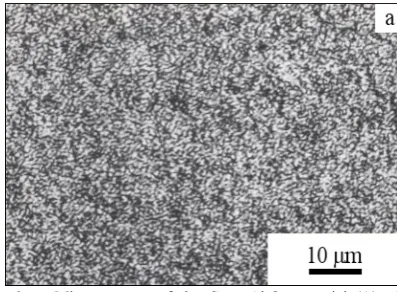
[image:2.595.137.472.227.574.2]Figure 2a. Microstructure of the initial Cu - Al2O3 material (A) observed by light microscopy
[image:3.595.79.281.78.223.2]Figure 2b. Microstructure of the initial Cu - Al2O3 material (B) observed by light microscopy
Figure 3a. Microstructure of the Cu - Al2O3 material (A) after the
[image:3.595.329.535.254.399.2]annealing at 800 °C for 1h observed by light microscopy Figure 3b.annealing at 800 °C for 1h observed by light microscopy Microstructure of the Cu - Al2O3 material (B) after the
Figure 4a. Microstructure of the initial Cu - Al2O3 material (A) observed
by SEM Figure 4b.by SEM Microstructure of the initial Cu - Al2O3 material (B) observed
3. Results
3.1. Microstructure
The microstructure of the experimental materialswas studied at first by light microscopy. The microstructures of Cu-Al2O3 etched samples(A and B) in the transversal
direction are documented in Figures 2 a,b. No marked difference in the microstructures was observed by the light microscopy. The both microstructures were very fineness, characterized by equiangular formations with sizes in the range from 250 to 500 nm, what corresponds with the
particle size of Cu powder entered into the compaction. The material microstructures after the annealing at 800 °C for 1 hour, Figures 3 a,b, were similar in comparison with the initial state. The both analyzed microstructures did not show the evidence of recovery and recrystallization. This indicates good thermal stability of the studied dispersion strengthened system.
[image:3.595.77.276.255.401.2] [image:3.595.75.282.425.568.2]of dimensions to approx. 100 nm, Figure 3a. The pores are relatively homogeneously distributed. It needs to be considered that in both materials some pores can be originated from the fall-out of dispersoid particles during the sample preparation. The total porosity in the A material was 2. 8 %. The microstructure of the B material contains considerably less pores that are not uniformly distributed. However, their size is larger, approximately 300 nm, Figure 4b. The total porosity in the B material was 1.6 %. The microstructure remained well-preserved after the annealing at the temperature of 800 °C for 1 hour.
To confirm the presence of the Al2O3 particles the
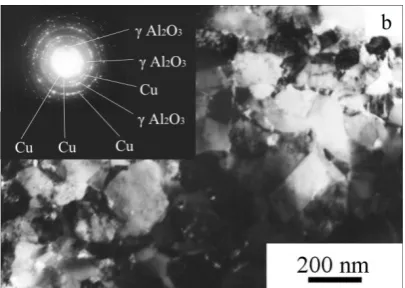
microstructure of the experimental materials was next analyzed by TEM. The microstructure of the initial A and B materials in the transversal orientation is documented in Figures 5 a,b. The microstructures of both analyzed materials are similar. This fact can effect the sample preparation, because the foil is possible to be prepared only from the consistently consolidated place. The SAED of the foil of the B material is shown in Figure 5b. The diffusion circles of the electron diffraction pattern confirmed the presence of the very fine Cu and fine secondary γAl2O3 particles.
Figure 5a. Microstructure of the initial Cu - Al2O3 material (A) observed
by TEM Figure 5b.material (B) observed by TEM Microstructure with SAED pattern of the initial Cu - Al2O3
Figure 6a. Microstructure of the Cu - Al2O3 material (A) after the
annealing at 800°C for 1h observed by TEM Figure 6b. (B) after the annealing at 800°C for 1h observed by TEM Microstructure with SAED pattern of the Cu - Al2O3 material The measured values of circle diameters of the individual electron diffraction patterns (D), the interplanar spacing values calculated from the circles (d) and comparison with the interplanar spacing values for Cu and γAl2O3 given in JCPDS (Joint
[image:4.595.331.534.216.360.2] [image:4.595.78.281.217.360.2] [image:4.595.75.535.237.547.2]Table 1. The measured values of electron diffraction circle diameters (D), the calculated interplanar spacing values (d), the interplanar spacing values for Cu and γ Al2O3 (d) and their intensities (I) given in JCPDS Catalogue
MEASURED VALUES Cu (PDF 04-0836) γAl2O3 (PDF 47-1308)
D [mm] d [nm] d [nm] I [%] d [nm] I [%]
12.8 0.239 - - 0.241 60
0.228 60
14.5 0.208 0.209 100 - -
15.3 0.200 - - 0.198 100
0.195 60
17.1 0.179 0.181 46 - -
20.0 0.153 - - 0.154 20
22.2 0.138 - - 0.139 100
24.3 0.127 0.128 20 - -
26.3 0.116 - - 0.114 30
28.4 0.108 0.109 17 - -
0.104 5 - -
34.6 0.090 0.090 3
37.1 0.083 0.083 9 - -
38.4 0.079 0.081 8 - -
Figure 7. X-ray diffraction pattern of the initial A and B Cu - Al2O3 material
The X-ray diffraction patterns of the Cu-Al2O3 initial A
and B materials in the transversal orientation are presented in Figure 7. The intensities of Cu reflections are not in accordance with the relative intensities of standard. Therefore the both materials are characterized by the deformation texture. The qualitative phase analysis confirmed only the presence of Cu reflections in both materials, corresponding with the JCPDS (Joint Committee on Powder Diffraction Standards) reference file 04-0836. The absence of X-ray reflections of Al2O3 is caused by
presence of nanometric oxide particles homogenously distributed in the Cu matrix. The both materials are nanocrystalline and the crystallite sizes are similar. The mean crystallite size of Cu matrix in the A and B material is 58 nm and 45 nm, respectively.
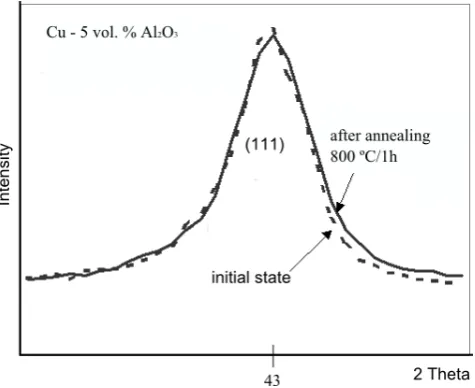
Figure 8 documents the X-ray line profiles of the (111) Cu reflection corresponding to the initial and annealed B material at 800 °C for 1 hour. As can be seen the behaviour of the reflection is nearly identical in both the materials.
The crystallite size of Cu matrix remains also unchanged after the annealing in comparison with the initial state. We remark the same record was observed in the A material, too.
The unchanged microstructure of the A and B dispersion strengthened materials after the annealing in comparison with the initial state pointed at the excellent
[image:5.595.66.288.128.502.2]thermal stability of this Cu-Al2O3 system.
Figure 8. Comparison of the X-ray line profiles of the (111) reflection of
the initial Cu-Al2O3 material pressed at elevated temperature (B) and after annealing at 800 °C/1h
3.2. Properties
The both Cu-Al2O3 materials in the initial state are
[image:5.595.315.553.469.663.2]measured hardness, ultimate tensile strength and yield strength are listed in Table 2. Both materials showed similar strength properties. Their strengths are comparable, or higher in comparison with the conventional alloys used for fabrication of resistance spot welding electrodes (CuCr, CuCrZr) [16]. The strength characteristics of both Cu-Al2O3 materials remain unchanged after the temperature
expositions at 800 °C for 1h. The high strength characteristics after the extrusion as well as their preservation after the thermal annealing may be attributed to the dispersion of nanometric and thermal stable γ Al2O3
particles, which are homogenously distributed in the nc-Cu matrix due to the method of synthesis.
Plastic properties in the analysed Cu-Al2O3 materials are
however markedly different. The A material is characterized by very low elongation and contraction in comparison with
[image:6.595.62.294.273.436.2]the B material, Table 2. This fact confirm the results from the comparison of form of samples past fracture, in Figures 9 a,b, as well as curves behaviour of tensile diagram, Figure 10. The limited plastic properties of the A material resulted from the presence of high and dispersed porosity, Figure 4a.
Table 2. Results of Brinnell hardness test, tensile test and measurement of
electrical conductivity on the Cu-5vol.%Al2O3 material pressed at ambient temperature (A) and at elevated temperature (B)
HB [MPa] Rp0.2 [MPa] Rm Z [%] [%] A IACS] λ [%
A 160 450 530 8 2.5 50
B 185 510 570 42 9.8 63
[image:6.595.317.548.278.434.2]HB – hardness, Rp0.2 – yield strength, Rm – ultimate yield strength, Z – contraction, A – elongation, λ – electrical conductivity
Figure 9a. Photograph of the ruptured tensile specimen from material
pressed at ambient temperature (A) Figure 9b.pressed at elevated temperature (B) Photograph of the ruptured tensile specimen from material
Figure 10. Comparison of the record of static tensile tests for material pressed at ambient temperature (A) and at elevated temperature (B)
[image:6.595.164.450.474.677.2]4. Discussion
The pressing conditions of the nc-composite Cu – Al2O3
powder prepared by the chemical reduction and intensive milling, play the key role at the porosity evolution and final porosity in the compact material. The different pressing temperatures resulted in the compacts with a different porosity. The compact pressed at ambient temperature (A) is characterized by high amount of fine pores. They are relatively homogeneously distributed in the material.
In the structure of the compact pressed at the elevated temperature (B) only sporadic and larger pores are occurred. The presence of pores in both materials is influenced by more factors. Nevertheless the compaction of the intensive milled powders to form dense nc-solids is very difficult, primarily due to the extreme hardness of the powder particles. This, in turn, originates from the superimposed effects of grain boundary strengthening, solid solution strengthening and strain hardening. Another reason of the porosity is that due to the extremely high specific surface area of the fine powders their fast oxidation occurs, and the sintering does not occur in the area of oxide-oxide jointing. The powder was pressed at elevated pressure that is necessary for plastic deformation of the highly strained powder particles and minimizing the voids between particles. By pressing of Cu-Al2O3 powder at ambient temperature no sufficient
interactions between the particles were formed and during the sintering the pores did not close. The pressing at elevated temperature enables to reduce, or possibly eliminate, mechanically induced lattice strain and to produce strength bonding between the particles [17].
The both experimental materials, A and B, are characterized by excellent thermal stability of the structure with a nanometric grain size of the Cu matrix. The nanosized γ Al2O3 particles uniformly dispersed into the Cu grains and
along the grain boundaries and small interparticle spacing can pin the dislocations and so can inhibit the sliding of grain boundaries as well as cell walls and strongly retard the dynamic recrystallization during the hot extrusion and isothermal annealing, too.
The enhanced strength properties resulted from the ultrafine microstructure in the materials A and B. The strength of these materials is here regulated predominantly by two additive strengthening mechanisms – by grain size strengthening effect and dispersion strengthening effect [11]. According to the Hall-Petch relation [13] an indirect proportion between the strength and grain size is valid up to the critical value of grain size [18]. The experimental materials are of lower strength as is predicted. The reason is a decrease of the value of elastic module, especially by the influence of presence of high amount of interfaces, as well as cold joints and pores in the structure. The effect of the dispersion strengthening is mainly dependent on the amount and size of strengthening particles [19]. The enhanced porosity in this material resulted in the lower strength and limited plasticity of the A material. The powder material after the pressing at elevated temperature (B) is characterized
together by better strength properties and good plasticity. The plastic properties of the A material are very low in consequence of the insufficient bonding between the powder particles.
The excellent thermal stability of the materials properties is provided by the thermal stability of structure, which is ensured by thermal stability of the γ Al2O3 dispersoid
particles.
The electrical conductivity of alloy depends on the transmission of electrons [20]. This transmission is related with the defects, such as porosity and grain boundaries and solute atoms in the material so if the defect density increases, electron scattering also increases thereby the electrical conductivity decreases. In case of the nc-dispersion strengthened powder alloy the decrease in the relative density and increase of the grain boundary area, as well as the presence of secondary particles and iron pollution, are disadvantageous for the conductivity. All these factors resulted in the electrical properties reduction. Optimization of the powder synthesis, as well as the powder compaction could lead to higher electrical conductivity. Modification of the powder preparation can decrease the Fe content coming into the system during the milling process by abrasion of milling balls and parts of the attritor. Also reduction of the amount of the dispersoid should provide improved conductivity. The material porosity could be restrained by modification of the compaction process. The electric conductivity remained almost unchanged after the annealing of the both materials.
5. Conclusion
The nanostructured Cu - 5 vol. % Al2O3 powders were
successfully synthesized by the in situ mechanical-chemical method. The pressing temperature of the powder plays a key role in the porosity evolution and the volume, as well as the distribution of pores in nc-compact are important factors controlling the properties of the composites.
The pressing at the elevated pressure and elevated temperature is necessary for the formation of the strength bonding between the powder particles and for the production of the sufficient dense nanocrystalline compact material with the desirable combination of strength and plastic properties as well as the electric conductivity.
The thermal stable γAl2O3 particles hinder the dynamic
recovery and recrystallization of the Cu matrix and allow the powder consolidation at elevated temperatures. The excellent thermal stability of the Cu - Al2O3 microstructure
leads to the thermal stability of the material properties and the components produced from that material should work effectively at high working temperatures.
Acknowledgement
REFERENCES
[1] C. Suryanarayana. Nanocrystalline Materials, International Materials Reviews, Vol.40, No.2, 41-64, 1995.
[2] H. J. Fecht, E. Hellstern, W. L. Johnson. Nanocrystalline Metals and Compounds by High Energy Ball Milling Metallurgical Transaction A, Vol.21, 2333-2336, 1990. [3] H. Gleiter. Introduction to Nanocrystalline Solids, Progress in
Material Science, Vol.33, 223, 1989.
[4] A.H. Chokshi, A. Rosen, J. Karch, H. Gleiter. On the Validity of the Hall-Petch Relationship in Nanocrystalline Materials, Scripta Metallurgica, Vol.23, No.10, 1679-1683, 1989. [5] R. Suryanarayanan, C.A. Frey, S.M.L. Sastry, B.E. Waller,
S.E. Bates, W.E. Buhro. Mechanical Properties of Nanocrystalline Copper Produced by Solution Phase Synthesis, Materials Research, Vol.11, No.2, 439, 1996. [6] J. Chen, L. Lu, K. Lu. Hardness and Strain Rate Sensitivity of
Nanocrystalline Cu, Scripta Materialia, Vol.54, No.11, 1913-1918, 2006.
[7] N.Q. Vo, R.S. Averback, P. Belon, S. Odunuga, A. Caro. Qantitative Description of Plastic Deformation in Nanocrystalline Cu, Physical Review B, Vol.77, 134108, 2008.
[8] C. Suryanarayana, C.C. Koch. Nanocrystalline Materials - Current Research and Future Directions, Hyperfine Interactions, 130, 5-44, 2000.
[9] J.Naser, W. Riehemann, H. Ferkel. Dispersion Hardening of Metals by Nanoscaled Ceramic Powders, Materials Science and Engineerig A, 234-236, 1997, 467-469
[10] D.V. Lee, B.K. Kim. Nanostructured Cu-Al2O3 Composite
Produced by Thermochemical Process for Electrode Application, Materials Letters 58, 2004, 378-383
[11] S.J. Hwang, J. Lee. Mechanochemical Synthesis of Cu-Al2O3 Nanocomposites, Materials Science and Engineering A, 405, 140-146, 2005.
[12] V. Rajkovic, D. Bozic, M.T. Jovanovic. Effect of Copper and Al2O3 Particles on Characteristics, Journal of Materials Processing and Technology,
[13] F. Shehata, M. Abdelhameed, A. Fathy, M. Elmahdy. Preparation and Characteristics of Cu-Al2O3 Nanocomposite, Open Journal of Metal, No.1, 25-33, 2011.
[14] J. Ďurišin, M. Orolínová, K. Ďurišinová, V. Katana. Preparation Method of Nanocrystalline Cu-CuO.Al2O3 Powder Mixture, SR patent, No.282462, 2001.
[15] H.P. Klug. Diffraction Procedures, Willey, New York, 1974. [16] G. V. Ghica, M. Buzatu. Tensile Strength of Cu-Cr Alloy at
Elevated Temperature, University Politehnica of Bucarest Scientific Bulletin B, Vol.70, No.1, 55-58, 2008
[17] J.C. Rawers. Warm Compaction of Attrition Milled Nanostructured Iron Powders, Nanostructured Materials, Vol.11, No.8, 1055-1060
[18] C.E. Carlton, P.J. Ferreira. What is Behind the Inverse Hall-Petch Effect in Nanocrystalline Materials, Acta Materialia, 55, 3749-3756 (2007)
[19] V. Rajkovic, D. Bozic, M. Popovic, M.T. Jovanovic. The Influence of Powder Particle Size on Properties of Cu-Al2O3 Composites, Science of Sintering, 41, 185-192, 2009. [20] D. Roy, M.A. Atwater, K. Youssef, J.Ch. Ledford,