i
A STUDY OF THE EFFECTIVENESS OF LOCAL EXHAUST VENTILATION
(LEV) IN TRAINING FACILITIES BUILDING USING COMPUTATIONAL
FLUID DYNAMICS (CFD) APPROACH
NG CHEE SENG
A thesis submitted in fulfillment of the requirements for the award of the Degree of Master of Mechanical Engineering
Faculty of Mechanical and Manufacturing Engineering Universiti Tun Hussein Onn Malaysia
vi
ABSTRACT
vii
ABSTRAK
viii
ix
CONTENTS
CHAPTER TOPIC PAGE
DEDICATION iv
ACKNOWLEDGEMENT v
ABSTRACT vi
ABSTRAK vii
CONTENTS ix
LIST OF TABLES xiv
LIST OF FIGURES xvi
LIST OF SYMBOLS AND ABBREVIATIONS xxi
LIST OF APPENDICES xxiii
1. INTRODUCTION 1
1.1 Background of Problem 2
1.2 Objective of Study 4
1.3 Problem Statement of Study 4
1.4 Scope of Study 5
x
2. THEORY AND LITERATURE REVIEW 7
2.1 Local Exhaust Ventilation (LEV) 7
2.1.1 Hood 8
2.1.2 Duct 10
2.1.3 Fan 11
2.2 Application of LEV System 12
2.2.1 Engineering Control of Disc Sander in a
Plant 12
2.2.2 Engineering Control in Welding Industry 13 2.2.3 Engineering Control of Exhaust Hoods of
LEV System 15
2.2.4 Engineering Control of Wet Grinding, Ventilated Grinding and Uncontrolled Conventional Grinding in Construction
Industry 21
2.3 Computational Fluid Dynamics (CFD) 25
2.3.1 Boundary Conditions 27
2.3.2 Turbulence Model 31
2.4 LEV Simulation Using CFD 33
xi
3. METHODOLOGY 42
3.1 General Experimental Design 42
3.2 Flow Chart 43
3.3 Study Framework 44
3.4 Case Studies 45
3.4.1 First Case Study: Ventilation Laboratory in National Institute for Occupational Safety and Health (NIOSH) Bangi 45 3.4.2 Second Case Study: Welding Laboratory
in Universiti Tun Hussein Onn Malaysia
(UTHM) 48
3.4.3 Third Case Study: Thermal Environmental
Laboratory in UTHM 50
3.5 Instrumentation 53
3.6 Actual Experiment Methods 55
3.6.1 Measurement of Velocity Pressure (VP) 55 3.6.2 Computing Average Velocity from
Velocity Pressure Readings 61
3.7 CFD Simulation Techniques 62
3.7.1 Pre-processing 62
3.7.2 Solver 72
3.7.3 Post-processing 73
3.8 Computing Absolute Error Calculation from
xii
4. RESULT AND DISCUSSION 75
4.1 Results of Actual Experiment at Ventilation
Laboratory in NIOSH Bangi, Selangor 76 4.1.1 Results of Actual Experiment at Ventilation
Laboratory in NIOSH Bangi Using
Speed Control of 20% 76
4.1.2 Results of Actual Experiment at Ventilation Laboratory in NIOSH Bangi Using
Speed Control of 40% 79
4.1.3 Results of Actual Experiment at Ventilation Laboratory in NIOSH Bangi Using
Speed Control of 60% 81
4.1.4 Results of Actual Experiment at Ventilation Laboratory in NIOSH Bangi Using
Speed Control of 80% 84
4.2 Results of Actual Experiment at Welding
Laboratory in UTHM 86
4.3 Results of Actual Experiment at Thermal
Environmental Laboratory in UTHM 89 4.4 Validation of LEV at Ventilation Laboratory
in NIOSH Bangi, Selangor 92
4.4.1 Validation of LEV at Ventilation Laboratory in NIOSH Bangi Using Speed Control
of 20% 92
4.4.2 Validation of LEV at Ventilation Laboratory in NIOSH Bangi Using Speed Control
xiii
4.4.3 Validation of LEV at Ventilation Laboratory in NIOSH Bangi Using Speed Control
of 60% 94
4.4.4 Validation of LEV at Ventilation Laboratory in NIOSH Bangi Using Speed Control
of 80% 95
4.5 Validation of LEV at Welding Laboratory in
UTHM 96
4.6 Validation of LEV at Thermal Environmental
Laboratory in UTHM 97
4.7 Discussion of Actual Experiments of LEV System 98 4.8 Discussion of CFD Validation of LEV System 103
5. CONCLUSION AND RECOMMENDATION 108
5.1 Conclusion 109
5.2 Contribution to Society 110
5.3 Recommendation for Future Work 111
REFERENCES 112
xiv
LIST OF TABLES
TABLE TITLE PAGE
2.1 Quantitative collection efficiencies for each hood
(Old et al., 2008) 18
2.2 The difference between Wong et al.’s work and current
study’s work 35
2.3 Summary of past studies on LEV system 39
2.4 Summary of literature review on CFD 40
3.1 Recommended traverse insertion depths for round ducts (Guidelines on Occupational Safety and Health for Design,
Inspection, Testing and Examination of LEV system, 2008) 57 3.2 An example of how insertion depths of pitot tube were
determined for round ducts using 10 insertion points 58
3.3 Nodes and elements of three case studies 70
4.1a Results of Actual Experiment using Speed Control of 20%
(Ventilation Laboratory in NIOSH Bangi) 77
4.1b Results of Actual Experiment using Speed Control of 20%
(Ventilation Laboratory in NIOSH Bangi) 77
4.2a Results of Actual Experiment using Speed Control of 40%
(Ventilation Laboratory in NIOSH Bangi) 79
4.2b Results of Actual Experiment using Speed Control of 40%
xv
4.3a Results of Actual Experiment using Speed Control of 60%
(Ventilation Laboratory in NIOSH Bangi) 82
4.3b Results of Actual Experiment using Speed Control of 60%
(Ventilation Laboratory in NIOSH Bangi) 82
4.4a Results of Actual Experiment using Speed Control of 80%
(Ventilation Laboratory in NIOSH Bangi) 84
4.4b Results of Actual Experiment using Speed Control of 80%
(Ventilation Laboratory in NIOSH Bangi) 85
4.5a Results of Actual Experiment (Welding Laboratory in UTHM) 87 4.5b Results of Actual Experiment (Welding Laboratory in UTHM) 87 4.6a Results of Actual Experiment (Thermal Environmental
Laboratory in UTHM) 89
4.6b Results of Actual Experiment (Thermal Environmental
Laboratory in UTHM) 90
4.7 Validation of air velocity results with Speed Control of 20%
(Ventilation Laboratory in NIOSH Bangi) 92
4.8 Validation of air velocity results with Speed Control of 40%
(Ventilation Laboratory in NIOSH Bangi) 93
4.9 Validation of air velocity results with Speed Control of 60%
(Ventilation Laboratory in NIOSH Bangi) 94
4.10 Validation of air velocity results with Speed Control of 80%
(Ventilation Laboratory in NIOSH Bangi) 95
4.11 Validation of air velocity results (Welding Laboratory in UTHM) 96 4.12 Validation of air velocity results (Thermal Environmental
Laboratory in UTHM) 97
4.13 Hood velocity obtained in three case studies 98
4.14 Velocity along ducts in three case studies 99
4.15 Summary of overall LEV system effectiveness of all
three case studies 101
xvi
LIST OF FIGURES
FIGURE TITLE PAGE
2.1 Common elements of a simple LEV system (Guidelines on Occupational Safety and Health for Design, Inspection,
Testing and Examination of LEV system, 2008) 7 2.2 An example of enclosure hood (Guidelines on Occupational
Safety and Health for Design, Inspection, Testing and
Examination of LEV system, 2008) 8
2.3 Example of exterior hoods (Guidelines on Occupational Safety and Health for Design, Inspection, Testing and
Examination of LEV system, 2008) 9
2.4 An example of ducts at Welding Laboratory in UTHM 10 2.5 Examples of fan used in LEV system (Guidelines on
Occupational Safety and Health for Design, Inspection,
Testing and Examination of LEV system, 2008) 11 2.6 Sketch of disc sander with LEV system (Mazzuckelli et al., 2004) 12 2.7 Small mixing ventilated exhaust hood (Old et al., 2008) 16 2.8 Large mixing ventilated booth-type exhaust hood
(Old et al., 2008) 16
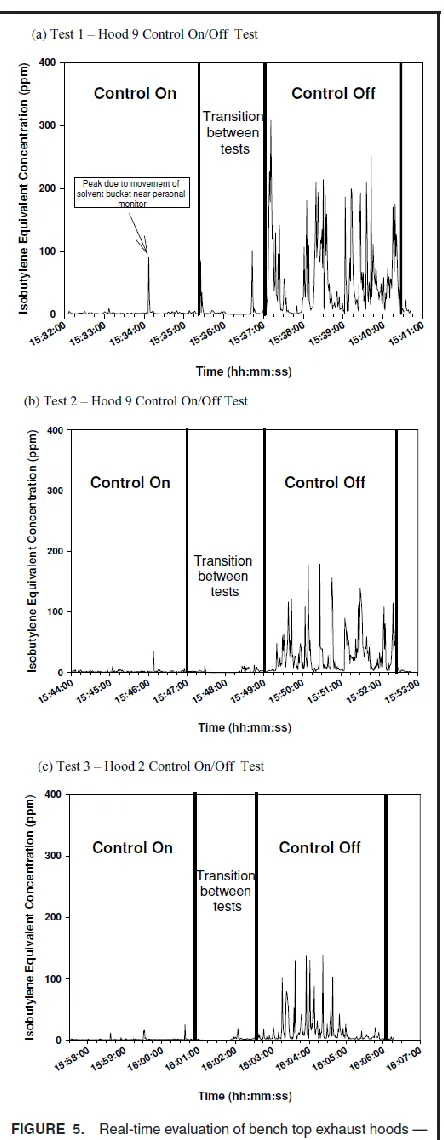
2.9 Tracer gas capture test setup (Old et al., 2008) 17 2.10 Real-time evaluation of bench top exhaust hoods – control on /
xvii
2.11 A 17.5 cm size uncontrolled conventional grinder
(Khanzadeh et al., 2007) 22
2.12 A 17.5 cm size wet grinder with water hose attached
(Khanzadeh et al., 2007) 23
2.13 A 15 cm LEV grinder with vacuum system
(Khanzadeh et al., 2007) 23
2.14 A region surrounded by a boundary
(STAR-CCM+ Tutorial Guide, 2009) 27
2.15 Three separate regions with three different boundaries
(STAR-CCM+ Tutorial Guide, 2009) 28
2.16 CFD simulations of food court center with four different
mechanical ventilation systems (Wong et al., 2006) 34 2.17 Initial configuration of simulation model of Case 1
(Mendez et al., 2008) 36
2.18 Five local ventilation outlets used for analysis. Three outlets emanate from the roof (R1, R2, and R3) while two
from the floor (F1 and F2) (Inthavong et al., 2009) 37
3.1 Flow chart of this study 43
3.2 Framework of this study 44
3.3 Overview of LEV at Ventilation Laboratory in NIOSH Bangi 46 3.4 Speed Control panel of LEV at Ventilation Laboratory in
NIOSH Bangi 47
3.5 Nine locations where measurements were conducted at
Ventilation Laboratory in NIOSH Bangi 48
3.6 Overview of LEV at Welding Laboratory in UTHM 49 3.7 Seven locations where measurements were conducted at
Welding Laboratory in UTHM 50
3.8 Overview of LEV at Thermal Environmental Laboratory
in UTHM 51
3.9 Four locations where measurements were conducted at
xviii
3.10 Anemometer VelociCalc Plus Meter Model 8386 53
3.11 Pitot tube 53
3.12 Insertion depths for round ducts (Guidelines on Occupational Safety and Health for Design, Inspection, Testing and
Examination of LEV system, 2008) 56
3.13 Insertion measurement points for rectangular ducts
(Guidelines on Occupational Safety and Health for Design,
Inspection, Testing and Examination of LEV system, 2008) 57 3.14 Insertion depths of pitot tube for round ducts at Location 1
of Ventilation Laboratory LEV in NIOSH Bangi using
10 insertion points 59
3.15 Round duct of LEV at Ventilation Laboratory in Bangi NIOSH 60 3.16 Round duct of LEV at Welding Laboratory in UTHM 60 3.17 Rectangular duct of LEV at Thermal Environmental Laboratory
in UTHM 61
3.18 SolidWorks drawing board 63
3.19 Geometry model of LEV hood drawn using SolidWorks 63 3.20 LEV geometry model at Ventilation Laboratory in
NIOSH Bangi 64
3.21 LEV geometry model at Welding Laboratory in UTHM 65 3.22 LEV geometry model at Thermal Environmental
Laboratory in UTHM 65
3.23 ANSYS Workbench 66
3.24 Selecting CFX on ANSYS Workbench 67
3.25 Importing IGS file format to ANSYS CFX Workbench 67 3.26 Applying boundary conditions on LEV geometry model 68 3.27 Selecting turbulence model on LEV geometry model 69 3.28 Generating meshing on LEV geometry model at
Ventilation Laboratory in NIOSH Bangi 70
3.29 Generating meshing on LEV geometry model at
xix
3.30 Generating meshing on LEV geometry model at
Thermal Environmental Laboratory in UTHM 71
3.31 Iteration of CFD tool, ANSYS 72
3.32 Obtaining CFD results on ANSYS Workbench 73
4.1 Graph of velocities of each location at Ventilation Laboratory
in NIOSH Bangi using Speed Control of 20% 78 4.2 Graph of velocity profile at Ventilation Laboratory
in NIOSH Bangi using Speed Control of 20% 78 4.3 Graph of velocities of each location at Ventilation Laboratory
in NIOSH Bangi using Speed Control of 40% 80 4.4 Graph of velocity profile at Ventilation Laboratory
in NIOSH Bangi using Speed Control of 40% 81 4.5 Graph of velocities of each location at Ventilation Laboratory
in NIOSH Bangi using Speed Control of 60% 83 4.6 Graph of velocity profile at Ventilation Laboratory
in NIOSH Bangi using Speed Control of 60% 83 4.7 Graph of velocities of each location at Ventilation Laboratory
in NIOSH Bangi using Speed Control of 80% 85 4.8 Graph of velocity profile at Ventilation Laboratory
in NIOSH Bangi using Speed Control of 80% 86 4.9 Graph of velocities of each location at Welding Laboratory
in UTHM 88
4.10 Graph of velocity profile at Welding Laboratory in UTHM 88 4.11 Graph of velocities of each location at Thermal
Environmental Laboratory in UTHM 90
4.12 Graph of velocity profile at Thermal Environmental
Laboratory in UTHM 91
4.13 CFD simulation of LEV at Ventilation Laboratory in
NIOSH Bangi using Speed Control of 20% 103
4.14 CFD simulation of LEV at Ventilation Laboratory in
xx
4.15 CFD simulation of LEV at Ventilation Laboratory in
NIOSH Bangi using Speed Control of 60% 104
4.16 CFD simulation of LEV at Ventilation Laboratory in
NIOSH Bangi using Speed Control of 80% 105
4.17 CFD simulation of LEV at Welding Laboratory in UTHM 105 4.18 CFD simulation of LEV at Thermal Environmental Laboratory
xxi
LIST OF SYMBOLS AND ABBREVIATIONS
AWS - American Welding Society CAE - Computer-aided Engineering CFD - Computational Fluid Dynamics
CNT - Carbon Nanotubes
DOSH - Department of Occupational Safety and Health DV - Dilution Ventilation
LEV - Local Exhaust Ventilation
NIOSH - National Institute for Occupational Safety and Health PBZ - Personal Breathing Zone
RANS - Reynolds-Averaged Navier-Stokes RCF - Refractory Ceramic Fibers
R&D - Research and Development
SP - Static Pressure
UTHM - Universiti Tun Hussein Onn Malaysia
UV - Ultraviolet
V - Velocity
VP - Velocity Pressure
cm - centimeter
cfm - cubic feet per minute EABS - absolute error percentage
f/cc - fibers/cubic centimeter
ft2 - square feet
xxii
k - Turbulent Kinetic Energy
k-Ɛ - Turbulence Model k-Ɛ
L/min - Liter per minute L/s - Liters per second m/s - meters per second
mm - millimeter
rpm - revolution per minute
𝑋𝐶𝐹𝐷 - CFD simulated value for variable X 𝑋𝑒𝑥𝑝 - actual experiment value for variable X
2D - two dimensional
3D - three dimensional
Ɛ - Turbulent Dissipation
°C - Celsius
“wg - inches of water gauge
xxiii
LIST OF APPENDICES
APPENDIX TITLE PAGE
A Measurement and Equipment 117
B Actual Experimental Results at Ventilation Laboratory in
NIOSH Bangi Using Speed Control of 20% (First Case Study) 123 C Actual Experimental Results at Ventilation Laboratory in
NIOSH Bangi Using Speed Control of 40% (First Case Study) 131 D Actual Experimental Results at Ventilation Laboratory in
NIOSH Bangi Using Speed Control of 60% (First Case Study) 139 E Actual Experimental Results at Ventilation Laboratory in
NIOSH Bangi Using Speed Control of 80% (First Case Study) 147 F Actual Experimental Results at Welding Laboratory
in UTHM (Second Case Study) 155
G Actual Experimental Results at Thermal Environmental
Laboratory in UTHM (Third Case Study) 168
H CFD Simulation of LEV 175
I CFD Simulation of LEV at Ventilation Laboratory in
NIOSH Bangi Using SolidWorks and ANSYS (First Case Study) 182 J CFD Results and Validation at Ventilation Laboratory in
NIOSH Bangi (First Case Study) 189
K CFD Simulation of LEV at Welding Laboratory in
xxiv
L CFD Results and Validation at Welding Laboratory in UTHM
(Second Case Study) 198
M CFD Simulation of LEV at Thermal Environmental Laboratory in UTHM Using SolidWorks and ANSYS
(Third Case Study) 200
N CFD Results and Validation at Thermal Environmental
Laboratory in UTHM (Third Case Study) 204
O CFD Simulation of LEV at Welding Laboratory in UTHM
CHAPTER 1
INTRODUCTION
Contaminants such as dusts, mists, gases, vapour, fumes and so forth are the most common organic in which humans are exposed due to extensive use at workstations. Each year, at least thousands of workers are infected with occupational asthma and other lung diseases (Health and Safety Executive, 2010). Studies have found that exposure to such contaminants mentioned above can cause health effects (Flynn et al., 2003). Although some machines may come with a dust or fume handling device attached together, it is often necessary to meet exposure level requirements.
An efficient and capable method to this problem is the installation of local exhaust ventilation (LEV). LEV captures airborne contaminants close to the source of emission. It is generally achieved by using hood, duct, air cleaner, fan and discharge which remove contaminants before they have a chance to escape in workstations. LEV is used in order to help reducing workers’ exposure to contaminants at workstations. The use of LEV resulted in an overall exposure reduction of 92% (Croteau et al., 2004). However, the reduction is highly depending on the way it is installed and used by workers (Wurzelbacher et al., 2010). The design and usage of LEV are often underappreciated (Shepherd et al., 2008). More attention should be paid to proper use and maintenance of LEV in various sectors (Meijster et al., 2007).
2
CFD is a design tool used to describe and simulate fluid dynamic phenomena. Simulation is used to forecast or reconstruct the behavior of an engineering product or physical situation under assumed or measured boundary conditions. Moreover, CFD can provide information of airflow distribution and air quality within a room. CFD have been increasingly used to calculate airflow velocities and temperatures in indoor environment such as food court center (Wong et al., 2006), home appliances (Lim et al., 2008), stadium (Stamou et al., 2008), hospital room (Mendez et al., 2008), and aircraft cabin (Yan et al., 2009). Despite the extensive usage of CFD application in various indoor environments, there are only a few past studies involving LEV.
1.1 Background of Problem
LEV is often used in industries and training facilities building where trainings on the work tasks are provided to occupants. Examples of places where application of LEV is used are Ventilation Laboratory in National Institute for Occupational Safety and Health (NIOSH) Bangi, Welding Laboratory and Thermal Environmental Laboratory in Universiti Tun Hussein Onn. Case studies were performed at these three places to perform actual experiments and CFD simulations.
3
(Meeker et al, 2010). In another related study performed by (Cena et al., 2011), LEV design and condition contributed to the effectiveness to capture airborne particles by sanding carbon nanotubes (CNT).
4
1.2 Objective of Study
The main objectives in this study are as follows:
a) To validate CFD simulation results with actual experimental results.
b) To identify effectiveness of LEV systems using actual experimental results.
1.3 Problem Statement of Study
5
1.4 Scope of Study
The scopes of this study are mainly focused on airflow distribution and characteristics in LEV’s compartment. Project scopes are as follows:
a) Three case studies were conducted at Ventilation Laboratory in National Institute for Occupational Safety and Health (NIOSH) Bangi, Selangor; Welding Laboratory and Thermal Environmental Laboratory at Universiti Tun Hussein Onn Malaysia, Johor.
b) Actual experiment methods were performed by referring to Guidelines on Occupational Safety and Health for Design, Inspection, Testing and Examination of LEV system by DOSH.
c) Measurement of velocity pressure (VP) and static pressure (SP) were measured and obtained from actual experiments.
d) Simulations of airflow distribution in LEV were performed using CFD tool. e) Contaminants such as dusts, gases, fume and so forth were not taken into
consideration in this study as equipment used (GrayWolf IQ-410 Indoor Air Quality Probe) were defective.
f) Heat sources surrounding the LEV, such as fluorescent lamp, light bulb and so forth were considered to have small effects and thus were neglected in this study. As stated in Guidelines on Occupational Safety and Health for Design, Inspection, Testing and Examination of LEV system by DOSH, measurement of hood velocity and velocity pressure (VP) along ducts were obtained to identify LEV system effectiveness.
6
1.5 Significance of Study
This study is important because:
a) It is conducted to measure and simulate a proper study related with engineering control equipment in workstations to control exposure reduction.
b) Effectiveness of LEV system can be identified through experimental measurements using anemometer and pitot tube to obtain hood velocity, velocity pressure (VP) and static pressure (SP) as stated in Guidelines on Occupational Safety and Health for Design, Inspection, Testing and Examination of LEV system by DOSH.
c) A better prediction of airflow parameter via the use of proper CFD model greatly reduces cost and time involved as compared to actual experimental methods. d) After simulations are validated with actual experimental results, techniques of
CHAPTER 2
THEORY AND LITERATURE REVIEW
2.1 Local Exhaust Ventilation (LEV)
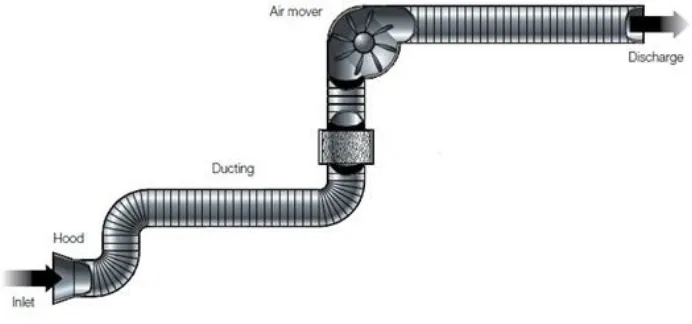
[image:27.612.155.501.454.616.2]LEV is a system that uses extract ventilation to capture contaminants from being breathed by humans in workstations. The main elements of LEV system are hood, duct, fan and discharge. Figure 2.1 shows the common elements of LEV system.
8
2.1.1 Hood
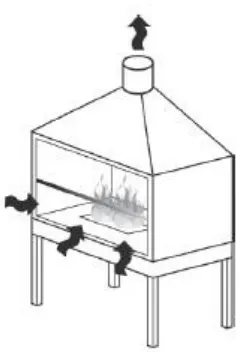
[image:28.612.264.385.412.588.2]Hood is used to capture contaminants generated in air stream directed towards the hood. The hood is the most important and critical element of LEV system because effectiveness of LEV depends on whether enough contaminants are retained or captured by the hood to ensure contaminants in workstations is below the acceptable limit. The recommended minimum hood velocity is 100 ft/min, based on Guidelines on Occupational Safety and Health for Design, Inspection, Testing and Examination of LEV system by DOSH. There are two types of hoods, which are enclosure hood and exterior hood. Enclosure hood is a hood that completely or partially encloses contaminant course, while exterior hood is located adjacent to contaminant source without enclosing it. Figure 2.2 and Figure 2.3 show examples of enclosure hood and exterior hood. The type of hood to be used depends on the physical characteristics of process equipment, contaminant generation mechanism and operator or equipment interface.
9
[image:29.612.129.514.161.453.2]10
2.1.2 Duct
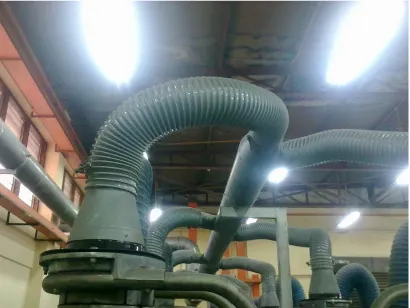
[image:30.612.125.535.360.668.2]Duct is a network of ducting system that connects the hood and other elements of LEV system. Duct transports contaminants and discharges to the atmosphere through discharge. The most important and critical consideration in ducting system design is to reduce losses of energy that will affect contaminated airflow in the duct. Reduction of flow losses will cause dust to settle in the duct and resulting in clogging problem and this will reduce hood suction rate. Therefore, velocity along ducts must be sufficient enough to transport contaminants out of workstations. According to Guidelines on Occupational Safety and Health for Design, Inspection, Testing and Examination of LEV system by DOSH, the recommended velocity along ducts for vapours, gases and smoke is 1000 ft/min, while 2000 ft/min is required for welding. Figure 2.4 shows an example of ducts at Welding Laboratory in UTHM.
11
2.1.3 Fan
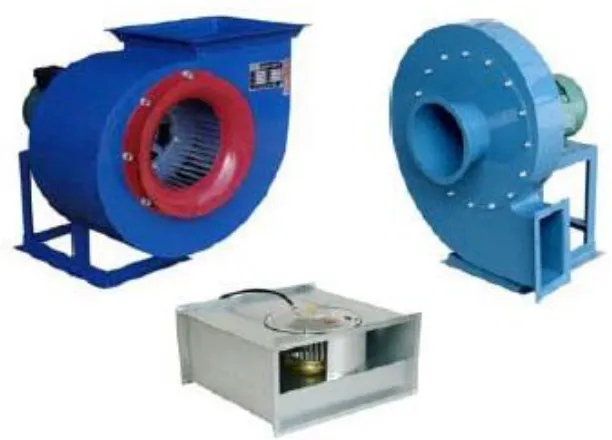
[image:31.612.175.481.249.469.2]Fan provides energy to suck contaminants into hood by inducing pressure of suction in the duct. Fan converts electrical power into suction pressure and increases air velocity. Selections of fan include types of contaminants transported in LEV system, total air flow rate required by LEV system, and size of location where fan is placed. Figure 2.5 shows examples of fan used in LEV system.
12
2.2 Application of LEV System
In this study, application of LEV system are reviewed from past researchers’ literature. The past researchers’ literature can be used as a guide in this study.
2.2.1 Engineering Control of Disc Sander in a Plant
National Institute for Occupational Safety and Health (NIOSH) Ohio, United States conducted an engineering control evaluation of a company that produced vacuum-formed ceramic fiber parts. The request was made by the company itself to examine the efficacy of a LEV system they had developed to capture and collect airborne refractory ceramic fibers (RCFs) during sanding of vacuum-formed parts (Mazzuckelli et al., 2004).
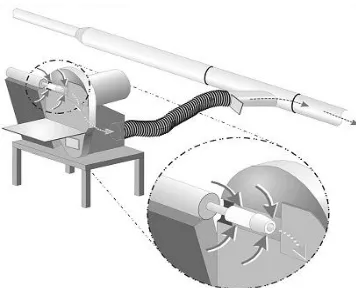
[image:32.612.239.417.525.669.2]The disc sander was mounted on a pedestal to allow workers to stand easily while sanding parts. The disc sander was operated at a speed of 1150 rpm using 20 inches diameter wheel. The disc sander was outfitted with a LEV system. At the lower rear of the disc sander, 6 inches flexible ventilation duct take-off was located which connected into a rigid aluminium main exhaust duct that provided exhaust outlets for other workstations within the plant, as shown in Figure 2.6.
13
Evaluation was conducted with the LEV system on (control-on) and with the system off (control-off). In order to minimize the effect of cross contamination between runs, the control-on trials were done before the control-off trials. The same exact operator was used in each trial to minimize the effect of human variation.
Results showed that with the control off trials, the personal breathing zone (PBZ) average concentration obtained was 44 fibers/cubic centimeter (f/cc) and with the control on trials, the PBZ average concentration obtained was 0.35 fibers/cubic centimeter (f/cc).
2.2.2 Engineering Control in Welding Industry
There are currently two methods to ventilate weld fume exposure for welding task in a closed space: dilution ventilation (DV) or LEV (Wurzelbacher et al., 2010). DV involves producing fresh air to flow into a closed space at very high velocity. Under certain circumstances, this air flow created by DV will produce a mixing or turbulence that forces any contaminated air out of any available openings in the space. This method is very useful when it is applied to a closed space that has only one single opening because DV does not depend on directional flow to draw contaminants away from workers. However, DV with arising turbulence can be very incompetent and ineffective in discharging contaminants from welders’ PBZ. On the other hand, LEV system uses a fan with a decent capture velocity to discharge contaminated air through the fan and ducting and out of closed space. Wurzelbacher et al. conducted an evaluation to determine the effectiveness of DV and LEV in welding area.
14
guidelines as recommended by the American Welding Society (AWS). Wurzelbacher et al. also videotaped welders’ movements to monitor the relationships between welder posture or position, welding fume exposure and ventilation method usage.
15
2.2.3 Engineering Control of Exhaust Hoods of LEV System
In November 2006, NIOSH Ohio, United States researchers conducted an evaluation in a food flavourings production facility (Old et al., 2008). The company was a wholesale flavour and colour manufacturer that produces more than 1500 flavours in liquid, powder, natural and artificial forms. The company consisted of both stationary and mobile open tanks for mixing liquid flavouring ingredients. Small quantities of flavouring ingredients were poured and mixed by employees on top of a bench and then large pours were completed directly into the mixing tank.
In May 2007, a new LEV system was installed in the liquid production room. The newly developed LEV consisted of two main types of LEV hoods. The first hood was a ventilated bench top, back draft, slotted hood where it was used to control workers’ exposure to chemicals during pouring activities where a majority of the workday was involved. A total of five such LEV systems were installed in the liquid compounding room.
16
Figure 2.7: Small mixing ventilated exhaust hood (Old et al., 2008)
[image:36.612.250.406.387.623.2]17
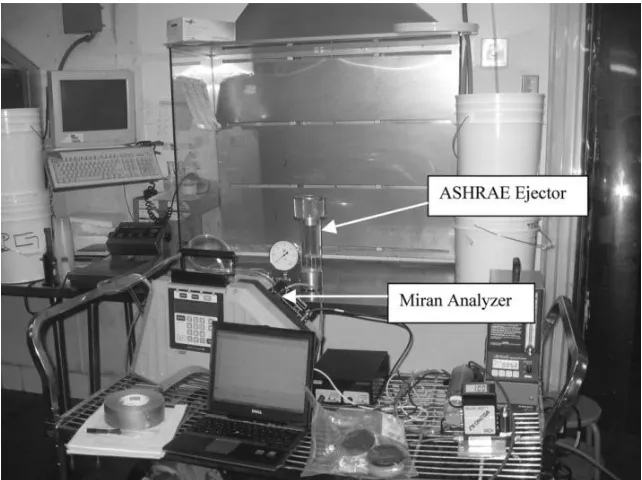
[image:37.612.168.489.235.475.2]Evaluation was conducted quantitatively by using tracer gas to determine the capture efficiency of each hood. Tracer gas was released at a constant rate where contaminant control was desired. Then, the corresponding downstream of tracer gas concentration was measured inside exhaust duct. The tracer gas used was a mixture of 10% sulfur hexafluoride in air. The tracer gas concentration was measured using a MIRAN 205B Sapphire portable ambient air analyzer. The setup of tracer gas capture test is shown in Figure 2.9.
Figure 2.9: Tracer gas capture test setup (Old et al., 2008)
18
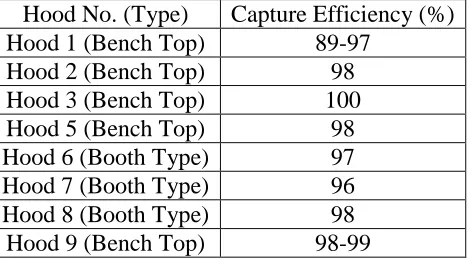
Table 2.1: Quantitative collection efficiencies for each hood (Old et al., 2008) Hood No. (Type) Capture Efficiency (%)
Hood 1 (Bench Top) 89-97
Hood 2 (Bench Top) 98
Hood 3 (Bench Top) 100
Hood 5 (Bench Top) 98
Hood 6 (Booth Type) 97
Hood 7 (Booth Type) 96
Hood 8 (Booth Type) 98
Hood 9 (Bench Top) 98-99
19
20
Based on the results, it demonstrated that exhaust hoods on existing designs can greatly reduce workers’ exposure during the use and mixing of flavouring chemicals. By using these exhaust hoods of LEV system, other operations such as packaging of powder flavourings and pouring of diacteyl and other high priority chemicals can be more safely performed. However, workers must be trained on proper use of LEV system and new operational safeguards must be implemented in order to get the best efficiency of LEV system. Critical and necessary training such as verifying fan operation status and making sure worker knows how to always position contaminant source between him and the exhaust hood are vital and important.
In another similar study performed by other researcher (Meeker et al, 2010), an assessment on effectiveness of LEV during welding tasks was conducted. In the study, Meeker et al. stated that the use of LEV was effective at reducing welders’ exposure and should be incorporated into welding tasks on a routine basis. To take good advantage of LEV system, Meeker et al. found out that effectiveness of LEV was related to proper usage of exhaust hood. If the hood was placed below or too far away from the weld fume, the LEV’s effectiveness could be greatly compromised. It was noted that LEV hoods were placed up to 2 feet (61 cm) away from the weld, therefore, welders should be taught or trained for proper usage and handling and basic guiding principles as well to maximize weld fume collection.
A three LEV tests (no LEV, custom fume hood and biosafety cabinet) conducted by (Cena et al., 2011) to evaluate the effectiveness of LEV hoods to capture airborne particles by sanding CNT nanocomposites. Results showed that release of airborne nanoparticles within a hood into the laboratory environment is highly dependent on hood design and hood condition such as height of hood being used, face velocity and so forth. In the study, Cena et al. also found out that a biological safety cabinet was more effective than a custom fume hood of LEV. Cena et al. pointed that the poor performance of the custom fume hood of LEV might be due to its lack of a front sash, its lack of rear baffles to distribute air flow and its low face velocity.
21
dust control, the type, size and location of LEV hood are critical and important. The shape of LEV hood affects dust plume containment, pressure losses and required air flow rate, while the location of LEV hoods affects maximum dust capture efficiency at minimum exhaust volumes.
Hood design for portable hand-held hammer drills, suggested by (Shepherd et al., 2008), needs to be examined for both technical and practical reasons. The practical issue of fitting LEV hood onto all different hammer frills currently being used must be a priority to gain acceptance in the field. In another study, (Ojima et al., 2007) stated that the effectiveness of LEV hood was not sufficient enough and workers’ exposure could not be prevented completely by LEV alone.
2.2.4 Engineering Control of Wet Grinding, Ventilated Grinding and
Uncontrolled Conventional Grinding in Construction Industry
A study was conducted to evaluate effectiveness of respirable silica dust and respirable suspended particulate matter reduction using grinders equipped with a continuous water flow system (wet grinder) and also grinders equipped with LEV system (LEV grinder), and after that the results would then be compared with those grinders with no local dust reduction accessories (uncontrolled conventional grinders) (Khanzadeh et al., 2007). Workers dealing with concrete products in certain construction areas have the potential to unacceptable exposure of crystalline silica dust levels. Extreme inhalation of this dangerous dust exposure has been associated to a lot of diseases such as silicosis, lung cancer, rheumatoid arthritis, scleroderma, Sjogern’s syndrome, lupus, renal and so forth.
22
[image:42.612.202.454.298.498.2]Uncontrolled conventional grinding was performed using 11.4 cm and 17.5 cm size grinders. Wet grinding was performed using 17.5 cm size grinder with a water hose attached to the grinder, and the water flow was set by concrete grinding operator at 3 L/min. The reason 3 L/min water flow was used is because it was the critical water flow rate for this type of grinder, while keeping concrete surface wet during grinding and preventing water splash. LEV grinding was performed using a ventilated 15 cm size grinder. The LEV consisted of a dry type vacuum cleaner with a hose attaching the vacuum to the grinder. The LEV capacity used on the grinder was 50 L/s. Figure 2.11, Figure 2.12 and Figure 2.13 show uncontrolled conventional grinder, wet grinder and LEV grinder, respectively.
23
[image:43.612.200.458.68.264.2]Figure 2.12: A 17.5 cm size wet grinder with water hose attached (Khanzadeh et al., 2007)
[image:43.612.200.457.371.566.2]24
Results showed that wet grinding was effective in geometric mean concentrations of respirable silica dust with a reduction of 98.2%. LEV grinding was even more effective with geometric mean concentrations of respirable silica dust with a reduction of 99.7%. Besides that, further detailed tests showed that wet grinding was effective in geometric mean concentrations of respirable suspended particulate matter with a reduction of 97.6%. LEV grinding was even more effective with geometric mean concentrations of respirable suspended particulate matter with a reduction of 99.6%.
The results of this study represent that the application of LEV grinding or wet grinding methods will reduce levels of respirable silica dust dramatically. However, Khanzadeh et al. suggested that workers should be educated and trained first on effectiveness and correct applications and usage of dust reduction accessories for concrete grinding. An appropriate respirator may also be needed to further reduce silica dust inhalation during concrete surface grinding.
In another similar research which was done by (Croteau et al., 2004), the application of LEV resulted in a mean exposure reduction of 92%. Croteau et al. found out that for many construction activities, LEV appeared to be the most effective way to reduce silica dust exposures and that the replacement of products with lower crystalline silica content might be possible for limited and special conditions, but it is not readily and applicable especially in many construction materials. Croteau et al. also suggested that water spray or wet grinder method could effectively reduce exposure levels but it is not suitable in many applications because water could result in material discoloration and expansion, building damage and waste water disposal problems. Despite the high percentage reduction when using LEV system, however, Croteau et al. recommended that workers should use respiratory protection with a protection factor of between 5 and 10 when they use hand-held grinders. When LEV system is not used, workers should use a respirator that has a protection factor greater than 10.
112
REFERENCES
American Conference of Governmental Industrial Hygienists (ACGIH), 2007. Industrial Ventilation. A Manual of Recommended Practice for Operation and Maintenance.
Carlo, R.V., Sheehy, J., Feng, H.A., Sieber, W.K., 2010. Laboratory Evaluation to Reduce Respirable Crystalline Silica Dust When Cutting Concrete Roofing Tiles Using a Masonry Saw. Journal of Occupational and Environmental Hygiene Volume 7:4, page 245 – 251.
CD-adapco STAR-CCM+ 2009. STAR-CCM+ Tutorial Guide.
Cena, L.G., Peters, T.M., 2011. Characterization and Control of Airborne Particles Emitted During Production of Epoxy/Carbon Nanotube Nanocomposites. Journal of Occupational and Environmental Hygiene Volume 8:2, page 86 – 92.
CFD Online Discussion Forums.
http://www.cfd-online.com/Forums/
113
Department of Occupational Safety and Health (DOSH), 2008. Guidelines on
Occupational Safety and Health for Design, Inspection, Testing and Examination of Local Exhaust Ventilation System.
Flynn M.R., Susi, P., 2003. A Review of Engineering Controls for Selected Silica and Dust Exposures in the Construction Industry. Applied Occupational and Environmental Hygiene Journal Volume 18:4, page 268 – 277.
Health and Safety Executive, 2010. Working with Substances Hazardous to Health. A Brief Guide to Control of Substances Hazardous to Health (COSHH) Regulations.
Inthavong, K., Tian, Z.F., Tu, J.Y., 2009. Effect of Ventilation Design on Removal of Particles in Woodturning Workstations. Building and Environment Journal Volume 44, page 125 – 136.
Kaviany, M., 2002. Principles of Heat Transfer. Wiley-Interscience Publication. John Wiley & Sons, Inc., New York.
Khanzadeh, F.A., Milz, S., Ames, A., Susi, P.P., Bisesi, M., Khuder, S.A., Khanzadeh, M.A., 2007. Crystalline Silica Dust and Respirable Particulate Matter During Indoor Concrete Grinding - Wet Grinding and Ventilated Grinding Compared with Uncontrolled Conventional Grinding. Journal of Occupational and Environmental Hygiene Volume 4, page 770 – 779.
114
Kulmala, I.K., 1997. Air Flow Field Near a Welding Exhaust Hood. Applied
Occupational and Environmental Hygiene Journal Volume 12:2, page 101 – 104.
Lim, K., Lee, C., 2008. A Numerical Study on The Characteristics of Flow Field,
Temperature and Concentration Distribution According to Changing the Shape of Separation Plate of Kitchen Hood System. Energy and Buildings Journal Volume 40, page 175 – 184.
Mazzuckelli, L., Dunn, K.H., Shulman, S.A., Cecala, A.B., Venturin, D.E., 2004.
Evaluation of a Local Exhaust Ventilation System for Controlling Refractory Ceramic Fibers During Disc Sanding. Journal of Occupational and Environmental Hygiene Volume 1:10, page D107 – D111.
Meeker, J.D., Susi, P., Flynn, M.R., 2010. Hexavalent Chromium (CrVI) Exposure and Control in Welding Tasks. Journal of Occupational and Environmental Hygiene Volume 7:11, page 607 – 615.
Meijster, T., Tielemans, E., Pater, N., Heederik, D., 2007. Modeling Exposure in Flour Processing Sectors in The Netherlands: a Baseline Measurement in the Context of an Intervention Program. Annals of Occupational Hygiene Journal Volume 51, page 293 – 304.
Mendez, C., San Jose, J.F., Villafruela, J.M., Castro, F., 2008. Optimization of a
115
Norton, T., Sun, D.W., Grant, J., Fallon, R., Dodd, V., 2007. Applications of
Computational Fluid Dynamics (CFD) in The Modelling and Design of Ventilation Systems in The Agricultural Industry: A Review. Bioresource Technology Journal Volume 98, page 2386 – 2414.
Ojima, J., 2007. Efficiency of a Tool-mounted Local Exhaust Ventilation System for Controlling Dust Exposure During Metal Grinding Operations. Journal of Occupational Health & Safety Volume 45, page 817 – 819.
Old, L., Dunn, K.H., Garcia, A., Echt, A., 2008. Evaluation of a Local Exhaust
Ventilation System for Controlling Exposures During Liquid Flavoring Production. Journal of Occupational and Environmental Hygiene Volume 5:11, page D103 – D110.
Shepherd, S., Woskie, S.R., Holcroft. C., Ellenbecker M., 2008. Reducing Silica and Dust Exposures in Construction During Use of Powered Concrete-Cutting Hand Tools: Efficacy of Local Exhaust Ventilation on Hammer Drills. Journal of Occupational and Environmental Hygiene Volume 6:1, page 42 – 51.
Smandych, R.S., Thomson, M., Goodfellow, H., 1998. Dust Control for Material
Handling Operations: A Systematic Approach. American Industrial Hygiene Association Journal Volume 59:2, page 139 – 146.
Versteeg, H.K., Malalasekera, W., 2007. An Introduction to Computational Fluid Dynamics: The Finite Volume Method (2nd Edition). Prentice Hall.
116
Wong, N.H., Song, J., Istiadji, A.D., 2006. A study of the effectiveness of mechanical ventilation systems of a hawker center in Singapore using CFD simulations. Building and Environment Journal Volume 41, page 726 – 733.