KEYWORDS:
Library Space, Medical Library, Users needs
BACKGROUND
The Medical School at the University of Malaya started in 1905 and has its roots in the Straits and Federated Malay States Government Medical School. It was renamed as the King Edward VII School of Medicine in 1913 after receiving a huge endowment from its memorial fund. In 1916, the curriculum was recognized by the General Council of Medical Education (United Kingdom) and the status was elevated to that of a college in 1921. After the Second World War, the King Edward VII College of Medicine amalgamated with Raffles College which was established to promote arts and social sciences at the tertiary level. It was named the University of Malaya under Carr-Saunders Commission in 1949. From 1949 until 1959, the University had two autonomous campuses, one in Singapore and the other in Kuala Lumpur. With the separation of the Singapore and Malaysia in 1962, the campus in Singapore became the National University of Singapore while the Malaysia retained the original name of University of Malaya.
The Medical Library in the present University of Malaya, was established in 1963. The first dean and pioneer responsible for the setting up the Faculty of Medicine and University Teaching Hospital was Professor Thamboo John Danaraj. The Library was renamed as T.J. Danaraj Medical Library on 5th May 2005. It is located between the lecture theatres at the pre-clinical block of the Faculty of Medicine. The library serves the teaching, learning and research needs of the faculty and students. Clinical staff from the
Research Papers
Abstract
The Medical Library, University of Malaya, Malaysia has two wings; the left wing for the books and the right wing for journals. Established in 1963, it is one of the oldest and largest medical libraries in the country. Major renovation works at the faculty started late 2010 closing the path connecting the wings for books and journals. Space was reduced resulting in much inconvenience for the operation of the entire library. To gauge the users' perception of the reduced library space, a short survey was carried out among users who physically walk into the library. Findings indicate that about one third of the respondent expressed dissatisfaction with the interrupted services and facilities. With some changes and modifications, the satisfactory level increased. It is realized that with basic collaborative efforts between library management and faculty, users' needs can easily be fulfilled.
USERS' PERCEPTION ON LIBRARY SPACE: A SHORT SURVEY
Vol.1,Issue.1/Nov. 2012 ISSN :2319-8435
NASARUDDIN SARAVAN RAMU , JANAKI SINNASAMY AND ZANARIA SAUPI UDIN
Medical Librarian, Deputy Chief Librarian,
Systems Librarian,
teaching hospital such as nursing staff and students, technologists and non-clinical professional staff can also use the library. Services by the library include borrowing, returning, renewal, reservation, interlibrary loans, document delivery, references and user education.
The total collection of books in the library is more than 40, 000 titles. In addition, the library subscribes to major online databases such as Medline, Cinahl, Proquest Medical & Health, Ovid, Cochrane Library, Evidence Based Medicine Reviews, Karger e journals, ScienceDirect, and Nature Journals. All the books, light reading materials, discussion and private study rooms are on the left wing of the library. Journals, computer laboratory with internet access, newspapers, photocopying machines are on the right wing. In addition, single station PCs for searching library catalog are spread throughout the vicinity of the library. Self-charging machines are placed near the counter to facilitate assistance by the staff. The library uses the National Library of Medicine Classification System for cataloguing and indexing functions. One of the primary functions is to index journal articles, book chapters, and conference papers related to local medical issues.
PROBLEM
Major renovation works at the faculty started late 2010. As a result of which, the path connecting the different wings had to be closed. This resulted in a much reduced space for the operation of the entire library including services and facilities. The library agreed to the renovation to accommodate more collaboration space and information commons in future for the library and faculty. In a Delphi study [1] among 30 panel experts, it was predicted that many academic health sciences libraries design and mission will become reflective of their parent institution's needs and that future libraries will house non-library activities such as auditoriums, distance-learning classrooms, labs and teaching spaces. The renovation was also seen as a move to anticipate changing user needs. It was reported in a health sciences libraries building survey there was an increased usage of new or remodeled library spaces that are attractive, centrally located, and technologically current [2]. Studies also reveal students use different areas in varying ways and it is usual for people to gravitate to comfortable environments, meaning if they are not comfortable in a space, they leave [3]. The area nearest the entrance / exit is a transitional space where users gather to chat and exchange greetings. The PC cluster area is apparently chosen by those who intend to stay for only a short period of time. Users wishing to use the library for an extensive time periods, seek a PC further away from the entrance and cluster area. Areas close to power outlets are the most popular. In this case study, the renovation works disconnected many of the power outlets and since the computer laboratory was located on the pathway, it had to be closed too implying that the facilities to search Internet was disrupted all together.
The library also had other structural interruptions such
as:-·cramped reading areas due to the removal and relocation of the existing office in reading area. ·insufficient space for new book shelves
·temporary closure of discussion rooms in lieu of the renovation
·closure of carel rooms – caused by faulty electrical system due to the renovation ·dusty computers as a result of the renovation works which had to be put away ·frequent malfunctioning of the air conditioning system
·disruption of the internet services resulting in the usage of the online catalog and resources often at standstill.
METHOD
are frequently challenged to justify the need for physical space especially with the growing availability of electronic resources [1]. Furthermore, in the case of University of Malaya, the whole campus is equipped with Wi-Fi facilities enabling lecturers and students to conveniently seek and retrieve information from their desks, canteen and rest places. If that be the case, users who physically walk into the library must have good reasons for wanting to use the space in the library.
To gauge the users' perception of the reduced library space, services and facilities, a short survey was carried out. 300 questionnaires were distributed among users who physically walk into the library. A total of 266 or 88.7% were returned. There were ten questions overall. They are related to:
·The level of satisfaction with the library's overall services and facilities, services. ·The level of satisfaction with the physical appearance of the library.
·The frequency of use of the services and resources within library premises and from outside the library such as from the faculty, computer labs.
·Reasons for physically going to use the library. ·Relevance and importance of the library to users.
RESULTS
Only a small percentage of PhD students (1.5%) and faculty staff (3.4 %) use the library. The majority of library users are the undergraduates (44.4%), masters students (31.2%), diploma students (7.5%) and hospital staff (2.3%), the rest being visitors. Studies have also shown that the physical library is more important to undergraduates than it is to graduate students and faculty [6].
・ The level of satisfaction with the library's overall services and facilities.
It was obvious that the renovation works and the disruption in the services and facilities had an impact on the users as 36.5% of respondents reported dissatisfaction. However, after six months of making some changes in the library, the percentage of users who were dissatisfied reduced to 13.2% while the percentage of satisfied users increased to 86.5%.
The librarians and library management took several initiatives to rectify the situation. Measures taken included: installing extra power points and data points throughout the library, and establishing a temporary cozy corner for newspapers. Library management also gave a helping hand with funds and negotiating with the university's estates office to replace the air-conditioning. Faculty's help was sorted out to allow permission to use one of the unused rooms to move from the library, bound journals publication date prior to the sixties. Transfer of these old bound journals released some space and eased the congestion which occurred as a result of the renovation. All these efforts were fruitful as the survey indicated there was a conspicuous drop in the percentage of unsatisfied users and a corresponding increase in the percentage of satisfied users after six months of the changes initiated by the library.
The level of satisfaction with the physical appearance of the library
It was revealed that 60.9% users were dissatisfied with the physical appearance of the library (25.2% very dissatisfied and 35.7% dissatisfied). Only 39.1% seem satisfied. This indicates that physical appearance has an impact on the users.
· The frequency of use of the services and resources within library premises.
About 29.7% walk into the library daily. 46.6% weekly, 23.7% monthly. It was also observed by the library staff that library resources were mostly used during the weekends.
· The frequency of use of the services and resources from outside the library such as from the faculty, computer labs.
16.2% reported they login daily, 39.1% weekly , and 44.4% used the resources monthly. As a matter of analysis, it can be infered from Table 1 that medical and health library users like to simply walk into the library for some reason or other.
Vol.1,Issue.1/Nov. 2012
Table 1: Use of library remotely and physically
REASONS FOR USING THE LIBRARY PHYSICALLY
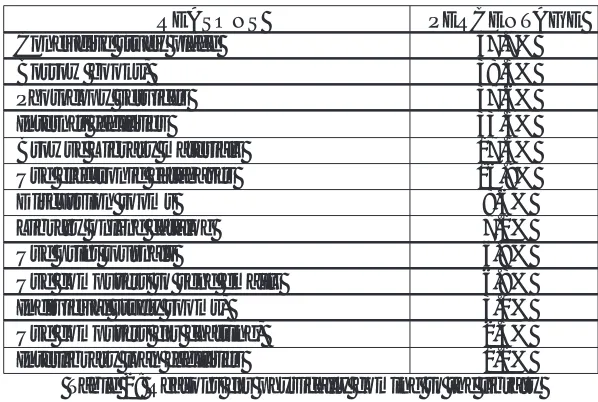
The major reasons for using the library are listed in Table 2 and arranged according to importance from the users' perspectives. The topmost reason for physically using the library is to seek a condusive place to study. The physical library's conduciveness is also supported by a survey to explore the use of library space [1, 5] where the finding indicate that younger people and more recent graduates appear to care more about conduciveness to scholarship than older people and less recent graduates.
・Relevance and importance of the library to users.
Generally, no user reported negatively to the questions on relevance and importance of library although all respondents answered these questions. 46.2% found the library extremely important, 42.1% very important and 11.7% somewhat important. Similarly, 68.5% could find almost everything they wanted from the library, 29.7% found few and 1.5% reported not finding anything they needed. When asked about staff assisting them, 45.9% were very satisfied, 49.2% satisfied, 4.1% dissatisfied and less than 1% (0.4%) reported very dissatisfied.
CONCLUSION
Although this survey was conducted on a small sample and limited number of items in the questionnaire, the outcome of it is still relevant and needed attention. There was an increase in the percentage of users after six month indicating that with improved facilities there is hope of greater use of all the facilities provided by the library. As for the physical appearance, 60.9% had shown their dissatisfaction indicating that it is an important issue among library users who physically walk into the library. This can be one of the ways to attract library users to come to the library. Physical appearance in Vol.1,Issue.1/Nov. 2012
Remotely Physica lly Daily 16.2% 29.7% Weekly 39.1% 46.6% Monthly 44.4% 23.7%
REASONS PERCENTAGE
Conducive study place 47.7% Borrow books, 38.3% Photocopy services 37.6% Internet facilities 33.5% Browse Library materials 17.3% Use electronic databa ses 16.9% Discussion rooms 8.6% Library online catalog 7.1% Use print journals 6.8% Use computers to send ema ils 6.8% Individual study rooms, 3.0% Use computers for chatting, 2.3% Interlibrary loan facilities 1.1%
Table 2: Reasons for physically coming to the libra ry
among the users. This low percentage of reference materials can be linked to the low percentage (38.3 %) of borrowing books. It could be because of the online availability of journals and reference materials. This supports Ludwig's [1] Delphi prediction which states that browsing current journals will become predominantly an online activity. This is also an indicator for collection development assessment as research now encourages the use of alerting services to obtain newly released information in a particular field.
In conclusion, while the preference for online collection is indicated, users would continue to physically walk into the library if the physical appearance, infrastructure and facilities are conducive. This case study finding is timely and significant at a time when declining gate counts and loans have caused much worry among librarians and stakeholders. The preference is for condusive place of study and it has been indicated that spaces that are built around fundamental human needs like comfort, good social ambience are spaces that work well in the long run [7].
REFERENCES
1.Ludwig L, Starr S. Library as place: results of a delphi study. J Med Lib Assoc. 2005 93(3):315-326.
2.Bryant J, Matthews G, Walton G. Academic libraries and social and learning space: A case study of Loughborough University library, UK. J Lib and Inf Sc. 2009 41(1):7-18.
3. Margaret S. Walls can talk... but are they speaking to teens? Teacher Lib. 2011. 39(2):13-15.
4. Bourke C. Library spaces vs youth friendly libraries: how to make the most of what you have. Aust Publ Lib and Inf Serv. 2010 23(3).
5.Antell K, Engel D. Conduciveness to scholarship: the essence of academic library as place. Coll & Res Lib. 2006 67(6):536-60.
6. Lippincott S, Kyrillidou M. How ARL university communities access information: highlights from LibQUAL+TM. ARL. 2004. 236(8).
7. Designing the space: a conversation with William J. Mitchell. Syllabus interviews. [cited 7 Sept 2012]. <http://campustechnology.com/articles/2003/08/designing-the-space-a-conversation-with-william-j-mitchell.aspx>
Vol.1,Issue.1/Nov. 2012