234
INTEGRATION OF EMOTIONAL INTELLIGENCE AND CREATIVITY IN E-LEARNING ENVIRONMENT
Sheiladevi Sukumaran1, Professor Dato’ Dr.Abdul Rahman bin Idris2, Chandarakala Varatharajoo3, Dr.Shabeshan4, Subramaniam Raju5, Wee Akina Sia Seng Lee6
---
Abstract
This purpose of this study is to analyse the relationship of emotional intelligence and creativity on employees’ work performance and commitment.Increasing of technological transformation, competition and globalization continues perhaps with increasing employees’ work performance and commitment (Greven, 2008). According to Turner, Barling and Zacharatos (2012), at present employees have to be allied to their work physically, emotionally and mentally in order to deliver remarkable performance as educator. The critical issues are in privatehigher education institutions educators and managerial level of educators facing complexity, peculiarity and challenges of a transformation towards e-learning as to fulfill the Key Result Area that set by Ministry of Higher Education. Poor monitoring emotional intelligence and creativity may slow down the employees’ performance (MacCann & Roberts, 2008). As a result, employees are not motivated to work hard, besides that they do not have the ability to manage their emotions. Managers fail to give feedbacks and stimulate employees. Additionally, they were also facing difficulties in handling responsibility to change in order to enhance their educator’s work commitment and improve their performance.The results indicated that there is a positive
relationship between emotional intelligence and educators work commitment (r=0.349, p<0.01). Educator can develop their emotional intelligence skills by being creative to expand their capability to think, to produce new ideas, to make changes in an organization which can influence their attitude at work and to increase their commitment through organization. This research fills the gap of literature and will contribute to academician and professional development organizers in empowering educators to support e-learning.
Keywords: Emotional intelligence, Creativity, Performance, Commitment
Introduction
235 of interpersonal skills in urgency to transform education system. This is crucial to fulfill the Key Result Area that set by Ministry of Higher Education and closing the gap between the promises of technology enabled teaching and learning and the current reality experiencing within universities to reach success point.
Quality of e-learning in private higher education institutions was deeply linked to the role of educators’ (Ridzuan, 2010). Diverse teaching environment learners able the educators’
to adjust according to the changes of learners they encounter (Ridzuan, 2010). The Education Minister of Malaysia, Tan Sri Muhyiddin Yassin in a keynote address at the Asian Strategy
and Learning Institute's (ASLI) on 16th Malaysian Education Summit that in spite of huge amount of private higher education institutions in Malaysia there is still severe deficiency of educators’ that tangled in accessing ICT (Ridzuan, 2010). According to Hansenne, (2009)
manager actions that cultivate followers’ self-efficacy increase the level of followers’ creativity. This shows that the major issues of skills and compatibility of educators’ was very much lacking in adaptation of change to support in implementation of emerging trends of learning and teaching (Ridzuan, 2010).
Literature review
Emotional intelligence is a key factor for employees to develop themselves in managing their emotions to carry out job task in an institution (Malterer, 2008). The key element in emotional intelligence is the ability to manage emotions effectively(Malterer, 2008). The emotions that distinguish have the ability to respond emotionally to the matters that need attention(Malterer, 2008).According to Mikolajczak & Luminet, (2008) emotions is literally strong feeling of excitement or disturbance of the mind. Intelligence refers to the capacity validating reasons about the information(Mikolajczak & Luminet, 2008). Reasons that take emotions and intelligence into account referred to as emotional intelligence
(MacCann & Roberts, 2008). Creativity is also involved in contributing towards achieving the organizational goals. According to Petrides (2009), creative can be enhancing by having
236 Employees’ work commitment and performance play major role to produce high standard and quality in an organization(Rossen, 2008). Group aim and target commitment can forecast the group productivity and job satisfaction (Rossen, 2008). Work performance can increase if employees are really committed toward their work. Therefore, work performance is the result of talent, contribution and the environment of the work conditions. According to Ayub (2008) skills are capable to bring the change as it’s consists of knowledge, ability and competencies. The degree of motivation is derived from the effort by employees to work towards to complete the task given and environment of work condition is the perspective of accommodation in nurturing the employees’ performance(Ayub, 2008).This constructing the
starting point to create pathways in Information Communication Technology in Malaysia (National Information Technology Council annual report, 2008).
Statement of the Problem
There is an urgency to transform private higher education institutions in order to meet the needs of Ministry of Higher Education Institutions to compete globally in education (Ministry Higher Education Report, 2011). E-learning is identified as a necessity for educators to convert their responsibilities from instructor to facilitator or coach (Frye, 2002). Ministry higher education report, (2011) identified that educators need to contribute to the improvement of their human resources to support the changes in achieving vision 2020, especially in core areas such as education, training and managerial skills. The impact of change in education system besides skills and knowledge required by educatorsemotional intelligence also being an important element that should take into the daily operation of an organization.
According to Smith, (2008) internal problems that an organization faces can be solved by evolving the emotional intelligence of current employees and managers. Emotional
intelligence is vital especially for managers as it helps the manager to manage change and motivate the team to achieve the institutional goals (Smith, 2008). Managers who having
237 Findings from Gena & Weibelzahl, 2007 showed that the employees’ commitment and performance drop because of low emotional intelligence and creativity.Anantharaman, (2011) in his finding stated the problems with interpersonal relationships and the difficulty of adapting or changing were interrelated to scores of low emotional intelligence.
Objective of Study
1. To observe the relationship between emotional intelligence and educators’
work commitment and work performance respectively.
2. To determine the moderating effect of leader-member exchange on the creativity and work commitment relationship.
Research Questions
1. Does emotional intelligence relates to educators’ work commitment and work performance respectively?
2. What is the extend leader-member exchange moderates the relationship between emotional intelligence and work commitment.
Hypothesis
H1: Emotional intelligence positively relates to employees’ work commitment.
H2:Emotional intelligence positively relates to employees’ work performance.
H3: Leader-Member Exchange moderates the relationship between emotional intelligence and employees’ work commitment.
H4:Leader-Member Exchange moderates the relationship between emotional intelligence and employees’ work performance.
Methodology
238 or were having web based courses were selected in the sample. The sample of population for this research was the educators and managerial level educators at private higher education institutions. This study included educators with different level of employment such as supervisory position (senior lecturers, deans, senior coordinator and courses head ) and subordinate are the educators consist of lecturer, tutors and teaching assistant at private higher education institutions. Data collection instrument is self-administered questionnaire. In this research ‘equal probability of selection design will be applied where each element in the
population have the same probability of selection. Probability sampling that was included in
this research was one stage cluster sampling.
Universities in Malaysia were shaped with executive arrange as for every stipulation of the Universities and University Colleges Act 1971 (Ministry of Higher Education annual report, 2011). There are 20 public universities and 49 private universities in Malaysia and 15 private universities and universities colleges in Kuala Lumpur. Kuala Lumpur is taken as a population focus of population in this study because it is the capital city of Malaysia and it has an international standard and high quality education, which is closely monitored by the Ministry of Education in Malaysia and a wide range of universities. As for this study, the private higher education institutions that contributing were institutions which incorporating e-learningin teaching and learning or institutions with web based courses. Based on criteria of selection, there were five private higher education institutions in Kuala Lumpur that were qualified to participate in this study. Based on Krejcie and Morgan’s (1970) table for
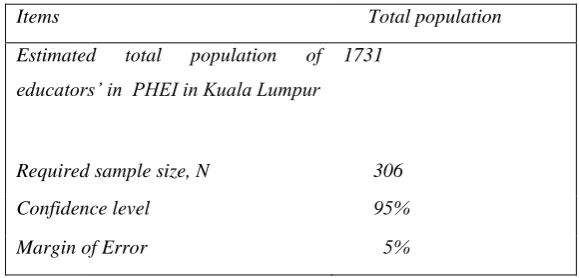
[image:5.595.132.422.601.740.2]determining sample size, for population of educators in higher education institution a sample size represent as in table 1.
Table 1: Academic staffs based on level of education in private higher education institution in
Malaysia and sample size based on Krejcie and Morgan’s (1970) model.
Items Total population
Estimated total population of educators’ in PHEI in Kuala Lumpur
1731
Required sample size, N 306
Confidence level 95%
239 Two sets of questionnaires were prepared for this research and were identified as Set A and Set B. These questionnaires were adapted by Emotional Intelligence Nurturing (EIN) questionnaire byLiden and Maslyn (1998). Set A was answered by managerial leveleducators while set B was answered by the subordinate which were the educators. A specific running code was provided on top of each set of questionnaire to match the questionnaires’ between
managerial level educators and educators directly. Set A consist of 3 sections which were section A includes 3 questions related to creativity, section B includes 4 questions related to employees' work performance, section C includes 12 questions relate to Leader-Member
Exchange. This set was given to managerial level educators. Set B were also consist of 3 sections which were section A included 35 questions relate to emotional intelligence, section B included 24 questions related to employees' work commitment, section C included 12 questions related to Leader-Member Exchange. This set of question was answered by subordinate which were the educators.
Educators’ work commitments and work performances are recognized as dependent
variable in this research. Employees' work commitments were acknowledged as a primary dependent variable in this research. These variables were measured using Commitment Scale Items from Allen and Meyer (1990). These variables consist of 24 items which covered Affective Commitment, Continuance Commitment and Normative Commitment. Educators work performances were the second dependent variable for this study. This variable was measured using four items which were worker employment performance, supervisor-rated member of staff work performance. Leader-Member Exchange (LMX) is the moderator for this study. LMX was considered using 12 point scale by Liden and Maslyn (1998). These variables were evaluated in two ways which were managerial leveleducators’ evaluated subordinate educators and subordinate educators evaluated managerial level educators. This variable consists of 12 items in each set of questionnaire which covered four dimensions such as affect, loyalty, contribution and professional respect.
Pilot Study
Researcher used convenience sampling in the pilot study. The convenience
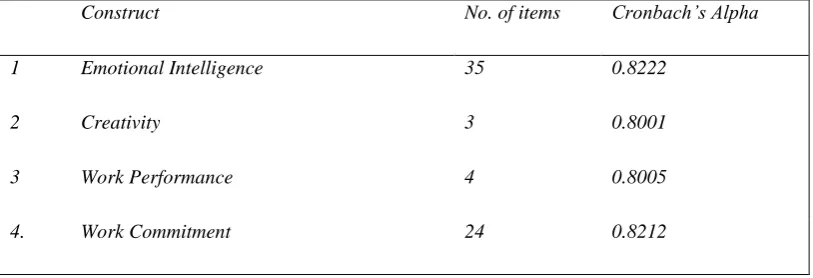
240 of this pilot study was to observe educators’ views, ideas and outlooks towards the instrument developed. Response of the instrument and conversation were used as guidelines to rewrite the questionnaire. After re-testing the second draft of the questionnaire, ambiguities in the instructions to respondents were identified and corrections made. The validity of the questionnaire was ascertained by showing the draft questionnaire to a panel of experts which mainly leading by the experts in e-learning and emotional intelligence. This pilot study reliability evaluation was lead with Cronbach’s coefficient alpha reliability analysis. The present researcher did not carried out the factor analysis due to the small sample size. While
[image:7.595.67.474.320.459.2]recommended by Nunnally (1978) in the initial point of the research reliability in the variety of 0.8 to 0.9 is adequate.
Table 2: Summary results of Cronbach’s Alpha
Construct No. of items Cronbach’s Alpha
1 Emotional Intelligence 35 0.8222
2 Creativity 3 0.8001
3 Work Performance 4 0.8005
4. Work Commitment 24 0.8212
The results of the pilot test were identified ambiguities in the questionnaire items. Problems concerning the instructions given for completing the questionnaire were also
resolved. Several important improvement have been done in response to the feedback from the pilot test which includes sentence organization and preference of terms, correction of spelling error, the length of the questions was shortened and restructured the positive and negatively worded statement. A final version of questionnaire was then prepared from consideration of the entire commentary, opinion and implication.
Data Anaylsis
241 to 50 years old, followed by 30% from age 31 to 40 year, 17% from age 51 to 60 years and 5% from age 22 to 30 years. Among the respondents from the managerial level educators 47% were phD holder, 32% were master’s degree holder and 21% were bachelor degree level. Most of the managerial level educators who respondent were having working experience of 15-20 years which were 62%, 10-14years were 27% and more than 20years were 11%.
On the other hand, populationsof subordinate which consisted of educators were 39.3% male and 60.7% female. Subordinate populations consist of 63 % of lecturer, 24% of
tutor and 13% of teaching assistants. 51.8% of the subordinates were from the age of 22 to 30 years old, followed by 33.9% from age 31 to 40 year, 11.6% of them from age 41 to 50 years and 2.7% from age below 21 years. Among the respondents from the managerial level educators 4% were phD holder, 62% were master’s degree holder and 34% were bachelor
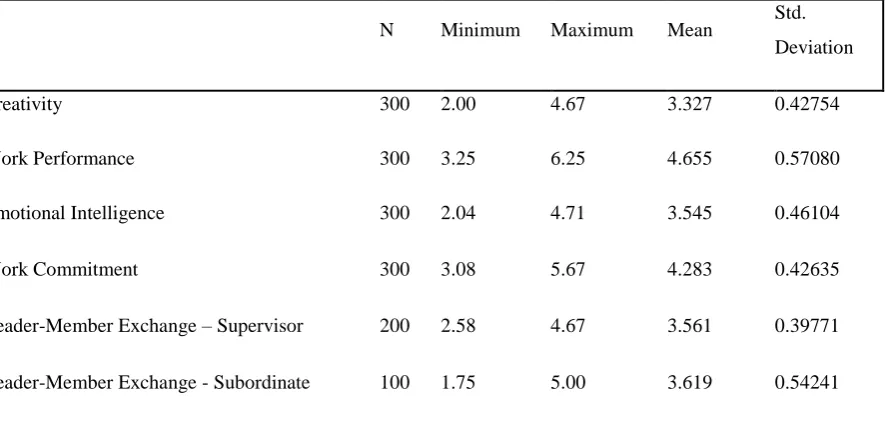
[image:8.595.80.523.389.604.2]degree holder. Table 3 shows the summary of descriptive statistics for the variables
Table 3: Summary of Descriptive Statistics for main variables
N Minimum Maximum Mean Std. Deviation
Creativity 300 2.00 4.67 3.327 0.42754
Work Performance 300 3.25 6.25 4.655 0.57080
Emotional Intelligence 300 2.04 4.71 3.545 0.46104
Work Commitment 300 3.08 5.67 4.283 0.42635
Leader-Member Exchange – Supervisor 200 2.58 4.67 3.561 0.39771 Leader-Member Exchange - Subordinate 100 1.75 5.00 3.619 0.54241
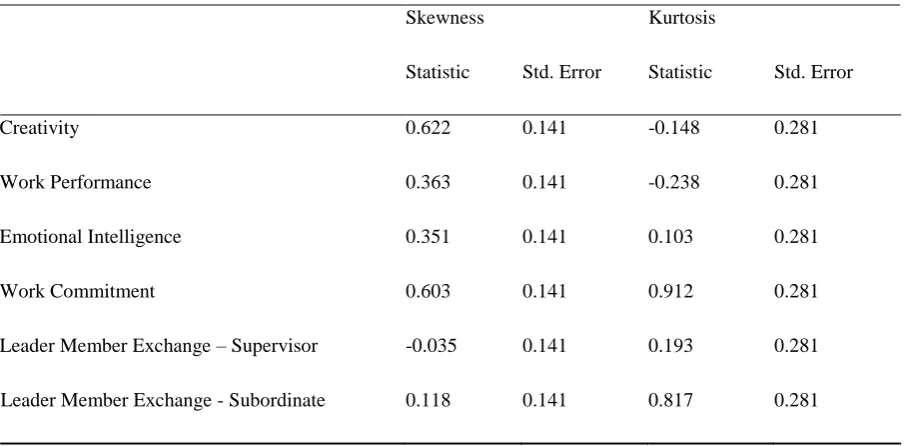
242 Table 4: Assessing normality for the main variables
Skewness Kurtosis
Statistic Std. Error Statistic Std. Error
Creativity 0.622 0.141 -0.148 0.281
Work Performance 0.363 0.141 -0.238 0.281
Emotional Intelligence 0.351 0.141 0.103 0.281
Work Commitment 0.603 0.141 0.912 0.281
Leader Member Exchange – Supervisor -0.035 0.141 0.193 0.281 Leader Member Exchange - Subordinate 0.118 0.141 0.817 0.281
In this research the total variance explained for creativity, work performance, Leader-member exchange-Supervisor and Leader-Leader-member exchange-Subordinate were 72.19%, 74.54%, 38.92% and 51.93% respectively. Each variable was explained at one stage. For emotional intelligence from 35 items, only 24 items were retained after the factor analysis and 11 items was sorted based on cross loading. For educators' work commitment from 24 items, only 16 items were retained after the factor analysis and 8 items were sorted based on cross loading. Table 5 showed the result of Bivariate correlations analysis between the main
243 Table 5: The result of bivariate Pearson correlation analysis
Emotional
Intelligence Creativity
Work Commitment
Work Performance
Emotional Intelligence
Pearson Correlation 1 Sig. (1-tailed)
N 300
Creativity
Pearson Correlation 0.066 1 Sig. (1-tailed) 0.128
N 300 300
Work Commitment
Pearson Correlation .349** 0.039 1
Sig. (1-tailed) 0 0.249
N 300 300 300
Work Performance
Pearson Correlation 0.067 .403** .133* 1
Sig. (1-tailed) 0.122 0 0.01
N 300 300 300 300
*. P < 0.05.
As showed in Table 5, the results indicated that there were a significant positive relationship between emotional intelligence and work commitment (r=0.349, p<0.01), thus HIwas accepted. However, emotional intelligence did not have significant correlation with work performance (r=0.067, p>0.05), thus H2was rejected. Results also indicated that creativity did not have positive relationship with work commitment (r=0.039, p>0.05). There was significant positive relationship between creativity and work performance(r=0.403, p<0.01)
244 creativity). It also examines the moderating effect of the moderator (Leader-Member Exchange).
Table 6: Hierarchical Regression Analyses Evaluating Predictors of Work Commitment (Organization
Attractiveness)
Measures R R2 ΔR2 ΔF Sig. ΔF df β Sig
Without Moderator 0.343 0.118 0.118 7.841 P<0.001 5, 294
Creativity 0.124 P< .05
Emotional Intelligence
Positive Thinking -0.146 P< .05
Behavioral Management 0.204 P< .05
Personal Pattern of Behaviour
0.131 P< .05
Diplomatic Behaviour 0.172 P< .05
With Control Variable 0.401 0.161 0.043 15.031 P<0.001 1, 293
Social Desirability 0.275 P< .001
With Moderator 0.553 0.305 0.145 15.002 P<0.001 5, 288
Creativity with LMX SUP -0.063
Emotional Intelligence
Positive Thinking With LMXSUB
0.135
Behavioral Management with LMXSUB
-0.406
Personal Pattern of Behaviour with LMXSUB
0.042
Diplomatic Behaviour
with LMXSUB 0.872
P< .05
[image:11.595.75.557.173.730.2]245 In table 6 the result of step one indicated that the variance accounted for (R²) with the first five predictors equaled 0.118 which were significantly (F (5, 294) =7.841, P<0.001). The changes in variance accounted for social desirables (∆R²) was 0.043, which were statistically significant decrease in variance (∆F (1, 293) = 15.031, P<0.001). Continuously emotional intelligence and creativity variable with moderator were in regression equationanalysis. The changes in variance accounted for (∆R²) were equaled 0.145, which were statistically
[image:12.595.70.565.273.671.2]increase in variance (∆F (5, 288) = 12.002, P<0.001). The entire characteristic without moderator is significant.
Table 7: Hierarchical Regression Analyses Evaluating Predictors of Work Commitment (Job Commitment)
Measures R R2 ΔR2 ΔF Sig. ΔF Df Β Sig
Without Moderator 0.099 0.010 0.010 0.583 5, 294
Creativity -0.052
Emotional Intelligence
Positive Thinking 0.000
Behavioral Management 0.076
Personal Pattern of
Behaviour -0.022
Diplomatic Behaviour 0.036
With Control Variable 0.101 0.010 0.000 0.110 1, 293
Social Desirability 0.026
With Moderator 0.286 0.082 0.071 4.480 P=0.001 5, 288
Creativity with LMX SUP -0.007
Emotional Intelligence
Positive Thinking With
LMXSUB 0.575
Behavioral Management
with LMXSUB -1.286 P< .05
Personal Pattern of Behaviour with LMXSUB
0.968 Diplomatic Behaviour with
LMXSUB 0.268
Based on Table 7two the results of step one indicated that the variance accounted for (R²) equaled to 0.01 which were not significant (∆F (5, 294) = 0.583, P>0.713). Next social
246 one (∆F (1, 293) = 0.11, P>0.741). In step three, variables with moderator were entered into regression equation. The changes in variance accounted for (∆R²) were equaled to 0.071,
which was significantly significant increase in variance accounted for over the step two model (∆F (5, 288) = 4.48, P<0.001). From the result all the character was not significant
[image:13.595.75.566.211.586.2]except one character under emotional intelligence, which was behavioral management.
Table 8: Hierarchical Regression Analyses Evaluating Predictors of Work Commitments
Measures R R2 ΔR2 ΔF Sig. ΔF Df β Sig
Without Moderator 0.424 0.180 0.180 12.895 P<0.001 5, 294
Creativity -0.063
Emotional Intelligence
Positive Thinking 0.465 P< 0.001
Behavioral Management -0.012
Personal Pattern of
Behaviour -0.016
Diplomatic Behaviour -0.113
With Control Variable 0.450 0.203 0.023 8.404 P<0.05 1, 293
Social Desirability 0.200 P< 0.05
With Moderator 0.480 0.230 0.028 2.075 5, 288
Creativity with LMX SUP -0.036
Emotional Intelligence
Positive Thinking With
LMXSUB 1.213 P< .05
Behavioral Management
with LMXSUB -0.610
Personal Pattern of Behaviour with LMXSUB
0.616 Diplomatic Behaviour
with LMXSUB -0.986 P< .05
Table 8indicated that the variance accounted for (R²) with the predictor equaled to 0.18 which was significant (∆F (5, 294) = 12.895, P<0.001). Social desirability was entered
247 was significant. Beside those, two characters under emotional intelligence with moderator were significant. According to the analysis, leader-member exchanged does not restrain the connection of creativity as well as work commitment. Nevertheless, leader-member exchange was a little reasonable the connection of emotional intelligence and work commitment. Thus, the result supportLeader-Member Exchange moderates the relationship between emotional intelligence and work commitment. At the same time the result did not support that there was no moderating effect between creativity and work commitment.
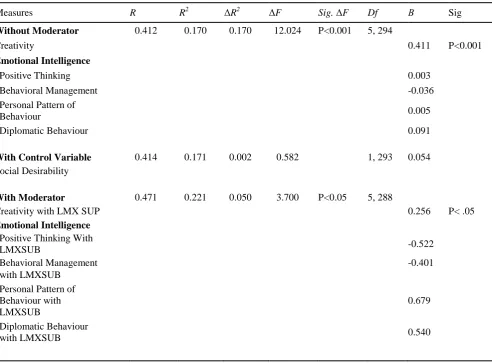
Table 9: Hierarchical Regression Analyses Evaluating Predictors of Work Performance
Measures R R2 ΔR2 ΔF Sig. ΔF Df Β Sig
Without Moderator 0.412 0.170 0.170 12.024 P<0.001 5, 294
Creativity 0.411 P<0.001
Emotional Intelligence
Positive Thinking 0.003
Behavioral Management -0.036
Personal Pattern of
Behaviour 0.005
Diplomatic Behaviour 0.091
With Control Variable 0.414 0.171 0.002 0.582 1, 293 0.054 Social Desirability
With Moderator 0.471 0.221 0.050 3.700 P<0.05 5, 288
Creativity with LMX SUP 0.256 P< .05
Emotional Intelligence
Positive Thinking With
LMXSUB -0.522
Behavioral Management -0.401
with LMXSUB Personal Pattern of Behaviour with LMXSUB
0.679 Diplomatic Behaviour
with LMXSUB 0.540
248 in variance (∆F (5, 288) = 3.7, P<0.05). Based on the table creativity was significant to work performance. While all emotional intelligence character was not significant.
According leader-member exchange, it did not have reasonable relationship with emotional intelligence and work performance. However, leader-member exchange over moderates the liaison of creativity as well as work performance. In consequence, the outcome did not hold up, means at hand was no moderating consequence edged by emotional intelligence and work performance. At the same time the result support the results indicates that there were a strong moderating effect between creativity and work performance.
Findings and Discussion
This research investigated the influence of emotional intelligence and creativity on employees' work commitment and employees' work performance. Responding to the first research question, this study found with a positive relationship between emotional intelligence and employees' work commitment (r=0.349, p<0.01). Consistent with previous research, there was a positive correlation between emotional intelligence and work commitment. To explain, Sarboland, (2012) suggested that the workforce by means of excessive emotional intelligence will have more commitment to the organization, in order to have employees with high work commitment, it was necessary to improve their emotional intelligence.
The results also indicated emotional intelligence did not have significant correlation with educators' work performance (r=.0.67, p>0.05). According to Rahim and Malik (2010), emotional intelligence by means of itself will not assurance shrilled proceeds otherwise improved functioning of the association but the ways people work together, coupled with technological proficiency plus the capability to structure a tough set of connections to be able to enhance and assist squad navigate historical the foreseeable restricted access and consequently momentum up the moment it acquired to attain the organizational improved
performance and objectives. In contrast to that, there were also finding from Rao, (2009) indicated that there was a strong affiliation concerning emotional intelligence and employees’
249 (r=0.039, p>0.05). These results could be because work commitment related more to the working environment and relationship among the educators. There were also researches that strongly agree that there were positive relationship between creativity and employees’ work commitment. Cekmecelioglu and Gunduz (2006), found that the creativity positively influences employees’ work commitment. Creativity was hindered stipulate the worker
required in constant awareness and psychological affection to the organization. This study was also found that the significant positive association lined by creativity and employees' work performance(r=0.403, p<0.01).
Leader-Member Exchange (LMX) as a moderator basically played an important roles in connecting emotional intelligence with work commitment, as well as creativity with work performance. According to Mutalib & Mahmuddin, (2010)LMX was absolutely interrelated by means of income (Ferris, 1985), hold up for improvement (Scott and Bruce, 1994), work performance (Wayne, Shore, and Liden, 1997), and productivity (Graen, Novak, and Sommerkamp, 1982). Members of groups were prearranged larger tasks, extra rewards, as well as extra concentration. The manager level educators permit the educators’ number of autonomy in responsibilities. In this study found that Leader-Member Exchange has moderate connection between emotional intelligence (diplomatic behavior, behavioral management and positive thinking) and educators’ work commitment. This means, Leader-Member Exchange
(LMX) makes the connection between emotional intelligence and educators’ work commitment slightly stronger. This study also found that with the aim of Leader-Member Exchange there were moderate relationship between emotional intelligence and educators' work performance.This study found that leader-member exchange did not restrain the link between creativity and educators' work commitment. While the results showed that there was no positive relationship between creativity and educators’ work commitment, the further results also showed there was no moderating effect between creativity and educators’ work commitment. Therefore this study found that LMXstrongly moderates the relationship between creativity and employees' work performance. This result explained to the manager level educators that by giving an opportunity to educators to appear with creative ideas to
improve their work performance in e-learning environment.
250 significantly related to educators’ work performance. Institutions which have implemented emotional intelligence and creativity development programs and strived to enhance emotional intelligence and creativity competencies of human resource have witnessed sustainable change in educators using e-learning (Ridzuan, 2010).Management should gave an opportunity toward constructed a good communication between managerial level educators and subordinate level educators. Smooth communications between these two levels were very important in creating harmonious e-learning working environment.
Private higher education management should provide and environment which was
encouraged the positive relationship between leader and member of the organization to stimulate emotional intelligence among the educators. Management should ensure that educators can implement their creative ideas through group activities such as team building. Beside that educators should be rewarded for their creative ideas and tolerance for mistake needed to be considered so that an educator feels confident to take risk.
There were two academic implications resulting from this study. Firstly, the research provides evidence to facilitate there was a constructive relationship involving emotional intelligence and employees’ work commitment and also creativity and employees’ work
performance. Based on the result there was no relationship between creativity and employees’ work commitment and also emotional intelligence and employees’ work
performance.This study contributed to the literature to analysis the relationship between emotional intelligence, creativity, employees’ work commitment and employees’ work
performance. The findings from this research highlighted the function of Leader-Member Exchange in moderating the relationship between emotional intelligence and educators’work commitment and moderating the relationship between creativity and educators work performance.
Conclusion
This study contributes to the body of knowledge of organizational behaviour in facilitating
251 This provided an opportunity for private higher education institutions to determine the successful pathways of managing change in the perspective of behaviour by knowing the factors that may influence emotional intelligence and creativity.In addition, recommendations were proposed in this study for consideration in future research, by looking the concept of emotional intelligence and creativity to develop and improved educators’ work commitment and educators’ work performance.
Recommendation for Further Research
From the findings of this study, some common problems were found among employee and
252
References
Allen & Meyer (1990). The measurement and antecedents of affective, continuance and normative commitment to the organization,Journal of OccupationalPsychology, 63, 1 – 18.
Anantharaman, Emotional Intelligence and Organisational Citizenship Behaviour of
Manufacturing Sector Employees: An Analysis, Journal of Organizational Behaviour, 43(12),121-125.
Ayub, (2011). Emotional Intelligence & Organizational Performance: A Case Study of Banking Sector in Pakistan, Journal of Computer Scales, 42, 53-55.
Çekmecelioglu, H.G., & A Günsel (2011). Emotional intelligence, leadership effectiveness, and team outcomes, Procedia Social and Behavioral Sciences,6,71-73.
Chua and Zahra, (2008). Financial value of the business and explains this difference in the context of emotional value, Journal of Organizational Behaviour, 53, 96-99.
Cronbach, L. J., & Meahl, P. E., (1955). Construct validity in psychological tests.
An empirical assessment through scale development, Journal of Management, 24, 43–72.
Gene, C. Weibelzahl, S. (2007). Usability engineering for the adaptive web, Journal Adaptive Psychological Bulletin, 52: 281-302.
Graen Novak & Sommerkamp (1982). 'Attributional processes in leader-member
performance in UK call centres, Journal of Managerial Psychology, 19(4), 442-454.
Greven et al.,(2008). Hierarchical integration of dispositional determinants of general health in students: The big five, trait emotional intelligence and humour styles, Journal of Personality and Individual Differences, 44 (7), 1562–1573
Hansenne, Quoidbach, Mikolajczak (2009). Increasing emotional intelligence:(How) is it possible? Journal of Personality and Individual, 13,324-327.
Higgs M., (2004). A study of the relationship between emotional intelligence andleadership and employee creativity, Journal of Organizational Behavior, 30, 963–982.
Hirst G., Van Dick, R., & Van Knippenberg, D., (2009). A social identity perspective on interactions', Journal of Organizational Behavior and Human Performance, 23, 157-159.
Jowati (2011). Making a difference: Development agendas and the training of adult Educators, Journal of Adult Education, 65, 121-126.
Krejcie, R.W. Morgan, D.W. (1970).Determining sample size for research activities, ERIC Publications.
Liden, R. C., & Maslyn, J. M., (1998). Multidimensionality of leader-member exchange:
253 MacCann and Roberts (2008). New paradigms for assessing emotional intelligence: Theory
and data, Journal of Emotion, 8 (4), 540–551.
Malterer et al., (2008). Psychopathy and trait emotional intelligence, personality and individual differences, Journal of Behavior Science, 44 (3), 735–745.
Mikolajczak and Luminet, (2008). Trait emotional intelligence and the cognitive appraisal of stressful events: An exploratory study, Personality and Individual Differences, 44 (7), 1445–1453
Ministry Higher Education Report (2011). National higher education in Malaysia: Balancing benefits and concerns through regulations.
National Information Technology Council annual report, (2008).Comparative analysis of policies for ICT in education.
Nunnally (1978). Examination of the factor structure of the ways of coping questionnaire with populations, Journal of International Research, 7, 24-27.
Petrides (2009). Technical manual for the Trait Emotional Intelligence Questionnaire, TEIQue London Psychometric Laboratory, Publications.
Quoidbach, J and Hansenne,M, (2009). The impact of trait emotional intelligence on nursing team performance and cohesiveness, Journal of Professional Nursing, 25 (1), 23–29.
Rahim R.I., & Malik (2010). Job Stress and Job Performance among employees in the
Taiwanese Finance Sector: The Role of Emotional Intelligence, International Journal of Business,53, 71-73.
Rao G., (2009). Emotional Intelligence And Its Relationship With Organizational
Commitment Among Nurses In Private Healthcare In The Northern Region Of Malaysia, University Science Malaysia Publication.
Ridzuan, (2010). Thrust into technology: How veteran teachers respond, Journal of Educational Technology Systems,30, 85-111.
Rossen et al., (2008). Confirmatory factor analysis of the Mayer–Salovey–Caruso Emotional Intelligence Test V 2.0 (MSCEIT), Journal of Personality and Individual Differences, 44 (5) (2008), 1258–1269.
Sarboland, K. (2012). Assessment of the relationship between emotional intelligence and organizational commitment of employees: a case study of Tax Affairs Offices,
Journal of Basic and Applied Scientific Research,34, 52-57.
Scott & Bruce (1994). Employee creativity: The role of leader emotional intelligence, Elsevier Publication.
254 Smith et al., (2008). Trait emotional intelligence, conflict communication patterns and
relationship satisfaction, Journal of Personality and Individual Differences, 44 (6), 1314–1325.
Snyder & S. J. Lopez (eds.), Handbook of Positive Psychology. New York: Oxford
Turner, N., Barling, J., & Zacharatos, A. (2002). Positive Psychology at Work. In C. R. University Press, 715–730.