5
X
October 2017
Implementation of Green Supply Chain
Management in Industries and its Effect on
Customer’s Satisfaction
Santanu Kumar Ghosh1,
1
Department of Mathematics, Kazi Nazrul University, Asansol-713340, , West Bengal,
Abstract: The purpose of this paper is to investigate the effect of Green Supply Chain Management practice on customer’s satisfaction in industries. For this reason, data were collected from executives and managers in companies of reputed industries of India. A descriptive, correlational methodology was adopted an data were analyzedusing structural equation modeling and partial least squares (PLS) path analysis. The results revealed that the internal green practices, external green collaboration of a company have a positive and significant impacton customer’s satisfaction. Finally, the results suggest thatstrengthening green supply chain management practice in Indian industries improves green performance, which in turnincreases customer’s satisfaction
Keywords: green supply chain management, internal green practices, external green collaboration, company's green performance, customer’s satisfaction.
I. INTRODUCTION
International industries always try to satisfy their customers by proving proper service and better quality products through the innovation and research carried out by the companies. Sometimes this takes the form of improving green performance by observingenvironmental laws and standards, increasing customer knowledge in this area, and reducingthe negative environmental effects of their products and services (Koplin, Seuring, &Mesterharm, 2007). Green performance involves assessing the relationship between trade andthe environment (Olsthoorn, Tyteca, Wehrmeyer, & Wagner, 2001). Sustainable developmentis key to ensuring a company’s survival and requires the commitment and participation of allemployees and managers. Many industries are facing competitive pressure to coordinate andcooperate through the supply chain management practice to improve agility, flexibility and proper functioning of their product. On the other hand implementation of green supply chain management practice have a positive impact on satisfaction of the customers. Sigala (2008) suggested that concern about environmental issues and governmental policies drive the industries to adopt green supply chain management practice to maintain competitiveness.
A green supply chain management leads the organizations for sustainable consumption and environmentallyfriendly business operations. From a macro perspective, attention to green issues is importantin relation to both the design of new green products and the creation of markets for productsthat are compatible with the environment. The creation of a green supply chain requires the development of opportunities for companies to invest in the design and manufacture ofgreener products and to meet the requirements of sustainability. It involves not only theproduction of green consumer goods, but also the involvement of suppliers in the creation ofgreen markets (Sheu, Chou, & Hu, 2005).
This study sought to investigate the role of internal green practices and external green collaboration on green performance and customer’s satisfaction. Internal green practice recognises that different administrative areas within the company need to be integrated for optimum performance (Flynn, Huo, & Zhao, 2010). External green collaboration involves mutual understanding of environmental responsibilities and risks and shared decision-making to solve environmental problems and allocate resources, skills and knowledge between suppliers, partners and customers in the supply chain to achieve common environmental goals (Vachon, S., & Klassen, R. D. 2008).
Our investigation is significantly different from the existing investigations. No investigation has been carried out to investigate the impact of green supply chain management practices i.e. internal green practices, external green collaborations on customer’s satisfaction. Our aim is to
II. HYPOTHESES
The study of the conceptual model of Yang et al.(2013) is shown in Figure 1,in which green supply chain management is understood as comprising internal greenpractices and external green collaboration. In the present study, internal green practices are identified as green policy, green shipping practices and green marketing, and external greencollaborations are comprised as green collaboration with suppliers, green collaboration with partnersand green collaboration with customers. Now the green performance of a company may be assessed by reduction in pollutants and reduction in green costs. The customer’s satisfaction may be assessed by the accelerated sales of goods which in turns increased profits.
H3(+)
H2(+)
H1(+)
H6(+)
H4(+)
[image:3.612.38.513.189.420.2]H5(+)
Figure 1: Research conceptual model of Yang et al.(2013).
The Figure 1 shows six testable hypotheses in which all of the direct associationsindicated are hypothesised as positive. The theoretical structural model incorporates greenperformance as the focal construct with internal green practices and external greencollaboration as antecedents and firm competitiveness as a consequence. The above model isdesigned to assess the impact of green supply chain indicators on firm competitiveness. Our proposed investigation claims that the combination of internal green practices and external green collaboration willenhance green performance, ultimately leads to customer’s satisfaction.
Stevens (1989) suggested that companies should achieve cooperation between internal processes to a relatively high degree before initiating external integration. Flynn et al. (2010) proposed that internal integration removes key barriers and creates cooperation to meet customer needs rather than reflecting traditional administrative divisions and specializations. Several researchers like Cohen & Levinthal (1990), Hillebrand & Biemans (2004), Lane, Koka, & Pathak (2006) and Takeishi (2001) proposed that during the company’s high level of internal communication and coordination, it can accelerate its external integration by utlising new knowledge obtained from external suppliers, partners and customers and acknowledging their business interests.
Several researchers like Swink & Nair (2007), Swink, Narasimhan & Kim (2005) etc. proposed that people in various operating units in a strategic partnership company should interact with each other to integrate their objectives and activities. Kanter (1994) suggested that the company may achieve a highdegree of integration with its external customers and suppliers only if they adopt collaboration and alliance with the other organizations. Therefore, the following hypothesis follows from the above mentioned investigations.
A. H1: Internal green practice has a significant impact in external green collaboration.
Several researchers like Droge, Jayaram, & Vickery (2004), O’Leary-Kelly & Flores (2002), Rosenzweig, Roth, & Dean Jr, (2003), Swink & Nair (2007), Zailani & Rajagopal (2005) investigated the impact of cross-functional and cross-organizational performance on firm performance. They also derived that there is a positive relationship between internalperformance and operational performance. Stank, Keller& Daugherty (2001) and Ellingeret al. (2007) investigated that collaboration between marketing and
Internal Green Practices
External Green Collaboration
Green
Performance Firm
logistics had a positive effect ondistribution services performance. Zhu and Sarkis (2004) proposed that companies with highlevels of adaptation of green activity achieve improved environmental performance. Hencethere is considerable evidence to support the hypothesis that the implementation of internalgreen practices will lead to improved green performance. Based on these investigationswe hypothesize that:
B. H2: Internal green practice has a significant impact on the company's green performance.
Rao & Holt (2005) proposed that green activities and integration have potential strategic value because they affect the valuechain in multiple areas and they produce unique benefits at each level of the supply chain. They also proposed that there should be a variety of measures of competitive performancewhich, as much as possible, provide a holistic approach to the environmental infiltrations onthe firm's economic performance. Consequently, the following Hypothesis is proposed:
C. H3: Internal green performance has a significant impact on firm competitiveness.
The Increasing environmental concern from customers, buyers, communities, and government regulations force companies to
implement Green Supply Chain Management (GSCM) and green innovation. Zhu, Sarkis, & Lai, 2008 suggested that GSCM and
green innovation have strategic interconnection in developing new green product. Vachon and Klassen (2008) proposed that green
cooperation between the organization and the members of its green supply chain enables the company to implement GSCM. They also suggested that setting common environmental goals, common environmental planning, and working together reduce pollution and other environmental effects. According to De Giovanni & Esposito Vinzi (2012), greencooperative activities are profitable for supply chain members in both economic and environmental terms. Vachon & Klassen (2006) also suggested that cooperation between the members of the supply chain boost the developmentof environmental activities and the reduction of pollution. Rao & Holt(2005) claimed that greensupply chain management leads to effective collaboration among trading partners and helpsthem to reinforce green performance. Based on these theoretical justification, the following hypothesis follows:
D. H4: External green collaboration has a significant impact on a company's green performance.
According to Vachon & Klassen (2006) wider collaboration between members of the chain may enhance the development ofimproved environmental activities and reduce pollution. They also proposed that external green collaboration improves firm performance and this lead reduction of environmental impacts and firm competitiveness. Rao & Holt (2005) examined whether green supply chains may lead to competitiveness and economic performance of the company and they found a positive correlation between them. Porter & van der Linde(1995) suggested that in orderto increase competitiveness in global markets, companies must work together with supplychain partners to act in accordance with environmental regulations, reduce environmental impacts and achieve environmental goals. Accordingly the following hypothesis follows.
E. H5: External green collaboration has a significant impact on firm competitiveness.
Environmental regulation and competitive advantage of the companies were studied in a by Hitchens et al. (2000), where a packaging of waste in the European supply chain were studied. According to Hick (2000) and Hansmann & Claudia (2001), successful environmental management can improve corporate structure and provide new opportunities for companies to strengthen their capabilities and facilities. Bacallan (2000) showed that organizations can strengthen their position in a competitive environment by improving their green performance to be consistent with environmental regulations. Montabon, Sroufe, & Narasimhan (2007) showed integration of environmental concerns into management activities can greatly assist companies to achieve competitive advantages. Consequently, the theoretical justifications reveals the following hypothesis.
F. H6: A company's green performance has a significant impact on its competitiveness.
III. METHODOLOGY
A. Data Collection
The target population was executives and operation managers in some reputed companies who have specialist knowledge of manufacturing, purchasing, selling, and information-related processes within their organizations. Thequestionnaires were distributed among all members of the target population and asked them to supply the answers against the questionnaires.
B. Measurement of Construct
Three indexes namely green policy, green shipping practices and green marketing were included in the internal green practices variable. These three indexes are patterned after those used by Yang et al. (2013). A 3- indicator developed by Yang et al. (2013) were used to measureexternal green collaboration. Respondents were asked to indicate the importance of greencollaboration with suppliers, green collaboration with partners and green collaboration withcustomers. A 2- indicator expanded by Yang et al. (2013) were adopted to assess companies’ green performance. Respondents were asked to indicate the importance of reduction ofpollutants and decline in green costs. Customer’s satisfactions were measured using threeindicators fostered by Yang et al. (2013) - quality of service, productivity and corporateprofits. Respondents were asked to rate their customer’s satisfaction.
C. Statistical Analysis
The proposed investigation was carried out using a descriptive-correlational method. All measurement indicators were assessed for validity and reliability within a measurement model context and common model bias was assessed to ensure that the indicators consistently measured what they were supposed to measure. Descriptive statistics were computed to ensure that the study variables were sufficiently normally distributed. Correlations were computed to establish
bivariate relationships among the study variables. The theoritical model was then calculated following a structural equation modeling methodology using smart PLS software. This software creates goodness of fit indexes that were used to define how well the theoretical model fits the data. The software also generates standardized coefficients that were used to assess support for the study hypotheses.
IV. RESULTS A. Indicators Assessment Process
Several experts and professors of business management working in universities and reputed industries assessed thequestionnaire for validity. The team of experts and professors of business management approved 30 questionnaires which were distributed in the population to assess face validity. The final questionnaire was assessed as having sufficient face validity. PLS software has the capability to investigate internal consistency reliability, composite reliability, reagents’ reliability, convergent validity and divergent validity.Table 1 shows the values of Cronbach's alpha and composite reliability. As can be seen, thevalues of Cronbach's alpha coefficients for all components are greater than 0.7, indicatingthat the model has good internal consistency reliability. All values of composite reliabilitycoefficients (CR) for all first and second order variables were larger than 0.7, indicating goodmodel fit. Factor loadings for all indices were higher than 0.7, so there was no need toremove any questionnaire item from the model.
Table 1:
Factor Loading Indicators Variable Factor Loading Indicators Variable
0.98 Green
Collaboration With
Suppliers
External Green Collaboration
0.91 Green
Policy
Internal Green Practices
0.91 Green
Collaboration With Partners
Alpha
Coefficient: 0.90
0.89 Green
Shipping Practices
Alpha Coefficient: 0.92
0.90 Green
Collaboration With Customers Composite Reliability: 0.90
0.90 Green
Marketing
Composite Reliability: 0.94
Variance: 0.89 Variance: 0.82
0.86 Quality Of
Service
Customer’s Satisfaction
0.91 Reduction of
Pollutants
Green Performance
0.88 Productivity Alpha
Coefficient: 0.86
0.92 Decrease in
Green Costs
Alpha Coefficient: 0.82
0,91 Corporate
Profits Composite Reliability: 0.92 Composite Reliability: 0.91 Average Variance: 0.81 Average Variance: 0.86
In relation to convergent validity, the extracted average variance was examined with respect
to the amount of the extracted average variance for all variables. As this result was larger than 0.5 so convergent validity of the model was confirmed.
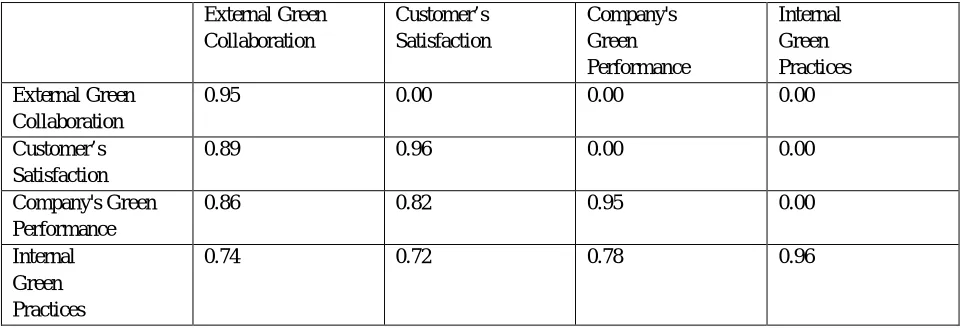
[image:6.612.66.548.382.546.2]Using the method of of Fornell and Larcker (1981), divergent validity was examined and the result is shown in Table 2. This involves first calculating the square root of amounts of AVE (average variance) and then replacing the obtained values on the diagonal matrix (latent variable correlation). The square root of average variance for the main variables of the study in the main diagonal matrix was larger than the correlation between variables in the boxes of the lower-left diagonal. Thus it can be stated that the study variables in the model had more interaction with their indices than with indices of other variables; hence the divergent validity of the model was confirmed.
Table 2. Matrix Assessing Divergent Validity Following Fornell & Larcker (1981) (Latent Variable Correlations: External Green Collaboration Customer’s Satisfaction Company's Green Performance Internal Green Practices External Green Collaboration
0.95 0.00 0.00 0.00
Customer’s Satisfaction
0.89 0.96 0.00 0.00
Company's Green Performance
0.86 0.82 0.95 0.00
Internal Green Practices
0.74 0.72 0.78 0.96
B. Structural Equation Modeling Results
0.937
0.923 0.912
0.917 0.517
0.914
0.729 0.917 0.515 0.898
0.925 0.925
0.985 0.4120.338
0.925 0.357
[image:7.612.25.566.111.345.2]0.917
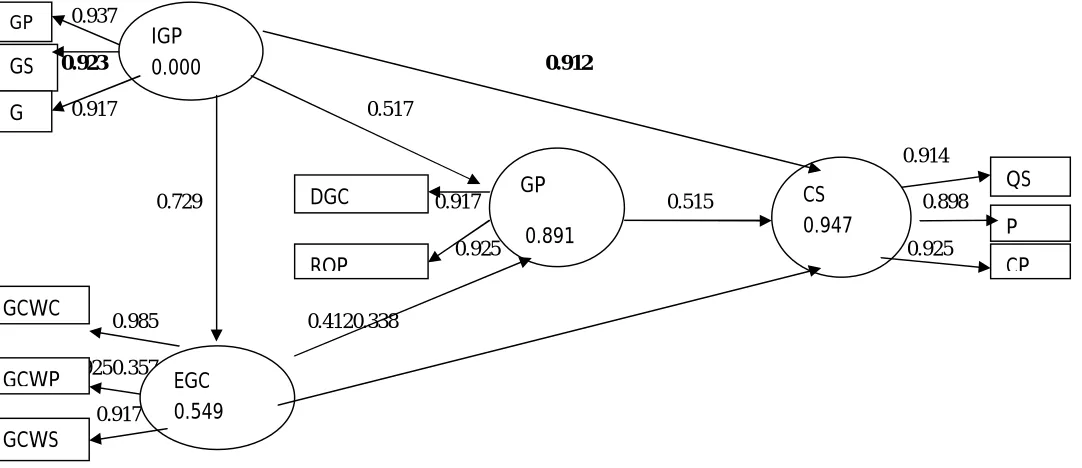
Figure 2: The research model in estimating the standard coefficients
33.47
51.28 21.11
61.23 43.23
86.21
29.33 63.27 14.44 73.21
85.21 73.43
63.7715.74
59.23 23.19
81.46
Notations used in Figure 2 & Figure 3
GP: Green Policy, GS: Green Shipping, GM: Green Marketing, IGP: Internal Green Practice, EGC: External Green Collaboration, GCWC: External Collaboration With Customers, GCWP: External Collaboration With Partners, GCWS: External Collaboration With Suppliers, GP: Green performance, DGC: Decline in Green Cost, ROP: Reduction in pollutants, CS: Customer’s Satisfaction, QS: Quality of Services, P: Productivity, CP: Corporate Profit.
Fig 3 Model of significant coefficients of assumptions in the research model IGP
0.000
EGC 0.549
GP 0.891
CS 0.947 GP
GS G
GCWP GCWS GCWC
DGC
ROP
QS P CP
IGP
EGC
GP CS
GP
GS GM
GCWP GCWS GCWC
DGC
ROP
The significance of coefficients (t-value) of the research model is shown in Figure 3. This model virtually tests all measurement equations (factor loading) and structural equations (path coefficients) using the t-statistic. According to this model, path coefficient and factor loading are significant at 95% confidence level if the t-value is outside the range (-1.96 to +1.96). If the t-value is within this interval, the factor loading and path coefficient are not significant. Path coefficient and factor loading are significant at the 99% confidence level if the t-value is outside the range (-2.58 to +2.58). The results of the t test showed that all factor loadings were significant at the 99% confidence level and played a significant role in measuring their structures.
From Figure 2 and Figure 3, it can be observed that the standardized estimatesand associated t-values support all six hypothesized relationships which are discussedbelow.
C. Hypothesis 1: Internal green practice has a significant impact on external greencollaboration.
The results of path coefficient and t-statistics (Table 3 and Figures 3) show that internal greenpractice has a significant impact on external green collaboration (t-statistic is outside therange of -2.58 to +2.58). The impact of internal green practice on external green collaborationis positive and significant because the obtained path coefficient is positive. Thereforeimproving internal green practice will increase external green collaboration and reducing it in the organization will reduce external green collaboration.
D. Hypothesis 2: Internal green practice has a significant impact on a company's greenperformance.
The results of path coefficient and t-statistics (Table 3 and Figures 2 and 3) show that internalgreen practice has a significant impact on a company's green performance (t-statistic isoutside the range -2.58 to +2.58). The impact of internal green practice on the company'sgreen performance is positive and significant because the obtained path coefficient ispositive. Therefore, improving internal green practice will increase the company's greenperformance and reducing it in the organization will reduce the company's greenperformance.
E. Hypothesis 3: Internal green performance has a positive and significant impact on firmcompetitiveness.
The results of path coefficient and t-statistics (Table 3 and Figures 2 and 3) show that internal green practice has a significant impact on firm competitiveness (t-statistic is outsidethe range -2.58 to +2.58). The impact of internal green practice on firm competitiveness ispositive and significant because the obtained path coefficient is positive. Therefore,improving internal green practice increases firm competitiveness and reducing it reduces firmcompetitiveness.
F. Hypothesis 4: External green collaboration has a positive and significant impact on acompany's green performance.
The results of path coefficient and t-statistics (Table 3 and Figures 2 and 3) show that external green collaboration has a significant impact on a company's green performance (t-tatistic is outside the range -2.58 to +2.58). The impact of external green collaboration on acompany's green performance is positive and significant because the obtained path coefficientis positive. Therefore, improving external green collaboration increases the company's greenperformance and reducing it in the organisation reduces the company's green performance.
G. Hypothesis 5: External green collaboration has a positive and significant impact on firmcompetitiveness.
The results of path coefficient and t-statistics (Table 3 and Figures 2 and 3) show that external green collaboration has a significant impact on firm competitiveness (t-statistic isoutside the range -2.58 to +2.58). The impact of external green collaboration on firmcompetitiveness is positive and significant because the obtained path coefficient is positive.Therefore, improving external green collaboration increases firm competitiveness and reducing it in the organization reduces firm competitiveness.
[image:8.612.62.548.658.727.2]H. Hypothesis 6: Green performance has a positive and significant impact on customer’s satisfactions.
Table 3: Direct Effects, t-Statistics and Research Hypotheses Results
Hypothesis Standardized
Path Coefficient
T-Statistics Significance Accept or
Reject the Hypothesis Internal Green
Practices
External Green Collaboration Internal Green Practices
Green Performance
0.517 43.23 Sig<0.05 Not rejected
Internal Green Practices
Customer’s Satisfaction
0.912 21.11 Sig<0.05 Not rejected
External Green Collaboration
Green Performance
0.338 15.74 Sig<0.05 Not rejected
External Green Collaboration
Customer’s Satisfaction
0.357 23.19 Sig<0.05 Not rejected
Company's Green Performance
Customer’s Satisfaction
0.515 14.44 Sig<0.05 Not rejected
The results of path coefficient and t-statistics (Table 3 and Figures 2 and 3) show that acompany's green performance has a significant impact on customer’s satisfaction (t-statistic isoutside the range -2.58 to +2.58). The impact of a company's green performance on customer’s satisfaction is positive and significant because the obtained path coefficient is positive.Therefore, improving the company's green performance increases customer’s satisfaction and reducing it in the organization reduces customer’s satisfaction.According to the results of path coefficient and t-statistics (Table 3 and Figures 2 and 3), acompany's green performance has a significant impact on customer’s satisfaction (t-statistic isoutside the range -2.58 to +2.58). The impact of a company's green performance on customer’s satisfaction is positive and significant because the obtained path coefficient is positive.Therefore, improving the company's green performance increases customer’s satisfaction and reducing it in the organization reduces customer’s satisfaction.
V. CONCLUSION
A sample of company executives and operationmanagers provided data that were used to assess this GSCM model. All study indicators weredetermined to be reliable and valid and the measurement model fit the data well. Results ofthe structural equation modeling analysis supported all hypotheses. Internal green practicewas positively associated with external green collaboration and green performance. Internalgreen practice was positively associated with customer’s satisfaction. External greencollaboration was positively associated with green performance and customer’s satisfaction.Green performance was positively associated with firm competitiveness. The green supplychain strategy, which includes internal green practices and external green collaboration, is aviable, effective strategy for directly improving customer’s satisfaction which, in turn, improvesfirm competitiveness. Green supply chain philosophy and associated practices have been successfully integrated at the supply chain level as well as the organizational level. Green supply chain philosophy and associated practices have been successfully integrated at the supply chain level as well as the organizational level.
From this investigation we can conclude that firms can increase their customer’s satisfaction by implementing green policy, green shipping practices andgreen marketing.
The present study has some limitations. This study is limited by its small sample size and the fact that we cannot guarantee that the information provided by the participants was completely accurate. Future research should include the additional measure of performance, such as the operational performance of the firm and the overall performance of the green supply chain.
REFERENCES
[1] Bacallan, J. J. (2000). Greening the supply chain. Business and Environment, 6(5), 11-12.Cohen, W. M., & Levinthal, D. A. (1990). Absorptive Capacity: A New Perspective on Learning and Innovation. Administrative Science Quarterly, 35(1), 128-152.
[2] Cohen, W. M., & Levinthal, D. A. (1990). Absorptive Capacity: A New Perspective onLearning and Innovation. Administrative Science Quarterly, 35(1), 128-152.
[3] Droge, C., Jayaram, J., & Vickery, S. K. (2004). The effects of internal versus externalintegration practices on time-based performance and overall firm performance. Journal ofOperations Management, 22(6), 557-573.
[4] Ellinger, A. D., Ellinger, A. E., Yang, B., & Howton, S. W. (2007). The relationship betweenthe learning organization concept and firms' financial performance: An empirical assessment
[5] Flynn, B. B., Huo, B., & Zhao, X. (2010). The impact of supply chain integration on performance: A contingency and configuration approach. Journal of Operations Management, 28(1), 58-71.
[6] Fornell, C & ,.Larcker, D. F. (1981). Evaluating Structural Equation Models withUnobservable Variables and Measurement Error. Journal of Marketing Research, 18(1), 39-50.
[7] Human Resource Development Quarterly, 13(1), 5-22.
[8] Hansmann, K. W., & Claudia, K. (2001). Environmental management policies. In J. Sarkis(Ed.), Green Manufacturing and Operations: from Design to Delivery and Back (pp. 192– 204): Sheffield.
[9] Hick, S. (2000). Morals make the money. Austrian CPA, 70(4), 72-73.
[10] Hitchens, D. M. W. N., Birnie, J. E., Thompson, W., Triebswetter, U., Bertossi, P., &Messori, L. (2000). Environmental Regulation and Competitive Advantage. A Study ofPackaging Waste in the European Supply Chain. Cheltenham: Edward Elgar.
[11] Hillebrand, B., & Biemans, W. G. (2004). Links between Internal and External Cooperationin Product Development: An Exploratory Study*. Journal of Product InnovationManagement, 21(2), 110-122.
[12] Koplin, J., Seuring, S., & Mesterharm, M. (2007). Incorporating sustainability into supplymanagement in the automotive industry – the case of the Volkswagen AG. Journal of CleanerProduction, 15(11–12), 1053-1062.
[13] Kanter, R. M. (1994). Collaborative Advantage: The Art of Alliances. Harvard BusinessReview, 72(4), 96-108.
[14] Lane, P. J., Koka, B. R., & Pathak, S. (2006). The Reification of Absorptive Capacity: ACritical Review and Rejuvenation of theConstruct. The Academy of Management Review,31(4), 833-863.
[15] Montabon, F., Sroufe, R., & Narasimhan, R. (2007). An examination of corporate reporting, environmental management practices and firm performance. Journal of Operations Management, 25(5), 998-1014.
[16] Olsthoorn, X., Tyteca, D., Wehrmeyer, W., & Wagner, M. (2001). Environmental indicatorsfor business: a review of the literature and standardisation methods. Journal of CleanerProduction, 9(5), 453-463.
[17] O’Leary-Kelly, S. W., & Flores, B. E. (2002). The integration of manufacturing andmarketing/sales decisions: impact on organizational performance. Journal of OperationsManagement, 20(3), 221-240.\Porter, M. E., & van der Linde, C. (1995). Toward a New Conception of the Environment-Competitiveness Relationship. The Journal of Economic Perspectives, 9(4), 97-118
[18] Rao, P., & Holt, D. (2005). Do green supply chains lead to competitiveness and economic performance? International Journal of Operations & Production Management, 25(9), 898- 916
[19] Rosenzweig, E. D., Roth, A. V., & Dean Jr, J. W. (2003). The influence of an integration strategy on competitive capabilities and business performance: An exploratory study of consumer products manufacturers, Journal of Operations Management, 21(4), 437-456.
[20] Sigala, M. (2008). A supply chain management approach for investigating the role of touroperators on sustainable tourism: the case of TUI. Journal of Cleaner Production, 16(15),1589-1599.
[21] Sheu, J.-B., Chou, Y.-H., & Hu, C.-C. (2005). An integrated logistics operational model forgreen-supply chain management. Transportation Research Part E: Logistics andTransportation Review, 41(4), 287-313.
[22] Stank, T. P., Keller, S. B., & Daugherty, P. J. (2001). Supply Chain Collaboration andLogistical Service Performance. Journal of Business Logistics, 22(1), 29-48
[23] Stevens, G. C. (1989). Integrating the Supply Chain. International Journal of Physical Distribution & Materials Management, 19(8), .3-8
[24] Swink, M., & Nair, A. (2007). Capturing the competitive advantages of AMT: Design-manufacturing integration as a complementary asset. Journal of Operations Management, 25(3), 736-754.
[25] Swink, M., Narasimhan, R., & Kim, S. W. (2005). Manufacturing Practices and Strategy Integration: Effects on Cost Efficiency, Flexibility, and Market-Based Performance. Decision Sciences, 36(3), 427-457
[26] Takeishi, A. (2001). Bridging inter- and intra-firm boundaries: management of supplier involvement in automobile product development. Strategic Management Journal, 22(5), 403-433
[27] Vachon, S., & Klassen, R. D. (2006). Extending green practices across the supply chain: Theimpact of upstream and downstream integration. International Journal of Operations &Production Management, 26(7), 795-821.
[29] Yang, C.-S., Lu, C.-S., Haider, J. J., & Marlow, P. B. (2013). The effect of green supplychain management on green performance and firm competitiveness in the context ofcontainer shipping in Taiwan. Transportation Research Part E: Logistics and TransportationReview, 55(C), 55-73
[30] Zailani, S., & Rajagopal, P. (2005). Supply chain integration and performance: US versusEast Asian companies. Supply Chain Management: An International Journal, 10(5), 379-393
[31] Zhu, Q., & Sarkis, J. (2004). Relationships between operational practices and performanceamong early adopters of green supply chain management practices in Chinese manufacturingenterprises. Journal of Operations Management, 22(3), 265-289