DEVELOPING AN UNDERSTANDING OF PEOPLE’S
EXPERIENCES OF USING TRACING SERVICES TO
SEARCH FOR MISSING FAMILY: A QUALITATIVE
INVESTIGATION
LAURA ANNE SALVO
A thesis submitted in partial fulfilment of the requirements of the University of East London for the degree of Doctor of Clinical Psychology.
i ABSTRACT
Research suggests family separation, particularly prolonged and forced or involuntary separation, can have a negative impact on individuals as well as on relationships between family members. It is suggested ambiguous loss can incur from family separation and a family member being considered missing. People’s
experiences of searching for missing family members, and also more generally missing people or disappearances, have been largely neglected in previous research.
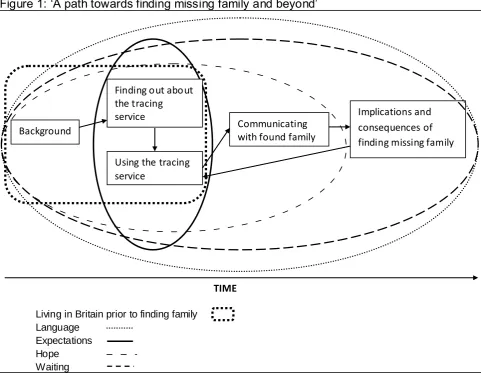
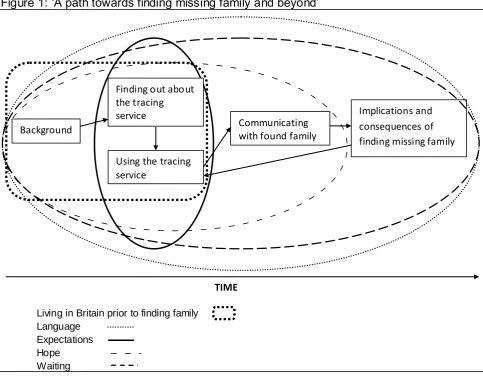
A grounded theory approach was used in this study to explore the experiences of individuals who had used a tracing service. Participants were recruited from the British Red Cross’ International Tracing and Message Service. Semi-structured interviews were used with 10 ex-service-users. A grounded theory of ‘A path towards finding missing family and beyond’ was developed, consisting of 10 categories: ‘Background’, ‘Living in Britain prior to finding family’, ‘Finding out about the tracing service’, ‘Using the tracing service’, ‘Communicating with found family’, ‘Implications and consequences of finding missing family’, ‘Language’, ‘Hope’, ‘Expectations’ and “Waiting”. The findings and limitations of the present
ii
TABLE OF CONTENTS
ABSTRACT i
TABLE OF CONTENTS ii
LIST OF TABLES AND FIGURES vii
ABBREVIATIONS vii
ACKNOWLEDGMENTS viii
CHAPTER ONE: INTRODUCTION 1
1.1 Overview 1
1.2 Search strategy 2
1.3 Family 2
1.4 Family separation 2
1.5 Ambiguous loss 4
1.6 The impact of separation and ambiguity 6
1.6.1 Impact on individuals 6
1.6.2. Impact on relationships 7
1.6.3 Impact of disappearance and ambiguity 8 1.7 The impact of separation, exile and resettlement in the context of
asylum seekers and refugees 9
1.7.1 Family separation, ambiguous loss and mental health 9 1.7.2 The epidemiology of mental health difficulties and pre-
and post-migration stressors 11
1.7.4 Critique of western psychiatric diagnoses and concepts 13
1.8 Hope and resilience 14
1.9 Looking for missing family 15
1.10 Finding missing family 17
1.10.1 Finding missing family alive 17
1.10.2 Receiving news of death 18
1.11 Rationale and aim of the current research 21
CHAPTER TWO: METHOD 22
iii
2.1.1 Rationale for a qualitative approach 22 2.1.2 Grounded theory and epistemological position 22
2.1.2.1 Grounded theory 22
2.1.2.2 Epistemology 23
2.2 Assessing quality in qualitative research 25
2.3 Procedure for gathering data 25
2.3.1 Ethical considerations 25
2.3.2 Criteria for participation 26
2.3.2.1 Inclusion criteria 26
2.3.2.2 Exclusion criteria 26
2.3.3 Recruitment and sampling 26
2.3.4 Participants 28
2.4 Data collection 29
2.4.1 Resources 29
2.4.2 Interview process 29
2.4.2.1 Consent 30
2.4.2.2 Interviews 30
2.4.3 Transcription 31
2.4.4 Translation 31
2.5 Data analysis 32
2.5.1 Procedure for analysis 32
2.5.2 Coding 32
2.5.3 Constant comparative analysis 34
2.5.4 Theoretical sampling and saturation 34
2.5.5 Memo-writing 35
2.5.6 Reflexivity 35
2.6 The researcher’s position 36
CHAPTER THREE: ANALYSIS 37
3.1 Categories and codes 37
3.2 ‘A path towards finding missing family and beyond’ 37
3.2.1 ‘Language’ 39
iv
3.2.3 ‘Hope’ 39
3.2.4 “Waiting” 40
3.3 Structure of the detailed analysis sections 40
3.4 ‘Background’ 41
3.4.1 ‘Trauma and loss’ 41
3.4.2 ‘Coming to Britain’ 42
3.4.3 ‘Separating from family’ 44
3.4.4 ‘Not being in contact’ 45
3.4.5 ‘Uncertainty about relative’ 47
3.4.6 ‘Searching for missing relative’ 48
3.4.7 ‘Failing to find missing relative’ 49
3.5 ‘Living in Britain prior to finding family’ 50
3.5.1 “Struggling” 50
3.5.2 ‘Life going on’ 51
3.5.3 ‘Having external support’ 52
3.6 ‘Finding out about the tracing service’ 53
3.6.1 ‘Finding out about the tracing service’ 54 3.6.2 ‘Knowledge of the Red Cross and its services’ 56
3.6.3 ‘Beliefs about the Red Cross’ 57
3.7 ‘Using the tracing service’ 58
3.7.1 ‘Procedure’ 58
3.7.2 ‘Experience of using the tracing service’ 61 3.7.3 ‘Lack of awareness and uncertainty’ 63
3.7.4 ‘Receiving news’ 63
3.8 ‘Communicating with found family’ 66
3.8.1 ‘BRC facilitating contact with relatives’ 66
3.8.2 “Starting communicating” 67
3.8.3 ‘Restoring communication’ 69
3.8.4 ‘Difficulties with communication’ 70
3.8.5 ‘Immediate impact of communicating with found family’ 70 3.9 ‘Implications and consequences of finding missing family’ 72
3.9.1 ‘Reuniting with family’ 73
v
3.9.3 ‘Perception of the Red Cross’ 78
3.9.4 ‘Showing appreciation’ 79
CHAPTER FOUR: DISCUSSION 81
4.1 Overview of the discussion 81
4.2 Discussion of the research findings 81
4.2.1 ‘Background’ 81
4.2.2 ‘Living in Britain prior to finding family’ 83 4.2.3 ‘Finding out about the tracing service’ and
‘Using the tracing service’ 85
4.2.4 ‘Communicating with found family’ 87 4.2.5 ‘Implications and consequences of finding missing family’ 88
4.2.6 ‘Language’ 91
4.2.7 ‘Expectations’ 91
4.2.8 ‘Hope’ 92
4.2.9 “Waiting” 92
4.3 Critical review 93
4.3.1 Limitations of the study 93
4.3.2 Quality of qualitative research 95
4.4 Implications and recommendations for research 97 4.5 Implications and recommendations for the BRC and beyond 98 4.5.1 Recommendations to ITMS and the BRC 98 4.5.2 Recommendations for clinical psychologists, other
therapists and across services 100
4.6 Personal reflections on the research process 101
REFERENCES 103
APPENDICES
APPENDIX I: 117
Ethical approval 117
APPENDIX II: 118
Sources of support sheet 118
vi
Cover letter for potential participant – telephone number available 119 Cover letter for potential participant – telephone number not available 120
Participant information sheet 121
APPENDIX IV: 123
Participant consent and agreement form 123
Participant demographic information 124
APPENDIX V: 125
Transcription conventions 125
APPENDIX VI: 126
Initial interview schedule 126
Revised interview schedule 127
APPENDIX VII: 129
Some additional quotes illustrating categories, subcategories and
focused codes 129
APPENDIX VIII: 146
Extract of a transcript with open coding and focused coding 147
Example of a memo 148
Extracts from reflexive diary 148
APPENDIX IX: 149
vii
LIST OF TABLES AND FIGURES
Table 1: Participant demographics
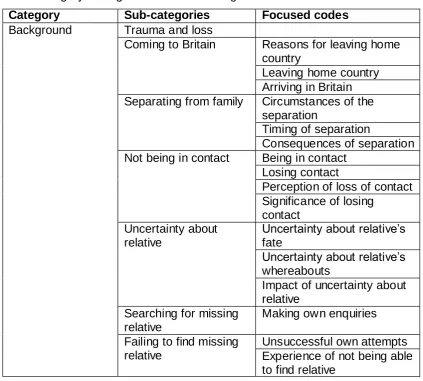
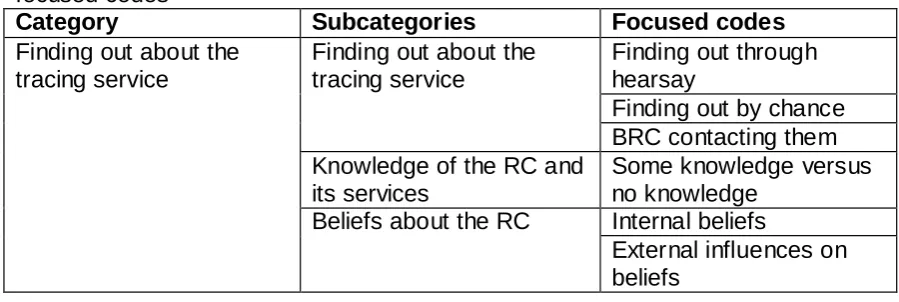
Table 2: Category ‘Background’ with its subcategories and focused codes Table 3: Category ‘Living in Britain prior to finding family’ with focused codes Table 4: Category ‘Finding out about the tracing service’ with subcategories and
focused codes
Table 5: Category ‘Using the tracing service’ with its subcategories and focused
codes
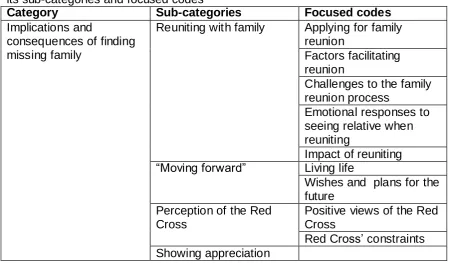
Table 6: Category ‘Communicating with found family’ with its focused codes Table 7: Category ‘Implications and consequences of finding missing family’ with
its sub-categories and focused codes
Figure 1: ‘A path towards finding missing family and beyond’
ABBREVIATIONS
BRC: British Red Cross
ITMS: International Tracing and Message Service ICRC: International Committee of the Red Cross RFL: Restoring Family Links
RC: Red Cross
viii
ACKNOWLEDGMENTS
I am very grateful to all the participants for their time and sharing their experiences and thoughts with me.
I give my thanks to Nev Jefferies, Emily Knox, Amina Hussein at the British Red Cross’ ITMS and all area coordinators for their support with this research from the
start and facilitating recruitment. I would also like to thank all area coordinators whom I contacted for their help with practical arrangements for the interviews.
I would like to thank my supervisors Dr. Martyn Baker and Dr. Sarah Davidson for their encouragement, guidance and enthusiasm over the course of this thesis.
1 CHAPTER ONE: INTRODUCTION
1.1 Overview
This chapter aims to discuss and critique the current literature on family separation and its impact generally but also in the context of refugees and
asylum-seekers1. Searching for missing family members and finding them alive or receiving bad news will also be explored. Psychological theories related to family separation will be explored. The rationale for exploring the experiences of
individuals using a tracing service will be outlined.
An initial literature review was undertaken during the early stages of the research, in order to develop a research proposal and aid the development of the research question. Strauss and Corbin (1998) argue that the use of the literature can be helpful in formulating research questions. Glaser and Strauss (1967) advocated postponing the literature review until after completing the analysis, which is supported by Charmaz (2006). This was so as to avoid importing preconceived theoretical ideas or frameworks and imposing them on the data and in so doing encouraging the researcher to articulate their ideas. Willig (2008) suggests
caution when carrying out a literature review and highlights the importance for the researcher to maintain “a certain distance from such literature” (p. 41). Strauss
and Corbin (1998), however, acknowledge that researchers will most certainly bring to the research a considerable background in literature related to their profession or field. Charmaz (2006) emphasises that the literature review provides a place to engage ideas and research in the areas that the developed grounded theory addresses by analysing the most significant works in relation to what has been addressed in the grounded theory. In line with grounded theory methodology, this chapter was written after data was generated and analysis commenced to support findings and to extend or challenge dominant ideas in this area.
2 1.2 Search strategy
A literature search was carried out using the search engines ‘Ingenta Connect’,
and OvidSP to search the electronic database PsycINFO (1980-2012). Keywords relating to the experience of searching for missing relatives were used. The keywords were eventually narrowed down to: family separation; missing people; family reunion/reunification; family and loss; hope and family separation; receiving bad news; ambiguous loss. The titles and abstracts of the articles, reviews and books identified were then examined. The references cited in the articles found were also cross-checked manually for additional articles.
1.3 Family
The word ‘family’ can have different meanings but generally defines a group of
people whom an individual can count on to meet a range of needs including practical and emotional needs (Boss, 1999). It may refer to family of origin or family of choice (i.e. whether related by blood or marriage). The composition of families is constantly evolving and changing over time. In addition, family
structures can vary immensely (Bonnerjea, 1994a). In different cultures, extended families can play very important roles, and ‘family’ may also include close friends.
Thus culture and ethnicity contribute to the definition of family composition and where family boundaries are located (Robins, 2010).
In addition to meeting needs, families are thought to be beneficial to a child’s
development, acquisition of social skills, protection, and long-term sense of identity (Bonnerjea, 1994a). Moreover, good mental health and resilience are promoted by cohesive and supportive family networks (Farwell, 2001). This highlights the important role the family can play in a person’s life.
1.4 Family separation
3
The literature on family separation is wide-ranging but in recent years there have been many studies on this topic in the context of migration. Many families are involved in migrations worldwide. Families may undergo significant changes within the process of migration that can often be complicated by extensive periods of separation – from both nuclear and extended family (Suárez-Orozco, Todorova
& Louie, 2002). The migration process can be voluntary (i.e. immigration to
another country in the hope of achieving a better life, usually resulting from a long decision-making process) or involuntary (i.e. as a result of war, political conflict or natural disasters). Some individuals may choose to leave their families for
employment reasons. For example, those in the military, journalists and aid workers can leave their families behind on a recurring basis. They may however expect to reunite with their families soon (Suárez-Orozco, Bang & Kim, 2011). Separation may also be part of a family’s survival strategy. In the process of
immigration, parent-child separation in particular can occur at a very high rate (Suárez-Orozco et al., 2002).
Family members can also separate when people go missing or disappear, which is relevant to this study, yet limited research was found. People may go missing intentionally (choosing to leave without informing family of where they are going) or unintentionally (Biehal, Mitchell & Wade, 2003). Disappearances occur
4
families are separated under threat of death or where the status of the missing person cannot be resolved quickly.
Whatever the context of the separation, contact between family members may be disrupted and possibly broken. Members of a family may be considered missing in the eyes of those trying to make contact as a result of loss of contact. This can lead to ambiguity about the fate of family members.
1.5 Ambiguous loss
The term ‘ambiguous loss’ has been defined by Boss (2004) as “a situation of
unclear loss resulting from not knowing whether a loved one is dead or alive, absent or present” (p. 554). Boss has described two types of ambiguous loss. ‘Ambiguous absence’ can occur when a family member is physically absent but
remains psychologically present as the fate of this person remains unclear (Boss, 2004). ‘Ambiguous presence’ can occur when a person is physically present but psychologically absent (e.g. Alzheimer’s disease, other chronic illnesses) (Boss,
2004). Uncertainty may render this type of situation particularly stressful, and Boss (1999) claims that ambiguous loss is the “most distressful of all losses” (p.
6).
Ambiguous absence seems relevant to circumstances when, following separation, communication between family members may have ceased and therefore
individuals do not know whether their loved one is alive or dead. It has been suggested that family separation can be considered an ambiguous loss (Rousseau, Rufagari, Bagilishya & Measham, 2004).
According to Boss (2004), ambiguous loss can cause two types of problems –
structurally if it leads to boundary ambiguity (a state of uncertainty about roles and tasks undertaken and who is part of the family system) (Boss & Greenberg,
5
ambiguous loss however may go unnoticed or may be misdiagnosed (Boss, 1999). According to Boss (2006), ambiguous loss is intrinsically traumatic because “the inability to resolve the situation causes pain, confusion, shock, distress and often immobilization” (p. 4). Its similarity with the trauma causing post
traumatic stress disorder (PTSD) (Boss, 2010) may explain possible misdiagnoses.
A clinical theory of ambiguous loss has been developed demonstrating that mental health and well-being are affected by the stress of ambiguity, depending on the resilience of individuals and families (Boss, 2006). This theory is presently under investigation with many studies applying this concept to missing persons, brain injury, military families, foster children and families of children with autistic spectrum disorders among others (Kean, 2010; O’Brien, 2007). Six therapeutic
guidelines for working with those affected by ambiguous loss have been put forward (Boss, 2006): finding meaning, tempering mastery, reconstructing
identity, normalising ambivalence, revising attachment and discovering hope. The ambiguous loss model’s approach emphasises seeking meaning regardless of
not having information and ongoing ambiguity, as well as finding ways of living well regardless of not knowing (Boss, 2007).
There is some evidence to suggest that across cultures this phenomenon may be distressing (Boss, 2006; Boss, Beaulieu, Wieling, Turner & LaCruz, 2003; Robins, 2010). In a qualitative study investigating the impact of disappearance on 160 families in Nepal, Robins (2010) found that 80% expressed ambiguity about the fate of their loved one. The disappearance of a family member also led to some reported psychological difficulties as well as issues at the family and community level. Although data were reported for men and women, most of the disappeared in Nepal were men. According to Robins (2010), the ambiguous loss model may be useful to understand the impact of disappearance and the concept of
ambiguous loss may be beneficial when designing interventions with families who may not know the fate of their loved one. However, research on ambiguous loss is predominantly western-based and limited with regard to different cultural
6
2004). The relatively recent use of the term ambiguous loss in clinical research may explain the scarcity (Boss, 1999).
Ambiguous loss appears to impact negatively on people’s well-being. If family
separation is considered an ambiguous loss, separation may therefore negatively affect family members. The following section will discuss some literature on the impact of family separation and ambiguity.
1.6 The impact of separation and ambiguity 1.6.1 Impact on individuals
Depending on the circumstances and contexts of the separation, a variety of outcomes have been observed. Temporary feelings of loss and sadness in adults and children as well as psychological problems in children (e.g. depression) (Suárez-Orozco et al., 2002) seem to incur from separation from parents as well as extended family. Family members may not be considered absent during the separation as individuals may be thinking about them. Poor psychological health (e.g. depression, anxiety and somatisation) is associated with concern for family (McDonald-Wilmsen & Gifford, 2009), which may increase during separation. At the time of separation, momentary destabilisation can be expected, but other factors can impact on the experience of separation including trauma arising from a family tragedy (e.g. the death of a loved one) or warfare (Suárez-Orozco et al., 2002).
Busuttil and Busuttil (2001) found in a review of the literature that repeated, recurring separations and those enforced under threat of death impacted
negatively on the psychological health and function of families and their members. They particularly focused on those left behind in the context of military families in western countries and most of the studies they drew on were published between the 1960s and early 1990s.
7
These symptoms overlapped with a diagnosis of PTSD, however they were considered distinct from the diagnosis as they related to the missing person, which was not perceived as a single event (Robins, 2010). The loss of a missing person could however be considered a single event.
Because of the negative impact on people’s well-being associated with loss of
contact through separation, re-establishing contact between family members is a primary intervention in the context of disasters and mass trauma (Hobfoll et al., 2007; Ommeren, Saxena & Saraceno, 2005).
1.6.2 Impact on relationships
Separation or loss, such as results from voluntary or involuntary migration, may give rise to a relationship pattern of ‘disrupted attachment’. Some research has
suggested a negative effect of long separations on parent-child relationships (Bowlby, 1973; Smith, Lalonde & Johnson, 2004). However, a connection between length of separation and psychological symptoms has not been supported by others (Suárez-Orozco et al., 2002). Bowlby (1973) found that separation often led to detachment upon reunion. He noted that children’s coping responses also depended on the care they received during the mother’s absence
and parent-child relationships before and after separation (Bowlby, 1973). However, Bowlby viewed parents and the mother in particular as the main caregivers. The effects of separation may be different in a culture where caregiving responsibilities are not solely provided by a child’s parents but are shared amongst the child’s siblings and other members of the extended family
(Luster, Qin, Bates, Johnson & Rana, 2008). Thus culture may mediate the impact on the parent-child relationship in the context of separation.
8
separation will impact on the adjustment process (Suárez-Orozco et al., 2002). This may also apply to adults separated from their families.
Having contact information and communicating with family in the context of separation can ease worries and facilitate reunion (Walsh, 2007). When communication between separated family members is not possible because someone is missing, worries may remain.
1.6.3 Impact of disappearance and ambiguity
In the context of disappearances, ambiguity about the fate of loved ones can affect families as well as individuals. As Boss (2004) noted, ambiguity may have consequences on how families deal with the loss. Families may need support in living with ambiguity while keeping hope (Walsh, 2007). There are no traditional rituals to give comfort to those who are seeking answers about the fate of their relatives (Luster et al., 2008). Confirmation or proof that the person is dead is required to perform a ritual in many cultures (Robins, 2010). People deprived of proper mourning may thus be unable to grieve effectively (Blauuw &
Lahteenmaki, 2002). An inability to mourn and conduct rituals as a result of someone disappearing can have a psychological and emotional impact across cultures (Blauuw & Lahteenmaki, 2002), and may also lead to stigmatisation of individuals by families as well as stigmatisation of families by communities
(Robins, 2010). A spouse disappearing can impact on the spouse left behind, with regards to their role in the family and the community. The disappearance of a family member may have consequences emotionally, psychologically,
economically and socially (Blauuw & Lahteenmaki, 2002).
9
1.7 The impact of separation, exile and resettlement in the context of asylum-seekers and refugees
Refugee families often face significant losses, including leaving family behind, and experiences of physical and psychosocial trauma, which they need to surmount (Miller & Rasco, 2004; Mock, 1998). They also face adapting to a new culture and way of life (Mock, 1998). In 2009, approximately 30,000 asylum applications were made in the United Kingdom (UK) (UNHCR, 2010a). Asylum is granted under the 1951 United Nations Convention Relating to the Status of Refugees to a person fleeing persecution from their own country (UNHCR, 2010b). The Convention defines refugees as people who have left their country due to "a well-founded fear of being persecuted for reasons of race, religion, nationality, membership of a particular social group or political opinion" (p. 14).
1.7.1 Family separation, ambiguous loss and mental health
Many refugees have been separated involuntarily from their families, including by force (e.g. Roth, Ekblad & Agren, 2006). In the UK, many refugees who are in contact with Community Mental Health Teams (CMHTs) in London do not know the current whereabouts of their family members (McColl & Johnson, 2006). Separation may be considered one of the most painful aspects of living in exile by refugees (Miller, Muzurovic, Worthington, Tipping & Goldman, 2002).
Continued separation from spouse and/or children was found to have a stronger correlation with self-rated distress than severity of psychiatric disorders in a group of Vietnamese refugees who had previously resettled in Norway (Hauff & Vaglum, 1995). Feelings of disorientation, indecisiveness and inability to adapt to new environments were reported by some refugees who were still separated from their families in a quantitative and qualitative investigation of 113 refugees from Latin America and Africa in Montreal (Rousseau, Mekki-Berrada & Moreau 2001). The findings suggest that when trauma and separation occurred jointly these
significantly impacted on refugees’ emotional distress, with extended separation from family members serving as a “continuing link to an unbearable past”
(Rousseau et al., 2001, p. 41). However participants were recruited from
10
group may not be representative of the whole refugee population. There is also ambiguity around interpretation and translation in this study.
Individuals may experience feelings of guilt and shame, as well as worries about leaving the family in a difficult or dangerous situation, which may add to their suffering (Fox, Cowell & Johnson, 1995; Hauff & Vaglum, 1995; Walsh, 2007). This has been referred to as ‘survivor guilt’. Refugees may feel that they may
never see their families again. Wondering whether family members are alive or dead can cause distress (Fox et al., 1995) but remembering missing family members can also serve to attenuate the pain of their absence (Rousseau et al., 2004). For example, Sudanese refugee youths resettled in the United States of America (USA), who had been separated from their families during childhood, reported distress, difficulties coping with the impact of ambiguous loss
(depression, loneliness, feelings of sadness), fear, worry and frustration (Luster et al., 2008; Luster, Qin, Bates, Johnson & Rana, 2009). Experiencing these
emotions was reported as better than knowing that their parents were dead. Yet, this finding contradicts ambiguous loss theory. A variety of individual coping strategies were used by the youths including avoidance and distraction, trying to get information about their families, religion to “find meaning in their loss” (p. 209)
and accepting their situation to help focus on the future (Luster et al., 2009). The average time period between separating from their family and speaking to a family member on the phone was approximately 14 years. Therefore it is possible that the accuracy in recalling emotions and coping strategies during the time of separation may have been affected by this length of time.
The absence of one or more members of a family may also impact on family dynamics. A reconfiguration of roles within the family may occur (Rousseau et al., 2004). Others, external to the family, may also provide support. Relationships with elders and peers facilitated the Sudanese youths’ ability to maintain a sense of family, often by forming an alternative “family” and encouraging them not to give
up hope of family reunion (Luster et al., 2009). Changes in the configuration of families are most certainly not limited to refugee families – they could apply to all
11
The family appears to play a key role as an “anchor of emotion and identity” in
refugees (Rousseau et al., 2001, p. 40), as well as in the process of adaptation to forced relocation (Steinglass, 2001) and immigration. Ambiguous loss may
explain the overall consequences of family separation and family members going missing (Robins, 2010).
1.7.2 Epidemiology of mental health difficulties and pre- and post-migration stressors
Within the refugee and asylum seeking population, research has focused mainly on the epidemiology of PTSD and other western psychiatric diagnoses. Refugees resettled in the West are up to ten times more likely to have PTSD than aged matched counterparts according to a systematic review of the prevalence of ‘serious mental disorder’ in approximately 7,000 refugees in seven western
countries (Fazel, Wheeler & Danesh, 2005). Mental health difficulties (e.g.
depression, anxiety and PTSD) can persist over time (Hauff & Vaglum, 1995; Lie, 2002), even after treatment (Carlsson, Mortensen & Kastrup, 2005), with only a few studies suggesting improvement (e.g. Steel, Silove, Phan & Bauman, 2002). Evidence also suggests that mental health difficulties may increase over time, even after resettlement (e.g. Roth et al., 2006).
12
Experiences of dislocation and exile are increasingly recognised as highly stressful (Miller, 1999). They can reduce a person’s ability to cope and their
resilience (Lie, 2002). Arriving in western countries, asylum-seekers and refugees can experience stress related to access to work, health care, insec urity about future domicile (Roth et al., 2006) and the asylum application process (Brune et al., 2002; McColl & Johnson, 2006). This is likely to impact on their mental health and well-being (McColl & Johnson, 2006). Present life in exile with
unemployment, lack of social contacts and unresolved family reunion was found to be a risk factor for PTSD in a non-clinical sample of resettled refugees in Norway (Lie, 2002). Exile-related stressors including social isolation, separation from family, loss of community and valued social roles, poverty and inadequate housing were expressed by 28 adult Bosnian refugees in Chicago in a qualitative investigation, all of which represented sources of distress for many participants (Miller et al., 2002). Similar experiences have been highlighted in clinical samples of refugees in the UK with post-migration stressors associated with poor mental health (Carswell et al., 2011; McColl & Johnson, 2006). Proximity to family appears to facilitate the process of settling into a new society (Ager & Strang, 2008). No longer experiencing anxiety about the safety and whereabouts of family members may thus facilitate the process of post-migration adaptation.
The combination of several post-migration factors, as well as pre-migration factors can lead to psychological difficulties in some individuals (Carswell et al., 2011), and exacerbate pre-existing difficulties (Silove, Sinnerbrink, Field,
Manicavasagar & Steel, 1997). However in the UK, many refugees experience difficulties accessing health care and expressing their health needs (Burnett & Peel, 2001). Communication with health professionals may be complicated by language difficulties (Ager & Strang, 2008). The combination of the lack of proficiency in the host country language and health services’ lack of use of
interpreters could render communication an obstacle that may further limit refugees’ access to mental health services (Miller, Martell, Pazdirek, Caruth &
13
resettling in western societies risk receiving inappropriate psychiatric diagnoses (Summerfield, 2000).
1.7.3 Critique of western psychiatric diagnoses and concepts
Most of the research on refugees and asylum-seekers has been carried out in the West which explains why western psychological concepts of trauma and distress dominate the literature on this population. The applicability of western diagnostic instruments to non-western populations has caused much debate in psychiatric research. Thus studies relying solely on symptom scales can be questioned. In addition, many methodological issues (e.g. the translation of test measures,
making a diagnosis in another culture) can arise in studies of psychiatric disorders carried out in a transcultural context therefore caution is required interpreting results (Hauff & Vaglum, 1995).
There may be wide cultural variations in the ways emotional distress is
experienced or expressed (Fox et al., 1995). This diversity may impact on the way individuals interpret and respond to events such as separation and trauma
according to ethnic identity (Keyes, 2000). Collective frameworks may also contribute to their interpretation and response (Shapiro, 1995). Summerfield (2000) suggests “every culture has its own beliefs and traditions which determine psychological norms and frameworks for mental health” (pp. 233-234). This can
explain the critique of the cross-cultural relevance of trauma-based approaches (Mezey & Robbins, 2001; von Peter, 2008). Consideration of the political, historical and cultural settings in which traumatic events occur in addition to the personal, family and collective meanings attached to these are postulated
(Rousseau et al., 2001). The term ‘cultural bereavement’ has been suggested as a better explanation than PTSD for those whose “condition may be a sign of
14 1.8 Hope and resilience
Many negative effects have been reported for individuals and families as a consequence of separation, trauma and loss. However, during times of uncertainty, hope and resilience may be present.
Many definitions of hope exist.For example,Snyder (1994) defined hope as the perceived ability to create pathways to desired goals, together with the
motivations to begin and maintain movement toward those goals. It involves an orientation to the future, as well as wishes, dreams and ambitions (Borg &
Kristiansen, 2004). It has been positively associated with psychological well-being (Shorey, Little, Snyder, Kluck & Robitschek, 2007). People with experiences of mental health difficulties have reported hope to have helped getting through their day-to-day lives, especially during the more difficult times, with professionals viewed as helping to keep hope alive (Borg & Kristiansen, 2004). Hope is a key component of recovery (Walsh, 2007). A connection between hope and resilient outcomes has been found in adults facing ambiguous loss (Boss, 2006). For example, hope of seeing and being reunited with family members gave strength to young refugees during difficult times (Luster et al., 2008). Discovering hope is also an aim of Boss’ (2006) recommended therapeutic guidelines for working with
those facing ambiguous loss.
The term ‘resilience’ is used to describe individuals’ ability to endure the impact of traumatic events. In the psychology literature, resilience has been defined as “an outcome following a highly stressful event” (Mancini & Bonanno, 2009, p. 1807) and reflects “the ability to maintain a stable equilibrium” (Bonanno, 2004, p. 20) or ‘bounce back’ after excessive stress (Agaibi & Wilson, 2005). Resilient individuals
are seen as being able to continue functioning by managing difficult experiences in such a way that they do not interfere (Mancini & Bonanno, 2009), and live well despite them (Boss, 2006). Psychological resilience is connected to resilience at the family, community and societal level (de Terte, Becker & Stephens, 2009). The literature discussing resilience in the context of conflict and bereavement/loss is vast (e.g. Bonanno, 2004; Mancini & Bonanno, 2009). Through
15
resources they may not have done otherwise and gain new skills and outlook on life (Walsh, 2007). In the face of ambiguity, resilience results from the recognition and management of ambivalent feelings (Robins, 2010). Some factors such as reconstructing one’s identity and accepting new roles and responsibilities;
personal or cultural beliefs about mastery (e.g. control over certain things); thinking about the missing person; preserving relationships and religious or spiritual beliefs to find meaning have been associated with resilience (Boss, 2006).
1.9 Looking for missing family
Searching for missing relatives can be carried out by individual means (e.g. use of technology, asking people who may have been in contact with the missing
relatives) or through an organisation (e.g. Red Cross, Salvation Army). For
instance in Luster et al.’s (2008) study, Sudanese refugee youths described using both types of methods in their search for their families – what they described as ‘formal’ and ‘informal’ strategies. Whilst some attempted to send letters via the
Red Cross (formal method) with only two receiving a reply, others asked newly arrived refugees in the camps where they were based if they had seen their family (informal method). The authors do not however specify how many attempted one or both of these methods. Bonnerjea (1994b) suggests that most families will search for their children employing whatever methods they can in that situation. The search for family can thus be viewed as an active coping strategy.
There are a number of organisations that offer tracing services in the UK and worldwide. In the UK, organisations such as Missing People, the British Red Cross and the Salvation Army offer their services in the search for missing relatives. For example, the British Red Cross (BRC) is part of the International Red Cross and Red Crescent Movement, the world's largest independent
16
Cross messages allowing restored contact between family members separated by hostilities and other crises (ICRC, 2011). All national Red Cross and Red
Crescent Societies are mandated to offer tracing services. The British Red Cross, through its International Tracing and Message Service (ITMS), offers to undertake tracing enquiries on behalf of people living in the UK who have been separated from their relatives as a result of conflict, disaster or migration.
Searching through the literature yielded no results on the use of tracing services in looking for missing family members. However, a Masters dissertation carried out an impact analysis of tracing and message service-users’ psychosocial and
physical well-being prior to and since accessing those services (Straw, 2011). Semi-structured interviews were conducted in England and Ethiopia with five participants who had fled to escape conflict. The impact of the tracing and
message services (ITMS and Restoring Family Links2) was found to be positive. This was even greater for service-users put back in contact with their families. Symptoms of ‘psychosocial dysfunction’ were reported to have decreased once
service-users had accessed the services, and decreased further if contact was re-established with family members. However, there are some issues arising from this piece of research. Firstly, the study was conducted without ethical approval. This has implications for the duty of care of participants who may have been upset by their participation in the research (at the time or afterwards) given the sensitivity of the issues discussed. No measures to support participants were reported to have been considered. Secondly, information on the qualifications of the interpreter used for one interview was not provided. Alt hough it is important to hold conversations with people who speak languages other than English (Temple & Young, 2004), methodological implications arise. Thirdly, little information was provided about how participants were recruited. Fourthly, although the study looks at psychological aspects of tracing and message service-users, it was not
conducted from a psychological background. Nevertheless this study highlights benefits of re-establishing contact with family members. The following section
17
explores the literature on finding missing family alive and reunification, as well as receiving news of death.
1.10 Finding missing family
Searching for missing family members can result in a number of outcomes. Prior to receiving any news of the search, people may have to wait, which can
sometimes be the most difficult part (Sweeny & Cavanaugh, 2010). Sought family members may be found alive, and subsequent attempts to reconnect and reunite may ensue if they are willing. Individuals may receive news of the missing family member’s death, or only receive partial information. Missing relatives may not be
found, either by individual or formal means, and thus the uncertainty remains.
1.10.1 Finding missing family alive
Reconnecting with family members can bring joy and relief (Luster et al., 2008) and a need to re-establish some continuity (Rousseau et al., 2004). It may also lead to attempts at reunification. For refugees in particular, family reunification can often be seen as “an event that will put a happy end to a long series of losses” (Rousseau et al., 2004, p. 1096). Family reunion is the term given to the
process of bringing separated family members across from another country for the purpose of reunification (Staver, 2008). In the context of war, family reunion can be an “urgent priority” (Summerfield, 2000, p. 234). Although reuniting with
family members after a lengthy separation can be joyous, it may also bring challenges (Luster et al., 2008; Smith et al., 2004).
18
(Rousseau et al., 2004), as well as new family roles adopted such as young people becoming providers (Luster et al., 2008).
In the context of migration and exile, additional difficulties may occur when
resettling in a different culture to that of origin. Individuals may have changed as a result of being in a different culture which may affect interactions with family
members (Luster et al., 2008). Language may become an additional barrier, particularly in the case of children and young people who are separated from their parents and families at an early age. The young Sudanese in Luster et al.’s
(2008) study expressed difficulties understanding certain meanings and not feeling as well understood by their parents as their friends who had experienced similar separation and resettlement.
Children who have been separated from their families may have settled into their new living situation and formed new relationships and bonding with peers and parent substitutes (Bonnerjea, 1994b). Reunification with parents may lead to a further separation, which can be difficult and painful (Bonnerjea, 1994b). A group of women from the Caribbean, whose mothers had left them as children in the care of extended family to come to Britain, expressed feelings of failure to get close to their mothers following reunion and of being less loved by their mothers compared to siblings born in Britain (Arnold, 2006). These women also spoke of additional difficulties (e.g. trust, being mocked) resulting in shame, low self-esteem, sadness and depression which led them to seek therapy (Arnold, 2006). Psychiatric difficulties (mainly depression) were also observed in one-fifth of individuals reunited with family members after four decades of separation due to civil war (Tseng, Cheng, Chen, Hwang & Hsu, 1993). Family disintegration can occur from the stress linked to separation and reunion, which may lead families to seek help from mental health professionals (Smith et al., 2004). In addition,
‘emotional detachment’ may occur at the time of reunification (Bowlby, 1973).
1.10.2 Receiving news of death
19
described bad news as the resulting “cognitive, behavioural or emotional deficit
experienced by the person receiving the news that persists for some time after the news is received” (p. 496). However there are degrees to which news is perceived as bad. This perception is subjective and depends on “an individual’s
life experiences, personality, spiritual beliefs, philosophical standpoint, perceived social supports and emotional hardiness” (Fallowfield & Jenkins, 2004, p. 312).
Most of the literature on communicating and receiving bad news has come from medical settings, particularly oncology and paediatrics. It has been critiqued for its limited empirical basis (Parker, Baile, de Moor, Lenzi, Kudelka & Cohen, 2001; Ptacek & Ptacek, 2001). The literature available has focused greatly on the professionals’ perspective and on providing guidelines to physicians on how to
communicate bad news (Ptacek & Ptacek, 2001; Vandekieft, 2001). It highlights the importance of the physical and social setting in which bad news is delivered as well as the timing of the news.
Ptacek and Eberhardt (1996) suggested that receiving bad news will always result in some level of discomfort; however there may be huge variations in the intensity and duration of these feelings. The individual’s psychosocial context (Vandekieft,
2001), expectations, previous experiences and personality traits (Fallowfield & Jenkins, 2004) can influence how bad, difficult and sad information is received. The way in which the news is delivered may also be important. Vandekieft (2001) has suggested that this should be individualised by the professional.
Recommendations to professionals include ensuring individuals or families understand the news but also considering the way in which the news is delivered (e.g. empathic delivery) so as not to exacerbate the discomfort associated with the news itself (Ptacek & Eberhardt, 1996).
Some studies have explored patients’ perspectives to receiving bad news
(Ishaque, Saleem, Khawaja & Qidwai, 2010; Salander, 2002). A questionnaire survey asking deceased patients’ family members to rate the importance of 14
20
privacy and the newsgiver’s ability to answer questions (Jurkovich, Pierce,
Pananen & Rivara, 2000). Bad news communicated well can help understanding, acceptance and adjustment; however if done badly, confusion, long-lasting
distress and resentment can result therefore a sensitive approach is needed (Fallowfield & Jenkins, 2004).
Nonetheless, much of the research on breaking bad news in medical settings has been carried out in western countries. There may be differences across cultures in terms of what one might perceive as bad news, how this type of news is delivered as well as the content of the information provided. For instance, Tse, Chong and Fok (2003) suggested the careful use of language when
communicating news about death, fatal illness or cancer to Chinese individuals and their families, and demonstrating cultural sensitivity in breaking bad news.
In cases of missing persons in the humanitarian context, news is often bad and giving news of death is a difficult task (Sassòli & Tougas, 2002). However it may come as a relief to those unaware of the fate of their loved ones. Receiving news of death, young Sudanese refugees expressed that “even bad news brought resolution of ambiguous loss” (Luster et al., 2008, p. 451). However it may be
important to note that the dead did not include their parents. Receiving news of death may resolve any difficulties encountered in respect to social roles by ending uncertainty.
Boss (1999) suggests that in order to make the loss real, most people will need to see the body of a loved one who has died. This may not be possible in the case of people receiving news some time after the death, and could have
consequences on how they deal with the loss (Boss, 1999), particularly in terms of the grieving process.
21
within contexts other than medical settings. The aims of the current study will now be outlined.
1.11 Rationale and aim of the current research
The literature reviewed above indicates that there may be psychosocial
consequences for those who experience family separation and ambiguous loss, as well as receiving news about family members (good or bad) and family reunification. Research on refugees and asylum-seekers, who often face such experiences, has mainly focused on the negative sequelae, with very few studies conducted in the UK. Although some studies indicate various methods used by individuals to search for their missing family, there is very limited research available on the process of searching for missing relatives and the impact of finding family, particularly when using formal search methods. The present study thus aimed to explore the experiences of individuals who have used a tracing service in searching for missing relatives3.
The main research question was:
How do people who have used a tracing service talk about the experience of the process and impact of doing so?
22 CHAPTER TWO: METHOD
Grounded theory was chosen as the most appropriate methodology to use for the current research. The following section contains a rationale for using grounded theory, an explanation of what it is and the criteria for assessing quality in qualitative research. It is followed by an outline of the procedure for gathering data. The final sections focus on the specifics of data collection and data analysis.
2.1 Rationale for methodological choice 2.1.1 Rationale for a qualitative approach
Marshall (1996) emphasises that the research question should determine the choice between quantitative and qualitative research methods. A qualitative approach may be most useful for answering ‘why?’ and ‘how?’ questions and as
such will be aimed at providing an understanding of the complex social processes likely to be involved in the phenomena under study (Marshall, 1996). A qualitative rather than quantitative approach was also deemed appropriate for this study as there is limited research which focuses on the process of searching for missing relatives, and a hypothetico-deductive strategy would not be appropriate.
2.1.2 Grounded theory and epistemological position 2.1.2.1 Grounded theory
Grounded theory originates from sociology and is linked to symbolic
interactionism which claims that meaning is negotiated and understood through interactions with others (Dey, 1999). It was developed by Glaser and Strauss in the 1960s (Glaser & Strauss, 1967). At the time, Glaser and Strauss aimed to describe an approach to social research and the generation of theory which differed from the then dominant paradigm, that of testing hypotheses drawn from already-formed theory.
The grounded theory approach attends to the complexities of participants’ lived
experiences rooted in unique social contexts (Fassinger, 2005). Its aim is to develop a model of basic social processes, studied in the environments in which they occur, with the resulting analysis being ‘grounded in the data’ (Barker, Elliot
23
through the stories participants tell about a particular area of interest to them and the researcher, where issues of importance to participants are shared (Mills, Bonner & Francis, 2006). Grounded theory methodology provides a set of
procedures which promotes the development of a theory about the phenomenon investigated (Chamberlain, Camic & Yardley, 2004) through the development of abstract ideas about the research participants’ meanings, actions and worlds
(Charmaz, 2008b). As the analysis is grounded in the data, this makes it relevant to the participants and those interested in their experience (Chamberlain et al., 2004).
Grounded theory shares many of the features of other approaches to the analysis of subjective experience (particularly phenomenological analysis). However phenomenological analysis (including Interpretative Phenomenological Analysis, IPA) is more concerned with capturing the meaning of an experience or event through individual experience (Starks & Brown Trinidad, 2007), and takes a view “from the inside out” rather than “from the outside in” (Charmaz, 1995, pp. 30-31).
Moreover, grounded theory provides a more explicit, systematic set of procedures for interpretative analysis, although these may be used with some flexibility
(Charmaz, 2008a). Many of the research techniques found in grounded theory methodology can be used from a variety of epistemological positions
(Chamberlain et al., 2004). Finally, grounded theory can be adopted to analyse practically any kind or combination of qualitative data (Chamberlain et al., 2004).
2.1.2.2 Epistemology
Qualitative research is not a homogeneous field – there are a number of
epistemological positions and many different methods of analysis a qualitative researcher can use. Epistemology is a branch of philosophy which is concerned with assumptions about the basis for knowledge (Willig, 2008). Within qualitative psychology research, commonly used epistemological positions range from radical relativist to naïve realist (Madill, Jordan & Shirley, 2000).
24
produce knowledge that is objective (Willig, 2008). Therefore the researcher is considered to be a neutral observer, simply deriving theory from the data
(Chamberlain et al., 2004). However, the positivist or realist version of grounded theory has been criticised for not addressing satisfactorily questions of reflexivity (Willig, 2008), a criticism also possibly applicable to IPA. However, researchers can analyse data by using a grounded theory method from different stances.
Grounded theorists using a social constructionist (or constructivist4) approach, such as that proposed by Charmaz (2006), have adopted a more reflexive stance and suggest that there are ‘knowledges’ to be understood rather than simply ‘knowledge’. Perception and experience are not considered to be a direct
reflection of the environment as it is mediated by historical, cultural and linguistic factors (Willig, 2008). Within this approach to grounded theory, the researcher is considered to be engaged in the interpretation and construction of the theory (Chamberlain et al., 2004; Strauss & Corbin, 1998). Thus the whole research process is an interactive one and the resulting theoretical analyses are viewed as interpretations of a reality, not objective portrayals of it (Charmaz, 2008b).
Charmaz (2008b) argues that a social constructionist approach to grounded theory can be particularly helpful when considering social justice studies, in order to investigate how processes become institutionalised practices. Data analysis under Charmaz’ approach to grounded theory can be undertaken from a
completely relativist stance (Madill et al., 2000). This study does not take such an extreme position, rather it assumes that the phenomena under focus are ‘real’ – it is the understandings of them that are acknowledged as ‘multiple’. It has therefore
adopted a critical realist epistemological stance. According to Oliver (2011), critical realism “marries the positivist’s search for evidence of a reality external to
human consciousness with the insistence that all meaning to be made of that reality is socially constructed” (p. 2).
Rigour is essential when evaluating qualitative research studies. In order to achieve rigour, the researcher should defend the choice of approach through
25
adherence to evaluative criteria for carrying out qualitative research (Henwood & Pidgeon, 1992). The following section focuses on the adherence to evaluative criteria.
2.2 Assessing quality in qualitative research
Qualitative research has been criticised for neglecting issues of reliability and validity. Henwood and Pidgeon (1992) suggest that there should be broader discussion around reliability and validity when considering qualitative rather than quantitative methodologies. Yardley (2000) has identified four headings to
describe the criteria by which the quality and rigour of qualitative research should be judged: sensitivity to context, commitment and rigour, transparency and
coherence, and impact and importance. Henwood and Pidgeon (1992) recommend the use of a number of practices for assessing the quality of
qualitative psychological research put forward by qualitative researchers. Some grounded theory techniques mentioned in relation to the application of the
suggested practices will be discussed in greater detail in the discussion chapter.
2.3 Procedure for gathering data 2.3.1 Ethical considerations
Ethical approval was granted for this study by the School of Psychology’s Ethics
Committee at the University of East London (Appendix I). As the participants were ex-service-users of the British Red Cross’ (BRC) International Tracing and
Message Service (ITMS), thus outside of the National Health Service (NHS), ethical approval from an NHS committee was not required. The British Red Cross however granted its approval for this study.
No harm should come to participants from research. In psychological research, harm may be most likely to arise from “stirring up painful feelings or memories”
26
safety of others close to them at any point during the interview, confidentiality would be broken and I would inform a member of the BRC. A sheet including sources of support that operate nationally was given to each participant at the end of the interview (see Appendix II).
2.3.2 Criteria for participation
The following inclusion and exclusion criteria were developed in collaboration with the British Red Cross’ ITMS.
2.3.2.1 Inclusion criteria
In order to take part in the research, participants had to have used the ITMS to search for a missing relative. Only individuals aged 18 or over and for whom the search for their lost relative resulted in a ‘successful trace’ – the relative was found living or deceased – were considered. In addition, given the sensitivity of
the topic investigated in this research, only individuals who had received news about the outcome of the trace and whose case had been closed by ITMS for at least six months were contacted to reduce the risk of re-traumatisation.
2.3.2.2 Exclusion criteria
As interviews would only be conducted in the UK, individuals whose last known address available to the BRC was overseas were excluded. In addition, if the BRC lost contact with a service-user during the tracing process or a service-user was seriously ill at the time the BRC found out the results of the trace and was therefore unable to give the news to these users were excluded from the
research. Finally, service-users who were subsequently found to be deceased or who had previously stated they did not wish for any further contact with the BRC at the time their case was closed were also excluded.
2.3.3 Recruitment and sampling
Once ethical approval was granted, ITMS was approached to commence recruitment. Purposive sampling was used for this study. A list of potential
27
relative was found alive. Individuals whose relative was found alive had given permission to be contacted for publicity purposes. The list of potential participants originally included 18 cases where the missing family member was found to be deceased.
Prior to the individuals listed being approached, three members of the ITMS UK-Office contacted local BRC area branches to obtain information about the
possible language needs of potential participants as well as any concerns they may have about these individuals being contacted for this study. Individuals who were deemed unsuitable by local case workers were not approached. Some ITMS area coordinators also put forward additional cases to be considered for the study. These were again checked by a Senior Case Worker at ITMS. The majority of potential participants were recruited retrospectively (their tracing case being closed at the time of recruitment). A few of the most recent cases (still open at the time of commencing recruitment) were recruited prospectively – individuals whose
tracing cases were closing and put forward for publicity were contacted by the service and asked whether they agreed to be contacted again in the future to take part in research.
28
All 34 letters inviting individuals to take part in the study were sent in English as specific language needs had not been reported by local BRC caseworkers for these particular individuals. Individuals were not excluded on the basis of not speaking ‘good enough’ English as interpretation could have been arranged via ITMS. However, it is possible that individuals’ confidence in fluency in spoken
English may have influenced participation in this study, with those individuals feeling more confident speaking in English being more willing and accepting to participate.
2.3.4 Participants
Ten participants were recruited from across England and Wales. All had used the British Red Cross’ tracing service in the past. Their tracing cases were closed
between 2005 and 2011, with four closed in 2009. Prior to commencing the interview, demographic information5 was collected. These data are presented in Table 1. The age range of the participants was 32 to 83 (mean age was 49.7 years old but a median of 41 years old). The countries of origin of participants were Cameroon, Democratic Republic of Congo, France, Sierra Leone, Sudan, Uganda and United Kingdom.
5
29 Table 1: Participant demographics
Name (changed to preserve anonymity6)
Gender Ethnicity Residency status
Occupation Relationship to traced family member and outcome of trace
Pamela Female White British
British citizen
Retired Cousin found alive
Oscar Male White
British British citizen Semi-retired; part-time domestic assessor
Father found dead; cousin found alive
David Male Black
African
British citizen
Support worker
Wife found alive
Paul Male Black
African
Refugee Full-time student
Wife found alive
Haja Female Black
African British citizen Full-time social care assistant Daughter found alive
Jerry Male Black
African
Refugee Unemployed Wife found alive
Degaule Male Black
African
Refugee Full-time domestic assistant
Wife found alive
Adam Male Black
African
Refugee Full-time IT support
Wife found alive
Joy Female Black
African British citizen Part time support worker Husband found alive
Bernadette Female White French
British citizen
Retired Niece found alive
2.4 Data collection 2.4.1 Resources
Interviews were recorded using a digital audio-recorder. An additional telephone pick-up cable (Olympus TP7 microphone) connected to the recorder was used to record telephone interviews (see below for interview locations). A British Red Cross volunteer was present during the interview carried out in the participant’s
home. A private room in a BRC office or a partner organisation (Welsh Refugee Council) was made available for all other face-to-face interviews.
2.4.2 Interview process
Data was collected in two waves of semi-structured interviews (five participants in the first wave, five participants in the second wave). Eight interviews were carried
6
30
out face-to-face and two interviews over the telephone to suit the participants although the latter was not the preferred method of collecting data. Telephone interviews are an accepted way of collecting interview data (Novick, 2008; Suzuki, Ahluwalia, Kwong Arora & Mattis, 2007); however issues of engagement and understanding should be attended to given the inability to see or use non-verbal cues to guide the interview (Suzuki et al., 2007). Telephone interviews can produce data that is of the same quality as face-to-face interviews if these issues are attended to sufficiently (Novick, 2008). Telephone conversations with both participants had taken place on two occasions prior to each interview. This enabled the development of some rapport with the participants. Further attention was paid to possible signs of distress at the time of the interview, however as in both cases the sought relative was found alive and for the first telephone
interview conducted the participant’s tracing case had been closed for a number
of years, the likely risk of distress was deemed low.
One participant was offered the option of having an interpreter for his interview as the area coordinator who had dealt with the trace had highlighted the participant may feel more comfortable speaking in his own language. The participant
however declined the offer.
2.4.2.1 Consent
Prior to the interview commencing, participants were asked if they had any
questions regarding the information sheet they had previously received in the post and read before agreeing to meet with the researcher to be interviewed.
Participants then read and signed the consent form (see Appendix IV). For the telephone interviews, the consent form was sent to participants by post prior to the interview taking place. It was returned by the participant in a provided stamped, self-addressed envelope.
2.4.2.2 Interviews
In order to have the flexibility to explore the range of ex-ITMS service-users’
31
grounded theory, interviews are a common source of data and are viewed as a “directed conversation” (Pidgeon & Henwood, 1996, p. 89). Eliciting the
participant’s story is the aim of the interview. Intensive interviewing allows an
in-depth exploration of a particular topic or experience (Charmaz, 2006). In grounded theory research, when research interviews are used as a method of data collection, ensuring these are not overly directive will allow following
interesting theoretical leads (Pidgeon & Henwood, 1996). Thus, participants were given time and space to provide their answers and the interview schedule was used flexibly.
One face-to-face interview was conducted in the participant’s home in the presence of a BRC volunteer as per the organisation’s home visit guidelines. All
other face-to-face interviews were conducted in a private room in a BRC local office or a partner organisation, in different locations across England and Wales. Interviews lasted between 19 and 90 minutes, with an average of 54 minutes. After each interview, some time was spent recording first impressions or reflections in a reflexive diary as suggested by Charmaz (2006).
2.4.3 Transcription
The researcher transcribed all interviews verbatim using transcription conventions adapted from Silverman (2001); Banister, Burman, Parker, Taylor and Tindall (1994), and Potter and Hepburn (2005). Chamberlain et al. (2004) suggest that, generally, working from a complete account of what was said (with some
indications of pauses and breaks but not the timing of pauses and silences) is sufficient when using grounded theory methodology. These were deemed sufficiently detailed for the level of analysis required in grounded theory (see Appendix V).
2.4.4 Translation
Although none of the participants required ‘live interpretation’, some participants
32
the words occurred were checked by a French-speaking person7 to check for accuracy.
2.5 Data analysis
2.5.1 Procedure for analysis
The grounded theory method provides “guidelines on how to identify categories,
how to make links between categories and how to establish relationships between them” (Willig, 2008, p. 35). Questioning the data and its interpretation is seen as
key throughout the phases of analysis (Chamberlain et al., 2004). Although some flexibility can be used, following some of the guidelines provided is recommended (Charmaz, 2006). Those followed in the current study are described below.
2.5.2 Coding
An important feature of the grounded theory method is coding (Strauss & Corbin, 1998). It involves interacting with the data in order to develop concepts to
represent the data (Corbin & Strauss, 2008). Categories are identified through this process (Willig, 2008). Coding links data collection with the development of an emergent theory to explain these data (Charmaz, 2008a). Different levels of coding were used in the analysis, becoming increasingly more theoretical with the progression of the analysis. The guidance of Corbin and Strauss (2008) and Charmaz (2006) was used to carry out coding at different levels: initial open coding, axial coding and selective coding.
Initial open coding was completed through reading the interview transcripts and coding line-by-line. As suggested by Charmaz (2006), each line of the data was named with the processes or occurrences that seemed to be taking place, specifically looking for actions or events in the data. ‘In-vivo’ codes (words or
phrases provided by the participant) were used as much as possible, as
suggested by Willig (2008), to make sure the analysis was truly ‘grounded in the data’ (Corbin & Strauss, 2008). Keeping close to the data at this initial stage
therefore ensured that higher-level categories emerge from the data (Willig, 2008). Initial open coding for sections of the first interviews was reviewed within a
7
33
workshop with two other researchers and my second supervisor for this study. The transcripts of two interviews were also exchanged with the same researchers to check for similarity in coding and completeness.
Focused coding was then conducted, where initial significant or frequent codes were synthesised, integrated and organised to produce categories. This was followed by axial coding. Axial coding was used to relate lower level concepts to broader ones, at a dimensional level (Strauss & Corbin, 1998). Axial coding looks at relationships within categories using the paradigm model. According to this model, relationships can be sorted within categories in terms of contexts (why, where, how); responses (interactions, actions, emotions); and consequences (Strauss & Corbin, 1998). Charmaz (2006) contends that axial coding provides a frame for researchers to use but warns that it may “limit your vision” (p. 61). However, Mills et al. (2006) argue that axial coding is a “tool for reconstructing a
grounded theory that is both dense and significantly analytical, as well as representative of structure and process” (p. 6). Therefore the paradigm model
was used flexibly for the analysis, in a way that was judged appropriate to the data.
For example, I assigned the initial open codes ‘Seeking asylum’ and ‘Going to the Home Office’ to sections of data from interview transcripts during line-by-line
coding. Through writing memos and moving across interview transcripts comparing participants’ experiences, actions and interpretations (i.e. constant comparison – see below), I constructed the focused code ‘Arriving in Britain’ to
synthesise and explain larger amounts of data. Through developing my focused codes and writing memos on them, I constructed categories and looked at the relationships between them. Categories explain ideas, events or processes in the data (Charmaz, 2006). Sub-categories are also categories but they belong to a category giving it further clarification and specification by answering “questions