The Effect of Thermal Processing on Sensory Properties,
Texture Attributes and Pectic Changes in Broccoli
Jerzy BOROWSKI 1, Agnieszka NARWOJSZ 1, Eulalia Julitta BOROWSKA2 and Katarzyna MAJEWSKA2
1Department of Human Nutrition and 2Department of Food Plant Chemistry and Processing,
Faculty of Food Science, University of Warmia and Mazury, Olsztyn, Poland
Abstract
Borowski J., Narwojsz J., Borowska E.J., Majewska K. (2015): The effect of thermal processing on sensory properties, texture attributes, and pectic changes in broccoli. Czech J. Food Sci., 33: 254–260.
Broccoli cooked in a convection steam oven at different temperatures and times was evaluated and compared with broccoli boiled in water. Broccoli was subjected to a sensory analysis, and its texture parameters were determined instrumentally. The effect of various thermal processing methods on pectic compounds was analysed. The application of different cooking methods led to significant variations in the analysed attributes. The majority of the observed dif-ferences were statistically significant (P < 0.05). Broccoli cooked in a convection steam oven at 125°C with 90% steam saturation for 8 min was characterised by the most desirable sensory attributes and scored 8.5 on a 10-cm unstructured line scale. The same samples had the greatest firmness and the highest protopectin content (72.9%). Broccoli boiled in water scored the lowest number of points, and it had the lowest protopectin content (51%).
Keywords: cruciferous vegetables; thermal treatment; organoleptic properties; physical properties; fibre; pectins
Broccoli (Brassica oleracea var. italica) has been enjoying growing popularity in recent years due to its attractive sensory attributes and high nutritional value (Hrnčiřik & Velišek 2001; Mandelowá & Totušek 2006; Borowski et al. 2008; Garitta et al. 2013). Research has demonstrated that consum-ers have a preference for brightly coloured varieties of broccoli with a lower content of bitter tasting glucosinolates (alkenyl and indole glucosinolates) and higher sucrose content (Schonhof et al. 2004; Brückner et al. 2005). Buttery et al. (1976) con-cluded that dimethyl trisulphide was an important aroma compound in cooked broccoli. The quality of cooked broccoli is affected by genetic factors as well as by the thermal processing method (Wu & Chang 1990; Vallejo et al. 2002; Borowski et al. 2005; Lin & Chang 2005), who included the applied equip-ment and cooking parameters such as temperature, time and moisture content.
Thermal processing induces changes in structure-forming components, such as fibre and pectic com-pounds, nutrients, including proteins and vitamins,
and non-nutritive bioactive components, such as glu-cosinolates and polyphenols. Products cooked with the involvement of various methods differ in their sensory attributes, including firmness, hardness, taste, aroma, and colour, as well as nutritional value (Murcia et al. 2000; Vallejo et al. 2002; Zia-ur-Rechman et al. 2003; Zhang & Hamauzu 2004; Borowski et al. 2005; Brückner et al. 2005; Lin & Chang 2005; Gliszczyńska-Świgło et al. 2006). Heat loosens the structure of broccoli due to changes in the content of pectins which are found mainly in the cell wall and mid-dle lamella. The key changes include deesterification and the subsequent formation of calcium bridges between free carboxyl groups of adjacent pectin molecules (Wu & Chang 1990; Lin & Chang 2005; Sila et al. 2009; Van Buggenhout etal. 2009; Christiaens et al. 2012). Changes in the texture of thermally processed broccoli resulting from variations in the content of pectin fractions have been weakly investigated.
(Petersen 1993; Borowski et al. 2005). Alternative cooking methods are recommended for broccoli (Price etal. 1998; Murcia et al. 2000; Roy etal. 2009; Yuan et al. 2009). In the catering industry, vegetables are increasingly often thermally processed in convection steam ovens and microwave ovens.
In this study, broccoli cooked in a convection steam oven at different temperatures and times was evalu-ated and compared with broccoli boiled in water. Broccoli was subjected to a sensory analysis, and its texture parameters were determined instrumentally. The effect of various thermal processing methods on the content of pectic compounds was analysed.
MATERIAL AND METHODS
Sample preparation. The experimental material was a late variety of broccoli (Brassica oleracea L.), Volta F1, purchased in a retail chain store in Olsztyn in 2012. Fifteen broccoli heads were used per experi-mental replication. The average weight of a broccoli head was 550 g. Broccoli was cleaned and separated into florets with stems to produce 5 samples which were cooked in the BECK FCV4EDS convection steam oven (BECK GmbH, Jagsthausen, Germany) with different thermal processing parameters (variants 1–4) and in water (variant 5). The following thermal processing parameters were applied:
1 – steam, 103°C/15 min; 2 – steam, 90°C/30 min; 3 – steam, 125°C/12 min; 4 – combination of hot air (125°C) with 90% steam saturation/8 min; 5 – boiling water, 100°C/7 min (water : broccoli weight ratio – 5 : 1).
Cooked samples (1–5) for chemical analyses were cooled to room temperature (20 ± 2°C) and ground in the Thermomix 31-1 processor (Vorwerk, France). For sensory evaluation were used whole broccoli samples without cutting to florets and stems like in the case of preparing samples for instrumental tex-ture analysis. Sensory evaluations and instrumental analyses were carried out immediately after sample cooling to 22 ± 2°C. Samples for chemical analyses were freeze-stored at –18°C. Chemical analyses were performed within 4 weeks from sample preparation. The experiment was carried out in three replications. Chemicals. Anhydrous ethyl alcohol, concentrated sulphuric acid, ammonium oxalate, oxalic acid, so-dium tetraborate decahydrate, soso-dium hydroxide were purchased from PPH POCH (Gliwice, Poland). Galacturonic acid and m-hydroxydiphenyl were ob-tained from Sigma-Aldrich (St. Louis, USA).
Sensory evaluation. The sensory attributes of cooked broccoli were evaluated according to the Polish standard PN-ISO 4121:1998 (Sensory analy-sis. Methodology. Evaluation of food products by methods using scales) on a 10-cm unstructured line scale. Five sensory attributes were evaluated: aroma intensity, green colour intensity, consistency, bit-ter taste intensity, and overall quality. The anchors were: none to strong (aroma intensity, green colour intensity and bitter taste intensity), too soft to firm (consistency), bad to very good (overall quality). The assessors were asked to put a cross on 10-cm unstructured line scales for each attribute of all the samples. The length from the start of the line to marked cross was measured with scale and converted to numerical scores for statistical analysis. The as-sessment was performed by 10 panellists trained in basic sensory evaluation methods and tested for individual sensitivity to sensory stimuli.
Instrumental evaluation of texture attributes. Instrumental measurements of broccoli texture were performed using the Instron 4301 universal testing machine (Instron, Canton, USA) equipped with an interchangeable load cell (model 2518-807, range of forces from 0 N to 100 N) and coupled with a com-puter for data acquisition and storage (Instron Series IX Automated Materials Tester Version software, v. 8.34.00). A shear test was performed with a single-blade shear cell (Warner-Bratzler Shear, type 2830-013), and the speed of the working element was set at 50 mm/ min (Bourne 2002). Broccoli samples were cut in two points perpendicularly to their cross-section – at the distance of 1.5 cm (floret) and 3.5 cm (stem) from the top of the floret. The cross-sectional area (mm2) was measured at the cutting point in each sample. The resulting force-deformation shear curves were used to determine the following parameters:
F1max – maximum force required to cut the sample (N),
dmax – maximum displacement of the cutting element corresponding to F1max (mm),
F2max –maximum cutting force per unit area (quotient of F1max and the cross-sectional area of the cut sample) (N/mm2),
Zs –structural firmness of the analysed sample (quotient of F1max and dmax) (N/mm),
Ec –total energy required to cut the sample (J). Twenty measurements (for florets and stems) were performed for each thermal processing variant in each of the three replications.
extracts of water-soluble pectin fractions and extracts of pectin fractions soluble in an aqueous solution of oxalate as well as colorimetric assay were determined by the method proposed by Yu et al. (1996). Ground broccoli samples of 3 g were extracted with 25 ml of hot anhydrous alcohol in a boiling water bath for 10 minutes. After cooling, the liquid was separated from the precipitate in the Eppendorf AG laboratory centrifuge (Hamburg, Germany) at 10 000 rpm for 10 minutes. The extraction process was repeated three times. The precipitate was dried at 35°C to con-stant weight (AIS – Alcohol Insoluble Solids). It was analysed to determine the total pectin content, the content of water-soluble pectin fractions and pectin fractions soluble in an aqueous solution of oxalate. The protopectin content was determined as the dif-ference between the total pectin content and the total content of water-soluble pectins and pectin fractions soluble in an aqueous solution of ammonium oxalate.
Preparation of total pectin extract. Five mg of AIS was combined with 2 ml of concentrated sul-phuric acid, the mixture was stirred, and then 0.5 ml of distilled water was added. After 5 min, 0.5 ml of distilled water was added, and the mixture was stirred for 30 min until AIS was completely dissolved. Samples were filtered through glass wool and filled up with distilled water to 25 ml.
Preparation of extracts of water-soluble pectin fractions. A centrifuge tube was filled with 80 mg of AIS and 20 ml of distilled water were added, the mixture was stirred for 1 min, and the supernatant was separated from the precipitate in the Eppendorf AG laboratory centrifuge (Hamburg, Germany) at 10 000 rpm for 10 minutes. The supernatant was removed, and the precipitate was extracted three times. Supernatants were filled up with distilled water to 100 ml.
Preparation of extracts of pectin fractions soluble in an aqueous solution of oxalate. The precipitate was extracted with 20 ml of an aqueous solution con-taining 0.25% ammonium oxalate and 0.25% oxalic acid. The sample was stirred for 1 min and heated in a boiling water bath. The supernatant was separated from the precipitate in the Eppendorf AG laboratory centrifuge (Hamburg, Germany) at 10 000 rpm for 10 minutes. The supernatant was removed, and the precipitate was extracted three times. Supernatants were filled up with distilled water to 100 ml.
Colorimetric assay. Pectin extract (1 ml) was added to 6 ml 0.0125 M sodium tetraborate decahydrate in concentrated sulphuric acid. The mixture was heated in a boiling water bath for 5 min, and it was cooled
imme-diately. After that, 0.1 mlof0.15% m-hydroxydiphenyl solution in anhydrous ethyl alcohol was added, and left for 15 min for colour development. Absorbance was measured in the Optizen Pop UV/VIS spectro-photometer (Mecasys Co., Ltd., Daejeon, Korea) at 520 nm wavelength against a blank sample where the pectin extract was replaced with distilled water, and 0.15% alcohol solution of m-hydroxydiphenyl was replaced with 0.5% aqueous solution of NaOH. The results were expressed as the equivalent of galacturonic acid based on the standard curve. The total pectin content and the content of different pectin fractions were given in g per 100 g of sample. Statistical analysis. The experiment was carried out in three replications. The results of chemical analyses were presented in tabular form as the mean values from 9 measurements (n = 9). The results were verified statistically by one-way analysis of vari-ance. The significance of differences between mean values was estimated by Tukey’s test (P < 0.05). The coefficient of linear correlation (r) between sensory consistency and parameters F1max, F2max, Zs was cal-culated. Statistical analysis was performed using the Statistica v. 8.0 software (Statsoft Inc., Tulsa, USA).
RESULTS AND DISCUSSION
Sensory evaluation. The results of the sensory evalua-tion of broccoli samples cooked under different thermal processing conditions (variants 1–5) are presented in Table 1. The analysed samples differed in green colour intensity, aroma intensity, bitter taste intensity and hardness. Broccoli cooked in a convention steam oven in variant 4 (combination of hot air with a temperature of 125°C and 90% steam saturation, 8 min) received the highest score (8.5) for the overall quality.
glucosinolate-derived volatile isothiocyanates and cyanides released from sinigrin, glucoiberin, and glucoraphanin. Schonhof et al. (2004) demon-strated a multiple correlation between bitter taste and the content of sinigrin, gluconapin, progoitrin, glucobrassicin, and neoglucobrassicin with signifi-cant R2
multiple = 0.89 (P = 0.01) in experiments inves-tigating both cauliflower and broccoli. The above authors also noted that the intensity of bitter taste in the analysed vegetables differed across varieties. According to Brückner et al. (2005), the majority of consumers have a preference for sweet tasting broccoli, whereas bitter taste and pungent aroma are the least desirable sensory attributes. Yuan et al. (2009) observed that steaming is most effective in preserving green colour intensity and minimising chlorophyll loss in comparison with other cooking methods, including boiling, microwaving, stir-frying, and stir-frying/boiling. Our results and the findings
of Ślaska-Grzywna (2007) suggest that the sensory properties of broccoli cooked in a convention steam oven are conditioned by temperature, cooking time, and moisture content. According to Petersen (1993), steamed broccoli is generally much more acceptable to consumers than broccoli boiled in water.
Significant variations in the colour, aroma, and texture of broccoli cooked with the use of different methods were observed by Schnepf and Driskell (1994). The same authors noted that an optimal ther-mal processing method was difficult to choose. In the work of Brewer etal. (1995), comparable changes in colour, texture, and vitamin C retention levels were noted in microwaved and steamed broccoli.
[image:4.595.64.532.124.210.2]Texture attributes. An instrumental analysis re-vealed that the texture attributes of broccoli were determined by the applied cooking method, and they validated the results of the sensory evaluation. Significant differences in firmness (Zs), F1max, F2max, Table 1. Sensory quality of cooked broccoli (scale 0–10)
Variant Aroma Green colour intensity Consistency Bitter taste intensity Overall quality
1 8.7± 0.2a 5.3± 0.3c 2.8± 0.2d 5.4± 0.2c 5.7± 0.4c
2 8.0± 0.3b 2.8± 0.2e 3.5± 0.2c 6.5± 0.4b 2.3± 0.2e
3 5.2 ± 0.3c 4.2± 0.1d 4.2± 0.3b 7.1± 0.3a 3.4± 0.1d
4 8.1± 0.2b 8.6± 0.3a 5.5± 0.4a 3.3 ± 0.3e 8.5± 0.4a
5 8.7± 0.3a 8.1± 0.2b 2.1± 0.2e 4.5± 0.2d 6.5± 0.3b
1 – steam, 103°C/15 min; 2 – steam, 90°C/30 min; 3 – steam, 125°C/12 min; 4 – combination of hot air 125°C with 90% steam saturation/8 min; 5 – boiling water, 100°C/7 min; mean values ± standard deviation in a column marked with the same letter are not significantly different (P < 0.05)
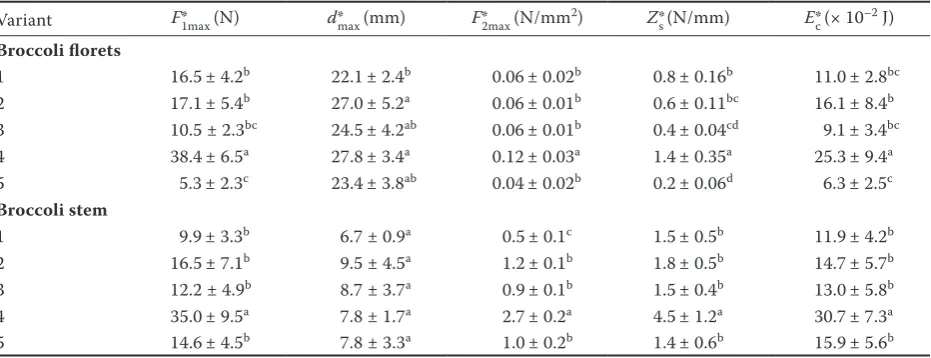
Table 2. Selected texture attributes of broccoli florets and stem
Variant F*1max(N) d*max(mm) F*2max(N/mm2) Z*
s(N/mm) E*c(× 10–2 J)
Broccoli florets
1 16.5± 4.2b 22.1± 2.4b 0.06± 0.02b 0.8± 0.16b 11.0± 2.8bc 2 17.1± 5.4b 27.0± 5.2a 0.06± 0.01b 0.6± 0.11bc 16.1± 8.4b 3 10.5 ± 2.3bc 24.5± 4.2ab 0.06± 0.01b 0.4± 0.04cd 9.1± 3.4bc 4 38.4± 6.5a 27.8± 3.4a 0.12± 0.03a 1.4± 0.35a 25.3± 9.4a 5 5.3± 2.3c 23.4± 3.8ab 0.04± 0.02b 0.2± 0.06d 6.3± 2.5c
Broccoli stem
1 9.9± 3.3b 6.7 ± 0.9a 0.5± 0.1c 1.5± 0.5b 11.9± 4.2b
2 16.5± 7.1b 9.5 ± 4.5a 1.2± 0.1b 1.8± 0.5b 14.7± 5.7b
3 12.2 ± 4.9b 8.7 ± 3.7a 0.9± 0.1b 1.5± 0.4b 13.0± 5.8b
4 35.0± 9.5a 7.8 ± 1.7a 2.7± 0.2a 4.5± 1.2a 30.7± 7.3a
5 14.6± 4.5b 7.8 ± 3.3a 1.0± 0.2b 1.4± 0.6b 15.9± 5.6b
[image:4.595.66.532.539.718.2]and Ec (P < 0.05) were observed in the majority of experimental variants (Table 2). The most highly sensory evaluated samples in variant 4 were charac-terised by the greatest firmness which was determined at 1.4 N/mm for florets and was threefold higher in stems at 4.5 N/mm. The above samples had the great-est cutting force (38.4 N – florets, 35.0 N – stems) and the highest total cutting energy (25.3 × 10⁻² J and 30.7 × 10⁻² J, respectively). Broccoli boiled in water (variant 5) had the lowest firmness (florets – 0.2 N/mm, stems – 1.4 N/mm). The same trend was observed in parameter F2max,i.e. maximum cutting force per unit area. The lowest differences between the analysed samples, both florets and stems, were reported for displacement dmax (Table 2).
The findings of other authors (Wu & Chang 1990; Lin & Chang 2005; Ślaska-Grzywna 2007) also indicate that the texture attributes of broccoli are significantly influenced by cooking methods char-acterised by different temperatures, cooking time, and moisture content, including boiling, steaming, microwaving, stir-frying, and stir-frying/boiling.
In this experiment, significant correlations were observed between sensory consistency and instru-mentally determined parameters F1max, F2max, and
Zs with linear correlation coefficients of 0.90, 0.93, and 0.90, respectively (Table 3).
Changes in pectin content. The total pectin content and pectin fraction content – protopectins, water-soluble pectins, and pectins water-soluble in an aqueous
solution of oxalate – were determined in broccoli cooked with the involvement of various methods. Differences were noted in the total pectin content and the content of various pectin fractions (Table 4). Most of the observed differences were statistically significant (P < 0.05). The total pectin content ranged from 1.98 g/100 g of water-boiled broccoli (variant 5) to 3.07 g/100 g of broccoli cooked in a convention steam oven (variant 2).
Protopectins were the predominant fraction in all variants regardless of the applied thermal processing method. Broccoli boiled in water had the lowest levels of total pectin content, protopectins and water-soluble pectin fractions. The results can be attributed to the migration of the analysed compounds into boiling water and lower dry matter content of broccoli boiled in water (Borowski et al. 2005). The cooking loss of samples processed in a convention steam oven was generally low, and it increased dry matter content by 1–2%. The results are consistent with Petersen (1993). Significant differences in the content of vari-ous pectin fractions in cooked broccoli were reported by Wu and Chang (1990), Ni et al. (2005), and Christiaens et al. (2012). The key changes during thermal processing included de-esterification and the subsequent formation of calcium bridges between free carboxyl groups of adjacent pectin molecules (Chang & Chang 1992). According to Wu and Chang (1990), broccoli cooked at 50, 60, and 70°C had a reduced content of the cold-water soluble pec-tin fraction and a higher content of pecpec-tin fractions soluble in sodium hexametaphosphate and hot water in comparison with raw broccoli. The high-temper-ature treatment applied in this study leads mainly to chemical de-esterification. Pectin methylesterase may be active during the initial heating phase, but it is degraded in successive phases of thermal process-ing. According to Sila et al. (2009), the increase in
Table 4. Total pectin content and the content of pectin fractions in broccoli samples (g/100 g fresh mass) Variant Total pectin Water soluble pectin Oxalate soluble pectin Protopectin
1 2.98± 0.04ab 0.50± 0.03b 0.46± 0.02bc 2.02± 0.03ab
2 3.07± 0.03a 0.61± 0.02a 0.48± 0.01bc 1.98± 0.04b
3 2.90 ± 0.04b 0.54± 0.01ab 0.53± 0.01b 1.83± 0.01c
4 2.88± 0.01b 0.33± 0.01c 0.45± 0.02c 2.10± 0.03a
5 1.98± 0.03c 0.27± 0.02c 0.70± 0.03a 1.01± 0.02d
[image:5.595.63.532.632.718.2]1 – steam, 103°C/15 min; 2 – steam, 90°C/30 min; 3 – steam, 125°C/12 min; 4 – combination of hot air 125°C with 90% steam saturation/8 min; 5 – boiling water, 100°C/7 min; mean values ± standard deviation in a column marked with the same letter are not significantly different (P < 0.05)
Table 3. Linear correlation coefficients matrix between evaluated parameters
Evaluated parameters F*1max F*2max Z*s
Sensory consistency 0.90** 0.93** 0.90**
the content of water-soluble fractions during thermal processing may be attributed to thermosolubilisation and/or β-eliminative depolymerisation of pectin at high temperatures (> 80oC).
CONCLUSIONS
In the present study, broccoli cooked with the application of various thermal processing methods differed significantly in its sensory properties, texture attributes and pectin content. Generally, broccoli cooked in a convection steam oven had more desir-able taste, aroma, colour and firmness than broccoli boiled in water. The optimal sensory attributes were reported in variant 4 where broccoli was cooked at 125°C with 90% steam saturation for 8 minutes. The resulting florets and stems had the greatest firmness which was determined instrumentally in the Instron universal testing machine. The above samples required the greatest cutting force and the highest total cutting energy. Also, the sample (4) had the highest protopectin content. The results of this study not only expand our knowledge, but also offer practical benefits and can serve as guidelines for vegetable processing and catering companies.
References
Baik H-Y., Juvik J.A., Jeffery E.H., Wallig M.A., Kushad M.A., Klein B.P. (2003): Relating glucosinolate content and flavor of broccoli cultivars. Journal of Food Science, 68: 1043–1050. Borowski J., Borowska E.J., Szajdek A. (2005): Wpływ warunków obróbki cieplnej brokułów (Brassica oleracea
var. italica) na zmiany polifenoli i zdolność zmiatania rodnika DPPH. Bromatologia i Chemia Toksykologiczna, 38: 125–131.
Borowski J., Szajdek A., Borowska E.J., Ciska E., Zieliński H. (2008): Content of selected bioactive components and antioxidant properties of broccoli (Brassica oleracea L.). EuropeanFood Research and Technology, 226: 459–465. Bourne M.C. (2002): Food Texture and Viscosity. Concept
and Measurement. 2nd Ed. London, Academic Press. Brewer M.S., Begum S., Bozeman A. (1995): Microwave and
conventional blanching effects on chemical, sensory, and color characteristics of frozen broccoli. Journal of Food Quality, 18: 479–493.
Brückner B., Schonhof I., Kornelson C., Schrödter R. (2005): Multivariate sensory profile of broccoli and cauliflower and consumer preference. Italian Journal of Food Sci-ence, 17: 17–32.
Buttery R.G., Guadagni D.G., Ling L.C., Seifert R.M., Lipton W. (1976): Additional volatile components of cabbage, broccoli, and cauliflower. Journal of Agricultural and Food Chemistry, 24: 829–832.
Chang C.Y., Chang W.H. (1992): Effects of precooking and cooking processes on textural changes of snapbean pods. Journal of the Chinese Agricultural Chemical Society, 30: 43–52.
Christiaens S., Mbong V.B., Van Buggenhout S., David C.C., Hofkens J., Van Loey A.M., Hendrickx M.E. (2012): Influence of processing on the pectin structure-function relationship in broccoli puree. Innovative Food Science and Emerging Technologies,15: 57–65.
Fenwick G.R., Heaney R.K. (1983): Glucosinolates and their breakdown products in cruciferous crops, foods and feedingstuffs. Food Chemistry, 11: 249–271.
Garitta L., Hough G., Chaves A. (2013): Sensory analysis of broccoli over time: Consumer defined critical attributes and evaluation of digital photographs in comparison to real product appearance. Food Quality and Preference, 29: 48–52.
Gliszczyńska-Świgło A., Ciska E., Pawlak-Lemańska K., Chmielewski J., Borkowski T., Tyrakowska B. (2006): Changes in the content of health-promoting compounds and antioxidant activity of broccoli after domestic process-ing. Food Additives and Contaminants,23: 1088–1098. Hrnčiřik K., Velišek J. (2001): Bioaktywne składniki roślin
ka-pustnych – glukozynolany. Przemysł Spożywczy, 55: 20–21. Lewis J., Fenwick G.R. (1987): Glucosinolate content of Bras-sica vegetables: analysis of twenty-four cultivars of calabrese (green sprouting broccoli Brassica oleracea L. var. botrytis
subvar. cymosa Lam.). Food Chemistry, 25: 259–268. Lin C.H., Chang C.Y. (2005): Textural change and
anti-oxidant properties of broccoli under different cooking treatments. Food Chemistry, 90: 9–15.
Mandelová L., Totušek J. (2006): Chemoprotective effects of broccoli juice treated with high pressure. Czech Journal of Food Sciences, 24:19–25.
Murcia M.A., López-Ayerra B., Martínez-Tomé M., García-Carmona F. (2000): Effect of industrial processing on chlorophyll content of broccoli. Journal of the Science of Food and Agriculture, 80: 1447–1451.
Ni L., Lin D., Barrett D.M. (2005): Pectin methylesterase catalyzed firming effects on low temperature blanched vegetables. Journal of Food Engineering,70: 546–556. Petersen M.A. (1993): Influence of sous vide processing,
steaming and boiling on vitamin retention and sensory quality in broccoli florets. Zeitschrift für Lebensmittel-Untersuchung und -Forschung,197: 375–380.
broccoli florets (Brassica oleracea) and their fate during cooking. Journal of theScience of Food and Agriculture, 77: 468–472.
Roy M.K., Juneja L.R., Isobe S., Tsushida T. (2009): Steam processed broccoli (Brassicaoleracea) has higher anti-oxidant activity in chemical and cellular assay systems. Food Chemistry, 114: 263–269.
Schnepf M., Driskell J. (1994): Sensory attributes and nutri-ent retnutri-ention in selected vegetables prepared by conven-tional and microwave methods. Journal of Food Quality,
17: 87–99.
Schonhof I., Krumbein A., Brückner B. (2004): Genotypic effects on glucosinolates and sensory properties of broc-coli and cauliflower. Nahrung,48: 25–33.
Sila D.N., Van Buggenhout S., Duvetter T., Fraeye I., De Roeck A., Van Loey A., Hendrickx M. (2009): Pectins in processed fruit and vegetables: Part II – structure-function relationships. Comprehensive Reviews in Food Science and Food Safety,8: 86–104.
Ślaska-Grzywna B. (2007): Quality assessment of Italian broccoli processed in convection-steam oven. Electronic Journal of Polish Agricultural Universities,10: 11. Vallejo F., Tomás-Barberán F.A., Garcia-Viguera C. (2002):
Glucosinolates and vitamin C content in edible parts of broccoli florets after domestic cooking. European Food Research and Technology, 215: 310–316.
Van Buggenhout S., Sila D.N., Duvetter T., Van Loey A., Hendrickx M. (2009): Pectins in processed fruits and vegetables: Part III – texture engineering. Comprehensive Reviews in Food Science and Food Safety,8: 105–117. Wu A., Chang W.H. (1990): Influence of precooking on the
firmness and pectic substances of three stem vegetables. International Journal of Food Science and Technology, 25: 558–565.
Yu L., Reitmeier C.A., Love M.H. (1996): Strawberry texture and pectin content as affected by electron beam irradia-tion. Journal of Food Science,61: 844–846.
Yuan G.F., Sun B., Yuan J., Wang Q.M. (2009): Effects of dif-ferent cooking methods on health-promoting compounds of broccoli. Journal of Zhejiang University Science B,10: 580–588.
Zhang D., Hamauzu Y. (2004): Phenolics, ascorbic acid, carotenoids and antioxidant activity of broccoli and their changes during conventional and microwave cooking. Food Chemistry, 88: 503–509.
Zia-ur-Rechman Z., Islam M., Shah W.H. (2003): Effect of microwave and conventional cooking on insoluble dietary fibre components of vegetables. Food Chemistry, 80: 237–240.
Received: 2014–04–14 Accepted after corrections: 2014–11–20
Corresponding authror: