DR PATRICK PRENDERGAST
PROVOST & PRESIDENT
Annual
Review
Contents
01 01.0 Provost’s Introduction 02
02 02.0 Trinity at a Glance 06
03 03.0 Research Case Studies 14
03.1 Yuri Volkov 16
03.2 Poul Holm 18
03.3 Roja Fazaeli 20
03.4 Anne-Marie Healy 22
03.5 Darryl Jones 24
03.6 Samson Shatashvili 26
03.7 Luke O’Neill 28
03.8 Linda Hogan 30
03.9 Brian O’Connell 32
03.10 Paul Delaney 34
03.11 Valeria Nicolosi 36
03.12 Linda Doyle 38
04 04.0 Innovation 40
05 05.0 Public Engagement 44
06 06.0 The Student Experience 48
07 07.0 Trinity’s Online Education 52
08 08.0 New Professor Interviews 56
08.1 Jane Alden 58
08.2 Mark Bell 61
08.3 Orla Hardiman 64
08.4 Douglas Leith 67
08.5 Richard Layte 69
08.6 Andrew Burke 72
08.7 Seamas Donnelly 75
08.8 Eleanor Molloy 78
08.9 Cathal Moran 81
09 09.0 Trinity Growing Globally 84
10 10.0 Philanthropy and Alumni Engagement 88
11 11.0 Trinity’s Visitors 92
12 12.0 A Sporting Year to Remember 96
Introduction
from the Provost
≥
As a university of global
consequence, we will be
known for realizing student
potential and for research
and scholarship that benefits
Ireland and the world.
01
The academic year began with the launch of our new Strategic Plan in October 2014, laying out our priorities to 2019. The nine goals cross all our commitments in research and education, innovation and entrepreneurship, creative arts and global relations, and public and community engagement. The Plan is highly cohesive — from our vision flows our mission, and from our threefold mission flow our nine goals (Fig. 1).
This year has been about implementing the Plan and we’ve already achieved significant success across a number of actions. One of the central capital development projects envis-aged in the Plan is for a new Trinity Business School co-located with an Innovation and Entrepreneurship Hub. Building is now underway to erect this flagship School on a site on the east end of the campus along Pearse Street — twenty individuals have donated significant funds to enable this.
In this Review we talk to Andrew Burke, new Professor of Business Studies and Dean of the Trinity Business School and we talk to the eight other professors appointed this aca-demic year in Neurology, Music, Paediatrics, Computer Science, Clinical Medicine, Sociology, Law, and Orthopaedics & Sports Medicine. Collectively these appointments demonstrate the range and diversity of Trinity’s Schools, and two of them — in
Neurology and Orthopaedics & Sports Medicine — are newly created full-time professorships, firsts for Trinity and for Ireland. The Strategic Plan commits to building Trinity’s research expertise in 19 interdisciplinary research themes. These include ‘Creative Arts Practice’, and this year we launched the Trinity Creative Challenge, inviting artists to propose interdisci-plinary projects with a Trinity focus, with the aim of catalysing the arts in Dublin city and supporting the development of the creative and cultural industries sector. Five proposals were selected from over 140 applicants to share the award fund — collectively the projects showcase performance, visual art, music, film, design, new media, animation, and gaming and creative technologies.
Another of Trinity’s interdisciplinary research themes is ‘Ageing’, and this year Trinity emerged as a key partner in a major EU initiative for ‘Healthy Living and Active Ageing’ — ‘InnoLIFE’ is a multi-million euro consortium of industry, higher education, and research institutions funded by the European Institute of Innovation and Technology (EIT) to develop projects, products, training and services for healthy living and active ageing. Trinity also emerged as a partner in another EIT con-sortium, ‘Raw Materials’, which seeks to tackle sustainability and the efficient use of natural resources.
Success in the EIT was part of an excellent year for research for Ireland and for Trinity. At the European Research Council (ERC) awards — which reward frontier research — Ireland jumped from second-lowest performer to second-high-est. Trinity now has six starting ERC grants, four consolidator, one proof of concept and one advanced grant currently active on campus; in June the University World News reported that Trinity is in the 50 top-performing universities in Horizon 2020. Under the Goal ‘Strengthen Community’, we have begun to implement phase two of our Global Relations Strategy. This year saw over 30 new agreements signed with leading universities in the US, Latin America and Asia, including ten
new student exchange agreements. Between 2012/13 and 2014/15 Trinity’s student body coming from outside the EU increased by over 30% and that rate of increase is continuing into 2015/16.
The Global Relations Strategy is about nurturing a multicultural, cosmopolitan campus, and enhancing research and the Trinity Education through internationalisation. Under our two goals — ‘Promote Student Life’ and ‘Renew the Trinity Education’ — we commit to delivering a world-class experience for our undergraduates and postgraduates, encouraging critical thinking, creative practice and innovation and entrepreneurship through curricular and extracurricular activities.
In October 2015, we learnt that Trinity has pro-duced more entrepreneurs than any other university in Europe over the last five years. The Universities Report, published in October 2015 by private equity and venture capital-focused research firm, PitchBook, showed that Trinity produced 114 entrepreneurs and 106 companies, which raised €575.7 million in capital between 2010 and 2015.
We were gratified by this magnificent showing, but not surprised since in recent years we have initiated a number of key actions to drive student innovation and entrepreneurship. Encompass an ever more diverse student
community, providing a distinctive education based on academic excellence and a transformative student experience.
A
Strengthen
Community
01
Promote
Student Life
02
Renew the
Trinity
Education
03
Fearlessly engage in actions that advance the cause of a pluralistic, just, and sustainable society.
C
Engage Wider
Society
07
Demonstrate
Institutional
Leadership
08
Secure Trinity’s
Future
09
Activate
Talents
04
Build Valuable
Partnerships
05
Research
for Impact
06
Mission and Nine Goals
We provide a liberal environment where independence of thought is highly valued and where all are encouraged to achieve their full potential. We will:
Our undergraduate accelerator, Launchbox, now in its third year, has progressed from a three-month accelerator to a 12 month programme which includes an ‘idea workshop’ series and a pre-accelerator element to develop ideas from early to prototype stage.
LaunchBox ideas incubated this year are as novel and ingenious as in previous years. They include: SiteSpy, a hardware device to help telco companies report live data information to engineers; Blazer, a new system to remove the dangerous varroa parasite from honey bees; Unituition, an online market place for third level students and tutors; and
Sensa FX, a health tool to help people form healthier habits using scent associations.
While there is not enough space to describe all the new initiatives, an important one for the future will be the Trinity Education Project. The ambitious aim is to agree a set of graduate attributes for all our courses and ensure that the Trinity curriculum is designed to deliver these. Also this year we drew on generous philanthropic support to establish Teaching Innovation Grants to endow teaching projects which expose students to new ways of thinking and learning. There were 18 applicants and six grants were awarded across the three university faculties.
The whole Trinity community was immensely proud in October 2015 when alumnus William C. Campbell won the Nobel Prize for Medicine for his part in combating the parasitic worms which cause river blindness. In interviews, Professor Campbell has spoken movingly of his mentor in Trinity, Desmond Smyth, who, he said, “changed my life by developing my interest in parasitic worms” (Irish Times, 9 October 2015).
We want to continue educating such alumni and mentors — people who contribute to making this world a better, more equal, more sustainable, and more illuminating place.
In conclusion, it remains for me to thank the staff, students, and alumni who have helped make this year such a success. Your hard work, creativity and dedication are an inspiration, and the reason why Trinity, now entering its 425th year, remains fresh, resilient, and fully delivering on the Vision enshrined in our Strategic Plan: “As a university of global conse-quence, we will be known for realizing student potential and for research and scholarship that benefits Ireland and the world.”
Dr Patrick Prendergast Provost & President
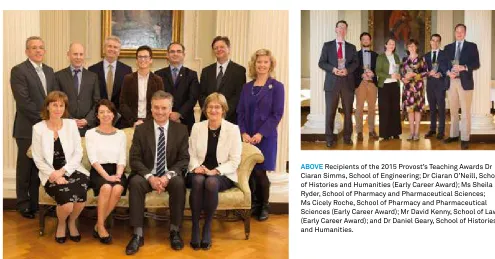
BELOW LEFT Among the contributors and representatives of areas included in this Provost’s Review, are, standing (L–R) Ian Mathews, Chief Financial Officer; Diarmuid O’Brien, Director, Trinity Research & Innovation; Prof Kevin O’Kelly, Dean of Students; Cathy Gallagher, Development Manager, Sport & Recreation; Nick Sparrow, Director, Trinity Development & Alumni; Prof Timothy Savage, Associate Dean for Online Education; Sally-Anne Fisher, Communications Officer; Seated (L–R) Prof Juliette Hussey, Vice-President for Global Relations; Prof Linda Hogan, Vice-Provost/Chief Academic Officer; Dr Patrick Prendergast, Provost; and Prof Shane Allwright, Registrar.
ABOVE Recipients of the 2015 Provost’s Teaching Awards Dr Ciaran Simms, School of Engineering; Dr Ciaran O’Neill, School of Histories and Humanities (Early Career Award); Ms Sheila Ryder, School of Pharmacy and Pharmaceutical Sciences; Ms Cicely Roche, School of Pharmacy and Pharmaceutical Sciences (Early Career Award); Mr David Kenny, School of Law (Early Career Award); and Dr Daniel Geary, School of Histories and Humanities.
01
Introduction from the Provost 01.0
Fig. 1
Undertake research at the frontiers of disciplines, spurring on the development of new interdisciplinary fields and making a catalysing impact on local innovation and on addressing global challenges.
[image:4.1224.680.1175.131.390.2]Trinity at
a Glance
Trinity is Ireland’s
No. 1 University
QS World University Ranking, THE World University Ranking, Academic Ranking of World Universities (Shanghai)
≥
A 423 year old
ARTS, HUMANITIES AND SOCIAL SCIENCES
ENGINEERING, MATHEMATICS AND SCIENCE
HEALTH SCIENCES
ALUMNI
107,353
|
103,518
|
100,277
CLUBS AND SOCIETIES ACADEMIC STAFF FACULTIES
REPUBLIC OF IRELAND 79,728 | 76,720 | 74,170
GREAT BRITAIN 10,001 | 9,754 |9,616
NORTHERN IRELAND 4,696 | 4,662 | 4,621
USA 3,838 | 3,670 | 3,557
CANADA 1,226 | 1,195 | 1,162
REST OF WORLD 7,864 | 7,517 | 7,151
48
|
49
|
49
SPORTS CLUBS119
|
118
|
112
STUDENT SOCIETIES61%
|
60%
IRISH39%
|
40%
INTERNATIONAL— The college historical society (the hist) is the oldest student society in the world, founded in 1770
Trinity at a Glance
02.1 Student / Staff Statistics
Student Statistics
2015
|
2014
|
2013
(3 year comparisons)
Staff Statistics
2015
|
2014
|
2013
(3 year comparisons)
THE LARGEST SOCIETIES ARE:
THE VINCENT DE PAUL SOCIETY
THE PHILOSOPHICAL SOCIETY (THE PHIL)
DU PLAYERS
THE COLLEGE HISTORICAL SOCIETY (THE HIST)
61%
39%
02
12,420
|
12,174
UNDERGRADUATES777
|
785
ACADEMIC4,309
|
4,472
POSTGRADUATES180
|
189
TECHNICAL1,715
|
1,775
PART-TIME42%
|
42%
MALE15,014
|
14,871
FULL-TIME58%
|
58%
FEMALE ONLINE3,011
*
2,868
|
2,937
STAFF MEMBERS REGISTERED STUDENTS
* Full-time Equivalent
12,633
1,789
58%
37
4,447
173
850
|
819
ADMINISTRATIVE870
321
|
346
SUPPORT353
758
134
|
143
LIBRARY127
606
|
655
RESEARCH730
15,254
42%
17,080
Trinity at a Glance
02.2 International Students
IRELAND13,593
BOSNIAANDHERZEGOVINA03 MACEDONIA01
TUNISIA01
CROATIA04
SERBIA03 CZECHREPUBLIC08 ICELAND02
GREATBRITAIN550 BELGIUM70 THENETHERLANDS37
NORWAY14 DENMARK09
UKRAINE05 SWEDEN27
RUSSIANFEDERATION47
KAZAKHSTAN09 AZERBAIJAN01
ARMENIA01 GEORGIA01
IRAN, ISLAMICREPUBLICOF14 BAHRAIN04
QATAR02
OMAN06 UNITED ARABEMIRATES06
SAUDIARABIA26 KUWAIT10 JORDAN09 GERMANY205 AUSTRALIA30 INDONESIA02 PHILIPPINES12 TAIWANREPUBLICOFCHINA03
BRUNEIDARUSSALAM01 INDIA112
PAKISTAN18 AFGHANASTAN01
BANGLADESH04
NEPAL03 CHINA143
HONGKONG10
SRILANKA03
JAMAICA01
TRINIDADANDTOBAGO04
VENEZUELA02 PUERTORICO02
STVINCENT&GRENADINES01 BAHAMAS02
BRAZIL118
PARAGUAY01 CAYMANISLANDS02
BERMUDA01 ARGENTINA03 AUSTRIA30 POLAND29 FINLAND22 HUNGARY08 SLOVAKIA07 BULGARIA03 ROMANIA13 CYPRUS07 SWITZERLAND30 ITALY112 GIBRALTER01 GREECE21 SLOVENIA03 MALTA08
LIBYANARABJAMAHIRIYA14
NIGERIA17
REPOFEQUATORIALGUINEA01
MALAWI01
MADAGASCAR01
SINGAPORE187 IRAQ10
GHANA02
NEWZEALAND03 JAPAN19
REPOFKOREA07
MOZAMBIQUE01 KENYA03 ETHIOPIA01 MAURITIUS09 ZAMBIA01 ZIMBABWE03 UGANDA03 TANZANIA01 BURUNDI01 SUDAN06 LITHUANIA05 MOLDOVA05 BELARUS01 LATVIA03 TURKEY15 ALBANIA04 MONACO01 GUINEA01 PORTUGAL22 SPAIN80 CANADA162 USA637 MEXICO08 PALESTINE01 ISRAEL01 EGYPT08 ALGERIA02
SOUTHAFRICA18 FRANCE236 LUXEMBOURG17 MALAYSIA108 VIETNAM04 CHILE03 COLOMBIA03 COSTARICA01
ECUADOR02 IRELAND13,593
BOSNIAANDHERZEGOVINA03 MACEDONIA01
TUNISIA01
CROATIA04
SERBIA03 CZECHREPUBLIC08 ICELAND02
GREATBRITAIN550 BELGIUM70 THENETHERLANDS37
NORWAY14 DENMARK09
UKRAINE05 SWEDEN27
RUSSIANFEDERATION47
KAZAKHSTAN09 AZERBAIJAN01
ARMENIA01 GEORGIA01
IRAN, ISLAMICREPUBLICOF14 BAHRAIN04
QATAR02
OMAN06 UNITED ARABEMIRATES06
SAUDIARABIA26 KUWAIT10 JORDAN09 GERMANY205 AUSTRALIA30 INDONESIA02 PHILIPPINES12 TAIWANREPUBLICOFCHINA03
BRUNEIDARUSSALAM01 INDIA112
PAKISTAN18 AFGHANASTAN01
BANGLADESH04
NEPAL03 CHINA143
HONGKONG10
SRILANKA03
JAMAICA01
TRINIDADANDTOBAGO04
VENEZUELA02 PUERTORICO02
STVINCENT&GRENADINES01 BAHAMAS02
BRAZIL118
PARAGUAY01 CAYMANISLANDS02
BERMUDA01 ARGENTINA03 AUSTRIA30 POLAND29 FINLAND22 HUNGARY08 SLOVAKIA07 BULGARIA03 ROMANIA13 CYPRUS07 SWITZERLAND30 ITALY112 GIBRALTER01 GREECE21 SLOVENIA03 MALTA08
LIBYANARABJAMAHIRIYA14
NIGERIA17
REPOFEQUATORIALGUINEA01
MALAWI01
MADAGASCAR01
SINGAPORE187 IRAQ10
GHANA02
NEWZEALAND03 JAPAN19
REPOFKOREA07
MOZAMBIQUE01 KENYA03 ETHIOPIA01 MAURITIUS09 ZAMBIA01 ZIMBABWE03 UGANDA03 TANZANIA01 BURUNDI01 SUDAN06 LITHUANIA05 MOLDOVA05 BELARUS01 LATVIA03 TURKEY15 ALBANIA04 MONACO01 GUINEA01 PORTUGAL22 SPAIN80 CANADA162 USA637 MEXICO08 PALESTINE01 ISRAEL01 EGYPT08 ALGERIA02
SOUTHAFRICA18 FRANCE236 LUXEMBOURG17 MALAYSIA108 VIETNAM04 CHILE03 COLOMBIA03 COSTARICA01
ECUADOR02
International Students
2015
|
2014
|
2013
(3 year comparisons)
95
|
97
|
109
AFRICA
15,125
|
14,954
|
15,062
EUROPE
728
|
615
|
567
ASIA
146
|
112
|
106
EUROPE NON EU
33
|
37
|
33
AUSTRALASIA
821
|
836
|
718
NORTH/CENTRAL AMERICA
ALGERIA 2| 1| 1
BOTSWANA 1| 5
BURUNDI 1| 1
CAMEROON 1| 1
EGYPT 8| 4| 3
ETHIOPIA 1| 2| 3
GHANA 2| 3
GUINEA 1
KENYA 3| 5| 4
LESOTHO 1| 1
LIBYAN ARAB JAMAHIRIYA 14 | 5| 6
MADAGASCAR 1
MALAWI 1| 5| 4
MAURITIUS 9| 9| 7
MOROCCO 2
MOZAMBIQUE 1| 1| 1
NIGER 1| 1
NIGERIA 17| 23| 33
REP OF EQUATORIAL GUINEA 1
RWANDA 1| 1
SOUTH AFRICA 18| 15| 18
SUDAN 6| 6| 6
TANZANIA 1| 1| 1
TUNISIA 1
UGANDA 3| 5| 3
ZAMBIA 1| 3| 3
ZIMBABWE 3| 3| 5
TOTAL 95| 97| 109
AFGHANISTAN 1
ARMENIA 1| 1| 1
AZERBAIJAN 1| 1| 2
BAHRAIN 4| 3| 2
BANGLADESH 4| 5| 7
BRUNEI DARUSSALAM 1| 1| 1
CHINA 143| 122| 99
HONG KONG 10| 4| 1
INDIA 112| 91| 90
INDONESIA 2| 2| 1
IRAN ISLAMIC REPUBLIC OF 14| 14| 12
IRAQ 10| 7| 7
ISRAEL 1| 2| 1
JAPAN 19| 22| 16
JORDAN 9| 3| 6
KUWAIT 10| 8| 8
LEBANON 2| 1
MACAO 2
MALAYSIA 108| 108| 107
NEPAL 3| 3
OMAN 6| 5| 3
PAKISTAN 18| 16| 17
PALESTINE 1| 1
PHILIPPINES 12| 10| 10
QATAR 2| 1
REP OF KOREA 7| 13| 14
SAUDI ARABIA 26| 28| 24
SINGAPORE 187| 131| 120
SRI LANKA 3| 4| 2
SYRIAN ARAB REPUBLIC 1| 1
TAIWAN REPUBLIC OF CHINA 3 | 1| 1
THAILAND 1
UNITED ARAB EMIRATES 6| 5| 6
VIETNAM 4| 1| 3
TOTAL 728| 615| 567
AUSTRALIA 30| 31| 26
NEW ZEALAND 3| 6| 7
TOTAL 33| 37| 33
132
|
78
|
19
SOUTH AMERICA
AUSTRIA 30| 24| 20
BELGIUM 70| 71| 61
BULGARIA 3| 4| 3
CYPRUS 7| 8| 8
CZECH REPUBLIC 8| 8| 7
DENMARK 9| 10| 11
ESTONIA 1
FINLAND 22| 15| 18
FRANCE 236| 238| 205
GERMANY 205| 211| 190
GREAT BRITAIN 550| 572| 637
GREECE 21| 19| 22
HUNGARY 8| 5| 5
IRELAND 13,593| 13,434| 13,600
ITALY 112| 91| 74
LATVIA 3| 3| 3
LITHUANIA 5| 9| 11
LUXEMBOURG 17 | 14 | 12
MALTA 8 | 5| 4
POLAND 29| 41| 40
PORTUGAL 22| 13| 10
ROMANIA 13| 10| 11
SLOVAKIA 7| 2| 6
SLOVENIA 3| 3| 1
SPAIN 80| 69| 70
SWEDEN 27| 35| 28
THE NETHERLANDS 37| 40| 35
TOTAL 15,125| 14,954| 15,062
ALBANIA 4| 1| 2
BELARUS 1| 2| 1
BOSNIA & HERZEGOVINA 3| 2| 1
CANARY ISLANDS 2
CROATIA 4| 2
GEORGIA 1
GIBRALTAR 1| 1| 1
ICELAND 2| 2| 1
KAZAKHSTAN 9| 12| 16
MACEDONIA 1
MOLDOVA 5| 4| 3
MONACO 1
NORWAY 14| 9| 14
REPUBLIC OF KOSOVO 1
RUSSIAN FEDERATION 47| 41| 36
SAN MARINO 1
SERBIA 3| 2| 1
SWITZERLAND 30| 22| 19
TURKEY 15| 8| 8
UKRAINE 5| 2| 1
TOTAL 146| 112| 106
BAHAMAS 2| 1| 1
BARBADOS 1| 1
BERMUDA 1| 2| 1
CANADA 162| 164| 158
CAYMAN ISLANDS 2| 1| 1
COSTA RICA 1
CUBA 1
HAITI 1
JAMAICA 1
MEXICO 8| 10| 10
PUERTO RICO 2| 1
ST VINCENT & GRENADINES 1
TRINIDAD & TOBAGO 4| 7| 5
USA 637| 648| 540
TOTAL 821| 836| 718
ARGENTINA 3| 2
BRAZIL 118| 70| 12
CHILE 3| 1| 4
COLOMBIA 3| 2| 2
ECUADOR 2| 1
PARAGUAY 1| 1
PERU 1| 1
VENEZUELA 2
TOTAL 132| 78| 19
≥
A look at the diverse
group of international
students here at Trinity,
and where they come from.
Commercialisation of Research
2015
|
2014
|
2013
(3 year comparisons)
—AGEING
—CANCER
—CREATIVE ARTS PRACTICE
—CREATIVE TECHNOLOGIES
—DIGITAL HUMANITIES
—GENES AND SOCIETY
—IDENTITIES IN TRANSFORMATION
—IMMUNOLOGY, INFLAMMATION & INFECTION
—INCLUSIVE SOCIETY
—INTELLIGENT CONTENT & COMMUNICATIONS
—INTERNATIONAL DEVELOPMENT
—INTERNATIONAL INTEGRATION
—MAKING IRELAND
—MANUSCRIPTS, BOOK & PRINT CULTURES
—NANOSCIENCE
—NEUROSCIENCE
—NEXT GENERATION MEDICAL DEVICES
— THE SMART AND SUSTAINABLE PLANET
—TELECOMMUNICATIONS
—TRINITY BIOMEDICAL SCIENCES INSTITUTE
—CENTRE FOR RESEARCH ON ADAPTIVE NANOSTRUCTURES AND NANODEVICES (CRANN)
—TRINITY COLLEGE INSTITUTE OF NEUROSCIENCE (NATIONAL NEUROSCIENCE NETWORK)
—TRINITY LONG ROOM HUB, ARTS AND HUMANITIES RESEARCH INSTITUTE
TRINITY’S RESEARCH THEMES
LEADING FLAGSHIP RESEARCH INSTITUTES
6,000,000
PRINTED ITEMS
500,000
MAPS
LIBRARY COLLECTION HAS
350,000
ELECTRONIC BOOKS
80,000
ELECTRONIC JOURNALS
01
BOOK
OF KELLS
04
€’000 €’000 €’000
FINANCIAL YEAR 2013/14 2012/13 2011/12
STATE GRANT €47,279 €54,469 €58,650
STUDENT FEES (ACADEMIC FEES) €122,169 €116,138 €113,833
RESEARCH INCOME €78,004 €74,670 €75,950
OTHER INCOME * €78,611 €73,120 €75,005
TOTAL INCOME PER CONSOLIDATED ACCOUNTS €326,063 €318,397 €323,438
* OTHER INCOME
AMORISATION OF DEFERRED CAPITAL GRANTS €11,599 €13,245 €14,465
OTHER OPERATING INCOME €51,243 €50,535 €49,478
INTEREST INCOME €866 €2,811 €4,449
ENDOWMENT INCOME €7,022 €6,529 €6,613
GAIN ON REVALUATION OF INVESTMENT PROPERTIES €7,881
TOTAL OTHER INCOME €78,611 €73,120 €75,005
CONSOLIDATED ACCOUNTS
€318.4
m
TOTAL INCOME FOR YEAR ENDED 2013
€326.1
m
TOTAL INCOME FOR YEAR ENDED 2014€323.4
m
TOTAL INCOME FOR YEAR ENDED 2012 Trinity at a Glance
02.3 Library / Commercialisation of Research
IN THE PERIOD 2010–2015 (2009–2014)
Library
02
03
|
04
|
05
TRINITY CAMPUS COMPANIES
53
|
58
|
46
DISCLOSURES OF NOVEL INTELLECTUAL PROPERTY RECEIVED
23
|
28
|
09
COMMERCIALISATION LICENCES WERE ISSUED
18
|
23
|
15
NEW PATENT APPLICATIONS FILED
55
|
51
COLLABORATIVE RESEARCH AGREEMENTS WERE CONCLUDED
€25
k
|
€25
kCONTRIBUTED BY INDUSTRY PARTNERS TO EACH COLLABORATIVE RESEARCH AGREEMENT IN THE YEAR ENDED SEPTEMBER 2015
314
|
308
DISCLOSURES OF NOVEL INVENTIONS RECEIVED
102
|
81
LICENCES TO INDUSTRY GRANTED
36
|
37
Research
Case Studies
01
Yuri Volkov
02
Poul Holm
03
Roja Fazaeli
04
Anne-Marie Healy
05
Darryl Jones
06
Samson Shatashvili
07
Luke O’Neill
08
Linda Hogan
09
Brian O’Connell
10
Paul Delaney
11
Valeria Nicolosi
12
Linda Doyle
03
BACK (L-R) – Prof Yuri Volkov, Dr Roja Fazaeli, Prof Darryl Jones, Dr Paul Delaney, Prof Anne-Marie Healy, Prof Brian O’Connell
Targeting Cancer at Nanoscale
Yuri Volkov
03
03.1 Research Case Studies
Over 3.2 million new cases of cancer and over 1.7 million cancer-related deaths are recorded every year in Europe alone. For survivors, the toll is high in terms of recovery from invasive treatments, which also carry a heavy financial burden for individuals and the state. Early diagnosis is key to better patient outcomes.
Nanotechnology — the manip-ulation of matter on an atomic, molecular and supramolecular scale — has increas-ingly important applications in a range of areas and disciplines. One of its most exciting recent applications is in early diagnosis of cancer.
Nanotechnological toolkits — My team in Trinity College Dublin is a key coordinating partner in NAMDIATREAM, an interdis-ciplinary and pan-European consortium of academic institutions and industry. We are developing nanotechnological toolkits to enable early detection and imaging of molecular biomarkers of the most common cancer types (breast, lung and prostrate) and of cancer metastases, as well as identifying cells indicative of early-stage disease onset.
The toolkits are based on four different technological platforms, each with a unique nanotechnology feature which detects biomarkers of cancer and can-cer cells in micro-litre volumes of blood and urine.
— The first platform involves the exploita-tion of fluorescent nanomaterials (quan-tum dots) which enables the creation of ultra-small diagnostic probes covered with single-domain antibodies against tumour biomarkers. This tool offers superior sensitivity and photostability compared to alternatives, as well as the capability for multiplexed detection of tumour molecular signatures.
— The second platform relies on anti-body-functionalised magnetic core/noble metal shell nanorods that bind tumour biomarkers. The changes in their optical properties in response to an externally applied magnetic field enables the detec-tion and quantificadetec-tion of target molecules in a straightforward biological sample.
— Nanocrystals with non-linear optical properties use the advantage of the infrared spectrum for unique deep tissue imaging with enhanced sharp contrast against the surrounding background. Selectively targeted to tumour cells, they provide a
stable long lasting signal leading to efficient cancer detection and monitoring. Three products based on this technology have already been licensed and commercialised.
— Finally, segmented magnetic nanowires acting as barcode-type labels for disease marker detection are paired with a unique optical-magnetic sensor detection plat-form for selective multiplexed detection of cancer biomarkers.
Improved patient treatment outcomes
The NAMDIATREAM consortium committed, from the outset, to delivering high quality, safety-assured and scalable products matching in vitro models for pre-clinical testing, and benchmarked against both clinical and industrial gold standards. Our outstanding work has resulted in NAMDIATREAM’s selection as the best of over 1,000 projects in the field of nanotech-nologies and advanced materials launched under the EU funding instruments.
By fostering early detection of cancer with reduced invasiveness, cost effectiveness, and ease of use, these tools will simplify routine population screening for prompt intervention with dramatically improved patient treatment outcomes, and reduced health care costs.
Yuri Volkov holds an MD from the 1st Moscow Medical University and a PhD from the Institute of Immunology, Moscow. He joined Trinity College Dublin in 1995 as a post-doctoral Research Fellow and now is Professor and Chair of Molecular and Translational Medicine at the School of Medicine. His research interests include nanomedicine and biomedical applications of nanotechnologies, molecular mechanisms of immune system functioning in health and disease, cancer diagnostics, advanced cell and molecular imaging. He is also a PI at the Trinity’s CRANN and AMBER Centres, where his group is pursuing the applications of nanomaterials for advanced research and medical diagnostics.
Contact: [email protected]
Targeting Cancer at Nanoscale — Yuri Volkov
Technology Platform 1:
Photoluminescent nanoparticles
Technology Platform 2:
Nanorods for plasmon- optical detection
Technology Platform 3:
Second harmonic generating nanocrystals
Technology Platform 4:
Magnetically barcoded nanowires
1
2
3
4
≥
We are developing nanotechnological toolkits
The North Atlantic Fish Revolution, 1400–1700
Poul Holm
[image:11.1224.606.1182.305.743.2]In 1497, John Cabot returned to Bristol from a voyage across the North Atlantic. He had set sail to find a north-erly way to China but like Columbus a few years earlier he found the passage blocked by what came to be known as New Found Land. Cabot did not bring back silk and gold but a tale of waters so thick with fish that they could be lifted straight on board in baskets. Within a few years of this journey fishermen from all over western Europe made the journey across. This was the beginning of the fish revolution of the early-modern world.
Fish was of enormous eco-nomic, social and cultural significance in the medieval world, and the fish rev-olution was one of the first examples of the disrupting effects of globalization. Fish was a high-priced, limited resource in the late Middle Ages. The Grand Banks fishery offered abundant high-quality low-priced catches to the European market. The consequences were dire for fishermen along the stretch from the Irish Sea right up to northern Norway. When local products could not compete with the North Atlantic cod, the fishermen had the choice of joining the thousands across the dangerous ocean or giving up fishing. Many fishing settlements were deserted as inhabitants took to the road to seek casual work in agriculture or towns. Kings and high politics were similarly affected by the fish revolution. The new resource held strategic importance for all major western European powers,
including Spain, Britain and France. Queen Elizabeth of England saw acutely the need to encourage the fisheries as a means to ensure the recruitment of able-bodied seamen for her fleet.
The consequences of Cabot’s discovery are still with us in our food cul-ture. Countries like Spain and Portugal developed a strong preference for the ‘bacalao’ or dried and salted cod from North America which is still evident today. Northern Europe on the other hand came to see fish as cheap pauper’s food and developed a preference for beef.
Researching the consequences of the fish revolution — While we know the broad outline of the fish revolution, many questions remain and will be the focus of my research team for the next five years. In short, the core questions are: What were the natural and economic causes of the fish revolution? How did marginal societies adapt to changing international trade and consumption patterns around the North Atlantic? How did economic and political actors respond? The answers will help explain the historical role of environment and climate change, how markets impacted marginal communities, and how humans perceived long-term change.
More broadly, my research pro-ject, entitled ‘North Atlantic Fisheries, an Environmental History 1400 –1700’, may help put perspective on today. In recent years we have all been affected
by the impact of globalization, climate change, and threats of unemployment and social upheaval. I want to know how people in the past responded to the same forces. Everything that seemed certain was questioned and emigration became the response by many when local liveli-hoods were challenged.
Applications of my research — My
research will probably have both tan-gible and intantan-gible impact. Knowing more about past fish populations, fishing power, and climate variability will help fisheries modellers to understand long-term variability of stocks and the effects of both climate and human extractions. The more intangible effect will be better historical understanding of the creation of the North Atlantic world.
Outcomes will be published in both scholarly papers and a book. In addition all data will be freely available to all by means of a digital atlas of the historical North Atlantic fisheries.
Poul Holmis Professor of Environmental History at the School of Histories and Humanities. He was the founding director of the Trinity Long Room Hub — the research institute for the arts and humanities at TCD, and he directs the Irish structured PhD in digital arts and humanities. In 2015 he was awarded a prestigious Advanced Grant of 2.5 million euro by the European Research Council. In the next five years he and his team will explore the North Atlantic fish revolution, c.1400–1700 AD.
Contact: [email protected]
03.2 Research Case Studies The North Atlantic Fish Revolution, 1400–1700 — Poul Holm
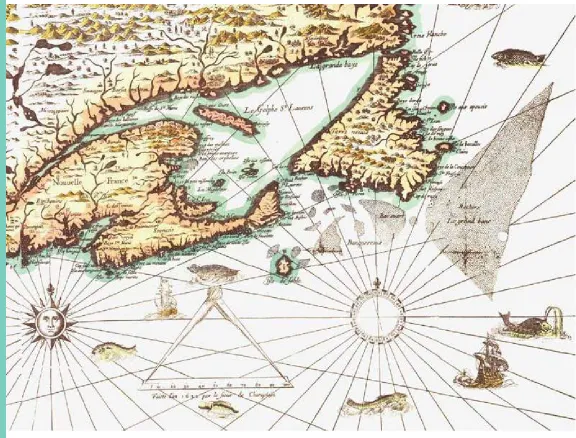
Fig 1. Carte De La Nouvelle France,
(excerpt of Newfoundland Grand Banks) Samuel de Champlain, 1632
Fig 2. Carta Marina, (Norwegian coast
excerpt) by Olaus Magnus first version published in 1539
Fig 1
Fig 2
≥
Knowing more about past fish populations, fishing
power, and climate variability will help fisheries
modellers to understand long-term variability of stocks
and the effects of both climate and human extractions.
Women’s Rights in Iran: State Change and Islamic Feminism
Roja Fazaeli
The twentieth century was a century of great advances for women’s suffrage and women’s rights all over the world, including in the Middle East and Muslim-majority countries. However, in some states, these hard gained rights have also been subject to loss over time. In Iran, for instance, women were able to claim the right to vote in 1963, but then saw their freedom significantly curtailed following the Islamic revolution of 1979. In Iran, as in other countries, a loss of rights led to the adoption and creation of different forms of feminism, as well as different strategies for activism and advocacy along social, political and legal lines.
Women’s rights in Iran: narrative forms — My primary research, for Trinity’s School of Languages, Literature and Cultural Studies, explores women’s rights in Muslim-majority countries, with a spe-cific focus on Iran and the Iranian wom-en’s movement from 1906 to the present. Through in-depth study of the Iranian constitution, civil and criminal codes, I provide new understandings and critical perspectives on national articulations of Islamic law.
A secondary strand of my research looks at the narrative forms around which women’s rights in Iran are organized. For instance, while recognizing that women’s reformist print magazines such as Zanan, Farzaneh
and Payam-iHajar were traditionally the platforms where women’s issues were discussed and religious texts were rein-terpreted, I am building new arguments about how the transition to online pub-lications is linked to censorship, the closure of many media outlets, and the harassment and arrest of journalists and human rights activists, in particular women’s rights activists. This leads me to consider contemporary prison narratives of women’s rights activists in Iran as a discreet narrative form, one that simulta-neously challenges narrative convention as well as criminal stereotypes.
Women’s rights in Iran: legislative con-text— My research marks the first time many of the national laws in Iran regard-ing women have been the subject of an extended programme of academic research conducted in English. For instance, by comparing Iran’s Family Protection Act of 1964 and Iran’s Family Protection Bill of
2007 I am able to track the ways in which the form and understanding of women’s rights in Iran have changed over time. By engaging these laws systematically, in a comprehensive and comparative way alongside existing Persian language stud-ies, I help contribute to greater interna-tional understandings of the women’s movement in Iran, especially as it relates to forms of political and religious dissent. The results of this research have led me to new insights about Iran‘s recalcitrance relative to international standards, such as the UN Convention on the Elimination of all forms of Discriminations against Women (CEDAW), as well as greater understanding of the political and legal dynamics that ratifi-cation of CEDAW would entail in Iran. As modes of engagement with Islamic law remain a key contemporary challenge for international human rights law, my research also highlights areas of law where gender discrimination is appar-ent in the Shi’a tradition and shows how international human rights law, while a powerful tool, may remain insufficient to meet the various cultural needs and demands of many Muslim women.
Roja Fazaeli received her BA (Mod) and MPhil from Trinity and her PhD from the Irish Centre for Human Rights in NUI Galway. She returned to Trinity as a lecturer in 2008 and helped form a new department of Near and Middle Eastern Studies. She now serves as assistant professor in the School of Languages, Literature and Cultural Studies. The recipient of grants from Johns Hopkins University Protection Project, British Institute for Middle Eastern Studies, and Irish Research Council, she has published widely on Islamic feminisms, female religious authorities and women’s rights in Iran, and is on the editorial board of the Journal of Religion and Human Rights. She has previously served on the executive boards for UN Women Ireland, Amnesty International Ireland and the Irish Refugee Council. She is currently the Scholars at Risk representative for Trinity and a member of the Immigrant Council of Ireland’s research and policy steering group.
Contact: [email protected]
03.3 Research Case Studies Women’s Rights in Iran: State Change and Islamic Feminism — Roja Fazaeli
Islamic Feminism — A distin-guishing feature of my research is the way in which I conceptualise the term “Islamic feminism.” I do this by revisiting a variety of scholarly arguments and pairing them with new analysis gained through interviews with Iranian women’s rights activists. In distinction to feminist writers such as Mehrangiz Kar, Azadeh Kian, Shirin Ebadi, Ziba Mir-Hosseini and NayerehTohidi, whose feminist consciousness is linked to a time before the Iranian Islamic Revolution of 1979, I offer a post-revolutionary form of analysis. My work demonstrates how feminist movements can and should play a critical role in Islamic law reform, as
well as forming a bridge of engagement with international human rights law in Muslim-majority countries, such as Iran. This research has a broad reach. Beyond the general advancement of knowledge about the history of the Iranian legal system, particularly pertaining to women’s rights, the research also has the capacity to resource and influence policy and governmental actors, as well public understanding. For instance, in addition to publishing widely, I have contributed to news outlets such as BBC Persian and also organised panels with the UN Special Rapporteur on Human Rights in Iran.
≥
My primary research explores
women’s rights in Muslim-majority
countries, with a specific focus
on Iran and the Iranian women’s
movement from 1906 to the present.
03
Delivering Safe, Effective Medication: Reducing Doses,
Minimising Side Effects, and Maximising Therapies
Anne-Marie Healy
When a drug is taken by a patient, the pharmacological effect — lowering of blood pressure, pain reduc-tion, relief from attack etc. — is usually achieved as a result of the drug inter-acting with receptors at its site of action. However drugs are rarely given to patients in the form of the pharmacologically active pharmaceutical ingredient (API) alone. Instead, the API is incorporated into a formulation designed to provide stability to the drug compound, but also to optimise delivery to the patient, maximising therapeutic action, while minimising unwanted side effects.
‘Pharmaceutics’ is the science of dosage form design and deals with the process of turning a new chemical entity or old drug into a medication that can be taken safely and effectively. ‘Pharmaceutical Technology’ focuses on the
processes and instrumentation employed in the manufacture, dispensing, packag-ing, and storage of drugs and medicinal products. These two areas are the focus of my research group in the School of Pharmacy and Pharmaceutical Sciences. Ireland is a key location for the pharmaceutical industry in Europe. Given the importance of the sector to the country, much of the research that is conducted in my group is industry informed and/or undertaken in collaboration with industrial partners. I am a Principal Investigator of two Science Foundation Ireland (SFI) funded research centres that are focused on such academia-industry collaborative
research: the Synthesis and Solid State Pharmaceutical Centre (SSPC) and the Advanced Materials and Bioengineering Research Centre (AMBER).
Some of the projects that we are undertaking in the group include:
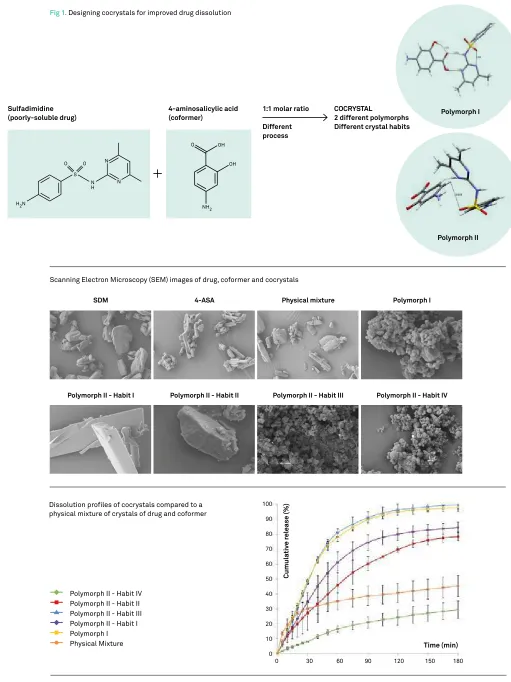
Improving the solubility and dissolu-tion rate of poorly soluble drugs — If a drug has poor solubility, its bioavaila-bility (absorption into the bloodstream) and therapeutic effect will be compro-mised. We can improve the solubility and dissolution rate of drugs by means of
cocrystals — where the drug is complexed with a soluble co-former (Figure 1) and
amorphous solid dispersions — where the drug is presented in a higher energy, more soluble form. Our work is focused on optimising the manufacturing process and formulation performance for such alternative solid-state forms.
Iron microencapsulation for improved treatment of iron deficiency — In col-laboration with Solvotrin Therapeutics, a spin-out of Trinity College Dublin, we are optimising a novel drug delivery system for iron, which sees the iron embedded in a protective matrix through a microen-capsulation process that optimises the iron release characteristics and ther-apeutic effect. Solvotrin Therther-apeutics plan to launch its microencapsulated iron product in early 2016.
Pulmonary drug delivery of new and ‘old’ drugs — We employ sophisticated particle engineering techniques to improve drug delivery to the lungs, enabling an increased therapeutic effect with reduced dose. In a current collaboration with University College Dublin and the University of California, San Francisco we are working to develop an inhaler product of a novel mucolytic agent to treat cystic fibrosis patients.
Fixed dose combination therapies — The goal of this project, which was recently awarded funding under the SFI Investigators programme, is to reduce the pill burden for patients who are on long term and multiple dosage regimes. The project will focus on the use of advanced processing technologies to develop fixed dose combination drug delivery systems that will permit reduced dosing frequency, thus improving patient compliance and clinical outcomes.
Anne-Marie Healy received a BSc (Pharm.) and PhD from Trinity, and joined the School of Pharmacy as a Lecturer in 1992. She is now Professor in Pharmaceutics and Pharmaceutical Technology and Head of School. In 2010 she was elected Fellow of Trinity College Dublin and in 2014 was awarded a Special Visiting Research Fellowship by CNPq (Brazil). She is a principal investigator of two SFI Research Centres and a holder of a SFI Investigator Award (2015). Her research focuses on pharmaceutical material science, formulation and advanced pharmaceutical processing.
Contact: [email protected]
03.4 Research Case Studies Delivering Safe, Effective Medication: Reducing Doses, Minimising Side Effects, and Maximising Therapies — Anne-Marie Healy
Fig 1. Designing cocrystals for improved drug dissolution
Sulfadimidine (poorly-soluble drug)
4-aminosalicylic acid (coformer)
1:1 molar ratio
Different process
COCRYSTAL
2 different polymorphs Different crystal habits
Polymorph I
Polymorph II
Scanning Electron Microscopy (SEM) images of drug, coformer and cocrystals
Dissolution profiles of cocrystals compared to a physical mixture of crystals of drug and coformer
Polymorph II - Habit IV Polymorph II - Habit II Polymorph II - Habit III Polymorph II - Habit I Polymorph I Physical Mixture
SDM
Polymorph II - Habit I
4-ASA
Polymorph II - Habit II
Physical mixture
Polymorph II - Habit III
Polymorph I
Polymorph II - Habit IV
03
“The goal of this project,
which was recently
awarded funding under
the SFI Investigators
programme, is to reduce
the pill burden for patients
who are on long term and
multiple dosage regimes.”
Cumula tiv e r el ease (%) Time (min) 100 90 80 70 60 50 40 30 20 10 0
[image:13.1224.675.1186.60.742.2]Horror Stories: Classic Tales from Hoffmann to Hodgson
Darryl Jones
A case could be made that the Western literary tradition is a tradition of horror. Take a foundational text of the canon: Euripides’s The Bacchae, first performed around 400 BC. In describing graphically the actions of Agave and her Maenads, dismembering King Pentheus and putting his head on a pole, it sets the bar very high for artistic representations of violence and gore.
Horror is an extreme art form, and like all avant-garde art, its real pur-pose, I would suggest, is to force audiences to confront the limits of their tolerance — including their tolerance for what is or is not art. Commonly, when hitting such limits, we respond with fear, frustration, and even rage. So we shouldn’t be sur-prised that audiences respond to horror with — well, with horror. But we need to recognize that the reasons they do this are complex, and are deeply bound up with the meaning and function of art, and of civilization.
I’m a scholar of nineteenth-cen-tury fiction, with a particular interest in genre fiction. I’m also primarily a textual editor and scholar. The second half of the nineteenth century is the great age of peri-odical fiction, when writers from Charles
Dickens to Arthur Conan Doyle to H. G. Wells published in a variety of literary magazines, from Blackwell’s Edinburgh Magazine to
Household Words to The Strand. This is the age when literary genres began to appear in their modern forms: crime fiction, spy fiction, the thriller, war stories, adventure fiction — and the horror story.
Anthologising Horror— With Horror Stories: Classic Tales from Hoffmann to Hodgson (Oxford University Press 2014) I have produced the first-ever scholarly anthology of the horror fiction of the long nineteenth century, including stories from the British, Irish, American, and European traditions. Its publication on Halloween 2014 was the culmination of three years’ work, sourcing, selecting, and editing the 29 best and most representative horror stories from among the thousands pub-lished across the long nineteenth century.
Horror Stories is the second book in a six-book contract with Oxford University Press (OUP). The first, an edition of M. R. James’s Collected Ghost Stories, was published to international acclaim in 2011. I am currently working on the first ever anthology of Arthur Conan Doyle’s
Gothic Tales, for publication in 2016,
with scholarly editions of H. G. Wells’s
The War of the Worlds and The Island of Doctor Moreau to follow, as well as the volume on ‘Horror’ in OUP’s Very Short Introductions series.
In addition my short essay, ‘In Defence of Horror’, written for the OUPblog website (blog.oup.com/2014/10/clas-sic-horror-stories), was one of just 34 essays chosen from over 8,000 entries to be part of a commemorative 10th anni-versary book showcasing the best of the OUPblog posts.
Such an in-depth engagement with one of the world’s most prestigious academic publishers is helping to place me at the forefront of global research into the literature of horror, and I look forward to further developing this and to linking to my other research interests in popular literature, catastrophe literature, and the nineteenth century novel.
“A case could be
made that the Western
literary tradition is
a tradition of horror.”
Darryl Jones received his BA and DPhil degrees from the University of York, and joined the School of English as a lecturer in 1994. He is now Professor in English and Dean of the Faculty of Arts, Humanities and Social Sciences, Trinity College Dublin. His research specialism is in nineteenth-century literature and popular literature. He is the author or editor of nine books and numerous articles, and is currently working on Arthur Conan Doyle and on H. G. Wells.
Contact: [email protected]
03.5 Research Case Studies Horror Stories: Classic Tales from Hoffmann to Hodgson — Darryl Jones
03
≥
Horror is an extreme art form,
Uncovering the Properties of the Supersymmetric Vacua
Samson Shatashvili
Isaac Newton’s Philosophiae Naturalis Principia Mathematica (1687) reflects on the use of the term ‘natural philosophy’ at a time when no boundary between mathematics and physics existed. Indeed Newton invented calculus and discovered the law of gravitation. But later the two disciplines started to split. Historically Trinity has held a leading role in the study of the funda-mental laws governing our universe, and has given many giants of the field: W.R. Hamilton, J. MacCullagh, G.F. Fitzgerald, E.T. Whittaker, J.L. Synge, E. Walton, to mention a few. Three years before Newton’s death, Trinity established the Erasmus Smith Chair of Experimental and Natural Philosophy in 1724 (currently at the School of Physics) and, for a more theoretical and mathematical orientation, the University Chair of Natural Philosophy was established in 1847 (currently at the School of Mathematics). This is the chair I hold — my research discipline is theoretical and mathematical physics.
After Newton there was no drastic improvement in our understand-ing of gravitation, until in 1915 Einstein introduced his theory of general relativity — we are celebrating the centenary of this milestone in 2015. Ten years ear-lier, Einstein had introduced the special theory of relativity and contributed to the foundation of quantum mechanics. The unification of quantum mechanics with special relativity was achieved in the mid-20th century, when the powerful quantum field theory was developed.
It has been well established experimen-tally that quantum field theory describes three of the four known forces of nature: electromagnetic, weak and strong forces. Unifying quantum mechanics with general relativity, usually called ‘quan-tum gravity’, has turned out to be a more difficult task, and the best approach at present is through the framework of string theory. This was invented by accident, in a sense, as it was intended for particle physics of strong interactions. But in the 1970s it became clear that string theory is really about quantum gravity. Importantly, the string theory framework brings back together the powerful methods of modern mathematics with the ideas and intuition of physics.
Supersymmetry — My main research
interests are the mathematics and physics of quantum field theory/string theory. An important part of my research concerns ‘supersymmetry’: a symmetry between bosons (related to particles with integer spins) and fermions (half-integer spins) which is an important ingredient of string theory. Supersymmetry is at the moment a theoretical notion, not yet discovered in experiments. The experimental dis-covery of supersymmetry (e.g. at CERN) would certainly be revolutionary in our understanding of the universe. At present supersymmetric theories form a sub-class of quantum field theories, where one hopes to get exact answers to many interesting physics questions.
Recently my collaborators and I uncov-ered the detailed structure of super-symmetric vacua of various quantum field theories, motivated by string theory constructions. String theory ‘requires’ the ideas from supersymmetry and many quantum field theories have a string theory interpretation, so string theory ideas help in the studies of quantum field theories. An important outcome of uncovering the structure of such vacua is that we discovered a mathematical connection between quantum integra-ble systems and supersymmetric vacua. This is a connection between two large sub-disciplines of modern mathematics and theoretical physics, and until our work nobody had any hints that such connection on quantum mechanical level existed. Hence our work creates a bridge between two frontiers — one in mathematics and another in theoretical physics. More precisely, it turns out that supersymmetric vacua are described by rare quantum mechanical systems that are exactly solvable: where we can find exact mathematical answers to almost all physics questions using the precise mathematical expressions (see Figure 2), which is something extremely rare in quantum mechanical systems.
In 2014 I was invited to deliver a keynote talk at the International Congress of Mathematicians, the most prestigious mathematics event in the world which, since 1897, takes place once every four years, to report on these results.
Samson L. Shatashvilireceived both his PhD (1984) and Doctorate (1990, analog of habilitation) from Leningrad Steklov Mathematics Institute (Russia). He worked at Leningrad Institute of Nuclear Physics, Leningrad Steklov Mathematics Institute, and the Institute for Advanced Study (Princeton, USA). Prior to moving to TCD in 2002 he was a Professor of Physics at Yale (USA) from 1994. Among his awards are: NSF Presidential Young Investigator Award (USA) 1995, DOE Outstanding Junior Investigator Award (USA) 1995, Alfred P. Sloan Research Fellow Award (USA) 1995. He is a member of the Royal Irish Academy, the Royal Irish Academy Gold Medal Laureate (2010), and Ivane Javakhishvili Medal Laureate (2014, Georgia). He holds the University Chair of Natural Philosophy (1847) at Trinity and is the Director of the Hamilton Mathematics Institute TCD. He holds visiting chairs at the Institute des Hautes Études Scientifiques (Bures-sur-Yvette, France), and the Simons Center for Geometry and Physics (Stony Brook, USA).
Contact: [email protected]
03.6 Research Case Studies Uncovering the Properties of the Supersymmetric Vacua — Samson Shatashvili
Fig 1.The Iconic Wall, carvings of signicant mathematical and physical equations and diagrams, at the Simons Center for Geometry and Physics, Stony Brook University, USA.
Image copyright Simons Center for Geometry and Physics, used with permission.
03
Fig 2. Mathematical expressions describing both the vacuum structure of supersymmetric quantum field theory and energy levels of corresponding integrable quantum mechanical system. Function W eff, in which terms both quantities are expressed, is called twisted effective superpotential in
[image:15.1224.726.1153.63.563.2]Breakthrough in Understanding and Treating Inflammatory Diseases
Luke O’Neill
03.7 Research Case Studies
Inflammatory diseases — which include rheumatoid arthritis, inflammatory bowel disease and multiple sclerosis — can be chronic and severely debilitating. Research is on-going to unravel the complex processes that go wrong in the body during these diseases. Drugs on the market, like aspirin or ster-oids, can work in some situations, but often have side effects or limited efficacy. In 2002 a team in the University of Lausanne furthered understanding when they identified components of the innate immune system, multiprotein oli-gomers called inflammasomes, as being crucial drivers of many inflammatory diseases.
Suppressing Inflammasomes — My laboratory in the Trinity Biomedical Sciences Institute recently made what we believe to be a major breakthrough: we discovered that a small orally active molecule which we have named MCC950 can suppress activation of the NLRP3 inflammasome.
Muckle Wells syndrome is a rare and severe autoinflammatory disorder where the gene for NLRP3 is mutated, leading to persistent activation. We showed, using blood samples from patients, that MCC950 can block NLRP3. Muckle Wells syndrome provides what is called an excellent ‘proof of concept’ for MCC950, confirming NLRP3 as the key target for the drug. The study is a major collaboration between six institu-tions, including Trinity College Dublin and the Universities of Queensland, Michigan, Massachusetts and Bonn, as well as the National Institutes of Health in the US.
Our study was published in the world’s leading preclinical medical journal Nature Medicine. My former PhD student, Rebecca Coll, was lead author and is currently carrying out post-doctoral work on the project at the University of Queensland with key collaborators, Matt Cooper, Kate Schroder and Avril Robertson. Our finding confirms that inflammatory diseases all share a com-mon process, even though the part of the body becoming inflamed might differ.
MCC950 is a potentially transformative medicine which targets what appears to be the common disease-causing process in many inflammatory diseases.
Bringing the drug to market — For patients suffering from highly debili-tating inflammatory diseases, there is a dire need for new medication. We are currently exploring clinical trials and the establishment of a new spin out company. We hope to get MCC950 and follow-on compounds to patients as quickly as we can. The work in our laboratory was sup-ported by Science Foundation Ireland and the European Research Council.
“Our finding confirms that
inflammatory diseases all
share a common process,
even though the part of the
body becoming inflamed
might differ.”
Luke O’Neill received his BA (Mod) in Natural Sciences (Biochemistry) from Trinity and his PhD in Pharmacology from the University of London. He worked as a postdoctoral researcher in Cambridge UK, before joining the School of Biochemistry and Immunology in 1991 where he holds the Chair of Biochemistry. He was founder Director of the Trinity Biomedical Sciences Institute (2011–14). An ERC Advanced Grant recipient, he is winner of the RDS/Irish Times Boyle Medal, the RIA Gold Medal for Life Sciences, SFI’s Researcher of the Year 2009 and the European Federation of Immunology Societies medal 2014. He is a co-founder of drug development company Opsona Therapeutics. Thompson Reuters named him as being in the top 1% of scientists in the world in 2 areas, Immunology and Pharmacology/Toxicology in 2014. He has published 250+ articles in peer-reviewed journals.
Contact: [email protected]
Breakthrough in Understanding and Treating Inflammatory Diseases — Luke O’Neill
03
≥
MCC950 is a potentially transformative
medicine which targets what appears to
be the common disease-causing process
in many inflammatory diseases.
Fig 1. The novel anti-inflammatory drug
[image:16.1224.615.1214.130.606.2]Keeping Faith with Human Rights
Linda Hogan
The interface between religion and politics has long been an area of fascination and controversy and con-sumes global politics today. This is likely to continue since new demographic pro-jections suggest that the religious profile of the world is changing rapidly. While in some parts of the western world religious affiliation is declining, the global trend is towards greater and more extensive religious belonging. And if current trends in demographics continue, not only will religious affiliation increase, but religious pluralism within and across countries and continents will also become a more important feature of the global political landscape. When one adds the re-polit-icization of religion, which has gathered pace since the 1979 Islamic revolution in Iran and now touches almost every nation, then the complexity of this interface, and its importance for the ethical values that guide the global society, become clear.
Human rights – universal and pluralist? — My research focuses on how human rights can be understood in such a con-text, one that is simultaneously secular, religious and pluralist. This question has been the source of significant debate for decades, not only among scholars of reli-gion, but also among political scientists and philosophers. Even when the 1948 UN Declaration of Human Rights was being
promulgated there was no agreement on how cultural, religious and ethical pluralism could be reconciled with the claim that human rights are universal. An influential UNESCO Symposium on Human Rights in 1947, that included such world-leading figures as Mohandas Gandhi, Chung-Shu Lo, SV Pantambekar and EH Carr, concluded that they were able to agree on the existence of human rights but only on condition that no one asked them why, since the ‘why’ was where the argument began.
Reconceptualising the foundations — In my most recent book Keeping Faith with Human Rights (Georgetown University Press 2015) I set about answering this ‘why’, but I do so in a way that departs from traditional approaches. My starting point is that ethical pluralism need not be seen as a problem for human rights but can be the occasion for a reconceptual-ization of the philosophical and theolog-ical foundations. I demonstrate that the foundations of human rights can credibly lie in a pluralistic discourse that reflect past accretions of power while still being productive of core values and I do this by recasting the three main conceptual pillars on which human rights claims are built, namely the concept of human nature, the structure of moral truth, and the role of culture and tradition.
This book is primarily a work of abstract philosophy but I believe that the new framework which I employ has important practical implications for the ethics and politics of human rights. In particular it proposes a new way of identifying and implementing specific human rights in diverse cultural and religious settings. It demonstrates why we cannot short-circuit the process of intercultural and interreli-gious debate on contested values or forget that colonialism has been the vehicle through which many societies throughout the world first encountered the language of human rights. Most importantly however it shows that pluralism which for so long was seen as a threat to human rights can be a catalyst for its future development and a source of strength.
Linda Hoganreceived her BA and M.Th from the Pontifical University, Maynooth and her PhD from Trinity College. She joined Trinity in 2001, having spent almost decade in the UK, primarily at the University of Leeds, in the School of Religions. She became a Fellow in 2007. She is currently the Vice-Provost/Chief Academic Officer as well as Professor of Ecumenics. She has published widely on inter-religious ethics, ethics of human rights, and conscience. She has been the lead academic on a number of research projects focussing on religious pluralism and inter-religious ethics.
Contact: [email protected]
03.8 Research Case Studies Keeping Faith with Human Rights — Linda Hogan
Oral Health, Ageing, and the Gnashing of Teeth
Brian O’Connell
03.9 Research Case Studies
[image:18.1224.383.542.268.507.2]As the Irish and global pop-ulation ages, new challenges emerge in maintaining oral health throughout life. Oral health impacts especially on the quality of life of older people who may, as a result of losing their teeth, eat a low quality diet and even avoid social inter-action. There is also increasing evidence to suggest common risk factors between tooth loss and systemic conditions such as diabetes and cardiovascular disease. My team in Trinity’s School of Dental Science is working at a national level to help develop strategies that will enable older adults to keep enough of their teeth to eat well and smile well.
Breaking the cycle of tooth loss — In partnership with The Irish Longitudinal Study on Ageing (TILDA), we are collecting detailed oral health data from 3,000 older adults for the first time. This picture of oral health will be combined with com-prehensive observations on the physical, cognitive, psychological, and behavioural health of respondents and their health care utilisation. Taken together, this allows us to understand how people enter a cycle of tooth loss and, more importantly, how we can break this cycle and maintain their oral health. In the future, dentists will be part of a primary care team where
all members of the team will be aware of the health needs of their patients and will work together to improve their health. Preliminary results suggest that many older adults have better than expected oral health and are quite satisfied with their status. However, access to care is a barrier to some of the population achiev-ing a basic level of comfort and dignity.
Bruxism — Tooth wear is a major cause of damage and tooth loss over time and the most common cause is bruxism (tooth grinding). Bruxism is a chronic condition that affects 8–20% of the population and falls within the spectrum of sleep disorders with characteristic changes in heart rate, respiration and muscle activity. Because bruxism occurs during sleep, most sufferers are unaware it is hap-pening until significant damage to their teeth has taken place. The diagnosis and monitoring of bruxism are recognised as major obstacles to the management of the condition.
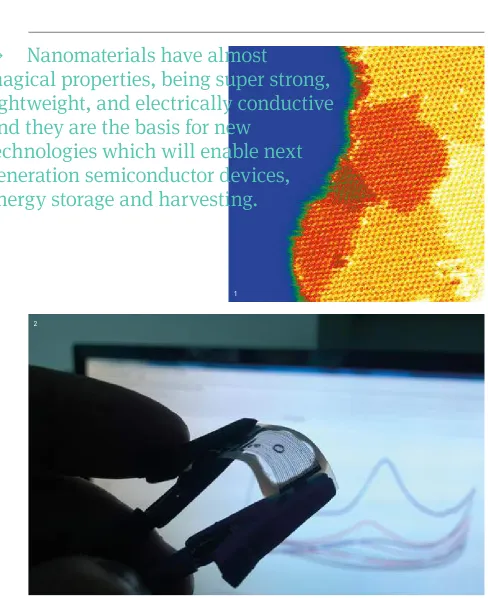
Along with our collabora-tors in Trinity’s institute for nanotech-nology, CRANN and the Trinity Centre for Bioengineering we are developing a new medical device (SMARTSPLINT) that measures tooth grinding during sleep.
The SMARTSPLINT is used at home with grinding activity being fed back to the user on their phone. Detailed data is also relayed to the care provider who can cus-tomise treatment for the individual. In addition, we expect the availability of SMARTSPLINT will improve our under-standing of the aetiology and progress of bruxism.
Brian O’Connell received his degree in dentistry from UCC and his PhD from the University of Rochester, New York. He began postdoctoral work at the National Institutes of Health in Maryland, where he was chief of the Gene Regulation and Expression Unit, NIDCR. Brian joined Trinity College Dublin as Professor of Restorative Dentistry and is currently Dean of Dental Science and Director of Postgraduate Prosthodontics. He is a Diplomate of the American Board of Prosthodontics and a Fellow of the Royal College of Surgeons in Ireland. His research interest is in the oral health of older people and the use of sensor technology to monitor disease.
Contact: Brian.O’[email protected]
Oral Health, Ageing, and the Gnashing of Teeth — Brian O’Connell
03
≥
The SMARTSPLINT is used at home with grinding
activity being fed back to the user on their phone.
Detailed data is also relayed to the care provider
who can customise treatment for the individual.
Mixed event
19:48:58 19:49:13 19:49:15 19:49:53
Mixed event: Tonic 19:48:58 – 19:49:13 (15 s)
Phasic 19:49:15 – 19:49:53 (10 cycles, ~2s on, ~2s off)
Fig 1. SMARTPLINT which measures
tooth grinding at night. Fig 2.recorded by pressure sensor (upper trace) and Different types of tooth grinding events electromyography (lower trace)
Fig 2.
Seán O’Faoláin: Literature, Inheritance and the 1930s
Paul Delaney
Seán O’Faoláin (1900–1991) was a towering figure in twentieth-cen-tury Irish culture. A short-story writer of international repute, he was also a leading commentator and critic who played a prominent role in the fight against cen-sorship in Ireland. Most famously, he co-founded the dissident journal The Bell in 1940, serving as its first editor until 1946.
Central to O’Faoláin’s work is the idea that national identities are his-torically produced and culturally hybrid; equally important is the conviction that Irish history should be interpreted in the context of social and intellectual devel-opments across Europe. Such thinking disturbed the ethos of the newly-inde-pendent Irish state, which preferred to trace ideas of national identity back to a single, pure origin (rural, Gaelic, Catholic). Unsurprisingly, O’Faoláin proved a con-troversial figure in his own lifetime, and had two of his books banned for alleged indecency.
Re-evaluating O’Faoláin — In my book,
Seán O’Faoláin: Literature, Inheritance and the 1930s (Irish Academic Press 2014), I focus on the early stages of O’Faoláin’s long career and I place his work in rela-tion to Ireland’s colonial inheritance, its
recent revolutionary period, and the establishment of the Irish Free State. The 1930s were crucial for O’Faoláin’s emergence as a prose writer — during this decade he reflected on formative influences (imperialism, the Catholic Church, republicanism, the Gaelic League, bourgeois respectability), and published significant texts, including biographies of Daniel O’Connell, Constance Markievicz and Eamon de Valera.
My book builds on a recent renewal of interest in O’Faoláin and is the first full-length study of him to be published in over a decade. I show that O’Faoláin’s work is far less confident, or certain, than he himself intended or than is generally allowed. I also suggest that this uncertainty makes O’Faoláin�