Abstract— Customer perceptions of products continuously
change over time. Marketing specialists are generally tasked with the responsibility of rebranding and product changes. However this is normally technology driven, with inputs from engineering designers and manufacturers providing the designs and feasibilities for either modifying existing designs or developing new ones. An opportunity arose at a timber processing company where a variety of products such as domestic and commercial furniture are manufactured. This paper reports on the development of a framework for formulating new products using the wide array of hard and soft wood that the company processes. A work study was conducted, focusing on the company’s production capacity, sales history of their twenty-three products, market trends and interviews with current customers. The research set out to develop innovative and new product platforms (product families) that are unique and represent the company while satisfying customer needs and requirements. A stage-gate model of the New Product Development (NPD) framework was formulated. Coupled with Quality Function Deployment (QFD) and weighted objectives, the use of the stage-gate model was demonstrated in the development of a four wheeler coffee table into a prototype. Implementation of the stage-gate model and further research into the four-wheeler coffee table were recommended as well as other areas related to NPD.
Index Terms—New Product Development, Quality Function
Deployment, Stage-Gate Modelling.
I. INTRODUCTION
HE timber processing holding company is divided into four subsidiary business units that are all involved in processing timber to produce a wide variety of products. Due to the economic recession that most countries suffered
Manuscript received March 07, 2016; revised March 25, 2016.
Wilson R. Nyemba is a Lecturer in Engineering Design and Manufacture, currently on sabbatical from the University of Zimbabwe and pursuing doctoral studies in Modelling, Process Flow and Simulation of Engineering Design and Manufacture at the University of Johannesburg, Department of Mechanical Engineering Science, Faculty of Engineering and the Built Environment, Auckland Park 2006, Johannesburg, South Africa. (Phone: +263 772 345 441, e-mail: [email protected])
Tawanda Mushiri is a Lecturer in Machine Dynamics and Design at the University of Zimbabwe and a doctoral student in fuzzy logic systems in Engineering Management at the University of Johannesburg, Faculty of Engineering and the Built Environment, Auckland Park 2006, P.O Box 524, Johannesburg, South Africa. (email: [email protected])
Charles Mbohwa is a Full Professor of Sustainability Engineering and Engineering Management at the University of Johannesburg, Auckland Park Bunting Road Campus, P. O. Box 524, Auckland Park 2006, Department of Quality and Operations Management, Johannesburg, South Africa. (e-mail: [email protected])
Kuda J. Shoniwa is a Contracts Manager with Tronox Mineral Sands, Sandton, Johannesburg, South Africa (e-mail: [email protected])
around 2008 [1], the company had been undergoing some form of rehabilitation in order to bring it back on track and be competitive. Most companies in Zimbabwe at that time were affected by the global recession with some being liquidated. Those that were fortunate enough to escape the crisis still faced the challenges brought on by global competition. Although the government of Zimbabwe at the time put measures in place to protect local manufacturers, these were only useful for the local markets and yet better margins can be realized by exporting. A team of engineering academics from the University of Zimbabwe set out to assist and rehabilitate this holding company by setting up operating systems, reorganizing plant layouts and process flows as well as assisting the company in modern methods of manufacture as part of research at minimal or no cost to the company but with the ultimate objective of improving efficiency and productivity to enhance profitability. One of the tasks that the team embarked on was to look at the company’s product portfolio and then set out to introduce new techniques that would see the company rapidly introducing new products or modifying existing ones. The four subsidiaries are involved in the manufacture of a variety of furniture with each one specializing in a particular range of products to complement and not compete with the others. The division where this research was carried out, specialized in the manufacture of children's furniture (nursery), leisure and occasional furniture, dining room suites and coffins. The company however faced stiff competition from other local manufacturers, let alone the ability to export and compete globally, hence the need to come up with new strategies and engineering techniques to enable the company to rapidly prototype and produce attractive and competitive products that could possibly be considered for export. The unit is run by a production manager while the rest of the plant has skilled and semi-skilled craftsmen from machinists to carvers and fitters.
From a socio-economic point of view, a new product is one, which greatly increases customer satisfaction and has no significant substitute. New Product Development (NPD) refers to the overall process of strategy, organization, concept generation, product and marketing plan creation, evaluation, and commercialization in the process of developing it. This may involve original products, product improvements, product modifications or new brands. To be competitive on the global market, companies need to develop new technology and launch new products in the market [2]. From a business viewpoint, careful technology and product planning have been considered a continuing challenge in building profitable businesses. An NPD
A New Product Development Framework for a
Timber Processing Company
Wilson R. Nyemba, Tawanda Mushiri Member, IAENG, Charles Mbohwa, and Kuda J. Shoniwa
framework is thus a disciplined and defined set of tasks and steps, which describe the normal means by which a company repetitively converts embryonic ideas into saleable products [2]. This research aimed at establishing a basis for NPD at the subsidiary company with the objectives to:
• Establish engineering strategies that guide product innovation programs at the company,
• Find ways that the company may organize for NPD, • Identify the major sources of new product ideas, • Market planning to commercialize new products, • Establish the position of each of the company's products on the product life cycle.
• Demonstrate the use of QFD in NPD.
Following the recession, the company had limited success with new products on the Zimbabwean market due to the non-existence of a formal NPD process. Little or no investment had been made for research and development or new product development other than brand modifications or extensions. Considering the strong competition and the state of the Zimbabwean political and economic scenarios, the company’s offerings were facing shortened life spans and ought to be replaced by newer products. The risks of innovation are as great as the rewards since new products can fail, thus the need for a formal and robust NPD framework which is technology driven [2]. The key to successful innovation lies in developing better organizational arrangements for handling new product ideas and developing sound research and decision procedures at each stage of a defined NPD model. This research therefore focused on developing a framework that encompasses all the processes and strategies necessary for successfully developing new products to satisfy the customer as well as bring in profits, growth and prosperity to the company.
II. BACKGROUND AND LITERATURE REVIEW
A. New Product Development
Organisations are increasingly recognizing the necessity and advantages of developing new products and services. However new products can fail and companies have to develop sound organizational procedures in an NPD process. The NPD process consists of several stages such as; idea generation, idea screening, concept development and testing, marketing strategy development, business analysis, product development, market testing and commercialization. The purpose of each stage is to decide whether the idea should be further developed or dropped. Customers usually specify requirements and preferences for a product which can be further broken down into market segments and then grouped into homogenous preferences [3]. Segmentation of the product market is necessary in order to achieve better value settings of engineering characteristics for new products. One of the requirements set by the company at the onset of the research was to minimize the chances of poor ideas moving forward while good ideas were being rejected.
Each commercialized product exhibits a life cycle marked by a changing set of problems and opportunities. Integrating life cycle assessment, which considers the product's whole
life cycle, will also be useful for assessing the environmental impact of products and processes [4]. The sales history of a typical product follows a dome shaped curve (mirrored S-shaped curve) made up of five stages as illustrated in Fig. 1.
Maturity
Introduction
Growth Decline
Introduce New Product
Time
Sa
le
s
V
o
lu
m
[image:2.595.309.549.108.223.2]e
Fig. 1. Sales History of Typical Products
Slow growth and minimal profits mark the introduction stage as the product is being pushed into distribution. If successful, the product enters a growth stage marked by rapid sales growth and increasing profits. During this stage the company attempts to improve the product, enter new market segments and distribution channels, and may reduce its prices slightly. This is followed by a maturity stage in which sales growth slows down and profits stabilize, the duration of which is dependent on the product and market. Finally the product enters a decline stage in which sales and profits deteriorate and it is the time to start thinking of introducing a new product. The company’s task during this stage is to identify the declining product and decide whether to maintain, harvest, or drop it. The product can also be sold to another firm or liquidated for salvage value [5].
B. Quality Function Deployment
A comprehensive method for matching customer requirements to engineering characteristics is the quality function deployment method (QFD). In engineering design methods for new product development, QFD is an important methodological approach to increase customer satisfaction and reduce the product costs and development cycle time. According to the House of Quality (HoQ) chart, the most recognized and widely used form of QFD is the voice of the customer which can be translated into engineering characteristics [3], [6]. The technique is one of those modern tools that has been successfully employed in industries around the world for various product development activities [7]. QFD was originally developed at Mitsubishi’s Kobe shipyards in 1972. In Japanese, QFD means strategic arrangement (deployment) throughout all aspects of a product (functions) of appropriate characteristics (qualities) according to customer demands [11]. QFD was subsequently introduced to the USA at a motor vehicle manufacturing company and has been successfully applied at other companies since then [11].
means taking care to identify who the customers are, to listen carefully to what they specify, and to determine the product’s engineering characteristics to enable the smooth development and design and ultimately selling of the product [7], [8]. Companies can speed up the effect of new products on corporate growth and profits by managing the way they develop products better. The art and science of NPD has advanced enormously in recent years and is providing the foundation for positive re-engineering of this critical function within a wide range of companies. The leading-edge concepts and techniques of NPD can be summarized as follows:
• Focusing on the ‘fuzzy front end’ of NPD by bringing order and efficiency to a previously chaotic and meandering early part of the new product process [4].
• Paying close attention to both the voice of the customer and the voice of the user, and employing new techniques to capture their input at early stages of NPD [6].
• Use of multifunctional, empowered project teams to drive NPD in shortened time spans [9].
• Creating new product platforms (product families) rather than isolated efforts [3].
• Designing ‘stage-gate systems’ with flexibility to provide discipline to the overall NPD process [5].
• Implementing new product portfolio management so that resources are allocated effectively [8].
• Emphasizing speed with ‘time to profit’ rather than ‘time to market’ [8].
In QFD, engineering characteristics and design requirements affecting the product performance are identified in order to improve the product performance and optimization to customer specifications and needs [10]. In recent years, the concept and technique of QFD has been used in conjunction with fuzzy approaches in new product development and design by incorporating failure modes and effects analysis into the QFD processes [12]. The use of fuzzy cognitive network process and aggregative grading clustering as applied by Reference [13] enabled rating flexibility for the expert judgment to handle uncertainty in new product development. This has assisted engineering designers and product development specialists to cope with the sometimes vague nature of the product development process. Today’s product marketplace is full of innovative product offerings owing to dynamically changing customer desires and rapid changes and advances in technology and manufacturing systems [14]. This presents challenges but also opportunities for designers and developers of products to keep abreast of these advances to remain competitive. A HoQ was proposed to critically analyse factors involved in QFD in the development and planning for new products to reflect the knowledge and differences among various customers regarding their requirements [15]. However this was limited to non-homogeneous assessments of the evaluation of requirements whereas it is vital to seek opinions from different market segments in the new product development cycle. QFD is also a critical and effective engineering design tool to integrate ergonomics needs and comfort when designing products that are used by people in everyday life such as furniture as this also has the
capabilities of translating customer specifications into engineering characteristics [3], [16]. Quite often engineering designers develop their products paying little or no attention to the environment, yet the production of the eventual product may have a negative impact on the same, hence the need to integrate life cycle analysis into green design during the product development and design process [17]. The theory of inventive problem solving technique (TRIZ) was successfully applied in conjunction with QFD to develop an improved Grey Quality Function Deployment (GQFD) which can assist new product designers and developers to identify important engineering characteristics during the product development stage [18]. Some of the principles and techniques outlined in this literature review were applied in this research at the timber processing company in the development of the four wheeler coffee table.
III. CASE STUDY OF THE TIMBER PROCESSING COMPANY The holding company employs about 50 staff mainly artisans with the General Manager at the helm and the Production Manager responsible for all new product development decisions. Their major source of new product designs and ideas are magazines and in some cases, interaction with customers. The subsidiary case study company uses pine or hardwood such as teak and manufactures to order, over 20 different products but these are not branded. There was minimal or no quality control but products merely checked by warehouse/dispatch clerk. The costing of products had not been consistent, in some cases leading to higher or lower prices compared with competitors. These were some of the challenges observed at the onset of the research, as such consideration of these factors had to be taken into account during the execution of the project. The sales history of the company, the trends drawn from records, interactions with staff and customers over a period of a year, in 2012 was analyzed, from which it was evident that some of the products were in high demand and sales growing (G), some with stagnant sales as these had reached their maturity (M) stage while the rest recorded decline (D) in sales.
TABLEI
ANALYSIS OF THE COMPANY’S PRODUCTS
Product Sale Per
Month/$
Quantity Sold/Month
Deemed PLC Stage
Baby Cot C4 113594.33 40 G
Baby Cot C3 43436.32 19 D
Baby Cot C1 44564.91 22 G
Juvenile Bed 31301.50 12 M
Bunk Bed 51085.60 19 G
Baby Tender 111010.18 32 G
Baby Chair 18425.81 14 M
Chest of Drawers (6) 44044.20 6 M
Chest of Drawers (4) 31572.65 14 M
D/D B/R Cabinets 19816.09 12 M
S/D B/R Cabinets 12569.63 13 M
Flat Lid Coffin 100706.50 77 M
Open Face Coffin 62025.27 42 M
3 Tier Coffin 41607.82 21 M
2 Tier Coffin 53526.23 34 G
Casket Coffin 83668.73 5 M
Jewish Coffin 4233.22 4 M
V/Yard D/Room Suite 20797.13 1 D
Headboard 29674.71 5 M
L/Door Wardrobe 10266.73 2 D
Kist 4863.50 1 D
Swinging Crib 6124.37 5 D
Table I shows the summary of the company’s products and what the researchers deemed to be the Product Life Cycle (PLC) stage, derived from the sales trends and records part of which are shown in Fig. 2 for 6 of their most popular products over a period of a year in 2012.
Fig. 2. Sales Trends for the Company’s Popular Products
During the execution of the research, visits were made to a number retailers where the company’s products are marketed and sold and the following was revealed.
• Level of stocks in shops too high.
• Normal and average daily turnover less than $1 000. • Majority of shops selling on cash basis only. • Beds are the fastest selling type of furniture.
• The ordinary person now prefers to buy cheap furniture • There has been a general increase in suppliers.
• The range of designs available to the retailer is very broad but less appealing and not very aesthetic.
• Swinging cribs and playpens are now a luxury. IV. THE PROPOSED STAGE-GATE MODEL
The foregoing analysis indicated that the company had potential but was experiencing a decline in sales volumes. The ability to grow into a leading furniture manufacturing company was there considering the large variety of products and services its units can offer, hence the need for new strategies to win the market share. Formalizing the NPD process was critical in that it reduced the risks associated with commercializing new products generated from poor ideas. Having a formal process on paper was not good enough but the process had to be fully operationalized i.e. functional. The thrust in coming up with the NPD framework for the company was to develop innovative new product platforms (product families) that were unique and represented the company while satisfying customer needs and requirements. Considering the low success rate of the company’s ‘new’ products it was essential to come up with new product families that would have a competitive edge over other companies’ offerings. There was also a need to create products that customers can identify with the company. Identification did not have to be necessarily from branding but from the style, design, quality etc. Producing a family of products leads to continuous improvement while reducing the risks associated with coming up with a single product. This strategy had to be known and understood
company wide, from the general hand to top management. As new product development was the preserve of the Production Manager, it became necessary and critical to integrate the process with the rest of the staff for the success of launching new products. Creation of an empowered NPD committee could alleviate this problem. This committee would also be responsible for assessing the company’s current offerings and trimming any excess products. The search for line extensions and improvement of current product lines could also be a priority for this group.
Fig. 3 shows the proposed procedure that the company must go through when introducing new products. The committee must successfully complete a prescribed set of tasks (in a set time) in each stage before proceeding to the next one. Gates are there to make the following decisions; develop, drop, hold or recycle. The committee needs to agree on a decision after each stage although the production manager has the final say. Use of the proposed NPD model requires training of all employees of the company for a buy-in, otherwise lack of interest and moral can sabotage the success of implementing the stage-gate model. The committee must also focus on continuously improving the model so that developments can be made faster. Activities at each stage of the NPD process are carried out in parallel and not in sequence. This helps in integrating the committee and with time every member should be able to carry out any activity. The company should not drop projects no matter what stage the development process is. This helps in avoiding costs associated with developing a weak product.
IDEA GENERATION
COMMERCIA-LISATION GATE
1
GATE 2
GATE 4 GATE
3
GATE 7 GATE
6
GATE 5 ide a
s creening
concept deve lopment
product de ve lopment
market tes ting
business analys is marketing
strategy
[image:4.595.307.547.422.567.2]product life cycle concept
Fig. 3. Proposed NPD Stage-Gate Model for the Company
TABLEII
SPECIFICATIONS FOR WHEELER COFFEE TABLE EXTRACTED FROM HOQ
Technical Specs
Customer
Requirements Im
p
or
ta
n
ce
S
u
rf
a
ce
F
in
is
h
(0
,1
µ
m
)
M
in
S
ta
ti
c
L
oa
d
(7
0
0
N
)
F
or
ce
t
o
P
u
sh
(
5
N
)
C
le
a
n
in
g
S
te
p
s
(2
)
M
a
x
W
ei
g
h
t
(2
5
k
g
)
M
a
x
D
im
en
si
on
s
(1
0
0
0
x
1
0
0
0
x
5
0
0
)m
m
Q
u
a
li
ty
S
et
Easy to Use 5 ● □ □
Easy to Clean 3 ● ● □ ●
Easy to Polish 3 ● □ □ ●
Safety 5 □ □ ● □ □ ●
Moisture Free 5 ● □ ●
Aesthetic 5 ● □ ●
Light Weight 2 ● ● □
Long Lifespan 5 □ □ □ ●
Durable 5 ● ● □ □ □ □ ●
Fits in Lounge 5 ● ●
Key: 1 – Low, 5 – High ● – Strong □ – Medium - Weak
QFD was used to come up with a prototype of the four wheeler coffee table shown in Fig. 4. Complementary tools such as the morphological charts, value engineering and weighted objectives were also used in conjunction with QFD to design and develop the coffee table. An in-house testing and evaluation to see how the requirements were met and compared to the old product, was carried and also entered in the HoQ. The part deployment matrix to determine the minimal number of components, the process planning matrix for identifying process parameters critical to achieving the desired values and the production planning matrix that converted the process parameters to manufacturing instructions for the operators were developed and formed the basis for producing the coffee table in-house.
Fig. 4. The Four Wheeler Coffee Table
A number of machines and operations were used to produce the four wheeler coffee table as follows; cutting the circular top (1) using a band saw, creating the mortises on (1) for fitting legs (2) using a router and similarly for the leg supports (3) which are machined with tenons at their ends are then glued together with the legs and the joint brackets (4) screwed on across. The wheels were screwed on the legs and the combined support glued and screwed to the table top using additional top brackets.
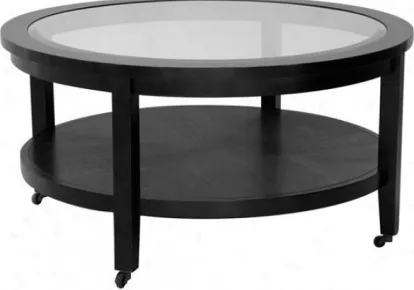
[image:5.595.317.524.241.386.2]This prototype was further developed using the proposed stage-gate model in its simple form and was produced and recommended for further development to reduce the cost. Although the cost and price for the new coffee table was higher than the original coffee table, it proved quite popular with some of the company’s regular customers, evidenced by the rise in sales volumes in the first 6 months, a definite growth trend. A family of such products can be generated from this prototype to cater for all classes of income earners. For further strength, durability and support, the design was slightly modified to include an additional circular plate at the bottom, similar to the top plate while the top plate was opened up for a glass for a better outlook and aesthetics as shown in Fig. 5.
Fig. 5. Proposed Image of the Final Wheeler Coffee Table
The additional plate not only strengthened the coffee table but can also be used as additional space on the table. Table III shows the complete parts list for the four wheeler coffee table including the additional materials incorporated after further development.
TABLEIII
PARTS LIST FOR THE FOUR WHEELER COFFEE TABLE
VI. DISCUSSION AND RECOMMENDATIONS
The designed stage-gate model for the NPD process involves the following nine stages; idea generation, idea screening, concept development (technical), marketing strategy, business analysis, product development, market testing, commercialization and product life cycle concept where each stage is preceded by a gate with committee members as the gate keepers and the Production Manager having the overall say. The rigidity of the model is there to avoid errors in the product development process.
[image:5.595.46.292.474.641.2]developing product families of children’s furniture. The results and benefits of NPD cannot be realized in a short space of time but with time and experience some of steps in the stage-gate model can be skipped or combined, hence speeding up the NPD process. At the end of the developed NPD stage-gate model, the company must consider the product life cycle by recording sales history and trends to determine when to move on to a new idea or rebranding and making appropriate and strategic decisions at each stage. From the available sales history it was evident that they needed to phase out some of the products such as playpens and swinging cribs which were clearly in the decline stage of their life cycle while focusing on modifications of their current products in children’s furniture and create product families for each product just like the cot bed range.
The QFD which was employed in the development of the four wheeler coffee table can be effective if implemented in an environment where every effort is geared towards total quality improvement. It is an effective tool in capturing and displaying data and serves as a communication vehicle for generating structured discussions in order to meet customer requirements. The active presence of a quality improvement system creates a high level of experience in working with multi-functional teams and establishes a problem solving environment. There may be a need to put more resources into the training of those involved in product development on how QFD works. The rigidity of the proposed NPD stage-gate model is meant to take care of all possible mistakes along the development of a new product considering that this concept was new to the company.
VII. CONCLUSIONS
An NPD strategy that focuses on developing unique product families was proposed. Customers were identified as the major source for new ideas which were extracted by way of focus groups, customer surveys, inquiries and complaints. A stage-gate model for the NPD process was designed with nine stages and seven gates. The sales history of the company’s over 20 products indicated that the majority are in the maturity stage of the product life cycle. A four wheeler coffee table was developed into a prototype using the QFD method and the proposed stage-gate model. The company adopted the strategy and has since developed other products. The model proved to be quite useful in that the company can now rapidly modify existing products or develop new ones, thus maintaining a competitive edge and reasonable share of the market. The suggested NPD committee, whose terms of reference are to develop new products as well as managing and rationalizing the existing ones, includes personnel from all departments, which invariably speeds the NPD process and makes the development of new products more efficient.
Implementing the findings and recommendations of this research and adopting the stage-gate model assisted the company to recover from the recession and has been growing steadily. This has undoubtedly positioned the company to be a market leader in the development of new, innovative and aesthetic products and manufacture of furniture in Zimbabwe. However, the development process
and manufacture of these products is still largely manual, thereby slowing the process resulting in costly products. Modern machinery that are computer numerically controlled will be useful to enhance time to market. Although this is capital intensive, it can be considered as an option especially from the financial returns as a result of the adopted model.
REFERENCES
[1] Bakrania, S. and B. Lucas (2009), “The Impact of the Financial Crisis on Conflict and State Fragility in Sub-Saharan Africa”, Governance and Social Development Resource Centre Issues Paper,
Available: http://www.gsdrc.org/go/emerging-issues#crisis, Accessed: 26 Feb 2016
[2] Jin, G., Jeong, Y. and Yoon B., (2015), “Technology-driven roadmaps for identifying new product/market opportunities: Use of text mining and quality function deployment”, Advanced Engineering Informatics, 29(2015), 126–138, Elsevier
[3] Luo, X. G., Kwong, C. K. and Tang, J. F., (2010), “Determining optimal levels of engineering characteristics in quality function deployment under multi-segment market”, Computers & Industrial Engineering, 59(2010), 126–135, Elsevier
[4] Younesi M. and Roghanian E., (2015), “A framework for sustainable product design: a hybrid fuzzy approach based on Quality Function Deployment for Environment”, Journal of Cleaner Production, 108(2015), 385 – 394, Elsevier
[5] de Souza, V. M. and Borsato, M., (2016), “Combining Stage-Gate™ model using Set-Based concurrent engineering and sustainable end-of-life principles in a product development assessment tool”, Journal of Cleaner Production, 112(2016), 3222 – 3231, Elsevier
[6] Zhang, F., Yang, M. and Liu, W., (2014), “Using integrated quality function deployment and theory of innovation problem solving approach for ergonomic product design”, Computers & Industrial Engineering, 76(2014), 60–74, Elsevier.
[7] Geuma, Y. J., Kwak, R. and Yongtae Park, Y. T., (2012), “Modularizing services: A modified HoQ approach”, Computers & Industrial Engineering, 62, 579–590, Elsevier.
[8] Cross N., (2008), “Engineering Design Methods: Strategies for Product Design, 4th Edition”, John Wiley & Sons, ISBN: 978-0-470-51926-4.
[9] Altun, K., von Zedtwitz, M. and Dereli, T., (2016), “Multi-issue negotiation in quality function deployment: Modified Even-Swaps in new product development”, Computers & Industrial Engineering, 92(2016), 31–49, Elsevier.
[10] Delice, E. K., and Güngör, Z., (2009), “A new mixed integer linear programming model for product development using quality function deployment”, Computers & Industrial Engineering, 57(2009), 906– 912, Elsevier.
[11] Prasad, B., (1998), “Review of QFD and related deployment techniques”, Journal of Manufacturing Systems, 17(3), 221–234, Elsevier.
[12] Chen, L. H. and Ko, W. C., (2009), “Fuzzy approaches to quality function deployment for new product design”, Fuzzy Sets and Systems, 160(2009), 2620–2639, Elsevier
[13] Yuen, K. K. F., (2014), “A hybrid fuzzy quality function deployment framework using cognitive network process and aggregative grading clustering: An application to cloud software product development”, Neuro-computing, 142(2014), 95–106, Elsevier.
[14] Wang, C. H. and Shih C. W., (2013), “Integrating conjoint analysis with quality function deployment to carry out customer-driven concept development for ultra-books”, Computer Standards & Interfaces, 36(2013), 89–96, Elsevier.
[15] Ko, W. C., (2015), “Construction of house of quality for new product planning: A 2-tuple fuzzy linguistic approach”, Computers in Industry, 73(2015), 117–127, Elsevier.
[16] Zadry, H. R., Rahmayanti, D., Susanti, L. and Fatrias, D., (2015), “Identification of design requirements for ergonomic long spinal board using quality function deployment (QFD)”, Procedia Manufacturing, 3(2015), 4673 – 4680, Elsevier.
[17] Wu, Y. H. and Ho, C. C., “Integration of green quality function deployment and fuzzy theory: a case study on green mobile phone design”, Journal of Cleaner Production, 108(2015), 271 – 280, Elsevier.