Proceedings of the 2019 Conference on Empirical Methods in Natural Language Processing and the 9th International Joint Conference on Natural Language Processing, pages 5508–5517,
5508
Specificity-Driven Cascading Approach for Unsupervised Sentiment
Modification
Pengcheng Yang1, Junyang Lin2, Jingjing Xu2, Jun Xie3, Xu Sun2, Qi Su2 1Deep Learning Lab, Beijing Institute of Big Data Research, Peking University
2MOE Key Lab of Computational Linguistics, School of EECS, Peking University
3Tencent, Beijing, China
{yang pc,linjunyang,jingjingxu,xusun,sukia}@pku.edu.cn [email protected]
Abstract
The task of unsupervised sentiment modifica-tion aims to reverse the sentiment polarity of the input text while preserving its semantic content without any parallel data. Most pre-vious work follows a two-step process. They first separate the content from the original sen-timent, and then directly generate text with the target sentiment only based on the content produced by the first step. However, the sec-ond step bears both the target sentiment addi-tion and content reconstrucaddi-tion, thus resulting in a lack of specific information like proper nouns in the generated text. To remedy this, we propose a specificity-driven cascading ap-proach in this work, which can effectively in-crease the specificity of the generated text and further improve content preservation. The ex-periments show that our approach outperforms competitive baselines by a large margin, which achieves 11% and 38% relative improvements of the overall metric on the Yelp and Amazon datasets, respectively.
1 Introduction
The goal of unsupervised sentiment modification is to reverse the sentiment polarity of the input text while preserving its semantic content with-out any parallel data. It not only has a variety of practical applications, e.g., fighting offensive lan-guage on social media (dos Santos et al., 2018), but also serves as an ideal testbed for controllable text generation. However, the input for this task usually contains some specific information like proper nouns. For instance, “Michael” in Table1
is a human name, which belongs to the specific in-formation. This specific information is important because it is often the subject or object of the sen-tence and the bearer of sentiment. Therefore, it needs to be fully preserved in the process of sen-timent modification. We refer this attribute as the specificity of the output.
Input Michael’s work exceeds my expectations.
Shen et al.(2017) Service is terrible.
Fu et al.(2018) I was very disappointed.
Xu et al.(2018) The girls do horrible work.
Table 1: Examples generated by four different previous methods. “Michael” is a proper noun, which belongs to specific information.
Most previous work on unsupervised sentiment modification follows a two-step process. They first separate the content from the original senti-ment, either in an implicit (Hu et al.,2017;Shen et al.,2017;Fu et al.,2018;Tsvetkov et al.,2018) or explicit (Xu et al., 2018;Zhang et al., 2018a) way. Then, they directly generate text with the target sentiment only based on the content pro-duced by the first step. In the second step, the de-coder does not include the sentiment information in its source input, meaning that the source infor-mation is incomplete for generating a sentiment-transferred sentence. Thisinformation gapat both ends of the decoder causes the decoder needs to bear both the target sentiment addition and content reconstruction. Thus, it is difficult for the decoder to balance sentiment transformation and content preservation simultaneously, resulting in the loss of specific information contained in the source in-put during decoding. This not only makes the gen-erated text lacks specificity, but also causes poor content preservation. Table1intuitively illustrates this problem. All three traditional methods miss proper noun “Michael” in the output.
via the self-attention mechanism. Then, different from previous work, we divide the process of gen-erating text with the target sentiment based on con-tent words into two steps. First of all, in order to achieve sentiment addition, the emotionaliza-tion module generates corresponding target sen-timent words based on the content words. Then, the fusion module performs content reconstruc-tion by fusing semantic content and target senti-ment words to generate sentisenti-ment-transferred sen-tences. Each step is dedicated to their respective goals, which reduces the burden of the decoder in the fusion module. Besides, with the help of the target sentiment words generated by the emotion-alization module, theinformation gapis also elim-inated. This allows specific information contained in the input to be well preserved, resulting in more specific output and better content preservation.
The main contributions of this paper are sum-marized as follows:
• We propose an effective specificity-driven cascading approach for unsupervised senti-ment modification, which not only increases the specificity of the generated text, but also further improves content preservation.
• Experimental results show that our approach can outperform the competitive baselines by a large margin. Further analysis demonstrates that the proposed method can achieve bet-ter reconcile of sentiment transformation and content preservation.
2 Background
Here we introduce some necessary background knowledge. The core component of our proposed approach is the Seq2Seq model (Sutskever et al.,
2014;Bahdanau et al.,2014), which usually con-sists of an encoder and a decoder with the attention mechanism.
Encoder: Given the input x = (x1,· · ·, xm), the encoder implemented as a bidirectional LSTM (Hochreiter and Schmidhuber,1997) struc-ture reads x from both directions and computes the hidden states for each word,
− →h
i =−−−−→LSTM(−→hi−1, xi) (1)
←h−
i =←−−−−LSTM(←−hi+1, xi) (2)
where e(xi) denotes the embedding of the word xi. The final hidden representation of the i-th
Module Source Target Role Input Output
SCφ x+/x− +/− Separate content and sentiment
S2Sθpe c+ s+ Generate positive sentiment words
S2Sθne c− s− Generate negative sentiment words
[image:2.595.354.528.349.466.2]S2Sθpf (c+,s+) x+ Generate positive sentence S2Sθnf (c−,s−) x− Generate negative sentence
Table 2: The role of each component of our approach at the training stage. We use “+” and “-” to represent positive and negative sentiment, respectively.
word is hi = [−→hi;←−hi], which semicolon repre-sents vector concatenation.
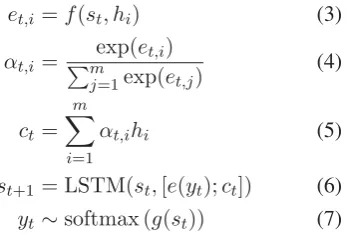
Decoder: Given the hidden representations (h1,· · · , hm), the decoder generates words sequentially. Besides, the attention mechanism is used to automatically select the most informative words at different time steps. In detail, the hidden state st+1 of the decoder at time-step t + 1 is computed as follows:
et,i =f(st, hi) (3)
αt,i = mexp(et,i)
j=1exp(et,j) (4)
ct=
m
i=1
αt,ihi (5)
st+1 = LSTM(st,[e(yt);ct]) (6) yt∼softmax (g(st)) (7)
where[e(yt);ct]means the concatenation of vec-torse(yt) and ct. e(yt) is the embedding of the wordytthat has the highest probability. f(st, hi) is an aligned model, which measures the depen-dency betweenstandhi.gis a function, which is used to transform the hidden statestinto the prob-ability distribution over the vocabulary space.
The model is trained by maximizing the con-ditional likelihood of the ground-truth sequence
y∗ = (y∗
1,· · · , yn∗). Specially, the objective is to
minimize the cross-entropy loss:
L=−n
t=1
log (p(y∗
t|y∗<t,x))1 (8)
3 Methodology
3.1 Overview
Here we define some notations and describe the sentiment modification task. We use D+ =
1
Input: Michael’s work
exceeds my expectations
Content: Michael’s work Separation
ܵܥథ
Positive Sentiment: exceeds my expectations
Output:
Michael’s work
exceeds my expectations
Negative Sentiment:
is really awful
Output:
Michael’s work is really awful Emotionalization
ܵʹܵఏ
ܵʹܵఏ
Fusion ܵʹܵఏ
[image:3.595.85.519.64.159.2]ܵʹܵఏ
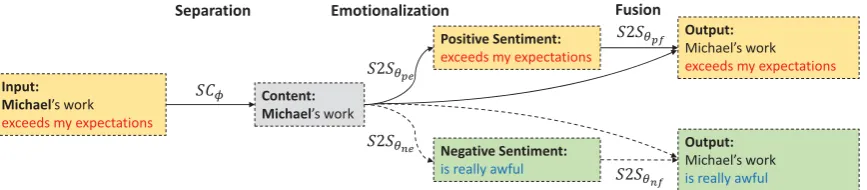
Figure 1: The overview of the proposed cascading approach with a positive input. The process with a negative input is in a similar way. Solid and dashed lines indicate the training process and the testing process, respectively.
x+
i
n1
i=1 and D− =
x−
i
n2
i=1 to represent the positive corpus and negative corpus, respectively, wherex+ (x−) is a positive (negative) sentence. D=D+∪ D−denotes the complete corpus. The
sentiment modification task aims to take the sen-tencex+(x−) as input and generate a sentiment-transferred sentencexˆ−(xˆ+) as output.
The overview of our approach is shown in Fig-ure 1. Our approach consists of three modules: separation module, emotionalization module, and fusion module. The separation module aims to ex-plicitly separate the sentiment words from content words and the emotionalization module receives content words as input to generate the correspond-ing sentiment words. Finally, the fusion module fuses the content and sentiment words to generate fluent sentences. Table2 summarizes the source input, target output, and function of each compo-nent at the training stage. Besides, the training al-gorithm and testing alal-gorithm are shown in Algo-rithm1and Algorithm2, respectively.
3.2 Separation Module
The separation module aims to explicitly separate the sentiment words from content words. Given a sentencex= (x1,· · ·, xm), the separation can be accomplished by identifying whether each word xi is a sentiment word. Here we employ a senti-ment classifier with the self-attention mechanism to achieve this goal. The classifier with the self-attention mechanism can select the most informa-tive words automatically by assigning higher at-tention weights to sentiment words. Therefore, the attention weightαiof thei-th word can be used to identify whetherxiis a sentiment word.
In detail, we use the bidirectional LSTM model for implementation. The LSTM model reads the input x from both directions and computes the hidden representationhi = [−→hi;←−hi]for the i-th word, where semicolon represents vector
concate-nation. The self-attention mechanism produces fi-nal context vectorhby aggregating the hidden rep-resentations(h1,· · · , hm). Specifically,
αi = softmax(vTh
i) (9)
h=
m
i=1
αihi (10)
where v is a parameter vector. At the training stage, we perform classification based on the final context vectorhand the loss function is the cross-entropy loss. Then, for the well-trained sentiment classifier, the average attention value of sentence
xis calculated as:
¯ α= 1
m
m
i=1
αi (11)
Words with attention weight larger thanα¯ can be regarded as sentiment words, and the remaining words can be regarded as content words.2 There-fore, each sentencexcan be separated into content wordscand sentiment wordss.3
3.3 Emotionalization Module
In previous work, there is an information gapat both ends of the decoder, making the decoder to bear both the target sentiment addition and con-tent reconstruction simultaneously. To eliminate the information gap and ease the burden of the decoder, we divide the process of generating sen-timent sentences based on content into two sep-arate steps: sentiment addition and content construction. Each step is dedicated to their re-spective goals, which reduces the burden of the
2The reason is that there exists an obvious gap between
the attention weights of content words and sentiment words, causing the weights of these two types of words to be dis-tributed at both ends of the average. Exploratory experiments show that the separation model can achieve more than 80%
F1score.
3Except for Section2, we usecandsto represent content
Algorithm 1The training algorithm.
Require: positive corpusD+=x+ini=11 ; negative corpus
D−=x− i
n2
i=1; complete corpusD=D+∪ D−
1: Separation:
2: Train the sentiment classifierSCφon corpusD 3: Separate positive sentence x+ in D+ into(c+,s+)
using SCφ to construct new positive corpus N+ =
(c+
i ,s+i,x+i )
n1 i=1
4: Separate negative sentencex−inD− into(c−,s−) using SCφ to construct new negative corpus N− =
(c−
i ,s−i ,x−i)
n2 i=1
5: Emotionalization:
6: TrainS2Sθpeusing MLE on new positive corpusN+
7: TrainS2Sθneusing MLE on new negative corpusN− 8: Fusion:
9: TrainS2Sθpf using MLE on new positive corpusN+
10: TrainS2Sθnfusing MLE on new negative corpusN−
decoder. Here the emotionalization module ex-plicitly performs sentiment addition by generating corresponding sentiment words based on content words.
In detail, through the separation module, the sentence x can be separated into (c,s), where
c and s represent the content words and senti-ment words, respectively. Therefore, the new cor-pusN+ =(c+i ,si+,x+i )ni=11 can be constructed by explicitly separating the positive sentencex+. Similarly,N− =(c−i ,si−,x−i )ni=12 can be con-structed by separating the negative sentencex−.
The emotionalization module aims to automati-cally generate corresponding sentiment words ac-cording to the content. Since corpusN+(orN−) provides pseudo-parallel data about content words
c+ (orc−) and sentiment wordss+ (ors−), here
we use the Seq2Seq model to accomplish this goal. We train a Seq2Seq modelS2Sθpe on the new pos-itive corpusN+, which is responsible for gener-ating positive sentiment words s+ based on the content c+. Another Seq2Seq model S2Sθne is trained on the new negative corpusN−to gener-ate negative sentiment wordss−based on content wordsc−. Therefore, for the well-trained model
S2Sθpe (orS2Sθne), given content wordsc,S2Sθpe
(orS2Sθne) is able to generate corresponding pos-itive (or negative) sentiment wordss+(ors−).
3.4 Fusion Module
The fusion module aims to perform content recon-struction by fusing content wordscand sentiment wordssto generate fluent emotional sentencex. Compared with the previous work, the decoder here has extra sentiment informations, thus elim-inating the information gap at both ends of the
Algorithm 2The testing algorithm. Require: positive source inputx+
1: Separatex+usingSCφto get content wordsc+
2: Generate the negative sentiment wordss−usingS2Sθne
with inputc+
3: Generate the negative sentencexˆ− usingS2Sθnf with
input(c+,s−)
decoder. This allows the specific information to be better preserved during the generation process, leading to more specific generation results and bet-ter content preservation.
Similar to the emotionalization module, the fu-sion module is also composed of two Seq2Seq models, one for generating positive sentences and the other for generating negative sentences. Here each Seq2Seq model consists of two encoders and one decoder. The two encoders are responsible for compressing the semantic content words and emo-tional words into a dense vector, respectively. The decoder aims to generate fluent emotional tence based on compressed content vector and sen-timent vector. In detail, we train two bi-encoder based Seq2Seq modelsS2Sθpf andS2Sθnf on the new positive corpusN+and negative corpusN−, respectively. Each model aims to outputxbased on the input(c,s). Note that the Seq2Seq model here has two encoders, so we need to make modi-fications to the relevant formulas. Two attention mechanisms similar to Eq. 3 - Eq. 5 aggregate the hidden representations of the content words
c and sentiment words s respectively to form the content-side contextcct and the sentiment-side contextcst. The hidden statest+1of the decoder at time-stept+ 1is computed as follows:
st+1= LSTM(st,[e(yt);cc
t;cst]) (12)
3.5 Training and Testing
At the training stage, each module is trained by op-timizing the cross-entropy loss function. The test-ing algorithm is shown in Algorithm2. Without loss of generality, we focus on reversing the posi-tive input to the negaposi-tive output. The process of re-versing negative sentence to positive sentence is in a similar way. Given a positive inputx+, the sepa-ration module can separatex+into content words
c+and sentiment wordss+. The modelS2S
θne in the emotionalization module takesc+ as input to generate corresponding negative sentiment words
Dataset Training Validation Test
[image:5.595.306.528.63.161.2]Yelp 580K 15K 4K Amazon 230K 10K 2K
Table 3: The statistics of two datasets.
S2Sθnf in the fusion module to generate a fluent negative sentencexˆ−.
4 Experiments
In this section, we first introduce the datasets, eval-uation metrics, experimental details, and all com-pared baselines.
4.1 Datasets
We conduct experiments on two datasets, Yelp4 and Amazon5 (He and McAuley, 2016). Both datasets are composed of a large number of re-views. Following previous work (Shen et al.,
2017), reviews with scores below 3 are labeled as negative, and reviews with scores above 3 are la-beled as positive. The reviews which exceed 20 words or less than 5 words are further filtered out. In addition, we train the sentiment classifier (Kim,
2014) to filter samples with the category confi-dence below 0.8. We divide each dataset into train-ing, validation and test sets. The statistics of the two processed datasets is shown in Table3.
4.2 Evaluation Metrics
In this paper, we adopt two evaluation methods: automatic evaluation and human evaluation.
4.2.1 Automatic Evaluation
Following previous work (Xu et al., 2018; Shen et al., 2017), we perform automatic evaluation in terms of sentiment transformation and content preservation.
• ACC: We pre-train a sentiment classifier, which is implemented as CNN (Kim,2014) structure, to evaluate whether the sentiment of the generated text matches the target sen-timent. The pre-trained sentiment classifier achieves the accuracy of 87% and 89% on Yelp and Amazon datasets, respectively. The higher ACC value indicates better sentiment transformation.
4https://www.yelp.com/dataset/
challenge 5
https://www.amazon.com/
Yelp Amazon
Module LSTMLayer HiddenSize LSTMLayer HiddenSize
SCφ 2 512 2 256
[image:5.595.97.265.66.98.2]S2Sθpe (2, 3) (256, 512) (2, 2) (256, 512) S2Sθne (2, 2) (256, 512) (1, 2) (128, 256) S2Sθpf (2, 3) (256, 512) (2, 2) (256, 512) S2Sθnf (2, 2) (256, 512) (1, 2) (128, 256)
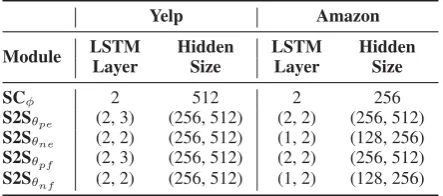
Table 4: Main hyper-parameters. For the LSTM layer and hidden size, we use (·,·)to represent the hyper-parameter of the encoder and decoder, respectively.
• BLEU: We use the BLEU score (Papineni et al.,2002) between the transferred sentence and the source sentence to evaluate content preservation. The higher BLEU score indi-cates better content preservation.
• G-Score:In order to evaluate the overall per-formance of different systems, followingXu et al.(2018), we compute the geometric mean (G-score) of ACC value and BLEU score as an overall evaluation metric.
4.2.2 Human Evaluation
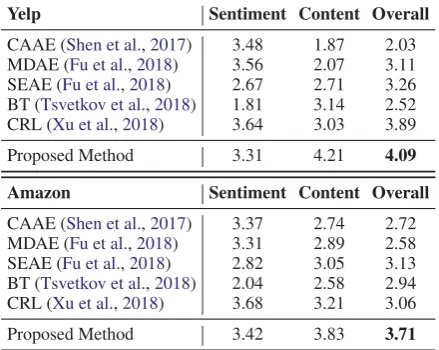
In order to evaluate the quality of generated sen-tences more accurately, we also perform human evaluation. Each item contains the source input, transfer direction, and the transferred sentences generated by different models. Then 200 items are distributed to 3 annotators with the linguis-tic background. The annotators are required to score the generated sentences from 1 to 5 based on the source input and transfer direction in terms of three criteria: sentiment, content, and overall performance. Sentiment represents whether the generated text matches the target sentiment. Con-tent evaluates the conCon-tent preservation degree. For each dataset and each metric, the average Pear-son correlation coefficient of the scores given by three annotators is greater than 0.65, which indi-cates that the human scores are highly consistent.
4.3 Baselines
We compare our proposed approach with the fol-lowing competitive systems:
• Cross-Aligned Auto-Encoder (CAAE) is
Yelp ACC BLEU G-Score
CAAE (Shen et al.,2017) 50.20 1.35 8.23 MDAE (Fu et al.,2018) 81.30 3.27 16.30 SEAE (Fu et al.,2018) 42.25 19.18 28.47 BT (Tsvetkov et al.,2018) 61.45 2.56 12.54 CRL (Xu et al.,2018) 73.70 35.62 51.24 Proposed Method 68.65 47.42 57.06
Amazon ACC BLEU G-Score
[image:6.595.71.292.63.239.2]CAAE (Shen et al.,2017) 51.75 2.17 10.60 MDAE (Fu et al.,2018) 67.85 4.54 17.55 SEAE (Fu et al.,2018) 47.50 28.79 36.98 BT (Tsvetkov et al.,2018) 53.75 3.73 14.16 CRL (Xu et al.,2018) 65.20 22.66 38.44 Proposed Method 56.30 49.83 52.97
Table 5: Automatic evaluations of our method and baselines, from which we can see that our approach achieves the best overall performance on both datasets.
• Multi-Decoder Auto-Encoder (MDAE) is
proposed byFu et al.(2018). They use a sep-arate decoder for each sentiment to generate transferred sentences based on the extracted content vectors.
• Style-Embedding Auto-Encoder (SEAE)is also proposed byFu et al.(2018). Each senti-ment has a unique embedding, which is used to control the sentiment transfer direction of the decoder.
• Back-Translation (BT) (Tsvetkov et al.,
2018) focuses on learning a latent representa-tion of the input by means of language trans-lation model and further perform generation.
• Cycled Reinforcement Learning (CRL)is proposed byXu et al.(2018). They use a cy-cled reinforcement learning model to explic-itly extract content to further generate trans-ferred sentences.
4.4 Experiment Settings
For both datasets, the vocabulary size is 30,000 and out-of-vocabulary words are replaced with unk. We train word2vec (Mikolov et al., 2013) on an English Wikipedia corpus dump to get 300-dimensional word embeddings. The batch size is 64 and the hyper-parameters of each module on two datasets are shown in Table4. For each mod-ule, we use the Adam (Kingma and Ba,2014) op-timizer and the initial learning rate is 0.0003. Be-sides, we make use of the dropout method ( Srivas-tava et al.,2014) to avoid over-fitting and clip the
Yelp Sentiment Content Overall
CAAE (Shen et al.,2017) 3.48 1.87 2.03 MDAE (Fu et al.,2018) 3.56 2.07 3.11 SEAE (Fu et al.,2018) 2.67 2.71 3.26 BT (Tsvetkov et al.,2018) 1.81 3.14 2.52 CRL (Xu et al.,2018) 3.64 3.03 3.89 Proposed Method 3.31 4.21 4.09
Amazon Sentiment Content Overall
CAAE (Shen et al.,2017) 3.37 2.74 2.72 MDAE (Fu et al.,2018) 3.31 2.89 2.58 SEAE (Fu et al.,2018) 2.82 3.05 3.13 BT (Tsvetkov et al.,2018) 2.04 2.58 2.94 CRL (Xu et al.,2018) 3.68 3.21 3.06 Proposed Method 3.42 3.83 3.71
Table 6: Human evaluations of different systems, showing that our approach outperforms the baselines by a large margin, especially in content preservation.
gradients (Pascanu et al., 2013) to the maximum norm of 10. During training, we train the model for a fixed number of epochs and monitor its per-formance on the validation set after 100 updates. Once the training is finished, we select the model with the best G-score on the validation set as our final model and evaluate its performance on the test set.
5 Results and Discussion
In this section, we report the experimental results. Besides, further analysis is also provided.
5.1 Experimental Results
The automatic evaluation results on two datasets are shown in Table5. Results show that our ap-proach achieves the best overall performance. For instance, our model achieves 11% and 38% rela-tive improvement of G-score over the best base-line on the two datasets, respectively. This shows that our approach can further reconcile sentiment transformation and content preservation. We also note that our method achieves particularly high BLEU scores, indicating that the proposed method can enhance the specificity of the generated text, leading to better content preservation.
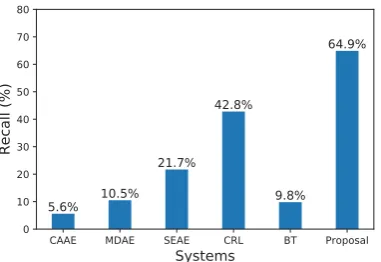
[image:6.595.307.527.64.239.2]sen-Figure 2: The recall scores of specific information (e.g. proper nouns) on different systems.
tences, which relieves the burden on the decoder. Therefore, more specific information is preserved.
5.2 Effectiveness of Enhancing Specificity
The analysis in Section5.1has shown that our ap-proach can achieve excellent content preservation, which shows that the proposed model can gener-ate text containing more specific information to some extent. To further verify this conclusion, we manually select test samples containing specific information (e.g. proper nouns) and then calcu-late the recall scores of this specific information on different systems. Figure2 shows the related results, from which we can see that our approach achieves the highest recall score. This further il-lustrates that our approach can effectively improve the specificity of the generated text.
5.3 Ablation Study
We conduct an ablation study to verify the ef-fectiveness of the emotionalization module. The results are shown in Table 7, illustrating that the removal of the emotionalization module leads to an obvious reduction in model performance. Compared to the ablated version, the full model achieves improvements of 11.14% and 9.87% G-score on two datasets, respectively. Besides, both sentiment transformation and content preserva-tion can be improved with the emopreserva-tionalizapreserva-tion module. The emotionalization module can auto-matically generate corresponding sentiment words based on the extracted content, which eliminates
information gapand relieves the burden of the de-coder, leading to better model performance.
5.4 Case Study
Table8shows several examples of the testing pro-cess for our approach, which intuitively reflects
Yelp ACC BLEU G-score
Full model 68.65 47.42 57.06 w/o EM 52.40 40.24 45.92
Amazon ACC BLEU G-score
[image:7.595.81.272.62.193.2]Full model 56.30 49.83 52.97 w/o EM 44.90 41.37 43.10
Table 7: Ablation study. “EM” denote the emotional-ization module.
Input:The worst and unprofessional company.
Separation:The worst and unprofessional company.
Emotionalization:Exceeded my expectations
Fusion:The company exceeded my expectations.
Input:Staff is awesome and always friendly.
Separation:Staff is awesome and always friendly.
Emotionalization:So rude unprofessional
Fusion:So rude and unprofessional staff.
Table 8: Outputs of different modules of our method. The underlined words are sentiment words recognized by separation module.
the function of each module. Given an input, the separation module can separate sentiment words from content words. For instance, the separa-tion module successfully identifies the sentiment words “worst and unprofessional” in the first ex-ample. Then, the emotionalization module is able to generate corresponding target sentiment expres-sion “exceeded my expectations” based on the given content words “the company”. Beyond that, the fusion module can fuse content words and tar-get sentiment expression to further generate a flu-ent sflu-entimflu-ent-transferred sflu-entence “the company exceeded my expectations”.
Table9presents several outputs of different sys-tems on the Yelp dataset. The baselines tend to generate outputs lacking specific information, re-sulting in poor content preservation. For instance, all baselines miss proper noun “wendys” in the first example. In contrast, our approach increases the specificity of the output, leading to better con-tent preservation. Our method not only performs sentiment addition and content reconstruction in-dependently, but also eliminates the information gap. This eases the burden of the decoder, allow-ing more specific information to be preserved.
5.5 Error Analysis
[image:7.595.309.528.62.150.2]Input:Wendysis my favorite chain, but this location is the worst.
CAAE:Great food and the best food!
MDAE:Best best i ever visit.
SEAE:This place had amazing stars!
CRL:Undoubtedly is my favorite chain.
Proposal:Wendysis my favorite chain, great location!
Input:Annettein optical was super helpful!
CAAE:I have been to say and i have n’t be them.
MDAE:Terrible here is not disappointed , it!
SEAE:Walked in the service was super well.
CRL: Horrible stylist bank was extremely unprofes-sional.
Proposal:Annettein optical was rude!
Table 9: Examples generated by different systems on the Yelp dataset. “Wendys” and “Annette” belong to the specific information contained in the input.
One type of error is the neutral output without any sentiment polarity, such as “I went to the bar on Friday”. This is because both datasets con-tain a large number of neutral reviews, which can be viewed as noises. Since these neutral reviews are also labeled as positive or negative, the separa-tion module may incorrectly identify some content words as sentiment words. Training samples lack-ing sentiment information make the emotionaliza-tion module unable to generate sentiment words, leading to the neutral output.
The other type of error is the output that con-tains the original sentiment, which can be at-tributed to the failure of the separation of content and sentiment. Such failure usually occurs when the input contains sentiment words that are un-seen in the training data, or the sentiment is im-plicitly expressed. The separation module may not recognize these unseen or obscure sentiment words, causing that the extracted content still con-tains original sentiment information. This content is further inputted to the emotionalization module, causing the output to contain original sentiment.
6 Related Work
This paper is mainly related to the following two series of work.
Unsupervised sentiment modification. One
line of research for this task focuses on implic-itly separating content from original sentiment. To control the sentiment, Hu et al.(2017) combines VAE and attribute discriminator whileShen et al.
(2017) strives to align latent representations in hidden layers. BothFu et al.(2018) andYang et al.
(2018) adopt adversarial training to ensure the
suc-cess of separation.Tsvetkov et al.(2018) strives to obtain style-independent content representations through additional translation models. However, this implicit separation tends to result in poor con-tent preservation since concon-tent and sentiment are entangled in an uninterpretable way. Different from this line of work, we adopt explicit separa-tion of content and sentiment via self-attensepara-tion, which achieves better content preservation. An-other line strives to explicitly separate content and sentiment at the word-level. Li et al.(2018) pro-poses a retrieval system, which may lead to low-quality outputs. Xu et al. (2018) presents a rein-forcement learning (RL) approach to remove sen-timent words. However, the training of RL is un-stable and sensitive to hyper-parameters. Further,
Zhang et al.(2018a) tries to automatically extracts appropriate sentiment information from learned sentiment memories. Different fromZhang et al.
(2018a) which extracts entangled sentiment mem-ories from capacity-constrained memory matrices, our work can generate accurate explicit sentiment words flexibly based on specific content, leading to better performance. There also exist some other endeavors which construct pseudo-parallel data by means of back-translation (Sennrich et al.,2015). For instance,Zhang et al.(2018b) and Luo et al.
(2019) jointly train two transfer systems via itera-tive back-translation. Further,Lample et al.(2019) extend this training framework to support multiple attribute control .
Sentiment analysis. Our work is also related to: sentiment analysis (Severyn and Moschitti,2015;
Cambria, 2016; Poria et al., 2017; Lam et al.,
2018), sentiment embeddings (Tang et al., 2014;
Barnes et al.,2018), and aspect extraction (Poria et al.,2016;He et al.,2017;Pablos et al.,2018).
7 Conclusion
References
Dzmitry Bahdanau, Kyunghyun Cho, and Yoshua Ben-gio. 2014. Neural machine translation by jointly learning to align and translate. arXiv preprint arXiv:1409.0473.
Jeremy Barnes, Roman Klinger, and Sabine Schulte im Walde. 2018. Bilingual sentiment embeddings: Joint projection of sentiment across languages. In
ACL, pages 2483–2493.
Erik Cambria. 2016. Affective computing and senti-ment analysis. IEEE Intelligent Systems, 31(2):102– 107.
Zhenxin Fu, Xiaoye Tan, Nanyun Peng, Dongyan Zhao, and Rui Yan. 2018. Style transfer in text: Ex-ploration and evaluation. InAAAI.
Ruidan He, Wee Sun Lee, Hwee Tou Ng, and Daniel Dahlmeier. 2017. An unsupervised neural attention model for aspect extraction. In ACL, pages 388– 397.
Ruining He and Julian McAuley. 2016. Ups and downs: Modeling the visual evolution of fashion trends with one-class collaborative filtering. In
WWW, pages 507–517.
Sepp Hochreiter and J¨urgen Schmidhuber. 1997. Long short-term memory. volume 9, pages 1735–1780. MIT Press.
Zhiting Hu, Zichao Yang, Xiaodan Liang, Ruslan Salakhutdinov, and Eric P. Xing. 2017. Toward con-trolled generation of text. In ICML, pages 1587– 1596.
Yoon Kim. 2014. Convolutional neural networks for sentence classification. In EMNLP, pages 1746– 1751.
Diederik P Kingma and Jimmy Ba. 2014. Adam: A method for stochastic optimization. arXiv preprint arXiv:1412.6980.
Wai Lam, Xin Li, Bei Shi, and Lidong Bing. 2018. Transformation networks for target-oriented senti-ment classification. InACL, pages 946–956.
Guillaume Lample, Sandeep Subramanian, Eric Smith, Ludovic Denoyer, Marc’Aurelio Ranzato, and Y-Lan Boureau. 2019. Multiple-attribute text rewrit-ing. InICLR.
Juncen Li, Robin Jia, He He, and Percy Liang. 2018. Delete, retrieve, generate: a simple approach to sen-timent and style transfer. In NAACL-HLT, pages 1865–1874.
Fuli Luo, Peng Li, Jie Zhou, Pengcheng Yang, Baobao Chang, Zhifang Sui, and Xu Sun. 2019. A dual rein-forcement learning framework for unsupervised text style transfer.arXiv preprint arXiv:1905.10060.
Tomas Mikolov, Ilya Sutskever, Kai Chen, Gregory S. Corrado, and Jeffrey Dean. 2013. Distributed repre-sentations of words and phrases and their composi-tionality. InNIPS, pages 3111–3119.
Aitor Garc´ıa Pablos, Montse Cuadros, and German Rigau. 2018. W2VLDA: almost unsupervised sys-tem for aspect based sentiment analysis. Expert Syst. Appl., 91:127–137.
Kishore Papineni, Salim Roukos, Todd Ward, and Wei-Jing Zhu. 2002. Bleu: a method for automatic eval-uation of machine translation. InACL, pages 311– 318.
Razvan Pascanu, Tomas Mikolov, and Yoshua Bengio. 2013. On the difficulty of training recurrent neural networks. InICML, pages 1310–1318.
Soujanya Poria, Erik Cambria, and Alexander F. Gel-bukh. 2016. Aspect extraction for opinion mining with a deep convolutional neural network. Knowl.-Based Syst., 108:42–49.
Soujanya Poria, Haiyun Peng, Amir Hussain, Newton Howard, and Erik Cambria. 2017. Ensemble appli-cation of convolutional neural networks and multiple kernel learning for multimodal sentiment analysis.
Neurocomputing, 261:217–230.
C´ıcero Nogueira dos Santos, Igor Melnyk, and Inkit Padhi. 2018. Fighting offensive language on social media with unsupervised text style transfer. InACL, pages 189–194.
Rico Sennrich, Barry Haddow, and Alexandra Birch. 2015. Improving neural machine translation models with monolingual data. arXiv preprint arXiv:1511.06709.
Aliaksei Severyn and Alessandro Moschitti. 2015. Twitter sentiment analysis with deep convolutional neural networks. InSIGIR, pages 959–962.
Tianxiao Shen, Tao Lei, Regina Barzilay, and Tommi S. Jaakkola. 2017. Style transfer from non-parallel text by cross-alignment. InNIPS, pages 6833–6844.
Nitish Srivastava, Geoffrey E. Hinton, Alex Krizhevsky, Ilya Sutskever, and Ruslan Salakhutdi-nov. 2014. Dropout: a simple way to prevent neural networks from overfitting. Journal of Machine Learning Research, 15(1):1929–1958.
Ilya Sutskever, Oriol Vinyals, and Quoc V. Le. 2014. Sequence to sequence learning with neural net-works. InNIPS, pages 3104–3112.
Duyu Tang, Furu Wei, Nan Yang, Ming Zhou, Ting Liu, and Bing Qin. 2014. Learning sentiment-specific word embedding for twitter sentiment clas-sification. InACL, pages 1555–1565.
Jingjing Xu, Xu Sun, Qi Zeng, Xuancheng Ren, Xi-aodong Zhang, Houfeng Wang, and Wenjie Li. 2018. Unpaired sentiment-to-sentiment translation: A cy-cled reinforcement learning approach. In ACL, pages 979–988.
Zichao Yang, Zhiting Hu, Chris Dyer, Eric P. Xing, and Taylor Berg-Kirkpatrick. 2018. Unsupervised text style transfer using language models as discrimina-tors. InNeurIPS, pages 7298–7309.
Yi Zhang, Jingjing Xu, Pengcheng Yang, and Xu Sun. 2018a. Learning sentiment memories for sentiment modification without parallel data. InProceedings of the 2018 Conference on Empirical Methods in Natural Language Processing, pages 1103–1108.