Semantic-Based Multilingual Document Clustering via Tensor Modeling
Salvatore Romeo, Andrea Tagarelli
DIMES, University of Calabria
Arcavacata di Rende, Italy
[email protected]
[email protected]
Dino Ienco
IRSTEA, UMR TETIS
Montpellier, France
LIRMM
Montpellier, France
[email protected]
Abstract
A major challenge in document clustering re-search arises from the growing amount of text data written in different languages. Previ-ous approaches depend on language-specific solutions (e.g., bilingual dictionaries, sequen-tial machine translation) to evaluate document similarities, and the required transformations may alter the original document semantics. To cope with this issue we propose a new docu-ment clustering approach for multilingual cor-pora that (i) exploits a large-scale multilingual knowledge base, (ii) takes advantage of the multi-topic nature of the text documents, and (iii) employs a tensor-based model to deal with high dimensionality and sparseness. Results have shown the significance of our approach and its better performance w.r.t. classic docu-ment clustering approaches, in both a balanced and an unbalanced corpus evaluation.
1 Introduction
Document clustering research was initially focused on the development of general purpose strategies to group unstructured text data. Recent studies have started de-veloping new methodologies and algorithms that take into account both linguistic and topical characteristics, where the former include the size of the text and the type of language, and the latter focus on the commu-nicative function and targets of the documents.
A major challenge in document clustering research arises from the growing amount of text data that are written in different languages, also due to the increased popularity of a number of tools for collaboratively edit-ing through contributors across the world.Multilingual document clustering(MDC) aims to detect clusters in a collection of texts written in different languages. This can aid a variety of applications in cross-lingual infor-mation retrieval, including statistical machine transla-tion and corpora alignment.
Existing approaches to MDC can be divided in two broad categories, depending on whether a parallel cor-pus rather than a comparable corcor-pus is used (Kumar et al., 2011c). Aparallel corpusis typically comprised of documents with their related translations (Kim et al., 2010). These translations are usually obtained
through machine translation techniques based on a se-lected anchor language. Conversely, acomparable cor-pusis a collection of multilingual documents written over the same set of classes (Ni et al., 2011; Yo-gatama and Tanaka-Ishii, 2009) without any restric-tion about translarestric-tion or perfect correspondence be-tween documents. To mine this kind of corpus, external knowledge is employed to map concepts or terms from a language to another (Kumar et al., 2011c; Kumar et al., 2011a), which enables the extraction of cross-lingual document correlations. In this case, a major issue lies in the definition of a cross-lingual similarity measure that can fit the extracted cross-lingual correla-tions. Also, from a semi-supervised perspective, other works attempt to define must-link constraints to de-tect cross-lingual clusters (Yogatama and Tanaka-Ishii, 2009). This implies that, for each different dataset, the set of constraints needs to be redefined; in general, the final results can be negatively affected by the quantity and the quality of involved constraints (Davidson et al., 2006).
To the best of our knowledge, existing clustering ap-proaches for comparable corpora are customized for a small set (two or three) of languages (Montalvo et al., 2007). Most of them are not generalizable to many languages as they employ bilingual dictionaries and the translation is performed sequentially considering only pairs of languages. Therefore, the order in which this process is done can seriously impact the results. Another common drawback concerns the way most of the recent approaches perform their analysis: the various languages are analyzed independently of each other (possibly by exploiting external knowledge like Wikipedia to enrich documents (Kumar et al., 2011c; Kumar et al., 2011a)), and then the language-specific results are merged. This two-step analysis however may fail in profitably exploiting cross-language infor-mation from the multilingual corpus.
Contributions. We address the problem of MDC by proposing a framework that features three key ele-ments, namely: (1) to model documents over a unified conceptual space, with the support of a large-scale tilingual knowledge base; (2) to decompose the mul-tilingual documents into topically-cohesive segments; and (3) to describe the multilingual corpus under a multi-dimensional data structure.
The first key element prevents loss of information due to the translation of documents from different lan-guages to a target one. It enables a conceptual represen-tation of the documents in a language-independent way preserving the content semantics. BabelNet (Navigli and Ponzetto, 2012a) is used as multilingual knowl-edge base. To the extent of our knowlknowl-edge, this is the first work in MDC that exploits BabelNet.
The second key element, document segmentation, enables us to simplify the document representation according to their multi-topic nature. Previous re-search has demonstrated that a segment-based ap-proach can significantly improve document clustering performance (Tagarelli and Karypis, 2013). More-over, the conceptual representation of the document segments enables the grouping of linguistically dif-ferent (portions of) documents into topically coherent clusters.
The latter aspect is leveraged by the third key ele-ment of our proposal, which relies on a tensor-based model (Kolda and Bader, 2009) to effectively handle the high dimensionality and sparseness in text. Ten-sors are considered as a multi-linear generalization of matrix factorizations, since all dimensions or modes are retained thanks to multi-linear structures which can produce meaningful components. The applicability of tensor analysis has recently attracted growing atten-tion in informaatten-tion retrieval and data mining, including document clustering (e.g., (Liu et al., 2011; Romeo et al., 2013)) and cross-lingual information retrieval (e.g., (Chew et al., 2007)).
The rest of the paper is organized as follows. Sec-tion 2 provides an overview of BabelNet and basic no-tions on tensors. We describe our proposal in Section 3. Data and experimental settings are described in Sec-tion 4, while results are presented in SecSec-tion 5. We summarize our main findings in Section 6, finally Sec-tion 7 concludes the paper.
2 Background
2.1 BabelNet
BabelNet (Navigli and Ponzetto, 2012a) is a multilin-gual semantic network obtained by linking Wikipedia with WordNet, that is, the largest multilingual Web en-cyclopedia and the most popular computational lex-icon. The linking of the two knowledge bases was performed through an automatic mapping of WordNet synsets and Wikipages, harvesting multilingual lexi-calization of the available concepts through human-generated translations provided by the Wikipedia inter-language links or through machine translation tech-niques. The result is an encyclopedic dictionary con-taining concepts and named entities lexicalized in 50 different languages.
Multilingual knowledge in BabelNet is represented as a labeled directed graph in which nodes are concepts or named entities and edges connect pairs of nodes through a semantic relation. Each edge is labeled with a
relation type (is-a, part-of, etc.), while each node corre-sponds to aBabelNet synset, i.e., a set of lexicalizations of a concept in different languages.
BabelNet can be accessed and easily integrated into applications by means of a Java API provided by the toolkit described in (Navigli and Ponzetto, 2012b). The toolkit also provides functionalities for graph-based WSD in a multilingual context. Given an in-put set of words, a semantic graph is built by looking for related synset paths and by merging all them in a unique graph. Once the semantic graph is built, the graph nodes can be scored with a variety of algorithms. Finally, this graph with scored nodes is used to rank the input word senses by a graph-based approach.
2.2 Tensor model representation
A tensor is a multi-dimensional array T ∈
<I1×I2×···×IM. The number of dimensions M, also known as ways or modes, is called order of the ten-sor, so that a tensor with order M is also said a M -way orM-order tensor. Ahigher-order tensor (i.e., a tensor with order three or higher) is denoted by bold-face calligraphic letters, e.g.,T; a matrix (2-way ten-sor) is denoted by boldface capital letters, e.g., U; a vector (1-way tensor) is denoted by boldface low-ercase letters, e.g., v. The generic entry (i1, i2, i3)
of a third-order tensor T is denoted by ti1i2i3, with i1∈[1..I1], i2∈[1..I2], i3∈[1..I3].
A one-dimensional fragment of tensor, defined by varying one index and keeping the others fixed, is a 1-way tensor called fiber. A third-order tensor has column, row and tube fibers. Analogously, a two-dimensional fragment of tensor, defined by varying two indices and keeping the rest fixed, is a 2-way tensor calledslice. A third-order tensor has horizontal, lateral and frontal slices.
The mode-m matricizationof a tensorT, denoted byT(m), is obtained by arranging the mode-mfibers
as columns of a matrix. A third-order tensor T ∈
<I1×I2×I3 is all-orthogonal if P
i1i2ti1i2αti1i2β = P
i1i3ti1αi3ti1βi3 = P
i2i3tαi2i3tβi2i3 = 0
when-everα 6= β. Themode-mproduct of a tensor T ∈
<I1×I2×···×IM with a matrixU∈ <J×Im, denoted by
T ×mU, is a tensor of dimension I1 ×. . . Im−1 ×
J ×Im+1× · · · ×IM and can be expressed in terms
of matrix product asY = T ×mU, whose mode-m
matricization isY(m)=UT(m).
3 Our Proposal
3.1 Multilingual Document Clustering framework
We are given a collection of multilingual documents
D=SLl=1Dl, where eachDl={dli}Nli=1represents a
Algorithm 1SeMDocT(Segment-basedMultiLingual Document Clustering viaTensor Modeling)
Input: A collection of multilingual documentsD, the num-berkof segment clusters, the number of tensorial com-ponentsr.
Output: A document clustering solutionCoverD. 1: Apply a text segmentation algorithm over each of the
documents inDto produce a collection of document
seg-mentsS. /* Section 3.1.1 */
2: RepresentSin either a words (BoW) or a bag-of-synsets (BoS) space. /* Section 3.1.2 */ 3: Apply any document clustering algorithm onSto obtain
a segment clusteringCS={Cs
i}ki=1./* Section 3.1.2 */ 4: RepresentCSin either a of-words (BoW) or a bag-of-synsets (BoS) space. /* Section 3.1.3 */ 5: ModelS as a third-order tensorT ∈ <I1×I2×I3, with
I1=|D|,I2=|F|, andI3=k. /* Section 3.1.4 */ 6: Decompose the tensor using a Truncated HOSVD.
/* Section 3.1.4 */
7: Apply a document clustering algorithm on the mode-1 factor matrix to obtain the final clusters of documents C={Ci}Ki=1. /* Section 3.1.5 */
unbalanced corpora. Therefore, no restriction is given on both the numberLof languages and the distribution of documents over the languages (i.e.,Ni QNj, with i, j= 1..L,i6=j).
Real-world documents often span multiple topics. We assume that each document inDis relatively long to be comprised of smaller textual units, orsegments, each of which can be considered cohesive w.r.t. a topic over the document. This represents a key aspect in our framework as it enables the use of atensor model
to conveniently address the multi-faceted nature of the documents.
Our overall framework, namedSeMDocT(Se
gment-based MultiLingual Document Clustering viaTensor Modeling), is shown in Algorithm 1. In the following, we shall describe in details each of the steps involved inSeMDocT.
3.1.1 Computing within-document segments Text segmentation is concerned with the fragmentation of an input text into multi-paragraph, contiguous and disjoint blocks that represent subtopics. Regardless of the presence of logical structure clues in the document, linguistic criteria (Beeferman et al., 1999) and statis-tical similarity measures (Hearst, 1997; Choi et al., 2001; Cristianini et al., 2001) have been mainly used to detect subtopic boundaries between segments. A com-mon assumption is that terms that discuss a subtopic tend to co-occur locally, and a switch to a new subtopic is detected by the ending of co-occurrence of a given set of terms and the beginning of the co-occurrence of another set of terms.
OurSeMDocTdoes not depend on a specific algo-rithmic choice to perform text segmentation; in this work, we refer to the classicTextTiling(Hearst, 1997), which is the exemplary similarity-block-based method for text segmentation.
3.1.2 Inducing document segment clusters The result of the previous step is a collection of
doc-ument segments, henceforth denoted asS. Each
seg-ment in S is represented as a vector of feature
oc-currences, where a feature can be eitherlexicalor se-mantic. This corresponds to two alternative represen-tation models: the standardbag-of-words(henceforth
BoW), whereby features correspond to lemmatized,
non-stopword terms, and the obtained feature space results from the union of the vocabularies of the dif-ferent languages; andbag-of-synsets(henceforthBoS), whereby features correspond to BabelNet synsets. We shall devote Section 3.2 to a detailed description of our proposed BoS representation.
The segment collectionSis given in input to a doc-ument clustering algorithm to produce a clustering of
the segments CS = {Cs
i}ki=1. The obtained clusters
of segments can be disjoint or overlapping. Again, our
SeMDocTis parametric to the clustering algorithm as well; here, we resort to a state-of-the-art clustering al-gorithm, namelyBisecting K-Means(Steinbach et al., 2000), which is widely known to produce high-quality (hard) clustering solutions in high-dimensional, large datasets (Zhao and Karypis, 2004). Note however that it requires as input the number of clusters. To cope with this issue, we adopt the method described in (Salvador and Chan, 2004), which explores how the within-cluster cohesion changes by varying the number of clusters. The number of clusters for which the slope of the plot changes drastically is chosen as a suitable value for the clustering algorithm.
3.1.3 Segment-cluster based representation Upon the segment clustering, each document is repre-sented by its segments assigned to possibly multiple segment clusters. Therefore, we derive a document-feature matrix for each of theksegment clusters. The features correspond either to the BoW or BoS model, according to the choice made for the segment represen-tation.
Let us denote withF the feature space for all
seg-ments in S. Given a segment cluster Cs, the
cor-responding document-feature matrix is constructed as
follows. The representation of each documentd∈ D
w.r.t. Csis a vector of length|F|that results from the sum of the feature vectors of thed’s segments belong-ing toCs. Moreover, in order to weight the appearance of a document in a cluster based on its segment-based portion covered in the cluster, the document vector ofd w.r.t. Csis finally obtained by multiplying the sum of the segment-vectors by a scalar representing the portion ofd’s features that appear in the segments belonging to Cs. The document-feature matrix ofCsresulting from the previous step is finally normalized by column.
3.1.4 Tensor model and decomposition
T
features (terms,synsets)
doc
um
e
[image:4.595.116.247.62.208.2]nts
Figure 1: The third-order tensor model for the repre-sentation of a multilingual document collection based on segment clusters.
Our third-order tensor model is built by arranging as frontal slices the k segment-cluster matrices. The resulting tensor will be of the form T ∈ <I1×I2×I3, withI1 = |D|,I2 =|F|, andI3 =k. The proposed
tensor model is sketched in Fig. 1.
The resulting tensor is decomposed through a Trun-cated Higher Order SVD (T-HOSVD) (Lathauwer et al., 2000) in order to obtain a low-dimensional rep-resentation of the segment-cluster-based reprep-resentation of the document collection. The T-HOSVD can be con-sidered as an extension of the Truncated Singular Value Decomposition (T-SVD) to the case of three or more dimensions. For a third-order tensorT ∈ <I1×I2×I3 the T-HOSVD is expressed as
T ≈X ×1U(1)×2U(2)×3U(3)
whereU(m)= [u(m)
1 u(2m). . .urm(m)]∈ <Im×rm (m=
1,2,3) are orthogonal matrices,rmIm, and the core tensorX ∈ <r1×r2×r3is an all-orthogonal and ordered tensor. T-HOSVD can be computed in two steps:
1. For m ∈ {1,2,3}, compute the unfolded
ma-trices T(m) from T and related standard SVD:
T(m) = U(m)S(m)V(m). The orthogonal matrix
U(m)contains the leading left singular vectors of
T(m).
2. Compute the core tensor X using the inversion
formula:X =T ×1U(1)T ×2U(2)T ×3U(3)T.
Note that, since T-HOSVD is computed by means of 3 standard matrix T-SVDs, its computational cost can be reduced by using fast and efficient SVD algorithms. Moreover, the ability of T-HOSVD in effectively cap-turing the variation in each of the modes independently from the other ones, is particularly important to alle-viate the problem of concentration of distances, thus making T-HOSVD well-suited to clustering purposes. In this work, in order to obtain a final clustering so-lution of the documents, we will consider the mode-1 factor matrixU(1)of the T-HOSVD.
3.1.5 Document clustering
The mode-1 factor matrix is provided in input to a clus-tering method to obtain a final organization of the doc-uments intoK clusters, i.e.,C = {Ci}Ki=1. Note that
there is no principled relation between the numberKof final document clusters andk. However,Kis expected to reflect the number of topics of interest for the docu-ment collection. Also, possibly but not necessarily, the same clustering algorithm used for the segment cluster-ing step (i.e., Bisectcluster-ing K-Means) can be employed for this step.
3.2 Bag-of-synset representation
In the BoS model, our objective is to represent the doc-ument segments in a conceptual feature space instead of the traditional term space. Since we deal with tilingual documents, this task clearly relies on the mul-tilingual lexical knowledge base functionalities of Ba-belNet. Conceptual features will hence correspond to BabelNet synsets.
The segment collection S is subject to a two-step
processing phase. In the first step, each segment is broken down into a set of lemmatized and POS-tagged sentences, in which each word is replaced with re-lated lemma and associated POS-tag. Let us denote withhw, P OS(w)i a lemma and associated POS-tag occurring in any sentencesenof the segment. In the second step, a WSD method is applied to each pair
hw, P OS(w)i to detect the most appropriate Babel-Net synsetσw for hw, P OS(w)icontextually to sen. The WSD algorithm is carried out in such a way that all words from all languages are disambiguated over the same concept inventory, producing a language-independent feature space for the whole multilingual
corpus. Each segment is finally modeled as a |BS|
-dimensional vector of BabelNet synset frequencies, be-ingBSthe set of retrieved BabelNet synsets.
As previously discussed in Section 2.1, BabelNet provides WSD algorithms for multilingual corpora. More specifically, the authors in (Navigli and Ponzetto, 2012b) suggest to use the Degree algorithm (Navigli and Lapata, 2010), as it showed to yield highly com-petitive performance in a multilingual context as well. Note that the Degree algorithm, given a semantic graph for the input context, simply selects the sense of the tar-get word with the highest vertex degree. Clearly, other graph-based methods for (unsupervised) WSD, partic-ularly PageRank-style methods (e.g., (Mihalcea et al., 2004; Agirre and Soroa, 2009; Yeh et al., 2009; Tsat-saronis et al., 2010)), can be plugged in to address the multilingual WSD task based on BabelNet. An investi-gation of the performance of existing WSD algorithms for a multilingual context is however out of the scope of this paper.
4 Evaluation Methodology
RCV2 Topics English French Italian
Balanced Corpus
C15 - PERFORMANCE 850 850 850
C18 - OWNERSHIP CHANGES 850 850 850
E11 - ECONOMIC PERFORMANCE 850 850 850
E12 - MONETARY/ECONOMIC 850 850 850
M11 - EQUITY MARKETS 850 850 850
M13 - MONEY MARKETS 850 850 850
Total 5 100 5 100 5 100
Unbalanced Corpus
C15 - PERFORMANCE 850 850 0
C18 - OWNERSHIP CHANGES 850 850 0
E11 - ECONOMIC PERFORMANCE 0 850 850
E12 - MONETARY/ECONOMIC 850 0 850
M11 - EQUITY MARKETS 0 850 850
M13 - MONEY MARKETS 850 0 850
[image:5.595.78.285.60.219.2]Total 3 400 3 400 3 400
Table 1: Number of documents for each topic and lan-guage.
Statistics Balanced Corpus Unbalanced Corpus
# of docs 15 300 10 200
# of terms 58 825 44 535
# of synsets 16 395 14 339
BoW Density 1.5E-3 2.0E-3
[image:5.595.313.519.61.125.2]BoS Density 2.6E-3 3.1E-3
Table 2: Main characteristics of the corpora.
topics. For this reason, we usedReuters Corpus Volume 2(RCV2), a multilingual corpus containing news arti-cles in thirteen language.1 In the following, we present the corpus characteristics and competing methods used in our analysis.
4.1 Data preparation
We consider a subset of the RCV2 corpus correspond-ing to three languages: English, French and Italian. It covers six different topics, i.e., different labels of the RCV2 TOPICS field. Topics are chosen accord-ing with their coverage in the different languages. The language-specific documents were lemmatized and POS-tagged through the Freeling library (Padr´o and Stanilovsky, 2012) in order to obtain a suitable rep-resentation for the WSD process.
To assess the robustness of our proposal, we de-sign two different scenarios. The first (Balanced Cor-pus) is characterized by a completely balanced dataset. Each language covers all topics and for each pair lan-guage/topic the same number of documents is selected.
The second scenario corresponds to an Unbalanced
Corpus. Starting from the balanced corpus, we re-moved for each topic all the documents belonging to one language. In this way, we obtained a corpus in which each topic is covered by only two of the three languages.
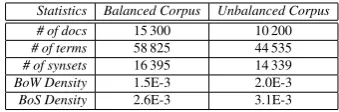
Main characteristics of both evaluation corpora are reported in Table 1 and Table 2. In the latter table, we report the number of documents, number of terms, number of synsets and the dataset density for both representations. To quantify the density of each
cor-1http://trec.nist.gov/data/reuters/reuters.html
RCV2 Topics English French Italian
C15 - PERFORMANCE 3.41 3.67 3.27
C18 - OWNERSHIP CHANGES 3.20 3.32 2.40
E11 - ECONOMIC PERFORMANCE 4.89 3.17 2.07
E12 - MONETARY/ECONOMIC 5.22 3.69 2.05
M11 - EQUITY MARKETS 4.29 2.94 2.15
[image:5.595.311.522.169.242.2]M13 - MONEY MARKETS 3.31 3.12 2.10
Table 3: Average number of document segments, for each topic and language.
English French Italian RCV2 avgBoS avgBoW avgBoS avgBoW avgBoS avgBoW Topics seg. leng. seg. leng. seg. leng. seg. leng. seg. leng. seg. leng. C15 21.76 36.32 11.54 34.92 10.58 37.75 C18 20.94 36.87 10.94 35.62 11.24 41.20 E11 22.90 37.24 11.47 34.73 11.96 38.60 E12 22.70 37.70 11.50 37.44 12.59 43.63 M11 22.04 36.83 10.91 32.76 11.57 42.39 M13 22.22 36.97 11.34 34.75 11.72 39.36
Table 4: Average length of document segment in the BoW and BoS spaces, for each topic and language.
pus/representation combination, we counted the non-zero entries of the induced document-synset matrix (al-ternatively, document-term matrix) and we divided this value by the size of such matrix. This number pro-vides an estimate about the density/sparseness of each dataset. Lower values indicate more sparse data. We can note that BoS model yields more dense datasets for bothBalanced CorpusandUnbalanced Corpus.
As our proposal explicitly models document seg-ments, we also report statistics, considering both topics and languages, related to the average number of seg-ments per document (Table 3), and the average length of segments per document (Table 4). The latter statistic is computed separately for BoW and BoS representa-tions. We made this distinction because a term cannot have a mapping to a synset, or it can be mapped to more than one synset in the BoS space during the WSD pro-cess (Section 3.2).
Looking at the average number of segments per doc-ument in Table 3, it can be noted that English docu-ments contain, for all topics, a larger number of seg-ments. This means that English documents are gener-ally richer than the ones in the other languages. Ital-ian language corresponds to the smallest documents, each of them containing between 2 and 3.2 segments on average. A sharper difference appears in the MONE-TARY/ECONOMICtopic for which English documents contain 5.2 segments, while the Italian ones are com-posed, on average, by only 2 segments.
[image:5.595.95.265.262.318.2]2012a), (Navigli and Ponzetto, 2012b). In particular, the WSD process tightly depends from the concept cov-erage supplied from the language-specific knowledge base.
4.2 Competing methods and settings
We compare our SeMDocT with two standard
ap-proaches, namelyBisecting K-Means(Steinbach et al., 2000), andLatent Semantic Analysis (LSA)-based doc-ument clustering (for short,LSA). Given a numberK of desired clusters,Bisecting K-Meansproduces aK -way clustering solution by performing a sequence of
K-1 repeated bisections based on standard K-Means
algorithm. This process continues until the numberK of clusters is found. LSAperforms a decomposition of the document collection matrix through Singular Value Decomposition in order to extract a more concise and descriptive representation of the documents. After this step,Bisecting K-Meansis applied over the new docu-ment space to get the final docudocu-ment clustering.
All the three methods, SeMDocT, Bisecting
K-MeansandLSAare coupled with either BoS or BoW representation models. The comparison between BoS and BoW representations allows us to evaluate the presumed benefits that can be derived by exploiting synsets instead of terms for the multilingual document clustering task.
BothSeMDocTandLSArequire the number of com-ponents as input; as concerns specifically SeMDocT, we variedr1(cf. Section 3.1.4) from 2 to 30, with
in-crements of 2. To determine the number of segment clustersk, we employed an automatic way as discussed in Section 3.1.2. By varyingkfrom 2 to 40, for Bal-anced Corpus and Unbalanced Corpus, respectively,
the values ofk obtained were 22 and 23 under BoS,
and 25 and 11 under BoW.
As concerns the step of text segmentation, TextTiling requires the setting of some interdependent parameters, particularly the size of the text unit to be compared and the number of words in a token sequence. We used the setting suggested in (Hearst, 1997) and also confirmed in (Tagarelli and Karypis, 2013), i.e., 10 for the text unit size and 20 for the token-sequence size.
4.3 Assessment criteria
Performance of the different methods are evaluated us-ing two standard clusterus-ing validation criteria, namely
F-MeasureandRand Index.
Given a document collectionD, letΓ = {Γj}Hj=1
and C = {Ci}Ki=1 denote a reference classification
and a clustering solution forD, respectively. The lo-cal precision and the lolo-cal relo-call of a clusterCi w.r.t. a classΓj are defined as Pij = |Ci ∩Γj|/|Ci| and Rij =|Ci∩Γj|/|Γj|, respectively. F-Measure (FM) is computed as follows (Steinbach et al., 2000):
F =
H
X
j=1
|Γj|
|D|maxi=1...K{Fij}
whereFij= 2PijRij/(Pij+Rij).
Rand Index (RI) (Rand, 1971) measures the percent-age of decisions that are correct, penalizing false pos-itive and false negative decisions during clustering. It takes into account the following quantities:TP, i.e., the number of pairs of documents that are in the same clus-ter inCand in the same class inΓ;TN, i.e., the number of pairs of documents that are in different clusters in
Cand in different classes inΓ;FN, i.e., the number of pairs of documents that are in different clusters inCand in the same class inΓ; andFP, i.e., the number of pairs of documents that are in the same cluster inC and in different classes inΓ. Rand Index is hence defined as:
RI= T P +T NT P++T NF P +F N
Note that for each method, results were averaged over 30 runs and the number of final document clusters K was set equal to the number of topics in the docu-ment collection (i.e., 6).
5 Results
We present here our main experimental results. We first provide a comparative evaluation of ourSeMDocTwith the competing methods, on both balanced and unbal-anced corpus evaluation cases. Then we provide a per language analysis focusing onSeMDocT.
5.1 Evaluation with competing methods
Evaluation on balanced corpus. Figure 2 shows FM and RI results obtained by the various methods coupled with the two document representations on theBalanced Corpus. Several remarks stand out. First, the BoS space positively influences the performance of all the employed approaches. This is particularly evident for
Bisecting K-MeansandLSAthat clearly benefit from this kind of representation. The former almost doubles its performance in terms of FM and significantly
im-proves its result w.r.t. RI. LSAshows improvements
in both cases. SeMDocT-BoS generally outperforms
all the competitors for both FM and RI when the num-ber of components is greater than 16. Note that, under
the BoW model,SeMDocT-BoW still outperforms the
other methods.
Evaluation on unbalanced corpus. Figure 3 reports results for theUnbalanced Corpus. Also in this eval-uation, the best performances for all the methods are
reached using the BoS representation. SeMDocT-BoS
shows similar behavior according to the two measures. It always outperforms the competitors considering a number of components greater than or equal to 12. More precisely,SeMDocT-BoW obtains a gain of 0.047 and 0.103 in terms of FM and 0.006 and 0.058 in terms of RI, w.r.t. LSA-BoW andBisecting K-Means
-BoW, respectively. Similarly, SeMDocT-BoS obtains
● ● ●
● ●
● ●
● ● ●
● ● ● ● ●
2 6 10 14 18 22 26 30
0.1 0.2 0.3 0.4 0.5 0.6
no. of components
F−measure
● SeMDocT−BoS
SeMDocT−BoW LSA−BoS
LSA−BoW BisKMeans−BoS BisKMeans−BoW
(a)
● ●
● ● ●
● ●
● ● ● ● ● ● ● ●
2 6 10 14 18 22 26 30
0.5 0.6 0.7 0.8
no. of components
Rand inde
x
● SeMDocT−BoS
SeMDocT−BoW LSA−BoS
LSA−BoW BisKMeans−BoS BisKMeans−BoW
[image:7.595.328.504.57.411.2](b)
Figure 2: Average F-Measure (a) and Rand Index (b)
on theBalanced Corpususing BoW and BoS document
representation and varying the number of components
for bothSeMDocTandLSA.
competitors, while in terms of RI the differences in per-formance are 0.012 and 0.019 forLSA-BoS and Bisect-ing K-Means-BoS, respectively.
5.2 Per language evaluation ofSeMDocT-BoS Starting from the clustering solutions produced by
SeMDocT-BoS in both balanced and unbalanced cases, for each language we extracted a language-specific pro-jection of the clustering. After that, we computed the clustering validation criteria according to language spe-cific solutions to quantify how well the clustering result fits each specific language. The results of this experi-ment are reported in Fig. 4 and Fig. 5.
On the Balanced Corpus, SeMDocT-BoS shows
comparable performance for English and French docu-ments, while it behaves slightly worse for Italian texts. This trend is highlighted for both clustering evaluation criteria. Inspecting the results for theUnbalanced Cor-pus, we observe a different trend. Results obtained for the English texts are generally better than the results for the French and Italian documents. For this bench-mark,SeMDocT-BoS obtains similar results for
docu-● ●
●
● ●
●
● ● ● ● ● ●
● ●
●
2 6 10 14 18 22 26 30
0.2 0.3 0.4 0.5 0.6
no. of components
F−measure
● SeMDocT−BoS
SeMDocT−BoW LSA−BoS
LSA−BoW BisKMeans−BoS BisKMeans−BoW
(a)
● ●
● ● ●
● ● ● ● ● ● ●
● ● ●
2 6 10 14 18 22 26 30
0.5 0.6 0.7 0.8
no. of components
Rand inde
x
● SeMDocT−BoS
SeMDocT−BoW LSA−BoS
LSA−BoW BisKMeans−BoS BisKMeans−BoW
[image:7.595.93.270.59.414.2](b)
Figure 3: Average F-Measure (a) and Rand Index (b)
on theUnbalanced Corpususing BoW and BoS
docu-ment representation and varying the number of
compo-nents for bothSeMDocTandLSA.
BoW BoS avg # synsets Dataset Language size size per term(β)
Balanced EnglishFrench 29 999 12 06517 826 5 310 0.40210.2978 Italian 16 951 4 471 0.2637
Unbalanced EnglishFrench 19 432 10 38714 439 4 431 0.53450.3068 Italian 14 743 4 012 0.2721
Table 5: Statistics by language.
ments written in French and in Italian.
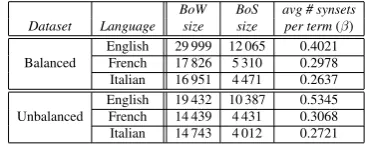
[image:7.595.323.506.485.559.2]discrep-● ●
●
● ● ●
● ● ● ●
● ● ●
●
●
2 6 10 14 18 22 26 30
0.4 0.5 0.6 0.7
no. of components
F−measure
● English
French
Italian
(a)
● ●
●
●
● ● ● ● ●
● ● ● ●
● ●
2 6 10 14 18 22 26 30
0.4 0.5 0.6 0.7 0.8
no. of components
Rand inde
x
● English
French
Italian
[image:8.595.328.504.58.413.2](b)
Figure 4: Average F-Measure (a) and Rand Index (b) for language specific solutions on theBalanced Corpus
obtained bySeMDocT-BoS.
ancy in (language-specific) performances in the two scenarios. In particular, the difference in theβ statis-tic between English and the other languages is more evident for theUnbalanced Corpus(i.e., 0.23 between English and French), while it is lower for theBalanced Corpus(around 0.1). The relatively large gap inβ be-tween the first and the second language (respectively,
English and French) for the Unbalanced Corpus
re-duces the relative gap between the second and the third languages (respectively, French and Italian) while this trend is less marked for theBalanced Corpusasβrange is narrower. In summary, we can state that our frame-work frame-works well if BabelNet knowledge base provides a good coverage of the terms in the analyzed language. Experimental evidence shows that, if this condition is met, SeMDocT-BoS provides better clustering results w.r.t. the competing approaches.
5.3 Runtime of tensor decomposition
As previously discussed, T-HOSVD of a third-order tensor can be computed through three standard SVDs. Furthermore, for clustering purposes, we considered only the mode-1 factor matrix of the decomposition.
● ●
● ●
● ● ●
● ● ●
●
● ● ●
●
2 6 10 14 18 22 26 30
0.4 0.5 0.6 0.7 0.8
no. of components
F−measure
● English
French
Italian
(a)
● ●
● ● ●
● ● ● ● ● ●
● ● ●
●
2 6 10 14 18 22 26 30
0.4 0.5 0.6 0.7 0.8
no. of components
Rand inde
x
● English
French
Italian
(b)
Figure 5: Average F-Measure (a) and Rand Index (b) for language specific solutions on theUnbalanced
Cor-pusobtained bySeMDocT-BoS.
To compute the SVD, we used thesvds()function of
MATLAB R2012b, which is based on an iterative algo-rithm.2 Experiments were carried out on an Intel Core I7-3610QM platform with 16GB DDR RAM.
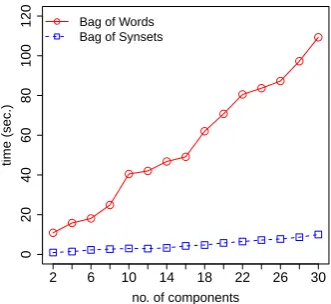
Figure 6 shows the execution time of the SVD over the mode-1 matricization of our tensor for theBalanced Corpus, by varying the number of components, for both BoW and BoS representation models. As it can be ob-served, in both cases the runtime is linear in the number of components. However, the SVD computation in the BoS setting is one order of magnitude faster than time performance in the BoW setting. This is mainly due to a large difference in size between the feature spaces of BoW and BoS (cf. Table 2), since the selected num-ber of segment clusters (k) was nearly the same (25 for BoW, and 22 for BoS). Therefore, by providing a more compact feature space, BoS clearly allows for a much less expensive SVD computation for our tensor decom-position.
[image:8.595.95.270.59.411.2]● ● ●
● ● ●
● ● ●
● ● ●
● ●
●
2 6 10 14 18 22 26 30
0
20
40
60
80
100
120
no. of components
time (sec.)
● Bag of Words
[image:9.595.93.259.80.232.2]Bag of Synsets
Figure 6: Time performance of SVD over the mode-1 matricization of theBalanced Corpustensor.
6 Discussion
Our work paves the way for the use of a multilingual knowledge base to deal with the multilingual document clustering task. Here we sum up our main findings.
SeMDocT vs. LSA. LSAachieved its best results for a number of components generally smaller than the
one for whichSeMDocTobtained its maximum. This
is due to the initial information that the two methods summarize. LSAtries to capture the variation of the initial document-term (alternatively, document-synset) matrix representing the texts in a lower space, whereas
SeMDocTdoes the same starting from a richer repre-sentation of the documents (i.e., a third-order tensor
model). For this reason, SeMDocTtends to employ
relatively more components in order to summarize the documents content; however, a number of components between 16 and 30 is generally enough to ensure good
performance ofSeMDocT. Moreover, in most cases,
the highest performance results bySeMDocTare better than the highest performances ofLSA.
BoS vs. BoW. Our results have highlighted the better quality in multilingual clustering supplied by synsets compared with the one provided by terms. BoS produces a smaller representation space over which documents are projected, but it is enough rich to well capture the documents content. In particular, BoS ben-efits from the WSD process that is able to discriminate the same term w.r.t. the context in which it appears.
BabelNet. BabelNet is a recent project that supports many different languages. As the intention of the au-thors is to enrich this resource, in the future our frame-work will benefit of this fact. Moreover, our frameframe-work can deal with documents written in many different lan-guages as they are represented through the same space; the only constraint is related to the available language support in BabelNet. On the other hand, we point out that any other multilingual knowledge base and WSD tools can in principle be integrated in our framework.
7 Conclusion
In this paper we proposed a new approach for multi-lingual document clustering. Our key idea lies in the combination of a tensor-based model with a bag-of-synsets description, which enables a common space to project multilingual document collections. We evalu-ated our approach w.r.t. standard document clustering methods, using both term and synset representations. Results have shown the benefits deriving from the use of a multilingual knowledge base in the analysis of comparable corpora, and also shown the significance of our approach in both a balanced and an unbalanced corpus evaluation. Our tensor-based representation of topically-segmented multilingual documents can also be applied to cross-lingual information retrieval or mul-tilingual document categorization.
References
Eneko Agirre and Aitor Soroa. 2009. Personaliz-ing PageRank for Word Sense Disambiguation. In
Proc. of the International Conference of the Euro-pean Chapter of the Association for Computational Linguistics (EACL), pages 33–41.
Doug Beeferman, Adam L. Berger, and John D. Laf-ferty. 1999. Statistical Models for Text Segmenta-tion.Machine Learning, 34(1-3):177–210.
Peter A. Chew, Brett W. Bader, Tamara G. Kolda, and Ahmed Abdelali. 2007. Cross-language information
retrieval using PARAFAC2. In Proc. of the ACM
SIGKDD International Conference on Knowledge Discovery and Data Mining (KDD), pages 143–152. Freddy Y. Y. Choi, Peter Wiemer-Hastings, and Jo-hanna Moore. 2001. Latent Semantic Analysis for
Text Segmentation. In Proc. of the International
Conference on Empirical Methods in Natural Lan-guage Processing (EMNLP), pages 109–117. Nello Cristianini, John Shawe-Taylor, and Huma
Lodhi. 2001. Latent Semantic Kernels. InProc. of
the International Conference on Machine Learning (ICML), pages 66–73.
Ian Davidson, Kiri Wagstaff, and Sugato Basu. 2006. Measuring constraint-set utility for partitional clus-tering algorithms. InProc. of the European Confer-ence on Principles and Practice of Knowledge Dis-covery in Databases (PKDD), pages 115–126. Dino Ienco, C´eline Robardet, Ruggero G. Pensa, and
Rosa Meo. 2013. Parameter-less co-clustering for
star-structured heterogeneous data. Data Mining
and Knowledge Discovery, 26(2):217–254.
Marti A. Hearst. 1997. TextTiling: Segmenting Text
into Multi-Paragraph Subtopic Passages.
Computa-tional Linguistics, 23(1):33–64.
of multilingual documents. InProc. of the ACM SI-GIR International Conference on Research and De-velopment in Information Retrieval (SIGIR), pages 821–822.
Tamara G. Kolda and Brett W. Bader. 2009. Tensor
Decompositions and Applications. SIAM Review,
51(3):455–500.
N. Kiran Kumar, G. S. K. Santosh, and Vasudeva Varma. 2011. A language-independent approach to identify the named entities in under-resourced lan-guages and clustering multilingual documents. In
Proc. of the International Conference of the Cross-Language Evaluation Forum (CLEF), pages 74–82. N. Kiran Kumar, G. S. K. Santosh, and Vasudeva
Varma. 2011. Effectively mining Wikipedia for clus-tering multilingual documents. InProc. of the Inter-national Conference on Applications of Natural Lan-guage to Information Systems (NLDB), pages 254– 257.
N. Kiran Kumar, G. S. K. Santosh, and Vasudeva Varma. 2011. Multilingual document clustering us-ing Wikipedia as external knowledge. InProc. of the Information Retrieval Facility Conference (IRFC), pages 108–117.
Lieven De Lathauwer, Bart De Moor, and Joos Vande-walle. 2000. A Multilinear Singular Value
Decom-position. SIAM Journal on Matrix Analysis and
Ap-plications, 21(4):1253–1278.
Xinhai Liu, Wolfgang Gl¨anzel, and Bart De Moor. 2011. Hybrid clustering of multi-view data via Tucker-2 model and its application. Scientometrics, 88(3):819–839.
Rada Mihalcea, Paul Tarau, and Elizabeth Figa. 2004. PageRank on Semantic Networks, with Application
to Word Sense Disambiguation. InProc. of the
In-ternational Conference on Computational Linguis-tics (COLING).
Soto Montalvo, Raquel Mart´ınez-Unanue, Arantza Casillas, and V´ıctor Fresno. 2007. Multilingual news clustering: Feature translation vs. identifica-tion of cognate named entities. Pattern Recognition Letters, 28(16):2305–2311.
Roberto Navigli and Mirella Lapata. 2010. An Exper-imental Study of Graph Connectivity for
Unsuper-vised Word Sense Disambiguation. IEEE
Transac-tions on Pattern Analysis and Machine Intelligence, 32(4):678–692.
Roberto Navigli and Simone P. Ponzetto. 2012. Babel-Net: The Automatic Construction, Evaluation and Application of a Wide-Coverage Multilingual
Se-mantic Network. Artificial Intelligence,
193:217-250.
Roberto Navigli and Simone P. Ponzetto. 2012. Mul-tilingual WSD with Just a Few Lines of Code: The
BabelNet API. InProc. of the System
Demonstra-tions of the Annual Meeting of the Association for Computational Linguistics (ACL), pages 67–72.
Xiaochuan Ni, Jian-Tao Sun, Jian Hu, and Zheng Chen. 2011. Cross lingual text classification by mining multilingual topics from Wikipedia. InProc. of the ACM International Conference on Web Search and Web Data Mining (WSDM), pages 375–384. Llu´ıs Padr´o and Evgeny Stanilovsky. 2012.
FreeL-ing 3.0: Towards Wider MultilFreeL-inguality. InProc. of the Language Resources and Evaluation Conference (LREC).
William M. Rand. 1971. Objective criteria for the eval-uation of clustering methods. Journal of the Ameri-can Statistical Association, 66:846–850.
Salvatore Romeo, Andrea Tagarelli, Francesco Gullo, and Sergio Greco. 2013. A Tensor-based Clustering Approach for Multiple Document Classifications. In
Proc. of the International Conference on Pattern Recognition Applications and Methods (ICPRAM), pages 200–205.
Stan Salvador and Philip Chan. 2004. Determining the Number of Clusters/Segments in Hierarchical Clus-tering/Segmentation Algorithms. InProc. of the In-ternational Conference on Tools with Artificial Intel-ligence (ICTAI), pages 576–584.
Michael Steinbach, George Karypis, and Vipin Kumar. 2000. A Comparison of Document Clustering
Tech-niques. InProc. of the KDD Workshop on Text
Min-ing.
Andrea Tagarelli and George Karypis. 2013. A
segment-based approach to clustering multi-topic
documents. Knowledge and Information Systems,
34(3):563–595.
George Tsatsaronis, Iraklis Varlamis, and Kjetil Nørv˚ag. 2010. SemanticRank: Ranking Keywords
and Sentences Using Semantic Graphs. InProc. of
the International Conference on Computational Lin-guistics (COLING), pages 1074–1082.
Chih-Ping Wei, Christopher C. Yang, and Chia-Min Lin. 2008. A Latent Semantic Indexing-based
Ap-proach to Multilingual Document Clustering.
Deci-sion Support Systems, 45(3):606–620.
Eric Yeh, Daniel Ramage, Christopher D. Manning, Eneko Agirre, and Aitor Soroa. 2009. WikiWalk: Random walks on Wikipedia for Semantic
Related-ness. InProc. of the ACL Workshop on Graph-based
Methods for Natural Language Processing, pages 41–49.
Dani Yogatama and Kumiko Tanaka-Ishii. 2009. Mul-tilingual spectral clustering using document similar-ity propagation. InProc. of the International Con-ference on Empirical Methods in Natural Language Processing (EMNLP), pages 871–879.
Ying Zhao and George Karypis. 2004. Empirical and Theoretical Comparison of Selected Criterion
Func-tions for Document Clustering. Machine Learning,