Evidence-informed innovation in schools : aligning
collaborative research and development with high quality
professional learning for teachers
GREANY, Toby and MAXWELL, Bronwen
<http://orcid.org/0000-0002-8022-9213>
Available from Sheffield Hallam University Research Archive (SHURA) at:
http://shura.shu.ac.uk/16291/
This document is the author deposited version. You are advised to consult the
publisher's version if you wish to cite from it.
Published version
GREANY, Toby and MAXWELL, Bronwen (2017). Evidence-informed innovation in
schools : aligning collaborative research and development with high quality
professional learning for teachers. International Journal of Innovation in Education, 4
(2/3), 147-170.
Copyright and re-use policy
See
http://shura.shu.ac.uk/information.html
Sheffield Hallam University Research Archive
1
Evidence-informed innovation in schools: aligning collaborative Research and Development with high quality professional learning for teachers
Authors:
Toby Greany, Professor of Leadership and Innovation, UCL Institute of Education
Dr Bronwen Maxwell, Sheffield Hallam University
Abstract:
Innovation efforts in schools commonly wrestle with two challenges: how to secure ownership of change among teachers and how to ensure that improvements are based on rigorous evidence. This article draws on findings from a two-year collaborative Research and Development (R&D) project in England which involved 66 school clusters (Teaching School Alliances) in implementing and
evaluating school innovations. A linked research project by the authors evaluated how a sample of these school clusters structured and supported their R&D projects and the impact of this work. We find that, subject to certain conditions being met, collaborative R&D can enhance the ownership of change among participating teachers and can ensure that innovations are based on evidence. However, none of the schools involved in our study engaged all their staff in their collaborative R&D project and most had limited success in mobilising the learning from their R&D work so that the teachers who had not been involved could benefit. Therefore we draw on a separate umbrella review of evidence on effective Continuous Professional Development and Learning (CPDL) for teachers to argue for a model that integrates R&D and CPDL within and across schools. In this way, we argue that the learning from focussed R&D projects can be scaled up through well-designed CPDL, whilst retaining teacher ownership and evidence-informed improvement. In support of this argument we draw on research and theory from the emerging field of Knowledge Mobilisation, which has tended to focus on the organisational and systemic conditions required for evidence to inform practice, and combine this with Winch, Oanceaand Orchard’s (2015) model of teachers’ professional knowledge, which provides a framework for understanding change at the individual level. We evidence the ways in which collaborative R&D can develop teachers’ professional knowledge and the organisational conditions required for this to happen. Where this happens we posit that it will enhance the potential for teaching to be accepted as an ‘evidence-informed professional endeavour’.
Keywords: Schools, teachers, leadership, change, innovation, evidence-informed practice, Research and Development, Continuous Professional Development and Learning
Introduction
2
evidence (see, for example, Cooper, Levin, and Campbell, 2009; Brown, 2015; Brown and Greany, 2016; Collins and Coleman, 2017). Failure to secure consistent commitment and engagement with change among teachers bedevils many innovation initiatives (Kotter, 1996; Hall and Hord, 2001; Leithwood et al, 2006; Schein, 2010), while failure to ensure that changes are based on evidence is increasingly recognised as a critical challenge in complex education systems (Burns and Köster, 2016; Greany, 2015).
Innovation is defined here as ‘doing things differently in order to do them better’; thus indicating a requirement to evaluate change efforts in order to assess their effectiveness. The term
‘improvement’ is sometimes used interchangeably with ‘innovation’ here: the former term does not necessarily imply that changes in practice are entirely new or different, but nevertheless it does indicate a change in emphasis or approach aimed at securing measurable benefits (see Greany, 2016 for a fuller discussion of these differences).
We argue that engaging teachers in evidence-informed change requires an understanding of both organisational and individual level factors. Recent work in the field of Knowledge Mobilisation (KM) has begun to illuminate the system and organisation-level conditions and processes that encourage practitioners to engage with evidence as well as the importance of social networks and collaborative learning processes for transforming evidence so that it influences practice (Brown, 2015). However, such analyses do not generally engage with the forms of knowledge and processes of professional learning that individual teachers engage in and with as they assimilate evidence into their practice. Therefore, we draw on a model of teachers’ professional knowledge developed by Winch, Oancea and Orchard (2015) in order to assess where and how collaborative R&D influences individual learning as well as the organisational-level factors that support this.
In this article we draw on two empirical studies undertaken in England to assess how schools and school systems might work to both secure high levels of ownership of change among teachers and to ensure that improvement and innovation efforts are based on rigorous evidence. In drawing on these studies it is important to acknowledge the distinct nature of England’s school system, where school autonomy and accountability are high compared to most other systems around the world (OECD, 2013). Space here does not permit a detailed exploration of how England’s reforms have utilised evidence or the extent to which practitioners in England have engaged in evidence-informed change (See Greany, 2015 for a fuller review). What is important to note is a broad shift in
philosophy between the left Labour government in power from 1997-2010 and the centre-right Conservative led coalition in power from 2010 until the time this research was conducted. Under Labour the approach to reform was largely top down, based on pushing evidence out to schools in the form of nationally developed toolkits and training programmes, in the hope that this would lead to changes in practice. By contrast, since 2010, the national training programmes have been closed down and schools are more clearly responsible and accountable for their own evidence-informed improvement. In order to enable this to happen, schools have been encouraged to work together in collaborative networks, with Teaching School Alliances given a formal role to lead Research and Development (R&D) across these networks, as we outline below.
3
School Alliances - TSAs) in England participated in a nationally co-ordinated collaborative R&D programme over two years (Stoll, 2015; Nelson, Spence-Thomas and Taylor, 2015), from which five were studied in more depth by the authors in order to understand how they had structured and undertaken their R&D work (Maxwell and Greany, 2015). The national R&D project involved teachers and leaders from the TSAs in working together to design and undertake enquiry projects investigating an aspect of practice that fitted under one of two themes – pedagogy and professional development. The TSAs received small-scale funding and were required to draw on research and evidence in order to define, test and evaluate an improvement or innovation. A framework for this R&D process (Harris and Jones, 2012) was provided to the participating schools, along with external facilitation and support, although the schools could decide how closely they followed this. The second study involved an umbrella review of effective approaches to Continuous Professional Development and Learning (CPDL) for teachers, which one of the authors contributed to (Cordingley et al, 2015).
We find that, subject to certain conditions being met, collaborative R&D can engage participating teachers and leaders so that they feel ownership of the change process in their schools and so that the selected innovations are based on evidence. The cyclical and collaborative learning process involved in defining a shared challenge and agreeing and evaluating an intervention, always informed by evidence, appears to enhance critical reflection and technical know-how among the participating teachers, which then appears to enhance their situated understanding of their practice. The organisational conditions required to support these collaborative R&D learning processes largely chime with existing evidence identified through KM studies: for example the importance of effective leadership and supportive systems and processes. However, all of the schools and alliances studied faced practical limitations in the extent to which they could engage all school staff in collaborative R&D. Furthermore, the schools and alliances’ existing attempts to disseminate the learning from their R&D projects to wider groups of teachers had not yet proved successful, because they did not allow for the deep level of professional learning and engagement with evidence that the core R&D project teams had gone through. Therefore we argue for a mixed economy of R&D and other forms of CPDL within and across schools: with small groups of teachers undertaking R&D and then using this to inform the content and structure of CPDL which engages the wider staff group. This offers the potential for the two models to actively reinforce each other and, thereby, to mobilise knowledge and support sustainable, evidence-informed and scalable innovation.
In essence, we argue that:
collaborative R&D and similar cyclical enquiry models can provide a structure for teachers to enhance their professional judgement, by actively building and integrating their engagement with situated understanding/tacit knowledge, technical know-how and critical reflection through a process that requires an explicit focus on the existing research base and on designing and evaluating innovations/improvements that improve pedagogy;
in doing this, collaborative R&D can help to secure ownership of change among teachers and ensure that innovations are based on rigorous evidence;
4
professional judgement and ownership of evidence-informed change across wider groups of staff.
Teachers’ professional knowledge, evidence-informed practice and knowledge mobilisation: current debates and issues
This section briefly reviews current theory and research on evidence-informed practice and knowledge mobilisation in education, since these debates provide an important backdrop to the article’s focus on evidence-informed change and innovation as well as the specific collaborative R&D model utilised in the national project that is described in detail in the following section. We then go on to outline the three forms of teachers’ professional knowledge identified by Winch et al (2015) and discuss the ways in which research and evidence might inform these.
The nature of what counts as evidence and the role that evidence should play in informing
educational policy and practice remain hotly contested issues (Brown, 2015; RSA/BERA, 2014; Winch and Foreman-Peck, 2000). There is a paucity of robust evidence relating to whether and how evidence can and does enhance teaching in ways that lead to identifiable change and measurable improvement (Nelson and O’Beirne, 2014). However, correlational evidence suggests that where research and evidence are used effectively as part of high quality initial teacher education and continuing professional development, with a focus on addressing improvement priorities, it can make a positive difference (Brown, 2015; Godfrey, 2014; Sharp et al, 2006; Handscomb and MacBeath, 2003).
Education has been compared negatively with the medical profession in terms of its level of engagement with evidence-based practice (Hargreaves, 1996). A recent articulation of this view came from Goldacre in his report commissioned by England’s Department for Education (DfE, 2013), where he argued for more Randomised Controlled Trials (RCTs) in education. This call has been taken up enthusiastically in some quarters: for example, Coleman and Collins (2017) report that over 100 new RCTs were published in 2014, compared with fewer than twenty a decade before.
However, it is important to recognize the differences between medicine and wider social sciences: some argue that these differences necessitate the use of a wider range of research and evaluation methodologies in non-medical contexts (Nutley, Powell and Davies, 2013). For example, qualitative and mixed methods studies can help address important questions of where, how, for whom and why different strategies work across different contexts; questions that are often more immediate and compelling for teachers.
More recently there has been a growth in the field of Knowledge Mobilisation (KM) aimed at understanding how knowledge and evidence can and do inform practice. KM studies indicate that evidence does not translate into simple, linear changes in practice in the ways that traditional ‘dissemination’ efforts have assumed; instead, it appears that evidence must be contextualised and combined with practice-based knowledge (i.e. transformed) as part of a wider collaborative
5
of the learning to date on the conditions required for effective KM, but we note below that our findings in relation to how the most effective schools and alliances supported collaborative R&D chime with findings from existing studies in this area (see Brown, 2015 and Greany, 2015 for a fuller exploration of the theory and research on KM).
Given that research evidence must be transformed through a process of contextualisation and combination with practice-based knowledge for it to have impact, it seems helpful to look more closely at the professional knowledge required by teachers and the associated learning processes that support the acquisition of such knowledge. Winch et al (2015) define three aspects of professional knowledge for teachers:
situated understanding/tacit/intuitive knowledge: this is sometimes referred to as a form of phronesis (or ‘practical wisdom’) - a capacity to grasp the salient features of a situation, deliberate imaginatively and holistically and to make ethically and practically sound judgments in specific situations;
technical ‘know how’: the skilled application of this ‘know how’, for example the content of the curriculum and how to mediate it, helps teachers to exercise sufficient control over the contingencies of their work to be able to achieve goals and define standards for success and measures of progress; and
critical reflection: when teachers review thoughtfully and systematically what they have done in the past with a view to sustaining or improving their practice in the future. Winch et al. identify three distinct approaches to conceptualising this reflection from the literature: reflection-in-action; reflecting as the exercise of scholarship; and a commitment to the value of teachers’ systematic enquiry as the basis for reflection on practice.
Winch et al (2015) argue that teachers are frequently positioned by policy makers and other observers as either ‘craft workers’ or ‘executive technicians’. These two professional constructs align respectively with the first two forms of knowledge described above, leading to assumed professional learning approaches: thus, novice ‘craft workers’ need to access the tacit knowledge of their more experienced peers through an apprenticeship model, while teachers striving to become more effective ‘executive technicians’ must learn to find and apply technical protocols derived from hat works’ type research. The authors reject these mono-dimensional conceptions and approaches to professional learning, arguing instead that teaching should be viewed as a ‘professional
endeavour’, requiring a subtle combination of all three forms of knowledge and their associated learning processes so that they can, together, inform professional judgement.
It can be seen how Winch et al’s (2015) notion of teaching as a ‘professional endeavour’
6
The questions that arise from the above include: firstly, what are the organisational and individual level conditions and processes that enable teachers to learn from evidence in ways that enhance their professional judgement and expertise; and, secondly, to what extent does such a process secure positive practitioner engagement with evidence-informed innovation and change?
Methodology for the case study research of collaborative R&D in Teaching School Alliances
A two-year national R&D project funded by the National College for Teaching and Leadership (NCTL) in England was undertaken between 2012 and 2014. The project engaged almost one hundred TSAs in undertaking R&D projects on three nationally agreed themes (for project details including a summary of all the innovations and the school-generated evaluation evidence that supported them see: Nelson, Spence-Thomas and Taylor, 2015; Rea, Sandals, Hill & Gu, 2015; and Stoll, 2015). The paper authors were involved in working with 66 of these TSAs, all of which undertook R&D projects under the broad themes of either 'What makes great pedagogy?' or 'What makes great professional development?' Each lead Teaching School received small-scale funding and was expected to define and lead at least one R&D project, working collaboratively with colleagues across a group of its partner ‘alliance’ schools. The TSAs were supported by a team of expert facilitators (including the authors) provided by a commissioned partnership of two HEIs. The facilitators provided: evidence materials (including literature reviews on each theme); resources designed to support the design, conduct and evaluation of R&D projects; annual national conferences and termly facilitated regionally-based action learning sets; and ongoing online and telephone support.
The support programme was designed using Harris and Jones's (2011; 2012) 'Connecting Professional Learning' model of collaborative R&D (see Stoll, 2015 for details). This is one of a number of broadly similar enquiry models including, for example, Development and Research (Hargreaves, 2003) and spirals of enquiry (Stoll and Temperley, 2015; Halbert and Kaser, 2011). Collaborative R&D also has similarities with, as well as differences from, other collaborative professional learning approaches such as Joint Practice Development (Sebba et al, 2012) and Professional Learning Communities (Stoll et al, 2006). While there are similarities across these models, one distinctive aspect of the national R&D programme was that it was explicitly developed to support collaborative learning across groups/alliances of schools, rather than within a single school. This required a particularly strong emphasis on how the R&D leaders based in the lead Teaching School and the other participating schools facilitated the process, so that their colleagues were able to overcome the additional logistical and cultural challenges presented by cross-school projects. In practice the process involved groups of schools working collaboratively to: determine a shared focus of enquiry; select a pedagogical or professional development strategy to trial (the intervention); define an enquiry question and enquiry methods; establish a baseline (i.e. a data-informed picture of current performance in the area of practice studied); test and refine the intervention; and evaluate the impact on student learning, professional learning and/or
7
During the second year of the project, a research project was commissioned by NCTL and
undertaken by the authors to explore the actual approaches being taken to R&D and to draw out wider learning and implications for school-led collaborative R&D. The project adopted a concurrent mixed methods research design (Creswell and Plano Clark, 2007), with a dominant qualitative approach comprising five TSA case studies and a survey of all participants in the 66 TSA R&D projects. The emphasis placed on qualitative data collection and analysis enabled in-depth insights into collaborative R&D and its consequent impacts. A tentative logic model, using the key
components of the Harris and Jones (2012) model, was used to underpin the design of data
collection instruments and support the analysis (Maxwell and Greany, 2015). The key components of the frame used to design the survey and case study interview schedules and organise case study data and their alignment with Harris and Jones's (2012) three stages of undertaking collaborative R&D - implementation, innovation and impact - are summarised in Table 1.
Table 1: Frame for the design of data collection instruments and individual case study compilation.
Focus Relationship to phases of Harris
and Jones's model (2011, 2012)
Contextual factors: related to the Alliance, participating schools and interviewees.
Relationship of the project to R&D and other work across the alliance and within schools.
Collaboration and implementation: how the alliance and schools collaborated and planned implementation - including the role of research evidence in defining the focus and shaping the project.
Implementation phase
Experiences of undertaking collaborative enquiry, using research evidence and developing R&D capacity, including enabling and inhibiting factors.
Innovation phase
Perceived outcomes: for teachers; pupils, schools, the TSA and beyond and robustness of participants' evidence for these claims.
Impact phase
Knowledge generation, dissemination and mobilisation.
Purposive sampling was used to select the case studies in order to provide variation in terms of project theme, approach to R&D, nature of the alliance and geographical location. A summary of the characteristics of the cases is shown in Annex 1. The case studies were conducted near the end of the two year R&D projects. Within each case study TSA, interviews and/or focus groups were conducted with: the TSA director, the person with overarching responsibility for leading R&D across the TSA, the project leader for the R&D project (who we call the 'TSA project leader'), those who led the R&D project in participating schools (who we call ‘school project leaders’), a senior leader from a participating school and teacher participants across different schools. In total there were 42
8
categories were developed within the initial frame (Table 1) through an iterative process of creating and populating a cross-case matrix from the detailed individual case summaries. Key themes, similarities and differences were then drawn out across the cases from the matrix. The findings were verified with the case study interviewers and the TSA project leaders reviewed the draft project report for accuracy.
In order to provide a broader perspective, an online survey of two teacher participants and a senior leader across all participating schools in the 66 TSAs was also conducted towards the end of the project and analysed using descriptive statistics. 57 questionnaires were returned, representing 26 different alliances (39% of the participating TSAs). The vast majority of respondents held middle or senior leadership positions (93%), the remaining respondents being teachers with at least three years' experience. There was a skew towards responses from alliances in the south of England (61%), with 22% from the midlands and 17% from the north. There was a spread of respondents by school phase (52% primary schools, 41% secondary schools and 7% special schools). Although the survey response rate was low, the returns provide useful insights across a broader number of TSAs, so findings from the survey are used cautiously to inform our discussion.
The research was undertaken and findings are presented, in accordance with the British Educational Research Association's ethical guidelines (BERA, 2011).
The potential of collaborative R&D to secure teacher engagement and ownership of change in innovations that are based on rigorous evidence
Our analysis indicates that collaborative R&D has the potential to secure teacher engagement with innovations and ownership of change. 71% of school leaders (n=34) reported that they had evidence that the project in their school had had a positive effect on teachers' attitudes and motivation, and there were numerous examples in the case studies of participation being described as motivating and developmental:
We learned from watching each other teach, the subject became more enjoyable and felt more straightforward…. It was enriching. (Case 4, teacher)
Enjoyment and motivation was often linked to a sense of ownership in developing interviewees' practices:
Making that leap from “that lesson didn’t go very well – maybe next time I’ll move seats to that lesson” to, “I wonder if there is a completely brand new idea that I might try – let’s go and look for it”. That’s sort of an impulse to take autonomy over that – that’s quite a new feeling for me – so I quite enjoyed doing that. (Case 1: teacher)
Three features of collaborative R&D appeared influential in fostering a sense of creative control and ownership: i) co-constructing the project focus, ii) engaging in the processes of cyclical enquiry and iii) the opportunities offered for structured collaboration. In cases 1, 2 and 4 there was consensus amongst project leaders and participants that teacher ownership had been stimulated by
9
There was an agenda but not outcome defined, so that I felt like I was really involved. (Case 2: teacher)
As this teacher went on to explain, teacher ownership was further enhanced through engagement in the collaborative cyclical enquiry :
So if someone said like we could try this and I said from my end that is not going well, it would be better to do this. It did feel like a kind of negotiating, a chipping away, a kind of sculpting it from everyone’s experiences. (Case 2; teacher)
Similarly, across all cases there are many accounts of how engagement in collaborative development of the innovation, planning the enquiry, gathering and analysing data and interrogating the emerging findings supported motivation, engagement and ownership.
The collaborative dimension of R&D was important in fostering research engagement. In cases 1 and 4, where the interrogation of research evidence was undertaken collaboratively, it appeared to result in a strong sense of mutual responsibility that led to the core participants being committed to doing the reading and feeding back their ideas. Part of the power of this collaborative learning was that participants could test and legitimate their learning across different contexts, as the following quotes indicate:
When you were talking about feedback I was sitting back and thinking 'yes that’s exactly what we found.’ (Case 1, school A project leader)
It is more than just one classroom, one school. (Case 5, teacher)
Our findings also support the hypothesis that collaborative R&D has the potential to facilitate research-informed innovation and change. 33% of participant respondents agreed strongly and 67% agreed with the statement 'we drew on existing research to inform our project' (n=18) and there were many examples of research use in each of the case studies. However, the extent of
engagement with research evidence varied, being particularly strong in cases 2 and 4. In case 2, an HEI partner played an important mediating role in directing participants to research on mathematics teaching, learning and assessment at the transition between primary and secondary school. This evidence was then used to refine the project focus and to inform decisions on the innovations to trial. In case 4 the use of research evidence was integrated at all stages of innovation design and implementation. Teachers interviewed all spoke of the importance of starting with research evidence so that they could 'feel secure in what [they] were planning’. Sometimes changes to practice were abandoned and they would return to the research. Teachers felt this helped them feel more confident in their subject knowledge - 'it [subject knowledge] is more secure and integrated'. In contrast, in case study 5, where teachers relied on the project leader to source relevant research, the participants’ engagement with research evidence appeared to be less well embedded, although they had drawn on other forms of evidence:
10
More broadly, both survey and case study findings indicate that engagement in these specific R&D projects built participants' confidence and skills in using and undertaking research, as well as creating a more positive orientation towards research. 88% of participant respondents reported an increase in their confidence. Case study data reflects these findings, for example all the
interviewees in case study 3 considered that working on the project had enhanced their thinking about evidence based practice and research and developed research capability:
We are more research savvy… [and] research is more in the forefront of our minds. (Case 3, Project leader)
Similarly, participants in alliance 4 had become much more interested in their own and others' research, and this had led to changing attitudes towards the role of R&D in teaching:
Before this I was thinking that research had to be big and linked to a Masters, that you had to spend a lot of time reading about it - but it’s not. It’s about what we do every day…. It’s about having that change in mindset and thinking about actually what is evidence. (Case 4: TSA project leader)
Research used to be something we only did if it felt really necessary. Now it's routine, the right thing to do. (Case 4: teacher)
Changes in attitude to the benefits of research had come despite, in a few instances, participants feeling cynical about the value of undertaking R&D at the outset, and resentful about having to spend time on it given how busy they are, as exemplified in the same case study:
The teachers … can be quite cynical to begin with… Those early meetings there is a lot of, ‘We don’t really know what we’re doing here.’ Then, as the time’s gone on, the increasing enthusiasm about it has been palpable. People have really enjoyed being part of the lesson study group and want to do more of it. (Case 4: head teacher)
The potential of R&D in enabling teachers to develop research informed professional knowledge
Findings from the survey and case studies provide support for the hypothesis that engagement in collaborative R&D supports the development of all three forms of teachers' professional knowledge defined by Winch et al. 79% of school leaders completing the survey thought that the R&D project had increased the knowledge and understanding of teachers in their school (n=34). Additionally, 16 of the 17 project participants who responded to the survey reported a positive impact on their own knowledge development. Participants in all five case studies claimed that they had adapted existing evidence to their context and created new knowledge about effective practices in their school. The HEI partner and senior leaders in case 2 went further, claiming that they had generated new knowledge for the school system:
11
Examples of the development of technical 'know how' included: recognising what, practically, could be done to improve differentiation within lessons and through homework in Case 1; increased familiarity with growth mindset theory (Dweck, 2008) and how it could be applied at transition in Case 2; and enhanced mathematical subject and pedagogical content knowledge (Shulman, 1986) in case 4:
We have increased subject knowledge and are more aware of any misconceptions. From observing each other we have come to recognise the value of different teaching styles and different ways of explaining. (Case 4, teacher)
Winch et al. (2015) claim that undertaking systematic enquiry involves per se engagement in critical reflection. Our study supports this, with examples cited in each of the cases of engagement in critical reflection which, in turn, supported the development of technical know-how and situated understanding as well as further cycles of innovation. Collaborative R&D activities, such as peer observations (cases 4 and 5), visits to other schools (case 5), and project meetings where research evidence, innovation plans and observed impact were discussed (all cases), were valued by
participants as a stimulus for critical reflection. Some interviewees noted that the critique of one's own practice and peer challenge that were built into the collaborative R&D process were important in deepening engagement in critical reflection:
The mind-set of realizing that we measure success through the children's responses has enabled more staff to talk openly about children's errors/misconceptions. I believe staff are more open and honest in their conversations. (Case 4, senior leader)
This in turn led to increases in the frequency and depth of teachers' conversations about learning and teaching. In case 4, the number of references to purposeful teacher talk by all interviewees was striking:
There’s now a lot of talk about what we are doing, our approaches, what works well, what doesn’t. We’re more willing to ask for advice. (Case 4: teacher)
In cases 1, 2 and 4 the deepening of teacher talk was supported, at least in part, by teachers’ growing awareness of how their students learned and experienced their classes. For example, the use of a 'student voice' questionnaire to provide a baseline for the R&D project in case 1, followed by interviews with students to understand how they experienced sixth form pedagogy was
particularly influential in supporting the critical reflection which, in turn, led to enhanced knowledge of students.
Capturing evidence of situated understanding/tacit knowledge is inherently problematic (Eraut, 2004). Nonetheless, the case studies indicated that project meetings provided opportunities for participants to discuss salient features of their teaching context and make connections between external research evidence, their own emerging findings and their everyday practices. In all cases, participants provided evidence of embedding learning from the R&D project in their practice:
12
is a better understanding of what they might fall down on and where they need to bring up their skills. (Case 1, teacher)
The findings also illuminate the potentially powerful effect of collaborative R&D on teachers' beliefs. We consider this to be of particular importance given the inter-relationships between changes in teacher beliefs, the development of professional knowledge and practice development.
Furthermore, there is extensive evidence that, if they are not changed in some way, teacher beliefs can impede innovation (see for example Hüttner et al. 2013 and Ertmer et al. 2012). The relationship between engagement in collaborative R&D and belief change is illustrated in case 1, where
interviewees in one school traced a clear link from capturing data from a student voice
questionnaire, to changes in their beliefs about the effectiveness of their existing teaching practices, which then led to changes in sixth form pedagogy from a largely didactic to more creative approach:
The questionnaires did it for the working group – forcing the teachers to hold up a mirror to themselves – forcing them to say what is actually happening... in the classroom with pupils… – and then discuss it in a non-threatening environment really helps to shift the perception of staff. (Case 1, school project leader)
Similarly, a key outcome noted by interviewees in case 2 was the change in teachers' attitudes towards transition practice and a new willingness by secondary teachers to accept the assessment of pupils made by primary teachers. Participants in case 5 who were new to R&D talked about the enquiry process enabling them to 'step away from the norm' and helping them have 'radical realisations' about their children’s needs – 'you need to break out of the box and do what works'. The participants explained that the R&D project enabled them, for the first time, to analyse data beyond attainment data (e.g. pupil attitudinal and behavioural data), to observe their own classes and discuss their observations with peers, as well as undertake observations in local schools s. They felt that this had been particularly helpful in changing their beliefs and understandings.
Realising the potential of collaborative R&D
The two preceding sections highlight the potential of collaborative R&D to generate teacher ownership of change – through structured collaboration around a shared focus, co-construction of research questions and the cyclical processes of enquiry which do not pre-determine the change outcome and so allow for creative ownership. The last section also indicated the ways in which collaborative R&D can embed the use of research, together with other forms of evidence, into new practices. Important aspects of this process include: peer challenge and validation of practices across different contexts; stimulating and deepening teacher talk; and the role of evidence in stimulating new perspectives and thereby changing existing beliefs. Taken together these processes do appear to demonstrate that teachers are more than ‘craft workers’ or ‘executive technicians’, and instead are professionals working to develop all three forms of knowledge and thereby deepen their evidence-informed judgement as envisaged by Winch et al (2015).
13
R&D achieved the outcomes described above are examined in detail in the project report (Maxwell
and Greany, 2015). In summary, R&D flourished where: there was genuine collaboration across
schools; committed, skilled and enabling leaders at all levels; the in-school project facilitators were skilled and effective at generating momentum; school cultures, policies and structures gave time and support to teachers to engage in the R&D; there were established cross-school infrastructures to support R&D; and appropriate HEI support. Furthermore, the successful R&D projects were situated within, and contributed to, a wider strategic approach that had identified school improvement priorities and was focussed on addressing them in a coherent way with support from senior leaders.
These features of the most effective R&D projects studied broadly align with findings from research on the organisational conditions required for successful knowledge mobilisation as well as wider research on effective schools (see for example Brown, 2015; Brown and Greany, 2016; Durbin and Nelson, 2014; Nelson and O’Beirne, 2014; Macfarlane and Woods, 2017).
What is important note however is that the broader context of schooling in England placed limitations on teacher engagement in R&D and the realisation of potential outcomes. Competing demands on schools and teachers, such as curriculum changes and other pressing policy initiatives, often drew attention and energy away from the collaborative R&D projects. Time was the most frequently mentioned barrier in the case studies and survey (23% of respondents identified lack of staff time as significant barrier and 62% as a barrier to some extent, only 15% thought that staff time was not a barrier, n=34). Where competitive cultures existed between schools in the alliances it made it difficult to establish collaborative R&D and limited the commitment and depth of engagement of project participants. The lack of infrastructure within some schools to support collaborative R&D meant that when key staff moved roles, the momentum for R&D ‘petered out’.
Mobilising knowledge and learning from R&D
The findings presented so far indicate that teachers extended their professional knowledge through participation in collaborative R&D. However, the research also identified a challenge facing all the R&D projects: how to mobilise the learning and evidence generated via the enquiry process so that it impacted on the wider population of teachers in the participating schools and across the alliance? Even with the additional funding provided, none of the 66 participating TSAs involved in the wider R&D programme felt able to involve all their staff in the research. Instead, the approach was always to ask a sub-set of teachers to undertake the R&D and to then disseminate the findings to their colleagues in some way. This arrangement reflects widespread evidence that teachers in English schools commonly feel stressed and overworked (DfE, 2015), making it difficult for school leaders to create the time and space required for large groups of staff to undertake collaborative R&D. Indeed, the initial cynicism of some teachers involved in the case study projects cited above emanated, at least in part, from concerns about taking on additional work in their already busy professional lives.
14
impact on the professional learning and development of staff beyond those directly involved in the R&D projects had been limited. This may have been because the projects were still concluding at the time of the research, meaning that there had not been time to disseminate findings, but it nevertheless remained an issue, as the project leader in case 1 observed:
It’s the dissemination of the R&D that is the big problem at the moment… there’s lots of pockets of great R&D being produced yet giving people the opportunity to share that and people having the time to read it or interact with it in some meaningful way is quite difficult.
A project leader in case 2 highlighted a more fundamental issue to do with how knowledge and learning might best be mobilised from a small core group of R&D engaged staff to impact on the wider teaching population:
That’s the real challenge. The people who are involved and committed are hooked in through the R&D bit; then when it spreads out, if they have not been involved in that first wave, they haven’t therefore (shared) in the action learning. They hear it and say ‘that’s a good idea’ but they don’t do it in the same way that embeds it as deeply in their psyche or in their pedagogy really.
This last quote highlights a fundamental challenge for the model: well-structured collaborative R&D might be effective in increasing teacher ownership of evidence-informed change, but when the R&D staff then attempt to engage wider staff in the learning they do not succeed, or at least not with the same level of depth or impact. The teachers who have not been directly involved in the
collaborative R&D do not have the same opportunities to engage in professional learning, and so do not have the same level of ownership of change.
One solution to this challenge would be to argue that all staff should be engaged in collaborative R&D and that policy makers and school leaders in England should be charged with finding the resources and capacity required to make this possible. Indeed, such an approach might be justified on the grounds that some high performing systems, such as Shanghai, require all their teachers to engage in regular action research (Jenson et al, 2012). However, the reality is that schools in England face severe resource constraints, making such an approach unlikely. Instead, we argue in the next section that effective and sustainable innovation that engages the broadest range of teachers needs to be underpinned by a strategic alignment of R&D and Continuous Professional Development and Learning (CPDL), so that the learning and evidence generated from R&D is synthesised and embedded across schools through CPDL in order to have wider impact. It may not be realistic for all staff in English schools to engage in R&D, but there is evidence that schools have the time and capacity required to design and implement high quality CPDL involving all staff, even if the consistency with which they currently do this varies (Ofsted, 2010).
The characteristics of effective CPDL
15
for the rigour of evidence (such as the What Works Clearinghouse evidence tests) and to explore whether newer reviews cast light upon or refined previous evidence. Nine existing reviews were included in the review, following an initial search and classification of 46 reviews at four different levels of strength/validity. The nine reviews were then analysed separately, on the basis of the evidence cited for each finding/claim. Their claims were broken down and compared and contrasted with each other, weighting them according to the strength/consistency of their evidence base and agreement with other relevant review evidence. The claims were grouped thematically for different categories. The strongest review - Timperley et al. (2007) - was the only fully consistent and rigorous review, and this was used as a cornerstone for the umbrella review. Its claims were analysed both by theme and by subject then tested against other robust and persuasive claims to identify the overall weight of evidence for a claim to illustrate it, and to identify any gaps which other reviews might illuminate.
While it is challenging to summarise the findings from the review in shortened form, the headlines are as follows:
1. Substantive development has to be sustained over time – ideally two school terms or more (although one-off training sessions can work for very specific practices). However, time alone is not enough – it is not time per se that matters, it is how that time is used.
2. Successful CPDL involves initial instruction based on clearly articulated underpinning theory and evidence, followed by multiple, iterative activities and opportunities for teachers to refine and adapt their practice in different contexts, informed by pupils’ responses.
3. There is a need for external input, to challenge orthodoxies supportively - sometimes complemented by internal specialists. Facilitators tend to be subject, evaluation and process experts.
4. Participants need:
their individual starting points to be recognised and to develop a collective sense of purpose, to focus on aspirations for pupils and how they learn/ progress in response to teachers’
learning, and
to explore their existing theories, beliefs and practices, but to challenge these as well. 5. Relevance matters - but whether participants are volunteers or conscripts matters less than
having the right environment, including time, peer learning and a focus on pupils.
6. Formative assessment is key – for modelling approaches, refining support, contextualising for different subjects and pupil groups, and for evaluating impact.
7. Peer support - learning together with peers is important, partly because reciprocal vulnerability can speed up risk taking.
8. Effective CPDL sets out deliberately to develop meta-cognitive control for example by: analysing and evaluating CPD content and evidence regarding pupils’ responses and interpreting them; and iterative opportunities to encounter, understand, respond to and reflect on new approaches as part of the day job.
9. School leaders must create the conditions for CPDL – including resources, modelling and a willingness to challenge existing practices.
16
11. Generic pedagogic CPD does not work – contextualisation for subjects and pupils is crucial.
Clearly, many of the features of collaborative R&D set out in the previous sections align with the features of effective CPDL listed here. For example, the collaborative R&D projects all: ran over an extended time period (point 1), recognised the individual starting points of participating teachers and allowed them to explore and challenge their theories and beliefs (point 4), involved
collaborative learning (point 7) and consciously drew on data and evidence about pupil learning and perspectives to evaluate the impact of new approaches and thereby developed meta-cognitive understanding (points 6 and 8).
However, there are also subtle differences between the collaborative R&D model and the above list. To a greater or lesser extent, CPDL assumes that there is a defined, evidence-based model of
practice that needs to be developed in participants (a desired end point set out in the ‘initial
instruction’ phase), even though the CPDL process explicitly acknowledges that the participants must then contextualise and adapt that model in practice. By contrast, the R&D process is more open ended, allowing for the co-construction of new practices, as the participants quoted above acknowledge - ‘an agenda, but not outcome defined’. Participants in collaborative R&D start by defining a shared issue or challenge and then collating any available evidence or models of practice that can inform their approach, which they then evaluate. In practice, as we acknowledge in the report (Maxwell and Greany, 2015), several participants in the collaborative R&D projects doubted whether they had developed anything genuinely new, and questioned the robustness of the evidence they had collated. These doubts would appear to be appropriate, at least in some of the alliances given that the quality of the R&D project outputs was variable, raising an important
question (which we address below) around how schools might be helped to quality assure their R&D outputs in advance of any work to mobilise the learning more widely. What is important to note here is that we are not arguing that collaborative R&D is somehow ‘better’ than CPDL; simply that it may be better suited to developing innovative responses to shared challenges and especially in situations where there are few existing evidence-based models of practice to draw on. It may also be the case that the open-endedness of collaborative R&D makes it more effective than CPDL at generating teacher ownership of change, although we have not compared the two models empirically.
What we do argue is that the schools and alliances in our study appeared to struggle with how to mobilise the evidence and learning generated by their collaborative R&D projects so that it impacted on the teachers who had not been directly involved. While the alliances did attempt some
dissemination activities, these activities did not generally reflect the features of effective CPDL. As a result, the wider group of teachers were not engaged in a professional learning process and did not develop a deep understanding of, and commitment to, the new ways of working. If we accept that it is not feasible for schools to involve all their staff in collaborative R&D projects, then the challenge is how to draw on the learning from small-scale R&D projects undertaken by a sub-set of staff to enable teachers more widely to benefit. Our view is that schools should work to align R&D undertaken by a sub-set of teachers with effective CPDL undertaken by all teachers.
17
18
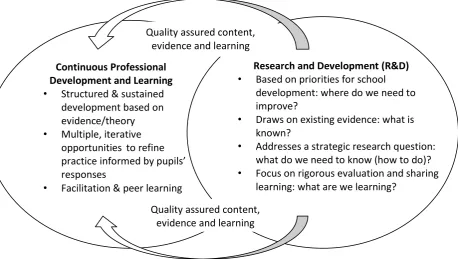
Figure 1: a model for mobilising evidence-informed knowledge and learning from collaborative R&D via CPDL so that it impacts all staff across schools
Continuous Professional Development and Learning • Structured & sustained
development based on evidence/theory
• Multiple, iterative opportunities to refine practice informed by pupils’ responses
• Facilitation & peer learning
Research and Development (R&D) • Based on priorities for school
development: where do we need to improve?
• Draws on existing evidence: what is known?
• Addresses a strategic research question: what do we need to know (how to do)?
• Focus on rigorous evaluation and sharing learning: what are we learning?
R&D enables teacher ownership of evidence-informed improvement via i) co-constructed project focus ii) engagement in cyclical enquiry iii) structured collaboration within & across schools.
R&D conditions required: collaborative culture & infrastructure across schools; effective leadership; skilled facilitators; time and supportive culture for teachers; appropriate HEI support.
Leads to changes in situated understanding, technical know-how, critical reflection and beliefs for participating teachers - deepens evidence-informed judgement.
19
Conclusion and implications
We conclude by arguing that teaching requires attention to the three forms of knowledge identified by Winch et al (2015) - situated understanding; technical knowledge; and critical reflection – and that collaborative R&D and CPDL offer a means of addressing and developing these within a
coherent framework. Furthermore, we argue that Winch et al’s notion of teaching as a ‘professional endeavour’ should be developed further to reflect a need for evidence to underpin such work, so that teaching is seen as an ‘evidence-informed professional endeavour’.
Our research has indicated the potential of well-structured and facilitated collaborative R&D as a mechanism for enhancing teacher ownership of evidence-informed change. We argue that this occurs because well-structured and facilitated collaborative R&D can support a rich process of professional learning by teachers. This professional learning enhances teachers’ engagement with all three forms of knowledge through an explicit focus on the existing research base and on co-designing and evaluating innovations and improvements that improve pedagogy. The opportunities provided by collaborative R&D to collect and reflect on evidence relating to the impact of practice on pupil learning and to consider the implications of adopting different practices across different contexts appears to be particularly effective in changing teachers beliefs, which appears to be an important pre-cursor for changing practice and increasing engagement.
However, our research also revealed that schools and alliances struggle with the practical implications of involving a majority of teachers in collaborative R&D due to time and resource constraints and with mobilising quality assured learning from R&D projects so that teachers more widely can benefit. The schools and alliances had all attempted to disseminate the learning from their R&D projects, but these efforts generally did not reflect what is known about successful knowledge mobilisation and did not appear to embed the learning into well-designed CPDL. Therefore we argue that schools should develop more sophisticated ways to draw out and quality assure learning from collaborative R&D projects and to embed these into well-designed CPDL programmes which reflect the features that we outline from robust research.
We conclude by highlighting two specific implications for policy and practice, both in England and more widely. Firstly, it seems clear that evidence-informed improvement and innovation does not occur naturally or automatically in public school systems. School leaders and teachers are driven by multiple demands and pressures, they frequently lack time and resources to undertake new
20
The second implication of our findings is that even schools and alliances that have proved capable of undertaking effective collaborative R&D projects do not yet have the required skills to systematise this learning into wider practice. Supporting school leaders to become more sophisticated in how they embed evidence-informed practices through effective knowledge mobilisation and CPDL appears to be an important next step for designers of leadership development programmes and evidence-related initiatives. We have proposed a high level model for how this could be achieved, which could be tested through further research.
Significance, limitations and opportunities for further research
This article, and the research which underpins it, provide an original contribution in several respects. Firstly, it addresses the core question defined at the outset by offering new evidence that, subject to certain conditions being met, collaborative R&D can enhance teacher engagement with evidence-informed change. Secondly, it brings together thinking and empirical evidence on the impact of collaborative R&D and analyses this in the context of Winch et al’s theoretical model of teachers’ professional knowledge, thereby helping to provide a bridge between our understanding of the organisational level cultures, systems and processes required for evidence-informed professional learning and the individual-level processes and forms of knowledge development involved. Thirdly, it sets out a new model for how collaborative R&D could be combined with effective CPDL to enhance the scale and reach of evidence-informed professional learning, thereby addressing the weaknesses observed in the case study schools and alliances in relation to knowledge mobilisation.
21
Annex 1: TSA case study characteristics
Location is not displayed to protect the anonymity of the participating schools.
Case Study TSA characteristics Schools involved in R&D
R&D Focus
1 An alliance comprising primary and secondary schools within a
relatively tightly defined geographic area with higher than average levels of deprivation, led by a large
catholic secondary school.
Four secondary schools.
Sixth form pedagogy.
2 An alliance located in a small unitary authority comprising approximately 20 schools led by a primary school.
Three primary schools, a junior school and their local feeder secondary school.
Pedagogy in mathematics at transition from primary to secondary school.
3 A multi-academy trust led by a secondary school which comprises a further two secondary schools, two primary schools and a post-16 college working with 32 partner schools in the region.
The five schools (3 secondary and two primary) within the multi-academy trust.
Supporting pupils with emotional and
behavioural special educational needs.
4 An alliance of 68 primary schools over a wide geographical area led by a primary school.
Six primary schools. Impact of lesson study methodology in primary mathematics.
5 An alliance of seven secondary schools, 3 special schools and 25 primary schools spread across a wide geographical area, jointly led by two secondary schools.
One secondary school and its feeder primary schools and two special schools.
Impact of collaborative enquiry and lesson study in three
22
References
Alexander, R. (2011) Evidence, rhetoric and collateral damage: the problematic pursuit of ‘world class’ standards, Cambridge Journal of Education, 41 (3), 265-286.
BERA/RSA (2014), Research and the Teaching Profession: Building the capacity for a self-improving education system
BERA (2011) Ethical Guidelines for Educational Research. London, British Educational Research Association.
Braun, V. & Clarke, V. (2006) Using thematic analysis in psychology, Qualitative Research in Psychology, 3(2), 77-101
Brown, C. (2014). Evidence informed policy and practice: A sociological grounding. London: Bloomsbury.
Brown, C. (Ed.) (2015) Leading the use of research and evidence in schools, London: IOE Press. Brown, C. and Greany, T. (2016) The evidence informed education system in England: where should school leaders be focussing their efforts? Leadership and Policy in Schools. DOI:
10.1080/15700763.2016.1270330
Brown, C. and Rogers, S. (2014) Knowledge creation as an approach to facilitating evidence-informed practice: examining ways to measure the success of using this method with early years practitioners in Camden (London), Journal of Educational Change, 16 (1), pp: 79-99
Bryk, A. S. and Schneider, B. (2002) Trust in Schools: A Core Resource for Improvement. New York: Russel Sage Foundation. Bubb, S. (2013) ‘Teaching schools national research and development network: conference report’. NCTL, November.
Burns, T. and Köster F. (eds.) (2016), Governing Education in a Complex World, Educational Research and Innovation, OECD Publishing, Paris.
Caldwell, B. and Spinks, J. (2013) The Self-transforming School, Routledge, Oxford.
Campbell, C. and Levin, B. (2013) ‘Building the capacity to use research in education requires a sustained strategic and systemic effort’.
http://blogs.lse.ac.uk/impactofsocialsciences/2013/05/29/building-capacity-to-mobilise-knowledge-and-use-research-to-improve-education/ accessed 29.10.14
Coldwell, M. Greany, T. Higgins, S. Brown, C. Maxwell, B. Stiell, B. Stoll, L. Willis, B. and Burns, H. (2017) Evidence-informed teaching: an evaluation of progress in England. London: Department for Education.
Collins K, and Coleman, R (2017) ‘Evidence-informed policy and practice’, in Earley, P. and Greany, T. (Eds.) (2017) School leadership and education system reform, London: Bloomsbury.
Cooper, A., Levin, B. and Campbell, C. (2009) The growing (but still limited) importance of evidence in education policy and practice, Journal of Educational Change, 10, 2-3, pp. 159-171.
Cordingley, P. (2013) ‘The contribution of research to teachers’ professional learning and development’, Research and Teacher Education: the BERA-RSA Inquiry
Cordingley, P. Higgins, S. Greany, T. Buckler, N. Coles-Jordan, D. Crisp, B. Saunders, L. Coe, R. (2015)
Developing Great Teaching: Lessons from the international reviews into effective professional development, London: Teacher Development Trust.
Creswell, J., & Plano Clark, V. (2007). Designing and conducting mixed methods research. London: Sage.
23
Durbin, B. and Nelson, J. (2014) Why effective use of evidence in the classroom needs system-wide change. Slough: NfER.
Dweck, C. S. (2008). Mindset: The new psychology of success. Random House Digital, In
Earley, P. and Greany, T. (Eds) (2017) School leadership and school system reform, London: Bloomsbury.
Ertmer. P.A., Ottenbreit-Leftwich, A.T., Olgun Sadik, O., Sendurur, E., Sendurur,P. (2012) Teacher beliefs and technology integration practices: A critical relationship, Computers and Education, 59, 2, pp.423-435
Eraut, M. 2004. “Informal Learning in the Workplace.” Studies in ContinuingEducation, 26 (2): pp. 247–273.
Godfrey, D. (2014) ‘Creating a research culture – lessons from other schools’. SecEd, March 2014.
Goldacre, B. (2013) Building evidence into education [Online]. Accessed 30.10.15. Available from: http://media.education.gov.uk/assets/files/pdf/b/ben%20goldacre%20paper.pdf [URL].
Gough, D. (2013). ‘Knowledge mobilisation in education in England.’ In: Levin, B., Qi, J., Edelstein, H. and Sohn, J. (Eds) The Impact of Research in Education. Bristol: The Policy Press.
Greany T. (2016) Innovation is possible, it’s just not easy: improvement, innovation and legitimacy in England’s autonomous and accountable school system, Education Management Administration and Leadership (online, 1-21) DOI: 10.1177/1741143216659297
Greany, T. (2015) ‘How can evidence inform teaching and decision making across 21,000
autonomous schools? Learning from the journey in England’, in Brown, C. (Ed) (2015) Leading the use of research and evidence in schools, London: IOE Press.
Gu, Q., Rea, S., Smethem, L., Dunford, J., Varley, M., Sammons, P., Parish, N., Armstrong, P. and Powell, L. (2015) Teaching Schools Evaluation, Final Report, London: DfE.
Hall, G. E. and Hord, S.M. (2001) Implementing Change: Patterns, Principles and Potholes. Boston: Allyn and Bacon.
Halbert, J., Kaser, L. and Koehn, D. (2011) Spirals of inquiry, building professional inquiry to foster student learning, paper presented at ICSEI 2011, Limassol, Cyprus.
Hallgarten, J. Hannon, V. Beresford, T. (2015) Creative Public Leadership: How School System Leaders Can Create the Conditions for System-wide Innovation, Dubai: WISE 2015.
Handscomb, G., and MacBeath, J., (2003) The Research Engaged School. Forum for Learning and Research Enquiry (FLARE). Essex County Council.
Hargreaves, D. H. (1996). Teaching as a research based profession: possibilities and prospects. London: Teacher Training Agency.
Hargreaves, D. (2003) Education epidemic: transforming secondary schools through innovation networks. London: Demos.
Harris, A. and Jones, M. (2011) Professional Learning Communities in Action. London, Leannta Press Harris, A, and Jones, M. (2012) Connecting Professional Learning. Nottingham: National College for School Leadership (NCSL).
24
Hüttner, C.,Dalton-Puffer, C. and Smit, U. (2013) The power of beliefs: lay theories and their influence on the implementation of CLIL programmes, International Journal of Bilingual Education and Bilingualism, 16, 3, pp.267-284
Jensen, B. Hunter, A. Sonnemann, J. and Burns, T. (2012) Catching up: learning from the best school systems in East Asia. Grattan Institute.
Kotter, J. (1996) Leading Change, Harvard: Harvard Business Review Press.
Leadbeater, C. and Wong, A. (2010) Learning from the Extremes, Cisco, San Jose, CA.
Leithwood, K. Day, C. Sammons, P. Harris, A. and Hopkins, D. (2006) Seven strong claims about successful school leadership. Nottingham: NCSL.
Levin, B. (2010) ‘Leadership for evidence-informed education’. School Leadership & Management, 30: 4, 303—315.
Levin, B. (2013) ‘To know is not enough: research knowledge and its use’, Review of Education, vol.1 no.1, February, pp 2-31
Levin, B. Cooper, A. Arjomand, S. and Thompson, K. (2011) ‘Can simple interventions increase research use in secondary schools?’ Canadian Journal of Educational Administration and Policy, Issue #126, December 5, 2011.
Levin, B. Qi, J. Edelstein, H. and Sohn, J. (Eds) (2013) The impact of research in education: an international perspective. Policy Press.
McLaughlin, C. Black-Hawkins K. and McIntyre D. (2004) Researching Teachers, Researching Schools, Researching Networks: A Review of the Literature. NCSL.
Maxwell, B. and Greany, T. with Aspinwall, K. Handscomb, G. Seleznyov, S. and Simkins, T. (2015)
Approaches to Research & Development for ‘great pedagogy’ and ‘great CPD’ in teaching school alliances, Nottingham: National College for Teaching and Leadership.
Mincu, M. (2014) ‘Inquiry paper 6: teacher quality and school improvement – what is the role of research?’In The role of research in teacher education: reviewing the evidence, Interim report of the BERA-RSA inquiry
Morris, A. (2009) Capacity and Quality in Education Research in England. A Stimulus Report for SFRE Forum I. Strategic Forum for Research in Education.
Nelson, J. and O’Beirne, C. (2014) Using Evidence in the Classroom: What Works and Why? Slough: NFER.
Nelson, R, Spence-Thomas, K & Taylor, C (2015), What makes great pedagogy and great professional development: final report. Nottingham, NCTL
Nutley, S. Walter, I. and Davies, H. (2007) Using evidence: how research can inform public services.
The Policy Press
Nutley, S. Powell, A. and Davies, H. (2013) What counts as good evidence? Alliance for Useful Evidence
OECD, (2013), PISA 2012 UK Country Note at http://www.oecd.org/pisa/keyfindings/PISA-2012-results-UK.pdf accessed 19.1.14
Ofsted (2010) Good professional development in schools: how does leadership contribute? London, Ofsted.
25
Rycroft-Malone, J. (2005) ‘Evidence-based practice: from individual to context’. Journal of Nursing Management.
Sahlberg, P. (2011) Finnish Lessons, New York: Columbia Teachers College Press.
Sebba, J. Tregenza, J. and Kent, P. (2012). Powerful professional learning: A school leader’s guide to joint practice development. Nottingham, UK: National College for School Leadership.
Sharp, C. Eames, A. Saunders, D. and Tomlinson, K. (2006) Leading a Research Engaged School. NCSL. Sharples, J. (2013) Evidence for the frontline: a report for the coalition for useful evidence. Alliance for Useful Evidence.
Schein, E. (2010) Organizational Culture and Leadership, San Francisco, Jossey–Bass.
Shulman, L.S. (1986). Those who understand: knowledge growth in teaching. Educational
Researcher, 15(2), 4–14
Stoll, L. (2008) ‘Leadership and Policy Learning Communities: Promoting Knowledge Animation’. In B. Chakroun, & P. Sahlberg (Eds.), ETF Yearbook 2008: Policy Learning in Action. (pp. 107-112).
Luxembourg: European Training Foundation/Office for Official Publications of the European Communities.
Stoll, L. (2015) Three greats for a self-improving school system: pedagogy, professional development and leadership. Nottingham, NCTL.
Stoll, L. Bolam, R. McMahon, A. Wallace, M. and Thomas, S. (2006). Professional learning communities: A review of the literature. Journal of Educational Change, 7(4), 221–258.
Stoll, L. and Temperley, J. (2015) Narrowing the gap with spirals of enquiry. London: Whole Education.
Thomas, G. and Pring, R. (Eds) (2004), Evidence based practice in education. OU Press.
Timperley, H. Wilson, A. Barrar, H. & Fung, I. (2007) Teacher professional learning and development. Best evidence synthesis iteration (BES). Wellington, New Zealand: Ministry of Education
Winch, C. and Foreman-Peck, L. (2000). Teacher professionalism, educational aims and action research: The evolution of policy in the united kingdom. Teacher Development, 4(2), 165.