Is the Small Changes programme clinically effective for
adults who are obese?
SIMPER, Trevor N.
Available from Sheffield Hallam University Research Archive (SHURA) at: http://shura.shu.ac.uk/20813/
This document is the author deposited version. You are advised to consult the publisher's version if you wish to cite from it.
Published version
SIMPER, Trevor N. (2014). Is the Small Changes programme clinically effective for adults who are obese? Doctoral, Sheffield Hallam University (United Kingdom)..
Copyright and re-use policy
Learning and IT Services Collegiate Learning Centre Collegiate Crescent Campus
Sheffield 810 2BP
1 0 2 0 4 6 6 2 1 9
ProQuest Number: 10702922
All rights reserved
INFORMATION TO ALL USERS
The qu ality of this repro d u ctio n is d e p e n d e n t upon the q u ality of the copy subm itted.
In the unlikely e v e n t that the a u th o r did not send a c o m p le te m anuscript and there are missing pages, these will be note d . Also, if m aterial had to be rem oved,
a n o te will in d ica te the deletion.
uest
ProQuest 10702922
Published by ProQuest LLC(2017). C op yrig ht of the Dissertation is held by the Author.
All rights reserved.
This work is protected against unauthorized copying under Title 17, United States C o d e M icroform Edition © ProQuest LLC.
ProQuest LLC.
789 East Eisenhower Parkway P.O. Box 1346
Is the Small Changes
programme clinically
effective for adults
who are obese?
A doctoral project report submitted in partial fulfilment of the requirements of Sheffield Hallam University for the degree of Doctor of Professional
Studies
Acknowledgements
Abstract
This thesis concerns the treatment o f (N=148) male and female clients in a weight management programme: ’Small Changes' the thesis compares treatment as usual with a new approach using motivational interviewing. Firstly a preface sets out the historical context o f Small Changes and how it developed and was originally funded before the aims o f the thesis and the detail encompassed in each chapter are set out. Following this an introduction chapter presents the key constructs and theories surrounding motivational interviewing. This leads into study 1, a systematic review addressing the question: What should be included in a comprehensive weight management programme? The conclusion to this question is a mixture o f input from: nutrition and exercise expertise combined with a clear behavioural approach, measures that encompass important clinical parameters, other than ju st weight, and sufficient length o f follow-up post treatment. This conclusion form s the basis o f the study 2 literature review which focusses on the contribution o f motivational interviewing fo r affecting exercise and nutrition behaviours with the aim o f improving weight management outcomes. The literature review leads into the methodology fo r study 2 which outlines the measures used, the follow-up period and the detail o f what was done in study 2; sufficiently clearly fo r others to replicate what was done. From this chapter a separate results chapter reveals the statistical results fo r the outcome measures included in study 2. The discussion chapter then follows and focusses on the interpretation, critique and analysis o f the results and relates these back to the literature presented in the literature review fo r study 2. Finally conclusions and short-comings o f the study 2 investigation are explored and further research considerations made.
Key terms
TAU - Treatment as Usual
TF -Treatment Fidelity
MI - Motivational Interviewing
SPAQ - Scottish Physical Activity Questionnaire
SF-36 - Short Form -36
CONTENTS
P refa ce...
(Pa r t 1) Backgroundtothestudy....1
(Pa r t 2) Aim sa n d Fo c u so fthe Thesis:...2
Pa r t 3: Publicationsarisingf r o mthepro jec t...6
Pa r t 4) Co ntributiontothepoolo fknowledge.... 7
Chapter 1: Introduction...8
1.1 WEIGHT MANAGEMENT: A BRIEF HISTORY...8
1.2 THE RISE OF WEIGHT MANAGEMENT BUSINESSES AND WEIGHT LOSS INTERVENTIONS.... <5 1.3 Wh a t is Motivational Interview ing?...10
1.4 Th espirit/relatio nalaspectso f Motivational In terview in g...11
1.5 O ARS THE TECHNICAL 'MICROSKILLS' OF MOTIVATIONAL INTERVIEWING...11
1.6 Op e nq u e stio n s...11
1.7 Af f ir m a tio n s...12
1.8 Ref lectio nsan dreflectivel isten in g...12
1.9 Sum m aries...13
1.10 Th efourpr o cesseso f Motivational Interview ing...15
1.11 Engaging....15
1.12 Fo c u ssin g...16
1.13 E voking... 17
1.14 Pla n n in g... 17
1.15 Th epsycho-lin g u istic so fc h a n g e...19
1.16 Au to n o m y... 20
1.17 Am b iv a le n c e...20
1.18 Resistance/discord.... 22
1.19 Tre atm e n tfid e lityto Motivational Interview ing...22
Chapter 2: Study 1, Systematic review- How Successful are 'comprehensive' weight management
programmes? Published Dec 2 0 1 3... 27
2.0 In tro d u ctio n...27
2.1 Ba c k g r o u n d...28
2.2 B0DY-C0MP0S1TI0N AND QUOTIENT OF POSITIVE CHANGE....30
2.3 P h y sic a l A c tiv ity ....30
2.4 T r e a tm e n t L e n g th a n d Fo l lo w-up/m a in te n a n c e...31
2.5 Nu tr itio n...31
2.6 B e h a v io u r a l A p p ro a c h ....32
2.7 W e ig h t L o s s...32
2.8 W h a t is a C om prehensive p ro g ra m m e?...3'
2.9 What is s u c c e s s ?... , ,.33
2.10 In c l u s io n Cr it e r ia... 34
2.11 M e t h o d... 34
2.12 CASP Analysis...36
2.13 R e s u l t s ...37
2.15 Physicala c t iv it y...39
2.16 N u t r i t i o n...40
2.17 W e ig h t L o s s...41
2.18 BODY-COMPOSITION...42
2.19 Validity, applicability, reliability....43
2.20 Discussion/An a l y s is...43
2.21 Fu tu r ew o r k...45
2.22 Lim itatio ns....46
Chapter 3: Literature review fo r study 2... 47
3.1 Essentialcom ponentso fbehaviouralweightm anag em entresearc h....48
3.2 Die tc y c l in g...50
3.3 Diverseappr o ac h esintheh istoryo fw eightm anag em ent......50
3.4 Percentag ew eightlo ssi nclinicalw eightlo ssstu d ie s...51
3.6 Co m m ercial weightlo ssp r o g r am m es...54
3.7 Die t AND EXERCISE THERAPY FOR WEIGHT MANAGEMENT....55
3.8 Motivational Interviewinga sa napproachforweightm anagem ent....56
3.9 Motivational Interviewingfo rweightlo ss: there v ie w s...56
3 .1 0 -5 % WEIGHT LOSS WITH MOTIVATIONAL INTERVIEWING...58
3.11 Motivational Interviewingfo rweightloss; Metaanalyses....58
3.12 Controltrialso n Motivational Interviewingforweightl o s s...58
3.13 Motivational Interviewingm a yn o tb ea seffectivebetw eenwhitean d African Am erican WOMEN...60
3.14 H o w MUCH TRAINING IS NEEDED TO BECOME PROFICIENT IN MOTIVATIONAL INTERVIEWING? 60 3.15 Evidencearo und Motivational Interviewingandw eightlo ssm ain te n a n c e...61
3 .1 6 Motivational Interviewingingroups...62
3.17 Mo tivatio nin creasesinthosereceiving Motivational In te r v ie w in g...63
3.18 Motivational Interviewingcombined with Social Cognitive Th e o r y (SCT) an d Cognitive Behavioural Therapy (CBT)...63
3.19 Motivational Interviewing Th eory....63
3.20 Self-Determ inatio n Th e o r y (SDT) a n d Motivational Interview ing...63
3.21 Hypo th esis...66
3.22 Sum m ary....67
3.23 Anticipatedcontributiontothepoolo fk no w led g e ...68
3.24 Leadi nto Chapterfour; m ethodologyforstu d y 2...68
Chapter 4: methodology fo r study 2... 69
4.1 Studyc o n te x t...69
4.2 Participants....70
4.3 Outcomem easu resforstu d y 2...70
4.3.1 H eight a nd weight...71
4.3.2 Waist to hip ratio (W:HR)...71
4.3.3 Bio-electrical impedance analysis (BIA, spectroscopy)...72
4.3.4 Sf-36...73
4.3.6 F ood frequency questionnaire...75
4.3.7 M otivational Interviewing M 1TI3.0 ‘coding ’ instrum ent...76
4.4 Statisticala n a lysiso ftheoutcomem easu res...76
4.5 Stud yd e sig n...76
4 .6 INTERVENTION-PROCEDURE... 77
4.6.1 Recruitm ent... 77
4.7 ETHICAL APPROVAL FOR STUDY2...79
4.7.1 Respect fo r subjects taking p a r t...79
4.7.2 R esponsibility o f the researcher....80
4.8 TREATMENT FIDELITY IN THE DELIVERY OF MOTIVATIONAL INTERVIEWING...80
4.8.1 Treatment fid elity and the M ITI coding instrum ent...81
4. 9 Meth o d o lo g yfo rstu d y 2: sum m ary....81
Chapter 5: R esults... 83
5.1 Descriptivean dinferentialsta tistic s...83
5.2 Measu reso fwell-b e in g...85
5.3 Health ybeh avio u rsre su lts...86
5.3.1 Analysis o f Repeated M easures...87
Chapter 6: D iscussion... 95
6.1 SUMMARY OF KEY FINDINGS....96
6.1.2 Weight...97
6.1.3 Was the program m e successful in relation to other M I studies?...99
6.1.4 Sf-36 (general w ell-being)...103
6.1.5 Physical A c tivity... 105
6.1.6 Vegetable and Fruit in ta ke...106
6.1.7 Waist to H ip ra tio...108
6.1.8 B o d y-fa t...108
6.1.9 B M I...109
6.2 Outliersf r o mthedataset....110
6.4 PRACTICE AND RESEARCH IMPLICATIONS OF THIS WORK....113
6.4.1 Limitations o f the present study'and considerations fo r further research...115
6.4.2 Study Population...115
6.4.3 Outcome variables...115
6.4.4 Treatment Fidelity limitations...115
6.4.5 Study design limitations...116
6.4.6 Cost...116
6.4.7 Recidivism...117
6.4.8 'Quotient o f positive change'...118
6.4.9 Responders v non-responders in this programme versus other w ork...119
6.4.10 M I proficiency increased throughout study... 119
6.4.11 Sample Size... 120
6.5 Fu t u r er e s e a r c ha n dc o n c l u s i o n s...120
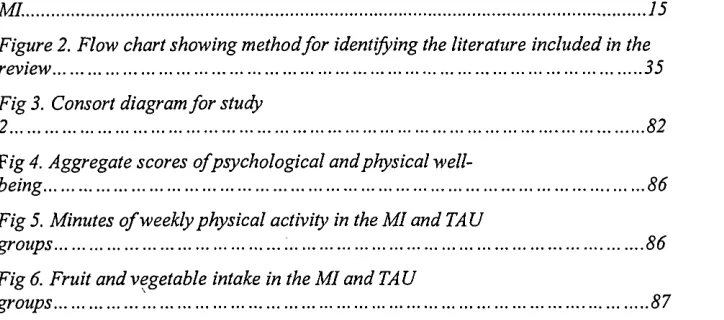
Figures
Fig 1. The four processes o f
MI...15
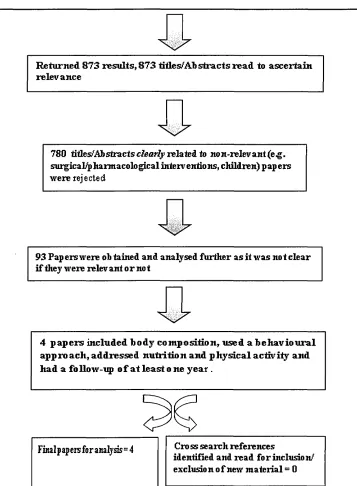
Figure 2. Flow chart showing methodfor identifying the literature included in the review...35
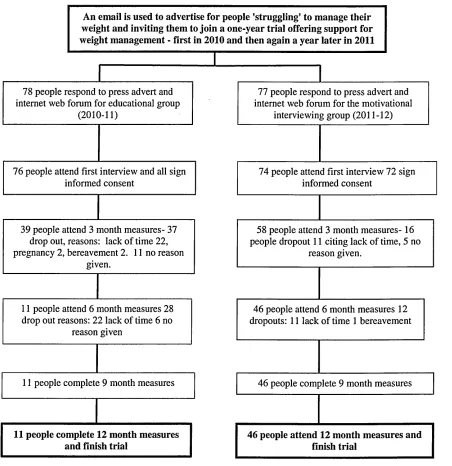
Fig 3. Consort diagram fo r study
2...82
Fig 4. Aggregate scores ofpsychological and physical well
being...86
Fig 5. Minutes o f weekly physical activity in the M I and TAU
groups... 86
Fig 6. Fruit and vegetable intake in the M I and TAU
[image:12.614.94.456.65.225.2]Tables
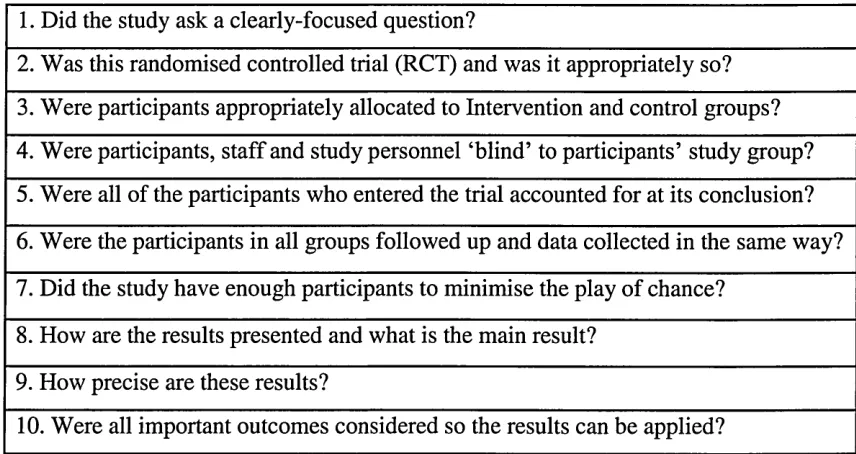
Table 1. The CASP analysis main questions fo r analysing randomised control trials,..5 6
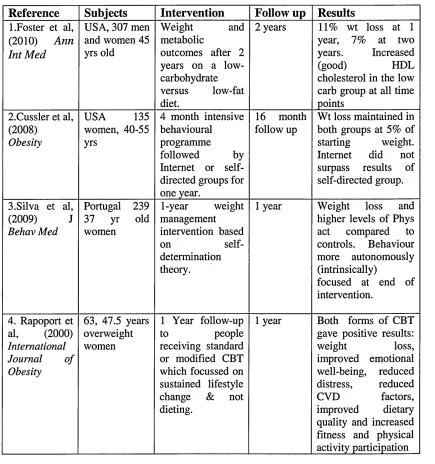
Table 2. A brief description o f the articles meeting the inclusion/CASP criteria...37
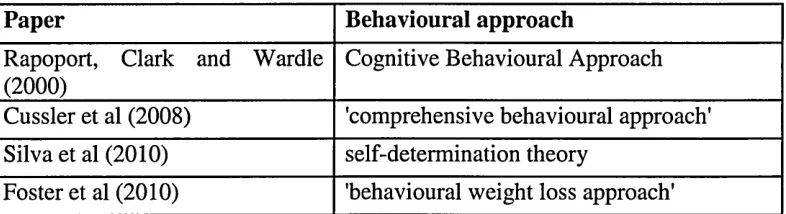
Table 3. Behavioural approaches...39
Table 4. Physical activity measurement...40
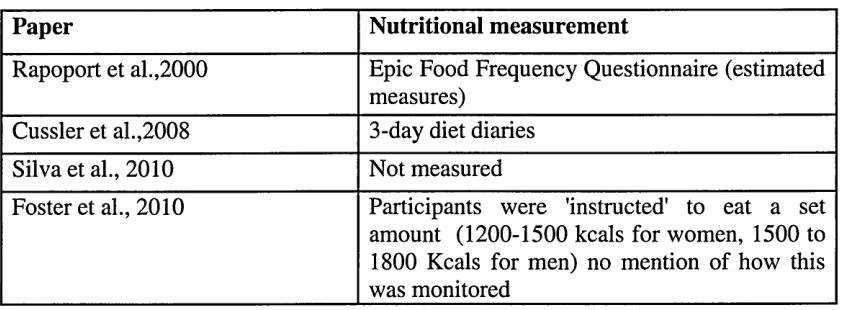
Table 5. Nutritional assessment_...41
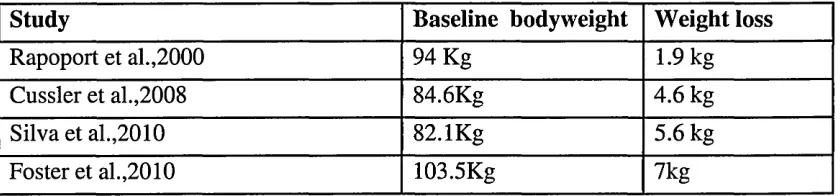
Table 6. Weight loss ...42
Table 7 Baseline Participant Characteristics ...84
Table 8 Outcome Measures Baseline to 12 months...85
Table 9 Analysis Variable Weight (Kg)...88
Table 10 Analysis Variable: Body-Fat (%>)...89
Table 11 Analysis Variable: BM7...89
Table 12 Analysis Variable: W:HR...90
Table 13 shows: p-values fo r potential explanatory factors (adjusted only fo r relevant baselines)...90
Table 14 adjusted p-values fo r potential explanatory factors (adjustedfor all other variables in the model)...91
Preface
Part 1: Background to the study
Working as a public health specialist in Bradford West Yorkshire (2000-2005) I
became aware of the extensive work, locally and nationally, aimed at improving
nutrition and increasing the uptake of physical activity. I was also aware that giving
clients information, from the broad knowledge base in relation to exercise and dietary
advice, was the predominant feature of attempts at supporting people to manage their
weight. During the same period I met the co-ordinator of a women’s counselling
project in Keighley West Yorkshire (Jean O’Keeffe) whilst I was commissioning local
health projects on behalf of the NHS. Whilst examining the work she and colleagues
were doing around weight management and behaviour change, I was struck by the
potential for adopting their behaviour change approach (broadly person-centred
counselling) for weight management practice. After a few months training with Jean
and her organisation (Versa) I took up a full-time academic post at Sheffield Hallam
University in the food and nutrition department. Whilst at the university I identified
opportunities for funding around diet and exercise and developed the idea of a weight
management project. After obtaining a year’s funding (2008) from the All Saint’s
Educational Trust I invited Jean to Sheffield to help run the project. Initially the
project ran twelve-week weight management groups with twelve people per cohort.
We gained another year’s funding in 2009 from the same body. The following year,
the project was again re-funded following a competitive tender (to Barnsley Joint
Directorate) in 2010 and the project became ’Small Changes' named by one of our
participants. Several preliminary publications developed from this early work via
conference proceedings (Simper et al., 2009, 2008a, 2008b) and a peer-reviewed
After three years of running the project it became clear via the scientific literature that
many projects were running for periods of time similar to Small Changes (i.e. 10 to 12
weeks) and that empirical evidence was clearly now suggesting that the physical
changes from these programmes were equally short-term. Other factors also emerged
from the literature, such as: a combination of physical activity and nutritional advice
with a behaviour change approach seems to yield better results than using diet or
exercise advice (whether in isolation or together). Reading further around behaviour
change led me to the concept of 'treatment fidelity' a phrase often used in
psychotherapeutic approaches and essentially describing a way of testing to see if a
therapy can be corroborated as authentic in its approach (i.e. verified by an
independent expert). This in turn led on to meeting Dr Jeff Breckon, a motivational
interviewing (MI) trainer and beginning training in MI throughout 2010 and 2011 in
the UK, Italy and United States. During this training I designed the present project.
The work included in this thesis relates to a one-year treatment as usual group which
ran between October 2010 and October 2011 which is compared with a one-year MI
group which ran between October 2011 and October 2012.
Part 2: Aims and Focus of the Thesis:
This thesis’ first aim is to identify whether the Small Changes motivational
interviewing in groups project is a superior approach for achieving significant
differences to several weight management parameters when compared to ‘treatment as
usual’ groups. These parameters are sub-divided into three sub-sections;
anthropometrical measures, physical and psychological wellbeing measures and
Anthropometrical measures:
• Waist to hip ratio • Body weight • Body composition e Body mass Index
Psychological/physical well-being measure:
• Short form-36 - SF36 (wellbeing questionnaire)
Healthy behaviour measures:
• Fruit and vegetable consumption
• Number of minutes of daily physical activity
The thesis also attempts to develop professional practice- which is to be achieved by
testing treatment fidelity to MI (via having selected sessions coded and reported on by
an independent motivational interviewing coding expert; using the MI treatment
integrity tool - MITI 3.0) developed by Moyers and colleagues (2005) which assesses
a therapist’s clinical effectiveness in performing MI. This aim relates to professional
development of the principal investigator and as such is a key focus of a professional
doctorate.
Chapter 1: Introduction
The introduction begins with an overview of the range and scope of weight
management interventions available and then a concise description of what MI is and
the core concepts of this approach and explanation of the terminology used throughout
this thesis. It then sets the research in context by establishing the research imperatives
sections which introduce MI fully, explaining the core concepts and giving examples
of MI in practice.
Chapter 2: study 1 systematic review
Chapter 2 presents the entirety of study 1, a systematic review published in 2013 and
focussing on the paper’s title: How Successful are Comprehensive Weight
Management Programmes? The attempt to answer this question via a review informs
the design of the present investigation, and leads into the following literature review
for study 2.
Chapter 3: Literature Review for study 2.
This literature review: focusses on the main aim of the thesis: What is the contribution
of MI to the existing Small Changes weight management programme? Effectively how
might verifiable MI enhance treatment when compared to the existing approach based
around education alone. The work reviewed relates to other studies in the field of
weight management and MI for both individual and group MI investigations; although
there are a limited number of group MI studies and non-specifically for group MI
weight management programmes as yet.
Chapter 4: Methodology for study 2
This chapter sets out the quasi-experimental design and all methodology used to
address the aim of the present investigation. This is done in sufficient detail for other
investigators to replicate the study. The chapter also goes on to. describe the methods
used in statistical analysis of the data and by doing so leads into the three results
Chapter 5: Results
Chapter 5 presents results, firstly concerning the physical/anthropometrical measures:
BMI, bodyweight, body composition and waist to hip ratio. Statistical analysis for
each of these parameters is shown. These measures are essentially proxy indicators of
successful change and protection to health with, for example, a poor waist to hip ratio
signalling greater risk for major threats to public health such as type-two diabetes and
cardiovascular disease. This section leads into the next chapter on psychological
wellbeing.
This chapter then presents results concerning the physical and psychological well
being results, including: the Sf36, a wide ranging measure of psychological wellbeing.
The questionnaire covers items which relate to both psychological and physical
wellbeing and is perhaps the most widely researched questionnaire of its type with
commensurate assurances of its validity. Scores from the Sf-36 indicate the subjects’
relative well-being with a higher score equalling greater wellbeing.
The next section concerns the results relating to the healthy behaviour measures: fruit
and vegetable consumption and number of minutes of daily physical activity.
Vegetable and fruit intake are considered key measures of dietary health and low
intake is associated with greater risk for cardiovascular disease certain cancers and
type diabetes and increased intake signalling both greater protection from primary
disease and reduction of the re-occurrence of secondary disease in patients increasing
their intake of these foods.
Finally this chapter presents treatment fidelity results relating to the delivery of MI
which links to the second aim of the present investigation. The results are presented
and subsequent scores are presented here with interpretation and comments from the
coder. Further description of MITI coding is included in methods.
Chapter 6: Discussion
The discussion relates the results of the present investigation to the work analysed in
the literature review chapters. Comparisons are made and conclusions are drawn in
relation to the stated hypothesis.
Part 3: Publications arising from the project
This doctoral investigation has produced a number of academic outputs including
conference presentations and peer-reviewed journal papers.
Peer-reviewed journal papers:
SIMPER T (2013) How successful are ‘comprehensive’ weight management
programmes? Open Research. 2013 Nov 23 [last modified: 2013 Nov 23] 1
PAXMAN, J. O'KEEFFE, J. HARDEN, C J. HALL, A. and SIMPER, T.N. (2011). Weight loss is coupled with improvements to affective state in obese participants engaged in behavior change therapy based on incremental, self
selected “Small Changes” Nutrition Research. 31 (5), 327-337
Conference presentations:
SIMPER, T.N. and O'Keeffe, J. (2009). Reduced energy intake and maintained loss of weight is observed at 6 months follow up of the 'Small Changes Programme'
European Journal o f Obesity May Vol2,S2 p228.
SIMPER, T.N. HARDEN, C.J. PAXMAN, J.R. and O'KEEFFE, J. (2008a). Energy intake is significantly reduced following the 12-week 'Small Changes'
intervention for weight management (POSTER). Tackling Child and Adult
Obesity in Sheffield: Evidence, Policy and Practice.
SIMPER, T.N. PAXMAN, J. and O'KEEFFE, J. (2008b). Small-group weight management programme using self-selected goals improves General Well Being
scores. International Journal of Obesity, May S230.
Part 4) Contribution to the pool of knowledge
This investigation shows that motivational interviewing can be superior to the
treatment as usual in a group weight management context where treatment fidelity is
assured. In this way the investigation has developed the knowledge base and will
hopefully encourage practitioners to utilise motivational interviewing (MI) in order to
enhance the effectiveness of group weight management interventions. This thesis
makes an original contribution to the understanding of using MI (with treatment
fidelity) in groups whilst comparing this to previous 'best practice' and is the
individual contribution of the principal investigator.
Chapter 1: Introduction
This chapter begins by briefly introducing a range of potential approaches to weight
management before moving on to MI. The key constructs and theories underpinning
study 2 and connected terms relating to MI and the components for effective MI
consultations are all fully introduced. The divergent approaches to weight
management and MI are critically analysed in the following literature review chapter.
1.1 Weight management: a brief history
Weight management has been of interest historically- as corpulence at various
periods in time has signified both health and prosperity and alternatively ill-health at
other times. Our modem concerns with weight began sometime in the 19th century,
probably around the 1860's (Yager, 2010) in the United Kingdom and then 20 years
or so later in the United States. It was not, however, until around a hundred years
later in the 1980's that a rapid escalation in body mass index in Western society was
observed, noted by scientists and analysed as a distinct risk for disease and poor
health (Von Hippel & Nahhas, 2013). In recent years this escalation in Western
populations' bodyweight is reflected by the doubling of obesity rates in England
between 1993 and 2008 which in turn is similar to many other European nations
(Public Health England, 2011).
1.2 The rise of weight management businesses and weight loss interventions
Weight Watchers was established in 1963, in Brooklyn New York, and currently
(2014) the organisation reports a million members taking part in 40,000 groups run
by 10,000 leaders, Slimming World founded in Derbyshire in the United Kingdom in
1969 indicate current membership at 0.5 of a million people in the UK alone, these
a substantial number of people concerned about their weight. The leader in this
highly fragmented market: Weight Watchers International had a revenue of 1.8
billion dollars in 2012, representing only 3% of market share (Forbes). The low
market share represents a huge industry with other market leaders having less than
1% share and still recording revenues over $300 million dollars.
These businesses have been joined by the Atkins, South beach and Jenny Craig diets
alongside many others. Typically systems inside these services have 'points' for foods
with customers being instructed to eat within their own points plan. Certain
macronutrients are exaggerated or diminished (e.g. carbohydrates in the Atkins
programme) and products relating to the system in question are marketed and sold.
Community Programmes, NHS weight management services and other providers are
also often provided via local authority health commissioners and run for free (and not
for profit) in communities; especially where levels of obesity and economic
deprivation are high. Programmes which follow the National Institute of Clinical
Excellence (NICE, 2006) guidance often start with a target of losing 5-10% of
starting bodyweight. Programmes also, typically, employ advice and support around
physical activity and diet. Small Changes is one such programme. Advice and
support are also accompanied by a behavioural approach in some programmes and
some data (e.g. Soderlund & Fischer, 2009) suggests that the addition of a
behavioural change approach augments the effects of a weight management
programme. One such promising approach is MI and although, in a group setting, no
data has been published it has been suggested the approach one to one may be more
effective than other forms of treatment (Hardcastle et al., 2013, Armstrong et al.,
2011, Rubak etal., 2005).
1.3 W hat is MI?
Originally described by Miller (1983), MI is a person-centred directive counselling
approach that steers away from persuasion or emphasising the negative consequences
of not changing. Instead MI steers the client towards their own motivation for positive
change. The early work in MI relates to the addictions field. MI has since been
adopted by many health care practitioners. These adoptions include those who are
interested in diet, physical activity and weight management.
Often health care practitioners have employed advice giving and persuasion to
encourage patients to make changes to health-related behaviour (Hardcastle, 2008).
Whilst this may represent a reasonable approach where knowledge is lacking, or
behaviour is clearly leading to poor health outcomes, it also appears that persuading
and ‘educating’ may lead to behaviour change outcome in only a small number of
cases. Some researchers have reported values as low as 5-10% success using advice
and persuasion. (Britt et al., 2004, Kotte et al., 1988 Bien et al., 1993).
Standard practice in health/medical interaction may assume that this giving of
information is paramount (in certain situations it clearly is, e.g. when the patient has
asked for it or an acute medical emergency), however, this may well be misplaced in
interactions where change to behaviour (e.g. exercise, diet, smoking cessation, alcohol
and treatment adherence) is the intended outcome (Miller & Rollnick, 2013). MI is
perhaps in part defined by assuming change is affected by the client’s motivation more
than it is by information or convincing arguments from the practitioner. Ergo
treatment seeks to identify, through reflective listening, what the client’s motivation is.
rather it is an approach which attempts to uncover and strengthen the client’s existing
motivation/s.
Miller and Rollnick provide a layperson’s definition of motivational interviewing:
“Motivational interviewing is a collaborative conversation style for strengthening
a person's own motivation and commitment to change ”
(Miller & Rollnick, 2013, p.12).
1.4 The spirit/relational aspects of MI
It is important to note MI is not simply a system broken down into the micro-skills
outlined below but also what Carl Rogers called ‘a way of being’ (Rogers, 1980). MI
cannot be learnt by simply ‘painting by numbers’ i.e. using these micro-skills as
techniques but rather MI has a spirit. Despite this MI is, perhaps, more ‘accessible’
than other forms of psychotherapy. The consensus feeling, for instance, from M i’s
originators and the Motivational Interviewing Network of Trainers is that MI
practitioners should seek to ‘give more than they take ’ (MINT forum, 2012). Indeed
resources are freely shared and given away to other practitioners and attendees at
workshops and training events.
1.5 OARS the technical 'microskills' of MI
Open questions, affirmations, reflections and summaries (OARS) are the essential
micro-skills of MI, the acronym stands for: open questions, affirmations, reflections
and summaries, these are introduced in more detail below.
1.6 Open questions
Open questions allow the client to explore and explain what is going on, essentially
how a situation is for them. Open questions tend to deter single word answers.
which may not help with engaging the client or understanding what is going on in
relation to problem behaviour. Open questions are used sparingly, for instance to
begin a conversation about change: 'Tell me what brings you here todayT They form
an important bedrock for behaviour change as the answers relate to what the client
may find useful rather than information the therapist wants to know.
1.7 Affirmations
An affirmation is the selective presentation of a strength or quality in the client
noticed by the therapist and is juxtaposed with praise, which might be simply saying
'well doneV an affirmation rather than just praise is a clear recognition of the client’s
strengths: 'you are clearly very resilient to keep coming back to different weight
management programmes even when it’s been tough to make permanent changes' so
an affirmation tells the client what it is that is strong, resilient, intelligent, kind or
caring in them and it is specific. The rationale for affirmation over praise is that
praise confers a value on the part of the therapist. This intimates that the client
changes in order to please the therapist: rather than for the intrinsic recognition of a
positive outcome or attribute.
1.8 Reflections and reflective listening
Reflection is a key concept in counselling approaches. In MI reflections tend to be
defined as either simple or complex. The simplest reflection is a repeat of the client’s
words. Deeper reflections, however, seek to explore/understand the meaning of what
is being said, there are examples given in the methodology chapter. Reflections are
key in expressing empathy as in essence they show that the therapist is listening and
understanding what the client is saying. In turn expression of empathy is thought to
be key in gaining behavioural change outcomes and conversely where therapist
Reflective listening is a key component of MI- fundamentally deepening the
understanding a therapist has of the client’s situation and additionally allowing the
client to hear their own voice, thoughts and feelings via the reflective statements of
the therapist (Miller & Rollnick, 2013). Reflective listening is akin to hypothesis
testing where the listener is attempting to clarify meaning and feeling. Miller
suggests that MI would not exist without Rogerian/ person centred counselling
(Miller & Rollnick, 2013). Yet MI is not person-centred counselling alone. MI is
both person-centred and directive the practitioner has an agenda for examples: weight
loss, smoking cessation or reduction in alcohol consumption. The practitioner is
operating from a position that suggests that the client is going to be better off if
smoking behaviour is reduced or stopped, or it is better to control weight than be
overweight/gaining weight and so on. In non-directive or person-centred counselling
it would be the client who focusses on direction in therapy; whereas often the
practitioner directs in MI. The exploration of change and strengthening of the client's
reasons for change are strengthened by skilful questioning and reflecting- even if
ultimately it is the client who decides whether change will take place or not.
1.9 Summaries
Summaries are used throughout and towards the end of sessions and seek to clarify
meaning and allow the client to accurately hear back their own voice or else disagree:
'that's not quite what I meant'. Either way the therapist will gain clearer
understanding of the client’s situation. Summaries collect together several points
and can also serve as a platform to move on to a new phase of conversation e.g. to
move from focussing to planning. A summary may of course be selective as not
everything a client has said will be included; a therapist may choose to summarise
points and invites the client to add more points until the client has finished. A linking
summary is similar but links to a previous session:
'planning what you are going to eat each day helps you stay safe and the time to
reflect and ask: what should I do now? really helps you delay or even stop a binge
occurring and I remember from last time we spoke you talked about the benefit of
stopping to reflect- maybe you could say a little more about that?'
(Small Changes, session 3, one to one client 26).
There is a third type of summary which is described (Miller & Rollnick, 2013) as
transitional, which could be used to wrap up a session:
'we spoke a lot about the difficulty with maintaining your healthy choices and relapse
and we discussed how you had also been very successful in a number o f areas
including strategies that are effective fo r eating healthily and being more active and
in fact you decided that even though you are not yet where you want to get to - you
are both more active and eating healthier and following today you felt that planning
snacks to take to work and preparing your gym kit the night before were what you
thought you'd focus on next- is that about right?
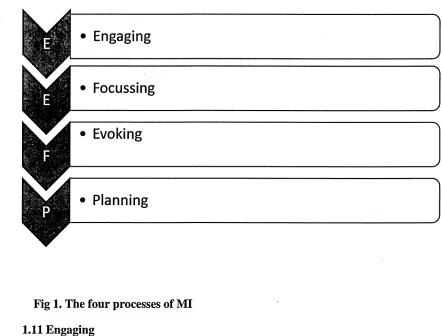
1.10 The four processes of MI
More recently Miller and Rollnick (2013) have strucured their description of MI
around the four processes of: engaging, focussing, evoking and planning. These four
processes underpin and surround the approach of MI.
• Engaging
—- - - - - ^
irnnnrnn-nn-rrn-nmn-nminnnnrnnrninmTniininninnni...-'nmrrr ti—nTTrwnnirnr-nmr... -irnmr i ... ...
• Focussing
— ...
—ii"i— v 1 'I 1 I II Ill'll I 1-1 'II, 11-r III -Iin 1-11-'1111-1-1 T i,-nii-i'-iT iri 1.111-... -1-1—,11 i 11-11 ... . , i. ■ ■, i ■■ mi ^ • Evoking
[image:28.612.59.501.124.460.2]Planning
Fig 1. The four processes of MI
1.11 Engaging
In any therapeutic relationship engagement between the client and practitioner is key.
Miller and Rollnick (2013) suggest that engagement is more than just smiling and
greeting a client (although that is perhaps were it starts) and that using the microskills
of OARS may help engender engagment between the two partners (Breckon in
Hanrahan and Anderson, 2014) involved in a conversation about change. In relation
to engagement Carl Rogers referred to the (idea) relationship between therpaist and
client as a sort of “gullible caring, in which clients are accepted as they are, not with
a lurking suspcion in the therapists mind that they may in fact be otherwise” (Rogers
and Sanford, 1989). The alternative ‘suspicious’ approach may indeeed be pointless.
The client chooses whether they change or not and also how to represent themselves
whether the therpaist thinks they are telling the truth or not is redudnant in this
context as accepting that the client is exactly as they present themselves is largely
what leads to engagement. And subsequently engagement increases the likelihood of
a successful therapeutic alliance.
1.12 Focussing
Often in client presentations there are multiple issues which need attention. For
example a clieint presenting who is concerned about their weight, the way stress is
affecting their food choices, the need to eat breakfast, the need to start exercising
again and the struggle to plan their meals before shopping. Here the process of
focussing may help the client (and the practitioner) to make effective use of what
may be a brief conversation. Initially gaining a full picture of what faces the client in
terms of difficulty to change is useful before focussing (Breckon in Hanrahan and
Anderson, 2014) in conversation terms focussing looks like the following:
TS: 'there's certainly a lot going on here, you mentioned the school run/difficulty
with chidlcare shopping, smoking and then the need to fit in more physical
activity. I wonder with the brief time we have today whether you could choose one
o f these fo r us to work on!
C: 'it has to be the physical activity to start with. ..'
(Small Changes session 1, one to one, client 14).
Essentially this brief transcript shows the process of focussing within a
conversation and leads onto working through one of several important issues. In
their mind, often in the case of services with a specific focus (smoking cessation
for example) there may need to be agreement of the focus between client and
practitioner.
1.13 Evoking
Evoking in the MI context refers to eliciting and subsequently strengthening a
client’s own reasons and motivation for change. With the use of open questions
for example a client may be encouraged to consider the reasons they would change.
When presented with such a question clients feel the need to answer and list their
reasons for change- these are then reflected back by the practitioner and the client
hears what they themselves have said. This process of hearing their own argument
for change appears to be much stronger than hearing the health professional's
reasons for change (Miller and Rollnick, 2013). The concept of change talk is
important in evoking and strengthening the client’s commitment to change- in the
simplest way, this can be done by asking evocative questions such as ‘why would
you want to make this change?’ Change talk is explained further below.
1.14 Planning
The planning phase of an MI consultation fits within the approach explained in the
preceding sections. In short OARS are used in the process and change talk is listened
for in the client’s speech. An example taken from one of my own consultations:
C: ‘it's been on the agenda fo r a while... I've known this is what I ’ve got to do it’s
only now I ’ve got to the point where I'm ready’ (change talk: ‘got to do’ = reason
‘I’m ready’= ability)
TS: ‘ready to get started’ (reflection)
C: 7 am as ready now as I ’ll ever be-1 can think about it and go round and round
for years without doing anythingV
TS: 6 it may as well be now ’ (reflection)
C: 1 that’s right- seriously I could still be here next year talking to you about doing it
and still be sitting here in this state ’
TS: ‘you ’re tired o f the status quo and ready to get started- how do you think you ’11
begin? ’(reflection and then open question seeking elaboration on how the client will
make a start)
A key concern with action planning is not prematurely focussing on planning as the
resulting outcome may well be momentary discord between client and professional or
even worse disengagement. The client’s speech will give clues as to readiness to
action plan, consider: 7 am going to do this-1 have bought the training shoes and I ’m
ready to get started with this’ versus 'it’s all very well all this talk o f exercise but Iju st
don’t have the time, the job, the kids there’s not enough hours in the day ’ The former
is of course a client ready to action plan the latter needs continued reflective listening
and exploration of the issues so that the client can be helped to decide whether change
is going to take place or not.
The four processes of MI stop at the point of change that is at the action planning
phase, what is perhaps missing then is a maintenance phase- the maintenance of
behaviours that have already been enacted (e.g. jogging and eating breakfast every
day) maintenance is potentially a further process:
I've been slimmer o f the year locally and nationally, I've run the London marathon
always works this way, when I am chasing a goal I am motivated but then once I've
got it... I mean what is sexy about staying the same?' (Small Changes group 4 session
1)
Particularly in the context of public health and weight management it is the long-term
behavioural change that commissioners and practitioners are seeking for their clients.
1.15 The psycho-linguistics of change
MI practitioners concentrate on the psycholinguistics of change- Paul Amrhein
(Amrhein, 2003) contributed to the understanding of client change talk when he
suggested two sub-categories of change talk are often elicited in client speech with
one category being stronger than the other in predicting change.
Change talk is either preparatory or mobilising language with preparatory language
signified by clients, for example, saying: 7 should, I want, I could, I ought to, ’ these
are expressions of Desire, Ability, Reason and Need, essentially alone, such
statements are fairly weak predictors of actual change. The stronger mobilising
language relates to Commitment, Activation and Taking steps e.g.: 7 am going to’
and 7 will’, or 7 have started to' Change talk is often described using the acronym:
DARN/CAT.
In sessions with clients I actively seek to identify and strengthen change talk by
seeking elaboration, affirming, reflecting and summarising the different forms of
change talk. For example, if a client is exhibiting change talk: 7 really feel I ought to
do something about this’ I may then ask for elaboration: 'when you say ought
to-what do you meanV which is likely to lead to more change talk from the client. The
rationale for focussing on change talk, (particularly promoting its frequency and
strength via open questions, complex reflections for example) is that this may directly
lead to increased likelihood of the desired behaviour change being affected (Gaume
et al., 2010; Miller et al., 1993).
1.16 Autonomy
MI is directional as well as client centred. This means that although the focus of
change and the decision to change remains with the client, the practitioner, when
using MI is steering (often via selected complex reflections) in the direction of
change. Indeed it is perhaps non-sensical to have a job title nutritionist for example
and expect that going into consultation there is absolutely no agenda on the part of
that professional. Autonomy is important as it is not the practitioners to either give or
take away (in the present weight management context) but rather is a matter of
volition for the client. Autonomy and the expression of this by the practitioner (e.g. 'it
is, of course, only you that will decide whether you do make this change or not') is
key in the demonstration of MI. the expression of autonomy may help the client feel
free to choose change without the encumbrance of a professional pressure that they
'must' change.
1.17 Ambivalence
Ambivalence is a core concept in motivational interviewing, the see-saw area of
change that people go through when making decisions about whether to change or
not. A key idea in MI is 'resolving' ambivalence. Practitioners seek to help clients
resolve ambivalence and in some cases have a vested interest in influencing
behavioural decisions (an example is where the worker is a smoking cessation
specialist and they seek to influence the outcome in the favour of reducing or
stopping smoking) It is this 'directionality' which means MI diverges from
not trying to influence outcomes. There are examples in MI where directionality has
no place, for example a non-health related ambivalent situation where a client is
considering divorce. Here the therapist's responsibility is to 'equipoise' (state of
balance) - a non-directionality that sees the client balancing argument for and against
but does not seek to influence in one direction or another.
MI focusses on clients who have reasons to change and also reasons to maintain the
status quo. A stark example is the client who says:
'/ would like to get fitter, leaner, have more energy... I also like sitting on the sofa
eating cheese cake and watching DVDs'
In relation to medication adherence, smoking, drinking, diet and exercise there is
often significant ambivalence over change.
A passage from DiLillo and colleagues' paper on incorporating MI into obesity
treatment goes some way towards explaining the relationship between MI and
ambivalence:
"‘‘The waxing and waning course o f weight loss, the strong potential that
overweight clients have a history o f prior weight loss failures, and the large
number o f complex behavioural changes required in weight reduction programs
may set the stage fo r significant ambivalence fo r some or all o f the required
changes. M l seeks to move clients into action by identifying discrepancies between
their current behavior and desired goals ”
(DiLilo et al., 2003. p.120).
1.18 Resistance/discord
It has been long considered that instructing and information giving can be counter
productive in client/practitioner interactions - often leading to ‘resistance’ and even
dis-engagement between client and practitioner.
MI seeks to avoid argumentation. The phrase: ‘rolling with resistance,’ was
originally used to encapsulate this. Developing discrepancy e.g. between the client’s
goals and wishes and actual behaviour and promoting autonomy are key features to
MI encapsulated by the acronym RULE, (Rollnick et al., 2008):
R- Resist the righting reflex
U- Understand your client’s motivation
L- Listen to your client
E- Empower your client
More recently MI commentators have begun to talk of 'discord' between the client
and therapist as perhaps, resistance implies a value judgment onto the client- and in
reality there is discord between two people in a conversation rather than one simply
refusing to do what they are told.
1.19 Treatment fidelity to MI
Treatment fidelity seeks to clarify and ensure whether an intervention described
specifically (motivational interviewing for example) is commensurate with what
experts in that approach to behaviour change say it should be. This is an important
professional issue and relates again to the question of what is a professional? Perhaps
it is easy to describe an approach or intervention as MI but it is also thought that
‘proof of treatment fidelity is lacking in many studies claiming to use a particular
clearer evidence that the approach was adhered to and understanding of what has
actually been done in a 'behavioural' intervention (i.e. the therapist's behaviours' and
the client’s responses and subsequent behaviours). For the present study a
'taxonomy' of behaviours has been produced by analysis of the recorded sessions and
is greatly informed by the work of other researchers (Michie et al., 2011; Abrahams
& Michie, 2008). The taxonomy included in the method section shows the specific
behaviours employed in each of the sessions. Inclusion of MI as a 'technique' in
Michie and colleagues' work, is incongruous as MI is an approach typified by both
technical skills and underlying 'spirit' in the same way that cognitive behavioural
therapy or person centred counselling are identifiable as distinct, yet sometimes
converging, therapies. So in this project there is an adapted taxonomy based on
Michie and colleagues' work to take this issue into account. The taxonomy is given
over to identifying specific behaviours carried out during therapy e.g. OARS (Open
questions, Affirmations, Reflections and Summaries).
Whilst a description of MI and understanding what it is, are essentially fairly simple,
(indeed MI is often introduced via a two day workshop) effective practice and
evidence of competence in MI takes somewhat more time. In counselling approaches
clinical supervision and reflection of practice are needed to develop and enhance
skills. In MI tools for assessing this 'treatment fidelity' are popular (for example the
Motivational interviewing skill code (MISC) and the motivational interviewing
treatment integrity scale (MITI) coding tool in its various iterations. Sometimes tools
are developed by researchers for their own practice, for example the ‘Healthy
Lifestyle Pilot study’ developed the 1-PASS, which was made up of a rating form,
/
and this has several MI dimensions described and includes a scale from 1 to 7. A
score of 4.0 or more was deemed to indicate adequate MI proficiency.
Despite the fact that counselling/psychotherapeutic approaches need considerable
skill, and researchers suggest evaluation and maintenance of treatment fidelity is
essential (McHugh & Barlow, 2010) the degree to which this skill is assessed
remains limited. In a study on interventions undertaking physical activity counselling
only 5 of 26 studies reported treatment fidelity (Breckon, Johnson & Hutchison,
2008). The critical issue here is that although the studies included reported physical
activity outcomes the degree to which a given counselling approach was adhered to
was unclear. It is therefore reasonable to assume that 'evidence bases' may be falsely
representing the relative efficacy of a behavioural approach.
A gold standard for this sort of ‘coding’ for MI is the Motivational Interviewing
Treatment Integrity or MITI tool, currently in its third edition (2012). Treatment
Fidelity is considered essential for practitioners to assert that the approach they have
used actually is that approach. This is perhaps a necessary safeguard in an approach
as accessible as MI. Practitioners can start to train via two day workshops and then
build up skills via further training, but without clinical supervision, reflective practice
and coding, proficiency will always be in doubt.
The MITI was developed by Moyers and colleagues (2005) and evolved from the
MISC (MI skills code) as a means to reduce the complexity of assessing therapists'
interactions. It has two components: global ratings and behavioural counts. Madson
and Campbell (2006) in a review of fidelity measures in motivational enhancement
psychotherapy sessions since this time the MITI has gone through two further
iterations and is now in its third version MITI 3.0. Intraclass correlation coefficients
(ICCs) were assessed by Moyers and colleagues (2005) and were 0.51 for
empathy/understanding and .58 for spirit. There was also a range from 0.52 to 0.96
for behavioural counts. Madson and Campbell conclude that these ICCs are 'fair' in
relation to clinical significance and yet could be improved (0.40 = poor, 0.40-0.59 =
fair, 0.60-0.74 = good, 0.75 = excellent, Cicchetti 1994). Martino and colleagues
(2008) also describe the efficiency of MITI and MISC in assessing competency as
still 'questionable* yet also suggest that expert-led workshops, followed by clinical
supervision are effective means to become proficient in MI.
1.20 MI and Social Determination Theory (SDT)
Motivational Interviewing is not based upon a founding theory; rather it is the result
of a psychotherapist's observations in relation to working with client's and the
foundation of person centred therapy.
More recently (Vansteenkiste et al., 2012) MI has been thought about with reference
to self-determination theory (SDT). SDT essentially posits that intrinsic motivation,
the motivation for why people do it for themselves, is stronger than the extrinsic kind
whereby somebody is attempting to change for someone or something else. MI could
essentially be a vehicle of delivery for SDT. Accordingly SDT would offer MI
therapists a potential guide and format to the content of their counselling. Indeed,
some SDT-based projects have already delivered interventions using MI strategies
(Fortier et al., 2012).
It seems justifiable to suggest that MI practitioners and SDT theorists may need
greater understanding of each other's 'basis'. For example, Patrick and Williams
(2012) describe MI as a 'set of techniques' which is contrary to Miller and Rollnick's
own understanding of the approach of MI with its contingent elements of spirit and
principles. Other elements of MI (OARS for example) do serve as 'techniques' but
without an understanding of the underlying approach are redundant. Patrick and
Williams (2012) also call for more research to clarify the overlap between MI and
SDT.
The next chapter is a systematic review relating to the relative success of well-
founded or ‘comprehensive’ weight management programmes. This then leads into a
second literature review critically analysing the work done around MI, behaviour
Chapter 2: Study 1, Systematic review- How Successful are 'comprehensive1
weight management programmes? Published Dec 2013
2.0 Introduction
This literature review sets out to identify how successful weight management
programmes are when: body-composition, physical activity, nutrition a behavioral
change approach and a relatively long period of follow-up are included. These factors
are suggested as the constituents of a 'comprehensive' programme. 'Success' is defined
by positive changes in the above areas and not solely weight-change. The background
to the area and the factors involved in a comprehensive programme are covered before
the inclusion criteria for the literature review is explained. The method for carrying
out the review and the analysis is then described. A flow chart for identifying and
assessing papers from the database is included. A description of the critical appraisal
skills programme (CASP) analysis tool, used to initially assess the papers, is also
included. A results section then reviews what was found from the papers that were
included for this review and highlights the results and findings relative to the above
mentioned criteria. A brief discussion and analysis section overviews the main
findings from this work, its limitations and suggestions for future reviews.
2.1 Background
Obesity is widespread in the Western world. The number of people in the United
Kingdom and the United States, who are either overweight or obese, according to the
Body Mass Index, means that it is now 'normal' to be overweight (DOH, 2010).
Health problems connected with being overweight are numerous with cardiovascular
disease, type II diabetes and certain types of cancer being most prominent. The focus
of interventions suggested by Foresight (2007) should be on prevention of excess
weight gain and body-fat deposition in children, changes to food policy, changes to the
built environment and weight management with the intention of preventing illness and
disease in those already overweight.
Recommendations for physical activity and food differ internationally but are fairly
similar to those in the United Kingdom. For those people who are or have been
overweight or obese the recommendation is 60 minutes a day of moderate intensity
activity on most days of the week (DOH, 2004). However the Health Survey for
England in 2008 reports firstly very low levels of physical activity as per previous
studies and also uses accelerometry to assess activity levels rather than self-report.
These accelerometry results, based on measures from representative samples, suggest
that self-reports are probably over-reports and that only 6% of men and 4% of women
met the government's guidelines for physical activity (DOH, 2010).
Recommendations also exist for strength training (one set of 10-15 repetitions of
between 8 and 10 exercises performed 2-3 days a week). Resistance exercise augments
the benefits gained from aerobic training in that it is protective to lean tissue, bone
mineral density and results in higher metabolic rates as a result of the additional lean
tissue (Surgeon General, 1996). Within the data for physical inactivity there appears
no information on how many people engage with exercise that is protective in relation
to lean tissue, bone health and balance in the elderly.
Accurate dietary analysis is notoriously difficult to achieve, however, most people in
the UK population do not eat the minimum recommended level of at least five portions
(400g) of fruit and vegetables recommended by the World Health Organisation
(Nishida et al., 2004).
Overweight is ultimately a result of energy intake exceeding energy needs. Genetic
as societal changes to energy use and consumption have meant that genetic
predisposition to obesity has been exacerbated in the western world . The
identification of the genetic connection to overweight and obesity should provide
strong impetus for lifestyle change.
This review contributes to the analysis of what should be included in a weight
management intervention for those who are already overweight. It does this by
focussing on how 'successful' programmes are that are also considered to be
'comprehensive'. The terms 'success' and 'comprehensive' in this context clearly need
defining. This work fills a gap in relation to assessing the effectiveness of studies that
use behavioural change techniques, exercise and nutrition and monitoring of body-
composition, as well as weight, and measure/treat participants for at least one year.
Discussion around what represents a comprehensive weight-management programme
could reasonably conclude that the key features are the inclusion of nutrition/food,
physical activity and a clear element of behaviour change (Soderlund, 2009; Peri et al.,
1984) and a reasonable period of treatment, (Peri et al., 1989) with realistic goal
setting as part of the approach (NICE guidelines, 2006).
Soderlund and Fischer (2009) undertook to scrutinise physical activity with/without
diet and behaviour modification and found that a combination of exercise, diet and
behaviour was favourable. Sharma (2007) reviewed behavioural interventions in
treating obesity in adults, recommendations based upon the review include that
physical activity and nutrition behaviours must be approached. This review also
highlights the need for clear behavioural theory to underpin interventions. The
difficulty where the theory is not clear relates to replicating the programme,
identifying what has/has not worked. Based upon the results from this review Sharma
also highlights the need for a treatment period of at least 6 months.
2.2 Body-composition and quotient of positive change
Lean tissue loss might/should be considered negative in weight loss programmes just
as fat tissue gain is considered negative. This may be especially true where sarcopenia
and bone mineral density are key issues (Roubenoff 1997; Fried 2001) e.g. for post
menopausal women and the elderly who are at greater risk of osteoporosis. Physical
activity, particularly resistance training has been shown to be protective of lean body
tissue in older people whether they lose weight or not whereas weight loss without
physical activity results in loss of ‘functional’ lean tissue (Jansen et al., 2002). This
functional lean tissue is essential in maintaining limb strength, balance and reducing
risk of falls in the elderly.
2.3 Physical Activity
An increase in physical activity has been suggested to affect psychological well-being
improvements (Fox, 1999) to the point of concluding that clinical depression can be
effectively treated with exercise. Enhanced dietary intake to proffer protection from
disease irrespective of weight loss and the concept of ‘health at any size’ needs further
exploration (Bacon et al, 2005). Seminal work from a large cohort study has shown
reduced risk from cardiovascular disease and correlated conditions in persons who for
instance are physically active yet overweight (Paffenbarger, 1986).
2.4 Treatment Length and Follow-up/ maintenance
Peri and colleagues (1989) first identified the effects of different treatment lengths in
given the implications for funding interventions, cost-effectiveness has to be a
consideration for commissioners and researchers/practitioners running an intervention.
One-year follow-up of measurements in weight management programmes should
perhaps be considered the minimum period for interventions looking for sustained
weight management. This is the inclusion criteria for the National Weight Control
Registry in the United States. The present review uses a minimum of one year's
'treatment' (which includes carrying out measurements as treatment) as an inclusion
criterion.
2.5 Nutrition
Attention to nutrition for weight management is paramount; the relationship between
our eating habits and obesity however, is still unclear. Suggestions that the massive
rise in people being either overweight or obese is due to gluttony are confounded by
the suggestion that our calorie intake over decades has changed little or not at all and
has maybe even declined (Prentice & Jebb, 1995). Despite this an energy imbalance is
implicated in overweight and obese individuals. Genetic factors may explain
individual differences in rates of weight'gain amongst people following the same
lifestyle i.e. levels of exercise and Kcalorie intake, (Bouchard, 1990) but the principal
factors in the aetiology of overweight and obesity are considered to be
environmental/behavioural rather than biological (Foresight, 2007).
This leads to the conclusion that just concentrating on one part of the energy balance is
non-sensical. Even if health gain and not weight loss is the target, nutrition impacts
heavily on our risk of disease irrespective of weight. An example is given by Bazzano
and colleagues (2008) who studied a large cohort of people and found that intake of
green leafy vegetables and whole-fruit was inversely associated with type II diabetes
development irrespective of BMI.
2.6 Behavioural Approach
Behaviour change in the context of weight management often relates to physical
activity and nutritional change. The approach, however, for achieving changes clearly
differs. Some programmes have a strict prescriptive protocol and the aim is to use
behavioural techniques to help participants achieve that prescription. Others focus on
facilitating participants who make the decision over what changes they make. Often
Behavioural programmes are not based on a specific theory of behaviour (Sharma,
2007) and indeed only two in this review are.
2.7 Weight Loss
Wing and Hill defined a 10% loss of starting weight as a parameter for measuring
success (Wing & Hill, 2001) yet they also conclude that >5% of starting body weight
is the point at which significant clinical improvement and reduction of risk for key
lifestyle diseases occurs. As long-term weight loss maintenance is notoriously
difficult to achieve, focus on what gains people can make by staying the same weight,