SUSTAINABLE DEVELOPMENT: AN EVALUATION ON THE EFFORTS AND RESULTS
Department of Civil Engineering, Faculty of Engineering and Architecture, Istanbul Gelisim University,
ARTICLE INFO ABSTRACT
After the World War II, developed countries have been engaged in a
superiority including testing new weapons without considering environment. On the other hand, undeveloped countries tried to catch up with developed countries as soon as possible in terms of economy and technology and they also
environmental pollution, important international meetings were held on the understood that the only solution was sustainable development
meeting the needs of the present populations without compromising the ability of the future generations to fulfill their own needs is aimed.
accepted
understanding on planning approach and consider sustainability in investment projects as a basic concept. In this article, conclusions of the meetings were evaluated and some proposals were made contribute to the solu
Copyright©2017, Necati Gulbahar. This is an open access article distributed under the Creative Commons Att distribution, and reproduction in any medium, provided the original work is properly cited.
INTRODUCTION
Natural resources which are used in feeding, clothing and sheltering are entrusted to us. They are
production factors in the economy. On the other hand, natural resources can be classified into two groups; renewable and non renewable. However, the amount of renewable or non renewable resources are limited in nature. But, population is increasing continuously. There is an unbalanced situation. Therefore, natural resources must be used wisely, without deteriorating, wasting and polluting. In other words, sustainable development means planning infrastructure and superstructure such as housing, urbanization, agriculture, industry, energy and transportation in balance w
meet the need of present generation but, also aiming to meet the needs of future generations. Before the industrial revolution, the population was not too high, there was no agricultural and industrial mechanization, and transportation was insufficient. Therefore, there was no environmental pollution and destruction. But, after the industrial revolution, sky-scrapers and other types of multi-storey buildings were built to meet the increasing labor demand, and fossil fuels were used to meet the increased energy requirement. More and more, natural resources have been used to meet the material demand for industrial production. Natural resources have been used to meet the material demand for industrial production.
ISSN: 0975-833X
Article History:
Received 17th June, 2018
Received in revised form 20th July, 2018
Accepted 15th August, 2018
Published online 30th September, 2018
Citation: Necati Gulbahar. 2018. “Sustainable development: an evaluation on the efforts and results 73633-73637. Key words: Sustainability, Development, Efforts, ecology *Corresponding author
RESEARCH ARTICLE
SUSTAINABLE DEVELOPMENT: AN EVALUATION ON THE EFFORTS AND RESULTS
*Necati Gulbahar
Department of Civil Engineering, Faculty of Engineering and Architecture, Istanbul Gelisim University,
Istanbul, Turkey
ABSTRACT
After the World War II, developed countries have been engaged in a
superiority including testing new weapons without considering environment. On the other hand, undeveloped countries tried to catch up with developed countries as soon as possible in terms of economy and technology and they also kept ignoring the environment. During
environmental pollution, important international meetings were held on the understood that the only solution was sustainable development after
eeting the needs of the present populations without compromising the ability of the future generations to fulfill their own needs is aimed. Of course, this is not easy but, it was unanimously accepted at the various meetings that humanity must succeed it.
understanding on planning approach and consider sustainability in investment projects as a basic concept. In this article, conclusions of the meetings were evaluated and some proposals were made contribute to the solution of the problem.
is an open access article distributed under the Creative Commons Attribution License, which distribution, and reproduction in any medium, provided the original work is properly cited.
in feeding, clothing and sheltering are entrusted to us. They are also called as the economy. On the other hand, natural resources can be classified into two groups; renewable and non However, the amount of renewable or non-renewable resources are limited in nature. But, population is increasing continuously. There is an unbalanced situation. sources must be used wisely, without deteriorating, wasting and polluting. In other words, sustainable development means planning infrastructure and superstructure such as housing, urbanization, agriculture, industry, energy and transportation in balance with ecology to but, also aiming to meet the needs of future generations. Before the industrial revolution, the population was not too high, there was no agricultural and industrial mechanization, and transportation nsufficient. Therefore, there was no environmental pollution and destruction. But, after the industrial revolution, storey buildings were built to meet the increasing labor demand, and fossil fuels were e increased energy requirement. More and more, natural resources have been used to meet the material demand for industrial production. Natural resources have been used to meet the material demand for industrial production.
After the Second World War,
economic development and the arms race and new weapons technologies were improved nuclear experiments started. Moreover, new weapons were tested by means of
conflicts or wars. In this period, undeveloped countries t catch up with the developed countries in economy and technology as soon as possible. As a result of these
developments, environmental pollution, degradation of the balance of ecosystems, rapid depletion of natural resources have been observed all over the world. That is how pollution and destruction have begun. But, when problems start to appear, some institutions and scientists started to seek solutions. The causes and results of these negative developments can be explained in
History of International Studies
However, 1970’s, when it was understood that environmental problems would threaten life on a global scale, then some initiatives were begun on searching for solutions to prevent problems. Indeed, in 1972 in Stockholm, Sweden, the UN 'Human and Environmental Conference " was convened and discussed the environmental problems on a global scale for the first time. Later, the report of the conference titled “Our Common Future” was published in 1987 at which sustainable development first entered to the public age
International Journal of Current Research
Vol. 10, Issue, 09, pp.73633-73637, September, 2018
DOI: https://doi.org/10.24941/ijcr.31622.09.2018
Sustainable development: an evaluation on the efforts and results”, International Journal of Current Research
SUSTAINABLE DEVELOPMENT: AN EVALUATION ON THE EFFORTS AND RESULTS
Department of Civil Engineering, Faculty of Engineering and Architecture, Istanbul Gelisim University,
After the World War II, developed countries have been engaged in a race on economy, armory and superiority including testing new weapons without considering environment. On the other hand, undeveloped countries tried to catch up with developed countries as soon as possible in terms of environment. During occurrence of environmental pollution, important international meetings were held on the subject. At the end, it was after long discussion. In that model, eeting the needs of the present populations without compromising the ability of the future Of course, this is not easy but, it was unanimously various meetings that humanity must succeed it. Thus, it is necessary to change our understanding on planning approach and consider sustainability in investment projects as a basic concept. In this article, conclusions of the meetings were evaluated and some proposals were made to
ribution License, which permits unrestricted use,
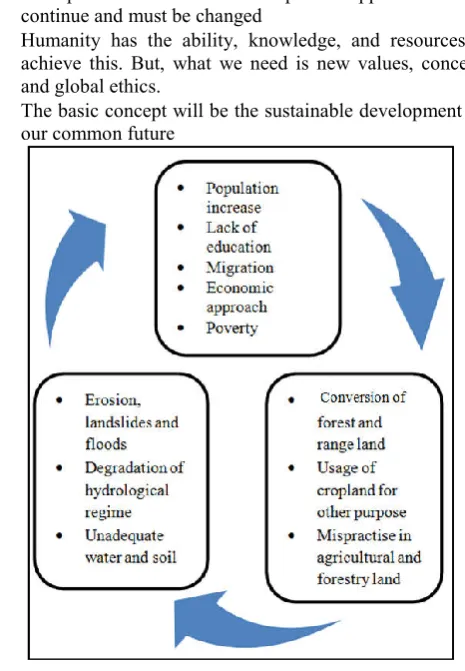
After the Second World War, ignoring the environment, rapid economic development and the arms race and new weapons technologies were improved nuclear experiments started. Moreover, new weapons were tested by means of regional conflicts or wars. In this period, undeveloped countries tried to catch up with the developed countries in economy and technology as soon as possible. As a result of these negative developments, environmental pollution, degradation of the balance of ecosystems, rapid depletion of natural resources ved all over the world. That is how pollution have begun. But, when problems start to appear, some institutions and scientists started to seek solutions. The causes and results of these negative developments can be explained in Figure 1.
istory of International Studies
However, 1970’s, when it was understood that environmental problems would threaten life on a global scale, then some initiatives were begun on searching for solutions to prevent problems. Indeed, in 1972 in Stockholm, Sweden, the UN l Conference " was convened and discussed the environmental problems on a global scale for the first time. Later, the report of the conference titled “Our Common Future” was published in 1987 at which sustainable development first entered to the public agenda.
OF CURRENT RESEARCH
Stockholm conference proved that environment was related with economy, technology and diplomacy and this accelerated the next processes in this regard. Therefore, the EU member states started to implement the environmental action program for the purpose of sustainability in 1973. The problems of human settlements and environmental issues were discussed at Habitat I Conference which was held in Vancouver, Canada in 1976. The manifesto of the conference was deeply supported to improve the quality of life by more equitably distribution from the national income and to make a plan for protecting environment in urban and rural areas. In 1983 Gro Harlem Brundtland who was President of the United Nations Commission on Environment and Development submitted "Our Common Future" report, published in 1987 to UN General Assembly. The most critical messages were given to the world public opinion with this report which can be summarized as follows:
The present economic development approach cannot
continue and must be changed
Humanity has the ability, knowledge, and resources to
achieve this. But, what we need is new values, concepts and global ethics.
The basic concept will be the sustainable development for
[image:2.595.43.276.271.607.2]our common future
Figure 1.Cause and effects of degradation
According to the report, due to the unsuitable economic development programs only considering the economic benefit and the environment is sacrificed. The sustainability of development depends on adoption of the idea that the environment is supplied and limited of the economic development. It is generally agreed that the sustainability is environmentally sound management and social and economic concept for economic growth. The Maastricht Treaty established European Community which was put in to practice in 1993. According to the agreement, the member states must implement economic development programs which consider economy and environment at the same time. The Countries shall follow the policy considering preserving, protecting and improving the quality of the environment. Some important articles taken from the treaty are:
Environmental quality should be protected and
improved
Human health should be protected
Natural resources should be used rationally and wisely
Protecting and improving measures should prevent
environmental problems in the world.
In 1992 Rio Earth Summit "Sustainable Development", has been adopted as a common goal all of humanity in 21st century. Action Plan with the title of Agenda 21 containing action for the purpose of sustainable development and basic principles were approved at conference. Some other important principles adopted at conference are as follows:
The countries participating to the conference should be
respectful for protecting the integrity of the environment and development system in the world
We must be respectful the human beings, because the
sustainable development is for human beings
Human beings have the rights for healthy and
productive life compatible with the environment
We should consider the elements of ecosystem of the
Earth as interdependent and complementary
Environment and development is a whole and cannot be
considered separately. They are integral part of each other.
Presently, Environmental Impact Assessment (EIA) is
an essential tool for investment projects.
Especially, the least developed countries have
vulnerable and defenseless environmental conditions which must be given special priority.
The EU member states must cooperate and collaborate
in any areas in order to protect, and improve the environment in all countries
In June 1996, the heads of states or governments assembled at UN Conference on Human Settlements (Habitat II) in Istanbul and discussed the important subjects which are suitable housing and urban areas for sustainable human settlements in the world. Some important points from Istanbul declaration are as follows:
Since human beings who are at the center of sustainable
development, they naturally take place in the habitat agenda.
Because, the development and environment are
interdependent each other, adequate infrastructures, public services and employment possibilities in urban and rural areas must be supported.
We approved the objects and principles of the program
containing adequate shelter of sustainable human settlements development in urban and rural areas in the world.
The Millennium Summit was held in September 2000 in UN Headquarters in New York. World leaders unanimously adopted the Millennium Declaration. The summit identified the eight goals which would be realized until 2015. The goals are as follows;
Eradication of extreme poverty and hunger
Achieving primary and secondary education
Promoting gender equality and empowering women
Reducing child mortality
Improving maternal health
Combating HIV/AIDS, Malaria
Ensuring sustainability
Developing global partnership for development
The representatives of the world states assembled and they have strongly agreed the previous declarations, negotiated environmental problems and evaluated situations at the World Summit on Sustainable Development in Johannesburg in September 2002. Some important decisions from the conference on sustainability are as follows:
We decided a declaration for the solutions of the urgent
environmental deterioration problems in Stockholm in 1972.
We have also agreed that the targets of sustainable
development will be achieved by cooperation and constructive partnership.
We have adopted that collective strength and
constructive partnership will be essential for achieving the sustainability.
We are aware of changing our consumption habit and
production methods for protection of natural resources.
Eradication of poverty is also importa
the sustainability.
We accept that collective responsibility is essential for
achieving the economic development, social
development and environmental protection at the local, national, regional and global levels.
The world environment suffers from problems such as,
loss of biodiversity, desertification on fertile land, deforestation, flood, the adverse effects of climate change, natural disasters that have become more frequent and more devastating.
In June 2012 Rio+20 summit was held in Rio de Janeiro, Brazil. The conference agreed the outcome document entitled “The Future we want” which was a road map contained clear and practical measures for sustainable development. The leaders have reaffirmed the resolutions at previous meetings on sustainable development since 1972 Stockholm
Some important Items were;
Combating poverty
Financing strategy for sustainable development
Facilitation of technology transfer
Green economy
Partnership for sustainable development
RESULTS AND DISCUSSION
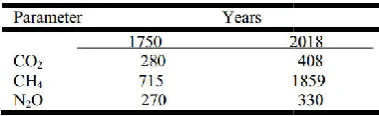
According to the IPCC 5th report, emissions shows up
trend at which increased for CO2 46 %, CH4 160 % and NO
[image:3.595.323.547.113.269.2]%. Naturally, these increases will affect other parameter as well.
Table 1.Green house gas emission (IPCC,
Developing global partnership for development
The representatives of the world states assembled and they have strongly agreed the previous declarations, negotiated uated situations at the World Summit on Sustainable Development in Johannesburg in September 2002. Some important decisions from the
We decided a declaration for the solutions of the urgent environmental deterioration problems in Stockholm in
We have also agreed that the targets of sustainable development will be achieved by cooperation and
pted that collective strength and essential for achieving
We are aware of changing our consumption habit and production methods for protection of natural resources. Eradication of poverty is also important for achieving
We accept that collective responsibility is essential for
achieving the economic development, social
development and environmental protection at the local,
ffers from problems such as, loss of biodiversity, desertification on fertile land, deforestation, flood, the adverse effects of climate change, natural disasters that have become more
n Rio de Janeiro, outcome document entitled “The Future we want” which was a road map contained clear and practical measures for sustainable development. The resolutions at previous meetings on sustainable development since 1972 Stockholm Conference.
Financing strategy for sustainable development
Partnership for sustainable development
report, emissions shows up word
160 % and NO2 22
[image:3.595.311.553.355.529.2]Naturally, these increases will affect other parameter as
Table 1.Green house gas emission (IPCC, 2015)
[image:3.595.314.553.606.774.2]World average temperature also shows an upward trend which increased about 1.5 F which is equal 0.7 C0 from the year 1800 to 2005. As a result of this, while polar glaciers and snow decreased, sea level rose Figure 2.
Figure 2.Global temperature change
When we look at the precipitation distribution, it can be seen that there has been an irregularity. Although,
[image:3.595.68.258.736.794.2]1900 to 1950 precipitation anomaly had a But after 1950, it had an increasing trend, Figure 3.
Figure 3.Global precipitation anomaly (EPA, 2016)
Undoubtedly, these negative developments have caused disasters such as flood, drought, storm, extreme temperature values in various regions Figure 4.
Figure 4. Number of disasters (WMA,
World average temperature also shows an upward trend which increased about 1.5 F which is equal 0.7 C0 from the year 1800 to 2005. As a result of this, while polar glaciers and snow decreased, sea level rose Figure 2.
2.Global temperature change, PNAS(2006)
When we look at the precipitation distribution, it can be seen een an irregularity. Although, between the years 1900 to 1950 precipitation anomaly had a decreasing trend. But after 1950, it had an increasing trend, Figure 3.
Figure 3.Global precipitation anomaly (EPA, 2016)
Undoubtedly, these negative developments have caused disasters such as flood, drought, storm, extreme temperature values in various regions Figure 4.
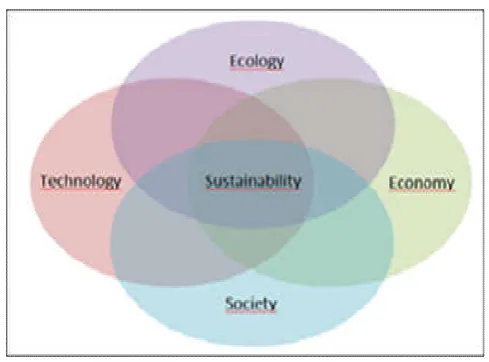
Figure 5. Sustainability: intersection area
Components of sustainability
Economic development should not damage the environment. If it causes harm to environment, then the development model is wrong. Therefore, society must be transformed into an environmentally conscious one. Because, the presence of all living organisms including human depend on protecting the certain quality of natural resources in present and future. The only solution is to make environment compatible with economy and technology. Therefore, sustainability is the intersection point of ecology, technology and economy Figure 5. Integrated watershed management is very important concept in this regard. Because, all of natural resource such as water, soil, plant and animal are presented there and they are in interaction with each other. When any positive and negative changes occur on any resource, there can be a reciprocal effect on each other. This can be defined as ecologıcal integrity. These issues were summarized at the following;
Ecology: The natural world is valuable, any vivid cannot be
misused over the physical carrying capacity of nature, in order to meet the needs of themselves for their own use. Recycled or not, every natural resource should be used to provide continuation of them. Ecology or environment mainly consists of air, water and land. Let’s examine them shortly;
Air: Each activity performed such as housing, transportation,
industry emits pollutants into the atmosphere. Pollution in the air can also contaminate other sources by means of hydrologic circulation. But, it is possible to take these pollutants under control with a rational planning and by using latest modern technological methods.
Water: Since water resources are limited and determinant
sources in nature, water pollution has multi- faceted effects. It should be main goal that waste water to be returned to nature in its original quality. Rain water was an important resource for using daily requirements as in the history and at present.
Soil: The soil is the last point where all other pollutants reach
and accumulate. Pollutants are reacted in the soil which affects the chemical properties of soil. Integrated water watershed planning containing land use planning is essential for sustainable use of land at which the soil is used according to technical specifications.
Economics: According to the main idea of sustainable
development, while meeting the needs of today, we should not forget that we must enable that future generations can meet their own needs. Therefore, natural resources must be shared fairly between today's societies and future generations. Basically, we should consume and produce as much as we need.
Technology: At the planning stage of any project or activities
in nature, the environmental impact assessment (EIA) must be considered. New technologies of energy supply and production activities should not harm the environment, at regional or global level so that measures to be taken should be suitable to dimensions of the problems. Energy is the basic input for industrial production. But, it must be provided from renewable resources if possible.
Society: It should not be forgotten that human welfare depends
on not only material but also social, cultural, moral and spiritual dimensions. Welfare, rights and possibilities, responsibilities should be distributed fairly among different social groups in the same country or among the countries. The poor and powerless people's rights must be protected and developed all over the world. Inequality, in all areas such as law, economy, education should be minimized for peace and sustainability in a society or in the world production and consumption pattern must be changed to achieve sustainable development.
Conclusions and recommendations
Natural resources are entrusted to us, they should be used not only for the current generation of prosperity and wealth but also for future generations. The real problem can be expressed as a wrong perspective to the life. Therefore, the life style of the present society needs to be changed completely. Of course, this is not an easy task. But, we must work together in order to achieve that. Generally, when initiating an investment project, the dimensions such as economy, ecology, technology and society must be considered at the planning stage. Particularly, infrastructure and superstructure projects should not be implemented before making EIA. Some important proposals to achieve the goals of sustainable development are;
People have the right to live in wellness and in a way
compatible with nature
Development and environmental protection cannot be
considered separately.
Civil education should be made to increase the
environmental awareness and remind their duty.
Citizens should be provided to achieve timely and
accurate information about the environment of each country.
It is necessary to take preventive measures before
environmental degradation occurs.
Environmental pollution and degradation is common,
but there are different degrees of responsibility for countries.
All countries, especially developing countries should
keep the excessive population growth under control.
The environment of least developed countries which is
under pressure must be protected
Countries are obliged to provide accurate information
about environmental issues in advance and exceeding the country's borders.
States must reform on the effective environmental legislation.
States should promote sustainable development
technology through scientific and technological cooperation.
All countries should cooperate to protect the global
ecosystem and integrity.
Countries should resolve their disputes through
peaceful means and other environmental issues.
World peace, economic and technological deve lopment
and environmental protection are inter dependent and indispensable.
REFERENCES
Habitat I, 1976 United Nations Conferences on Human Settle ments, Vancouver, Canada www.un.org/conferances/ habitat/ archive
Habitat II, 1992. United Nations Conferences on Human Settlements, İstanbul, Turkey.www.un.org/conferances/ habitat
EPA, 2016, Climate change indicators, USA IPCC, 2015. The fifth report, Geneva, Switzerland
Johannesburg Summit, 2002, Johannesburg Declarations, http://www.un.org/summit, South Africa
Our Common Future, 1987. Brundtland Report, UNEP, 14Th Governing Counsel, Nairobi, Kenya
Özyuvacı N. et al, 1997. Integrated Watershed Management
For Sustainable Development of Renewable Natural Resources. Proceedings of the XI. World Forestry Congress, 1997, Antalya, Turkey
PNAS, 2013, www.pnas.org
Rio Decleration, 1992. UN Documents, United Nations Confe rence on Environment and Development, Rio de Janerio, Brazil
Stockholm Decleration, 1972 http.//www.unep.org./Docu ments.
The Maastricht Treaty,1992, Maastricht, Netherland,
http://www.eurotreaties.com/maastricht WMA, 2014. World meteorological agencies