ISSN Online: 2157-9458 ISSN Print: 2157-944X
DOI: 10.4236/fns.2019.109084 Sep. 29, 2019 1157 Food and Nutrition Sciences
Effect of Compositing Precooked Cowpea
with Improved Malted Finger Millet on
Anti-Nutrients Content and Sensory
Attributes of Complementary Porridge
Cyprian O. Syeunda, Joseph O. Anyango
*, Abdul K. Faraj
Department of Dairy and Food Science and Technology, Egerton University, Njoro, Kenya
Abstract
Protein energy malnutrition remains a huge burden in Sub-Saharan Africa. Principally, it is due to children being fed on millet gruels which are high in carbohydrates, and low protein. Moreover, they contain significant amounts of anti-nutrients such as phytates, phenols and tannins. Compositing of malted finger millet flour with other flours has potential for improving the nutritional quality and sensory attributes of these foods. The objective of this study was to determine the effect of compositing malted finger millet flour with cowpea on the anti-nutritional contents and sensory properties of for-mulated baby weaning food. Mixing selected improved finger millet varieties with precooked cowpea flour was based on WHO recommended levels. There was a significant (p < 0.05) reduction in total phenolic content, tannin con-tent and phytic acid by 41%, 50%, and 44%, after compositing with malted finger millet and precooked cowpea at 10.32%, 21.26% and 32.75%, respec-tively. Cooking process significantly reduced amount of trypsin inhibitors, and other anti-nutrients both in cowpea and complementary porridge. Load-ings from principal component analysis (PCA) of 17 sensory attributes of porridge showed that approximately over 80% of the variations in sensory at-tributes were explained by the first four principal components. Reductions in texture attributes (stickiness and viscosity) and astringency aftertaste corre-sponded to increase in overall aroma and flavour of the porridge in terms of malty flavour and aroma. Although inclusion of 32.75% precooked cowpea gave the highest reduction in anti-nutrients, it resulted in cooked cowpea flavour. For consumer acceptability, it may require masking by use of com-mercial flavours. Therefore this work shows that malted finger millet-pre- cooked cowpea have potential to be used in formulating cultural acceptable complementary food.
How to cite this paper: Syeunda, C.O., Anyango, J.O. and Faraj, A.K. (2019) Effect of Compositing Precooked Cowpea with Improved Malted Finger Millet on Anti- Nutrients Content and Sensory Attributes of Complementary Porridge. Food and Nu-trition Sciences, 10, 1157-1178.
https://doi.org/10.4236/fns.2019.109084 Received: August 30, 2019
Accepted: September 26, 2019 Published: September 29, 2019
Copyright © 2019 by author(s) and Scientific Research Publishing Inc. This work is licensed under the Creative Commons Attribution International License (CC BY 4.0).
http://creativecommons.org/licenses/by/4.0/
DOI: 10.4236/fns.2019.109084 1158 Food and Nutrition Sciences
Keywords
Finger Millet, Cowpea, Malting, Anti-Nutrients, Weaning Food
1. Introduction
Weaning is the art of introducing semi-solid or solid food to infant life or com-plete discontinuation of breast milk by the introduction of semi-solid or solid food to the diet. Hence it involves expanding the infant’s diet to include other
drinks and food rather than infant formula or breast milk [1]. During this
die-tary transition, the nutritional requirements for the brain and growth of the
in-fant are high. Some researchers [2] have observed that, among developing
coun-tries, during child feeding practices, weaning period usually starts at the age of 4 - 6 months, and continues up to 2 - 3 years. During weaning, the transitional phase from liquid to solid or semi-solid food is critical to an infant’s life, since nutritional deficiency in the form of protein-energy-malnutrition may likely to occur.
Appropriate nutritional intake is important especially for infants, because it is
the most critical stage of human development [3]. During the first six months of
life, infants obtain all the energy and nutrient requirements from breast milk. By the age of six months, they need complementary or additional foods to meet
their needs for proper growth and development [4]. The principal food given to
children at 6 to 36 months of age in many parts of Kenya is a cereal-based thin
porridge (uji). Mainly, it is made from maize (Zea mays), sorghum (Sorghum
bicolour L. Moench), finger millet (Eleusine coracana), which are sometimes
supplemented where possible, with banana (Musa acuminata) fruit, non-cereals
such as pumpkin (Cucurbita maxima), cassava (Manihot esculenta) sweet
pota-toes (Ipomea batatas), dagaa (Rastrineobola argentea) or milk [5]. However,
these weaning foods are typically gruels of high bulk, low protein content and
quality [6]. High dietary bulk in these gruels makes it hard for children fed on
them to adequately meet their nutritional requirement, partly because a young child has a less mature gastrointestinal tract which results in digestion difficulty
[7]. This causes a huge malnutrition implication, as is it difficult to meet a child’s
nutritional needs. Therefore utilization of traditional processing techniques such as malting seems crucial in developing a nutrient dense and acceptable comple-mentary food that can be used to improve food security among the most impov-erished communities.
Finger millet (Eleusine coracana) stands as the sixth most important cereal
grain in the world in terms of production. It sustains one-third of the world’s population. It is able to grow to a height of 0.4 - 1.0 m while the length of its
panicles varies between 3 and 13 cm [8]. The crop is well adapted to arid,
DOI: 10.4236/fns.2019.109084 1159 Food and Nutrition Sciences
areas [8]. It is an important crop because of its capability to be stored for long.
Morphologically, the seeds roughly vary from spherical to oval and dimension
range between 1 to 2 mm, with a 1000 kernel weight approximately 2.5 g [9].
Nutrient profile of finger compares favourably with other cereals, especially rice and sorghum. It is rich in hydrophobic amino acids, carbohydrates and miner-als, especially calcium. However, different reviews have shown that the presence of anti-nutritional factors such as condensed tannins and phytate in finger millet
adversely affects the bioavailability of proteins, carbohydrates, and minerals [8]
[9].
Cowpea is a drought and heat tolerant crop that is able to survive arid or semi-arid soil conditions experienced in sub-Saharan-Africa. In Kenya, where there are many poor subsistence farmers, cowpea could be a suitable alternative to expensive sources of protein such as meat and fish, because of its unique
at-tributes and low agronomical requirement in terms of [10]. It is rich in protein
when compared to cereals such as rice, sorghum and finger millet. Therefore, to improve nutritional status of poor farmers, less costly, nutritious plant sources such as pulses can be a source of cheap protein. Cowpea is a strong candidate for fortification of cereal-based weaning foods in Africa to reduce PEM, because of it contains good quality protein. However, it also contains oligosaccharides; verbscose and stachyscose, associated with flatulence, and trypsin inhibitors, but
these can be reduced significantly through cooking [11].
Various researchers have studied the nutritional and sensory quality of dif-ferent food products with varying levels of cowpea. Examples include, porridge
made from sorghum-cowpea [12], injera (fermented flatbread), ugali
(unfer-mented thick porridge) and uji (unfermented thin porridge) made from
com-posites of African sorghum and cowpea [13]. The results have been promising.
However, compositing with cowpea has also been shown to affect sensory
at-tributes of formulated foods negatively. For instance, [14] working on
sor-ghum-cowpea thick porridge, found that high proportions of cowpea beyond 30% introduced a noticeable be any flavour. This negatively influenced sensory attributes of the product. Furthermore, there is little information on the effect of malting and addition of precooked cowpea on complementary porridge. There-fore it is necessary to find out how addition of precooked cowpea to malted fin-ger millet would affect anti-nutrient and sensory attributes of the complemen-tary food. Hence, the objective of this study was to determine the effect of com-positing agronomically improved malted finger millet flour with cowpea on anti- nutrient content and sensory properties of formulated baby weaning food.
2. Materials and Methods
DOI: 10.4236/fns.2019.109084 1160 Food and Nutrition Sciences
Egerton University, Kenya. Two, improved finger millet varieties were sourced from Egerton University Agro-Science Park, and were previously grown in a low altitude environment (Bomet County, Kenya). Improved cowpea varieties were
Kundesoko and Kundefaulu sourced from KALRO Katumani Research Centre in Machakos County. The finger millets used had the following attributes: Snap-ping Green Early is easy to harvest and thresh and KNE 741 variety used is super
early in maturity and suitable to low altitude. Kundesoko is a dual variety, high
yielding, with long pods that are mostly above canopy for easy harvesting, while,
Kundefaulu brown coloured, with grain that are large and with long pods loosely attached to pedicel, hence preferred by farmers as it fetches better price in the market.
2.1. Food Preparation Procedures
Preparation of malted finger millet flour
Malting of the finger millet was carried out with modification as described by
[15] Finger millet grains (1 kg) were cleaned three times using tap water and
steeped in 2-L of water for 24 h. Water was changed after every 6 h during steeping (maintain good air circulation). After steeping, the grains were then
germinated in forced draft oven at ambient temperature of ≈25˚C. Tap water
was sprinkled regularly onto the grains and mixed to ensure uniform malting. After 48 h, the grains were dried in an oven at 48˚C ± 2˚C for 24 h, to a moisture content of 10%, and then milled using a Microphyte lab disintegrator model Fz102 (Tianjin, China), fitted with 500-μm sieve to give whole grain flour, and then stored at 9˚C - 10˚C until further analyses.
Preparation of precooked cowpea flour
Mature and dry grains (1 kg) were cleaned, which involved removing of for-eign matter, broken seeds and immature seeds. The grains were then washed using tap water, and placed in metallic pot; tap water was then added until the grains were all submerged. They were cooked in boiling water (93˚C) for ap-proximately 1 h, and then dried in an oven set at 50˚C to a moisture content of 10%. Dried grains were then milled using a Microphyte lab disintegrator model Fz102 (Tianjin, China), fitted with 500-μm sieve to give whole grain flour, and then stored at 9-10˚C until further analyses.
Preparation of composite flours
Malted finger millet and precooked cowpea flours were composited at 10.34%, 21.26% and 32.75% to reflect 9 - 13 g per day, protein requirements of the
in-fants 1 to 3 years old as outlined by [16] with 0% cowpea (100% unmalted finger
millet as negative control /malted finger millet as positive control)
Preparation of porridge flours
DOI: 10.4236/fns.2019.109084 1161 Food and Nutrition Sciences
Dried porridge was milled using a Microphyte lab disintegrator model Fz102 (Tianjin, China), fitted with 500-μm sieve to give flour, and then stored at 9˚C - 10˚C for further analyses.
2.2. Analyses
Determination of moisture content
Moisture content of the samples was determined using oven-drying method
according to AACC International [17] Method 44 - 15 A. It involved exposing
samples to a single stage air oven drying at 103˚C for 3 h. Moisture content was then calculated as the loss in weight expressed as a percentage of the original weight of a sample.
Determination of total phenols content
Total phenolics of the samples were analysed using the Folin-Ciocalteu method
[9][18]. Flour (300 mg), was extracted with 30-mL of acidified methanol for 1 h
at room temperature and then centrifuged at 2060-xg for 20 min using Eppen-dorf centrifuge (Model 5804, EppenEppen-dorf, Hamburg, Germany), decanted and three replicate supernatants obtained. Sample extracts (0.5-mL) were mixed with 2.5-mL of Folin-Ciocalteu phenol reagent in a 50-mL centrifuge tubes contain-ing 10-mL distilled water, 7.5-mL of 20% (w/v). Sodium carbonate was then added within 8 min after addition of the Folin-Ciocalteu reagent. The contents were then made up to volume with distilled water, stoppered and thoroughly mixed. Tubes were left to stand at room temperature for 2 h and absorbance read at 760 nm using a UV/VIS Spectrophotometer (model Pharmaspec UV- 1700, Shimadzu, Japan). Sample blank were included in which distilled water re-placed the sample. Catechin was used as standard. Total phenol was expressed as mg catechin equivalent per 100mg sample.
Determination of condensed tannin content
Modified Vanillin-HCl in methanol method [19] was used in determining
condensed tannins Ground samples (0.25 g) were weighed into a 50 ml Erlen-meyer flask, and then 10-mL of 4% HCI in methanol (v/v) was added and the content shaken for 20 min using Ratek Orbital Incubator (Boronia, Victoria, Australia). Samples were centrifuged at 2060 ×g for 20 min at room temperature using Eppendorf centrifuge. Sample extracts (1-mL), were then mixed with 5-mL of Vanillin-HCI reagent. The specific reagent (Vanillin-HCI) for the determina-tion was prepared just before use by mixing equal volumes of 1% Vanillin in methanol (w/v) and 8% conc. HCI in methanol (v/v). Absorbance was read at 500 nm using UV/VIS Spectrophotometer exactly after 20 min. Sample blanks in which 4% HCI in methanol replaced vanillin reagent were included. For zero setting of the colorimeter, 1-mL of a blank (1% HCl in methanol) was used. Catechin was used as standard. Condensed tannin was expressed as mg catechin equivalent per 100 mg sample.
Determination of phytic acid content
Phytic acid analysis was based on precipitation of phytate [20], with some
DOI: 10.4236/fns.2019.109084 1162 Food and Nutrition Sciences
using 50 mL of 3% Trichloroacetic acid by shaking on Ratek Orbital Incubator for 40 min. The suspension was then centrifuged at (3000 ×g, 10 min) using Ep-pendorf centrifuge, 10-mL aliquot of the supernatant was transferred to 50-mL centrifuge tube and 4 mL of FeCl3 solution added rapidly. The contents in the tubes were then heated in boiling water for 45 min, then centrifuged at (3000 ×g, 10 min) using Eppendorf centrifuge and the clear supernatant decanted. The precipitate was then washed twice by dispersing in 25-mL 3% TCA, and then heated in boiling water for 10 min, then centrifuged at (3000 ×g, 10 min) using Eppendorf centrifuge, and washed again with 20-mL distilled water. The pre-cipitate was then dispersed in 5-mL of distilled water and 3-mL of 1.5N NaOH added, then topped up to 30-mL with distilled water and heated for 30 min in boiling water. The contents were then filtered using Whatman No. 2 filter paper with pore size of 8 µm, and then washed with 70-mL hot distilled water. The precipitate was transferred and dissolved into the 100-mL volumetric flask con-taining 40-mL of hot 3.2N HNO3. The filter paper was washed using distilled water, and the washings collected in the same flask. The flask was cooled to room temperature and the volume made to 100-mL with distilled water. An ali-quot (5-mL) was transferred to another 100-mL volumetric flask, and mixed with 65-mL distilled water, 20-mL of 1.5 M Potassium thiocyanate (KSCN) then added. The volume was made to 100-mL with distilled water, and colour read at 480 nm using a UV/VIS spectrophotometer within one min. Reagent blank in which distilled water replaced the sample was included. Calibration curve was made from Iron (III) nitrate solution stock solution. Iron (In micrograms), pre-sent in test solution was determined from the calibration curve and phytate P calculated as follows,
Phytate P mg/100g sample = [Fe (μg) × 15]/Weight of sample (g).
Recruitment and screening of the panel
Egerton university Department of Dairy and Food Science and Technology students, and academic staff who were willing to consume finger millet porridge, and had some experience of descriptive sensory evaluation and did not suffer from any food allergies, were invited through telephone, emails, and notices to participate in sensory evaluation. Twenty individuals responded, and attended an introduction session. Ten persons were already trained panellists: of these, nine confirmed their availability. They were screened for sensory acuity, using screening methods; identification tastes (sweet, salty and sour) and identification of sensory attributes that describe taste, flavour and appearance of different complementary porridge. A final panel of ten judges: nine previously trained and one recruit were selected and used.
Training of the panel
The panel was trained for 4 days in 2 hr sessions per day, according to generic
descriptive method described by [21]. During the training, each panellist
de-scribed the differences between the porridge twice. For purposes of evaluation,
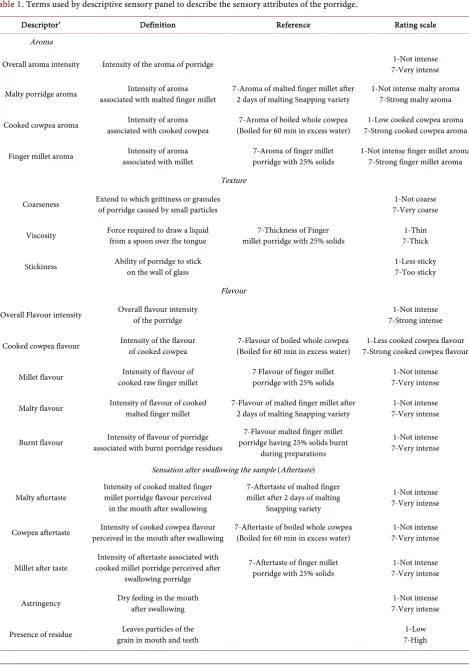
descriptive terms and scale anchors were developed, defined and agreed (Table
DOI: 10.4236/fns.2019.109084 1163 Food and Nutrition Sciences
Table 1. Terms used by descriptive sensory panel to describe the sensory attributes of the porridge.
Descriptor’ Definition Reference Rating scale
Aroma
Overall aroma intensity Intensity of the aroma of porridge 7-Very intense 1-Not intense
Malty porridge aroma associated with malted finger millet Intensity of aroma 7-Aroma of malted finger millet after 2 days of malting Snapping variety 1-Not intense malty aroma 7-Strong malty aroma
Cooked cowpea aroma associated with cooked cowpea Intensity of aroma (Boiled for 60 min in excess water) 7-Aroma of boiled whole cowpea 7-Strong cooked cowpea aroma 1-Low cooked cowpea aroma
Finger millet aroma associated with millet Intensity of aroma 7-Aroma of finger millet porridge with 25% solids 1-Not intense finger millet aroma 7-Strong finger millet aroma
Texture
Coarseness Extend to which grittiness or granules of porridge caused by small particles 7-Very coarse 1-Not coarse
Viscosity Force required to draw a liquid from a spoon over the tongue millet porridge with 25% solids 7-Thickness of Finger 7-Thick 1-Thin
Stickiness Ability of porridge to stick on the wall of glass 1-Less sticky 7-Too sticky
Flavour
Overall Flavour intensity Overall flavour intensity of the porridge 7-Strong intense 1-Not intense
Cooked cowpea flavour Intensity of the flavour of cooked cowpea (Boiled for 60 min in excess water) 7-Flavour of boiled whole cowpea 7-Strong cooked cowpea flavour 1-Less cooked cowpea flavour
Millet flavour cooked raw finger millet Intensity of flavour of 7 Flavour of finger millet porridge with 25% solids 7-Very intense 1-Not intense
Malty flavour Intensity of flavour of cooked malted finger millet 7-Flavour of malted finger millet after 2 days of malting Snapping variety 7-Very intense 1-Not intense
Burnt flavour associated with burnt porridge residues Intensity of flavour of porridge porridge having 25% solids burnt 7-Flavour malted finger millet during preparations
1-Not intense 7-Very intense
Sensation after swallowing the sample (Aftertaste)
Malty aftertaste Intensity of cooked malted finger millet porridge flavour perceived in the mouth after swallowing
7-Aftertaste of malted finger millet after 2 days of malting
Snapping variety
1-Not intense 7-Very intense
Cowpea aftertaste perceived in the mouth after swallowing Intensity of cooked cowpea flavour 7-Aftertaste of boiled whole cowpea (Boiled for 60 min in excess water) 7-Very intense 1-Not intense
Millet after taste cooked millet porridge perceived after Intensity of aftertaste associated with swallowing porridge
7-Aftertaste of finger millet
porridge with 25% solids 7-Very intense 1-Not intense
Astringency Dry feeling in the mouth after swallowing 7-Very intense 1-Not intense
DOI: 10.4236/fns.2019.109084 1164 Food and Nutrition Sciences
Descriptive sensory evaluation of Porridge
Composite flour (100 g) was mixed with 200-mL cold water to form a thick batter. Water (350 mL), was brought to boil and then the batter added with con-tinuous stirring using a cooking stick until the mixture formed a viscous gruel. The porridge was steamed on low heat for 10 min The porridge was then placed in well labelled different jars, and then maintained at 50˚C in a water bath, to keep the porridge warm for descriptive sensory evaluation.
Cooked porridge (50-mLportions) was served in glass ramekins kept warm in a water bath at 50˚C. The sensory evaluation of the porridge was conducted in a sensory evaluation room with individual booths. Panelists evaluated all samples in duplicate. Each panellist received six samples of porridge on glass ramekins, a serviette and a plastic disposable cup filled with filtered tap water for rinsing the mouth before and between tasting the samples. To avoid fatigue, three samples were tasted and after a 10 min break, the other three samples kept warm in a water bath at 50˚C, were tasted. The order of sample presentation of the samples was randomised for each panel. Seventeen descriptive terms, were used by the panellists, grouped under flavour, aroma, texture and aftertaste attributes as
represented in Table 1. Aroma was first to be evaluated using short sniffs.
Thereafter, a full spoon of the porridge was chewed in the mouth for texture and flavour testing. Aftertaste properties were analysed by the panellists after
swal-lowing the porridge. Table 1 shows the definitions of the terms developed by the
panellists. A seven-point line scale was used to measure the intensity of each at-tribute for a given sample. The minimum value was one denoting not perceived, not coarse or not thick. The maximum point was seven denoting strongly per-ceived, very coarse or very thick.
2.3. Statistical Data Analysis
The effects of malting finger millet, compositing and cooking on the anti-nutrient content and sensory properties of the complementary porridge were evaluated using analysis of variance (ANOVA) based on a 5% level of significance. Signifi-cant differences between means were determined using Tukey’s honestly sig-nificance difference (HSD). Calculations were performed using Statistical Analy-sis System (SAS) version 9.3 at p < 0.05. Furthermore, principal component analysis (PCA) was performed to study sample relationships.
3. Results and Discussion
3.1. Effect of Compositing Malted Finger Millet Flour with
Precooked Cowpea on Total Phenols of Baby-Weaning Food
Effect of malting finger millet on total phenol of complementary porridge
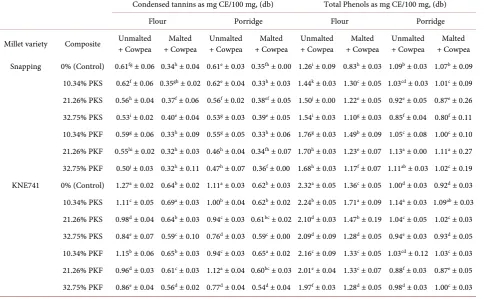
Unmalted KNE 741 (control), had the highest amount of total phenols (con-densed tannins, flavonoids and phenolic acids) at 2.32 mg CE /100 mg, (db) as
compared to unmalted Snapping (control) at 1.26 mg CE /100 mg (db) (Table
DOI: 10.4236/fns.2019.109084 1165 Food and Nutrition Sciences
Table 2. Effects of compositing precooked cowpea with improved malted finger millet on phenol content of finger millet com-plementary porridge.
Condensed tannins as mg CE/100 mg, (db) Total Phenols as mg CE/100 mg, (db)
Flour Porridge Flour Porridge
Millet variety Composite Unmalted + Cowpea + Cowpea Malted Unmalted + Cowpea + Cowpea Malted Unmalted + Cowpea + Cowpea Malted Unmalted + Cowpea + Cowpea Malted
Snapping 0% (Control) 0.61fg ± 0.06 0.34h ± 0.04 0.61e ± 0.03 0.35fh ± 0.00 1.26i ± 0.09 0.83h ± 0.03 1.09b ± 0.03 1.07b ± 0.09
10.34% PKS 0.62f ± 0.06 0.35gh ± 0.02 0.62e ± 0.04 0.33h ± 0.03 1.44k ± 0.03 1.30c ± 0.05 1.03cd ± 0.03 1.01c ± 0.09
21.26% PKS 0.56h ± 0.04 0.37f ± 0.06 0.56f ± 0.02 0.38ef ± 0.05 1.50j ± 0.00 1.22e ± 0.05 0.92e ± 0.05 0.87e ± 0.26
32.75% PKS 0.53i ± 0.02 0.40e ± 0.04 0.53g ± 0.03 0.39e ± 0.05 1.54i ± 0.03 1.10g ± 0.03 0.85f ± 0.04 0.80f ± 0.11
10.34% PKF 0.59g ± 0.06 0.33h ± 0.09 0.55g ± 0.05 0.33h ± 0.06 1.76g ± 0.03 1.49b ± 0.09 1.05c ± 0.08 1.00c ± 0.10
21.26% PKF 0.55hi ± 0.02 0.32h ± 0.03 0.46h ± 0.04 0.34fh ± 0.07 1.70h ± 0.03 1.23e ± 0.07 1.13a ± 0.00 1.11a ± 0.27
32.75% PKF 0.50j ± 0.03 0.32h ± 0.11 0.47h ± 0.07 0.36f ± 0.00 1.68h ± 0.03 1.17f ± 0.07 1.11ab ± 0.03 1.02c ± 0.19
KNE741 0% (Control) 1.27a ± 0.02 0.64b ± 0.02 1.11a ± 0.03 0.62b ± 0.03 2.32a ± 0.05 1.36c ± 0.05 1.00d ± 0.03 0.92d ± 0.03
10.34% PKS 1.11c ± 0.05 0.69a ± 0.03 1.00b ± 0.04 0.62b ± 0.02 2.24b ± 0.05 1.71a ± 0.09 1.14a ± 0.03 1.09ab ± 0.03
21.26% PKS 0.98d ± 0.04 0.64b ± 0.03 0.94c ± 0.03 0.61bc ± 0.02 2.10d ± 0.03 1.47b ± 0.19 1.04c ± 0.05 1.02c ± 0.03
32.75% PKS 0.84e ± 0.07 0.59c ± 0.10 0.76d ± 0.03 0.59c ± 0.00 2.09d ± 0.09 1.28d ± 0.05 0.94e ± 0.03 0.93d ± 0.05
10.34% PKF 1.15b ± 0.06 0.65b ± 0.03 0.94c ± 0.03 0.65a ± 0.02 2.16c ± 0.09 1.33c ± 0.05 1.03cd ± 0.12 1.03c ± 0.03
21.26% PKF 0.96d ± 0.03 0.61c ± 0.03 1.12a ± 0.04 0.60bc ± 0.03 2.01e ± 0.04 1.33c ± 0.07 0.88f ± 0.03 0.87e ± 0.05
32.75% PKF 0.86e ± 0.04 0.56d ± 0.02 0.77d ± 0.04 0.54d ± 0.04 1.97f ± 0.03 1.28d ± 0.05 0.98d ± 0.03 1.00c ± 0.03
Values are means ± standard deviations. Values of a parameter in a column, followed by different superscript letters are significantly different at p ≤ 0.05, n = 3, PKS—Precooked KundeSoko, PKF—Precooked KundeFaulu, CE—Catechin equivalent, db—dry weight basis.
the phenol content of the finger millet varieties. Polyphenols act as anti-feedants, phytoalexins, contributors to plant pigmentation and antioxidants therefore they
have an important role in cereals such as finger millet and sorghum [22]. This
explains the high levels observed in these two varieties of finger millet. In addi-tion, because of their astringency especially condensed tannins, they are able to reduce bird damage during immature stages of crop growth, thus they play a critical role in plant growth. However, these positive agronomic attributes of polyphenols are accompanied by nutritional disadvantages to consumers espe-cially infants, as they bind to protein reducing protein bioavailability. After malting, there was a significant (p < 0.05) reduction of total phenols in the two
finger millet varieties (Table 2). An approximately 9% to 41% reduction in
phenol was evidenced and it was similar to what has been reported in
litera-tureSingh and Raghuvanshi [23]. Malted KNE741 showed a substantial
[image:9.595.60.554.106.405.2]DOI: 10.4236/fns.2019.109084 1166 Food and Nutrition Sciences
enzyme polyphenol oxidase may contribute to further reduction.
Effect of compositing malted finger millet with precooked cowpea on total phenols of complementary porridge
Addition of precooked cowpea, which had low amount of phenols, trypsin in-hibitors and other anti-nutrients greatly, significantly (p < 0.05) influenced re-duction of assayable phenols in the composites. This is illustrated by the high reduction in phenols of approximately 40% as compared to snapping at 0% (100% malted finger millet when malted snapping finger millet variety was
composited with cowpea at 32.75%, (Table 2).
The effect of cooking malted finger millet with precooked cowpea on total phenols of complementary porridge
Cooking resulted in significant (p < 0.05) reduction of phenol content of up to 8% in extractable phenol of the composite flours. This is probably due to struc-tural binding of phenols to other macromolecules during cooking resulted in low assayable phenols. Chemical nature of the phenolic compounds, sample par-ticle size, extraction methods and the assay method itself also influenced assay-able phenols. The method used involved reduction-oxidation reaction during which at basic pH, the phenolate ion is oxidised, while phosphotungstic/phos- pho-molybdic acid complex reduced to chromogens (blue coloured solution)
[24]. Therefore, assayable phenols may have decreased either through
interfer-ence of reducing substances or apparent binding of phenols to other macro-molecules such as protein at a basic pH during cooking of the complementary porridge.
3.2. Effect of Compositing Malted Finger Millet Flour with
Precooked Cowpea on Condensed Tannins of Baby-Weaning
Food
Effect of malting finger millet on condensed tannins of complementary por-ridge
KNE741 (0%), had the highest amount of tannins, which was significantly
different at p < 0.05 from Snapping (0% control) (Table 2). This also explains
influence of variety on condensed tannins of finger millet varieties. Tannins are located mostly in the testa, and their occurrences are influenced by finger millet
variety [9]. These authors working on different finger millet varieties concluded
that finger millet comprising of thick testa had a significant amount of tannins as compared to those with thin testa and they help protect finger millet grain against birds, insects, and fungal attack. This possibly, explains the difference in tannin content of the two varieties. Condensed tannins are able to form indi-gestible protein-tannin complex, via hydrophobic interactions and hydrogen bonding. Finger millet prolamins (eleusinin) just like sorghum kafirins are proline-rich, therefore, they are able to strongly bind with protein reducing
pro-tein digestibility as reviewed by [13]. Table 2 shows that there is a significant (p
DOI: 10.4236/fns.2019.109084 1167 Food and Nutrition Sciences
reported in literature [23]. Hejazi and Orst [25], working with finger millet
malted at different durations (24 h, 48 h and 72 h) were able to show a positive reduction between tannin content and germination duration. The reduction is mainly attributed to steeping step of the finger millet grains. During steeping,
there is leaching of tannin into the sprouting medium [15], also during malting,
tannin reduction is hypothesized to be reduced via high activity of polyphenol oxidase that hydrolyses tannin molecule into lower molecular weight
com-pounds, flavanols [26]. It is therefore of importance that, reduction in condensed
tannins will result in low formation of indigestible protein-tannin complexes. In addition the low molecular weight compounds formed (flavanols), after break-down of condensed tannins, are unable to exert stearic effects to proteins and in process would result in increase in protein quality.
Effect of compositing malted finger millet with precooked cowpea on con-densed tannins of complementary porridge
Compositing resulted in approximately 21% reduction in condensed tannins when unmalted finger millet was composited with precooked cowpea at 10.34%, 21.26% and 32.75% levels. It had also a compound effect when malted finger millet was composited with precooked cowpea as it resulted in 18% reduction in condensed tannins. The reduction was attributed to addition of precooked cow-pea that had low amount of tannins as compared to uncooked cowcow-pea. Also, malting of finger millet resulted in low amount of tannins in the composites as discussed above resulting in low amount assayable condensed tannins in the composites formulated.
Effect of cooking malted finger millet with precooked cowpea on condensed tannins of complementary porridge
Cooking of the complementary foods resulted in significant (p < 0.05) de-crease in assayable tannin content by approximately between 22% and 47% (Table 2). This is in agreement with previous studies. For example, Anyango et
al. [13], working with compositing of sorghum foods with cowpea, observed a
substantial tannin reduction of between 18% and 69%. Hypotheses, surrounding these reductions include; structural organization of tannins resulting in interac-tion of tannins with other grain components such as carbohydrates and protein,
forming less extractable complexes [27], therefore lowering tannin assayed in the
complementary foods. Secondly, during cooking of the porridges there is
ther-mally induced degradation [28], of tannins, resulting into simpler flavanol
com-pounds as seen in sorghum tannin. There were inconsistences in some of the tannin values for the cooked porridge flours as compared to the raw composite flour. These apparent inconsistences may be explained due to the principle be-hind Vanillin-HCl method, which is specific to dihydrochalcones, flavan-3-ols and proanthocyanidins, because of single bond they possess at 2, 3-position and
a free hydroxy group as reviewed by [22]. The shortcoming with this assay
DOI: 10.4236/fns.2019.109084 1168 Food and Nutrition Sciences
depolymerisation, degradation and polymerization of the proanthocyanidins
[29].
3.3. Effect of Compositing Malted Finger Millet Flour with
Precooked Cowpea on Phytic Acid Content of Baby-Weaning
Food
Effect of malting finger millet on phytic acid of complementary porridge
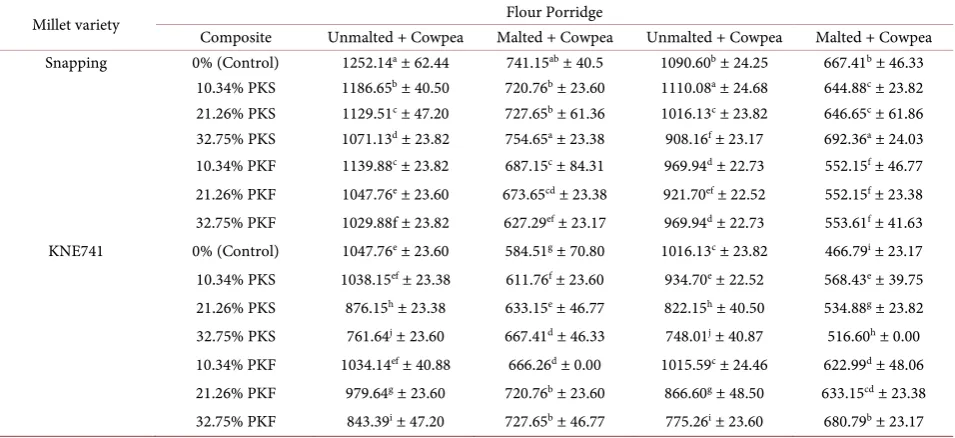
Snapping (control) showed a significant (p < 0.05) higher amount of phytate as compared to KNE741 (Control) variety, showing that variety had a significant
effect on phytic acid in the grains [30] (Table 3). The high values seen for
phy-tate in the unmalted samples are attributed to area where they were grown. The environment was characterized with high temperatures and low rainfall, which have great influence on phytic acid synthesis. Phytic acid synthesis involves en-zyme myo-inositol-3-phosphate synthase (MIPS), which converts D-glucose to myo-inositol phosphate, later undergoes various phosphorylations steps to form phytic acid. Optimum temperature for MIPS activity in plants is 35˚C and a pH,
of between 7.0 and 7.5 [31]. These conditions therefore are responsible for high
phytate levels in the unmalted grains. After malting, MKNE741 showed a
sig-nificant (p < 0.05), reduction of phytate by an approximately 44% (Table 3).
Malting also significantly (p < 0.05) reduced phytate in the composites made
from malted finger millet by approximately between 12% and 44% in Table 3.
This is due to increment in endogenous phytatase which significantly degraded
phytate into inorganic phosphorous and inositol [32]. In the present study the
apparent decrease was lower as compared to reported values by Traoré et al.,
[32] at 67%. The difference is probably due to different assay used in analysis.
Table 3. Effects of compositing precooked cowpea with improved malted finger millet on Phytic acid content of finger millet complementary porridge as Phytate P mg/100g (db).
Millet variety Composite Unmalted + Cowpea Malted + Cowpea Flour Porridge Unmalted + Cowpea Malted + Cowpea
Snapping 0% (Control) 1252.14a ± 62.44 741.15ab ± 40.5 1090.60b ± 24.25 667.41b ± 46.33
10.34% PKS 1186.65b ± 40.50 720.76b ± 23.60 1110.08a ± 24.68 644.88c ± 23.82
21.26% PKS 1129.51c ± 47.20 727.65b ± 61.36 1016.13c ± 23.82 646.65c ± 61.86
32.75% PKS 1071.13d ± 23.82 754.65a ± 23.38 908.16f ± 23.17 692.36a ± 24.03
10.34% PKF 1139.88c ± 23.82 687.15c ± 84.31 969.94d ± 22.73 552.15f ± 46.77
21.26% PKF 1047.76e ± 23.60 673.65cd ± 23.38 921.70ef ± 22.52 552.15f ± 23.38
32.75% PKF 1029.88f ± 23.82 627.29ef ± 23.17 969.94d ± 22.73 553.61f ± 41.63
KNE741 0% (Control) 1047.76e ± 23.60 584.51g ± 70.80 1016.13c ± 23.82 466.79i ± 23.17
10.34% PKS 1038.15ef ± 23.38 611.76f ± 23.60 934.70e ± 22.52 568.43e ± 39.75
21.26% PKS 876.15h ± 23.38 633.15e ± 46.77 822.15h ± 40.50 534.88g ± 23.82
32.75% PKS 761.64j ± 23.60 667.41d ± 46.33 748.01j ± 40.87 516.60h ± 0.00
10.34% PKF 1034.14ef ± 40.88 666.26d ± 0.00 1015.59c ± 24.46 622.99d ± 48.06
21.26% PKF 979.64g ± 23.60 720.76b ± 23.60 866.60g ± 48.50 633.15cd ± 23.38
32.75% PKF 843.39i ± 47.20 727.65b ± 46.77 775.26i ± 23.60 680.79b ± 23.17
[image:12.595.60.538.483.702.2]DOI: 10.4236/fns.2019.109084 1169 Food and Nutrition Sciences
Effect of compositing malted finger millet with precooked cowpea on phytic acid of complementary porridge
When unmalted Snapping was composited with precooked cowpea it showed significant (p < 0.05) higher values of phytate as compared to KNE741.
Un-malted KNE741 composited with precooked Kundesoko (PKS) at 32.75% had
lowest amount of phytate. Compositing with precooked cowpea resulted in
sig-nificant (p < 0.05) reduction of phytate by factor of 72% (Table 3), because
pre-cooked cowpea has low amount of phytate (since there is leaching of phytate into cooking liquor during cowpea cooking process).
Effect of cooking malted finger millet with precooked cowpea on phytic acid of complementary porridge
Cooking resulted in 6% and 20%reduction of phytate in the complementary
baby foods (Table 3). This apparent low phytate values of the composite flours;
maybe due to structural binding of phytates to other cell components due to the fact that phytic acid is a strong chelating agent of minerals, proteins and other
macromolecules [31]. Therefore during cooking, maybe heat was a strong
pro-moter of chelation between phytate and other macromolecules reducing assay-able phyatates.
3.4. Effect of Compositing Malted Finger Millet Flour with
Precooked Cowpea on Sensory Attributes of Baby-Weaning
Food
Effect of malting finger millet on sensory quality of complementary porridge
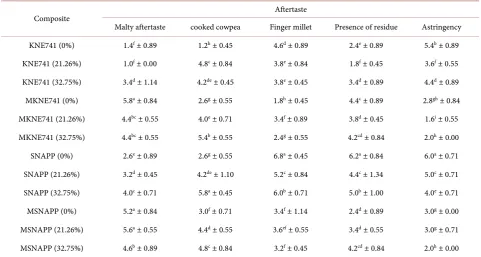
F-values from the analysis of variance showed a significance difference (p <
0.05) for all the 17 sensory attributes of the complementary porridge (Table 4),
indicating the panellists were able to differentiate porridge prepared from malted finger millet composited with precooked cowpea. There was a significance dif-ference in texture attributes (coarseness, stickiness and viscosity) and astrin-gency aftertaste at p < 0.05 between the unmalted and malted complementary porridge, with the former, showing a high intensity for the above four attributes. During malting, there is an accompanying effect on texture attributes sensory attributes. Since hydrolytic enzymes are to break large molecules especially starch, reducing amount available for gelatinization, resulted in porridge that are less viscous, this explains the difference in between malted and unmalted com-plementary porridges. Astringent is defined as the hard, constricting sensation felt in the mouth tissues as one is taking the porridge. This is mostly caused by
the high levels of bitter and strong tannins and polyphenols Awika et al. [28],
which are found in unmalted millet flour. As the millet is malted the level of tannins and polyphenols reduces due to the action of the enzyme phytase acti-vated in malting conditions, explains the low values exhibited by malted com-plementary porridge.
DOI: 10.4236/fns.2019.109084 1170 Food and Nutrition Sciences
Table 4. Effects of compositing precooked cowpea with improved malted finger millet on sensory attributes of finger millet com-plementary porridge.
Composite
Aroma Texture Flavour
Overall intensity Malty
cooked
cowpea finger millet Coarseness Viscosity Stickiness Overall flavour
Cooked
cowpea finger millet Malty Burnt KNE741
(0%) 1.4f ± 0.55 1.20g ± 0.45 2.0f ± 0.71 4.8c ± 0.45 5.6b ± 0.89 7.0a ± 0.00 7.0a ± 0.00 2.8e ± 0.84 1.8g ± 0.45 6.0b ± 0.71 1.4h ± 0.89 1.0g ± 0.00 KNE741
(21.26%) 1.4f ± 0.55 1.20g ± 0.45 4.4c ± 1.14 4.0e ± 1.41 3.4e ± 0.55 7.0a ± 0.00 7.0a ± 0.00 4.0d ± 0.71 4.8d ± 0.45 4.6c ± 1.34 1.4h ± 0.89 1.2g ± 0.45 KNE741
(32.75%) 2.4e ± 1.34 1.8f ± 0.84 4.6c ± 0.89 4.6cd ± 0.55 4.8c ± 1.10 6.6b ± 0.55 6.6b ± 0.55 1.8f ± 0.45 6.0a ± 1.22 4.0d ± 0.71 3.8e ± 0.84 3.6cd ± 0.89 MKNE741
(0%) 1.4f ± 0.55 5.8b ± 1.10 4.2cd ± 1.10 4.6cd ± 0.89 3.8de ± 1.10 2.0g ± 0.00 3.0d ± 1.00 5.6b ± 0.89 3.6ef ± 0.55 3.8d ± 1.10 6.6a ± 0.55 4.6a ± 1.14 MKNE741
(21.26%) 5.4b ± 1.52 5.2c ± 0.84 5.6a ± 0.89 4.4d ± 0.89 3.4e ± 0.89 2.4f ± 0.89 1.4f ± 0.55 4.8cd ± 1.10 3.4f ± 0.55 4.4cd ± 0.89 5.6b ± 0.89 3.8c ± 1.10 MKNE741
(32.75%) 4.6c ± 0.89 3.6d ± 0.89 4.4c ± 0.55 4.4d ± 0.55 2.4f ± 1.34 3.4d ± 0.89 3.2d ± 0.45 4.8cd ± 1.10 4.6d ± 0.55 4.4cd ± 0.89 4.8d ± 1.10 4.4ab ± 0.89 SNAPP
(0%) 5.4b ± 1.34 2.4e ± 0.89 4.4c ± 0.55 6.0a ± 0.00 4.6cd ± 0.89 6.8ab ± 0.45 7.0a ± 0.00 4.8cd ± 1.10 2.0g ± 0.00 6.8a ± 0.45 2.6g ± 0.89 2.6e ± 0.89 SNAPP
(21.26%) 4.0d ± 0.71 2.6e ± 0.89 3.2e ± 0.84 5.6b ± 0.55 6.0a ± 1.0 6.6b ± 0.55 6.4b ± 0.55 3.6d ± 0.55 3.8e ± 0.45 6.0b ± 0.71 3.2f ± 0.45 1.8f ± 0.45 SNAPP
(32.75%) 3.8d ± 1.30 3.4d ± 0.55 5.0b ± 0.71 5.6b ± 0.55 4.6cd ± 0.89 6.2c ± 1.10 5.6c ± 0.89 5.6b ± 0.55 5.6b ± 0.55 4.8c ± 0.45 3.8e ± 0.45 3.6cd ± 0.55 MSNAPP
(0%) 6.0a ± 1.00 5.8b ± 0.84 3.6de ± 0.89 3.6f ± 0.55 2.4f ± 0.45 2.2fg ± 0.45 2.0e ± 0.00 6.2a ± 0.89 1.8g ± 0.55 3.6de ± 0.55 6.6a ± 0.55 4.4ab ± 0.89 MSNAPP
(21.26%) 5.8ab ± 0.45 6.2a ± 0.84 3.4de ± 0.89 4.0e ± 0.71 4.2d ± 1.30 1.8g ± 0.45 1.6f ± 0.55 5.2bc ± 0.84 5.0cd ± 0.71 3.2e ± 0.45 5.6bc ± 0.89 4.2b ± 0.45 MSNAPP
(32.75%) 5.4b ± 0.89 5.0c ± 0.71 3.8d ± 0.84 4.0e ± 1.0 3.2e ± 0.45 2.8e ± 0.45 3.2d ± 0.45 5.0c ± 0.00 5.2c ± 0.45 2.6f ± 0.55 5.4c ± 0.55 3.4d ± 0.55
Values are means ± standard deviations. Values in a column followed by different letter notations are significantly different at p ≤ 0.05 n = 5. M—Malted.
Composite Aftertaste
Malty aftertaste cooked cowpea Finger millet Presence of residue Astringency
KNE741 (0%) 1.4f ± 0.89 1.2h ± 0.45 4.6d ± 0.89 2.4e ± 0.89 5.4b ± 0.89
KNE741 (21.26%) 1.0f ± 0.00 4.8c ± 0.84 3.8e ± 0.84 1.8f ± 0.45 3.6f ± 0.55
KNE741 (32.75%) 3.4d ± 1.14 4.2de ± 0.45 3.8e ± 0.45 3.4d ± 0.89 4.4d ± 0.89
MKNE741 (0%) 5.8a ± 0.84 2.6g ± 0.55 1.8h ± 0.45 4.4c ± 0.89 2.8gh ± 0.84
MKNE741 (21.26%) 4.4bc ± 0.55 4.0e ± 0.71 3.4f ± 0.89 3.8d ± 0.45 1.6i ± 0.55
MKNE741 (32.75%) 4.4bc ± 0.55 5.4b ± 0.55 2.4g ± 0.55 4.2cd ± 0.84 2.0h ± 0.00
SNAPP (0%) 2.6e ± 0.89 2.6g ± 0.55 6.8a ± 0.45 6.2a ± 0.84 6.0a ± 0.71
SNAPP (21.26%) 3.2d ± 0.45 4.2de ± 1.10 5.2c ± 0.84 4.4c ± 1.34 5.0c ± 0.71
SNAPP (32.75%) 4.0c ± 0.71 5.8a ± 0.45 6.0b ± 0.71 5.0b ± 1.00 4.0e ± 0.71
MSNAPP (0%) 5.2a ± 0.84 3.0f ± 0.71 3.4f ± 1.14 2.4d ± 0.89 3.0g ± 0.00
MSNAPP (21.26%) 5.6a ± 0.55 4.4d ± 0.55 3.6ef ± 0.55 3.4d ± 0.55 3.0g ± 0.71
MSNAPP (32.75%) 4.6b ± 0.89 4.8c ± 0.84 3.2f ± 0.45 4.2cd ± 0.84 2.0h ± 0.00
DOI: 10.4236/fns.2019.109084 1171 Food and Nutrition Sciences
Samples composited at 21.26% and 32.75% had a significant effect (p < 0.05) on malty and cooked cowpea flavour characteristics with the latter predominat-ing as the ratio increased. There was also a concomitant reduction in astrpredominat-ingency aftertaste as more cowpea was added. Cooked cowpea, instead of characteristic beany flavour associated with most legumes, contain a roasted nut flavour due to action of sugars and protein when they exposed to drying temperatures after cooking. This resulted a significantly (p < 0.05) higher values in composites composted at 32.75% than 21.26%.
PCA characteristics of sensory attributes of complementary porridge
Principal component analysis was used to extract important information from the heterogeneous data, and reduce set of correlated variables to uncorrelated
measures (principal components) without loss of original information [33]. The
first four (PC’s) accounted for approximately over 80% of the total variation ob-served (PC1 = 54%, PC2 = 12%, PC3 = 10%, PC4 = 6%). Various researchers
have identified different principal components. Anyango et al. [13], working on
the effect of compositing cowpea on sorghum foods extracted two major princi-pal components that accounted for over 97% of total variation in seventeen
sen-sory attributes of thick porridge. Kayitesi et al. [34] working on sensory
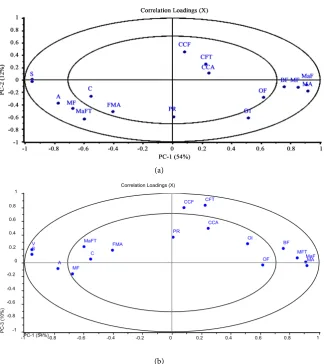
attrib-utes of pre-conditioned cowpea subjected to micronisation, were able to extract three major principal component that accounted for over 93% of total variation. Aroma property malty), texture properties (viscosity, coarseness and stickiness), Flavour properties (overall flavour, malty and burnt), and aftertaste (malty and astringency), characterised PC1. The second PC was defined by aroma attributes (overall aroma intensity and finger millet aroma), millet aftertaste and presence of residue, while the third PC was characterized by cowpea aftertaste and cooked cowpea flavour. Malting resulted in antagonistic relationship among sensory
at-tributes (Table 4). There was a positive relationship (Table 4) associated with
malty aroma, malty flavour, and malty aftertaste, and a negative relationship in texture attributes (stickiness and viscosity) and astringency aftertaste. This im-plies that, malting process had positive effect on sensory attributes of the com-plementary food a desirable malty flavour and aroma properties, as described in results under mean values. This was in agreement with correlation coefficient results, as malty aroma and malty aftertaste were highly significant at 0.53 and 0.54, respectively, to overall flavour. Moreover, in PC1 astringency was nega-tively related at 0.78, this further explains importance of malting and composit-ing on complementary porridges. Astrcomposit-ingency is because of high levels of bitter
condensed tannins and polyphenols found in unmalted millet flour [28]. When
finger millet is malted level of tannins and polyphenols are reduced by action of inherent hydrolytic enzymes such as polyphenol oxidase to lower molecular
weight compounds that are less bitter [25]. Additionally, compositing malted
millet flour with precooked cowpea flour (has low amount of polyphenols), fur-ther reduces astringency of the complementary finger millet porridge.
DOI: 10.4236/fns.2019.109084 1172 Food and Nutrition Sciences
precooked of cowpea and had a positive loading of approximately 0.80 that in-fluenced the overall flavour and aroma intensity of complementary finger millet porridge. The attribute seemed to be unfamiliar to complementary porridge consumers, because of its low correlation coefficient (−0.10) which was not
sig-nificant to overall flavour. The findings were in agreement with Kayitesi et al.
[34] who observed that roasted nut flavour was undesirable to consumers when
pre-conditioned cowpeas were subjected to micronisation. Various researchers have reported beany flavour as a hindrance to acceptability of cereal-legume
composited foods [14][35]. Anyango et al. [14] for example, was able to identify
beany flavour typical with legumes, when sorghum, was composited with 30% cowpea. However, cooking resulted in thermal destruction of lipoxygenase en-zymes that catalyses formation of odorous compounds such as 2-pentenyl furan,
which are responsible for the beany flavour [14]. This explains the absence of
beany flavour in the complementary porridge prepared.
Correlations loading plot for the complementary sensory attributes for the
first three PCs represented in Figure 1. Measurement close to each other are
positively related, while those that are negatively related are separated by 180˚, and those that are separated by 90˚ are independent and therefore they would be
loaded on different PCs [33]. This therefore means that, interpretation and
measurement of PCs was according to the correlations between each parameter
and each PCs. In Figure 1(a), stickiness, and viscosity of complementary
por-ridge had a negative loading and were placed far in the first PC. They were criti-cal parameters that defined PC1, and their negative loading had a huge implica-tion, in that, a decrease would result in an increase in PC. Similarly, burnt fla-vour, malty aftertaste, malty flavours were far in PC1, with a positive loading. It therefore meant an increase in these sensory attributes would result in an in-crease in PC1.
Moreover, millet flavour and millet aftertaste were closely located having a positive correlation, but negatively correlated to cooked cowpea aroma and cowpea aftertaste, located in the opposite quadrant, which can be attributed to varying level of precooked cowpea flour used. Malty flavour, malty aftertaste and malty aroma were located close to overall flavour and aroma sensory attributes, showing that the three parameters were important in defining the flavour of the complementary porridge. In the present work therefore, showed that, compos-ites that were viscous, stick and astringent aftertaste attributes were lowly rated
hence less desired. Negative correlation of viscosity and stickiness in Figure
1(a), to malty flavour and aroma, showed the importance of malting process in
formulating complementary baby weaning food.
In Figure 1(b) cowpea, aftertaste and cooked cowpea flavour were negatively correlated to astringency with latter being close to PC3. Its closeness to PC3 showed its importance in influencing PC3 loadings as compared to neither cooked cowpea flavour nor cowpea aftertaste.
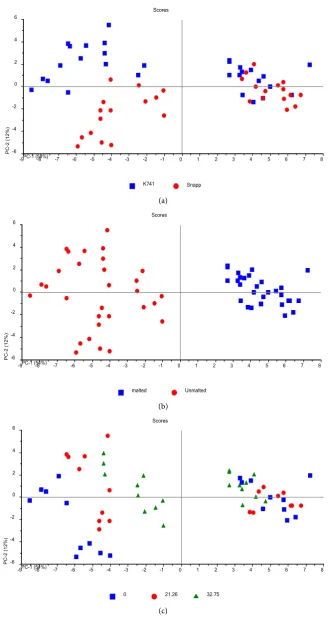
Figure 2 shows the scores biplot for PC1 versus PC2 for KNE 741, Snapping,
DOI: 10.4236/fns.2019.109084 1173 Food and Nutrition Sciences
(a)
[image:17.595.213.538.65.430.2](b)
Figure 1. Biplot for (a) PC 1 and PC 2, and (b) PC 1 and PC 3. Key: OI—overall intensity, MA—malty aroma, CCA—cooked cowpea aroma, FMA—finger millet aroma, C—coar- seness, V—viscosity, S—stickiness, OF—overall flavour, CCF—cooked cowpea flavour, MF—millet flavour, MAF—malty flavour, BF—burnt flavour, MFT—malty aftertaste, CFT— cowpea aftertaste, MAFT—millet aftertaste, PR—Presence of residue, A—astringency.
score plot represents loadings of sensory attributes in the multivariate space of two PC score vectors. From the figures, two samples were clearly distinguished based on the sensory attributes. Two varieties used had distinguishable sensory
attributes (Figure 2(a)) with KNE 741 associated with high level of stickiness
and astringency because of high amount of polyphenol in the grains (Table 2)
than snapping Green Early variety.
In Figure 2(b), unmalted samples were located on the left side near (sticki-ness, viscosity, astringency); while after malting process the samples were lo-cated on the right side near malty flavour and malty aroma. This shows that
malting had influence on sensory attribute of the composite flour. In Figure
2(c), composites containing 32.75% precooked cowpea were associated strongly
with cooked cowpea flavour and aroma, this meant that although they were less viscous and stick they contained a distinctive cooked cowpea flavour (roasted nut flavour), that influenced PC3 loading.
PC-1 (54%)
-1 -0.8 -0.6 -0.4 -0.2 0 0.2 0.4 0.6 0.8 1
PC-3 (10%) -1 -0.8 -0.6 -0.4 -0.2 0 0.2 0.4 0.6 0.8 1
Correlation Loadings (X)
OI
MA CCA
FMA C V
S
OF CCF
MF
MaF BF
MFT CFT
MaFT
PR
DOI: 10.4236/fns.2019.109084 1174 Food and Nutrition Sciences
(a)
(b)
[image:18.595.209.540.64.682.2](c)
Figure 2. Scores biplot for (a) PC1 versus PC2, for KNE 741 and Snapping finger millet varieties (b); PC1 versus PC2, for Malted and Unmalted finger millet (c); PC1 versus PC2, for 0% (100% finger millet), 21.26% precooked cowpea and 32.75% precooked cowpea.
K741 Snapp
PC-1 (54%)
-9 -8 -7 -6 -5 -4 -3 -2 -1 0 1 2 3 4 5 6 7 8
PC-2 (12%) -6 -4 -2 0 2 4 6
Scores
malted Unmalted
PC-1 (54%)
-9 -8 -7 -6 -5 -4 -3 -2 -1 0 1 2 3 4 5 6 7 8
PC-2 (12%) -6 -4 -2 0 2 4 6
Scores
0 21.26 32.75
PC-1 (54%)
-9 -8 -7 -6 -5 -4 -3 -2 -1 0 1 2 3 4 5 6 7 8
PC-2 (12%) -6 -4 -2 0 2 4 6
DOI: 10.4236/fns.2019.109084 1175 Food and Nutrition Sciences
4. Conclusion
Malting decreases anti-nutrient content with a concomitant increase in nutrient profile of complementary foods. In the present study, tannin content, phytic acid and total phenol content notably decreased by 50%, 44% and 41%, respectively, after compositing with malted finger millet and precooked cowpea. In addition, malting of finger millet varieties positively influences the sensory attributes in terms of malty flavour, malty aroma and malty aftertaste as they were closely re-lated and were negatively correre-lated to viscosity and stickiness. Furthermore, malty flavour and malty aftertaste significantly influence overall flavour, based on correlation coefficient results of 0.53 and 0.54 respectively. Based on these observations it is feasible to composite malted finger millet and precooked cow-pea at 32.75%, however, this high level results in a distinctive cooked cowcow-pea flavour that will have to be masked by commercial flavours available in com-mercial market. Therefore, compositing malted finger millet with precooked cowpea can be used in formulating a cultural acceptable complementary food that can be used to curb Protein energy malnutrition in Kenya.
Acknowledgements
The research was funded by the Centre of Excellence for Sustainable Agriculture and Agribusiness Management (CESAAM), World Bank funded project at Egerton University, Kenya. Thanks to Agro-science park for the supply of seed varieties.
Conflicts of Interest
The authors declare no conflicts of interest regarding the publication of this pa-per.
References
[1] Sajilata, G., Singhal, R.S. and Kulkarni, P.R. (2002) Weaning Foods: A Review of the Indian Experience. Food and Nutrition Bulletin, 23, 208-226.
https://doi.org/10.1177/156482650202300210
[2] Alexander, C.M. (1983) Preparation of Weaning Foods with High Nutrient Density Using Flour of Germinating Cereals. Food and Nutrition Bulletin, 5, 10-14.
[3] Michaelsen, K.F., Hoppe, C., Roos, N., Kaestel, P., Stougaard, M., Lauritzen, L. and Friis, H. (2009) Choice of Foods and Ingredients for Moderately Malnourished Children 6 Months to 5 Years of Age. Food and Nutrition Bulletin, 30, S343-S404. https://doi.org/10.1177/15648265090303S303
[4] Oniang’o, R., Mutuku, J. and Malaba, S.J. (2003) Contemporary African Food Hab-its and Their Nutritional and Health Implications. Asia Pacific Journal of Clinical Nutrition, 12, 331-336.
DOI: 10.4236/fns.2019.109084 1176 Food and Nutrition Sciences https://doi.org/10.5539/jfr.v1n3p111
[6] Ogbonna, A.I., Akueshi, E.U., Aguiyi, U.B., Onosemuode, A., Emefiene, M.M. and Okunuga, D.O. (2010) Nutrient Analysis of Indigenous Fortified Baby Weaning Foods from Nigerian Cereals. Nigerian Journal of Biotechnology,21, 41-45. [7] Owino, V.O., Sinkala, M., Amadi, B., Tomkins, A.M. and Filteau, S.M. (2007)
Ac-ceptability, Storage Stability and Costing of α-Amylase-Treated Maize-Beans- Groundnuts-Bambaranuts Complementary Blend. Journal of the Science of Food
and Agricultured, 87, 1021-1029.https://doi.org/10.1002/jsfa.2799
[8] Bavec, F. and Bavec, M. (2007) Organic Production and Use of Alternative Crops. CRC Press/Taylor and Francis Group, Boca Raton, 119-120.
https://doi.org/10.1201/9781420017427
[9] Siwela, M., Taylor, J.R., de Milliano, W.A. and Duodu, K.G. (2007) Occurrence and Location of Tannins in Finger Millet Grain and Antioxidant Activity of Different Grain Types. Cereal Chemistry, 84, 169-174.
https://doi.org/10.1094/CCHEM-84-2-0169
[10] Ojwang, L.O. (2012) Anti-Inflammatory Properties of Cowpea Phenotypes with Different Phenolic Profiles. Doctoral Thesis, Texas A&M University, College Sta-tion.https://doi.org/10.1094/CPLEX-2011-1013-04W
[11] Onyenekwe, P.C., Njoku, G.C. and Ameh, D.A. (2000) Effect of Cowpea (Vigna
unguiculata) Processing Methods on Flatus Causing Oligosaccharides. Nutrition
Research, 20, 349-358.https://doi.org/10.1016/S0271-5317(00)00128-7
[12] Vilakati, N., MacIntyre, U., Oelofse, A. and Taylor, J.R. (2015) Influence of Mi-cronization (Infrared Treatment) on the Protein and Functional Quality of a Ready- to-Eat Sorghum-Cowpea African Porridge for Young Child Feeding. LWT Food
Science and Technology, 63, 1191-1198.https://doi.org/10.1016/j.lwt.2015.04.017
[13] Anyango, J.O., De Kock, H.L. and Taylor, J.R.N. (2011) Impact of Cowpea Addition on the Protein Digestibility Corrected Amino Acid Score and Other Protein Quality Parameters of Traditional African Foods Made from Non-Tannin and Tannin Sor-ghum. Food Chemistry, 124, 775-780.
https://doi.org/10.1016/j.foodchem.2010.06.094
[14] Anyango, J.O., de Kock, H.L. and Taylor, J.R. (2011) Evaluation of the Functional Quality of Cowpea-Fortified Traditional African Sorghum Foods Using Instrumen-tal and Descriptive Sensory Analysis. LWT—Food Science and Technology, 44, 2126-2133.https://doi.org/10.1016/j.lwt.2011.07.010
[15] Mbithi-Mwikya, S., Van Camp, J.Y. and Huyghebaert, A. (2000) Nutrient and Anti-Nutrient Changes in Finger Millet during Sprouting. LWT—Food Science and
Technology, 33, 9-14.https://doi.org/10.1006/fstl.1999.0605
[16] WHO (2007) Protein and Amino Acid Requirements in Human Nutrition. WHO/FAO/UNU Technical Report Series No. 935. World Health Organization Press, Geneva.
[17] AACC International (2000) Approved Methods of the American Association of Ce-real Chemists. 11th Edition, Methods 44-15a and 46-10.01. The Association, St. Paul.
[18] Singleton, V.L. and Rossi, J.A. (1965) Colorimetry of Total Phenolics with Phos-phomolybdic-Phosphotungstic Acid Reagents. American Journal of Enology and Viticulture,16, 144-158.
[19] Price, M.L., Van Scoyoc, S. and Butler, L.G. (1978) A Critical Evaluation of the Va-nillin Reaction as an Assay for Tannin in Sorghum Grain. Journal of Agricultural
DOI: 10.4236/fns.2019.109084 1177 Food and Nutrition Sciences
[20] Makkar, H.P., Siddhuraju, P. and Becker, K. (2007) Plant Secondary Metabolites. Humana Press, Totowa.
[21] Meilgaard, M., Civille, G.V. and Carr, B.T. (2007) Sensory Evaluation Techniques. 4th Edition, CRC Press, Boca Raton, 225-311.
[22] Naczk, M. and Shahidi, F. (2004) Extraction and Analysis of Phenolics in Food.
Journal of Chromatography,1054, 95-111.https://doi.org/10.1201/9780203508732
[23] Singh, P. and Raghuvanshi, R.S. (2012) Finger Millet for Food and Nutritional Se-curity. African Journal of Food Science, 6, 77-84.
https://doi.org/10.5897/AJFSX10.010
[24] Waterman, P.G. and Mole, S. (1994) Analysis of Phenolic Plant Metabolites. Black-well Scientific Publications, Oxford, 73-99.
[25] Hejazi, S.N. and Orsat, V. (2016) Malting Process Optimization for Protein Digesti-bility Enhancement in Finger Millet Grain. Journal of Food Science and Technol-ogy, 53, 1929-1938.https://doi.org/10.1007/s13197-016-2188-x
[26] Sripriya, G., Antony, U. and Chandra, T.S. (1997) Changes in Carbohydrate, Free Amino Acids, Organic Acids, Phytate and HCl Extractability of Minerals during Germination and Fermentation of Finger Millet (Eleusine coracana). Food Chemis-try, 58, 345-350.https://doi.org/10.1016/S0308-8146(96)00206-3
[27] Emmambux, N.M. and Taylor, J.R.N. (2003) Sorghum Kafirin Interaction with Various Phenolic Compounds. Journal of Science and Food Agriculture, 83, 402-407. https://doi.org/10.1002/jsfa.1379
[28] Awika, J.M., Dykes, L., Gu, L., Rooney, L.W. and Prior, R.L. (2003) Processing of Sorghum (Sorghum bicolor) and Sorghum Products Alters Procyanidin Oligomer and Polymer Distribution and Content. Journal of Agriculture and Food Chemistry, 51, 5516-5521.https://doi.org/10.1021/jf0343128
[29] Taylor, J.R. and Duodu, K.G. (2015) Effects of Processing Sorghum and Millets on Their Phenolic Phytochemicals and the Implications of This to the Health-En- hancing Properties of Sorghum and Millet Food and Beverage Products. Journal of
the Science of Food and Agriculture, 95, 225-237.https://doi.org/10.1002/jsfa.6713
[30] Shibairo, S.I., Nyongesa, O., Onwonga, R. and Ambuko, J. (2014) Variation of Nu-tritional and Anti-NuNu-tritional Contents in Finger Millet (Eleusine coracana (L.) Gaertn) Genotypes. IOSR Journal of Agriculture and Veterinary Science, 7, 6-12. https://doi.org/10.9790/2380-071110612
[31] Ngure, K.S., Indieka, A.S., John, N. and Peter, N. (2016) Nutritional, Rheological and Organoleptic Properties of Whole Meal Flour Prepared from Stem Rust Resis-tant Wheat Varieties Released in Kenya. World Journal of Agricultural Research, 4, 173-182.
[32] Traoré, T., Mouquet, C., Icard-Vernière, C., Traore, A.S. and Trèche, S. (2004) Changes in Nutrient Composition, Phytate and Cyanide Contents and α-Amylase Activity during Cereal Malting in Small Production Units in Ouagadougou (Burk-ina Faso). Food Chemistry, 88, 105-114.
https://doi.org/10.1016/j.foodchem.2004.01.032
[33] Mwove, J.K., Gogo, L.A., Chikamai, B.N., Omwamba, M. and Mahungu, S.M. (2018) Principal Component Analysis of Physicochemical and Sensory Characteris-tics of Beef Rounds Extended with Gum Arabic from Acacia Senegal var. Kerensis.
Food Science & Nutrition, 6, 474-482.https://doi.org/10.1002/fsn3.576
DOI: 10.4236/fns.2019.109084 1178 Food and Nutrition Sciences https://doi.org/10.1002/jsfa.5805
[35] Asma, M.A., Fadil, E.B. and Tinay, A.H. (2006) Development of Weaning Food from Sorghum Supplemented with Legumes and Oil Seeds. Food and Nutrition