• No results found

Tuning the Parameters of a Loading Algorithm

N/A
N/A
Protected

Academic year: 2020

Share "Tuning the Parameters of a Loading Algorithm"

Copied!
75
0
0

Loading.... (view fulltext now)

Full text

(1)

Tuning the Parameters of a Loading Algorithm

Author:

Tim Gerard

van Dijk

Supervisors:

Dr. ir. M.R.K.

Mes

Dr. ir. J.M.J.

Schutten

Dr. J.A.

dos Santos Gromicho

(2)

University

University of Twente

Master programme

Industrial Engineering & Management

Specialization

Production Logistics & Management

Graduation Date

21 March 2014

Graduation Committee

Dr. ir. M.R.K.

Mes

University of Twente

Dr. ir. J.M.J.

Schutten

University of Twente

Dr. J.A.

dos Santos Gromicho

ORTEC BV

University of Twente

Drienerlolaan 5

7522 NB Enschede

The Netherlands

(3)

The newly developed software solution ORTEC Pallet and Load Building (OPLB) is the intended suc-cessor of LoadDesigner. It contains a heavily parameterized algorithmic framework of which the per-formance on customer-specific problem instances depends on the quality of its parameter configuration. These parameters form the subject of this report. The objective of this research is as follows.

Develop a tuning algorithm that quickly finds good parameter settings for the

existing algorithmic framework such that the performance of OPLB is optimized.

OPLB consists of a deterministic, greedy construction phase and a stochastic Simulated Annealing (SA)-driven local search procedure. Because of the nature of the SA procedure (each neighborhood switch contains a reconstruction phase with the same greedy construction), the quality of a single-construction solution translates well to the quality of the final solution. Therefore, we restrict any tuning effort to the greedy construction phase, as this allows for faster, noise-free measurements, hence benefits the learning process of our tuning algorithm.

The running time at the customer site must be kept to a minimum. Moreover, our parameter space analysis reveals a high robustness of parameter configurations among similar problem instances. Therefore, we choose for an offline, problem family tuning method. That is, we tune the parameters on a training set of instances that are representative for the customer’s typical problem instance, and the resulting parameter configuration can be readily applied to newly occurring instances without any further tuning.

Method

The tuning algorithm we develop, uRace, is a unified Race algorithm. It performs batch measurements of multiple configurations on the same training instances and focuses on rapid elimination of candidate con-figurations based on statistical inferiority. Moreover, it enforces an increasingly localized search around the most promising areas in the solution space, and it allows for a tunable tradeoff between exploration of new configurations and exploitation of known configurations to obtain more reliable estimates on their performance that naturally tends towards exploitation as the tuning process proceeds. Finally, by deter-mining the tuning budget (i.e., total time spent on tuning) and the number of parameter configurations that are tuned (and subsequently applied to the actual problem at the customer site), the user is free to make its own offline and online running time-performance tradeoff.

Results

(4)

Horizontal Layer (Bischoff et al., 1995) 82.70 2.0 47.2 Configuration Tuned with uRace 83.99 1.7 44.2

Table 1: Performance of a single iteration (i.e., one greedy construction) of OPLB with three alterna-tive parameter configurations. The alternaalterna-tive configurations represent construcalterna-tive heuristics from the literature that are known to perform well. The academic problems are 700 weakly heterogeneous BR instances (see Section 2.1.3). The practical problems are ten large, complex instances from a well-known multinational. The running times of the three configurations are roughly the same.

Author Volume Utility Running Time (sec.) Juraitis et al. (2006) 89.26

-Bortfeldt and Gehring (2001) 90.06 316

Zhang et al. (2012) 95.35 135

OPLB Single - 1 Configuration 83.99 0.06 OPLB Single - 5 Configurations 85.99 0.24 OPLB with SA - 5 Configurations 90.24 74

Table 2: Performance of state-of-the-art algorithms in the literature and OPLB with the greedy param-eters as tuned with uRace on weakly heterogeneous BR instances.

in which the objective is to minimize the usage of loading equipment (see Table 1).

Moreover, by application of multiple parameter configurations on the online problem and inclusion of the SA procedure, OPLB outperforms some of the state-of-the-art, highly specialized loading algorithms on academic problems with competitive running time (see Table 2).

Recommendations

The practical relevance of this research emerges as customers start to employ OPLB to facilitate their loading processes. During the implementation phase at a new customer, uRace may be used to find a good parameter configuration either based on a set of historical instances or on a customer classification, thereby customizing ORTEC’s software solution to the specific customer. Moreover, uRace may be used to periodically, whenever computational resources are amply available, update the parameter configura-tion based on recent developments at the customer site, resulting in an automatically adjusting loading algorithm to provide an efficient, customized loading solution for ORTEC’s customers.

(5)

I am proud to present you my MSc. thesis, which marks the end of my studentship at the University

of Twente, my internship at ORTEC, and, at least for a while, my membership to endless Delphi,C++, VBA, and LATEX fora. This report contains the result of a six-month battle against a pile of boxes that

refuse to be optimally placed in a container. Surely, global optima are still an illusion, and the war is far from over, but this tiny little battle was won.

This victory would have never been achieved without the support of many people battling shoulder

to shoulder with me. Martijn and Marco, thank you sincerely for all your substantive feedback and suggestions, for all the time you spent proof-reading my drafts, and for all the ink you spent correcting

every grammatical error, poor sentence structure, and misplaced comma. It is very motivating to know that someone takes the time to read your work with such care. Joaquim, thank you for giving me the

opportunity to undertake this engaging project at ORTEC, and for introducing me to a wonderfully complex world of development platforms, data structures, and software systems. I owe great gratitude to my colleagues at ORTEC for helping me out on the many occasions that this world quickly went from wonderfully complex to excessively aggravating, and to my friends for providing the necessary distraction on the few occasions that a bit of this aggravation had managed to follow me home.

Finally, I am deeply grateful for the unconditional interest, support, and love from my family and girlfriend. Indeed, although this thesis marks the end of many -ships, as long as the friendships and relationships remain, I am sure it is actually merely the beginning.

(6)

OPLB ORTEC Pallet and Load Building Name of ORTEC’s newly developed software so-lution for loading problems, the successor of LoadDesigner

BR Bischoff and Ratcliff BR instances are regularly used benchmark loading problems

C&P Cutting & Packing Loading problems fall under the umbrella of C&P problems

CLP Container Loading Problem Problem of loading items into a container

PLP Pallet Loading Problem Problem of loading items onto a pallet

GA Genetic Algorithm Optimization technique based on population evolution

SA Simulated Annealing Optimization technique based on local optimization

KPI Key Performance Indicator In loading problems, the KPI is typically volume util-ity or container usage

R&S Ranking and Selection Type of learning problem, in which the objective is to find the alternative with the highest value from a finite, and typically small, set of alternatives

UCB Upper Confidence Bound UCB policy is a simple sequential measurement tech-nique in which the alternative with the highest UCB is selected for measurement

BSD Biased Sampling Distributions Sequential measurement technique that randomly samples new parameters from sampling distributions that are biased towards the values taken by known, well-performing configurations

LHD Latin Hypercube Design Sampling design that ensures uniform coverage of the parameter space

LHS Latin Hypercube Sample Random sample (of parameter configurations) that results from a LHD

(7)

Management Summary i

Preface iii

List of Abbreviations iv

1 Introduction 1

1.1 Context Analysis . . . 1

1.1.1 LoadDesigner for the Customer . . . 2

1.1.2 OPLB behind the Scenes . . . 3

1.2 Problem Identification . . . 5

1.3 Research Scope . . . 6

1.4 Research Goal . . . 7

1.5 Research Questions . . . 7

2 Literature Review 9 2.1 Loading Problems . . . 9

2.1.1 Typology of Cutting and Packing Problems . . . 9

2.1.2 Conventional Loading Methodologies . . . 10

2.1.3 State-of-the-art Performance . . . 12

2.1.4 Conclusion . . . 13

2.2 Meta-Optimization . . . 13

2.2.1 Hyper-Heuristics . . . 14

2.2.2 Parameter Tuning . . . 16

2.2.3 Race Algorithms . . . 20

2.2.4 Conclusion . . . 22

3 Parameter Space Analysis 23 3.1 Tunable Parameters . . . 23

3.1.1 Item Filter . . . 23

3.1.2 Orientation Filter . . . 25

3.1.3 Load Equipment Filter . . . 25

3.1.4 Space Filter . . . 25

3.1.5 Position Filter . . . 27

3.1.6 Arrangement Filter . . . 27

3.1.7 Order of Filters . . . 29

3.2 Size of Search Space . . . 29

(8)

3.3.1 Latin Hypercube Design . . . 31

3.3.2 Performance Analysis . . . 32

3.4 Conclusion . . . 38

4 Design of a Tuning Algorithm 40 4.1 General Solution Approach . . . 40

4.1.1 Stochasticity . . . 40

4.1.2 Parameter Space . . . 41

4.1.3 Conclusion . . . 42

4.2 Our Tuning Algorithm: uRace . . . 42

4.2.1 Offline Algorithm Configuration Problem . . . 42

4.2.2 Structure of Our Tuning Algorithm . . . 43

4.2.3 Initial Sampling . . . 45

4.2.4 Statistical Inferiority Test . . . 46

4.2.5 Resampling . . . 46

4.2.6 Multiple Implementation . . . 48

4.3 Conclusion . . . 50

5 Results 51 5.1 Performance of uRace . . . 51

5.1.1 Tuning Budget . . . 51

5.1.2 Multiple Implementation . . . 52

5.1.3 Representative Training Set . . . 54

5.1.4 Sensitivity Analysis . . . 54

5.1.5 Comparison with Alternative Tuning Methods . . . 56

5.2 Performance of OPLB with uRace . . . 56

5.2.1 Performance on Academic Problem Set . . . 56

5.2.2 Performance on Practical Problem Set . . . 57

5.3 Conclusion . . . 59

6 Conclusions and Recommendations 60 6.1 Theoretical Conclusion . . . 60

6.1.1 Types of Tuning . . . 60

6.1.2 Parameter Space . . . 61

6.1.3 Further Research . . . 61

6.2 Practical Conclusion . . . 62

(9)

This research study finds its origin at the software development department of ORTEC, one of the largest global providers of planning and optimization solutions. Generally speaking, ORTEC applies methods from Operations Research (OR) to help their customers optimize their decision making. In particular, they develop stand-alone or SAP-embedded software solutions covering a wide range of OR challenges, which are employed by customers worldwide. One of these software solutions is the subject of this research: ORTEC Pallet and Load Building (OPLB), an optimization tool that facilitates efficient pallet and container loading. Like all ORTEC’s software solutions, their loading tool is subject to a continuous improvement effort in order to keep offering cutting edge technologies to their customers, and therefore remain a competitive player in the industry. OPLB is the projected successor of LoadDesigner, the tool that is presently employed by ORTEC’s customers to facilitate their loading. The discrete transition from LoadDesigner to OPLB is mainly necessitated by the desire to have one generic optimizer, an algorithmic framework that can easily be customized towards any specific customer, without the need to alter the source code. Currently, there is approximately one hard-coded version of LoadDesigner for every customer, whereas OPLB is intended as a generic framework that can be adjusted to any customer’s wishes by altering some external parameter configuration. This research study, which forms a graduation assignment as part of the Master program Industrial Engineering & Management at the University of Twente, aims to aid in the development of OPLB.

This chapter further introduces this research. In Section 1.1, we analyze the context in which our re-search resides. That is, we discuss the specific purposes that LoadDesigner currently fulfills for ORTEC’s customers, and we further describe the intentions behind the transition to OPLB and the progress achieved so far in its development. This discussion leads to the problem identification in Section 1.2, in which we formally state the problem that is subject to this research. Afterwards, Section 1.3 bounds the scope of the research, and Section 1.4 formally describes our research goal. Finally, Section 1.5 outlines the succession of research questions that need to be answered to satisfy this goal.

1.1

Context Analysis

(10)

(iii)

(i)

(ii)

Figure 1.1: Example of a visualization of (i) a load of boxes in a container, (ii) a load of boxes on a pallet, and (iii) a load of (pick)pallets in a container

1.1.1

LoadDesigner for the Customer

The typical user of LoadDesigner is a commercial company that handles some logistic operation regarding pallet and load building. The list of companies that employ LoadDesigner is substantial, and includes well-known multinationals such as Coca Cola, Audi, and Procter & Gamble, as well as many small companies. Generally speaking, these companies use the LoadDesigner software to facilitate efficient loading while meeting their specific requirements. We briefly sketch two situations that exemplify some of the typical applications, objectives, and restrictions faced by ORTEC’s customers. SCA, a manufacturer of personal care products, uses LoadDesigner for their inter-facility stock and transport management. They often transport containers filled with pick-pallets: pallets loaded with individual boxes or items. Optimized pallets and loads, which support the actual product demand downstream, are designed to ship against minimal transportation costs. Coca Cola uses LoadDesigner in conjunction with ORTEC Routing to simultaneously optimize their loading and routing operations. They use the software to determine which fleet composition and transportation modes to use in light of their palletizing, loading, and timing constraints. Typically, they are concerned with loading stock pallets into containers, which introduces stackability constraints. Moreover, the relatively high density of their products introduces restrictions regarding axle weight. In both scenarios, the planner employs LoadDesigner, and receives direct feedback in the form of Key Performance Indicators (KPIs) such as volume utility and weight (distribution), along with a three-dimensional visualization of the load. Figure 1.1 shows examples of such visualizations for three different loading applications.

(11)

software according to daily variability in input and objectives. Moreover, the parallel existence of all these distinct versions complicated further development, and induces substantial maintenance costs. To overcome all these issues, OPLB intends to capture all, previously distinct, versions of LoadDesigner into one integrated framework that can easily be directed and customized with some external parameter configuration.

1.1.2

OPLB behind the Scenes

As said, OPLB is the new and improved version of LoadDesigner, so it should at least perform equally well from the customer point of view. Now that we have briefly discussed the range of customer-specific purposes that need to be fulfilled, and mentioned LoadDesigner’s primary drawback, we continue to explore the technical details of the approach through which OPLB aims to outperform its predecessor. We confine ourselves to a technical description of the newly developed OPLB. The algorithm behind OPLB combines a greedy construction phase with an atypical local search procedure driven by Simulated Annealing (SA) (see Section 2.2.2). We first discuss the greedy construction and subsequently the local search procedure that surrounds it.

The greedy construction incrementally constructs a solution. In each iteration, it decideswhichitem to placewherein the container andhow. For the which-part, it selects an item from the items that have not been loaded yet. For the where-part, it picks one of the available containers, a subspace from the available empty space in the container, and a position within that space. Finally, for the how-part, it chooses an orientation of the item and an arrangement of multiple of the same items to which the item pertains. These three decisions are captured into six consecutive sorting steps called filters, where every filter tackles one specific decision: one filter forwhich, two forhow, and three forwhere. In this context, a filter is essentially a sorting mechanism that processes the possible choices and outputs a list of options ordered by preference, a preference list, according to the filter’s parameter settings. This list, or rather the highest untried option on the list, is input for the second filter. This filter produces a preference list regarding its own decision conditional on the first filter’s preferred choice. This process continues until the sixth filter outputs the six preferred options that collectively describe an item placement. If the placement is feasible, the item is loaded accordingly, the filters are updated with the new problem state, and a new iteration starts. If the preferred placement is infeasible (according to whichever restrictions the customer may impose), the algorithm starts sacrificing the filter’s preferences bottom-up. That is, it will continue to try the preferred option of the first five filters with the second-best option of the sixth filter, and so on. Figure 1.2 illustrates this iterative process in a reduced example with three filters. The process repeats until either all remaining optional item placements are infeasible or all items are loaded. At this point we have constructed our initial, single-construction solution.

(12)

Parameter Configuration

A

1

: 3x2x1

A

2

: 3x1x1

A

3

: 2x2x1

...

Arrangement filter parameters settings

S

1

: space A

S

2

: space B

S

3

: space C

...

Space filter parameters

settings

I

1

: item X

I

2

: item Y

I

3

: item Z

...

Item filter parameters

settings

Update

item placement preference list

Underlying Algorithm

1

. I

1

S

1

A

1

4

. I

1

S

2

A

1

7

. I

1

S

3

A

1

2

. I

1

S

1

A

2

5

. I

1

S

2

A

2

8

. I

1

S

3

A

2

3

. I

1

S

1

A

3

6

. I

1

S

2

A

3

9

. I

1

S

3

A

3

Place 3x1x1 arrangement

of item X in space B

Figure 1.2: Visualization of the iterative, greedy construction process within OPLB. The parameter configuration determines the preference lists in each individual filter (e.g., item X is the most preferred item), and the order of the filters determines their priority (e.g., the second most preferred option is I1S1A2, which sacrifices on the (last) arrangement filter). The underlying algorithm governs the

feasibility of the item placements. In this example, the first four preferred item placements are infeasible, and the fourth option (i.e., I1S2A2) is carried out. Afterwards, the current problem state is updated,

(13)

The new solution is accepted according to the change in objective value, with a decreasing acceptance ratio. The entire process is repeated a number of times, and ultimately the best found solution is accepted as the best solution. It is important to realize that this is indeed an atypical SA-approach it the sense that it cannot be seen separate from the construction heuristic. Ordinarily, the explorative nature of SA at high temperatures would advocate against putting extensive effort into a sophisticated construction heuristic. However, in our SA procedure every neighborhood switch contains a reconstruction phase according to the same construction heuristic, which makes the construction heuristic, and therefore the parameter settings in the greedy part of OPLB, especially important.

Collectively, the greedy construction and the SA-driven random sampling procedure form a working algorithm, of which the greedy part in particular can be customized with much degree of freedom. By sheer tuning of its parameter configuration, the algorithmic framework of OPLB can be customized to a broad range of customer-specific loading problems.

1.2

Problem Identification

The technological description of the newly developed OPLB reveals the importance of the parameters in the greedy part of the algorithm. In fact, as we show in Chapter 3, the parameter settings in the greedy construction have a great influence on the quality of a single-construction solution. Moreover, as the integrated SA procedure carries out the same greedy construction in every neighborhood switch, they have a great influence on the quality of the final solution as well. This advocates the need for good parameter settings in the greedy part of OPLB, where the definition of “good” parameter settings is different per customer. Every customer has their own specific loading problem instances, and the same algorithm, described by the same parameter settings, likely performs differently on different instances. This poses the question in which context we want to seek optimal parameter settings. We distinguish two possibilities.

• Problem instance tuning. First, we can opt for problem instance tuning. In this case we tune the parameters each time a customer has to load a container. The parameter settings are chosen such that they optimize the solution to the specific problem instance it faces.

• Problem family tuning. Second, we can opt for problem family tuning. In this case we tune the parameters for the loading problem the customer typically faces. The significance of the word typical is substantial as it means that the algorithm’s configuration needs to generalize to unseen problem instances with minimal loss of quality, so that the algorithm performs well on the com-plete, possibly infinite, set of similar unseen problem instances. We base our optimization on a set of problem instances, a training set, that is representative for the customer’s typical problem. Generally, the higher the similarity between the training set and the actual problem, the better the resulting parameter settings. We are effectively simulating reality (the unseen problem in-stance) with representative situations (other instances in the same problem family) and optimize our parameter settings based on the simulations.

(14)

Whichever of these two options we wish to pursue, acquiring well-performing parameter settings is not trivial. Indeed, complete enumeration of all possible parameter settings is, as Chapter 3 reveals, computationally prohibitive because of ourenormous search space. A relatively small problem instance already results in billions of possible parameter configurations. Moreover, note that if we pursue problem family tuning, measuring the performance of the set of parameter configurations on one problem instance is not sufficient. In fact, to draw any sort of statistically significant conclusions from the observations, we need to apply the same configurations to an increasing number of different problem instances, depending on the reliability and accuracy we require. Given that testing one configuration on one very small problem instance takes roughly three seconds on an average computer, we would need thousands of years of computation time to conduct a full factorial design on one problem instance and many more to come to satisfactory conclusions for problem family tuning. Clearly, we need to find a faster way to identify good parameter settings. This leads to the following problem statement:

The newly developed OPLB software tool requires a tuning algorithm that is

able to quickly identify good parameter settings for the algorithmic framework

This research intends to find a satisfactory solution to this problem.

1.3

Research Scope

In this section, we specify some boundaries for the tuning algorithm we seek to develop. As stated before, ORTEC has already developed an algorithmic framework for OPLB and we do not attempt to replace this in any way. We merely aim to find the best way to deploy this framework by tuning its parameters. Another limitation is formed by the desire to keep running time at the end-customer to a minimum. The choice between problem-instance and problem family tuning determines the severity of this limitation. In the latter option, the learning occurs whenever computational resources are amply available, by optimizing the parameter settings based on a simulated reality. In this case, the output of our algorithm forms the input for the customer, which may subsequently be applied with no further tuning. That means that, for problem family tuning, the running time of the problem family tuning algorithm is not prioritized, and the word “quickly” in the problem statement should be seen relative to complete enumeration. For problem instance tuning however, the learning occurs at the site of ORTEC’s customer, every time they want to perform a loading operation. In this case, the running time is severely limited, and the word “quickly” should be seen relative to the running time of LoadDesigner. Indeed, LoadDesigner provides solutions in a matter of seconds, at most minutes, and since OPLB is commercialized as LoadDesigner’s new and improved successor, its running time should definitely not be of a larger order of magnitude.

(15)

1.4

Research Goal

In Section 1.1.2, we identified the algorithmic framework of OPLB as highly customizable by tuning its parameters, and Section 1.2 argued the need for a tuning algorithm to quickly identify good parameter settings. Broadly speaking, our research goal is to satisfy this need. We formulate our main research goal as:

Develop a tuning algorithm that quickly finds good parameter settings for the

existing algorithmic framework such that the performance of OPLB is optimized.

We focus on the deterministic, greedy part of OPLB. That is, we develop a tuning algorithm that quickly identifies parameter settings that optimize the quality of a single-construction solution. As stated in Section 1.1.2, the quality of a single-construction solution translates well to the quality of the final solution, and through the focus on the greedy part of OPLB, we radically speed up our measurements, while removing any stochastic noise from our observations, which greatly benefits the learning process of our tuning algorithm.

1.5

Research Questions

In order to find a satisfactory resolution to the posed problem, we have to answer a succession of research questions, the collection of which covers the entire scope of the project. First, we study the literature to obtain knowledge that is of value to our research. We want to discover the approaches that are typically taken to solve loading problems as well as the techniques that are most successful in tuning the parameters of algorithms.

Q1 What is currently known in the literature in relation to loading methodologies and parameter tuning?

Q1a What are conventional optimization methods for loading problems? Q1b What are suitable practices for tuning parameterized algorithms?

Second, we want to conduct an analysis of our parameter space. Before diving into sophisticated tuning procedures, we devote some time to explore the space in which we seek to optimize the parameters. Strengthened by the fact that our parameter space consists mainly of categorial variables whose interre-lations are not clear a priori, we conduct experiments in order to find existing correinterre-lations, interdepen-dencies, and dominance relations within our parameter space.

Q2 What are the main characteristics of our parameter space?

Q2a What are the tunable parameters and what values can they take? Q2b What does the performance landscape of our parameter space look like?

Q2c What correlations, interdependencies, and dominance relations exist in the parameter space?

Third, we want to combine the literature review and the parameter space exploration to develop a tuning algorithm that is most promising with regard to our problem.

(16)

Finally, we want to analyze the results of our research. This analysis is two-fold. First, we consider the performance of our tuning algorithm in relation to alternative parameter tuning methods. Second, we consider the output of our algorithm, analyzing the performance of OPLB with tuned parameters and the value of our tuning algorithm for ORTEC and its customers.

Q4 How well does our tuning algorithm perform?

Q4a How well does our proposed tuning algorithm perform relative to alternative tuning methods? Q4b How well does OPLB perform with the best parameter configuration as found with our tuning

algorithm, compared with alternative, a priori sensible configurations?

(17)

This chapter reveals what is currently known in the literature in relation to loading methods and pa-rameter tuning. In Section 2.1, we commence with a discussion on the optimization methods that are typically used to solve loading problems. Afterwards, in Section 2.2, we turn ourselves to the scope of parameter tuning techniques known in the literature.

2.1

Loading Problems

This section discusses the methods that are typically used in the literature to solve loading problems. We first cover a typology of loading problems in Section 2.1.1. Subsequently, Section 2.1.2 outlines the optimization methods that are used throughout the literature to tackle the loading problem types most common to ORTEC’s customers, and Section 2.1.3 discusses the performance of these methods on benchmark problem instances.

2.1.1

Typology of Cutting and Packing Problems

According to a generally accepted typology by Wäscher et al. (2007), loading problems fall under the umbrella of Cutting and Packing (C&P) problems. There are many types of C&P problems, which collectively represent a wide range of practical applications. The typology introduced by Dyckhoff (1990) initially provided excellent guidelines for the organization and categorization of C&P literature. The paper gives a comprehensive typology, integrating the various kinds of problems as they appear in the literature. Examples of problem designations that appear loosely in the literature and are captured by the typology include cutting stock, bin packing, knapsack, and container loading problems. Although Dyckhoff’s work exhaustively covered the existing literature at the time, the considerable increase in the number of publications and the developments in the area of C&P problems have revealed some flaws and insufficiencies of the typology. Wäscher et al. (2007) propose an improved version that captures recent trends in C&P research, which we briefly discuss here.

(18)

C&P Problems

Output Maximization

Input Minimization

Weakly Heterogeneous

Strongly Heterogeneous

Weakly Heterogeneous

Strongly Heterogeneous

Placement Problem

Our Academic Problem Set

Knapsack Problem

Cutting Stock Problem

Bin Packing Problem

Our Practical Problem Set

Figure 2.1: Basic types of loading problems. Adapted from Wäscher et al. (2007).

variants are stochastic problems, in which the sizes of the items are random variables (Das and Ghosh, 2003), and online problems where packing decisions have to be made in a rolling horizon without knowing the complete set of small items (Epstein and van Stee, 2007).

Wäscher et al. (2007) consider five criteria for the distinction of problem types:

1. Dimensionality. They distinguish between one, two, and three-dimensional problems.

2. Kind of assignment. They distinguish between two types of assignment: (a) output maximization, in which the full set of large objects is utilized but insufficient to accommodate all small items and the objective is to choose the best subset of small items, and (b) input minimization, in which the full set of small items needs to be accommodated whilst minimizing the selection of large objects utilized.

3. Assortment of small items. They distinguish between homogeneous, weakly heterogeneous, and strongly heterogeneous assortments of small items.

4. Assortment of large objects. They distinguish between problems with one large object and those with multiple large objects, where the sizes of the large objects may be either identical or different. 5. Shape of small items. They distinguish between regular (cuboids, circles, etc.) and non-regular

shapes in the case of two and three-dimensional problems.

By electing the kind of assignment and the assortment of small items, several basic problem types are obtained, which exist in all three degrees of dimensionality. Figure 2.1 indicates the proposed nomenclature of these basic C&P problems. Any subsequent election of the remaining criteria further refines the problem. In Section 2.1.2, we use this typology to pinpoint the C&P problems of interest and discuss the techniques that are typically used to solve them.

2.1.2

Conventional Loading Methodologies

(19)

and a set of complex pick-pallet instances from a large multinational. They are weakly heterogeneous output maximization and strongly heterogeneous input minimization problems respectively, and both contain assortments of regularly shaped, three-dimensional items and one or more large objects. Ac-cording to the characterization in Figure 2.1, the academic problems fall under the basic problem type Placement Problem, and the practical problems under the basic problem type Bin Packing Problem. In any further reference, if we use the general designation “loading problem” in the context of academic or practical problem instances, we refer to a Placement Problem or a Bin Packing Problem respectively.

Despite all efforts to create a widely accepted nomenclature, problems of these types are still known under many different names in the literature. One application of a problem with weakly heterogeneous assortments of small (often cuboid) items is most commonly known under the name Container Loading Problem (CLP), in which a consignment of boxes is loaded into a given set of containers. The typical objective function in these problems is the maximization of volume utility. Furthermore, the case where cargo has to be packed onto a pallet is most commonly referred to as the (Distributor’s) Pallet Loading Problem (PLP). In fact, the PLP can be regarded as a special case of the CLP with a variable height of the container.

In the remainder of this section, we discuss some of the methodologies used throughout the literature to tackle loading problems. Roughly speaking, the existing solution methods take one or more of the following heuristic approaches (Pisinger, 2002):

1. Wall building approach, in which the container is filled by vertical cuboid layers, “walls”, along the longest side of the container.

2. Stack building approach, in which the items are packed in stacks, which are themselves arranged on the floor of the container.

3. Horizontal layer building approach, in which the container is filled by horizontal cuboid layers that each cover the largest possible fraction of the surface underneath.

4. Cuboid arrangement approach, in which identical items are packed into cuboid arrangements in order to fill the largest possible subspace of the container without internal volume utility losses. 5. Guillotine cutting approach, in which the container has a slicing tree representation, where each

slicing tree corresponds to a successive guillotine partitioning of the container into smaller pieces, and the small items represent the leaf nodes.

(20)
[image:20.595.100.496.85.213.2]

Figure 2.2: On the left a wall building approach, on the right a cuboid arrangement approach.

policy such that a holistically optimal rather than a myopically optimal choice is made. Gonçalves and Resende (2012) propose a multi-population GA combined with a novel procedure to join free spaces to acquire full support from below. Finally, Terno et al. (2000) use a horizontal layer building approach where optimal two-dimensional loading patterns are obtained in a branch and bound framework.

Although these state-of-the-art approaches have proven to be particularly strong at solving loading problems, they all go beyond the degree of freedom obtainable by solely configuring the parameters of the existing algorithmic framework, and are therefore not readily applicable to our problem. However, the algorithmic framework in OPLB is designed such that, by sheer tuning of its parameters, we can mimic the 5 general construction approaches that form the basis of all the state-of-the-art techniques that we just discussed. Figure 2.2 shows, for example, the resulting loads for a wall building and a cuboid arrangement approach, both realized with OPLB.

2.1.3

State-of-the-art Performance

To determine the best method among the state-of-the-art techniques from Section 2.1.2, in fact to claim that one loading algorithm is better than another at all, we must evaluate their performance, indicated by the quality of the solutions they produce. Evidently, to ensure fair comparison, the various algorithms must be tested on the same problem instances. Moreover, to ensure statistically significant comparison, the algorithms must be tested on multiple problem instances. Finally, to ensure practically meaningful comparison, the algorithms must be tested on a set of instances that closely resemble the practical instances they intend to solve. The problem instances that are regularly used in an academic setting to compare various loading algorithms are Bischoff and Ratcliff (BR) benchmark problem instances (Bischoff and Ratcliff, 1995). These instances are randomly generated and replicable, which allows the production of large sets of replicable problem instances. The input parameters for the generation of problem instances include the heterogeneity of the input set (i.e., the number of different item types), limits on the item dimensions, the volume of the container, and a random seed number. Given these input parameters, the set of possible and replicable problem instances is infinite.

(21)

Author Weakly Heterogeneous Strongly Heterogeneous

(BR1-BR7) (BR8-BR15)

Volume Computation Volume Computation Utility (%) Time (sec.) Utility (%) Time (sec.)

Juraitis et al. (2006) 89.26 - -

-Moura and Oliviera (2005) 92.65 - 87.69

-Bortfeldt and Gehring (2001) 90.06 316 87.34 316 Fanslau and Bortfeldt (2010) 95.01 319 93.82 320

Zhang et al. (2012) 95.35 135 93.82 1001

Table 2.1: Performance of algorithms by different authors on weakly and strongly heterogeneous BR instances. Adapted from Zhang et al. (2012).

Note that these algorithms are highly specialized, and have computation times that go beyond the limitations set in our research. Indeed, a running time that exceeds five minutes on these relatively simple BR instances translates to a running time that is considerably longer than the running time of LoadDesigner on more complex problems (see Section 1.3). Moreover, our problem space is actually the space of possible parameter settings that govern the algorithmic framework, rather than the space of possible loading patterns. That is, we are limited to the loading patterns that can be achieved with the available parameters, and it is not guaranteed that the global optimum in our problem space (i.e., the best possible parameter configuration) corresponds to the optimal loading solution. For these reasons, we do not expect to realize similar performance, but we seek to approximate these performances as closely as possible under the given research constraints.

2.1.4

Conclusion

This section served three main purposes. First, we formally described Cutting & Packing problems, the branch of OR challenges to which the loading problems at ORTEC’s customers belong. Second, we covered a selection of state-of-the-art optimization methods specific to the types of C&P-problems of concern, and indicated how the algorithmic framework of OPLB is able to mimic such techniques by sheer parameter tuning. Finally, we introduced our academic problem space, the weakly heterogeneous BR instances, and provided a basis for comparison of the performance analysis of OPLB on this problem space.

2.2

Meta-Optimization

(22)

2.2.1

Hyper-Heuristics

A hyper-heuristic is a search method or learning mechanism that aims to automate the design and adaptation of heuristic methods in order to solve hard computational search problems (Burke et al., 2010). The motivation behind this relatively new research field is twofold: (i) to pursue the idea that optimizing on the search space of other, simpler optimizers is more efficient than optimizing on the solution space directly, and (ii) to raise the level of generality at which optimization technologies can operate. The term hyper-heuristics was first used in 2000 to denote “heuristics that choose heuristics” in the context of combinatorial optimization (Cowling et al., 2000). In this light, a hyper-heuristic is a high-level search approach that can select and apply appropriate low-level heuristics from a given search space.

We use a classification by Burke et al. (2010) as a basis for our discussion. They distinguish the scope of hyper-heuristics in three dimensions, which we use here to categorically discuss some noteworthy work in the field.

Heuristic Search Space: Construction or Perturbation

First of all, Burke et al. (2010) distinguish two types of heuristics that the low-level heuristic search space may comprise.

• Constructive heuristics: Start with an empty solution and incrementally construct a solution. • Perturbative heuristics: Start with a feasible solution and attempt to improve on it through a local

search procedure.

The hyper-heuristic follows the behavior of its underlying low-level heuristics. For example, if the low-level heuristic search space consists of constructive heuristics, the challenge is to build a solution incrementally, by continuously selecting the heuristic that is most suitable for the given problem instance in the current problem state. The hyper-heuristic should therefore learn to associate specific problem instances and partial solution stages with adequate low-level construction heuristics.

Numerous approaches have been proposed to facilitate efficient collaboration between existing con-structive or perturbative heuristics. In the field of exam timetabling, for example, Bilgin et al. (2006) conducted an experimental study on the performance of several perturbative heuristic selection tech-niques and corresponding move acceptance strategies. For loading problems in particular, efforts have been made to learn a solution process by using a learning classifier system to relate the problem state to the most suitable of a small set of constructive loading heuristics, where the problem state is defined in a binary system using the percentage of small items that still need to be packed and the distribution of those items over several sizes (Ross et al., 2002).

Heuristic Employment: Selection or Generation

Besides the nature of the low-level heuristics, hyper-heuristics differ in how they employ these heuristics. Burke et al. (2010) distinguish two ways to employ the low-level heuristics.

• Heuristic selection: Develop fruitful combinations of pre-existing heuristics.

• Heuristic generation: Produce new heuristics from the basic components (building blocks) of pre-existing heuristics.

(23)

new heuristics that outperform the pre-existing heuristics that were decomposed to obtain the building blocks for the new heuristic. Many such efforts take a genetic programming approach (Burke et al., 2009). For the famous traveling salesman problem, for example, hyper-heuristic based on generation have been developed that routinely produce highly competitive tours (Keller and Poli, 2007). For loading problems in particular, genetic programming has successfully been applied to generate good quality heuristics from very basic building blocks: arithmetic operators and geometric parameters such as item volume and the coordinates of the remaining empty spaces (Burke et al., 2007).

Learning Mechanism: Online or Offline

Finally, the nature of learning is a factor that divides the spectrum of hyper-heuristics. We can distinguish between two types of learning that are used by the high-level search method: online and offline learning. The difference between these two is best understood by an example. Suppose we want to solve a particular loading problem instancexn, which belongs to a family of problem instancesX ={x1, x2, .., xk}. Then

there are two manners in which the search method may learn.

• Online learning: The learning takes place while solving problem xn. That is, the hyper-heuristic

is tailor-made to solve problem xn. During the solution process, it receives feedback on the most

suitable solution approach for this specific problem instance and adapts accordingly.

• Offline learning: The learning takes place while solving a set of training problem instances that are similar, but not necessarily identical toxn, the problem familyX. These similar problem instances

are used as training instances to develop a (meta)heuristic that performs well on the entire problem family. Subsequently, the resulting (meta)heuristic can be used to solve both the unseen instance

xn and any other instance in the problem family. In this case the solution process for xn alone

is typically substantially faster, since the computationally intensive learning process has already occurred offline.

Note that this distinction is the same as our previously made distinction between problem instance and problem family tuning (see Section 1.2). In case of offline learning (problem family tuning), we essentially simulate reality with a number of problem instances similar to the actual problem instance. Most previous examples fall in this category. In case of online learning (problem instance tuning), the challenge is to tune the parameters for one specific problem instance. For the vehicle routing problem, this has been successfully done using roulette wheel selection of low-level neighborhood structures with an adaptive layer that stochastically controls the selection process according to their past performance and a Simulated Annealing based acceptance strategy (Pisinger and Ropke, 2007). For loading problems in particular, a similar method has been successfully proposed, where instead of an adaptive layer with reinforcement learning, a tabu search is used as the high-level heuristic to traverse the perturbative heuristic search space (Dowsland et al., 2007).

Conclusion

(24)

to select the best alternative from a search space ofconstructive heuristics, making the hyper-heuristic literature seem particularly appropriate to our problem. However, our search space of heuristics is formed by all possible parameter configurations, and is, as Chapter 3 reveals, much larger than the hyper-heuristic literature ordinarily deals with. More importantly, our research scope limits our degree of freedom to such extent, that we cannot change our heuristic selection during the solution process. This forbids typical hyper-heuristic effort to select the most appropriate heuristic dependent on the problem state, essentially leaving the hyper-heuristic literature redundant. Our degree of freedom is limited to the set of parameters that we can tune within predefined boundaries, directing our view to the field of parameter tuning.

2.2.2

Parameter Tuning

In the field of parameter tuning, we are interested in “a staggeringly difficult yet beautifully concise problem” (Lizotte, 2008):

arg max

y∈Y f(y) (2.1)

For example, the functionf can be the deterministic fertility of the soil or the stochastic solution quality of an algorithm, where the corresponding sets Y would be the space of possible locations we can start a fruit plantation or the space of parameter settings that can be given as input to the algorithm. The aim in solving Equation 2.1 is to quickly identify, from a set of alternativesY, the one alternative that gives the highest return. The functionf may be either deterministic or stochastic. In the latter case, any measurement f(y) contains noise, the return is a random variable, and the objective is usually to maximize its expectation value. The matter of stochasticity is an interesting one in our research and we return to this in Section 4.1.1. For now, we include approaches that deal with stochastic as well as deterministic functions in our review. In light of its application to parameter tuning, we restrict ourselves to situations wherey∈ Y is a multi-dimensional vector of numerical, ordinal, and categorical attributes and the functionf :Y →Ris an algorithm that translates the input vector into a single value, indicating

the solution quality.

The literature covers many techniques that attempt to solve this problem. In the remainder of this section, we cover three distinct branches in the scope of parameter tuning techniques.

Local Optimization-Based Techniques

An acceptable solution to Equation 2.1 is any∈ Y that results in a near-optimal point in the complete solution space. That is, we attempt to find the global optimum. Whereas global optimization is often very difficult,local optimization in a smaller subspace proves to be much easier. To verify that a solution

y+ is a local optimum, we only need to examine points in a neighborhood of y+. If the function f is

differentiable, this can be achieved by examining its first and second derivatives and for multi-dimensional, non-differentiable functions too, efficient local optimization techniques exist.

(25)

physical analogy with cooling crystal structures that spontaneously “converge” to stable configurations. In this approach, a random walk over the domain of the function is taken. The walk is defined by a proposal distribution, typically a predefined neighborhood structure ofy+, and an acceptance

probabil-ity function. We initially accept almost all movements regardless of their effect onf(y) and gradually start rejecting inferior points with increasing probability. Provided several conditions are met (e.g., the use of a neighborhood structure that allows traversal of the entire domain, and a sufficiently gradually decreasing temperature) SA converges to the global optimum in the limit of infinite iterations (Horst and Pardalos, 1995), although this is often too time-consuming to be practical.

Population-Based Techniques

Another branch of parameter tuning techniques that find their inspiration in nature are techniques based on the evolution of populations. Genetic Algorithms (GAs) in particular attempt to directly apply the biological process of evolution and natural selection to the problem of parameter tuning. In such methods, a population of individuals evolves over time according to their fitness using biologically inspired cross-over, where two individuals are combined, and mutation, where individuals are randomly perturbed.

One of the first attempts to apply a GA to tune a parameterized algorithm is Meta-GA (Greffenstette, 1986). Essentially every GA can be used as a parameter tuner as long as it can cope with the vectorial representation of the tunable parameters (Eiben and Smit, 2011), but the noise in the measurements and the computationally expensive evaluations form insoluble issues for most GAs. To overcome these drawbacks, special GAs have been developed specifically for tuning purposes.

Relevance Estimation and Value CAlibration of parameters (REVAC) (Nannen and Eiben, 2006), for example, is a specific type of meta-GA where the population approximates the probability density function of the most promising areas of the performance landscape. That is, the population mimics the evidence collected on parameter values and their performances such that parameter values that have proven to result in good performance are more abundant in the population. This method is able to incorporate measurement noise and runs faster than Meta-GA. However, the function that REVAC uses to sample its population is decomposed by parameter, hence blind for parameter interactions, which may impose difficulties in applications where parameters have a high degree of synergy.

Sequential Measurement Techniques

Finally, there is a branch of parameter tuning techniques that focus on sequential measurements. The local optimization-based techniques we discussed all rely on random sampling and random walks through the domain in the hope to eventually converge to a near-optimal solution. In the field of Optimal Learning, the focus is on “the walk”. Instead of a random walk, Optimal Learning techniques sequentially and deterministically guide the walk towards the next point depending on previous observations (Powell, 2010). An important factor in this is that the number of measurements is kept to a minimum, because they are costly or time-consuming. Therefore, as much information as possible is absorbed from the outcome of previous measurements before deciding which alternative to measure next.

(26)

value of all the measurement (and implementation) decisions. In our case, the measurements, although time-consuming, are not reflected in actual implementations in which the intermediate performances are of importance, so we deal with an offline problem. Some relatively simple heuristics are applicable to both online and offline problems (Frazier et al., 2008). Examples of such heuristics include Boltzmann exploration and Upper Confidence Bound (UCB) policies, in which the measurement policy is to con-sistently measure the alternative with the highest UCB resulting in continuously shrinking performance distributions (Chang et al., 2007). Besides such exceptions, the literature of online and offline learning problems is traditionally segregated. What they have in common, however, is their focus on reducing the number of measurements, and their revolvement around numerical or ordinal parameters. Many techniques, including Boltzmann exploration and UCB, require each alternative to be measured at least once (Frazier et al., 2008). Such techniques are typically applied to Ranking & Selection (R&S) problems, in which the objective is to find the alternative with the highest value from a finite, and typically small, set of alternatives (Bechhofer, 1954).

More sophisticated techniques are able to tackle larger search spaces. In such approaches, a priori knowledge on interrelations in the parameter space is used to design correlated beliefs about the effect of the measured performance of some choiceyn on the expected performance of some other choiceyk, such

that we develop vague ideas on the performance of choices we have not measured. Such extrapolation of the measurement outcomes of one alternative to the beliefs on other alternatives is called generalization. Most sequential measurement policies that are applicable to large search spaces rely heavily on gener-alization techniques. For example, the knowledge gradient policy, by Frazier et al. (2008), myopically maximizes the expected increment in the value of information by continuously directing the walk towards the point that will reveal the most information on other unseen points. While the updated knowledge-gradient policy by the same authors assumes a priori knowledge on correlations in the belief structure of Y, the hierarchical knowledge gradient (Mes et al., 2011) solely requires some a priori known aggregation structure of the parameter space, which is generally easier to obtain. A related field of Bayesian global optimization of continuous functions places a prior belief on the function f and relies on the laws of probability to update these beliefs to posterior distributions based on accumulated observed data. The response-surface methodology (Law and Kelton, 2000), for example, takes a Bayesian approach to fit a second order response surface to a series of experiments, conducted using a simple experimental design, and subsequently finds the optimal point on this surface. Most sequential measurement policies are designed for stochastic experiments with noisy measurements, but some can be applied to deterministic cases, and others are designed specifically for noise-free measurements. The efficient global optimization (EGO) method (Jones et al., 1998), for example, assumes deterministic measurements and attempts to fit a smooth, differentiable function through previous measurements while continuously selecting points based on expected improvement of the objective function.

(27)

Parameter Space

P

erformance

Last Measurement

M M2

M1

Numerical Categorical

Figure 2.3: An example of the tuning process conducted by a hill-climbing method on a typical numerical and categorical parameter space. The last tested configuration isM. The hill-climbing method enforces

M1 andM2as the next measurements. On the numerical parameter space, the search continues at M2,

and ultimately ends at the top of the smooth performance landscape. On the categorical parameter space, it is non-trivial to even determineM1 andM2, and the search is stuck in a local optimum.

the assumption of a smooth performance landscape, and how this assumption backfires on a categorical parameter space.

There are some simpler generalization techniques that can be applied to categorical parameters. These methods are typically non-parametric in the sense that they do not assume any characteristic space structure, but determine the structure from the data. The k-nearest neighbor (kNN) method (But-trey, 1998), for example, puts beliefs on unseen points in the domain based on the k closest previous measurements. How we define “closest” depends on the application. For numerical parameters, we have the one-dimensional distances, but we may need to prioritize among the parameters. For categorical pa-rameters, we need to rely on a priori knowledge on the parameter space to define even one-dimensional distances.

A suitable sequential measurement technique, in light of our research, is the use of Biased Sampling Distributions (BSD) (Birattari et al., 2002). This technique does not require any distance metric, and randomly samples parameter settings for new measurements, while continuously adapting the sampling distributions based on previous measurements. For categorical parameters, new values are sampled from discrete sampling distributions with a bias towards the parameter settings from known alternatives that have shown good performance.

(28)

spatial relation between parameters. Again, this assumes some distance metric in the parameter space, which is meaningless for categorical variables. In brief, the use of Biased Sampling Distributions is the most suitable sequential measurement technique in light of our research, as it does not require the exis-tence of a smooth and predictable performance landscape nor a full factorial design, while still allowing directed search based on previous observations.

2.2.3

Race Algorithms

A Race algorithm is essentially a tool to efficiently apply sequential measurement techniques such as BSD to one specific type of application: problem family tuning of parameterized algorithms. They are intended as “an automatic hands-off procedure for finding a good configuration through statistically guided experimental evaluations, while minimizing the number of experiments” (Birattari et al., 2002), and were originally proposed to efficiently solve the model selection problem in the field of machine learn-ing (Maron and Moore, 1997). They take inspiration of sequential measurement and population-based techniques and modify them to be successfully applied to the tuning of parameterized algorithms (Birat-tari et al., 2002). Race algorithms are based on the statistical comparison of the performance of different algorithms, which are regarded as black boxes. Therefore the requirement of an appropriate encoding scheme or distance metric, and therefore the impediment for application to categorical parameters, is removed. The objective of a Race algorithm is to find good settings for the parameters of an algorithm in a limited timespan in order to achieve its full potential. The tedious and time-consuming task of tuning the parameters is often done manually and some authors state that up to 90% of the total time needed to develop an algorithm is devoted to tuning its parameters (Adenso-Diaz and Laguna, 2006). An effective automatic tuning procedure would radically speed up the process and improve the algorithm’s performance. Indeed, the tuning of parameters that drive algorithms is itself a scientific endeavor and deserves more attention than it has received in the OR literature (Barr et al., 1995).

Race algorithms are intended for problem family tuning, and therefore aim to optimize the algorithm’s performance on a typical, yet unknown problem instance. An algorithm’s performance on a typical problem can be indicated by its average performanceµon a possibly infinite training set of representative problem instances, the problem familyX. To determine the trueµ, we should evaluate the algorithm’s performance on the complete setX. In cases whereXis large, even infinite, this becomes computationally prohibitive. The basic idea behind Race algorithms is that we do not determineµprecisely, but rather estimate it with a sample mean m based on a subset of X. To determine with 100% accuracy that algorithm A outperforms algorithm B, we have to establish that µA > µB, but since a near-optimal

solution would suffice, it is sufficient to conclude, with some statistical significance, that µAµB >0

based onmAmB. With the right statistical tests, this distinction substantially decreases the required

computation time. Figure 2.4 shows an example of the effect of such statistical tests.

One of the first successful efforts to develop a Race algorithm was done by Birattari et al. (2002), the resulting algorithm of which they named “F-Race”. This procedure measures batches of configurations on the same problem instance and uses Friedman’s (hence the name F-Race) non-parametric two-way analysis of variance by ranks (Conover, 1999), where no assumptions have to be made about the per-formance distribution, to test for statistically inferior configurations. The Friedman analysis first tests the null hypothesis that none of the configurations is inferior to at least one other configuration. If rejected, it justifies the imposition of pairwise Studentt-test comparisons between individual candidates. The suitability of statistical test may differ per application. For example, dependent on whether batch measurements are used, we may conduct either paired or unpaired Studentt-tests.

(29)

0 1 2 3 4 5 6 7 8 9 10 1

2 3 4 5

Number of Problem Instances

Configurations

Computational Profit

Figure 2.4: Example of the effect of statistical inferiority tests in a Race algorithm with five configurations and a training set of ten problem instances. The configurations are represented by the horizontal bars, which end at the instance after which the configuration is deemed statistically inferior to at least one other known configuration. This frees up computation time for more reliable evaluation of the most promising configurations. In this case, we conclude that configuration 3 is the best, and the overall computational profit of imposing the statistical tests is the hatched area.

problems, until only one configuration remains: the winner of the race. Statistical evidence is collected by applying the algorithm to different problem instances, and, since it is typically applied to stochastic algorithms, statistical evidence is strengthened through repeated application to the same problem in-stances. An obvious drawback of this procedure is that the initial set Θ need be obtained through a full factorial design which becomes impractical and computationally prohibitive for algorithms with many tunable parameters. Balaprakas et al. (2007) propose a modification of F-Race that tackles this issue: the Iterated F-Race (I/F-Race), which consists of multiple, iterative applications of F-Races. For each race, or iteration, a small set of possible configurations is selected using a probabilistic model defined on the parameter space. In the first race, a multi-variate uniform distribution is used as initialization. In each subsequent race, the sampling distribution is biased towards the most promising parameter values. That is, a multi-variate distribution is fit on the surviving parameter vectors, using BSD (see Section 2.2.2), which is then used as a probability density function to sample points for a new population (Eiben and Smit, 2011). This way we create a population that approximates the probability density function of the underlying performance landscape much like REVAC in Section 2.2.2. For categorical parameters, a multi-variate discrete distribution is used as a probabilistic model.

Finally, in an iterated Race algorithm, the question arises which configurations to include in the first race. The aim of the initial sampling should be to obtain a good representation of the entire parameter space. The I/F-Race procedure uses random sampling to initiate the first race.

In summary, a Race algorithm is a problem family tuning method that efficiently finds good parameter settings in a large search space, and it can readily be applied to categorically parameterized algorithms. An iterated Race algorithm consists of the following three main components:

1. Initial Sampling: Select a set of configurations that are used for the first race.

2. Statistical test: Select a method to test for statistical inferiority of known configurations.

3. Resampling: Determine a resampling policy to generate new configurations based on previous observations.

(30)

2.2.4

Conclusion

(31)

This chapter provides an analysis of our parameter space: the parameters that govern the greedy con-struction phase within OPLB. Section 3.1 reports an exhaustive list of all the tunable parameters and their possible settings. Furthermore, Section 3.2 discusses the size of the search space, justifying our choice to disregard complete enumeration. Afterwards, in Section 3.3 we conduct some experiments on our parameter space, of which the results aid in the development of an efficient parameter tuning algorithm.

3.1

Tunable Parameters

As pointed out in Section 1.1.2, the greedy part of the algorithm consists of six consecutive sorting steps, so called filters, that each govern a subdecision of an item placement. Three of them, the item, orientation, and arrangement filters, determine which (arrangement of) item(s) needs to be placed in what orientation. The other three, the space, position, and load equipment filters, address the position in which it should be placed. Each filter is a sorting mechanism that sorts the possibilities regarding its subdecision according to its parameter settings. Therefore most parameters in each filter are sorting criteria, which can take several categorical values, and corresponding (binary) sorting directions, which can be set to either “up” or “down”, sorting the possibilities in ascending or descending order respectively. The first sorting criterion (categorical) and the first direction of sorting (binary) in each filter provide an ordered preference list. The subsequent sorting criteria and directions within the same filter break any ties in previous sorting. Some filters have additional parameters. All parameters are presented in one integrated XML script, which forms the recipe for the underlying algorithm. Throughout this section, we provide several examples of loading solutions on relatively simple BR2 instances (see Section 2.1.3), and provide the corresponding XML snippets. We define the dimensionsX,Y, andZ and the origin, or coordinate (0,0,0), of the container as in Figure 3.1.

We discuss the six filters individually in Section 3.1.1 through Section 3.1.6, and the order of the filters in Section 3.1.7.

3.1.1

Item Filter

(32)

X

Y

Z

(0,0,0)

Figure 3.1: Defined dimensions and origin of the container.

Value Description

minDimension the length of the item in its shortest dimension maxDimension the length of the item in its longest dimension volume the volume of the item

priority the priority of the item

length the predefined length of the item height the predefined height of the item width the predefined width of the item

maxHeight the maximum height at which the item can be placed minHeight the minimum height at which the item can be placed maxWidth the maximum width at which the item can be placed minWidth the minimum width at which the item can be placed maxLength the maximum length at which the item can be placed minLength the minimum length at which the item can be placed Table 3.1: Possible parameter settings for the sorting parameters in the item filter.

Volume Utility: 82.9%

Loaded Items: 158

Volume Utility: 73.4%

Loaded Items: 161

Figure

Figure 2.2: On the left a wall building approach, on the right a cuboid arrangement approach.
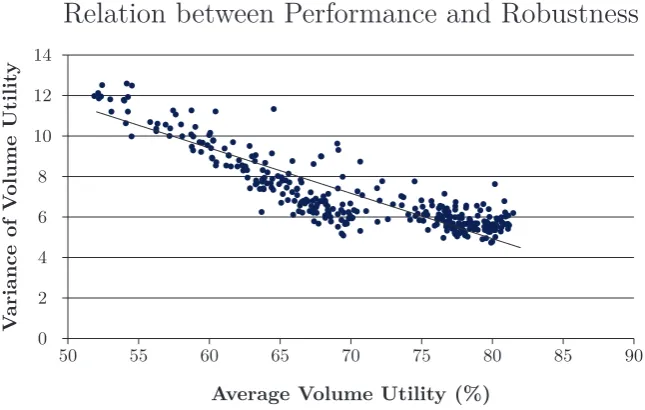
Figure 3.13: Performance distribution of our LHS (“topSpace” excluded). The performances are givenas the average volume utility over all 80 problem instances and the frequency indicates how manyconfigurations in our LHS of size 334 have that performance (because of our LHD, one third of theoriginal 500 configurations takes the value “topSpace”, and is therefore excluded).
Figure 3.14: Performance distribution of our LHS of 50 configurations on 8 practical pick-pallet instances.The performances are given as the average number of pallets utilized over all 8 problem instances andthe frequency indicates how many configurations in our sample of 50 have that performance.
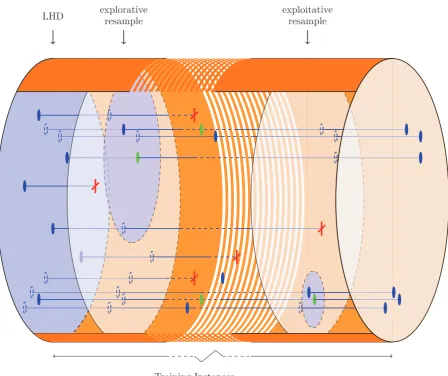
Figure 4.1: Visualization of uRace, showing the parallel evolution of parameter configurations and anincreasingly localized search

References

Related documents

Walaupun pada kadar masukan berbeza, butiran enapcemar aerobik telah berjaya dibentuk untuk perawatan air sisa berkadaran tinggi

Todavia, nos anos 1800, essas práticas já não eram vistas com tanta naturalidade, pelos menos pelas instâncias de poder, pois não estava de acordo com uma sociedade que se

Goldfish care Planning your aquarium 4-5 Aquarium 6-7 Equipment 8-11 Decorating the aquarium 12-15 Getting started 16-17 Adding fish to the aquarium 18-19 Choosing and

I understand that I will be permitted to write an unlimited number of checks against my Account balance and that funds will be drawn in the following order: (1) against any

Source separation and kerbside collection make it possible to separate about 50% of the mixed waste for energy use and direct half of the waste stream to material recovery

Area Custodial Coordinators 5 FTE Custodial Staff 14 FTE Custodial Services Administrator 1 FTE Director of Maintenance 2 FTE Environmental Programs 9 FTE Energy Management 2

La formación de maestros investigadores en el campo del lenguaje y más específicamente en la adquisición de la escritura en educación ini- cial desde una perspectiva

For the poorest farmers in eastern India, then, the benefits of groundwater irrigation have come through three routes: in large part, through purchased pump irrigation and, in a