University of South Carolina
Scholar Commons
Theses and Dissertations
2016
The “Forgotten Man” of Washington: the Pershing
Memorial and the Battle over Military
Memorialization
Andrew S. WalgrenUniversity of South Carolina
Follow this and additional works at:https://scholarcommons.sc.edu/etd Part of theHistory Commons
This Open Access Thesis is brought to you by Scholar Commons. It has been accepted for inclusion in Theses and Dissertations by an authorized administrator of Scholar Commons. For more information, please [email protected].
Recommended Citation
The “Forgotten Man” of Washington: the Pershing Memorial and the Battle
over Military Memorialization
by
Andrew S. Walgren
Bachelor of Arts University of Georgia, 2013
_________________________________________________
Submitted in Partial Fulfillment of the Requirements
For the Degree of Master of Arts in
History
College of Arts and Sciences
University of South Carolina
2016
Accepted by
Thomas Brown, Director of Thesis
Paul MacKenzie, Reader
ii
iii
ACKNOWLEDGMENTS
I would like to first thank my advisor, Dr. Thomas Brown, who steered me
towards this project, guided me along the way, and provided invaluable feedback as I
prepared my thesis for defense. I would also like to thank Dr. Kent Germany, who
oversaw the original draft of my thesis and helped curb my proclivity for prolixity (some
habits die hard). A sincere thank you to Drs. Marjorie Spruill, Don Doyle, and Lauren
Sklaroff for their unwavering support throughout my candidacy; I would not be here
without all of your encouragement and advice. Thank you to Dr. Paul MacKenzie, who
served as my second reader and who, more importantly, provided a model example of
how military historians can contribute novel and exciting perspectives on seemingly
well-tread subjects.
No student can hope to survive the rigors of graduate school without the personal
support of friends, colleagues, and family. There are too many personal acquaintances to
fully mention here, but a few deserve special acknowledgment. Thank you to Patrick
O’Brien and Mark Guinter for preserving my sanity more times than I would care to
admit. Thank you to Stephanie Gray for assiduously and patiently explaining the arcane
practice of thesis formatting to this stubborn Luddite. Thank you to my brother, my
father, and my wonderful girlfriend for always supporting me. Finally, a heartfelt thank
you to my mother, who provided the inspiration to pursue an academic career many,
iv
ABSTRACT
The current debates over the transformation of Pershing Park in Washington,
D.C., into a national World War I memorial have reignited century-old concerns about
how to properly memorialize military figures. The park, originally conceived as a
memorial to General John Pershing and the men of the American Expeditionary Force in
World War I, had fallen into disrepair, and many within the federal government wanted
to redevelop the park in time for the World War I Centennial in 2018. Popular
commentators have pointed to National Park Service budgets cuts and the decline of
“great man” memorials as the primary culprits behind the park’s cultural irrelevancy.
While those factors help to explain the park’s decline since its construction in 1981, they
do not fully explain why it took thirty-three years to complete. Pershing Park’s legislative
history reveals that the memorial project was plagued by both internal and external issues
from its inception, which foreshadowed its eventual failure. Vietnam-era ideological
shifts towards the military, commercial redevelopment within the capital, and national
artistic reform movements all threatened Pershing Park’s existence during that period.
These factors worked together to greatly reduce General Pershing’s imprint on what was
originally intended to be his memorial.
Additionally, the Pershing Memorial project was a seminal moment in the
programmatic development of the American Battle Monuments Commission (ABMC),
which spearheaded the Pershing initiative. The ABMC was originally tasked with
v
missing or were never repatriated. The Pershing Memorial was the agency’s first
endeavor in domestic monument-making, and the ABMC’s inexperience with
Washington politics and private fundraising hindered its ability to construct an ideal
memorial to its former chairman. The ABMC would go on to construct two more
domestic memorials after Pershing Park, and these projects were sufficiently colored by
the agency’s experience with the Pershing Memorial. Although the Pershing Memorial
was the last federally-sponsored monument to a military commander, it was not the last
gasp of military memorials in general. Enlightened by its experience with the Pershing
monument, the ABMC constructed two ambitious war memorials to the Korean War and
World War II in the late 1990s and early 2000s, with resounding success. The Pershing
vi
TABLE OF CONTENTS
ACKNOWLEDGMENTS ... iii
ABSTRACT ... iv
LIST OF FIGURES ... vii
CHAPTER I: INTRODUCTION ...1
CHAPTER II: “A CAREFUL REGARD FOR THE PRINCIPLES FOR WHICH HE STOOD”: A DESIGN IS PROMISED, 1948-1956 ...16
CHAPTER III: “THE TRUE IMAGE OF OUR COUNTRY”: THE MEMORIAL SPUTTERS, STALLS, AND IMPROBABLY SUCCEEDS, 1957-1966 ...29
CHAPTER IV: “THE GENERATION OF 1895”: THE MEMORIAL IN PUBLIC MEMORY, 1967-1983 ...56
CHAPTER V: CONCLUSION...71
vii
LIST OF FIGURES
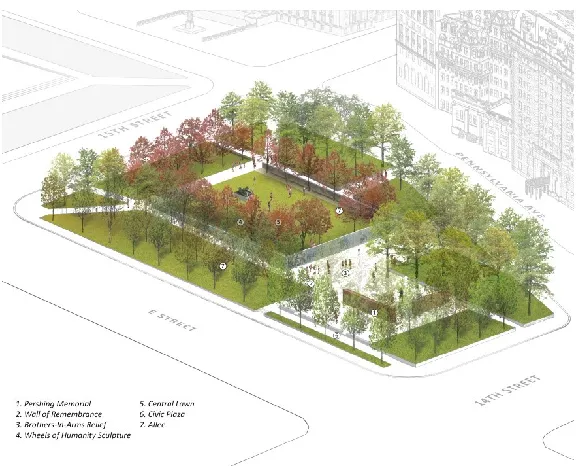
Figure 1.1: The Pershing Memorial at the present-day. ...15
Figure 1.2: The winning design for the National World War I Memorial. ...15
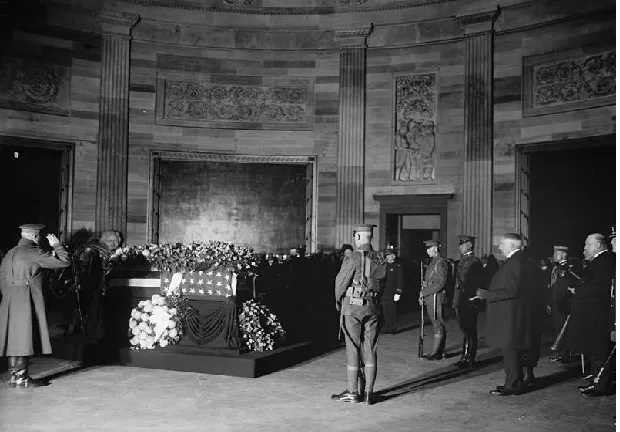
Figure 2.1: Pershing saluting the Unknown Soldier. ...27
Figure 2.2: Pershing lying in State at the Capitol Rotunda. ...27
Figure 2.3: John Pershing’s funerary procession. ...28
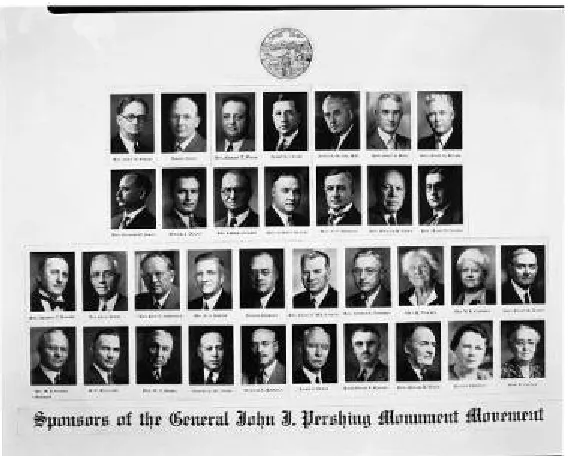
Figure 2.4: The short-lived John J. Pershing Memorial Foundation. ...28
Figure 3.1: Pennsylvania Avenue’s north side in 1958. ...55
Figure 3.2: The PAPC’s plans for the renovation of Pennsylvania Avenue, 1964. ...55
Figure 4.1: Detail, Vietnam Veterans Memorial.. ...69
Figure 4.2: Detail, Pershing Park AEF inscription. ...69
1
CHAPTER I
INTRODUCTION
In late January 2016, the U.S. World War I Centennial Commission approved a
plan that would completely overhaul the design of Pershing Park in Washington, D.C.
The park, located in the heart of the Pennsylvania Avenue Historic District (PAHD), had
originally been completed in 1983 and had served as a memorial to General John J.
Pershing, the commander of the American Expeditionary Force in World War I. The
memorial had been deteriorating for years due to continued budget cuts within the
National Park Service (NPS), and the park’s location on the periphery of the National
Mall complex exacerbated its neglect. Cracks had begun to form around the base of the
Pershing statue, and the once-full reflecting pool lay as desiccated as the concrete that
surrounded its edges. “What should be a delightful oasis for visitors has become an
embarrassment,” wrote a disgruntled managing partner of the Willard Hotel. Pershing
Park, which sat across the street from the historic hotel, was damaging the beauty and
reputation of the entire PAHD. Edwin M. Fountain, the vice chairman of the Centennial
Commission, said that the memorial was little more than a “35-year-old failed park,”
implying that the old design was flawed from its inception. The new design, the
brainchild of a precocious 25-year-old Chicago architect, would breathe fresh air into
what had become a stale memorial. The park, according to Fountain, will be transformed
2
veterans, and will do away with anachronistic “great man” monuments that belong firmly
in the past (Figures 1.1 and 1.2).1
Pershing Park’s planned transformation into a modern and “holistic” memorial
space has not gone unchallenged, especially among art traditionalists and conservatives.
The Wall Street Journal called the design competition a clash of “monumental egos” that
was more concerned with furthering artistic careers than with respectfully
commemorating America’s World War I veterans. The Journal opined that most of the
finalists’ designs were “unabashedly modernist” and “pure expressions of their creators’
egos rather than reflections on the sacrifice of those who served” (even likening one
particularly esoteric design to a set of molehills). Pershing Park’s original landscape
architect, M. Paul Friedberg, exclaimed that he was “shocked” that new designs were
being proposed. “You don’t destroy something that has value to build something and give
it some other value,” Friedberg said. The memorial’s “value” was rooted in its
didacticism, and to remove it would be a “destruction of culture akin to burning books.”
Friedberg reserved his harshest criticism for the NPS, which he thought had utterly failed
to maintain the park’s original beauty. Breitbart News, a right-wing news outlet, decried
the fact that “great man” memorials were being specifically targeted for removal.
Pershing, they argued, was “emblematic of a generation that witnessed…the birth of the
United States as a world superpower,” and he served as an edifying example of civic
1 Corbin Hiar, “National Parks: Years of Wrangling, $1.7M Needed to Fix Crumbling Park in the Heart of
D.C.,” E & E Publishing, April 13, 2015, accessed February 7, 2016,
3
responsibility and military heritage for future generations. Removing Pershing risked
turning the memorial into a “sad, postmodern farce.”2
The one thing that both the supporters and the detractors of the National World
War I Memorial could agree on was that funding for national memorials devoted to the
Great War was unacceptably paltry. Budget cuts within the NPS had been one of the
primary catalysts for Pershing Park’s marked deterioration during its thirty-five-year
lifespan. The NPS could not afford the $1.7 million needed to fix the park’s crumbling
infrastructure. In fact, the NPS could not even afford to keep Pershing Park’s water
running, and for many the barren reflecting pool symbolized America’s World War I
amnesia. Even the new design, whose total projected budget ranges from $40-$50
million, is entirely reliant on private contributions (as of this writing, only $3 million has
been raised). Although Congress established a temporary commission to spearhead the
project, the legislators did not appropriate any funds for it. One prominent military
lobbyist said that he was “appalled” that the commission was not given any money, not
even a small amount to field an administrative staff. It seemed as if the federal
government wanted the project to fail. To remedy this, fundraisers centered their
entreaties around the familiar binary of remembrance and forgetfulness. Some urged that
the memorial would help remind Americans of the role their nation played in decisively
ending the “disastrous war,” while others simply wanted to remember an uncommonly
2 Aram Bakshian, Jr., “A War Memorial Design Competition for Monumental Egos,” Wall Street Journal,
September 25, 2015, accessed February 8, 2016, http://www.wsj.com/articles/a-war-memorial-design-competition-for-monumental-egos-1443218705; Carlos Bongioanni, “Plans for WWI Memorial in Nation's Capital Stir Ire,” Stars and Stripes, August 19, 2015, accessed February 8, 2016,
4
brave generation of young men. One Texas congressman summed up the commission’s
plea by noting that the “worst casualty of war is to be forgotten.”3
The current debates surrounding Pershing Park have generally focused on the
park’s developments after its construction in 1983 – on its “35-year failed history.”
Commentators have pointed to NPS budget cuts and postmodern aesthetics as the primary
culprits behind the park’s demise. The nearly forty-year legislative battle (1948-1983) to
get the Pershing memorial designed, funded, and constructed has been largely
overlooked. Without that story, Pershing Park’s failure appears deceivingly simple: no
money and little public interest. The memorial initiative had struggled to raise money
from its inception, however, and the reasons for that shortfall reveal a great deal about
why the park fell into irrelevancy after its completion. Unlike the majority of
federally-sponsored monuments constructed during the mid-to-late twentieth century, the Pershing
Memorial was almost entirely funded through public expenditures. In fact, the
memorial’s supervising body, the American Battle Monuments Commission (ABMC),
was insistent that the project would only succeed with federal money. The ABMC had
primarily concerned itself with constructing overseas cemeteries up until the end of the
Second World War, and as a small federal agency it had largely been absolved from
private fundraising efforts. The Pershing Memorial departed from both of these norms,
and the ABMC vehemently protested the latter deviation.4
3 Hiar, “National Parks: Years of Wrangling, $1.7M Needed to Fix Crumbling Park in the Heart of D.C.”;
Carlos Bongioanni, “WWI Memorials Needs Funding to Become a Reality,” Stars and Stripes, July 22, 2015, accessed February 8, 2016, http://www.stripes.com/wwi-memorial-needs-funding-to-become-reality-1.359208.
4 For more on the ABMC’s overseas cemeteries, see Elizabeth G. Grossman, “Architecture for a Public
5
The ABMC’s reluctance – and some might argue unwillingness – to raise money
through private subscription severely circumscribed its bargaining power vis-à-vis the
federal government. When the Nixon administration began cutting Great Society
programs – many of which were devoted to public works and city improvement – the
Pershing Memorial’s budget decreased dramatically. As a result, the memorial
diminished in both scope and importance. Throughout its history, the Pershing Memorial
was confronted by the paradox that its greatest supporters were oftentimes its gravest
enemies. Both the ABMC and the American Legion had benefitted tremendously from
right-wing militarism during the postwar years, but those same conservative agents were
also the ones pushing for dramatic spending cuts to public works. This phenomenon
peaked during the Vietnam era, as conservative (and sometimes liberal) policymakers
sought to redirect federal expenditures away from domestic programs in order to fund the
escalating conflict in Vietnam. When the Pershing Memorial was finally completed in
1983, supporters pointed to budget cuts as the primary culprit behind the memorial’s
downsizing.
Budgetary constraints provide an explanation for the memorial’s eventual
downsizing, but they do not fully explain the memorial’s protracted completion or why
the project had so much trouble garnering widespread support. After all, it took less than
a decade for the ABMC to design and construct three publically-funded World War II
memorials in New York, California, and Hawaii. By comparison, it took Congress
eighteen years simply to approve a specific site for the Pershing Memorial. I argue that
there were both pragmatic and ideological explanations for this discrepancy. The concrete
6
explanation for the Pershing Memorial’s delayed construction was its location. Pershing
Park’s location along the main thoroughfare of the nation’s capital – Pennsylvania
Avenue – was both a blessing and a curse. Located at the intersection of 15th Street and
Pennsylvania Avenue, Pershing Park occupied prime real-estate opposite the historic
Willard Hotel and adjacent to the White House. Although the lot had been abandoned for
most of the early twentieth-century and was located on the periphery of the National Mall
complex, the ABMC was understandably pleased to secure a site in the heart of
Washington, D.C. It was assumed that the site’s visibility would help spur the project
along and secure public support. Perhaps most importantly, the site’s centralized location
would ensure that Pershing and the AEF were properly memorialized and appreciated by
future generations.
Pershing Park’s location on Pennsylvania Avenue also meant that the design
would be subjected to competing claims, endless bureaucracy, and urban redevelopment.
During the eighteen-year-period in which Congress deliberated possible sites for the
Pershing Memorial, a wide variety of competing plans vied for Congressional attention
(ranging from a botanical garden to a visitor’s center). In addition, the ABMC had to
answer to a phalanx of supervisory agencies tasked with regulating the capital’s
landscape, such as the Commission of Fine Arts, the Budget Bureau, the Board of Trade,
the National Capital Planning Commission, the NPS, and the Department of the Interior.
Naturally, these agencies never quite agreed on what the park should look like, where it
should be located, and how much funding it should receive. One organization’s darling
7
Memorial’s supporters found themselves constantly changing design plans and adjusting
their budgets to meet these agencies’ varied demands.
The most serious threat posed to the Pershing Memorial, however, was urban
redevelopment. The Pennsylvania Avenue Development Corporation (PADC) was
created in 1972 to oversee the commercial development and structural reconfiguration of
Pennsylvania Avenue. Originally called the Pennsylvania Avenue Advisory Commission
(or sometimes the President’s Temporary Council on Pennsylvania Avenue), the PADC
was first established in 1962 by President John F. Kennedy in an effort to rehabilitate and
revitalize Pennsylvania Avenue, which had been deteriorating for decades. The PADC
would buy up commercial property using federal loans and appropriations, destroy the
existing building (or greatly modify it), and distribute the rights to private developers in
an effort to inject new economic life into Washington’s main thoroughfare. In addition,
the PADC wanted to transform Pennsylvania Avenue into a ceremonial boulevard that
accurately reflected America’s cultural vitality. This meant crafting a design aesthetic
that highlighted the strength of the American people. The PADC envisioned expansive
plazas, grand fountains, and scenic vistas that would connect the two great seats of
American political power, the Capitol and the White House. Pershing supporters, in
particular the American Legion, were enraged at this proposal. The Legion argued that
the PADC’s plan threatened both the design and the sanctity of the Pershing Memorial.
Even if commercial interests did not entirely derail the memorial, it would nonetheless
cheapen the sacrifices made by Pershing and the AEF. To a large degree, these fears were
well-founded. Although Pershing Park’s size grew as a result of PADC development, the
8
draw was not the Pershing statue or the AEF granite wall, but the skating rink and the
food vendors that dominated the park’s center. The PADC plan ensured that Pershing
Park’s main role would be furthering Pennsylvania Avenue’s commercial development.
The ABMC’s early vision of the memorial as an all-encompassing shrine to General
Pershing and his men all but vanished.
The commercial and bureaucratic issues that plagued the Pershing Memorial were
inextricably linked with ideological concerns that arose in the mid-twentieth century. The
first of these concerns was related to Washington’s memorial landscape. National
memorials to singular men, most of whom were white military figures, had declined in
both importance and production since the Second World War. Recent scholarship has
explained why the memorial landscape around Washington, D.C., has tended to focus on
military and political leaders, as well as why those traditions in memorial design
ultimately faded during the second half of the twentieth century. The prevailing notion is
that the early architects behind the construction of the capital’s memorial landscape chose
to commemorate military figures to convey a sense of monumental unity and American
strength. Marginal figures such as physicians or scientists were discarded because they
spoke to narrow sections of the American populace and detracted from the narrative
cohesion of the memorial space. The proliferation of heroic monuments quickly became
the victim of its own success, especially in the politically and socially tumultuous years
of the mid-twentieth-century. These monuments conveyed a message of unambiguous
moral uprightness and worthy sacrifice. In the wake of unpopular military campaigns in
Korea and Vietnam, they appeared anachronistic to many. No longer could American
9
and ideologies.The foremost current scholar on the history and development of
Washington’s monument landscape noted that the “decline of the public monument” in
the National Mall during the twentieth century was especially pronounced in the lack of
military memorials, which saw no new monuments erected from 1936 until the Vietnam
Veterans Memorial in 1982. The Mall slowly transitioned from a space celebrating
America’s martial, masculine, and white citizenry into a more inclusive and cerebratory
landscape, which mirrored political and social changes in the nation at-large. The
predominance of white males on America’s most sacred public ground was no longer
acceptable to a nation struggling to adapt to modernity.5
Attempts to rectify the whiteness and bellicosity of the National Mall took off in
earnest after the 1960s. Statues commissioned to commemorate underrepresented
groups, such as women, children, and African Americans, created a much-needed
contrast to the imposing military memorials. The Mary McLeod Bethune Monument,
erected in Lincoln Park in 1974, became first statue of both a woman and an
African-American to find a home in the capital’s memorial landscape. The most important
innovation, however, came in the form of the victim monument. Scarred by the failure
and divisiveness of the Vietnam War, the nation looked for a monumental form more
conducive to healing than edification. Maya Lin’s minimalistic design for the Vietnam
Veterans Memorial (1982) fulfilled this need, etching only the names of the fallen on a
5 Margaret E. Farrar, Building the Body Politic: Power and Urban Space in Washington, D.C. (Urbana:
University of Illinois Press, 2008), 45-57; Kirk Savage, Monument Wars, (Berkeley: University of California Press, 2009), 169, 265. For more on how monuments can impact a nation’s collective memory and identity, see Michael Kammen, Mystic Chords of Memory: The Transformation of Tradition in American Culture (New York: Alfred A. Knopf, 1991), 4-7; Maurice Halbwachs, The Collective Memory
(New York: Harper & Row Colophon Books, 1980), 51-81; Eric Hobsbawm, “Introduction: Inventing Traditions,” in The Invention of Tradition, ed. Eric Hobsbawm and Terence Ranger (Cambridge: Cambridge University Press, 1983), 1-13; Kristin Ann Hass, Sacrificing Soldiers on the National Mall
10
slab of black marble, which turned the VVM into a subjective and emotional experience
– a far cry from the didactic nature of the hero monuments. The victim monument has
continued to dominate the memorial landscape of the Mall up to the present day, with
little-to-no indication that another monumental form will displace it, especially since the
federal government issued a moratorium on future projects in the Mall space in 2003.6
At the same time that the federal government was attempting to transform the
Mall into a more inclusive space, city planners were also trying to relocate much of the
statuary strewn throughout the capital. Washington’s mid-century urban planners
expanded upon the critiques made by earlier artistic reformers. Soon after the conclusion
of the First World War, national art critics worried that doughboy monuments might
spread throughout the country. Critics did not protest the doughboy statues because they
disagreed with the valor of the cause; rather, they were loath to see another generation of
“grotesque,” poorly-executed statuary erected throughout the country. The American
Civil War ushered in a “plague of war memorials” that insulted both the soldiers who
fought and the viewers who looked upon them. These figurative statues, which oftentimes
depicted standing soldiers, were predominantly funded by local communities and
mass-produced by a burgeoning monument industry, which contributed to their “maddening
monotony.” The First World War – the next major American conflict after the Civil War
– threatened to produce the same monotony, and in many respects it did. Reformers like
Adeline Adams wanted to see more cerebral and contemplative memorials, such as
6 Savage, Monument Wars, 261-75, 297-313; Patrick Hagopian, The Vietnam War in American Memory: Veterans, Memorials, and the Politics of Healing (Amherst: University of Massachusetts Press, 2009); Laura Palmer, Shrapnel in the Heart: Letters and Remembrances from the Vietnam Veterans Memorial
11
flower gardens and decorative flagpoles, that would engage the viewer in a dialogue and
allow artistic genius to flourish. This never came to fruition, however, as thousands of
mass-produced doughboy statues were shipped to local communities throughout the
country during the interwar years. The preponderance of military statues continued
unabated up until the middle of the century.7
When Washington city planners attempted to reform the city’s statuary a few
decades later, they were less concerned with aesthetics than with the statues’ rigidly
militaristic overtones. To be sure, planners still decried the haphazard, “ill-fitted,” and
often downright-bizarre statuary that graced Washington’s landscape. Statues like the
Sherman Monument, which was located in the middle of a traffic circle on Pennsylvania
Avenue, and the Grant Memorial, which towered above viewers on the National Mall,
seemed out-of-place and out-of-touch. But what was truly disquieting about the
proliferation of military statues was that it made America appear like a society that only
valued the contributions of soldiers and generals. In fact, the capital was so inundated
with military statues that to many commentators it appeared undemocratic and
authoritarian. For these reformers, the Pershing Memorial was merely another addition to
an outdated and unneeded genre.
The final ideological hurdle that the Pershing Memorial had to overcome was
simply the fact that it dealt with the First World War. Unlike Europe, the United States
did not place a great deal of importance on the Great War – at least in comparison with
World War II and Vietnam. In fact, one historian of the Great War writes that the
7 Charles Moore, “War Memorials Bad and Good,” American Legion Weekly 4 (September 8, 1922): 16;
Adeline Adams, “War Memorials in Sculpture,” Scribner’s 65 (March 1919): 381-84; Kirk Savage,
12
“problem with the American memory of World War I is that there seems to be none.”
Historians have given manifold reasons for this phenomenon: America’s relatively short
engagement in the war, the brevity and futility of the peace, and the United States’ failure
to accept a world role and join the League of Nations. America’s cynicism towards the
war became evident soon after the war’s conclusion, and alarmed veterans’ organizations
quickly stepped in to “correct” the memory of the war. Foremost amongst these
initiatives was the push to build monuments, memorials, and military cemeteries in
France and across the country. Led by the American Legion, a veterans’ organization
founded in 1919 to protect the heritage of the war, World War I monuments sprang up
across the United States. The majority of these monuments depicted “doughboys,” the
common man who selflessly charged into France and accomplished uncommon deeds.
These doughboy statues were characterized by a wide variety of forms and an equally
wide variety of purposes. As one art historian has written, the statues “served as an
antidote to radicalism, a sign of vigilance and loyalty, and a reassuring vision of
American fitness and masculinity.” The need for “reassuring” images of normative
American values became even more urgent in the wake of violent upheavals following
the First World War. In the face of radical movements such as socialism and anarchism,
the doughboy was a potent reminder of “true” American values.8
8For excellent synopses of this process, see Steven Trout, On the Battlefield of Memory: the First World
War and American Remembrance, 1919-1941 (Tuscaloosa: University of Alabama Press, 2010), 118-141; John Bodnar, Remaking America: Public Memory, Commemoration, and Tradition in American Culture
(Princeton: Princeton University Press, 1992); Stephen Ortiz, “The ‘New Deal’ for Veterans: The Economy Act, the Veterans of Foreign Wars, and the Origins of New Deal Dissent,” The Journal of Military History
70:2 (2006): 415-438; G. Kurt Piehler, “Remembering the War to End All Wars,” in Unknown Soldiers: The American Expeditionary Forces in Memory andRemembrance, ed. Mark Snell (Ohio: Kent State University Press, 2008), 28-55; Wingate, “Over the Top,” 26-32; Jennifer D. Keene, World War I
13
By the 1960s, however, the symbol-laden image of the doughboy – or any other
military figure, for that matter – had lost its potency. The Second World War dwarfed
World War I in most Americans’ minds, and the conflict in Vietnam only further pushed
World War I to the periphery of America’s collective memory. Instead of serving as a
“reassuring” vision of American values, the doughboy and other World War I figures
now appeared as an anachronistic ideal of normativity that no longer applied to a nation
becoming more diverse by the day. For many on the right, however, soldiers and generals
still carried a great deal of meaning, and they would go to great lengths to preserve that
image of American indomitability – especially as Americans began to question the
legitimacy and worth of the Vietnam War. The vociferous and heated debates
surrounding the Pershing Memorial reveal a substantial and powerful constituency that
not only supported traditional military statues, but also saw them as a way to fight back
against the impotent victimization that had swept into the national military narrative.
Powerful conservative lobbyists fought against what they perceived to be a lack of
appreciation for the martial sacrifices made by America’s veterans. It was a battle that, in
the case of the Pershing Memorial, they would not win.
When the Pershing Memorial was first conceived in 1948, it seemed as if its
passage was inevitable. The nation was still wrapped up in postwar militaristic fervor,
and the recent death of General Pershing promised to keep interest in the project. As the
memorial project stalled due to financial issues, however, it became subjected to forces
that its original supporters could not have foreseen. The Pershing Memorial’s reliance on
public funds meant that it was also subjected to the vicissitudes of the federal
14
government. Thus, expenditures on urban renewal, commercial development, and the
Vietnam War cut into the memorial’s budget during the 1960s and early 1970s, and by
then there was no turning back. What was once a memorial project became an economic
venture; what was once a civic shrine became a commercial. By the time the Pershing
statue was completed in 1983, the park was his in name only. Edwin Fountain’s statement
that Pershing Park began to fail after its completion is thus inaccurate. In reality, the park
had never been given a chance to succeed. Financial and commercial obstacles merged
with ideological shifts in the nation at-large to create a toxic environment for the Pershing
Memorial. It was a testament to the tenacity, doggedness, and clout of the ABMC and the
American Legion that the memorial was erected at all. But the memorial was
undoubtedly a failure, especially when comparing the content and intent of the original
1959 design with what was eventually constructed.
The Pershing Memorial was the last statue of a general erected in the city of
Washington, D.C.9 Part of this was due to the capital’s increasingly-scarce memorial
real-estate, but the Pershing Memorial also played a key role. Pershing supporters originally
thought that finding support for the general would be relatively easy, a “no-brainer”; he
was, after all, the only man besides George Washington to be named “General of the
Armies” – a refrain repeated ad nauseum throughout the campaign. But widespread
support never came, even from supposed allies on the Right. The Pershing Memorial was
the last stand for commander memorials, and the line did not hold.
9 A memorial to Dwight D. Eisenhower gained Congressional approval in 1999, but it has since been put on
15
Figure 1.1: The Pershing Memorial at the present-day. (Courtesy of The Washington Post/John Kelly.)
Figure 1.2: The winning design for the National World War I Memorial. The Pershing statue is located in the bottom right corner. (Courtesy of the U.S. World War I Centennial
16
CHAPTER II
“A CAREFUL REGARD FOR THE PRINCIPLES FOR WHICH HE STOOD”: A DESIGN IS PROMISED, 1948-1956
John J. Pershing’s death on July 15, 1948, was met with almost universal
mourning and, emblematic of the militaristic tenor that characterized the postwar years, a
great deal of hyperbole. Editorials from across the nation sang the praises of the former
general, opining that Pershing was so attuned to the nuances and exigencies of military
life that it seemed as if he had been “born to khaki.” “America’s first soldier” was
honored as both a soldier and a statesman, as a man who had preserved the integrity and
independence of the American Expeditionary Force (AEF) in World War I against
unyielding pressure from allies in Great Britain and France who wanted to use American
soldiers to fill in the gaps of their ravaged armies. The Washington Post called Pershing
“the prophet of a second world war” due to his wariness at the terms set by Treaty of
Versailles, which imposed suffocating penalties on the defeated German empire.
President Truman echoed this sentiment, extolling the former commander for his
foresight. In addition, in the model of the professional soldier, commentators opined that
Pershing’s dispassionate demeanor allowed him to stay above the corrupting influence of
17
run for the presidency in 1920, 1924, and 1928 (he did not shy away from the public
spotlight entirely, however, as he spent three years as Chief of Staff from 1921-24).10
Accolades for Pershing also poured in from around the globe, and even reached
across racial lines. French premier Robert Schuman and Filipino president Elpidio
Quirino both lauded Pershing’s ability to provide effective leadership in times of great
peril, with Schuman referring to Pershing as the “American Lafayette” for his help in
liberating the French people in 1918. Marshall Henri Philippe Pétain, the 92-year-old
French World War I hero and the last remaining “great leader” of the Allied armies, was
reported to have been despondent when he heard the news of Pershing’s death from his
prison cell. Pétain was serving out a life sentence for his role as head of the traitorous
Vichy government, a Nazi puppet state that had also aided the Third Reich in deporting
France’s Jewish citizens to the extermination camps. He had allegedly been spared the
death penalty only by Pershing’s intercession on his behalf to Charles de Gaulle.
Pershing’s African American orderly of eighteen years reportedly sobbed upon hearing
news of the general’s death, calling Pershing “the greatest soldier” he had ever seen. The
elderly man also credited Pershing for providing him with a life lived in the “flowers of
ease.”11
Only a handful of newspaper editorials chose to discuss the controversies and
failures that had taken place over the course of Pershing’s life. Professionally, Pershing’s
campaign to apprehend Pancho Villa through 1916 to early 1917 – known colloquially as
18
the “Punitive Expedition” – was marred by organizational, logistical, and disciplinary
failures. In World War I, Pershing alienated his British and French allies with his
stubborn refusal to integrate American soldiers into the Allied ranks. In addition,
Pershing’s tactics were, at times, fatally antiquated, and only after several military
disasters did he begin to modernize his approach. In personality, the American
commander was notoriously severe and uncompromising. Pershing frequently sparred
with both his subordinates and his superiors, and his outward coldness engendered few
commendations from his troops. The Post only took Pershing to task on his interpersonal
shortcomings, however, crediting Pershing with turning the tide of the First World War.
Like many of the statements made in the immediate aftermath of Pershing’s death, calling
the former AEF commander the main factor in turning the tide of the war was a
tremendous overstatement. Undoubtedly, these unflattering details were glossed over in
part due to the natural human tendency to whitewash the recently deceased’s failings in
order to assuage the grieving and honor the dead. The expurgation of Pershing’s martial
disappointments, however, also spoke to an incipient desire to place Pershing among the
pantheon of transcendent American military leaders.12
If there was any doubt amongst contemporaries as to the impact General John J.
Pershing had on the American polity, his historic funerary procession put those notions to
rest. Three days before the procession commenced, President Truman ordered all flags
throughout the country to fly at half-mast until Pershing’s body was interred. The day
before the burial, Pershing’s body was laid in State at the Capitol Rotunda, placed atop a
simple wooden catafalque. The aesthetic modesty of the catafalque belied its hallowed
12 Marshall Andrews, “Pershing, a Trail Breaker, Always Stirred Controversy,” Washington Post, July 16,
1948, 4; “Leadership, Personal Courage, Devotion to Troops Won for Pershing Affection of the Nation,”
19
history, however, as only the “Nation’s great” had been allowed to grace its apex.
“Lincoln’s body rested on top of it,” the Post noted, connecting Pershing’s funeral and,
by extension, his importance to one of the most revered figures in American history
(Figures 2.1 and 2.2).13
The procession itself was marred by torrential rainfall, but it was nonetheless
attended by over 300,000 observers, including President Truman; generals Dwight D.
Eisenhower, George C. Marshall, and Omar N. Bradley (all of whom had served under
Pershing at one time or another during their careers); a 100-piece Army Band; and an
honor guard of 3,500 servicemen representing all branches of the United States military.
The four-mile procession to Arlington National Cemetery, set against the backdrop of the
Lincoln Memorial and the Washington Monument, was utterly silent, save for the soft
pattering of rainfall and the muted melodies of the Army Band. The experience bordered
on the sublime; as one correspondent observed, the procession seemed to be a welding of
religious severity and military officiousness. Once at Arlington, Pershing was laid to rest
amongst the World War I dead, as per his wishes. “When the last bugle is sounded,”
Pershing mused, several years before his death, “I want to stand up with my soldiers.”
And so he did (Figure 2.3).14
The calls for a permanent national memorial to General Pershing came almost
immediately after he had been interred at Arlington. Speaking a day after Pershing’s
death, Secretary of State George C. Marshall hoped that the national attention given to a
soldier who “served his country to a greater degree” than most citizens realized would not
13 Bruskin, “General Pershing to Lie in State Capitol,” 1, 4.
14 “300,000 Stand Silent in Rain as General Pershing is Borne to Rest,” New York Times, July 19, 1948, 1;
20
be fleeting. “May the people of this country honor his memory by a careful regard for the
principles for which he stood,” Marshall concluded. Though he was most likely speaking
in the abstract, veterans’ organizations and Congress quickly moved to make Marshall’s
exhortation a concrete reality. The first proposals laid out in late 1948 by the American
Legion were local in scope, recommending a monument be built in Pershing’s home state
of Missouri. The Legion, a powerful veterans’ organization founded after World War I,
would be one of the primary supporters of a national Pershing memorial up until its
completion in 1983. Though the Legion was already spending over $25,000 per year
maintaining Pershing Hall in France (built before Pershing’s death), they pledged
additional funding towards the construction of a local memorial at Pershing’s childhood
home in Laclede, Missouri. American Legion Resolution 470 called for the
transformation of the home into a “national shrine.” The language employed by the
Legion in this resolution clearly implied that they intended the Laclede Memorial to
function as a site of civic pilgrimage, echoing Marshall’s earlier sentiment that Pershing’s
life should serve as an edifying example of civic responsibility. In keeping with the
hallmarks of the traditional monument style, the memorial would project an unambiguous
didactic message.15
At first it appeared as if Congress would quickly follow the American Legion and
erect a memorial in Washington, D.C. In September 1949, Senator Burnet Maybank
issued a joint resolution calling for the erection of a memorial to General Pershing. The
joint resolution authorized the American Battle Monuments Commission, which Pershing
had chaired for twenty-five years, to prepare a plan, implement a design, and erect a
15 “Proceedings of the 30th National Convention of the American Legion,” October 1948, 97, 443. The
21
“suitable” memorial to the deceased general. The memorial would then be subject to
review from the National Commission of Fine Arts before seeking final approval from
Congress. The NCFA was founded in 1910 to oversee the construction of all civic
buildings in Washington, including parks, squares, and zoos. Maybank’s resolution was
vague on the deadline for a proposal, stipulating merely that it should be as “early a date
as practicable.” Regardless of the deadline, the joint resolution failed to pass due to
financial considerations, foreshadowing a problem that would plague the memorial
throughout its history. Maybank introduced two more joint resolutions in 1951 and 1953,
both of which failed to gain Congressional approval (both were left to die in
committee).16
One of the only private attempts to raise funds for the Pershing Memorial was a
proposed minting campaign in 1954. The bill, sponsored by Senators Hugh Alfred Butler
and Dwight Palmer Griswold of Nebraska, authorized the minting of six million
fifty-cent silver coins that would be issued solely by the John Pershing Memorial Foundation.
The profits from the sale of these coins would go directly towards the establishment of a
national memorial to General Pershing; the production costs would fall entirely on the
nonprofit foundation, sparing Congress any expenses. The senators were perhaps inspired
by the Marine Corps Memorial, which had struck ground several months earlier and had
raised its entire $850,000 budget through private donations (mostly from former
Marines). Unfortunately, neither the bill nor the foundation would be successful. The
foundation, which was founded in July 1953, was an ad hoc thirty-four-member
committee that sought to “perpetuate the memory and preserve the ideals” of the
1681st Congress, 1st Session, S.J. Res. 130, September 22, 1949; 82nd Congress, 1st Session, S.J. Res. 61,
22
renowned AEF commander. The bill never made it past referral, however, and even if it
had, the foundation apparently had other plans in mind for that money. A local Nebraska
paper noted that the foundation intended to use the interest from the coin initiative to
establish “scholarships in colleges” to help “point out the basic differences between
communism and Democracy.” No mention is made of a Pershing memorial. The
foundation disappeared from record after 1955, no doubt in part due to the failed coinage
initiative. After this, no private organization would pledge funding to the Pershing
Memorial except for the American Legion nearly twenty years later (Figure 2.4).17
After Maybank’s third resolution failed to pass in 1953, it appeared that a
Washington, D.C, Pershing memorial was in serious jeopardy. The New York Times
opined in July 1953 that Pershing had become the “‘forgotten man’ among the nation’s
military figures” due to the dearth of Pershing memorials around the country. Though the
article did note that two Pershing statues had been erected in Pennsylvania and
California, it also reported that Senator Maybank was continuing to press for approval of
a memorial in the nation’s capital. Even the former general’s grave at Arlington appeared
to be unacceptably neglected. A 1955 letter to the editor captured this growing
dissonance between Americans and General Pershing. The writer, a “war veteran,” was
immensely impressed at the Memorial Day services conducted in the amphitheater of the
Arlington National Cemetery. He was even more impressed that every grave he passed
was decorated with flowers or wreaths. When the man came to Pershing’s grave,
however, he found it barren. It seemed as if Americans had a greater appreciation for the
1783rd Congress, 2nd Session, S. 2619, January 7, 1954; “A.A. Dobson, Contractor, Heads Pershing
23
common soldier than for one of the greatest American military commanders in history.
“Whenever a people forgets its worthy past,” the author warned, “the day will come when
it will not have a past worth remembering.”18
On the surface, these early failed joint resolutions appear inconsequential in the
broader history of the Pershing Memorial. No concrete bills were passed, no specific sites
were chosen, and no designs were put forward. But the choice to put the ABMC in charge
of the memorial had important ramifications moving forward. The ABMC was
established in 1923 to build and maintain overseas cemeteries and memorials for
America’s fallen World War I soldiers. These cemeteries were entirely federally-funded
and required little-to-no fundraising or political wrangling. In 1946, Congress expanded
the ABMC’s jurisdiction to include both new World War II overseas cemeteries and
domestic war memorials. Thus, the Pershing Memorial was one of the ABMC’s first
ventures into domestic monument-making. It placed the small agency under a microscope
that it was not accustomed to, nor was it entirely prepared to handle. The ABMC’s
inexperience with public fundraising, city zoning, and urban development meant that it
was entirely beholden to the federal government for aid. As a result, the ABMC had little
leverage when negotiating designs, funds, or sites with competing agencies because it had
no substantial private support. In other major cities that did not have an overabundance of
memorial architecture, such as San Francisco, this did not pose a major problem. In
Washington, however, this would pose serious complications, especially when
Pennsylvania Avenue underwent a complete overhaul in the 1960s and 1970s. The
capital’s land scarcity forced the ABMC – and by extension the Pershing Memorial – into
18 “Statues Honor Pershing,” New York Times, July 10, 1953, 17; “Pershing’s Grave,” Washington Post,
24
competition with agencies that had far greater budgets and far broader popular appeal,
often with negative results.19
The ABMC was granted permission to design and oversee the Pershing Memorial
in large part because General Pershing had served as its first chairman. Congress often
granted memorial commissions to organizations close to the proposed subject, and the
ABMC had been Pershing’s brainchild. During Pershing’s twenty-five year tenure as
ABMC chairman, he established a set of aesthetic principles that would guide the
agency’s later memorial commissions. In 1934, after the ABMC had finished
constructing most of its overseas cemeteries, Pershing penned an article for National
Geographic to explain the work that his agency had accomplished. The ABMC, Pershing
wrote, had erected “stately” yet “utilitarian” monuments throughout France that gave
permanence to America’s sacrifice in the First World War. Utilitarian monuments were
important to Pershing; he wanted visitors to be able to use the memorials and to immerse
themselves in their tranquility. These memorials were characterized by open spaces, wide
vistas, and clear walkways that facilitated continual usage. Pershing had little use for
abstract memorials, which he felt often left viewers perplexed and frustrated. Because the
ABMC’s monuments were accessible, even French children “unborn” during the war
knew of America’s role in preserving their country’s culture and democratic way of life.
Pershing concluded the article by promising the American people that the United States
19 79th Congress, 2nd Session, S. 2141, May 7, 1946. Congress extended the ABMC’s jurisdiction over war
25
government would never cease to maintain and perpetuate the memory of World War I
veterans. The ABMC would never forget their service.20
Ironically, the ABMC was struggling to concretize Pershing’s memory scarcely
eight years after his death. Resolution after resolution failed to pass both houses of
Congress due to a wide variety of clerical and procedural mishaps. Additionally,
Congressional leaders could not agree on a memorial site amidst Washington’s cluttered
landscape. Two Nebraska senators suggested that the memorial could be located at the
University of Nebraska, as Pershing had taught at the school after the conclusion of his
military career. Pershing supporters were beginning to display an elevated sense of
urgency. In February 1956, Senator Charles E. Potter, another member of the ABMC, and
Senator Stuart Symington of Missouri issued a joint report to the chairman of the Senate
Rules and Administration Committee urging Congressional approval of a Pershing
memorial. The report challenged the Rules and Administration Committee to endorse a
monument to Pershing, stating that it would be superfluous to “delineate” all the
“compelling reasons why we should honor this man – they are known to all.” Potter and
Symington stressed the urgency of their mission, writing that they were “deeply
concerned that consideration be given soon” to the latest joint resolution that lay before
the committee. In addition, the report revealed the initial flexibility of the ABMC’s
design proposals, noting that they were open to erecting a museum in lieu of a traditional
statue (indeed, that was how Pershing himself wanted to be memorialized). The
combination of persistence and persuasion finally paid off, and on March 20, 1956,
Congress officially authorized the ABMC to prepare plans, estimates, designs, and site
20 John J. Pershing, “Our War Memorials in Europe,” National Geographic Magazine 65:1 (January 1934):
26
choices for a national Pershing memorial. The ABMC’s design would have to be
approved by the NCFA before Congress would grant a site or provide funding. Pershing
supporters had scored a tenuous victory. The memorial’s fate was still questionable, and
the ABMC’s failure to secure outside funding ensured that official authorization would
be difficult to achieve moving forward.21
21 “Site Open for Pershing Honor,” New York Times, March 4, 1956, 52; 84th Congress, 2nd Session,
“Memorial to John Pershing,” Report No. 1475, February 8, 1956; 84th Congress, 2nd Session, S.J.
27
Figure 2.1: Pershing (far left) saluting the Unknown Soldier of World War I at the Capitol Rotunda, November 9, 1921. (Library of Congress, Prints and Photographs Division).
28
Figure 2.3: Funeral of General John J. Pershing, July 19, 1948. The presence of the Lincoln Memorial in the background of this photograph is especially prescient for
General Pershing, as his likeness would adorn the National Mall 35 years later. (Courtesy of the Harry S. Truman Library and Museum.)
29
CHAPTER III
“THE TRUE IMAGE OF OUR COUNTRY”: THE MEMORIAL SPUTTERS, STALLS, AND IMPROBABLY SUCCEEDS, 1957-1966
The second phase of the Pershing memorial project would prove to be its most
consequential. Although Pershing supporters had crossed the first threshold, there was
significant work left to do. The ABMC needed to secure a site, hire an architectural firm,
and have it execute a design. In its prior commissions, the ABMC had little trouble
fulfilling these requirements. Overseas cemeteries were often built on secluded
battlefields with secured federal funding; there was little competition for land, and no one
questioned the worthiness of constructing cemeteries for deceased soldiers who could not
be brought home. The Pershing Memorial, however, was a monument to a deceased
general in the heart of Washington, D.C. Planning agencies, Congressional committees,
and artistic organizations all fought over where the memorial should be, how it look, and
whether it should exist at all. The ABMC was unprepared for this, and its inexperience
undoubtedly led to the stalemate that would follow the memorial’s initial approval.
A significant new obstacle would also arise during this period in the form of the
Pennsylvania Avenue Advisory Committee (PAAC). Formed in 1962 at the behest of
President Kennedy, the PAAC’s goal was to completely redesign and refurbish
Pennsylvania Avenue, which had fallen into disrepair. Unrestricted commercial
development along the avenue during the preceding decades had created an urban jungle
30
to build new and presentable commercial enterprises along the avenue, while also
transforming it into a proper ceremonial thoroughfare between the White House and the
Capitol. The plan was hailed by most commentators, who felt that the current avenue was
an embarrassment to the prestige of the nation’s capital. For the ABMC, however, the
PAAC’s plan would severely hamstring their ability to quickly push through a Pershing
memorial. In fact, as the PAAC’s plan gained steam, the ABMC would eventually have
to tailor their design around the planned renovations on Pennsylvania Avenue.
Finally, during these years new questions would arise that challenged intrinsic
notions about how a monument should look, function, and engage the viewer.
Congressional leaders, art critics, and the general public would all weigh-in on how the
capital’s memorial landscape could best capture the essence of the American people. In
the midst of substantial challenges and upheavals in the socioeconomic fabric of the
nation, particularly those posed by the Great Society and the Vietnam War, the Pershing
Memorial became a public battleground between traditionalists and progressives that
mirrored the country at-large. In addition to these challenges over aesthetic presentation
and meaning, there also arose questions over the value of America’s martial heritage.
Many commentators would criticize the pervasiveness of military memorials in the
nation’s capital, arguing that they presented a distorted picture of America’s true values.
They advocated for monuments more indicative of a peace-loving, erudite, and inclusive
society, including living monuments – such as parks – and memorials to scientists and
educators. As the 1960s progressed, an increasingly war-weary generation of Americans
31
After the National Capital Planning Commission authorized a site for the
memorial in 1956, the ABMC immediately started fielding design proposals. The NCPC
had set aside prime real estate for the Pershing Memorial at the intersection of 14th Street
and Pennsylvania Avenue, across the street from the historic Willard Hotel and only a
few steps away from the White House. The site had formerly been occupied by a
dilapidated World War II temporary building, and Congress was eager to replace the
abandoned plot. The NCPC included the crucial caveat, however, that the memorial
design could not include any “view-obstructing monumental statuary.” The first design
sketches that emerged in March 1957 reflected the ABMC’s commitment to utilitarian
monuments. Brigadier General Thomas North, secretary of the ABMC, reported to the
House Appropriations Committee that the ABMC envisioned a fountain as the
centerpiece of the memorial, with a statue included if practicable. North’s ambivalence
on the inclusion of a statue changed dramatically within just a month after that initial
statement, however, due to the concerted efforts of the Board of Trade to establish a
flower garden on the land designated for the Pershing Memorial. The Board of Trade
oversaw Washington’s commercial development, and beautifying the Pershing Memorial
would aid in attracting businesses to Pennsylvania Avenue. Ralph Becker, the chairman
of the Cultural Development Committee of the Board of Trade, opined that the
Washington was unacceptably devoid of public gardens and that the Pershing Memorial
could function admirably as simply an exotic flower garden. North rejected this notion,
retorting, somewhat exasperatedly, that a statue was imperative because “after all it’s a
memorial to Pershing.”22
22 “Memorial Site Set for Gen. Pershing,” Washington Post, March 9, 1957, B2; United States Senate,
32
Despite the minor squabbles over public gardens and statuary, the ABMC, the
National Park Service, and the Board of Trade unanimously agreed that an equestrian
monument, which depicted a horse and rider, of Pershing was out of the question.
Thomas C. Kincaid, Vice Chairman of the ABMC, wrote to Speaker of the House Sam
Rayburn that an equestrian monument was simply inappropriate and uneconomical. The
common refrain amongst the ABMC and the National Park Service was that an
equestrian monument would block the view of the capital’s memorial landscape. At the
crux of this hesitancy towards the equestrian model, however, was not economic or
landscape architectural concerns but one of “appropriateness.” The ABMC was
well-aware that no heroic horseback monuments had been erected in the nation’s capital for
almost forty years, due to a variety of reasons. Foremost among those reasons was that it
did not fit the needs of the contemporary viewer. Equestrian monuments tended to be
towering, halcyon, untouchable, and otherworldly constructions that were designed to
remind the viewer of their hierarchical position in relation to the statue. The last
equestrian monument erected on the National Mall was of General Ulysses S. Grant in
1924, and it befuddled viewers and remained a neglected monument despite its central
placement of the east-west axis of the memorial landscape. General North seemed to
support this notion when he wrote that the “day of the man on horseback memorial has
passed.” Despite the resounding criticism directed towards the equestrian model, some
organizations defended the measure. The Evening Star opined that it would not be
unreasonable to place Pershing on a horse; after all, many Washingtonians proudly
recalled Pershing astride a horse as he lead the triumphant First Division down
on the District of Columbia, March 8, 1957, 19; Jean White, “Flower Garden Eyed Downtown,”
33
Pennsylvania Avenue in 1918. The Dispatch (Lexington, North Carolina) heatedly asked
its readers if the ABMC was really going to “deprive the nation’s highest ranking
cavalryman of his horse.” “The commission will be hearing from me again if they put
[Pershing] in a jeep or tank or some tom fool thing like that,” the writer concluded. The
American Legion also supported an equestrian statue, but they quickly backed down after
Thomas Walker, an official for the ABMC, publicly worried that the Legion’s demands
would lead to the irrevocable tabling of the Pershing Memorial project in Congress.23
While the ABMC, veterans’ organizations, and city planning agencies continued
to squabble over design plans, other commercial entities attempted to wrest control of the
site away from the ABMC. Although the NCPC, the NCFA, and the NPS had all
supported the Pershing Memorial site on Pennsylvania Avenue, Congress would not
officially issue the ABMC exclusive property rights to the site until they had submitted
an approved design. In a hearing before the Committee on the District of Columbia, a
prominent local veteran warned Senate supporters that invidious commercial enterprises
were attempting to exploit the ABMC’s continued inaction. Various groups, such as the
Chamber of Commerce, had proposed plans for a parking lot, another temporary
building, and an information center (complete with lunch counters and commissaries).
Some city officials had even proposed to move the Pershing Memorial to Arlington
Cemetery so that a parking lot could be built on the current site, a proposal which, the
veteran noted, he had no intention to “stand by.” The committee agreed, noting that they
23 Letter from Thomas C. Kincaid to Sam Rayburn, December 3, 1959; “Monuments Group Okays
34
were loath to see yet another attempt at city beautification fall to the myopic interests of
commercialism. The clock was ticking, and the ABMC knew it.24
Spurred on by these developments, the ABMC finally secured a design approval
from the National Commission of Fine Arts in November 1959. The final plan called for
a heroic-scale bronze figure of Pershing (from nine-to-twelve feet high), elevated by a
granite pedestal and backed by an imposing 56 x 94 granite wall of “slightly green hue”
that would be inscribed with the achievements of the American Expeditionary Forces.
The statue would be flanked by trees on the right and left sides – spaced far apart – which
would provide patrons with clear views of Pennsylvania Avenue. “Monumental pools”
would sweep through the middle of the park, leading up to the statue and commemorative
wall. Although the design incorporated several elements of a “living monument,” the
emphasis was clearly on the Pershing Memorial. The cascading waterfalls naturally led
viewers’ eyes to the domineering wall and stately figurative sculpture. The
commemorative wall would include a biography of General Pershing, a map of the AEF’s
battles in France, and a short explanatory text that described the AEF’s military
accomplishments. In short, this design was intended to put Pershing and the AEF front
and center, and it would not change until the PADC forced the ABMC’s hand in the
1970s.25
Despite the NCFA’s approval, Congress proved reluctant to grant the memorial
any funding. The first Congressional resolutions brought up during the early 1960s
explicitly restricted memorial funding to private organizations. The ABMC was
24 The United States Senate, “Hearing before the Subcommittee on the Public Health, Education, Welfare,
and Safety of the Committee on the District of Columbia,” March 7, 1958, 13-17.
25 86th Congress, 2nd Session, “Authorizing the Erection of a Memorial in the District of Columbia to Gen.
35
encouraged to work with “interested private organizations” for the completion of the
memorial, and were given no federal funds – even for a design. In 1962, nearly three
years after the NCFA had approved the memorial’s design, the ABMC went before the
House of Representatives with a new budget to plead for public funding. The total cost,
budgeted at around $1,175,000, was not an unusual price for a national monument, but
the ABMC’s insistence on complete public funding – which had not been federal policy
for several decades – led to Congressional resistance. Part of the ABMC’s rationale for
public funding was that it would function as a public monument that people could use,
and thus should be “defrayed by public funds.” The more pressing issue, however, was
that the ABMC simply could not afford – in either time or money – the dual
responsibilities of maintaining overseas memorials and raising funds on its own. For that
to happen, the ABMC would need to hire a private organization that raised money “as a
profession.” Not only would this take away money from the memorial, but it would also
place the design in the hands of private citizens whose loyalties might not lie with
General Pershing or World War I veterans. “Under no circumstances do we think this
[memorial] could be built with private funds,” the ABMC chairman bluntly concluded.26
The House committee was wholly unmoved by the ABMC’s entreaties, noting
that other recent national memorials had been completed without federal money. The
Woodrow Wilson, Teddy Roosevelt, and William Taft memorials had all been funded
entirely (or almost entirely) through private subscription. In addition, district land was
becoming increasingly scarce. Some congressmen felt that they should be cautious when
considering whether or not to grant the few remaining plots to memorials, especially
26 86th Congress, 2nd Session, H.R. 12808, June 24, 1960; U.S. House of Representatives, Subcommittee on