Physical Activity and Depression among Overweight Women with Type 2 Diabetes Mellitus
Melissa Louise Moore Student ID: 3689029
School of Sport and Exercise Science
Faculty of Arts, Education and Human Development Victoria University
Submitted in fulfilment of the requirements of the degree of Doctor of Philosophy by Research
Doctor of Philosophy Declaration
“I, Melissa Louise Moore, declare that the PhD thesis entitled ‘Physical Activity and Depression among Overweight Women with Type 2 Diabetes Mellitus’ is no more than 100,000 words in length including quotes and exclusive of tables, figures, appendices, bibliography, references and footnotes. This thesis contains no material that has been submitted previously, in whole or in part, for the award of any other academic degree or diploma. Except where otherwise indicated, this thesis is my own work”.
Abstract
The aim of this thesis was to investigate the relationship between physical activity (PA) and depression in overweight women with Type 2 Diabetes Mellitus (T2DM). To do this, I conducted three linked studies. In Study 1, I examined the relationship between PA and depression in overweight women with T2DM. In Study 2, I explored the PA barriers and facilitators for overweight women with T2DM and depression, and in Study 3, I designed and implemented a psychological intervention aimed at increasing PA participation and adherence for overweight women with T2DM and depression. Study 1 recruitment occurred over approximately 12 months. During this time, 981 questionnaire packs containing a demographic information form, the Hospital Anxiety and Depression Scale (HADS), and the Scottish Physical Activity Questionnaire (SPAQ), were distributed to several diabetes clinics in Melbourne (whose clinic manager agreed to assist with the recruitment phase). Response rate was low (77/981; 7.85%), and data from 61 participants were included in the study. Results highlighted the prevalence and severity of depression in overweight women with T2DM: 83.6% of participants reported at least a mild level of depression, with 44.3% indicating a severe depression level. The main PA types reported were active
explore the PA barriers and facilitators for overweight women with T2DM and
depression. Eleven participants from Study 1 who had scored 8 or more on the HADS-D (indicating at least a mild level of depression) took part. I conducted two inductive content analyses. In one inductive content analysis (ICA) I identified participants’ barriers to PA, that is, factors that participants claimed hindered their PA participation. In the other ICA, I examined factors that facilitated their PA behaviour, that is,
encouraged them to participate. With reference to barriers, I identified four general dimensions (GDs), and eight second-order themes (presented in parentheses): health limitations (functional limitations for activity of daily living, psychological health limitations, adverse reaction to substances); lack of motivation (low exercise priority); effect of past sedentary behaviour (low exercise self-efficacy, effect of past sedentary behaviour); and environment (lack of exercise opportunity, lack of social support). It was evident that although depression was a reported barrier in its own right, depression was also connected to other reported barriers, such as physical and physiological health limitations (e.g., overweight or obese status, low energy, and tiredness), low exercise priority, low exercise self-efficacy, and lack of social support. With reference to
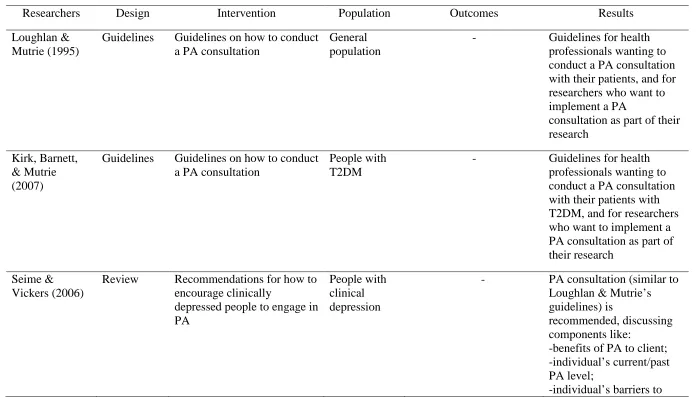
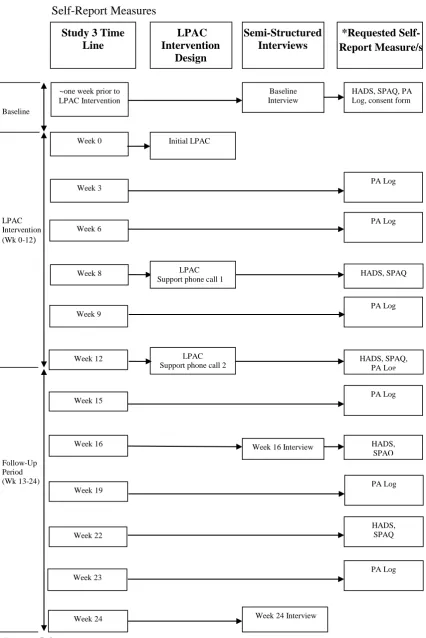
period (i.e., 12-week intervention and 12-week follow-up). All participants had taken part in Study 2, and were invited to participate in an individualised lifestyle PA consultation (LPAC) intervention. The intervention was based on the guidelines of Loughlan and Mutrie (1995) and Kirk, Barnett, and Mutrie (2007), and consisted of a one-off initial LPAC, and two LPAC support phone calls (Week 8, Week 12)
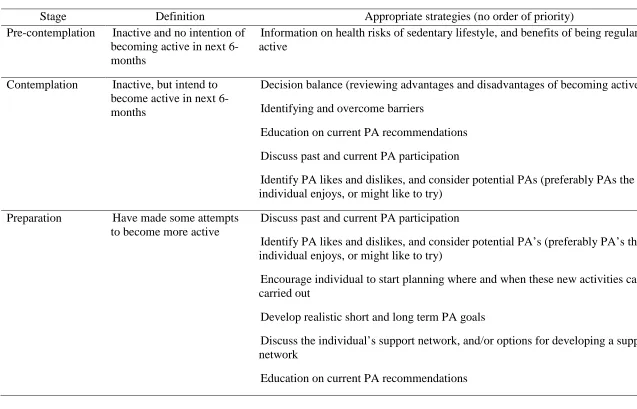
specifically tailored to the individual’s baseline PA stage of change (according to the transtheoretical model). During the intervention, I utilised various psychological strategies, such as identifying and overcoming individuals’ barriers, goal setting, increasing self-efficacy, and encouraging social support to assist with participants’ PA participation. Qualitative procedures (i.e., case-study design) were the primary mode of data collection and analysis. Participants took part in three semi-structured interviews. The first (baseline) interview took place approximately one week prior to the LPAC intervention, the second (Week 16) interview was conducted 4 weeks after the
intervention ended, and the third (Week 24) interview was conducted 12 weeks after the intervention ended. Thematic analysis was used to explore participants’ experiences. Quantitative measures of PA and depression were used as an auxiliary to participants’ qualitative accounts. Thus, at several time points, participants completed and returned the HADS and SPAQ (i.e., at baseline, and during Week 8, 12, 16, and 22 after the initial LPAC), and/or a seven-day PA log (i.e., at baseline, and during Week 3, 6, 9, 12, 15, 19, and 23). There were individual differences in participants’ experiences,
particularly regarding their PA and mood changes (or lack of) during the follow-up period. Overall however, all women found the LPAC intervention beneficial in
contemplating or preparing to increase their PA. Specifically, based on participants’ Week 16 and Week 24 interview accounts, three participants reported a sustained increase in their PA behaviour at Week 24, and expressed enthusiasm and intention to continue with their PA behaviour beyond the study period. One woman reported an increase in PA at Week 16 (i.e., 4 weeks following the intervention cessation); however, worsened health status prevented her from sustaining her increased PA level during Week 16 to Week 24. Nevertheless, her intention to increase PA once her health improved was evident. For two participants, who both reported inactivity and a high depression level at baseline, PA behaviour and mood status remained relatively unchanged during the intervention and follow-up period. Although both participants acknowledged an increased awareness of the need to be physically active, elevated depression was the main factor hindering their PA participation. Moreover, during the intervention and follow-up period, an inverse reciprocal relationship between PA and mood was evident in all participants. Women who remained relatively inactive were more likely to report a reciprocal relationship between low mood (e.g., moderate to severe depression level) and low PA; whereas women who had increased their PA behaviour more often spoke about the positive influence of their PA behaviour on their mood, which facilitated further PA intention and participation. Overall, the findings of the present thesis highlight the prevalence and severity of depression, and the negative relationship between leisure-based PA and depression in overweight women with T2DM. Additionally, the intervention study showed promising results for a
throughout the thesis for important areas of further research, including examining the influence of diabetes-related complications on depression risk and PA participation for this population. To investigate the full effect of PA consultation for this population it is recommended that researchers undertake large-scale PA consultation interventions, using RCT designs, employing mixed modes of data collection (i.e., repeated semi-structured interviews, self-report and objective measures of PA, alongside diabetes control indicators). This thesis may have implications for people who work with overweight women with T2DM, in particular diabetes specialists, weight specialists, psychologists, exercise professionals, spouses, family members, and friends of
Acknowledgments
The journey to completing my PhD has been, and will be, one of the most challenging yet rewarding journeys I have completed. Along the way, I have learnt many valuable skills, had the privilege of sharing and receiving knowledge, and was blessed to have a supporting network of people around me, professionally and personally, which allowed me to complete the PhD journey...relatively unscathed!
In particular, I owe my deepest gratitude to my principal supervisor Professor Tony Morris. Tony, when I initially approached you in early 2006 about the possibility of a voluntary research assistant role with you, I never thought I would end up being your PhD student. Thank you for seeing potential in me, and believing in my research and writing ability. Without your initial encouragement, I probably would never have considered pursuing a PhD. From the beginning to the final stages, your guidance and support has made the completion of this thesis possible. Importantly, you have enabled me to develop as a competent researcher in my own right. I am forever grateful. I could not have asked for a better supervisor, and am honoured to have been one of your (many!) PhD students. I also want to take this time to express my appreciation for the additional academic opportunities you have provided me with along the way. In
particular, I have had the privilege of collaborating with you on several journal articles, and you provided me with the opportunity to discover and develop my teaching skills. My role as a tutor and lecturer is one of my most personal and professionally rewarding, and at times, challenging, achievements. Thank you.
Acknowledgement is also gratefully given to my associate supervisor Doctor Erika Borkoles. Erika, it has been a real pleasure working with you. Although you came on board in the final stages of my PhD, your knowledge, guidance, and valuable
particularly during the emotionally challenging times of completing the thesis. During the times when I was feeling overwhelmed by the volume of work to be done, your kind words helped me to take a “step back”, and adopt a more healthful and productive work-life balance. Thank you.
To the most important people in my life- my family. Words cannot describe how blessed and thankful I am to have such a loving and nurturing family. I thank you all for your patience, support, and encouragement. In particular, I am heartily thankful to my parents, Kieran and Vicki Moore. Dad and Mum, thank you for being with me through every up and down, and for giving me the strength and determination to continue, particularly during the testing times. Dad, I want to particularly thank you for the financial assistance you have provided me during the completion of the thesis. Without your generosity, I would not have been able to complete this journey. Importantly, on a broader level, dad and mum, thank you for always believing in me, and for making sure I never stop believing in myself. I know I am the luckiest daughter in the world, and am truly blessed. Thank you.
To my golden friends, old and new, thank you for your patience, support and encouragement, particularly during those times when the PhD required my endless attention. I look forward to spending more quality time with you all.
I would also like to extend a special thank you to the health professionals at the Baker/International Diabetes Institute (Melbourne) for your assistance in the
Table of Contents
Student Declaration... ii
Abstract... iii
Acknowledgements... viii
Table of Contents... x
List of Tables... xxii
List of Figures... xxiv
List of Abbreviations... xxiv
Chapter 1: Introduction... 1
Chapter 2: Literature Review... 5
Search Strategy... 5
Definitions and Measures... 6
Physical Activity... 6
Exercise... 7
Lifestyle physical activity... 7
Active Living... 8
Measuring physical activity behaviour... 9
Depression... ... 10
Clinical depression... 11
Depressive symptoms... 12
Measuring depressive symptoms... 12
Overweight and Obesity... 14
Aetiology, Risk Factors, and Burden of Three Chronic and Interrelated Conditions Type 2 Diabetes Mellitus, Overweight, and Depression... 15
Type 2 Diabetes Mellitus Associated Health Problems and Burden... 17
Diabetes management... 19
Health benefits of modest weight loss... 19
Depression Aetiology and Risk Factors... 20
Depression Associated Health Problems and Burden... 20
Examining the Depression and Type 2 Diabetes Mellitus Co-Morbidity... 22
Depression as a Risk Factor for Type 2 Diabetes Mellitus... 24
Depression as a Consequence of Type 2 Diabetes Mellitus... 26
Reducing depression in people with Type 2 Diabetes Mellitus... 28
Type 2 Diabetes Mellitus, Overweight, Depression, and Female Gender... 29
Physical Activity... 32
Types of Physical Activity that Lead to Health Benefits... 32
Physical Health Benefits... 32
Physical health benefits independent of weight change... 35
Psychological Health Benefits... 36
General population ... 37
Clinical depression population... 38
Psychological health benefits independent of weight change... 39
Mechanisms underlying the psychological benefits of physical activity... 41
Physical Activity Recommendations... 42
Physical activity intensity versus total amount for attaining health benefits... 45
Physical Inactivity... 46
Health Problems and Economic Burden Associated with Physical Inactivity... 47
Detrimental Effects of Sedentary Behaviour on Health... 48
Theoretical Models of Behaviour Change... 51
Self-Efficacy Theory... 51
Transtheoretical Model (TTM) of Behaviour Change... 53
Self-Determination Theory... 55
Factors Inhibiting or Facilitating Physical Activity Participation... 56
Barriers to physical activity... 58
Facilitators for physical activity... 60
Reciprocal Relationship between Physical Activity and Depression... 62
Physical Activity Interventions... 66
Physical Activity Consultation... 68
Effectiveness of physical activity consultation in promoting activity participation and adherence... 72
Physical activity consultation research among people with Type 2 Diabetes Mellitus... 82
Summary of Literature... 86
Purpose of the Present Thesis... 87
Chapter 3: Examining physical activity participation and depression among overweight women with type 2 diabetes mellitus... 89
Introduction... 89
Method... 90
Participants... 90
Materials... 91
Demographic information form... 91
Hospital and Depression Anxiety Scale (HADS)... 91
Study 1 supporting letter... 93
Procedure... 93
Analysis... 96
Results... 96
Descriptive Statistics... 96
Depression... 96
Physical activity (PA) ... 96
Physical activity stage of change (PA SOC) and depression... 97
Relationship between Leisure-Based Physical Activity and Depression... 98
Discussion... 99
Prevalence of Depression among Overweight Women with Type 2 Diabetes Mellitus... 99
Low Response Rate... 103
Relationship between Leisure-Based Physical Activity and Depression among Overweight Women with Type 2 Diabetes Mellitus... 105
Leisure-based physical activity and depression... 105
Active housework and depression... 106
Possibe explanations for the absense of significant relationship between physical activity and depression... 108
Physical Activity Stage of Change (PA SOC) and Depression... 110
Reported Physical Activity Participation... 111
Methodological Issues... 113
Future Research... 115
overweight women with type 2 diabetes mellitus and depression...
Introduction... 121
Method... 122
Participants... 122
Materials... 126
Hospital and Depression Anxiety Scale (HADS)... 126
Study 2 interview guide... 126
Procedure... 126
Analysis... 128
Results... 130
Barriers to Physical Activity... 130
Health limitations... 132
Functional limitations for activities of daily living... 132
Psychological health limitations... 134
Adverse reactions to substances... 137
Lack of motivation... 137
Low exercise priority... 137
Effect of past sedentary behaviour... 139
Low exercise self-efficacy... 139
Effect of past sedentary behaviour... 140
Environment... 141
Lack of exercise opportunity... 141
Lack of social support... 142
Facilitators for Physical Activity... 143
To improve physical/physiological health... 145
To improve psychological health and wellbeing... 146
Instrumental physical activity... 149
Instrumental facilitators to physical activity... 150
The positive role of others... 151
Company/socialising... 151
Social support/encouragement... 152
Comparativeness... 153
Discussion ... 154
Barriers to Physical Activity... 155
Health limitations ... 155
Influences of depression on other reported barriers... 156
Psychological benefits and weight loss (extrinsic motivation)... 159
Lack of motivation... 161
Effect of past sedentary behaviour... 163
Environment... 164
Facilitators for Physical Activity... 166
To improve health... 166
Instrumental physical activity... 167
The positive role of others... 168
Methodological Issues... 172
Future Research... 176
Appropriate Physical Activity Strategies and Interventions for Overweight Women with Type 2 Diabetes Mellitus and Depression... 181
Chapter 5: Effects of a lifestyle physical activity consultation intervention on physical activity participation and mood among women with type 2 diabetes
mellitus and depression... 183
Introduction... 183
Method... ... 185
Participants... 185
Design... 187
Materials... 187
Demographics... 188
Hospital and Depression Anxiety Scale (HADS) ... 188
Scottish Physical Activity Questionnaire (SPAQ) ... 188
Physical activity (PA log... 188
Semi-structured interviews... 189
Examining mood... 191
Lifestyle Physical Activity Consultation (LPAC) Intervention... 192
Motivational interviewing (MI) ... 196
Clarification of study terms... 197
Procedure... ... 198
Analysis... 201
Individual Level Results: Case Studies... 213
Kelly’s Physical Activity Behaviour and Mood during LPAC Intervention and Follow-Up Period... 213
Kelly’s Presenting Character Description... 214
Kelly’s Physical Activity Behaviour... 215
Physical activity participation from Weeks 16 to 24... 216
Kelly’s Mood... 217
Mood at Week 16... 217
Mood from Weeks 16 to 24... 218
Lucy’s Physical Activity Behaviour and Mood during LPAC Intervention and Follow-Up Period... ... 219
Lucy’s Presenting Character Description... 220
Lucy’s Physical Activity Behaviour... 220
Physical activity participation at Week 16... 220
Physical activity participation from Weeks 16 to 24... 221
Lucy's Mood... 223
Mood at Week 16... 223
Mood from Weeks 16 to 24... 223
Mary’s Physical Activity Behaviour and Mood during LPAC Intervention and Follow-Up Period... 225
Mary's Presenting Character Description... 226
Mary's Physical Activity Behaviour... 226
Physical activity participation at Week 16... 226
Physical activity participation from Weeks 16 to 24... 227
Mary's Mood... 229
Mood at Week 16... 229
Mood from Weeks 16 to 24... 229
Clare’s Physical Activity Behaviour and Mood during LPAC Intervention and Follow-Up Period... ... 230
Clare’s Physical Activity Behaviour... 231
Physical activity participation at Week 16... 231
Physical activity participation from Weeks 16 to 24... 232
Clare’s Mood... 234
Mood at Week 16... 234
Mood from Weeks 16 to 24... 235
Dianne’s Physical Activity Behaviour and Mood during LPAC Intervention and Follow-Up Period... 236
Dianne’s Presenting Character Description... 237
Dianne’s Physical Activity Behaviour... 238
Physical activity participation at Week 16... 238
Physical activity participation from Weeks 16 to 24... 238
Dianne's Mood... 240
Mood at Week 16... 240
Mood from Weeks 16 to 24... 240
Paula’s Physical Activity Behaviour and Mood during LPAC Intervention and Follow-Up Period... 242
Paula’s Presenting Character Description... 243
Paula’s Physical Activity Behaviour... 244
Physical activity participation at Week 16... 244
Physical activity participation from Weeks 16 to 24... 245
Paula’s Mood... 247
Mood at Week 16... 247
Mood from Weeks 16 to 24... 248
Reciprocal Relationship between Physical Activity and Mood... 249
Increased physical activity and improved mood... 249
Decreased physical activity and decreased mood... 251
Physical Health Problems and Functional Limitations... 253
Evaluation of the LPAC Intervention on the Health Behaviours of Overweight Women with Type 2 Diabetes Mellitus and Depression... 256
Influence of LPAC Intervention on Health Behaviours other than Physical Activity... ... 256
Influence of LPAC Intervention on Physical Activity Awareness, Motivation, and/or Participation... 258
Education about physical activity benefits and options... 260
Identifying and encouraging activities the individual enjoys... 260
Decisional balance strategy (DBS) ... 261
Recognising and overcoming the individuals’ physical activity barriers... 261
Goal setting... 262
Verbal support and encouragement from the researcher... 264
LPAC support phone calls... 265
Period completion of self-report physical activity measures... 266
Changes in Physical Activity Stage of Change (SOC) Over Time... 268
Methodological Issues... 273
Future Research... ... 282
Summary... 290
Chapter 6: General discussion... 294
Physical Activity and Depression among Overweight Women with Type 2
Diabetes Mellitus... 300
Exploring Effective Ways of Increasing Physical Activity and Reducing Depression among Overweight Women with Type 2 Diabetes Mellitus... 307
Implications for Practice... 311
Relevance of Thesis Outcomes to Other Populations... 316
Concluding Comments... 317
References... 319
Appendix A- Literature Review: Table A2.4 Health Benefits of Lifestyle Physical Activity and Exercise... 393
Appendix B- Literature Review: Table B2.5 Prevalence of Diabetes, Overweight, Depression, and Physical Inactivity- Worldwide... 397
Appendix C- Literature Review: Table C2.6 Prevalence of Diabetes, Overweight, Depression, and Physical Inactivity-Australia... 401
Appendix D- Literature Review: Table D2.7 Prevalence of Depression - Overweight People... 404
Appendix E- Literature Review: Table E2.8 Prevalence of Depression- People with Type 1 and/or Type 2 Diabetes Mellitus... 412
Appendix F- Study 1: Demographic information form... 420
Appendix G- Study 1: Hospital Anxiety and Depression Scale (HADS)... 422
Appendix H- Study 1: Scottish Physical Activity Questionnaire (SPAQ)... 424
Appendix I- Study 1: Supporting letter... 428
Appendix J- Study 1: General practitioner/practice nurse information sheet... 429
Appendix K- Study 1: Participant information sheet... 432
Appendix M- Study 2: Interview guide... 436
Appendix N- Study 2: Participant information sheet... 438
Appendix O- Study 2: Participant consent form... 440
Appendix P- Study 3: Physical activity log... 442
Appendix Q- Study 3: Lifestyle Physical Activity Consultation (LPAC) manual.... 450
Appendix R- Study 3: Guidelines for LPAC and Support Phone Calls... 459
Appendix S- Study 3: Participant information sheet... 463
Appendix T- Study 3: Participant consent form... 465
Appendix U- Study 3: Interview one guide... 467
Appendix V- Study 3: Interview two and three guides... 468
Appendix W- Study 3: Table W5.16 Table of Master Themes: Physical activity and mood changes at Week 16... 471
List of Tables
Table 2.1 Physical Activity (PA) Recommendations... 43 Table 2.2 Transtheoretical Model: Stage of Change Definitions and
Corresponding Strategies for Increasing Physical Activity (PA) Participation 70 Table 2.3 Review of Research on Exercise/Physical Activity Consultation
Intervention for Increasing Self-Reported Physical Activity (PA) Behaviour.. 73 Table A2.4 Outcomes From Research and Reviews Comparing the Health
Benefits of Lifestyle Physical Activity and Exercise... 393 Table B2.5 Prevalence of Diabetes, Overweight, Depression, and Physical
Inactivity among Various Worldwide (Western) Populations... 397 Table C2.6 Prevalence of Diabetes, Overweight, Depression, and Physical
Inactivity among Various Australian Populations... 401 Table D2.7 Prevalence of Depression (Clinical Depression and Depressive
Symptoms) in Overweight (BMI ≥ 25) People... 404 Table E2.8 Prevalence of Depression (Clinical Depression and Depressive
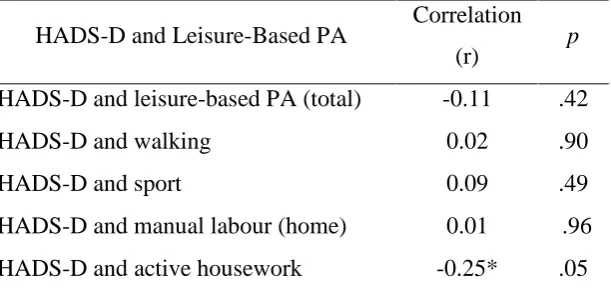
Symptoms) in People with Type 1 and/or Type 2 Diabetes Mellitus... 412 Table 3.1 Pearson’s Correlations (r) for Depression and Leisure-Based Physical
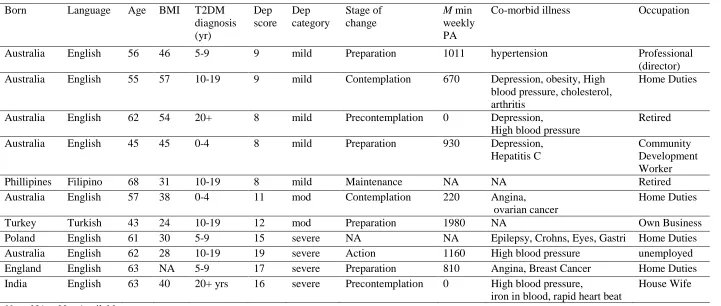
Activity... 98 Table 4.1 Study 2 Participants Self-reported Demographic Information, BMI,
T2DM Diagnosis Duration, Depression Sore and Category, Stage of Change, Mean Weekly Physical Activity Amount, Co-Morbid Illness, and
Occupation... 125 Table 4.2 First- and Second-Order Themes and General Dimensions of Physical
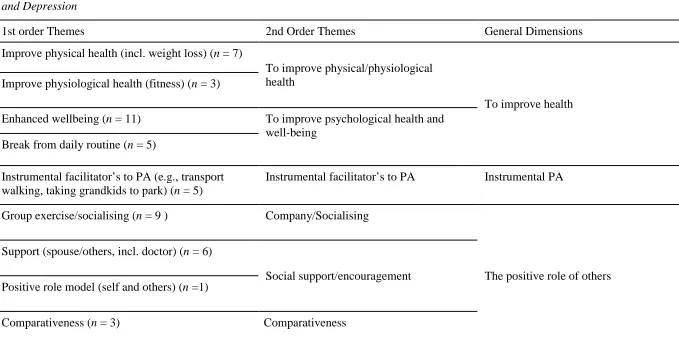
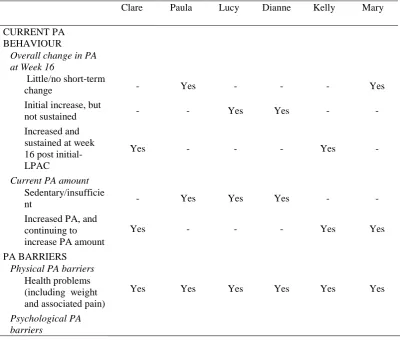
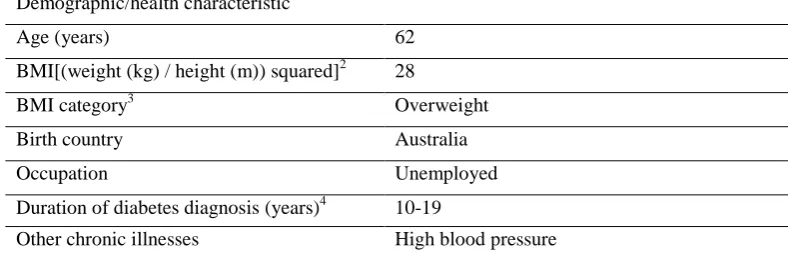
Table 4.3 First- and Second-Order Themes and General Dimensions of Physical Activity Facilitators for Overweight Women with Type 2 Diabetes Mellitus and Depression... 144 Table 5.1 Participants Baseline Demographic and Health Characteristics... 186 Table 5.2 Participants’ Physical Activity (PA), Mood, and Impact of LPAC
Intervention on Participants’ PA Behaviour at Week 16... 203 Table 5.3 Participants’ Physical Activity (PA), Mood, and Impact of LPAC
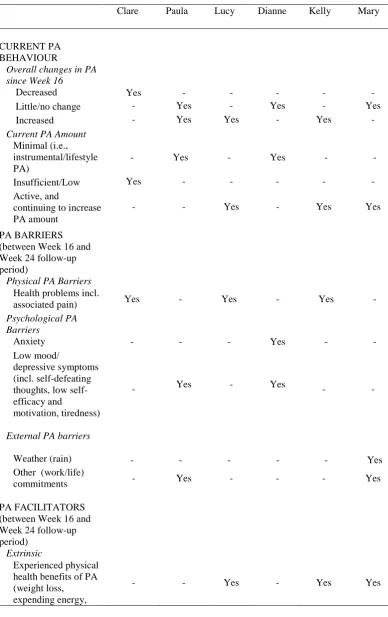
Intervention on Participants’ PA Behaviour at Week 24... 208 Table 5.4 Kelly’s Self-Report Baseline Demographic and Health Status... 214 Table 5.5 Kelly’s Self-report Depression Level, PA Participation, and Exercise
Stage of Change... 214 Table 5.6 Lucy’s Self-Report Baseline Demographic and Health Status... 219 Table 5.7 Lucy’s Self-report Depression Level, PA Participation, and Exercise
Stage of Change... 219 Table 5.8 Mary’s Self-Report Baseline Demographic and Health Status... 225 Table 5.9 Mary’s Self-report Depression Level, PA Participation, and Exercise
Stage of Change... 226 Table 5.10 Clare’s Self-Report Baseline Demographic and Health Status... 230 Table 5.11 Clare’s Self-report Depression Level, PA Participation, and Exercise
Stage of Change... 231 Table 5.12 Dianne’s Self-Report Baseline Demographic and Health Status... 236 Table 5.13 Dianne’s Self-report Depression Level, PA Participation, and
Stage of Change... Table W5.16 Themes and Sub-Themes in Physical Activity (PA) Participation at
Week 16... 471 Table X5.17 Themes and Sub-Themes in Physical Activity (PA) Participation at
Week 24... 474 List of Figures
Figure 5.1 Flow Diagram of Study 3 Timeline for LPAC Intervention, Interviews, and Self-Report Measures... 200 Figure 5.2. Example of the Way Group Level Thematic Analysis Results are
Presented in Table 5.2 and Table 5.3... 203 List of Abbreviations
AL Active Living
ADL Activities of Daily Living BMI Body Mass Index
CD Clinical Depression DBS Decisional Balance Sheet DS Depressive Symptoms FL Functional Limitations
HADS Hospital Anxiety and Depression Scale
HADS-D Hospital Anxiety and Depression Scale- Depression Sub-Scale LPAC Lifestyle Physical Activity Consultation
PA Physical Activity
RCT Randomised Control Trials
SPAQ Scottish Physical Activity Questionnaire SOC Stage of Change
Chapter 1: Introduction
Type 2 Diabetes Mellitus (T2DM) is a lifestyle-related disease, and a major health problem in Australia, accounting for approximately 90% of all diabetes cases (Australian Bureau of Statistics [ABS] 2009; World Health Organisation [WHO], 2009a). According to WHO statistics, one in 20 deaths worldwide are attributable to diabetes, and this figure is projected to double by the year 2030 (WHO, 2010). Approximately 80% of people with T2DM are overweight or obese (Hensrud, 2001; U.S. Department of Health and Human Services [USDHHS], 2008). The strong
association between T2DM and overweight is concerning, because they are independent health problems, and increase the risk of numerous other health conditions, including depression (ABS, 2009). In Australia over the last 15 years, the prevalence of mental health disorders has almost doubled. Current estimates suggest one in five (or 20%) of Australian adults experience a mental health condition, such as depression (Australian Institute of Health and Welfare [AIHW], 2010). Compared to the general population, people who are more likely to report depression include females, individuals with chronic health problems (e.g., diabetes, overweight, coronary heart disease [CHD]) or those who engage in low levels of physical activity (PA; ABS, 2009; Luppino et al., 2010; Mazuk et al., 2008). Experiencing depression is particularly problematic for people with diabetes, because compared to those without depression, individuals with diabetes and depression are more likely to report poor diabetes management (e.g., glucose control; Williams et al., 2006), progression, and prognosis (Lin et al., 2010); and have a greater risk of additional health problems (e.g., cardiovascular disease; Katon et al., 2003), and economic burden (Piette et al., 2004).
engage in enough PA to gain health benefits (ABS, 2009). Individuals who are female, with diabetes, overweight, or experiencing depression, are even less likely to engage in regular PA (ABS, 2009). Therefore, overweight women with T2DM are a population at high risk for depression and physical inactivity. To date however, there is little research about the relationship between depression and self-reported PA in this population.
Numerous quantitative studies have been conducted to investigate the barriers to and facilitators for PA participation among female adults (Ansari & Lovell, 2009), people with T2DM (Korkiakangas, Alahuhta, & Latinien, 2009), people who are overweight (Jewson, Spittle, & Casey, 2008), and those with elevated depressive symptoms (Craft, Perna, Freund, & Culpepper, 2008). There is a lack of qualitative research which has examined these factors in people with T2DM (Mier et al., 2007). I found no qualitative studies that have examined the PA barriers and facilitators for women with all three health problems: overweight, T2DM, and depression. Therefore, little, if anything is known about what may hinder or encourage PA participation, for overweight women with T2DM and depression.
A reciprocal relationship has been found between high levels of depression and poor PA adherence, including among people with diabetes (Koopmans et al., 2009), individuals who are overweight (Ball, Burton, & Brown, 2008), and people with elevated depressive symptoms (Ussher et al., 2007). Thus, in addition to physical inactivity, the risk of poor adherence to PA can be considered even higher for
depression, that is, a relationship in which PA increases as depression reduces and depression decreases as people participate in more physical activity.
Over the last 20 years, researchers have found theory-based PA interventions using psychological strategies, to be more successful in increasing PA participation and adherence, than structured pre-determined exercise interventions (Baranowski,
Anderson, & Carmack, 1998; Plotnikoff, 2004). Support for psychological intervention has been shown in the adult population (Marcus et al., 2006), people with diabetes (Plotnik, 2004), people who are overweight (Andersen et al., 1999), and people with depression (Richardson, Avripa, Neal, & Marcus, 2005). PA consultation (previously labelled exercise consultation) is one type of intervention based on the transtheoretical model, which uses a range of psychological strategies aimed at promoting PA
participation and adherence. Such strategies include goal setting, increasing self-efficacy, identifying and overcoming PA barriers, and encouraging enjoyable activities (Kirk, Barnett, & Mutrie, 2007; Laughlan & Mutrie, 1995). A number of research findings suggest the usefulness of PA consultation for increasing PA participation and adherence in people with T2DM (Kirk, Mutrie, McIntyre, & Fisher, 2003; Lowther, Mutrie, & Scott, 2002) and CHD (Hughes, Mutrie, & McIntyre, 2007). There is only limited research examining the effectiveness of PA consultation in people with
depression. Extensive literature searches revealed only one study that investigated and demonstrated the effectiveness of PA consultation for increasing PA and adherence among people with CHD and depression (Rogerson, 2009). In view of Rogerson’s study outcomes, and recommendations for promoting PA in people with depression which are consistent with PA consultation components (Seime & Vickers, 2006), I consider a PA consultation to be well suited for overweight women with T2DM and depression. Future research examining the suitability and effectiveness of a PA consultation for this
Chapter 2: Literature Review
The literature relevant to this thesis is reviewed in this chapter. I begin the chapter by outlining the search strategy used, defining the important terms, and highlighting common methods used to measure the key constructs of the present research. Next, I discuss the aetiology, risk factors, and burden of T2DM, overweight, and depression. Following this, I examine the relationship between depression and T2DM, focussing on depression as a risk factor for T2DM; and, depression as a consequence of T2DM. I then discuss the gender difference in the prevalence of depression in adults with T2DM and/or overweight, with women being more at risk than men. Next, I discuss the physical and psychological health benefits of regular PA. I discuss the problem of physical inactivity, address three theoretical models of behaviour change, and highlight factors that have been reported to facilitate or inhibit PA
participation. I then explore the reciprocal relationship between PA and depression. Towards the end of the chapter, I review PA interventions for increasing PA
participation and adherence, focusing on one particular intervention type, known as physical activity consultation. I discuss evidence for PA consultation as an intervention for increasing PA adherence, particularly for people with T2DM. The final section of the chapter includes a statement of the purpose of this thesis.
Search Strategy
studies. In the later stages of writing the dissertation, I focused on more recent literature, particularly research that had been conducting from 2000 onwards. The main databases searched: SPORTDiscus; Ebsco Megasuite; PsyclNFO; and a number of
freely-available online health promotion and physical activity-related databases. I used the internet extensively to search for studies and locate information generated by physical activity, depression, and health promotion bodies throughout the world (e.g.,
AusPAnet). Examples of key words used (although not limited to): overweight, obesity, depression, mood, diabetes, type 2 diabetes, women, physical activity, exercise, sport, lifestyle physical activity, barriers, facilitators, motivators, intervention, consultation.
Definitions and Measures
An important element of any research is the ability to compare findings with outcomes from similar research. For comparisons to be made, the main constructs of interest need to be clearly defined and assessed using valid and reliable measures. Therefore, in this section, I clearly define and highlight common methods of measuring the key constructs of the present research, namely physical activity (PA) and its sub-types, active living (AL), depression (depressive symptoms and clinical depression) and overweight and obesity.
Physical Activity
Exercise. Exercise involves planned, structured, continuous bouts of activity, which people typically take time out of their daily routine to take part in. They can be solitary in nature, or performed in a group setting. Like all types of PA, there are numerous reasons why people exercise regularly, including for enjoyment, social reasons, and/or to achieve specific health benefits, such as weight management or physical fitness. Examples of exercise types include swimming, cycling, brisk walking, resistance training (RT), and attending a group exercise class (Berger, 2004; Casperson, Powell, & Christenson, 1985).
Lifestyle physical activity. There are two key elements of lifestyle PA that distinguish this type of PA from exercise: lifestyle PA is unstructured, because a person does not need to take time out of their daily routine to be active; and lifestyle PA can be accumulated throughout the day, rather than in one continuous bout. As such, lifestyle PA includes active modes of instrumental activities of daily living (IADL; Bookman, Harrington, Pass, & Resner, 2007). Examples of lifestyle PA include gardening,
engaging in exercise programs (e.g., transportation to the fitness centre, membership fees). Additionally, overweight individuals (Andersen et al., 1999), individuals with T2DM (Kirk, Barnett, & Mutrie, 2007; Kirk, Mutrie, McIntyre, & Fisher, 2003), and people with depression (Richardson et al., 2005) prefer lifestyle PA as opposed to exercise. Given the global problem of inactivity (WHO, 2010b), and the appeal of lifestyle PA, the main expert bodies on PA recommendations (American College of Sports Medicine (ACSM); the Australian Government Department of Health and
Ageing; and the Centers for Disease Control, and Prevention) encourage lifestyle PA for attaining health benefits (see Table 2.1 for PA recommendations).
Active Living
AL is a broad concept that embraces the full spectrum of PA, and describes it as being an essential part of daily living (Bouchard, Blair, & Haskell, 2006; Fitness Canada, 1991; Makosky, 1994; NSW Premier’s Council for Active Living (NSW PCAL), 2010; Swedburg, & Izso, 1994). The concept AL gives individuals the
flexibility to incorporate PA in to their daily life in a way that suits their needs, abilities, preferences, and environment. Furthermore, there is no hierarchy of activities, and no value judgements to the relative merits of one PA type compared to another (Swedburg, & Izso, 1994). The main goal of AL is that individuals are attaining the daily PA
terms, or if what researchers have described was specifically covered by one of these terms, according to the aforementioned definitions.
Measuring physical activity behaviour. PA is a complex entity with numerous
diverse components (e.g. type and intensity). Consequently, numerous ways of
measuring PA exist, including self-report questionnaires (varying in recall time ranges, such as daily-, seven day-, and 1 year- recall), PA diaries or logs, behavioural
observation, motion sensors, and physiologic markers (e.g., heart rate, doubly labelled water). It is for this reason that in this thesis, I mention the type of tool researchers have used to measure PA behaviour in each of the studies discussed. The most accurate measures of PA are considered to be those that reflect changes in aerobic fitness (e.g., maximal oxygen consumption test; VO2 max), however, these methods are the least practical in terms of cost, time, and burden on the participant (Dale, Welk, & Matthews, 2002). Consequently, self-report questionnaires, which are inexpensive, non invasive, and highly practical, are the most frequently used, particularly in large population studies or when resources are limited (Haskell & Kiernan, 2000; Dale et al., 2002). The challenge for researchers examining PA is selecting the most appropriate, accurate, and reliable mode of measurement. Such selection depends on the nature of the study
Physical Activity Questionnaire (Paffenbarger, Wing, & Hyde, 1978). For the purposes of the current thesis, the SPAQ was used to measure self-report PA participation. More information on the SPAQ is provided in Chapter 3 of this thesis.
Depression
The term “depression” is widely used in research to refer to a range of symptoms and mental health conditions/illnesses, from mild depressive symptoms (DS) to clinical depression (CD; also known as major depression, major depressive disorder [MDD], or unipolar depression), as diagnosed according to the Diagnostic and Statistical Manual of Mental Disorders (DSM-IV-TR; American Psychiatric Association [APA], 2000). Other examples of mood disorders classified according to the DSM-IV-TR (APA, 2000) include (although not limited to) dysthymic disorder, and depressive disorder not otherwise specified (APA, 2000). In addition to the varied use of the term depression, numerous diagnostic tools and criteria to measure and define depression exist.
Consequently, determining precise prevalence rates of depression is difficult. So too is comparing findings among studies. Thus, as mentioned, defining the term depression and decided which depression measure to use is an important element of any mental health research. It is for these reasons that in this chapter, I mention the type of
depression measured, and the tool to measure depression in each of the studies discussed (e.g., MDD, CD, minor depression, DS, and depressed mood). For the purposes of the current thesis, an elaborate discussion on the different types of mental health conditions for which the term depression has been used is not necessary, a distinction between two main mental health problems, CD and DS, is however warranted. Moreover, because the focus of the present thesis is DS, unless otherwise stated, when referring to and
Clinical depression. According to the DSM-IV-TR, to be classified with CD, either a depressed mood or loss of interest or pleasure in most activities must be experienced nearly every day, for at least two consecutive weeks. Additionally, four or more of the following factors (that are unrelated to a general medical condition,
substance abuse, bereavement, or mood-incongruent delusions or hallucinations) must be simultaneously present during the same 2-week period, and cause clinically
significant distress or impairment in everyday functioning: significant weight loss (without dieting) or weight gain, appetite changes, insomnia or hypersomnia, psychomotor agitation or retardation (based on subjective feelings and others’ observation), fatigue or loss of energy, feelings of worthlessness or excessive or
inappropriate guilt, decreased ability to think or concentrate, recurrent thoughts of death (not just fear of dying), recurrent suicidal ideation without a specific plan, or a suicide attempt or a specific plan for committing suicide (APA, 2000; Gruenberg, Goldstein, & Pinaus, 2005). CD can also be classified as either “single episode” or “recurrent”, depending on whether the depression episodes occur as discrete events, or reoccur throughout the individual’s lifespan. Moreover, CD can be further categorised as mild, moderate, or severe without psychotic features, or severe with psychotic features (APA, 2000). The “gold standard” for diagnosing CD is considered to be the clinical interview (Blumenthal, 2008). Thus, CD requires a medical diagnosis from trained health
Depressive symptoms. DS (also referred to as depressed mood; DM) is a subjective state that does not require a medical diagnosis. Most people will experience DS (or DM) at some or many stages in their life, for numerous reasons. Examples of instances which can trigger DS include moving house, receiving a lower the expected examination grade, marriage, divorce, job loss, or one’s own self-identity appraisal (Kessler, 1997; Tennant, 2002). Additionally, a diagnosis of, and experiencing chronic illnesses like T2DM (e.g., adverse side effects, life disruption related to strict
management regimens) can bring about, or elevate existing DS. Because of the subjective nature of DS, different people will experience different DS, and at varying levels of severity. Thus, when describing DS, some individuals may emphasise
symptoms, such as feelings of unhappiness, sadness, hopelessness, emptiness, or being “down in the dumps” (Compas, Ey, & Grant, 1993; Holsen, Kraft, & Vitterso, 2000), whereas others may highlight somatic complaints (e.g., bodily aches and pains). Moreover, experiencing DM can increase a person’s irritability (e.g., persistent anger, anger outbursts, blaming others for mishaps, or excessive frustration over minor matters; APA, 2000).
Measuring depressive symptoms. There are many self-report mood
to the DSM-IV categories; instead, they measure depressive symptomatology, or DM. Some questionnaires, such as the BDI, and the HADS have validated cut-off points to distinguish between mild/minor, moderate, and major/severe levels of depression. Additionally, each questionnaire has varying psychometric properties, especially in terms of sensitivity and specificity for detecting depression (Davidson, Rieckmann, & Rapp, 2005).
An important task for any researcher is to select the most appropriate depression measure for their study. This is particularly crucial for researchers using self-report measures to examine depression in populations with physical health issues, such as diabetes, renal failure, or rheumatoid arthritis (Creed & Dickens, 2007). Most self-report measures (such as the BDI and CES-DS) were originally designed for use in the general or psychiatric population, but not for use in medically ill populations. Consequently, such measures include physical (bodily) symptoms of depression, such as fatigue, weight loss, pain, and anorexia. Since these physical symptoms may be a direct result of physical illness, administering these depression measures to people with physical health issues could lead to inflation in their depression score simply because of the presence of a physical illness. This phenomenon is termed “criterion contamination” and is
measuring depression and anxiety in both clinical and general populations (Bjelland, Dahl, Haug, & Neckelmann, 2002). As such, it has been widely used by researchers examining depression in diabetic populations. More information on the HADS is provided in Chapter 3 of this thesis.
Overweight and Obesity
In 1997, the World Health Organisation (WHO) developed a standard definition of overweight and obesity, which is based on Body Mass Index (BMI), and is the current international classification. A person’s BMI is formulated by dividing their weight (in kilograms) by their height in metres squared [kg/m2] (Kuczmarski & Flegal, 2000). According to this criterion, for adults (18 years and older), normal weight is considered to be a BMI between 18.5 and 24.9, all-inclusive overweight is defined as a BMI of 25 of more, overweight but not obese, known as pre-obese, is defined as a BMI between 25.0 and 29.9, and a BMI of 30 or more is considered to be obese (WHO, 2009c). In this thesis and review, I use the WHO criterion to define overweight and obesity
Aetiology, Risk Factors, and Burden of Three Chronic and Interrelated Conditions: Type 2 Diabetes Mellitus, Overweight, and Depression
T2DM, overweight, and depression (across the severity spectrum), are all highly prevalent chronic conditions, and continue to be at the forefront of public health
dilemmas for countries worldwide, including Australia. These three conditions are risk factors for each other, and they each represent a major problem in their own right, with independent risk factors, and significant health and economic burdens on an individual and social level. For worldwide and Australian prevalence statistics of diabetes,
overweight, and depression, see Appendix B (Table B2.5), and Appendix C (Table C2.6), respectively. In this section, I discuss the risk factors, health, and burden for these health conditions. For the purpose of the present thesis, because T2DM and overweight are highly prevalent co-occurring conditions, the shared health problems and burden for these two conditions are presented. Moreover, for the remainder of this chapter, unless stated otherwise, focus will be on T2DM. Overweight will not be discussed as a separate health problem.
T2DM Aetiology and Risk Factors
are either Type 1 or T2DM (American Diabetes Association [ADA], 2007a), with T2DM representing approximately 85%-95% of all DM diagnoses (ADA, 2007a; The Task Force on Diabetes and Cardiovascular Diseases [TFDCD], 2007; WHO, 2009a). The characterising feature of DM is hyperglycemia (also known as high blood glucose), which is the result of defects in the secretion and/or action of the hormone insulin. Consequently, for people with DM, their body is unable to use glucose (sugar) for energy; therefore glucose builds up in their blood (ADA, 2007a). For the purpose of this review and research, from this point on, I discuss T2DM unless stated otherwise.
The main T2DM risk factors are lifestyle related, namely impaired glucose intolerance, poor diet, physical inactivity, and overweight, particularly in the abdominal region (ADA, 2007a; AIHW, 2008; Barr et al, 2006; TFDCD, 2007). Not surprisingly, the majority (about 80%) of people with T2DM are overweight (Hensrud, 2001;
USDHHS, 2008), and physically inactive (ABS, 2006c; Martinus, et al., 2006; TFDCD, 2007). Furthermore, worldwide prevalence figures (Morabia & Costanza, 2005; Nelson, Reiber, & Boyko, 2002; Sullivan, Morrato, Ghushcyan, Wyatt, & Hill, 2005) and findings from numerous prospective studies, with follow-ups ranging from 7 years (Weinstein et al., 2004) to 16 years (Rana, Li, Manson, & Hu, 2007), show that
Additionally, depression is also a significant independent risk factor for T2DM. The negative influence of depression on T2DM risk is discussed in the next section of this chapter. Furthermore, there is a genetic predisposition for T2DM, however this predisposition is complex, and not clearly defined (ADA, 2007a; Fowler, 2007), so it will not be considered further.
T2DM Associated Health Problems and Burden
As previously mentioned, although T2DM and overweight are both standalone problems, they are highly prevalent co-occurring conditions (e.g., approximately 80% of people with T2DM are overweight), and share most of the same health problems and burden. For example, people with T2DM and/or overweight have an increased risk of numerous diseases, including coronary heart- cardiovascular-, peripheral arterial-, gallbladder-, and cerebrovascular- disease; stroke; and osteoarthritis (ADA, 2007a; Barr et al., 2006; Gavin, Peterson, & Warren-Boulton, 2003; TFDCD, 2007; WHO, 2007). Being overweight can increase the likelihood of several types of cancer, including colon, breast, oesophagus, endometrium, and kidney cancer. The risk of myocardial infarction (heart attack) is also as high in people with diabetes as it is for people without diabetes who have previously suffered a myocardial infarction (Haffner, Lehto, Ronnemaa, Pyorala, & Kaakso, 1998). Not surprisingly, increased risk of mortality has been linked to both diabetes (ABS, 2009), and overweight (ABS, 2009; Hu et al., 2004; Katzmarzyk, Craig, & Bouchard, 2001; Stevens, Cai, Evenson, & Thomas, 2002).
gastrointestinal, genitourinary, and cardiovascular symptoms), and sexual dysfunction (ADA, 2007a; Sheila, 2005; TFDCD, 2007).
People with T2DM or overweight may also have fewer years of disability free life, and increased burden on physical and work disability (Gregg et al., 2000; Ryerson et al., 2003; Von Korff et al., 2005). For example, overweight people are more likely than non-overweight people to retire earlier, have higher absenteeism rates, go to nursing homes at younger ages, and to be disabled (Kim & Popkin, 2006). People with diabetes have also been shown to have a shortened life expectancy by up to 15 years (Davies, Tringham, Troughton, & Khunti, 2003). Psychological problems, such as depression, are highly prevalent comorbidities with each T2DM (Anderson, Freedland, Clouse, & Lustman, 2001; Pouwer et al., 2010; Roupa et al., 2009) and overweight (Faith, Matz, & Jorge, 2002; Friedman & Brownell, 1995; Kim & Pokpkin, 2006; Rejeski et al., 2006; Stunkard, Faith, & Allison, 2003; Goodman & Whitaker, 2002). An in-depth discussion of the T2DM and depression comorbidity is warranted, and is provided in the next section of this chapter.
Diabetes management. The main aim of diabetes management is to improve glucose control and insulin sensitivity. Effective management of T2DM requires a patient-focused, interdisciplinary team approach involving several health professionals, such as diabetes specialists, dieticians, exercise physiologists, psychologists, and podiatrists (ADA, 2007b; Aschner et al., 2007). Because T2DM is largely a lifestyle-related disease however, the individual with diabetes plays an active role in their care (Van Der Van, Weinger, & Snoek, 2002). Key components of an effective self-care management regimen include blood glucose monitoring, a low fat diet, regular PA, and education on diabetes management (Flood & Constance, 2002; Mahler & Adler, 1999; Proirer, 2001; Sheila, 2005). It is important to note lifestyle modifications, such as diet and regular PA, are also key components in the prevention of T2DM (Pi-Sunyer, 2007), and prevention and management of overweight (Wing & Hill 2001; Wing & Phelan, 2005), however, because this thesis is concerned with women who have diagnosed T2DM and are overweight, I will not elaborate on the prevention of these health problems.
this reduced mortality is most apparent in overweight individuals with diabetes (Williamson et al., 2000). Furthermore, encouraging findings for people with diabetes suggest weight loss along with proper diabetes management can lead to clinical
remission (Fowler, 2007). Thus, for overweight people with T2DM, weight loss via diet and PA is recommended (ADA, 2007b; Fowler, 2007).
Depression Aetiology and Risk Factors
Similar to T2DM and overweight, the aetiology and risk factors of depression are complex and multi-factorial, involving a combination of environmental, lifestyle (e.g., physical inactivity), psycho-social, and biological factors (Kemp et al., 2005; Siegal, Yancey, & McCarthy, 2000; United States Department of Health and Human Services [USDHHS], 1999). Furthermore, the cause/s of depression differ for each individual (USDHHS, 1999). Nevertheless, although there are numerous psychosocial, biological, and medical risk factors for depression, there are three main, consistently demonstrated risk factors for depression that are particularly relevant for overweight women with T2DM: physical inactivity (Cassidy et al., 2004; Darren, Warburton, Whitney, & Shannon, 2006; WHO, 2010b), overweight, and chronic illnesses, such as T2DM and CHD (AIHW, 2005; Siegal et al., 2000).
Depression Associated Health Problems and Burden
The individual and societal health and economic burden of depression across the severity spectrum (DS and CD) is substantial. For example, as mentioned, depression is a major, independent risk-factor for health problems, such as T2DM (Adriannse,
Pressnell, Shaw, & Rohde, 2005; Stunkard, Faith, & Allison, 2003), myocardial infarction (Black, 1999), coronary artery disease (CAD; Lett et al., 2004), ischameic heart disease, cerebrovascular disease, cancer, and rheumatoid arthritis (AIHW, 2006). Depression is also associated with diminished capacity and function (Williams, Clouse, & Lustman, 2006), and increases mortality risk (Kamphuis et al., 2007; Williams et al., 2006). In Australia, mental health problems are the third leading contributor of disease burden, after cancers and cardiovascular disease (CVD; AIHW, 2010), and the leading contributor of non-fatal disease burden, accounting for nearly a quarter (24%) of the total disability burden for all diseases (AIHW, 2010). Consequently, mental health, particularly depression, has been labelled one of Australia’s seven NHPA’s (AIHW, 2005).
(McCollum et al., 2007; Ryerson et al., 2003; Von Korff et al., 2005), and decreased ability to carry out daily living activities (Black, 1999; McCollum et al., 2007).
Furthermore, people with diabetes and depression are less likely to lose weight (Ludman et al., 2010), and are less likely to adhere to diabetes management regimens (McCollum et al., 2007), such as regular PA (Piette, Richardson, & Valenstein, 2004). This is particularly problematic for overweight women with T2DM, because women and overweight people are more likely to report inactivity/low levels of PA than men and normal weight individuals (respectively; ABS, 2009). Thus, overweight women with T2DM and depression can be considered a particularly high risk population for
inactivity. The problem of inactivity is discussed in the Physical Inactivity section of this chapter. Not surprisingly, people with diabetes and depression typically have longer hospital stays than individuals with only one of these conditions (Finkelstein et al., 2003). Moreover, the presence of depression and diabetes also translates into significant economic burden for the individual (Egede, Zheng, & Simpson, 2002) and society (Williams et al., 2006). For example, Egede et al. found that total health care expenditure for adults with diabetes and depression is 4.5 times higher than for individuals without depression (Egede et al., 2002). Clearly, reducing depression, particularly among people with one or more chronic conditions, such as T2DM and overweight, would have a far-reaching beneficial impact.
Examining the Depression and Type 2 Diabetes Mellitus Co-Morbidity
status is provided for the participants in the studies discussed in this section.
Furthermore, because the definition of depression has varied between studies, the term depression in this review is related to the way it has been defined in each of the studies discussed.
Over the last 20 years, the relationship between depression and T2DM has received considerable research attention. Although the underlying mechanisms of this relationship are not fully understood (Musselman, Betan, Larsen, & Phillips, 2003), the high prevalence of depression in people with T2DM is apparent (Ali et al., 2006). For example, outcomes from a meta-analysis by Ali et al. suggested that people with T2DM are nearly twice as likely to experience depression (assessed using self-report measures, or diagnostic interview) compared to those without T2DM (17.6% vs. 9.8%
respectively). The high prevalence of depression among people with T2DM is consistent with findings from research examining depression in people with other medical illnesses including CHD (Carney, Freedland, Sheline, & Weiss, 1997), cancer (Bottomly, 1998), and CAD (Frasure-Smith & Lesperance, 2000). Additionally, the experiencing of DS appears more prevalent than clinically diagnosed depression. For example, outcomes from one meta-analysis showed that, in people with Type 1 and T2DM, elevated DS was nearly twice as prevalent as CD (31% of men and women vs. 11.4% of men and 17.6% of women, respectively; Anderson et al., 2001). The causality or temporality of this association however cannot be determined by prevalence
Depression as a Risk Factor for T2DM
The possibility of depression causing diabetes was first indicated over three centuries ago in 1684 by physician and anatomist Thomas Willis, who suggested diabetes was the result of “sadness, or long sorrow” (Willis, 1684; as cited in Rubin & Peyrot, 2002). It was not until the mid 1980’s, however, that researchers began to examine this relationship. During this time, outcomes from several prospective studies with follow-up periods of 6 years (Golden et al., 2004), 8 years (Kawakami et al., 1999; Palinkas et al., 2004), 13 years (Eaton et al., 1996), and 20 years (Carnethon et al., 2003) provided considerable evidence that experiencing symptoms of depression (Adriannse et al., 2006; Carnethon et al., 2003; Golden et al., 2004; Kawakami et al., 1999; Palinkas et al., 2004), and clinically diagnosed depression (Brown et al., 2005; Eaton et al., 1996; Musselman et al., 2003; Nichols & Brown, 2003) increase the risk of T2DM. For example, in a 60-year prospective study involving 11, 615 initially non-diabetic adults aged 48-67 years, Golden et al. reported that those who had a high level of DS (assessed using the 21-item Vital Exhaustion questionnaire) at baseline had a 66% increased risk of developing diabetes compared to individuals with a low level of DS at baseline. This increased risk was independent of several demographic, metabolic, and lifestyle factors (e.g., diet, bodyweight, PA level). Similarly, in a 20-year
Meta-analysis outcomes provide further evidence of the adverse impact of depression on the development of T2DM (Knol et al., 2006; Mezuk et al., 2008). For example, the meta-analysis by Mezuk et al. included 13 studies investigating the bi-directional prospective relationships between depression (mainly assessed using self-report measures) and T2DM. Findings revealed that depression was associated with a 60% increased risk of T2DM, whereas T2DM was associated with only modest (15%) increased risk of depression (Mezuk et al., 2008).
Research in the present thesis is not focused on investigating the underlying reasons for the adverse effect of depression on T2DM. Nevertheless, it should be noted that it appears that there is no single mechanism. For example, depression has been shown to increase the risk of developing T2DM, both directly (Kawakami et al., 1999; Golden et al., 2004), and indirectly via the influence of depression on poor dietary habits and sedentary behaviour (ABS, 2006a; Eaton, 2002). Additionally, there may be somatic aspects of depression (e.g., changes in immune or vascular system), and
Depression as a Consequence of T2DM
There are few qualitative studies (Penckofer, Ferrans, Velsor-Friedrich, & Savoy, 2007), quantitative studies (Knol, 2007; Talbot, Nouwen, Gingras, Belanger, & Audet, 1999), and research reviews (Talbot & Nouwen, 2000) that have examined depression as a consequence of T2DM. Research that has been published however, has shown lifestyle demands and limits imposed by T2DM (e.g., strict diet, regular PA, glucose monitoring) can bring about depression and intensify already existing depression (across the symptom severity range; Harris, 2003; Koopmanschap, 2002; Talbot & Nouwen, 2000). Also, T2DM may cause biochemical changes that can reduce an individual’s QOL, consistent with the notion that T2DM leads to depression (Eaton, 2002).
In people with diabetes, depression (across the severity spectrum) seems to be particularly influenced by associated health complications, rather than the actual diagnosis of diabetes. This indication is based on findings from research investigating symptoms of depression (Engum, Mykletun, Midthjell, Holen, & Dahl, 2005; Katon, et al., 2004; Knol et al., 2007; Leedom, Meehan, Procci, & Zeidler, 1991; Lloyd, Dyert, & Barnett, 2000; Peyrot & Rubin, 1999; Talbot et al., 1999), clinically diagnosed
to report elevated DS than people without diabetes: 15.2% and 19.0% vs. 10.7%, respectively. The findings of Engum et al. also revealed that physical inactivity was associated with DS for individuals with T2DM. Additionally, people with T2DM without co-morbidity (e.g., cardiovascular diseases) had the same risk of DS as people without diabetes or any reported chronic somatic diseases. Further evidence of the negative influence of diabetes-associated health problems on depression risk comes from a study by Lloyd et al., which involved 109 adults aged 18 years or older with Type 1 or T2DM, recruited from a diabetes clinic in the United Kingdom. Outcomes revealed that only those who had a history of diabetes complications (e.g., retinopathy, CAD) reported a mild DS level (8%; indicated by a HADS-D score of 8-10) or
moderate to severe DS level (17%; HADS-D score ≥11). Furthermore, Leedom et al. examined the prevalence of DS (using the BDI) in 71 people aged 30 to 70 years with T2DM from an outpatient diabetes clinic in Los Angeles. According to results, people with T2DM and complications (e.g., neuropathy, retinopathy) were significantly more likely to indicate at least mild DS (BDI score > 9) compared to people with T2DM and no complications, and individuals without diabetes (74% vs. 30% vs. 21.7%.
respectively). Furthermore, among those with complications, 20% indicated moderate DS (BDI score of 16-23), and 35.5% reported severe DS (BDI score ≥ 24). In
comparison, 7.5% of people with T2DM and no complications, and only 4.3% of people without diabetes, were considered to have a moderate level of DS, and no participants in these other two groups reported a severe level of DS.
risk of depression among people with T2DM. This is an important finding for
overweight people with T2DM, particularly if they are physical inactive, because these individuals have an increased likelihood of experiencing additional health problems.
Reducing depression in people with T2DM. Reducing depression in people with T2DM, especially those who are overweight, has far-reaching health and economic benefits, for people with depression and T2DM and for society at large. Consequently, the identification and treatment of depression (across the severity spectrum) is
considered an important element of effective diabetes management, in particular for maximising treatment adherence (ADA, 2006). For example, reducing depression can assist with optimising self-care behaviours, like regular PA (ADA, 2006; McCollum, Ellis, Regensteiner, Zhang, & Sullivan, 2007), and weight loss (Ludman et al., 2010). Unfortunately, however, CD is only recognised and treated in one-third of people with diabetes (Egede, 2005; Lustman & Clouse, 2005; Rubin, Ciechanowski, Egede, Lin, & Lustman, 2004). It is likely that even more cases of DS go unrecognised, and thus untreated. Therefore, effective interventions to prevent or reduce symptoms of
one that benefits both chronic illnesses: depression and diabetes (Lustman & Clouse, 2002). Thus, psychological interventions encouraging PA participation and adherence could be effective, particularly for people who are also overweight, because these interventions are likely to have a three-tiered effect, reducing symptoms of depression (Dubbert, 2002), assisting with weight loss (Jakicic et al., 2001), and improving diabetic outcomes (ADA, 2007b); without the possible complications of medication (Harris, 2003; Petrak & Herpertz, 2009). Health benefits of PA are discussed in the Physical Activity section of this chapter.
T2DM, Overweight, Depression, and Female Gender
score of ≥ 19) in 320 men and women out-patients from Greece, aged 35 to 70 years, with T2DM (without overt macrovascular disease). Overall, 33.4% of the participants reported elevated DS, although women were significantly more likely than men to report DS (48.4% vs. 12.7% respectively). Further evidence comes from Pouwer and Snoek’s study involving men and women with T2DM who were either out-patients with diabetes (n = 84) or patient members of the Dutch Diabetes Association (DDA); n = 700). In both groups, more women than men reported moderate-severe DS (HADS-D score ≥ 11; 12% vs. 9% in the out-patients, and 10% vs. 4% in the DDA participants; Pouwer & Snoek, 2001).
Research outcomes involving overweight and obese populations show similar gender disparities. For example, Johnston et al. (2004) examined data from 2, 431 Canadian adults aged 18 years or more who took part in the 1995 Nova Scotia Health Survey. Results showed that women (in all age and BMI weight categories, with the exception of those over 65 years of age in the “acceptable” weight category) were more likely to report higher DS (measured using the CES-DS) than men (mean score for all women and men: 8.2 vs. 6.7; Johnston et al., 2004). Furthermore, Scott et al. (2008) conducted cross-sectional general population surveys in 13 countries to investigate the association between obesity and mental disorders (assessed with the CIDI). Results from their pooled analyses showed statistically significant associations between obesity and depression (and anxiety) disorders among women, but not men. This gender
likely to differ across cultures and ethnicities (Nolem-Hoeksema, 2001; Scott et al., 2008). See Appendix B (Table B2.5) for world-wide prevalence of depression (CD and DS) in overweight population, general population, people with diabetes, and physically inactive people; and Appendix C (Table C2.6) for equivalent Australian prevalence statistics. Also, Tables presented in Appendix D (Table D2.7) and Appendix E (Table E2.8) show outcomes from studies conducted across the globe, which examined depression prevalence in people who are overweight, and those with T2DM,
respectively. Gender disparities are specifically noted in these Tables. The consistent gender difference in the reporting of depression (CD and DS) that has been found in research using a range of depression measures (e.g., clinical interview to self-report measures) and in a variety of populations underscores the high risk and prevalence of depression, particularly DS, for women with T2DM and/or overweight.
In summary, findings to date show T2DM, overweight, and depression are three chronic health problems with strong inter-linked associations, and that these