Clinical Epidemiology
Matched case-control studies: a review
of reported statistical methodology
Daniel J Niven1
Luc R Berthiaume1
Gordon H Fick2
Kevin B Laupland1
1Department of Critical Care
Medicine, Peter Lougheed Centre, Calgary, 2Department of Community
Health Sciences, University of Calgary, Calgary, Alberta, Canada
Correspondence: Daniel J Niven Critical Care Medicine, Peter Lougheed Centre, 3500 26th Ave NE, Calgary, Alberta, Canada, T1Y 6J4
Tel +1 403 943 5791 Fax +1 403 291 1491
Email [email protected]
Background: Case-control studies are a common and efficient means of studying rare diseases or illnesses with long latency periods. Matching of cases and controls is frequently employed to control the effects of known potential confounding variables. The analysis of matched data requires specific statistical methods.
Methods: The objective of this study was to determine the proportion of published, peer-reviewed matched case-control studies that used statistical methods appropriate for matched data. Using a comprehensive set of search criteria we identified 37 matched case-control studies for detailed analysis.
Results: Among these 37 articles, only 16 studies were analyzed with proper statistical tech-niques (43%). Studies that were properly analyzed were more likely to have included case patients with cancer and cardiovascular disease compared to those that did not use proper statistics
(10/16 or 63%, versus 5/21 or 24%, P= 0.02). They were also more likely to have matched
multiple controls for each case (14/16 or 88%, versus 13/21 or 62%, P= 0.08). In addition,
studies with properly analyzed data were more likely to have been published in a journal with an impact factor listed in the top 100 according to the Journal Citation Reports index (12/16 or
69%, versus 1/21 or 5%, P 0.0001).
Conclusion: The findings of this study raise concern that the majority of matched case-control studies report results that are derived from improper statistical analyses. This may lead to errors in estimating the relationship between a disease and exposure, as well as the incorrect adaptation of emerging medical literature.
Keywords: case-control, matched, dependent data, statistics
Introduction
Case-control studies provide a quick and efficient means of studying diseases with long latency periods or with low incidence in the population.1 Given their utility, it is not surprising that a Medline search of the English language literature with the words “case-control” in the title revealed more than 1000 articles published in 2010. Although they are convenient and common, there are several important considerations in the design of case-control studies.1,2 One consideration is the decision to match cases to controls and the subsequent selection of statistical techniques that are appropriate for the matched data. The analysis of matched (dependent) data is different from unmatched (independent) data and is described in detail by Breslow and Day.3 In their text on the analysis of case-control studies, they describe the use of paired t-tests for measured outcomes with 1:1 matching and with a symmetrical distribution, the Wilcoxon signed ranks test for measured outcomes with 1:1 matching as a non-parametric alternative,
Dovepress
O R I G I N A L R E S E A R C H
open access to scientific and medical research
Open Access Full Text Article
Clinical Epidemiology downloaded from https://www.dovepress.com/ by 118.70.13.36 on 20-Aug-2020
For personal use only.
Number of times this article has been viewed
This article was published in the following Dove Press journal: Clinical Epidemiology
model-based options such as the appropriate linear regression to handle modification and additional potential confounding, and matched sets other than 1:1 matching. For dichotomous outcomes, they describe McNemar’s test, a Mantel–Haenszel matched-pairs analysis, and additional methods to handle matched sets other than 1:1 matching. They also describe conditional logistic regression to handle all forms of match-ing as well as the consideration of modification and other
potential confounding.3
We recently published a study wherein matching was employed to control for known potential confounding variables.4 During the analysis, we noticed that many of the peer-reviewed publications that describe the use of matched data, employ inconsistent statistical methods of analysis. Data analyses that employ incorrect statistical methods will commonly result in inappropriate conclusions. Therefore, the current study was designed to evaluate the statistical method-ology in a collection of matched case-control studies.
Methods
A literature review was conducted using PubMed from January 1, 2010 to December 1, 2010 with the goal of iden-tifying articles that employed a matched case-control design. The search-term was “case-control” (found in the article title only) and the search was limited to human studies published in the English language literature in PubMed’s defined subset of “core clinical journals” (see Appendix 1 for a list of these core clinical journals). This search strategy was chosen to yield a representative sample of case-control studies in a variety of subject areas, published in peer-reviewed, main-stream journals. One of the authors screened all the abstracts for relevance and appropriate full-length articles were subsequently retrieved for appraisal. To maintain relative homogeneity among the final collection of articles, it was decided, a priori, to exclude articles that focused on subjects in the pediatric age group (under 18 years of age). We also excluded studies that used matching methods other than simple, individual criteria-based matching, ie, frequency-matching, and propensity-frequency-matching, as this type of data is analyzed with different statistical methods.5
Each full length article was independently reviewed in detail by two of the authors. The goal of this review was to evaluate the appropriateness of the statistical methodology. Disagreements between the reviewers were resolved by the independent evaluation of a senior biostatistician. Inter-observer agreement was quantified using the kappa statistic, wherein a kappa value of 0.61 to 1.0 indicates sub-stantial agreement.6 Statistical methods were appropriate for
matched data if they were consistent with those described
by Breslow and Day.3 Each article was appraised using the
following analysis scoring system: (1) continuous outcomes
analyzed using the paired t-test, or Wilcoxon signed ranks
test, or others, as described above and dichotomous out-comes analyzed using McNemar’s test, a Mantel–Haenszel matched-pairs analysis, conditional logistic regression, or other, as described above; (2) investigators failed to analyze
continuous outcomes with a paired t-test or the Wilcoxon
signed ranks test, or did not use McNemar’s test, a Mantel– Haenszel matched-pairs analysis, or conditional logistic regression for dichotomous outcomes; and (3) the authors did not use any of the aforementioned statistical methods for continuous and dichotomous outcomes.
Following the review of their statistical methodology, the collection of matched case-control articles were reviewed a second time for factors that may be associated with the use of statistical methods appropriate for matched data. These factors included items that form common issues in the design of matched case-control studies, namely the case population definition, the number of matching variables, and the control-to-case ratio. In addition, we used the 2010 Journal Citation Reports (JCR) index to determine whether the appropriateness of the statistical methodology was associated with the impact factor of the publishing journal. Using the JCR index, we determined that an impact factor of at least 12.245 was required for a journal to be listed in the top 100 major journals. Data was analyzed using Stata (v11.0; Stata Corp, College Station, TX) and statistical significance was set at P 0.05.
Results
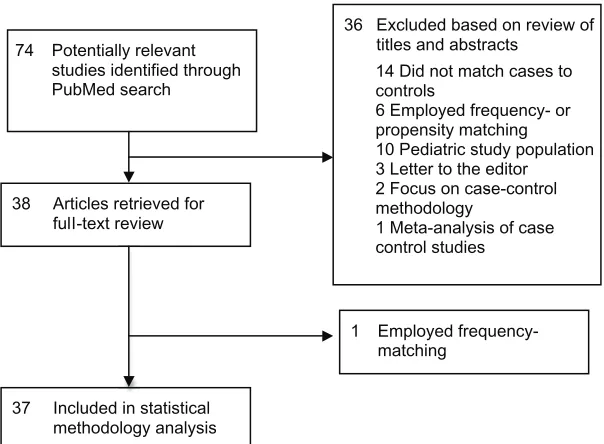
The initial search strategy yielded 74 articles (Figure 1). Upon review of these abstracts, 36 articles were excluded for reasons outlined in Figure 1. The remaining 38 articles were reviewed in detail.7–44 After reviewing the articles, two of the authors identified one study that employed frequency-matching rather than individual patient-frequency-matching.21 Exclusion of this study from further statistical evaluation left 37 studies for the overall analysis. Table 1 provides a summary of these 37 studies. The two authors reviewing the studies agreed on the appropriateness of the statistical methods in 36 of the 37 studies (97%) and the inter-observer agreement, as measured by the kappa statistic, was 0.94. Sixteen of the selected studies were analyzed with correct statistical meth-ods (analysis score of 1, 43%), and 21 were analyzed with at least one incorrect statistical method (sum of analysis score 2 and 3, 57%).
Dovepress Niven et al
Clinical Epidemiology downloaded from https://www.dovepress.com/ by 118.70.13.36 on 20-Aug-2020
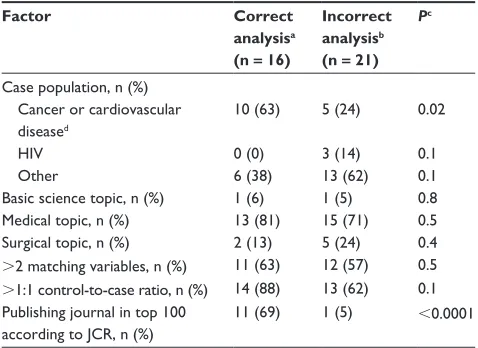
Given the low number of studies with correctly analyzed data, each of the 37 articles was reviewed for factors that may be associated with the use of correct statistical tests (Table 2). Studies that were properly analyzed were more likely to have included case patients with cancer and cardiovascular disease compared to those that did not use proper statistics
(10/16 or 63%, versus 5/21 or 24%, P= 0.02). Furthermore,
properly analyzed studies were more likely to have matched multiple controls for each case (14/16 or 88%, versus 13/21 or 62%, P= 0.1).
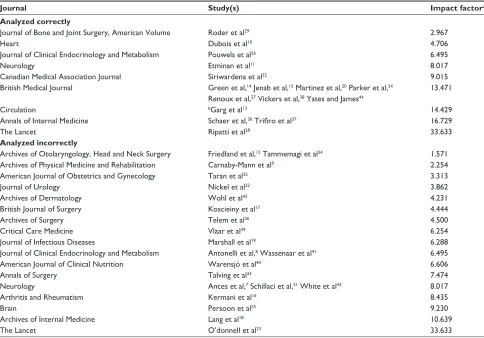
Table 3 presents the data on each publishing journal’s impact factor, in addition to the association between the previously described study design characteristics and cor-rect statistical methodology. From this table, it is clear that matched case-control articles published in the British Medical Journal (BMJ) were consistently analyzed with correct sta-tistical techniques. Furthermore, the BMJ was responsible for publishing the greatest number of articles in this series of matched case-control studies (7/37 or 19%). This is in contrast to articles published in Archives of Otolaryngology-Head and Neck Surgery, Journal of Clinical Endocrinology and Metabolism, and Neurology wherein the data was frequently analyzed incorrectly. Moreover, matched case-control studies published in Lancet were notably inconsistent in their statistical methodology. From this table, it is also evident that more studies in the correctly analyzed collection were published in a journal with an impact factor within the top 100 listing on JCR (11/16 or 69%, versus 1/21 or 5%,
P 0.0001). The median (interquartile range [IQR]) impact
factor among studies that were correctly analyzed was 13.471 (8.516–13.950), compared to 6.495 (4.231–8.017) for those with incorrect statistical methodology (Wilcoxon rank sum test, P= 0.0009).
Discussion
To our knowledge, this is the first study to assess the appropriateness of the statistical methodology used in a published series of matched case-control studies. From this structured review of studies published in a number of diverse mainstream, peer-reviewed journals it is clear that matched case-control studies are not consistently analyzed using appropriate statistical methods. More than 50% of the articles reviewed in this study present data that was analyzed with improper statistics. For many of these studies, this may simply change the strength of the association between the disease and exposure of interest; however, for studies with small numbers of discordant sets, the use of appropriate statistical methods may alter the significance of the findings. Unfortunately, none of the articles reviewed in this study with incorrect statistical methodology provided the data in a format whereby the magnitude of the difference between a proper and improper analysis could be assessed. This is important, as it is clear from recent reviews of the literature that the use of statistics in medical literature is increasing over time.45,46 However, if the analyses are being performed incorrectly, this increased use of statistics does not equate to an improvement in study quality and may lead to the adoption of incorrect medical literature.
74 Potentially relevant studies identified through PubMed search
38 Articles retrieved for full-text review
36 Excluded based on review of titles and abstracts
14 Did not match cases to controls
6 Employed frequency- or propensity matching 10 Pediatric study population 3 Letter to the editor 2 Focus on case-control -methodology
1 Meta-analysis of case control studies
37 Included in statistical methodology analysis
1 Employed frequency-matching
Figure 1 Search strategy flow.
Dovepress A review of reported statistical methodology
Clinical Epidemiology downloaded from https://www.dovepress.com/ by 118.70.13.36 on 20-Aug-2020
Table 1
Details of studies included in statistical methodology analysis
Study
Case population
Cases (n) Controls (n)
Matching variables
Analysis score
a
Ances et al
7
Patients with human immunodeficiency virus (HIV)
10
20
Gender, education
3
Antonelli et al
8
Patients with systemic lupus erythematosus
153
918
Gender, age
3
Carnaby-Mann et al
9
Patients with dysphagia who entered the McNeill Dysphagia Therapy Program
8
16
Age, gender, primary medical diagnosis
2
Dubois et al
10
Patients with previous thoracic radiation therapy undergoing coronary stenting
41
82
Gender, stented vessel, drug-eluting stent use, available duration of follow-up, unstable coronary disease, renal insufficiency, diabetes mellitus, bifurcation disease, stent length and size, ejection fraction
1
b
Etminan et al
11
Patients who had a coronary revascularization procedure between 1995–2004 with a discharge diagnosis of epilepsy
217
2170
Age, cohort entry day
1
Friedland et al
12
Patients with cochlear implants
28
28
Pre-cochlear implant score on Hearing In Noise Test–Quiet, duration of deafness
3
Garg et al
13
Patients 18–65 years old with migraine headaches onset before age 50
144
144
Age, gender
1
Green et al
14
Patients
40 years old with incident esophageal, gastric,
or colorectal cancer
15 613
77 750
Age, gender, general practice, observation time
1
Jenab et al
15
Patients with incident colorectal cancer
1248
1248
Age, gender, study center, time of day at blood collection, duration of fasting at blood collection; women were further matched by menopausal status, phase of menstrual cycle at time of blood collection, use of hormone replacement therapy
1
Kermani et al
16
Incident cases with giant cell arteritis
204
407
Age, gender, length of medical history
3
Koscieiny et al
17
Patients with claudication or critical ischemia undergoing surgery for occlusion of the superficial femoral artery (SFA)
28
28
Occluded SFA, patent popliteal artery not amenable to endovascular intervention, patent profunda femoris artery with less than 50% stenosis before the first branch,
1 patent crural outflow artery, American
Society of Anesthesiologists Class I, II, or III, patient mobile before surgery, or expected to have postoperative mobility, on aspirin and a statin
3
Lang et al
18
Patients with HIV found to have an incident myocardial infarction
289
884
Age, gender, clinical center
2
c
Marshall et al
19
Patients with HIV and Kaposi’s sarcoma
21
14
Unclear
3
Martinez et al
20
Patients with sudden cardiac death, or near death on antidepressants
568
14 812
Date of incident antidepressant prescription, year of birth, gender, indication for antidepressant prescription
1
Nickel et al
22
Females with interstitial cystitis/painful bladder syndrome
207
117
Age, partner status, education
3
O’donnell et al
23
Patients with first acute stroke
3000 3000 Age, gender, ± ethnic origin 3 d
Parker et al
24
Patients with incident venous thromboembolism
25, 532
89, 491
Age, calendar time, gender, family practice
1
Persoon et al
25
Patients with limb shaking associated with internal carotid artery occlusion
34
68
Age, gender
3
Pouwels et al
26
Patients with incident admission for a hip fracture
6,763
26,341
Year of birth, gender, geographic location, index admission date
1
Renoux et al
27
Patients with incident diagnosis of stroke and on hormone replacement therapy
15,710
59,958
Age, general practice attended, year of joining the practice
1
Ripatti et al
28
Patients with coronary artery disease
2,101
3,914
Gender, birth year
1
e
Dovepress Niven et al
Clinical Epidemiology downloaded from https://www.dovepress.com/ by 118.70.13.36 on 20-Aug-2020
Roder et al
29
Patients with total hip arthroplasty and signs of cup failure
809
3,986
Hospital site of total hip arthroplasty, date of surgery; a follow-up exam within 6 months of the follow-up interval of the case; cup design, size, and material
1
Schaer et al
30
Patients with atrial fibrillation
4661
18 642
Age, gender, general practice, calendar time
1
Schillaci et al
31
Patients aged 18–50 years with migraine headaches
60
60
Age, gender, blood pressure
2
Siriwardena et al
32
Patients with incident myocardial infarction
16, 012
62, 694
Age, gender, general practice, calendar time
1
Talving et al
33
Patients with severe traumatic brain injury receiving erythropoiesis stimulating agent
89
178
Age, gender, mechanism, Glasgow Coma Scale, hypotension, injury severity score, abbreviated injury scale, presence of anemia
3
Tammemagi et al
34
Never smokers or former smokers with adult-onset chronic rhinosinusitis
306
306
Age, gender, race/ethnicity
2
Taran et al
35
Women with a diagnosis of cellular meiomyomas
99
198
Surgeon, surgical procedure, year of surgery
2
Telem et al
36
Patients with anastamotic leak following colorectal surgery
90
180
Procedure, surgeon
3
Trifiro et al
37
Elderly patients receiving an anti-psychotic drug prescription with an incident episode of community- acquired pneumonia
258
1689
Year of birth, gender, index date
1
Vickers et al
38
Patients with prostate cancer
126
373
Date of birth, date of baseline blood tests
1
Vlaar et al
39
Patients with transfusion-associated lung injury admitted to an intensive care unit
109
327
f
Age, gender, admission diagnosis
3
Warensjö et al
40
Consecutive patients with incident myocardial infarction
444
556
Gender, age, date of health survey, and geographic region
2
Wassenaar et al
41
Patients with acromegaly undergoing screening colonoscopy
107
214
Age, gender
3
White et al
42
Patients who discontinued zonisamide due to psychiatric or cognitive adverse events
59
118
Zonisamide initiation date
2
Wohl et al
43
Patients older than 20 years of age with a diagnosis of pemphigus
255
509
Age, gender
3
Yates and James
44
Physicians with a finding of serious professional misconduct
59
236
Year of graduation from medical school
1 Notes: aSee M ethods section for an outline of the statistical scoring system;
bCategorical variables
assessed using the Cochran–Mantel–Haenszel test with the matched pair as a stra tification variable;
cUsed univariate
conditional logistic regression to perform hypothesis test on baseline continuous variables; dAuthors mentioned deliberately analyzing the data as if it were not matched; eBased on analysis of the nested COROGENE matched case-control sample; fthree
separate control groups of 109 patients each.
Dovepress A review of reported statistical methodology
Clinical Epidemiology downloaded from https://www.dovepress.com/ by 118.70.13.36 on 20-Aug-2020
Table 2 Study design and publication characteristics
Factor Correct
analysisa (n = 16)
Incorrect analysisb (n = 21)
Pc
Case population, n (%) Cancer or cardiovascular
diseased
10 (63) 5 (24) 0.02
HIV 0 (0) 3 (14) 0.1
Other 6 (38) 13 (62) 0.1
Basic science topic, n (%) 1 (6) 1 (5) 0.8 Medical topic, n (%) 13 (81) 15 (71) 0.5 Surgical topic, n (%) 2 (13) 5 (24) 0.4
2 matching variables, n (%) 11 (63) 12 (57) 0.5
1:1 control-to-case ratio, n (%) 14 (88) 13 (62) 0.1 Publishing journal in top 100
according to JCR, n (%)
11 (69) 1 (5) 0.0001
Notes: aCorrect statistical analysis: received a statistical analysis score of “1”; bIncorrect statistical analysis: received a statistical analysis score of “2” or “3”; cProportions compared via Fisher’s exact test; dcardiovascular disease was defined as any disease of the coronary vascular, peripheral vascular, cerebrovascular, and cardiac electrical system.
Abbreviations: HIV, human immunodeficiency virus; JCR, journal citation reports.
Although this study appears to be the first to evaluate the quality of the statistical methods employed in a series of matched case-control studies, it is not the first study to review the quality of statistical methods in medical journals. A number of these studies were published in the 1980’s and 1990’s at a time that coincided with a rapid rise in the use of statistics in medical research. They consistently found that a minority of studies reported unacceptable methods of data analysis and concluded that this is likely due to the fact that individuals leading these medical publications may not have a solid grasp on basic statistical concepts.45,47 This may not be any different in today’s medical literature and is likely further compounded by the fact that statisticians are not consistently involved in the peer review process,48 a step that often improves the quality of the statistical methodology of accepted articles.49 Furthermore, the advent of sophisticated statistical software has allowed the novice researcher to perform complex statistical analyses in a matter of seconds, whereas these complicated analyses were previously per-formed solely by statisticians as they required careful thought and complex mathematical formulae.
The study design characteristics and their relation to the proper analysis of matched data as shown in Table 2, gen-erate a few interesting hypotheses. First, studies involving case populations with cancer or cardiovascular disease were more likely to employ statistical techniques that account for dependent data than studies involving other case defini-tions. The reason for this is not clear but it may be a reflec-tion of the rigor with which these studies were designed.
Second, a greater number of studies in the incorrectly analyzed collection focused on a surgical topic, compared to studies in the correctly analyzed collection. Although the reasons for this finding are unclear, one potential explanation might be that the use of inferential statistics in surgical stud-ies is a more recent development when compared to studstud-ies focusing on other medical topics. Older surgical research involved smaller sample sizes and very few of these studies employed inferential statistics.46 The observation that stud-ies with multiple controls matched to each case were more likely to use statistics that were appropriate for matched data was not surprising. The decision to match more than one control per case may increase the power of case-control studies,1 which, in turn, increases the strength of the study and reflects a thoughtful, systematic approach to the study design. This same thought was likely extended to the analysis phase and resulted in the correct application of statistical methodology.
Furthermore, the observations made with regard to the publishing journal’s impact factor were also not surprising. Recent studies have shown that there is a correlation with the strength of study design (including the use of recom-mended statistical reporting) and journal publication char-acteristics including the journal’s impact factor.50,51 Lee and colleagues reviewed 243 randomly selected articles from the general internal medicine literature published between January 1, 1999 and December 31, 1999 to determine if there was a link between methodological quality and journal characteristics.50 The authors found significant associations between quality scores and higher citation rates, higher impact factors, higher circulation, and lower manuscript acceptance rates. Similarly, Kuroki et al investigated the potential link between research methodology and statisti-cal reporting in medistatisti-cal journals with a high impact factor compared to moderate-impact-factor obstetrics and
gyne-cology journals.51 The high-impact-factor medical journals
included: Journal of the American Medical Association,
The Lancet, and the New England Journal of Medicine; whereas the moderate-impact-factor group included
American Journal of Obstetrics and Gynecology, British Journal of Obstetrics and Gynecology, and Obstetrics and Gynecology. The authors found that the majority of studies included in the high-impact-factor group were random-ized controlled trials (35%) and had high compliance with recommended statistical reporting (84% compared to 65%,
P= 0.002). Therefore, our finding of an increased impact
factor in the correct statistical analysis group aligns with trends observed in similar studies.
Dovepress Niven et al
Clinical Epidemiology downloaded from https://www.dovepress.com/ by 118.70.13.36 on 20-Aug-2020
Table 3 A list of the publishing journals and impact factors among the collection of articles reviewed in this study
Journal Study(s) Impact factora
Analyzed correctly
Journal of Bone and Joint Surgery, American Volume Roder et al29 2.967
Heart Dubois et al10 4.706
Journal of Clinical Endocrinology and Metabolism Pouwels et al26 6.495
Neurology Etminan et al11 8.017
Canadian Medical Association Journal Siriwardena et al32 9.015
British Medical Journal Green et al,14 Jenab et al,15 Martinez et al,20 Parker et al,24
Renoux et al,27 Vickers et al,38 Yates and James44
13.471
Circulation bGarg et al13 14.429
Annals of Internal Medicine Schaer et al,30 Trifiro et al37 16.729
The Lancet Ripatti et al28 33.633
Analyzed incorrectly
Archives of Otolaryngology, Head and Neck Surgery Friedland et al,12 Tammemagi et al34 1.571
Archives of Physical Medicine and Rehabilitation Carnaby-Mann et al9 2.254
American Journal of Obstetrics and Gynecology Taran et al35 3.313
Journal of Urology Nickel et al22 3.862
Archives of Dermatology Wohl et al43 4.231
British Journal of Surgery Koscieiny et al17 4.444
Archives of Surgery Telem et al36 4.500
Critical Care Medicine Vlaar et al39 6.254
Journal of Infectious Diseases Marshall et al19 6.288
Journal of Clinical Endocrinology and Metabolism Antonelli et al,8 Wassenaar et al41 6.495
American Journal of Clinical Nutrition Warensjö et al40 6.606
Annals of Surgery Talving et al33 7.474
Neurology Ances et al,7 Schillaci et al,31 White et al42 8.017
Arthritis and Rheumatism Kermani et al16 8.435
Brain Persoon et al25 9.230
Archives of Internal Medicine Lang et al18 10.639
The Lancet O’donnell et al23 33.633
Notes:aImpact factor as listed on Journal Citation Reports for 2010; bExcellent example of the analysis of matched data.
This study has a number of pertinent strengths and limita-tions that warrant discussion. First, this study is novel; as to our knowledge, this is the first review of the appropriateness of the statistical methodology employed in a collection of matched case-control studies. Second, the studies selected for review focused on a broad range of topics in a number of different peer-reviewed journals, so, although we reviewed only 37 studies, this sample is representative of the much larger population of available articles. Furthermore, many of these articles were published in mainstream journals read by individuals from a variety of backgrounds such as the
British Medical Journal, the Canadian Medical Association Journal, and the Lancet. The major limitation of this study is that the methodology of the articles was not assessed with a validated scoring system. To our knowledge, such a scoring system does not exist for matched case-control studies, and other validated scoring systems were not applicable to the current study’s objectives.52 In spite of this limitation, the inter-observer agreement between the authors reviewing the studies was high. This suggests that the scoring sys-tem used in this study was applied in a consistent manner,
and our conclusion regarding inconsistent use of proper statistical methods in matched case-control studies is valid. Another important limitation is the inability to determine whether the use of proper statistics would change the con-clusions presented by studies that used improper statistical methods. This is due to the fact that very few case-control studies presented tables outlining the number of discordant sets. This limitation notwithstanding, it is possible that the use of proper statistical methods will at least decrease the strength of the association between the outcome and exposure variables when compared to that obtained from improper statistical methodology.
Conclusion
The majority of matched case-control studies reviewed in this investigation used improper statistical methods. Although matching cases to controls provides a means of controlling for known potential confounding variables, it is a compli-cated process that requires a great deal of thought in order to be effective. Improper application of this methodology can distort a study’s power and possibly lead to the reporting of
Dovepress A review of reported statistical methodology
Clinical Epidemiology downloaded from https://www.dovepress.com/ by 118.70.13.36 on 20-Aug-2020
incorrect disease-exposure associations. The acceptance of invalid conclusions and subsequent adaptation into medical practice may lead to the inappropriate use of resources and even worse, harm to individuals. This is why guidelines such as CONSORT (Consolidated Standards of Reporting Trials) and STROBE (Strengthening the Reporting of Observational
Studies in Epidemiology) were created.53,54 These documents
contain templates that are designed to create homogeneity in the reporting of randomized clinical trials and observational studies, respectively. The results of the current study sug-gest that although the STROBE checklist includes recom-mendations for outlining the matching methodology when reporting a matched case-control study, these comprehensive epidemiologic guidelines may require an additional section that outlines the proper statistical techniques to be employed when conducting a matched case-control study.
Contributors
Kevin B Laupland conceived the research question and Daniel J Niven and Kevin B Laupland designed the study. Daniel J Niven carried out the literature search, screened all relevant abstracts, and independently evaluated each study selected for the detailed review of the reported statistical methodology. Daniel J Niven also analyzed the data, and drafted the manuscript. Luc R Berthiaume independently evaluated the statistical methodology of the included stud-ies, and contributed to manuscript revision. Gordon H Fick is a senior biostatistician and settled discrepancies between Daniel J Niven and Luc R Berthiaume during the review of the selected studies. Kevin B Laupland contributed to manu-script revision. All authors approved the final manumanu-script for publication.
Ethics
As this study did not involve collecting data from patients, formal approval from the regional ethics board was not required.
Disclosure
The authors report no conflicts of interest in this work.
References
1. Hennekens CH, Buring JE. Case-control Studies. In: Mayrent SL, editor. Epidemiology in Medicine. Philadelphia: Lippincott Williams & Wilkins; 1987:132–152.
2. Schulz KF, Grimes DA. Case-control studies: research in reverse. Lancet.
2002;359(9304):431–434.
3. Breslow NE, Day NE. Statistical Methods in Cancer Research;
Volume 1 – The Analysis of Case-Control Studies. Lyon, France: International Agency for Research on Cancer; 1980.
4. Niven DJ, Fick GH, Kirkpatrick AW, Grant V, Laupland KB. Cost and outcomes of nosocomial bloodstream infections complicating major
traumatic injury. J Hosp Infect. 2010;76(4):296–299.
5. Jewell NP. Matched Studies. In: Statistics for Epidemiology. Boca
Raton, Florida: Chapman and Hall/CRC; 2009:270–298.
6. Rosner B. Hypothesis Testing: Categorical Data. In: Crockett CD,
Ann, Purrington, Linda, editors. Fundamentals of Biostatistics,6th ed.
Belmont: Thomson Brooks/Cole; 2006:385–446.
7. Ances BM, Christensen JJ, Teshome M, et al. Cognitively unimpaired HIV-positive subjects do not have increased 11C-PiB: a case-control
study. Neurology. 2010;75(2):111–115.
8. Antonelli A, Mosca M, Fallahi P, et al. Thyroid cancer in systemic
lupus erythematosus: a case-control study. J Clin Endocrinol Metab.
2010;95(1):314–318.
9. Carnaby-Mann GD, Crary MA. McNeill dysphagia therapy program:
a case-control study. Archives of Physical Medicine and Rehabilitation.
2010;91(5):743–749.
10. Dubois CL, Pappas C, Belmans A, et al. Clinical outcome of
coro-nary stenting after thoracic radiotherapy: a case-control study. Heart.
2010;96(9):678–682.
11. Etminan M, Samii A, Brophy JM. Statin use and risk of epilepsy:
a nested case-control study. Neurology. 2010;75(17):1496–1500.
12. Friedland DR, Runge-Samuelson C, Baig H, Jensen J. Case-control
analysis of cochlear implant performance in elderly patients. Arch
Otolaryngol Head Neck Surg. 2010;136(5):432–438.
13. Garg P, Servoss SJ, Wu JC, et al. Lack of association between migraine headache and patent foramen ovale: results of a case-control study. Circulation. 2010;121(12):1406–1412.
14. Green J, Czanner G, Reeves G, Watson J, Wise L, Beral V. Oral bisphosphonates and risk of cancer of oesophagus, stomach, and
col-orectum: case-control analysis within a UK primary care cohort. BMJ.
2010;341:c4444.
15. Jenab M, Bueno-de-Mesquita HB, Ferrari P, et al. Association between pre-diagnostic circulating vitamin D concentration and risk of
colorec-tal cancer in European populations:a nested case-control study. BMJ.
2010;340:b5500.
16. Kermani TA, Schäfer VS, Crowson CS, et al. Cancer preceding
giant cell arteritis: a case-control study. Arthritis Rheum. 2010;62(6):
1763–1769.
17. Koscielny A, Pütz U, Willinek W, Hirner A, Mommertz G. Case-control comparison of profundaplasty and femoropopliteal
supragen-icular bypass for peripheral arterial disease. Br J Surg. 2010;97(3):
344–348.
18. Lang S, Mary-Krause M, Cotte L, et al. Impact of individual antiret-roviral drugs on the risk of myocardial infarction in human immuno-deficiency virus-infected patients: a case-control study nested within
the French Hospital Database on HIV ANRS cohort CO4. Arch Intern
Med. 2010;170(14):1228–1238.
19. Marshall V, Martró E, Labo N, et al. Kaposi sarcoma (KS)-associated herpesvirus microRNA sequence analysis and KS risk in a European
AIDS-KS case control study. J Infect Dis. 2010;202(7):1126–1135.
20. Martinez C, Assimes TL, Mines D, Dell’aniello S, Suissa S. Use of venlafaxine compared with other antidepressants and the risk of
sudden cardiac death or near death: a nested case-control study. BMJ.
2010;340:c249.
21. Mente A, Yusuf S, Islam S, et al. Metabolic syndrome and risk of acute myocardial infarction a case-control study of 26,903 subjects from
52 countries. J Am Coll Cardiol. 2010;55(21):2390–2398.
22. Nickel JC, Tripp DA, Pontari M, et al. Psychosocial phenotyping in women with interstitial cystitis/painful bladder syndrome: a case control
study. J Urol. 2010;183(1):167–172.
23. O’Donnell MJ, Xavier D, Liu L, et al. Risk factors for ischaemic and intracerebral haemorrhagic stroke in 22 countries (the INTERSTROKE
study): a case-control study. Lancet. 2010;376(9735):112–123.
24. Parker C, Coupland C, Hippisley-Cox J. Antipsychotic drugs and
risk of venous thromboembolism: nested case-control study. BMJ.
2010;341:c4245.
Dovepress Niven et al
Clinical Epidemiology downloaded from https://www.dovepress.com/ by 118.70.13.36 on 20-Aug-2020
25. Persoon S, Kappelle LJ, Klijn CJM. Limb-shaking transient ischaemic attacks in patients with internal carotid artery occlusion: a case-control
study. Brain. 2010;133(3):915–922.
26. Pouwels S, Lalmohamed A, van Staa T, et al. Use of organic nitrates and the risk of hip fracture: a population-based case-control study. J Clin Endocrinol Metab. 2010;95(4):1924–1931.
27. Renoux C, Dell’aniello S, Garbe E, Suissa S. Transdermal and oral hormone replacement therapy and the risk of stroke: a nested
case-control study. BMJ. 2010;340:c2519.
28. Ripatti S, Tikkanen E, Orho-Melander M, et al. A multilocus genetic risk score for coronary heart disease: case-control and prospective
cohort analyses. Lancet. 2010;376(9750):1393–1400.
29. Röder C, Bach B, Berry DJ, Eggli S, Langenhahn R, Busato A. Obesity, age, sex, diagnosis, and fixation mode differently affect early cup failure in total hip arthroplasty: a matched case-control study of 4420 patients. J Bone Joint Surg Am. 2010;92(10):1954–1963.
30. Schaer BA, Schneider C, Jick SS, Conen D, Osswald S, Meier CR. Risk for incident atrial fibrillation in patients who receive
antihyper-tensive drugs: a nested case-control study. Ann Intern Med. 2010;
152(2):78–84.
31. Schillaci G, Sarchielli P, Corbelli I, et al. Aortic stiffness and pulse wave reflection in young subjects with migraine: A case-control study. Neurology. 2010;75(11):960–966.
32. Siriwardena AN, Gwini SM, Coupland CAC. Influenza vaccination, pneumococcal vaccination and risk of acute myocardial infarction:
matched case-control study. CMAJ. 2010;182(15):1617–1623.
33. Talving P, Lustenberger T, Kobayashi L, et al. Erythropoiesis stimu-lating agent administration improves survival after severe traumatic
brain injury: a matched case control study. Annals of Surgery.
2010;251(1):1–4.
34. Tammemagi CM, Davis RM, Benninger MS, Holm AL, Krajenta R. Secondhand smoke as a potential cause of chronic rhinosinusitis:
a case-control study. Arch Otolaryngol Head Neck Surg. 2010;136(4):
327–334.
35. Taran FA, Weaver AL, Gostout BS, Stewart EA. Understanding
cellular leiomyomas: a case-control study. Am J Obstet Gynecol.
2010;203(2):109.e1–e6.
36. Telem DA, Chin EH, Nguyen SQ, Divino CM. Risk factors for
anasto-motic leak following colorectal surgery: a case-control study. Archives
of Surgery. 2010;145(4):371–376.
37. Trifirò G, Gambassi G, Sen EF, et al. Association of community-acquired pneumonia with antipsychotic drug use in elderly patients: a
nested case-control study. Ann Intern Med. 2010;152(7):418–425.
38. Vickers AJ, Cronin AM, Björk T, et al. Prostate specific antigen concentration at age 60 and death or metastasis from prostate cancer:
case-control study. BMJ. 2010;341:c4521.
39. Vlaar APJ, Binnekade JM, Prins D, et al. Risk factors and outcome of transfusion-related acute lung injury in the critically ill: a nested
case-control study. Crit Care Med. 2010;38(3):771–778.
40. Warensjö E, Jansson J-H, Cederholm T, et al. Biomarkers of milk fat and the risk of myocardial infarction in men and women: a prospective,
matched case-control study. Am J Clin Nutr. 2010;92(1):194–202.
41. Wassenaar MJE, Cazemier M, Biermasz NR, et al. Acromegaly is associated with an increased prevalence of colonic diverticula: a
case-control study. J Clin Endocrinol Metab. 2010;95(5):2073–2079.
42. White JR, Walczak TS, Marino SE, Beniak TE, Leppik IE, Birnbaum AK. Zonisamide discontinuation due to psychiatric and cognitive adverse
events: a case-control study. Neurology. 2010;75(6):513–518.
43. Wohl Y, Dreiher J, Cohen AD. Pemphigus and osteoporosis: a
case-control study. Arch Dermatol. 2010;146(10):1126–1131.
44. Yates J, James D. Risk factors at medical school for subsequent
profes-sional misconduct: multicentre retrospective case-control study. BMJ.
2010;340:c2040.
45. Altman DG. Statistical reviewing for medical journals. Stat Med.
1998;17(23):2661–2674.
46. Kurichi JE, Sonnad SS. Statistical methods in the surgical literature. J Am Coll Surg. 2006;202(3):476–484.
47. Wulff HR, Andersen B, Brandenhoff P, Guttler F. What do doctors
know about statistics? Stat Med. 1987;6(1):3–10.
48. Goodman SN, Altman DG, George SL. Statistical reviewing policies
of medical journals: caveat lector? J Gen Intern Med. 1998;13(11):
753–756.
49. Gardner MJ, Bond J. An exploratory study of statistical
assess-ment of papers published in the British Medical Journal. JAMA.
1990;263(10):1355–1357.
50. Lee KP, Schotland M, Bacchetti P, Bero LA. Association of journal quality indicators with methodological quality of clinical research
articles. JAMA. 2002;287(21):2805–2808.
51. Kuroki LM, Allsworth JE, Peipert JF. Methodology and analytic techniques used in clinical research: associations with journal impact
factor. Obstet Gynecol. 2009;114(4):877–884.
52. Cho MK, Bero LA. Instruments for assessing the quality of drug studies
published in the medical literature. JAMA. 1994;272(2):101–104.
53. Schulz KF, Altman DG, Moher D. CONSORT 2010 statement: updated
guidelines for reporting parallel group randomized trials. Ann Intern
Med. 2010;152(11):726–732.
54. Vandenbroucke JP, von Elm E, Altman DG, et al. Strengthening the Reporting of Observational Studies in Epidemiology (STROBE):
explanation and elaboration. Epidemiology. 2007;18(6):805–835.
Dovepress A review of reported statistical methodology
Clinical Epidemiology downloaded from https://www.dovepress.com/ by 118.70.13.36 on 20-Aug-2020
Appendix 1List of “core clinical journal” subset of PubMed journals Academic Medicine: journal of the Association of American Medical Colleges AJR: American Journal of Roentgenology
American Family Physician American Heart Journal
The American Journal of Cardiology The American Journal of Clinical Nutrition American Journal of Clinical Pathology The American Journal of Medicine The American Journal of Nursing
American Journal of Obstetrics and Gynecology American Journal of Ophthalmology
American Journal of Pathology
American Journal of Physical Medicine and Rehabilitation/Association of Academic Physiatrists The American Journal of Psychiatry
American Journal of Public Health
American Journal of Respiratory and Critical Care Medicine American Journal of Surgery
The American Journal of the Medical Sciences The American Journal of Tropical Medicine and Hygiene Anaesthesia
Anesthesia and Analgesia Anesthesiology
Annals of Emergency Medicine Annals of Internal Medicine
The Annals of Otology, Rhinology, and Laryngology Annals of surgery
The Annals of Thoracic Surgery Archives of Dermatology Archives of Disease in Childhood
Archives of Disease in Childhood, fetal and neonatal edition
Archives of Environmental and Occupational Health [continues Archives of environmental health] Archives of General Psychiatry
Archives of Internal Medicine Archives of Neurology Archives of Ophthalmology
Archives of Otolaryngology, head and neck surgery Archives of Pathology and Laboratory Medicine Archives of Pediatrics and Adolescent Medicine Archives of Physical Medicine and Rehabilitation Archives of Surgery (Chicago, Ill : 1960) Arthritis and Rheumatism
BJOG : an international journal of obstetrics and gynaecology [continues British journal of obstetrics and gynaecology] Blood
BMJ (Clinical research ed) Brain: a journal of neurology The British Journal of Radiology The British Journal of Surgery CA: A cancer Journal for Clinicians Cancer
Chest Circulation
Clinical Orthopedics and Related Research Clinical Pediatrics
Clinical Toxicology: the official journal of the American Academy of Clinical Toxicology and European Association of Poisons Centers and Clinical Toxicologists [continues Journal of toxicology. Clinical toxicology]
Clinical Pharmacology and Therapeutics
CMAJ: Canadian Medical Association Journal/Journal de l’Association Medicale Canadienne Critical Care Medicine
(Continued)
Dovepress Niven et al
Clinical Epidemiology downloaded from https://www.dovepress.com/ by 118.70.13.36 on 20-Aug-2020
Appendix 1(Continued) Current Problems in Surgery Diabetes
Digestive Diseases and Sciences DM: Disease-a-month Endocrinology Gastroenterology Gut
Heart and Lung: the journal of critical care Heart (British Cardiac Society)
Hospital Practice (1995) [Formed by the union of: Hospital practice (Family practice ed.); Hospital practice (Hospital ed.); and Hospital practice (Office ed). No issues published between 2001 Sep 15;36(9) and 2009 Dec;37(1)]
Hospitals and Health Networks/AHA
JAMA: Journal of the American Medical Association The Journal of Allergy and Clinical Immunology The Journal of Bone and Joint Surgery, American volume The Journal of Bone and Joint Surgery, British volume The Journal of Clinical Endocrinology and Metabolism The Journal of Clinical Investigation
Journal of Clinical Pathology The Journal of Family Practice
Journal of Immunology (Baltimore, Md : 1950) The Journal of Infectious Diseases
The Journal of Laryngology and Otology The Journal of Nervous and Mental Disease Journal of Neurosurgery
The Journal of Nursing Administration
Journal of Oral and Maxillofacial Surgery: official journal of the American Association of Oral and Maxillofacial Surgeons The Journal of Pediatrics
Journal of the American College of Cardiology Journal of the American College of Surgeons Journal of the American Dietetic Association The Journal of Thoracic and Cardiovascular Surgery The Journal of Trauma
The Journal of Urology
The Journals of Gerontology. Series A, Biological sciences and medical sciences The Journals of Gerontology. Series B, Psychological sciences and social sciences Lancet
Mayo Clinic Proceedings
The Medical Clinics of North America The Medical Letter on Drugs and Therapeutics Medicine
Neurology
The New England Journal of Medicine The Nursing Clinics of North America Nursing Outlook
Nursing Research Obstetrics and Gynecology
The Orthopedic Clinics of North America Pediatric Clinics of North America Pediatrics
Physical Therapy
Plastic and Reconstructive Surgery Postgraduate Medicine
Progress in Cardiovascular Diseases
Public Health Reports (Washington, DC : 1974) Radiologic Clinics of North America
Radiology
Rheumatology (Oxford, England) [continues British Journal of Rheumatology]
(Continued)
Dovepress A review of reported statistical methodology
Clinical Epidemiology downloaded from https://www.dovepress.com/ by 118.70.13.36 on 20-Aug-2020
Clinical Epidemiology
Publish your work in this journal
Submit your manuscript here: http://www.dovepress.com/clinical-epidemiology-journal
Clinical Epidemiology is an international, peer-reviewed, open access journal focusing on disease and drug epidemiology, identification of risk factors and screening procedures to develop optimal preventative initiatives and programs. Specific topics include: diagnosis, prognosis, treatment, screening, prevention, risk factor modification, systematic
reviews, risk & safety of medical interventions, epidemiology & bio-statical methods, evaluation of guidelines, translational medicine, health policies & economic evaluations. The manuscript management system is completely online and includes a very quick and fair peer-review system, which is all easy to use.
Appendix 1(Continued) Southern Medical Journal Surgery
The Surgical Clinics of North America
Translational Research: the journal of laboratory and clinical medicine [continues The Journal of Laboratory and Clinical Medicine] The Urologic Clinics of North America
Dovepress
Dovepress
Niven et al
Clinical Epidemiology downloaded from https://www.dovepress.com/ by 118.70.13.36 on 20-Aug-2020