ABSTRACT
FLEMING, SHERONDA WITTER. A Mixed Methods Multiple Case Study of the Initial Implementation of the Trauma-Sensitive Schools Model in an Elementary and Middle School. (Under the direction of Dr. Tamara Young).
The purpose of this mixed methods multiple case study was to examine the initial implementation of the trauma-sensitive schools (TSS) model in elementary and middle schools in North Carolina. Specifically, this study explored educators’ perceptions, attitudes and experiences of the implementation of the TSS model within their respective school. Six research questions guided the study: (1) What are educators’ understanding of the trauma-sensitive schools model in elementary and middle schools? (2) What factors
influence educators’ sensemaking of the trauma-sensitive schools model in elementary and middle schools? (3) What strategies were utilized to implement the trauma-sensitive schools model in elementary and middle schools? (4) What are educators’ experiences with the initial implementation of the trauma-sensitive schools model in elementary and middle schools? (5) How does the implementation of the trauma-sensitive schools model influence
elementary and middle school educators’ attitudes related to trauma-informed care? and (6) How does the implementation of the trauma-sensitive schools model influence the school climate in elementary and middle schools?
Findings for this research study revealed that educators’ perceptions of the model were rooted in their understandings of the various ways that trauma impacted students in the context of the school environment. Specifically, educators in the elementary and middle school observed that trauma impacted the whole child and influenced students’ academic, behavioral and social-emotional well-being. Additionally, study findings revealed that educators’ perceptions of the trauma-sensitive schools model as an intervention was often influenced by their lived experiences, both as a child and as an educator, and their perceived ability to serve in a vital role as an implementing agent of the model. As implementing agents of the model, educators aimed to be intentional in their engagement with students and believed that it was necessary for them to meet students where they were. Doing so
de-stigmatized students’ academic, behavioral and social-emotional challenges and
eliminated the negative connotations that would be associated with the challenges in a deficit model.
A Mixed Methods Multiple Case Study of the Initial Implementation of the Trauma-Sensitive Schools Model in an Elementary
and Middle School
by
Sheronda Witter Fleming
A dissertation submitted to the Graduate Faculty of North Carolina State University
in partial fulfillment of the requirements for the degree of
Doctor of Philosophy
Educational Research and Policy Analysis
Raleigh, North Carolina 2019
APPROVED BY:
_______________________________ _______________________________
Dr. Tamara Young Dr. Brenda Champion
Committee Chair
_______________________________ _______________________________
DEDICATION
This dissertation is dedicated to my guardian angel, and dearly beloved grandmother, Mannie Lee Witter. Grandma, you are greatly missed here on earth. However, I find comfort in knowing that you were my greatest source of support and that you always wanted me to have God’s absolute best in life. Throughout this process, I have felt your presence and heard your voice urging me to press on. I love you with all of my being, grandma. I kept my
BIOGRAPHY
Sheronda Witter Fleming is a South Carolina native. After graduating from Beaufort High School in 2004, Sheronda obtained her Bachelor of Arts degree in intercultural youth development in 2008 from Furman University. Her student-designed bachelor’s degree incorporated courses from education, history, psychology, sociology and Spanish. In 2011 Sheronda obtained her master’s of science degree in youth development leadership from Clemson University after completing her master’s thesis titled, Youth Gang Involvement: From Risk Factors to Assets.
ACKNOWLEDGMENTS
I am a firm believer that it is not about the destination, but the journey. Along this journey I have been blessed to have the support of so many people. I would be remiss if I did not give them their roses by acknowledging and honoring them for their willingness to accompany me on this journey both in body and spirit.
To my Heavenly Father, my heart is full. As Your word promised, You sustained me when I cast my cares on you (Psalm 55:22). Thank You for ordering my steps
(Psalm 119:133). Thank You for the plan You had for my life (Jeremiah 29:11). Most importantly, thank You for the reassurance that I could do this, because I can do all things through You, the One who gives me strength (Philippians 4:13).
Dr. Young, words just simply fail to capture the amount of gratitude I have for you. As my advisor, you have served as a steadfast source of direction, reassurance and
encouragement. Thank you for never letting my faith waiver. Thank you for always
encouraging me when the temporary clouds of life threatened to overshadow the ever-present abundance of joys. For our light affliction, which is but for a moment, worketh for us a far more exceeding and eternal weight of glory (2 Corinthians 4:17). Needless to say, you have been a blessing to me! I am grateful that God saw fit for our paths to cross.
Drs. Bowles, Champion, and Hicks, thank you! Thank you for gifting me with the opportunity to glean from your expertise and passion for education. Thank you for graciously giving your time to serve as a member of my committee. I am grateful for each of you and the diverse perspectives you each brought to this topic. Thank you so much!
be. Thank you for demonstrating strength and resiliency. Thank you for always being able to make me laugh even after the hardest day. Laughter really is the best medicine! I hope that you are proud of your Mama’s Nicole. Uncle Mark, over the years, you have been more like a father to me. I appreciate your love. Thank you for always being an exemplary model of compassion, genuine humility, and unrivaled work ethic. Shoshana, thank you for our talks. You are truly an inspiration, and I am grateful that I can call you cousin, although you are more like the big sister I never had. To Shar’de, Antwon, and Kiara, thank you for your sibling love. I hope that I have served you well as your big sister. My loves, through this experience, I have learned that there is no dream that is too hard to attain. With faith and perseverance, you can achieve all of your goals. Never let anyone or anything stop you!
To my second mother, Mrs. Triplett, thank you. Thank you for always being a constant source of strength and wisdom since the first day I met you as a high school
sophomore in your chemistry class. I appreciate and cherish the bond that we have developed and cultivated over the years. Thank you for your continual support of all of my endeavors and pursuits. Thank you for your honesty, guidance and encouragement. Most of all, thank you for always treating me like one of your own. I am eternally grateful!
memories that I carry with me in my heart. I am humbled by your adoration. I am blessed by your affection. Most importantly, I am changed for the better because I knew you!
A famous African Proverb states that “it takes a village to raise a child.” As an adult, life has taught me that the necessity of the village does not cease when one reaches adulthood. Instead, the village maintains its significance throughout an individual’s life. I am forever indebted to the many women and men, girls and boys, kin and kindred, that have been and continue to be a part of my village. I am also grateful for the many women that I have the privilege to call sisters as a result of our shared commitment to our beloved sorority, the Delta Sigma Theta Sorority, Incorporated. Intelligence is, and will forever be, the torch of wisdom. Thank you for your love. Thank you for your prayers. Thank you for your encouragement. Thank you for your support.
To my love, best friend, husband, dearest Joseph, thank you! Thank you for your unwavering support and encouragement throughout this process. I do not take for granted your sacrifice of countless hours shared in the library or at the local coffee shop as I worked tirelessly to pursue this dream. I appreciate every act of love you selflessly showed me through savory home-cooked meals, cups of Dunkin’ or Starbucks coffee just the way I like it, or beautiful roses to brighten my day or to celebrate milestones along the way. Thank you for always encouraging me to take the leap of faith to overcome the seemingly
TABLE OF CONTENTS
LIST OF TABLES ... xi
LIST OF FIGURES ... xiii
CHAPTER ONE: Introduction ...1
Statement of the Problem ...2
Overview of the Trauma-Sensitive Schools Model ...3
Purpose of the Study ...7
Significance of the Study ...8
Theoretical Framework ...9
Overview of Research Design ...10
Definition of Key Terms ...11
Overview of the Study ...14
CHAPTER TWO: Literature Review ...16
Adverse Childhood Experiences (ACEs) ...16
The ACE Pyramid ...24
Stress ...26
Trauma ...30
Effects of Stress and Trauma on Children in the School Context ...33
Multi-Tiered Intervention ...52
Trauma-Informed Systems ...58
Trauma-Sensitive Schools ...61
Trauma-Sensitive Schools Model Description ...65
Theoretical Framework ...71
CHAPTER THREE: Methodology ...77
Purpose of the Study ...77
Research Design ...78
Case Selection ...80
Participant Sampling ...84
Data Sources ...86
Data Analysis ...97
Confidentiality ...100
Validity & Reliability ...100
Limitations and Delimitations of Study ...102
Ethical Considerations ...103
Subjectivity Statement ...104
Summary of Methodology ...105
CHAPTER FOUR: Findings ...106
Participant Profiles ...108
Research Question One ...111
Research Question Two ...131
Research Questions Three ...143
Research Question Four ...156
Research Question Five ...173
Research Question Six ...189
Summary of Findings ...213
CHAPTER FIVE: Discussion & Conclusion ...216
Discussion of the Findings ...219
Limitations ...224
Theoretical Implications ...225
Practical Implications ...228
Recommendations for Future Research ...236
Conclusion ...238
REFERENCES ...240
APPENDICES ...251
Appendix A: Interview Email of Participation ...252
Appendix B: Focus Group Email of Participation ...253
Appendix C: Interview Informed Consent Form ...254
Appendix D: Focus Group Informed Consent Form ...256
Appendix E: Initial Principal Interview Protocol ...258
Appendix F: Follow-Up Principal Interview Protocol ...260
Appendix G: Initial Support Staff Interview Protocol ...262
Appendix H: Follow-Up Support Staff Interview Protocol ...264
Appendix I: Initial Teacher Interview Protocol ...266
Appendix J: Follow-Up Teacher Interview Protocol ...268
Appendix K: Initial Resilience Team Focus Group Protocol ...270
Appendix L: Follow-Up Resilience Team Focus Group Protocol ...272
Appendix M: ARTIC-35 Education Scale ...274
Appendix N: School Climate Walk ...277
Appendix O: Field Notes ...287
LIST OF TABLES
Table 2.1 Definition of Adverse Childhood Experiences ...18
Table 2.2 Factors Influencing the Trauma Response ...35
Table 2.3 Observable Fight, Flight and Freeze Behaviors in Children ...51
Table 2.4 Multi-Tiered Interventions for Students Impacted by Trauma ...55
Table 2.5 Physiological and Behavioral Impact of Trauma on Students ...62
Table 2.6 Flexible Framework for Trauma-Sensitive Practices in Schools ...67
Table 3.1 Case Descriptive Data ...82
Table 3.2 Purposeful Sampling Strategies ...85
Table 3.3 Resilience Teams at Elementary School and Middle School ...86
Table 3.4 Case Study Data Collection Methods ...88
Table 3.5 Original and Adapted SHOWeD Photovoice Questions ...93
Table 3.6 Attitudes Related to Trauma-Informed Care (ARTIC) Scale Core Subscales ...95
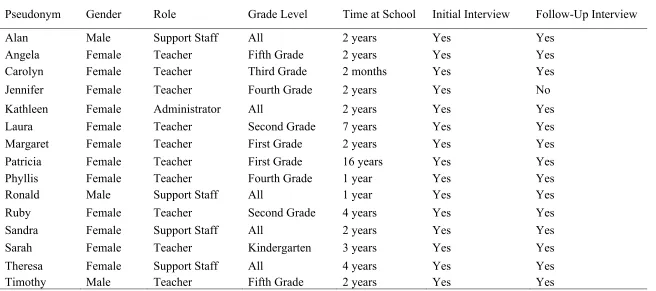
Table 4.1 Research Question Data Collection Methods ...107
Table 4.2 Elementary School Interview Participant Demographics ...109
Table 4.3 Elementary School Focus Participant Demographics ...110
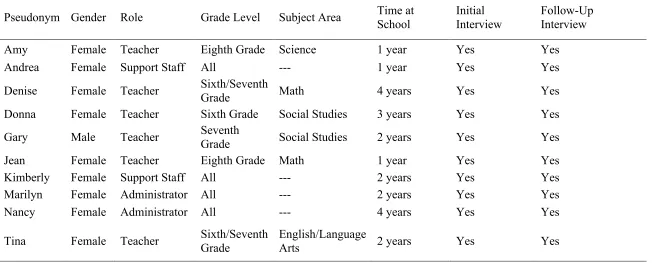
Table 4.4 Middle School Interview Participant Demographics ...112
Table 4.5 Middle School Focus Group Participant Demographics ...113
Table 4.6 Research Questions and Themes ...114
Table 4.7 Elementary School and Middle School Trauma-Sensitive Strategies ...144
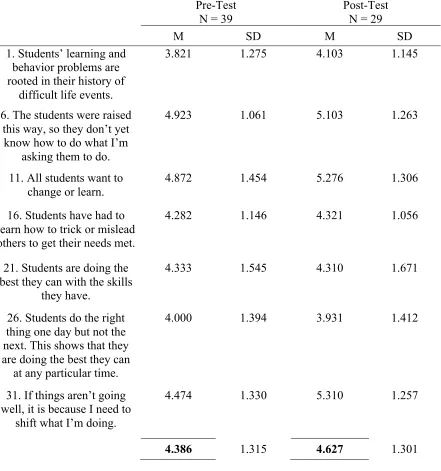
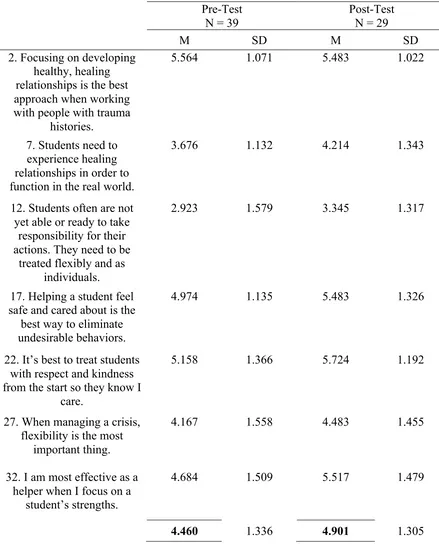
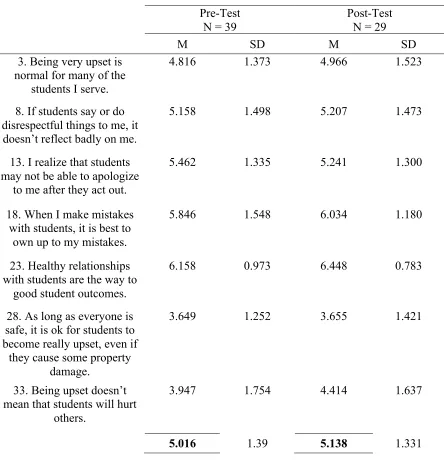
Table 4.8 Elementary School ARTIC-35 Underlying Causes of Problem Behavior And Symptoms Pre- and Post-Test Mean and Standard Deviation ...174
Table 4.10 Elementary School ARTIC-35 On-The-Job Behavior and Symptoms
Pre- and Post-Test Mean and Standard Deviation ...177 Table 4.11 Elementary School ARTIC-35 Self-Efficacy at Work Pre- and
Post-Test Mean and Standard Deviation ...179 Table 4.12 Elementary School ARTIC-35 Reactions to the Work Pre- and
Post-Test Mean and Standard Deviation ...180 Table 4.13 Middle School ARTIC-35 Underlying Causes of Problem Behavior
and Symptoms Pre- and Post-Test Mean and Standard Deviation ...182 Table 4.14 Middle School ARTIC-35 Responses to Problem Behavior and
Symptoms Pre- and Post-Test Mean and Standard Deviation ...184 Table 4.15 Middle School ARTIC-35 On-The-Job Behavior and
Symptoms Pre- and Post-Test Mean and Standard Deviation ...185 Table 4.16 Middle School ARTIC-35 Self-Efficacy at Work Pre- and
Post-Test Mean and Standard Deviation ...187 Table 4.17 Middle School ARTIC-35 Reactions to the Work Pre- and
Post-Test Mean and Standard Deviation ...188 Table 5.1 Elementary School Multi-Tiered Intervention Trauma-Sensitive
Strategies ...221 Table 5.2 Middle School Multi-Tiered Intervention Trauma-Sensitive
LIST OF FIGURES
Figure 1 ACE Pyramid ...25
Figure 2 The Three E’s of Trauma ...31
Figure 3 The Three Zones of Arousal ...42
Figure 4 The Cycle of Trauma ...47
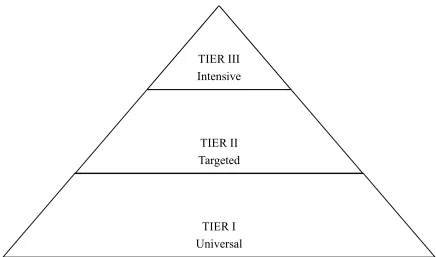
Figure 5 Multi-Tiered Systems of Supports ...54
Figure 6 Multiple Case Study Design ...79
Figure 7 Elementary School Entryway ...191
Figure 8 Elementary School Poster ...192
Figure 9 Elementary School Calm Down/Safe Space A ...193
Figure 10 Elementary School Calm Down/Safe Space B ...194
Figure 11 Elementary School Calm Down/Safe Space C ...194
Figure 12 Elementary School Weather Conditions ...197
Figure 13 Elementary School Pick-Up and Drop-Off Lanes ...199
Figure 14 Middle School Poster A ...201
Figure 15 Middle School Poster B ...201
Figure 16 Middle School Poster C ...202
Figure 17 Middle School Bathrooms ...204
Figure 18 Middle School Growth Mindset ...207
Figure 19 Middle School Positive Talk ...207
Figure 20 Middle School Affirmations ...209
Figure 21 Middle School Hand Signals ...210
Figure 23 Maslow’s Hierarchy of Needs ...229 Figure 24 Disruption of The Cycle of Trauma by the Trauma-Sensitive Schools
CHAPTER ONE Introduction
In the unprecedented Adverse Childhood Experiences Study, adverse childhood experiences (ACEs) in the form of childhood abuse, neglect and household dysfunction were examined through the collaborative efforts of the Centers for Disease Control and Prevention (CDC) and Kaiser Permanente (Felitti et al., 1998). The study proposed that the occurrence of stressful or traumatic incidents during childhood had the potential to lead to detrimental neurodevelopmental effects, which could result in a greater likelihood of behavioral, health and social-emotional challenges through adulthood (Felitti et al., 1998). Specifically, the ACE study explored stressful and traumatic instances of childhood maltreatment in the form of abuse (emotional, physical and sexual), neglect (emotional and physical), and household dysfunction. Household dysfunction includes household substance use, household mental illness, incarcerated household members, witnessing domestic violence and parental
separation or divorce (Brown et al., 2009; Centers for Disease Control and Prevention, 2014; DeBellis & Thomas, 2003; and Felitti et al., 1998).
The impact of maltreatment on children varies and depends on a range of contextual factors, including “the age of the child at the time of the maltreatment, whether the
maltreatment was a one-time incident or chronic, the identity of the abuser (i.e., parent or other adult), whether the child had a dependable nurturing individual in his or her life, the type and severity of the maltreatment, the intervention, how long the maltreatment lasted, and other individual and environmental characteristics” (Child Welfare Information
in the development of resiliency and coping skills. On the opposite end, the impact of stress and trauma is detrimental and results in traumatic stress. Traumatic stress often results in unpredictable behaviors and the elicitation of feelings of fear and despair (Walkey & Cox, 2013). Hamoudi, Murray, Sorensen, and Fontaine (2015) add that “when a child experiences strong frequent and/or prolonged adversity that overwhelms his or her skills or support, the result can create a toxic stress response” (p. 8).
Statement of the Problem
Because an estimated nearly two in three children experience trauma during their childhood (McInerney & McKlindon, n.d.) the National Child Traumatic Stress Network Schools Committee (2008) urges teachers to be vigilant and attentive to children that appear to be afraid, anxious, display behavioral changes, have increased complaints regarding health concerns, are frequently absent or find it difficult to take directives or to submit to authority. The impact of childhood trauma in the household is not limited to the context of the home and can be observed in the school setting. The occurrence of childhood trauma can impact a child’s ability to regulate their emotions and manage impulsive behaviors (DeBellis, 2005). Furthermore, “abused or neglected children may: be unable to control their emotions and have frequent outbursts; be quiet and submissive; have difficulties learning in school; have difficulties getting along with siblings or classmates; have unusual eating or sleeping
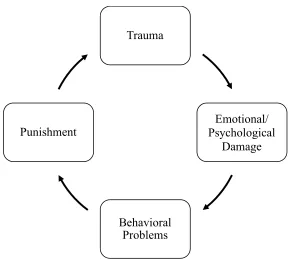
a set of behaviors or patterns of thinking that put them on a path for further trauma. Either directly through their own repeated actions (i.e., they are quicker to resort to violence) or as a result of consequences for their actions that do not fit within societal rules and norms
(i.e., punitive measures after violation of rules or laws), children may become
re-traumatized and their problems are only compounded” (McInerney & McKlindon, n.d., p. 5). Additionally, Cole et al. (2005) suggest that “traumatized children often experience fear, anxiety, irritability, helplessness, anger, shame, depression, and guilt, but their ability to identify and express these feelings is often underdeveloped and poorly regulated” (p. 30). Specifically, they found that
Some of these children may express emotions without restraint and seem impulsive, under-controlled, unable to reflect, edgy, oversensitive, or aggressive. They may overreact to perceived provocation in the classroom and on the playground. Other traumatized children block out painful or uncomfortable emotions; they may appear disinterested, disconnected, or aloof. Another group of traumatized children protect themselves from unmanageable stress and anxiety by dissociating—that is, by completely disconnecting emotions from the events with which they are associated. (p. 30)
To minimize the potential impact of these detrimental effects on students’ well-being and academic achievement, schools need interventions that create an environment that supports students who have been impacted by adverse childhood experiences, toxic stress and trauma.
Overview of the Trauma-Sensitive Schools Model
understand and ameliorate the impact of trauma on the students that they serve. McInerney and McKlindon (n.d.) describe being trauma-informed in schools as “being informed about and sensitive to trauma, and providing a safe, stable, and understanding environment for students and staff” (p. 7). Moreover, they add that the primary goal of schools “is to prevent re-injury or re-traumatization by acknowledging trauma and its triggers, and avoiding
stigmatizing and punishing students” (McInerney & McKlindon, n.d., p. 7). A key advantage of being a trauma-sensitive school is that these school environments “benefit all
children—those whose trauma history is known, those whose trauma will never be clearly identified, and those who may be impacted by their traumatized classmates” (Cole et al., 2005, p. 1). When schools adopt a trauma-informed or trauma-sensitive perspective, they gain “a better understanding of the difficulties traumatized children have in modulating their emotions and behaviors, which should lead schools to seek out therapeutic and positive behavioral supports, rather than responding with punitive measures such as suspensions and expulsions” (p. 6). Additionally, trauma-sensitive schools provide a safe and supportive
environment for students that have experienced child maltreatment or trauma. To create this type of school environment, school staff must have a mind-shift and the school culture should transform in a manner that considers curriculum, content, interventions and other aspects of the overall school infrastructure (McInerney & McKlindon, n.d.).
provide a model through which schools can elect to implement specific components that would best enable them to serve and support their students and school community as a whole. Schools that adopt the framework have flexibility in deciding which of the following
elements they will apply:
1. schoolwide infrastructure and culture; 2. staff training;
3. linking with mental health professionals; 4. academic instruction for traumatized children; 5. non-academic strategies; and
6. school policies, procedures and protocols. (Cole et al., 2005; McInerney &
McKlindon, n.d.)
Utilizing the flexible framework, the trauma-sensitive schools model was implemented in an elementary school and a middle school as a whole-school effort to improve the academic performance and social-emotional well-being of students affected by trauma. The TSS model utilizes two action strategies:
1. broad-based training for educators, to increase understanding of ACEs, the potential trauma response, and resulting impacts on student learning and behavior, and to introduce interventions that can restore students’ sense of safety and agency; and 2. coaching and technical assistance for strategy implementation with structured steering
committees (resilience teams) in each partner school focused on creating and
Each of the schools included in this study had a team of five to eight educators, including administrators, student support staff and teachers that served as members of the resilience team. Student support staff on the resilience teams served in an array of roles in each school including the role of guidance counselor, nurse, social worker, or school psychologist. The aim of each resilience team was to ensure that the whole school remained informed about and engaged with the implementation of the trauma-sensitive schools model throughout the school year. Prior to the beginning of the school year, members of each school’s resilience team participated in an in-depth training that provided an overview of existing ACEs research, the impact of ACEs on brain development and the effect of trauma on learning and behavior in schools. During this initial training, resilience team members brainstormed areas of urgency and potential trauma-sensitive strategies that could be utilized over the course of the school year to address the urgency areas. Potential areas of urgency included (a) addressing an excessive number of in-school or out-of-school suspensions or office referrals, (b) high reported numbers of students with depressive symptoms, and (c) a high number of students with hyperactive behavior or staff self-care.
Beyond the scope of the initial training, the resilience teams functioned as a steering committee that met bi-weekly throughout the academic school year with the trauma-sensitive schools model coach. The goals of the bi-weekly meetings were to develop, implement and evaluate an action plan aimed at targeting schoolwide change through the use of
trauma-sensitive signage throughout the school, models targeting discipline policies such as restorative practices or visible daily schedules or agendas with times of activities and
transitions on display in classrooms. Through collaboration among resilience team members and other educators in each school, a sequence of action steps and strategies were prioritized and implemented throughout the academic school year.
Members of the resilience team, and the school as a whole, participated in training that provided an overview of the impact of trauma on students. Training also involved the generation of strategies and action steps that could be implemented to transition the school to a more trauma-informed and trauma-sensitive environment. Beyond the scope of the initial training, the resilience teams functioned as a steering committee and collaborated with team members and other educators in the school to discuss the development and implementation of trauma-sensitive strategies over the course of the academic school year.
Purpose of the Study
The purpose of this mixed methods multiple case study was to examine the initial implementation of the trauma-sensitive schools model in an elementary and middle school in North Carolina. The findings provide insight into the following research questions:
1. What are educators’ understanding of the trauma-sensitive schools model in elementary and middle schools?
2. What factors influence educators’ sensemaking of the trauma-sensitive schools model in elementary and middle schools?
3. What strategies were utilized to implement the trauma-sensitive schools model in elementary and middle schools?
trauma-sensitive schools model in elementary and middle schools?
5. How does the implementation of the trauma-sensitive schools model influence elementary and middle school educators’ attitudes related to trauma-informed care?
6. How does the implementation of the trauma-sensitive schools model influence the school climate in elementary and middle schools?
Significance of the Study
This study has macro, meso and micro level significance that informs research, policy and practice. At the macro level, it supplements the limited body of existing research on the implementation of schoolwide initiatives aimed at supporting students impacted by adverse childhood experiences, toxic stress and trauma. The findings from this study can be
improve future implementation quality and fidelity. This insight can lead to implementation adaptations that can improve the effectiveness of the model and other initiatives that provide support to students impacted by trauma.
Theoretical Framework
The theoretical framework that guided this research study was sensemaking which was first conceptualized by Karl Weick in 1975. This framework explores the method by which individuals make sense of messages they receive pertaining to the implementation of policy. Sensemaking acknowledges the cognitive aspect of the implementation process. Spillane, Reiser, and Reimer (2002) add that this theory explores the method by which implementing agents “construct the meanings of a policy message and their own behavior, and how this process leads or does not lead to a change in how they view their own practice, potentially leading to changes in both understanding and behavior” (p. 392). Individual and group policy implementers have the task of assigning meaning to messages regarding policies. “What a policy means for implementing agents is constituted in the interaction of their existing cognitive structures (including knowledge, beliefs and attitudes), their situation, and the policy signals” (Spillane et al., 2002, p. 388). In other words, action is determined by the interaction of three dimensions:
1. individual cognition: how individuals notice and interpret stimuli and how prior knowledge, beliefs, and experiences influence construction of new understandings. (p. 388)
2. situation: how aspects of the situation influence what implementing agents notice and how they interpret what they notice. (p. 393)
chiefly on the role of external representation. (p. 389)
Beyond the interaction of these three dimensions, Weick, Sutcliffe, and Obstfeld (2005) note that “sensemaking is about the interplay of action and interpretation rather than the influence of evaluation of choice” (p. 409).
By utilizing this framework as a theoretical lens, the researcher explored how educators in an elementary school and a middle school interpreted and made sense of the trauma-sensitive schools model and utilized their interpretations to implement
trauma-sensitive strategies to support their students, especially those experiencing adverse childhood experiences, toxic stress or trauma. Specifically, this framework allowed the researcher to gain insight into the educators’ perceptions regarding the impact of trauma on their students and their individual role in the schoolwide implementation of the
trauma-sensitive schools model.
Overview of Research Design
To gain an in-depth understanding of the perceptions and experiences of educators implementing the trauma-sensitive school model, I used a mixed methods multiple case study research design. Yin (2009) indicates that case study research is beneficial when the
the research study. Creswell (2013) suggests that “case study research is a qualitative approach in which the investigator explores a bounded system (case) or multiple bounded systems (cases) over time, through detailed, in-depth data collections involving multiple sources of information” (p. 73).
In case study research, data collection is typically extensive, drawing on multiple sources of information, including semi-structured interviews, documents, observations and audiovisual materials (Creswell, 2013). This study utilized a mixed methods approach as data sources for this study included focus groups and interview, photovoice, pre- and post-surveys, and observations. Data were analyzed using open coding concurrent with data collection and transcription and were organized into themes to answer the research questions (Creswell, 2013; Merriam, 2009).
Definition of Key Terms
For the purpose of this research study, the following definitions of key terms apply: ACE Score. The ACE score is the total number of adverse childhood experiences (ACEs) that an individual reports. It is used to assess the number of adverse or negative experiences during childhood (Middlebrooks & Audage, 2008).
Co-Regulation. Co-Regulation provided by a parental figure, teacher, or mentor which includes: 1) teaching self- regulation skills through modeling, providing opportunities to practice skills, monitoring and reinforcing progress on skill development and goals, and coaching children and youth on how, why, and when to use their skills in increasingly complex situations; 2) providing a warm, responsive relationship where children and youth feel safe and are motivated by these relationships to learn, practice, and implement
self-regulation skills; and 3) structuring the environment to make self-regulation manageable and provide a buffer against environmental stressors. Co-regulation is believed to increase a child’s ability to understand, express, and modulate their thoughts, feelings, and behavior. (Murray, Rosanbalm, & Christopoulus, 2016).
Emotional Abuse. Emotional abuse refers to behaviors that harm a child’s self-worth or emotional well-being. Examples include name calling, shaming, rejection, withholding love, and threatening (Centers for Disease Control and Prevention, 2014).
Neglect. Neglect is the failure to meet a child’s basic physical and emotional needs. These needs include housing, food, clothing, education, and access to medical care (Centers for Disease Control and Prevention, 2014).
Physical Abuse. Physical abuse is the use of physical force, such as hitting, kicking, shaking, burning, or other shows of force against a child (Centers for Disease Control and Prevention, 2014).
Protective Factor. A protective factor is a characteristic that decreases the likelihood of a child becoming a victim of or a parent or caregiver becoming a perpetrator of abuse and/or neglect because it provides a buffer against risk (Middlebrooks & Audage, 2008).
becoming a victim of or a parent/caregiver becoming a perpetrator of abuse and/or neglect (Middlebrooks & Audage, 2008).
Self-Regulation. Self-regulation is the act of managing cognition and emotion, which
enables goal-directed actions such as organizing behavior, controlling impulses, and solving problems constructively (Hamoudi et al., 2015).
Sexual Abuse. Sexual abuse involves engaging a child in sexual acts. It includes
behaviors such as fondling, penetration, and exposing a child to other sexual activities (Centers for Disease Control and Prevention, 2014).
Stress. Stress is internal or external influences that disrupt an individual’s normal state of well-being. These influences are capable of affecting health by causing emotional distress and leading to a variety of physiological changes. These changes include increased heart rate, elevated blood pressure, and a dramatic rise in hormone levels (Middlebrooks & Audage, 2008).
Toxic Stress. Stress that is so emotionally costly that it can affect brain development and other aspects of a child’s health. Toxic stress results from adverse experiences that may be sustained for a long period of time. This type of stress can disrupt early brain
development, compromise the functioning of important biological systems, and lead to long-term health problems (Middlebrooks & Audage, 2008; Walkley & Cox, 2013).
Trauma. Trauma is defined as a response to a negative external event or series of events which surpass the child’s ordinary coping skills (McInerney & McKlindon, n.d.).
Trauma-Sensitive School. A trauma-sensitive school is one in which all students feel safe, welcomed, and supported and where addressing trauma's impact on learning on a school-wide basis is at the center of its educational mission. It is a place where an ongoing, inquiry-based process allows for the necessary teamwork, coordination, creativity, and sharing of responsibility for all students, and where continuous learning is for educators as well as students (Cole, Eisner, Gregory, & Ristuccia, 2013).
Trigger. A trigger is any stimulus that acts as a reminder of past overwhelming experiences and leads to the same set of behaviors or emotions that originally developed as an attempt to cope with that experience (Blaustein & Kinniburgh, 2010).
Overview of the Study
In Chapter One, the scope of adverse childhood experiences (ACEs) and the impact of trauma and toxic stress on children in schools was presented. An overview of the trauma-sensitive schools model was also delineated. Chapter One also highlighted the research questions, study significance and key terms that were critical to the study. Chapter Two provides a review of the existing literature on adverse childhood experiences (ACEs), stress, trauma, trauma-informed care and the trauma-sensitive schools model. Also, Chapter Two provides an extensive overview of the theoretical framework that guided this research study and applications of the theory in education research. Chapter Three describes the methodology that guided the research study. Details about the schools that served as cases, data collection methods and data analysis processes are specified.
CHAPTER TWO Literature Review
This literature review will describe the extant literature related to the TSS model, including: adverse childhood experiences (ACEs), stress, trauma, trauma-informed systems and trauma-sensitive schools. Additionally, this chapter will provide an overview of the sensemaking theoretical framework that was utilized to guide the research study.
Adverse Childhood Experiences (ACEs)
Through a collaborative effort between the Centers for Disease Control and Prevention (CDC) and Kaiser Permanente’s Health Appraisal Clinic in San Diego, the Original ACE Study was conducted between 1995 and 1997. The aim of the retrospective study was to explore the long-term impact of adverse childhood experiences (ACEs) on health behaviors and outcomes in adulthood (Felitti et al., 1998; Middlebrooks & Audage, 2008). The ACE Study suggests that the occurrence of adverse, stressful or traumatic experiences in childhood have the potential to negatively impact a person’s neurological development. This, in turn, increases an individual’s risk for detrimental life outcomes and pathways, as observed through behavioral, health and social problems (Felitti et al., 1998). Some children under the age of 18 experience adverse childhood experiences or maltreatment at the hand of attachment figures including their parents, caregivers or adults that play a custodial role who are responsible for providing care and support (Centers for Disease
Control and Prevention, 2014; DeBellis & Thomas, 2003). Child maltreatment, in the form of acts of commission or omission of care, “causes stress that can disrupt early brain
health problems as adults” (Centers for Disease Control and Prevention, 2014, p. 6). Examples of life-threatening adulthood health behaviors and problems include alcohol and drug abuse, smoking, obesity, risky sexual behaviors, depression, suicide and chronic disease (Felitti et al., 1998).
Table 2.1
Definition of Adverse Childhood Experiences
Abuse
Emotional Abuse
Did a parent or other adult in the household…
(1) Often or very often swear at you, insult you, or put you down?
(2) Sometimes, often, or very often act in a way that made you afraid that you might be physically hurt?
Physical Abuse
Did a parent or other adult in the household…
(1) Often or very often push, grab, slap, or throw something at you?
(2) Often or very often hit you so hard that you had marks or were injured? Sexual Abuse
Did an adult or person at least 5 years older ever… (1) Touch or fondle you in a sexual way? (2) Have you touch their body in a sexual way?
(3) Attempt oral, anal, or vaginal intercourse with you? (4) Actually have oral, anal, or vaginal intercourse with you? Household Dysfunction
Substance Abuse
(1) Live with anyone who was a problem drinker or alcoholic? (2) Live with anyone who used street drugs?
Mental Illness
(1) Was a household member depressed or mentally ill? (2) Did a household member attempt suicide?
Mother treated violently
Was your mother (or stepmother) …
(1) Sometimes, often, or very often pushed, grabbed, slapped, or had something thrown at her?
(2) Sometimes, often, or very often kicked, bitten, hit with a fist, or hit with something hard?
(3) Ever repeatedly hit over at least a few minutes? (4) Ever threatened with or hurt by a knife or gun? Incarcerated household member
(1) Did a household member go to prison? Parental separation or divorce
Table 2.1 (continued)
Note. Definition of ACEs occurring during the first 18 years of life. Reprinted from “Adverse Childhood Experiences and the Risk of Premature Mortality”, by Brown et al., 2009.
Abuse
As Table 2.1 outlines, three forms of abuse are characterized as adverse childhood experiences: emotional abuse, physical abuse and sexual abuse. Leeb, Paulozzi, Melanson, Simon, and Arias (2008) define abuse as acts of commission. Specifically, abuse is described as “words or overt actions that cause harm, potential harm, or threat of harm to a child. Acts of commission are deliberate and intentional; however, harm to a child may or may not be the intended consequence. Intentionality only applies to the caregivers’ acts–not the consequences of those acts” (p. 11). The Substance Abuse and Mental Health Services Administration (2014) stresses that “abuse by a trusted caregiver frequently gives rise to feelings of betrayal, shattering a person’s trust and leaving them feeling alone. Often, abuse of children and domestic violence are accompanied by threats that lead to silencing and fear of reaching out for help” (Substance Abuse and Mental Health Services Administration, 2014, p. 8).
Neglect
Emotional Neglect
Did you often feel that…
(1) No one in your family loved you or thought you were important or special? (2) Your family didn’t look out for each other, feel close to each other, or support
each other? Physical Neglect
Did you often feel that…
(1) You didn’t have enough to eat, had to wear dirty clothes, and had no one to protect you?
Emotional abuse connotes acts that are potentially detrimental to a child’s emotional well-being or self-worth (Centers for Disease Control and Prevention, 2014). Leeb et al. (2008) add that this form of abuse is “intentional caregiver behavior that conveys to a child that he or she is worthless, flawed, unloved, unwanted, endangered, or valued only in meeting another’s needs” (p. 16). Examples of emotionally abusive behavior may include belittling, confining, degrading, exploiting, intimidating, name calling, rejection, shaming, withholding love, or threats (Barnett, Manly, & Cicchetti, 1993; Centers for Disease Control and Prevention, 2014). As Table 2.1 indicates, adults who may have experienced emotional abuse as a child indicate that a parent or adult in their household (1) often swore at, insulted or (2) put them down or acted in a manner that made them afraid of being physically hurt.
Physical abuse is defined as any deliberate act that utilizes excessive physical force that results in physical injury (Centers for Disease Control and Prevention, 2014; Leeb et al., 2008). Examples of physical abuse include beating, burning, dropping, hitting, kicking, punching, pushing, scalding, shaking, shoving, strangling or throwing a child (Centers for Disease Control and Prevention, 2014; Leeb et al., 2008). Children that experience physical abuse often display outward signs of the abuse like injuries in the form of bruises, burns, cuts, or scrapes (Centers for Disease Control and Prevention, 2014). Adults who may have experienced physical abuse during their childhood indicate that their parent or other adult in their household (1) often pushed, grabbed, slapped or threw something at them or (2) often hit them so hard that they had visible marks where they were injured, as outlined in Table 2.1.
of abuse can involve “penetration, however slight, between the mouth, penis, vulva, or anus of the child and another individual. Sexual acts can be performed by the caregiver on the child or by the child on the caregiver. A caregiver can also force or coerce a child to commit a sexual act on another individual” (Leeb et al., 2008, p. 14-15). Fondling and penetration are both examples of sexual abuse (Centers for Disease Control and Prevention, 2014). Reflecting on their childhood, adults confirm their exposure to sexual abuse by
acknowledging that an adult or person at least five years older (1) touched or fondled them in a sexual way, (2) touched their body in a sexual way, (3) attempted oral, anal or vaginal intercourse with them, or (4) had oral, anal or vaginal intercourse with them, as outlined in Table 2.1.
Household Dysfunction
Regarding the adverse childhood experience classification of household dysfunction, five different experiences can be categorized as household dysfunction if they involve adults that reside in the same household as a child. These experiences include substance abuse, mental illness, violent treatment of a child’s mother, incarceration of a household member and parental separation or divorce. All of these household occurrences are regarded as adverse and detrimental to the well-being of children particularly when exposure to them occurs during childhood.
Similar to substance abuse, mental illness is considered an ACE when a member of a child’s household experiences any form of mental illness. Specifically, when reflecting on their childhood, an adult respondent indicates that a member of their household experienced a form of mental illness by answering yes to either of the following questions: (1) was a
household member depressed or mentally ill? or (2) did a household member attempt suicide?
There are three forms of family violence that a child can be exposed to in the home. These include “witnessing domestic violence, being the direct victim of abuse, and being exposed to neglectful caretaking” (Cole et al., 2005, p. 3). Witnessing domestic violence is the form of family violence that most closely captures the adverse childhood experience of having to witness the violent treatment of one’s mother as a child. When describing domestic violence, Fantuzzo and Mohr (1999) add that it is important to note that “children may have watched or overheard violence between their caregivers and may live with its consequences” (p. 22). Furthermore, they may also become “directly involved in a violent event by trying to stop the abuse or by calling the police” (Fantuzzo & Mohr, 1999, p. 22). Thus, when
accounting for one’s childhood exposure to domestic violence or the violent treatment of an individual’s mother, answering yes to any of the following questions acknowledges exposure: was your mother or stepmother (1) sometimes, often, or very often pushed, grabbed, slapped, or had something thrown at her? (2) sometimes, often, or very often kicked, bitten, hit with a fist, or hit with something hard? (3) ever repeatedly hit over at least a few minutes? or (4) ever threatened with or hurt by a knife or gun?
that they experienced the incarceration of a member of their household as a child if they answered yes to the following question: did a household member go to prison?
When the parents of a child undergo a separation or a divorce, that is considered an ACE. To acknowledge that they experienced this as a child, a respondent would answer yes to: Were your parents ever separated or divorced?
Neglect
In regards to forms of neglect, emotional neglect and physical neglect are both considered ACEs as shown in Table 2.1. Neglect is defined as the inability to provide a child’s basic emotional and physical needs or to protect them from harm (Centers for Disease Control and Prevention, 2014; Leeb et al., 2008). These basic needs include food, shelter, clothing, education and access to medical care (Centers for Disease Control and Prevention, 2014; Leeb et al., 2008). Consequently, forms of neglect are considered acts of omission, as opposed to forms of abuse (Leeb et al., 2008).
Emotional neglect is described as any instance wherein a “caregiver ignores a child, or denies emotional responsiveness or adequate access to mental health” (Leeb et al., 2008, p. 17). An adult respondent would acknowledge that they experienced emotional neglect as a child if they answer yes to the question: did you often feel that (1) no one in your family loved you or thought you were important or special? or (2) your family didn’t look out for each other, feel close to each other, or support each other?
eighteen: did you often feel that (1) you didn’t have enough to eat, had to wear dirty clothes, and had no one to protect you? or (2) your parents were too drunk or high to take care of you or take you to the doctor if you needed it?
The ACE Pyramid
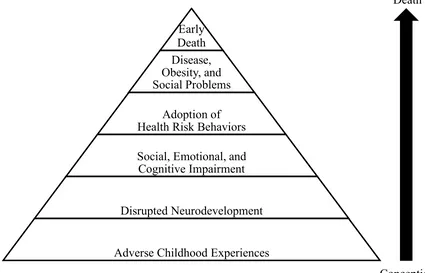
As Metzler et al. (2017) observes, “the links between experiences in childhood and adolescence and subsequent adult health and well-being” are well established (p. 142). The impact of adverse childhood experiences on an individual throughout the life course is depicted in the ACE Pyramid in Figure 1. The pyramid illustrates the strong correlation between an individual’s exposure to ACEs in childhood and the development of risk factors that prove detrimental to the well-being and overall development of an individual through the lifespan (Prevent Child Abuse America, n.d.). Middlebrooks and Audage (2008) note that “as the number of ACEs a person experiences increases, the risk for health outcomes increases:
• alcoholism and alcohol abuse,
• chronic obstructive pulmonary disease,
• disease, • fetal death • illicit drug use,
• ischemic heart disease, • liver disease,
• risk for intimate partner violence, multiple sexual partners,
• sexually transmitted diseases,
Death
Conception Figure 1. ACE Pyramid
Note. The ACE Pyramid: Pathway linking ACEs to negative adult health outcomes across the life cycle. Reprinted from “The Influence of Adverse Childhood Experiences on the Health of Wisconsin Citizens in Adulthood”, by Child Abuse and Neglect Prevention Board, 2015.
• smoking,
• suicide attempts, and
• unintended pregnancies” (p. 6).
Moreover, DeBellis and Thomas (2003) argue that exposure to trauma during childhood is a risk factor for mental health and substance use disorders in adulthood” (p. 109). As Figure 1 illustrates, when compared to an individual with no ACEs, the compounded impact of multiple ACEs increases a person’s risk of premature death (Brown et al., 2009, p. 394).
Specifically, Brown et al. (2009) note that the chances for disease and premature death are Early
Death Disease, Obesity, and Social Problems
Adoption of Health Risk Behaviors
Social, Emotional, and Cognitive Impairment
Disrupted Neurodevelopment
greatest for individuals that experience six or more ACEs prior to age eighteen (p. 394). Furthermore, Prevent Child Abuse America reports that the “forms of disease that are associated with one’s ACE score include: chronic obstructive pulmonary disease (COPD), ischemic heart disease (HD), liver disease, sexually transmitted diseases (STDs), lung cancer, and death before age 65” (Prevent Child Abuse America, n.d., p. 3).
Stress
Stress is a natural life occurrence. For a child, adverse experiences or maltreatment by an attachment figure can serve as stressors. Bucci, Marques, Oh, and Burke Harris (2016) posit that a child’s “physiological response to stress depends on the nature of the stressors and the availability of buffering and coping strategies” (p. 409). “Healthy responses to typical life stressors are very complex and may change depending on individual and environmental characteristics, such as genetics, the presence of a sensitive and responsive caregiver, and past experiences” (Child Welfare Information Gateway, n.d., p. 5). A healthy stress response engages hormone and neurochemical systems in the body, which produce adrenaline and cortisol (National Scientific Council on the Developing Child, 2010). “Increases in adrenaline help the body engage energy stores and alter blood flow while increases in cortisol also help the body engage energy stores and also can enhance certain types of memory and activate immune responses” (Child Welfare Information Gateway, n.d., p. 5). Unlike a toxic stress response, hormonal levels return to homeostasis after exposure to an adverse or stressful experience during a healthy stress response (Bucci et al., 2016; Child Welfare Information Gateway, n.d.).
long-term health effects can occur when a child is forced to endure prolonged exposure to stress (Middlebrooks & Audage, 2008). Specifically, when a child endures intense, frequent and/or consistent adversity that hinders their ability to cope, the result can inevitably initiate a toxic stress response (Hamoudi et al., 2015). Hamoudi et al. (2015) note that childhood “stressors that may induce a toxic stress response include physical or emotional abuse, chronic neglect, caregiver substance abuse or mental illness, exposure to violence, and/or the accumulated burdens of family economic hardship (i.e., poverty)” (p. 8). Not only can toxic stress disrupt early brain development and threaten the normal functioning of a child’s nervous and immune system, it can ultimately lead to health problems in adulthood including alcoholism, eating disorders, heart disease, cancer and other chronic diseases (Middlebrooks & Audage, 2008; Walkley & Cox, 2013). For children to learn how to cope with and respond to stressors in a healthy manner, support from attachment figures like parents or caregivers is vital (Middlebrooks & Audage, 2008).
Shonkoff et al., 2012). Unlike toxic stress, positive and tolerable stress are classified as healthy stress responses.
Positive Stress
Positive stress is characterized as moderate and brief adverse experiences, which are a normal part of the development process (Middlebrooks & Audage, 2008; National Scientific Council on the Developing Child, 2014). The minor physiological responses to a mild or moderate form of positive stress include an increase in heart rate, blood pressure and hormonal levels (Bucci et al., 2016; Middlebrooks & Audage, 2008). Although
physiologically one’s levels may be elevated during the stress response, they quickly return to homeostasis as the body engages coping mechanisms (Bucci et al., 2016). During
childhood, children may experience positive stress when they attend a new daycare or school, take a difficult test, get an immunization, meet new people or face adversity on an athletic team during a game (Bucci et al., 2016; Middlebrooks & Audage, 2008). Middlebrooks and Audage (2008) insist that “with the support of caring adults, children can learn how to manage and overcome positive stress” (p. 3).
Tolerable Stress
include the loss of loved one, natural disasters, family disruptions like the separation or divorce of an individual’s parents or terrifying accidents (Bucci et al., 2016; Middlebrooks & Audage, 2008). With buffers like the support of caring adults or other interventions, tolerable stress can become positive and prove beneficial to the development of a child (Bucci et al., 2016; Middlebrooks & Audage, 2008). However, Middlebrooks and Audage (2008) explain that “if the child lacks adequate support, tolerable stress can become toxic and lead to long-term negative health effects” (p. 4).
Toxic Stress
“appropriate support and intervention can help in returning the stress response system back to its normal baseline” (Middlebrooks & Audage, 2008, p. 4).
Trauma
Trauma is defined as “a response to a negative external event or series of events which surpass the child’s ordinary coping skills” (McInerney & McKlindon, n.d., p. 1). Specifically, childhood trauma is characterized as the response to undesirable external events that serve to render a child “temporarily helpless” by overwhelming their coping defenses (Terr, 1991, p. 11). The American Psychiatric Association (2000) adds that traumatic events are “those in which an individual experiences, witnesses, or is confronted with actual or threatened death or serious injury, or threatened physical integrity of self or others. Importantly, the event need not be violent and need not be directed at the child who experiences trauma” (p. B-16). Triggers or reminders of the traumatic event may result in one re-experiencing the event through intrusive memories and symptoms of post-traumatic stress disorder (PTSD), which can ultimately lead to traumatic anxiety (DeBellis & Thomas, 2003, p. 110). Trauma can be categorized into two forms, acute or chronic (Hamoudi et al., 2015). Acute trauma includes events like a robbery or a natural disaster, whereas chronic trauma includes child maltreatment and adverse childhood experiences (p. 8). Other
trauma extends beyond limits of age, gender, socioeconomic status, race, ethnicity, geography and sexual orientation (p. 2), trauma is a detrimental and costly public health concern (Substance Abuse and Mental Health Services Administration, 2014).
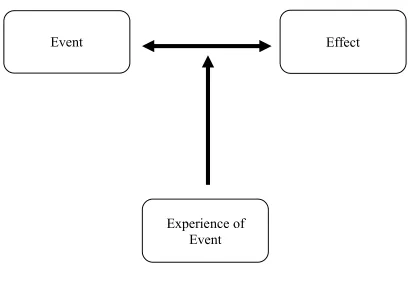
Figure 2 illustrates The Three E’s of Trauma: event(s), experience of event(s), and effect (Substance Abuse and Mental Health Services Administration, 2014, p. 8).
The Substance Abuse and Mental Health Services Administration (2014) defines the event as the “actual or extreme threat of physical or psychological harm (i.e. natural disasters,
violence, etc.) or severe, life-threatening neglect for a child that imperils healthy development” (p. 8). Because the frequency and nature of these events can vary, when discussing an individual’s experience of an event, it is critical to acknowledge that the event
Figure 2. The Three E’s of Trauma
Event
Effect
may or may not be regarded as traumatic. In fact, what may be deemed traumatic for one individual may not be deemed traumatic when experienced by another individual.
The manner in which an “individual labels, assigns meaning to, and is disrupted physically and psychologically by an event will contribute to whether or not it is experienced as traumatic” (Substance Abuse and Mental Health Services Administration, 2014, p. 8). Traumatic events in essence cause the individual experiencing the event to feel powerless and to ask the question, ‘why me?’ as a result of the overwhelming nature of the experience. Therefore, the experience of the traumatic event is often accompanied with feelings of betrayal, guilt, humiliation and shame (p. 8).
Adverse short- and long-term effects of a traumatic event can arise instantaneously or may be delayed (Substance Abuse and Mental Health Services Administration, 2014).
Adverse effects to traumatic events include an individual’s inability to cope with the normal stresses and strains of daily living; to trust and benefit from relationships; to manage
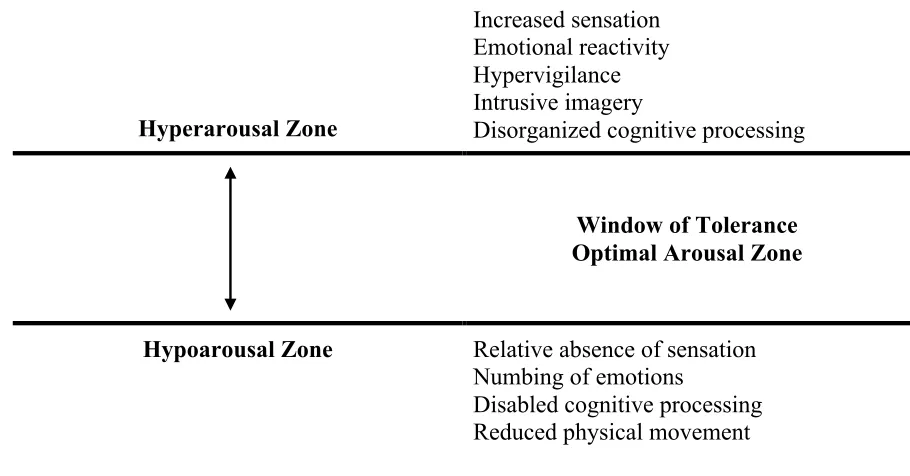
cognitive processes, such as memory, attention, thinking; to regulate behavior; or to control the expression of emotions” (p. 8). All of the aforementioned effects are characterized as visible because they are externally expressed. The effects of exposure to traumatic events can result in detrimental neurological impacts on health and overall well-being (Substance Abuse and Mental Health Services Administration, 2014). Furthermore, “traumatic effects, which may range from hyper-vigilance or a constant state of arousal, to numbing or
Effects of Stress and Trauma on Children in the School Context
When a child experiences adverse or traumatic events in the context of their home environment, it is inevitable that the effects of those events may jeopardize their success at school (Substance Abuse and Mental Health Services Administration, 2014). Specifically, their exposure to traumatic events may impact their brain development, behavior, and social-emotional functioning, which can interfere with their learning, engagement at school and overall academic success (Child Welfare Information Gateway, n.d.; National Child Traumatic Stress Network Schools Committee, 2008). Because a child’s reaction to trauma will vary as “traumatized children do not fit neatly into any single box” (Cole et al., 2005, p. 3), the National Child Traumatic Stress Network Schools Committee (2008) urges educators to be vigilant in regards to the “following signs of trauma: fear and anxiety,
changes in behavior, increased complaints about headaches, stomachaches, and other somatic complaints, absenteeism, and difficulty responding to redirection and authority.” (p. 10) Additionally, in the school context, abused or neglected children may:
• “be unable to control their emotions and have frequent outbursts; • be quiet and submissive;
• have difficulties learning in school;
• have difficulties getting along with siblings or classmates; • have unusual eating or sleeping behaviors;
• attempt to provoke fights or solicit sexual experiences;
• be socially or emotionally inappropriate for their age; or
The “specific effects of maltreatment may depend on such factors as the age of the child at the time of the maltreatment, whether the maltreatment was a one-time incident or chronic, the identity of the abuser, whether the child had a dependable nurturing individual in his or her life, the type and severity of the maltreatment, the intervention, how long the
maltreatment lasted, and other individual and environmental characteristics” (Child Welfare Information Gateway, n.d., p. 6). Cole et al. (2005) confirm that several factors determine the duration and intensity of a child’s reaction to a traumatic experience or event. As Table 2.2. outlines, the factors influencing a child’s response to trauma include: characteristics of the individual child, characteristics of the environment and characteristics of the traumatic experience or event(s) (Cole et al., 2005; Felitti et al., 1998; Harvey, 1996). Factors attributed to characteristics of the child may include their age and stage of development, personality, prior history of trauma, intelligence, coping and resiliency skills and their culturally-based understanding of the trauma (Cole et al., 2005; Harvey, 1996).
Table 2.2
Factors Influencing the Trauma Response
Characteristics of the Individual
Characteristics of the Environment
Characteristics of the Traumatic Event(s) Child’s age and stage of
development
Prior history of trauma Intelligence
Strengths and vulnerabilities of personality style; coping and resiliency skills
Individual’s culturally based understanding of the trauma
Immediate reactions of caregivers or those close to child
Type of, quality of, and access to constructive supports
Attitudes and behaviors of first responders and caregivers
Degree of safety afforded the victim in the aftermath Prevailing community attitudes and values Cultural and political constructions of gender, race, and sexual orientation
Frequency, severity and duration of the event(s) Degree of physical violence and bodily violation
Level of terror and humiliation involved Persistence of the threat Physical and psychological proximity to the event
Note. Factors influencing the trauma response. Reprinted from “An ecological view of psychological trauma and trauma recovery”, by Harvey, M.R. 1996.
Neurological Impacts
When assessing the impacts of adverse childhood experiences, toxic stress and trauma on children, it is impossible to ignore the detrimental impacts on brain development,
include “changes to the structure and chemical activity of the brain (i.e., decreased size or connectivity in some parts of the brain) and in the emotional and behavioral functioning of the child” (Child Welfare Information Gateway, n.d., p. 5). Brain development is the process of creating, strengthening, and discarding of connections, or synapses, among the neurons (Child Welfare Information Gateway (n.d.). Synapses are essential to the brain as they form pathways connecting the parts of the brain that govern the body” (Child Welfare Information Gateway, n.d. p. 2).
Plasticity is defined as the “brain’s ability to change in response to repeated stimulation” (Child Welfare Information Gateway, n.d., p. 3). Additionally, the term plasticity is utilized to explain the influence of the environment on the formation of neural connections during the development of a child’s brain (Cole et al., 2005; Hamoudi et al., 2015). The degree of an individual’s brain plasticity is dependent on the stage of brain development and the region of the brain system impacted (Perry, 2006). “Lower parts of the brain, which control basic functions, such as breathing and heart rate, are less flexible, or plastic, than the higher functioning cortex, which controls thoughts and feelings” (Child Welfare Information Gateway, n.d, p. 3). Furthermore, “all children need stimulation and nurturance for healthy development. If these are lacking (i.e., if a child’s caretakers are indifferent, hostile, depressed, or cognitively impaired), the child’s brain development may be impaired. Because the brain adapts to its environment, it will adapt to a negative
maltreatment and traumatic events can actually change the size, structure and function of a child’s brain (McCrory, De Brito, & Viding, 2010; McInerney & McKlindon, n.d.; Shonkoff et al., 2012). This phenomenon can potentially result in a loss of cognition and social, emotional or physical developmental delays (Center on the Developing Child at Harvard University, 2007). During brain development, the first regions of the brain to develop fully are the brainstem and midbrain. Collectively, they “govern the bodily functions necessary for life, called the autonomic functions (i.e., breathing, sleeping, thinking and feeling)”
(Child Welfare Information Gateway, n.d., p. 2). “Although these lower regions of the nervous system are developed at birth, higher function brain regions that regulate emotions, language and abstract thought are not fully developed until age three” (p. 2). Puberty signals a growth spurt in the adolescent brain which is marked by the development of the frontal lobe. The frontal lobe is the region of the brain that “governs planning, impulse control, and reasoning” (Child Welfare Information Gateway, n.d., p. 3). Prior to the development of the frontal lobe, adolescent behavior is characterized by impulsive behavior, poor decisions, and increased risk-taking (Child Welfare Information Gateway, n.d.).
have negative effects. Bruce, Fisher, Pears, and Levine (2009) suggest that abnormally low cortisol levels could result in a decrease in energy. This deviation can be observed through changes in learning and socialization, externalizing behaviors or susceptibility to health risks. Alternatively, abnormally low cortisol levels could result in complications in cognition and immune health. Maltreatment also diminishes the volume of the corpus callosum. As a result, communication and other necessary processes like arousal, emotion and higher cognitive abilities, are negatively impacted (McCrory et al., 2010; Wilson, Hansen & Li, 2011). Additionally, the cerebellum, which is critical to motor function and executive function, is threatened when children are traumatized (McCrory et al., 2010). Lastly, the prefrontal cortex, which is vital to behavior, cognition and the regulation of emotion, is jeopardized with exposure to maltreatment (Center on the Developing Child at Harvard University, 2012; Hanson et al., 2010). Brain scans comparing individuals that were exposed to traumatic experiences and those who were not exposed “revealed that the areas of the brain involving anxiety and other intense emotions (limbic and paralimbic systems) activated when the subjects’ traumatic experiences were invoked” (Cole et al., 2005, p. 24).
Post-Traumatic Stress Disorder
Hamoudi et al. (2015) define Post-Traumatic Stress Disorder or PTSD as a “psychiatric condition in which an individual experiences a constellation of impairing
(1994), the official criteria a person must meet in order to qualify for a diagnosis of PTSD are:
a. the person has been exposed to a traumatic event in which both of the following were present: (1) the person experienced, witnessed, or was confronted with an event or events that involved actual or threatened death or serious injury, or a threat to the physical integrity of self or others; and (2) the person’s response involved intense fear, helplessness, or horror. In children, this may be expressed instead by disorganized or agitated behavior;
b. the traumatic event is persistently re-experienced;
c. persistent avoidance of stimuli associated with the trauma and numbing of general responsiveness;
d. persistent symptoms of increased arousal;
e. duration of the disturbance is more than one month; or
f. the disturbance causes clinically significant distress or impairment in social, occupational, or other important areas of functioning. (p. 427-429)
Additionally, Terr (1991) notes that exposure to child maltreatment can ultimately result in a PTSD diagnosis and “depression, attention-deficit hyperactivity disorder, conduct disorder, anxiety disorder, phobic disorder or borderline personality” (p. 10).
Social and Emotional Functioning
In addition to significant neurological impacts, traumatized children often experience significant challenges emotionally and socially as a result of their exposure to child
• I’m not safe.
• People want to hurt me. • People cannot be trusted. • The world is dangerous.
• If I’m in danger, no one will help.
• I’m not good enough/smart enough/worthy enough for people to care about me.
• I’m not powerful.
• It will never get better. (p. 24)
For these children, the world appears dangerous and full of potential threats. As a result, traumatized children often experience fear, anxiety, irritability, helplessness, anger, shame, depression, and guilt, but their ability to identify and express these feelings is often underdeveloped and poorly regulated. Some of these children may express emotions without restraint and seem impulsive, under-controlled, unable to reflect, edgy, oversensitive, or aggressive. They may overreact to perceived provocation in the classroom and on the playground. Other traumatized children block out painful or uncomfortable emotions; they may appear disinterested, disconnected, or aloof. Another group of traumatized children protect themselves from unmanageable stress and anxiety by dissociating—that is, by completely disconnecting emotions from the events with which they are associated. (p. 30).