ABSTRACT
ADAMS, ELIZABETH KENT. The Relationship between Professional Development, Technology Infrastructure, and Teacher Technology Implementation. (Under the direction of Dr. Roger Mitchell.)
The Federal government has increasingly supported educational technology initiatives in schools serving low-income populations as one means of bolstering academic achievement. An underlying assumption has been that such initiatives can promote more effective and student-centered (or constructivist) instruction. However, the availability of computers and other technology-related resources in schools has not automatically meant their effective use in the classroom. Studies into the predictors of effective technology implementation in schools have suffered from small sample sizes, inadequate measurement, failure to deal with nested data structures, and the lack of an ecological view of the innovation - adoption
process.
This study examined school and teacher level variables as predictors of technology implementation by teachers among North Carolina Schools serving low-income (Title I) populations. A cross-sectional, quasi-experimental design compared schools (n=11) participating in a comprehensive program to support technology use by teachers (i.e, the IMPACT Project) with a group of schools matched on size and socioeconomic variables (n=11). The intervention schools received funds and technical assistance to encourage school level changes that were presumed to enhance technology implementation. Responses from a survey of teachers (N=385) were used to construct measures of: teacher participation in educational technology related professional development; adequacy of technical
internet. Data were analyzed using Hierarchical Linear Modeling (HLM), an approach which accounts for the fact that teachers are nested within schools. It was expected that individual level teacher variables (such as participation in professional development and perception of adequate technical infrastructure) would have a greater association with teacher technology implementation in schools that had a culture supporting such practices (i.e., intervention or IMPACT schools) than those that did not (i.e., control schools).
As hypothesized, there was a positive relationship between participation in
professional development and teachers’ reports of technology implementation. Contrary to hypotheses, this relationship was not moderated by status of the school as either an
intervention or control school.
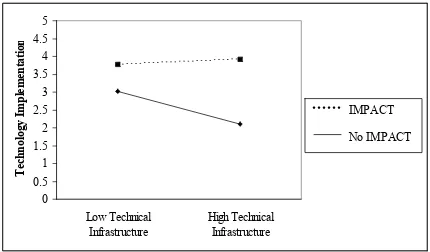
As hypothesized, there was a significant interaction between perceived technical infrastructure and teacher technology implementation. Teachers in the intervention schools (i.e., IMPACT) were more likely to be influenced by the levels of perceived technology infrastructure than were teachers in control schools. Teachers in IMPACT schools with higher levels of technical infrastructure were more likely to report higher levels of technology implementation.
The strengths of the study include strong measurement, clear description of program components in the comprehensive intervention, and use of multi-level modeling to address nested data. ). Limitations of the study ar5e discussed, including s3election factors in group assignment, generalizability, and the difficulty of attributing causation in cross-sectional designs.
The Relationship between Professional Development, Technology Infrastructure, and Teacher Technology Implementation
by
Elizabeth Kent Adams
A thesis submitted to the Graduate Faculty of North Carolina State University
in partial fulfillment of the requirements for the degree of
Master of Science
Psychology
Raleigh, North Carolina 2010
APPROVED BY:
_______________________________ ______________________________
Dr. Roger Mitchell Dr. Denis Gray
Committee Chair
DEDICATION
This thesis is dedicated to my mother, Susan Kent Adams, a woman of devotion, wisdom, and strength; my father, Richard Andrews Adams, a man of diligence, honor, and humor (GO DAWGS!); and my sister, Catherine Durand Adams, a woman of renewal, sincerity, and courage. They are my family, my companions, and my inspiration for the future.
BIOGRAPHY
Elizabeth Kent Adams was born and raised in Atlanta, Ga., where she attended Henry. W. Grady High School and Georgia State University, obtaining her B.A. in Psychology in Fall of 2003. Elizabeth entered the North Carolina State University Psychology in the Public Interest doctoral program during the Fall of 2004, in order to pursue her education in community development, evaluation, under-represented groups, public health, and organizational structure. She currently works for Research Triangle Institute (RTI) International, pursuing her interest in public health evaluation, particularly in the area of chronic disease.
ACKNOWLEDGMENTS
First, and foremost, I would like to acknowledge Dr. Roger Mitchell for his continued investment in my academic and personal future. He went well above and beyond the
expectations of a graduate faculty and advisor, providing extensive time, expertise, and insight into the thesis and research process. I am eternally grateful for his sincere dedication and patience. Thank you, Roger, for always believing in me.
I would also like to acknowledge Dr. Mary Wyer and Dr. Denis Gray, both of whom act as constant mentors and truly embody the word researcher. Dr. Wyer was one of my first mentors in the Psychology Department, providing guidance, perspective, and genuine
appreciation for research. She works as an advocate for graduate students, offers countless opportunities to engage graduate students in research, and fosters camaraderie while doing so. Dr. Gray provided substantial support for my master’s thesis, directing me toward appropriate literature, theoretical models, and insight into the practical significance and implications of findings. His straightforward and practical approach to research is a skill that I admire and hope to mirror over the course of my academic career.
Finally, I would like to acknowledge a few graduate students that provided
immeasurable support. Tabitha Underwood was my neighbor, friend, and support during the entire thesis process. She and I spent hours discussing research, ideas, analyses, and
literature. Thank you for always answering your door, for staying up late at night to counsel me, and for listening to the many facets of my master’s thesis. Lindsey McGowen was a true friend and confidant. Even in the most stressful days, she offered moral support, a shoulder
to cry on, and a positive outlook on life. There were moments that I truly would not have been able to get through without her and, for that and many other reasons. I am forever indebted.
TABLE OF CONTENTS
LIST OF TABLES………..…...viii
LIST OF FIGURES………..ix
Problem Statement………... 1
Educational Technology Implementation……… 3
Definitions……….……. 3
Educational Technology Implementation and the Constructivist Approach……….….... 4
Measuring technology implementation……….... 8
Theoretical framework……….11
Roger’s Innovation-Decision Stage Model………11
Predictors of Technology Implementation………...13
Individual………...14
Teacher proficiency with technology………...14
Number of years teaching………15
Socio-economic status ………..16
Organizational Characteristics Associated with Technology Implementation………16
Technology Infrastructure………...18
Professional Development……….. 20
Policy and Comprehensive Initiatives to Support Technology Implementation……..29
Synergy across comprehensive programs………32
Gaps in the Literature………...34
Qualitative Research and Limited Generalizability………...35
Quantitative Research………35
Nested data structure………...35
Data analyses………36 Cross-level effects………36 Research Questions………..36 Hypotheses………...37 Professional Development……….37 Technical Infrastructure……….37 IMPACT………37 IMPACT*Technical Infrastructure………37 IMPACT*Professional Development………37 Methods………38
Comprehensive Program and IMPACT model………..38
Media Technology Advisory Committee……….40
Personnel……….41
Professional development………41
Collaboration………...43
Flexible scheduling………..44
Design and Timeline………..44
Participants……….45
Schools……….45
Teachers………...46
Measures………47
Data Analysis……….50
Results ………..55
Model 1: Fully unconditional Model……….56
Professional Development Model ………..57
Model 2: One-way ANCOVA with Professional Development as a Predictor……...57
Model 3: Means-as-Outcomes Regression using IMPACT as a Predictor…………..58
Model 4: Non-randomly varying slopes using the interaction between IMPACT and professional development as a predictor………..59
Technical Infrastructure……….61
Model 1: Fully unconditional model………61
Model 2: One-way ANCOVA with Technical Infrastructure and Race/ethnicity as a Predictors……….62
Model 3: Means-as-Outcomes Regression using IMPACT as a Predictor…………..63
Model 4: Intercepts and Slopes as Outcomes (Non-randomly Varying Slopes) using the interaction between IMPACT and technical infrastructure as predictors………..63
Discussion………65
References………81
Appendices………...88
Appendix A: School Technology Needs Assessment………..89
Appendix B: Tables……….92
Appendix C: Figures………93
LIST OF TABLES
Table 1: Table 1. Correlations……….90
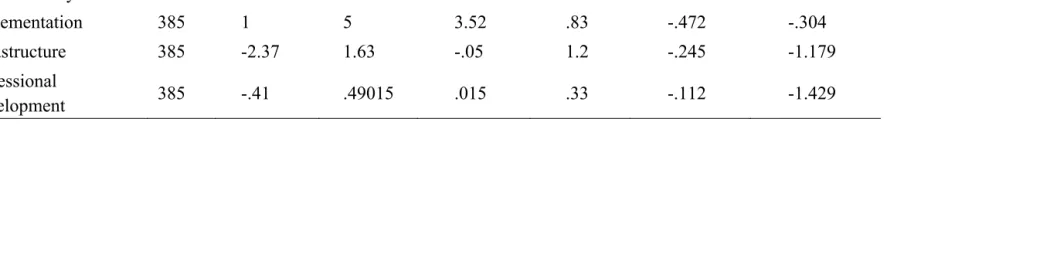
Table 2: Table 2. Descriptive Statistics………..…91
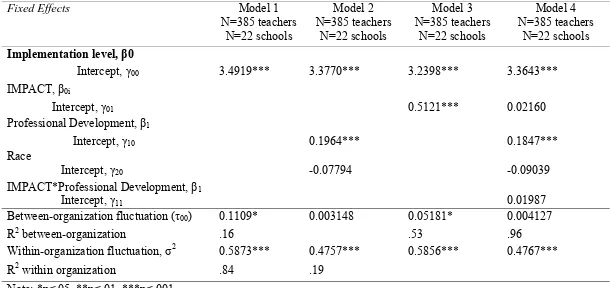
Table 3: HLM analysis using professional development and race/ethnicity as predictors of technology implementation………...…92
Table 4: Table 4 HLM analysis using professional development and race/ethnicity as
predictors of technology implementation………...………..93
ix
LIST OF FIGURES
Figure 1: Data Collection Timeline for teacher surveys (i.e., STNA)………...………84
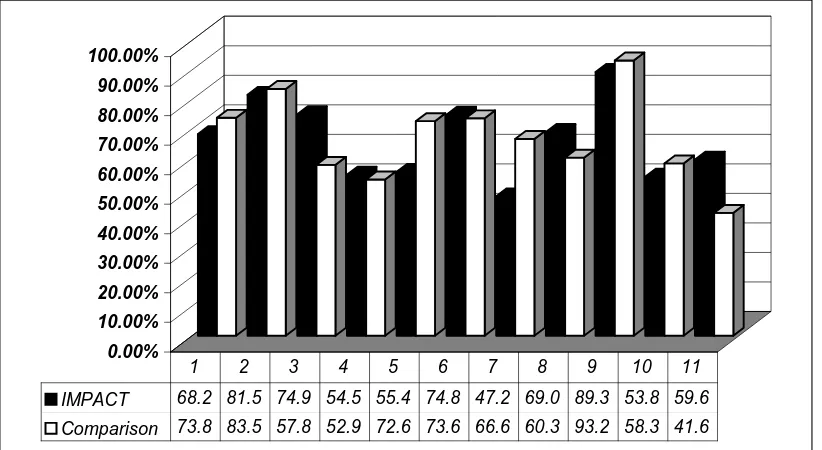
Figure 2: Percent of students receiving free lunch for IMPACT and non-IMPACT
schools………...……….85
Figure 3: Racial/ethnic student population comparison for IMPACT vs. Non-IMPACT…..86
Figure 4: Cross-level moderation between self-reported teacher professional development participation, technology implementation and IMPACT………...…87
Figure 5: Cross-level moderation between self-reported teacher technology infrastructure, technology implementation and IMPACT……….88
1
PROBLEM STATEMENT
In 2001, U.S. legislators developed The No Child Left Behind (NCLB) Act in order to address educational disparities in the public school system. Specifically, national
indicators increasingly highlighted science and math educational deficits that
disproportionately affect marginalized, low SES, students (U.S. Census Bureau, 2004). The educational divide is not new, a sad truth that is evident in past attempts to address academic disparities such as President-elect Lyndon B. Johnson’s Elementary and Secondary
Education Act (ESEA) of 1965, which apportioned millions in federal funds to schools and education. NCLB is an attempt to readdress ongoing inequality in the United States’ education system.
In recent years, legislators and educators alike have turned toward a new means of correcting the educational divide: technology. The emphasis on technology can be found in Title I of NCLB, a funding initiative that provides technology funding to schools with a 50% low-income student population (Wong and Meyer, 1998), thereby continuing educational reform efforts to reduce the educational divide in the U.S. The National Educational Technology Plan publicly builds on recent investment in technology, stating that it will “strengthen school reform efforts… and accelerate academic progress.” (U.S Department of Education, 2006). Likewise, technology advocates cite several reasons for expanding
2
learner friendly, student-centered approaches and 3.) increasing student computer literacy so that students may compete in the recent highly technologically reliant work setting (Cuban, 2001).
In accord with national technology goals, legislators were successful in increasing the ratio of students to computers from 125 to 1 in 1984 to 4.4 to 1 in 2003. Likewise, in fiscal year 2000, Internet access reached 98% in public schools (Kulik, 2003) and 48 states included technology standards for students in 2004-2005. (U.S Department of Education, online 2006) Clearly, computer technology has become ubiquitous in U.S. public schools. Unfortunately, increased availability of computer technology has not always translated into effective or regular use. According to the National Center for Educational Statistics (NCES, 2000), despite the fact that 99% of public school teachers report access to computers and the Internet, a far lower percentage report regular and consistent use of computers to supplement curriculum activities. For example, only 66% of teachers reported using computers during class time.
3
implementation grew, in part, from the need to address low academic achievement scores plaguing low-SES schools. Given the amount of time, energy, and monies allocated toward educational technology implementation and the ensuing failure of these efforts, it has become necessary to re-examine technology implementation efforts. In particular, it is important to examine factors that increase teacher’s technology implementation, as these are the change agents in the classroom, responsible for introducing technology into the curriculum.
Specifically, the following study will attempt to discern individual and organizational factors that predict technology implementation, focusing specifically on a comprehensive program, teacher self-reported technical infrastructure and teacher self-reported professional
development participation.
Educational Technology Implementation Definitions
Educational technology can be defined as tools or tool systems by which we
4
Implementation refers to the realization or use of an innovation, process, or technology. (Rogers, 2003) Educational technology implementation is a stage within the innovation process, a model set forth by Everett Rogers (2003) to describe the means through which the use of new classroom tools (i.e. computer technology) becomes a routine,
sustainable, and fully integrated aspect of teaching behavior. Klein and Sorra (1996) note: Technology implementation is the transition period during which targeted
organizational members ideally become increasingly skillful, consistent, and committed in their use of the innovation. Implementation is the critical gateway between the decision to adopt the innovation and the routine use of the innovation within an organization (p. 1057)
Their depiction of technology implementation reinforces the importance of
implementation, while highlighting its’ place along a continuum of acceptance and incorporation.
The term implementation is often used synonymously with use, integration, and infusion, although it should be noted that these terms often correspond with increasing depth of use. Technology implementation not only involves in-class use with students, but also the ways in which teachers use technology to support curriculum activities. Thus, for the
purposes of this study, implementation represents teacher technology use during curriculum planning, communication with stakeholders, as well as during class instruction.
Educational Technology Implementation and the Constructivist Approach
5
understanding or help to guide the pace of learning. A technology-enhanced curriculum requires teachers to incorporate technology ‘seamlessly’ into the lesson plan, resulting in a student-centered (constructivist) pedagogical approach to teaching. Constructivism is an epistemological framework articulated by social theorists such as Vygotsky (Wertsch, 1985), critical feminist researchers such as bell hooks (hooks, 1994) and educational researchers such as John Dewey (Dewey and Bentley, 1949) that highlights the active role students play in creating their own context. Constructivist learning theory, “proposes learners create their own understanding as they combine what they already believe to be true based on a blend of past experiences with new experiences” (Rakes, Fields, and Cox, 2006, p. 410). In the constructivist classroom, students filter information based on their previous knowledge and experiences; therefore, they are not passive recipients of knowledge, but active and
information-seeking individuals. Constructivist pedagogy is an intentional teaching style that relies on student-guided discussion and student-centered activities in order set the pace of the classroom and develop higher order thinking skills.
6
a new computer software program. Alternatively, learning with computers focuses on teachers incorporating technology to reinforce content or subject matter knowledge.
As computer software has become more advanced, many educational researchers viewed technology as a constructivist tool, a means through which classroom activities may be guided by student inquiry on the Internet or through real-time student responses using Clickers. Becker and Ravitz (1999) posit that technology provides students with access to information based on their own acquisition (setting an individualized pace for learning), facilitates collaboration and communication amongst students and the greater community, and exposes students to a diverse set of perspectives, all of which are optimal conditions for constructivist pedagogy. According to researchers examining constructivism, it “provides students with opportunities to take a more active role in their learning by shifting the responsibilities of organizing, analyzing, and synthesizing content from teacher to learner” (Brush and Saye, 2000, pg. 79).
7
constructivism. Likewise, teachers in the TLC study (both intervention and comparison groups) indicated that technology played a substantial role in their instructional style. The methodology of this study, however, was limited because the researchers only present their results in the form of percentage comparisons and do not report or measure statistical significance or effect size.
Rakes, Fields, and Cox. (2006) evaluate the effect of personal computer use, level of technology implementation, and curriculum instructional practices. The researchers argue that an increase in teacher’s personal technology skill level, combined with an increase in technology implementation in the classroom, will positively predict the depth of
constructivist curriculum. In essence, the increase in technology will lead to a more constructivist approach. Using the Levels of Technology Implementation (LoTI) survey (described below) and data collected from 186 4th and 8th grade teachers across 36 schools in 11 rural school districts, the researchers tested this hypothesis using multiple regression analysis. The results show that there is a moderate positive linear relationship (R2=.28, F=23.84, p,.001) between personal computer use, level of technology implementation and constructivist curriculum instructional practices. Rakes et al’s (2006) study strengthens the notion that constructivism and technology are linked, while highlighting the role that
8
Hu, Clark and Ma (2003), suggest that technology is often met by teacher resistance and overcoming this barrier requires key environmental, individual, and technological characteristics (such as perceived teacher-technology compatibility, perceived usefulness, and self efficacy). Likewise, in a case study, for example, Brush and Saye (2000) found that one teacher had difficulty understanding her role as a facilitator in the constructivist
classroom. This finding, although limited in its’ generalizability, reinforces the notion put forth by educational researchers that the constructivist pedagogical approach represents a fundamental shift in teaching, requiring teachers to modify their teaching strategies such that they play a facilitative, rather than a traditional, instructional role (House, 1981). Technology implementation, therefore may ask teachers to adopt new ways of interacting with students as well as incorporating new technological tools. According to Roger’s (1983) Diffusion
Theory, new and unfamiliar activities often are met with feelings of uncertainty, resulting in lower levels of implementation. Likewise, using Watzlawick’s (1984) theory of Radical Constructivism, constructivist pedagogy may be seen as 2nd order change, whereas
technology implementation, alone, may be considered 1st order change. Underlying each of these theories is the notion that technology implementation using a constructivist pedagogical is a difficult task, often met by resistance and barriers.
Measuring technology implementation
9
constructivist teaching. Several efforts to develop measurement tools for technology
implementation acknowledge the potential role of constructivism. Baylor and Ritchie (2002) operationalized technology use as the frequency (percentage of time) that teachers used technology for eight different classroom activities: 1.) preparing for or during classroom instruction; 2.) focusing on subject-matter content 3.) focusing on higher order thinking skills (HOTS); 4.) focusing on technology literacy 5.) used alone by students, responding to
questions; 6.) used alone by students, creating 7.) used with others (in the classroom); 8.) used with a constructivist approach. The researchers did not provide the reliability or validity of this scale. Baylor and Ritchie’s (2002) scale addresses the broad range of technology implementation activities, suggesting an attempt to discern the breadth of technology implementation. While this scale clearly outlines the variation in classroom technology use, it does not reflect the depth of use.
Rakes et al (2006), on the other hand, attempted to highlight the depth of use through development of an instrument called the Levels of Technology Implementation (LoTi). The LoTi was created based on state and national teacher technology standards (Texas STaR Chart, Florida Star Chart, and ISTE’s NETS and TSSA) and uses a 7-point likert scale to determine the extent to which technology was used for “complex student projects requiring problem solving, critical thinking, and real world applicability” (Jill Stolzfus, 2006). The following items make up the LoTi:
10
2.) Available classroom computers are used primarily for teacher productivity (e.g. email, word processing, grading programs).
3.) Student technology projects (e.g., designing web pages, research via the Internet, creating multimedia presentations) focus on the content under investigation
4.) Tool-based applications (e.g. graphing, concept-mapping) are primarily used by students for analyzing data making references, drawing conclusions
5.) The use of outside resources and/or interventions aid the teacher in developing challenging learning experiences using available classroom computers
6.) Teachers can readily design learning experiences with no outside assistance that empower students to identify and solve authentic problems using technology
7.) Computers provide a seamless and almost transparent medium for the information queries, problem solving, and/or product development (Rakes et a; 2000, pg 414)
Creators of the LoTi indicated that each additional question represents an increased depth of technology implementation using a constructivist pedagogical approach, such that teachers can be placed along a continuum of non-use (1) to refinement (6 and 7). Stolzfus (2006) conducted a confirmatory factor analysis using a sample of teacher surveys (N=3,770) and found that each item loaded on its intended factor more highly than on another factor, indicating that the underlying construct validity is strong. Likewise, Stolzfus (2006) calculated inter-rater reliability using Cronbach’s alpha and determined that this scale maintains high reliability (α=.99).
11
teacher progression through stages of implementation, shifting toward self-efficacy and a learner-centered (as opposed to teacher-centered) instructional method. Hence, one of the benefits of the LoTi is its reliance on theoretical and research evidence to support the
underlying framework. The LoTi is a well known and frequently cited measure in the school technology implementation literature (Ertmer, Conklin, Lewandowski, Osika, 2003; Albee, 2003) and was used to inform the development of a technology implementation scale for this study.
Theoretical framework
In order to understand the nature of the relationship between technology
implementation and its predictor variables, it is first important to outline a framework or perspective through which we will filter relevant research studies. The theory underlying this research study is Rogers Theory of Innovation (2003), which addresses the factors that influence an individual’s decision to implement technology. The primary aspect of the Innovation Theory used in this study is the innovation-decision stage model, which outlines the preceding stages that an individual experiences as he/she move from cognitive awareness of a technology to implementation.
Roger’s Innovation-Decision Stage Model
12
subsequently implement an innovation. In this model, the individual passes through five specific stages leading to subsequent implementation and sustainability;
1.) knowledge gaining: the teacher is presented with information, or seeks out information regarding the technology and its uses.
2.) persuasion/attitude formation: the teacher uses the information available to form an opinion about the innovation.
3.) decision to adopt or reject,
4.) implementation occurs when the individual actually utilizes the technology within classroom curriculum.
5.) Confirmation: individuals engage in activities that reaffirm or reject the innovation. engaging in activities that will reinforce individual implementation (Roger, 1983)
Roger’s (1983) decision stage model depicts the individual-level processes that must occur in order to for teachers to move along the continuum from awareness of technology to
13
Roger’s (1983) innovation-decision model is a useful means to understand how individuals come to incorporate technology into their daily routines. However, this model alone does not account for the influence of the organization or context on the individual (Klein and Sorra, 1996). As social theorists Lewin (1943), Kelley and Thibaut (1979) and Bronfenbrenner (1979) point out, individual behavior is a result of both the individual and the environment, such that teacher behavior is inextricably linked to the schools in which they teach. In order to account for this organizational level context, Roger (2003) developed a second stage model, focusing on the organization as the unit of analysis. This
organizational stage model indicates that the organizations perform front-end activities that influence subsequent individual level adoption and implementation. For example,
organizations set an agenda (to incorporate technology), select an innovation (a school-wide program), redefine or restructure the innovation (molding the school-wide program to their site), and clarify and routinize the innovation. This is an important contribution to
innovation-decision process, as it illuminates the context within which teachers operate; the school actually adopts the program, removing the adoption decision from the individual stage model.
14
Predictors of Technology Implementation
Research on technology implementation indicates that there are numerous factors associated with effective implementation that exist on multiple levels of the system. This research study focuses on factors at the individual and organizational level of the system.
Individual
Individuals are influenced by their context. However, as mentioned in the description of a constructivist framework, they also have previous experiences and knowledge that can act as a filter for new information, thereby influencing teachers’ ability or willingness to implement new technology. At the individual level, factors that are significantly associated with technology implementation are technology proficiency, openness to change, technology use with others, knowledge of technology and pedagogy-technology fit (Zhao, Pugh, Sheldon and Byers, 2002, and Baylor and Ritchie, 2002 ).
Technology proficiency enables teachers to become familiar with and knowledgeable about the various uses of technology. According to Rogers (2003), this knowledge gaining stage is a prerequisite to actual implementation. Likewise, openness to change indicates that the teacher is higher on Roger’s (1983) “S-curve”, indicating that the teacher is more
15
coincide with a constructivist technological approach, and that they are proponents of acting as facilitators as opposed to lecturers in the classroom. (Baylor and Ritchie, 2002).
Teacher proficiency with technology
Teacher technology use outside of the classroom is also cited as an important predictor of technology proficiency and subsequent technology implementation. According to Baylor and Ritchie (2002), ‘the extent to which teachers use technology outside of the classroom may be an indicator of their interest and corresponding skill in using technology.’ (pg. 399) During non-school computer use, teachers have an opportunity to experiment with technological hardware and software, thereby raising their personal knowledge and
subsequent levels of effectiveness. Likewise, in Rogers (2003) Diffusion Theory, individuals who are more knowledgeable are characterized as being ‘early adopters’ or ‘innovators,’ a quality that leads to faster and more diffuse implementation. Baylor and Ritchie (2002) operationalized non-school computer use as ‘the number of times technology was used at home for non-school activity.’ Likewise, Becker and Ravitz (1999) indicate that home computer access and home internet access are linked to teacher technology implementation.
Number of years teaching
There is some contradictory information as to the extent to which previous teaching experience relates to technology implementation, particularly as it relates to the constructivist pedagogical approach. New teachers are likely more experienced with new or recent
16
Likewise, technology proficiency is now a requirement for national teacher accreditation programs. However, experienced teachers may have the resources and experience to implement a constructivist approach, which is an underlying principle in the effective and purposeful use of computers. Thus, it is important to examine whether the number of years teaching influences the extent of technology implementation. Garet, Porter, Desimon, Birman, and Yoon (2001) in the national study that examined responses from over 1,000 teachers, found that number of years teaching is significantly and positively correlated with changes in teaching practice, although this study did not report the size of the effect.
Socio-economic status
Ronnkvist, Dexter, and Anderson (2000), indicate that the economic status of the community may have an impact on the amount of technology resources available in the school, and, subsequently, the level of teacher technology implementation. According Garet et al’s (2000) research on teachers, gender is not significantly correlated with changing teaching practices to include technology or a more constructivist pedagogical approach.
Organizational Characteristics Associated with Technology Implementation Research indicates that school-level variables have an effect on teacher technology implementation, providing increased support for the notion that the context influences individual behavior. To name a few examples, organizational factors that influence
17
positive implementation climate (Klein and Sorra, 1996), professional development (Becker and Ravitz, 1999), and technical infrastructure.
Wu, Hsu, and Hwang (2006) used log-linear analysis to examine the relationship between school size and technology use. The researchers found that smaller school size was significantly related to higher levels of technology use, although they did not provide the statistical results of their analysis.
Kanter (1988) and Scheirer (2005) indicate that the presence of a program champion is a key component to achieving sustainability of a program. While this does not specifically relate only to technology implementation, it does highlight the role of organizational factors on larger program implementation, which is perhaps more complex and multi-faceted.
Principal leadership is frequently noted to be an important predictor of innovation implementation. In a meta-analysis on the effects of transformational leadership on organizational outcomes, Dirks and Ferrin (2002) determined that trust in leadership had a strong positive relationship with belief in information provided by the leader (r=.35), highlighting the pivotal role that leadership can play in employee decisions. Byrum and Bingham (2001) provide anecdotal evidence in the form of “lessons learned” from a five-year technical assistance project performed in 12 schools attempting to implement technology.
18
did not measure or examine climate within the school organization. However, climate has been significantly and positively associated with technology implementation within other industries such as hospitals (Nystrom, Ramamurthy, and Wilson, 2002). Therefore, it is reasonable to assume that it might be relevant for technology implementation even though the researchers indicated that leadership is an integral ingredient involved in technology implementation.
Technology infrastructure
Technical infrastructure is an important component of many comprehensive initiatives. Specifically, the notion of technology infrastructure focuses on the level of contextual support for technology (Tornatzky and Fleischer, 1990; Lumpe and Chambers, 2001). Technology infrastructure within the school setting is the extent to which teachers are supported with available and accessible technology, information technology expertise, and communication networks for exchanging information about technology. Likewise,
Ronnkvist et al. (2000) highlighted two key elements of technology infrastructure: available and accessible technology in/near the classroom and regularly scheduled one-on-one training and support.
A 1992 IEA Computer Education study collected data from 6,085 teachers on the relationship between technical assistance and one-on-one support in the school and
19
technology infrastructure and teacher technology implementation. In this regression analyses, Fuller, 2000, performed 8 separate linear regressions on the relationship between the number of hours spent providing 8 different types of technology support and student computer use; running multiple regressions on the same dependent variable increases the probability of Type I error, such that these findings could be suspect. Moreover, the data used in this study may be outdated, given the vast strides and advancement in technology over the past 8 years. However, it does provide some guidance as to how teachers may mediate the relationship between technical infrastructure and subsequent student technology use.
Strudler and Wetzel (1999) qualitatively reviewed four university pre-service teacher education case studies in order to determine factors affecting preservice teachers’ use of technology in teacher education. Strudler and Wetzel (1999) identified a wide range of program factors that could influence implementation: leadership that articulated support for technology, schools with additional grant funding, teachers that had positive attitudes toward technology, increased technology training and increased access were more likely to
implement technology. This 1999 study helped to provide the groundwork for future
evaluation of technology implementation predictors. However, this qualitative study, similar to much of the technology program evaluation research, is outdated and not necessarily generalizable to programs with newer technology, representing a gap in current literature.
Technical infrastructure is a component of most comprehensive technology
20
as well as personnel assistance. While qualitative research supporting technical
infrastructure is abundant, there are very few studies that systematically and empirically examine the relationship between technical infrastructure as a distinct variable and subsequent technology implementation.
While technology infrastructure is often thought of as a school-level variable, some educational technology researchers indicated that perhaps a more important indicator is the level perception of their environment. Ronnkvist et al (2000) argues for teacher-level measurement, as the perception and awareness of the technology resources and support in their school may increase their utilization of to resources, “Teachers' awareness of the availability of technology support could suggest that they might actually be using the support. As teachers learn of different types of support available to them, perhaps they become more inclined to take advantage of that support – a step which could enhance how they use technology” (p. 17).
Technical infrastructure is a key factor to examine when attempting to understand predictors of technology implementation. It represents the support mechanisms in the organization that allow teachers to try out and familiarize themselves with technology in the classroom setting. As noted by Rogers (2003), trialability (i.e. the extent to which a
technology may be experimented with and examined) is a key component of innovation diffusion, which influences individual-level adoption and implementation. Moreover, as long as funding is available, technical infrastructure is a highly mutable variable, unlike
21 Professional Development
In addition to technical infrastructure, professional development is also a well known and often cited component of comprehensive programs (NEA, 2008) There is a widespread push toward technology-centered professional development as a means to increase teacher technology use in the classroom. This is due, in part, to the rise in National Accreditation for Technology and Education (NCATE), which require technology competencies for both pre-service and current teachers (NCATE, SREB online source). Pre-pre-service teachers are
required to meet these standards through their institutional accreditation programs in order to receive licensure, and existing teachers must attend professional development seminars to maintain their licensure. In response to this growing need for technology training, schools and local education agencies have turned toward professional development as a primary means for teachers to gain the requisite technology-related skills (knowledge gaining stage in the innovation-decision model) and form positive attitudes toward computers
(persuasion/attitude formation stage).
22
technology (Schrum, Skeele, & Grant, 2002). Using Roger’s (1983) innovation framework, professional development, can be seen as a catalyst to enhance and encourage teacher technology implementation, by making teachers aware of the technology (knowledge gaining), providing the skill and training (knowledge gaining), and positively influencing their opinion of the technology (persuasion/attitude formation stage), all of which lead to increased technology implementation. As Schrum, Skeele, and Grant (2002) point out,
professional development occurs over time through an iterative process, as “individuals move through the recognized stages…..in a spiraling fashion and learn new ideas and competencies as they are ready for them.” (pg. 259)
Dimensions of Professional Development
Researchers have identified several aspects of professional development deemed to be effective. Utilizing responses from a national sample of 1,027 math and science teachers, Garet et al. (2001) conducted least squares regression analysis to determine professional development activities that have a significant and positive effect on teacher’s self-reported knowledge and skill increases, and changes in classroom practices (toward a more
constructivist student-centered model). Garet et al. (2001) found that professional development opportunities that focus on, a.) content knowledge (β=.33, p<.001), b.)
23
into the dimensions of professional development in the school context. Moreover, it provides an indication that a wide range of professional development activities can have subsequent impact on teacher knowledge, which, according to Roger’s Diffusion Theory, is a
prerequisite to teacher implementation (Rogers, 2003).
Professional development comes in many forms, such as workshops, long term professional development, and field training. Likewise, professional development for technology covers a range of topics. Sandholtz and Reilly (2004) promote using a
professional development approach that focuses on curriculum, as opposed to technology, such that teachers are provided with examples or instances where technology could be incorporated into the curriculum. Similarly, Garet et al. (2002) indicate that professional development should involve opportunities to develop curriculum for technology
implementation.
Much of the research on professional development is provided in the form of case studies or “best practices” (Garet et al, 2001). More recent and rigorous qualitative case studies list the components of professional development such as collaboration, student-centered pedagogy, and opportunities for real-world applications, that influenced outcomes related to professional development, such as teacher skill enhancement and change in teaching practices. However, few studies actually test these relationships empirically (Garet et al., 2001)
24
(N=1934, 90% were classroom teachers, 9.6% were instructional assistants), researchers administered a telephone survey in 2006. The researchers found that teachers more than half (60%) of the educators reported participating in technology training, but that this training was more effective for non-instructional tasks (NEA, 2008). The educators reported that the training was geared more toward administrative uses, research and communication than on preparing teachers for technology using a constructivist pedagogical approach.
Beyerbach, Walsh, and Vannatta (2001) evaluated a nationally funded pre-service teacher program, known as PT3 that aimed to infuse technology into its curriculum. The researchers found that professional development for pre-service teachers has effects on both technology integration and instructional pedagogy. In this two-year longitudinal study, 300 pre-service teachers were exposed to professional development opportunities that included hands-on experience with computer technology to support constructivist thinking, two-way interactive video conferencing, and field experiences in technology-rich classrooms. In their evaluation, the researchers analyzed data from surveys, focus groups, classroom
observations, and service teachers’ work. Over the course of the two-year program, pre-service teachers reported gains in technology proficiencies. The most notable gain, however, was in the area of instructional methods of technology integration, which increased from 15.9% to 68.9%. Upon further investigation of focus group data, the researchers found that teachers “changed their views of technology infusion from thinking that they would teach and learn about technology to thinking they would use technology to support student
pre-25
post non-randomized control group design, where pre-service teachers reported on their knowledge and experience prior to and after the 2-year course. This study did not examine technology transfer from professional development into a real-world classroom setting, although it does paint a picture of the potential benefits of professional development for technology-related classroom instructional strategies.
Barriers to Professional Development
26
also necessitated professional development, collaboration, and planning. Teacher’s expressed concern regarding their ability to uphold student achievement scores in the constructivist curriculum. This caused many teachers to revert back to traditional instructional practices. The restricted time schedule for teachers created an additional barrier, as many of these professional development sessions were offered during or directly after school (a time often used for lesson planning). While extra-curricular off-site professional development
opportunities were available, the school system could not afford to pay for teacher time to attend the training sessions. The researchers reported that teachers also spent more time on aspects of the curriculum that related to the teachers educational background and experience, thereby condensing the time allotted for technology integration. It seems that the teacher’s value incongruence with the constructivist instructional approach caused teacher resistance (House, 1981).
The researchers conclude by providing a best practices approach to constructivist instruction using technology, highlighting administrative support of peer interaction through flexible scheduling and an organizational culture of collaboration as two primary ways to increase technology use in the classroom. Here, Blumenfeld et al. (2000) provide clear examples of professional development limitations regarding limited time and the arduous task of changing pedagogical approaches from traditional to constructivist.
27
notes that professional development programs often focus on skill development, without adequately portraying how these skills can transfer into instruction or why transitioning to a new form of instruction may be beneficial to both the teacher and the learner.
Likewise Schrum (1999) suggests that these shortcomings are due to the nature of traditional professional development programs “one-size fits all” approach, which do not take into account individual differences such as teachers’ level of preparedness, learning style, and current interests. This harkens back to Everett Rogers (2003) notion of earlier and later knowers, which indicates that teachers’ past experience and available communication network greatly impacts their readiness to use technology. In order to compensate for these potential hindrances, on-going, in house technology support and channels through which discussion, understanding, and learning about technology can occur should supplement professional development programs.
28
curriculum 3.) Pre-service teachers were provided with ongoing technical support from champion graduate students, who aided in both pedagogical and technical questions surrounding technology. Brush et al (2003) collected self-report qualitative data from 100 pre-service teachers and faculty to determine whether the technology-centered professional development program had an effect on teacher attitudes or teacher technology use. The results indicate that the program helped to increase positive attitudes toward students and technology, as well as increase the use of technology, although the teachers reported
difficulty implementing technology into classrooms that lacked additional support. Brush et al’s (2003) study reinforces the notion that professional development provides information (for Roger’s, 1983, knowledge gaining stage) and increases positive attitudes toward technology in the classroom (for Roger’s, 1983 attitude formation/stage), all of which subsequently lead to technology implementation.
Professional development contains multiple dimensions; however the underlying notion is that it will increase teacher’s familiarity with and willingness to use technology. Research on professional development, while widespread, primarily relies on anecdotal “best practices” or case studies to support research claims. In order to validate these arguments, it is important to examine the concept of professional development related to technology implementation in a more systematic and empirical fashion.
29
are necessary precedents to technology implementation. This is exemplified by the National Council for Accreditation of Teacher Education’s (NCATE) requirement for both pre-service and in-service teachers, indicated that continued professional development is a core tenant of national standards. Given the national requirements for continued professional development, it is a means to reach teachers and create standards across the nation. In addition, this is a highly mutable variable, one of the few that can be modified readily in order to disseminate new and updated information to teachers and to move teachers from the knowledge gaining to implementation stage of innovation diffusion.
Policy and Comprehensive Initiatives to Support Technology Implementation
The process of professional development and technical infrastructure often do not occur in isolation. These components often occur as one part of broader initiatives, where it is unclear how the interplay of such specific activities may interact with the broader context. Therefore, we will examine in this section the relationship between comprehensive
initiatives, professional development and technical infrastructure.
The federal government has, for years, aimed to improve technology education, particularly in low SES or high need areas. In order to achieve these technological
30
accord with OET, the National Council for Accreditation of Teacher Education (NCATE), using evidence from International Society for Technology in Education (ISTE), enacted standards for technology training for pre-service teachers. As noted earlier, in addition to pre-service accreditation standards, Title I of the 2001 NCLB Act allocates funding for comprehensive technology programs in low SES schools.
Corresponding with federal initiatives, states are also beginning to develop initiatives and comprehensive school-wide programs. For example, Virginia’s Department of
Education recently partnered with the Governors office to integrate data systems and online assessments; Louisiana incorporated an online professional development program for in-service teachers; West Virginia created a virtual school for students (West Virginia Virtual School). Many of these and other statewide programs are at least partially funded by the U.S. Department of Education.
31
1. employs proven methods and strategies based on scientifically based research
2. integrates a comprehensive design with aligned components
3. provides ongoing, high-quality professional development for teachers and staff 4. includes measurable goals and benchmarks for student achievement
5. is supported within the school by teachers, administrators and staff 6. provides support for teachers, administrators and staff
7. provides for meaningful parent and community involvement in planning, implementing and evaluating school improvement activities
8. uses high-quality external technical support and assistance from an external partner
with experience and expertise in schoolwide reform and improvement
9. plans for the evaluation of strategies for the implementation of school reforms and for student results achieved, annually
10. identifies resources to support and sustain the school's comprehensive reform effort 11. has been found to significantly improve the academic achievement of students or
demonstrates strong evidence that it will improve the academic achievement of students (U.S Department of Education, online 2008, Eleven Components of a Comprehensive School Reform Program)
Attention to these components has occurred in research on comprehensive programs. For example, professional development, technical assistance and support, and collaborative or shared decision-making are all components common to technology implementation programs. (Zhao et al, 2002; Wong and Meyer, 1998)
Project Technology Helping Restructure Educational Access and Delivery
(THREAD) represents another comprehensive program in the educational technology field. Project THREAD was funded by the U.S. office of Education to prepare pre-service student teachers for technology implementation in K-12 schools. (Strudler, Archambault, Bendixen, Anderson, and Weiss, 2003) Strudker et al. (2003) evaluated Project THREAD using qualitative and survey data from teachers (N=153) in schools categorized as either
32
schools. However, in the analysis, these categories were used as treatment vs. control groups, respectively. Project THREAD focused on several components aimed to increase teacher technology use, such as “implementing a collaborative planning process, providing professional development opportunities, increasing access to resources, and offering one-on one support” (pg. 44) Embedded within Project Thread is the notion that, through
dissemination and implementation of a widespread program, teachers may be more likely to use the constructivist approach. In a chi-square analysis, the researchers found that student teachers engaged in professional development reported significantly more use of technology for higher-order thinking in students. The results provide enhanced support for the benefits of comprehensive programs. However, the article did not provide effect sizes, did not
provide a clear outline of the number and types of analyses performed and generally reported findings in terms of percentages or frequencies. While Strudler et al. (2002) linked goals to program components and measures, the researchers did not examine how specific program components related to technology implementation, representing a gap in the literature. Future research should attempt to discern which aspects of these comprehensive programs are essential to implementation.
Synergy across comprehensive programs
The implicit notion of comprehensive programs is that, by providing several components at once, the program will have a synergistic or multiplicative effect on
33
stakeholder and community involvement, and school leadership than in schools lower in such assets.
Researchers indicate that combining several approaches will lead to increased technology implementation. For example, in recent years, national teacher accreditation programs developed new technology standards for preservice teacher education programs. In an attempt to meet these national technology standards and train teachers to use more effectively, many programs incorporated comprehensive strategies to train teachers and infuse technology. Kay (2006), a researcher in the educational technology literature, reviewed 68 studies addressing technology implementation. In this qualitative review, Kay (2006) highlighted several strategies to implement technology that cut across most of the preservice teacher education programs, namely:
34
entirely likened to current teachers’ experiences in the classroom, as there are contextual factors in classroom settings that cannot be simulated in preservice education programs. Kay’s (2006) study provides a prime example of the type of anecdotal or descriptive studies available in the educational technology literature. While it provides some exploration and guidance into the field, it does not systematically organize or analyze data, representing a major gap in the field. Thus, an important contribution to the educational literature would be to measure comprehensive program factors using more advanced statistical analyses.
The number of implementation-related variables and potential interactions amongst these factors creates a level of complexity that is difficult to disentangle in any one study. Therefore, for the purposes of this research, we will narrow the scope of the study to include only a few key variables associated with implementation, focusing primarily on mutable program level factors influences, namely professional development and technical
infrastructure. These two factors have been widely cited in the research as predictors of technology implementation, although most studies are limited in the methodological rigor with which they examine these factors. Given the fact that these components are widely used as part of funded school-wide programs, it is necessary to re-examine them using more advanced statistical techniques.
Gaps in the Literature
35 Qualitative Research and Limited Generalizability
Much of the research on professional development, technical infrastructure and technology implementation is anecdotal, providing “lessons learned” and inferences from the researcher, or qualitative case studies, limiting the researchers ability to generalize to larger and different samples (Strudler and Wetzel, 1999; Brush et al., 2003; Kay, 2006). These types of studies were particularly useful during the early stages of technology
implementation research, when predictors needed to be identified and associated dimensions explored. Given this previous research, it is now possible to examine these factors using a quantitative approach, which allows researchers to collect data from larger populations across a much wider regional area in order to further test the relationships posited in qualitative and descriptive research.
Quantitative Research Nested data structure
While most of the research is qualitative, those studies that incorporate multiple regressions often do not partition the variance that is due to school-level vs. teacher-level effects, thereby violating the assumption of independence of observations. Multiple
36 Data analyses
Moreover, the aforementioned research studies often provide only descriptive
statistics (e.g. Becker and Ravitz 1999), despite the large amount of data collected, making it difficult to draw conclusions on the nature of relationships between variables. Likewise, the researchers frequently perform a large number of regression analyses, using several
predictors on one dependent variable, thereby artificially inflating the probability of a Type I error (Rakes et al, 2006). It is important to re-examine variables such as professional
development, technical infrastructure and technology implementation using more appropriate statistical techniques, which allow inclusion of multiple variables in one model.
Cross-level effects
Along with providing a flexible model that allows for nested data structure, HLM also offers an opportunity to examine the interaction effects between variables at two levels. This is in line with the ecological approach and research on technology implementation, which denotes that both organizational and individual level variables influence technology-related outcomes. Quantitative research in education primarily relies on multiple regression, which can examine interaction effects. However, in multiple regression using two-level data, there is a heightened Type I error probability because teachers and schools share variance. In order to correct for this, HLM provides an opportunity to partition variance due to school vs. teacher, thereby providing a better estimation of the interaction effect.
Research Questions
37
2. Is there a significant and positive relationship between professional development and technical infrastructure when controlling for race/ethnicity?
3. Is there a significant difference in technology implementation among schools utilizing a comprehensive approach (i.e., IMPACT) and matched schools not utilizing a
comprehensive approach (non-IMPACT). ?
4. Does the comprehensive program IMPACT significantly and positively moderate the relationship between professional development and technology implementation? 5. Is there a significant and positive relationship between technical infrastructure and
technology implementation when controlling for race/ethnicity?
6. Does the comprehensive program IMPACT significantly and positively moderate the relationship between technical infrastructure and technology implementation, when race/ethnicity is included in the model?
Hypotheses Professional Development
H1= Professional development will explain a significant amount of variance in
technology implementation when number of years teaching, home computer access, and home internet access are included in the model. Higher levels of professional
development will be associated with higher levels of technology implementation. Technical Infrastructure
H2= Technical Infrastructure will explain a significant amount of within-group variance
38
and home internet access are included in the HLM model. Higher levels of perceived technical infrastructure will be associated with higher levels of technology
implementation. IMPACT
H3= IMPACT will explain a significant amount of between-group variance in technology
implementation when number of years teaching, home computer access, and home internet access are included in the model.
Interaction of IMPACT and Technical Infrastructure
H4= The interaction between IMPACT and technical infrastructure will explain a
significant amount of variance in technology implementation when number of years teaching, home computer access, and home internet access are included in the model. Interaction of IMPACT and Professional Development
H5= The interaction between IMPACT and professional development will explain a
significant amount of variance in technology implementation when number of years teaching, home computer access, and home internet access are included in the model.
Methods Comprehensive Program and IMPACT model
Comprehensive initiatives are widespread programs aimed to increase technology use in schools through the use of multiple integrated components. IMPACT is a comprehensive school-wide technology implementation model aimed toward increasing technology
39
technology needs schools. IMPACT emerged from a national initiative in NCLB, known as Title I, wherein government agencies provide funds to State Education Agencies for
technology advancement in public schools.
Originally, the federal government prioritized technology (setting the agenda) and, in response, researchers employed in North Carolina’s State Education Agency (SEA)
developed IMPACT (selecting an innovation), and then passed IMPACT down to Local Education Agencies (LEA’s) and onto schools for schools to test it and define how it works in their local context (redefining and restructure the innovation), to determine sustainable components (clarify and routinize).
There are several components of IMPACT such as an advisory board, technology personnel, professional development, collaboration and flexible scheduling, all of which act in concert to provide teachers with an optimal support system within which to implement technology. Thus, many of the components target teachers as the primary change agent, ultimately responsible for technology implementation. IMPACT is intended to create school-level as well as teacher-school-level changes, so that teachers will be more likely to implement technology. Embedded within the IMPACT program is the notion that the constructivist use of technology is an effective instructional method that provides students with long-term computer skill sets and increases the amount of information students learn.
40
of No Child Left Behind (NCLB), there is a great deal of flexibility in the IMPACT model and allotment of monies provided by the IMPACT grant. They were able to choose
educational software and hardware, along with supplemental technologies (i.e. smartboards and projectors). However, in order to continue receipt of grant funding across the three years, each of the 11 schools agreed to implement several components.
IMPACT creators developed an initial rubric to emphasize components of the IMPACT model, which provide guidelines for the infusion of technology. These
components include: establishment a Media Technology Advisory Committee (MTAC), hire a Media Coordinator and Technology Facilitator, allot 25% of funding toward staff
development, allocate time for collaboration among teachers, and create flexible scheduling for the media center.
Media Technology Advisory Committee
Under IMPACT guidelines, creation of the Media Technology Advisory Committee for each school is the first priority for any school working toward technology implementation. This committee is made up of the principal, the technology facilitator, media coordinator, and representative teachers. In some cases, community members are also asked to join the
41
opportunity to work collaboratively and utilize a feedback system for future technology-related decisions.
Personnel
In order to establish the MTAC committee and initiate technology implementation, each intervention school is required to hire a full-time media coordinator (MC), a full-time technology facilitator (TF), a technician, and a media assistant. In schools that have larger student memberships (>500), the media assistant and technician are full-time positions. The media coordinator was previously considered the media librarian. Thus, the MC is typically an in-house hire, familiar with the students, teachers, principal, and technology available in the school. The technology facilitator, on the other hand, is often an external hire, who is well versed in the area of educational technology (N.C. has special licensing requirements for these individuals, as well as for media coordinators.) The MC and TF are expected to work together to keep track of technology use within the school and to provide technological support for teachers and students. This involves supplying ongoing staff development as well access to technology. Additionally, the presence of a technician allows the technology facilitator to engage in planning, modeling, and teaching activities, instead of focusing on troubleshooting problems with equipment.
Professional development
42
educational technology, indicating that regular staff development can change teachers belief systems about technology, subsequently increasing comfort and technology use within the classroom. (Baylor and Ritchie, 2002) Creators of the IMPACT model allow schools to develop staff development strategies based on the school’s need and technology plan, thereby generating flexibility and variation among schools.
Each IMPACT school engaged in multiple types of staff development, based on differing modes and content standards. Some technology training sessions attend to more universal technology issues, such as copyright protection or how to integrate instructional technologies within learning environments, whereas others involve specific educational technology software training. Examples of common staff development experiences include Intel “Teach to the Future,” ENTech (also known as NC Best), and seminars with David Warlick (a well-known educational technology expert). At most schools, teachers also engaged in training to use specific equipment or applications; common examples of this type of professional development include Activeboard training, web design training, and training in Kidspiration.
Each of these staff development approaches differ in terms of cost. Thus, many schools alter the mode through which they incorporate staff development. At times, schools hire technology specialists to train teachers in-house, while other times engaging in
43
teachers (creating internal specialist). Most schools employ multiple training modes with varying levels of specification throughout the year.
Collaboration
Once teachers gain technology-centered knowledge and support, it is necessary to employ this information in the classroom curriculum. In order to perform this task more efficiently, teachers are required to meet in order to discuss technology implementation plans.
Incorporating technology can be a burdensome task to individuals new to the area of educational technology. By working together, teachers can increase co-learning and efficiency by reducing the total workload related to technology implementation.
Collaboration may also increase teachers’ perception of technology-related support, which may directly relate to teachers comfort using technology in the classroom. Within the IMPACT model, collaboration is defined as the sustained cooperative planning effort among media coordinators, technology facilitators, and classroom teachers. The actual
44 Flexible scheduling
In order to distribute technology access evenly across classrooms, the IMPACT model requires that schools switch to flexible scheduling. In the media library, there are often resources that cannot be made available in every classroom such as computers for every child and the in-class support of the technology facilitator or media librarian. Under flexible scheduling, teachers may utilize the media library according to their technological needs. Prior to flexible scheduling, teachers were allowed to utilize the media library only during previously specified time intervals each week. Unfortunately, these time intervals did not always coincide with technology-centered lesson plans, thereby forcing the teacher to redesign the curriculum based on availability of the media library. Flexible scheduling, however, allows teachers utilize the media library when the lesson plan calls for technology-intensive curriculum. Flexible scheduling also applies to the school’s computer labs that were not allowed to operate on fixed schedules.
Design and Timeline