ABSTRACT
CRAVEN, DENISE ELIZABETH.The Role of Ability in Goal Setting: A Respecification of Ability and Task Complexity as Goal-Performance Moderators. (Under the direction of Joan J. Michael.)
The present study sought integration of two well-documented relationships: the relationship between general mental ability and performance of complex tasks, and between goal
characteristics and level of work performance. Goal-setting theory states that the impact of goal level (difficulty and specificity) on performance depends on the task’s complexity level. Past versions of the theory have also specified ability as a moderator of the goal-performance relationship. This study tested an alternative model of ability and task complexity as goal-performance moderators: a 3-way interaction among general mental ability (GMA), goal level, and task complexity. Undergraduate psychology students completed a
The Role of Ability in Goal Setting:
A Re-specification of Ability and Task Complexity As Goal-Performance Moderators
by
Denise E. Craven
A dissertation submitted to the Graduate Faculty of North Carolina State University
in partial fulfillment of the requirements for the Degree of
Doctor of Philosophy
Psychology
Raleigh, North Carolina
APPROVED BY:
_______________________________ ______________________________ Samuel B. Pond III Mark A. Wilson
_______________________________ ______________________________ Donald W. Drewes Joan J. Michael
Dedication
Biography
Table of Contents
List of Tables ...v
List of Figures ... vi
List of Appendices ... vii
Introduction...1
Framing the Research ...1
Research Goals...4
General Research Questions ...4
Literature Review...5
Goal Setting Theory...5
Task Complexity...11
General Mental Ability, Job Complexity, and Work Performance ...15
Research Questions and Hypotheses ...20
Method ...26
Participants...26
Design ...26
Procedure ...30
Analysis...31
Results...35
Discussion ...40
Conclusions...48
List of Tables
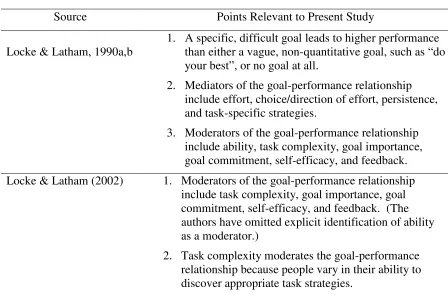
Table 1. Summary of Literature on Goal Setting Theory ...56
Table 2. Summary of Literature on Task Complexity ...57
Table 3. Summary of Literature on the Relationships among GMA, Job Complexity, and Performance...58
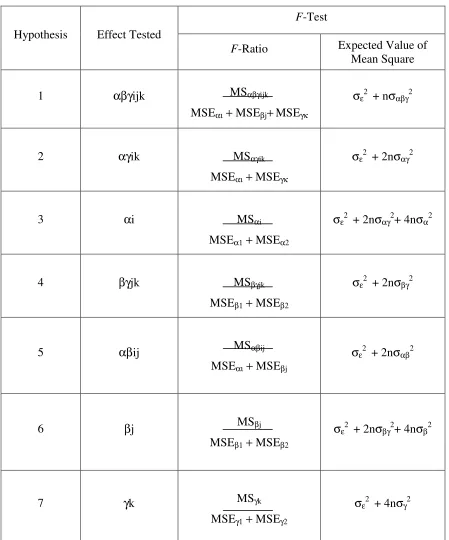
Table 4. Tests of Hypotheses, Effects, and F-Statistics ...59
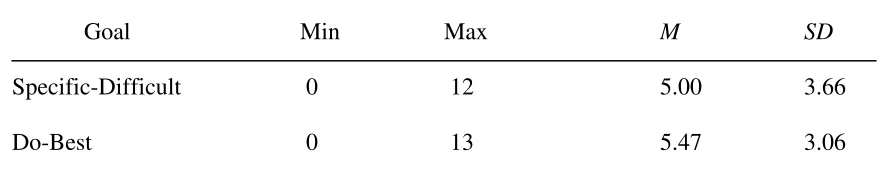
Table 5. Ranges, Means, and Standard Deviations of Pilot Test Performance Scores...60
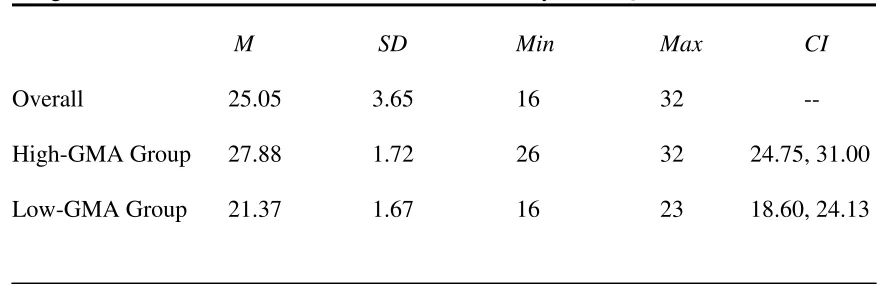
Table 6. Ranges, Means, and Standard Deviations of Main-Study WPT-Q Scores ...61
Table 7. Overall and Two-Way Performance Means and Standard Deviations by Goal Difficulty, Task Complexity, and GMA Levels ...62
Table 8. Three-Way Performance Means and Standard Deviations by Goal Difficulty, Task Complexity, and GMA Levels ...63
Table 9. Analysis of Variance: Performance as a Function of Goal Difficulty, Task Complexity, and GMA ...64
List of Figures
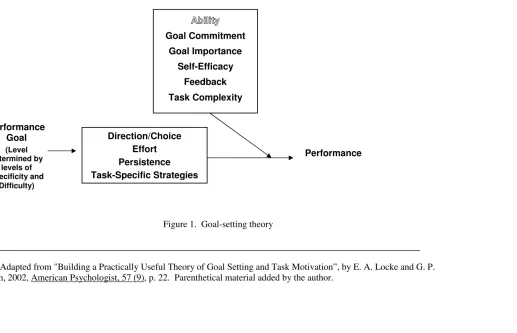
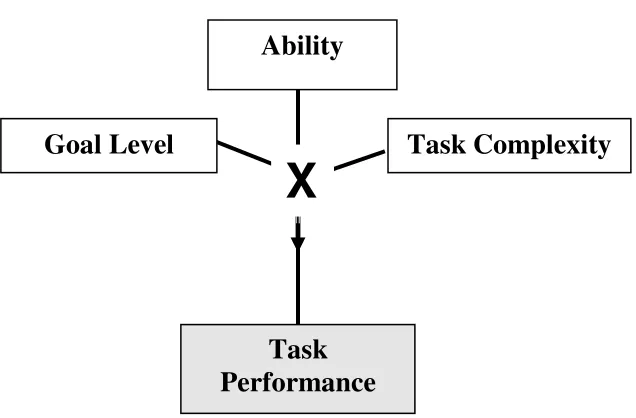
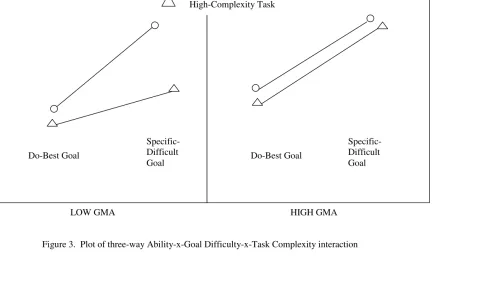
Figure 1. Goal-setting theory ...66 Figure 2. Three-way interaction of Ability, Task Complexity, and Goal Level...67 Figure 3. Plot of three-way Ability-x-Goal Difficulty-x-Task Complexity Interaction ... ...68 Figure 4. Plot of two-way Ability-x-Task Complexity interaction...69 Figure 5. Plot of two-way Goal Difficulty-x-Task Complexity interaction ...70 Figure 6. Examples of Unequal Cell Variances and Departures from Normality: Two- Way
Interactions ...71 Figure 7. Examples of Unequal Cell Variances and Departures from Normality: Three-Way
List of Appendices
INTRODUCTION
This chapter introduces and frames the current research project. It frames the study in terms of the importance of both the theory under investigation and the modification tested. It also makes clear the study’s potential value to the field of industrial-organizational
psychology at both the applied and theoretical levels. Here, the study’s general research goal and question are presented.
Framing the Research
The efforts of psychologists to explain and predict work-related behaviors encompass such areas of the discipline as motivation, human factors, and industrial and organizational
psychology. These lines of research typically target the attributes of individuals and the characteristics of work conducive to desired levels of performance.
Worker attributes such as cognitive ability, personality, and personal history (Murphy, 2004) have been examined for their utility in predicting work performance. Cognitive ability, or general mental ability (GMA), continues to demonstrate predictive utility across a range of jobs (Tenopyr, 2002), particularly those involving complex work (Kehoe, 2002; Kuncel, Hezlett, & Ones, 2004). Theories of motivation, as applied to work behavior, have addressed a range of worker characteristics, including expectation of success and the perceived value of rewards.
tasks (Locke & Latham, 1990b; Winters & Latham, 1996) have supported this central premise of the theory.
The full goal-setting model (Figure 1) includes dimensions of the worker and the work task said to either mediate or moderate the relationship between goal level and performance. Goal-setting theory specifies a number of mediators through which goal level affects work performance level: worker effort, direction and choice of that effort, persistence, and task-specific strategies.
goal approaches that of either a do-best goal or no goal at all. Meta-analytic results for the effect of a specific, difficult goal versus a goal to do one’s best (Wood et al., 1987, as cited in Locke and Latham, 2002) provide support for this inverse relationship: an effect size of .41 was found for the most complex tasks, versus one of .77 for the least complex tasks.
The original publication of goal-setting theory (Locke & Latham, 1990a) included worker ability as a fifth moderator of the goal-performance relationship. The most recent version (Locke & Latham, 2002), omits ability without reference to its previous inclusion or reasons for its omission. Yet, the utility of general mental ability (GMA) as a predictor of work performance has been demonstrated across a range of jobs (Guion, 1998; Kehoe, 2002; Schmidt, 2002), and has been shown to increase as a function of job complexity (Hunter & Hunter, 1984). To the extent that the complexity of jobs corresponds to the complexity of tasks within them, the impact of task complexity on work performance may be expected to vary as a function of GMA.
The potential for interaction of GMA and task complexity in the prediction of
performance suggest that ability, specifically GMA, may be reintroduced to the goal-setting model in a way that increases the model’s strength as a performance prediction tool. This reintroduction may well involve specification of a relationship between GMA and task complexity in their effects on the goal-performance relationship, rather than as independent moderators, as specified in the original version of goal-setting theory (Locke & Latham, 1990a; 1990b).
complexity in the prediction of performance. Such a modification would be of great practical value in that it would increase the value of goal-setting theory as a device for improving work performance. This modification would further guide industrial-organizational
psychologists in the application of goal setting theory by clarifying the roles of worker ability and task complexity in the effectiveness of set performance goals.
Research Goals
This study pursued two basic goals: to (1) provide evidence of GMA and task complexity as moderators of the goal-performance relationship and to (2) test a revision of goal-setting theory to re-specify the relationships among GMA, task complexity, and goal level in the prediction of performance.
General Research Questions
This study addressed two general questions. Is the relationship of ability to the goal-performance relationship more complex than as specified in the original goal-setting model: simply as an additional moderator? If so, is this relationship best specified in terms of the relationship between ability and task complexity?
worker as a function of organizational need, rather than as a function of individual characteristics.
LITERATURE REVIEW
This chapter begins with a review of the theoretical background and development of goal setting theory, including the theory’s theoretical antecedents, the structure of the goal-setting model, and the models strengths and limitations. The chapter continues with a survey of the literature on GMA as a predictor of work performance. It compares GMA’s predictive utility to that of other psychological measures and describes the role of job complexity in the
relationship of GMA to work performance. The main conclusions drawn from this body of literature support the contention that GMA may be of value to the goal-setting model. Finally, this chapter reviews the conceptual and operational development of task complexity, from which parallels may be drawn to the task used in this study.
Goal Setting and Work Performance: Goal Setting Theory
Ryan’s (1970) premise that conscious goals affect action led Locke and Latham to explore the relationship between conscious work performance goals and performance level (Locke & Latham, 2002). The researchers first explored the relationship of goal difficulty to
vague, non-quantitative goal, such as “do your best”, or no goal at all (Locke & Latham, 1990a;b).
Locke and Latham (2002) describe the “directive” and “energizing” functions served by establishment of a work-related goal. A performance goal provides direction toward relevant aspects of performance. The more specific the goal, the more clear the appropriate direction of effort becomes. A performance goal also energizes, in that the more difficult the goal, the greater the effort directed toward goal attainment (Locke & Latham, 2002). Direction and effort are therefore said to mediate the goal-performance relationship. In addition to direction and effort, persistence is found to mediate the relationship between goal level and performance, such that the higher the goal, the greater the persistence applied to the work task. Finally, the use of task-specific strategies mediates the goal-performance relationship (Locke & Latham, 2002; Wood & Locke, 1990).
As described earlier, the setting model also specifies moderators of the goal-performance relationship. For higher goals to lead to higher goal-performance, the performer must accept the goal (Locke & Latham, 1990a, 2000; Locke, Latham, & Erez, 1988). Accordingly, Locke and Latham (2002) identify goal commitment and goal importance as two moderators of the goal-performance relationship. However, the authors also describe goal importance as influencing goal commitment (Locke & Latham, 2002); little empirical evidence exists for goal importance as a unique moderator.
1983) have shown the combination of goal setting and feedback to be more effective than goal setting, alone (Locke and Latham, 2002).
Goal setting theory also specifies self-efficacy as a moderator. Assigned goals directly impact both performer self-efficacy regarding the task and the performer’s personal goals. Legitimate authority impacts the subordinate’s personal goals and self-efficacy in two ways. First, the subordinate is apt to comply with the authority figure, accepting the supervisor or experimenter’s assigned goal as his or her own. Second, he or she may also infer that the authority figure has confidence in his or her ability to reach the goal (Locke and Latham, 1990b). Assigned goals, then, can impact personal goals directly, as well as indirectly, through their effect on self-efficacy. Personal goals, in turn, directly impact performance (Locke and Latham, 1990b).
Finally, the strength of the goal-performance relationship depends upon the complexity of the work task. As task complexity increases, the effect of goal level (difficulty and
specificity) on performance decreases. According to Locke and Latham (2002), this moderating effect is due to individual differences in the ability to devise and apply
It is important to note the distinction between goal difficulty and task complexity. At any given level of task complexity, goals may vary in difficulty. Dimensions of goal difficulty include the standard of proficiency set, such as the volume of work completed within a specified time period, and the level of accuracy or quality achieved (Locke & Latham, 1990a). Thus, the term “goal difficulty” refers to “a certain level of task proficiency measured against a standard, whereas task difficulty refers to the nature of the work to be accomplished” (Locke & Latham, 1990a).
Goal-setting theory provides the core of Locke and Latham’s (1990a, 1990b) model of motivation, performance, and satisfaction: the high performance cycle (HPC). The level of performance achieved from the use of a set goal (with intervention from moderating
variables) determines the level of contingent reward(s) the worker receives (or, perhaps, whether or not he or she receives the reward). The level of reward (or whether or not received) determines the worker’s level of satisfaction, both with the rewards received and with his or her own performance. The greater the worker’s satisfaction, the stronger becomes his or her commitment to the organization and, subsequently, to new work-related challenges (Locke & Latham, 2002).
Strengths and Limitations of Goal Setting Theory. A number of studies have
requisite knowledge, specific, difficult goals tend to detract from performance by diverting attention from the development of task-specific strategies (Seijts & Latham, 2001). The theory does predict performance on goals targeting learning. Winters and Latham (1996) found that a specific, difficult goal for developing learning strategies led to development of significantly more strategies than did a do-best goal applied to the same task.
Locke and Latham (2002; 1990b) report a major strength of the goal setting model: performance does not differ significantly across self-set, assigned, and participative goal-setting conditions. Because goal-goal-setting circumstances are likely to differ across work contexts and situations, this feature should represent both practical and theoretical
advantages. Yet, results of a number of studies indicate possible moderators of the impact of goal-setting circumstances on performance. Sue-Chan and Ong (2002) examined the impact of power distance on the relationship between goal-setting condition and self-efficacy, goal commitment, and performance. Power distance refers to the degree of power and status inequality considered normal and acceptable (Sue-Chan & Ong, 2002). National cultures differ along the power distance dimension. Individuals in high power-distance cultures value an autocratic management style, characterized by paternalistic supervision and decision-making. Those in low power-distance cultures prefer a consultative management style that permits subordinate participation in decision-making (Kirkman & Shapiro, 2001).
Accordingly, power distance should relate negatively to acceptance of participation in goal setting and, therefore, to both goal commitment and performance. Sue-Chan and Ong (2002) found support for this hypothesis; the lower the power distance, the higher were both
which introduces the possibility of a culture-bound moderator, challenges the claim that goal-setting theory is equally applicable across self-set, participative, and assigned goal-goal-setting circumstances.
Locke and Latham (2002; 1990b) also note a practical dilemma posed by the HPC. They have found that the higher the set goal, the less satisfied the performer is likely to become upon meeting any goal. Students setting a GPA goal of 4.0 reported lower expected
satisfaction with goals of 4.0, 3.0 and 2.0 than did peers setting lower goals. Yet, given that goal level and performance level are directly related, encouragement of more difficult goals makes practical sense. Still, the diminished satisfaction resulting from performance short of a high goal must be reckoned with. Locke and Latham (1990) suggest a number of
approaches, such as setting a moderate goal to simultaneously optimize satisfaction and productivity and the establishment of a two-tier goal system, consisting of a readily achievable minimum goal and an ideal, “stretch” goal.
To summarize, goal setting theory specifies a positive, linear relationship between goal level and performance level. The mechanisms, or mediators, by which higher goals lead to higher performance include direction, effort, persistence, and task-specific strategies. Five variables are said to moderate the goal-performance relationship: goal commitment, goal importance, task complexity, self-efficacy, and feedback. Additional moderators not
Task Complexity
Several approaches to the definition of task complexity have been advanced. The characteristics of tasks used by theorists to define task complexity include experienced (psychological) complexity, complexity as a task-person interaction and complexity as a function of objective task characteristics (Campbell, 1988; Wood, 1986).
Drawing on the work of Naylor and colleagues, Wood (1986) advances a theory of tasks and a framework for the operationalization of task complexity. He specifies three task components: information cues, (required) acts, and products. The task product, whether an object or an event, may be identified and described independently of the act or acts required to produce it. For example, the event of lowering a fryer basket into hot frying oil may be considered independent of the possible acts required to produce it, whether it be the act of grasping the fryer basket handle in one’s hand and manually lowering it into the vat of oil or of pressing a button to activate a lowering mechanism.
According to Wood, the two input components that determine the maximum level of knowledge, skill, and resources required of an individual for successful task performance are the act or acts required for task performance and the information cues available for its
performance. Acts and information cues, therefore, provide the basis for quantification of task complexity (Wood, 1986).
Wood (1986) defines three dimensions of task complexity: component, coordinative, and dynamic. Component complexity is a function of both the number of distinct acts required for task performance and the number of distinct information cues necessary to the
increase with the number of distinct components (acts and information cues) involved in task performance makes clear the implications of GMA level for performance of complex tasks. The knowledge and skill required to perform a task also increases with the number of required interactions among the sequencing, timing, frequency, and intensity of task inputs. Wood terms this aspect of task complexity “coordinative” complexity. A simple linear sequence of acts, such as those required to wash a window (position ladder; climb ladder; apply cleaning solvent to glass; squeegee glass) may be compared to those required to
assemble a radio, for which acts are not only contingent on other acts but may also need to be performed simultaneously (Wood, 1986).
Wood’s calculation of coordinative complexity involves the number of required acts and the number of precedent relationships between any one act and all other acts required for task performance. The sum of all precedent relationships between each act and all other required acts comprises a task’s coordinative complexity score. When the task product is a simple linear function of task inputs, coordinative complexity is low. Tasks requiring interactions among required acts, as in the radio assembly example, are higher in coordinative
complexity, holding constant the number of task inputs. Task complexity increases with the number of interactions (Wood, 1986). Similarly, holding constant the number of interactions between and among required acts, a higher number of task inputs corresponds to greater task complexity as a function of increase in component complexity.
products. It may be measured as a function of the number changes in the component and coordinative complexities of a task over time (Wood, 1986). In their argument for the importance of GMA in job learning, Schmidt and Hunter (2004) cite today’s demand on workers to keep pace with shorter product life cycles and the likely increase in importance of GMA to meet such a demand.
Campbell (1988) summarizes the previous three decades of literature on the definition of task complexity, citing three general approaches: complexity as a psychological experience, complexity as task-person interaction, and complexity as a function of objective task
characteristics. The first two involve characteristics of the task doer. Task complexity may contribute to job enrichment factors, such as skill variety and task significance (e.g. Pierce & Dunham, 1976; as cited in Campbell, 1988). Complexity may also be viewed as a task-person interaction, such that the task doer’s past experience, familiarity with the specific task, short-term memory, attentional resources and cognitive efficiency bear upon perceived task complexity (Campbell, 1988).
Finally, Campbell (1988) summarizes several previous authors’ conceptualizations of task complexity as a function of objective task characteristics. Among these characteristics are (1) multiplicity of possible paths toward the desired goal; (2) multiplicity of desired
unstructured and ambiguous (Campbell, 1988), as is a task high in dynamic complexity, wherein changes in means-end and cause-effect relationships occur at a high rate.
Campbell also makes the distinction between objective and subjective complexity. He argues that experienced complexity is a reaction to task characteristics, dependent upon the task doer’s own cognitive resources, such as short-term memory and computational
efficiency, as well as situational constraints.
In summary, task complexity may be viewed and operationalized from three perspectives: experienced (psychological) complexity, complexity as task-person interaction, and
complexity as a function of objective task characteristics. Objective task characteristics include number of possible paths toward the desired goal, number of required information-processing streams, number of conflicting means to desired outcomes, and uncertain or probabilistic path-goal linkages. These four characteristics determine a task’s objective complexity, whereas the task doer’s cognitive resources and experience determine subjective task complexity. A task’s complexity is a function of information cues, required acts, and products. The task used in this study, a task used by numerous previous goal-setting studies, will be shown, in a subsequent section, to operationalize complexity along many of these dimensions.
General Mental Ability, Job Complexity, and Work Performance
The relationship of GMA to work performance is well documented (Gottfredson, 2002; Hunter & Schmidt, 1994, 1996; Schmidt, 2002; Tenopyr, 2002), as is the existence of a general factor measured by all known tests of cognitive ability (Gottfredson, 2002; Ree & Carretta, 2002). Evidence for this factor began in the 1920s with the work of Charles Spearman (Ree & Carretta, 2002). The repeated emergence of this general factor in the measurement of specific aptitudes, such as verbal aptitude, spatial visualization, and mathematics (Gottfredson, 2002; Ree & Carretta, 2002), has led to the use of a single measure of GMA to assess the potential for applicant success in a wide variety of jobs (Ree & Carretta, 2002; Schmidt, 2002).
Evidence of a general factor, “g”, contradicts theories of multiple, independent dimensions of intelligence, such as Guilford’s structure of intellect (SOI) model and
from the problems of everyday life in that the former typically (1) provide all needed information for problem solution, (2) are well defined, (3) have one correct answer, and (4) have one method of reaching the correct solution. Everyday problems, by contrast, often lack these advantages. Sternberg et al. (1995) assert that such problems call upon practical intelligence and claim that traditional tests of intelligence fail to predict work performance because they fail to tap practical intelligence.
Nevertheless, a substantial and diverse accumulation of evidence exists for a direct relationship between GMA and a variety of life tasks and outcomes (Schmidt & Hunter, 2004). Ree and Carretta (2002), Gottfredson (2002) and Schmidt (2002) argue that the general factor g does relate to performance of non-academic tasks. Ree and Carretta (2002) present ten categories of non-academic psychological correlates of general intelligence, as measured by standardized tests. Among those in direct contradiction of Sternberg et al. (1995) include practical knowledge, social skills, a broad “abilities” category, comprising social prominence, memory, reaction time, analytic style, and reading; a “moral” category, comprising values, delinquency (negatively correlated), racial prejudice (negatively correlated), and lie scores of personality tests. In most direct contradiction to Sternberg’s claim are “occupational” correlates of general intelligence test scores, such as income, military rank, and occupational status: (Ree & Carretta, 2002).. Higher loadings of a given GMA measure on the general factor g correspond to larger correlations (Schmidt & Hunter, 2004).
central component (Ree & Caretta, 2002; Tenopyr, 2002). GMA test scores have been shown to account for at least as much variance in work performance as either cognitively-loaded job-specific tests or personality tests (Guion, 1998; Kehoe, 2002; Schmidt, 2002). In her argument for the value of GMA in predicting levels of all performance dimensions, Gottfredson (2002) states an average correlation of .5 between GMA tests and ratings of overall performance, corrected for statistical artifacts.
GMA test scores have also been shown to predict job-related learning (Kuncel et al., 2004; Schmidt, 2002; Schmidt & Hunter, 1998). Citing the results of several primary studies and meta-analyses, Schmidt (2002) asserts the usefulness of GMA measures to predict performance in training, as well as in job performance. To measure GMA, Schmidt argues, is to measure the ability to learn, an assertion supported by validity coefficients of and around .63 for GMA as a predictor of training performance.
Nevertheless, debate persists over the wisdom of reliance on GMA measures, possibly due to differing sets of results of validity studies involving GMA as a performance predictor. The predictive value of the general factor g has been shown to vary directly with the
compared to .14 for low-complexity jobs. A similar meta-analysis in the European Community (EC) by Salgado, Anderson, Moscoso, Bertua, de Fruyt, and Rolland (2003) produced similar findings: the validity of GMA in predicting job and training performance ratings increased with increasing task complexity.
The differences in cited average validities and their sources suggest that authors have not only considered somewhat different sets of results, but have also given different levels of consideration to the performance criteria on which the validities were generated. Another aspect of performance that may impact the magnitude of GMA validity is the distinction between task and contextual dimensions of performance. Borman and Motowidlo (1993) define task performance as performance of obligatory tasks leading directly to work output, and contextual performance as an individual’s organizational, social, and psychological contributions leading indirectly to the realization of organizational goals. This distinction may alternately be viewed as in-role versus extra-role work behavior (Arvey & Murphy, 1998). Ratings of task performance are generally based on core technical proficiency, including performance of activities in direct support of the observable, measurable work product, such as time management and coordination with team members. Examples of contextual performance, or extra-role behavior, include social behaviors outside the worker’s formal duties that contribute directly to the quality and quantity of work output, such as taking time out to assist co-workers (Podsakoff, MacKenzie, Paine, & Bachrach, 2000). The distinction between task and contextual performance elements relates to the
by personality measures than by GMA (Borman and Motowidlo, 1997). Second, empirical findings (Borman, White, & Dorsey, 1995; Motowidlo & Van Scotter, 1994) suggest that task and contextual performance dimensions contribute roughly equally to supervisor ratings of overall performance. The utility of GMA may therefore be understated by validities for overall performance ratings if such ratings incorporate judgments of both task and contextual performance. Not only are GMA validities likely to be higher for ratings based strictly on objectively measured task performance, but differences in validities across levels of job complexity may also be greater against a strict task performance criterion. In support of the former, Hunter (1986) reported a validity of .75 for the General Aptitude Test Battery (GATB: United States Employment Service of the U.S. Department of Labor) in the
prediction of work sample test scores of 1,790 civilian job incumbents. For the same sample, the GATB validity was .47 for supervisor ratings. A military sample of 1,474 yielded GATB validities of .53 and .24 for work samples and supervisor ratings, respectively. For both samples, path analyses showed the greatest influence of GMA on work sample scores to be through job knowledge (Hunter, 1986).
applicants with the same GMA score are equally likely to succeed on the job. If a given GMA measure were race biased, differential prediction of performance across groups would be observed.
Table 2 summarizes the literature reviewed here on the relationships among GMA, job complexity and performance. The evidence for GMA as a work performance predictor suggests the need to incorporate this variable in any model of work performance. Evidence for the interaction of GMA and job/task complexity suggests that ability could be
re-introduced to the goal-setting model as a variable that interacts with task complexity in predicting performance level from goal level. The following section describes the approach used to address this specific research question: Is ability best specified as a variable
interacting with task complexity in the moderation of the goal-performance relationship? RESEARCH QUESTIONS AND HYPOTHESES
relationship may depend on the ability of the performer. If so, the goal-setting model may be modified to specify a three-way interaction among GMA, task complexity, and goal level (Figure 3).
This study tested the hypothesized three-way interaction of GMA, task complexity, and goal level in their effects on performance with the goal of advancing a modification of goal setting theory that more clearly specifies relationships among key worker, goal and task variables while increasing understanding of the role of GMA in task performance.
Hypotheses
1. The null hypothesis of no Goal Difficulty-by-Task Complexity-by-GMA interaction will be rejected. Two lines of empirical evidence support this assertion. First, it has been shown that the difference in performance under specific-difficult and do-best goals decreases as task complexity increases. That is, the advantage of a specific, difficult goal over a do-best goal decreases with increases in task complexity. Evidence exists, therefore, of an interaction of task complexity and goal level. Second, an extensive literature on the relationship of GMA to performance demonstrates that this relationship depends on the complexity of the task, with a stronger GMA-performance relationship demonstrated under tasks of increasing complexity. Evidence therefore exists of a GMA-task complexity interaction. Considering these two lines of evidence, individuals higher in GMA should realize the performance benefit of a specific, difficult goal over a do-best goal across a greater range of task
the individual’s capacity to perform. Therefore, differences in performance under the two goal conditions may be expected diminish as task complexity increases and individual ability decreases.
It is therefore hypothesized that a three-way, mixed factorial model of GMA, Task Complexity, and Goal Level will exhibit a three-way interaction, such that individuals lower in GMA will show a greater performance difference across goal levels on the low-complexity task than on the high-complexity task. The high-GMA group will exhibit comparable
performance differences across the do-best and specific-difficult-goal conditions at the two Task Complexity levels, performing higher under the specific-difficult goal condition than the do-best condition on both tasks. Figure 3 illustrates results supporting this hypothesis. Let αβγijkrepresent the three-way interaction of Goal Difficulty, Task Complexity and GMA, where αi represents the fixed effect of Goal Difficulty, βjrepresents the fixed effect of Task Complexity, and γk represents the random effect of GMA. A test of this hypothesis is a test of the null hypothesis that the effect αβγijk is not significant. Rejection of the null hypothesis will provide support for the hypothesis of three-way interaction.
Together, these facts suggest that ignoring Task Complexity level, Ability does not moderate the goal-performance relationship. There is neither intuitive nor empirical justification for the assertion that the performance advantage of a specific, difficult goal over a do-best goal should vary by individual ability, holding task complexity constant.
It is therefore hypothesized that within the three-way, mixed factorial model of Goal Level x GMA x Task Complexity, a significant interaction of GMA and Goal Difficulty will not be found. A test of this hypothesis is a test of the null hypothesis that the interaction effect αγik is not significant. Failure to reject the null hypothesis will provide support for the hypothesis of no GMA-by-Goal Level interaction.
3. The null hypothesis of no main effect of Goal Difficulty will be rejected. Results of numerous studies involving a variety of work tasks and contexts suggest that a specific, difficult performance goal leads to a higher level of performance than a do-best goal.
According to Locke and Latham (2002), a specific, difficult goal leads to greater effort than a do-best goal. A specific goal directs worker effort toward goal-relevant activities and away from goal irrelevant activities. The performer also shows greater persistence when a specific, challenging goal is set than when a non-specific, do-best goal is set. Finally, a specific, difficult goal leads to the formulation, retrieval and use of task-specific knowledge and strategies. Through these three processes, a specific, difficult goal leads to higher performance than a do-best goal.
hypothesis that the effect αi is not significant. Rejection of the null hypothesis will provide support for the hypothesis of a main effect of Goal Level.
4. The null hypothesis of no Task Complexity-by-GMA interaction will be rejected. An extensive literature on the impact of GMA on work performance indicates that the direct relationship between GMA and performance strengthens as task complexity increases. The higher a task’s complexity, the more GMA is called upon for successful task performance (Schmidt, 2002; Hunter & Schmidt, 1996).
It is therefore hypothesized that within the three-way, mixed factorial model of GMA, Task Complexity, and Goal Level, an interaction between GMA and Task Complexity will be found, with the low-GMA group exhibiting a greater performance difference under the two Task Complexity conditions than the high-GMA group. A test of this hypothesis is a test of the null hypothesis that the effect βγij is not significant. Rejection of the null hypothesis will provide support for the hypothesis of GMA-by-Task Complexity interaction. Figure 4 illustrates the nature of this hypothesized interaction.
test of this hypothesis is a test of the null hypothesis that the effect αβij is not significant. Rejection of the null hypothesis will provide support for the hypothesis of Goal Difficulty-by-Task Complexity interaction. Figure 5 illustrates the nature of this hypothesized interaction.
6. The null hypothesis of no main effect of Task Complexity will be rejected. Whereas the effect of task complexity on performance has been shown to vary as a function of GMA, performance is expected to vary inversely to task complexity when GMA is not taken into account. It is therefore hypothesized that within the three-way, mixed factorial model of GMA, Task Complexity, and Goal Level, a main effect of Task Complexity will be found, with higher performance on the low-complexity task. A test of this hypothesis is as test of the null hypothesis that the effect βj is not significant. Rejection of the null hypothesis will provide support for the hypothesis of a main effect of Task Complexity.
METHOD
Participants
One hundred and ninety undergraduate psychology students participated in exchange for course credit. Participants were roughly equal numbers of male and female students with diverse majors spanning the sciences, engineering, and humanities. Freshmen comprised 67% of the sample, with smaller percentages of sophomores, juniors, seniors, and continuing education students.
Design
A three-way (Goal Difficulty by Task Complexity by GMA) fully crossed design was used. To control for possible effects of time of day and day of the week, Goal Difficulty and Task Complexity level manipulations were balanced across the 31 experimental sessions, such that each Goal Difficulty-Task Complexity level combination was used at all times of day and days of the week (Tuesdays and Fridays).
Task
Participants performed a task used in past studies of goal setting theory in which goal difficulty and task complexity have been manipulated (e.g. Seijts & Latham, 2001; Winters & Latham, 1996). Participants performed a class-scheduling task, using paper-and-pencil class scheduling forms and a list of hypothetical classes. Consistent with past studies, the present study allowed participants 24 minutes to complete the task.
Three rules applied for completion of class schedules under both complexity conditions: 1. Five non-redundant classes must be scheduled on a single day.
2. Each schedule must be unique. That is, no schedule may be duplicated. 3. The name, code, meeting times and section of each scheduled course must be
listed.
4. Class times must not conflict; that is, the start and end times of scheduled classes must not overlap.
For the high-complexity task, three additional requirements were imposed:
1. Any course with a discussion section was to have the class and discussion sections scheduled on the same day.
2. No two marketing courses could be scheduled within 1 hour of each other.
3. Any speech communication class scheduled was to have a lab section scheduled on the same day.
The three rules imposed on the high-complexity task, applied in conjunction with the three rules applying to both complexity conditions, created task demands that correspond to several aspects of task complexity described by Wood (1986) and Campbell (1988). First, the requirements that a discussion section be scheduled on the same day as its class and that a lab be scheduled with every speech communication class imposed additional information cues on which participants were required to act (task inputs), increasing the task’s component complexity (Wood, 1986). Second, all three additional restraints imposed interrelated and conflicting conditions to be satisfied, consistent with the operationalizations of task complexity described by Campbell (1988).
By capturing these aspects of task complexity, the class-scheduling task operationalized complexity through objective characteristics of the task, rather than as primarily
complexity level is likely to relate to his or her cognitive ability level (Campbell, 1988) and because GMA is a variable of primary interest in this study, the use of perceived complexity could suppress the effect of GMA upon performance.
Performance Goal
Goal level. Goal level was manipulated at two levels: a specific, difficult goal and a non-specific “do best” goal. For the class-scheduling task, operationalization of a non-specific, difficult goal was established by Earley (1985) and Wood and Bandura (1989; as cited in Seijts and Latham, 2001) and utilized in numerous subsequent studies. Earley (1985) found that 4% of his college student participants were able to produce 10 schedules in 15 min. He therefore established a goal of 10 class schedules in 15 min (or 1 class schedule per 1.5 minutes, on average) as a very difficult, but attainable, goal. In a participative goal-setting study using the same class scheduling task, Latham et al (1994) informed participants that a reasonable performance goal for the same task had been found to be between 6 and 8 correct schedules in 15 min. Wood and Bandura (1989) defined a “truly difficult” goal as one that only 10 percent of individuals can reach. On this basis, Seijts and Latham (2001) established a difficult goal for their own study according to the number of class schedules completed by the upper 10 percent of pilot study participants over three 8-minute trials. They therefore assigned participants a specific, difficult goal of at least 10 correct class schedules in 24 minutes, or 1 class schedule per 2.4 minutes, on average.
Because the present study employed the same task as used by Seijts and Latham (2001) and Earley (1985), operationalization of a specific, difficult goal was based on
difficulty, the specific, difficult goal for this study was set at a point between those set in the two previous studies: completion of 12 correct class schedules in 24 minutes, or 1 class schedule in 2.0 minutes, on average.
Materials
Each participant received blank class-scheduling forms and a list of hypothetical class sections for courses in four academic departments: Communications, Business
Administration, Accounting and Finance, and Marketing. Each department’s class section list provided available class sections for three different courses. Ten different class sections were offered for each course, with the exception of the Speech Communications course, for which 4 class sections were offered, and the Speech Communications lab, for which 10 different sections were offered. Four section alternatives were offered of the discussion sections required to accompany the Organizational Behavior and Human Resources Management.
Reliability coefficients (Pearson r) reported for the WPT are.82 to .94 for test-retest reliability, .73 to .95 for alternate forms, and an average of .88 for Kuder-Richardson-20 estimates (Geisinger, 2004). Predictive validity coefficients for the 50-item test range from .22 to .67 across a number of job families (Geisinger, 2004).
Procedure
Each group of participants first completed the class-scheduling task. Task instructions (Appendix A) were distributed in printed form and read aloud. Instructions on the class-scheduling task were distributed in printed form and read aloud. Participants were asked to imagine a scenario in which the university’s online registration system is off-line for maintenance and that class schedules for the new semester must be completed in paper-and-pencil form. Participants were told that their task was to complete such schedules, using the hypothetical course information provided. be administered the WPT-Q. Following WPT-Q administration and collection of test materials,
Participants in both goal conditions received a copy of class time listings and blank class schedule forms. At the conclusion the 24 minutes, the experimenter collected all
participants’ completed class schedules.
Debriefing. At the conclusion of data collection, a document explaining the purpose of the study was distributed to all participants by electronic mail. The debriefing text for each of the four treatment conditions is provided in Appendix B.
Analysis Scores and Group Determination
GMA. A single score for the 30-item WPT-Q was calculated for each participant via computerized self-administration. High and low GMA groups were established by determining the most inclusive high and low subsets that could be considered distinct. Subsets were evaluated for distinctness by the extent to which confidence intervals about the two means overlapped.
least 1 of the applicable criteria, it received a score of 0. For each participant, scores of 0 and 1 were added to arrive at a total performance score.
Hypothesis testing
To test the 7 hypotheses, a 3-way, mixed-model analysis of variance (ANOVA) was used, with Goal Difficulty and Task Complexity as fixed effects and GMA as a random effect. For each hypothesis, the effect tested and the specific F-ratio by which to test the effect are listed in Table 4. The SAS® General Linear Models (GLM) procedure was used to conduct the analysis. Use of appropriate error terms in a mixed model was ensured by the use of the RANDOM statement to account for the random nature of the variable GMA in the estimation of GMA as a main effect and in all interactions involving GMA. Least-squares means were used, as recommended for analyses involving unequal cell counts (SAS Institute Inc., 1990). To estimate the size of each effect tested, generalized eta squared (ηG2 ) for a three-factor analysis of variance (Olenik & Algina, 2003) was calculated. This method accounts for the random nature of the variable GMA in a three-factor model with Task Complexity and Goal Level as fixed effects.
Hypothesis 1. Rejection of the null hypothesis of no 3-way Goal Difficulty-by-Task
Complexity-by-GMA interaction is achieved by a significant result of the F-test specified in Table 4. Support of the specific alternative hypothesis, Goal Difficulty-x-Task Complexity interaction for the low-GMA group and not for the high-GMA group, is provided by
complexity task than under the high-complexity task. The high-GMA group should show less of a performance difference between Goal Difficulty levels as a function of Task Complexity, with mean performance under the specific, difficult goal higher than under the do-best goal to a comparable degree across Task Complexity conditions. Such a plot of group means should resemble Figure 3.
Hypothesis 2. Support for the null hypothesis of no Goal Difficulty-x-GMA interaction is obtained by a non-significant result of the F-test specified in Table 4. This is a test of the effect αγik, hypothesized to be non-significant.
Hypothesis 3. The null hypothesis of no main effect of Goal Difficulty is rejected by a significant result of the F-test specified in Table 4. The main effect αi is hypothesized to be significant, with the performance mean for the specific, difficult goal higher than that for the do-best goal.
Hypothesis 4. The null hypothesis of no Task Complexity-by-GMA interaction is rejected by a significant result of the F-test of the effect βγjk, as specified in Table 4. The specific hypothesis of a greater difference in performance across Task Complexity conditions for the GMA group than for the high-GMA group, with performance higher under the low-complexity task for both groups, is supported by a plot of group means in the manner depicted by Figure 4.
differing less on the high-complexity task than on the low-complexity task, with performance higher under the specific, difficult goal.
Hypothesis 6. The null hypothesis of no main effect of Task Complexity is rejected by a significant result of the F-test specified in Table 4. The main effect βj is hypothesized to be significant, with the performance mean for the low-complexity task higher than that for the high-complexity task.
Hypothesis 7. The null hypothesis of no main effect of GMA is rejected by a significant result of the F-test specified in Table 4. The main effect γk is hypothesized to be significant, with the performance mean for the high-GMA group higher than that for the low-GMA group.
RESULTS
Pilot test. The class-scheduling task used in the present study has produced performance scores of adequate range for hypothesis testing in past studies (e.g. Seijts & Latham, 2001; Winters & Latham, 1996). A pilot test was, nevertheless, conducted on the low-complexity task to ensure the absence of a ceiling effect. A ceiling effect occurs on a task, test or other instrument whose maximum score is attained by all participants. Under such circumstances, individual differences on the construct of interest are inestimable. Within the present study, a ceiling effect might occur under the specific-difficult goal condition, whereby all participants are not only able to reach the goal but also decide to stop working after reaching the goal, resulting in a performance score of 12 for all participants in the specific-difficult goal/low-complexity task condition.
The low-complexity task was tested under both goal conditions. Results (Table 5) indicate an absence of ceiling effect for both goal conditions, with a range of 0 to 12 on the specific-difficult goal and 0 to 13 on the do-best goal.
GMA Scores and Group Determination. Table 6 presents descriptive statistics for scores on the WPT-Q. The selected high and low subsets were those whose 95% confidence intervals overlapped slightly (lower bound of High group = 24.55; upper bound of Low group = 24.66) and whose 90% confidence intervals did not overlap (Table 6). Sample sizes for the resulting high- and low-GMA groups were 82 and 63, respectively. Defining the groups in this
manner reduces a condition often cited as an argument against dichotomization of a
2002). For the two GMA groups formed, roughly two thirds of observations in each group are closer in value than to any observation in the other group. The full range of observed WPT-Q scores corresponded to the 5th through 80th percentiles of 1992 college student norms developed on all WPT forms. The low and high groups corresponded to the 5th through 30th and 50th through 80th percentiles, respectively.
Because the practice of dichotomization has often been associated with loss of statistical power (MacCallum, Zhang, Preacher, & Rucker, 2002), the relationship of GMA to
performance was also assessed with GMA as a continuous variable. The Pearson r
correlation coefficient of WPT-Q score to performance was .20 for the full data set (n = 190) and .22 for the reduced data set (n = 145). As may be seen in the following section by the size of the main effect GMA, dichotomization does not seem to have negatively impacted statistical power.
Performance Score. Across Task Complexity and Goal conditions, performance scores ranged from 0 to 12. Two participants obtained the maximum score of 12, each under a different Goal condition and both on the low-complexity task. Participants who listed multiple days for all class schedules scored 0 on the task. Approximately 18 percent of the 190 participants scored 0 on the task by listing multiple days in each class schedule
completed. Of the 145 observations retained for analysis by dichotomization of GMA, 30 (31%) scored 0 for this reason. A score of 0 did not relate significantly to task complexity (χ2 = 2.32, p = .13), nor did it relate to GMA (χ2
= 1.07, p = .30).
Data Characteristics. Characteristics of the overall and cell-wise distributions of
or negative skew. Although the overall distribution of Performance score showed a significant departure from normality (W = .928, p < .0001), cell-wise skewness statistics averaged .50 in absolute value (SD = .39). Hatcher and Stepanski (1994) note a skewness statistic of 1.0 as indicative of moderate skew. According to this standard, only one cell-wise Performance distribution, that of Do-Best Goal- Low Task Complexity-Low GMA, may be considered at least moderately skewed at -2.10. Agresti and Finlay (1997) offer a second definition of severe skewness: when either the smallest or the largest value is less than a standard deviation from the mean. For all main-effect, two-way and three-way performance distributions, no skewness statistic is within the range considered severe. For each of the cell-wise distributions, as well as for the overall distribution of Performance scores, the minimum and maximum observations fall beyond one standard deviation from the mean. Cell-wise performance distributions did not meet the criterion of variance homogeneity assumed with use of ANOVA. An Fmax test of the ratio of the largest to the smallest cell variance yielded 11.63/1.44 = 8.08, exceeding the critical value 3.8 for 8 treatment groups and a maximum cell count of 27 (High GMA-Low Task Complexity-Do-Best Goal).
Hypothesis tests. Tables 7 and 8 present the overall, two-way, and three-way performance means by Goal, Task Complexity, and GMA. Table 9 presents results of the mixed-model ANOVA.
differences across Task Complexity conditions were comparable for the high- and low-GMA groups, and that differences in performances under the two Goal Difficulty levels were similar for the two GMA groups, irrespective of Task Complexity.
Hypothesis 2. The hypothesis of no GMA-x-Goal Difficulty interaction was supported, F (1, 137) = .15, p < .70; ηG2 = .011. The null hypothesis of no effect interaction effect αγik could not be rejected. The low-GMA group performed slightly higher under the specific, difficult goal than under the do-best goal, whereas performance for the high-GMA group displayed the reverse pattern (Table 7).
Hypothesis 3. The hypothesis of a main effect of Goal Difficulty was not supported, F (1, 137) = .46, p < .50; ηG2 = .034. The null hypothesis of no effect αi could not be rejected. Performance means for the two Goal Difficulty levels indicate that the reverse of the expected mean comparison was observed: higher performance was observed under the do-best goal than under the specific-difficult goal, although this difference was not statistically significant.
Hypothesis 4. The hypothesis of Task Complexity-by-GMA interaction was not
supported, F (1, 137) = .13, p < .72; ηG2 = .010. The null hypothesis of no effect βγjk could not be rejected. The difference in performance across Task Complexity conditions was the same for the two GMA groups.
specific, difficult goal over a do-best goal was observed for the high-complexity condition, whereas performance means under the low-complexity condition were identical.
Hypothesis 6. The hypothesis of a main effect of Task Complexity was supported, F(1, 137) = 59.53, p < .0001; ηG2 = .80. The null hypothesis of no effect βj was rejected. Across Goal and GMA levels, participants performed significantly better on the low-complexity task.
Hypothesis 7. The hypothesis of a main effect of GMA was supported, F (1, 137) = 6.56, p < .02; ηG2 = .49. The null hypothesis of no effect γk was rejected. Across Task
DISCUSSION
Two of this study’s seven hypotheses were supported. Task Complexity and GMA each influenced performance, irrespective of each other and of Goal Level, in the hypothesized directions: participant performance was higher on the low-complexity task than on the high-complexity task, and higher-GMA participants performed better than did lower-GMA
participants. This study’s focal interaction, among Goal Level, Task Complexity, and GMA, was not demonstrated. No other interactions were significant, nor was the main effect of Goal Level.
Potential explanations for this study’s findings are both statistical and methodological. Because the data violate the two assumptions accompanying use of ANOVA, hypothesis test results are difficult to interpret. Inequality of cell variances may relate both to experimental design factors and to influences of GMA on task complexity and performance not currently specified by goal setting theory. The following sections expand on the statistical and methodological factors bearing on interpretation of this study’s findings.
data in a regression framework, with GMA as a continuous variable and Goal and Task Complexity as dummy variables, would have yielded similar results. The data would also have violated assumptions underlying linear regression, such as equal standard deviation of Y at each value of X.
The pattern of cell-wise variance differences, in itself, may be of interest. Although a 3-way GMA-x-Goal-x-Task Complexity interaction was not observed among means, such an interaction appeared to exist among cell variances. It should be emphasized that interaction of these variances has not been statistically tested, as no inferential technique exists to test for interaction of variances. The appearance of variance interaction is emphasized, as no
inferential technique exists to test analysis of variance on disparate cell variances. It should also be noted that all eight cell-wise performance variances were higher for the high-GMA group than for the low-GMA group.
complexity tasks, in the solution options they present the task-doer, and (c) specific, challenging and non-specific goals, in the degree of meta-cognitive involvement they engender in the performer.
The potential influence of GMA-based differences in problem solving on performance variation may be viewed in terms of differences in the variety of strategies devised. High-GMA individuals may choose from a wider range of possible solutions than may low-High-GMA individuals. Such a difference in range of problem-solving approaches would account for the higher overall performance variance for the high-GMA group (Table 10).
GMA-based differences in number of solutions or strategies devised may be seen by comparing the two GMA groups’ variance within task and goal.
Specific-Difficult Goal. On the high-complexity task, variance was 5.20 for the high-GMA group and 2.02 for the low-GMA group. On the low-complexity task, variance was 11.63 for the high-GMA group and 8.24 for the low-GMA group.
Do-Best Goal. On the high-complexity task, variance was 2.50 for the high-GMA group and 1.44 for the low-GMA group. On the low-complexity task, variance was 10.69 for the high-GMA group and 2.86 for the low-high-GMA group. Additionally, as previously noted, all eight cell-wise variances were greater for the high-GMA group than for the low-GMA group. Under each task and goal condition, then, it was noted that high-GMA-group performance varied more than did low-GMA-group performance. Furthermore, if higher-GMA
Differences in task complexity may also influence performance variation through the range of solution possibilities a task supports at a given complexity level. A task of lower complexity, imposing fewer constraints, may allow for a greater range of solution
possibilities than a task of higher complexity. As the variances observed under the low- and high-complexity conditions (Table 10) suggest, if a lower-complexity task presents a greater range of solutions than its higher-complexity counterpart, this range of solutions corresponds to a greater range of success of these solutions, in terms of the number of correct
responses produced.
Level of goal difficulty/specificity may influence performance variance through the level of meta-cognitive involvement it engenders. The specific-difficult goal condition, theorized to direct effort toward goal-relevant behavior, is more likely than the do-best goal to engage a task-doer’s meta-cognitive processes. That is, the task-doer is more likely, during
performance of the task, to evaluate the effectiveness of his or her approach or strategy toward goal achievement. Evaluation of the current approach might lead the task-doer to either persist with the approach or abandon it in search of a more effective one. If meta-cognitive oversight serves some performers better than others, group performance is apt to vary more than if meta-cognition is less engaged and each performer in a group chooses, and persists with, a single approach throughout the task trial.
Specific-Difficult Goal. As Table 10 shows, under this goal, High and Low-GMA groups showed similar differences in performance variance across tasks. For both GMA groups, performance varied markedly more on the low-complexity task than on the high-complexity task, this cross-task difference in variance being similar for the two groups. Variance for the high-GMA group was 5.20 on the high-complexity task and 11.63 on the low-complexity task, for a difference of 6.43. Variance for the low-GMA group was 2.02 on the
high-complexity task and 8.24 on the low-high-complexity task, for a difference of 6.22. Regardless of GMA level, performance varied more on the low-complexity task, which, imposing fewer constraints, presents a wider range of solution possibilities than does the high-complexity task.
Do-Best Goal. Under the do-best goal, cross-task variance differences for the two GMA groups were less similar. Variance for the GMA group was 2.50 on the
To understand how 3-way interaction of variance might occur is to consider the role of goal level in participants’ meta-cognitive involvement. If a non-specific, do-best goal evokes less meta-cognitive oversight than a specific, challenging goal, and lower-GMA individuals draw from a narrower domain of solution options, then despite the greater variety of solution possibilities offered by the low-complexity task, performance by lower-GMA individuals under the do-best goal might not be expected to vary markedly more on the low-complexity task than on the high-low-complexity task, particularly as compared to the difference in variance for the same group under the specific-difficult goal. For the high-GMA group, by contrast, despite less meta-cognitive oversight under the do-best goal and, therefore, less adjustment in strategy, performance might still vary markedly more on the low-complexity task, due to higher-GMA individuals’ range of strategies. That is, even with lower meta-cognitive involvement, the approach adopted and persisted with throughout the task trial might vary sufficiently among high-GMA individuals to lead to the observed variance in performance on the low-complexity task.
Because this study included neither a measure of goal commitment nor a feedback intervention, no need for separate task trials was seen, and participant performance was restricted to a single task trial. Performance scores suggested that feedback might have influenced results. Although no evidence of participant non-compliance was observed during data collection, scoring of class schedules revealed that a small percentage of participants ignored one aspect of the task instructions: to focus on a single day of the week for each class schedule. Despite explicit oral and written instructions (Appendix A) to focus on a single day of the week, 30 of 145 participants listed multiple-day class schedules, resulting in a performance score of 0. Zero scores were observed roughly equally across all 31 data collection sessions, suggesting that lack of compliance was not a function of day of the week or time of day. Because comprehension of, and compliance with, instructions are among the demands a task at a given complexity level places upon the task doer, these 0-score
observations were retained in the analysis to determine the role of task complexity upon performance. Yet, because 0 score did not relate statistically to GMA score, removal of 0-score cases before analysis might be expected to yield different ANOVA results. In fact, with 0-score cases omitted, results moved somewhat closer to statistical significance,
although these differences were minor. Nevertheless, modification of this study’s design to include a feedback intervention would have provided errant participants an opportunity to correct their approach to the task for subsequent trials, thereby earning a score more
Because individuals of similar GMA level may differ in their approaches to a task under various goal and task complexity conditions, a repeated-measures design might provide a better test of the hypothesized three-way interaction. Each participant would perform both tasks under both goal conditions, serving as his or her own control, for a total of four task-goal combinations in separate task trials. The 24 possible sequences of the four task-by-task-goal combinations would be counterbalanced to control for such order effects as practice, fatigue, and treatment carry-over, with random assignment of participants to sequences. High- and low-GMA groups would be established in similar fashion to the present study, with GMA serving as the between-subjects factor in three-way ANOVA with repeated factors. Limitations and future directions. Two characteristics of this study’s data made interpretation of hypothesis test results problematic: violation of the assumptions of
multivariate normality and of variance homogeneity. Although the F-test is generally robust against violation of the multivariate normality assumption, heterogeneous cell variances produced significance tests that may have underestimated the effects tested.
Although GMA, as measured by cognitive ability tests, has been shown to be an important predictor of work performance, future attempts to introduce cognitive ability to the goal-setting model must account for differences in cognitive responses to task demands as a function of cognitive ability level, task complexity level, and goal level.
Modification of this study’s design to include multiple task trials and performance feedback between trials might have resulted in fewer 0 scores and less variant cell-wise performance distributions. The question of 3-way Goal x Task Complexity x GMA
goal-setting studies. Alternatively, a mixed, repeated-measures design would permit control of individual problem-solving tendencies across goal and task-complexity conditions to better approach the question of whether the benefit of a specific-difficult goal over a do-best goal as a function of task complexity depends on GMA level.
Conclusions
Although GMA does seem to impact overall performance, the impact of GMA on work performance as a function of task complexity and goal level may be more complex than the hypothesized 3-way interaction: that goal specificity and difficulty enhance performance less as task complexity increases, but as GMA increases, task complexity is less mitigating a factor in the impact of goal. The differential patterns of variance observed across task
complexity conditions for the two ability groups suggest that goal type and circumstance may actually interact with cognitive ability, independently of task difficulty, whether objective or perceived. Refinement of the goal-setting model must include consideration of these
individual and situational factors to enhance the model’s utility in the design of workplace performance goals. Notwithstanding the demonstrated utility of GMA measures in the prediction of work performance, increased understanding of GMA as a possible moderator in the relationship of goals to performance, particularly as a function of task complexity, will assist industrial/organizational psychologists in the design of effective performance
management systems, fundamental to which are performance goals, feedback, and individually-targeted training interventions.
References
Arvey, R. D. & Murphy, K. R. (1998). Performance evaluation in work settings. Annual Review of Psychology, 49, 141-168.
Atkinson, J. (1958). Towards experimental analysis of human motivation in terms of motives, expectancies and incentives. In J. Atkinson (Ed.), Motives in fantasy, action and society (pp. 288 – 305). Princeton, NJ: Van Nostrand.
Bandura, A. (1994). Self-efficacy: The exercise of control. New York: Freeman.
Baron, R. M. & Kenny, D. A. (1986). The moderator-mediator variable distinction in social psychological research: Conceptual, strategic, and statistical considerations. Journal of Personality and Social Psychology, 51 (6), 1173-1182.
Borman, W. C. & Motowidlo, S. J. (1997). Task performance and contextual performance: The meaning for personnel selection research. Human Performance, 10 (2), 99-109. Borman, W. C., White, L. A., & Dorsey, D. W. (1995). Effects of ratee task performance
and interpersonal factors on supervisor and peer performance ratings. Journal of Applied Psychology, 80, 168-177.
Campbell, D. J. (1988). Task complexity: A review and analysis. Academy of Management Review, 13 (1), 40-52.