ABSTRACT
APPEL, CATHRYN DENISE. Structural Features of the Guide:Target RNA Duplex Required for Archaeal C/D sRNA Guided Nucleotide 2’-O-methylation. (Under the direction of E. Stuart Maxwell.)
Archaeal box C/D sRNAs guide the 2’-O-methylation of target nucleotides in both ribosomal and tRNAs. These small non-coding RNAs are characterized by conserved terminal box C/D and internal C’/D’ RNA motifs. Each RNA motif binds three core proteins to establish individual RNP complexes that catalyze the site-specific 2’-O-methylation of target nucleotides. Specificity of nucleotide modification is determined by target RNA base pairing with
complementary sRNA D or D’ guide sequences. The fifth target nucleotide upstream from the D or D’ box within the guide:target RNA is then methylated by the core proteins. In vitro assembly
of Methanocaldococcus jannaschii sR8 box C/D RNA with recombinant core proteins, L7,
Nop56/58, and fibrillarin produces a methylation-competent sRNP complex. This model box C/D sRNP has now been used to determine the structural features of the guide:target RNA duplex that are important for sRNA-guided nucleotide methylation. Watson-Crick pairing of guide and target nucleotides was essential for nucleotide methylation. Mismatched bases within the guide:target RNA duplex also disrupted target nucleotide methylation. Nucleotide methylation required that the guide:target duplex consist of an RNA:RNA helix as target
deoxy-oligonucleotides possessing a target ribonucleotide were not methylated. Methylation specificity at the base paired guide:target nucleotide was compromised by elevated Mg2+ concentrations. In
high divalent cation concentrations, target nucleotides not hydrogen bonded to the guide
STRUCTURAL FEATURES OF THE GUIDE:TARGET RNA DUPLEX REQUIRED FOR ARCHAEAL C/D sRNA GUIDED NUCLEOTIDE
2’-O-METHYLATION
by
CATHRYN DENISE APPEL
A thesis submitted to the Graduate Faculty of North Carolina State University
in partial fulfillment of the requirements for the Degree of
Master of Science
STRUCTURAL AND MOLECULAR BIOCHEMISTRY
Raleigh, North Carolina 2006
APPROVED BY:
________________________________ E. Stuart Maxwell
Chair of Advisory Committee
DEDICATION
BIOGRAPHY
Denise Appel was born in Robeson County, NC and is one of two daughters reared almost exclusively by her mother Cathy Atkinson. She was raised in Dublin, NC and attended Tar Heel High School where she graduated as Class of 1999 Valedictorian. During high school, Denise discovered a passion for both academics and athletics, excelling in softball and volleyball. During her senior year of high school, Denise met her future husband, Wyat, at a NC State AMS picnic. Six years later, during graduate school, they were married in Raleigh, NC.
ACKNOWLEDGEMETNS
I would like to thank Dr. E. S. Maxwell for his patience and guidance throughout my graduate career and for the opportunities he provided to expand my intellectual abilities. Special thanks to the Maxwell lab members for their support and advice, particularly to Keith whose ideas and examples were always a source of inspiration and to Xinxin and Roxanna whose company and support were most appreciated. I would also like to recognize my committee members, Dr. Linda Hanley-Bowdoin, Dr. Clay Clark, Dr. Paul Wollenzien, and Dr. James Brown, and thank them for their assistance and guidance.
TABLE OF CONTENTS
LIST OF TABLES ..…..……… viii
LIST OF FIGURES ……….. ix
LITERATURE REVIEW……….. 1
I. A Brief History of the Eukaryotic Small Nucleolar RNAs……….. 1
II. Eukaryotic snoRNA Function………. 2
III. SnoRNA Homologs Are Found in Archaea………. 3
IV. Box H/ACA Guide RNA Structure and Nucleotide Pseudouridylation.. 4
V. Box C/D Guide RNA Structure and Nucleotide 2’-O Methylation…….. 6
VI. MRP RNA: The Other Eukaryotic snoRNA……….. 8
VII. SnoRNA Core Proteins ……….. 9
Box H/ACA RNP……… 9
Structural Organization of the H/ACA sRNP Complex…………. 10
Box C/D RNPs……… 12
Structural Organization of the Eukaryotic and Archaeal Box C/D RNP Complexes……….…. 14
VIII. SnoRNA Genomic Organization and Biosynthesis……… 15
IX. Alternative Roles for snoRNAs in pre-rRNA Processing……… 18
Directing rRNA Cleavage or Chaperoning rRNA Folding………. 18
SnoRNAs Involved in Gene Regulation………. 19
X. Targets of Eukaryotic snoRNA and Archaeal sRNA Function…………. 20
Ribosomal RNAs……… 20
Transfer RNAs………. 21
Messenger RNAs………. 21
XI. In Vitro Reconstitution of a Catalytically Active Box C/D RNP………. 22
XII. Structural and Functional Features of the Target-Guide Duplex……… 24
Guide Nucleotide:Target Nucleotide Interaction Requires Watson-Crick Base Pairing………. 24
Structural Features of the Guide Sequence:Target RNA Duplex… 26 XIII. Synopsis of Thesis Research………. 27
IXV. REFERENCES……….. 29
CHAPTER I. Structural Features of the Guide:Target RNA Duplex Required for Archaeal C/D sRNA Guided Nucleotide 2’-O-methylation... 39
ABSTRACT………. 40
INTRODUCTION………. 41
MATERIALS AND METHODS……….. 45
RESULTS……….. 48
M. jannaschii sR8 Box C/D sRNA and In Vitro Assembly of the sRNP Complex……….. 48
Watson-Crick Pairing of Guide and Target Nucleotides is Essential For Nucleotide Methylation……… 49
Target Nucleotide Methylation Requires a Continuous, Watson-Crick Paired, Guide:Target RNA Duplex……….... 51
Target Nucleotide Methylation Requires an RNA:RNA Duplex Formed Between the sRNA Guide Sequence and the Target RNA….. 52
Target Nucleotides Positioned Within Highly Folded Target RNAs
Are Efficiently Methylated………… 56
DISCUSSION……… 59
REFERENCES……….. 67
APPENDICES……….. 76
Scientific Meetings Abstracts……… 77
LIST OF TABLES
CHAPTER I
LIST OF FIGURES
LITERATURE REVIEW
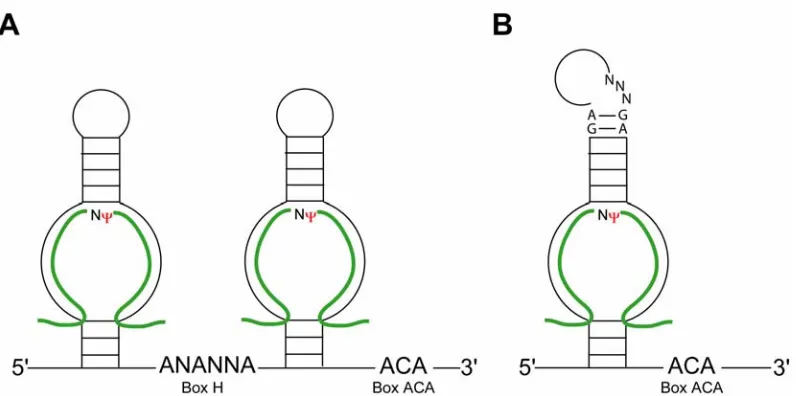
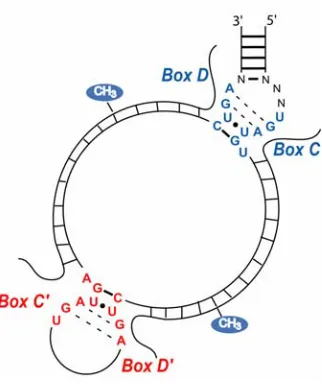
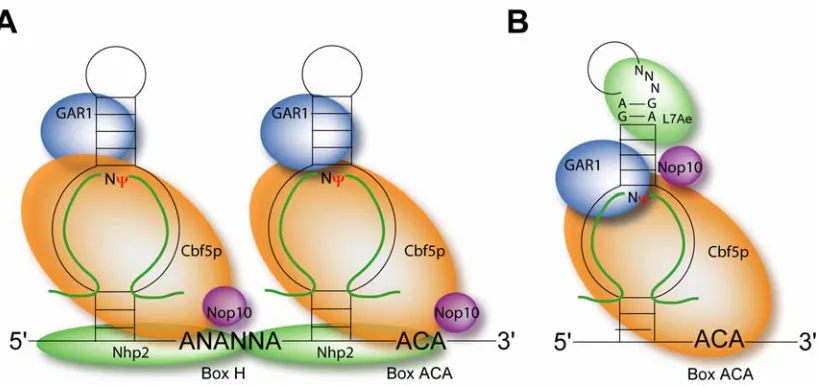
Figure 1. Secondary Structures of Eukaryotic and Archaeal Box H/ACA Guide RNAs.. 5 Figure 2. A Representative Box C/D Guide RNA………. 7 Figure 3. Schematic Representations of Eukaryotic and Archaeal H/ACA RNPs……... 12 Figure 4. Schematic Representation of Eukaryotic and Archaeal Box C/D RNPs..……. 15
CHAPTER I
Figure 1. Secondary Structure of the M. jannaschii sR8 Box C/D sRNA Base
Paired With D and D’ Target RNAs………..….. . 70 Figure 2. Target Nucleotide Methylation Requires A Continuous, Watson-Crick Paired,
Guide:Target RNA Duplex……… … 71 Figure 3. Target Nucleotide Methylation Requires An RNA:RNA Duplex Formed
Between the Guide and Target RNA Sequences………... 72 Figure 4. Elevated Mg+2 Concentrations Promote 2’-O-Methylation of Mismatched
Guide and Target Nucleotides………... … 73 Figure 5. Target Nucleotides Positioned Within Highly Folded Target RNAs Are
LITERATURE REVIEW
I. A Brief History of the Eukaryotic Small Nucleolar RNAs
In the late 1960’s, a novel low molecular weight RNA was isolated from a fraction of nucleolar RNA that had been resolved on a sucrose density gradient. This RNA species was U-rich and distinctly different in base composition from the GC-rich ribosomal RNA of the nucleolus.1,2 This new RNA species lacked amino acid acceptor activity, generally attributed to transfer RNAs (tRNA), and exhibited low template
activity, indicative of messenger RNA (mRNA). Based on these observations, this novel species was reported to be a small, non-messenger RNA of unknown function. 2 Further investigation ultimately demonstrated its specific localization to the nucleolus.
Subsequently, this RNA was designated a small nucleolar RNA or snoRNA, indicative of its small size and cellular location. 2 Eventual sequence analysis defined this snoRNA as U3, the first of what would be many eukaryotic snoRNAs. The nomenclature for the snoRNAs follows the designation system originally established with the splicing snRNAs where U is indicative of “uridine-rich” RNAs and the assigned number indicates the order of snoRNA identification. 3,4
After U3 identification in humans, other organisms were examined for U3 homologs. Investigations demonstrated U3 snoRNAs in diverse vertebrate and plant species as well as Drosophila and yeast. Notably however, no U3 snoRNA was detected in bacterial organisms. The widespread conservation of U3 in eukaryotes indicated a conserved and essential function. Over the last 20 years, a number of eukaryotic
All are localized to the nucleus and, by implication, are involved in ribosome biogenesis.7 Of the known species, U3 is the most abundant at about 200,000 copies per nucleus while other snoRNAs are more modestly represented at between 10,000-20,000 copies per nucleus.4,8 Yeast generally contain fewer snoRNA copies, ranging from a few hundred to slightly more than 1,000.9,10 Vertebrate snoRNAs are typically 75-200 nucleotides in length while yeast guide RNAs can reach lengths of up to 600 nucleotides.7
II. Eukaryotic snoRNA Function
Investigations into snoRNA function have demonstrated several roles for the snoRNAs in ribosomal RNA processing. Certain snoRNA species are required for pre-rRNA cleavage events essential for pre-rRNA biogenesis while others function as pre-rRNA folding chaperones.4,11-14 However, the primary role of most snoRNAs is to direct the site-specific nucleotide modification of cellular RNA targets, primarily rRNA.15-17 The site of nucleotide modification is determined via base pairing between a guide region within the snoRNA and a complimentary sequence in the target RNA.16,18 Because base pairing is essential to snoRNA function, snoRNAs are often referred to as “guide RNAs”.
nucleotide in the snoRNA:target RNA duplex is targeted for methylation.16,18 Box
H/ACA guide RNAs are defined by a conserved box H element (ANANNA) and an ACA nucleotide triplet, located within a hinge region of its bipartite structure and at the 3’ terminus, respectively. This family of guide RNAs is responsible for the site-specific isomerization of uridines to pseudouridines.19-21
III. SnoRNA Homologs Are Found in Archaea
In the three domains of life, Archaea are thought to represent an evolutionary link between Bacteria and Eukarya as Archaea possess characteristics of both. Identification of both 2’-0 methylated nucleotides and pseudouridines in archaeal rRNA led to the search for snoRNA homologs.22 Genome wide searches of several archaeal species and
subsequent sequence comparisons led to the discovery of numerous snoRNA-like molecules called sRNAs.23,24 Like the eukaryotic guide RNAs, archaeal sRNAs are divided into two classes based on conserved sequences, structural features, and functions. Archaeal box H/ACA sRNAs convert uridines to pseudouridines while the box C/D RNAs are responsible for 2’-0 ribose methylation.24,25 Ribosomal RNA is the primary target for sRNA- guided nucleotide modification, although examples of tRNA targets are documented, such as tRNATrp in Haloferax volcanii and four targeted sites in tRNA Leu of Pyrococcus.25-29
number of discovered and predicted sRNAs is less than half that of the eukaryotic snoRNAs. To date, the greatest number of archaeal sRNA species identified in a single organism is approximately 50 in the archaeon Pyrococcus abyssi. 24 Though Archaea lack membrane-bound organelles, the sRNAs are localized to a region equivalent to the eukaryotic nucleus. In P. abyssi, all sRNAs are approximately equal in cellular
abundance except for two which display notably decreased levels.24 The length of archaeal guide RNAs is noticeably shorter than eukaryotic snoRNAs, averaging between 50 and 70 nucleotides.24 As there is no evidence for snoRNA homologs in bacteria, guide RNAs are thus confined to Eukarya and Archaea, providing further evidence for an evolutionary link between these two kingdoms.32
IV. Box H/ACA Guide RNA Structure and Nucleotide Pseudouridylation. The box H/ACA RNAs guide the nucleotide-specific isomerization of uridine to pseudoruidine (ψ). Eukaryotic box H/ACA RNAs fold into a phylogenetically conserved hairpin-hinge-hairpin bipartite structure, where the box H element is positioned within the hinge region (Figure 1). The ACA triplet nucleotide is located downstream of the second hairpin, three nucleotides upstream from the 3’ terminus.19,20 The guide regions, complementary to target RNA sequences, comprise an internal loop within the hair pins. The loop formed by the unpaired guide regions constitutes the “pseudouridylation
pocket” where uridine isomerization occurs.33
pseudouridylation pocket and accompanying guide regions. Also, the box H sequence is frequently absent in archaeal H/ACA RNAs.23 Interestingly, the archaeal H/ACA sRNAs have an additional structural feature, the kink-turn (K-turn), located in the upper region of the stem-loop(s). This RNA element is absent in the eukaryotic H/ACA snoRNAs. The K-turn is a structural motif commonly found in rRNA and, importantly, in both
eukaryotic and archaeal box C/D guide RNAs (discussed below in Box C/D Guide
RNAs).
The mechanism of nucleotide-specific pseudouridylation is conserved between Eukarya and Archaea and achieved through base pairing between the guide region and the target RNA. The designate uridine to be isomerized, is located within the target RNA sequence and positioned by base pairing between the guide sequences and target RNA so that it is unpaired and accessible for isomerization (Figure 1).20 This uridine is typically between 14 and 16 nucleotides upstream of the box H or ACA elements depending on
which hairpin is guiding psuedouridylation. Pseudouridylation may be guided from any hairpin containing guide regions complementary to rRNA sequences.19,20
V. Box C/D Guide RNA Structure and Nucleotide 2’-O-Methylation The primary function of the box C/D guide RNAs is to direct the nucleotide-specific 2’-0 ribose methylation of designated nucleotides within a target RNA.19 The characteristic box C and D sequence elements, RUGAUGA and CUGA, are located at the 5’ and 3’ ends of the guide RNA, respectively. The 5’ and 3’ ends typically base pair and establish a terminal stem-asymmetric bulge-internal stem structure (Figure 2). The asymmetric 5+2 bulge is created by partial base pairing of the box elements which fold into a highly conserved kink-turn or “K-turn” motif.34 This K-turn element was first described in the crystal structure of the Haloarcula marismortui 50S ribosomal subunit and subsequently in eukaryotic U4 snRNA.35 Some eukaryotic box C/D RNAs contain a second, internal pair of box C and D sequences which are homologous to the terminal box C and D sequences. These internal boxes are designated C’ and D’ boxes.15,36,37 The C’ and D’ sequences are often not well conserved and difficult to discern, although the C’ and D’ boxes are believed to form a K-turn motif. Because of the unique structure of this internal K-turn fold, it has been designated the K-loop.38 Guide regions, 10-21
Archaeal box C/D sRNAs are structurally quite similar to the eukaryotic C/D RNAs, though somewhat simplified, suggesting they are more ancient than their evolved eukaryotic counterparts. Like the eukaryotic box C/D snoRNAs, the archaeal sRNAs contain highly conserved terminal boxes C and D which establish a K-turn fold. Archaeal box C/D sRNAs also possess internal box C’ and D’ sequences that are generally very well conserved and often identical in sequence to the terminal box C and D sequences.28 This is in contrast to the highly variable eukaryotic C’ and D’
sequences.37 As all archaeal box C/D sRNAs have C’ and D’ sequences, internal K-loops are a common feature among all species.19,38 Furthermore, the archaeal box C/D sRNAs exhibit a more constrained inter-motif spacing between internal and terminal box
Box C/D-guided 2’-O-methylation is directed by the base pairing of the guide region with the complementary target RNA sequence. The site of 2’-O-methylation is determined by the spatial relationship of the target nucleotide to box D or D’, where the fifth base-paired nucleotide upstream of these box sequences is targeted for
modification.16,18 Box C/D RNAs may direct 2’-O-ribose methylation of target RNAs from one or both guide regions. Sometimes, each guide region in a given sRNA is guiding nucleotide modification in different target RNAs.25,28 Notably, most archaeal sRNAs guide methylation from both guide regions, in contrast to eukaryotes where only about 20% of the box C/D snoRNAs exhibit a dual guide function.25
VI. MRP RNA: The Other Eukaryotic snoRNA.
MRP (mitochondrial RNA-processing) RNA is a small nucleolar RNA and a component of a ribonucleoprotein endoribonuclease. It is a unique snoRNA species in that it lacks any conserved or shared sequence or structural element that would classify it as a box C/D or H/ACA RNA.41 Though MRP was originally identified by its ability to cleave mitochondrial RNA, its primary activity is in the nucleus where it is required for the B1 site-specific cleavage of 5.8S pre-rRNA. Depletion of MRP in yeast has
VII. SnoRNA Core Proteins
Both families of guide RNAs are found in the nucleolus as RNA-protein complexes. Sets of core proteins, absolutely necessary for function, have been defined for both the H/ACA and C/D guide RNAs. In vivo analysis has characterized the conserved proteins for both types of guide RNAs while knockout studies have demonstrated their importance in function. In vitro assembly of guide RNPs using recombinant core proteins has now been accomplished for both the H/ACA and C/D RNPs, although reconstitution of nucleotide modification activity has only been successful in the archaeal sRNP assembly systems.
Box H/ACA RNPs
uridines to pseudouridines.49 Depletion of plasmid-encoded Cbf5p under control of a repressible GAL promoter produced pre-rRNA lacking conserved pseudouridines and resulting in a dramatic decrease in pre-rRNA accumulation.45
The archaeal H/ACA sRNP differs from the eukaryotic complex only by the absence of Nhp2 which is replaced by L7, a homolog of the box C/D protein 15.5 kDa and known to specifically bind K-turn motifs.50,51 The archaeal homologs of the remaining eukaryotic core proteins, Nop10p, Cbf5p, and GAR1, were predicted to exist based on DNA sequence comparisons and they were eventually verified experimentally in several archaeal species. 52,53
Structural Organization of the H/ACA sRNP Complex.
Recent in vitro assembly of eukaryotic proteins suggests that a core trimer of Cbf5p, Nop10 and Nhp2p is formed in the cytoplasm, while GAR1 associates
independently with Cbf5 either during or soon after core trimer formation. The entire complex is then transported to the nucleus presumably through Cbf5, the only protein of the core complex to contain a classic, functional nuclear localization signal.54 Nhp2p, alone, can bind multiple RNA molecules promiscuously, but in concert with other H/ACA core proteins, binds specifically to the H/ACA RNAs.55,56 Nhp2p binding to the core complex is apparently mediated by Nop10.56 Nhp2p and Nop10p may play
Biochemical evidence indicates that CBf5p makes specific contacts with both the ACA triplet and the ψ pocket57, supporting a model that describes the ψ pocket
containing the target uridine positioned in the catalytic center of Cbf5p.49,57 This is in fact confirmed by the recent crystal structure of the core trimer by Singh et al. and subsequent modeling and retro-fitting the core trimer onto model guide and target RNA duplex. The location of GAR1 within the RNP is not well understood, although there is evidence that GAR1 may interact with both guide RNA and target RNA. Crosslinking data indicates a specific contact with the target uridine while crystal structure analysis demonstrates a GAR1 interaction with the target RNA and Cbf5. Interestingly, the region of protein-protein contact between GAR1 and Cbf5 is a domain attributed to Cbf5-target RNA binding.49,56,58 Possibly, GAR1 may act as a clamp, stabilizing the Cbf5p – target RNA interface and positioning the target uridine correctly in the Cbf5p active site.49,56
Box C/D RNPs
Box C/D guide RNAs are also tightly associated with a set of core proteins. In eukaryotes, the core snoRNP complex possesses four proteins which are the 15.5kD protein, Nop56p, Nop58p, and fibrillarin (Nop1p in yeast).19 The archaeal C/D sRNP is comprised of only three core proteins; L7, the archaeal homolog of 15.5 kD, a fibrillarin homolog, and a single homolog of Nop56 and Nop58, denoted Nop56/58 (Nop5p).45,59-62 Both the 15.5 kDa protein and L7 belong to a family of RNA binding proteins including ribosomal proteins S12, L30, L7a, and the box H/ACA-associated Nhp2p.50,63,64 15.5 kDa binds specifically to the terminal K-turn motif created by base pairing of the C and D box elements. 35,65 Interestingly, L7 binds both the terminal and internal K-turn motifs, in contrast to15.5 kDa which binds only the terminal K-turn.35,62,65 Initial binding of 15.5 kDa and L7 is considered the nucleation event required for subsequent binding of the remaining core proteins. 49,50,62,66
Fibrillarin (Nop1p) is responsible for the methyl transferase activity of both archaeal and eukaryotic box C/D guide RNAs and uses S-adenosyl methionine as the methyl donor. Fibrillarin was identified as the putative methylase based on its consistent association with box C/D snoRNAs8 and structural homology to other known methyl transferases.67-69 Fibrillarin is a member of the RGG-motif family, like the H/ACA component GAR1p, and possesses an N-terminal glycine/arginine rich (GAR) domain as well as an internal RNA binding domain. Fibrillarin knockouts in yeast are lethal while temperature-sensitive mutants in both yeast and mice result in dramatic decreases in conserved pre-rRNA methylation sites coupled with aberrant pre-RNA processing.69 Point mutations in the active site of yeast fibrillarin inhibit overall ribose methylation in pre-rRNA while similar mutations in the archaeal fibrillarin homolog (Archaeoglobus
fulgidus) abolish methylation of a synthetic target RNA in an in vitro assay.70
methylation and are believed to be structural proteins important for stabilizing snoRNA conformation and/or providing a scaffold for RNP assembly and subsequent fibrillarin binding.49,60,72
Structural Organization of the Eukaryotic and Archaeal Box C/D RNP Complexes While archaeal sRNP core protein L7 binds both the terminal K-turn and internal K-loop,49,50 the eukaryotic homolog 15.5 kDa strikingly binds only the terminal K-turn.35,62,65,73 The dissociation constant for these two proteins is quite similar and determined to be approximately 10 nM indicating their very tight affinity for the K-turn motif.50 The binding of this core protein occurs first as demonstrated with in vitro RNP assembly systems.74
contact with both the C/D and C’/D’ motifs. This is the only eukaryotic box C/D snoRNP core protein to do so.75 In Archaea, fibrillarin appears to dimerize with
Nop56/58 and assembles on the guide RNA as a heterodimer. Thus, this heterodimer of fibrillarin and Nop56/58, present on the C/D and C’/D’ motif, has been described as a protein “platform” essential for target RNA binding and nucleotide methylation.77
VIII. snoRNA Genomic Organization and Biosynthesis
The eukaryotic snoRNAs exhibit several different genomic organizations with specific organisms using a combination of gene organizations and different gene
organizations predominating in different organisms. The majority of metazoan box C/D and H/ACA snoRNAs are encoded within introns of protein-coding genes. These
snoRNAs are transcribed as part of the pre-mRNA transcript by RNA Polymerase II (pol II) and released during pre-mRNA splicing events.4,78-81 Originally, intron-encoded
snoRNAs were thought to exist only in protein-coding pre-mRNAs, but later studies discovered intronic snoRNAs within pre-mRNAs that do not code for proteins.15,19,82,83 As processed introns, these snoRNAs do not possess methylated 5’ caps nor poly A tails. In contrast, the non-intronic snoRNAs, such as U3, U8, and U13, are independently transcribed by RNA Pol II and do possess 5’ methyl caps and 3’ poly-adenylated tail modifications.4,9,10
Host genes that harbor snoRNAs within their introns often encode proteins with related functions. The proteins of most host genes play roles in nucleolar function, ribosome structure, or protein synthesis.4,84 This organization may be significant in terms of co-regulating snoRNA biosynthesis with the synthesis of specific proteins important in ribosome biogenesis or function. However, since not all intronic snoRNAs are located within such host genes, this hypothesis may not be applicable for all snoRNAs.4,19,85-87
Maturation of intron-encoded snoRNAs requires the excision of the host intron from the pre-mRNA primary transcript, lariat debranching of the host intron and
subsequent exonucleolytic trimming of the intron sequences flanking the snoRNA.88,89 A second, less utilized pathway for snoRNA maturation involves direct excision from the host intron using intron-specific endonucleases followed by exonucleolytic
boxes of the box C/D snoRNAs and the H box of the H/ACA snoRNAs , sequence elements all critical for core protein binding, are detrimental to intronic snoRNA
biosynthesis.93-94 Also, depletion of fibrillarin and Nop58, which are known to bind the C and D boxes, reduces the accumulation of snoRNAs.76 These findings have led to the processing model where the core proteins are assembled on the precursor snoRNA while still contained in the intron and the binding of the core proteins defines the stop sites for the trimming exonucleases during intronic snoRNA processing.68
Unlike metazoan snoRNAs, most yeast snoRNAs are organized in monocistronic, independently transcribed units, although some are transcribed as polycistronic RNAs under the control of a single promoter. Only a few yeast snoRNAs are processed from pre-mRNA introns.17,95-98 Interestingly, plant snoRNA biosynthesis and processing is more closely related to that of yeast, as the vast majority of plant snoRNAs are independent Pol II transcripts arranged as polycistronic snoRNAs.98 Strikingly, the sequence elements crucial for processing in animals, plants, and fungi are identical and conserved for intronic, non-intronic, and polycistronic snoRNAs.
Transcription and processing of the archaeal sRNAs is not well understood at this time. Most of the identified sRNAs are located within spacer regions between protein open reading frames suggesting their transcription as independent RNAs.28 To date, there is only one example of an archaeal sRNA being encoded within the intron of another gene. The coding sequences for sR40 sRNA of Pyrococcus, sR3 of A. fulgidus and H.
and C’/D’ guide sequences are complimentary to two sites in the mature tRNATrp and these intronic elements are responsible for these two tRNATrp methylation events.25-28 Despite original suggestions that the tRNA methylations were guided in cis by the intron-encoded box C/D and C’/D’ RNPs of the precursor tRNA, subsequent work has
demonstrated that these two nucleotide modifications are carried out in trans using the excised tRNATrp intron.29,82
IX. Alternative Roles for snoRNAs in pre-rRNA Processing
The primary role of the eukaryotic snoRNAs and archaeal sRNAs is to guide the site-specific modification of target RNA nucleotides. Key in the nucleotide modification mechanism is the base pairing of the guide RNA with the target RNA. Intermolecular hydrogen bonding of guide RNAs with other RNA species is a feature shared by all guide RNAs, but for certain species this intermolecular interaction serves additional functions apart from directing nucleotide modification.
Directing rRNA Cleavage or Chaperoning rRNA Folding.
The first snoRNAs described in both humans and yeast were shown to be important for pre-rRNA processing and the site-specific cleavage of the precursor
Some snoRNAs possess guide sequences that are complimentarity to rRNA but are not involved in nucleotide modification and may or may not be involved in pre-rRNA cleavage events. These snoRNAs act as RNA chaperones, base pairing with the pre-rRNA to either prevent pre-rRNA misfolding or even facilitate the correct folding of the precursor. Two such snoRNAs are U3 which assists in 5’ end pre-rRNA folding as well as pre-rRNA cleavage, and U8 which chaperones the folding of the 28S/25S rRNA late in pre-rRNA processing events. For each of these snoRNAs, they base pair with multiple sequences on the pre-RNA to assist in folding of the precursor transcript.12,100-103
SnoRNAs Involved in Gene Regulation.
Recent work has suggested a potential role for specific snoRNAs in the regulation of specific target gene transcripts. The lone example and basis for this speculation is the brain-specific snoRNA MBII-52. Experiments have shown that this box C/D snoRNA regulates the splicing pathway of its target mRNA, the serotonin receptor gene 5-HT2c. Preliminary investigation of MBII-52 and 5-HT2c indicate a potential target adenosine for methylation. This particular nucleotide is also the target of adenosine-to-inosine mRNA editing104,105 within a critical region required for alternative pre-mRNA
X. Targets of Eukaryotic snoRNA and Archaeal sRNA Function
The eukaryotic snoRNAs were originally characterized as guide RNAs that function in the post-transcriptional processing and modification of ribosomal RNA. However, further characterization in Eukarya and Archaea has now expanded the list of target RNAs to include the snRNAs, tRNAs, and even some mRNAs.
Ribosomal RNAs:. Primarily, snoRNAs direct the 2’-O methylation or
pseudouridylation of pre-ribosomal rRNA. These RNA-guided nucleotide modifications in yeast, human, and multiple archaeal species tend to cluster in an area of the folded rRNA that is located within the peptidyl transferase center of the ribosome. These
studies suggest that the conserved location of these modifications may play essential roles in the structure and/or function of the catalytic center of the ribosome.108-110 Of course, snoRNA function in the nucleolus also includes roles in pre-rRNA cleavage events and chaperone functions in pre-rRNA folding.
Small nuclear RNAs: Apart from pre-rRNA, other snoRNA targets for nucleotide modifications include the small nuclear RNAs. The splicesomal snRNAs U1, U2, U4, U5, and U6 are known to contain several sites that are either 2’-O-methylated or
Transfer RNAs: RNA-guided modification of tRNAs is specific to archaeal organisms as no yeast or mammalian tRNA targets have yet been described.19,27 Archaeal sRNAs which target tRNAs were first identified based on a lack of sRNA sequence complimentarity to rRNA. Subsequent sequence analysis led to the
identification of various target tRNAs. The first and most studied example of a tRNA modified by guide RNAs is the tRNATrp, from Haloferax volcanii, modified by guide sequences located within pre-tRNATrp sequence.25-29 Not long after the initial
characterization of the H. volcanii tRNATrp sRNA, four other sRNAs that target tRNAs for modification were identified in Pyrococcus horokoshii. sR47, sR48, sR49, and sR50 all contain a nucleotide antisense element complimentary to a sequence within tRNA-Leu (CAA), tRNA-Leu(UAA), elongator tRNA-Met, and tRNA-Trp, respectively.19,27
Recently, twenty box C/D sRNAs have been identified that direct methylation of 19 tRNAs in Pyrobaculum aerophilum.113 Although experimental evidence confirming tRNA modification by sRNAs is ongoing, the conservation of modified nucleotides at the predicted sites within tRNAs is a good indication of sRNA guided modification. Analysis has indeed demonstrated that the single sR17 sRNA of Aeropyrum pernix modifies the G10 nucleotide of 19 different tRNAs. 28
Messenger RNAs: Messenger RNAs are also known targets of snoRNAs although rarer and less well characterized than other target RNAs. Currently, there are only two known mRNAs that are candidates for modification by snoRNAs. The spliced leader of
is complimentary to another RNA displaying characteristics of the box H/ACA
snoRNAs. In vitro studies indicate that disruption of the canonical duplex between the guide RNA and spliced leader (SL) RNA abolish pseudouridylation of the target
nucleotide.114 Likewise, the serotonin receptor 5-HT2c mRNA, specifically expressed in brain tissue, is a proposed methylation target for snoRNA MBII-52, also specifically expressed in the brain. Preliminary studies suggest that MBII-52 may play a role in the alternative splicing pathways of 5-HT2c as well as in the modification of its target base.105
XI. In Vitro Reconstitution of a Catalytically Active Box C/D RNP In 2002, recombinant archaeal box C/D core proteins from Sulfolobus
acidocaldarius and in vitro-transcribed sRNA were successfully assembled into a functional sRNP complex that was capable of site-specific, 2’-O-methylation of a target RNA in vitro. Binding of L7, Nop56/58, and fibrillarin core proteins to the sRNA was demonstrated by an electrophoretic mobility-shift analysis to assemble a stable sRNP complex. Activity of this sRNP was demonstrated with the incorporation of a tritiated methyl group donated by the 3H-S-adenosyl-methionine (SAM) substrate into the target RNA. Specificity of the reaction for the target nucleotide was confirmed by 2-
Work in our lab has also established an in vitro sRNP assembly system using recombinant core proteins and in vitro transcribed RNA of Methanocaldococcus
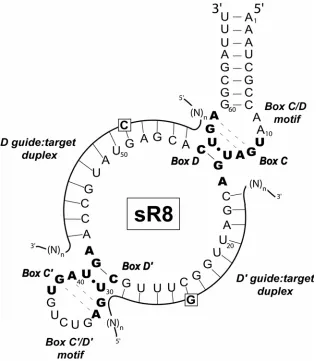
jannischii. The selected box C/D sRNA, sR8, exhibits perfectly conserved box elements C, D, C’, and D’, folds into the expected terminal box C/D and internal C’/D’ K-turn structures115, and a five nucleotide terminal stem flanks the box C/D core motif.62 In
vivo, sR8 directs methylation of both pre-rRNA and tRNA, thereby employing both of its 12 nucleotide antisense elements for nucleotide modification. Initial experiments
demonstrated the sequential binding of the sRNP core proteins and the methylation of two different synthetic target RNAs, each of which base paired with the D or D’ guide regions. Subsequent work has demonstrated the importance of juxtaposed box C/D and C’/D’ RNPs for efficient methylation activities and the importance of conserved spacing between these two complexes for nucleotide modification.40,62 Most recently, we have demonstrated that self-dimerization of the Nop56/58 coiled-coil domain is not important for sRNP assembly nor nucleotide modification, but this domain itself is critical for nucleotide methylation activities.77
typical 12 nucleotides, the other spacer almost always exhibits the conserved 12
nucleotide length.62 This suggests that inter-RNP interactions are likely to play critical roles in methylation activity and perhaps specificity.
Alteration of the spacing between the box C/D and C/D’ motifs had no affect upon core protein binding to either RNA motif nor sRNP assembly.62 However, shortening or lengthening spacer regions severely disrupted nucleotide methylation activity for both RNP complexes. Interestingly, when only one spacer region was altered, the enzyme activity of the corresponding RNP was disrupted but the other complex was unaffected. This observation again suggests that potential protein crosstalk interactions between the motifs are important for sRNP methylation activity.62
XII. Structural and Functional Features of the Target-Guide Duplex
In vitro assembly systems now provide model systems to facilitate the systematic study of target RNA methylation. Apart from the core proteins and conserved box elements, specific structural features of the sRNA guide sequence:target RNA duplex may also play important roles in not only the methylation function but also target nucleotide specificity. Such features of the sRNP complex and the guide RNA:target RNA duplex are discussed here.
colleagues first demonstrated the importance of a Watson-Crick pair at the target nucleotide when they examined guide sequence:target RNA interaction in their in vitro box C/D sRNP assembly system.74 Since then, other labs have examined this feature of guide RNA:target RNA interaction and found that Watson-Crick base pairing may not be a universal requirement for sRNA-guided methylation. In vivo studies examining
snoRNA-guided nucleotide modification in mouse L929 cells revealed that in addition to Watson-Crick pairs, methylation proceeded when the target nucleotide was paired using the non-Watson-Crick G:U base pair. However, other non-Watson-Crick pairs did not permit nucleotide methylation.116 In contrast, Singh et al (2005) recently established an
in vitro sRNP assembly and target RNA methylation system using tRNATrp from
Haloferax volcanii. This box C/D guide RNA and target RNA are unique in that they are one in the same, with the intron-located box C/D and C’/D’ motifs guiding the 2’-O-methylation of two target tRNATrp nucleotides contained in the tRNATrp precursor RNA. Their analysis of the base pairing requirements at the target site revealed that most any base pair combination other that G:G, C:C, and U:U resulted in some degree of
methylation of the target nucleotide. In this study, the specificity of nucleotide
methylation was verified by two-dimensional TLC analysis, demonstrating the specific methylation of the target nucleotide despite interacting with the guide nucleotide using non-Watson-Crick pairing or base mismatches.29
These discrepancies may reflect not only differences in specificity between in
global feature of any model system chosen for experimentation. Possible factors affecting sRNP enzyme specificity are more fully examined and discussed in the following chapter using our M. jannaschiiin vitro sRNP assembly and methylation system.
Structural Features of the Guide Sequence:Target RNA Duplex
Recent studies have explored some structural features of the sRNA guide:target RNA duplex. In vivo studies were carried out with an engineered snoRNA guide sequence of 17 nucleotides complementary to a co-transfected, target RNA-containing vector. These investigations demonstrated a minimal guide:target duplex was required for snoRNP-guided nucleotide methylation. A target-guide duplex of 8 base pairs was incapable of promoting methylation activity. As the guide:target duplex length was increased from 9 to 17 base pairs, a corresponding increase in methylation activity was observed.116
methylation. Presumably, bulges in close proximity to the target nucleotide sterically hinder appropriate RNA-protein contacts or, alternatively, alter the positioning of the target nucleotides 2’ hydroxyl group within the catalytic center of fibrillarin.116
XIII. Synopsis of Thesis Research
The longstanding working model for RNA-guided modification dictates that a Watson-Crick, base paired RNA duplex is formed between the snoRNA/sRNA’s guide region and the target RNA sequence. With the identification of snoRNAs that guide methylation despite non-canonical base pairs at the target nucleotide or vary in methylation efficiency based upon RNA:RNA duplex base composition, this working model of guide sequence:target nucleotide interaction requires further examination. Our established archaeal in vitro box C/D sRNP assembly system can directly explore those sRNA:target RNA interactions needed for nucleotide methylation both easily and directly.
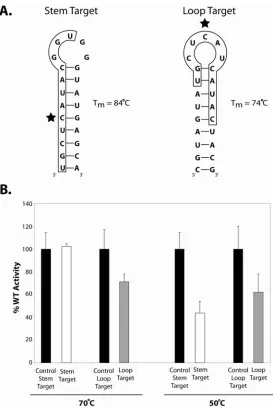
the guide RNA:target RNA duplex. However, methylation of mismatched base pairs could be induced under very elevated concentrations of MgCl2. Other structural features of this RNA:RNA duplex were also examined. Using chimeric DNA/RNA oligos as target RNAs for the assembled sR8 sRNP, we demonstrated that inserted single DNA nucleotides in RNA target had no effect upon methylation unless inserted at the target nucleotide site. However, replacement of the RNA target with a DNA oligonucleotide revealed the importance of an RNA:RNA duplex for nucleotide methylation. Finally, the ability of the guide RNA to efficiently methylate a target nucleotide positioned within a highly structured RNA hairpin or the loop region of an RNA hairpin-loop structure was examined. Interestingly, target nucleotides located within a highly folded RNA target affected methylation efficiency somewhat, but still permitted modification of the target nucleotide. This suggests an ability of the assembled sRNP complex to facilitate target RNA unfolding needed for the methylation reaction. Collectively, these results
REFERENCES
1. Muramatsu, M., J. L. Hodnett, and H. Busch (1968) Base composition of fractions of nuclear and nucleolar ribonucleic acid obtained by sedimentation and chromatography. J. Biol. Chem. 241:1544-1550.
2. Nakamura, T., A. Prestayko, and H. Busch (1968) Studies on nucleolar 4 to 6S ribonucleic acid of Novikoff hepatoma cells. J. Biol. Chem. 243:1368-1375. 3. Busch, H., R. Reddy, L. Rothblum, YC. Choi (1982) SnRNAs, SnRNPs, and RNA
processing. Ann. Rev. Biochem. 51:617-54.
4. Maxwell, E. S and M. J. Fournier (1995) The small nucleolar RNAs. Ann. Rev. Biochem. 35:897-934.
5. Vitali, P., et al. (2003) Identification of 13 novel human modification guide RNAs. Nucleic Acids Res. 31:6543-6551.
6. Terns, M. and R. Terns (2002) Small nucleolar RNAs: versatile trans-acting molecules of ancient evolutionary origin. Gen. Express. 10:17-39.
7. Fournier, M. J., and E. S. Maxwell (1993) The nucleolar snRNAs: catching up with the splicesomal snRNAs. Trends Biochem Sci. 18:131-135.
8. Tyc, K and J. Steitz (1989) U3, U8, and U13 comprise a new class of mammalian snRNPs, loclalized in the cell nucleolus. EMBOJ. 8:3113-3119. 9. Wise, J. A., et al. (1983) Yeast contains small nuclear RNAs encoded by single
copy genes. Cell 35:743-751.
10. Reidel, N., et al. (1986) Small nuclear RNAs from Saccharomyces cerevisiae: unexpected diversity in abundance, size, and molecular complexity. Proc Natl Acad Sci,. 83:8097-101.
11. Li, H. V, J. Zagorski, and M. J. Fournier (1990) Depletion of U14 small nuclear RNA (snRl28) disrupts production of 18S rRNA in Saccharomyces cerevisiae. Mol. Cell. Biol. 10:1145-1152.
12. Kass S., K. Tycowski, J. A. Steitz, B. Sollner-Webb (1990) The U3 small nucleolar ribonucleoprotein functions in the first step of preribosomal RNA processing. Cell. 60:897-908.
13. Morrisey J. P. and D. Tollervey (1993) Yeast snR30 is a small nucleolar RNA required for 18S rRNA synthesis. Mol Cell Biol. 13:2469-2477.
U22 small nucleolar RNA in 18S ribosomal RNA maturation. Science 2:1558-61. 15. Tycowski, K., et al.(1996) A small nucleolar RNA requirement for site-specific
ribose methylation of rRNA in Xenopus. Proc. of the Natl. Acad. Sci. 93:1480-1485.
16. Kiss-Laszlo, Z, et al. (1996) Site-specific ribose methylation of pre-ribosomal RNA: a novel function for small nucleolar RNAs. Cell. 85:1077-1088.
17. Lowe T. M., S. R. Eddy (1999) A computational screen for methylation guide snoRNAs in yeast. Science 283:1168-1171.
18. Cavaille J., M. Nicoloso, J.P. Bachellerie (1996) Targeted ribose methylation of RNA in vivo directed by tailored antisense RNA guides. Nature 383:732–735. 19. Bachellerie, J. P., J. Cavaille, A. Huttenhofer (2002) The expanding snoRNA
world. Biochemie 84:775-790.
20. Ganot , P., M. Caizergues-Ferrer, and T. Kiss (1997) The family of box H/ACA small nucleolar RNAs is defined by an evolutionarily conserved secondary structure and ubiquitous sequence elements essential for RNA accumulation. Genes Dev. 11:941-956.
21. Balakin, A., L. Smith, and M. Fourneir (1996), The RNA World of the nucleolus: two major familes of small RNAs defined by different box elements with related functions. Cell 86:823-834.
22. Noon K. R., E. Bruenger, J.A . McCloskey (1998) Posttranscriptional
modifications in 16S and 23S rRNAs of the archaeal hyperthermophile Sulfolobus solfataricus. J Bacteriol. 11:2883-2888.
23. Tang, T.H., et al. (2002) Identification of 86 candidates for small non-messenger RNAs from the archaeon Archaeoglobus fulgidus. Proc. Natl Acad. Sci. 99:7536– 7541.
24. Gaspin, C., J. Cavaille, G. Erausoand J. P. Bachellerie (2000)Archaeal homologs of eukaryotic methylation guide small nucleolar RNAs: Lessons from the
Pyrococcus genomes. J. Mol. Biol. 297:895-906
25. Omer, A. D., et al. (2000) Homologs of small nucleolar RNAs in Archaea. Science 288:517-522.
27. d’Orvall, B. C. et al. (2001) Box C/D RNA guides for the ribose methylation of archaeal tRNAs. The tRNATrp intron guide the formation of two ribose- methylated nucleosides in the mature tRNATrp. Nucleic Acids Res. 29:4518-4529.
28. Dennis P. P., A. Omer, and T., Lowe (2000) A guided tour: small RNA function in Archaea. Mol Microbiol. 40:509-19.
29. Singh S. K., et al. (2004) Sequential 2'-O-methylation of archaeal pre-tRNATrp nucleotides is guided by the intron-encoded but trans-acting box C/D
ribonucleoprotein of pre-tRNA. J Biol Chem. 279:47661-71.
30. Ofengand J., M.Del Campo, Y. Kaya (2001) Mapping pseudouridines in RNA molecules. Methods 25:365-73.
31. Olsen, G. J. and C. R. Woese (1997) Archaeal genomics: an overview. Cell 89:991–994.
32. Tran, E., J. Brown, E.S. Maxwell (2004) Evolutionary origins of the RNA-guided nucleotide-modification complexes: from the primitive translation apparatus? Trends in Biochem. Sci. 29:343-350.
33. Ganot P, et al. (1997) Site-specific pseudouridine formation in preribosomal RNA is guided by small nucleolar RNAs. Cell 89:799-809.
34. Klein, D., et al. (2001) The kink-turn: a new RNA secondary structure motif. EMBO J. 20:4214-4221.
35. Vidovic I., S. Nottrott, K. Hartmuth, R. Luhrmann, R. Ficner (2000) Crystal structure of the spliceosomal 15.5 kD protein bound to a U4 snRNA fragment. Mol. Cell. 6:331–1342.
36. Kiss-Laszlo, Z., Y. Henry, and T. Kiss (1998) Sequence and structural elements of methylation guide snoRNAs essential for site-specific ribose methylation of pre-rRNA. EMBO J. 17:797-807.
37. Rashid, R., et al. (2003) Functional requirement for symmetric assembly of archaeal box C/D small ribonucleoprotein particles. J. Mol. Biol. 33:295-306 38. Nolivos, S., A. J. Carpousis, and B. Clouet-d’Orval (2005) The K-loop, a general
feature of the Pyrococcus C/D guide RNAs, is an RNA structural motif related to the K-turn. Nucleic Acids Res. 33:6507-6514.
to their direct role as guides for the 2'-O-ribose methylation of rRNAs. J. Mol. Biol. 260:178–195.
40. Tran E., et al. (2005) Conserved spacing between the box C/D and C'/D' RNPs of the archaeal box C/D sRNP complex is required for efficient 2'-O-methylation of target RNAs. RNA 11:285-293.
41. Schmitt, M. E. and D. A. Clayton (1993) Nuclear RNase MRP is required for correct processing of pre-5.8S rRNA in Saccharoyces cerevisiae. Mol. Cell. Biol. 13:2433-2443.
42. Morrissey, J. P. and D. Tollervey (1995) Birth of the snoRNPs: the evolution of RNase MRP and the eukaryotic pre-rRNA-processing system. TIBS 20:78-82. 43. Girard, Jean-Philippe et al. (1992) GAR1 is an essential small nucleolar RNP
protein required fro pre-rRNA processing in yeast. EMBO J. 11:673-682. 44. Henras, A. Y. et al., (1998) Nhp2p and Nop10p are essential for the function of
H/ACA snoRNPs. EMBO. J. 17:7078–7090.
45. Lafontaine D.L., C. Bousquet-Antonelli, Y. Henry, M. Caizergues- Ferrer, D. Tollervey (1998) The box H + ACA snoRNAs carry Cbf5p, the putative rRNA pseudouridine synthase. Genes Dev. 12:527–537.
46. Watkins N.J., A. Gottschalk, G. Neubauer, B. Kastner, P. Fabrizio, M. Mann, R. Luhrmann (1998) Cbf5p, a potential pseudouridine synthase, and Nhp2p, a putative RNA-binding protein, are present together with Gar1p in all H BOX/ACA-motif snoRNPs and constitute a common bipartite structure. RNA 4:1549–1568.
47. Koonin, E.V., et al. (1996) Pseudouridine synthases: Four families of enzymes containing a putative uridine-binding motif also conserved in dUTPases and dCTP deaminases. Nucleic Acids Res. 24:2411–2415.
48. Nurse, K., J. Wrzensinski, A. Bakin, B.G. Lane, and J. Ofengand (1995)
Purification, cloning, and properties of the tRNA C55 synthase from Escherichia coli. RNA 1:102–112.
49. Rashid, R. et al. (2006) Crystal structure of a Cbf5-Nop10-Gar1 complex and implications in RNA-guided pseudouridylation and Dyskeratosis Congenita. Mol. Cell 21:249-260.
51. Rozhdestvensky T.S., et al (2003) Binding of L7Ae protein to the K-turn of archaeal snoRNAs: a shared RNA binding motif for C/D and H/ACA box snoRNAs in Archaea.Nucleic Acids Res. 31:869-877.
52. Watanabe, Y. and M. W. Gray (2000) Evolutionary appearance of genes encoding proteins associated with box H/ACA snoRNAs: cbf5p in Euglena gracilis, an early diverging eukaryote, and candidate Gar1p and Nop10p homologs in archaebacteria. Nucleic Acids Res. 28:2342-2352.
53. Bult C. J., et al. (1996) Complete genome sequence of the methanogenic archaeon, Methanococcus jannaschii. Science 73:1058-1073.
54. Girard JP, et al. (1994) Identification of a segment of the small nucleolar ribonucleoprotein- associated protein GAR1 that is sufficient for nucleolar accumulation. J. Biol. Chem. 269:18499–18506.
55. Henras A., et al. (2001) Accumulation of H/ACA snoRNPs depends on the integrity of the conserved central domain of the RNA-binding protein Nhp2p. Nucl. Acids Res. 29:2733–2746.
56. Weng, C. and U. T. Meier (2004) Architecture and assembly of mammalian H/ACA small nucleolar and telomerase ribonucleoproteins. EMBO J. 23:1857-1867.
57. Baker, D. L., et al.(2005) RNA-guided RNA modification: functional organization of the archaeal H/ACA RNP. Genes and Dev. 19:1238-1248.
58. Bagni C, and B. Lapeyre (1998), Gar1p binds to the small nucleolar RNAs snR10 and snR30 in vitro through a nontypical RNA binding element. J. Biol. Chem. 273:10868–10873.
59. Amiri, K. (1994) Fibrillarin-like proteins occur in the domain Archaea. J. Bacteriol. 176:2124-2127.
60. Wu, P., et al. (1998) Nop5p is a small nucleolar ribonucleoprotein component required for pre-18 S rRNA processing in yeast. J. Biol. Chem. 273:16453-16463.
61. Lafontaine, D. L., and D. Tollervey (1999) Nop58p is a common component of the box C+D snoRNPs that is required for snoRNA stability. RNA 3:455-67.
63. Koonin, E., P. Bork, and C. Sander (1994) A novel RNA-binding motif in omnipotent suppressors of translation termination, ribosomal proteins and a ribosome modification enzyme?, Nuc Acids Res. 22:2166-2167.
64. Watkins NJ, A. Dickmanns, R. Luhrmann (2002) Conserved stem II of the box C/D motif is essential for nucleolar localization and is required, along with the 15.5K protein, for the hierarchical assembly of the box C/D snoRNP. Mol. Cell Biol. 23:8342-52.
65. Watkins, N. et al. (2000) A common core RNP structure shared between the small nucleolar box C/D RNPs and the spliceosomal U4 snRNP. Cell 103:457-466 66. Nottrott S., et al. (1999) Functional interaction of a novel 15.5kD [U4/U6.U5] tri-
snRNP protein with the 5' stem loop of U4 snRNA. EMBO J. 18:6119–6133. 67. Wang H., et al. (2000) Crystal structure of a fibrillarin homologue from
Methanococcus jannaschii, a hyperthermophile, at 1.6 A resolution. EMBO. J. 19:317–323.
68. Niewmierzycka A., and S. Clarke (1999) S-Adenosylmethionine-dependent methylation in Saccharomyces cerevisiae. Identification of a novel protein arginine methyltransferase. J. Biol. Chem. 274:814–824.
69. Tollervey D., et al. (1993) Temperature-sensitive mutations demonstrate roles for yeast fibrillarin in pre-rRNA processing, pre-rRNA methylation, and ribosome assembly. Cell 72:443–457.
70. Aittaleb, M., et al. (2004) Structural and thermodynamic evidence for a
stabilizing role of Nop5p in S-adenosyl-L-methionine binding to fibrillarin. J Biol Chem. 279:41822-41829.
71. Lyman S. K., Gerace L., Baserga S. J. (1999) Human Nop5/Nop58 is a component common to the box C/D small nucleolar ribonucleoproteins. RNA 12:1597-604. 72. Gautier, T., et al. (1997) Nucleolar KKE/D repeat proteins Nop56p and Nop58p
interact with Nop1p and are required for ribosome biogenesis. Mol. Cell. Biol. 17:7088-7098.
73. Szewczak, L. B., et al. (2002) Exclusive interaction of the 15.5 kD protein with the terminal box C/D motif of a methylation guide snoRNP. Chem Biol. 10:1095-107.
75. Cahill, N. M., et al. (2002) Site specific cross-linking analyses reveal an
asymmetric protein distribution for a Box C/D snoRNA. EMBO J. 21:3816-3828. 76. Lafontaine, D and D. Tollervery (2000) Synthesis and assembly of the box C+D
snoRNPs. Mol. Cell. Biol. 20:2650-2659.
77. Zhang X., et al. (2006) The coiled-coil domain of the Nop56/58 core protein is dispensable for sRNP assembly but is critical for archaeal box C/D sRNP-guided nucleotide methylation. RNA 12:1092-1103.
78. Tycowski K.T., M.D. Shu, J.A. Steitz (1993) A small nucleolar RNA is processed from an intron of the human gene encoding ribosomal protein S3. Genes Dev. 7:1176-90.
79. Fragapane P., et al. (1993) A novel small nucleolar RNA (U16) is encoded inside a ribosomal protein intron and originates by processing of the pre-mRNA. EMBO J. 12:2921-2928.
80. Kiss, T and W. Filipowicz (1993) Small nucleolar RNAs encoded by introns of the human cell cycle regulatory gene RCC1. EMBO J. 12:2913-2920.
81. Liu J, and E. S. Maxwell (1990) Mouse U14 snRNA is encoded in an intron of the mouse cognate hsc70 heat shock gene. Nucleic Acids Res. 18:6565-6571.
82. Bortolin, M. L. and T. Kiss (1998) Human U19 intron-encoded snoRNA is
processed from a long primary transcript that possesses little potential for protein coding. RNA 4:445-454.
83. Pelczar, P. and W. Filipowicz (1998) The host gene for intronic U17 small nucleolar RNAs in mammals has no protein-coding potential and is a member of the 5'-terminal oligopyrimidine gene family. Mol Cell Biol. 18:4509-4518. 84. Filipowicz, W., P. Pelczar, V. Pogacic, F. Dragon (1999) Structure and
biogenesis of small nucleolar RNAs acting as guides for ribosomal RNA modification. Acta Biochim Pol. 46:377-389.
85. Renalier, M. H., et al. (2005) The Cm56 tRNA modification in archaea is catalyzed either by a specific 2'-O-methylase, or a C/D sRNP. RNA 11:1051-1063.
86. Xia, L. et al. (1995) Intronic U14 snoRNAs of Xenopus laevis are located in two different parent genes and can be processed from their introns during early oogenesis. Nucl. Acids Res. 23:4844–4849.
88. Petfalski E., et al. (1998) Processing of the precursors to small nucleolar RNAs and rRNAs requires common components. Mol Cell Biol. 18:1181-1189.
89. Weinstein, L.B. and J.A. Steitz (1999) Guided tours: from precursor snoRNA to functional snoRNP. Curr. Opin. Cell. Biol. 11:378–384.
90. Ooi, S. L., et al. (1998) Intronic snoRNA biosynthesis in Saccharomyces cerevisiae depends on the lariat-debranching enzyme: intron length effects and activity of a precursor snoRNA. RNA 4:1096-1110.
91. Villa, T., et al. (1998) Processing of the intron-encoded U18 small nucleolar RNA in the yeast Saccharomyces cerevisiae relies on both exo- and endonucleolytic activities. Mol Cell Biol. 18:3376-83.
92. Watkins N. J., et al. (1996) Elements essential for processing intronic U14 snoRNA are located at the termini of the mature snoRNA sequence and include conserved nucleotide boxes C and D. RNA 2:118-133.
93. Huang L., et al. (1998) A conserved aspartate of tRNA pseudouridine synthase is essential for activity and a probable nucleophilic catalyst. Biochemistry 37:344-351.
94. Cafarelli, E., et al. (1998) In vivo identification of nuclear factors interacting with conserved elements of Box C/D small nucleolar RNAs. Mol Cell Biol. 18:1023-1028.
95. Samarsky, D. A., and M. J. Fournier (1999) A comprehensive database for the small nucleolar RNAs from Saccharomyces cerevisiae. Nucleic Acids Res. 27:161-164.
96. Qu, L. H., et al. (1999) Seven novel methylation guide small nucleolar RNAs are processed from a common polycistronic transcript by Rat1p and RNase III in yeast. Mol Cell Biol. 19:1144-1158.
97. Eliceiri, G. L. (1999) Small nucleolar RNAs. Cell. Mol. Life Sci. 56:22–31. 98. Filipowicz, W. and V. Pogacic (2002) Biogenesis of small nucleolar
ribonucleoproteins. Curr Opin Cell Biol. 14:319-327.
99. Peculis, B. A., J. A. .Steitz (1993) Disruption of U8 nucleolar snRNA inhibits 5.8S and 28S rRNA processing in the Xenopus oocyte. Cell 73:1233-1245. 100. Savino, R., S.A. Gerbi (1990) In vivo disruption of Xenopus U3 snRNA affects
101. Hughes J. M. X. and M. Ares Jr.(1991) Depletion of U3 small nucleolar RNA inhibits cleavage in the 5% external transcribed spacer of yeast pre-ribosomal RNA and impairs formation of 18S ribosomal RNA. EMBO J. 10: 4231–4239. 102. Peculis, B. A., J. A. Steitz (1994) Sequence and structural elements critical for
U8 snRNP function in Xenopus oocytes are evolutionarily conserved. Genes Dev. 8:2241-2255.
103. Peculis, B. A., J. G. .Gall (1992) Localization of the nucleolar protein NO38 in amphibian oocytes. J Cell Biol. 116:1-14.
104. Burns, C., et al. (1997) Regulation of serotonin-2C receptor G-protein coupling by RNA editing. Nature 387:303–308.
105. Cavaille, J., et al. (2000) Identification of brain-specific and imprinted small nucleolar RNA genes exhibiting an unusual genomic organization. PNAS 97: 14311-14316.
106. Canton H., et al. (1996) Identification, molecular cloning, and distribution of a short variant of the 5-hydroxytryptamine2C receptor produced by alternative splicing. Mol Pharmacol. 50:799-807.
107. Yi-Brunozzi, H. Y., et al. (1999) Synthetic substrate analogs for the RNA-editing adenosine deaminase ADAR-2. Nucleic Acids Res. 27:2912-2917.
108. Decatur, W. A. and M. J. Fournier (2002) rRNA modifications and ribosome function. Trends Biochem Sci. 27:344-351.
109. Hansen, M. A., et al. (2002) Posttranscriptional modifications in the A-loop of 23S rRNAs from selected archaea and eubacteria. RNA 8:202-213.
110. Tollervey, D. (1996) Trans-acting factors in ribosome synthesis. Exp Cell Res. 229:226-232.
111. Massenet, S., et al. (1998) Posttranscriptional modifications in the U snRNAs, in: H. Grosjean, R. Benne (Eds.), Modification and Editing of RNA: The Alteration of RNA Structure and Function, ASM Press, Washington, DC,. 201–228.
112. Gu, J., et al. (1996) Localization of modified nucleotides in Schizosaccharomyces pombe spliceosomal small nuclear RNAs: Modified nucleotides are clustered in functionally important regions. RNA 2:909-918.
114. Liang, X., et al. (2002) The spliced leader-associated RNA is a trypanosome- specific sn(o) RNA that has the potential to guide pseudouridine formation on the SL RNA. RNA 8:237-246.
115. Suryadi, J., et al. (2005) The crystal structure of the Methanocaldococcus jannaschii multifunctional L7Ae RNA-binding protein reveals an induced-fit interaction with the box C/D RNAs. Biochemistry 44:9657-9672.
CHAPTER I.
Structural Features of the Guide:Target RNA Duplex Required for Archaeal C/D sRNA Guided Nucleotide 2’-O-methylation.
C. Denise Appel and E. Stuart Maxwell
Department of Molecular and Structural Biochemistry North Carolina State University
ABSTRACT
Archaeal box C/D sRNAs guide the 2’-O-methylation of target nucleotides in both ribosomal and tRNAs. These small non-coding RNAs are characterized by conserved terminal box C/D and internal C’/D’ RNA motifs. Each RNA motif binds three core proteins to establish individual RNP complexes that catalyze the site-specific 2’-O-methylation of target nucleotides. Specificity of nucleotide modification is determined by target RNA base pairing with
complementary sRNA D or D’ guide sequences. The fifth target nucleotide upstream from the D or D’ box within the guide:target RNA is then methylated by the core proteins. In vitro assembly
of Methanocaldococcus jannaschii sR8 box C/D RNA with recombinant core proteins, L7,
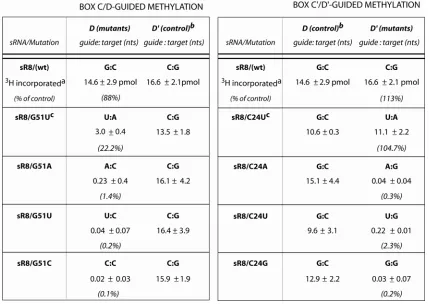
Nop56/58, and fibrillarin produces a methylation-competent sRNP complex. This model box C/D sRNP has now been used to determine the structural features of the guide:target RNA duplex that are important for sRNA-guided nucleotide methylation. Watson-Crick pairing of guide and target nucleotides were essential for nucleotide methylation. Mismatched bases within the guide:target RNA duplex also disrupted target nucleotide methylation. Nucleotide methylation required that the guide:target duplex consist of an RNA:RNA helix as target
deoxy-oligonucleotides possessing a target ribonucleotide are not methylated. Methylation specificity at the base paired guide:target nucleotide was compromised by elevated Mg2+ concentrations. In
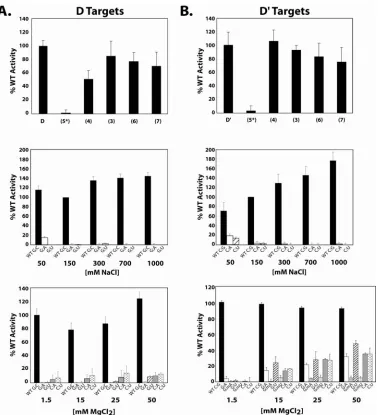
high divalent cation concentrations, target nucleotides not hydrogen bonded to the guide
nucleotide were nevertheless methylated. Interestingly, D and D’ target RNAs were methylated to different levels when deoxynucleotides were inserted within the target RNA or target
methylation was carried out in elevated Mg2+ concentrations. These results suggested that
INTRODUCTION
The primary function of the eukaryotic small nucleolar RNAs (snoRNAs) is to guide the nucleotide modification of ribosomal RNA and other cellular RNAs.1-5 The snoRNAs are complexed with core proteins to assemble snoRNP complexes with the associated proteins carrying out the nucleotide modification reactions.5-7 Nucleotide modification is accomplished through snoRNA guide regions that base pair with target RNAs to designate the specific nucleotide for modification.2,8 The snoRNAs are classified into two large families based on conserved RNA sequence and secondary structural elements. The box H/ACA RNAs direct the isomerization of uridines to pseudouridines whereas the box C/D guide RNAs guide 2’-O-ribose methylation of targeted nucleotides.9
Archaeal box C/D sRNAs direct the site-specific 2’-O-methylation of designated nucleotides in rRNA and tRNA.13-15 Box C/D RNAs are defined by conserved boxes C (RUGAUGA) and D (CUGA) located at the 5’ and 3’ termini of the sRNA, respectively. These sequence elements fold into a unique stem-bulge-stem structure where one stem is established by partial base pairing of boxes C and D. This unique secondary structure is known as a kink-turn (K-turn) and serves as a platform for core protein binding and sRNP assembly.16 Internal boxes C’ and D’ are typically found in archaeal sRNAs and are highly conserved.10,11,17 Boxes C’ and D’ fold into a K-turn-like structure, now referred to as the “K-loop” to denote the replacement of one of the terminal stems with a loop. The K-loop also serves as a core protein binding platform to assemble a second RNP complex.18 Both the box C/D and C’/D’ RNP motifs direct site-specific nucleotide modification via base pairing of target sequences to the guide regions located adjacent to the D and D’ boxes.19 Base pairing between the sRNA guide region and the target RNA positions that nucleotide to be modified five base pairs upstream from the D or D’ box.4
RNP complexes at both box C/D and C’/D’ motifs allows the fully assembled sRNP to function as a dual guide RNA, directing 2’-O-methylation of target RNAs from both RNPs.23
Omer and colleagues first successfully assembled an archaeal sRNP in vitro using
Sulfolobus solfataricus sRNA and recombinant core proteins and then demonstrated that this complex was capable of in vitro methylation of synthetic target RNAs.27 Work in our laboratory has also established an in vitro sRNP assembly and methylation system using sR8 sRNA and recombinant core proteins of the archaeon Methanocaldococcus
jannaschii .23 sR8 sRNA exhibits perfect consensus C, D, C’ and D’ sequences and contains guide regions of 12 nucleotides in length, the typical and highly conserved inter-motif spacing of archaeal sRNAs.23 This in vitro assembled M. jannaschii sRNP guides methylation of synthetic target RNAs from both the C/D and C’/D’ RNP motifs.
Strikingly, efficient methylation requires that the box C/D and C’/D’ RNPS be juxtaposed in the sRNP indicating critical inter-RNP interactions are required for nucleotide modification.23
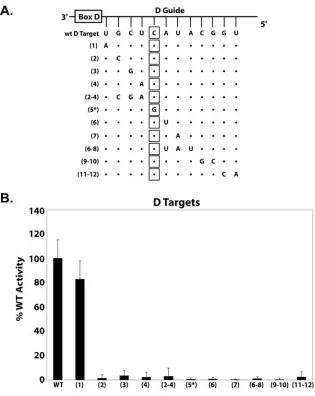
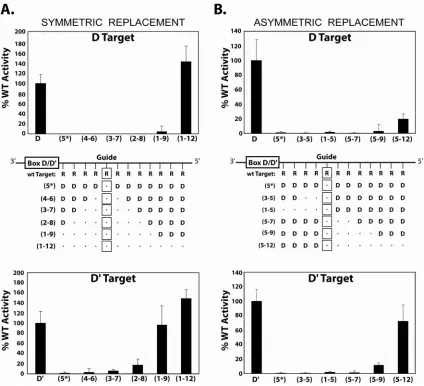
pairing between the guide and target nucleotide is absolutely essential for nucleotide methylation using this in vitro assembled sRNP. Subsequent experiments demonstrated that Watson-Crick pairing of an RNA:RNA duplex was also critical for nucleotide modification. The efficient methylation of target nucleotides positioned in highly structured target RNAs also suggested an inherent capability of box C/D sRNP to unfold target RNAs prior to nucleotide modification. Collectively, these studies further define structural features of the target RNA and the guide:target RNA duplex that are important for box C/D sRNP-guided nucleotide 2’-O-methylation.
MATERIALS AND METHODS
Construction and Synthesis of Wild Type sR8 and Mutant sR8 RNAs
Wild type and mutant sR8 DNA oligonucleotides were purchased from Integrated DNA Technologies. The sequences for wild type sR8 and sR8 GR Dtl were as follows: sR8 WT: AAATCGCCAATGATGACGATTGGCTTTGCTGAGTCTGTGATGAAC CGTATGAGCACTGAGGCGATTT
sR8 GR Dtl: AAATCGCCAATGATGACGATTGGCTTTGCTGAGTCTGTGATGAG TATGATGAGCACTGAGGCGATTT
Point mutations in sR8 guide regions were introduced during PCR-amplification using the full length, wild type sR8 template and primers containing the mutated nucleotide. T7 polymerase promoter sequences were added to sR8 and sR8 guide mutants during PCR-amplification. RNA was transcribed in vitro using the AmpliScribe T7-Flash transcription kit (EPICENTRE) according to the manufacturer’s protocols. Following transcription and DNase I treatment, all RNAs were gel purified.
Primer Pairs for Wild Type sR8 and sR8 Guide Mutants
Wild type sR8 (primers 1+2), sR8 C24G (primers 2+3), sR8 C24A (primers 2+4), sR8 C24U (primers 2+5), sR8 G51C (primers 1+6), sR8 G51A (primers 1+7), sR8 G51U (primers 1+8).
(3) CTAATACGACTCACTATAGGCCAAATCGCCAATGATGACGATTGGGTTTG (4) CTAATACGACTCACTATAGGCCAAATCGCCAATGATGACGATTGGATTTG (5) CTAATACGACTCACTATAGGCCAAATCGCCAATGATGACGATTGGTTTTG (6) AAATCGCCTCAGTGCTGATACGGTTC
(7) AAATCGCCTCAGTGCTTATACGGTTC (8) AAATCGCCTCAGTGCTAATACGGTTC
sR8 Targets
Wild type, mutant, chimeric, and hairpin target RNAs were purchased from Integrated DNA Technologies. Wild type and methylated control RNA targets are shown below. Additional RNA oligonucleotides used as mutant, chimeric, and hairpin target RNAs are described in the text and figures.
D target RNA: AUGCUCAUACGGUC Methylated D target RNA: AUGCUmCAUACGGUC D’ target RNA: GCUCAAA dG CCAAUCGC Methylated D’target RNA: GCUCAAAmGCCAAUCGC
Cloning, Expression, and Purification of Proteins
Nop56/58 was purified by ion exchange chromatography as previously detailed (Tran et al 2003).
RNP Assembly and In Vitro Methylation
sRNP complexes were assembled by incubating 40 pmol of guide sRNA with 20 pmol of L7, 32 pmol of Nop56/58, and 32 pmol of fibrillarin in assembly buffer