Transactions, SMiRT-25 Charlotte, NC, USA, August 4-9, 2019
Division IX (include assigned division number from I to XII)
VeRCoRs : What is going on ? What will go on ?
Julien NIEPCERON1*, Manuel CORBIN2, Benoit MASSON3
1 Civil Engineer, Direction Technique EDF,
19, rue Pierre Bourdeix, Lyon, FRANCE ([email protected])
2
Civil Engineer, Direction Technique EDF, Lyon, FRANCE
3
Expert of the Containment Building, Direction Technique EDF, Lyon, FRANCE
ABSTRACT
This paper summaries the aims of the VeRCoRs project: demonstrate the adequate behavior of a nuclear containment in case of severe accident, improve our understanding of the leakage and its evolution with the ageing, and collect experimental data necessary for the development and validation of numerical models. In order to perform those objectives a mockup at 1/3 scale, widely instrumented with numerous different type sensors was built on the R&D site of EDF in Les Renardières in 2016. This scale allows us to see in the future by accelerating all the ageing phenomena. Besides the ageing measurements (strains, temperatures, hygrometry, humidity of the concrete) and the samples testings (strength, modulus, …), pressure test are carried out as if this building would be part of the nuclear fleet of EDF. Since three years of measurements collected in the databank, it is confirmed that the ageing phenomena are significantly accelerated. The first pressure test has confirmed the representativeness of the mockup, and the leakage rate has increased in the same proportions than a real containment. Some new results has been gathered thanks to optic fiber measurements, leakage collecting boxes, gas pressure in the concrete, have led to a better knowledge of the leakage way in a prestressed wall. The creep, especially before the heating of the mock-up is not at all those attended, but confirm that the thermal activation is important.
INTRODUCTION
The passive leak-tightness function of the French 1300-1450 MWe NPP reactor building is provided by a reinforced and pre-stress concrete inner wall without steel liner, an outer reinforced wall assuring the protection against external effects. The leak through the internal wall is collected in the annular space being permanently maintained slightly below atmospheric pressure.
The technical objective, in term of leak-tightness, is to maintain the rate of gas escape under a legal criterion. The compliance with the rule is evaluated by measuring the quantity of air leak, obtained during a periodical pressure test at ambient temperature.
The main objectives were the following:
- to demonstrate in an indisputable way the adequate behaviour of inner wall in situation of severe accident (high pressure and high temperature during two weeks);
- to have a better understanding of the leakage and its evolution with the ageing of the structure. The ageing of the mock-up will be accelerated by the scale effects (reduced thickness, faster drying, faster shrinkage); which allows to anticipate the behavior of the real containments.
- to collect experimental data necessary for the development and validation of numerical models.
The 1/3 scale was chosen to anticipate on the containment behaviour with an accelerating factor of time. As the wall thickness will be reduced, the drying of the structure will be then faster. These will result in faster drying shrinkage and drying creep, which are supposed to be the main phenomena explaining the leak rate evolution. As the thickness is reduced by a factor 1/3, the time accelerating factor is hoped to be 9. As a consequence, extended end-of-life conditions (60 years) of a full size structure may be reproduced on the mock-up only after about 7 years.
In order to facilitate the transfer of the results from the experimental case to the NPP cases, the mock-up has to be as close as possible to the real containment building. That’s why it integrates all complexities of the containment structure.
The mock-up or precisely the inner containment building, was built between May 2014 and August 2015 which according to the scale factor of 9 fits well with the real containment building erection time.
The main characteristics of the mock-up are stated below (Figure 1 & Table1):
Figure 1. Scheme of the mockup
The pressurization test were intended to be held with the same periodicity as a real containment, but with a time scale of 1/9. So, the pre commissioning test was held in December 2015, the first operational test, after about one year for a real containment, in January 2016 for the mock-up, and the decennial tests (for real containment), every 13 month. However for practical reasons, the decennial test will be held from now every 12 month. A simulation of a severe accident, with an increase of the internal pressure with air and steam is considered at the end of the research program.
The monitoring system is composed of:
1 meteorological station
for the ambient air measure : 10 thermometers, 10 relative humidity sensors, 1 atmospheric pressure gage, 1 flow meter
12 pendulums (4 plumb lines with each 3 tables of aiming at different heights on 4 vertical lines)
4 vertical Invar wires
336 Embedded strain sensors
211 Thermo-sensors PT100
2 km of optic fiber
31 TDR (Time Domain Reflectometry) sensors
30 « pulse » sensors (permeability measurement)
6 dynamometers for instrumented tendons
160 strain gauges on rebars
RESULT OF THE PROGRAM UP TO NOW
The daily measurements (strain, temperatures, and hygrometry) are available on a very large number of sensor (only few strain gauges are damaged and 80% of the optical fibre length in the wall is operable). The measurement of the global air leakage during the first four tests (pre commissioning, first test, first decennial test and second decennial test) is very accurate and the local measurements of the leakage (with collecting boxes placed on the wall and flow meter to measure the leakage) gives us lot of answer concerning the leakage through the wall. The mock-up, for ageing, for structural behavior and for patterns of leakage defects, is representative of a real containment.
In the next items, we will give you the most interesting results.
DIGITIGAL TWIN
When we think of Digital Twin it is often mixed up with BIM (Building Information Modelling). BIM helps to design, to build and perhaps to operate the building, however the purpose of the Digital Twin is far more ambitious. It can use a part of the BIM (drawings, modelling, …), but is ultimate goal is to collect all the data (principally measurements on the structure and on samples, but visual inspections too and other kinds of results interesting for the structure), from the beginning of the erection, in the correct format, to gather the different finite element models and calculations and to aggregate this elements, calculations and data, so that the engineer could easily perform studies with variable hypothesis to better understand the ageing of the structure.
MATERIALS KNOWLEDGES
To have a perfect understanding of the mock-up, the materials (cement, concrete, steel rebars, ten-dons) have to be very well defined. This is why numerous (more than 1200) samples were collected. Several laboratories (more than 40 laboratories in the international COST 1404 project for example, more than 10 in the MACENA project which the aim was the behavior in case of severe accident) have tested the samples, at early age, after ageing, and in different environmental conditions. A very large data base has been build and is still gather data today. All those data is highly valuable for the scientific community and has allowed to complete and improve the material behaviours laws.
ACCELERATING AGEING FACTOR
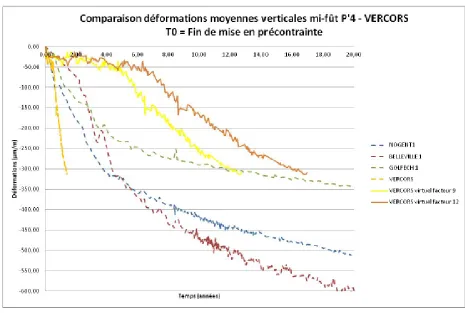
Figure 3. Accelerating factor in vertical direction
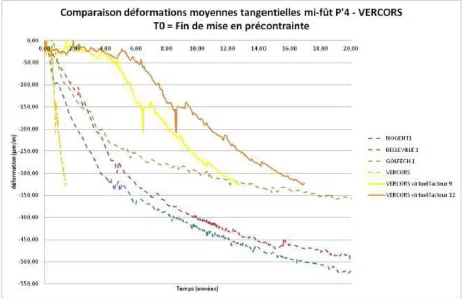
Ageing is identified by the delayed strains on the prestressed concrete structures. The expected accelerated factor for delayed strains was 9, based on the Eurocode rules for creep and shrinkage. Modelling gave us other factors, depending of the different creep and shrinkage laws, with lower values (the minor value given was 4). For the aim of the mock-up and the duration of the research program, it is very important to know the real factor, based on the delayed deformations.
To obtain the accelerating factor, a comparison is performed of the measurements of three real containments and VeRCoRs from the end of prestressing, in both tangential and vertical directions. On the graph below (Fig 2 & 3), the accelerating factor is taken to be 10 for VeRCoRs (yellow curves). It can be noticed that the yellow curves matches well with the greens (our reference). The effect of dead load, that reduce the stress and so the shrinkage in vertical direction for the mock-up, appears not to be significant.
Ways of leak
Several types of measurements give us some information.
Some pulse sensors, used to measure the gas pressure in the wall, located at different places in the thickness of the wall, show us a typical leakage through a porous medium, with an increasing of the pressure in the wall correlated with the distance from the side were pressure is applied. But some other indicated that the leakage found shortcuts in the wall. These sensors were located close to the sheath of the tendons, as it is assumed that this kind of singularity is a weak point (steel sheath is not perfectly adherent). Some tests have been performed in Grenoble INPG which show same phenomena for the rebars.
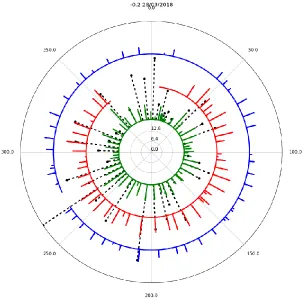
Optic fibers are embedded in the wall, at three different thickness. This kind of device allows to see the strains, and the cracks, or more precisely the evolution of the cracks, through the wall. The graph below (Fig 4) represents a horizontal section of the containment wall and in blue, red and green, the evolutions of strain measured with the OF. Where there is an evolution on the three levels, it could be cracks going through the full depth. The black dotted lines indicate leaking cracks, and the length of the line is representative of the leakage.
Figure 4. Strain measured by OF in the depth and leakage measured with boxes
full depth of the wall, and detected leaking cracks located thank to collecting box, however sometimes signals obtained from OF doesn’t necessary lead to leaking cracks. As an explanation it may possible that for small opening the leak either a) find an easier path, b) or the crack isn’t a full depth crack.
A concrete sample has been saturated with deuterium, and placed in a tomographic device. A water pressure was applied on a face, and the progression of the water in the sample highlighted by tomography. It has appeared that the permeability was higher (so the leakage was higher) along the rebar.
To conclude about the leak, it definitely appears that the leakage, that goes majority directly through the wall, can use sometimes tortuous ways, for example along the tendons or the rebars, and probably in the areas with poor concrete quality (low cement rate, honeycombing …). More investigations must be perform to better understand and quantify this phenomenon.
Technologies benchmarking
The high density of sensors and theirs locations on the structure allow to compare different technologies that gives in theory the same measurement. To validate that the location of a OF sensor vertically on the wall gives the same results as the vertical invar wire or as the integrate measurement of the vertical vibrating wires embedded in the wall, three OF sensors have been anchored on the wall (Figure 5). The results are not coherent, it is possible that the anchorage methodology has to be improved. Another idea is to glue the OF directly on the wall.
Fig 5-c: displacements measured by invar wire (full curve) and by FO sensors (dashed curve) Non destructive evaluations
The “Non Destructive Evaluation of containment nuclear plant structures” project (ENDE) is a French project developed with 8 partners. This project aims to control the containment of structures by Non Destructive Testing with ultrasonic, electromagnetic and electric methods.
It consists to transfer the NDE technics achieved in laboratory to on site measurements. In situ measurements involved some constraints such as: the proximity of reinforcements and the properties gradients in the concrete. The testing were implemented on the VeRCoRs mock up (Figure 6), during testing stages or in normal running.
The results are widely described by the ENDE project, for example in [1] and [2]. As a conclusion, NDE methods can be successfully used on a nuclear power plant. To improve our understanding of the ageing and leakage phenomenon it is mandatory have to pursue research:
On determining if a crack is a full depth crack or not on walls up to 1,2 m thickness.
The knowledge of the water content or humidity in the wall is still not possible. However, it is possible to measure the humidity in the first centimeters of the wall and afterwards, with a numerical model, to deduce the humidity in the entire wall.
Bio healing
Bio healing research is very promising. Tests performed on samples, that the leakage through concrete cracks, could be reduced up to 70%. It has been decided to evaluate this possibility on the mock-up. The bio healing process started 8 weeks before the test, on a vertical crack and on a horizontal construction joint (at each batch of concrete), that were leaking on the test performed the year before. The two areas were just above the gusset. For the vertical cracks, no improvement has been seen. For the horizontal defect, the decrease of the leakage rate was up to 8 times. The research has to continue to understand those promising results, which could be a good way to enhance the leak tightness of the concrete structures.
Prediction of the leakage
The prediction of the leakage is one of the most important aim of the Vercors mockup. A first benchmark has been organized in 2016, and the results have shown a large dispersion of the results, with differences of about 200 times in the predictions, nonetheless nobody gave an accurate results. For the next benchmark, it is expected to obtain more accurate results. Moreover, EDF has developed a methodology that has been very close to the test results, but the physic of the models used has to be consolidated. If the global prediction is satisfying, further progress will have to be performed in order to reach a higher accuracy on each specific areas of the mock-up.
What is going on now ?
About the measurement devices, the mock-up is still open for new comers to evaluate a new sensor technology, as for OF strain sensor. The next step is to test OF glued directly on the wall to compare with invar wire.
About the NDE technology, further progress are on-going in the concrete moisture content (or water content) measurements. Surface sensor measurements can be quite accurate in the prediction of the water content through the thickness of the wall. This humidity gradient knowledge is of prior importance to calibrate the creep and shrinkage models. Another axis of work is to develop the cracking sensor based on sonic waves, which gave us some hopeful results. NDE technologies are more than necessary in a context of ageing structures.
This is why large samples will be build, with well-known defects, to evaluate sensors that other companies have to propose. The targeted fields are: carbonation, cracks, permeability, stiffness, strength, delamination, corrosion. If the results obtained are valid on the sample, the technology will be evaluated on VeRCoRs and used and eventually on real structures.
pressure, to simulate a severe accident, could be done. This is not sure, because the representativeness of this kind of test must be demonstrated before the test would be performed.
To better understand the leakage phenomena, the execution of tests at low pressure, with some parts of the containment coated with removable coating, is studied.
CONCLUSION
The VeRCoRs project is now running as planned, as the mock-up has demonstrated his representativeness. Several research programs have used the mock-up (COST TU 1404 [4], ENDE, …) which makes VeRCoRs concrete the most studied and documented concrete in the world. Two benchmark were done, so that the different teams can compare theirs results and improve their calculation.
VeRCoRs is still open for tests, especially for NDE tests, because these kind of methodologies will be increasingly useful to demonstrate the capacity of the structure to resist to a severe accident at the end of its life, especially for containments that are not equipped with monitoring devices.
The knowledge gathered on VeRCoRs, regarding materials, laws behaviors and the understanding of the leakage phenomenon, will be very useful to manage the lifetime of the containments, besides the digital twin that will be developed for the real containments.
It is likely that other benchmarks will be proposed, both on ageing, severe accident or NDE methodologies.
REFERENCES
[1] “Non Destructive Evaluation of the durability and damages of concrete in nuclear power plants”
in 12th European Conference on Non-Destructive Testing (12th ECNDT)
[2] “Non-destructive evaluation of containment walls in Nuclear Power Plants” in 43rd Annual Review of
progress in Quantitative Non-destructive evaluation, vol 36
International Association for Structural Mechanics
in Reactor Technology (IASMiRT)
COPYRIGHT TRANSFER AGREEMENT
Manuscript Title with ID number: ________________________________________________________________
_____________________________________________________________________________________________
Author(s) - Names and addresses of all authors _____________________________________________________
_____________________________________________________________________________________________
_____________________________________________________________________________________________
_____________________________________________________________________________________________
The author(s) warrants that the above-cited manuscript is the original work of the author(s) and has never been published in its present form.
The Lead Author, with the consent of all other authors, by signing below hereby transfers copyright interest in the above-cited manuscript to IASMiRT subject to the following.
The undersigned Lead Author and all coauthors retain the right to revise, adapt, prepare derivative/ expanded works, present orally, or distribute the work.
In all instances where the work is prepared as a "work made for hire" for an employer, the employer(s)of the author(s) retain(s) the right to revise, adapt, prepare derivative/expanded works, publish, reprint, reproduce, and distribute the work provided that such use is for the promotion of its business enterprise and does not imply the endorsement of IASMiRT.
An author who is a Government employee and who has participated in the above-cited work does not own copyright in it and therefore does not need to sign. If all the authors are in this category, the Lead Author must sign here: _______________________. If at least one of the authors is not a Government employee, that author should sign below.
Send a scanned filled out form to [email protected]
SIGN HERE FOR COPYRIGHT TRANSFER [Individual Author or Employer's Authorized Agent (work made for hire)]
_____________________________________ ____________________________________ Print Lead Author's Name Print Agent's Name & Title
Date: _______________________________________
Note: If the manuscript is not accepted by IASMiRT or is withdrawn prior to acceptance by IASMiRT, this copyright transfer