Scholarship@Western
Scholarship@Western
Electronic Thesis and Dissertation Repository
7-31-2013 12:00 AM
Reducing Epilepsy-Related Stigma: Teachers' Implementation of
Reducing Epilepsy-Related Stigma: Teachers' Implementation of
an Epilepsy Education Program
an Epilepsy Education Program
Gayle Michelle Gibson
The University of Western Ontario
Supervisor
Dr. Jacqueline Specht
The University of Western Ontario
Graduate Program in Education
A thesis submitted in partial fulfillment of the requirements for the degree in Master of Education
© Gayle Michelle Gibson 2013
Follow this and additional works at: https://ir.lib.uwo.ca/etd Part of the Education Commons
Recommended Citation Recommended Citation
Gibson, Gayle Michelle, "Reducing Epilepsy-Related Stigma: Teachers' Implementation of an Epilepsy Education Program" (2013). Electronic Thesis and Dissertation Repository. 1401.
https://ir.lib.uwo.ca/etd/1401
This Dissertation/Thesis is brought to you for free and open access by Scholarship@Western. It has been accepted for inclusion in Electronic Thesis and Dissertation Repository by an authorized administrator of
(Thesis format: Monograph)
by
Gayle Michelle Gibson
Graduate Program in Education
A thesis submitted in partial fulfillment of the requirements for the degree of
Master of Education
The School of Graduate and Postdoctoral Studies The University of Western Ontario
London, Ontario, Canada
ii
This thesis presents an investigation of teachers’ implementation of Brain
Matters, an education program designed to reduce the stigma associated with
epilepsy. Five local Grade 12 Biology teachers were interviewed to examine their
implementation and consistent with previous research, a multilevel ecological
framework was used to understand the factors affecting their implementation.
The findings indicate that there were three factors that worked to either facilitate
or limit teachers’ implementation of Brain Matters: pedagogical content
knowledge and beliefs, characteristics of the resource, and professional
development. The results of this study offer developers of stigma-reduction
programs insight into the challenges that teachers encounter when implementing
innovative resources.
Keywords: Brain Matters, implementation, epilepsy, neuroscience, stigma,
iii
iv
It is good to have an end to journey toward; but it is the journey that matters, in the end (Ursula K. Le Guin, 1969, p. 220).
I would like to acknowledge and extend gratitude to all of the people who
influenced my journey. Firstly, I would like to thank my supervisor, Dr. Jacqueline
Specht, for her flexibility, understanding, and constant support. Thank you for
believing in me! I would also like to thank my committee member, Dr. Elizabeth
Nowicki, and my examiners who provided considerable expertise in the area and
read this thesis carefully and thoughtfully. I would also like to thank the teachers
who participated in this study and the Epilepsy Support Centre. Thank you to
Asmita Persaud who extended her time to double code the data of this study.
Thank you to my brother and all of my family and friends that supported me
throughout this journey and lent an understanding ear throughout the ups and
downs.
I would especially like to thank my parents, Denis and Amy Gibson for
their resounding inspiration and encouragement. My parents have always
supported me in whatever way they could throughout my educational journey.
From reading drafts of this thesis to staying up late to keep me company (even
though we do not live in the same city!). Thank you for all of the phone calls –
early in the morning, late at night, and in between. Words cannot express how
v
Abstract ... ii
Dedication ... iii
Acknowledgements ... iv
Table of Contents ... v
List of Tables ... vii
List of Figures ... vii
List of Appendices ... vii
Introduction ... 1
Background and Justification ... 1
Outline of Thesis ... 3
Literature Review ... 4
Understanding Epilepsy ... 4
Understanding Epilepsy-Related Stigma ... 6
Knowledge of, Attitudes about, and Behaviours towards People with Epilepsy ... 10
Decreasing Epilepsy-Related Stigma: School-Based Epilepsy Education Programs ... 12
Evaluating School-Based Epilepsy Education Programs ... 13
Factors Affecting Implementation ... 20
Research Context ... 30
History and Development of Brain Matters ... 30
vi
Research Questions ... 38
Method ... 38
Ethical Approval ... 38
Participants ... 39
Measures ... 41
Data Collection ... 41
Data Analysis ... 42
Results ... 44
Program-Related Factors ... 45
Teacher-Related Factors ... 51
Summary ... 64
Discussion ... 65
Factors Affecting Implementation ... 66
Limitations ... 78
Future Research ... 79
Conclusion ... 80
References ... 81
Appendices ... 91
vii
Table 1: Seizure Types and Characteristics ... 6
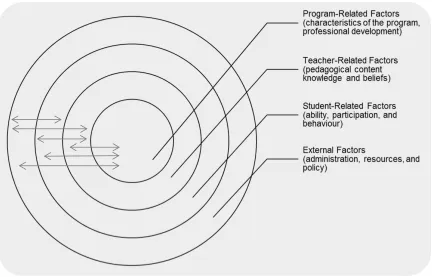
List of Figures Figure 1: Ecological Framework for Understanding Teacher’s Implementation .. 22
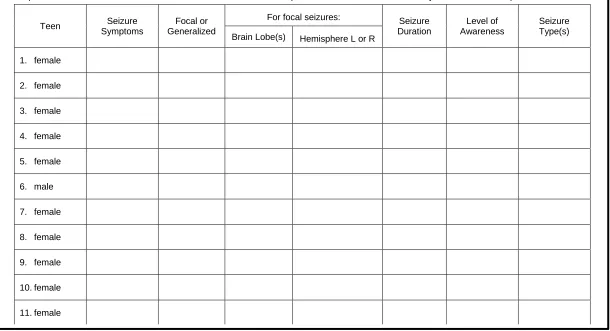
Figure 2: Video Exercise: Identifying Seizure Symptoms ... 36
List of Appendices Appendix A: Ethical Approval ... 91
Appendix B: Brain Matters Teacher Checklist ... 93
Appendix C: Teacher Interview Guide ... 96
Appendix D: Teacher Letter of Information and Consent Form ... 99
Introduction
Background and Justification
Epilepsy is the most common neurological disorder in the world: it affects
about 50 million people worldwide with 2 million new cases each year (World
Health Organization, 2005). Epilepsy is also one of the most stigmatized
illnesses in the world (Bandstra, Camfield, & Camfield, 2008; Fernandes et al.,
2007) largely due to lack of knowledge and negative attitudes about the disorder
(Bandstra et al., 2008; Jacoby & Austin, 2007; Jacoby, 2008; Martiniuk,
Speechley, Secco, Campbell, & Donner, 2007; Martiniuk, Secco, Yake, &
Speechley, 2010; Morrell, 2002; Roberts & Suhaimi, 2010; Young et al., 2002).
This stigma has a profoundly negative effect on quality of life (de Boer, Mula, &
Sander, 2008; Jacoby, 2002; Jacoby & Austin, 2007; World Health Organization,
2005) and contributes to mental health issues (Jacoby, 2002), social isolation
(Jacoby, 1994), lower quality of care (Jacoby, 2002), higher direct and indirect
socioeconomic costs (Jennum, Gyllenborg, & Kjellberg, 2011), fewer
employment opportunities (Fisher, 2000), and lower educational attainment
(Fisher, 2000). To address the adverse effects of epilepsy-related stigma, the
World Health Organization (WHO), International League Against Epilepsy (ILAE),
and International Bureau for Epilepsy (IBE) initiated Out of the Shadows, a global
campaign against epilepsy. One of the objectives of this global campaign is to
improve acceptability of epilepsy. To achieve this goal, the WHO, ILAE, and IBE
education about, and develop and evaluate interventions to dispel myths about
epilepsy (World Health Organization, 2003).
In response to this global campaign against epilepsy, the Epilepsy Support
Centre of London, Ontario initiated a series of pilot projects to assess students’
knowledge of and attitudes towards people with epilepsy. Results from surveys
and focus groups conducted with local secondary school students confirmed the
pervasiveness of misunderstanding and negative attitudes towards this group
(Epilepsy Support Centre, 2004). In light of these findings and in support of the
global campaign against epilepsy, the Epilepsy Support Centre created a
curricular resource, Brain Matters: An Introduction to Neuroscience (Brain
Matters; Nurse, 2010). Brain Matters focuses on informing secondary school
students about the neurology of epilepsy and dispelling myths associated with
the disorder in an attempt to increase knowledge of and promote positive
attitudes towards epilepsy and people with epilepsy. Brain Matters aligns with the
Grade 12 Biology neuroscience curriculum and teachers are urged to use
inquiry-based strategies with the resource. Consistent with research on stigma
reduction strategies, the Epilepsy Support Centre proposes that, because of the
relationship between knowledge, attitudes, and behaviour, Brain Matters will
ultimately lead to a decrease in epilepsy-related stigma.
While Brain Matters affords promising outcomes, Fullan states that
“educational change fails many more times than it succeeds. One of the main
reasons is that implementation—or the process of achieving something new into
curriculum implementation because they determine what materials are used and
how these materials are used. Thus, a large part of the success of curricular
innovations hinges on teachers and it is, therefore, important to examine their
implementation of innovative resources. This project will investigate teachers’
implementation to identify the barriers and facilitators to teachers’ use of Brain
Matters. This feedback is essential to the early monitoring of innovative curricular
resources like Brain Matters and will provide the curriculum developers with
feedback relevant to curriculum design to ensure that teachers continue to use
the resource with their students. Continued use will further promote
epilepsy-related stigma prevention and help reduce the current stigma.
Outline of Thesis
This study draws on literature related to epilepsy, stigma, and curriculum
implementation to investigate teachers’ implementation of Brain Matters. The first
section presents background information relevant to this thesis and provides an
overview of the impetus to investigate the implementation of school-based
epilepsy education programs. The following literature review unites several
bodies of research. It begins with a discussion of the information necessary to
understand epilepsy and the stigma associated with this disorder. Next is a
review of knowledge and attitudes towards epilepsy as well as behaviours
towards this group. The section on decreasing epilepsy-related stigma explicates
the rationale for school-based epilepsy education programs. The section on
evaluating school-based epilepsy education programs discusses the need to
affecting teachers’ implementation. This literature review is followed by a
description of the method and results. The discussion explores the results in
relation to the stigma and implementation literature previously reviewed.
Literature Review
Understanding Epilepsy
Historically, epilepsy has been shrouded in mystery, myth, and
superstition. Epilepsy was thought to be caused by demonic possession because
of seizures and other characteristics associated with the disorder (Temkin, 1971;
World Health Organization, 2003). However, in the last 100 years, enormous
advances have been made in understanding the etiology, prognosis, and
treatment of epilepsy. We now know that epilepsy is a disorder that affects the
nervous system; it is also referred to as a seizure disorder. Epilepsy is usually
diagnosed after a person has had two or more seizures that cannot be explained
by another medical condition. In rare circumstances, epilepsy can also be
diagnosed after a person has had one seizure if the person has a predisposing
condition (Nurse, 2010).
A seizure occurs when there is a sudden surge of electrical activity in the
brain which usually affects a person’s movement or consciousness. Some
seizures can hardly be noticed, while others are disabling. Symptoms vary
among individuals and according to the specific type of seizure. Seizures are not
a disease in themselves; they are a symptom of many different disorders that
affect the brain. There are several types of seizures, which are classified into two
both lobes of the brain; and, (b) partial seizures, which begin with electrical
discharge in one lobe of the brain. Table 1 outlines the types of seizures and
examples of associated characteristics that may manifest. Seizures can be
related to brain injury or genetic predisposition, but most of the time the cause is
unknown (Nurse, 2010).
Despite the physiological, physical, and psychological symptoms, the
stigma associated with epilepsy is often more burdensome than the disease itself
(World Health Organization, 2012). Recent studies indicate that over 50% of
people with epilepsy report feeling stigmatized (Baker, Brooks, Buck, & Jacoby,
2000; J. Taylor, Baker, & Jacoby, 2011). Comparatively, Jacoby (1994) found
that only 14% of people whose epilepsy was in remission reported feeling
stigmatized. For a person with epilepsy, the effects of stigma permeate all
aspects of their life and this stigma is associated with low quality of life (de Boer
et al., 2008; Jacoby, 2002; Jacoby & Austin, 2007; World Health Organization,
2005). Research indicates that epilepsy-related stigma contributes to mental
health issues (Jacoby, 2002), social isolation (Jacoby, 1994), lower quality of
care (Jacoby, 2002), higher direct and indirect socioeconomic costs (Jennum et
al., 2011), fewer employment opportunities (Fisher, 2000), and lower educational
attainment (Fisher, 2000). Despite the vast advances in understanding epilepsy,
Table 1
Seizure Types and Characteristics
Seizure Type Characteristics
Partial
Simple
(awareness is retained)
Jerking, muscle rigidity, spasms, head-turning, unusual sensations affecting vision, hearing, smell, taste or touch, stomach sensation, memory or emotional disturbances (e.g., déjà vu, fear)
Complex (impairment of awareness)
Automatisms such as lip smacking, chewing, fidgeting, walking, and other repetitive, stereotyped movements
Generalized
Tonic-Clonic Unconsciousness, convulsions, muscle rigidity
Absence Brief loss of consciousness, blank stare, eyelid fluttering, eyes rolling up, chewing movements
Myoclonic Sporadic (isolated) jerking movements
Tonic Muscle stiffness, rigidity
Atonic Loss of muscle tone that can result in a sudden collapse and fall to the ground
Note. Characteristics are examples only and are not meant to be an exhaustive list. Symptoms vary among individuals and according to the specific type of seizure. Adapted from Benbadis and Tatum (2001, p. 92) and Nurse (2010, p. 35).
Understanding Epilepsy-Related Stigma
In Stigma: Notes on the management of spoiled identity, Goffman refers to
stigma as an “attribute that is deeply discrediting” (Goffman, 1963, p. 3). Since
Goffman’s seminal book, researchers have reconceptualized his stigma theory.
In keeping with Goffman’s caveat that a “language of relationships” (Goffman,
“propose that stigma be described with reference to the relationships between a
set of interrelated concepts.” Link and Phelan define stigma as the co-occurrence
of its components—labeling, stereotyping, separation, status loss, and
discrimination—and further indicate that, for stigmatization to occur, power must
be exercised. Additionally, Fishbein and Ajzen’s (1975) Theory of Reasoned
Action explains how these concepts relate. Below Link and Phelan’s stigma
concept and Fishbein and Ajzen’s Theory of Reasoned Action are used to
conceptualize and understand epilepsy-related stigma.
Fishbein and Ajzen’s Theory of Reasoned Action suggests that knowledge
impacts attitudes, attitudes in turn impact behavioural intent, and behavioural
intent is a predictor of behaviour. These components, knowledge, attitudes, and
behaviour, are important to understanding how labelling, stereotyping,
separation, status loss, discrimination, and power, which are the components of
Link and Phelan’s stigma concept, converge to produce stigma. According to
Link and Phelan, people distinguish and label human differences. People with
epilepsy are distinguished based on their neurological, physical, and
psychological symptoms. Stereotyping occurs when a stereotype is attached to
the label. Stereotypes are cognitive structures that contain the perceiver’s
knowledge, beliefs, and expectations about social categories and groups
(Hamilton & Sherman, 1994). Stereotypes are also overgeneralizations that are
widely shared and they are “frequently, but not always, negative” (Jones &
French, 1984, p. 155). According to Fishbein and Ajzen’s Theory of Reasoned
stereotypes impact attitudes. Petty and Cacioppo (1981, p. 7) define an attitude
as “a general and enduring positive or negative feeling.” If perceivers have been
exposed to incorrect or biased knowledge about epilepsy or people with epilepsy,
this could lead to negative stereotypes and thus negative attitudes towards this
group. In the case of people with epilepsy, the stereotypes are overwhelmingly
negative. Common negative stereotypes include foaming at the mouth during a
seizure (Baxendale & O’Toole, 2007) and the inability to do well in school (Prpic
et al., 2003). These types of stereotypes can lead to negative attitudes, which
can affect behavioural intent, which can in turn affect behaviour. According to
Link and Phelan the behaviours relevant to the stigma concept are separation,
devaluation, and discrimination. When groups of people are associated with
negative attitudes, a rationale is constructed to separate “us” from “them.” Link
and Phelan explain that efforts to separate “us” from “them” is evidenced in the
labels used to describe social groups.
Incumbents are thought to "be" the thing they are labeled (Estroff 1989).
For example, some people speak of persons as being "epileptics" or
"schizophrenics" rather than describing them as having epilepsy or
schizophrenia. This practice is revealing regarding this component of
stigma because it is different for other diseases. A person has cancer,
heart disease, or the flu—such a person is one of "us," a person who just
happens to be beset by a serious illness. But a person is a "schizophrenic"
Negative attitudes can also result in devaluing a person or group’s status.
Additionally, negative attitudes can lead to discrimination. Discrimination refers to
inappropriate treatment of or negative behaviours towards individuals because of
their group membership (Dovidio, Brigham, Johnson, & Gaertner, 1996). Link
and Phelan describe three types of discrimination: individual, structural, and
perceived. Individual discrimination occurs when people overtly engage in
discrimination directed at people with epilepsy, for example, refusing to date
someone with epilepsy. Structural discrimination reflects policies and procedures
whether intentional or unintentional, but whose consequences negatively impact
people with epilepsy. An example of structural discrimination includes restrictions
on driving privileges in many countries despite clear evidence that epilepsy is not
associated with a higher accident rate (J. Taylor, Chadwick, & Johnson, 1996).
The psychological processes operating through a person with epilepsy can also
lead them to believe that they might be discriminated against. This process is
commonly referred to as internalized, perceived, or felt stigma (Muhlbauer,
2002). Lastly, Link and Phelan emphasize that labeling, stereotyping, separation,
and discrimination, converge to produce stigma in contexts where groups can
exercise power over one another. With this understanding of epilepsy-related
stigma, the following section examines the public’s knowledge of, attitudes about,
Knowledge of, Attitudes about, and Behaviours towards People with
Epilepsy
Lack of knowledge about as well as negative attitudes and discriminatory
behaviours towards people with epilepsy persist across all ages and levels of
education and, consequently, stigma permeates all domains of life for this group.
In a representative sample of adults aged 18 to 65 plus in the US population,
Kobau and Price (2003) found that just one in five people have seen a seizure
and only one third know someone with epilepsy. Just over 50% of participants
thought that they would know what to do if someone had a seizure; of this group,
participants aged 18 to 24 and 65 plus were the least confident in their ability to
help someone having a seizure. Austin, Shafer, and Deering (2002) found similar
results in adolescents aged 13 – 18 years. Participants in Austin et al.’s study
had a general lack of familiarity and knowledge about epilepsy; students also
held perceptions of epilepsy reflective of stigma. This lack of knowledge persists
into higher education. Caixeta, Fernandes, Bell, Sander, and Li (2007) found that
Arts and Science and first-year medical students had poor knowledge of epilepsy
while third- and sixth-year medical students had only adequate knowledge of
epilepsy.
Jacoby and colleagues have conducted several studies that investigate
the knowledge levels and attitudes towards epilepsy in the workforce. While
employers' attitudes to employment of people with epilepsy have improved over
the years, misperceptions and negative views still exist. For instance, Jacoby,
jobs suitable for people with epilepsy in their company and 72% thought that
employing someone with epilepsy would be an issue. Additionally, employees
rated epilepsy as the second most concerning illness that a co-worker could
have, after stress/depression (Jacoby, Gorry, Gamble, & Baker, 2004).
Researchers have also found evidence of individual and structural
discrimination in employment settings. For instance, individuals with epilepsy
have lower employment rates and lower income levels. The employment rate
among people with epilepsy is only half that compared to control subjects and
employed patients with epilepsy earn only half the income of employed control
subjects. Additionally, 75% of people with epilepsy state that they have been
harassed and experienced discrimination at work in terms of promotion,
termination, and disciplinary practices (West, Dye, & McMahon, 2006).
Misperceptions and negative attitudes towards people with epilepsy are
also apparent among teachers. Bishop & Boag (2006) found that the majority of
teachers in their study thought that people with epilepsy were more likely to
develop and express criminal tendencies compared to individuals without
epilepsy. Teachers also reported that they lacked general knowledge about
epilepsy, the impact of epilepsy in educational settings, and first aid for epilepsy
in the classroom. In another study of teacher perceptions, Dantas, Cariri, Cariri,
and Ribeiro Filho (2001) found that 2% of teachers thought that epilepsy was
contagious whereas 7% did not know if it was contagious, 4% of teachers would
object to having a student with epilepsy in their class, and, in terms of
intelligent as others and 10% did not know if students with epilepsy were as
intelligent as others.
Stigma also impacts the interpersonal relationships of people with
epilepsy. Austin et al. found that only 31% of adolescents would date a person
with epilepsy. Furthermore, people with epilepsy have lower marriage rates.
Fisher (2000) recently reported that 51% of men with epilepsy were married, in
contrast to 63% of men without epilepsy. Likewise, only 48% of women with
epilepsy were married, compared with 59% of women without epilepsy.
Overall, it is fair to say that the general public has inaccurate information
and negative attitudes towards people with epilepsy. Additionally, discriminatory
behaviours are prevalent. The stigma affects all areas of life including
employment, academic achievement, and interpersonal relationships. Thus, it is
critical to investigate ways to decrease the stigma associated with epilepsy.
Decreasing Epilepsy-Related Stigma: School-Based Epilepsy Education
Programs
There are several approaches that could potentially increase knowledge
and foster positive attitudes about epilepsy. Researchers suggest that
school-based epilepsy education is an especially important approach to achieve these
goals for several reasons. One reason is that there are more than a billion young
people world-wide of school age; they constitute the greatest readily reachable
population for health education programs (Kolbe, Tolsma, Dhillon, O'Byrne, &
Jones, 1992). Additionally, school-based epilepsy education is a feasible and low
epilepsy (World Health Organization, 2013). Lastly, research in the area of
school-based stigma prevention and reduction demonstrates that these types of
programs can be effective in changing knowledge and attitudes (Heijnders & Van
Der Meij, 2006; Payne & Smith, 2010; Wahl, Susin, Lax, Kaplan, & Zatina, 2012;
Weiss, Ramakrishna, & Somma, 2006). For these reasons, several school-based
epilepsy education programs have been created. In addition to developing
epilepsy education programs, however, the WHO, ILAE, and IBE indicate the
need to evaluate these programs (World Health Organization, 2003).
Evaluating School-Based Epilepsy Education Programs
Evaluation is generally defined as gathering information to make decisions
(Gay, 1985). Gay (1985) argues that the aim of school-based program evaluation
or curriculum evaluation is to identify the strengths and weaknesses of the
program, isolate the issues encountered during implementation, establish the
effectiveness of the curriculum, and to determine the cost-effectiveness of the
program. The most common approaches to curriculum evaluation are impact,
outcome, and implementation evaluations. Impact and outcome evaluations
assess a program's effectiveness in achieving change on target variables, such
as knowledge, attitudes, beliefs, or behaviour. While these evaluations are
instrumental in determining a program’s effectiveness, without accompanying
implementation data, conclusions about the effectiveness of the program could
be invalid (Durlak & DuPre, 2008). Fullan and Pomfret (1977) define
implementation as the “actual use of an innovation or what an innovation consists
positioned in one of two ways. The most popular position focuses on the degree
of implementation or fidelity of an innovation. This focus is on investigating the
extent to which the actual use of the innovation maps onto intended or planned
use. The second position focuses on the implementation process and is
concerned with exploring how innovations are used, developed, or changed
during implementation (Fullan & Pomfret, 1977). Researchers in the field of
implementation often refer to a new program, resource, and the like, as an
innovation or change. Implementation is important to investigate for several
reasons:
1. Implementation affects program outcomes. In the most recent
systematic review of research, Durlak and DuPre (2008) examined
over 500 studies to ascertain the relationship between implementation
and outcomes. They found strong empirical support for the conclusion
that implementation affects outcomes; this conclusion is supported by
several meta-analyses (DuBois, Holloway, Valentine, & Cooper, 2002;
Tobler, 1986; Wilson, Lipsey, & Derzon, 2003; Wilson & Lipsey, 2007).
2. Implementation data are essential to assessing internal and external
validity. Accurate interpretation of outcomes depends on knowing what
aspects of the program were delivered and how they were delivered
(Durlak & DuPre, 2008). For instance, in examining changes in
knowledge or attitudes due to an epilepsy education program, several
outcomes can occur. We can observe no change in knowledge or
implemented as intended. Furthermore, we can observe increases in
knowledge and attitudes through an innovation that, in practice, was
very different from the original resource. Valid judgments about the
value of the original program would not be possible in either situation.
3. Implementation data are important to theory testing. Theories about
programs and their components cannot be appropriately assessed
without determining whether the components were effectively
administered (Durlak & DuPre, 2008). For instance, Bandura's Social
Learning Theory (1977) suggests that individuals modify their
behaviors through observation, skill development, and practice. Any
changes in behaviour that occur after using a program based on this
theory could then conclude that Bandura's theory is valid. However, in
reality we do not know if the program was used followed by a
discussion, for example. In this case, we would not be certain if the
change in behaviour was due to the program, the discussion, or both.
4. Implementation data are important for early monitoring. Investigating
implementation can identify challenges or barriers to program
application that can be corrected to ensure better outcomes (Durlak &
DuPre, 2008).
Overall, it is fair to say that implementation is an important aspect of
evaluation; however, these types of evaluations are often ignored (Durlak &
DuPre, 2008). This is especially true of school-based epilepsy education
search terms and locate all journal articles published between 1983 and 2013
that evaluate primary or secondary school epilepsy education programs that aim
to increase the knowledge and/or positive attitudes towards people with epilepsy.
A variety of methods were used to compile a list of relevant search terms,
including elements of pearl growing (Bell, 2012; Hawkins & Wagers, 1982;
Schlosser, Wendt, Bhavnani, & Nail-Chiwetalu, 2006) and pearl harvesting
(Sandieson, 2006; Sandieson, Kirkpatrick, Sandieson, & Zimmerman, 2010).
Keywords were extracted from the bibliographic information—title, abstract,
descriptors, and identifiers—of key journal articles to create a comprehensive list
of search terms. In total, just four evaluations of school-based epilepsy education
programs were retrieved. None of these evaluations investigated implementation
or the factors affecting implementation. These studies are reviewed below.
Hands, Millar, Walker, Copeman, and Henderson (2006) evaluated an
epilepsy education program used in one class of students aged 9 – 11. The
epilepsy education program was developed, implemented, and evaluated within
the context of a case study of a health promotion project carried out by nursing
students. The nursing students created the epilepsy education program for
teachers to deliver to their students; however, the nursing students implemented
the program during the evaluation. The program consisted of video clips, factual
information, a demonstration, and a take-home learning pack. Although Hands et
al. (2006) report gains in students’ knowledge and more positive attitudes
towards epilepsy, no empirical data are presented to support these claims.
associated with a significant increase in knowledge of and positive attitudes
towards epilepsy. The program was delivered by a pediatric neurologist with
students aged 11 – 16 years in three schools. The program consisted of a
lecture, demonstrations, videos, and a discussion session. There were conflicting
results on individual questions in comparison to the overall result. For instance,
before the program, 46.0% of the students answered no to the following
question: “Do you feel disturbed about having an epileptic friend in your
classroom?” However, after the program, this proportion increased to 75.9%.
Two studies investigated scripted programs with Grade 5 students using a
cluster randomized approach. In the first study, Mudge and Turner (1987)
investigated the effectiveness of an epilepsy education program in increasing
students’ knowledge about epilepsy. The program consisted of a 10 minute video
that included 3 case studies of young people with absence, complex, and
tonic-clonic epilepsy. The program also included three large photographs of the
children in the case studies and a teacher's guide, which included activities to
follow up the video. The program was delivered in a standard format by the
project officer. In the control condition, students did not receive the program and
teachers were instructed not to teach students about epilepsy during the
intervening six month period. At baseline, there was no difference in knowledge
scores between the project and control groups. However, on the post-test
questionnaire administered six months later, both groups scored significantly
higher, with students who received the epilepsy education program scoring
gain. The effect of the questionnaire on knowledge was investigated using a
second control group that did not receive the intervention or the pre-test
questionnaire. These students’ scores on the post-test questionnaire were
comparable to the post-test scores of the students in the control group. This
finding indicates that the questionnaire did not contribute to the increased
post-test scores observed in the control group. The authors suggest that this increase
was due to maturity. Additionally, there were differences between regions and
individual schools that were not explained by socioeconomic status or gender.
Similar to Mudge and Turner (1987), Martiniuk (2005) and Martiniuk,
Speechley, Secco, Campbell, and Donner (2007)1 evaluated the short-term
effects of Thinking about Epilepsy, a 30 minute scripted program that aims to
educate Grade 5 students on various knowledge and attitudinal concepts
including the role of the brain in epilepsy, epilepsy first aid, and contagiousness.
The program was delivered by an epilepsy educator and two epilepsy
puppeteers. The intervention group demonstrated a significant increase in
knowledge and positive attitudes towards epilepsy compared to the control
group. Additionally, the education program accounted for 63% of the variation in
post-program knowledge and 28% of the variation in post-program attitudes.
Martiniuk (2005) also investigated how the learning environment affected
outcomes and found that it significantly predicted post-test knowledge and
attitude scores.
1
Summary and discussion.
In the last thirty years, only four studies have been published that evaluate
school-based epilepsy education programs: Hands, Millar, Walker, Copeman,
and Henderson (2006), Bozkaya et al. (2010), Mudge and Turner (1987), and
Martiniuk, Speechley, Secco, Campbell, and Donner (2007). While the impact
evaluations of these programs show promising results, without implementation
data it is difficult to make conclusive judgements about their effectiveness. For
instance, Bozkaya et al. (2010) reported that the proportion of students who felt
disturbed about having a friend with epilepsy in the classroom increased after the
epilepsy education program. This result is the opposite of what one would expect
after using an epilepsy education program that aims to increase knowledge and
foster positive attitudes towards epilepsy. Because the authors did not
investigate the implementation of the program, it is difficult to pinpoint the
variables that contributed to this result. For instance, we do not know if the
program was implemented as intended. We also do not know what happened
during the discussion session where the questions and answers could have
influenced the outcomes obtained. Furthermore, although Martiniuk (2005)
investigated how the learning environment affected outcomes, she did not
explore how the learning environment affects implementation. Information on
how the learning environment affects implementation could provide essential
information on changes that need to be made to the program or implementation
The epilepsy education programs evaluated by Hands, Millar, Walker,
Copeman, and Henderson (2006) and Mudge and Turner (1987) are intended for
use by teachers; however, in the evaluation, the program was implemented by
the researchers instead. Additionally, Mudge and Turner (1987) and Martiniuk,
Speechley, Secco, Campbell, and Donner (2007) used scripted programs. While
programs with these features eliminate the influence of confounding variables
that may influence outcomes, they do not represent the real classroom
environment where teachers and students interact to negotiate knowledge
acquisition. Additionally, none of the studies reviewed explore the factors
affecting implementation. This means that even if the program is successful in
increasing knowledge and positive attitudes, there could be barriers and
challenges that teachers face in the classroom. Thus, it would be difficult to
ascertain if the program would have the same effect. The limitations of these
studies demonstrate the pivotal importance of examining implementation and the
factors affecting implementation. The following section reviews studies that
investigate these concepts.
Factors Affecting Implementation
It is important to investigate the factors affecting curriculum
implementation to identify challenges or barriers to program application that can
be remediated to ensure better outcomes (Durlak & DuPre, 2008). Several
researchers suggest that a multilevel ecological framework is necessary to
understand the factors affecting implementation (Altschuld, Kumar, Smith, &
Shediac-Rizkallah & Bone, 1998; Wandersman, 2003). Based on this suggestion and a
review of relevant literature, I propose that the ecological framework for
understanding the factors affecting teachers’ implementation consists of nine
factors within four overarching categories (Durlak & DuPre, 2008; Fixsen,
Naoom, Blase, Friedman, & Wallace, 2005; Fullan, 1992; Fullan, 1994;
Greenhalgh, Robert, Macfarlane, Bate, & Kyriakidou, 2004; Han & Weiss, 2005;
Roehrig, Kruse, & Kern, 2007; Shavelson & Stern, 1981; Stith et al., 2006). This
framework is depicted in Figure 1. Program-related factors lie in the centre of the
diagram because it is hypothesized that any factors directly related to the
program will have the greatest effect on implementation. As the factors labelled
in the concentric circles move further away from the centre, they will have less
effect on implementation. The arrows represent the interactions between the
program, teachers, students, and the external environment. Program-related
factors include resource characteristics and professional development, while the
teacher-related factors central to implementation are pedagogical content
knowledge and beliefs. In comparison, student-related factors, such as ability,
participation, and behaviour (Shavelson & Stern, 1981), are also central to
implementation, but their investigation is outside the scope of this study.
Additionally, several factors external to students, teachers, and programs affect
implementation. These factors include administrative support, resources, and
Figure 1
Ecological Framework for Understanding Teacher’s Implementation
Program-related factors.
Characteristics of the program.
Several reviews of research indicate that characteristics of the program
affect implementation (Durlak & DuPre, 2008; Fixsen et al., 2005; Greenhalgh et
al., 2004; Stith et al., 2006). These characteristics are compatibility, adaptability,
clarity, and complexity. Compatibility refers to the extent to which a program fits
with teachers’ perceived needs, practices, priorities, and values (Durlak & DuPre,
2008; Fullan, 1992; Fullan, 1994; Greenhalgh et al., 2004; Stith et al., 2006). In
this study, I also subsume Fullan’s concept of quality and practicality within the
Practical innovations are those that address salient student and teacher
needs, that fit well with the teachers’ situation (e.g., students,
organizational setting, curriculum), and that include or result in concrete
how-to-do-it information. The practicality of innovations also depends on
the trade-off between the personal costs (time, effort, etc.) and actual
benefits of getting and staying involved (Fullan, 1992, p. 36).
A review of the relevant literature indicates that the time required to
implement a program is a significant component of compatibility that affects
teachers’ implementation (Crooks, Wolfe, Hughes, Jaffe, & Chiodo, 2008;
DeWitt, Lohrmann, O'Neill, & Clark, 2011; Tobin & McRobbie, 1996; Wallace &
Kang, 2004). For instance, Tobin and McRobbie (1996) and Wallace and Kang
(2004) report that teachers felt rushed and did not have enough time to cover all
of the program’s content. Similarly, the majority of teachers in Crooks et al.’s
(2008) study thought that the time required to implement the program and
difficult-to-meet timeframes were the most significant barriers to implementation.
In the majority of the instances where teachers felt as if they did not have enough
time, they omitted components of the curriculum. Compatibility between
programs and teachers leads to readily used practices and results in effective
implementation (Durlak & DuPre, 2008; Greenhalgh et al., 2004). According to
Stith et al. (2006), programs that have good compatibility tend to be responsive,
cost-effective, culturally appropriate, and adaptable.
Adaptability (also referred to as flexibility, reinvention, or modification), is
Greenhalgh et al., 2004). Durlak and DuPre (2008) define adaptability as the
“extent to which the proposed program can be modified to fit provider
preferences, organizational practices, and community needs, values, and cultural
norms” (p. 337). Programs that can be altered to meet teachers’ needs are more
easily implemented and result in stronger implementation (Durlak & DuPre, 2008;
Greenhalgh et al., 2004).
Another factor that affects teachers’ implementation is clarity. Fullan
(1992; 1994) notes that the clarity of both the goals of a program and the means
of implementation has a major impact on implementation. Teachers need to
know what to do and how to do it in order to successfully implement innovative
resources. Policies, written guides, and professional development can help
teachers clarify the goals and means of implementation, but Fullan (1992)
cautions that true understanding comes from experience with the resource in the
classroom and reflection. However, clarity is not an end in itself: simple,
insignificant changes can be very clear and easy to implement, while more
challenging, worthwhile changes may not be easily understood. This leads to the
fourth factor that affects teachers’ implementation: complexity.
Complexity refers to the “difficulty and extent of change required of the
individuals responsible for implementation” (Fullan, 1994, p. 2841). Fullan refers
to five elements that impact complexity: difficulty, skill required, and the degree of
change in beliefs, teaching strategies, and use of materials. Although simple
changes may be easier to enact, they may not result in significant changes in
achieved with complex programs, but they tend to create more issues during
implementation and require more effort to implement. To overcome these issues,
complex changes can be broken down into more manageable components and
implemented incrementally (Fullan, 1994; Greenhalgh et al., 2004).
Professional development.
Professional development refers to approaches to ensure teacher
proficiencies in the skills necessary to implement innovative practices (Durlak &
DuPre, 2008). A review of relevant literature indicates that professional
development impacts teachers’ behaviour in the classroom (Capps, Crawford, &
Constas, 2012; Desimone, Porter, Garet, Yoon, & Birman, 2002; Garet, Porter,
Desimone, Birman, & Yoon, 2001; Grigg, Kelly, Gamoran, & Borman, 2013;
Roehrig, Michlin, Schmitt, MacNabb, & Dubinsky, 2012). Professional
development that focuses on specific practices increases teachers' use of those
practices in the classroom (Desimone et al., 2002; Grigg et al., 2013). While
professional development is considered an essential vehicle for effecting
teachers’ practice, the effects are moderated by changes in teachers’ knowledge
and beliefs (Capps et al., 2012; Desimone et al., 2002; Roehrig & Kruse, 2005;
Roehrig et al., 2012).
Several studies indicate that specific features of professional development
are related to changes in teachers’ knowledge, beliefs, and ultimately practice
(Desimone et al., 2002; Durlak & DuPre, 2008; Garet et al., 2001; Penuel,
Fishman, Yamaguchi, & Gallagher, 2007). Garet et al. (2001) identify six features
self-reported increases in knowledge, skills, and changes in classroom practice:
(a) emphasis on content knowledge; (b) active learning; (c) coherence with other
learning activities; (d) the form of the activity; (e) collective participation of
teachers from the same school, grade, or subject; and (f) duration. Durlak and
DuPre (2008) also suggest that it is important for professional development
programs to attend to teachers’ expectations, motivation, and sense of
self-efficacy.
Teacher-related factors.
Teacher-related factors refer to the internal, personal characteristics of
teachers that influence their implementation of innovative curricular resources.
Pedagogical content knowledge and beliefs.
A review of the literature indicates that teachers’ pedagogical content
knowledge and beliefs, which includes knowledge and beliefs about students,
learning, teaching, and subject matter, influence implementation (Cronin‐Jones,
1991; Gess-Newsome, 2002; Han & Weiss, 2005; Levitt, 2002; Roehrig & Kruse,
2005; Roehrig et al., 2007; Tobin & McRobbie, 1996; Wallace & Kang, 2004). For
instance, Roehrig & Kruse (2005) found that teachers’ beliefs were critical to the
implementation of the curriculum and associated instructional strategies.
Cronin-Jones (1991) identifies four major categories of beliefs that influence curriculum
implementation: beliefs about how students learn, the teacher's role in the
classroom, students’ ability levels, and the importance of the content.
Additionally, Tobin and McRobbie (1996) report that participants in their study
efficient, maintaining the rigor of the curriculum, and preparing students to be
successful on examinations. Wallace and Kang (2004) also report that teachers
felt they had to be efficient in covering the program’s content and Han and Weiss
(2005) found that teachers prefer time-efficient programs. In addition to
efficiency, Wallace and Kang found that the beliefs of teachers in their study
mapped onto the beliefs of teachers in Tobin and McRobbie’s study, and these
beliefs constrained teachers’ implementation of inquiry-based science curricula.
However, the teachers in Wallace and Kang’s study also had beliefs about the
value of inquiry that promoted use of the program. Wallace and Kang suggest
that teachers have competing belief sets that can act to facilitate or hinder
implementation. This occurs because teachers internalize cultural beliefs that
permeate the school science culture. These internalized beliefs then act to
mediate the implementation of innovative practice.
In another study of teachers’ beliefs, Levitt (2002) found that teachers
conceptualized teaching and learning science as a student-centred practice.
However, teachers in this study also had beliefs and practices that were
incongruent with the inquiry-based curriculum. In contrast to Wallace and Kang’s
conclusion of competing belief sets, Levitt suggests that teachers’ beliefs about
inquiry can be conceptualized as existing along a continuum that ranges from
traditional to transitional to transformational beliefs. Levitt also concluded
teachers’ position on the continuum was related to their practices in the
Teachers’ subject matter knowledge also influences their interaction with
curricular materials. For instance, when teachers are unfamiliar with the subject
matter they rely on resources such as textbooks and as they start to master the
subject matter they rely less on these types of resources (Lantz & Kass, 1987).
Furthermore, when teachers teach outside of their content area they include
fewer details and connections to other topics and they also include more
inaccurate information (Hashweh, 1987). These teachers also focus less on
student understanding and rely more on managing and controlling their students
work to stay within the boundaries of their expertise (Carlsen, 1991; Hollon, Roth,
& Anderson, 1991). However, when teaching within their area of expertise,
teachers include more details and connections to other concepts. Additionally,
knowledgeable teachers are more inclined to modify activities or generate new
ones (Hashweh, 1987). In her review of the literature, Gess-Newsome (2002)
concludes that teachers do not use content that does not match their existing
knowledge and beliefs.
External factors.
Several factors external to students, teachers, and the program affect
implementation.
Administrative support.
Administrative support refers to the extent to which administrators support
and encourage teachers during implementation. Research indicates that
administrative support affects implementation (Crooks et al., 2008; DeWitt et al.,
2004; Han & Weiss, 2005; Stith et al., 2006). In schools, the principal is the most
influential administrator affecting teachers’ implementation (Fullan, 1992; Fullan,
1994; Han & Weiss, 2005). Principals’ attitudes and behaviour can have a
significant impact on teachers’ implementation of innovative resources (Fullan,
Miles, & Taylor, 1980; D. C. Gottfredson, Fink, Skroban, & Gottfredson, 1997; D.
C. Gottfredson & Gottfredson, 2002). Furthermore, the principal’s support
through allocation of resources, such as time devoted to the program and
professional development, affects teachers’ implementation (Han & Weiss,
2005).
Resources.
Adequate resources are consistently related to implementation (Durlak &
DuPre, 2008; Fixsen et al., 2005; Fullan, 1992; Greenhalgh et al., 2004; Han &
Weiss, 2005; Stith et al., 2006). The two most influential resources on teacher
implementation identified in the literature are funding and release time for
professional development (Fullan, 1992). Crooks et al. (2008) report that
teachers identified ongoing training and funding as resources integral to
sustaining the program. Furthermore, several studies report that programs are
more likely to be implemented with dedicated and ongoing funding (Elliott, Taylor,
Cameron, & Schabas, 1998; Fitzgerald, Ferlie, Wood, & Hawkins, 2002;
Gustafson et al., 2003). Release time for professional development is also
important because, as discussed previously, professional development
Policy.
Policies have also been shown to affect implementation (Durlak & DuPre,
2008; Fixsen et al., 2005; Fullan, 1992; Greenhalgh et al., 2004); however,
policies alone are not sufficient to ensure that changes are implemented with
integrity. Policies can enhance implementation by securing administrative and
financial resources (Durlak & DuPre, 2008). Policies can also impact teachers’
behaviour in the classroom by mandating implementation. For instance, the
Ontario Ministry of Education curriculum policy documents define what students
are taught in Ontario public schools (Ministry of Education, 2008). The curriculum
policy documents outline the knowledge and skill expectations for students
according to subject and grade level. Several researchers have reported that
curriculum expectations influence teachers’ implementation (Tobin & McRobbie,
1996; Wallace & Kang, 2004).
Research Context
This thesis presents an evaluation of an epilepsy education program.
Specifically, this study explores teachers’ implementation of Brain Matters and
the factors affecting their implementation. This study is part of a larger project
that also investigates students’ changes in knowledge and attitudes after
teachers implement Brain Matters.
History and Development of Brain Matters
Brain Matters evolved out of the Thinking about Epilepsy project, an
epilepsy education program for Ontario Grade 5 health and science students
Speechley, Secco, Campbell, & Donner, 2007). The project was previously
discussed in the section on evaluating school-based epilepsy education
programs. In review, Thinking about Epilepsy is a 30-minute, scripted program
that uses posters, photographs, a television commercial, a puppet show, and role
play to teach about epilepsy. It was developed to address misunderstanding and
negative attitudes about epilepsy. Results of the cluster randomized trial indicate
significant increases in knowledge and more positive attitudes towards epilepsy.
Following the success of Thinking about Epilepsy, the Epilepsy Support
Centre of London, Ontario initiated a series of pilot projects to assess secondary
school students’ knowledge of and attitudes towards people with epilepsy.
Results from surveys and focus groups conducted with local secondary school
students confirmed the pervasiveness of misunderstanding and negative
attitudes towards this group (Epilepsy Support Centre, 2004). In light of these
findings and in support of the global campaign against epilepsy, the Epilepsy
Support Centre created a curricular resource, Brain Matters: An Introduction to
Neuroscience (Brain Matters; Nurse, 2010). Brain Matters is a comprehensive,
ready-to-use resource for Grade 12 Biology that examines the field of
neuroscience using epilepsy as a way to explore key concepts. There are three
overarching goals of Brain Matters:
1. increase knowledge about epilepsy and improve attitudes towards
individuals with epilepsy in order to decrease the stigma associated
with the condition;
3. attract more students to epilepsy-related careers.
Consistent with research on stigma reduction strategies, the Epilepsy Support
Centre proposes that, because of the relationship between knowledge, attitudes,
and behaviour, Brain Matters will ultimately lead to a decrease in epilepsy-related
stigma.
The development of Brain Matters was informed by several guiding
principles and theories. Firstly, Brain Matters is aligned with the Grade 12 Biology
curriculum. It is designed to fit within the homeostasis unit, which neuroscience is
a part of, but it can also be integrated into other units as well. This allows for
seamless integration between the content of Brain Matters and the neuroscience
expectations of the Grade 12 Biology course. Furthermore, Corrigan's (2004)
target-specific stigma change model implies that effective epilepsy education
programs should be geared towards a specific influential group. Accordingly,
Brain Matters targets Grade 12 Biology students who are more likely than their
peers to obtain jobs that require contact with people with epilepsy (e.g.,
physician, neurologist, and dietician). Applying Bandura’s Social Learning Theory
(1977) to knowledge acquisition suggests that the most effective epilepsy
education programs will use observation, skill development, and practice. As
such, the development of Brain Matters was guided by this theory. Through the
use of emotionally engaging videos of teens and young adults with epilepsy
talking about their experiences, demonstrations, worksheets, and group
activities, Brain Matters teaches students about epilepsy causes, manifestations,
A team of university students, teachers, and neuroscientists collaborated
to create Brain Matters. The resource underwent several revisions based on
feedback from three local secondary school teachers, who piloted the unit with
their senior science students.
Description of Brain Matters
Brain Matters consists of a 107 page Facilitator’s Manual, Student’s
Manual, and companion DVD. Each manual is divided into four sections. Section
1: Basic Science explores concepts that are central to a deep understanding of
seizure disorders. It covers neurons, action potentials, synapses as well as the
lobes of the brain and their main functions. Section 2: Misfiring Neurons
introduces seizure disorders and epilepsy. This section includes information
about the causes, types of seizures, symptoms and first aid. Section 3: Careers
in Neuroscience introduces epilepsy-related careers by investigating diagnostic
and treatment options for people with epilepsy. Section 4: Group Work integrates
knowledge from the previous three sections into worksheets, quizzes, and group
activities.
The DVD consists of videos to support the material presented in the text.
Relating to Section 1, the DVD includes animations of parts of a neuron,
excitatory synapses, inhibitory synapses, and action potentials. Section 2
includes videos of teens describing the symptoms of their seizures, videos of
teens having an absence seizure, complex partial seizure, and tonic-clonic
seizure, as well as youth with epilepsy describing their abilities and
Section 3 presents information on the roles of various neuroscience
professionals such as EEG Technologist, Neuroscientist, and Speech Language
Pathologist. Section 3 also includes a video on epilepsy surgery.
The Facilitator’s Manual is delivered in print to teachers along with one
copy of the DVD. The companion DVD also includes a Portable Document
Format (PDF) of the Facilitator’s Manual as well as a Student’s Manual in PDF.
The Student’s Manual contains everything that the Facilitator’s Manual contains,
except it does not have the answers to worksheets and quizzes. All of the
materials are open access.
Brain Matters was introduced to teachers through a professional
development session. The length and structure of the professional development
session varied from session to session and teachers volunteered to participate.
The focus of the Brain Matters professional development session was to increase
teachers’ curricular knowledge of Brain Matters as a tool for teaching students
about neuroscience, seizures, and epilepsy. The professional development
session also sought to increase teachers’ content knowledge of seizures and
epilepsy. Inquiry-based strategies were emphasized throughout the sessions.
The ultimate aim of the professional development session was to increase
teachers’ use of epilepsy-related content with their Grade 12 Biology students in
order to enhance students’ knowledge and positive attitudes towards epilepsy. A
large part of the professional development session involved going through the
video exercise, Identifying Seizure Symptoms, with teachers. The video exercise
What Their Seizures Look Like, which is included on the Brain Matters DVD, and
filling out the accompanying worksheet (See Figure 2 for a copy of the
worksheet). Based on the information that each teen in the video provided,
students (and teachers during the professional development session) were
instructed to fill out the worksheet; however, the worksheet could not be
completed solely based on the information provided in the video. In the
succeeding sections, when I use the terms video exercise or worksheet, I am
referring to the items described above unless otherwise stated.
Brain Matters can be taught using a variety of instructional approaches
and methods contingent upon teachers’ professional judgement and preferences.
Brain Matters is presented to teachers as a concise, research informed,
neuroscience resource that uses seizure disorders to teach students about
neuroscience. It is up to the teacher to decide what to teach and how to teach the
Figure 2
Video Exercise: Identifying Seizure Symptoms
Adapted from Nurse (2010, p. 77)
Watch the video “Teens Describing What Their Seizures Look Like” Section 2: Misfiring Neurons Cause Seizures. Identify the seizure symptoms of each person in the video. Using the description that each person provides, complete as much of the table below as possible. Some of the seizure descriptions are more detailed than others. Make use of the information provided to determine as much as you can about each person’s seizure.
Teen Seizure Symptoms
Focal or Generalized
For focal seizures: Seizure Duration
Level of Awareness
Seizure Type(s) Brain Lobe(s) Hemisphere L or R
1. female
2. female
3. female
4. female
5. female
6. male
7. female
8. female
9. female
10. female
Significance of the Current Study
Several evaluations of school-based epilepsy education programs
demonstrate increases in students’ knowledge and positive attitudes (Bozkaya et
al., 2010; Hands et al., 2006; Martiniuk, Speechley, Secco, Campbell, & Donner,
2007; Mudge & Turner, 1987). Despite the pivotal importance of implementation,
none of these studies investigate the factors that affect teachers’ implementation.
It is important to investigate the factors affecting curriculum implementation to
identify challenges or barriers to program application that can be remediated to
ensure better outcomes (Durlak & DuPre, 2008). A review of the literature of the
factors affecting implementation suggests that program, teacher, student, and
external factors affect implementation. However, each curriculum and context is
unique and teachers’ selection of materials, how they use these materials, and
the factors affecting teachers’ selection and use of these materials will differ
accordingly. Thus it is important to investigate the factors affecting
implementation for each curriculum and context.
The purpose of this study is to investigate the factors affecting teachers’
implementation of an innovative school-based epilepsy education resource, Brain
Matters: An Introduction to Neuroscience (Brain Matters; Nurse, 2010). This
study is exploratory in nature to identify these factors as they emerge in the
natural implementation setting. Investigating the implementation of Brain Matters
will provide curriculum developers with information crucial to making decisions
about program revisions and improvements to ensure continued resource
will further promote epilepsy-related stigma prevention and help reduce the
current stigma.
Research Questions
The current study will investigate the factors affecting teachers’
implementation. To investigate the factors that affect teachers’ implementation of
Brain Matters, more specific questions that were considered included:
• What factors influence what teachers use from Brain Matters?
• What factors influence how teachers use Brain Matters?
This study is exploratory in nature to identify these factors as they emerge in the
natural implementation setting.
Method
The goal of this study was to investigate teachers’ implementation of Brain
Matters and to identify the factors that affected their implementation. The
Epilepsy Support Centre invited Grade 12 Biology teachers to attend a
professional development session on Brain Matters. Teachers voluntarily
selected to attend the professional development session and to use the resource
with their Grade 12 Biology class. The research design of this study consisted of
semi-structured interviews, which were used to explore teachers’ implementation.
Ethical Approval
Before the start of the study, the research design, instruments, and
procedures were approved by the Faculty of Education Sub-Research Ethics
Research Ethics Board for Non-Medical Research Involving Human Subjects.
Ethics approval notices are included in Appendix A.
Participants
Eligibility and recruitment.
Teachers were recruited from a public, urban, school board in
Southwestern Ontario. Teachers were contacted by phone to determine if they
were eligible for this study. The inclusion criteria for this study were Grade 12
Biology teachers who attended one or more Brain Matters’ training sessions and:
• had used Brain Matters in at least one Grade 12 Biology class; or
• had never used Brain Matters, but were in the process of using Brain
Matters in at least one Grade 12 Biology class; or
• had never used Brain Matters, but intended to use Brain Matters in at
least one Grade 12 Biology class.
In instances where teachers had never used Brain Matters, but were in the
process of using Brain Matters or intended to use Brain Matters, they had to have
finished using the resource by the end of the school year to remain eligible to
participate in this study. There were no specific criteria regarding the degree of
teachers’ implementation of Brain Matters other than the criteria specified above.
That is, if Teacher A used two diagrams from Brain Matters and Teacher B used
the entire resource, both teachers would have been eligible to participate in this
study.
Ten teachers met the inclusion criteria. Eligible teachers were given
interview time and place was arranged with teachers that agreed to participate in
this study (n = 6). One participant’s interview is not included in the analysis due
to technical difficulties during the recording process, making the final number of
participants represented in the data analysis five (n = 5).
Participant profiles.
All of the demographic information was obtained by self-report. To ensure
anonymity, I assigned and referred to each participant by a pseudonym during
the interview and during transcription.
Edward. Edward has been teaching secondary level science for five years
and he has been teaching Grade 12 Biology for four years. He has used Brain
Matters more than once and at the time of the interview he was teaching Grade
12 Biology.
Denis. Denis has been teaching Grade 11 and 12 Biology for over 20
years. Denis has used Brain Matters with several of his classes. Also, at the time
of the interview he was teaching Grade 12 Biology.
Amy. Amy did not provide information about her teaching experience. She
has used Brain Matters in at least one of her Grade 12 Biology classes. At the
time of the interview, Amy was not teaching Grade 12 Biology.
Dhanesari. Dhanesari has been teaching Grade 12 Biology for over 20
years. She has used Brain Matters at least once and at the time of the interview