
University of Windsor University of Windsor
Scholarship at UWindsor
Scholarship at UWindsor
Electronic Theses and Dissertations Theses, Dissertations, and Major Papers
1-1-1999
A green product design framework based on quality function
A green product design framework based on quality function
deployment process.
deployment process.
Chun-Yu Tung University of Windsor
Follow this and additional works at: https://scholar.uwindsor.ca/etd
Recommended Citation Recommended Citation
Tung, Chun-Yu, "A green product design framework based on quality function deployment process." (1999). Electronic Theses and Dissertations. 7195.
https://scholar.uwindsor.ca/etd/7195
This online database contains the full-text of PhD dissertations and Masters’ theses of University of Windsor students from 1954 forward. These documents are made available for personal study and research purposes only, in accordance with the Canadian Copyright Act and the Creative Commons license—CC BY-NC-ND (Attribution, Non-Commercial, No Derivative Works). Under this license, works must always be attributed to the copyright holder (original author), cannot be used for any commercial purposes, and may not be altered. Any other use would require the permission of the copyright holder. Students may inquire about withdrawing their dissertation and/or thesis from this database. For additional inquiries, please contact the repository administrator via email
INFORMATION TO USERS
This manuscript has been raproduced from the microfilm master. UMI films
the text directly from the original or copy submitted. Thus, some thesis and
dissertation copies are in typewriter face, while others may be from any type of
computer printer.
The quality of this reproduction is dependent upon the quaiity of the
copy subm itted. Broken or indistinct print, colored or poor quality illustrations
and photographs, print bleedthrough, substandard margins, and improper
alignment can adversely affect reproduction.
In the unlikely event that the author did not send UMI a complete manuscript
and there are missing pages, these will be noted. Also, if unauthorized
copyright material had to be removed, a note will indicate the deletion.
Oversize materials (e.g., maps, drawings, charts) are reproduced by
sectioning the original, beginning at the upper left-hand corner and continuing
from left to right in equal sections with small overlaps.
Photographs included in the original manuscript have been reproduced
xerographically in this copy. Higher quality 6” x 9” black and white
photographic prints are available for any photographs or illustratkxis appearing
In this copy for an additional charge. Contact UMI directly to order.
Bell & Howell Information and Learning
300 North Zeeb Road, Ann Arbor, Ml 48106-1346 USA 800-521-0600
A Green Product Design Framework Based On
Quality Function Deployment Process
By
ChuD-Yu Tung
A Dissertation
Submitted to the College of Graduate Studies and Research
Through the Industrial and Manufacturing Systems Engineering Program In Partial Fulfillment of the Requirements for
The Degree of Doctor of Philosophy at the University of W indsor
Windsor, Ontario, Canada
141
National Library of Canada Acquisitions and Bibliographic Services395 WaMington Straet OnawaON K1A0N4 Canada
Bibliothèque nationale du Canada
Acquisitions et
sen/ices bibliographiques
395, rue Wellington ( M a r a ON K1A0N4 Canada
Your S t Veitt r iS r tn e t
O urSt AtoM wMranea
The author has granted a non
exclusive licence allowing the
National Library of Canada to
reproduce, loan, distribute or sell
copies of this thesis in microform,
paper or electronic formats.
The author retains ownership of the
copyright in this thesis. Neidier the
thesis nor substantial extracts from it
may be printed or otherwise
reproduced without the author’s
permission.
L’auteur a accordé une licence non
exclusive permettant à la
Bibliothèque nationale du Canada de
reproduire, prêter, distribuer ou
vendre des copies de cette thèse sous
la forme de microfîche/fîlm, de
reproduction sur papier ou sur format
électronique.
L’auteur conserve la propriété du
droit d’auteur qui protège cette thèse.
Ni la thèse ni des extraits substantiels
de celle-ci ne doivent être imprimés
ou autrement reproduits sans son
autorisation.
0-612-52444-2
Canada
©1999, Chun-Yu Tung
APPROVED BY:
Dr. A. Deshmukh, External Examiner University of Massachusetts at Amherst
Dr. B. Chaouch
Business Administration
Dr. F istri
Dr. S. M. Tabwn
. Wang, Advisor
Dr. R. M. Barron, Chair Associate Executive Dean
College o f Graduate Studies and Research
ABSTRACT
Environmental problems have aroused people's attention to monitoring
environmental impacts and developing new technologies for preventing, or at least
relieving the expanding burdens. Therefore, a framework for enhancing the
implementation o f environmentally conscious design and manufacturing is important to
designers and manufacturers.
The framework proposed in this thesis is a green product design tool. It focuses
on ensuring better environmental performance by means of selecting environmentally
friendly design alternatives. Since the environmental performance o f a product relies on
varied issues including nature resources consumption, manufacturing and distribution
efficiency, and end-of-life management, designers have to face complicated trade-offs
during the processes o f product design. Our framework contains two parts for dealing
with the complicated trade-offs. These two parts are (1) the individual assessment for
each life cycle stage, and (2) the overall assessment for entire product life cycle. The
individual assessment tool incorporates House o f Quality (HOQ) with frizzy set theory
and Analytic Hierarchy Process (AHP), and is used in analyzing the interrelations
between environmentally conscious requirements and product design criteria. The
overall assessment method is based upon the concept o f product life cycle design, which
involves a four-step analysis so that the comprehensive environmental effects can be
captured at the up-front design stage.
The proposed green product design frameworic is demonstrated by case studies o f
of environmental performance is made between plastic fuel tanks and steel fuel tanks. In
the case study o f fastener selection, seven frequently adopted joining methods are
evaluated by using the proposed framework. Based on these two case studies, it strongly
suggests that the proposed framework is useful in green product design and analysis.
DEDICATION
ACKNOWLEDGEMENTS
I wish to begin with expressing my sincere gratitude and appreciation to my
supervisor, Dr. M. Wang, for the excellent guidance, effort and inspiration that assisted
me to focus upon the relevant aspects of this research. Appreciation is also extended to
the other members o f my committee. Dr. F. Salustri, Dr. S. Taboun, Dr. and Dr. B.
Chaouch for their encouragement throughout my doctoral program, especially for their
professional comments and advice that provided me great help in the preparation o f this
dissertation.
I would like to thank the faculty and staffs of the Industrial and Management
Systems Engineering Program for their assistance during this research. I would also like
to thank my colleagues in ECDM lab for their support and friendship.
Finally, but most important, I would like to thank all my family members for their
continuously encouragement throughout this entire process. My deepest gratitude is
extended to my parents and my beloved wife Tiffany for their patience and unconditional
love. My rewards would not have been possible without their support.
vu
TABLE OF CONTENTS
ABSTRACT...1
DEDICATION... vi
ACKNOWLEDGEMENTS... vii
TABLE OF CONTENTS... viii
LIST OF FIGURES... xi
LIST OF TABLES... xiv
Chapter I Introduction...1
1.1 General Introduction and Problem Statement...1
1.2 Design for Environment Issues... 7
1.3 Framework o f the Decision Making Tool...10
1.4 Objectives o f the Research...12
Chapter 2 Literature Review...15
2.1 Design for Environment... 15
2.1.1 Scope o f DFE... 16
2.1.2 Design for Disassembly...19
2.1.2.1 Disassembly-Oriented Product Design... 21
2.1.2.2 Economic Analysis... 24
2.1.2.3 Disassembly Aided Tools... 27
2.1.3 Relevant computer tools... 28
2.2 Life Cycle Design... 30
2.4 Quality Function Deployment... 38
2.4.1 QFD Overview... 39
2.4.1.1 House of Quality - The Fundamental Element... 40
2.4.1.2 Series of Matrices...40
2.4.1.3 Benefits of Employing QFD...42
2.4.2 Comparison of QFD and Other Quality Systems...43
2.4.3 Current Trend of QFD... 45
2.4.3.1 Mathematical Model in QFD... 46
Chapter 3 Research Methodology... 49
3.1 Overview... 49
3.2 Modified House of Quality... 52
3.2.1 Configuration of Modified HOQ... 54
3.2.2 Environmentally Conscious Requirements... 56
3.2.3 Design Alternatives... 59
3.2.4 Importance Ratings... 60
3.2.4.1 Hierarchic Structure... 64
3.2.4.2 Pairwise Comparison Matrices... 65
3.2.4.3 Consistency Check... 69
3.2.4.4 Synthesis... 71
3.2.5 Relationship Matrix... 73
3.2.5.1 Linguistic Variables... 74
3.2.5.2 Symbols in The Relationship Matrix...79
3.2.6 Absolute Scores...80
3.2.6.1 Arithmetic Operations on Fuzzy Numbers... 81
3.2.6.2 Computation o f Absolute Scores... 84
3.3 Systematic Analysis...86
3.3.1 Life Cycle Design Approach... 88
3.3.2 The Role o f Modified HO Q...90
3.3.2.1 Analysis of Raw Material Consumption... 91
3 .3.2 2 Analysis of Manufacture and Assembly... 92
IX
3.3.2 .3 Analysis of Use and Distribution... 93
3.3.2.4 Analysis o f End-of-life Management... 93
3.3.3 The Overall Assessment... 94
3.3.3.1 The Overall Scores... 95
3.3.3.2 Defuzzification... 97
Chapter 4 Analysis of Plastic And Steel Fuel Tanks... 99
4.1 Introduction...99
4.2 Boundaries ofLife-cycIe Stages...100
4.3 Environmentally Conscious Requirements...102
4.4 Importance Ratings... 106
4.5 Relationships...110
4.6 Overall Assessment o f Fuel Tank Analysis...114
Chapter 5 Case Study o f Fastener Selection... 117
5.1 Introduction... 117
5.2 Assumptions and System Boundary...121
5.3 Analysis and Implementation...124
5.3.1 Step I - Analysis o f Manufacture and Assembly... 124
5.3.2 Step n - Analysis o f Product Use and Distribution... 138
5.3.3 Step in - Analysis o f End-of-üfe Management... 146
5.3.4 Step IV - Overall Assessment... 154
Chapter 6 Conclusion and Future W ork... 157
REFERENCES... 161
APPENDIX A ... 168
APPENDIX B ... 175
LIST OF FIGURES
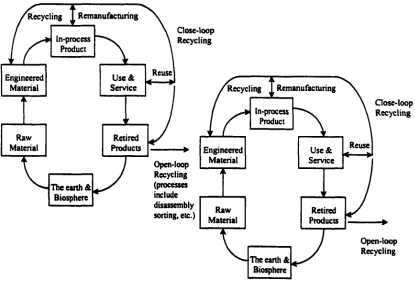
Figure 1-1 The closed-loop product life-cycle system (Adapted from [28])...8
Figure 1-2 The open-loop product life-cycle system...9
Figure 2-1 Scope o f D F E ... 17
Figure 2-2 Scope o f DFD...22
Figure 2-3 Gradient value o f material recovery [70]...25
Figure 2-4 Activities o f the product life cycle (Adapted from [79])... 30
Figure 2-5 Life cycle design concept [4]... 31
Figure 2-6 Structure o f LCA [71]... 36
Figure 2-7 The four phases of QFD... ... ... 41
Figure 2-8 Relationship o f QFD, TQM and TQC (Adapted from [35][74])...44
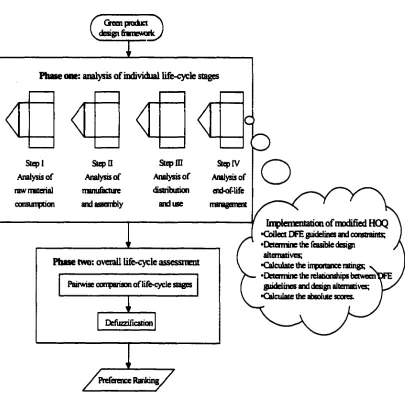
Figure 3-1 Simplified flow diagram o f the proposed framework... 50
Figure 3-2 Modified House of Quality... 53
Figure 3-3 Worksheets for environmentally conscious requirements... 57
Figure 3-4 classification o f joining options...61
Figure 3-5 The flowchart for determining importance ratings...63
Figure 3-6 Environmentally conscious requirements for end-of-life stage...65
Figure 3-7 Pairwise comparison matrix for the first level...67
Figure 3-8 Simplified pairwise comparison matrix for categories...69
Figure 3-9 Membership functions o f measurement scales (Adapted from [19])...76
Figure 3-10 The base interval of triangular fuzzy numbers... 80
Figure 3-11 Symbols in the relationship m atrix...80
Figure 3-12 Interval o f confidence... 81
Figure 3-13 Two phases arrangement... 87
Figure 3-14 Life cycle design diagram... 89
Figure 3-15 Centroid point of fuzzy number C ...97
Figure 4-1 Mass flow diagram o f a plastic fuel tank... 100
Figure 4-2 Mass flow diagram o f a steel fuel tank... 101
XI
Figure 4-3 Fuel tanks manufacturing process flow diagram... 103
Figure 4-4 Pairwise comparison matrices in the flrst life-cycle stage...106
Figure 5-1 System boundaries and targets... 122
Figure 5-2 Pairwise comparison o f manufacture & assembly stage for fastener selection 128 Figure 5-3 Importance ratings in the manufacture & assembly stage...129
Figure 5-4 Advantages and disadvantages of welding in Step 1... 130
Figure 5-5 Alternatives of welding processes...132
Figure 5-6 Advantages and disadvantages of adhesive bonding in Step 1...133
Figure 5-7 Advantages and disadvantages of Ütreaded fasteners in Step 1...134
Figure 5-8 Advantages and disadvantages of rivets in Step 1... 135
Figure 5-9 Advantages and disadvantages of snap fits in Step 1... 135
Figure 5-10 Pairwise comparison o f use and distribution stage for fastener selection... 141
Figure 5-11 Importance ratings in use and distribution stage... 142
Figure 5-12 Advantages and disadvantages of welding in Step U... 143
Figure 5-13 Advantages and disadvantages of adhesive bonding in Step I I ...143
Figure 5-14 Advantages and disadvantages of mechanical fasteners in Step II 144 Figure 5-15 Pairwise comparison o f end-of-life management stage for fastener selection ...149
Figure 5-16 Importance ratings in end-of-life management stage... 150
Figure 5-17 Advantages and disadvantages of welding in Step HI...151
Figure 5-18 Advantages and disadvantages of adhesive bonding in Step III... 151
Figure 5-19 Advantages and disadvantages of mechanical fasteners in Step HI 152 Figure 5-20 Pairwise comparison of life cycle stages... 155
Figure 5-21 Deflizzifled overall scores and ranking...156
Figure A-1 The structure of House o f Quality...170
Figure A-2 Symbols of relationship between Whats and H ow s... 172
Figure A-3 Symbols of correlation between Whats...173
Figure C-1 The membership function o f “durability” ... 181
Figure C-2 Trapezoidal fuzzy number...183
Figure C-4 n-function fuzzy number... 185
xiu
LIST OF TABLES
Table 2-1 DFD Guidelines...23
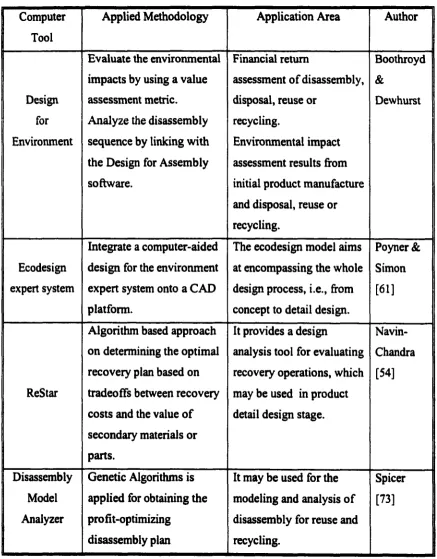
Table 2-2 List o f DFE computer tools...29
Table 2-3 Life cycle design strategies [5]...34
Table 3-1 Comparison between HOQ and modified HOQ... 55
Table 3-2 Categories of product life-cycle stages...59
Table 3-3 Scale o f relative importance (Adapted fi’om [68])... 68
Table 3-4 Linguistic terms and scales (Adapted from [19])...75
Table 4-1 Summary of plastic and steel fuel tanks... 111
Table 4-2 Modified HOQ of raw material consumption stage...112
Table 4-3 Modified HOQ of manufacture & assembly stage...112
Table 4-4 Modified HOQ of use & distribution stage... 113
Table 4-5 Modified HOQ of end-of-life management stage...113
Table 5-1 Fastener selection table (Adapted from V D I2243)...118
Table 5-2 Alternatives of joining method... 123
Table 5-3 Modified HOQ of manufacture & assembly stage...137
Table 5-4 Modified HOQ of use and distribution stage... 145
Chapter 1 Introduction
1.1 General Introduction and Problem Statement
Modem day environmental problems have aroused people’s attention to
monitoring environmental impacts and developing new technologies for preventing, or at
least relieving expanding environmental burdens. Some existing environmental problems
include global climate changes, ozone depletion, nature resources depletion, and soil
degradation.
Several research groups have simulated the global temperature change resulting
from radiation effects and predicted that the average temperature will increase 2-5®C by
the year 2050. Most important, the by-product from the global temperature change will
be an expected rise in sea level. As a result o f the temperature increase, the anticipated
mean sea level will increase about 20 cm by the year 2030 [34]. The available living area
will then be reduced significantly.
Ozone depletion will directly affect biological systems, because ozone can absorb
ultraviolet solar radiation. Ultraviolet solar radiation that penetrates the atmosphere may
cause reductions in biodiversity, climate change and many related environmental
problems. Therefore, ozone layer thickness has become a very important index of
environmental quality.
The expanding world population has triggered increasing natural resource
consumption and depletion rates. For example, the amount o f fossil fuels on the earth has
I
become another environmental problem that has attracted people's attention because
human beings rely heavily on fossil fuels as an energy resource. Some estimates have
indicated a maximum fossil fuel source life remaining o f only forty more years under
current consumption rates.
In the past, the cost of environmental damage and the cost of draining our natural
resources was sometimes underestimated. Very recent research data has reported a
dangerous current situation and the potential disastrous consequences if no urgent actions
are taken [34]. For example, few years ago, it was found that chlorofluorocarbon
compounds (CFCs) harm the ozone layer and it was decided to phase out this chemical in
ten years. However, a later report has shown that the negative effects of this chemical on
the atmosphere have been underestimated, and this chemical should be phased out much
sooner than ten years. Cases like these have forced many manufacturers to deal with
environmental regulation changes on short notice and to consider the product design
concept of Design for Environment (DFE).
The increasing awareness o f changes in the environment has motivated
researchers to focus on the innovation o f product design theory and improvement of
manufacturing techniques. These changes o f the environment have also been deeply
explored. For instance, the Ecology and Welfare Subcommittee o f the Science Advisory
Board of the EPA (Environmental Protection Agency) has provided a priority rank for
environmental impacts on global scale concerns in the United States.
Relatively High-Risk Problems include;
• Global climate change;
• Species extinction and overall loss of biodiversity; and
• Stratospheric ozone depletion.
Relatively Medium-Risk Problems include:
• Acid deposition;
• Airborne toxics;
• Herbicides/pesticides; and
• Toxics, nutrients, biochemical oxygen demand, and turbidity in surface
waters.
Relatively Low-Risk Problems include:
• Acid runoff to surface waters;
• Groundwater pollution;
• Oil spills;
• Radionuclides; and
• Thermal pollution.
The environmental problems have resulted in various global warnings and more
stringent production constraints. The existing environmental regulations and the
anticipation of more stringent ones to come in the near future have been affecting most
modem manufacturing companies. European countries, particularly Germany and the
Netherlands, have started taking appropriate measures to address environmental problems
by imposing environmental regulations on production facilities [33]. Such regulations
pertain to smoke emissions, energy use, and responsibility of product recycling. The
German government has proposed legislation that would require automakers and
electronics manufacturers to take back and recycle the products at the end of their life
cycles. These environmental regulations encourage product manufacturers as well as
consumers to conserve natural resources. All o f these new constraints have forced
manufacturers to modify their manufacturing systems and have stimulated product
manufacturers to conduct research on environmentally conscious design and
manufacturing (ECDM). In summary, the emergence of a “green” trend o f product
design and manufacturing has been aroused by several facts:
1. more stringent environmental legislation;
2. customers’ awareness o f using less environmental harmful products and
services;
3. “green” products and services competition from similar product manufacturers
or industries;
4. significant savings from green product design including waste reduction,
energy preservation and materials recovery.
Many different design issues that will be introduced in section 1.2 have been
developed in cooperation with the “green” trend o f product design and manufacturing.
The ultimate goal of these environmental design issues is pursuing sustainable
development, that is, “development that meets the needs o f the present without
compromising the ability o f future generations to meet their own needs” (United Nations
World Commission on Environment and Development, 1987). A sustainable effort is a
long-term, multifunctional, integrated system approach. Generally, a broad consideration
including economic, environmental, social, and cultural issues should be involved in
sustainable development which is also the key to creating a healthy community.
legislation generation, green land usage, resources conservation, energy efficiency,
optimum transportation planning, green building construction and green product
design/manufacturing.
This research is focused on the green product design that plays an important role
in sustainable development. The importance o f improving product design methodology
may be perceived in today’s tremendous product waste generation. The data has shown
that in 1988, U.S. industry generated approximately 700 million tons of hazardous waste
and 11 billion tons o f non-hazardous waste during raw material extraction, material
processing, and product manufacturing'. In 1992, Americans generated over 180 million
tons o f municipal solid waste of which only 13% have been recycled [27]. Consequently,
it has been estimated that the number of available landfill sites will be reduced from
18,500 in 1979 to 3,250 by the year 2000 [12]. Focusing on the aspect o f manufacturing,
green product design has to manage all possible environmental impacts throughout the
product life cycle. In other words, a green product design framework may provide a
means to eliminate much of the load on the environment and curtail the use of regulated
materials.
Green product design should incorporate environmental concerns into the material
selection, parts design and into manufacturing process improvement. Broadly speaking,
green product design aims at conserving nature resources, minimizing depletion of non
renewable resources and using sustainable practices for managing renewable resources.
As a result, applying green concepts into product design will be helpful in maintaining
' See U.S. Congress, Office o f Technology Assessment, Managing Industrial Solid Wastes From Manufacturing. Mining. Oil and Gas Production, and Utility Coal Combustion. February 1992.
the balance o f the ecosystem structure and environmental equity regarding the
distribution o f resources and environmental risks among generations and elements of
society [44].
One o f the major issues in this green product design framework is that it takes
into account a design concept known as Design for Environment. In recent years, the
concept o f Design for Environment has been deeply explored and has generated many
design guidelines associated with it. In considering these guidelines of Design for
Environment for product design, designers have to face many trade-offs among
environmental factors, economic considerations and engineering requirements.
Accordingly, a product design system that aids in decision making is very important for
employing Design for Environment considerations. The present research develops a new
framework by which the environmental criteria and the characteristics of engineering
concerns can be considered simultaneously. In other words, the framework provides a
systematic means to enhance the process of decision making and associate product design
with environmental concerns. The developed framework is discussed in detail in chapter
1.2 Design for Environment Issues
Design for Environment (DFE) is a practice by which environmental
considerations are integrated into product development. In addition to the traditional
design considerations, DFE considers functional requirements, producibility, assembly,
serviceability, recyclability as well as environmental effects. It implies that DFE needs to
consider the product's performance and environmental impacts throughout its entire life
cycle. On the basis of DFE concerns, product design will consider the product’s
interaction with its physical environment throughout the product’s life-cycle including
raw material extraction, energy consumption to fabricate the product, transportation, use,
disposal and the associated by-products generated from all processes involved in its life
cycle.
One o f the most important parts in DFE deals with the product end-of-life
management. There are two types of recycling plans for product end-of-life
management: closed-loop and open-loop recycling. A closed-loop product recycling
system as shown in Figure 1-1 involves reuse and remanufacturing o f the components, or
recycling o f the materials to make the same product over again. A typical example is to
recycle aluminum cans to produce the same or similar type o f aluminum cans. The
various design issues involved in the closed-loop recycling activity are comprised of
Design for Disassembly, Design for Reuse, Design for Remanufacturing and Design for
Recycling which are all associated with Design for Environment, and will be concemed
as criteria for the green product design framework.
Recycling
Engineered Material
Remanufacturing
In-process Product
Material
PMigm iMWf?
•Design for Serviceability
•Design for Disassembly
•Design for Reuse
Design for Remanufacturing
•Design for Recycling
The earth & Biosphere
Close-loop Recycling
Use& Service
Reuse I
1f /
Retired Products
Open-loop Recycling
Another type o f recycling plan for product end-of-life management, open-loop
recycling, reuses materials to produce a different product. Figure 1-2 shows the profile of
open-loop recycling. A typical example o f open-loop recycling is that o f long fiber office
paper which may be recycled to produce short fiber brown paper bags. The application
o f open-loop recycling will depend on the characteristics of the material. In addition, the
process o f open-loop recycling usually involves material degradation and waste
generation. Thus, it is usually preferable to consider closed-loop recycling first when
conducting the product end-of-life management.
Recycling Remanufactunng
In-process Product Engineered Material U se& Service Raw Material Retired Products
The e a rth s Biosphere Gose-loop Recycling Remanufacturing Recycling In-process Product
r
Open-loop Recycling (processes include disassembly sorting, etc.)The earth & Biosphere
Gose-loop Recycling
Engineered Material
U se * Service i1 1r Raw Retired Material Products Reuse J Open-loop Recycling
Figure 1-2 The open-loop product life-cycle system
1.3 Framework of the Decision Making Tooi
The proposed framework of green product design can be divided into two parts.
The first part is the individual analysis, in which fuzzy set theory and Analytic Hierarchy
Process (AH?) are integrated into the House of Quality (HOQ). The second part of the
framework is the systematic approach, in which a two-phase analysis is developed for
illustrating the four stages of the product life cycle. The four product life-cycle stages
are: (1) raw material consumption; (2) manufacture and assembly; (3) product
distribution and use; and (4) management of end-of-life products. In the first phase of
analysis, every product life-cycle stage will be examined individually. The overall
assessment is addressed in the second phase of analysis. The HOQ based evaluation tool
and systematic product life-cycle approach are addressed in chapter three.
HOQ is a fundamental part of Quality Function Deployment (QFD), which is
used to streamline design activities and show a clear understanding o f design tasks [11].
One o f the important functions of HOQ is to translate customer needs into physical
engineering design solutions. In this green product design framework, the element of
customer needs is substituted by DFE criteria and the physical engineering design
solutions are substituted by alternatives of design features. In other words, the HOQ is
mainly utilized to map environmental constraints and concerns to the associated
candidates of design features. Moreover, HOQ also provides a powerful evaluation
mechanism for measuring the importance of those design features. Therefore, HOQ
applied in this framework may enhance the analysis o f environmental issues and the
The HOQ approach, on the other hand, has been known to contain some
weaknesses [6][35]. They are:
• time consuming process including document preparation and consensus within
the design team;
• inconsistency in quantification process;
• use o f imprecise artificial variables which contain ambiguity and vagueness of
meaning.
Fuzzy set theory is used to deal with the ambiguity and uncertainty in the data
involved with relationship definitions in HOQ. In chapter three, how the fuzzy numbers
can be used in the implementation of HOQ will be discussed, and the arithmetic
operations for fuzzy numbers will be introduced.
There are different DFE requirements under each stage o f product life cycle. To
fully address the concept of DFE in product design, a systematic approach has to be
conducted. By using the systematic approach described in chapter three, the proposed
framework can capture the real environmental influence in the full range of the product
life cycle. As a result of utilizing the framework, decisions can be made to enhance green
product design.
11
1.4 Objectives of the Research
The anticipated implementation o f environmental legislation and standards such
as the German in-processing take-back bill and ISO 14000 (Environmental Management
System) has motivated industries to do the research relating to DFE issues. Currently,
growing insights in the economical opportunities of reuse and recycling encourage
designers to integrate environmental activities into product development. The objective
of this research is to develop a framework for product design so that the designed
products will comply with environmental requirements, and maximize the profits from
recycling the used products.
In terms of DFE, use of the proposed green product design framework is mainly
expected to achieve profits by: (1) providing a guide to identifying environmentally
conscious design requirements; (2) reducing environmental impacts; and (3) increasing
the benefits retrieved from end-of-life products. The anticipated activities and profits are
itemized below.
1) Provide a guide to identifying environmentally conscious design requirements by:
• studying the potential restriction in terms of environmental legislation;
• consulting with experts for expertise; and
• searching from the available database or library associated with Pollution
Prevention (P2), energy consumption and recycle feasibility.
2) Reduce environmental impacts by:
• reducing the hazardous and nonhazardous residuals from the raw materials
• reducing the energy consumption of matoial processing, product manufacturing,
and product disassembling.
3) Increase the benefits retrieved firom end-of-life products by:
• configuring the product design for reducing disassembly times;
• increasing recyclable materials; and
• reducing landfilled materials.
For implementing DFE considerations in product design processes, a proper
decision making tool has to be developed for dealing with the complicated DFE
requirements. In addition to incorporating DFE concerns into product design processes,
the objective o f this research also aims at developing an appropriate decision support
system. Although the nature o f HOQ provides the fimction of analyzing interactive
criteria, it still has weakness o f handling ambiguous information. Therefore, the
development o f a modified HOQ is another goal o f this research. The activities involved
in modifying HOQ include:
1) Rearranging HOQ structure: The rearranged HOQ provides a structure where the
relationships between alternatives of design features and environmentally conscious
requirements may be analyzed.
2) Transforming subjective determination o f importance w ei^tings: The Analytic
Hierarchy Process will be employed for determining the importance weightings along
with DFE requirements and constraints.
3) Substituting artificial expressions (e.g. weak, medium and strong relationship) with
fuzzy numbers: the use o f fuzzy numbers may solve the vague and imprecise
quantification process in HOQ.
13
4) Developing a systemic approach for green product design evaluation in which the
concept o f product life-cycle design is incorporated into the overall assessment
analysis.
In short, the proposed green product design framework focuses on seeking better
environmental performance by means o f selecting environmentally friendly design
alternatives. The environmental considerations used for guiding the selection include
environmental impact reduction throughout the product life cycle, efficiency in the use of
nature resources, waste control through production processes, and end-of-life
management. As a result, the designed parts or products will meet environmental
Chapter 2 Literature Review
2.1 Design for Environment
Along with an increasing awareness o f the importance of environmental
protection and the trend towards stringent legislation proposed by many developed and
developing countries, various environmental technologies are continuously being
explored in order to moderate the expansion of environmental impacts and avoid costly
environmental penalties. The term. Design for Environment (DFE), is therefore becoming
an important objective in the product design process.
In addition to the traditional product design considerations which lead the product
design to satisfy functional requirements and specifications, the goal of DFE is to develop
more environmentally friendly products without compromising cost, quality, or
manufacturing time. DFE also has been known as a systematic consideration of
environmental impacts, resource depletion and human health over the whole product life
cycle [62]. Therefore, for attempting to achieve the goal o f DFE, attention to DFE should
be paid throughout all the product design stages which consist of conceptual design,
detail design, manufacturing process determination and product end-of-life management.
This developed green product design framework provides a systematic approach to
incorporate DFE into the product design process and directs the design to corresponding
environmental requirements and regulations.
15
2.1.1 Scope o f DFE
The scope o f DFE is shown as Figure 2-1. In general, DFE can be categorized
into waste prevention and materials management [79][84]. Waste prevention refers to
reduction or elimination of wastes generation which is performed during the design or
redesign of products and the associated production processes. To implement the behavior
of waste prevention, the following guidelines should be considered [30][41][79]:
• Material substitution - replacing toxic materials with less environmentally
harmful alternatives, and selecting better manufacturing processes which generate
less toxic waste.
• Waste source reduction - reducing waste and practicing material conservation
whenever possible in the manufacturing process.
• Energy use reduction - reducing the energy required to produce, transport, store,
use or dispose o f the product.
• Life extension - prolonging product useful life, increasing product durability and
facilitating reparability, so as to reduce the waste stream generated by disposing
o f the retired product.
The other category associated with DFE is materials management. Under this
category, considerations of how to facilitate product recyclability are made. In other
words, the application of product retirement is managed within this category. Material
management should be arranged early in the product design stage. Accordingly, it is
necessary to consider the following management alternatives that lead the product toward
Design for Environment
Material M anagement Waste Prevention
Life Cycle Assessment
•Reuse •Site Remedy
•Remanufacturing •Pollution Control
•Recycling •Efficient Materials Use
•Energy Recovery •Resources Conservation
•improve product structure
•generate optim al disassembly
sequence
•define optim al degree o f
disassembly
•optimize m aterial selection
•reduce production effects o f materials and mfg.
processes
•substitute toxic materials
•enhance recyclibility
Figure 2-1 Scope of DFE
17
• Reuse - reuse is the additional use of an item after it is retired from a clearly
defined duty. However, repair, cleaning, or refurbishing to maintain integrity
may be done in transition from one use to the next [28].
• Remanufacturing - remanufacturing is an industrial process that restores worn
products to like-new condition. In a factory, a retired product is completely
disassembled. Its reusable parts are then cleaned, refurbished, and put into
inventory. Finally a new product is reassembled from both old and new parts,
creating a unit equal in performance and expected life to the original or a
currently available alternative [28].
• Recycling - recycling is the reformation or reprocessing o f a recovered
material. Recycling may be defined as “the series o f activities, including
collection, separation, and processing, by which products or other materials are
recovered from or otherwise diverted from the solid waste stream for use in the
form of raw materials in the manufacture of new products other than fuel [28].
• Energy recovery - energy recovery is extracting energy from waste materials
through incineration or other processes.
In the application o f implementing the management alternatives o f reuse and
remanufacturing, a typical five-step processing stage has been identified which is also the
product end-of-life processing stages [14][80]:
1) Disassembly;
2) Cleaning components;
3) Inspecting, testing and sorting components;
5) Reassembly.
With respect to the assessment tool of DFE, Life Cycle Assessment (LCA) is the
most frequently used evaluation methodology. According to the Society of
Environmental Toxicology and Chemistry (SETAC) [34], the definition of the LCA
process is “an objective process to evaluate the environmental burdens associated with a
product, process, or activity by identifying and quantifying energy and material usage and
environmental releases on the environment, and to evaluate and implement opportunities
to effect environmental improvements.” The assessment includes the entire life cycle of
the product, process or activity, encompassing extracting and processing raw materials;
manufacturing, transportation, and distribution; use/re-use/ maintenance; recycling; and
final disposal. LCA is, therefore, used as an overall assessment tool which evaluates the
potential environmental effects of the design process, while DFE directs the design to
minimize environmental impacts. The three phases involved in LCA - Inventory
Assessment, Impact Assessment and Improvement Assessment - will be explained in
Section 2.3.
2.1.2 Design for D isassem bly
In Germany, manufacturer take-back-and-recycling laws have been proposed by
the government for automobiles, electronic goods and other durable products. This trend
o f stringent legislation has forced industries to pay greater attention to product
disassembly design. Lindsay Brooke [17] mentioned that automotive designers and
19
manufacturers can help in solving potential environmental problems through three
methods:
• Source reduction (reducing the amount o f material entering the waste stream)
• Design for Disassembly (DFD)
• Specifying and using recycled materials.
With respect to Design for Disassembly, auto manufacturers have made efforts
worldwide. For instance, in Europe, BMW’s 1991 Z1 roadster model with plastic body
panels was designed for disassembly and labeled as to resin type so they may be collected
for recycling [18]. In addition to BMW, Volkswagen has set up disassembly and
recycling plants in order to comply with the upcoming recycling regulations.
Consequently, they are trying to make an automobile out o f 100 percent
reusable/recyclable parts by the year 2000. In America, General Motors, Chrysler and
Ford, fonned the Vehicle Recycling Partnership (VRP) in 1991 to develop ways to
recover and reuse as much of the fluff and metal scrap from motor vehicles as possible
[63]. Ford has also issued its own worldwide Recycling Guidelines, which suggest fewer
and more dismantle-friendly fastener types, ‘green’ materials and component designs
[16].
While the auto industry sees only potential benefits, some electric appliance
manufacturers have already profited from launching their DFD/recycling program
[21][59][81]. For instance. Xerox has saved $200 million a year through reuse of parts;
the focus on green design increased this amount by $50 million.
DFD is a part o f DFE and is strongly related to the goal of material management
It will make disassembly practices easier so that post consumer products may be
separated with less effort into parts and materials without contamination. For example,
incorporating DFD into product design will eliminate the use of mixing copper and tin in
steel. In short, DFD is a very important design concept for post consumer product reuse,
remanufacturing and recycling [60], and may lead us to achieve the goal o f DFE. The
current DFD development may be found in the following perspectives;
• developing DFD guidelines;
• developing cost models for DFD evaluation;
• studying the possibility of using robots to facilitate automated disassembly;
• studying the feasibility o f DFD related legislation for enhancing environmental
preservation.
The scope of DFD is shown in Figure 2-2 [77]. The ultimate goal o f DFD is to
extend the life o f used parts by means of reuse or remanufacturing, or to provide a new
life of the used materials by means o f recycling. Considering the definition presented
previously, reuse is the most desired scenario o f DFD, since the profit retrieved from
“reuse” can be maximized. For achieving the success o f DFD, much research has been
done in this field that can be generally categorized as disassembly-oriented product
design, economic analysis of disassembly efforts, and disassembly aided tools.
2.1.2.1 Disassembly-Oriented Product Design
Disassembly-oriented product design aims at formulating design criteria and
developing design guidelines to be used by designers during conceptual and detailed
21
design. Jovane, et al. listed considerable advantages arising from disassembly-oriented
product design which are [41]:
Landfill
Material
Remanufacturing
Recycling
Reuse
D ism antle Parts
D isassem bly
D iscarded goods
S eparation S hredding
Figure 2-2 Scope of DFD
• less work needed to recover recyclable parts and materials;
• more uniformity and predictability of product configuration;
• simple and fast disconnecting operations;
• easy manual or automated handling of removed parts;
• easy separation and post-treatment of recovered materials and residuals;
• reduction of product variability.
Within the realm o f disassembly-oriented product design, one of the most
valuable contributions o f research is the development o f guidelines [13][20][26][41][70].
Those guidelines can be classified as the areas o f product structure, material use, and
recycling principles and requirements. Table 2-1 demonstrates some o f the DFD criteria
Table 2-1 DFD guidelines
Category Criteria
Product structure
Linear and unified disassembly direction
Avoid non-rigid parts
Parts consolidation
Modular structure design
Concentrate hazardous or valuable parts in one area
Material use
Avoid aging material combination
Avoid corrosive material combination
Protect assembly groups from soiling or corrosion
Limit material variability
Use compatible materials
Avoid metal molded in plastic parts
Recycling
principles and
requirements
Include nominal breakpoints
Avoid turning operations for disassembly
Standardize subassemblies and parts for multiple use
Standard and simple joining techniques
Marking of central joining elements for disassembly
Open access and visibility at separation points
Standard gripping spots near center o f gravity
Enable simultaneous separation and disassembly
Minimize number o f fasteners
Use joining elements that are detachable or easy to
destroy
Parts should be easy to pile or store to save room
Design of parts for easy transport
Enclose poisonous substances in sealed units
Avoid secondary finishing (painting, coating, etc.)
23
The guidelines o f DFD are considered to be useful and applicable at the early
stage o f conceptual design. However, some uncertainties and obstacles exist that will
make disassembly activities difficult. For example, the worn-out condition o f discarded
goods is unpredictable and it may cause joining elements difficult to remove.
Particularly, some barriers o f DFD result from the efforts made to enhance Design for
Assembly. For example:
• some undetachable joining methods are used for enhancing Design for Assembly;
• some unrecyclable materials are used for achieving better performance or more
economical manufacturing;
• some structure designs favor assembly and aesthetics, but not disassembly.
Faced with the numerous DFD guidelines, an organized decision support tool
becomes very important for designers to deal with the trade-offs among them. However,
no such tool exists, and none o f the literature referred to above provides a decision aided
model to handle the trade offs. Most importantly, the decision tool should be
encompassed in design processes so that the designed product may be in accordance with
DFD requirements.
2.1.2.2 Economic Analysis
As Simon [70] indicated, the total value o f discarded products vary according to
whether the high-value items are separated early or late in the dismantling process. In
figure 2-3, curve A represents high-value items released early, while curve B does not.
V a l u e
claimed
f r o m d i s c a r d e d p r o d u c t
0
% D i s a s s e m b l e d 100
Figure 2-3 Gradient value of material recovery [70]
Johnson and Wang [40] also emphasized that the negative value may result from a
number o f other circumstances - materials or parts o f the product that are toxic require
special handling disposal methods; one or more components may have a low material
value and existing landfill costs may be high; or negative value may occur in instances
where legislation has required recycling and large costs have been incurred to comply
with such regulations. In other words, the disassembly sequence is very important in
terms o f economic considerations. Basically, current researches focusing on disassembly
plan are all aiming at separating the high-value items and toxic substances as early as
possible in the disassembly process. Based on the economic concerns, the approaches on
assessing DFD may be categorized as disassembly path generation [20][40][89] and
quantitative evaluation methods [48][Sl] which all attempt to generate an efficient
disassembly scheme.
A typical article discussing the disassembly path generation was presented by
Johnson and Wang [40] in which a methodology for disassembly analysis using a
cost/benefit tradeoff approach to analyze the potential benefit o f material recovery
25
opportunities was addressed. Zussman et al. [89] developed an assessment methodology
to support product design for the end-of-life phase. The methodology was combined with
probabilistic design method, utility theory and graphical technique where the future
recycling conditions (e.g., the price of raw materials, the refinement o f process
technologies, dumping fees and the development of new regulations) are concerned.
Subramani and Dewhurst [74] proposed an algorithm for the generation o f optimal
sequences for disassembly. In their model, mechanical assembly and disassembly
diagrams were used, and the branch and bound search algorithm was applied.
With regard to the quantitative evaluation methods, Chen et al.[20] focused on the
analysis o f the costs and benefits o f recycling. By properly defining a cost function and
the benefits of recycling, the disassembly and recycling process can be evaluated.
Dewhurst [25] proposed evaluation algorithm index formulas for Design for Service
(DFS) and recycling efficiency so that the assessment may be done among DFS, DFD
and DFA.
A different disassembly evaluation methodology in which it is not necessary to
use disassembly cost as one of the evaluation factors was proposed by Kroll et al. [48]. A
worksheet was developed for measures o f product “disassemblability”, mainly for
analyzing small electrical appliances while considering mechanized disassembly.
Even though most of the economic DFD models may have done a good job
seeking optimized benefits, there still are some existing barriers. These barriers include;
• the legislation may have been changed when the designed durable product reaches its
• the material recycle chain and technology may not be the same when the product is
actually developed, which means the recycle cost may be different;
• the environmental impacts of consumed materials may be underestimated due to
limited understanding;
• uncertainties raised by predicting whether consumers will return or recycle the retired
products or not.
Therefore, a fundamental requirement for a product design fiamework will have to
involve the capability o f dealing with uncertainties of environmental effects.
2.1.2.3 Disassembly Aided Tools
In order to deal with the huge number o f tradeoffs associated with
environmentally benign product design, a comprehensive computer aided design tool is
necessary. Ideally, a computer-aided tool for design for recyclability and disassembly
has to involve, at least, a systematic assessment model, hypermedia-based information
systems, automatic optimization of the disassembly sequence, and an enriched data base
which includes information such as the standard times of disassembly operations and the
environmental effects o f materials used [72].
These numerous environmentally friendly product development issues reveal that
DFD has been noted as a useful tool leading industries toward close-loop product
recycling. Two particular industries, the automotive and the electrical appliance
industries, have reported some achievements in new product design based on disciplines
27
of DFD. It is obvious that these two industries will act as a guide to other manufacturing
industries by exploring innovative design concepts in the future.
2.
1.3 Relevant computer toolsSince complicated tasks are involved in DFE such as Design for Disassembly,
Design for Reuse, Design for Recycling, etc., computer tools are becoming more and
more important to support design practices. Some available computer tools associated
with DFE have been summarized in Table 2-2. These computer tools may enhance the
analysis in certain product design aspects. Even though these computer tools will be
applied in different areas, they are all undoubtedly aimed at supporting environmental
improvement projects.
As explained in section 2.1.1, DFE is an integrated approach in which numerous
environmental factors have to be incorporated into the traditional product design process.
Within the broad boundary o f DFE, huge numbers of criteria need to be simultaneously
considered and trade-off decisions looked for. Most of the researches related to DFE,
however, focused on identifying the importance of DFE or illustrating some associated
guidelines. Even though some o f these researches worked on developing a methodology
to enhance the DFE process or a computer tool to facilitate decision making, they were
not able to handle the uncertainties o f quantifying the environmental impacts in order to
provide a well-structured decision framework. The present undertaking of a green
product design framework will try to resolve the shortage o f current DFE development
Table 2-2 List o f DFE computer tools
Computer
Tool
Applied Methodology Application Area Author
Design
for
Environment
Evaluate the environmental
impacts by using a value
assessment metric.
Analyze the disassembly
sequence by linking with
the Design for Assembly
software.
Financial return
assessment o f disassembly,
disposal, reuse or
recycling.
Environmental impact
assessment results from
initial product manufacture
and disposal, reuse or
recycling. Boothroyd & Dewhurst Ecodesign expert system
Integrate a computer-aided
design for the environment
expert system onto a CAD
platform.
The ecodesign model aims
at encompassing the whole
design process, i.e., from
concept to detail design.
Poyner &
Simon
[61]
ReStar
Algorithm based approach
on determining the optimal
recovery plan based on
tradeoffs between recovery
costs and the value of
secondary materials or
parts.
It provides a design
analysis tool for evaluating
recovery operations, which
may be used in product
detail design stage.
Navin-Chandra [54] Disassembly Model Analyzer
Genetic Algorithms is
applied for obtaining the
profit-optimizing
disassembly plan
It may be used for the
modeling and analysis o f
disassembly for reuse and
recycling.
Spicer
[73]
29
2.2 Life Cycle Design
Life cycle Design is a design pattern for understanding the interactions between
product design requirements, economic systems and their environmental impacts [44]. It
covers a broad spectrum which comprises all o f the various design-for-X (DFX) issues.
The “X” in the term o f DFX stands for all activities in a product life cycle, for example.
Design for Manufacturing, Design for Assembly, Design for Service and Design for
Disassembly are the parts of DFX [I]. Thus, life cycle design may be regarded as a more
comprehensive design concept from the traditional design considerations such as DFA,
etc. The life cycle design considers all stages o f product life cycle comprised of raw
material extraction, manufacturing, product use and end-of-life management. Within
every product design process consisting o f conceptual design, material selection,
structure determination and process design, the environmental effects must be taken into
account throughout all product life cycle stages. Figure 2-4 shows the stages of product
life cycle.
Recycle Reuse
Raw material
extraction Use
End-or-lire
management Manufacturing
Material processing
Alting [4] emphasized that the concept o f life cycle design is an evolution of
concurrent engineering, and exists in all cycle phases, i.e., needs recognition,
development, production, distribution, usage, and recycling. More important, all cycle
phases have to be taken into consideration simultaneously from the conceptual product
design stage through the detailed design stage. Figure 2-5 shows all elements in the life
cycle design concept.
Environmental
Ease o f manufacturing
I I
[\
Product properties
Production
Distnbution
Recycling
Working conditions
Resource optimization
Company policy
Life-cycle costs
Figure 2-5 Life cycle design concept [4]
As depicted above, life cycle design has similar goals with DFE. Both o f them
seek to incorporate environmental issues into concurrent design processes. One aspect
31
pointed out by Keoleian and Menerey [44] that may differentiate life cycle design from
DFE is that life cycle design also intends to integrate product and process design in a
single function to more effectively reduce aggregate environmental impacts associated
with product systems. In this proposed green product design framework, a separation of
product life cycle stages will be made which is the application of life cycle design. It is
expected to provide designers with a clear idea of the boundary of each life cycle stage
and the interrelationships between life cycle stages by applying life cycle design.
When conducting life cycle design, considerations must be made to consider the
inputs and outputs at each stage o f the life cycle. For example, the inputs at the raw
material extraction stage would be labor and energy while the output is the actual
extraction of raw material from the earth and accompanying waste generation. The
critical issue is the final stage - post consumer product disposal and recycling. The
inputs of this last stage are the discarded goods from consumers and the outputs to be fed
back into previous stages by means o f reuse, remanufacture and recycle. This is similar
to the idea of sustainable manufacturing, that is, to develop renewable products and strive
for no waste residuals between product generations. With respect to the disposal stage,
Olson et al. [55] used the term "demanufacture" rather than disassemble since
disassembly connotes processes to service the product and which usually do not reduce
products to their elementary constituent parts. Demanufacturing relies upon the product
design as well as process planning. It involves considerations of facility planning,
scheduling, quality assurance and inventory control. For incorporating such broad
consideration into the product design stage, a well-organized design framework is very
Ishii et al. [38][39] developed a framework that focused on post-manufacturing
issues. The model started at the product structure analysis, followed by cost and
compatibility analysis. Different from traditional design concepts such as those cost
models for Design for Assembly (DFA), life cycle design takes into account company
cost, user cost and society cost [4]. The hidden cost (e.g., society cost), including costs
for dealing with waste generation, pollution emission and health damage, is sometimes
unpredictable. For instance, the emergence o f applying CFCs as refrigerant was regarded
as a great innovation in energy efficiency. Rapidly, CFCs were used as propellants for
blown plastics, foams and aerosols, and as solvents and degreasers. However, the
enormous hidden cost of CFCs causing ozone layer depletion was found a few years
later. As a result, it is very difficult to accurately create a life cycle design model
incorporating comprehensive financial factors. The proposed design framework in this
thesis, therefore, focuses on quantifying design guidelines in the evaluation system
instead of developing an economic model.
In terms of the life cycle design strategies, a good overview has been provided by
Alting and Legarth [S]. As shown in Table 2-3, the overall and subsequent design
strategies most often pursued in life cycle design are listed. Those design strategies
applied throughout all design processes may be applied for the environmentally
conscious selection o f materials and components. It ends up with the state-of-the-art in
life cycle design. A decision support tool dealing with the trade-off among strategies will
be required for implementation of life cycle design.
33
Table 2-3 Life cycle design strategies [5]
Life cycle phase
Pre-manufacture
Strategy Relevance
Use o f recycled materials Resource depletion, environmental burdens
Use o f less energy intensive materials Environmental burdens
Environmentally conscious component
selection
Supplier performance, environmental
burdens
Use o f renewable materials Resource depletion
Manu acture
Use high-throughput processes Environmental burdens, working burdens
Use material saving processes Resource depletion. Environmental
burdens
Overhead reduction Environmental burdens
Transportation/distribution
Improved logistics Environmental burdens
Low volume/weight Environmental burdens
Use recycled material for packaging Resource depletion, environmental burdens
Use
Low energy consumption Resource depletion, environmental burdens
Design for maintenance/long life Resource depletion
Disposal
Design for disassembly Resource depletion
2.3 Life Cycle Assessment
The major obstacle of product Life Cycle Design^ is that it is difficult to measure
the performance of each activity over the product life cycle. Life Cycle Assessment
(LCA) has been developed to overcome this difficulty in Life Cycle Design. LCA offers
a means for assessing all environmental impacts o f a product design &om cradle-to-grave
[23][28][34].
The objective of using LCA is to evaluate activities and reduce overall
environmental impacts. LCA is usually employed by decision makers, whether engineers
or government policy-makers, who utilize LCA as a tool to assess the results of the
design process; but LCA is not a tool for designing a product.
Figure 2-6 shows that the formal structure of LCA can be divided into inventory
analysis, impact analysis and improvement analysis [34][71]. At present, inventory
analysis is the most established methodology of LCA while the other two methods still
have some difficulties of implementation.
Inventory analysis is used to identify the resource inputs and environmental
releases firom a production system, and further quantify the corresponding environmental
impacts. The inventory process begins with a conceptual goal definition phase to define
both the purpose for performing the inventory and the scope of the analysis. An
inventory procedure is then employed, and data on the product or system is gathered.
^ The term used in this thesis, product life cycle design, is discussing a concept o f product design. It is different from the Business and Accounting view point.
35
![Figure 1-1 The closed-loop product life-cycle system (Adapted from [28])](https://thumb-us.123doks.com/thumbv2/123dok_us/1493203.1182762/26.583.106.514.156.460/figure-closed-loop-product-life-cycle-adapted.webp)
![Figure 2-5 Life cycle design concept [4]](https://thumb-us.123doks.com/thumbv2/123dok_us/1493203.1182762/49.578.141.476.258.576/figure-life-cycle-design-concept.webp)
![Table 2-3 Life cycle design strategies [5]](https://thumb-us.123doks.com/thumbv2/123dok_us/1493203.1182762/52.586.95.540.117.647/table-life-cycle-design-strategies.webp)
![Figure 2-6 Structure of LCA [71]](https://thumb-us.123doks.com/thumbv2/123dok_us/1493203.1182762/54.590.108.521.44.333/figure-structure-of-lca.webp)

![Figure 2-8 Relationship of QFD, TQM and TQC (Adapted from [35][74])](https://thumb-us.123doks.com/thumbv2/123dok_us/1493203.1182762/62.583.105.533.145.559/figure-relationship-qfd-tqm-tqc-adapted.webp)
![Table 3-3 Scale of relative importance (Adapted from [6 8 ])](https://thumb-us.123doks.com/thumbv2/123dok_us/1493203.1182762/86.591.104.545.90.328/table-scale-relative-importance-adapted.webp)