Exploratory Correlational Analysis. (Under the direction of Temple Walkowiak).
This study examined the math talk and the use of multiple representations in elementary classrooms of 134 beginning teachers, all in their second year of teaching. A quantitative
correlational research design was employed to investigate the research questions. The data were collected using a log instrument, the Instructional Practices Log in Mathematics (IPL-M), on which the teacher participants logged approximately 45 mathematics lessons over one academic year. Due to the nested nature of the collected data, a Multilevel Linear Modeling (MLM) methodology was used. Level one is mathematics lessons nested within teachers (level two). Three investigations were conducted based on the collected data. In the first study, the
by
Reema Alnizami
A dissertation submitted to the Graduate Faculty of North Carolina State University
in partial fulfillment of the requirements for the degree of
Doctor of Philosophy
Mathematics Education
Raleigh, North Carolina 2017
APPROVED BY:
_______________________________ _______________________________ Temple Walkowiak Paola Sztajn
Committee Chair
DEDICATION
BIOGRAPHY
Reema Alnizami will complete the requirements of a Ph.D. in Mathematics Education at North Carolina State University in summer 2017. She earned a Master of Science in Mathematics Education from NCSU in December 2012 and a Bachelor of Science in Mathematics Education (minor Mathematics) from NCSU in 2010. She also earned a Bachelor’s degree in Business Administration from Jordan University in 1996.
Throughout her graduate studies at NCSU, Reema earned a plethora of research and teacher education experiences. In addition to the rich experiences earned through enrolling in graduate level course, Reema worked as a research assistant on several projects. For example, she
participated in data collection, data analysis, writing literature reviews, developing PD materials, and other research activities through her assistantship on Project AIM, funded by the National Science Foundation. She also worked as a teacher assistant, which helped her enrich her knowledge on ways to extend pre-service teacher learning.
ACKNOWLEDGMENTS
I wish to thank my mentors at NCSU, who helped me believe in myself and generously shared their rich experiences as researchers and educators. Special thanks to Dr. Paola Sztajn for providing me with plethora of opportunities to participate in a wide range of research activities, Dr. Temple Walkowiak for pushing me to think critically about my research observations and findings, Dr. Hollylynne Lee for teaching me how to maximize learning opportunities of preservice mathematics teachers, Dr. Karen Keene for providing me with general guidance on how to survive and excel as a graduate student, and Dr. Irina Kogan for believing in my abilities as a scholar and for providing valuable feedback on my work. I also wish to extend my gratitude to all the STEM education faculty at NCSU for teaching, mentoring, and supporting me.
Special thanks to my colleagues at NCSU, who encouraged me and enriched me with their friendship.
I am also thankful for the financial funding support from The National Science Foundation and STEM department at NCSU, which facilitated my acquisition of my Master and Ph.D. degrees. This material is based upon work supported by the National Science Foundation under Grant No. 1118894, Project ATOMS, the Accomplished Elementary Teachers of Mathematics and
TABLE OF CONTENTS
LIST OF TABLES ... viii
LIST OF FIGURES ... ix
CHAPTER 1 ... 1
Introduction ... 1
Significance ... 1
Discourse ... 1
Representations ... 2
Using log data and MLM design to understand opportunities for student learning ... 3
Definition of Terms ... 4
Beginning (novice) teachers ... 4
Rich (productive) mathematical discourse ... 4
Grand mean of a variable ... 5
Math talk ... 5
Mathematical knowledge for teaching (MKT) ... 5
Opportunities to learn (OTL) ... 5
Use of representations... 5
Background ... 5
Organization of Dissertation ... 6
CHAPTER 2 ... 7
Literature Review ... 7
Theoretical Assumptions... 7
Beginning Teachers and Practice ... 9
Mathematical Discourse ... 10
Multi-directional discourse ... 12
Student argumentation ... 14
Teacher discourse-promoting practices ... 16
The role of questions in classroom discourse ... 18
Math talk as an aspect of mathematical discourse ... 21
Beginning teachers and orchestrating discourse ... 22
The Use of Representation During Mathematics Lessons ... 23
Defining representations ... 23
Using representations beyond symbolic ... 24
Making connections among multiple representations ... 26
Representations and Discourse ... 27
Relation between representations and discourse ... 29
Representations and discourse as aspects of instruction... 33
Using Instructional or Teacher Logs ... 34
Summary ... 36
Main research goals ... 37
CHAPTER 3 ... 39
Methodology... 39
Participants ... 39
Measurement-burst design ... 39
Measures ... 41
Math talk ... 43
Use of multiple representations ... 44
Grade band and mathematical content taught ... 47
MKT scores ... 48
Multilevel Linear Modeling (MLM) ... 49
Mean centering ... 50
Limitations ... 51
Three Studies for Publication ... 54
CHAPTER 4 ... 55
Study I: Opportunities for Math Talk and Use of Multiple Representations: A HLM Study on Elementary Mathematics Lessons ... 55
Abstract ... 55
Introduction ... 55
Theoretical Assumptions... 57
Math talk ... 58
Use of Representations During Mathematics Instruction ... 61
Using representations beyond symbolic ... 62
Math Talk and Use of Representations ... 63
Instructional Log ... 65
Methodology ... 67
Participants ... 67
Instrument and measures ... 67
Analysis and Results ... 75
Student and teacher use of representations ... 75
Grade band as a teacher-level predictor ... 79
Frequency of use of pictures and manipulatives... 83
Discussion ... 85
Limitations ... 85
Findings ... 87
Implications ... 91
References ... 92
CHAPTER 5 ... 103
Study II: Math Talk and Use of Multiple Representations Controlling for MKT: A MLM Study on Elementary Mathematics Lessons ... 103
Abstract ... 103
Introduction ... 104
Theoretical Assumptions... 106
Math talk and the Use of Mathematical Representations ... 107
Teacher MKT ... 109
Methodology ... 111
Participants ... 112
Lesson-level variables ... 114
Analysis ... 115
Mean centering ... 115
Results ... 118
Discussion ... 121
References ... 123
CHAPTER 6 ... 132
Study III: Content Effect on Math Talk and Use of Representations: A MLM Study on Elementary Mathematics Lessons ... 132
Abstract ... 132
Introduction ... 133
Theoretical Framework ... 133
Literature Review ... 134
Methodology ... 138
Participants ... 139
Data collection ... 139
Measures ... 140
Opportunities for math talk ... 140
Use of multiple representations ... 141
Mathematical content taught ... 143
Analysis ... 146
The unconditional model for Talk ... 147
The unconditional model for student use of representations ... 147
The unconditional model for teacher use of representations ... 148
Talk-content correlation: Research question 1 ... 148
Representations-content correlation: Research questions 2 and 3 ... 150
Results ... 151
Talk, content, and grade band ... 151
Student use of representations, content, and grade band ... 153
Teacher use of representations, content, and grade band ... 155
Discussion ... 158
Counting and cardinality... 160
Number and operations in base ten and/or operations and algebraic thinking ... 160
Number and operations (fractions) ... 160
Data and Measurement and data ... 161
Geometry ... 161
Conclusion ... 162
References ... 164
CHAPTER 7 ... 172
Summary and Conclusion... 172
Research Goal 1: Is There a Relationship Between Use of Representations and Opportunities for Math Talk? ... 172
Research Goal 2: Are there MKT Differences in Math Talk and Use of Representations? ... 173
Research Goal 3: Are there Content-Strand Differences in Math Talk and Use of Representations? ... 174
LIST OF TABLES
Table 1. Demographic characteristics of participating teachers ... 39 Table 2. List of MLM models’ input and output variables ... 42 Table 3. Math talk dimension, including the question stem and the sub-items within the question
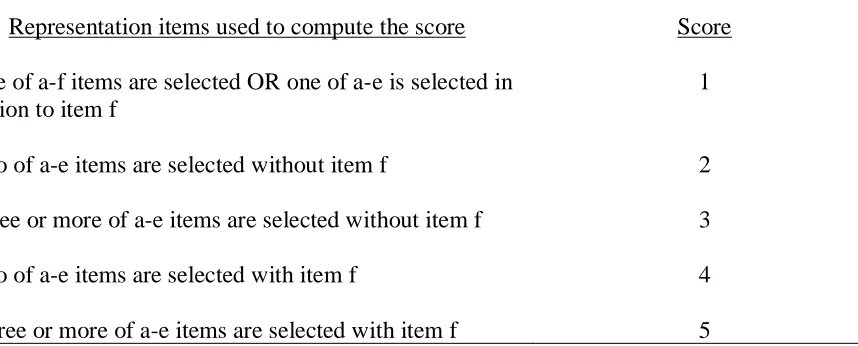
as presented to participants ... 43 Table 4. Use of multiple representations dimension, including the question stem and the
sub-items within the question as presented to participants ... 45 Table 5. Description of how the scores for the use of representations variables were computed 46 Table 6. Demographic characteristics of participating teachers ... 67 Table 7. Math talk dimension, including the question stem and the sub-items within the question
as presented to participants ... 68 Table 8. Use of multiple representations dimension, including the question stem and the
sub-items within the question as presented to participants ... 70 Table 9. Description of how the scores for the use of representations variables were computed 71 Table 10. Summary statistics of use of representations variables for all observations (lessons) . 72 Table 11. Unstandardized coefficients and standardized errors of multilevel models of use of
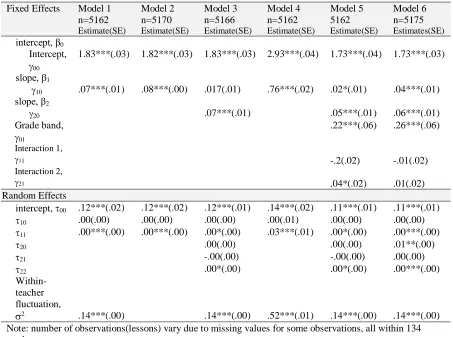
representations and grade-band differences in opportunities in math talk ... 85 Table 12. Frequency and percentage of lessons with primary focus on number and operations per
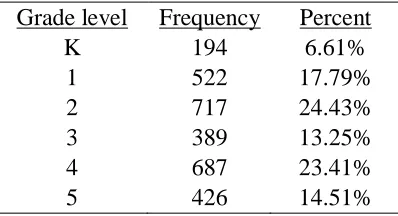
grade level ... 113 Table 13. Math talk dimension, including the question stem and sub-items within the question as presented to participants ... 114 Table 14. Demographic characteristics of participating teachers ... 139 Table 15. Description of how the scores for the use of representations variables were computed
... 142 Table 16. Frequencies and relative frequencies of primary content focus of lessons within
teachers split by grade band (K-2, 3-5) ... 144 Table 17. The means and standard deviations of the variables within each of the content strands
... 146 Table 18. Unstandardized coefficients and standardized errors of multilevel models of content
and grade-band differences in opportunities in math talk ... 152 Table 19. Unstandardized coefficients and standardized errors of multilevel models of content
and grade-band differences in student use of representations ... 154 Table 20. Unstandardized coefficients and standardized errors of multilevel models of content
LIST OF FIGURES
Figure 1: Example of a pictorial representation presented to students to illustrate the equation 4+1=5. ... 26 Figure 2. Significance of contrasts resulting from the cross-level interaction effect of teacher use
of representations and grade band on talk... 82 Figure 3. Cross-level interaction of student use of representations and MKT scores. ... 120 Figure 4. Cross level interaction of content (number and operations) and grade band on talk .. 153 Figure 5. Cross level interaction of content (number and operations) and grade band on student
use of representations ... 155 Figure 6. Cross-level interaction of content (number and operations) and grade band on teacher
use of representations ... 157 Figure 7. Cross-level interaction of content (geometry) and grade band on teacher use of
CHAPTER 1 Introduction
The literature on teaching has highlighted the complexity of learning to teach for novice teachers (e.g., Bailey & Taylor, 2015). Recent educational reform efforts suggest that
decomposing the practice of teaching into fine grain-sized practices can help teacher educators in supporting novice teachers’ learning of the practice of teaching (e.g., Anthony et al., 2015; Boerst, Sleep, Ball, & Bass, 2011; Grossman et al., 2009). Such focus on finer grain-sized practices can help novice teachers achieve “ambitious teaching” (Forzani, 2014), which can be observed in classrooms where the goal is for all students to “develop conceptual understanding, procedural fluency, strategic competence, and adaptive reasoning to solve authentic problems” (Bailey & Taylor, 2015, p. 112). To achieve the ambitious instruction called for by the National Council of Teachers of Mathematics’ (2000) Principles and Standards for School Mathematics, students should be presented with learning opportunities in which they participate in
mathematical argumentations, use multiple representations, and make connections between representations (Jackson & Cobb, 2010). Both NCTM’s Principles to Actions (2014) and the Standards for Mathematical Practice in the CCSS-M (2010) outline the importance of discourse and the use of representations.
Significance
Discourse. The National Council of Teachers of Mathematics (2014) recommend
rigorous learning environments for all students, not only for a select group of students (Ball & Forzani, 2010). Teacher orchestration of strategies that foster student engagement in rich mathematical discourse can have significant implications for students’ mathematical learning (Ball, 1991; Steinbring, Bartolini-Bussi, & Sierpinska, 1998). Furthermore, equity and discourse in mathematics classrooms are fundamentally related (Herbel-Eisenmann, Choppin, Wagner, & Pimm, 2012), as equity requires providing all students with comparable opportunities to learn (Esmonde, 2009). Such opportunities should essentially include students’ access to participation in mathematical discourse during lessons (Ardasheva, Howell, & Vidrio Magna, 2016;
Moschovich, 2011). Although the need for rich mathematical discourse in classrooms is established as explained above, many teachers find it difficult to orchestrate such discourse in their classrooms (Herbel-Eisenmann, Steele, & Cirillo, 2013; Kazemi & Stipek, 2001; Nathan & Knuth, 2003; O’Connor, 2001; Peterson & Leatham, 2009; Staples, 2007), especially for
beginning teachers (Bennett, 2010).
Representations. Using representations is an essential aspect of doing mathematics (Dreher & Kuntze, 2015). Research findings highlight the importance of using multiple
Given the value of opportunities for mathematical discourse, particularly talk, and use of multiple representations for students’ mathematical learning as highlighted by policy documents and research, the present investigations examining the two dimensions have the potential to inform researchers and teacher educators as they work to advance novice elementary teachers’ learning. The instrument used for data collection in the present study attends to teaching practices in these two dimensions in mathematics classrooms as occurring on a daily basis.
Using log data and MLM design to understand opportunities for student learning. Although extensive research has been conducted on mathematical discourse (Herbel-Eisenmann, 2011) and on the use of representations (Dreher & Kuntze, 2015), much of the research has been qualitative in nature (e.g., Ardasheva et al., 2016; Boerst et al., 2011; Cengiz, Kline, & Grant, 2011; Herbel-Eisenmann, Wagner, & Cortes, 2010). Using an instructional log allows for collecting detailed, at-scale data with minimized costs as opposed to other commonly used observational methods; However, according to Kurz et al. (2014) and Walkowiak et al. (under review) instructional logs are not frequently used for measuring instructional practices, which results in lack of at-scale studies of instructional practices. This scarcity is partly “because few measures exist that directly measure instructional practice on a large-scale” (Matsumura et al., 2006, p. 2). The need for such instrumentation motivated the use of the instructional log
discussed in this study. Studies like the present can contribute to the field by analyzing aspects of instructional practices and students’ opportunities to learn obtained from a large sample.
flexibility in representing in data across multiple levels (Schulenberg & Maggs, 2001). In the present studies, MLM allows for an understanding of variability (and its extent) at both the within-teacher level and between-teacher level. Analyzing between-teacher differences provides insight into characteristics of teachers who report implementing certain practices in their
classrooms. On the other hand, understanding within-teacher variability provides understanding on the level of the lesson, i.e., explaining variability in the relationship between the use of representations and math talk during mathematical lessons.
Definition of Terms
Selected key terms used in this dissertation are defined for the goal of establishing consistency and clarity.
Beginning (novice) teachers. Beginning teachers have been defined differently in the literature (Schmidt, Klusmann, L𝑢̈dtke, M𝑜̈ller, & Kunter, 2017). The range of teaching experience of beginning teachers was defined to be up to two years (e.g., Veenman, 1984), but recently Lavigne (2014) considered teachers in their fifth year of teaching to be beginning teachers. In the present study, beginning teacher is used to refer to the participants who were in their second year of teaching.
Grand mean of a variable. The mean of the entire level-1 scores on the variable of interest.
Math talk. Verbal discourse between a teacher and students and among students with primary focus on mathematical concepts and ideas during whole- or small-group work.
Mathematical knowledge for teaching (MKT). Knowledge that “includes both the mathematical knowledge that is common to individuals working in diverse professions and the mathematical knowledge that is specialized to teaching” (Hill et al., 2008, p. 430).
Opportunities to learn (OTL). Opportunities created for students to learn during a lesson, which are shaped by a teacher’s implementation of instruction (Walkowiak, Pinter, & Berry, 2017).
Use of representations. The use of visual illustrations of mathematical concepts, ideas, or objects, such as symbols, story problems, pictures, diagrams, and tangible materials.
Background
The data analyzed in this study was collected through a larger project, Project ATOMS, a longitudinal study focused on the evaluation of a STEM-focused elementary teacher preparation program. One component of the data collection on instructional practices was teacher-reported data on a daily log, the Instructional Practices Log in Mathematics (IPL-M) (Walkowiak & Lee, 2013a), developed and validated by the Project ATOMS team (Walkowiak, Adams, Porter, Lee, & McEachin, under review). In the present studies, data collected on the use of multiple
Organization of Dissertation
Chapter 2 of this dissertation brings forth a brief literature review of preceding studies on the topic of discourse and using representations in mathematics classrooms. In chapter 3, the methodology is described in general, including description of participants, data collection, measures, and limitations of the study. Chapters 4, 5, and 6 consist of three quantitative studies that will be submitted for publication in three different academic journals. The purpose of the first study was to explore the correlation between the use of multiple representations and
CHAPTER 2 Literature Review Theoretical Assumptions
The theoretical foundation of this study stems from Wertsch’s (1991) Vygotskian framework, which indicates that social interaction in classrooms can influence children's cognitive processes. Vygotsky’s psychological perspective on individuals’ construction of knowledge (Vygotsky, 1978) motivated this study’s investigation of math talk, which is one form of mathematical discourse, as the dependent variable of interest in the investigation. Students’ learning happens within social interactions that cultivate their construction of
meanings (Vygotsky, 1978). Mathematical meanings are “co-constructed” (Ryve, 2011); that is, students understand the meanings of the mathematical language introduced in the classroom within the context of the conversations that are present during instructional settings. This phenomenon implies that teachers’ discourse strategies can play an important role in students’ learning of mathematical concepts. Informed by the sociocultural perspective (Rogoff, 1997; Vygotsky, 1978), this study attempts to obtain insight into opportunities created for student learning by investigating math talk that takes place in elementary classrooms as related to the use of representations.
place during instruction as indicators of students’ OTL (Walkowiak et al., 2017). The present study assumes that student learning can be influenced by exposure and experiences with enacted practices of their teachers during daily lessons, which is conceptualized as students’
opportunities to learn (OTL) (Carroll 1963; Cooley & Leinhardt, 1980; Porter, Kirst, Osthoff, Smithson, & Schneider, 1993).
From this perspective, instruction is conceptualized as a series of repeated (i.e., daily) exposures to instruction, and the key measurement problem is to obtain an estimate of the overall amount or rate of exposure to particular elements of instruction occurring over some fixed interval of time (e.g., a school year) (Rowan & Correnti, 2009, p. 120). The use of IPL-M is informed by the concept of students’ OTL. The teachers’ responses on the items were numerically scored based on literature in mathematics education on best practices to reflect the creation of OTL. Frequency and quality of occurrence of a particular practice of interest during a mathematics lesson are considered indicators of OTL. Theoretically, a high score represents creating more opportunities to learn and a low score represents less opportunities to learn (Walkowiak et al., under review). However, teacher implementation of certain practices, which are reported in the log, do not automatically imply that student learning will be achieved. IPL-M provides reports on frequency of occurrence of certain instructional aspects (Walkowiak & Lee, 2013a). The log developers recognize that, although high frequency of best practices indicates more opportunities for student learning, frequency does not
evidenced by their relation to student achievement” (Kurz et al., 2014, p. 163). A rationale for this conceptualization of OTL is that particular practices have been found by earlier research to have a positive influence on student achievement, thus such practices that are empirically
supported can be thought of as potentially creating opportunities for student learning (Kurz et al., 2014). Motivated by Walkowiak et al’s (2017) conceptualization of OTL as including the
dimension of math talk, the present study considers that facilitating opportunities for students to participate in math talk can influence students’ mathematical understanding. The IPL-M includes items that are indicators of students’ OTL based on earlier studies. The items of interest are those measuring the use of representations and others that are indicators of students’ opportunities for participating in math talk. Since literature indicates that students’ participation in math talk can enhance students’ learning (e.g., Jackson & Cobb, 2010), the present study assumes that the IPL-M score for students’ opportunities for math talk is an indicator of students’ opportunities for learning.
Beginning Teachers and Practice
own within the walls of their isolated classrooms (Darling-Hammond, 1996). Overall,
“beginning teachers have different struggles than their more experienced colleagues” (Neergard & Smith, 2012, p. 4); therefore, evaluation measures of teachers’ instructional practices might be more appropriate if used in differentiation based on teacher experience level (Neergard & Smith, 2012). Neergard and colleagues expressed their concern about evaluating teachers using a uniform measure and score without taking into consideration teacher experience levels and content taught. The present study takes that concern into consideration by using the measure, IPL-M, with a sample of teachers all in their second year of teaching.
The existing literature on beginning elementary teachers is extensive and focuses primarily on challenges that beginning elementary teachers face (e.g., Bailey, 2015; Singer-Gabella, Stengel, Shahan, & Kim, 2016) and on efficacy issues relating to novice elementary teachers (e.g., Brady, 2012; Hart, 2004; Santagata, Yeh, 2016; Jong, 2016). While most of those earlier studies focused on general issues relating to beginning teachers’ practice, what we know about beginning elementary mathematics teachers’ specific practices is largely based upon small-scale observational studies (e.g., Griffin, League, Griffin, & Bae, 2013). The present study extends our knowledge on beginning mathematics elementary teachers’ practices by focusing on two instructional domains deemed important by mathematics education research: math talk and use of representations.
Mathematical Discourse
meaningful discussions mathematics classrooms. Furthermore, the reforms in mathematics education have pushed for launching rigorous learning environments for all students, not only for a selected group of students (Ball & Forzani, 2010). That ambition for inclusion was aimed at promoting classroom settings in which both teachers and students are active members of the mathematical dialogue. In order for that type of instruction to happen, the teacher should not be the only speaker in the classroom. Students need to develop mathematical knowledge by actively participating in higher-order classroom discourse (Horowitz, Darling-Hammond, & Bransford, 2005; Turner et al., 1998). Discourse strategies that teachers orchestrate play an important role in influencing student engagement in rich mathematical discourse, which can have significant implications for students’ mathematical learning (Ball, 1991; Steinbring et al., 1998).
Furthermore, teacher orchestration of rich discourse can positively affect students’ motivation to learn mathematics (Kiemer, Gr𝑜̈schner, Pehmer, & Seidel, 2015).
Multi-directional discourse. Discourse is addressed by research in varied manners (Ryve, 2011), with some overarching ideas. One recurring idea in literature is the distinction between the two types of discourse, “univocal” and “dialogic” (Wertsch & Toma , 1995). Univocal refers to a discourse that is presented by the speaker (teacher) to the listener (student) with the function of conveying the exact meaning to the listener as intended by the speaker. On the other hand, dialogic discourse requires multidirectional communication between the teacher and students, among students, or a mix of both in order for the intended meaning to be delivered (e.g., Peressini & Knuth, 1998; Ryve, 2011; Tofel-Grehl, Callahan, & Nadelson, 2017); Truxaw, Gorgievski, & DeFranco, 2008). Teachers’ listening to students’ mathematical ideas is also valuable for obtaining insight into students’ reasoning (Rowland, Huckstep, & Thwaittes, 2005). A productive mathematical discourse during class should encourage students to be active
participants in their own learning, which can empower them to think of themselves as doers of mathematics (Herbel-Eisenmann et al., 2013). In such discursive classroom settings, the discussions are multidirectional; students reflect on and question each other’s ideas, and the teacher and students exchange questions and reflect on each others’ ideas. However, the instruction types that are usually found in mathematics classrooms in the US are mostly channeled in one direction from teacher to students, which promote students’ feelings of being less interested in mathematics (Herbel-Eisenmann, et al., 2013).
Brendefur and Frykholm (2000) introduced four hierarchical categories of
communications in mathematics classrooms, “uni-directional, contributive, reflective, and
teacher, which indicates the least opportunities for students to communicate their ideas and reasoning. Contributive communication happens when students contribute to classroom discourse, however in a limited manner that lacks deep mathematical reasoning and argumentation. Influenced by Cobb and colleagues’ (1997) and von Glasersfeld’s (1991) conceptions of reflective discourse, Brendefur and Frykhom (2000) explain that reflective
communication refers to mathematical discourse in which “students reflect on the relationships within the mathematical topics by focusing on other students’ and the teacher’s ideas, insights, and strategies” (p. 148). (e.g., students discussing the validity of other students’ ideas). Finally,
instructive communication was informed by Steffe and D’Ambrosio’s (1995) description of
instructional settings during which students and teacher are engaged in multidirectional and repeated discussions that cyclically influence subsequent instructional decisions of the teacher, who would be paying close attention to students’ mathematical thinking and any
misunderstandings.
Initiate-Response-Evaluate (I-R-E; Mehan, 1979) discourse pattern—the teacher misses on creating rich learning opportunities. On the other hand, requesting justifications from students about their responses and ideas can give teachers insights into the students’ mathematical thinking and foster students’ knowledge about the nature of mathematical justification (Ball, 1991). Ball illustrated an
example of different possible classroom discourses when a student conducts a mathematical investigation and arrives at an inaccurate conclusion. A teacher has different options on how to respond to the student. Some of those options include, telling the student that the conclusion is incorrect and providing a correct answer; asking other students to reflect on the student’s initial conclusion and opening a whole-group discussion, in which students compare among their results; or suggesting to the student a different approach for investigating the mathematical problem. Each of these discourse options has different consequences on the way a student grasps mathematical justifications and mathematical knowledge.
Student argumentation. The importance of students’ mathematical justifications was emphasized in the Common Core State Standards Initiative (National Governors Association Center for Best Practices & Council of Chief State School Officers, 2010). “Mathematically proficient students... justify their conclusions, communicate them to others, and respond to the arguments of others” (National Governors Association Center for Best Practices & Council of Chief State School Officers, 2010). Mathematical argumentation is a basic practice in
discussions. Sociomathematical norms are “normative aspects of mathematical discussions that are specific to students’ mathematical activity” (Cobb & Yackel, p. 458) within mathematics classroom settings. Four sociomathematical norms were found by Kazemi and Stipek (2001) to be of importance for fostering students’ conceptual thinking:
● When providing a mathematical explanation, explaining the procedure is not sufficient, instead the explanation should include a mathematical argument;
● “Mathematical thinking involves understanding relations among multiple strategies”; ● “Errors provide opportunities to reconceptualize a problem, explore contradictions, and
pursue alternative strategies”; and
● “Collaborative work involves individual accountability and reaching consensus through mathematical argumentation” (p. 78).
Enhancing students’ higher-level thinking within rich classroom discourse can be achieved by implementing what Staples and Truxaw (2010) called “the three pillars of
mathematics learning discourse” (p. 29). Those pillars consist of students’ advancement in their effective use of academic language, students’ posing of mathematical justification and
argumentation during mathematical discussions, and teachers providing opportunities for all students to be exposed to rigorous mathematics during mathematical lessons.
Barlow and McCrory (2011) investigated ways for creating disagreement opportunities for young students. Based on their work with third-grade students, they suggested three strategies that could create opportunities for discussing mathematical disagreement among students. Those strategies are: (1) pushing students to choose sides when different answers come up, (2) choosing mathematical tasks that highlight and bring out students’ misconceptions, and (3) choosing tasks that facilitate arriving at disagreements with earlier taught concepts. Addressing students’ misconceptions and errors was also emphasized by Staples and Colonis (2007) by stating that a teacher needs to attend to students’ incorrect mathematical ideas as well as their correct ones, otherwise “the mathematics that gets explored is limited, and students whose original ideas were incorrect may hold on to incorrect mathematics” (p. 259).
choice of solution strategies, and communicate any connections between different solution strategies. Lampert and Graziani (2009) asserted the complexity of orchestrating such ambitious instruction by teachers. However, they acknowledged the contribution of Stein, Engle, Smith, and Hughes (2008) in putting together activity structures “that regularize aspects of instruction in relation to ambitious principles of mathematics content and learning” (Lampert & Graziani, 2009, p. 506). Stein et al. (2008) suggested five teacher practices that relate to students’ responses and foster rich mathematical discourse.
Those practices are: (1) anticipating likely student responses to cognitively demanding mathematical tasks, (2) monitoring students’ responses to the tasks during the explore phase, (3) selecting particular students to present their mathematical responses during the discuss-and-summarize phase, (4) purposefully sequencing the student responses that will be displayed, and (5) helping the class make mathematical connections between different students’ responses and between students’ responses and the key ideas (p. 321).
discourse (e.g., Brendefur & Frykholm, 2000).
Michaels and O’Connor (2015) suggested a set of talk moves to assist teachers in orchestrating rich mathematical discourse, which are the product of about twenty years of research on classroom discourse. They recommended purposeful use of the talk moves to enable students to share their thinking, to listen to each other, to deepen their mathematical reasoning, and to draw on each others’ ideas. For example, the say more moves (e.g., can you say more?) refers to teachers facilitation of students’ elaboration on their ambiguous responses. The “press for reasoning moves (Why do you think that? What’s your evidence? What led you to that
conclusion?)” (p. 334) can help teachers obtain insight into students’ reasoning. Furthermore,
revoicing students’ ideas by the teacher is emphasized by Chapin et al. (2009) as a talk move that can promote rich mathematical discourse among students. They recommend re-stating students’ responses by the teacher using appropriate mathematical language. Teacher wait time is one particular move that was “the most researched of all talk moves,” (Michaels & O’Conner, 2015, p. 337) but was found to be the most difficult for teachers to practice. The value of exercising wait time by the teacher was earlier addressed by Tobin (1986); He concluded that a wait time of three to five seconds by the teacher when waiting for student responses can enhance
mathematical discussions, which can positively affect student achievement.
questioning practices in ways that encourage students to think conceptually and by encouraging students to ask questions to each other as well as to the teacher (Boaler & Brodie, 2004;
Nystrand, Wu, Gamoran, Zeiser, & Long, 2003). The National Council of Teachers of
Mathematics (2014) recommended that teachers ask students purposeful questions that aim at assessing students’ understanding and improving their mathematical reasoning. “Questions from teachers and their reactions to student responses have a tendency to shape the way in which classroom discourse takes place” (Li & Ni, 2011, p. 73). Generally, questioning techniques in mathematics classrooms have received particular attention in research on mathematical discourse (e.g., Gillies, 2011; Herbel-Eisenmann, 2010; Hufferd-Ackles, Fuson, & Sherin, 2004; Males, Otten, Herbel-Eisenmann, 2010; Nathan & Knuth, 2003).
Gillies (2011) pointed out two questioning models that have potential positive effects on students’ thinking and problem solving skills. One of the models is “Ask to Think Tell-Why model for transactive peer tutoring” (p. 74), in which teachers establish a norm for their students to address one another with series of questions in a sequential manner for the purpose of pushing students to make connections and develop deeper reasoning. In this model, the types of
mathematical investigations. Teacher questioning techniques can help establish norms with respect to student participation and authority ownership during mathematical discourse. Questions that teachers ask in reaction to students’ responses have implications for instituting who owns the authority in a classroom during discourse (Li & Ni, 2011). Furthermore, teacher’s frequent questions for students to think differently about mathematical problems can help
establish the norm that discussing multiple solutions or multiple methods are encouraged (Baxter & Williams, 2009).
Overall, teacher questioning should be geared towards probing students’ mathematical thinking and reasoning, rather than leading them to a particular answer or method (Boaler & Brodie, 2004). The value of questioning mathematical ideas when doing mathematics was expressed as early as 1954 by Polya in his well-known book, Induction and Analogy in
Mathematics. He suggested that when doing mathematics, one should practice the “inductive
resulting social interactions in her classroom indicated that her students’ views differed from other fifth grade students in that “they put themselves in the position of authors of ideas and arguments” (p. 34)—versus authority of the textbook or teacher. Lampert’s work received great attention and was influential for mathematics educational research particularly on the topic of discourse (e. g., Cobb, Boufi, McClain, & Whitenack, 1997).
Math talk as an important aspect of mathematical discourse. Ryve (2011) analyzed 108 articles, which focused on discourse in mathematics education, and found that, much of the analyzed studies focused on the talk aspect of mathematical discourse, which was evident in that “a large majority of articles use talk as data when analyzing discourse” (p. 179).
building of math-talk community” within elementary mathematics classrooms. Math-talk communities refer to a classroom setting in which participants (students and teachers) help each other learn through mathematical discourse. Classroom observations and teacher interviews were analyzed. Additionally, the researchers facilitated teachers’ meetings throughout, in which the teachers reflected on their teaching. The development of math talk throughout the school year was evaluated with respect to four main discursive components: (a) teacher questioning, (b) level of explanation of mathematical ideas, (c) owner of or producer of the mathematical ideas
(teacher or student), and level of students taking responsibility for their learning. Hufferd-Ackles and colleagues describe trajectories of math-talk communities in the investigated classrooms with respect to a case-study of a third-grade teacher, who participated in the study.
reasonable expectations for beginning teachers, the present study examines second-year teachers’ facilitation of mathematical discourse by investigating the teachers’ daily report of their students’ engagement in math talk.
The Use of Representation During Mathematics Lessons
Mathematics lessons should include opportunities for using multiple representations and making connections among the representations in ways that contribute to students’ deep
mathematical understanding of concepts and procedures (National Council of Teachers of Mathematics, 2014). Research findings indicate that using multiple representations and students’ ability to translate among different forms of representations and connect between representations and mathematical concepts are related to students’ mathematical understanding (Hiebert, 1984; Lesh, Post, & Behr, 1987). Mere use of multiple representations beyond symbolic does not automatically imply students’ involvement in problem solving, mathematical reasoning, or high-level thinking. The ways in which different representations are chosen and used matter as well as how connections are made among different representations of the same mathematical concept.
Defining Representations. The use of representations in mathematics educational research has wide-ranging meanings. For example, Sung, Shih, and Chang (2015) used
representations to distinguish between different geometric images based on the number of dimensions of the image that is being illustrated (e.g., 2-D representations and 3-D
characters and images that are formally taught to students in schools (e.g., Arabic numbers and number lines). Non-symbolic representations, on the other hand, are illustrations of numbers that are informal, not formally taught in schools, and are considered more inherent to students than symbolic representations (e.g., a visual of a group of items). Representations is used among educational research studies in different ways, yet using it to refer to illustrations of
mathematical entities seems to be universal among the different studies discussed in this review. Hardy (2001) defined the act of representing as “the translation between symbol systems (verbal, symbolic, and iconic),” (p. 5) indicating that mathematical representations include verbal,
symbolic, and iconic representations. Similarly, the mathematical representations that were the focus of a study discussed by Stein and Lane (1996) consisted of symbolic, pictorial, and
graphical representations. A more comprehensive view of representations was discussed by Lesh et al. (1987). Informed by earlier studies on mathematics education, Lesh and colleagues (1987) highlighted five types of representational systems: (a) story problems that are formulated based on real-world situations; (b) tangible materials that are used for modeling mathematical ideas; (c) static pictures and diagrams; (d) verbal language; and (e) written symbolic representations. In the present study, representations refers to illustrations of mathematical concepts, ideas, or objects, such as symbols, story problems, pictures, diagrams, and tangible materials.
called manipulatives) was found by Baxter, Woodward, and Olson (2001) to aid engagement of students whose achievement is below grade level during mathematical investigations.
Representations, such as tangible objects, should be used as a medium for mathematical
thinking; however, at times, the manipulatives themselves become the focus of the class instead of an aid for mathematical thinking (Baxter et al., 2001). Although research indicates value for using tangible objects as representations of abstract mathematics, especially for young students, using tangible objects as representations of abstract mathematics does not automatically imply students’ mathematical reasoning. When using manipulatives to aid students’ mathematical reasoning, little attention should be given to physical properties of the object, so that students pay more attention to how the object relates to the intended abstract mathematical ideas. On the other hand, when too much attention is given to properties of manipulatives, students seem to lose comprehension of connection between the manipulatives and the intended abstract mathematical idea (Uttal, O’Doherty, Newland, Hand, & DeLoache, 2009).
Hardy (2001) explained that efficient use of different representations can expose structural elements of mathematical concepts, which can provide the learner with points of reference for mathematical discussions. She, however, reminded that while the use of multiple representations can potentially aid students’ success in problem solving, tasks that require particular and restricted ways of using representations by students can hinder students’
Representation (LSR) tasks (open task statement with emergent use of representations) and High Structure Representation (HSR) tasks (explicit use of representations in the task statement)” (Hardy, 2001, p. 4). LSR tasks are tasks that leave it open to the student to choose and/or explore representations for solving the problem. On the other hand, HSR tasks include direct instruction about the types of representations to use and the aspects of the representations to explore (see figure 1). To further clarify the difference between the two categories, following are examples on each type:
● A high structure representation (HSR) task: Write the equation that represents the picture seen below.
Figure 1: Example of a pictorial representation presented to students to illustrate the equation 4+1=5.
● A low structure representation (HSR) task: Show that adding two odd numbers makes an
even sum and adding an odd number andan even number makes an odd sum.
Tasks that involve students’ use of representations in an open-ended manner, allowing students to choose representations to use, are associated with higher cognitive processes than tasks that are highly structured by design with respect to the use of representations (Hardy, 2001).
learning (e.g., Hardy, 2001; Hiebert, 1984; Lesh et al., 1987). Making connections between concrete representations (e.g., tangible objects) and symbolic representations--which can be thought of as representing abstract mathematics--is important for helping young students understand more advanced mathematical ideas as they move on to higher grades (Uttal et al., 2009). Benefits of using instructional tasks that involve the use of and connecting among different representations were confirmed by the results of a study that investigated the use of instructional tasks in four middle school classrooms (Stein & Lane, 1996). Stein and Lane defined an instructional task as “an activity engaged in by teachers and students during classroom instruction that is oriented toward the development of a particular skill, concept, or idea” (p. 54). They investigated instructional opportunities for students’ mathematical learning as they relate to students’ mathematical performance, and found that translating between different representation is one of different factors that are related to opportunities for students’ learning, thus influencing mathematical performance.
As illustrated in this review, providing students with learning opportunities of using multiple representations and translating between different representations has documented benefits for students’ mathematical reasoning. With that assumption, the IPL-M included items for which the participating teachers reported on the creation of opportunities for use of multiple representations and translating among the representations (Walkowiak & Lee, 2013a).
Representations and Discourse
particular teacher practice might not be sufficient. They observed that while a teacher’s action proved to be efficient in extending students’ thinking at one point of a whole-group discussion, it did not seem to do so at another point. This indicates that any particular instructional action does not work in isolation. Consequently, to obtain more solid results with respect to an instructional action of interest, one should try to “capture the impact of not only single instructional actions, but collections of them as well” (p. 372). Similarly, Hiebert and Wearne (1993) stated that, “It is impossible to isolate specific instructional features and connect them to specific learning
outcomes” (p. 420).
Relation between representations and discourse. Based on a number of studies in mathematics education, a relation exists between the use of multiple representations and
mathematical discourse. In this section, a summary of ways in which some studies investigated this relationship is presented.
Cengiz et al. (2011) claimed based on previous research that aspects of teacher mathematical knowledge for teaching (MKT)—including knowledge in making or exploring alternative representations of mathematical ideas and knowing the appropriate representations to be used in teaching particular mathematical ideas to students—are related to creating
opportunities for extending students’ thinking during whole-group discussions. Based on that assumption among other assumptions, the researchers investigated video recordings of classroom episodes. Cengiz et al. (2011) investigated aspects of discussions during whole-group work in six elementary classrooms in an effort to understand teacher instructional activities that facilitate “extending student thinking.” Extending student thinking refers to creating opportunities for students to build on and develop their mathematical thinking, which was investigated within the context of students’ discussions as a whole group. A teacher’s MKT was found to be positively related to his or her capability to make decisions during whole-group discussion in ways that can extend students’ thinking. Similarly, Rowland et al. (2005) suggested that teacher knowledge and beliefs are related to a teacher’s instructional actions, including a teacher’s choice of
representations to be used during mathematical investigations.
thinking, particularly by supporting students in producing mathematical explanations and
reflections. They observed that when the students in their study were encouraged to use different solution methods and different connected representations, the resulting discourse among the whole group indicated deepening of students’ thinking about mathematical structure. Hardy (2001) also emphasized how the appropriate incorporation of representations into mathematics instruction as communicational mediums can “enable students to gain new insights into
mathematical structure” (p. 1). The study reported by Hardy (2001) was informed by the socio-constructivist theory, which implies that rich discourse is associated with opportunities for students to construct their own mathematical understanding.
Hardy (2001) investigated the hypothesis that the use of instructional tasks that are low structured with respect to the use of representations (LSR) can potentially produce richer discourse among students than highly structured representation tasks (HSR). Videos of
classroom observations of 60 middle grade classrooms from three different countries (Germany, Japan, and USA) were examined for the types of mathematical discourse during resulting from working on the two types of mathematical tasks (i.e., HSR and LSR tasks). In addition to classifying mathematical tasks into HSR and LSR, the study design also had assumptions about what encompasses as high-quality discourse. For instance, a discussion about mathematical meanings between the teacher and students was an indication of high-quality discourse; whereas, a discussion focused on the use of procedures and memorized facts indicated low-quality
Hardy (2001) found that most of the talk associated with HSR included less student talk, “shorter sequences,” and less argumentation occurrences than talk that was associated with the implementation of LSR tasks. The distinction between short and long sequences was determined according to the number of meaningfully-connected utterances that were associated with a particular task. In other words, more connected, meaningful utterances imply longer sequence of talk, and less connected utterances imply shorter sequences. Hardy described that longer
sequences of math talk—in which patterns of discussion interaction is multidirectional and includes more than just teacher-student-teacher talk turns—give opportunities for students to build deeper mathematical thinking based on the discussed ideas. It is worth noting that the talk that was investigated in this study was limited to talk that occurred during whole-group settings; for example, no small-group discussions were analyzed. Furthermore, the results indicated that there were more instances of using HSR than using LSR tasks in the observed mathematics classrooms.
evidence of generalization of mathematical concepts, justification of students’ ideas, and cooperation among the students. The three types were: (1) Linked VMs, which are multiple representations that vary together, allowing the user to observe simultaneous change in symbolic representation that is linked to other forms of representations; (2) Pictorial VMs, which are pictures and diagrams that vary based on the user’s manipulation, but are not linked to symbolic representations; and (3) Tutorial VMs, referring to representations that are static highly
structured in the feedback provided for the user. While linked and pictorial VMs allow students to choose solution methods, tutorial VMs restrict the choice of solution methods to ones that are proposed by the program. The discourse quality that took place among students while working with linked VMs was found to be significantly higher than discourse connected to the use of pictorial and tutorial VMs. Furthermore, the researchers found that the quality of students’ justification, generalization, and collaboration increased throughout a session in which they were using linked VMs. Based on these results, Anderson-Pence and Moyer-Packenham (2016) concluded that students’ mathematical investigation of representations that are highly connected, as in the case of linked VMs, “enabled the students to effectively generalize and justify
mathematics concepts during problem solving tasks” (p. 23).
The results of the studies summarized in this section indicate that: a teacher’s facilitation of using different, connected representations during whole-group discussions can potentially extend students’ mathematical thinking (Cengiz et al., 2011); tasks that allow students to choose representations are associated with higher cognitive processes than tasks that are highly
instantaneous translation among different representations can promote students’ generalization and justification of mathematical concepts during small-group investigations (Anderson-Pence & Moyer-Packenham, 2016).
Representations and discourse as aspects of instruction. While the main focus of the studies discussed in the previous section was investigating the relationship between
mathematical representations and discourse, other studies investigated both constructs as aspects of mathematics instruction that relate to students’ learning, but without explicit investigation of the relation between the two constructs (e.g., Hiebert & Wearne, 1993; Kazemi & Stipek, 2001; Stein & Lane, 1996). For example, Stein and Lane (1996) found that providing students with opportunities for making connections among multiple representations and requiring explanations and justifications are, among other task features, associated with higher gains in student learning, as compared to tasks that did not have such features. The value of the use of tasks that require students’ justifications was also emphasized by Ball (1991); Ball demonstrated that requesting justifications from students about their responses and ideas can give the teacher insight into the students’ mathematical thinking and foster students’ knowledge about the nature of mathematical justification (Ball, 1991).
Hiebert and Wearne (1993) explored the frequency of use of certain types of
representations with mathematical tasks that were used during whole-group discussion. They categorized the use of representations into use of stories, physical materials, pictures, and
each mathematical task, making connections between different representations, and teacher questioning that require students’ explanation of the mathematical ideas are related to student mathematical learning.
Using Instructional or Teacher Logs
Kurz, Elliott, Kettler, and Yel, (2014) stated that, “Few, if any, OTL measurement options have been available that can be deployed at scale daily or weekly” (p. 178). One such measure of student opportunities to learn (OTL) is a teacher log. The use of instructional logs is a promising data collection technique for measuring students’ opportunities to learn (OTL)
(Rowan & Correnti, 2009; Walkowiak et al, under review). Using instructional logs for data collection as an instrument for reporting on teacher enactments of practices on the level of the lesson, researchers have been able to obtain specific details about the lessons (Heck et al., 2012). The use of instructional logs for data reporting on instructional practices compensates for
disadvantages of both the relatively-expensive, involved method of classroom observations and the one-time survey method.
setting (Reis, 1994); it can play an important role in reducing the likelihood of retrospection effects of data collection (Bolger, Davis, & Rafaeli, 2003). Although classroom observations allow for collecting real-time and more detailed data than logs about instructional practices, they have their drawbacks and affordances. They are costly and time-consuming, thus typically feasible for only on a small scale (Rowan & Correnti, 2009). Using instructional logs allows for collecting more accurate data than one-time surveys on larger samples than typically possible using observations. It also facilitates obtaining data that allows for examining both between-teacher and within-between-teacher variability (Nezlek, 2001).
Since the use of log instruments is a relatively new method for data collection about classroom practices, validity and reliability of logs is a concern for researchers using them. This motivated them to follow rigorous processes in validating data collected using instructional logs (e.g., Heck et al., 2012; Kurz et al., 2014; Walkowiak, et al., under review). Validation and reliability usually include a combination of comparing a sample of teacher reported data to classroom observation results; consulting experts about instrument items; training the
Researchers developing instructional logs recommended that logs should be easy to use and incorporate within teachers’ daily practice without taking much time or effort (e.g., Kurz et al., 2014; Heck et al, 2012). An example of recommended criteria is found in Nielsen’s (1994) definition of usability of products and instruments, which includes the following components: “(a) learnability (i.e., ease of logging), (b) efficiency (i.e., logging time once trained), (c) memorability (i.e., ease of reestablishing proficiency after a period of nonuse), (d) errors (i.e., frequency and severity of errors), and (e) satisfaction” (as cited in Kurtz et al., 2014, p. 173). Although the context of usability by Nielsen (1994) was not focused on instructional logs, it can be generalized to log instruments.
Summary
This review set out with the aim of synthesizing classroom-based research on
mathematical discourse and the use of representations during mathematics instruction, with particular attention to the relation between representations and discourse. A large and growing body of literature has investigated mathematical discourse in classrooms (Herbel-Eisenmann, 2011). This was reflected in the number of studies that returned from searching for papers to be investigated in this review. Similarly, a large amount of work was found on the topic of
mathematical representations. Only a few studies were found with a main focus on the relation between the use of representations and mathematical discourse (e.g., Anderson-Pence & Moyer-Packenham, 2016; Cengiz et al., 2011; Hardy, 2001). Recent evidence suggests the two
correlation between the two constructs. Future research that investigates any correlation between discourse and the use of representations is likely of value for the field of mathematics education.
Rich mathematical discourse in the classrooms has observed benefits on students’ mathematical learning; However, a simple prescription for making discourse in the mathematics classroom rich and productive for student learning is not available. Indeed, “one cannot prescribe practices, but one can guide practice by means of exploratory frameworks accompanied by data, evidence, and argument” (Confrey, 2006, p. 139). Research cited in this review discussed particular practices that can help teachers in the creation of opportunities for mathematical discussions in their classrooms, such as encouraging students to explain their thinking to the teacher as well as to other students (Michaels & O’Connor, 2015), restate each other’s ideas (Chapin et al., 2009), and pose questions to the teacher as well as to other students (Boaler & Brodie, 2004), all within group-discussion settings. Moreover, effective use of representations in association with instructional tasks entails purposefully choosing representations for the goal of extending students’ mathematical understanding (Cengiz et al., 2011), using multiple
representations including mathematical symbols (Hardy, 2001), and providing opportunities for making meaningful connections among different representations (Stein & Lane, 1996). The three exploratory studies described herein investigate math talk as related to the use of representations in elementary classrooms using data reported by beginning teachers.
Main research goals. The main research goals of interest in the present studies are: 1) Is there a relationship between use of multiple representations and opportunities for
2) Are there MKT differences in opportunities for math talk and use of multiple
CHAPTER 3 Methodology Participants
As part of longitudinal evaluation study of a STEM-focused teacher preparation program, logging data was collected from 134 second-year teachers, who responded to 5,170 lesson logs on days of mathematics instruction. The participating teachers taught at public elementary schools in a southeastern state of the U.S. (Table 1 includes demographic data about the participating teachers). About 85% of the participating teachers are white, which is
representative of the low level of racial diversity among public school teachers in the U.S. (i.e., about 82% of public school teachers were reported to be white in 2011-2012 academic year (U.S. Department of Education, 2016)). The average age of the participating teachers was
approximately 23 years at the time of the study.
Table 1. Demographic characteristics of participating teachers
Gender White Black Hispanic Multiracial Other race Total
Female 114 9 3 2 2 130
Male 1 0 0 0 1 2
Note: Gender and ethnicity data were not reported for 2 of the participants
Data Collection
fluctuations in teacher practices are observed and examined (Nesselroade, 1991). Whereas, a longitudinal design consists of different data collection points over an extended period of time. “The measurement-burst design is a hybrid” (Sliwinski, 2008, p. 247) of daily diary and longitudinal study design. Using a measurement-burst design, the elementary teachers in this study completed the log for three “bursts” of fifteen consecutive days throughout the school year. This design can help differentiate between within-teacher variability from day to day on one hand, and within-teacher variability over a longer time period (e.g., few months).
Since data was also collected on science instructional practices via the Instructional Practices Log in Science (IPL-S) (Adams et al., 2017) and since science is not taught daily in elementary classrooms, the 15-day logging windows were individualized and based upon when a teacher was scheduled to teach science daily. That is, for each of the 15-day bursts, the
participants began logging at the beginning of science units of instruction. Although the teachers were expected to log for 45 instructional days total, some teachers logged for less than
All data management was performed using Stata statistical software for its powerful capabilities, yet ease of use for data management. On the other hand, MLM was conducted using SAS software. PROC MIXED command in SAS software was used to run the MLM model.
Measures. Participating teachers completed the IPL-M (Walkowiak & Lee, 2013a) as previously described. Prior to data collection, all participating teachers completed a face-to-face two-hour training on how to use the IPL-M as part of a full-day event that included training on a similar science instructional log (the IPL-S; Adams et al., 2017) and data collection on other surveys. The teachers each received a hard copy of the IPL-M user’s guide at the training and an electronic hyperlinked version of the user’s guide on every day that they logged. They also received a follow-up online tutorial on their first day of logging to remind them about the interpretations of the response scales on the log.
The development of the IPL-M was informed by literature and CCSS-M, and rigorous procedures to collect evidence of validity and scale reliability occurred (Walkowiak et al., under review). Sources of validity evidence included: content review by experts in the field of
The IPL-M was designed to measure engagement in the following five main activities during mathematics lessons: problem solving, making mathematical connections, math talk, use of multiple representations, and performing mathematical procedures (Walkowiak et al., under review). In the present study, a subset of the data collected using the IPL-M was analyzed. Particularly, the math talk and the use of multiple representations dimensions are of primary interest. The variables investigated in the present investigations are listed and briefly described in table 2.
Table 2. List of MLM models’ input and output variables
Variable name Description Score
Output of MLM model
Talk (Level 1)
Students’ opportunities for math talk (1-4): higher indicates more frequency Input of MLM model TeacherReps (level 1)
Teacher use of multiple representations: (i.e. symbols, physical objects, story problems, or tables or charts)
(1-5): higher indicates multiple representations and connecting between them
StudentReps (level 1)
Student use of multiple representations: (i.e. symbols, physical objects, story problems, or tables or charts)
(1-5): higher indicates multiple representations and connecting between them
Pictures (level 1)
frequency of student use of pictures (1-4): higher indicates more frequency
Manipulatives (Level 1)
frequency of student use of manipulatives
(1-4): higher indicates more frequency
Mathematical content strand (level 1)
Each of the 5 contents was entered as a dichotomous variable
0: not primary focus of lesson
1: primary focus of lesson MKT
(level 2)
Mathematical knowledge for teaching number & operations
Scores standardized to z-scores with national mean High: More Knowledge of Math & Pedagogy
GradeBand (level 2)
2 grade bands teacher teaches: K-2 & 3-5
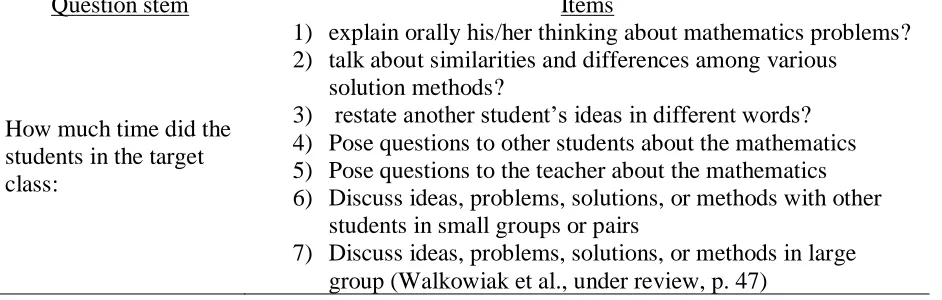
Math talk. The math talk dimension in the IPL-M was measured by nine items to which the teacher reported on the extent that it occurred, measured in time, on that particular day. As a measure of creating opportunities for math talk, the participants responded to the items included in table 3. The score for each item ranged from 1 to 4, where 1 represents “not today,” 2
represents “little” (made up a relatively small part of the instruction), 3 represents “moderate” (made up a large portion, but not the majority of instruction), and 4 represents “considerable” (made up the majority of today’s instruction) (Walkowiak et al., under review). A high score of an item represents creating more opportunities of the target aspect of math talk. In general, the scores represent the frequency of discussions among students and between the teacher and the students.
Table 3. Math talk dimension, including the question stem and the sub-items within the question as presented to participants
Question stem Items
How much time did the students in the target class:
1) explain orally his/her thinking about mathematics problems? 2) talk about similarities and differences among various
solution methods?
3) restate another student’s ideas in different words?
4) talk about similarities and differences among mathematical representations?
5) make explicit connections between concrete and abstract representations through discussion?
6) pose questions to other students about the mathematics? 7) pose questions to the teacher about the mathematics? 8) discuss ideas, problems, solutions, or methods with other
students in small groups or pairs?
9) discuss ideas, problems, solutions, or methods in large group? (Walkowiak et al., under review, p. 47)