A Novel Sparse Representation Method of
Occluded Images for Face Recognition
Afreen Bari, Yojana yadav
M.E Student, Dept. of ECE, CSIT, Durg, India
Associate Professor, Dept. of ET&T, CSIT, Durg, India
ABSTRACT: Face recognition remains a challenging problem especially when the face is occluded. Here we are using a new classification method termed Sparse Representation based Classification (SRC) to accurately recognize expressions under these conditions. A test vector is presentable as a linear combination of vectors from its own class and so its representation as a linear combination of all available training vectors is sparse. Efficient methods have been developed in the area of compressed sensing to recover this sparse representation. SRC gives state of the art performance on clean and noise corrupted images matching the recognition Crate obtained using Gabor based features. When test images are occluded by square black blocks, SRC improves significantly on the performance obtained using Gabor features; SRC increases the recognition rate by 6.6% when the block occlusion length is 30 and by 11.2% when the block length is 40.
KEYWORDS: Face recognition, feature extraction ,occlusion and corruption , sparse representation and L1-minimization, validation.
I.INTRODUCTION
Face Recognition
Human Face is a complex, multidimensional structure which requires efficient computing techniques for the recognition process. The face has been our priority and focus of attention in playing an important role in identifying an individual’s face. We recognize a large number of faces learned throughout the life and recognize those faces at first glance even after several years. There may be some variations in faces because of aging and factors like beard, hair-style or even change of glasses. Face recognition is also vital in biometrics. In biometrics basic properties of human faces are matched to the existing data and depending on the result, the identification of an individual is confirmed. Features of the facial databases are extracted and implemented through different efficient algorithms and required
valuable changes are done to improve the existing algorithms. Computers which distinguish and perceive confronts
could be connected to a large number of real world applications like criminal distinguishing proof, security frameworks, character check.
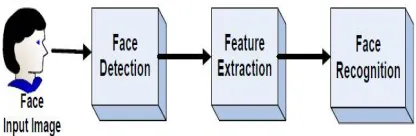
Fig 1 – Face Recognition Procedure
representation of the test sample in terms of this dictionary and can be recovered efficiently via ‘1-minimization. Seeking the sparsest representation therefore automatically discriminates between the various classes present in the training set. Fig. 1 illustrates this simple idea using face recognition as an example. Sparse representation also provides a simple and surprisingly effective means of rejecting invalid test samples not arising from any class in the training database: these samples’ sparsest representations tend to involve many dictionary elements, spanning multiple classes.
Fig 2 : Factors Affecting Recognition
II. SPARSE REPRESENTATION
Sparse representation face recognition (SRC) is model based on the image subspace assumption , it uses training sample images to span a face subspaces. This approach tries to construct test images from training images. In sparse representation, faces to be tested are approximately expressed as a linear sparse combination of all types of training faces, and testing samples for the minimum reconstruction residue of various types of training samples are determined by calculating the sparse combination coefficient. This approach improves the recognition performance and reduces the effect of occlusion
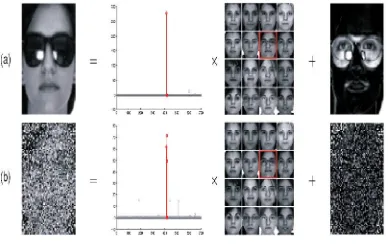
Fig. 3. Overview of our approach. Our method represents a test image (left), which is (a) potentially occluded or (b) corrupted, as a sparse linear combination of all the training images (middle) plus sparse errors (right) due to
occlusion or corruption. Red (darker) coefficients correspond to training images of the correct individual.
SRC algorithm is given as following:
1. A matrix is generated which contains all the training samples of each class. A dictionary contains all the samples of each class.
2. A random sparse vector is selected having few non zero in random location.
3. Test sample is given by linear combination of training samples. The linear relationship between test sample y in terms of all training sample is given by-
A: is dictionary having all the training samples.
x0 : random sparse vector calculated by l1 minimization y : test sample.
Robust Recognition by Sparse Representation on occluded images.
Once the best transformation _i has been computed for each subject i, the training sets Ai can be aligned to y, and a global sparse representation problem of the form can be solved to obtain a discriminative representation in terms of the entire training set. Moreover, the per-subject alignment residuals kek1 can be used to prune unpromising candidates from the global optimization, leaving a much smaller and more efficiently solvable problem. The complete optimization procedure is summarized as Algorithm 1. The parameter S in our algorithm is the number of subjects considered together to provide a sparse representation for the test image. If S = 1, the algorithm reduces to classification by registration error; but considering the test image might be an invalid subject, we typically choose S = 10. Since valid images have a sparse representation in terms of this larger set, we can reject invalid test images using the sparsity concentration index proposed in .The function _i(x) in Algorithm 1 selects coefficients from the vector x corresponding to subject i. Another important free parameter in Algorithm 1 is the class of deformations T.
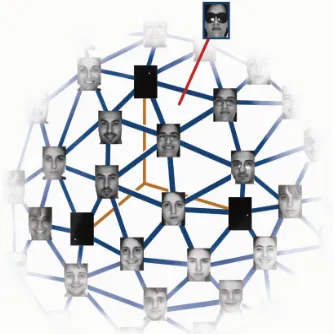
Fig. 4. Face recognition with occlusion. The columns of _B ¼ _½A; I_span a high-dimensional polytope
P ¼ BðP1Þ in I Rm. Each vertex of this polytope is either a training image or an image with just a single pixel illuminated (corresponding to the identity sub matrix I). Given a test image, solving the ‘1-minimization problem essentially locates which facet of the polytope the test image falls on. The ‘1-minimization finds the facet with the fewest possible vertices. Only vertices of that facet contribute to the representation; all other vertices have no contribution.
III. RECOGNITION DESPITE RANDOM BLOCK OCCLUSION
We next simulate various levels of contiguous occlusion, from 0 percent to 50 percent, by replacing a randomly located square block of each test image with an unrelated image, as
in Fig.4a. Again, the location of occlusion is randomly chosen for each image and is unknown to the computer. Methods that select fixed facial features or blocks of the
image are less likely to succeed here due to the unpredictable location of the occlusion. The top two rows in Figs. 4a, 4b, 4c, and 4d shows the two representative results of Algorithm 1 with 30 percent occlusion. Fig. 4a is the occluded image. In the second row, the entire center of the face is occluded; this is a difficult recognition task even for humans. Fig. 12b shows
the shadow under the nose. Fig. 4c plots the estimated coefficient vector ^x1. The red entries are coefficients corresponding to test image’s true class. In both examples, the estimated coefficients are indeed sparse and have large magnitude only for training images of the same person. In both cases, the SRC algorithm correctly classifies the occluded image. For this data set, our Matlab implementation requires 90 seconds per test image on a PowerMac G5. The graph in Fig shows the recognition rates of all six algorithms. SRC again significantly outperforms the other five methods for all levels of occlusion. Upto 30 percent
occlusion, Algorithm 1 performs almost perfectly, correctly identifying over 98 percent of test subjects. Even at 40 percent occlusion, only 9.7 percent of subjects are misclassified.
Compared to the random pixel corruption, contiguous occlusion is certainly a worse type of errors for the algorithm. Notice, though, that the algorithm does not assume any knowledge about the nature of corruption or occlusion. In this section, we will see how prior knowledge that the occlusion is contiguous can be used to customize the algorithm and greatly enhance the recognition performance. This result has interesting implications for the debate over the use of holistic versus local features in face recognition . It has been suggested that both ICA I and LNMF are robust to occlusion: since their bases are locally concentrated, occlusion corrupts only a fraction of the coefficients. By contrast, if one uses ‘2-minimization (orthogonal projection) to express an occluded image in terms of a holistic basis such as the training images themselves, all of the coefficients may be corrupted (as in Fig. 4 third row). The implication here is that the problem is not the choice of representing the test image in terms of a holistic or local basis, but rather how the representation is computed. Properly harnessing redundancy and sparsity is the key to error correction and robustness. Extracting local or disjoint features can only reduce redundancy, resulting in inferior robustness.
Fig.4. Recognition under varying level of contiguous occlusion. Left, top two rows: (a) 30 percent occluded test face images y from Extended Yale B. (b) Estimated sparse errors, ^e1. (c) Estimated sparse coefficients, ^x1, red
(darker) entries correspond to training images of the same person. (d) Reconstructed images, yr. SRC correctly identifies both occluded faces. For comparison, the bottom row shows the same test case, with the result given by
least squares (overdetermined ‘2-minimization). (e) The recognition rate across the entire range of corruption for various algorithms. SRC (red curve) significantly outperforms others, performing almost perfectly up to 30
percent contiguous occlusion (see table below).
IV. CONCLUSIONS AND DISCUSSIONS
work is whether this framework can be useful for object detection, in addition to recognition. The usefulness of sparsity in detection has been noticed in the work in it. We believe that the full potential of sparsity in robust object detection and recognition together is yet to be uncovered. From a practical standpoint, it would also be useful to extend the algorithm to less constrained conditions, especially variations in object pose. Robustness to occlusion allows the algorithm to tolerate small pose variation or misalignment. However, the number of training samples required to directly represent the distribution of face images under varying pose may be prohibitively large. Extrapolation in pose, e.g., using only frontal training images, will require integrating feature matching techniques or nonlinear deformation models into the computation of the sparse representation of the test image. Doing so, in a principled manner, it remains an important direction for future work.
REFERENCES
1. A.F. Abate, M. Nappi, D. Riccio, and G. Sabatino, "2D and 3D face recognition: A survey," Pattern Recognition Letters, Vol.28, pp.1885-1906, 2007.
2. A.M. MartõÂnez and R. Benavente, ªThe AR Face Database,º CVC Technical Report no. 24, June 1998.
3. A.M. MartõÂnez and A.C. Kak, ªPCA versus LDA,º IEEE Trans. Pattern Analysis and Machine Intelligence, vol. 23, no. 2, pp. 228-233, Feb. 2001.
4. A.K. Jain and R. C. Dubes, Algorithms for Clustering Data. New Jersey: Prentice-Hall, 1988.
5. Yuille, D. Cohen, and P. Hallinan, "Feature extraction from faces using deformable templates," in IEEE Computer Society Conference on Computer Vision and Templates. San Diego, CA, USA, pp.104-109, 1989.
6. Heisele, P. Ho, J. Wu, and T. Poggio, "Face recognition: component-based versus global approaches," Computer Vision and Image Understanding, Vol.91, pp.6-21, 2003.
7. Fasel and J. Luttin, “Automatic facial expression analysis: a survey”, Pattern Recognition, vol. 36, pp. 259–275, 2003.
8. Colombo, A. D. Bimbo, and S. D. Magistris, "Human-computer interaction based on eye movement tracking," Computer Architectures for Machine Perception, pp.258-263, 1995.
9. Donoho et al., “SparseLab”, Ver. 2.0, May, 2007.
10. D. Reisfeld, "Generalized symmetry transforms: attentional mechanisms and face recognition," Tel-Aviv University, PhD. Thesis, 1994. 11. H. P. Graf, T. Chen, E. Petajan, and E. Cosatto, "Locating faces and facial parts," in International Workshop on Automatic Face- and
Gesture-Recognition, pp.41-46, 1995.
12. Craw, D. Tock, and A. Bennett, "Finding face features," in Second European Conference on Computer Vision, pp.92-96, 1992.
13. J. Wright, A. Yang, A. Ganesh, S. S. Sastry, Robust face recognition via sparse representation, IEEE Transactions on Pattern Analysis and Machine Intelligence, Vol. 31, No.2, pp.210-227, 2009.
14. J. Wright et al., “Robust face recognition via sparse representation”, IEEE Trans. on PAMI, vol. 31(2), pp. 210–227, Feb. 2009
15. K. Ohba and K. Ikeuchi, ªDetectability, Uniqueness, and Reliability of Eigen Windows for Stable Verification of Partially Occluded Objects,º IEEE Trans. Pattern Analysis and Machine Intelligence, vol. 19, no. 9, pp. 1043-1048, Sept. 1996
16. K. Fukunaga, Introduction to Statistical Pattern Recognition, second ed. Boston, MA: Academic Press, 1990
17. L. Sirovich and M. Kirby, "Low-dimensional Procedure for the Characterization of Human Faces," Journal of the Optical Society of America A: Optics, Image Science, and Vision, Vol.4, pp.519-524, 1987
18. M. Turk and A. Pentland, "Face Recognition Using Eigenfaces," in Proceedings of the IEEE Conference on Computer Vision and Pattern Recognition, pp.586-591, 1991
19. N. Roeder and X. Li, "Experiments in analyzing the accuracy of facial feature detection," Vision Interface '95, pp.8-16, 1995.
20. P. Ekman, “Basic emotions”, in The Handbook of Cognition and Emotion (T. Dalgleish and T.Power, editors), John Wiley,New York, 1999 21. P. Ekman and W.V. Friesen, Facial action coding system (FACS): Manual, Consulting Psychologists Press, Palo Alto,1978.
22. R. Brunelli and T. Poggio, "Face recognition: features versus templates," IEEE Transactions on Pattern Analysis and Machine Intelligence, Vol.15, pp.1042-1052, 1993.
23. R. J. Baron, "Mechanisms of Human Facial Recognition," International Journal of Man-Machine Studies, Vol.15, pp.137-178, 1981. 24. R.-J. J. Huang, "Detection Strategies for face recognition using learning and evolution," George Mason University, Fairfax, Virginia, Ph. D.
Dissertation 1998.
25. R. Brunelli and T. Poggio, "Face recognition: features versus templates," IEEE Transactions on Pattern Analysis and Machine Intelligence, Vol.15, pp.1042-1052, 1993.
26. S. Richardson and P. Green, ªOn Bayesian Analysis of Mixtures with Unknown Numbers of Components,º J. Royal Statistics Soc. B, vol. 59, pp. 731-792, 1997.
27. W. Zhao, R. Chellappa, P. Phillips, and A. Rosenfeld, "Face Recognition: A Literature Survey," ACM Computing Surveys, Vol.35, pp.399-458, 2003.