Scholarship@Western
Scholarship@Western
Electronic Thesis and Dissertation Repository
4-19-2017 12:00 AM
The Influence of Estrogen on Sex Differences in
The Influence of Estrogen on Sex Differences in
Chemotherapy-Induced Nausea and Vomiting (CINV)
Induced Nausea and Vomiting (CINV)
Danna L. Zevy
The University of Western Ontario Supervisor
Dr. Klaus-Peter Ossenkopp
The University of Western Ontario Joint Supervisor Dr. Martin Kavaliers
The University of Western Ontario Graduate Program in Neuroscience
A thesis submitted in partial fulfillment of the requirements for the degree in Master of Science © Danna L. Zevy 2017
Follow this and additional works at: https://ir.lib.uwo.ca/etd
Part of the Behavioral Neurobiology Commons, and the Biological Psychology Commons
Recommended Citation Recommended Citation
Zevy, Danna L., "The Influence of Estrogen on Sex Differences in Chemotherapy-Induced Nausea and Vomiting (CINV)" (2017). Electronic Thesis and Dissertation Repository. 4538.
https://ir.lib.uwo.ca/etd/4538
This Dissertation/Thesis is brought to you for free and open access by Scholarship@Western. It has been accepted for inclusion in Electronic Thesis and Dissertation Repository by an authorized administrator of
i
Abstract
Chemotherapy-induced nausea and vomiting (CINV) is one of the most distressing events that affects the quality of life of cancer patients. Evidence suggests that females are more susceptible to CINV than males, but the mechanism remains unknown. The current thesis examined whether higher levels of circulating estrogens in females contributes to this sex difference. CINV was analyzed in a pediatric oncology population, where it was revealed female patients demonstrate increased delayed CINV relative to male patients, in the post-pubertal age group. CINV was also studied by examining the influence of the estrous cycle on anticipatory nausea (AN) in rats. This study showed that rats in proestrus demonstrate increased AN relative to rats in diestrus. These results imply that females’ greater likelihood to experience CINV may be partly due to their higher levels of circulating estrogens.
Uncovering this mechanism will ultimately help to alleviate the burden of CINV on cancer patients.
Keywords
ii
Acknowledgement of Co-Authorship
This thesis was written with the guidance and support of Dr. Klaus-Peter Ossenkopp and Dr. Martin Kavaliers at Western University. They contributed to this work by helping with the experimental design, data analysis, and by providing valuable comments and revisions on the manuscripts.
Chapter 2 of this thesis was written with the guidance and support of Dr. Lee Dupuis at The Hospital for Sick Children. Dr. Dupuis provided the data for this chapter, as well as
iii
Acknowledgements
I would like to sincerely thank my supervisors, Dr. Klaus-Peter Ossenkopp and Dr. Martin Kavaliers for your constant support and advice throughout the duration of my Masters degree. You have provided me with invaluable lessons on hard work, creativity, and independence, and I have truly enjoyed my time in this lab. It has been a true honour and privilege working in your lab, and I greatly appreciate all the time you both put in to my education. I would also like to thank you for being so trusting and having the confidence in me to pursue a project at SickKids. The opportunity was truly impactful, and I couldn’t have done it without your support. Thank you to Dr. Shelley Cross-Mellor, Francis Boon, and my lab mates, Caylen, Nathalie, Jordan, Julie, Kelly, and Deanne, for all of your help and support throughout the project.
I would also like to thank my supervisor at SickKids, Dr. Lee Dupuis, for taking me on as a student and teaching me so much about oncology, research, and patient care. You have been such a wonderful mentor and I really appreciate all the time and guidance you have given me. I owe many thanks to Ashlee Vennettilli at SickKids for the endless support, guidance, and advice on the SickKids portion of my thesis, I could not have done it without you.
iv
Table of Contents
Abstract ... i
Keywords ... i
Acknowledgement of Co-Authorship ... ii
Acknowledgements ... iii
Table of Contents ... iv
List of Tables ... viii
List of Figures ... ix
Chapter 1 ... 1
1 General introduction ... 1
1.1 Chemotherapy-induced nausea and vomiting (CINV) ... 2
1.2 Animal model ... 4
1.3 Estrogens ... 4
1.4 Objectives of the current thesis ... 6
Chapter 2 ... 14
2 Examining the Association Between Sex, Pubertal Status, and the Development of Chemotherapy-Induced Nausea and Vomiting (CINV) in Pediatric Oncology Patients ... 14
2.1 Introduction ... 14
2.2 Method ... 16
v
2.2.1.1 Pubertal status designation ... 18
2.2.2 Data collection ... 18
2.2.3 Outcomes ... 20
2.2.3.1 Anticipatory CINV ... 20
2.2.3.2 Acute and delayed phase CINV ... 20
2.2.4 Data analysis ... 21
2.2.4.1 Anticipatory CINV ... 21
2.2.4.2 Acute and delayed phase CINV ... 21
2.3 Results ... 22
2.3.1 Anticipatory CIN, CIV, and CINV ... 22
2.3.2 Acute CIN, CIV, and CINV control ... 22
2.3.3 Delayed CIN, CIV, and CINV control ... 22
2.4 Discussion ... 27
2.4.1 Conclusions ... 30
2.5 References ... 32
Chapter 3 ... 38
3 The Effect of the Estrous Cycle on the Development of Anticipatory Nausea (AN) in Female Rats ... 38
3.1 Introduction ... 38
vi
3.1.2 Animal model ... 38
3.1.3 Sex differences and estrogens ... 39
3.1.4 Estrous cycle ... 41
3.1.5 Current study ... 41
3.2 Method ... 42
3.2.1 Animals ... 42
3.2.2 Drugs ... 42
3.2.3 Materials and apparatus ... 43
3.2.4 Estrous cycle determination ... 43
3.2.5 Experimental procedure ... 43
3.2.4.1 Conditioning phase ... 46
3.2.4.2 Drug-free test day ... 46
3.2.5 Data analysis ... 46
3.3 Results ... 48
3.3.1 Conditioning days ... 48
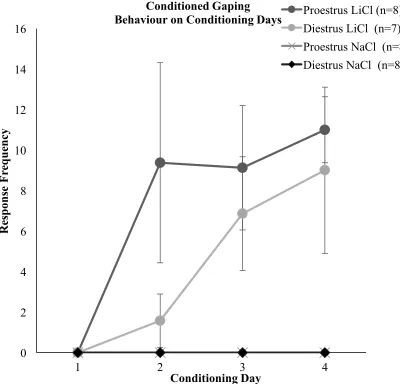
3.3.1.1 Conditioned gaping behaviour ... 48
3.3.1.2 Conditioned aversion related behaviour ... 50
3.3.2 Drug-free test day ... 50
3.3.2.1 Conditioned gaping behaviour ... 50
vii
3.3.3 Estrous cycle determination ... 54
3.4 Discussion ... 54
3.4.1 Conclusions ... 58
3.4 References ... 59
Chapter 4 ... 68
4 General Discussion ... 68
4.1 Conclusions ... 71
4.2 References ... 73
viii
List of Tables
Table 2.1: Summary of Studies Used in Post Hoc Analysis ... 17
Table 2.2: Sample Size By Pubertal Status and Sex ... 19
Table 2.3: Prevalence of Anticipatory CINV by Sex and Pubertal Status ... 23
Table 2.4: Prevalence of Acute CINV by Sex and Pubertal Status ... 24
ix
List of Figures
Figure 2.1: Level of Delayed CINV Control.…...……….26
Figure 2.2: Uncontrolled Delayed CINV.………….……..…...………...……28
Figure 3.1: Distinctive Context………...44
Figure 3.2: Estrous Cycle Phases…………...44
Figure 3.3: Experimental Procedure………...…...45
Figure 3.4: Group Designation………...………...…...47
Figure 3.5: Conditioned Gaping Behaviour on Conditioning Days………...…...49
Figure 3.6: Conditioned Aversion Related Behaviours on Conditioning Days.………51
Figure 3.7: Conditioned Gaping Behaviour on Test Day……….……...52
Chapter 1
1 General introduction
The prevalence, course, and severity of many medical and behavioural conditions differ between males and females (Manton, 1999; Regitz-Zagrosek & Seeland, 2013). These sex differences arise from a combination of genetic, hormonal, and social factors that interact to produce widespread differences in the brain and behaviour of the human population. Despite knowledge of these sex differences, there is little sex-specific healthcare; sex and gender are often not taken into account when considering the prevention, treatment, and management of disease (Regitz-Zagrosek, 2012). Moreover, many animal studies are carried out with male subjects only, thus largely ignoring crucial sex differences. It is critical that researchers and clinicians take sex into account, as there are many questions concerning sex differences that have yet to be answered. Though sex differences in various diseases and conditions have been discovered, the mechanisms behind many of these sex differences remain largely unclear. Knowledge of these
mechanisms is essential for the employment of more effective and personalized treatment strategies for many disorders that differentially affect males and females.
One area that has garnered recent interest is sex differences in the experience of nausea and nausea-related phenomena (Cloutier, Kavaliers, & Ossenkopp, 2017; Hilarius et al., 2011; Paillard et al., 2013). In a study identifying risk factors for post-operative nausea and vomiting (PONV), female sex was identified as the strongest patient-related predictor (Fujii, 2009; Gan, 2006). Female sex is also a known risk factor for motion sickness susceptibility (Paillard et al., 2013). Moreover, motion sickness has been shown to fluctuate throughout the menstrual cycle, in accordance with fluctuating estrogen levels (Golding, Kadzere, & Gresty, 2005). Women also report different factors which
Engoren, 2010; Shin, Martin, & Suls, 2010). Finally, and critical to the present thesis, female sex is a known risk factor for chemotherapy-induced nausea and vomiting (CINV) (Molassiotis, Stamataki, & Kontopantelis, 2013; Sekine, Segawa, Kubota, & Saeki, 2013; Warr, 2014). Female patients experience CINV at higher frequencies than male patients in the acute, delayed, and anticipatory phases (Gonella & Di Giulio, 2015). In the delayed phase specifically, female sex is the only patient-related risk factor (Sekine et al., 2013).
Though the mechanism responsible for the sex difference in nausea-related phenomena has yet to be discovered, there is some evidence that implicates estrogens. The present thesis explored the possible influence of estrogens on CINV, and on anticipatory nausea (AN), which is a specific syndrome related to CINV. Two diverse study methodologies were used. The first consisted of a post hoc data analysis of pediatric oncology patients, examining sex differences in CINV in these patients at various developmental stages. The second study employed an animal model of AN which examined differences in
conditioned disgust behaviours in female rats between two of the four phases of the estrous cycle.
There is no shortage of research in this area using solely male subjects. Unfortunately, inferences are often drawn from these studies that are applied to both males and females, which largely ignores the influence of female physiology and biology. The present thesis focused on female subjects, and the putative contribution of estrogens to CINV.
1.1 Chemotherapy-induced nausea and vomiting (CINV)
For adults undergoing chemotherapy, there are a number of known risk factors associated with CINV. These include: age below 55 years, female sex, non-habitual alcohol use, and history of nausea including pregnancy-related morning sickness and motion-sickness (Molassiotis et al 2013; Sekine et al., 2013; Warr, 2014). Taking these risk factors into account when selecting CINV prophylaxis for individual patients may improve complete CINV control rates. Unfortunately, in children, risk factors for the development of CINV are currently unknown. Although there are several possible risk factors, the present thesis focused on one potential risk factor in children: female sex. Knowledge of patient-related risk factors for CINV would permit tailoring of standard CINV prophylaxis to meet the needs of individual children and would likely result in complete CINV control in a higher proportion of children. In the present thesis, patients were split into three groups: pre-, mid-, and post-pubertal, in order to pinpoint exactly when the sex difference in CINV may arise.
One stage of CINV that is particularly challenging to study is anticipatory CINV. Anticipatory CINV is the experience of nausea and vomiting in the 24 hours leading up to chemotherapy administration, in anticipation of the treatment itself. Anticipatory CINV is difficult to control once it develops, and it does not respond well to
1.2 Animal model
A rat model of anticipatory CINV has been well established and is used as a preclinical tool to study possible treatments (Limebeer et al., 2006; 2008). This model refers to the condition as anticipatory nausea (AN; Limebeer et al., 2006; 2008). The AN model uses the toxin, lithium chloride (LiCl), a nausea-inducing drug, as the unconditioned stimulus, and a distinctive context as the conditioned stimulus. This paradigm demonstrates rats’ ability to associate toxin-induced nausea with the context in which they experienced it. Rats are injected with LiCl and placed in a distinctive context immediately after injection. After numerous pairings, rodents are capable of associating this distinctive context with “feelings” of nausea. When rodents are re-exposed to the context drug-free, they will demonstrate a conditioned-gaping response, which is a learned response. This well-established animal model is a valuable pre-clinical tool for examining possible risk factors and treatments for AN (Cloutier et al., 2017; Limebeer et al., 2006; 2008).
Sex differences have been observed in this animal model. On drug-free test day, female rats demonstrate significantly more conditioned gaping responses than male rats (Cloutier et al., 2017). This is consistent with other animal studies; sex differences in favour of females have been seen in the development of motion-sickness in the musk shrew (Javid & Naylor, 1999), as well as in many clinical studies that point to female sex as a risk factor for a number of nausea-related phenomena (Arslanian-Engoren, & Engoren, 2010; Fujii, 2009; Gan, 2006), including CINV (Molassiotis et al., 2013; 2016).
1.3 Estrogens
Eckel, 1996). Estradiol can also have an additive effect on the LiCl-induced conditioned disgust in castrated male rats (Lin, Tsai, Tai, & Yeh, 2015).
Estrogens also have stimulatory effects on the serotonergic system. Acute estradiol administration to ovariectomized rats increases serotonin levels in a number of brain regions, including the hippocampus (Johnson & Crowley, 1983). Evidence suggests that a large number of estrogen receptors are expressed in the dorsal raphe nuclei, where most serotonin neurons are located (Merchenthaler, Lane, Numan, & Dellovade, 2004). Consequently, estrogen replacement increases neuronal activity in this this region (Dalmasso, Amigone, & Vivas, 2011). Serotonin (specifically 5-HT3) antagonism has
well-established anti-emetic effects, thus implicating the serotonergic system in the production of nausea and vomiting (Hesketh, 2000). Therefore, estrogens may increase nausea and vomiting through a downstream serotonergic process.
There is some indication of an evolutionary explanation for estrogen’s enhancing effect on nausea. It has been proposed that nausea and vomiting during pregnancy evolved as an evolutionarily adaptive mechanism to avoid the ingestion of harmful toxins, thus
potentially harming the fetus (Buss, 1999; Profet, 1995). The vomiting and disgust
reflexes have long been regarded as evolutionarily adaptive, as they protect the individual from ingesting potentially poisonous or noxious substances. It is possible that estrogen causes this sense to be particularly heightened in women, who have the added
responsibility of protecting their developing offspring from harm (Sherman & Flaxman, 2002).
not men. After menopause, motion sickness susceptibility decreases and nausea no longer predicts chronic migraine (Özge et al, 2014; Paillard et al., 2013).
1.4 Objectives of the current thesis
The first objective of this thesis was to explore the association between CINV control as assessed by pediatric oncology patients and/or their parents and the patient-related factors of sex and pubertal status. The study involved a post hoc analysis using integrated data from three prospective, observational studies which examined acute, delayed, and anticipatory CINV in pediatric oncology patients at The Hospital for Sick Children (SickKids) in Toronto. The study explored sex differences in pre-, mid-, and post-pubertal children in order to elucidate the possibility that sex differences in CINV only arise post pubertally.
The second objective of this thesis was to examine the ability of female rodents to process and associate a distinctive context with an internal sickness cue (i.e., LiCl-induced nausea) in the rodent model of AN, and to test whether estrous cycle phase influences the formation of AN. Specifically, using a conditioned disgust paradigm, female rats conditioned and tested during proestrus (high estrogen levels) were compared to those conditioned and tested during diestrus (low estrogen levels) to determine if estrogen is modulating the observed sex difference in the literature.
The current study examined sex differences in CINV by considering two very different subject groups. In Chapter 2, pediatric patients were examined, while in Chapter 3, adult female rats were the subjects. Much of the sex differences in CINV literature focuses on adult patients, while the pediatric population has been less investigated. The present study focused on this less examined patient age group, in order to shed some light on the
possible sex differences that may or may not be present in this population.
1.5 References
Aapro, M. S., Molassiotis, A., & Olver, I. (2005). Anticipatory nausea and vomiting.
Supportive Care in Cancer, 13(2), 117-121.
Arslanian-Engoren, C. & Engoren, M. (2010). Physiological and anatomical bases for sex
differences in pain and nausea as presenting symptoms of acute coronary
syndromes. Heart and Lung, 39(5), 386-393.
Bovbjerg, D.H. (2006). The continuing problem of post chemotherapy nausea and
vomiting: Contributions of classical conditioning. Autonomic Neuroscience,129,
92-98.
Buss, D. M. (1999). Combating the hostile forces of nature: Human survival problems. In
Buss D. M. (Ed.) Evolutionary Psychology: The New Science of the Mind. (pp.
69-90). Boston: Allyn & Bacon.
Chan, A., Kim, H., Hsieh, R. K., Yu, S., de Lima Lopes Jr, Gilberto, Su, W., . . . Keefe,
D. M. K. (2015). Incidence and predictors of anticipatory nausea and vomiting in
asia pacific clinical practice—a longitudinal analysis. Supportive Care in
Cancer, 23(1), 283-291.
Cloutier, C. J., Kavaliers, M., & Ossenkopp, K. P. (2017). Rodent sex differences in
disgust behaviors (anticipatory nausea) conditioned to a context associated with
the effects of the toxin LiCl: Inhibition of conditioning following immune
stimulation with lipopolysaccharide. Pharmacology Biochemistry and
Behavior, 152, 4-12.
the inhibitory action of estrogen on induced sodium appetite in female
rats. Physiology & Behavior, 104(3), 398-407.
Feinberg, B. A., Gilmore, J. W., Haislip, S., Wentworth, C., & Burke, T. A. (2010).
Incidence and risk factors for chemotherapy-induced nausea or vomiting
following highly or moderately emetogenic chemotherapy in community
oncology practice. Community Oncology, 7(8), 347-354.
Fujii, Y., (2009). Postoperative nausea and vomiting and their sex differences. Masui. 58,
59-66.
Gan, T. J. (2006). Risk factors for postoperative nausea and vomiting. Anesthesia &
Analgesia, 102(6), 1884-1898.
Ganesan, R., & Simpkins, J. W. (1991). Conditioned taste aversion induced by estradiol
pellets. Physiology & Behavior, 50(4), 849-852.
Golding, J.F., Kadzere, P., Gresty, M.A., (2005). Motion sickness susceptibility
fluctuates through the menstrual cycle. Aviation, Space and Environmental
Medicine. 76, 970-973.
Gonella, S., & Di Giulio, P. (2015). Delayed chemotherapy-induced nausea and vomiting
in the hematology population: A review of the literature. Clinical Journal of
Oncology Nursing, 19(4), 438-443.
Goodman L., Gilman A. (1975). The pharmacological basis of therapeutics. Macmillan,
New York.
Aaronson, N. K. (2011). Chemotherapy-Induced Nausea and Vomiting in Daily
Clinical Practice. Patient-Reported Outcomes In Daily Clinical Oncology
Practice, 77.
Hesketh, P. J. (2000). Clinical Science Review: Comparative review of 5-HT3 receptor
antagonists in the treatment of acute chemotherapy-induced nausea and vomiting.
Cancer Investigation, 18(2), 163-173.
Javid, F. A., & Naylor, R. J. (1999). Variables of movement amplitude and frequency in
the development of motion sickness in Suncus murinus. Pharmacology
Biochemistry and Behavior, 64(1), 115-122.
Johnson, M. D., & Crowley, W. R. (1983). Acute effects of estradiol on circulating
luteinizing hormone and prolactin concentrations and on serotonin turnover in
individual brain nuclei. Endocrinology, 113(6), 1935-1941
Limebeer, C. L., Hall, G., & Parker, L. A. (2006). Exposure to a lithium-paired context
elicits gaping in rats: A model of anticipatory nausea. Physiology & Behavior,
88(4-5), 398-403.
Limebeer, C. L., Krohn, J. P., Cross-Mellor, S., Litt, D. E., Ossenkopp, K-P., & Parker,
L. A. (2008). Exposure to a context previously associated with nausea elicits
conditioned gaping in rats: A model of anticipatory nausea. Behavioural Brain
Research, 187, 33-40.
Lin, S. F., Tsai, Y. F., Tai, M. Y., & Yeh, K. Y. (2015). Estradiol enhances the
acquisition of lithium chloride-induced conditioned taste aversion in castrated
male rats. The Science of Nature, 102(9-10), 52.
dependence of cause-specific mortality: The United States, 1962 to 1995. The
Journal of Gender-Specific Medicine: JGSM: The Official Journal of The
Partnership for Women's Health at Columbia, 3(4), 47-54.
Matchock, R. L., Levine, M. E., Gianaros, P. J., & Stern, R. M. (2008). Susceptibility to
nausea and motion sickness as a function of the menstrual cycle. Women's Health
Issues, 18(4), 328-335.
Merchenthaler, I., Lane, M. V., Numan, S., & Dellovade, T. L. (2004). Distribution of
estrogen receptor α and β in the mouse central nervous system: In vivo
autoradiographic and immunocytochemical analyses. The Journal of Comparative
Neurology, 473(2), 270-291.
Molassiotis, A. (2005). Managing nausea and vomiting after cancer treatments: Patients
still suffer unnecessarily. European Journal of Oncology Nursing, 9(1), 4-5.
Molassiotis, A., Lee, P. H., Burke, T. A., Dicato, M., Gascon, P., Roila, F., & Aapro, M.
(2016). Anticipatory nausea, risk factors, and its impact on chemotherapy-induced
nausea and vomiting: Results from the pan European emesis registry study.
Journal of Pain and Symptom Management, 51(6), 987-993.
Molassiotis, A., Stamataki, Z., & Kontopantelis, E. (2013). Development and preliminary
validation of a risk prediction model for chemotherapy-related nausea and
vomiting. Supportive Care in Cancer, 21(10), 2759-2767.
Morrow, G. R, Roscoe, J. A., Hynes, H. E., et al. (1998). Progress in reducing
anticipatory nausea and vomiting: A study of community practice. Supportive
Care in Cancer, 6, 46-50.
is the result of a conditioned palatability shift. Neuroreport, 7(15-17), 2777-2780.
Özge, A., & Yalın, O. Ö. (2016). Chronic migraine in children and adolescents. Current
Pain and Headache Reports, 20(2), 1-9.
Paillard, A. C., Quarck, G., Paolino, F., Denise, P., Paolino, M., Golding, J. F., &
Ghulyan-Bedikian, V. (2013). Motion sickness susceptibility in healthy subjects
and vestibular patients: Effects of gender, age and trait-anxiety. Journal of
Vestibular Research, 23(4, 5), 203-209.
Profet, M. (1995). Pregnancy sickness as adaptation: A deterrent to maternal ingestion of
teratogens. The Adapted Mind, 327-365.
Regitz-Zagrosek, V. (2012). Sex and gender differences in health: Science & society
series on sex and science. EMBO Reports, 13(7), 596–603.
Regitz-Zagrosek, V., & Seeland, U. (2013). Sex and gender differences in clinical
medicine. In Sex and Gender Differences in Pharmacology (pp. 3-22). Springer
Berlin Heidelberg.
Sekine, I., Segawa, Y., Kubota, K., & Saeki, T. (2013). Risk factors of chemotherapy-
induced nausea and vomiting: Index for personalized antiemetic prophylaxis.
Cancer Science, 104(6), 711-717.
Sherman, P. W., & Flaxman, S. M. (2002). Nausea and vomiting of pregnancy in an
evolutionary perspective. American Journal of Obstetrics and
Gynecology, 186(5), S190-S197.
Shin, J. Y., Martin, R., & Suls, J. (2010). Meta-analytic evaluation of gender differences
and symptom measurement strategies in acute coronary syndromes. Heart and
Stockhorst, U., Steingrueber, H.J., Enck, P., Klosterhalfen, S. (2006). Pavlovian
conditioning of nausea and vomiting. Autonomic Neuroscience Basic and
Clinical,129, 50-57.
Tyc, V. L., Mulhern, R. K., Barclay, D. R., Smith, B. F., & Bieberich, A. A. (1997).
Variables associated with anticipatory nausea and vomiting in pediatric cancer
patients receiving ondansetron antiemetic therapy. Journal of Pediatric
Psychology, 22(1), 45-58.
Warr, D. (2014). Prognostic factors for chemotherapy induced nausea and vomiting.
Chapter 2
2
Examining the Association Between Sex, Pubertal
Status, and the Development of Chemotherapy-Induced
Nausea and Vomiting (CINV) in Pediatric Oncology
Patients
2.1 Introduction
Cancer patients undergoing chemotherapy list nausea and vomiting as among the most debilitating and distressing treatment-related adverse effects (Aapro, Molassiotis, & Olver, 2005; Molassiotis, 2005). Chemotherapy-induced nausea and vomiting (CINV) is associated with significant deterioration of quality of life for these patients, and remains a severe problem in the pediatric oncology community (Feinberg, Gilmore, Haislip,
Wentworth, & Burke, 2010). CINV can be acute (24 hours following chemotherapy administration), delayed (more than 24 hours after and within 7 days of chemotherapy administration), or anticipatory (within 24 hours prior to chemotherapy administration). Despite the routine administration of modern CINV prophylaxis based on the emetic risk carried by the planned chemotherapy regimen, up to 55% of children receiving
moderately or highly emetogenic chemotherapy experience CINV (Kang et al., 2015, Kovacs et al., 2016). Chemotherapy-induced nausea (CIN) and chemotherapy-induced vomiting (CIV) are considered as separate entities and are often analyzed separately. While modern antiemetics have vastly improved CIV control rates over the past decade, CIN remains more difficult to measure, as well as to control (Rapoport, Molasiotis, Raftopoulos, & Roila, 2015).
For adults undergoing chemotherapy, there are a number of known risk factors associated with CINV. Taking these risk factors into account when selecting CINV prophylaxis for individual patients may improve complete CINV control rates. These risk factors include: age (below 55 years), non-habitual alcohol use, past history of nausea including
Stamataki, & Kontopantelis, 2013; Sekine, Segawa, Kubota, & Saeki, 2013; Warr, 2014). Female patients experience CINV at higher frequencies than male patients in both the acute and delayed phases (Gonella & Di Giulio, 2015). In the delayed phase specifically, female sex is the only patient-related risk factor (Sekine et al., 2013). Although clinicians are aware of this, the mechanism by which this sex difference operates remains unclear. Sex differences in favour of females have also been seen in post-operative nausea and vomiting as well as susceptibility to motion sickness (Fujii, 2009; Paillard et al., 2013).
It has been suggested that sex hormones, specifically estrogens, may play a role in CINV. Several animal studies have shown that estrogens enhance conditioned aversion
behaviour and may increase nausea and malaise (Fudge, Kavaliers, Baird, & Ossenkopp, 2009; Ganesan, 1994). Estradiol itself has been found to produce both conditioned taste avoidance when paired with a novel sucrose taste, as well as a strong shift in palatability of the sucrose taste (Ossenkopp, Rabi, & Eckel, 1996). This may occur because of
estradiol’s illness-inducing properties, which has been seen in animal studies (Ganesan & Simpkins, 1991) as well as in humans (Goodman & Gilman, 1975).
The present study involved a post hoc analysis using integrated data from three
prospective, observational studies which examined acute, delayed, and anticipatory CINV in pediatric oncology patients at The Hospital for Sick Children (SickKids) in Toronto. The primary objective of this study was to explore the association between CINV control as assessed by patients and/or their parents and the patient-related factors of sex and pubertal status. Any sex differences found (or lack thereof) may then be used by
clinicians to personalize CINV prophylaxis provided to children receiving chemotherapy. Finding a post pubertal CINV sex difference would also point to a role for gonadal hormones in the observed sex difference in CINV seen in adults. Finally, knowledge of patient-related risk factors for CINV would permit tailoring of standard CINV
prophylaxis to meet the needs of individual children and would likely result in more complete CINV control in a higher proportion of children.
2.2 Method
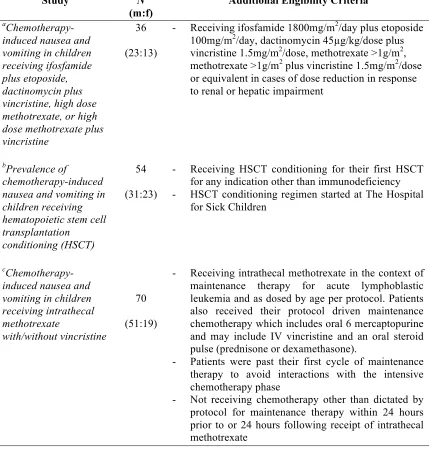
Data for the current analysis were pooled from three prospective, observational studies completed at SickKids. The three studies included in this post hoc analysis are outlined in Table 2.1. All studies collected information on the prevalence of acute, delayed, and anticipatory CINV in children receiving chemotherapy. All studies were approved by the SickKids Research Ethics Board. The following is a brief overview of the study
methodology. For more detailed descriptions, see the methodologies from the original studies (Flank et al., 2017a; Flank et al., 2017b; Vol et al., 2016).
2.2.1 Patients
Table 2.1
Summary of Studies Used in Post Hoc Analysis
Study N
(m:f)
Additional Eligibility Criteria
a
Chemotherapy-induced nausea and vomiting in children receiving ifosfamide plus etoposide, dactinomycin plus vincristine, high dose methotrexate, or high dose methotrexate plus vincristine
36
(23:13)
- Receiving ifosfamide 1800mg/m2/day plus etoposide 100mg/m2/day, dactinomycin 45µg/kg/dose plus vincristine 1.5mg/m2/dose, methotrexate >1g/m2,
methotrexate >1g/m2 plus vincristine 1.5mg/m2/dose or equivalent in cases of dose reduction in response to renal or hepatic impairment
bPrevalence of
chemotherapy-induced nausea and vomiting in children receiving hematopoietic stem cell transplantation
conditioning (HSCT)
54
(31:23)
- Receiving HSCT conditioning for their first HSCT for any indication other than immunodeficiency - HSCT conditioning regimen started at The Hospital
for Sick Children
c
Chemotherapy-induced nausea and vomiting in children receiving intrathecal methotrexate
with/without vincristine
70
(51:19)
- Receiving intrathecal methotrexate in the context of maintenance therapy for acute lymphoblastic leukemia and as dosed by age per protocol. Patients also received their protocol driven maintenance chemotherapy which includes oral 6 mercaptopurine and may include IV vincristine and an oral steroid pulse (prednisone or dexamethasone).
- Patients were past their first cycle of maintenance therapy to avoid interactions with the intensive chemotherapy phase
- Not receiving chemotherapy other than dictated by protocol for maintenance therapy within 24 hours prior to or 24 hours following receipt of intrathecal methotrexate
a Vol, H., Flank, J., Lavoratore, S. R., Nathan, P. C., Taylor, T., Zelunka, E., . . . Lee Dupuis, L. (2016). Poor
chemotherapy-induced nausea and vomiting control in children receiving intermediate or high dose methotrexate. Supportive Care in Cancer, 24(3), 1365-1371.
b Flank, J., Sparavalo, J., Vol, H., Hagen, L., Stuhler, R., Chong, D,, Courtney, S., Doyle, J. J., Gassas, A., Schechter,
T., Dupuis, L. L. (2017b). The burden of chemotherapy-induced nausea and vomiting in children receiving hematopoietic stem cell transplantation conditioning: a prospective study. submitted for publication
c Flank, J., Nadeem, K.,Moledina, S.,Khanna, M.,Schindera, C.,Punnett, A. S., Dupuis, L. L. (2017a). Nausea and
in the case of children aged 7-15 years, assent was obtained from the child as well. See Table 2.1 for additional eligibility criteria for each study.
2.2.1.1
Pubertal status designation
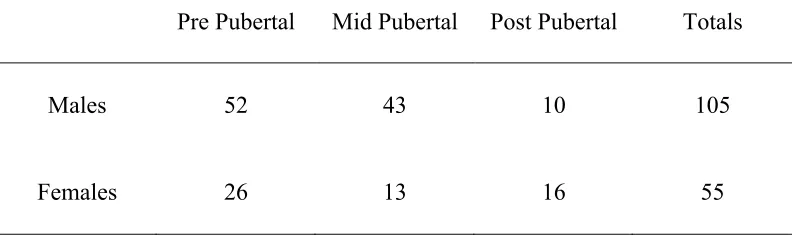
Pubertal status of each participant was defined using sex-specific age cut-offs, based on norms for precocious and late onset puberty in the literature (Carel, Lahlou, Roger, & Chaussain, 2004; Sedlmeyer & Palmart, 2002). Males between the ages of 1 to 9 years were defined as “pre-pubertal”, between 9.1 to 14 years as “mid-pubertal”, and between 14.1 to 18 years as “post-pubertal”. Females between the ages of 1 to 8 years were defined as “pre-pubertal”, between 8.1 to 13 years as “mid-pubertal”, and between 13.1 to 18 years as “post-pubertal”. See Table 2.2 for sample size of each of these pubertal groups.
2.2.2 Data collection
Structured diaries were used to collect CINV data. A validated nausea assessment
Table 2.2
Sample Size By Pubertal Status and Sex
Pre Pubertal Mid Pubertal Post Pubertal Totals
Males 52 43 10 105
sheets for inpatients, and in the case of discrepancy, the higher number was used. All diary pages completed during the inpatient period were collected prior to discharge. The diary pages completed during the outpatient period were returned to the investigator via mail or in person at a subsequent hospital visit.
2.2.3 Outcomes
2.2.3.1
Anticipatory CINV
Anticipatory CINV was defined as nausea, vomiting, or retching in the 24 hours prior to chemotherapy administration in patients that have received chemotherapy previously. The child was asked if he/she felt nauseated or vomited in the last 24 hours before his/her first chemotherapy dose in the study course. The parent(s)/guardian(s) were asked
separately if their child vomited or felt nauseated within the last 24 hours before his/her first chemotherapy dose in the course to confirm the information provided by the child. Anticipatory CINV was quantified by presence or absence.
2.2.3.2 Acute and delayed phase CINV
2.2.4 Data analysis
Dependent variables quantified were the proportion of participants that developed anticipatory CIN, CIV, and CINV, the overall level of control of acute CIN, CIV, and CINV, and the overall level of control of delayed CIN, CIV, and CINV. Independent variables examined were sex (male and female) and pubertal status (pre-pubertal, mid-pubertal, and post-pubertal). All statistical tests used α=0.05 as a significance criterion. Statistical analysis were performed using IBM SPSS Statistics 23 for Windows.
2.2.4.1
Anticipatory CINV
Data was analyzed using three separate chi-square tests to explore the association between sex and proportion of patients who develop anticipatory CIN, CIV, and CINV, for each of the three pubertal groups of interest.
2.2.4.2
Acute and delayed phase CINV
Data was analyzed using 2 X 3 between subjects analysis of variances (ANOVA) with two between subject factors of Sex (at two levels: male and female) and Pubertal Status (at three levels: pre-pubertal, mid-pubertal, and post-pubertal) for CIN, CIV, and CINV each separately. This analysis compared mean CINV control scores (higher indicating increased CINV) for each of the groups of interest. A priori planned comparisons were performed on each pubertal group separately, as this was the specific focus of the study. This was done using three separate one-way ANOVAs on each pubertal group, with one between subject factor of sex (at two levels: male and female).
The number of individuals experiencing either completely controlled, partially controlled, or uncontrolled CINV were also calculated as a proportion of total in each group of interest (pre-pubertal males, pre-pubertal females, mid-pubertal males, mid-pubertal females, post-pubertal males, and post-pubertal females). This was done separately for anticipatory, acute, and delayed CINV. Subsequently, chi square analyses were
2.3 Results
2.3.1 Anticipatory CIN, CIV, and CINV
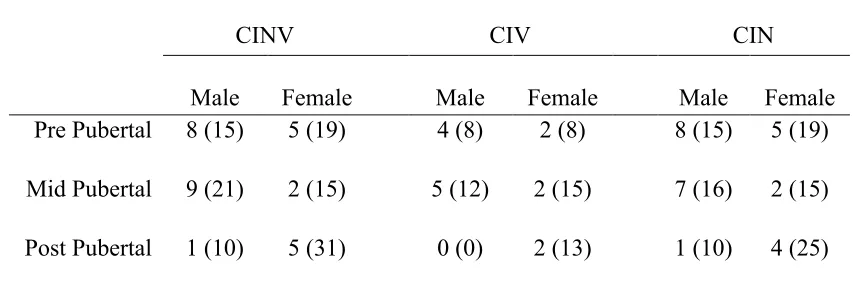
Three separate chi-square analyses revealed no significant differences between males and females for any of the pubertal groups. The proportion of children experiencing
anticipatory CINV in each of the pubertal groups is shown in Table 2.3. For all pubertal groups, no relationship was found between sex and development of CIN, CIV, or CINV.
2.3.2 Acute CIN, CIV, and CINV control
The proportion of children who experienced complete, partial, or no control of CIN, CIV, and CINV in the acute phase is summarized in Table 2.4. The 2 X 3 between-subjects ANOVA revealed no significant Sex or Pubertal Status effects for acute CIN, CIV, or CINV. Since pubertal status was of particular interest in this study, a priori planned comparisons were done in order to explore possible Sex effects in each of the pubertal status groups. The one-way ANOVA revealed no significant Sex effect in any of the pubertal status groups. The chi square analyses also revealed no significant differences in any of pubertal groups for acute CIN, CIV, and CINV control.
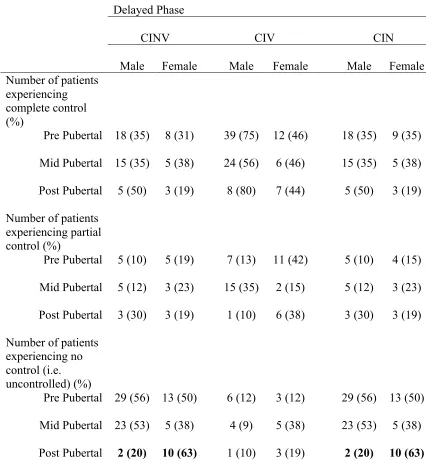
2.3.3 Delayed CIN, CIV, and CINV control
Table 2.3
Prevalence of Anticipatory CINV by Sex and Pubertal Status
Number of patients experiencing anticipatory chemotherapy-induced nausea and vomiting (%)
CINV CIV CIN
Male Female Male Female Male Female
Pre Pubertal 8 (15) 5 (19) 4 (8) 2 (8) 8 (15) 5 (19)
Mid Pubertal 9 (21) 2 (15) 5 (12) 2 (15) 7 (16) 2 (15)
Post Pubertal 1 (10) 5 (31) 0 (0) 2 (13) 1 (10) 4 (25)
Table 2.4
Prevalence of Acute CINV by Sex and Pubertal Status
Acute Phase
CINV
CIV CIN
Male Female Male Female Male Female
Number of patients experiencing complete controla (%)
Pre Pubertal 14 (27) 10 (38) 38 (73) 17 (65) 14 (27) 11 (42)
Mid Pubertal 14 (33) 2 (15) 26 (60) 5 (38) 14 (33) 2 (15)
Post Pubertal 1 (10) 3 (19) 7 (70) 9 (56) 1 (20) 3 (19)
Number of patients experiencing partial controlb (%)
Pre Pubertal 16 (31) 4 (15) 7 (13) 3 (12) 17 (33) 5 (19)
Mid Pubertal 11 (26) 4 (31) 9 (21) 6 (46) 11 (26) 4 (31)
Post Pubertal 4 (40) 4 (25) 2 (20) 3 (19) 4 (40) 4 (25)
Number of patients experiencing no controlc (i.e. uncontrolled) (%)
Pre Pubertal 22 (42) 12 (46) 7 (13) 6 (23) 21 (40) 10 (38)
Mid Pubertal 18 (42) 7 (54) 8 (19) 2 (15) 18 (42) 7 (54)
Post Pubertal 5 (50) 9 (56) 1 (10) 4 (25) 5 (50) 9 (56)
CINV chemotherapy-induced nausea and vomiting, CIV chemotherapy-induced vomiting, CIN chemotherapy-induced nausea.
a Complete control is defined as a max PeNAT score of 1 and/or 0 vomits, retches, or
gags.
b Partial control is defined as a max PeNAT score of 2 and/or 1-2 vomits, retches, or gags. c Uncontrolled is defined as a max PeNAT score of 3-4 and/or > 2 vomits, retches, or
Table 2.5
Prevalence of Delayed CINV by Sex and Pubertal Status
Delayed Phase
CINV
CIV CIN
Male Female Male Female Male Female
Number of patients experiencing complete control (%)
Pre Pubertal 18 (35) 8 (31) 39 (75) 12 (46) 18 (35) 9 (35)
Mid Pubertal 15 (35) 5 (38) 24 (56) 6 (46) 15 (35) 5 (38)
Post Pubertal 5 (50) 3 (19) 8 (80) 7 (44) 5 (50) 3 (19)
Number of patients experiencing partial control (%)
Pre Pubertal 5 (10) 5 (19) 7 (13) 11 (42) 5 (10) 4 (15)
Mid Pubertal 5 (12) 3 (23) 15 (35) 2 (15) 5 (12) 3 (23)
Post Pubertal 3 (30) 3 (19) 1 (10) 6 (38) 3 (30) 3 (19)
Number of patients experiencing no control (i.e. uncontrolled) (%)
Pre Pubertal 29 (56) 13 (50) 6 (12) 3 (12) 29 (56) 13 (50)
Mid Pubertal 23 (53) 5 (38) 4 (9) 5 (38) 23 (53) 5 (38)
Post Pubertal 2 (20) 10 (63) 1 (10) 3 (19) 2 (20) 10 (63)
CINV chemotherapy-induced nausea and vomiting, CIV chemotherapy-induced vomiting, CIN chemotherapy-induced nausea.
a Complete control is defined as a max PeNAT score of 1 and/or 0 vomits, retches, or
gags.
b Partial control is defined as a max PeNAT score of 2 and/or 1-2 vomits, retches, or gags. c Uncontrolled is defined as a max PeNAT score of 3-4 and/or > 2 vomits, retches, or
Figure 2.1. Level of Delayed CINV Control. Mean (+ sem) delayed CINV scores (out of 3, 1= complete control, 2= partial control, 3=uncontrolled) for pre, mid and post pubertal male and female participants who developed delayed CINV. In the post pubertal group only, there was a significant sex difference; post pubertal females had less control of delayed nausea (i.e. experienced more nausea) than post pubertal males *p < .05.
0 0.5 1 1.5 2 2.5 3
Pre Pubertal Mid Pubertal Post Pubertal
L
eve
l of
C
on
tr
ol
(
ou
t
of
3)
Pubertal Status
Level of Delayed CINV Control
Male
uncontrolled delayed CINV. No main effect of Sex was seen in any of the other pubertal groups. The chi square analysis also revealed an association between sex and proportion experiencing uncontrolled CIN and CINV, for the post pubertal group, X2 (1, N = 26) =
4.301, p < .05. As shown in Figure 2.2, Post pubertal females demonstrated significantly higher proportions of uncontrolled CIN and CINV compared to post pubertal males. All other chi square analyses revealed no significant associations.
2.4 Discussion
The present study examined putative sex differences in the development of anticipatory, acute, and delayed CINV in pediatric oncology patients. Patients were split into three groups based on pubertal status: pre-, mid-, and post-pubertal. It was hypothesized that sex differences in the development of CINV would only be seen in the post-pubertal age group. This post-pubertal sex difference was in fact observed in delayed CINV.
0 10 20 30 40 50 60 70 80 90 100
Pre Mid Post Pre Mid Post Pre Mid Post
CIN CIV CINV
C h il d re n E xp er ie n ci n g N o C on tr ol (%)
Pubertal Status and CINV Phase
Patients with Uncontrolled Delayed CINV
Male
Female
*
Figure 2.2. Uncontrolled Delayed CINV. Proportions of children experiencing uncontrolled CIN, CIV, and CINV in the delayed phase, grouped by sex and pubertal status. Post pubertal females demonstrated significantly higher proportions of
uncontrolled delayed CIN and CINV than post pubertal males,* p < .05.
operative nausea and vomiting (PONV), female sex was identified as the strongest patient-related predictor (Fujii, 2009; Gan, 2006). Female sex is also a known risk factor for motion sickness susceptibility (Paillard et al., 2013). Moreover, motion sickness has been shown to fluctuate throughout the menstrual cycle, in accordance with fluctuating estrogen levels (Golding, Kadzere, & Gresty, 2005). Women also report different factors than men which contribute to chronic migraine, one of the more prevalent factors being nausea (Özge et al, 2014).
Motion sickness susceptibility and chronic migraine demonstrate additional
age-dependent decreases in the experience of nausea in women but not men. After age 50 – 60 years, motion sickness susceptibility decreases and nausea no longer predicts chronic migraine (Özge et al, 2014; Paillard et al., 2013). Interestingly, this age range
corresponds to menopause, a time period associated with fluctuations in hormone
concentrations, particularly the gradual decline of estrogens, which may influence nausea responses in women.
Taken together, the lack of a sex difference in CINV in children, the emergence of a sex difference in post-pubertal patients in the present study, a well-established sex difference in the adult population, and finally, the menstrual cycle and menopause related changes in other nausea related phenomena, all point to some gonadal hormone process operating, likely estrogens.
The finding of a post-pubertal sex difference in delayed CINV in the present study provides some evidence that pubertal hormones contribute to the overall sex difference seen in the adult population. Though no post-pubertal sex differences were found in anticipatory CINV in the present study, we observed a signal that there may be an
increased chance of anticipatory CINV in post-pubertal females. The lack of significance may be due to the particularly small sample size in this group. Notably, the most
Some limitations of the present analysis should be mentioned. This is a post hocanalysis of data, as such these conclusions can only be considered as hypothesis generation. It is also worth discussing the uneven sample sizes in the present study. Due to the large proportion of leukemia patients, which is seen predominantly in young children, the sample sizes in each pubertal group are substantially varied, with the post pubertal groups being the smallest (10 males and 16 females). Further, the original studies were not primarily designed to investigate sex differences within each pubertal group. Therefore, cut-offs for each pubertal group could only be determined retrospectively, using
established norms for precocious and late-onset puberty. Future studies should examine this research question with a focus on puberty so that clinician-defined pubertal status determination is part of the study’s methodology, as well as with larger and more evenly divided sample sizes. Limitations of the original studies include their observational nature as well as the possibility of selection bias. It is possible that patients who experienced more severe CINV were more likely to participate in the studies. Additionally, the studies are limited by the subjective nature of self-report by patients or their parents. However, the PeNAT has been validated and has shown to be a reliable and accurate indicator of nausea in pediatric patients (Dupuis et al., 2006).
2.4.1 Conclusions
It was hypothesized that post pubertal female patients would show less CINV control than post pubertal males, in the anticipatory, acute, and delayed phases. It was found that post pubertal female patients exhibited significantly less CINV control than post pubertal male patients. This sex difference was particular to the delayed phase, and was not seen in the anticipatory or acute phases. The present findings provide support for a post pubertal CINV sex difference, and provide some indication that gonadal hormones may be the underlying factor for the observed sex difference in CINV in adults. This study also indicates female sex as a possible risk factor for CINV in the post-pubertal pediatric population.
developing CINV in the adult population, research on risk factors in children up until this point has been scarce. Developing a comprehensive understanding of the risk factors for CINV in children will provide a stronger foundation for targeted CINV prophylaxis and, ultimately, will alleviate some of the stress and discomfort that accompany
2.5 References
Aapro, M. S., Molassiotis, A., & Olver, I. (2005). Anticipatory nausea and vomiting.
Supportive Care in Cancer, 13(2), 117-121.
Arslanian-Engoren, C., & Engoren, M. (2010). Physiological and anatomical bases for
sex differences in pain and nausea as presenting symptoms of acute coronary
syndromes. Heart & Lung - the Journal of Acute and Critical Care, 39(5),
386-393.
Aseeri, M., Mukhtar, A., Khansa, S. A., Elimam, N., & Jastaniah, W. (2013). A
retrospective review of antiemetic use for chemotherapy-induced nausea and
vomiting in pediatric oncology patients at a tertiary care center. Journal of
Oncology Pharmacy Practice, 19(2), 138-144.
Canadian Cancer Society. (2016). Canadian Cancer Society’s Advisory Committee on
Cancer Statistics. Canadian Cancer Statistics, Toronto, ON.
Carel, J. C., Lahlou, N., Roger, M., & Chaussain, J. L. (2004). Precocious puberty and
statural growth. Human Reproduction Update, 10(2), 135-147.
Cohen, L., de Moor, C. A., Eisenberg, P., Ming, E. E., & Hu, H. (2007). Chemotherapy-
induced nausea and vomiting—incidence and impact on patient quality of life at
community oncology settings. Supportive Care in Cancer, 15(5), 497-503.
Courant, F., Aksglaede, L., Antignac, J., Monteau, F., Sorensen, K., Andersson, A., . . .
Bizec, B. L. (2010). Assessment of circulating sex steroid levels in prepubertal
and pubertal boys and girls by a novel ultrasensitive gas chromatography-tandem
mass spectrometry method. The Journal of Clinical Endocrinology &
Dietrich, J. E. (2014). Female puberty: A comprehensive guide for clinicians (1;2014;
ed.). New York, NY: Springer New York.
Dupuis, L. L., Boodhan, S., Sung, L., Portwine, C., Hain, R., McCarthy, P., &
Holdsworth, M. (2011). Guideline for the classification of the acute emetogenic
potential of antineoplastic medication in pediatric cancer patients. Pediatric Blood
& Cancer, 57(2), 191-198.
Dupuis, L. L., Sung, L., Molassiotis, A., Orsey, A. D., Tissing, W., & van de Wetering,
M. (2017). 2016 updated MASCC/ESMO consensus recommendations:
Prevention of acute chemotherapy-induced nausea and vomiting in
children. Supportive Care in Cancer, 25(1), 323-331.
Dupuis, L. L., Taddio, A., Kerr, E. N., Kelly, A., & MacKeigan, L. (2006). Development
and validation of the pediatric nausea assessment tool for use in children receiving
antineoplastic agents. Pharmacotherapy, 26(9), 1221.
Erickson, J. M., MacPherson, C. F., Ameringer, S., Baggott, C., Linder, L., & Stegenga,
K. (2013). Symptoms and symptom clusters in adolescents receiving cancer
treatment: a review of the literature. International Journal of Nursing Studies,
50(6), 847-869.
Feinberg, B. A., Gilmore, J. W., Haislip, S., Wentworth, C., & Burke, T. A. (2010).
Incidence and risk factors for chemotherapy-induced nausea or vomiting
following highly or moderately emetogenic chemotherapy in community
oncology practice. Community Oncology, 7(8), 347-354.
L. L. (2017a). Nausea and vomiting in children and adolescents receiving
intrathecal methotrexate: a prospective, observational study. submitted
for publication.
Flank, J., Sparavalo, J., Vol, H., Hagen, L., Stuhler, R., Chong, D,, Courtney, S., Doyle,
J. J., Gassas, A., Schechter, T., Dupuis, L. L. (2017b). The burden of
chemotherapy-induced nausea and vomiting in children receiving hematopoietic
stem cell transplantation conditioning: a prospective study. submitted for
publication.
Freedman, J. L., Faerber, J., Kang, T. I., Dai, D., Fisher, B. T., Huang, Y. S., ... &
Feudtner, C. (2014). Predictors of antiemetic alteration in pediatric acute myeloid
leukemia. Pediatric Blood & Cancer, 61(10), 1798-1805.
Fudge, M. A., Kavaliers, M., Baird, J. P., & Ossenkopp, K. P. (2009). Tamoxifen
produces conditioned taste avoidance in male rats: an analysis of microstructural
licking patterns and taste reactivity. Hormones and Behavior, 56(3), 322-331.
Fujii, Y., (2009). Postoperative nausea and vomiting and their sex differences. Masui. 58,
59-66.
Gan, T. J. (2006). Risk factors for postoperative nausea and vomiting. Anesthesia &
Analgesia, 102(6), 1884-1898.
Ganesan, R. (1994). The aversive and hypophagic effects of estradiol. Physiology &
Behavior, 55(2), 279-285.
Ganesan, R., & Simpkins, J. W. (1991). Conditioned taste aversion induced by estradiol
pellets. Physiology & Behavior, 50(4), 849-852.
fluctuates through the menstrual cycle. Aviation, Space and Environmental
Medicine. 76, 970-973.
Gonella, S., & Di Giulio, P. (2015). Delayed chemotherapy-induced nausea and vomiting
in the hematology population: A review of the literature. Clinical Journal of
Oncology Nursing, 19(4), 438-443.
Goodman L., Gilman A. (1975). The pharmacological basis of therapeutics. Macmillan,
New York.
Greenberg, M. L., Agha, M., Pole, J. D., Gozdyra, P., Williams, J., DiMonte, B. (2015).
In: Greenberg, M. L. , Barnett, H., Williams, J., editors. Atlas of Childhood
Cancer in Ontario. Toronto: Pediatric Oncology Group of Ontario.
Hesketh, P. J. (2008). Chemotherapy-induced nausea and vomiting drug therapy. The
New England Journal of Medicine, 358(23), 2482.
Holdsworth, M. T., Raisch, D. W., & Frost, J. (2006). Acute and delayed nausea and
emesis control in pediatric oncology patients. Cancer, 106(4), 931-940.
Jasnow, A. M., Schulkin, J., & Pfaff, D. W. (2006). Estrogen facilitates fear conditioning
and increases corticotropin-releasing hormone mRNA expression in the central
amygdala in female mice. Hormones and Behavior, 49(2), 197-205.
Kang, H. J., Loftus, S., Taylor, A., DiCristina, C., Green, S., & Zwaan, C. M. (2015).
Aprepitant for the prevention of chemotherapy-induced nausea and vomiting in
children: a randomised, double-blind, phase 3 trial. The Lancet Oncology, 16(4),
385-394.
(2016). Palonosetron versus ondansetron for prevention of chemotherapy-induced
nausea and vomiting in paediatric patients with cancer receiving moderately or
highly emetogenic chemotherapy: a randomised, phase 3, blind,
double-dummy, non-inferiority study. The Lancet Oncology, 17(3), 332-344.
Molassiotis, A. (2005). Managing nausea and vomiting after cancer treatments: Patients
still suffer unnecessarily. European Journal of Oncology Nursing, 9(1), 4-5.
Molassiotis, A., Stamataki, Z., & Kontopantelis, E. (2013). Development and preliminary
validation of a risk prediction model for chemotherapy-related nausea and
vomiting. Supportive Care in Cancer, 21(10), 2759-2767.
Ossenkopp, K. P., Rabi, Y. J., & Eckel, L. A. (1996). Oestradiol-induced taste avoidance
is the result of a conditioned palatability shift. Neuroreport, 7(15-17), 2777-2780.
Özge, A., & Yalın, O. Ö. (2016). Chronic migraine in children and adolescents. Current
Pain and Headache Reports, 20(2), 1-9.
Paillard, A. C., Quarck, G., Paolino, F., Denise, P., Paolino, M., Golding, J. F., &
Ghulyan-Bedikian, V. (2013). Motion sickness susceptibility in healthy subjects
and vestibular patients: effects of gender, age and trait-anxiety. Journal of
Vestibular Research, 23 (4, 5), 203-209.
Rapoport, B. L., Molasiotis, A., Raftopoulos, H., & Roila, F. (2015). Chemotherapy-
induced nausea and vomiting. BioMed Research International, 2015, 1-2.
Sedlmeyer, I. L., & Palmert, M. R. (2002). Delayed puberty: analysis of a large case
series from an academic center. The Journal of Clinical Endocrinology &
Metabolism, 87(4), 1613-1620.
induced nausea and vomiting: Index for personalized antiemetic prophylaxis.
Cancer Science, 104(6), 711-717.
Shin, J. Y., Martin, R., & Suls, J. (2010). Meta-analytic evaluation of gender differences
and symptom measurement strategies in acute coronary syndromes. Heart & Lung
- the Journal of Acute and Critical Care, 39(4), 283-295.
Tomlinson, D., Dupuis, L. L., Gibson, P., Johnston, D. L., Portwine, C., Baggott, C., ... &
Macartney, G. (2014). Initial development of the symptom screening in pediatrics
tool (SSPedi). Supportive Care in Cancer, 22(1), 71-75.
Vol, H., Flank, J., Lavoratore, S. R., Nathan, P. C., Taylor, T., Zelunka, E., . . . Lee
Dupuis, L. (2016). Poor chemotherapy-induced nausea and vomiting control in
children receiving intermediate or high dose methotrexate. Supportive Care in
Cancer, 24(3), 1365-1371.
Warr, D. (2014). Prognostic factors for chemotherapy induced nausea and vomiting.
Chapter 3
3
The Effect of the Estrous Cycle on the Development of
Anticipatory Nausea (AN) in Female Rats
3.1 Introduction
3.1.1 Anticipatory nausea
Chemotherapy treatment largely contributes to survival rates in cancer patients, due to its cytotoxic and antineoplastic effects. Unfortunately, chemotherapy also has several undesirable side effects, including nausea and vomiting. Chemotherapy-induced nausea and vomiting (CINV) are reported as among the most debilitating and distressing treatment-related effects (Aapro, Molassiotis, & Olver, 2005; Molassiotis, 2005). As a result, many patients develop anticipatory CINV whereby they are conditioned to
experience nausea and vomiting in anticipation of the chemotherapy administration. The prevalence of anticipatory CINV reported in the literature ranges from 8%–30% of patients (Molassiotis et al., 2016; Morrow et al., 1998). It is posited that anticipatory CINV develops through classical conditioning (Bovbjerg, 2006; Stockhorst,
Steingrueber, Enck, & Klosterhalfen, 2006). The chemotherapy acts as the unconditioned stimulus, which elicits nausea and vomiting, the unconditioned response. The physical hospital or room acts as the conditioned stimulus and after repeated pairings, these environmental stimuli alone can elicit nausea and vomiting (Tyc, Mulhern, Barclay, Smith, & Bieberich, 1997). The prevalence and severity of this problem are the basis for the development of an animal model of anticipatory CINV (Limebeer, et al., 2006; 2008; Rodriguez, Lopez, Symonds, & Hall, 2000).
3.1.2 Animal model
(LiCl), a nausea-inducing drug as the unconditioned stimulus, and a distinctive context as the conditioned stimulus. This paradigm demonstrates rats’ ability to associate toxin-induced nausea with the context in which they experienced it. Rats are injected with LiCl and placed in a distinctive context immediately after injection. On the test day, rats are placed in the distinctive context drug free, and observed for the disgust behaviours of gaping, chin rubbing, paw treading, and forelimb flails. Rats are non-emetic species, so gaping has been well established as a reliable and selective indicator of nausea in rats (Parker & Limebeer, 2006). Gaping is seen when rats are exposed to drugs known to have emetic properties, i.e, cause vomiting in species that have this reflex (Parker & Limebeer, 2006; Travers and Norgren, 1983). A number of studies have shown that a distinctive context comes to elicit gaping responses in rats after it is paired with injections of LiCl (Cloutier, Cross-Mellor, Kavaliers, & Ossenkopp, 2011; Limebeer et al., 2006; 2008; Rodriguez et al., 2000). Disgust behaviours are also elicited by aversive tastes such as bitter quinine (Grill & Berridge, 1985; Grill & Norgren, 1978). This well-established animal model is a valuable pre-clinical tool for examining possible risk factors and treatments for AN.
3.1.3 Sex differences and estrogens
Female sex is a known risk factor for AN in adult cancer patients undergoing
chemotherapy. Women are significantly more likely to develop symptoms and less likely to achieve control (Fetting et al., 1983; Hilarius et al., 2012; LeBaron, Zeltzer, LeBaron, Scott, & Zeltzer, 1988). Women under the age of 50 are at particular risk for developing AN. Animal studies, using the rat model of AN, have demonstrated this sex difference as well. Female rats demonstrated significantly more conditioned gaping behaviour than male rats at three different doses of LiCl (64, 96, or 128 mg/kg) (Cloutier, Kavaliers, & Ossenkopp, 2017).
Although this sex difference is well established, further exploration is necessary to examine the mechanism(s) underlying this difference. It has been suggested that gonadal hormones, specifically estrogens, play a role in this etiology. Estrogens may be
learning, or by facilitating nausea itself. Estradiol has been found to produce both conditioned taste avoidance when paired with a novel sucrose taste, as well as
conditioned disgust responses to the sucrose taste (Ossenkopp, Rabi, & Eckel, 1996). Estradiol has also been shown to enhance the acquisition of LiCl-induced conditioned taste aversion (CTA) in castrated male rats (Lin, Tsai, Tai, & Yeh, 2015). This may occur because of estradiol’s illness-inducing properties, which have been seen in humans (Goodman & Gilman, 1975) as well as animal studies (Ganesan & Simpkins, 1991). Estrogens also have stimulatory effects on the serotonergic system. Acute estradiol administration to ovariectomized rats increases serotonin levels in a number of brain regions, including the hippocampus (Johnson & Crowley, 1983). Serotonin (specifically 5-HT3) antagonism has well-established anti-emetic effects, thus implicating the
serotonergic system in the production of nausea and vomiting (Hesketh, 2000). Therefore, estrogens may increase nausea and vomiting through a downstream serotonergic process.
Interestingly, estrogens—and consequently—serotonin, have stimulatory effects on hippocampal neurogenesis (Mahmoud, Wainwright, & Galea, 2016). There is no shortage of research on the involvement of the hippocampus in learning and memory (Josselyn, Kohler, & Frankland, 2015; Rosenbaum, Winocur, & Moscovitch, 2001; Winocur, Moscovitch, & Sekeres, 2013). While not the sole structure responsible for memory, the hippocampus has strong connections to spatial memory (Moser, Rowland, & Moser, 2015). Circulating estrogen levels are positively correlated with cell proliferation and hippocampal neurogenesis in the female rat. Adult female rats have significantly more newly proliferating cells in the dentate gyrus during proestrus in comparison to diestrus (Pawluski, Brummelte, Barha, Crozier, & Galea, 2009). Recent evidence has suggested that this estrogenic effect on the hippocampus may be mediated by serotonin (Mahmoud, Wainwright, & Galea, 2016). Thus, connecting estrogens to serotonin, which may have some involvement in enhancing both nausea and vomiting, and learning and memory, through different pathways.
2004). These effects have been seen in rodents specifically when estradiol is administered shortly after the acquisition phase of a learning task, implicating the early phase of
memory formation. Additionally, these results have been extended to human research; estradiol levels are positively correlated to working memory performance in women of reproductive age (Hampson & Morley, 2013).
Studies have also shown that estradiol improves memory by potentiating glutamatergic and cholinergic activity. Administration of both 17 β-estradiol and estrone into the hippocampus of female ovariectomized mice improved retention of T-maze footshock avoidance (Farr, Banks & Morley, 2000). As well, normally subthreshold levels of estradiol become effective at improving memory retention when co-administered with either cholinergic or glutamatergic agnoists. (Farr, Banks, & Morley, 2000). Estradiol treatment in ovariectomized female rats also leads to increased hippocampal dendritic spine densities, further supporting the link between estrogens and memory (Woolley & McEwen, 1993).
3.1.4 Estrous cycle
The reproductive cycle of female rats is known as the estrous cycle. The typical rat estrous cycle lasts four days and consists of estrus, metestrus, diestrus, and proestrus (Long & Evans, 1922). Estrogen reaches peak levels at proestrus, while diestrus consists of baseline estrogen levels. The estrous cycle can be tracked by collecting samples of vaginal secretion and examining cell type and quantity in these samples. Thus, the effects of estrogens on various behaviours can be determined by tracking the rats’ estrous cycle, and quantifying behaviours on specific days of the cycle. Rats in the current study were conditioned and tested during proestrus, a period of high estrogen circulation, or diestrus, a period of low estrogen circulation.
3.1.5 Current study
why females are more prone to AN than males. Understanding the mechanisms underlying the sex difference in AN may provide differential prophylactic treatment strategies to the male and female populations undergoing chemotherapy.
The current study examined the effect of the estrous cycle on the formation of AN in a rat conditioned disgust model, using an intermediate dose (96 mg/kg) of the nausea-inducing toxin, LiCl. Based on reported effects of estrogens in the literature, it was hypothesized that rats in proestrus (i.e. high estrogen levels) would demonstrate stronger conditioned nausea responses than rats in diestrus (i.e. low estrogen levels).
3.2 Method
3.2.1 Animals
Subjects were 31 naïve female Long-Evans rats (Charles River, Quebec, Canada) weighing between 125-150g at the start of the experiment. Rats were pair-housed in standard polypropylene cages (45 cm x 22 cm x 20 cm) in a temperature-controlled colony room (20 ± 1°C) maintained on a 12:12-h light-dark cycle with lights on from 07:00 to 19:00 h. All testing took place during the light portion of the light-dark cycle. Rats had ad libitum access to ProLab Rat Chow RMH 3000 and water, except while in the testing apparatus. All procedures used were carried out in compliance with the Canadian Council of Animal Care and approved by the Institutional Animal Care Committee of Western University.
3.2.2 Drugs
3.2.3 Materials and apparatus
The context-conditioning apparatus was an opaque Plexiglas chamber (22.5 cm x 26 cm x 20 cm) with a gray lid that rested on a transparent glass plate. Below the chamber, a mirror was mounted at a 45° angle to allow for viewing of the ventral surface of the rats. Rats were tested in a darkened room with two 40W red lights placed below the glass plate (see Figure 3.1). This lighting set up was to ensure testing environment was distinctive. Behavioral responses during the conditioning days and test day were videotaped with a video camera (Sony DCR-DVD201; London, Ontario) located 1 m from the mirror.
3.2.4 Estrous cycle determination
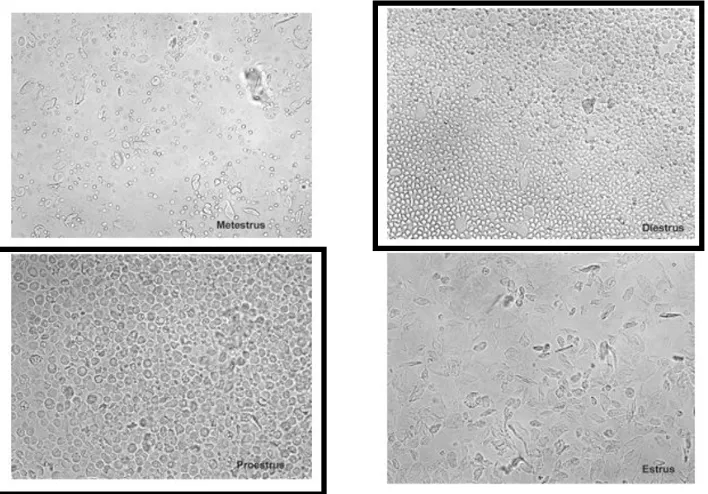
Reference images for determination of estrous cycle phase can be seen in Figure 3.2. Rats were acclimatized to their home cages for one week and then handled on three separate occasions. Following handling, the estrous cycle was tracked daily at the same time each day for approximately 14 days. The estrous cycles were tracked by the vaginal smear technique. This involved sampling the cells of the vaginal canal with sterile saline using a pipette. The recovered solution (approximately 20 µl) containing cells was then placed on microscope slides for later determination of estrous cycle phase. This was done using a phase-contrast microscope with 10X magnification. Proestrus was determined by
scattered distribution of predominantly cornified cells and the presence of nucleated cells. Diestrus was identified by the reduction in the number of cells and the presence of
leukocytes (Marcondes, Bianchi, & Tanno, 2002). Vaginal smears were obtained on a daily basis for a period of three full estrus cycles prior to testing, after which rats were divided in proestrus or diestrus groups. All rats used in this study exhibited a regular 4-day cycle.