Electronic Thesis and Dissertation Repository
6-29-2017 12:00 AM
Mapping Alternative Masculinities: Development, Validation, and
Mapping Alternative Masculinities: Development, Validation, and
Latent Profile Analysis of a New Masculinity Measure
Latent Profile Analysis of a New Masculinity Measure
Jessica K. Padgett
The University of Western Ontario
Supervisor Paul Tremblay
The University of Western Ontario Graduate Program in Psychology
A thesis submitted in partial fulfillment of the requirements for the degree in Master of Science © Jessica K. Padgett 2017
Follow this and additional works at: https://ir.lib.uwo.ca/etd
Part of the Personality and Social Contexts Commons, and the Quantitative Psychology Commons
Recommended Citation Recommended Citation
Padgett, Jessica K., "Mapping Alternative Masculinities: Development, Validation, and Latent Profile Analysis of a New Masculinity Measure" (2017). Electronic Thesis and Dissertation Repository. 4619. https://ir.lib.uwo.ca/etd/4619
ABSTRACT
Average scores for the scales and full measure were created and compared to the scale and full measure scores of the CMNI, revealing a good level of convergent and discriminant validity. In order to evaluate the distinctiveness of the ALT-M from the CMNI, these two instruments were compared in terms of their relationships with the HEXACO, Aggression Questionnaire, and Emotional Intelligence Questionnaire. Strong evidence of construct distinctiveness is provided. Finally, a Latent Profile Analysis was conducted on the measure, revealing four unique masculinity profiles that differ in shape, ethnic composition, and trait aggression levels. Overall the ALT-M has sound psychometric properties and can be used to delineate multiple unique masculinities. It will benefit from future cross validation in terms of its factorial structure and profiles.
KEYWORDS
ACKNOWLEDGEMENTS
First, I would like to thank my supervisor, Paul Tremblay. Paul, your encouragement, engagement with the content, and breadth of methodological knowledge profoundly helped to shape my work. Beyond that, your enthusiasm for learning and your boundless intellectual curiosity has been extremely formative for me as a researcher. I consider it a privilege to have worked under your supervision.
I would also like to thank my defence committee, Lynne Zarbatany, Don Saklofske, and Saad Chahine, for taking the time out of their busy schedules to consider my work and offer their thoughtful critiques. To my friends, Alexa Clerke and Sarah Babcock, you have made this whole experience a true pleasure. Your intelligence, passion, and friendship have offered me both comfort and inspiration. I want to thank Sarah in
TABLE OF CONTENTS
ABSTRACT ...ii
ACKNOWLEDGEMENTS ...iv
TABLE OF CONTENTS ...v
LIST OF TABLES...ix
LIST OF FIGURES...x
LIST OF APPENDICES...xi
CHAPTER 1: INTRODUCTION AND LITERATURE REVIEW...1
1.1 Introduction ...1
1.1.1 Summary of the chapter. ...3
1.1.2 Gender Role Strain Paradigm ...3
1.2 Existing Masculinity Measures ...6
1.2.1 Backgrounds and descriptions. ...7
1.2.2 Methodological development. ...10
1.2.3 Towards a new type of masculinity measure. ...12
1.3 Developing Scales for a New Measure of Masculinity ...14
1.3.1 Homophilia. ...15
1.3.2 Pro-Femininity. ...16
1.3.3 Freedom of emotional expression. ...16
1.3.4 Interdependence. ...17
1.3.5 Indifference towards status. ...17
1.3.6 Self-restraint. ...18
1.3.8 Gender egalitarian. ...19
1.3.9 Attitudes towards sex and intimacy. ...19
1.4 Preliminary Mapping of Multiple Masculinities ...20
1.5 The Current Study ...22
CHAPTER 2: METHODS ...24
2.1 Participants ...24
2.2 Construction of the Alternative Masculinity Measure ...24
2.2.1 Selection of the constructs to assess. ...24
2.2.2 Defining the constructs and delineating their content domain. ...25
2.2.3 Developing the item pool. ...26
2.2.4 Establishing and evaluating content validity. ...26
2.2.5 Initial item pool. ...27
2.3 Additional Materials ...27
2.4 Procedures ...29
2.5 Analyses ...29
2.5.1 Preliminary item analyses. ...31
2.5.2 Item selection, scale refinement, and measure finalization. ...31
2.5.3 Validity analyses. ...32
2.5.4 Latent profile analysis. ...32
CHAPTER 3: MEASUREMENT MODEL ...34
3.2 Unidimensionality of Individual Scales ...34
3.2.1 Homophilia EFA. ...35
3.2.2 Attitudes towards sex and intimacy EFA. ...35
3.2.3 Diplomacy EFA. ...36
3.2.4 Freedom of emotional expression EFA. ...36
3.2.5 Gender egalitarian EFA. ...36
3.2.6 Indifference towards status EFA. ...36
3.2.7 Interdependence EFA. ...37
3.2.8 Pro-Femininity EFA. ...37
3.2.9 Self-restraint EFA. ...37
3.2.10 Summary. ...38
3.3 Item Analysis and Scale Refinement using ESEM ...38
3.4 Final Scale Properties and CFA Analysis ...44
3.5 Renaming and Redefining the Scales ...49
CHAPTER 4: VALIDITY AND LATENT PROFILE ANALYSIS ...51
4.1 Data Inspection ...51
4.2 Convergent and Discriminant Validity ...51
4.3 Construct Distinction ...53
4.4 Latent Profile Analysis ...58
4.4.1 Digging deeper into the meaning of the profiles. ...63
CHAPTER 5: DISCUSSION ...67
5.1 Evaluating the Project Objectives ...67
5.3 Implications ...73
5.4 Future Directions ...77
REFERENCES ...80
APPENDICES ...87
LIST OF TABLES
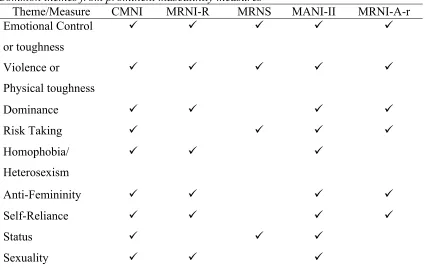
Table 1: Common themes from prominent masculinity measures...13
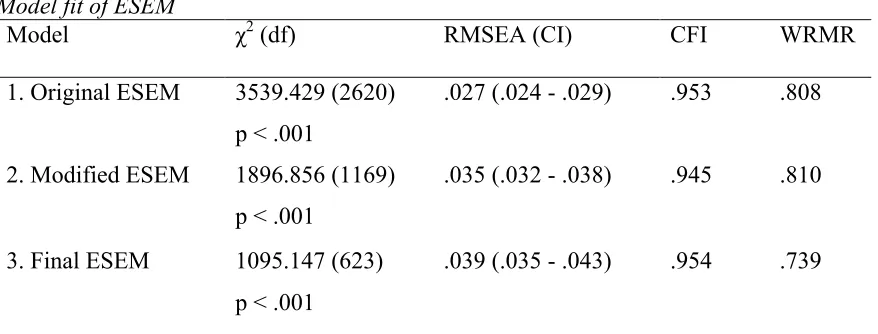
Table 2: Model fit of ESEM ...41
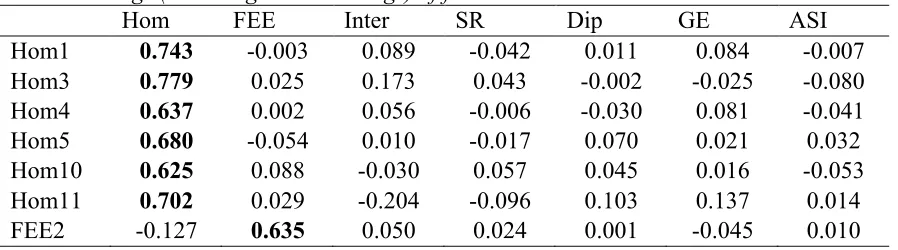
Table 3: Factor loadings (including cross-loadings) of final ESEM...42
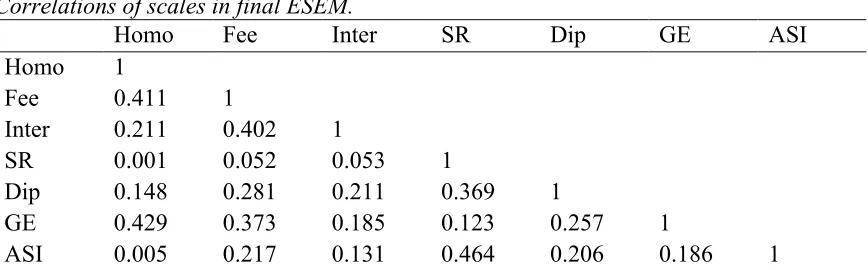
Table 4: Correlations of scales in final ESEM...44
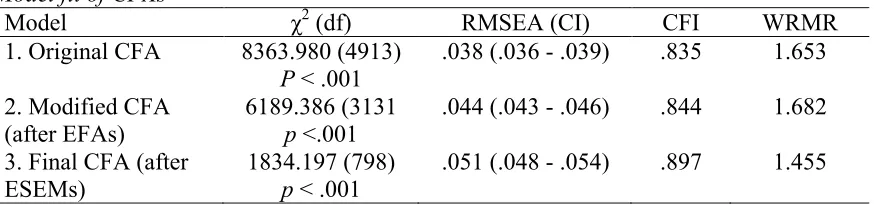
Table 5: Model fit of CFAs ...45
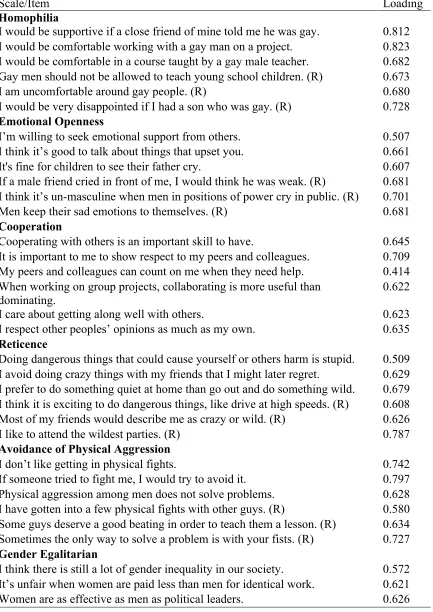
Table 6: Standardized factor loadings for final CFA...46
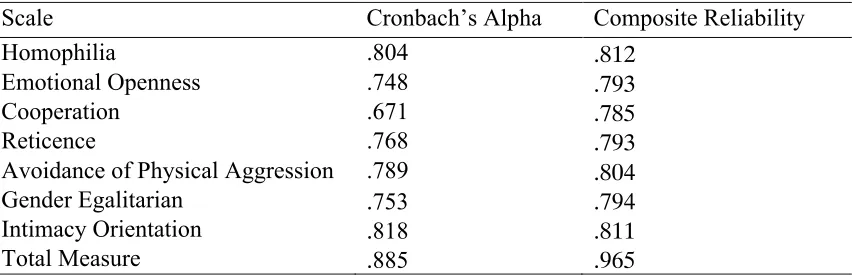
Table 7: Internal Consistencies for final measurement model...47
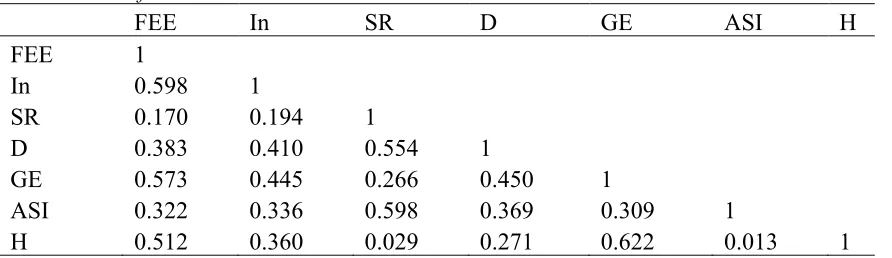
Table 8: Correlations of latent variables...48
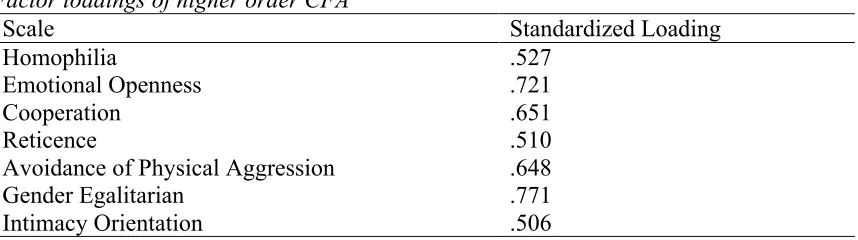
Table 9: Factor loadings of higher order CFA...49
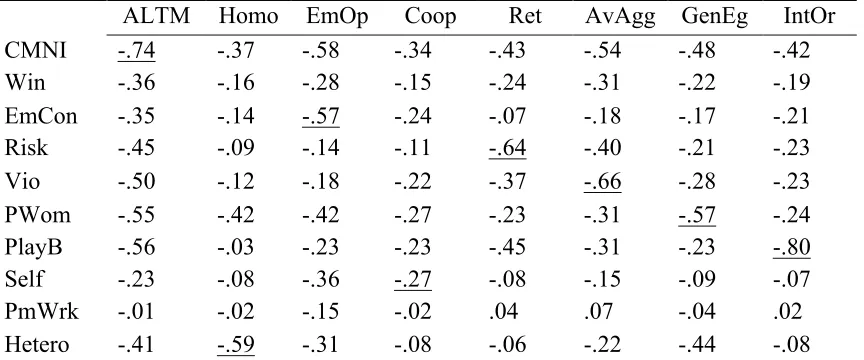
Table 10: Correlation matrix showing convergent and discriminant validity of the ALT-M...52
Table 11: HEXACO correlations and partial correlations with ALT-M and CMNI...54
Table 12: TEIQue correlations and partial correlations with ALT-M and CMNI...56
Table 13: Aggression Questionnaire correlations and partial correlations with ALT-M and CMNI...57
Table 14: Latent Profile Analyses...59
Table 15: Proportions within masculinity profiles for five ethnic groups...63
LIST OF FIGURES
LIST OF APPENDICES
Appendix A: Demographics of sample ...87
Appendix B: Definitions of high and low scores on the original ALT-M ...88
Appendix C: Form for content validity analysis ...90
Appendix D: Original list of items for ALT-M ...96
Appendix E: Ethics Approval ...99
Appendix F: Items removed during EFA analyses ...100
CHAPTER 1: INTRODUCTION AND LITERATURE REVIEW
1.1 Introduction
Masculinity, at its simplest definition, is the set of attributes, roles, and norms
associated with boys and men. Describing it as a “set” suggests the inclusion of a number
of facets. In the literature on masculinity, determining what these facets are has been a
central line of inquiry. Researchers who focus on masculine norms are typically from the
social constructionist tradition, which presents a complex and often dynamic picture of
masculinity, arguing that not one, but multiple masculinities exist. Masculinity is thought
to vary as a result of differences in such things as culture, ethnicity, sexual orientation,
and political affiliation, and distinct masculinities, as defined by their particular set of
attributes, are thought to abound throughout the world.
Despite this assumed variability, the only form of masculinity that is represented
in the measurement literature is Traditional Masculinity which encompasses the
dominant set of masculine norms in a given society. Put another way, traditional
masculinity is what the majority of individuals within a certain culture or country think of
when they think of “masculinity”. The most commonly studied traditional masculinity is
Western (i.e. American, Canadian, English, etc.) masculinity, though there has been some
exploration of the traditional masculinities of different cultural groups or countries, such
as Latin-American (Arciniega, Anderson, Tovar-Blank & Tracey, 2008), South African
(Luyt, 2005), and Russian (Janey et al., 2013).
The focus on traditional masculinity with Western and other cultural groups is not
only due to its dominance and pervasiveness, but also because of its relationship with
masculinity has been firmly associated with a range of negative outcomes in men, such as
psychological distress, health-risk behaviours, aggression, and intimate-partner abuse
(Addis, Reigeluth, & Schwab, 2016). This is not to say that all of the components that
make up all forms of traditional masculinity are inherently bad. Rather, at least some of
the attributes typically associated with traditional masculinities, such as a propensity for
violence, an unwillingness to share or express emotions, and a desire to have control over
women, can have serious negative consequences.
Yet, for all we’ve learned about the potential perils of traditional masculine
norms, we know very little about the extent to which alternative non-traditional forms of
masculinity exist. To the extent that alternative masculinities exist, it would be an
unfortunate oversight to ignore them because knowing more about them might help us
mitigate some of the negative outcomes related to traditional masculinity. For example, if
an alternative masculinity has a significantly lower association with violent behaviour
than a traditional masculinity, and if masculinity itself is largely a learned social
construct, then that alternative masculinity might offer some insights into how violent
behaviour could be prevented or curtailed in men.
Thus, the primary objective of this project was to define and investigate
non-traditional alternative forms of masculinity. This was done in two major steps: 1)
developing and validating a new measure of alternative masculinity, and 2) investigating
this alternative masculinity and its set of attributes to determine if it was distinct from
traditional masculinity, and further, to see if it could be used to present not one, but
1.1.1 Summary of the chapter. This chapter will begin by offering an overview
of the Gender Role Strain Paradigm (GRSP), which permeates the literature on
masculinity measurement. Next, a background on existing masculinity measures which
fall within the GRSP will be provided, discussing what they measure and how they were
developed. This section will include a discussion on how existing masculinity measures
contributed to the development of my own measure and outline some of the differences
between them. The subsequent section will briefly discuss the set of attributes that I
discovered within the qualitative literature on non-traditional masculinities and how they
will be presented in my measure of alternative masculinity. Then, some preliminary work
that has been done to empirically explore multiple masculinities will be presented.
Finally, I will introduce the major hypotheses for the project.
1.2 Gender Role Strain Paradigm
The study of men and masculinity in psychology was born out of the Feminist
movement in the early 1970s, when gender emerged as a serious point of academic
discussion (Wong & Wester, 2016). A little over forty years later, in 2016, the APA
Handbook of Men and Masculinities was published, emphasizing the plurality of
masculinities in its title, and solidifying the study of masculinity as a major field within
psychological research. Great importance has been placed on understanding the exact
roles, attitudes, and behaviours that make up masculinity in order to better understand the
influence of gender on our daily lives.
Prior to the emergence of the Gender Role Strain Paradigm (GRSP), academic
and social conceptions of masculinity took an essentialist approach, describing
men. Ideal manhood was considered active, rational, and strong, and masculinity and
femininity were considered polar opposites. Pleck (1982) refers to this as the Male Sex
Role Identity (MRSI) paradigm. Within this paradigm, the establishment of a sex role
identity was considered central to healthy psychological development and the failure of
men to achieve a masculine sex role identity was considered highly problematic.
Pleck argues that the emergence of androgyny as a psychologically important
gender concept in the late 1960s was an important transitional point in how masculinity
was understood. In the early 1970s, Sandra Bem argued that masculinity and femininity
do not exist along the same spectrum and that they should not be defined as polar
opposites of one another, but rather as two independent constructs. Up to that point,
masculinity-femininity scales were scored in such a way that if an individual scored high
on masculinity, they by default scored low on femininity. But Bem developed a new
measure, the Bem Sex Role Inventory (BSRI; Bem, 1974), based on the assumption that
masculinity and femininity were independent. The original intent of this scale was to
show that masculinity and femininity were indeed distinct concepts, and to measure
psychological androgyny, which was defined as someone who is both masculine and
feminine. In this new paradigm, being hyper-masculine (or hyper-feminine) is
considered problematic and likely to produce a highly limited individual, while being
androgynous would produce a more well-rounded individual.
Bem’s work helped shift the direction of masculinity research by setting the
precedent for understanding masculinity as a construct that though correlated with
femininity, is nevertheless independent, which has since been confirmed through factor
1977). The problem that Pleck and other masculinity researchers had with the BSRI was
that it defined masculinity (and femininity) as simply personality traits, thereby
oversimplifying the construct of gender identity (Ashmore, 1990). Thus, future work on
masculinity would build upon Bem’s work by retaining masculinity as an independent
construct, but they would move away from it by shifting their focus towards the social
construction of masculinity.
Pleck (1982) referred to this new approach to masculinity as the Gender Role
Strain Paradigm (GRSP). GRSP sprang from the “same philosophical roots” as social
constructionism, in the sense that it describes masculinity as a relational quality that is
largely learned from one’s particular social and cultural environment and as something
which is subject to change (Levant & Pollack, 1995, p. 3). In the previous paradigm,
masculinity was considered a trait, and not adequately filling out the trait was considered
a developmental failing of the individual. Within the new paradigm, masculinity is
thought to be socially constructed, and not filling out the appropriate gender role is still
considered problematic, though the onus for the problem is more on society than on the
individual.
Inherent to GRSP is the idea of gender roles, the set of behaviors and
characteristics that are considered typical (i.e. stereotypes) or desirable (i.e. norms) of
men and women. According to GRSP, these gender roles are contradictory and
inconsistent and many individuals violate them. Yet, despite the prevalence of violators,
violating these roles leads to negative social and psychological consequences, especially
for men. Further, the roles themselves have certain dysfunctional dimensions, so both
adequately representing the traditional male role can cause a man to be ostracized
socially, but on the other hand, adhering perfectly to the male role can lead to some of
the negative consequences mentioned above, such as increased risk of intimate-partner
abuse.
Another central component to GRSP is the idea of Masculinity Ideology, which
was originally defined as one’s belief in the importance of men adhering to culturally
defined standards for male behaviour (Pleck, 1995; Thompson & Pleck, 1995). Thus, an
individual with a strong masculinity ideology would believe that it is very important for
men to adhere to traditional standards of masculinity. The extent to which individuals
believe that men in general should ascribe to traditional norms (i.e., the strength of their
masculinity ideology) is what most measures of masculinity are intended to capture.
1.3 Existing Masculinity Measures
The normative gender role approach to masculinity based on GRSP argues that
masculinity is a complex construct that can be assessed quantitatively through
well-developed measures. As discussed, the Bem Sex Role Inventory (BSRI) changed the
understanding of masculinity so that it is now widely understood to be an independent
construct, rather than one end of a masculinity-femininity spectrum. Since its
introduction, several measures of masculinity have been developed. Unlike the BSRI,
these measures treat masculinity as a multidimensional construct rather than a set of
distinct personality traits. Typically, these measures all adhere to GRSP and assess
individual differences in traditional masculinity ideology. This section will present the
characteristics, and discussing how they helped inform the development of my own
measure.
1.3.1 Backgrounds and descriptions. The most commonly used masculinity
measures are focused on “traditional” masculine values and behaviours, such as
toughness, emotional control, and a willingness to take risks. Despite the expected
variability of masculinity espoused by GRSP, masculinity measures are fairly
homogenous. In fact, several prominent measures borrow from the same pool of items,
many of which can be traced back to the first measure that presented masculinity as a
multidimensional social construct, the Brannon Masculinity Scale (BMS; Brannon &
Juni, 1984). The purpose of the BMS was to capture individual men’s endorsement of
traditional masculine norms. The developers grouped these norms into seven categories:
Avoiding Femininity, Concealing Emotions, Being a Breadwinner, Being Admired and
Respected, Toughness, Being a “Male Machine”, and Violence and Adventure.
Thompson and Pleck (1986) developed the Male Role Norms Scale (MRNS),
essentially a shorter version of the BMS. The MRNS was grounded in GRSP, which the
developers thought had been adequately captured by the BMS. As a result, they did not
create any of their own items but simply developed a short form of the BMS. The MRNS
was factor analyzed, resulting in three dimensions: Status, Toughness, and
Anti-Femininity. A version of the MRNS was later developed for adolescents, the Male Role
Attitude Scale (MRAS; Pleck, Sunenstein, & Ku, 1994). The MRAS is a further short
form, this time of the MRNS, but the items were re-worded to make them
age-appropriate, and an additional item about sexuality is also included. Unlike the previous
The Masculinity Role Norms Inventory (MRNI; Levant et al., 1992) was next,
and its revised edition remains one of the most commonly used measures in masculinity
research. The development of this scale retained some of the items and thematic norms
captured in the BMS and MRNS, but some adjustments were made, including the
addition of normative facets related to sex and sexuality. Like the previous measures, it
focused on assessing individual differences in masculinity ideology and was theoretically
grounded in GRSP. The scales in the revised edition (MRNI-r) are: Self Reliance
Through Mechanical Skills, Negativity Towards Sexual Minorities, Importance of Sex,
Toughness, Dominance, Avoidance of Femininity, and Restrictive Emotionality
(MRNI-r; Levant et al., 2007; Levant, Rankin, Williams, Smalley, & Hasan, 2010). An
adolescent version of the MRNI was also developed (MRNI-A; Levant, Graef, Smalley,
Williams, McMillan, 2008) and subsequently revised (MRNI-A-r; Levant et al., 2012).
The adolescent version takes its items from the original but they are altered to simplify
the language, making it more age appropriate. Factor analysis of the revised edition
revealed three factors: Emotionally Detached Dominance, Toughness, and Avoidance of
Femininity.
The Conformity to Masculine Norms Inventory (CMNI; Mahalik et al., 2003) is
conceptually similar yet distinct from the MRNI and other common masculinity
measures. Unlike many of the previously mentioned measures, the developers generated
their own list of masculine norms, expanding the number to 11. And, rather than focus on
individuals’ masculine ideologies (which can be held by both women and men and is
captured by should statements), the CMNI captures men’s individual masculine beliefs.
Thompson and Bennett (2015), but its definition perfectly represents the intent of the
CMNI. Masculinity beliefs are the extent to which a man has internalized traditional
conceptions of masculinity. As such, the CMNI does not use should statements, because
it is not interested in general masculinity ideology, but rather it uses I statements, because
it is interested in the extent to which an individual has internalized, or at least conforms,
to masculine norms.
While the distinction between an individual’s masculinity ideology (belief in how
men should be) and their conformity to masculine norms may not seem that pronounced,
the MRNI-r and CMNI do show discriminant validity, demonstrating that they are
sensitive to this difference (Levant, Hall, Weigold, & McCurdy, 2015). The original
CMNI captures the extent to which individuals conform to the following masculine
norms: Winning, Emotional Control, Risk-Taking, Violence, Power Over Women,
Dominance, Playboy, Self-Reliance, Primacy of Work, Disdain for Homosexuals, and
Pursuit of Status.
Several other measures of masculinity ideology exist, specifically those that
Thompson and Bennett (2015) refer to as Second Generation masculinity measures.
These measures focus on the traditional masculinities of specific geographical or cultural
groups, such as Latino (Machismo Measure; Arciniega et al., 2008) or Jamaican men
(Macho Scale; Anderson, 2012). One example that relied heavily on the original
masculinity measures used for Western masculinity ideology is the Male Attitude Norms
Inventory, originally developed in 2001 (MANI; Luyt & Foster, 2001) and revised four
years later (MANI-II; Luyt, 2005). It was developed for men in South Africa, particularly
and MRNS, but re-worded to better reflect South African language and culture. Like the
other measures, high scores represent agreement with traditional conceptualizations of
masculinity. The revision did involve some reconceptualising and used qualitative
research to produce its own set of norms, rather than simply borrowing from others. The
revised edition consists of three dimensions: toughness (both emotional and physical),
control, and sexuality (both heterosexism and sexual behaviour).
Despite the expansion of masculinity measurement into new cultural groups that
weren’t covered in the original generation of measures, the focus of this new generation
is rooted in the traditional masculinities of different groups. Few measures exist that
attempt to capture the variability of masculinity within a defined group. Given the
broadness of the groups under discussion, for example Latino Men and White Western
Men, a focus on different traditional masculinities still only captures a portion of the
masculinity variability that exists.
1.3.2 Methodological development. Unlike their content, the psychometric
quality of the masculinity measures has been quite variable. Some, like the CMNI and the
revised version of the MRNI-A have fairly strong test qualities, while others, like the
MRNS and original MRNI are psychometrically weak.
The information available regarding the development of the MRNS is limited, but
it was created by conducting a principal components analysis on 57 items from the BMS
(Thompson et al., 1986). The MRAS (the adolescent version of the MRNS) had
especially poor psychometric development. A handful of items were chosen and adjusted
determined to be quite low (alpha = .56). A factor analysis did not reveal
multidimensionality but no further assessments were made (Pleck et al., 1994).
The subscale structure of the original MRNI was never supported by factor
analysis, so it was revised in 2007, and the factor structure of the revised edition was
assessed in 2010, almost 20 years after its original development (Levant et al., 2007 &
2010). A principal axis factor solution with Oblimin rotation was conducted on the
revised edition and seven factors with eigenvalues above 1 (the criterion the authors used
to determine the number of factors) were found. Items that loaded below .35 on their
intended scale or that loaded on a theoretically unintended scale were removed. For the
MRNI-A-r, on the other hand, the developers used parallel analysis to determine the
number of factors to extract from their list of items. They then used principal axis factor
analysis, specifying four factors, using a Promax rotation with Kaiser normalization
(Levant et al., 2012). They removed several items for loading too low on their primary
factors or for having substantial cross loadings, and in the end the fourth factor was
deemed no longer viable, and so they retained a three-factor solution.
The CMNI is by far the most well-developed and psychometrically robust
masculinity measure of those discussed so far. Its items and scales were developed
through extensive focus groups and interviews (rather than taken from previous
measures) and it has been extensively validated. Like the MRNI-r, it was factor analyzed
using principal-axis extraction with an oblique rotation. Items loading below .40 on their
intended scale or with a cross loading above .30 were removed, and only items
theoretically proposed to belong together were kept on their intended scales (Mahalik et
important that future masculinity measures follow a similar or even stricter approach to
their psychometric development. In addition, for a socially constructed phenomenon such
as masculinity that is theorized to change with time and by context, it is important to
continually generate new measures that capture new attributes as they evolve across
generations or as they are represented by different groups.
1.3.3 Towards a new type of masculinity measure. Although I used these
important measures to inform the development of my own measure, mine differs in three
major ways: 1) rather than capturing traditional western masculinity, mine captures an
alternative form of western masculinity (to be outlined in section 1.4); 2) it assesses
individual differences in men’s masculine attitudes, beliefs and behaviours; 3) I used a
new and more rigorous approach for its psychometric development.
The six masculinity measures discussed in some detail above can be found in
Table 1, which lays out the constructs common to them. As can be seen, common themes
include: being emotionally tough or prizing emotional control; a propensity or respect for
violence and physical toughness; dominance/control over others and situations; a
willingness or tendency to take risks; homophobia or a concern regarding heterosexual
presentation; anti-femininity or avoidance of feminine activities and behaviours;
self-reliance; a desire for status; and having a “playboy” attitude towards sex and
relationships.
These themes represent the set of attributes, roles, and norms that define
traditional masculinity. The alternative form of masculinity that I developed might appear
to be simply inversions of these traditional scales (e.g., going from anti-femininity to
concepts and assesses men’s attitudes, beliefs, and behaviours rather than just their
masculinity ideology or masculinity beliefs.
Table 1.
Common themes from prominent masculinity measures
Theme/Measure CMNI MRNI-R MRNS MANI-II MRNI-A-r
Emotional Control or toughness
ü ü ü ü ü
Violence or
Physical toughness
ü ü ü ü ü
Dominance ü ü ü ü
Risk Taking ü ü ü ü
Homophobia/ Heterosexism
ü ü ü
Anti-Femininity ü ü ü ü
Self-Reliance ü ü ü ü
Status ü ü ü
Sexuality ü ü ü
Note: Not all scales from the above measures were included. Dimensions of winning, power over women, primacy of work, constant effort, and social teasing were not included as they occurred only on less than 3 of the above measures.
As mentioned, the facets that represent my measure can be partly defined in terms
of their opposition to the components of traditional masculinity. As can be seen from
Table 1, the one measure that includes all of the represented traditional norms is the
CMNI. As such, the CMNI will play an important role in this project as both a form of
validation and as a means of ensuring construct distinctiveness, i.e. showing that my
measure is not simply an inversion of the CMNI but indeed captures something distinct.
This distinction is most apparent in the items included in each scale, as they underscore a
Finally, my measure is distinct in terms of its construction. Though not all of the
measures mentioned had poor psychometric quality, even those that were more soundly
developed followed fairly standard approaches of using a single EFA followed by
validation work. I applied a relatively new technique called Exploratory Structural
Equation Modeling (ESEM) in combination with EFA and CFA, a procedure that more
easily identifies problematic items. More importantly, my item development and analyses
prior to this analytic work proceeded in multiple iterations, including a content validity
study. More on this approach will be discussed in Chapter 2 on methods.
1.4 Developing Scales for a New Measure of Masculinity
Evidence for the existence of alternative masculinities that are distinct from
traditional masculinities, can be found in the qualitative literature. Several observational
studies, ethnographies, interviews, and focus groups revealed some common patterns in
terms of boys and men resisting traditional masculine norms. For the most part, this
resistance often fell in line with progressive ideas about gender roles, homosexuality, and
gender equality. Such findings also fell in line with discussions found in non-academic
settings regarding the gender roles prescribed and proscribed for boys and men in our
society. Some examples include the book Guyland by Michael Kimmel and his TED talk
on masculinity, The Representation Project, including their documentary The Mask You
Live In, articles posted on The Good Men Project, and various content from The White
Ribbon Campaign and Men Engage websites.
At the same time, media stories that warn about the negative impact traditional
masculine ideals can have on men and society have also been sprouting up, especially in
seems small pockets of men, researchers, activists, and pundits are interested in
masculinity, particularly its capacity to change. These sources suggest that a modern,
progressive form of masculinity that is partly defined by its resistance to traditional
masculine norms is slowly growing legs in our society. The current section will lay out
the facets that I propose encompass this alternative progressive masculinity and that
represent the scales of my new measure. The constructs are an original compilation
developed from an organization of common or similar themes from both the qualitative
and quantitative literature on masculinity.
1.4.1 Homophilia. In the measures of traditional masculinity, a common theme
relates to heterosexuality and/or homophobia. This is usually represented by items that
directly express a disdain for gay men or, more passively, in the avoidance of language
and behaviour that might be perceived as gay. In contrast, the qualitative literature holds
several examples of heterosexual men acting in ways that exemplify a feeling of
homophilia, or an acceptance of gay men and their community as well as a lessened
concern about appearing heterosexual. Clear examples of straight men accepting gay men
as friends, neighbours, and co-workers, not being concerned about being perceived as
gay, and even speaking out against homophobia and stigmatizing it in their own social
groups persist (Anderson, 2009; Dean, 2013; Anderson & McGuire, 2010; Jarvis, 2015;
McCormack, 2011). As such, a progressive masculinity would likely contain a facet
directly related to feelings of acceptance and comfort related to gay men and their
community.
1.4.2 Pro-Femininity. Though masculinity is considered its own construct,
component related to anti-femininity. This often presents as an avoidance of language or
behaviour that might be perceived as feminine or a dislike of boys and men displaying
feminine behaviour. However, progressive conceptions of masculinity tend to accept
femininity or engagement in stereotypically feminine activities as a positive quality in
men. This includes taking on jobs in service sectors, like customer service or hair
dressing, taking on more responsibilities around the house, especially cooking, and being
generally accepting of boys and men behaving in more feminized ways (Bartholomaeus,
2012; McCormack 2011; Sloan, Gough, & Conner, 2010; Roberts, 2012). Thus, an aspect
of pro-femininity may be an important component in progressive masculinity.
1.4.3 Freedom of emotional expression. One of the most widely-held ideas
about traditional masculinity is that males are both inherently not as emotional as females
and, if they do (unnaturally) feel emotions, they should hold them back. This idea that
emotional strength or a certain emotional coldness is a highly valued masculine virtue is
present in all the measures of traditional masculinity discussed above. Sadness and fear
are synonymous with weakness and the only appropriate “emotion” is anger. Contrary to
this, a very central component of progressive masculinity is to contradict this notion head
on by acknowledging that men do in fact have a wide range of emotions and supporting
their need to express them in ways that don’t involve violence. Examples of men strongly
believing in the importance of having strong emotional support in their lives and offering
it to others, viewing emotions as positive rather than negative things, and desiring and/or
having emotionally open relationships with other men are quite common in the literature
(Robinson & Hockey, 2011; Emslie, Ridge, Ziebland, & Hunt, 2006; Way et al., 2014;
1.4.4 Interdependence. The idea of both domination and
independence/self-reliance are common values within traditional masculinities. These constructs are
sometimes separate, as within the CMNI, and sometimes exist under the same umbrella,
as within the MANI-II. The concept is somewhat similar to the value of Power and
Self-Direction in the Schwartz Values (Schwartz, 1992). On the progressive side is a concept
that is more similar to the Schwartz value of Universalism, where cooperation, equality,
and support are valued above dominance, competition, and a resistance to accept help. In
the qualitative literature this is exemplified by men intentionally avoiding domineering
behaviour and language (Anderson, 2009), building relations that focus on similarity,
respect, equality, and cooperation (Duncanson, 2015; Swain, 2006), viewing social
fluidity and an ability to get along with others as an asset (McCormack, 2011), and
believing it is acceptable, even important, for men to seek support when necessary
(Robinson & Hockey, 2011). Thus, a progressive masculinity would likely include a
construct which values cooperation and helping others over dominance and where caring
for others and seeking and giving help is an asset.
1.4.5 Indifference towards status. A less universal but still prominent attribute
associated with traditional masculinity is a preoccupation with status. This can take the
form of social or professional status, such as having a well-paying and/or well respected
job, or it can take on a more materialistic bent, where physical objects, such as cars and
watches, are used as symbols to display one’s wealth and importance. On the progressive
end of this spectrum there exists a more laid back attitude regarding one’s social
presentation, where, for example, men don’t over identify with their job or career
high status to those who are personable, friendly, and charismatic, rather than to those
who are wealthy also occur (McCormack, 2011). One quality of this progressive
masculinity may therefore be a disinterest in status (Swain, 2006), professionally or
materially, whereby such things are not central to one’s sense of self-worth.
1.4.6 Self restraint. One of the common themes in the traditional measures that is
perhaps not as colloquially prominent as some of the other constructs is risk-taking. This
construct suggests that men should not only be willing to place themselves into
dangerous situations, but that they should also enjoy the thrill of taking risks. The notion
of risk-taking can be viewed as self-sacrificing, such as joining the army or putting
oneself in danger to protect women and children, as self-serving, such as making a bold
career move, or as simply a way to impress others. On the progressive end, risk-taking is
not viewed as a necessity in terms of “proving” one’s masculinity (Anderson et al.,
2010). Rather, a man who shows self-restraint and by contrast to the traditional norm is
mostly cautious and disciplined (Harrington et al., 2011), may fall within this new notion
of masculinity.
1.4.7 Diplomacy. Another traditional norm that form most stereotypical ideas of
masculinity is that of violence or aggression. Several of the measures include scales and
items that suggest men should always be willing to fight and should know how to fight if
and when the occasion arises. Violence is deemed acceptable, especially if it is for
self-defence, but also as a means of protecting one’s honour. In addition to this idea of
toughness, men should be able to hide their physical pain, which is similar to value of
emotional stoicism. Progressive ideas of masculinity would take the exact opposite
behaviour regardless of the context and where men who use such actions would be
looked down upon (McCormack, 2011; Bartholomaeus, 2012; Goicolea, Coe, & Ohman,
2014). Further, as the title of the construct suggests, the facet contains more than just
avoiding aggression and also involves taking steps to prevent it when possible.
1.4.8 Gender egalitarian. Sexist or misogynistic attitudes are also common to
traditional notions of masculinity. These can take more passive forms, as discussed in
relation to the femininity construct, or more active forms, where men support
anti-feminist or anti-women agendas and believe in the superiority of men over women, often
for the formers greater ability to rationalize and lead. However, examples of men taking
up a feminist or gender egalitarian mantle abound in popular culture and in the qualitative
literature. Examples of men condemning or speaking out against misogyny and sexism,
having mutually platonic relationships with females, and actively expressing pro-feminist
attitudes are common (Anderson et al., 2010; Goicolea, Coe & Ohman, 2014; Isacco,
2015; and Johansson & Ottemo, 2013). Thus, an important component of this progressive
masculinity would likely be a feminist or gender egalitarian attitude.
1.4.9 Attitudes towards sex and intimacy. The final construct that the
qualitative literature indicates may be an important component of progressive masculinity
is an opposition to the play boy attitude. This traditional attitude assumes that men have
an insatiable sex drive and men should want, and be able to acquire, multiple sexual
partners. In this view, sex is a purely physical act and a high number of sexual partners is
proof of manhood. The progressive view of this construct is to frame sex in more
and respect are more important than simply “collecting” multiple sexual partners (Clarke,
Marks & Lykins, 2015).
1.5 Preliminary Mapping of Multiple Masculinities.
A central component to GRSP, and hence masculinity research more broadly, is
the idea that masculinity is variable, and that ideal masculine characteristics change
between times (i.e. generations), places, and even among social and cultural groups,
making masculine norms and ideologies relative concepts (Addis, Reigeluth, & Schwab,
2016). Though frequently discussed by masculinity researchers, the multiplicity of
masculinities and alternative forms of masculinity are rarely empirically charted. As the
previous section showed, qualitative research has found some rich examples of men
actively resisting masculine norms and espousing alternative views of masculinity.
However, there has been little quantitative work to support the claim that clearly
distinguishable, individualized masculinities exist.
One clear way to capture the multiplicity of masculinities is through Latent
Profile Analysis (LPA) when the variables are continuous or Latent Class Analysis
(LCA) when variables are ordinal. Unlike Confirmatory Factor Analysis (CFA) and
other variable-centered modeling approaches, LPA is a person-centred approach (Masyn,
2003). LPA is therefore ideal for capturing meaningful groups of participants who have
similar response patterns or profiles across a set of questionnaire subscales. LPA
produces a latent categorical variable where its categories are referred to as profiles or
classes. Each profile accounts for specific patterns of responses on the observed
variables, and participants are grouped into their most likely profile. Like CFA, where an
particular factor, the most likely profile for a person is thought to explain their responses
across the subscales of the whole measure.
LPA is a valuable quantitative procedure for validating alternative masculinities
that, to my knowledge, has only been used in three studies on masculinity. One of the
studies identified subgroups of men in distinct phases of their “Gender Role Journey”
(McDermott & Schwartz, 2013) and the other identified subgroups of men who were at
risk for sexual aggression, which labeled one of the groups “hostile masculinity”
(Logan-Greene & Davis, 2011). Despite these studies being related to masculinity, only the third
study actually produced distinct masculinity profiles.
This third study found four distinct masculinity profiles using Latent Class
Analysis, a version of LPA used when the variables are ordinal (Casey et al., 2015). The
researchers did not use any of the common masculinity measures but rather a
combination of measures focused on sexual attitudes and behaviours, attitudes towards
women, and engagement in male-orientated activities. They derived four distinct classes
which they named: Normative, Normative/Male Activities, Misogynistic, and
Sex-Focused. Each of these classes represents a distinct form of masculinity as
conceptualized by the authors with a strong focus on sexuality and negative attitudes
about women, as can be inferred from their titles. The authors also compared these
subgroups in terms of their demographic characteristics and other related outcomes, such
as STD diagnosis and substance use.
These examples of distinct masculine subgroups provide promising preliminary
quantitative evidence for the existence of distinct masculinities. Given the importance of
more research has not been done to clearly identify and describe multiple masculinities,
but at the same time, it is recognized that LPA techniques are just beginning to be
applied in certain fields. In the spirit of promoting this line of research and cementing the
existence of multiple masculinities, an important component of this project will be to use
LPA to delineate clear subgroups of masculinity that exist within the masculinity
conceptualized by my measure.
1.6 The Current Study
The purpose of this study is to provide quantitative access to a non-traditional
form of masculinity and to use that access to explore the existence of multiple
masculinities. This was done by the building of a new masculinity measure, developed to
capture a modern-day liberal or progressive form of masculinity. This measure is titled
the Alternative Masculinity Measure (ALT-M). The building of the ALT-M followed a
very rigorous process including careful generation of an item pool, a content validity
analysis, and a multistep item analysis presented in Chapter 2. In addition to validating
this measure through common avenues (i.e. providing evidence of factorial structure, and
convergent and discriminant validity), it was also used to identify distinct profiles of
alternative masculinities.
Recently, calls to identify what non-traditional masculinities involve have been
made, to show, for example, whether they are simply polar opposites of traditional
ideologies or whether they involve different combinations of attitudes and beliefs
(Cuthbert, 2015). My project will thus provide a tool that can be used for detailed
exploration of a progressive alternative masculinity and broaden our current knowledge
The major hypotheses for my project are as follows:
1) The concepts that I have proposed for scales in section 1.4 will be revealed to a
large extent through a combination of factor analytic techniques. At the same
time, it is expected that some modifications will be required, but it will be
possible to select a subset of the best items.
2) This measure will show evidence of convergent and discriminant validity when
correlated with specific hypothesized scales of the CMNI. Higher (convergent)
correlations are expected with specific CMNI scales, while other correlations with
the other CMNI scales are expected to be much lower (discriminant correlations).
3) The new measure will show construct distinctiveness with the CMNI, through an
incremental validity analysis in which concurrent validity indices will be
calculated between ALT-M and criterion variables, partialling out the influence of
the theoretically linked CMNI scales.
4) The new measure will be able to produce unique masculinity profiles that
represent alternative forms of masculinity. No specific hypotheses are postulated
regarding these profiles given the novelty of this area. Ideally the profiles will
show not only scatter or elevation differences but shape differences as well.
5) These masculinity profiles will be differentially related to external variables, such
CHAPTER 2: METHODS
2.1 Participants
Participants in this study were 497 male students completing undergraduate
studies at a university in South-Western Ontario. Participants were mostly first year
students (91.8%) with ages ranging from 16 to 43, M = 18.34 (SD = 4.60). The vast
majority of participants identified as straight (95.8%) and 1% identified as gay, 2.6% as
bisexual, 0.20% as pansexual, and 0.40% as asexual. Forty-three percent identified as
Caucasian, 21.5% as Chinese, 15% as South Asian, 6% as Filipino, 4.8% as Korean,
3.8% as Arab, 2.2% as Black, 2.2% as Southeast Asian, 1.6% as West Asian, 1.4% as
Latin American, .40% as Aboriginal, .20% as Japanese, and 3.2% as Other. Additional
secondary characteristics can be found in Appendix A.
2.2 Construction of the Alternative Masculinity Measure
The thematic scales for the ALT-M were theoretically derived from two areas of
the masculinity literature: measurement of traditional masculinity and masculine norms,
and qualitative research on modern or alternative masculinities. I used a multistage
approach to develop the item pool and built the measure using the construct-oriented
approach (see Jackson 1971; Paunonen & Jackson 1985) and related recommendations by
Clark and Watson (1995). These stages can be summarized as: 1) selecting the constructs;
2) clearly defining those constructs and outlining their content domain; 3) developing the
item pool; and 4) evaluating the content validity of the scales and items. Each stage is
described below.
2.2.1 Selection of the constructs to assess. Beginning with the measurement
used measures (Table 1 from Chapter 1). As mentioned, most masculinity measures share
a fairly unified set of traditional masculine norms, and it was from these that I made the
first outline for the constructs that my measure would capture. In combination with this, I
analyzed the qualitative literature on alternative forms of masculinity for examples of
common themes, lining them up as well as possible with the constructs from the
traditional masculinity measures. For example, while homophobia or heteronormativity
were very common themes within the masculinity measures, a more inclusive view of
homosexuality and a rejection of homophobia were common themes within the
qualitative literature. From this emerged a construct for my own measure, homophilia. A
more detailed version of these constructs was provided in Chapter 1 in section 1.4.
2.2.2 Defining the constructs and delineating their content domain. When
developing the scales, I adhered to the rational approach (Jackson, 1971), whereby each
scale was provided with a clear definition, against which all items created for that scale
had to align. Each of my scales is bipolar, meaning that both ends describe opposites that
exist along a continuum of a specific theme. For example, a scale assessing attitudes
about femininity has high scores representing positive attitudes towards femininity and
feminine behaviours and low scores representing negative attitudes. The definitions for
low and high scores of all original scales developed for the ALT-M can be found in
Appendix B.
Originally, eleven scales were developed which were thought to encompass all of
the facets which might be considered important components of a progressive masculinity.
Freedom of Emotional Expression, Indifference Towards Status, Interdependence,
Self-Restraint, Diplomacy, Gender Egalitarian, and Attitudes Towards Sex and Intimacy.
2.2.3 Developing the item pool. The items were developed in an iterative process
by myself and my supervisor over several months of discussions and revisions. The items
were derived from readings of the academic research on alternative masculinities
discussed in the introduction. Items were also built based on content from various media
outlets, such as books, news and magazine articles, TED talks, dedicated forums and
websites, movies, documentaries, etc. dealing with ideas of modern or alternative
masculinity which were mentioned in Chapter 1.
2.2.4 Establishing and evaluating content validity. Once a final set of 14 items
for each of the 9 scales was developed, they were sent out to expert reviewers for content
validity analysis. A copy of the form sent to the reviewers can be found in Appendix C.
The measure was sent to a group of fifteen experts in various fields, consisting of
graduate students, professors, and research scientists. Research areas of these experts
include, but aren’t limited to, psychometric development, aggression, personality, scale
development, sexuality, and measurement.
The experts were asked to rate each item for its relevance on the given scale from
1 to 5 and to provide any additional comments regarding the scales and their items. On
the whole, the ratings for the comments were high (often averaging 4 or above) and each
item which received an average score below 4 was reviewed more closely for wording
and relevance. Critiques for specific scales and items were addressed individually and
adhered to in most cases. Many of the issues the reviewers noted had to do with wording
Homophilia and Indifference towards Status scale. As a result, the focus of these scales
was altered slightly to address the criticisms. All issues were considered carefully and
feedback that was potentially at odds with the theoretical basis of the measure was
discussed with my supervisor to decide whether or not to accept the suggested alterations.
2.2.5 Initial item pool.After the content validity analysis, the final measure was
ready for dissemination and data collection. The final measures had a total of 101 items
with the following breakdown: Homophilia (11 items), Pro-Femininity (12 items),
Attitudes towards Sex and Intimacy (11 items), Freedom of Emotional Expression (12
items), Gender Egalitarian (10 items), Indifference towards Status (10 items),
Interdependence (12 items), Diplomacy (12 items), and Self-Restraint (11 items). A full
list of all the items can be found in Appendix D.
2.3 Additional Materials
In addition to the ALT-M, participants were administered other questionnaires for
the purposes of validity analyses and for some exploratory work in terms of relating
personality and trait emotional intelligence to masculinity. The description of the scales is
listed here along with Cronbach’s alpha values of internal consistency derived from my
study sample.
Conformity to Masculine Norms Inventory-46 (CMNI-46). The CMNI-46 is a
short version of the original CMNI developed by Parent & Moradi (2009). This measure
assesses the degree to which males conform to traditional masculine norms. It consists of
46 items which reflect the following subscales: Winning, Emotional Control,
Risk-Taking, Violence, Power over Women, Playboy, Self-Reliance, Primacy of Work, and
Strongly Disagree, 4 = Strongly Agree). The Cronbach’s alpha for the total scale base on
my study’s sample is strong at .858.
Aggression Questionnaire.The Aggression Questionnaire (Buss & Perry, 1992)
captures an individual’s level of aggression in four separate domains: Physical
Aggression, Verbal Aggression, Anger, and Hostility. It consists of 29 items which are
distributed across the four scales representing those domains. The Cronbach’s alpha for
the total scale based on this sample is strong at .878.
HEXACO Personality Inventory-short version.The short version of the HEXACO
personality inventory was developed by Ashton & Lee (2009). The HEXACO is an
adaption of the commonly used Big-5 personality inventory in that it adds an additional
domain to the existing 5: honesty-humility. It contains 60 items across six scales:
Honesty-Humility, Emotionality, Extraversion, Agreeableness, Conscientiousness, and
Openness to Experience. Responses are measured on a 5-point Likert scale (1 = Strongly
Disagree and 5 = Strongly Agree). The Cronbach’s alphas for each scale are low to
moderate: Honesty-Humility = .640, Emotionality = .618, Extraversion = .737,
Agreeableness = .695, Conscientiousness = .747, and Openness to Experience = .688.
Trait Emotional Intelligence Questionnaire – Short Form (TEIQue-SF). Petrides
(2009) developed this short form of the TEIQue by taking 2 items from each of the 15
dimensions on the original measure, totaling 30 items. This measure captures the degree
of an individual’s trait level emotional intelligence. Responses are measured on a 7-point
Likert scale (1 = Completely Disagree and 7 = Completely Agree). The Cronbach’s alpha
2.4 Procedures
The study was approved by the University of Western Ontario Research Ethics
Board for Non-Medical Research Involving Human Subjects (approval in Appendix E).
Participants were recruited from the university’s online Psychology research participant
pool. If interested in the study, they could click the provided link and be taken to the
study site where they were presented with the letter of information and were required to
provide their consent to participate (if they declined, they would be taken to the end of
the survey).
Participants could take one of two surveys online, both of which included the
same set of demographic questions, the original version of the ALT-M, and the
CMNI-46. The difference between the two groups was in the additional questionnaires they
answered. Group 1 completed the Aggression Questionnaire and the TEIQue-SF while
Group 2 completed the HEXACO Personality Inventory – Short Version. The purpose of
these additional measures was for discriminant validity analyses and to gain some simple
information on the relationships between masculinity and aggression, trait emotional
intelligence, and personality.
Participants conducted their surveys on Qualtrics and it took approximately 40
minutes to complete. After they completed all of the questionnaires they were debriefed
and were compensated with partial credit for one of their undergraduate psychology
courses.
2.5 Analyses
As mentioned, the psychometric properties of previous masculinity measures have
scale development techniques, such as the CMNI and the MRNI-r, have used
principal-axis factor analysis, a common form of Exploratory Factor Analysis (EFA), to determine
the factor structure of their measurements. For the ALT-M, I also used an EFA, but only
to assess the unidimensionality of my individual scales. In contrast to these other
measures, the bulk of my analysis employed a combination of Exploratory Structural
Equation Modeling (ESEM) and Confirmatory Factor Analysis (CFA) for purposes of
item reduction and scale refinement as well as to assess the factor structure and fit of my
measurement model.
Before discussing ESEM, a fairly new approach in measurement model building,
it is important to specify that the use of CFA here was both exploratory and confirmatory.
That is, my analysis can be considered confirmatory due to the construct-orientated
approach I took during my measure’s development, where I clearly defined the constructs
to be measured. However, my analysis can also be considered exploratory as I was still
exploring the psychometric structure of my model and future samples will be required to
confirm this structure. It is useful at this point to clarify that CFA refers to the type of
analysis being conducted, not the stage of measurement development. Although it is more
common to use EFA rather than CFA when the stage of development could still be
considered exploratory, I chose CFA for several reasons. First, I had strong a priori
theoretical rationale for the scales and how they should be separated, therefore an EFA to
determine the overall factor structure was deemed unnecessary. Further, I wanted to take
advantage of the fit indices provided in a CFA to help assess the strength of the model.
Finally, putting a measure into a CFA provides a simplified structure compared with an
The primary difference between EFA and CFA is the restrictions set on the latter.
A CFA represents a simpler and more parsimonious version of the measurement model
than an EFA. In CFA, all indicators are forced to load on a single factor and all
cross-loadings on alternative factors are set to zero. This simplifies the measurement structure,
making it easier to define and interpret, but, forcing all cross-loadings to zero is often too
restrictive and although it results in a more parsimonious model, the fit may not be
suitable. An ESEM combines measurement model parts from EFA, such as a target
rotation, and CFA, such as fit indices, to derive a model that is both parsimonious and
suitable for the data (Asparouhov & Muthen, 2009).
The analyses used in this project are best described in four stages: (1) preliminary
item and scale analyses, (2) item selection, scale refinement, and finalization of the
measure, (3) investigation of convergent validity and construct distinctiveness, and (4)
identification of distinct masculinity profiles. These analyses will be split into two
chapters: 1 and 2 will be addressed in Chapter Three, and 3 and 4 will be presented in
Chapter Four. The following provides a brief outline of the analyses conducted at each
stage, but more detailed descriptions will be presented in the relevant results sections.
2.5.1 Preliminary item analyses. Exploratory Factor Analyses (EFAs) were
performed on each scale individually to confirm their unidimensionality. This bypassed
the need to perform an EFA on the full measure by satisfying the assumption of
unidimensionality within each factor. A few obviously problematic items and one scale
was removed at this stage.
2.5.2 Item selection, scale refinement, and measure finalization. After the
Equation Models (ESEMs) with all remaining items were used to assess the goodness of
model fit and to remove problematic items. Numerous ESEMs were conducted in an
iterative fashion to remove the most poorly defined items. Those that had initial factor
loadings below .30 and cross loadings above .30 were removed one at a time, beginning
with the most problematic item and finishing with the least. Once all scales were
adequately refined, a total of seven scales with six items each remained. A Confirmatory
Factor Analysis (CFA) was conducted on the data so that its fit, factor loadings, and
latent variable correlations could be assessed. A higher order factor analysis was also
conducted. At this point, the revised scales were renamed and redefined to better suit
their reduced composition of items.
2.5.3 Validity analyses. Once a satisfactory measurement model was finalized, it
was validated. Many of the scales in the ALT-M can be thought of in part as inverses of
scales from the CMNI; the CMNI was often used in developing the definition for a low
score on several of the ALT-M scales. Thus, the CMNI was the primary source for
determining convergent validity and to a somewhat lesser extent, discriminant validity.
Due to the similarity between the two measures, the CMNI and ALT-M were also
compared to assess construct distinctiveness to ensure the ALT-M was not simply
capturing the equivalence of low scores on the CMNI. This was done by correlating the
ALT-M and the CMNI with the TEIQue-SF, Aggression Questionnaire, and
HEXACO-PI-sf. The influence of the CMNI was removed from the correlations with the ALT-M to
determine the degree to which the ALT-M had unique relationships with these variables.
2.5.4 Latent profile analysis. Once an acceptable measurement model was
meaningful groups of participants who had similar responses on the ALT-M. The
optimum number of profiles was determined by comparing the fit of models with
differing numbers of profiles, beginning with one and moving up until the best model fit
was obtained (Nylund, Asparouhov, & Muthen, 2007). The average scale scores of each
profile were then analyzed and compared with one another to generate potential
descriptions for each group. The profiles were then compared along specific demographic
CHAPTER 3: MEASUREMENT MODEL
3.1 Data Inspection
A total of 616 participants completed the ALT-M and CMNI surveys. A subset of
333 of these participants completed the TEIQue-SF and the Aggression Questionnaire,
and another subset of 283 completed the HEXACO-PI-r. Reliable answering was
assessed with two attention-check items. If participants failed to answer correctly on at
least one of the two questions, their data was removed. Participants who responded to less
than half of the ALT-M were also removed. Finally, participants who did not identify as
male or who did not consent were removed. A total of 119 participants were removed for
the following reasons: 13 for not consenting; 24 for completing between 0 to 50% of the
ALT-M; 29 for not identifying as male; and 53 for careless answering. This left a total of
497 participants for the final analysis. Of this total, 253 completed the TEIQue-SF and
Aggression Questionnaire, and 243 completed the HEXACO-PI-r.
3.2 Unidimensionality of Individual Scales
To assess the unidimensionality of each scale, individual EFAs were run using
Maximum Liklihood estimation. Unidimensionality is confirmed when one dominant
dimension is sufficient to explain the latent variable, while recognizing that smaller facets
may be present in addition to the larger factor (Reeve & Fayers, 2005). Inspection of the
eigenvalues, scree plot, factor loadings, and correlations among factors (when more than
one factor was extracted and an oblique rotation was obtained) were inspected to evaluate
dimensionality. For example, if the eigenvalue and scree plot showed a substantial
preference for a factor versus a 2- or 3-factor solution, this would suggest that a
highly correlated, this would provide evidence that the items could be combined into one
factor. In addition, if all items loaded on the original factor at a reasonable level (above
.30) then a 1-factor solution would be acceptable.
However, if unidimensionality was not satisfied in the initial scales, steps were
taken to try and improve the scale so that a 1-factor solution could be deemed acceptable,
or so that the scale could be acceptably split into two separate unidimensional scales. The
unrotated factor loadings were assessed for any problematic items, as well as for related
subsets of items that differed from the larger hypothesized dimension, causing the scale
to split. Problematic items were removed in an iterative fashion until a 1-factor solution
was deemed acceptable, or in situations where this was impossible, the scale was
considered for division into two, or removed from the measure completely. These
preliminary analyses are presented below.
3.2.1 Homophilia EFA. The pattern of eigenvalues (first factor = 4.48, second
factor = 1.17) and scree plot favoured the 1-factor solution. All items loaded on the
intended factor above .30. In a rotated two-factor solution (oblimin rotation), the two
factors were also highly correlated (r = .58), suggesting substantial overlap. Thus, a
1-factor solution was accepted.
3.2.2 Attitudes towards sex and intimacy EFA. Three factors had eigenvalues
greater than one (4.45, 1.18 and 1.02 respectively), but the scree plot favoured the
1-factor solution, and all items loaded above .30 on the first un-rotated 1-factor. In an
obliquely rotated 3-factor solution, the factors were all moderately to highly correlated,